Evil Never Sleeps

Friday’s Column: Supplemental Strength

81121814_2462862270639428_5746232403106463744_n

Brent Pollard

Have you ever heard the expression, “Evil never sleeps?” I tried finding the origin of this expression with those tools available to me. From my limited search, I believe the expression likely originates from Proverbs 4.16.

“For they cannot sleep unless they do evil; And they are robbed of sleep unless they make someone stumble.” (NASB)

I have taken note of how this is true even during a pandemic.

The first thing striking me was my state still advertised its lottery. Are lottery tickets an essential item for which people should leave their house to buy?  I would think not. This soon became a moot point, though, since the state began advertising its existing lottery app one could use to buy lottery tickets online from the “safety” of their own home.  Evil never sleeps.

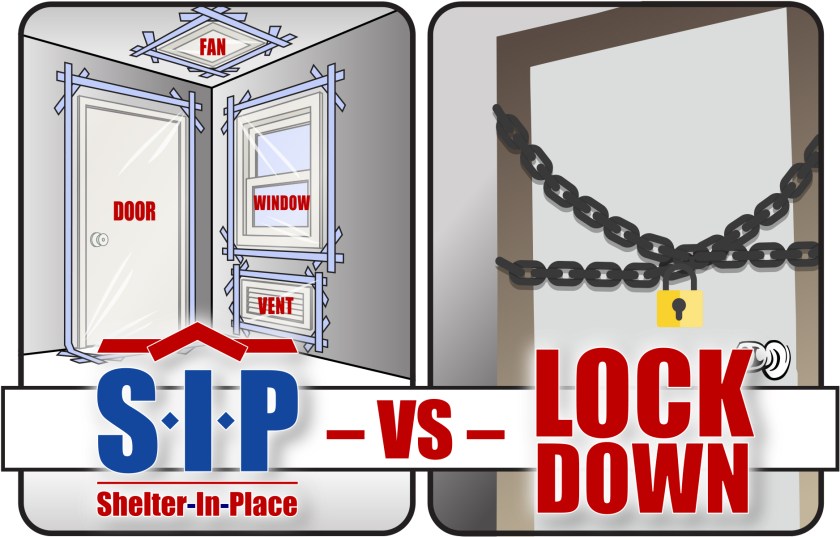
Second, I had seen the news reports of how pornography was profiting from the shutdown. As soon as people began sheltering in place, one purveyor of internet porn noted an immediate spike in visits to their site. India experienced a 95% rise in porn viewership. 1 Only South Korea, who did not shutdown as much of their country, did not see such a porn patronage spike. 2 When other businesses are shutdown, pornography has likewise become lucrative for women seeking employment during tough economic times. 3 Evil never sleeps.

Third, while being disappointed by the designation of religious assemblies as nonessential by government, I’ve noted that they have propped up vice as essential. For example, in Denver pot dispensaries and liquor stores were exempted from stay at home orders. 4 Meanwhile, churches have not been able to meet in their buildings, even with efforts to practice social distancing. On the weekend of April 12th, you may recall that Louisville, Kentucky, mayor, Greg Fischer, even criminalized “drive-in” church services. Fortunately, a judge overturned Fischer’s “edict.” 5 Evil never sleeps.

Fourth, the abortion industry remains alive and well during shutdown. While certain states successfully closed abortion clinics at the outset of the shutdown by stating such clinics offered only elective procedures, judges have overturned such decisions in favor of granting access to it. 6 So, we are currently living at a time when cancer screening is non-essential, but killing your unborn child is “necessary.” Yes, evil never sleeps.

Since evil never sleeps, what are we, as children of God, to do?

Be on guard (1 Peter 5.8). As we have shown, our enemy never sleeps. He is looking to devour us. Thus, we must keep up our alertness.

Redeem our time (Ephesians 5.16).  Given the uncertainty of our life, we must make the most of the opportunity God gives us to do His will. Even though COVID-19 is deadly, we note that the things taking a man’s life are far more numerous than viruses (cf. James 4.14).

Pray (1 Thessalonians 5.17). We must always maintain a prayerful heart. It is an avenue allowing us to “cast our cares” upon our Lord (1 Peter 5.7). It is likewise the only means whereby we can discover peace surpassing our ability to comprehend (Philippians 4.16-17).

Evil never sleeps, but we can avoid its darkness by remaining on the path shining as bright as day (Proverbs 4.14-15, 18), while devoting ourselves to doing our Lord’s will.
shelter in place

REFERENCES

1 Kannan, Saikiran. “Pornography Gets a Pandemic Boost, India Reports 95 per Cent Rise in Viewing.” India Today, Living Media India Limited, 11 Apr. 2020, www.indiatoday.in/news-analysis/story/pornography-gets-a-pandemic-boost-india-reports-95-per-cent-rise-in-viewing-1665940-2020-04-11.


2 Ibid.


3 Dorn, Sara. “Business Booming for Cam Girls amid Coronavirus Outbreak.” New York Post, NYP Holdings Inc., 16 Mar. 2020, nypost.com/2020/03/14/business-booming-for-cam-girls-amid-coronavirus-outbreak/.


4 Del Giudice, Vincent. “Denver Exempts Pot Shops, Liquor Stores from Stay-at-Home Order.” Bloomberg.com, Bloomberg L.P., 24 Mar. 2020, www.bloomberg.com/news/articles/2020-03-24/denver-exempts-pot-shops-liquor-stores-from-stay-at-home-order.


5 Lord, Shaquille. “District Judge Says City Can’t Stop Louisville Church from Holding Drive-in Easter Service.” WLKY, Hearst Television Inc., 12 Apr. 2020, www.wlky.com/article/district-judge-says-city-cant-stop-louisville-church-from-holding-drive-in-easter-service/32115835.


6 Tamburin, Adam. “Federal Court Tweaks Abortion Order, Still Allows Procedures during COVID-19 Pandemic.” The Tennessean, Tennessean.com, 27 Apr. 2020, www.tennessean.com/story/news/2020/04/27/court-tweaks-tennessee-abortion-order-procedures-still-allowed/3033007001/.

Sin Illustrated

Tuesday’s Column: Dale Mail

DaleandJanelledirectorypic

Dale Pollard

Who doesn’t love a good illustration? Over the next few weeks this column will have three of them— all geared around a singular topic. 

In the early days of flying men would attempt to soar into the skies like the birds by building wings made out feathers and jumping of towers, hills, and even cliffs. In 1507 John Damian strapped wings covered in chicken feathers to his back and leapt from the walls of Sterling Castle in Scotland. He ended up breaking his thigh and quickly blamed his failure on the fact that he used chicken feathers instead of eagle feathers (undiscoveredscotland.com). 

Many early attempts of flying ended in more serious injuries and even death. If they had a better understanding of the principles of flight they could have avoided their tragic endings. 

Millions of people today are plummeting to their spiritual deaths, and we have the knowledge they need. Nobody will achieve spiritual flight through the:

1. lust of the flesh
2. lust of the eyes
3. pride of life

If an apple has a hole in it, some would assume that a worm has eaten its way inside. But in reality there was a worm in the seed of the apple the whole time. And as the worm grew it ate its way out of the core. 

At first sin is easily hidden, but as it grows it shows itself through our actions. 

Julie Andrews in the Sound of Music would claim that one of her favorite things are snowflakes that stay on her nose and eyelashes. A small beautiful snowflake. Thousands of years ago a single snowflake fell from the skies. Then another, then another. Soon the snow turned to ice and the ice became so heavy that it broke off the glacier and fell into the sea. It began to float and drift until one night it struck a ship called the Titanic, killing 1500 people. 

When a sin problem begins to take hold, it may seem as harmless as single flake of snow. Overtime the sin proves to be more than some can handle, and they’re heading for disaster. 

“Sin will take you farther than you wanted to go, keep you longer than you intended to stay, and charge you more than you wanted to pay.” 

How To Slay A Dragon

Thursday’s Column: Captain’s Blog

IMG_0806

Carl Pollard

There’s a part in Sleeping Beauty where the Prince slays a fire breathing dragon with his sword. This is at the climax of the movie, so this entire time the story has been building up to this one, final moment. It’s pretty epic. In our lives, we have many “Fire Breathing Dragons.” At this moment I would like to talk about three of them and how to “kill” them.

First, notice with me the “dragon” of lying. If you look at Colossians 3:9, it says, “Don’t lie to each other, for you have stripped off your old evil nature and all it’s wicked deeds.”
Lying in Colossians is labeled under “evil nature.” If we have stripped our old ways, why do we continue to lie? Because much of the lying that we do is for personal gain. For example, someone could come up to me and ask, “How much can you bench?” and I might say “850 pounds.” That’s a classic example of lying for personal gain. From now on that person will believe that lie I told them and possibly tell others. We can slay this dragon by telling the truth. Challenge yourself to tell full truths, and not half-truths.

Second, there is the “dragon” of Hate. Luke 6:27 says, “But I say to you who hear, Love your enemies, do good to those who hate you.” The hardest part of this verse is the second half. Trying to love those who hate us is extremely difficult because in our minds they started it so we have the right to hate them back. If you look at Jesus, our example, He says to love those who hate us. How do we do this? It requires a change of vision. We should try to look at those who hate us as a lost soul that needs saving. Looking at them this way might help us to love them more.

Third, and finally, is the “dragon” of Gossip. This one can be very dangerous because it might tear apart a friendship, a person, and the church. If you look at Ephesians 4:29, It reads, “Let no corrupt communication proceed from your mouth, but that which is good to the use of edifying, that it may minister grace unto the hearers.” Instead of tearing down someone or spreading rumors, let’s try to build up one another! To keep from letting something slip about someone, let’s try to practice what our parents told us from day one: “Think about what we say before we say it.”

Now there is one more thing we can use to slay “dragons.” The ultimate Two-Edged Sword is for slaying any kind of “dragon.” This Two-Edged Sword, the Bible, can slay any dragon that Satan sends our way. Today we only looked at three of the dragons that Satan uses against us. There are many more, and we must study Scripture to see what they are, and how we can slay them.

73667.jpg.cf

A Bat’s Worst Nightmare

Thursday’s Column: Captain’s Blog

IMG_0806

Carl Pollard

I’m gonna be honest. I am not a fan of winter. It’s cold, snow is terrible, It’s freezing, and I hate snow. The worst thing about winter is that It gets dark at like 3 pm. In the summer you have these nice long, warm days but In the winter you got about 6 hours of daylight before it gets dark again.
Darkness is referred to quite a bit in scripture and many times it is used to describe sin. For example, “Walking in darkness” = walking in sin. “Living in darkness” = living in sin.
As Christians we are described as being taken out of darkness (sin) to walk in light (righteousness) (Ephesians 5).
But how did we get to this point? We read in John 8:12, “Again Jesus spoke to them, saying, “I am the light of the world. Whoever follows me will not walk in darkness, but will have the light of life.”
Because of Christ and His sacrifice and love for us we can now have the light of life. Without Christ we are forever in darkness, but with Christ he is our light that leads to salvation.
The choice to follow Christ means that our standard is The Light. Notice, He says, “will not walk in darkness…” This word is skotia which is described as, “the state of being devoid of light, darkness, gloom.” When we choose to live like the world, there is no light in us. When we remove Christ as our guide and live in sin, we are plunged into darkness.
But if He is our standard of living, in hard times we will have light, when we lose a loved one we will have light, and when we face difficult decisions we will have light.
The question we need to ask ourselves is this, “Do we prefer darkness over light? Do we prefer sin over righteousness?” The choice is ours, and each one of us makes this decision every day.
You may be asking what all of this has to do with the pandemic going on right now…well a bat started this whole thing, and bats live in caves, caves are dark and living in darkness is living in sin. Don’t be a bat.
maca-solitary-roosting-bat

The Guest 

Tuesday’s Column: Dale Mail

DaleandJanelledirectorypic

Dale Pollard

A knock came on my door one day, I opened and it was Sin
Before that moment we hadn’t met, but still I let him in
He made me laugh, and seemed alright
so I let him stay a night

As host, I tended his every need
though he was quite a mouth to feed
He was entertaining
so he kept remaining—
With me, another day

One evening he sat at my table and dined

but late that night he robbed me blind

In an empty house I sat alone
The tears welled up, I should have known

Sin ate his fill against my will,

and now I’m skin and bone

Then again I heard a knock on my door

Reluctant was I to rise from the floor
If a guest, they can’t stay here anymore

the previous left me dejected and poor

But again and again
came the knock on my door
So timidly I answered,

but only opened it so wide

and there stood Jesus waiting,

on the other side

I had nothing left to give Him, nothing left to eat—
Yet He came inside,then got down, and began to wash my feet
He told me I could live with Him, for He had many rooms
No pain was there at His house, and the flowers always bloom
Could this be true what I was hearing—
I longed for nothing more
Then Jesus smiled and gently said—
this offer is for you and all
who open up the door
doorknob-686491_960_720

When the Tempter Has You Out On A Limb

Friday’s Column: Supplemental Strength

brent 2020

Brent Pollard


You can learn much by observing nature. Not only can one know God by looking at nature (Romans 1.18-20), he can learn specific lessons on various topics by looking at specific aspects of God’s creation (e.g. ants teach industry, Proverbs 6.6-8). I was watching a humorous scene outside my office window recently and was reminded of this.

 Our household, despite being full of “dog-people,” has cats for “pets.” Let’s just say that we feed the cats and provide them outdoor shelter for keeping mice, moles, and snakes away from the house. In many respects, they’re feral but become domesticated long enough to eat the kibble we put out. And, if they feel like initiating it, contact resembling petting may occur. If there is one thing I don’t like about cats, though, it is their murderous nature. Even though well-fed, cats will kill for sport. 1

 This latter observation creates a conflict for someone who has always enjoyed feeding and watching birds as well. We had to give up putting out birdseed when the cats became a part of our household. At first, the birds avoided our house. Yet, kittens learn by watching adult cats. If adult cats don’t teach kittens how to hunt, they aren’t as successful at it. As the senior hunters have passed from disease and predation or gone fully feral, being chased off by other cats, the birds have begun coming back without our encouragement. Frankly, I think a few of those “birdbrains” must be rather smart.

 One such smarty was teasing one of our cats the other day. He or she served as a good example of the tempter. As Angelo, a cat with a pattern of “angel’s wings” on his back, was slowly climbing up a budding, dogwood tree, the bird did not fly away. Instead, the avian adversary just side-stepped further to the right out on to thinner branches. The higher Angelo climbed, the thinner the branch on which the bird rested became. It seemed as if the bird knew that if Angelo tried to pounce on him or her, he would go crashing to the ground while he or she would just fly away. Angelo really thought about his situation. It took him several minutes, but he finally understood that despite his prowess, continuing towards his coveted prize would lead to his harm. Thus, to his chagrin, he slowly made his way back down the tree to the safety of the ground below.

 Herein is the lesson from nature. The tempter will lure you out from “relative safety” in order to bring your desire close, only to ensure when you pounce on it, you will end up falling flat on your face (consider Romans 6.23). We must ensure we are aware of where we are (Hebrews 2.1-4). The branches upon which we make our way may grow thin quickly, depriving us of a solid foundation, and causing us to fall.

 Of a truth, no one ever sets out to fall, he just fails to appreciate the gravity of the situation. Keep your eyes on what lies beneath your feet (1 Corinthians 10.12).

cat-1647775_960_720


1 Traywick, Catherine. “Killer Kitties: Study Proves They’re Not as Innocent As They Look.” Time, Time, 9 Aug. 2012, newsfeed.time.com/2012/08/09/killer-kitties-study-proves-theyre-not-as-innocent-as-they-look/.

Making Sense Of Grace

Wednesday’s Column: “Third’s Words”

10423661_10207901451272315_9069631728203375436_n

Gary Pollard III

Grace is a touchy subject. As with many other words commonly used in religious circles, it has potential to be misused or misunderstood. My hope is that this brief study on grace will shed some light on a confusing subject.

First, grace is possible for all men to have (Titus 2.11). It has been clearly displayed and advertised to everyone. The word “appeared” in that passage is epiphane, which means “to make an appearance.” No one is exempt from grace if they follow the right steps to receive it!

Second, grace keeps us in good standing with God if we are walking in the light (I John 1.7,8). In Acts 2.47, chairo (pronounced ky-roe) is translated “favor.” In Luke 6.32-34 Jesus uses it in a very interesting way. He says, “If you only love those who love you back, what credit is that to you?” Credit is charis, the word for grace.

So what is grace? What does it mean to you and me? If we are walking in the Light – trying our very best to follow God’s commands and allowing our faith to be the driving force of our lives – God takes care of our sin problem. When we slip up and make a mistake, God removes it from our record. This does NOT mean that we can sin all we want and God will just overlook it (see Romans 6.1,2). It does, however, mean that God is not waiting to strike us out of the book of life the moment we make a mistake.

Grace is what happens when God wants to do good for mankind. Luke 6.35 says, “Love your enemies, and do good, loan to others without expecting anything back; and your reward will be great, and you will be sons of the Most High; for He Himself is kind to ungrateful and evil men.” The word kind in the bolded phrase is charis: grace. It does not mean the same thing for evil men that it does for the Christian, but it does help us to get a better sense of what this word means.

God is rooting for His children (Christians). He WANTS us to get through this life and die in Him (Psalm 116;15). He isn’t our accuser waiting for us to slip up so He can condemn us. He helps us along the way, He shows good will to us, and He gives us His grace so that we can spend an eternity with Him as long as we are walking in the Light.

God Will Bring Every Act To Judgment

Neal Pollard

72% of Americans, age 13-24, view pornography frequently (55% of men 25 and older). Those numbers only drop to 41% and 23% of those professing to be Christians (Barna, July-August 2015, Barna Study Here).  So, perhaps this was inevitable. A few years ago, potentially millions of people started receiving a disturbing email from an anonymous source claiming to have hacked into their email and installed malware to discover their pornographic consumption. Experts say these hackers have just enough facts and information to frighten many of the recipients. They attempt to blackmail the recipients, demanding hundreds or even thousands of dollars in bitcoin. Otherwise, they promise to email proof of their readers’ perverse, clandestine interests to everyone in their contact list.

These hackers are relying on people’s fear of being found out, thinking that if even a tiny percentage of fearful folks pay the ransom it will make their spam to millions pay off. This hoax has probably raised the heart rate of many who consume pornography but felt like they were getting away with it. But the FBI say it is just that–a hoax.

God created man with a built-in sensitivity to our accountability. Many have a “certain fearful looking for of judgment” (Heb. 10:27). Some day, the secrets of men will be judged by God through Christ (Rom. 2:16). Solomon said, “For God will bring every act to judgment, everything which is hidden, whether it is good or evil” (Ecc. 12:14). But, “We must all appear before the judgment seat of Christ, so that each may be recompensed for his deeds in the body, according to what he was done, whether good or bad” (2 Cor. 5:10).

The good news is that no one has to be afraid of the judgment or having everything which is hidden shared with the whole world. “God our Savior desires all men to be saved and to come to the knowledge of the truth” (1 Tim. 2:3-4). Peter adds, “The Lord is not slow about His promise, as some count slowness, but is patient toward you, not wishing for any to perish but for all to come to repentance” (2 Pet. 3:9).

God wants our sins to be covered by the blood of His Son. Not just “big sins” (as we distinguish them), but every sin, great and small, that we struggle with! How great to face the judgment with those sins hidden from His perfect view.

003_porn

INSTRUCTIONS FOR PRIVATE OFFENSES

Neal Pollard

The Son of God gives specific instructions for what to do when a spiritual family member sins. Jesus clearly says, “If your brother sins, go and show him his fault in private; if he listens to you, you have won your brother. But if he does not listen to you, take one or two more with you, so that by the mouth of two or three witnesses every fact may be confirmed. If he refuses to listen to them, tell it to the church; and if he refuses to listen even to the church, let him be to you as a Gentile and a tax collector.” Notice the Divine pattern. 

  • Perpetration (15a)–“If you brother sins.” This is what initiates the situation.
  • Presentation (15b)–“Go and show him his fault in private.” Paul would teach this later (Gal. 6:1). Notice that this is to be done privately.
  • Aspiration (15c)–“If he listens to you, you have won your brother.” Ideally, this is where the matter should end.
  • Escalation (16-17)–Jesus tells one what to do if a sinner refuses to listen. Start by taking one or two. If that does not work, then tell it to the church.
  • Repudiation (18)–If all three of these approaches fail to win the sinner, then you reject them.

Tragically, we very often disobey Jesus’ instructions about this and fail to understand that rebelling against His commandment then makes us a sinner, too.  How often does it happen that a person, rather than dealing directly with the sinning brother, tells someone else? Then, that someone tells another. Soon, a whole group or even the whole church knows about the sin. Often, something that was private and even between just two people is made public by gossipers who continue to spread the matter. In some cases, those who hear and spread the matter never even speak to the offender. This prevents the sinner from being aware of who knows about it or being able to reconcile. It can even be the case that the sinner has repented and handled the matter with the original offender, but now others are brought into the matter after the fact. Those who have come to hear about the situation treat the sinner “as a Gentile and a tax collector,” without ever once speaking to them about it. Rifts form and relationships are affected. 

When we fail to do things God’s way, we will make matters worse. May we consider passages like Mark 7:21-23, where Jesus places “big” sins like “fornications, thefts, murders, adulteries, deeds of coveting and wickedness” alongside “little” sins like “deceit, sensuality, envy, slander, pride, and foolishness.” Jesus’ analysis is that “all” these things are “evil” and “defile the man.”

gossip-532012_640

Satan’s Schemes

Neal Pollard

Paul makes an interesting statement while addressing the successful effort the Corinthian church made in disciplining an erring brother along with the successful outcome of his having repented. He urges them to show him love, comfort, and forgiveness. The bottom line Paul gives for the urgency of their obedience is “so that no advantage would be taken of us by Satan, for we are not ignorant of his schemes” (2 Cor. 2:11). Back in the first letter, the church’s attitude and actions regarding a brother needing discipline was horrible, and Paul commanded them to act (1 Cor. 5). Here, they have acted and their efforts worked. They were in a prime position to grow and thrive. Yet, Paul reminds them of Satan’s motivation (to take advantage of us) and means (his schemes). 

But, when does Satan like to try and employ his schemes and take advantage of us? When we aren’t being sober and vigilant (1 Pet. 5:8). When we aren’t focused on resisting him (Jas. 4:7). When we aren’t standing firm in the Lord or against his schemes (Eph. 6:10ff). When we aren’t exercising self-control (1 Cor. 7:5). If you study those contexts and others that mention Satan more closely, you will see that he would like to take advantage of us in good times and bad times. He may be at work through the willing choices, words, and actions of people who unwittingly aid his cause through their sins. 

When might he seek to employ his schemes?

  • When new elders are appointed
  • During building programs
  • As numbers swell through baptisms and families placing membership
  • When preachers come and go
  • In a flurry of exciting activities
  • In the heart of some church problem or struggle
  • At the center of some personality struggle or conflict within the congregation
  • Through some controversial doctrinal, moral, or even cultural issue
  • When brethren put politics, race, or another issue of lesser importance over Christ and His church

Obviously, there are many more examples. The point is that Satan would love to use the good times or bad times we experience as a church to undermine and harm the work of the Lord. That should not make us paranoid, so paralyzed by fear that we refuse to act, or petrified to make needed changes. It does mean that we must not be ignorant of the fact that he doesn’t want the church to grow or move forward, and he will do what he can to stop it. What is so exciting is that he stands no chance against God. James says, “Submit therefore to God. Resist the devil and he will flee from you” (4:7). Let us never be afraid to “dare and do” for God. We can do great things for Him and keep an eye out for the devil’s schemes.

25073405_10155181501925922_4154416753663879067_o
Picture from my last trip to Ngorogoro Crater, Tanzania, 12/17.

The Peril Of “Covering Up”

Neal Pollard

Misty Ann Weaver made a tragic decision.  The Houston-area licensed vocational nurse is charged in the burning death of three people after she started a fire in her six-story office building.  Why did she take such horrible measures that resulted in the unnecessary, tragic deaths of these victims?  She was  apparently behind on an audit for her plastic surgeon boss, and she feared being fired.  She just wanted to start a small fire, enough to cause a distraction and buy herself more time.  Obviously, she accomplished more than she intended.

Ms. Weaver is an extreme example of the tendency to try and avoid consequences by resorting to sin to “cover up” a shortcoming or failure.  While few of us will wind up facing three felony murder counts, we are all tempted to “cover up” in this way.  When we fail to study for a test, we may resort to cheating to “cover up” that fact.  When we have a low self-image, we may resort to gossip or backbiting to “cover up” perceived flaws about ourselves.  When we are afraid of negative consequences for not meeting some responsibility or expectation, we may turn to lying to “cover up” that inadequacy.   The irony is seen in that the “cover up” inevitably puts us in greater spiritual trouble than before we engaged in it.

We may “cover up” for fear of the disapproval of others, out of embarrassment or shame, or out of concern for certain repercussions.   Yet, to turn to sin to shield ourselves from the ramifications of our actions is to compound the problem.  Let us have the courage to face God and man, to provide things honest in the sight of all men (cf. Romans 12:17).  Israel was warned about the danger of adding sin to sin (Isaiah 30:1).  It is strength of character to do our best in our every endeavor, but it is also strength of character, when we have failed to so do, to courageously, honestly “face the music.”  However we rationalize, the fallout from this will be less severe than the “cover up” is!

1024x1024

The Greatest Longing Of The Soul

Neal Pollard

Quick. Name the top three accomplishments of Grover Cleveland’s presidency. I’ll wait. 

Nothing? Don’t feel dense or unpatriotic. He’s not in most historians’ top 10 (25?) of American presidents. But on yesterday’s date, 132 years ago, he was at the helm and dedicated the Statue of Liberty in New York Harbor.  This, if you don’t recall, was the proposed gift of French historian Edouard de Laboulaye in honor of America’s alliance with France during the Revolutionary War, sculpted by Frederic-Auguste Bartholdi, designed by Viollet-le-Duc and Alexandre-Gustave Eiffel (yes, that Eiffel), completed in France in 1884, and delivered to America the next year with the last rivet fitted on October 28, 1886 (via Instagram). The pedestal of the statue contains a sonnet by poet Emma Lazarus, well-known to most of us, that reads, 

“Give me your tired, your poor,
Your huddled masses yearning to breathe free,
The wretched refuse of your teeming shore.
Send these, the homeless, tempest-tost to me.
I lift my lamp beside the golden door” (ibid.).

With all the debate about immigration–a Reuters story revealed that immigration tops the economy and healthcare as the top issue for voters (Read here)–there is no denying why so many people around the world want to come to the United States. We have long been regarded as the haven for poor masses yearning to breathe free and wanting a home inside “the golden door.” Many have come and achieved incredible success in our country. Many more than that have come to find that immigrating here did not solve their problems or make their dreams come true.

There is a greater longing of the soul, a desire for something even more than prosperity.  Jesus teaches us that material things won’t last (Mat. 6:19-20). Peter tells us what comes of such ultimately (2 Pet. 3:10). 

There is a greater longing of the soul than even freedoms afforded by nations and governments. Many will abuse those freedoms through immoral choices.  Proverbs 14:34 strongly applies.

The most noble, highest longing of a soul is for the freedom only Christ can provide. To be free from the slavery of sin (John 8:31-36), from guilt of sin (Psa. 51:1-14), and from the power of sin (Heb. 2:14) is man’s wisest quest. A person with an abundance of money, liberty, and other earthly advantages may still be buried by the influence of sin. To know there’s a solution right now–who wouldn’t want that?

Don’t forget what Jesus tells people everywhere: “Come to Me, all who are weary and heavy-laden, and I will give you rest” (Mat. 11:28). 

23905208_10155150150870922_199173094846852320_n

“Good That Comes From Bad”

Neal Pollard

With a name like “Lamentations,” you know it isn’t a joke book. It’s not lighthearted or jovial. It’s the inspired record of Jeremiah’s tears and troubled spirit over the punishment of Judah for her idolatry and abandonment of God. It is graphic (see 2:20-21; 4:4-10; 5:11-14). Conditions became terrible for the nation (cf. 1:9-10). The book is filled with apocalyptic language and hyperbole (3:1-16).

In the middle of the prophesy, though, Jeremiah expresses the hopeful effect of all this calamity and reaping. The desired effect of captivity was three-fold, according to Lamentations 3:40. First, it was for self-examination–“Let us search out and examine our ways.” Second, it was for repentance–“and turn back to the Lord.” Finally, it was for spiritual development–“Let us lift our hearts and hands to God in heaven.”

When we sin or even are caught in some long-term transgression, there will very often be consequences. If we fail to overcome it, the consequences will be unending and most serious. Yet, if we “come to ourselves” (cf. Luke 15:17) and let go of what is keeping us from being right with God, it can have those same three positive impacts on us. It cause cause us to engage in proper self-examination. It will hopefully lead us to repent. Then, this paves the road for us to grow close to God through proper spiritual development.

The ideal is to avoid spiritually spiraling out of control or into some sin problem. Yet, if or when we do, let us remember Lamentations 3:40. Good can come from bad.

p19d8uriudal1tmv6ccoms1ace3

The Eye Of The Beholder

Neal Pollard

The theme of our recently completed lectureship was, “Every Man Did What Was Right In His Own Eyes.” This seems to be the summary statement of this entire period of Bible history. It is interesting that this idea shows up more than in just the two verses where the statement appears (Judges 17:6; 21:25). Samson wanted the woman of Timnah because “she looked good to” him (Judges 14:3,7; literally, “she was right in his eyes”). In reality, she was a loose, treacherous, and idolatrous woman, but she seemed right to him. In that dark story about the Levite man, the elderly Ephraimite man, the Levite’s concubine and the Ephraimite’s virgin daughter, the old man, seeking to placate the wicked Benjamites, offered the women to them “to do with them whatever” they wished (Judges 19:24; literally, “the good in your eyes”). Obviously, what was right in these men’s eyes was reprehensible and vile. It is one of the most extreme examples of wickedness recorded in the Bible.

Elsewhere, the Bible says, “The way of a fool is right in his own eyes” (Proverbs 12:15a), and “Every man’s way is right in his own eyes” (Proverbs 21:2a). We often think things seem right when they are far from it (Proverbs 14:12; 16:25; 18:17).  After talking about those who mix up right and wrong and good and evil, Isaiah tells us why they do this. He warns that they “are wise in their own eyes and clever in their own sight” (Isaiah 5:21).

In the world, the church, and our own lives, we are tempted to do what is right in our own eyes. We justify habits, relationships, desires, religious practices, lifestyles, and choices about which God warns in His Word by ignoring that and rationalizing, rewording, and reframing them. We use emotional arguments. We twist Scripture. In the end, when we do these things, we reject God’s authority and seek to become the standard ourselves. The book of Judges was written, in part, to show us what happens when we do it and how God feels when we do it.  The well-worn phrase goes, “Beauty is in the eye of the beholder.” That may be. But right and wrong is not such as is in the eye of the beholder. That is determined by the One who possesses “the all-seeing eye” (Proverbs 15:3).

eye-211610_640

Why We Need The Word

Neal Pollard

Many know that Psalm 119 is the greatest, inspired tribute to the Word of God known to man. 176 verses, eight verses under the heading of every Hebrew letter, grace these pages of our Bibles. All but a few verses mention some synonym for God’s Word. So many individual studies can be made of themes and thrusts in Psalm 119, but by reading it one discovers David giving many benefits or needs for studying the Bible. Consider what is no doubt an inexhaustible study.

  • To keep from sinning against God (11)
  • I am a stranger in the earth (19)
  • The influential can be against us at times (23)
  • Our soul often melts from heaviness (28)
  • To keep our eyes from worthless things (37)
  • To have an answer for him who reproaches us (42)
  • It causes hope (49)
  • For comfort in affliction (50, 76)
  • It causes righteous indignation (53)
  • It leads us to seek God’s favor with our whole heart (58)
  • It makes us choose better companions (63)
  • It brings good judgment and knowledge (66)
  • It prevents apostasy (67)
  • It makes us more attractive to the God-fearing (74)
  • That I may live (77, 93, etc.)
  • For revival (88)
  • For greater understanding (99)
  • To be upheld and safe (117)
  • To have a proper sense of self (125)
  • For a proper sense of values (128)
  • For proper emotional investment (136)
  • For righteous zeal (139)
  • For a proper sense of dependency (147)
  • It brings confidence (152)
  • It gives us the proper sentiment toward the world (158)
  • To develop a proper “praise life” (164)

psalm119

Is There No Balm In Gilead?

Neal Pollard

Jeremiah asks that question rhetorically? It comes at the end of an oracle God gave this prophet to share with his people, Judah. He had asked if the people had turned to idolatry because God was not in Zion (Jer. 8:19). He then ends by saying, “Is there no balm in Gilead? Is there no physician there? Why then has not the health of the daughter of my people been restored?” (8:22). In context, the people were sin-sick, but the cure was available. It was not because God was unable to restore them that they were ailing, but because they refused to seek the cure.

Certainly, today’s society mirrors this attitude of Jeremiah’s contemporaries, but this, in context, was spoken to those who had been healed in the past. These were God’s people. Now, they were spiritually sick and not getting better. The logical question is the one Jeremiah asked—“Why not?” When we are sick with sinful habits, lifestyles, attitudes, and speech, why don’t we turn to God for the cure?

  • Sometimes, we are oblivious to our symptoms.  Paul speaks of some who are “past feeling” (Eph. 4:19). We can become callous to our condition and rationalize it. As long as we persist in that state, it is as if there is no balm.
  • Sometimes, we look elsewhere for the cure. Judah had her idols, and so can we. People struggling with life turn to so many poor substitutes to numb, deaden, and try to eliminate the pain. Nothing can substitute for the Balm of Gilead (cf. Jer. 3:23).
  • Sometimes, we feel ourselves to be a hopeless case. As we struggle with our temptations and sins, we can get to the point where we feel we’ve gone too far or been too often to reverse the problem. This is not God’s message. He provides hope to every one who will come to Him for help (Heb. 6:9-12).
  • Sometimes, we underestimate God’s power. Jeremiah’s predecessor, Isaiah, shares God’s message regarding this, saying, “The Lord’s hand is not so short that it cannot save” (59:1). Jeremiah would echo this idea, writing, “Ah Lord God! Behold, You have made the heavens and the earth by Your great power and by Your outstretched arm! Nothing is too difficult for You” (32:17; keep reading in context for more beautiful truth along this line). Though we should know better, sometimes we forget God’s power to save.
  • Sometimes, we neglect our support system. God gave the church as a hospital where all of us, sick with sin, can not only receive healing from Him but help each other. In a sense, we’re a leper colony that has found the One who will keep us from dying. But we need each other for help to survive this spiritual sickness (Gal. 6:1-2).
  • Sometimes, we don’t avail ourselves of God’s medicine. How tragic to die from spiritual disease when God has the means to heal us. We have His Word as a divine prescription. We have prayer. We have the confidence of faith. We have the trust in His providence. He has armed us sufficiently with the cure, if we accept it (cf. Luke 5:31).

While they await the cure for cancer, cystic fibrosis, ALS, multiple sclerosis, and the like, our greatest illness has already been remedied. This illness carries with it the greatest repercussions. We cannot neglect the cure. But if we spiritually die, it will not be because there is no balm and no Physician. It will be because we would not come to Him for healing. May we not let this be the reason.

hqdefault

Is The Church Broken?

Neal Pollard

You hear comments in Bible classes that amount to what’s wrong with the church, what we’re doing wrong, what we’re not doing, and what it’s doing to us, our children, and the world. You read people’s minds through their social media rants, raves, and ramblings, and the bottom line message is that the church is inept, irrelevant, irresponsible, or, worse, insidious. To hear some tell it, the church is not only unhelpful, but actually hurtful.  I know that we can be prone to say things out of hurt, disappointment, anger, and bitterness, but the words themselves are no less potent even if influenced by such emotions.

Is the contention, as one Christian sister put it, that “the church is broken,” true? Another way to put that is, “Are elders, preachers, deacons, Bible class teachers, and every other Christian broken?” Perhaps we impersonalize it and overly-institutionalize it with a nameless, faceless designation of “church.” But the church is, as we were taught as children, “the people.” People who are prone to say the right thing at the wrong time, the wrong thing at the right time, and, sadly, the wrong thing at the wrong time. We disappoint, we mishandle, we poorly execute, we unfairly judge and criticize, and we simply blow it. That is definitely not an excuse or a permission slip for bad behavior. Yet, it is not likely to ever change.

Because the church is made up of sinners saved by grace, the church is broken. We who are quick to condemn the church as broken need to face that we ourselves, as those placed by Christ into that church when we were saved, are broken, too. Show me the perfect person who never mishandles a situation, never sins with tongue, attitude, or deed, and I’ll show you someone who will stand before Christ at the Judgment saved on the basis of their own merit and goodness. That won’t happen.

Let’s be reminded of what the church is.  It is the precious, beloved bride of Christ (Eph. 5:22-25; Rev. 19:7; 21:2). It is that institution purchased by His very life’s blood (Acts 20:28). It is that which was thought up by God from the eternity before time as is the expression of His manifold wisdom (Eph. 3:9-11). It is the place where Christ is glorified (Eph. 3:21; 5:27). It is the present the Son will present to His Father when time is no more (1 Cor. 15:24). It is that and truly so much more.

God designed the church. Reckless criticism of it is reckless criticism of Him. All of us should be determined to improve in every area of our spiritual lives, to be for others what we need to be, to conquer faults and sins in our lives. We should also extend to others the grace we intensely desire to receive when we stand before the King at the last day! Yes, the church is broken, but not in the sense that it cannot help, serve, minister, love, and encourage. Let each of us strive to be the church we want the church to be. Model and exemplify it. Emit the fragrance of Christ. That way, the broken church can help mend the broken lives that make it up.

broken_church_2c_areman_28_masud_abad_29_village_2c_azna_d8a7d8b2d986d8a7_d988db8cd8b1d8a7d986d987_d987d8a7db8c_daa9d984db8cd8b3d8a7db8c_d985d8b3d8b9

Let’s Not Mistake What Some Mean By “Tolerance”

Neal Pollard

Labor Commissioner Brad Avakian declared war on establishments which wished to decline services to those of the LGBT community. Aaron and Melissa Klein, owners of Sweet Cakes bakery, were driven out of business by a lawsuit in the wake of their refusal to bake a wedding cake for a lesbian couple. According to Todd Starnes,

They faced boycotts and picket lines and other wedding vendors were threatened with similar action if they did business with Sweet Cakes. The family’s young children received death threats and the store’s  social networking platforms were overrun by militant LGBT activists posting obscene and profane messages (read here).

On top of that, they were ordered by the court to pay the couple $135,000 in emotional damages.

The Kleins refused on the grounds that it violated their “deeply-held religious beliefs” (ibid.). Anyone familiar with the Bible could understand the roots of their conviction, even if those ones don’t agree with the Bible (Rom. 1:26-27; 1 Cor. 6:9-11; 1 Tim. 1:8-11). Unfortunately for the Kleins, “tolerance” was not extended to them. Freedom of religion did not cover their attempt to freely practice their religion in their daily lives.

We have seen forces within our country, in politics, education, the media, and the like, pushing a moral agenda that is often cloaked under the guise of creating tolerance for absolutely everyone. But such is a logical impossibility. For those who see the Bible as their unalterable, unchanging guide, there are moral, ethical, and doctrinal absolutes. Nothing, be it culture, situations, or moral shifts, can alter and change God’s commands. In other words, killing the unborn does not become morally acceptable just because our nation passed a law. We do not want our money to fund what we deem sinful. Fornication, adultery, homosexuality, and any other sexual relationship the Bible identifies as sinful does not cease to be so just because the culture embraces it. We don’t want to be forced to accept what we believe, from Scripture, to be unacceptable to God. Yet, the very articulation of such conviction is increasingly rejected. That seat at the table of civil discourse has been removed and stuck in the corner (if not thrown into the yard).

For some, tolerance has come to mean acceptance of their world view and philosophy. It is not extended to those who disagree or who advocate a divergent point of view (isn’t that what tolerance means?). But, such is inevitable. There is no such thing as absolute tolerance. Immorality and morality, biblically defined, cannot peacefully coexist. Paul says, “Put on the full armor of God, so that you will be able to stand firm against the schemes of the devil. For our struggle is not against flesh and blood, but against the rulers, against the powers, against the world forces of this darkness, against the spiritual forces of wickedness in the heavenly places. Therefore, take up the full armor of God, so that you will be able to resist in the evil day, and having done everything, to stand firm” (Eph. 6:11-13). It is a struggle against powers and forces. It requires a firm stand and a resistance. Not a physical, literal fight (cf. 2 Cor. 10:3-5). It’s a battle of the mind. It depends on the rank and file of people having properly trained, sharpened consciences, formed and spurred by God’s truth as revealed in Scripture.

Jesus says this is to be expected (John 15:19). Peter (1 Pet. 4:12) and John (1 Jn. 3:13) echo it.  Our task is to find the honest hearts and minds (Luke 8:15) who are seeking truth amid the cacophony of cultural noise. And, no matter what it costs us, hold onto truth and teach it to our children (cf. Deut. 6:1ff) which every way the cultural wind blows. Jesus did not call us to be tolerant (Rev. 2:2,20), but rather teachers of truth in love (Eph. 4:15). May we never lose sight of that.

acceptance-968458_640

He Can Carry What’s Too Heavy For You

Jeff Wiant has been a Christian since early 2015. Since then, he has written 11 hymns. They are all beautiful, but this may be his best. It’s his first invitation song to write.

Poem inspired by this beautiful new song by Jeff Wiant, member at Bear Valley.  Click on the link below to hear it:

CLICK HERE: Jeff Wiant’s “Won’t You Come”

Neal Pollard

We struggle and strain to carry our load
We buckle as it gets heavier on our backs
We fall and hurt on this rough, rocky road
The weight makes us stop in our tracks

Looking around with a face full of pleading
We wonder who is observing our pain
We’re wounded, weary, broken and bleeding
Set to surrender from the stress and strain

Tears flow freely, we have been here before
We know how the journey seems endless
Certain we can’t make it alone to the door
We feel solitude, helpless and friendless

It’s bigger than us, crushing and enormous
And the contents shameful and unsightly
We’ve borne it so long it’s begun to conform us
To a stooped struggler holding on tightly

A voice calling gently, “Bring it over to Me,
I can help you and give you My best,
Your burden is heavy, I know you are weary,
Come to Me and I will give you rest.”

Could you double down, wincing and worn,
Grit your teeth and ignore His free aid?
Eventually, it will bury you after making you mourn
You know an exorbitant price must be paid.

He is able and willing, but waiting for you
To seek what He offers you without reservation
Let Him do for you what only He can do
Give your burdens to Christ with no hesitation.

Think of the journey, partnered with One
Without limits in power, purity and pity
Who’ll stay with you until your journey is done
As together you arrive at His heavenly city.

Dockers de Cap-Haïtien

Who Is Behind This “Race War”?

Neal Pollard

I’m a child of the ‘80s, which, in south Georgia, seemed to be “post-racist.” Maybe it was the naivety of youth, but one of my closest friends, Greg Gwyn, was black. We were “Bird” and “Magic” (on the basketball court, at least in our minds). We were “Crockett” and “Tubbs.” We both rejected, out of hand, the notion of being “Wonder” and “McCartney” (too cheesy). While our High School had cliques, a timeless problem, they were determined more by interest than race. Sure, there was prejudice, as that is also timeless. But it was not the mainstream attitude.

I have preached full-time for three congregations, in Alabama, Virginia, and Colorado. All three are integrated, having not only “white-collar” (forgive the adage) professionals but also inner city representation among our African-American members. But, all three have wealthy and poor caucasians, too. Individuals in all three congregations probably struggled with making all kinds of arbitrary distinctions, including on the basis of race, but such attitudes have not been fostered. If uncovered, they are addressed with the power and authority of Scriptures like “God is not one to show partiality…” (Acts 10:34), “He made from one man every nation of mankind…” (Acts 17:26), “There is neither Jew nor Greek…for you are all one in Christ Jesus” (Galatians 3:28), “Do not hold your faith in our glorious Lord Jesus Christ with an attitude of personal favoritism” (James 2:1; and, if you do, “have you not made distinctions among yourselves, and become judges with evil motives,” vs. 4), etc. Our elders, deacons, Bible class teachers, and general leaders in these congregations, men like Kevin Turner, Ron Herman, Bill Burton, Jimmy Reynolds, Ron Thompkins, Joe Cook, King Taylor, and Ronnie Royster, would not be thought of in terms of their race if not for the point of this article.

So, as we see fiery debate, protests, wagon-encircling, hatred, and acerbic rhetoric, scratching our heads as to how all-consuming it has become, do we stop to ask who would be behind such division and strife? No, I don’t mean Republicans or Democrats, protest groups or activists, or hobby horse riders among brethren.  I think it is more sinister and serious. Who is ever behind separating not just mankind, but the Lord’s bride? Who benefits from people building walls to keep out others on any arbitrary basis? Who wins in the face of such crushing losses? Maybe we need to be asking that question and focusing on that issue more!

40492_1499404838050_6800990_n