The Pressing Property Of The Power!

Monday’s Column: Neal At The Cross

Neal Pollard

It has been a good year for tomatoes in our garden. We’ve eaten them, given them away, and preserved a lot of them. In addition to canning them, Kathy decided to use our dehydrator to save time and space in preserving them. A few days ago, she filled the machine with several rows of sliced tomatoes. She would set the temperature and time, then come back when it was done. The fruit would still be wet and tacky. After this happened a few times, she was concerned that our appliance was malfunctioning. It was then that she noticed she had not pressed the tiny start button on the far right side. She pushed it, and after eight hours she came back to perfectly dehydrated tomatoes. All the prep and planning were futile without the power.

How often do we conduct our lives that way? We meticulously make plans and we do our part to try to make them happen, but we neglect to access the power that makes it all work? Do we ever forget what Paul reminded Philippi, that “it is God who is at work in you, both to will and to work for His good pleasure” (2:13)? Paul also said that while we may have a variety of gifts, ministries, and effects, it is “the same God who works all things in all persons” (1 Cor. 12:4-6). We’re told that it is God who will “equip you in every good thing to do His will, working in us that which is pleasing in His sight…” (Heb. 13:21).

How do we hope to do God’s work without God’s help? We need His guidance, His wisdom and instruction, and His help. That necessitates skillfully laboring in His Word (2 Tim. 2:15), leaning on Him in fervent, faithful prayer (Phil. 4:6; 1 Th. 5:17), and relying on His providence in setting our direction (Rom. 8:28). It makes all the difference when we tap into God’s power. Let’s not overlook the one thing that is always essential in everything we undertake! 

The power button is just to the right of the frame of this picture.

Longing For Growth

Thursday’s Column: Captain’s Blog

Carl Pollard

The apostle Peter reveals to us that we must make several changes if we desire to grow in God’s Word. The first step is to prepare the heart. 1 Peter 1:22 says, “Having purified your souls by your obedience to the truth for a sincere brotherly love, love one another earnestly from a pure heart.” To truly grow in God’s Word we must prepare our heart. Peter’s command is to love one another from a pure heart. 

Scripture is a blessing, but not everyone will receive it with joy. In the parable of the soils in Luke 8 Jesus tells us that not everyone will receive the word. Some will never accept it in the first place, some will show joy at first, but eventually fall away, and some will accept the word implanted with joy and stay faithful. 

For the word to be in us, we must prepare our hearts to accept what we will find. Peter commanded a sincere love from a pure heart. For this to take place we must put others first. The world doesn’t act this way, but is filled with selfish people who are only interested in themselves. God’s Word cannot be in this kind of person. There must be a change of heart to that which is pure. This can all be done by seeing others as more important than yourself. A selfless heart is a saved heart. 

The second step in letting God’s Word grow in us is to have a proper desire for the word. Many Christians recognize the power of God’s Word, but they lack the desire to study and grow. 

1 Peter 2:2 says, “Like newborn infants, long for the pure spiritual milk, that by it you may grow up into salvation.” The Greek word for “long” means “to have a strong desire for.” We are to have a strong desire for scripture. By doing this we grow in our knowledge of salvation. 

It is vital that we long to learn more about God. That we desire to know more about our salvation. That we learn more about how we are to live as God’s children. The more we learn the more we will want to read scripture. 

The first time you go to a gym you hate it. You hate the soreness, the fatigue, the sweat. But after a month or two you begin to look forward to that feeling. You look forward to going to the gym. I don’t know, you may call that a mental illness, but it really is true. Just think the next time you open your Bible, you are reading the very words of God. He wanted you to see and learn what He has to say. 

The more you dig, the more you will want to learn. And this is the proper response to scripture. 

Long for it. Desire it. Chase after more than anything else, and you will see the change that comes.

A Box Of Mushrooms

Tuesday’s Column: Dale Mail


Dale Pollard


It’s special to receive a gift from someone who truly cares. You know why? Because they know you, and they know what you like. If someone got me a box of mushrooms for my birthday, I’d assume that person didn’t know me very well. Mushrooms are a fungus and should never be consumed— in my humble opinion.

Let’s take a moment to think about how well the average person in this world knows Jesus. Many people would say that Jesus was a great guy. Some would say that He was a good teacher, and still others would say that Jesus was an important figure in world history. All of those things are true. But, how well do they know Him? 

Too often phrases like, “well the Bible says…” or “well Jesus said…” are thrown around thoughtlessly, but there’s no biblical backing behind the words spoken. It happens in the world, and truth be told it happens in the body of Christ. Usually it’s said when we’re trying to make a point or when we don’t or can’t remember where some scripture is, or maybe even what that particular scripture actually says. It’s as easy to declare “Jesus says” as  “Simon says.” 1 John 17:3 it says, “This is eternal life, that they may know you, the only true God, and Jesus Christ whom you have sent…” Now, without ripping this out of context, you might notice the simple phrase, “that they may know…Jesus Christ.” There was a reason that Christ came. He came so that we might know Him. What are we doing in our daily lives that is helping us to know Jesus better? 

Communicating with Him, and letting Him communicate with you is vital to a healthy and intimate relationship when it comes to your spouse and certainly— your Savior. 

9 Kernel Crop

Thursday’s Column: Carlnormous Comments

carl-pic

Carl Pollard

 
Have you ever seen those little rocking horses that little kids ride? They hop on and rock back and forth, but they never go anywhere. There’s a whole lot of motion and work put in, but there’s never any progress made. Just like we don’t sit in a rocking chair to go somewhere, we need to understand how to work towards growth and maturity in our faith and knowledge.

We can work towards growing as Christians, but if we aren’t studying properly, or have the wrong mindset, our work and effort will never produce the outcome we are looking for. 2 Peter 3:18 tells us to “grow in the grace and knowledge of our Lord and Savior Jesus Christ. To him be the glory both now and to the day of eternity.” We are told by Peter through inspiration from God to “grow” and this isn’t a suggestion. It’s an imperative we are commanded to obey.

If you’re like me, this seems like a general command that can be overwhelming. If we want to grow a garden we have to do several things in order to be successful. We have to prepare the soil (no rocks or weeds) in order to give the plants what they need to grow and produce. There’s maintenance work to be done once the plants begin to grow. Keep weeds from choking out the plants, and make sure they are watered. Keep animals and bugs from destroying the plants. Make sure they get enough sunlight. And depending on the type of plant we will need to trim and cut excess leaves and stems to help it produce more produce (see what I did there?). Having a garden takes time, effort and patience.

Gardens don’t just magically appear. But there are some rare exceptions. I was burning some old clothes and furniture last year and I decided to throw some spoiled corn in the fire. When summer came around guess what I had sprouting out of my fire pit? Stalks of corn! And I got a great harvest of about 9 kernels. I ate them and it was pretty good! As Christians we will grow to a point without having to work too hard. We can learn from the lessons we hear at church, we can grow from what our parents teach us, but there will come a time when that won’t be enough. The corn in my fire pit only grew so much before it started turning brown. Turns out the roots were only surface deep because there was a sheet of metal keeping them from growing deeper. This in turn affected the produce that came from the plant. Hopefully as Christians we want to produce more than 9 kernels, and in order to grow properly we need put in the work.

Peter tells us that as Christians we must increase in grace (Eph. 2:8-9; Col. 3:16; 2 Pt. 1:2), grow in knowledge (Eph. 4:15; Col. 1:10, 2:19; 1 Pt. 2:2), and be motivated by a desire to glorify Christ (2 Pt. 3:18).

Our effort should produce results. In order for this to happen we must know the proper steps to take. We should never be satisfied with our knowledge of scripture. There’s no such thing as knowing too much Bible. We should never settle for the small amount of growth we encounter at services 3 times a week.

Am I willing to put in the work?

The Great Canon

Tuesday’s Column: Dale Mail

image

Dale Pollard

The “Heavy Gustaf” was a German cannon of incredible size. It’s barrel was 31.5 inches wide and it was built in the 1930s. The entire purpose of this weapon was not to wound the enemy but to completely destroy the French forts which were the strongest of any at the time. 

Later this weapon aided in destroying a Soviet munitions depot that lay 98 feet underground in WWII. It was one of the biggest cannons ever built, but it’s certainly not the most powerful. That title belongs to The Canon of scripture. It doesn’t have the power to take life but to give life eternal. It has the power to convict and completely change someone caught in the clutches of sin. God’s Word is a testimony and another evidence of God’s power. It answers two very important questions.

How do I prepare myself to live on this earth? 

How I do I prepare myself to leave this earth? 

In God’s Word the steps to salvation are revealed. Righteousness is defined as well as sinfulness. It’s a piece of God’s mind, it’s a book from heaven. The Bible is not just paper and ink, it’s much more. When that truly begins to sink in through the study and practice of what’s been written, our spiritual lives and faith will grow in leaps and bounds. We should be confident that grateful to have a guide given by God shining a light forward towards His glory.

Psalm 119:105 

“Praying The Scriptures”

MONDAY’S COLUMN: NEAL AT THE CROSS

Neal at ATF 2020

Neal Pollard

Yesterday morning, Chuck Raymer prayed an especially beautiful prayer, well-thought-out and earnest, but also filled with quotations of Bible verses or parts of them (near the beginning, he quoted Psalm 100:3)(his prayer begins at about 6:30 of the recording on YouTube of yesterday morning’s service: It starts here). My good friend and former co-worker in Colorado, Corey Sawyers, would often adapt the words of an entire psalm and pray it as he led us in the assemblies. There is something especially powerful about prayers that are Scripture quotations. It’s certainly something biblical.

In Acts 4:23, Peter and John, after having been released from being held by the Jews for preaching Jesus, met with the Jerusalem congregation. They lifted their voices to God with one accord and addressed Him. In their brief prayer (note verse 31), they quoted Exodus 20:11 (also found in Nehemiah and Psalms) and Psalm 2:1-2. They were so full of the Word that it came out even in their prayers. Look at the Levites who led Judah in prayer in Nehemiah 9:4-37. Much at that prayer quotes passages and events found in the Pentateuch (the first five books of the Old Testament). Most powerfully of all, Jesus prayed Scripture at a more difficult moment than any other human being will ever face (Mark 15:34). The praying prophet, Daniel, turned to God in prayer being moved by the words of Jeremiah (Dan. 9:2-3). How will it help us to pray the Scriptures in our own lives, whether in publicly leading prayer or in our private devotional lives?

IT LETS THE GOD WE WANT TO HEAR US KNOW THAT WE ARE LISTENING TO HIM.

Certainly, God knows His Word, but so does He know our every innermost thought, desire, and need. But, there is something about addressing God by including great truth from His Word that can really enrich those prayers. It tells Him we are mindful of His will even as we seek to influence it. 

IT BUILDS OUR FAITH IN THE TRUTH AND PROMISES OF HIS WORD.

Repetition is not just the key to learning, but it can also greatly aid our comprehension and retention. As you pray Scripture, you help reinforce those promises and truths. You will actually be reflecting on them as you pray it back to God. 

IT HELPS US TO APPLY THE WORD TO OUR DAILY LIVES.

Scripture can become more real and meaningful as we make verbalize it in prayer. It can take incidents and teachings in Scriptures and directly apply those verses to what we are going through. So often, we are going through the same exact types of things men and women of the Bible were going through. How can it be more practical than this: “Your word I have treasured in my heart, that I may not sin against You” (Psa. 119:11)?

There are probably several more reasons why we should quote and allude to Scripture in our prayer lives, but these are at least a few. You will certainly never say anything more truthful and right in your prayers than God’s Word. You will also be walking in some very righteous footprints, of those in Scripture who prayed Scripture back to God. 

Study The Bible!

Thursday’s Column: Third’s Words

Gary III

Gary Pollard

I doubt that many of us would question the importance of knowing our Bibles. We talk about this a lot as a church family! While some Christians may approach Bible study with the mentality of loading their theological guns with argument-ending ammunition, others consider it a duty of their Christianity.
Few of us would argue that the Bible is always simple and easy to understand. This life, our faith, and many questions we have about our day-to-day lives require answers far too complicated to get from a cursory study of scripture.
So why is it important to study our Bibles, and how can we do it effectively (that is, to walk away from Bible study with more knowledge and faith than when we entered it)? It is important to study the Bible because ignorance of what it says is a major underlying cause for any problem a church might face. Do we want unity? Study the Bible. Do we want peace among ourselves? Study the Bible. Do we want strong, faithful Christians? Study the Bible. Do we want godly attitudes? Study the Bible. Do we want wisdom to know when to practice righteous judgment and when to keep silent? Study the Bible! Effective Bible study – when practiced by the majority of a congregation – will effectively strengthen and grow that church. So how do we effectively study our Bibles?
First, have a purpose to your study. Winning an argument with a friend, coworker, acquaintance, or contact on social media is rarely a good reason to approach the word of God in study. It is too easy to allow our pride or ego to get in the way of honest truth-seeking. Instead, approach your study with purpose. Are you seeking to grow your faith in God? Study accordingly. Are you seeking to understand how to respond to something in your Christian walk? Study accordingly. Are you trying to cope with grief, tragedy, or frustration? Study the Psalms and the end of Job. Whenever you sit down to read, have a purpose.
Secondly, study like a scholar. There is a time and place for covering as much text as you can (like reading the Bible through in a year). However, this should not be our primary method of study. Spend time in a small section of scripture. Look for key words (words that repeat themselves in your section of study), ask questions of the text when something does not make sense, look for words like “therefore,” “but,” and phrases like, “I urge.” See how they fit into the context of your passage. Use multiple versions in your study to gain a better understanding of the “feel” of the passage. As much as you can, look to the original language for definitions or insights. If you have a smartphone, download an app called Logos Bible Software. It will give you access to tools that will help you understand the meaning of words in their original language, even if you cannot read Hebrew or Greek. Avoid commentaries if you can at all help it. They are often (though not always) platforms for the writer to voice an opinion and rarely explain the meaning of the text with accuracy.
Thirdly, study frequently. I recommend printing out the passage you are interested in studying and complete one printed section per day. This is arbitrary, of course, but will still help to create some consistency. Use colored pencils/pens/highlighters to make the text come alive and to aid in recognizing patterns.
Finally, share what you have found with your friends in the church! If you have a group of friends studying the same passage, find ways to share what you observed in the text in your daily bible reading. This not only creates accountability for reading daily, but will also grow your faith and knowledge when you understand that passage so very well!
If you take up Bible study like this, you will be amazed at how much closer you will grow to God and to your church family. If all of us approach study this seriously and with this much commitment, we will grow as a church family in unity, faith, knowledge, love, patience, grace, and wisdom.
child-reading-bible-bed-thumb

How To Slay A Dragon

Thursday’s Column: Captain’s Blog

IMG_0806

Carl Pollard

There’s a part in Sleeping Beauty where the Prince slays a fire breathing dragon with his sword. This is at the climax of the movie, so this entire time the story has been building up to this one, final moment. It’s pretty epic. In our lives, we have many “Fire Breathing Dragons.” At this moment I would like to talk about three of them and how to “kill” them.

First, notice with me the “dragon” of lying. If you look at Colossians 3:9, it says, “Don’t lie to each other, for you have stripped off your old evil nature and all it’s wicked deeds.”
Lying in Colossians is labeled under “evil nature.” If we have stripped our old ways, why do we continue to lie? Because much of the lying that we do is for personal gain. For example, someone could come up to me and ask, “How much can you bench?” and I might say “850 pounds.” That’s a classic example of lying for personal gain. From now on that person will believe that lie I told them and possibly tell others. We can slay this dragon by telling the truth. Challenge yourself to tell full truths, and not half-truths.

Second, there is the “dragon” of Hate. Luke 6:27 says, “But I say to you who hear, Love your enemies, do good to those who hate you.” The hardest part of this verse is the second half. Trying to love those who hate us is extremely difficult because in our minds they started it so we have the right to hate them back. If you look at Jesus, our example, He says to love those who hate us. How do we do this? It requires a change of vision. We should try to look at those who hate us as a lost soul that needs saving. Looking at them this way might help us to love them more.

Third, and finally, is the “dragon” of Gossip. This one can be very dangerous because it might tear apart a friendship, a person, and the church. If you look at Ephesians 4:29, It reads, “Let no corrupt communication proceed from your mouth, but that which is good to the use of edifying, that it may minister grace unto the hearers.” Instead of tearing down someone or spreading rumors, let’s try to build up one another! To keep from letting something slip about someone, let’s try to practice what our parents told us from day one: “Think about what we say before we say it.”

Now there is one more thing we can use to slay “dragons.” The ultimate Two-Edged Sword is for slaying any kind of “dragon.” This Two-Edged Sword, the Bible, can slay any dragon that Satan sends our way. Today we only looked at three of the dragons that Satan uses against us. There are many more, and we must study Scripture to see what they are, and how we can slay them.

73667.jpg.cf

WHY DO YOU BELIEVE?

Wednesday’s Column: Third’s Words

10423661_10207901451272315_9069631728203375436_n

Gary Pollard III

I believe that God exists. I believe that He communicated with His creation by direct contact, messengers, and a series of ancient texts. I believe that He wants His human creation to be with Him after they die. I believe that He expects those who claim to be His to act within the guidelines He set in those ancient texts. I believe that there is life after death and that where we go depends on whether or not we follow this God.

Why do I believe this, though? What reason do I have to believe in something I cannot experience with my senses? I was not there thousands of years ago when the prophets and Hebrews talked to God. I was not there when God came among men and taught. I was not there when the Spirit-inspired authors of the original texts delivered their writings to the early church. The ancient texts translated into English sometimes do not effectively communicate the emotion of the words and concepts in the original language. So why do I believe these things? Why do you believe these things?

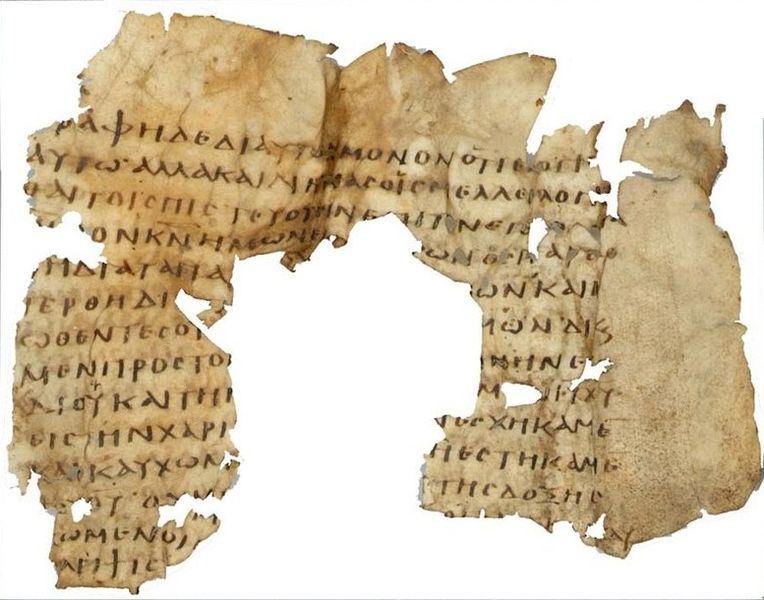
Think about this carefully.  From Genesis to Revelation the message is clear; God wants His people to exist with Him after time is destroyed. This message was communicated to an impossible variety of people, sometimes separated by hundreds of years, thousands of miles, culture, kingdom, race, and language. There are tens of thousands of manuscripts of these ancient texts in many, many different languages. There are some 25,000 New Testament manuscripts or fragments that are separated by about a thousand years, at least 8 different languages, hundreds (if not thousands) of miles of geography, and many different cultures. Yet, they are at least 95% accurate to each other. The remaining 5% do not contain a single contradiction; rather, they are spelling errors, slips of the pen, writing on the wrong line, or minor variances (“God said” vs. “He said” or “and” vs. “but”).

Of the rich libraries we have of ancient literature, none can hold even the dimmest candle to the profound accuracy and unity of the scriptures. They could not have been produced by man alone. There had to be Someone not confined by time supervising each person as they wrote. Keep in mind, these ancient cultures did not have the advantage of modern communication. They were almost totally isolated from each other and would have known little of the others’ existence, much less what they experienced or wrote from God. Our Bible has supernatural origins and its contents reveal the nature of our Creator. What I believe comes from this book because I know it is God’s message to mankind. I encourage those who have not already done so to do an in-depth study of the origin of scripture. It is one of the most faith-building studies anyone could undertake. When you know with certainty that what you are reading contains the actual thoughts and desires of God, it bolsters your faith in ways I could not begin to adequately describe.

764px-uncial_0220_rom-4.23-5.3
Uncial 220 (fragment of Romans 4:23-5:3)

“Weaponizing” The Bible

Neal Pollard

While politicians have quoted the Bible as far back as the founding fathers, have you noticed the trend especially in the last 20 years or so to use Scripture to push a policy or score a point? Perhaps it’s to pander to a group or to reinforce one’s position. During the historic impeachment proceedings in the House of Representatives, the Bible was “weaponized” by both sides of the aisle in embarrassing, repulsive ways. One side compared the impeachment trial of the President to Jesus before Pilate, producing a tasteless, horrific analogy. The other side ripped Romans 1:25 from context to admonish the President’s supporters as worshipping the “creature” more than the “Creator”–I wonder if this extremely liberal politician bothered to read the very next few verses? The God of heaven must be filled with righteous wrath over such misuses of His Word!

Unbelievers have long tried to weaponize the Bible against those who believe God’s Word is inspired. A favorite “go to” is Matthew 7:1 (“judge not that you be not judged”) as a shield for any number of immoral deeds which Scripture itself condemns. This is often an effort to turn what people claim to follow (the Bible) against them to defend their actions. John 8:7 (“let him that is without sin cast the first stone”) is a close second and used similarly 

Yet, each of us needs to be careful not to remove a Bible verse from its context to make it say what it is not saying. Peter warned that “the untaught and unstable distort” the Scriptures to their own destruction (2 Pet. 3:16). Often, it’s a general ideas like “God wants me to be happy” or misuses of Scripture like “where two or three are gathered together in my name” to have it say what it does not mean.  Perhaps we defend our actions with our physical or Christian family by appealing to wonderful Bible concepts like grace, love, and freedom, but in effect weaponize them to suit our lifestyle choices. Scripture itself says these concepts can be misappropriated (Jude 4, 1 Cor. 13:4-7, Gal. 5:13, etc.). 

Scripture is a powerful weapon which God intends for us to use in spiritual warfare (Heb. 4:12; Eph. 6:14-17). But, as with every weapon, it must be handled properly (2 Tim. 2:15). I must understand that God will be displeased if I misuse this omnipotent tool. Used properly and in context, Scripture is powerful. Used otherwise, we will hurt ourselves and probably others!

221b Baker Street

The Benefits Of Finding Ourselves In Scripture

Neal Pollard

Given his job, the Ethiopian of Acts 8 was one of that country’s most important people. Yet, he was more than important. He was very religious, apparently a proselyte (convert) to the Jewish faith. He didn’t restrict his religion to the assemblies. He read his Bible even when he was going about his secular tasks (Acts 8:28). Though he could not enter the assembly of the Lord (Deut. 23:1), he made the long and grueling trip from northern Africa to Palestine and was returning home. Many of us are familiar with the Old Testament passage he was reading when Philip joined him in his chariot. Reading Acts 8:32-33, we recognize the place as Isaiah 53:7-8. The Eunuch was trying to find out about who Isaiah wrote about, “of himself or of some other man” (Acts 8:34). Philip preached Jesus to him and he became a Christian (Acts 8:35-39).

Those are essentially the facts. Yet, I wonder how coincidental it was that the Eunuch was reading from that part of Old Testament scripture. This African official likely had a scroll containing the entire prophecy of Isaiah, which was not divided into the individual chapters like they are today. It would seem that the context in which Isaiah 53 occurs would be of particular interest to this man. Flip forward a few chapters to Isaiah 56. Isaiah is telling foreigners and eunuchs not to look down on themselves (3-5).

This official of Candace was very likely not some hopeless non-Jew looking for a crumb from the Jews’ table. He had the great hope and promise of Scripture. Perhaps this portion of Isaiah was of particular motivation and inspiration to him. For Philip to explain that the time of that prophecy had now been fulfilled, that access to this promise was now available, certainly led the Eunuch to urgently respond and enthusiastically react. Jesus was the One referenced in Isaiah 53, but he (the Eunuch) was the one referenced in Isaiah 56. No, not just him, but all like him–one from the “all nations” of Isaiah 56:7 who could reap the benefits brought by the “Sin-bearing Servant” of Isaiah 53 and the one who would “sprinkle many nations” (52:15).

I hope that you read your Bible with the same hunger and expectation. Perhaps there are portions that bring you greater hope and expectation, that speak with greater poignancy to your life’s circumstances. The Bible is a book filled with wonderful, relevant promises. Trust them. Let them bear you along through the rough spots of life. God designed the Bible to be a book of hope and inspiration, but it cannot do us any good unless and until we consult it! Find yourself in the Bible!

8ca1271b91f7acccd098a3db98a1689e-bible

Why Is The World Asking “Why?”

Neal Pollard

Today, everyone is hurting. Whether because of gun or knife violence or vehicular homicide, groups of people in our nation and other parts of the world are being torn from time and prematurely vaulted into eternity. We weep and mourn for the loss. We consider the enormous grief and heartache multiplied many families face from California to Florida, Connecticut to Texas, Colorado to Tennessee, Virginia to Nevada (and many other places).  Those whose voices we hear the most through all of this, like the national and local media, seem fixated on learning the perpetrator’s motive each time it occurs. Experts and analysts look at religious ideology or mental health issues. It seems as if they believe that if they can determine the motive, that will solve the violent epidemic that has disturbed the peace of so many people in our society. The danger of oversimplifying any specific tragedy notwithstanding, there are some right answers the world will have a difficult time embracing but that get us so much closer to resolving this plaguing problem. Why are these horrific crimes occurring?

  • The world has rejected God. Romans 1:28 says, “ And just as they did not see fit to acknowledge God any longer, God gave them over to a depraved mind, to do those things which are not proper….” “Not proper” seems benign to us in the way we use the phrase in English (bad table manners, having your shirt untucked, etc.). Kittel says, “Paul has in mind what is offensive even to natural human judgment. The decision against God leads to a complete loss of moral sensitivity, the unleashing of unnatural vices, and hence the type of conduct that even healthy pagans regard as improper” (386). Paul tells us this improper conduct includes “all unrighteousness, wickedness, greed, evil; full of envy, murder, strife” and other things we see in these current tragedies (29, cf. 30-31). Read the context to appreciate the rotten fruit of such thinking.
  • The world has redefined sin. A worldview or value system is built bit by bit, choice by choice. Paul writes, “Do not be deceived, God is not mocked; for whatever a man sows, this he will also reap. For the one who sows to his own flesh will from the flesh reap corruption, but the one who sows to the Spirit will from the Spirit reap eternal life” (Gal. 6:7-8). If we devalue human life through sinful practices like abortion or euthanasia, we plant destructive seed. If we glorify violence or imbibe in sins like pornography that objectify human beings, we plant desensitizing seed. Long ago, Isaiah warned, “Woe to those who call evil good, and good evil; Who substitute darkness for light and light for darkness; Who substitute bitter for sweet and sweet for bitter!” (5:20). Such leads to weeds which choke out spiritual fruit.
  • The world has rebelled against biblical counsel. The absolute truth of Scripture is lost in the shuffle of worldly values. Jesus says, “Treat others the same way you want them to treat you” (Luke 6:31). He says, “Love your enemies and pray for those who persecute you” (Mat. 5:44). Paul echoes, “Do not be overcome by evil, but overcome evil with good” (Rom. 12:21). He also writes, “Do nothing from selfishness or empty conceit, but with humility of mind regard one another as more important than yourselves; do not merely look out for your own personal interests, but also for the interests of others” (Phil. 2:3-4). The Bible urges us to be kind, unselfish, compassionate, and helpful through precepts and examples. The world has ignored the ethics of Scripture in preference of humanistic philosophy.
  • The world has replaced God with self as lord. What is the ultimate consequence of denying God the place that rightfully belongs only to Him? Isaiah referred to a worldly nation, saying, “I have spread out My hands all day long to a rebellious people, Who walk in the way which is not good, following their own thoughts” (65:2). Repeatedly, Scripture decries the folly of crowning ourselves king and dethroning God (Jer. 10:23; Prov. 14:12; 16:25).  When a society writes its own rules or tries to live life on its own terms, it charts a path for heartache and disaster. How concisely Solomon says this, that “Righteousness exalts a nation, but sin is a disgrace (shame, reproach) to any people” (Prov. 14:34). When whatever a person says, wants, or believes is what goes, ultimately nothing is out of bounds for him or her.

Brethren, in this frightening, dark, and uncertain atmosphere, a world which “lies in the power of the evil one” (1 John 5:19), we must share what we know! John says, “We know that we are of God…and we know that the Son of God has come, and has given us understanding so that we may know Him who is true; and we are in Him who is true, in His Son Jesus Christ. This is the true God and eternal life” (5:19a, 20). We have security, confidence, understanding, and hope, all because of God and His Son. Take courage and share that with everyone you can! It’s the only hope the world has!

kcmkjjb5i

The Difference Between Unity And Union

Neal Pollard

When I was a little boy, I heard my dad contrast these two ideas, union and unity, with an interesting illustration.  He said, “You can tie two cats’ tails together and hang them over a clothes line. You may have union, but you do not have unity.”  Recently, political pundits have been making a somewhat similar contrast concerning the European Union. They are bound together economically, socially, and geographically, but there is at times a lack of unity.  These ties have not led to effective communication and information sharing in dealing with terrorist threats. Distrust, the ambitions of individual EU countries, and autonomous business dealings with nations outside its union all contribute to an uneasy synthesis between themselves.

There is great misunderstanding in the religious world and, at times, in the Lord’s church about what biblical unity is.  While there are those who believe that unity demands agreement on matters that ultimately are not established and determined in Scripture (how/if Bible classes are divided, whether to extend an invitation after a sermon, whether or not to meet on Sunday night, order of worship services—i.e., Lord’s Supper or sermon first, etc.), there are many others who believe that unity is possible where union is really what is attempted.

Scripture is the basis of unity! Jesus defined the oneness He wanted His followers to have as reflective of the unity He shares with the Father (John 17:20-21). Through His inspired writer, Paul, He emphasizes the importance of unity, saying that we are to “be diligent to preserve the unity of the Spirit in the bond of peace” (Eph. 4:3). Unity is clearly defined as existing within a diligence to preserve the truth of “one body…one spirit…one hope…one Lord, one faith, one baptism…one God and Father of all…” (Eph. 4:4-6). The New Testament tells us in specific terms what’s involved in each of these. Attempting to be tied and bound to those who reject or attempt to change what Scripture says about these is not biblical unity. It amounts to tying together what’s incompatible and incongruous. That’s just inconceivable!

2000px-eu_member_states_and_candidate_countries_map-svg

I LOVE TO LEARN HIS WORD (Poem)

Neal Pollard

Each exploration is an expedition
Into new, uncharted depths
As deeper I go, with each new mission
I steady my faltering steps.

So much to learn and understand
I will never reach the summit
But the journey is sweet, His precepts grand
That guard me from a spiritual plummet.

Desire to know enlarges each time
I dig for unsearchable treasure
Better than gold and far more sublime
Than earth can weigh, feel, or measure.

Lord, help me to grow as deeper I go
Into Your will and mind
And help me to practice the truth that I know
So the fairer land some day I’ll find.

3668060306_88cc3d93fc_b

“Weapons Of Mass Instruction”

Neal Pollard

The Department of Homeland Security has a fact sheet about the threat of chemical, radioactive, and biological weapons, euphemistically referred to as “weapons of mass destruction.” The International Atomic Energy Agency’s director, Yukiya Amano, spoke recently about the potential harm terrorists could inflict if they get their hands on such materials (cf. dhs.gov; iaea.org). A self-defining term, such weapons, bombs equipped with such agents as smallpox or ricin, could tear through populated areas and cause havoc in communities. Weapon implies something aggressive and powerful. Mass suggests an untold, large number. Destruction means done away or undone. The prospect of such is unnerving.

Yet, the Bible calls itself a weapon. It’s a sword (Eph. 6:17). It is a precise, sharp sword (Heb. 4:12). God says His “word” is “like fire…and like a hammer which shatters a rock” (Jer. 23:29). The word of God fights and destroys evil. It tears down prejudice. It melts away stubborn disobedience. It slaughters the old man. Everyone who does not yield to it now will ultimately do so (Phil. 2:10-11).

This weapon is intended for the masses. As the gospel is the power of God to save (Rom. 1:16) and the gospel must be preached to save (Rom. 10:10-17), the Great Commission—“Go into all the world and preach the gospel to all creation” (Mark 16:16)—entails taking the weapon out of hiding and applying it is “all the word” by preaching it. We’re not permitted to conceal it. If the weapon is appropriately received, it elevates man in his plight here (John 10:10) while it cuts away the spiritual dross (Ps. 119:119), circumcises the heart (Col. 2:11-12), and surgically removes the sin that will keep a soul from heaven (cf. Jer. 4:4). There is not a soul on the globe that can do without exposure to this weapon.

This weapon, meant for the masses, builds up and enlivens (John 6:63). It bears fruit (Luke 8:15). It gives spiritual health (Prov. 4:22). It is an aid and help (Psa. 119:147) At least 48 times, God’s word is called instructions. The word is said to be profitable because it instructs (2 Tim. 3:16). It instructs us on how to walk and please God (1 Th. 4:1), how to have fruitful discussion (1 Tim. 1:5), and how to have wisdom and understanding (cf. Prov. 23:23). It is a weapon which, when used, can save a life for eternity.

Are we working as agents to disseminate this weapon of mass instruction? We do not want to be guilty of far worse than war crimes as we stand before the heavenly tribunal! Eternity demand that we use this weapon!

6891372851_bddcc8d834_o

Attributing Work To The Holy Spirit

Neal Pollard

Inquiring minds want to know.  How does God work through providence? How does He answer our prayers to strengthen, help, lead, and endow us with wisdom? We are without doubt that God is active, interested, and involved in our lives today. Deism denies this, saying that a Creator set things in motion and then permanently stepped out of the picture on planet earth. Theism affirms His present involvement and interest in the affairs of men today. The dogmatic at either extreme purport to speak for God, absolutely affirming or denying what He does or does not do. There is an area in which we cannot say how God operates or whether it is the Father, Son, or Spirit who is at work simply because it has not been revealed and we are not in a position to observe what is transpiring in the heavenly realm. Moses once said, “The secret things belong to the LORD our God, but the things revealed belong to us and to our sons forever, that we may observe all the words of this law” (Deut. 29:29).  Moses told Israel that some things aren’t revealed to us, but he also said some things are revealed. We are obligated to observe what is revealed.  We are on dangerous ground when we affirm what Scripture does not reveal.

Scripture does not reveal that the Spirit is involved in our decision-making in a direct way apart from the Word. It does not indicate that He is stirring inside our hearts, influencing us to think, speak, or act in a given way for a given purpose or moment.  He does not give us our words in the miraculous way He did for the apostles, who had no need to prepare or study for a given moment (cf. Matt. 10:19-20).  When we boldly assert such things, we stand without the foundation of revealed truth beneath us and, at best, stand upon dangerous conjecture.

The Spirit’s work in written revelation informs my heart and mind, and it (Scripture) awakens me to appreciate and depend upon the power of God through that word and its promises.  The Bible says we are strengthened with might through His Spirit in the inner man (Eph. 3:16).  We do not know the full implication of that promise, though we are thrilled by it. What a leap it is to go from acknowledging the Spirit strengthens us to claiming He gives us thoughts, ideas, or direct guidance in addition to His Word.  If we say, “The Spirit led me to take this job” or “The Spirit told me to speak to that person” or “The Spirit told me I’m saved,” we speak from ignorance (i.e., lack of knowledge or information). Kathy once studied with a woman and showed her the multitude of passages proving the essentiality of baptism, but she replied, “But the Spirit told me I’m saved.” We know that it was her own will and desire in her heart that she attributed to God. That is the danger of such reckless assertions. We easily confuse what we desire and prefer with “the will of God” or even “the Spirit’s work.” God repeatedly warns that our hearts can deceive us, that we can credit God for what, in reality, is our will (Prov. 14:12; 16:25; Jer. 10:23).

We do need to study the personality, the work, and the Deity of the Holy Spirit more. It is obvious, hearing and reading after even some brothers and sisters in Christ, that we have neglected studying about Him. Let us handle each other without suspicion, in a spirit of love and kindness and without attacking people and personalities. Let us also always be careful not to “exceed what is written” (1 Cor. 4:6), never adding to or taking away from what is revealed (Rev. 22:18-19). Yet, let us be grateful that our great God is interested and involved in our lives, being content to affirm only what Scripture reveals.

If The Bible Is God’s Word…

Neal Pollard

  • It answers the biggest mysteries of this life that so baffle humanity.
  • It reveals the plan of the Creator of everything.
  • We are accountable to it.
  • It tells us where we are going.
  • It will give us a guide we can have confidence in as we head to the future.
  • We cannot refuse to follow it.
  • We should share it with as many people as we possibly can.
  • It is not on a par with other books; it is superior to all of them.
  • He disapproves of religious division.
  • There is a right way to worship Him.
  • We can know the truth.
  • We discover some great, precious and exciting truths and promises.
  • The New Testament church is eternally important.
  • We should read and study it faithfully.

Investigate the Bible and explore its origin and the book as it is today.  God’s Word is not afraid of investigation.  It has been more scrutinized than any other book ever written, and it still stands.  It is a foundation we can confidently build our lives upon.  It is a guide that can safely lead us now and forever.  Have you been in the book of books today?

KNOWING GOD THROUGH THE BIBLE

Neal Pollard

The tendency to try and make subjective experience as more meaningful and valuable than objective truth is age old. We would rather feel something than learn or obey something. Yet, notice how thoroughly the Bible shows that adequate knowledge of God relies upon studying and knowing the Bible.

• GENESIS (24:12-14)–God’s KINDNESS is knowable.
• EXODUS (14:4-18)–God’s MATCHLESS HONOR is knowable.
• LEVITICUS (23:43)–God’s PROTECTING NATURE is knowable.
• NUMBERS (16:28)–God’s SPOKESMEN are knowable.
• DEUTERONOMY (4:35)–God’s PREEMINENCE is knowable.
• JOSHUA (23:13)–God’s CONDITIONS are knowable.
• JUDGES (6:37)–God’s INTERVENTION is knowable.
• RUTH (2:12)–God’s REWARD is knowable.
• 1 SAMUEL (17:46-47)–God’s MEANS OF SALVATION is knowable.
• 2 SAMUEL (7:18-29)–God’s PROMISES are knowable.
• 1 KINGS (20:28)–God’s SUPREMACY is knowable.
• 2 KINGS (19:19)–God’s UNIVERSAL AUTHORITY is knowable.
• 1 CHRONICLES (28:9)–God’s DIVINE QUALITIES are knowable.
• 2 CHRONICLES (25:16)–God’s DISAPPROVAL is knowable.
• EZRA (7:25)–God’s LAWS are knowable.
• NEHEMIAH (9:14)–God’s REVELATION is knowable.
• ESTHER (4:14 + rest of book)–God’s USE OF PROVIDENCE is knowable (even if we don’t know what is or isn’t providence).
• JOB (19:25)–God’s REDEMPTIVE WORK is knowable.
• PSALMS (100:3)–God’s CREATIVE POWER is knowable.
• PROVERBS (24:12)–God’s LIMITLESS ABILITY is knowable.
• ECCLESIASTES (3:14)–God’s PERFECTION is knowable.
• SONG OF SOLOMON–God’s DEVOTION TO MARRIAGE is knowable.
• ISAIAH (60:16)–God’s SALVATION & REDEMPTION are knowable.
• JEREMIAH (16:21)–God’s NAME & MIGHT are knowable.
• LAMENTATIONS–God’s STANDARD FOR PUNISHMENT is knowable.
• EZEKIEL (5:13)–God’s ZEALOUS WORD is knowable.
• DANIEL (11:32)–God’s STRENGTHENING is knowable.
• HOSEA (13:4)–God’s WORSHIP REQUIREMENTS are knowable.
• JOEL (2:27)–God’s PRESENCE is knowable.
• AMOS (3:2)–God’s HATRED OF INIQUITY is knowable.
• OBADIAH–God’s FEELINGS TOWARD PRIDE are knowable.
• JONAH (4:2)–God’s GRACIOUSNESS is knowable.
• MICAH (6:5)–God’s RIGHTEOUSNESS is knowable.
• NAHUM (1)–God’s PROTECTIVE CARE is knowable.
• HABAKKUK (2:14)–God’s GLORY is knowable.
• ZEPHANIAH (2:3)–God’s DESIRE TO BE SOUGHT is knowable.
• HAGGAI–God’s MISSION is knowable.
• ZECHARIAH (2:9-13)-God’s PLAN OF SALVATION is knowable.
• MALACHI (2:4-5)–God’s COVENANT is knowable.
• MATTHEW (22:16)–God’s TEACHINGS are knowable.
• MARK (1:24)–God’s HOLINESS is knowable.
• LUKE (11:13)–God’s BENEVOLENCE is knowable.
• JOHN (17:3)–God’s UNIQUENESS is knowable.
• ACTS (2:36-47)–God’s REQUIREMENTS FOR SALVATION are knowable.
• ROMANS (8:28)–God’s ASSURANCE TO THOSE WHO LOVE HIM is knowable.
• 1 CORINTHIANS (2:12)–God’s SPIRITUAL BLESSING OF REVELATION is knowable.
• 2 CORINTHIANS (8:9)–God’s GRACE is knowable.
• GALATIANS (3:7)–God’s HEIRS are knowable.
• EPHESIANS (1:17-19)–God’s BESTOWED WISDOM & HOPE are knowable.
• PHILIPPIANS (3:8-11)–God’s SON is knowable.
• COLOSSIANS (4:1)–God’s MASTERFUL ROLE is knowable.
• 1 THESSALONIANS (1:4)–God’s MEANS OF ELECTION is knowable.
• 2 THESSALONIANS (3:7)–God’s GOOD EXAMPLES are knowable.
• 1 TIMOTHY (3:15)–God’s CODE OF CONDUCT IN THE HIS HOUSEHOLD is knowable.
• 2 TIMOTHY (3:15-17)–God’s HOLY SCRIPTURES are knowable.
• TITUS (1:9-16)–God’s SOUND DOCTRINE is knowable.
• PHILEMON–God’s FREEDOM FROM SIN & CALL FOR SERVICE IN CHRIST is knowable.
• HEBREWS (8:11-13)–God’s SUPERIOR SALVATION is knowable.
• JAMES (2:20)–God’s DEMAND FOR ACTIVE FAITH is knowable.
• 1 PETER (1:18-19)–God’s INCORRUPTIBLE MEANS OF SALVATION is knowable.
• 2 PETER (3:17)–God’s FOREWARNINGS are knowable.
• 1 JOHN (4:2)–God’s SPIRIT is knowable.
• 2 JOHN 1–God’s TRUTH is knowable.
• 3 JOHN 12–God’s INSPIRED WRITERS’ TRUTHFUL RECORD is knowable.
• JUDE (4-23)–God’s ENEMIES are knowable.
• REVELATION (2:10,17)–God’s REWARD is knowable.

This does not begin to exhaust the list of things which the Bible tells us we can know! God has not left us to grope in the dark. Neither has He left it up to us to decide to live however we want to live.

T.H.I.N.K. (Teens Happily Ingesting New Knowledge)

Neal Pollard

How fitting that they were there studying James 1:22, as Michael Hite taught.  Well over 20 of them gathered in one living room, hunkered down for nearly 90 minutes as just eight verses were covered in-depth, they seemed like budding archaeologists finding some new treasure.  That they have been doing this week after week for nearly nine months is incredible! Rather than losing interest, they seem to be building it.  Not only that, they are inviting non-Christian friends, concocting ways to serve the Lord and others, and growing more knowledgeable in the meat of the word.  There is no sense of obligation evidenced, but a genuine desire to be together investigating the truth of the Bible.  Yes, they have an excellent teacher, but they also have a true hunger.  They are like those Jesus’ praises in Matthew 5:6, hungering and thirsting for righteousness.  They are like those Luke reports about in Acts 17:11, eagerly receiving the word.  They are like those James challenges the Christians to be, quick to hear the word (1:19) and looking into the perfect law of liberty and continuing in it (1:25).

Frankly, they challenge you and me.  They are saying, by example, “we are willing to commit an extra couple of hours every week in addition to our regular assemblies to go deeper in studying God’s Word!  We do not have to, but we want to do it.  Not only that, we are growing (2 Pe. 3:18) and using this study to improve our spiritual walk (Col. 1:9-12)!  It is motivating us to do good works (cf. 1 Ti. 6:18). We are applying it and it is changing our lives!”  Of course, that is what scripture is meant to do for each of us.

We must develop a taste for the milk and meat of the Master’s message!  The more we thoughtfully take in, the more we will want.  Bear Valley teens, thank you for challenging us to step it up!  We will try to keep up with you!


Addicted To The Taste

Neal Pollard

On a slightly different life’s path, Kathy could easily be a world-famous, wealthy celebrity on Food Network.  Her culinary skills and creativity in the kitchen has yielded some incredible dishes that would cave the iron-willed. Incredibly, she has learned through the years to make things that are good for you not simply palatable but tasty!

In 1 Peter 2, Peter urges Christians, facing an ultimate inheritance from a God who wanted them though impeded by persecution by a world who did not want them, “Therefore, laying aside all malice, all deceit, hypocrisy, envy, and all evil speaking, as newborn babes, desire the pure milk of the word, that you may grow thereby, if indeed you have tasted that the Lord is gracious” (1-3).

Peter urges them to purge from their spiritual diet those dangerous additives of attitudes in verse one.  They are more than malnourishing; they are poisonous!  Instead, he calls for them to hanker for the pure milk of God’s Word.  What would heighten their craving was having tasted the Lord’s graciousness.

May I suggest that this is a cyclical process.  In other words, we must be willing to begin feeding on the word.  For most, this is an acquired taste.  But from the first serving, the reader gets a taste of God’s good food.  It nourishes and satisfies.  It illuminates the soul.  It is practical in daily application.  It helps forge a closeness with God.  It gives strength in a difficult world.  The blessings of Scripture are multifarious, endless, and inexhaustible. The very experience of all of this by the consumer drives him or her right back into the Word for more!

Are you addicted to the sweet savor of Scripture?  If you are not partaking, you are starving your soul!  Those hunger pangs you feel cannot be satisfied by adulterated alternatives. Let us say with the ancient patriarch Job, “I have not departed from the commandment of His lips; I have treasured the words of His mouth more than my necessary food” (23:12).