The Difference Between Unity And Union

Neal Pollard

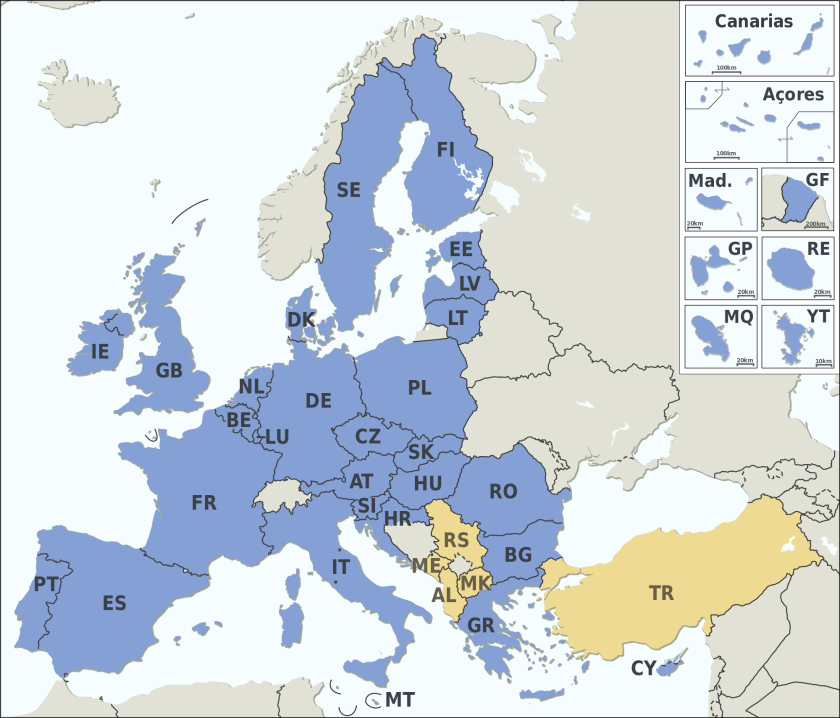
When I was a little boy, I heard my dad contrast these two ideas, union and unity, with an interesting illustration.  He said, “You can tie two cats’ tails together and hang them over a clothes line. You may have union, but you do not have unity.”  Recently, political pundits have been making a somewhat similar contrast concerning the European Union. They are bound together economically, socially, and geographically, but there is at times a lack of unity.  These ties have not led to effective communication and information sharing in dealing with terrorist threats. Distrust, the ambitions of individual EU countries, and autonomous business dealings with nations outside its union all contribute to an uneasy synthesis between themselves.

There is great misunderstanding in the religious world and, at times, in the Lord’s church about what biblical unity is.  While there are those who believe that unity demands agreement on matters that ultimately are not established and determined in Scripture (how/if Bible classes are divided, whether to extend an invitation after a sermon, whether or not to meet on Sunday night, order of worship services—i.e., Lord’s Supper or sermon first, etc.), there are many others who believe that unity is possible where union is really what is attempted.

Scripture is the basis of unity! Jesus defined the oneness He wanted His followers to have as reflective of the unity He shares with the Father (John 17:20-21). Through His inspired writer, Paul, He emphasizes the importance of unity, saying that we are to “be diligent to preserve the unity of the Spirit in the bond of peace” (Eph. 4:3). Unity is clearly defined as existing within a diligence to preserve the truth of “one body…one spirit…one hope…one Lord, one faith, one baptism…one God and Father of all…” (Eph. 4:4-6). The New Testament tells us in specific terms what’s involved in each of these. Attempting to be tied and bound to those who reject or attempt to change what Scripture says about these is not biblical unity. It amounts to tying together what’s incompatible and incongruous. That’s just inconceivable!

2000px-eu_member_states_and_candidate_countries_map-svg

I LOVE TO LEARN HIS WORD (Poem)

Neal Pollard

Each exploration is an expedition
Into new, uncharted depths
As deeper I go, with each new mission
I steady my faltering steps.

So much to learn and understand
I will never reach the summit
But the journey is sweet, His precepts grand
That guard me from a spiritual plummet.

Desire to know enlarges each time
I dig for unsearchable treasure
Better than gold and far more sublime
Than earth can weigh, feel, or measure.

Lord, help me to grow as deeper I go
Into Your will and mind
And help me to practice the truth that I know
So the fairer land some day I’ll find.

3668060306_88cc3d93fc_b

“Weapons Of Mass Instruction”

Neal Pollard

The Department of Homeland Security has a fact sheet about the threat of chemical, radioactive, and biological weapons, euphemistically referred to as “weapons of mass destruction.” The International Atomic Energy Agency’s director, Yukiya Amano, spoke recently about the potential harm terrorists could inflict if they get their hands on such materials (cf. dhs.gov; iaea.org). A self-defining term, such weapons, bombs equipped with such agents as smallpox or ricin, could tear through populated areas and cause havoc in communities. Weapon implies something aggressive and powerful. Mass suggests an untold, large number. Destruction means done away or undone. The prospect of such is unnerving.

Yet, the Bible calls itself a weapon. It’s a sword (Eph. 6:17). It is a precise, sharp sword (Heb. 4:12). God says His “word” is “like fire…and like a hammer which shatters a rock” (Jer. 23:29). The word of God fights and destroys evil. It tears down prejudice. It melts away stubborn disobedience. It slaughters the old man. Everyone who does not yield to it now will ultimately do so (Phil. 2:10-11).

This weapon is intended for the masses. As the gospel is the power of God to save (Rom. 1:16) and the gospel must be preached to save (Rom. 10:10-17), the Great Commission—“Go into all the world and preach the gospel to all creation” (Mark 16:16)—entails taking the weapon out of hiding and applying it is “all the word” by preaching it. We’re not permitted to conceal it. If the weapon is appropriately received, it elevates man in his plight here (John 10:10) while it cuts away the spiritual dross (Ps. 119:119), circumcises the heart (Col. 2:11-12), and surgically removes the sin that will keep a soul from heaven (cf. Jer. 4:4). There is not a soul on the globe that can do without exposure to this weapon.

This weapon, meant for the masses, builds up and enlivens (John 6:63). It bears fruit (Luke 8:15). It gives spiritual health (Prov. 4:22). It is an aid and help (Psa. 119:147) At least 48 times, God’s word is called instructions. The word is said to be profitable because it instructs (2 Tim. 3:16). It instructs us on how to walk and please God (1 Th. 4:1), how to have fruitful discussion (1 Tim. 1:5), and how to have wisdom and understanding (cf. Prov. 23:23). It is a weapon which, when used, can save a life for eternity.

Are we working as agents to disseminate this weapon of mass instruction? We do not want to be guilty of far worse than war crimes as we stand before the heavenly tribunal! Eternity demand that we use this weapon!

6891372851_bddcc8d834_o

Attributing Work To The Holy Spirit

Neal Pollard

Inquiring minds want to know.  How does God work through providence? How does He answer our prayers to strengthen, help, lead, and endow us with wisdom? We are without doubt that God is active, interested, and involved in our lives today. Deism denies this, saying that a Creator set things in motion and then permanently stepped out of the picture on planet earth. Theism affirms His present involvement and interest in the affairs of men today. The dogmatic at either extreme purport to speak for God, absolutely affirming or denying what He does or does not do. There is an area in which we cannot say how God operates or whether it is the Father, Son, or Spirit who is at work simply because it has not been revealed and we are not in a position to observe what is transpiring in the heavenly realm. Moses once said, “The secret things belong to the LORD our God, but the things revealed belong to us and to our sons forever, that we may observe all the words of this law” (Deut. 29:29).  Moses told Israel that some things aren’t revealed to us, but he also said some things are revealed. We are obligated to observe what is revealed.  We are on dangerous ground when we affirm what Scripture does not reveal.

Scripture does not reveal that the Spirit is involved in our decision-making in a direct way apart from the Word. It does not indicate that He is stirring inside our hearts, influencing us to think, speak, or act in a given way for a given purpose or moment.  He does not give us our words in the miraculous way He did for the apostles, who had no need to prepare or study for a given moment (cf. Matt. 10:19-20).  When we boldly assert such things, we stand without the foundation of revealed truth beneath us and, at best, stand upon dangerous conjecture.

The Spirit’s work in written revelation informs my heart and mind, and it (Scripture) awakens me to appreciate and depend upon the power of God through that word and its promises.  The Bible says we are strengthened with might through His Spirit in the inner man (Eph. 3:16).  We do not know the full implication of that promise, though we are thrilled by it. What a leap it is to go from acknowledging the Spirit strengthens us to claiming He gives us thoughts, ideas, or direct guidance in addition to His Word.  If we say, “The Spirit led me to take this job” or “The Spirit told me to speak to that person” or “The Spirit told me I’m saved,” we speak from ignorance (i.e., lack of knowledge or information). Kathy once studied with a woman and showed her the multitude of passages proving the essentiality of baptism, but she replied, “But the Spirit told me I’m saved.” We know that it was her own will and desire in her heart that she attributed to God. That is the danger of such reckless assertions. We easily confuse what we desire and prefer with “the will of God” or even “the Spirit’s work.” God repeatedly warns that our hearts can deceive us, that we can credit God for what, in reality, is our will (Prov. 14:12; 16:25; Jer. 10:23).

We do need to study the personality, the work, and the Deity of the Holy Spirit more. It is obvious, hearing and reading after even some brothers and sisters in Christ, that we have neglected studying about Him. Let us handle each other without suspicion, in a spirit of love and kindness and without attacking people and personalities. Let us also always be careful not to “exceed what is written” (1 Cor. 4:6), never adding to or taking away from what is revealed (Rev. 22:18-19). Yet, let us be grateful that our great God is interested and involved in our lives, being content to affirm only what Scripture reveals.

If The Bible Is God’s Word…

Neal Pollard

  • It answers the biggest mysteries of this life that so baffle humanity.
  • It reveals the plan of the Creator of everything.
  • We are accountable to it.
  • It tells us where we are going.
  • It will give us a guide we can have confidence in as we head to the future.
  • We cannot refuse to follow it.
  • We should share it with as many people as we possibly can.
  • It is not on a par with other books; it is superior to all of them.
  • He disapproves of religious division.
  • There is a right way to worship Him.
  • We can know the truth.
  • We discover some great, precious and exciting truths and promises.
  • The New Testament church is eternally important.
  • We should read and study it faithfully.

Investigate the Bible and explore its origin and the book as it is today.  God’s Word is not afraid of investigation.  It has been more scrutinized than any other book ever written, and it still stands.  It is a foundation we can confidently build our lives upon.  It is a guide that can safely lead us now and forever.  Have you been in the book of books today?

KNOWING GOD THROUGH THE BIBLE

Neal Pollard

The tendency to try and make subjective experience as more meaningful and valuable than objective truth is age old. We would rather feel something than learn or obey something. Yet, notice how thoroughly the Bible shows that adequate knowledge of God relies upon studying and knowing the Bible.

• GENESIS (24:12-14)–God’s KINDNESS is knowable.
• EXODUS (14:4-18)–God’s MATCHLESS HONOR is knowable.
• LEVITICUS (23:43)–God’s PROTECTING NATURE is knowable.
• NUMBERS (16:28)–God’s SPOKESMEN are knowable.
• DEUTERONOMY (4:35)–God’s PREEMINENCE is knowable.
• JOSHUA (23:13)–God’s CONDITIONS are knowable.
• JUDGES (6:37)–God’s INTERVENTION is knowable.
• RUTH (2:12)–God’s REWARD is knowable.
• 1 SAMUEL (17:46-47)–God’s MEANS OF SALVATION is knowable.
• 2 SAMUEL (7:18-29)–God’s PROMISES are knowable.
• 1 KINGS (20:28)–God’s SUPREMACY is knowable.
• 2 KINGS (19:19)–God’s UNIVERSAL AUTHORITY is knowable.
• 1 CHRONICLES (28:9)–God’s DIVINE QUALITIES are knowable.
• 2 CHRONICLES (25:16)–God’s DISAPPROVAL is knowable.
• EZRA (7:25)–God’s LAWS are knowable.
• NEHEMIAH (9:14)–God’s REVELATION is knowable.
• ESTHER (4:14 + rest of book)–God’s USE OF PROVIDENCE is knowable (even if we don’t know what is or isn’t providence).
• JOB (19:25)–God’s REDEMPTIVE WORK is knowable.
• PSALMS (100:3)–God’s CREATIVE POWER is knowable.
• PROVERBS (24:12)–God’s LIMITLESS ABILITY is knowable.
• ECCLESIASTES (3:14)–God’s PERFECTION is knowable.
• SONG OF SOLOMON–God’s DEVOTION TO MARRIAGE is knowable.
• ISAIAH (60:16)–God’s SALVATION & REDEMPTION are knowable.
• JEREMIAH (16:21)–God’s NAME & MIGHT are knowable.
• LAMENTATIONS–God’s STANDARD FOR PUNISHMENT is knowable.
• EZEKIEL (5:13)–God’s ZEALOUS WORD is knowable.
• DANIEL (11:32)–God’s STRENGTHENING is knowable.
• HOSEA (13:4)–God’s WORSHIP REQUIREMENTS are knowable.
• JOEL (2:27)–God’s PRESENCE is knowable.
• AMOS (3:2)–God’s HATRED OF INIQUITY is knowable.
• OBADIAH–God’s FEELINGS TOWARD PRIDE are knowable.
• JONAH (4:2)–God’s GRACIOUSNESS is knowable.
• MICAH (6:5)–God’s RIGHTEOUSNESS is knowable.
• NAHUM (1)–God’s PROTECTIVE CARE is knowable.
• HABAKKUK (2:14)–God’s GLORY is knowable.
• ZEPHANIAH (2:3)–God’s DESIRE TO BE SOUGHT is knowable.
• HAGGAI–God’s MISSION is knowable.
• ZECHARIAH (2:9-13)-God’s PLAN OF SALVATION is knowable.
• MALACHI (2:4-5)–God’s COVENANT is knowable.
• MATTHEW (22:16)–God’s TEACHINGS are knowable.
• MARK (1:24)–God’s HOLINESS is knowable.
• LUKE (11:13)–God’s BENEVOLENCE is knowable.
• JOHN (17:3)–God’s UNIQUENESS is knowable.
• ACTS (2:36-47)–God’s REQUIREMENTS FOR SALVATION are knowable.
• ROMANS (8:28)–God’s ASSURANCE TO THOSE WHO LOVE HIM is knowable.
• 1 CORINTHIANS (2:12)–God’s SPIRITUAL BLESSING OF REVELATION is knowable.
• 2 CORINTHIANS (8:9)–God’s GRACE is knowable.
• GALATIANS (3:7)–God’s HEIRS are knowable.
• EPHESIANS (1:17-19)–God’s BESTOWED WISDOM & HOPE are knowable.
• PHILIPPIANS (3:8-11)–God’s SON is knowable.
• COLOSSIANS (4:1)–God’s MASTERFUL ROLE is knowable.
• 1 THESSALONIANS (1:4)–God’s MEANS OF ELECTION is knowable.
• 2 THESSALONIANS (3:7)–God’s GOOD EXAMPLES are knowable.
• 1 TIMOTHY (3:15)–God’s CODE OF CONDUCT IN THE HIS HOUSEHOLD is knowable.
• 2 TIMOTHY (3:15-17)–God’s HOLY SCRIPTURES are knowable.
• TITUS (1:9-16)–God’s SOUND DOCTRINE is knowable.
• PHILEMON–God’s FREEDOM FROM SIN & CALL FOR SERVICE IN CHRIST is knowable.
• HEBREWS (8:11-13)–God’s SUPERIOR SALVATION is knowable.
• JAMES (2:20)–God’s DEMAND FOR ACTIVE FAITH is knowable.
• 1 PETER (1:18-19)–God’s INCORRUPTIBLE MEANS OF SALVATION is knowable.
• 2 PETER (3:17)–God’s FOREWARNINGS are knowable.
• 1 JOHN (4:2)–God’s SPIRIT is knowable.
• 2 JOHN 1–God’s TRUTH is knowable.
• 3 JOHN 12–God’s INSPIRED WRITERS’ TRUTHFUL RECORD is knowable.
• JUDE (4-23)–God’s ENEMIES are knowable.
• REVELATION (2:10,17)–God’s REWARD is knowable.

This does not begin to exhaust the list of things which the Bible tells us we can know! God has not left us to grope in the dark. Neither has He left it up to us to decide to live however we want to live.

T.H.I.N.K. (Teens Happily Ingesting New Knowledge)

Neal Pollard

How fitting that they were there studying James 1:22, as Michael Hite taught.  Well over 20 of them gathered in one living room, hunkered down for nearly 90 minutes as just eight verses were covered in-depth, they seemed like budding archaeologists finding some new treasure.  That they have been doing this week after week for nearly nine months is incredible! Rather than losing interest, they seem to be building it.  Not only that, they are inviting non-Christian friends, concocting ways to serve the Lord and others, and growing more knowledgeable in the meat of the word.  There is no sense of obligation evidenced, but a genuine desire to be together investigating the truth of the Bible.  Yes, they have an excellent teacher, but they also have a true hunger.  They are like those Jesus’ praises in Matthew 5:6, hungering and thirsting for righteousness.  They are like those Luke reports about in Acts 17:11, eagerly receiving the word.  They are like those James challenges the Christians to be, quick to hear the word (1:19) and looking into the perfect law of liberty and continuing in it (1:25).

Frankly, they challenge you and me.  They are saying, by example, “we are willing to commit an extra couple of hours every week in addition to our regular assemblies to go deeper in studying God’s Word!  We do not have to, but we want to do it.  Not only that, we are growing (2 Pe. 3:18) and using this study to improve our spiritual walk (Col. 1:9-12)!  It is motivating us to do good works (cf. 1 Ti. 6:18). We are applying it and it is changing our lives!”  Of course, that is what scripture is meant to do for each of us.

We must develop a taste for the milk and meat of the Master’s message!  The more we thoughtfully take in, the more we will want.  Bear Valley teens, thank you for challenging us to step it up!  We will try to keep up with you!


Addicted To The Taste

Neal Pollard

On a slightly different life’s path, Kathy could easily be a world-famous, wealthy celebrity on Food Network.  Her culinary skills and creativity in the kitchen has yielded some incredible dishes that would cave the iron-willed. Incredibly, she has learned through the years to make things that are good for you not simply palatable but tasty!

In 1 Peter 2, Peter urges Christians, facing an ultimate inheritance from a God who wanted them though impeded by persecution by a world who did not want them, “Therefore, laying aside all malice, all deceit, hypocrisy, envy, and all evil speaking, as newborn babes, desire the pure milk of the word, that you may grow thereby, if indeed you have tasted that the Lord is gracious” (1-3).

Peter urges them to purge from their spiritual diet those dangerous additives of attitudes in verse one.  They are more than malnourishing; they are poisonous!  Instead, he calls for them to hanker for the pure milk of God’s Word.  What would heighten their craving was having tasted the Lord’s graciousness.

May I suggest that this is a cyclical process.  In other words, we must be willing to begin feeding on the word.  For most, this is an acquired taste.  But from the first serving, the reader gets a taste of God’s good food.  It nourishes and satisfies.  It illuminates the soul.  It is practical in daily application.  It helps forge a closeness with God.  It gives strength in a difficult world.  The blessings of Scripture are multifarious, endless, and inexhaustible. The very experience of all of this by the consumer drives him or her right back into the Word for more!

Are you addicted to the sweet savor of Scripture?  If you are not partaking, you are starving your soul!  Those hunger pangs you feel cannot be satisfied by adulterated alternatives. Let us say with the ancient patriarch Job, “I have not departed from the commandment of His lips; I have treasured the words of His mouth more than my necessary food” (23:12).