The Kind Of Church God Doesn’t Want Us To Be

  Within the one body (Colossians 3:15) He claims, however, are individual congregations who in time depart from His doctrine, lose their distinctiveness, or drift from their evangelistic direction.  When this happens, even these are in danger of rejection (John 12:48).  Churches in Asia Minor felt this sting (cf. Revelation 2:5).  What kind of church does God not want us to be?

Neal Pollard

    The commercials are eye-catching.  The products have differed, but the aim of the ad has been the same.  Sit people, blindfolded, before a TV camera.  Parade a line of tastes and smells before them and let them choose their favorite.  Of course, the camera keeps only the records of the consumers who pick their product over the others.  How many others, whose experiments lay dead on the cutting room floor, choose “the leading brand” over the competitor paying for the commercial?  All of that is neatly set aside, thanks to the selective wonders of technology.

    How many religious groups parade themselves before God in each generation?  From His exalted throne up in heaven, He discards with perfect omniscience all who carry the doctrines of men along with their faith in Christ, their intense morality, or their evangelistic zeal (cf. Matthew 15:13).  He claims only one religious group, the one for which His Son gave His life (Acts 20:28), the one founded upon the foundation of Christ (Matthew 16:18), and the one following the pattern He has left them (John 16:13).

    Within the one body (Colossians 3:15) He claims, however, are individual congregations who in time depart from His doctrine, lose their distinctiveness, or drift from their evangelistic direction.  When this happens, even these are in danger of rejection (John 12:48).  Churches in Asia Minor felt this sting (cf. Revelation 2:5).  What kind of church does God not want us to be?

    God does not want weary churches.  Paul warns against weariness in well-doing (Galatians 6:9).  It is possible to find the narrow way so difficult to travel that a congregation finally gives up on doing right.  The right way is rarely the easiest way.  The opposition of the world pressures God’s people, and faint-hearted saints must strive to endure.

    God does not want weakened churches.  He abhors church leaders who are so afraid of losing “contributors” that they kowtow to them.  His wrath is kindled by preachers so pensive about their pension that they fall prey to tickling the ears of the worldly (2 Timothy 4:3). He has difficulty stomaching a lukewarm membership, made tepid in failing to be distinct (cf. Revelation 3:16). As always, those who stand for nothing will fall for anything.

    God does not want worldly churches.  He warns against it (James 4:4).  When churches try so hard to look like the world to the world, they ultimately fail to reach it.  They have nothing to offer it which it does not already have.  But, in the process, they lose God’s acceptance.

    God does not want “wanting” churches.  Belshazzar was “weighed in the balances” and “found wanting” (Daniel 5:27).  The goal of any church is to get beyond this stage of “wanting” (i.e., lacking) maturation and completion (James 1:4).  But, what about churches who are not trying to grow, win souls, train her males to be preachers, elders, deacons, and teachers, and train her females to be strong, convicted, pure, and holy Christian women, and learn more and more of God’s Word?

    God does not want wasteful churches.  American churches have the overwhelming majority of the money, trained preachers, facilities, schools, persons of influence, healthy bodies, and related resources.  That we are not “turning the world upside down” (Acts 17:6) is surprising.  No church, in these affluent circumstances, should struggle to meet unchallenging budgets.  Brethren should not be begged and prodded to do personal work.  Involvement and commitment should be assumed traits of born-again people!  We are sitting on a gold mine of opportunity and material wealth.  We must be able to stand before the King some day and make a good accounting of our stewardship of these things.

    Opportunities abound before us (Galatians 6:10).  Let us blossom into the churches the Father wants us to be (James 1:27)  — Jesus died for us to be (cf. Titus 2:14), and the Spirit teaches us to be (Revelation 2:7ff).  God wants a willing, working, waiting, and watchful church.  At all costs, let us avoid becoming a church God does not want us to be.

Human Value

How does one argue human value without the existence of God?

Gary Pollard

“What makes human life valuable?” 

A purely naturalistic answer is not adequate. Life begets life, which is true. Self-preservation is built into our programming, that’s true. Life is valuable because of its potential to contribute to future generations (the reproductive success aspect of biological imperatives), which is also true. Humans rely on each other for survival, that’s true. We have a unique capacity for empathy, true. We have consciousness and recognize the value of others, true (kinda). And there are cultural narratives that emphasize the value of human life (depends on the cultural narrative). 

But what stops a society from devolving into the practice of eugenics? If some have superior genetics in the mental and physical health department, why not be more selective about who gets to reproduce? Why would we allow the survival of those who don’t or can’t contribute to future generations? Why would we allow/desire the survival of those who don’t or can’t meaningfully contribute to society? What about empathy’s subjective nature? We don’t usually show empathy (as much anyways) to those whose experiences or values are very different from our own, not without a transcendent directive that calls us to aim higher than self. We have consciousness and recognize the value of others…until we decide that they aren’t valuable any longer (see all militant religious conflicts over the last fifteen centuries). And those cultural narratives that value human life are primarily religious in their nature, with none emphasizing absolute selfless love more than Christianity. By Christianity, of course, I mean actual Christians. Not godless pagans who use iconography and distorted narratives to manipulate others for personal elevation. They are not — and cannot by definition be — Christians. 

So what does make human life valuable? We have to posit their value from a transcendent point of view. 

  1. We are the only life on the planet that looks like God (Gen 1.27). While there’s been much debate over what “in his image and likeness” means, it’s not exactly ambiguous in scripture. Genesis 5.1 and 5.3 make the best case for this: “When God created people, he made them like himself.” And, “After Adam was 130 years old, he had another son who looked just like himself. Adam named his son Seth.” Same exact wording. Genesis 9.6 says, “God made humans to be like himself. So whoever kills a person must be killed by another person.” The value of human life comes from our resemblance to the Creator. 
  2. As Jesus affirmed, the two most important laws are to love God with all of our being and to love other people like self (cf. Mt 22.36-40). If we love God, we’re going to love other people — including people who hate and hurt us (Mt 5.44). That isn’t a natural reaction to hostility! Human life has value because God gave it value. 
  3. Human life is valuable because the Creator sacrificed himself to give us life. If God “Doesn’t want anyone to be destroyed, but for everyone to change their lives,” our view of people should be the same (cf. II Pt 3.9). 
  4. From a naturalistic point of view, there’s no utility in ensuring the survival of people who can’t contribute to society. Drawing from the reasons we’ve listed James says, “Pure, genuine religion is this: providing for orphans and widows who need help and keeping yourself free from the world’s evil influence” (1.27). 

Think about what we have in Christ: the encouragement he has brought us, the comfort of his love, our sharing in his spirit, and the mercy and kindness he has shown us. If you enjoy these blessings, then do what will make my joy complete: Agree with each other, and show your love for each other. Be united in your goals and in the way you think. In whatever you do, don’t let selfishness or pride be your guide. Be humble, and honor others more than yourselves. Don’t be interested only in your own life, but care about the lives of others too (Phil 2.1-4). 

Not Our Problem

Gary Pollard

If I had a dollar for every time the world was supposed to have ended in my lifetime alone, I could probably fill my gas tank. Most recently, the eclipse was supposed to mark “the end.” In Graham Hancock’s 1995 book Fingerprints of the Gods, he puts great stock in the Mayan prophecy concerning the world’s end (supposedly Dec 23, 2012, conveniently revised to “no later than 2040” in Magicians of the Gods, 2015). Y2K was supposed to be a disaster. 

Just since I was born (1993), here are a few of the times the world was supposed to end (from Wikipedia, sorry): 

  1. David Berg claimed that the earth would end in 1993. 
  2. 05.02.1994 — Neal Chase’s claim that New York City would be struck by a nuclear bomb, followed shortly by the second coming. 
  3. 09.06, 09.29, 10.2.1994 — Harold Camping’s three consecutive failed predictions that the rapture would occur on these dates. 
  4. 10.23.1997 — The date, according to 17th century bishop James Ussher, that the world was supposed to end. 
  5. 03.31.1998 — Hon-Ming Chen claimed that God would come to earth in a flying saucer at 10:00 AM. 
  6. 08.18.1999 — World was supposed to end on this day, according to the psychic The Amazing Criswell. 
  7. 09.11.1999 — Earth was supposed to burn on this date, according to Philip Berg. 
  8. At least a dozen different public figures claimed the earth would end in the year 2000 (Jerry Falwell, Tim LaHaye, Jerry B. Jenkins, James Harmston, Ruth Montgomery, Edgar Cayce, Sun Myung Moon, Ed Dobson, Lester Sumrall, and others). 
  9. Some 22 other predictions between 2000 and 2024 claimed that the end of earth was imminent. 

Does earth have an expiration date? Of course! But it makes us (understandably) look ridiculous when we fall for the doomsday-predictors’ nonsense. To comfort the churches at Thessalonica, Paul made it clear that we can’t miss the second coming. A few things have to take place first: 

  1. Lawlessness runs the entire world (2.3)
  2. The majority of Christians all around the world abandon God (II Thess 2.3). 
  3. Religion is discarded (2.4). 

We aren’t there yet. The church is still doing great things all over the world! The world is chaotic, but nowhere near as bad as it could be. Rather than discarding religion, we’re now seeing people pursue it, fed up with hedonism and its best friend nihilism. This may change in our lifetime, it may not. 

I’m writing this in light of what’s happened over the last few days in the Middle East. Already we’re seeing people claim that “Armageddon” is coming because Iran attacked Israel. The point is this: we simply don’t know when Jesus will return. Of all people, we’re the ones who are supposed to be least concerned about it! Rather than portraying an image of gullibility, let’s showcase Jesus’s love to our fellow people. If he returns, great! If not, we have much better things to do than share, post, re-post, or otherwise buy into doomsday speculations. 

What Is Truth?

Gary Pollard

Introductory Explanation:

[This is an excerpt from some research I’m doing on first principles. A dangerous, neatly-organized method of destroying faith has developed in recent years, and I’m trying to wrap my tiny brain around it. The conclusion I’ve come to is that addressing each and every issue would take years, but that each one could be satisfied with a return to first principles. This section addresses the notion that truth is fluid and subject to the influence of time, language, and culture, and that no reliable, universal constants exist.] 

In Platonic thought, there is a concept known as Forms. These are things that exist outside of our physical perception but are universally accepted as Real. For example, no one has ever seen a “perfect” circle or a perfectly straight line. But we all recognize a circle or a straight line when we see one. 

There are universal constants. These are easily observed in the growth spirals of a Nautilus shell, which expresses mathematical constants like Fibonacci Numbers or Φ. We use these (and countless other reliable constants) every day to properly orient ourselves in our environment. Everything must have some kind of reference point to give it definition and meaning. Every zero has a one as its counterpart. Night has day. Life has death. Love has hate. Violence has peace. Happiness has grief. Sickness has health. 

If meaning were not fixed in language and narrative, how could civilization flourish? How would we, on an individual level, communicate with each other? How would such a thing as definable culture — which is in part the natural outgrowth of a collection of common narratives expressed as stories — even exist? What would be the purpose of linguistics? How is it that we are able to communicate with people who speak another language if the words of their language do not correspond in an adequately analogous fashion to the words of our own language? It would not be possible if meaning could not be fixed in language. 

So, some kind of objective, universal standard must exist, because order exists. This order keeps chaos at bay, as much as we are able to in this world. Chaos — like warfare, crime, civil unrest, disease — certainly exists, but we use objective standards to bring order from this chaos. These standards place boundaries around chaos, defines the undefined, and creates a narrative of propriety that allows billions of people with differing immediate contexts to somewhat peacefully coexist on the same planet. There is war and there always has been — but we are still here. Every functional civilization has laws that keep chaos at bay, which are nearly universally followed, and the breach of which introduces a chaos that is usually self-corrected by its culture or legal system. 

This is the primary first principle issue which we should adopt — there are universal constants that remain unchanged by time, language, or culture. The question every human must answer for themselves is, “Which system is most effective at keeping chaos in check?”

Mixed Up Religion

Neal Pollard

Between 2003 and 2017, I have seen (or heard) lions in several places across northern Tanzania. Each time you see or hear one is truly unforgettable. They are fierce, fast, and powerful creatures. Each time, I have been grateful to have had the safety of an automobile to offer protection. 

In three trips to Israel, I have not seen or heard a lion. That’s because you can’t find one in the wild there today. But, after Assyria carries off Israel into captivity, they settled people from other nations into Samaria and the other cities of the northern kingdom. These newly-settled citizens did not fear the Lord, so He sent lions among them to kill some of them (2 Kings 17:25). They appeal to the king of Assyria to help them “know the custom of the god of the land” (26). The king of Assyria’s solution was to send a priest from among the exiled Israelites back into the land who lived in Bethel and taught the new inhabitants “how they should fear the Lord” (28). Sound like a feel good story of mass conversion, right? Well, not exactly.

The people, like the Athenians later in history (Acts 17:16-23), just added Jehovah to their list of gods. “They feared the Lord and served their own gods” (33). They had no history with and no grounding in the Law of Moses , so they continually violated His will and commandments (34-40).  “So while these nations feared the Lord, they also served their idols; their children likewise and their grandchildren, as their fathers did, so they do to this day” (41).

Mixed up religion is not just a problem of ancient times. It is alive and well today. What do people serve alongside Jehovah? The teaching and commandments of men, patriotism, tradition, money, culture, and more. They take elements of each and the end result is a watered-down, unacceptable substitute for true religion governed and guided by a reverent, informed knowledge of God’s Word. Syncretism is “the amalgamation (act of combining or uniting) or attempted amalgamation of different religions, cultures, or schools of thought.” Some world religions are syncretistic in nature. But, true religion–biblically defined–does not allow for anything mixed with it. In fact, the Bible defines true religion as “pure and undefiled” (Jas. 1:27). Worship is according to truth (John 4:24), and God’s Word is truth (John 17:17). 

God does not allow for watered down substitutes and self-customized religion. The only way to avoid that is to know what His Word says, and then do it (Jas. 1:21-25). Otherwise, our efforts are made in vain (Mat. 15:9). Mixed up religion condemns. The sage observation of Jeremiah ought to serve as our beacon of light: “I know, O Lord, that a man’s way is not in himself, Nor is it in a man who walks to direct his steps” (10:23). 

Got real close to this dude in Ngorogoro Crater, 12/7/17

Why Jesus Offended The Pharisees

Neal Pollard

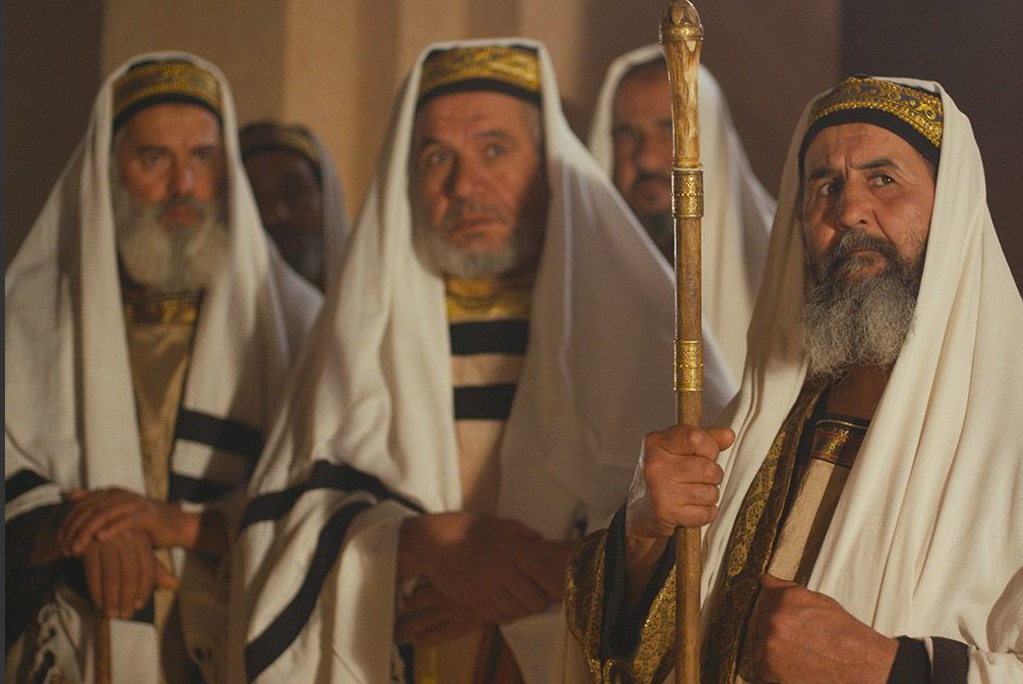
Jesus wasn’t going around just trying to make enemies of anyone, but He was fearlessly living and telling the truth no matter the circumstances. What we read in Luke 11:37-54 is how the scribes, Pharisees, and experts on the Law were living by the gospel according to self. They looked really righteous and knowledgeable on the surface, but of course Jesus can see below the surface at what’s actually going on in the heart and mind. It seems that there are several reasons why Jesus offended these religious leaders on this occasion.

He Exposed “Surface Spirituality” (37-41). They were so obsessed with appearances, doing things to look good to others. Yet, Jesus said they were full of corruption and wickedness in their hearts. They knew how to look spiritual without being godly, a deadly condition! 

He Exposed “Majoring In The Minors” And “Minoring In The Majors” (42). He doesn’t rebuke the attention to details, but says they neglected what really mattered when making gestures that appeared to show how scrupulous and careful their religion was. True religion is supposed to stand on huge pillars like divine justice and love. Operate from those qualities and you are well on your way to true righteousness. 

He Exposed “Appearance-Driven Actions” (43-45). Jesus called them on their love of the chief seats and respectful greetings. Surely most people appreciate being appreciated, but such can never be what drives or motivates us to do praiseworthy things. 

He Exposed “Hypocritical Holiness” (46). They were good at making rules others needed to follow while not bothering to live by those same rules. Beware holding others to a standard you do not submit to yourself. Here, these appear to be their own convictions which they bind on others rather than God’s laws. 

He Exposed “Artificial Admiration” (47-51). They seemed to conclude that revering long-dead prophets was the spiritually acceptable thing to do, but they rejected and hated the greatest man in history–God in the flesh. While decorating the tombs of men their ancestors had slaughtered throughout the Old Testament, from Abel (Gen. 4) to Zechariah (2 Chron. 24:20-21)–like saying A to Z, they were actively fighting One even greater and ready to do the same to His disciples. 

He Exposed “Wicked Watchdogs” (52). Jesus’ last accusation is as piercing as they come. He says they took away the key to knowledge. They refused to enter the kingdom, but they actively hindered others who were trying to enter. They made themselves the gatekeepers to God, a presumptuous but also misguided effort. 

And did they humbly repent and change their ways when the Son of God called them out? No. Their pride overrode any other impulse, and they grew more hostile, plotting how they might trap Him in something He might say. They became more critical and vicious. They had hardened their hearts that much. The takeaway for me is abundantly clear. What do I do with Jesus’ will? Do I take to heart His admonitions and challenges, or do I allow sinful pride to eclipse my view of it? Do I dig my trenches deeper or do I allow His will to shape and influence me? I pray that I will choose the latter!

Showing Up When It Counts

Friday’s Column: Brent’s Bent

brent-portrait

Brent Pollard

I recall watching the Atlanta Braves when they were the perennial cellar dwellers of the National League. The Braves’ games were broadcast on UHF station 17 out of Atlanta before the little independent television station went national via cable and satellite. In those days of the baby blue uniforms and small letter “a’s,” I watched stars like Dale Murphy, Rafael Ramirez, and Phil Niekro play the game of baseball on a TV with rabbit ears.  

Fast forward to 2021, and the Atlanta Braves have won the World Series. It is interesting to talk to younger fans who only know of above-average play in the last few decades. Such fans are blissfully ignorant of those days when you could count on the Braves to have more losses than wins. Yet, I noticed something about this championship year. If you look at the records of the LA Dodgers (106-56) and Houston Astros (95-67), both teams won more games during the season than the Atlanta Braves (88-73). This truth suggests that it is essential to prevail when it counts. In other words, the Braves showed up when they had to, which is why they are the national champions.  

There is something to be said of that in Christianity as well. Regarding this, Jesus gave a parable about two sons (Matthew 21.28-32). A father went and asked his first son to work in the vineyard. He refused. So, the father went to his second son. The second son said he would go and work but never showed up. In the interim, the first son regretted his answer and went to work in his father’s vineyard. Jesus ends the parable by asking who had been obedient. The crowd responded that the first son had obeyed. Jesus informed them that there would be sinners entering the kingdom of God in like manner before the religious elite.  

The religious leaders were like the second son. They gave lip service but never actually followed the Law of Moses, only their traditions. As a result, they did not show up when it counted. But the prostitutes and tax collectors, cognizant of their sins, showed up when Jesus extended His invitation (Matthew 11.28-30). So, while it is true that there is none righteous (Romans 3.10), we still note that there are people who we count on to show up despite their flaws. Ultimately, this is what matters.  

As the saying that we attribute to Benjamin Franklin goes: “Well done is better than well said.” But, of course, this idea was Biblical long before the famous Pennsylvanian put quill to paper. James reminds us to be doers of the Word, not just hearers (James 1.22). It is far too easy for us to blend in with other congregants. “Worship, Fellowship, Retreat, and Repeat.” Now, I will be the first to say that worship service attendance indicates spiritual health, but there is a vineyard out there in which we must labor. The Father asks us to go out and work in the vineyard. What is our response? We will have fulfilled our required tasks even if we have previously said no by our words or conduct but have shown up anyway. Better to be a latecomer than a no-show. Yes, we must show up when it counts. A gracious God will make up for a less-than-stellar record and proclaim us champions (cf. Matthew 25.24). 


Jeff Burroughs (1977) (via http://atlantabraves19701980.blogspot.com)

A 4-H Club No Christian Should Join

Tuesday’s Column: Neal At The Cross

16174665_10154303308455922_2453812807432667966_n

Neal Pollard

Were you ever in the 4-H Club in school? It is an organization teaching skills you might not learn at home, urging you to get involved in your community, and helping you with a wide variety of life skills from public speaking to caring for animals. The acronym stands for “head, heart, hands, and health.” Their slogan was that you learn by doing.

In Matthew 23, Jesus gives His harshest barrage of condemnation in the Bible. He didn’t aim it at godless, irreligious heathens, but to religious leaders. They were faithful churchgoers who professed faith in God, but Jesus calls them on some glaring problems that made God reject them . 

THEY WERE HYPOCRITES (3-4)

They told others to observe things but they didn’t do them (3). They laid heavy burdens on others but were unwilling to life a finger to move them themselves (4). While hypocrisy can be defined as being a spiritual chameleon, acting one way with the righteous and another way with the world, is also hypocrisy. Seven times in this chapter, Jesus says, “Woe unto you, Scribes and Pharisees, hypocrites.” The world sees double standards and a person who says one thing and does another as a hypocrite. It doesn’t necessarily make them bitter or angry. It makes them not care. They are conditioned to expect that all Xians are hypocrites. Being hypocritical only reinforces and heightens the stereotype. But the Bible calls for us to have a sincere faith (1 Tim. 1:5). We are to possess pure and undefiled religion, which is objectively measured (Jas. 1:27). We have an opportunity to blow the stereotype by being the genuine article who reflects the attitude and speech of Christ each day with the world.

THEY WERE HOLLOW (5)

If there’s anything worse than beauty that’s only skin deep, it’s religion.  Jesus condemns those who did all their deeds to be seen of men. The world is repelled by professed Christians who don’t take time to see them as people. Often, they feel as if their only importance is as a potential convert or as a sinner to be judged. If we’re not careful, we fail to see every person as precious to God. That includes the immoral, the edgy, the rough, and the square peg. They see us doing or saying good things, but it’s hollow. We may do it be be noticed as a good, godly person, but we miss the opportunities to actually do good and be godly with those we interact with. Paul says, “Conduct yourselves with wisdom toward outsiders, making the most of the opportunity. Let your speech always be with grace, as though seasoned with salt, so that you will know how you should respond to each person” (Col. 4:5-6).

 THEY WERE HAUGHTY (6-12)

They wanted honor, respect, and recognition. Jesus diagnoses their problem as one of self-exaltation (12). 2. It was the Pharisee in Jesus’ parable on prayer who thanked God for his perceived superiority over other people (Lk 18:10). The world sees smug, self-righteousness as a total turn off.  Jesus later says that these folks were like whitewashed tombs, beautiful outside but full of dead men’s bones (27).  This is not the religion and life Jesus calls His followers to live. He describes greatness as service (11) and self-denial (16:24). The world will never be won to Christ by proud Pharisees. It takes humble hearts and helping hands to point people to Christ. 

THEY WERE HARSH (13-15)

Christ says, “But woe to you, scribes & Pharisees, hypocrites, because you shut off the kingdom of heaven from people; for you do not enter in yourselves, nor do you allow those who are entering to go in” (13).  This is how the world sees all Christians, as Judge, jury and executioner. They don’t see the love of God and the grace of Christ.  They see exclusive, isolated people who have written off everyone else. Jesus suggests that those they reach are those likeminded (15). Some people are drawn to harsh and hateful rhetoric, but they don’t make good converts of Jesus—if they stay that way. Jesus told His disciples that their identifying mark should be love (John 13:34-35). This world is an unloving place and so sincere love will reach people. At first, they may not believe we could be the real thing, but persistent compassion and grace will ultimate reach the honest heart.

The world doesn’t need Christians who compromise the truth. But they do need to see transformed disciples (Rom 12:1-2). We can be righteous without being self-righteous; We can be courageous without being callus. Matthew 23 shows that this is a must, if we will practice true righteousness. 

via “freebibleimages.com”

What Does The Bible Say?

Monday’s Column: Neal at the Cross

pollard

Neal Pollard

Most people have very strong convictions, pro or con, about religious matters.  Many who claim to be religious form opinions and draw conclusions with very little if any biblical consultation.  How ironic is it to claim to follow God while ignoring and even rejecting His very revealed will?

Many religious people, church attenders and not, are guided by their feelings, desires, opinions, preferences, and consciences (cf. 2 Tim. 4:3; Prov. 14:12).  Perhaps they have a favorite preacher or other religious figure they implicitly trust.  Their religion may be submitted and subjugated to the message of the culture or even the media. It may be based on convenience and comfort.  Throughout time, man has attempted to serve God on his own terms and based on what he thinks is right.  Whether ignorantly or defiantly, he puts himself on a throne upon which only Jesus belongs (Mat. 28:18).

How long could religious error survive if potentially divided parties could lay aside personal interests and objectively study the sacred text?  So often, the religious world is divided because of man-made doctrines and traditions.  Instead of looking to the Bible to answer the important questions of time and eternity, men often come up with the answers they want and then go looking for Bible verses to support their predetermined views.  Consider that some of the most popular religious ideas—salvation by saying the sinner’s prayer, premillennialism, speaking in tongues, women worship leaders, once-saved, always-saved, and instrumental music—are not practiced or believed based upon their being taught in Scripture but instead their being the beliefs and views of mankind.  How thrilling it would be if we could unite every religious person in the desire to come to the text, the glasses of prejudice or sectarian beliefs removed, and let God tell us what to believe and how to live!  That is possible, but it begins with each of us humble, sincerely asking, “What does the Bible say?”

4543060842_e4fdb33047_b


New Testament Christianity

Neal Pollard

  • The New Testament claims to be the source of authority for all we do of eternal importance, no matter when or where we live (Col. 3:17; 2 Pet. 1:3,20-21; 2 Tim. 3:16-17).
  • The New Testament will not share authority with any other book or “revelation” (Gal. 1:6-9; Jude 3).
  • The New Testament reveals how a person becomes a Christian (Acts 2:37-47; Eph. 4:4-6).
  • The New Testament teaches us that the Lord adds Christians to His church (Acts 2:47).
  • The New Testament shows us how that church is organized and led (Acts 20:28; 1 Tim. 3:1-12; Phil. 1:1; 1 Pet. 5:1-4).
  • The New Testament gives us the day the Christians met to worship (Acts 20:7; 1 Cor. 16:1-2).
  • The New Testament clarifies for us the various roles and responsibilities God has given to each gender of Christians in the work and worship of His church (1 Tim. 2:8-15).
  • The New Testament teaches the Christian how God wants to be worshipped (John 4:24).
  • The New Testament outlines the Christian’s purpose and work (Eph. 4:11-16).
  • The New Testament is dedicated to showing how one, as a faithful Christian, has eternal life and the hope of heaven (Ti. 1:2; Rev. 2:10; ch. 21-22).
  • The New Testament helps one understand how God wants marriage and family to function, to build Christian homes (Mat. 19:1-12; Eph. 5:22-6:4; 1 Pet. 3:1-7).
  • The New Testament urges Christian growth and thoroughly teaches how that is accomplished (2 Pet. 3:18; Ti. 2:11-14; John 15:1ff; etc.).
  • The New Testament constantly speaks of how the Christian needs to and benefits from developing an intimate relationship with the Godhead (1 Th. 5:17; 2 Tim. 2:15; John 15:14; Mat. 22:36-40).
  • The New Testament teaches that Christians prove to others their discipleship to Christ by loving one another (John 13:34-35).
  • The New Testament reveals that Christians are tasked with duplicating themselves by teaching the gospel to those outside of Christ (Mat. 28:18-20; Acts 8:4; Col. 1:23).
  • The New Testament asserts itself as the unfailing, universal guide regarding anything that will ultimately matter (2 Pet. 1:3; John 14:26; 16:13; etc.).

If what we are after is divine guidance for who a Christian is, what he or she does, and how God wants one to live, where else would we turn but to the New Testament? A God who engineered us for eternity and tells us we have but two eternal dwelling places would be cruel and unloving if He did not give us clear, thorough answers to any matter that is important to Him. How loving and faithful for God to give us such an unambiguous guide.

58366-nt-rely.800w.tn_

HOW IS TRUTH DETERMINED?

Neal Pollard

Recently, I received some feedback on a recent article (Truth Is Truth, No Matter Who Disagrees With It). Negative feedback is not rare, but expected when we put ideas down on paper (or on electronic media like blogs). This feedback was not personal, nor unkind. Yet, it reflects the thinking of so many who shun the idea of absolute, objective truth. Consider the major arguments made by the one who wrote:

—No matter what you believe, the majority disagrees with you.
—You are no smarter or more sincere than those who disagree with you.
—Everyone is certain their religion is right, but this is a function of the brain and proof of nothing
—Conflicting views within the “Restoration Movement” shows the fallacy of being certain about truth
—Certainty is dangerous because it does not allow for change

The last three arguments seem more of a confrontation of certainty than arguments against truth, but consider each of these individually.

Does the inevitability of disagreement nullify the idea of absolute truth? If someone argues our answer that two plus two equals four, and were able to get a majority to side with them that the answer is five, does that nullify the truth of what two plus two equals?

If a person with demonstrable intellectual capacity and apparent sincerity nonetheless avers that two plus two equals five, do we rewrite the laws of addition and reprint the textbooks? If not, why not? Is it not because we can take two of something, add it to two more of the same something, like integers or apples or books, and find the inescapable, universal truth that now there are four?

Can any religion be certain that they are right, but be wrong? Universalists believe everyone will ultimately be saved. Those who believe that murdering those they deem “infidels” pleases their God and they teach others that this is truth. Cults often dub their leaders the Messiah. On what basis would we object or oppose any religious tenet, like these, without an objective standard of truth?

Does the imperfection of people in applying revealed truth impugn the reality of absolute truth? It will never be suggested that anyone is perfectly interpreting or applying the perfect standard of truth, including those trying to restore New Testament Christianity (which, incidentally, implies belief in a perfect, objective standard of truth). But, does that mean restoration can or should be rejected for ideas which clearly contradict what the New Testament says (i.e., “sinner’s prayer’ versus how the New Testament teaches people were saved)?

If there is a conflict between the certainty of New Testament teaching and the desire for change, which is to be preferred and chosen? The religious world has changed a myriad of things that the New Testament explicitly teaches must be done or taught a certain way. Isn’t it a faulty premise to choose change proposed by men, when it assaults a certainty revealed by God?

That there is religious confusion and division is indisputable. It is disheartening. The Bible warns that articulate, polished religious leaders would teach things contrary to the revealed truth of the New Testament (Gal. 1:6-9; 2 John 9-11; Rev. 22:18-19). Let us never put confidence in man, but let us ever put confidence in the truth of Scripture.

OLYMPUS DIGITAL CAMERA

Alternate Realities

Neal Pollard

I don’t know when I first noticed it, but I’ve noticed that it has dramatically intensified in the last few years. We might call it the “CNN-Foxnews Dissonance” where a specific event is viewed, explained, and interpreted in such different ways that the observer is left believing that it could not be just one single event but two totally different events instead. The cultural divide in our country is distinctly felt, and it is baffling that the world could be seen in such different ways by people who coexist beside each other day by day. Environment partially explains it, where we grew up, who influences us, and what we value. However, what guides our life–our authority–is perhaps the biggest influence on how we see the world. All of us base our lives upon a premise, a purpose, and a prospect (i.e., where we came from, why we’re here, and where we’re going). This belief system materially effects how we see our world.

Your worldview effects:

  • The value you place on people, especially as compared to other living things (animals, plants, etc.)
  • The value you place on human life, especially the most vulnerable ones (the pre-born, mentally challenged, chronically ill, terminal, and elderly)
  • The value you place on other people, especially compared to your own rights, feelings, etc.
  • The value you place on objective truth (whether or not you believe it exists)
  • Your stance on moral and ethical matters involving human sexuality
  • Why and how you interact with people in your various relationships (work, school, family, friends, etc.)
  • How you think, talk, and act.

It’s no wonder that people see our culture and our world so differently from each other. It’s more a matter of perception than proximity.  What erases these typically harmful dissonances is a mutual willingness to submit to the supreme authority. If we let God through His Word tell us how to see the world and if we come to it truly determined to listen to Him without prejudice and hardened hearts, we can see eye to eye on anything that has ultimate meaning and impact. What divides us from each other may be ourselves as much as the other person–our view of God, His will, and our submission to it.

men-arguing-illustration1

THE CHRIST?ANS

Neal Pollard

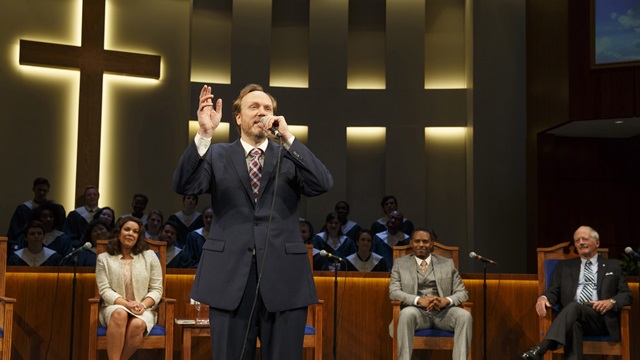
I’ve seen the play advertised locally. Lucas Hnath, a 36-year-old playwright, has a background in religion. His mother attended seminary and he even sat in her classes. The New Yorker reveals that there were expectations early on in his life for him to become a “pastor,” a choice he forewent for the arts instead (“Divine Intervention,” 9/7/15, Hilton Als). The play is about a megachurch preacher who has come to believe there is no hell and who believes God gave him this revelation. The result of his divulging this in a sermon is a church split, led by the assistant pastor who does believe in the reality of hell. While doctrine lays at the heart of the split, the play is said to focus on the personalities and behavior of various folks making up the church. Alissa Wilkinson, in a flamboyantly titled review, says this play resonates because “schisms, church splits, or at least disgruntled storming-outs are familiar to virtually everyone who stays in a church long enough to be committed to its life” (Christianity Today, 9/23/15). At least in advertising I’ve seen, the play title appears “The Christ?ans.” The idea is that, judging from their behavior, it is questionable whether or not they are truly Christians.

There are heartbreaking stories of congregations of the Lord’s church whose internal battles became known to the community and the brotherhood at large. Some have resulted from battles over doctrinal issues, whether regarding morality, fellowship, worship, leadership, or the like. Some have resulted from dueling strong personalities, jockeying for power, position, and prominence. Some have boiled down to squabbles about money. In all of them, tragically, Christ has been relegated to the corner and forced to be quiet while His “followers” duke it out.

While the implications over a doctrinal dispute and a personality power play are different, too often the predominant feature is a show of the flesh.

Many with a background in religion will be able to relate to the theme of the play because they have seen schisms in churches before. The world is a divided place, full of rancor, backstabbing, infighting, and unfair fighting. The church, particularly the church of the New Testament, must never exhibit such traits. Corinth set off such an alarm with Paul for this very reason. He urges no division to mar them (1 Cor. 1:10-13) and goes on to address both doctrine and attitudes in the letter. Philippi had two quarreling women straining the unity of that church (4:2) and Paul goes right to the heart and the mind.

We must strive to conduct ourselves with one another in a way that is always exemplary before the eyes of the community, the brotherhood, and the world. I thank God to work with a church that has been around so long and been through so much and who have weathered those storms by sticking together. Yet, too often, people have aired their dirty, unsightly laundry out on the clothesline of public purveyance. This soils the reputation of the Savior! That fact alone should horrify every child of God. May we always strive to be a beacon of light (Mat. 5:16), shining a spotlight on the Sinless Savior and not squabbling saints!

63611

Everyone Can “Do” Evangelism

Neal Pollard

  • Pray, specifically, about having opportunities to share your faith. Think about the people in the various places you spend your time and ask God for inroads with these individuals specifically. Pray for courage, wisdom, and your words (cf. Col. 4:2-6). Pray for their hearts. Pray to pick opportune times to approach them.
  • Cultivate your fields. Spend time thinking about who you have or can build a relationship with. That will be your area of greatest success. Be involved in their lives (see below). Work at growing the number of people you could share Christ with.
  • Develop genuine interest in the lives of the people in your life. Learn spouse’s and children’s names, occupation, interests, hobbies, and passions in their lives. Ask about those things. File away and remember those facts, as your specific recall with them will impress them with your sincerity and concern. How is trust won? Time and transparency.
  • Be able to speak openly and wisely about religion with them. That means picking your battles wisely. You will hear people spout misinformation and false ideas when religion is being discussed. Always maintain control and calm, being gentle in discussing religious matters (cf. 2 Tim. 2:24-26). If asked (and you eventually will be) about some specific, like salvation or church organization or what “denomination” you are a member of, be winsome and kind but courageous enough to give a biblical answer.
  • Work at working in your faith and the church into your conversations naturally. This may require prayer and thought, but practice turning your conversations with people toward the spiritual. Like anything, if you’ve not had practice, it may seem clunky and awkward initially but not ultimately. If something is going on at church that relates some way to what your friend is saying, bring it up matter of factly. If their issue or struggle concerns something you have come across in your recent Bible study, share the verse with them.
  • Be prepared to serve and help. So many of our co-workers, associates, neighbors, and other friends have messy lives. They are struggling and, without Christ, have no bearings on how to address their problems. As human beings, they inevitably struggle with the same things all people struggle with—relationships, family, finance, uncertainty, health, fear, etc.  Remind yourself that you are here, on earth, to serve (cf. Mat. 20:28; Gal. 5:13).
  • Watch yourself. Your example, especially under the pressures and fires of life, can make or break your evangelistic opportunities. Your temperament, reaction, attitude, and the like are a display case for the Lord or the world. Regularly remind yourself of this (Ti. 2:8; 1 Tim. 4:12; 1 Pet. 2:12).
  • Remember the mantra, “It’s not a matter of ‘who’ is right, but ‘what’ is right.” I received this counsel decades ago, as a young preacher, from David Sain. I have used it countless times in soul-winning circumstances. Truly, ultimately, all religious questions must be settled upon the foundation of Scripture. Feelings, opinions, what churches teach and practice, what religious leaders say, and such must be subjugated to what the Bible says. Those other standards may fail us. Scripture won’t!

Evangelism will always be intimidating because it ultimately calls for courage and conviction. Not every specific situation will be a success story, but if we can remind ourselves of our purpose on this earth and how much people need what we have learned we will act! And there will be success!

20939720692_87c24e71f4_b

The Brooks-Sumner Affair

Neal Pollard

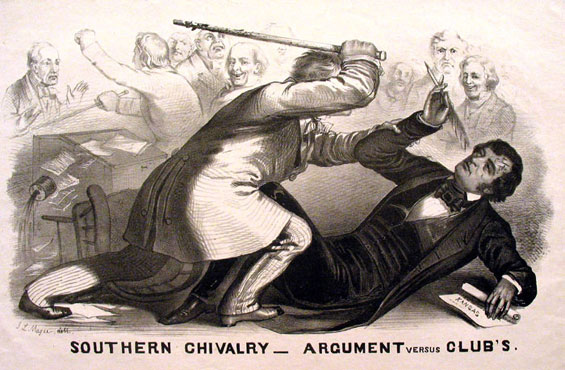
In 1856, Charles Sumner, a Massachusetts Senator, delivered an excoriating speech full of vicious name-calling and personal insults—especially against Senators Douglas and Butler—for their defense and advocation of slavery and especially the violence in Kansas in response to the actions of John Brown and his followers. The speech went on for two days, and shortly after its completion a man named Colonel Preston Brooks, a U.S. representative from South Carolina and distant relative of Andrew Butler, retaliated by beating Sumner with a cane. It was a serious enough beating that Sumner would take years to recover. Sumner would become an iconic hero to northerners and Brooks, who as punishment for the crime was fined $300, a darling of the south. Newspaper headlines of the time, in each region, painted their man a hero and the other man a demon (read a sample here: http://history.furman.edu/benson/docs/sumenu.htm). It is not the loathsome sin of slavery that I wish to highlight here, but the age-old tendency to blindly defend a person or position one feels inclined toward and the incredible efforts to vilify those on the other side of the issue—no matter what.

People are inclined to line up behind men rather than the Messiah. It is not just during political season or for certain social agenda items that this occurs, but more importantly in every season of the year when it comes to religious matters. Paul decried men’s tendency to be “of Paul…of Apollos…and…of Cephas” (1 Cor. 1:12). In the religious world, division has occurred because men have lined up behind some man’s teaching. Often, this teaching is a misconstrued view of a passage (for example, John 3:16, Acts 16:31, Mark 16:17, etc.) or a teaching without benefit of a passage (for example, having an experience of grace, saying a sinner’s prayer, infant baptism, etc.). As with politics, people can become blind apologists for their leaders and champions who promote what they already believe. Often, no amount of reason and logic can overcome the predisposed bias of the adherents. Lost in the cacophony of religious debate can be clear, simple biblical truth. Religious division is not the product or prompting of God (1 Cor. 1:10; 14:33). It is entirely of human origin. While there are some matters where God has not legislated, there are also some clear “right” and “wrong” matters in Scripture. Where God has spoken, we must take His word and will over that of absolutely anyone else. Otherwise, we will find ourselves guilty of elevating one above the One we must all ultimately give an account to. That would be an injustice and violation to top even “The Brooks-Sumner Affair.” May we keep our allegiance to God free from the taint of personal prejudices, even in the matter of our religious convictions. Psalm 119:89.

southern_chivalry

Do We Need Permission?

Neal Pollard

For several years while in Virginia, I enjoyed going out with a couple of dear Christian brothers to hunt for Civil War relics.  Of course, hunting on federal property was a serious crime and was unthinkable. However, so many of the personal properties owned by residents in the Richmond area were treasure troves of those artifacts. Their woods and fields held bullets, shells, buckles, buttons, and the like. Dave Young, Jr., always followed the same procedure before our hunts. He would go see the homeowners where we wanted to hunt, people he had known, built friendships and done business with for years. If we got their permission—sometimes the thoughtless or unethical practices of other hunters made them inclined to refuse us—then we would go on their property and hunt for relics. It was their land and their right to permit or deny. If we had ever chosen to hunt one of those places without permission and got caught, it would have been a silly argument to say, “They did not tell us we couldn’t hunt here.”

This example is crude and imperfect, but I think it illustrates a principle most can understand. It is not natural to construe someone’s silence as permission. Yet, when it comes to matters of faith and practice in religion, we attempt that very approach.

When it comes to how we live and serve in this life, we have to have God’s approval for whatever we do (Col. 3:17). When He tells us what His will is on any matter, our response to that should be thoughtful, careful, and submissive.  To be otherwise would be thoughtless, careless, and rebellious—with God’s stated desires.  To think that God would give us physical life, generous physical blessings, incredible spiritual blessings, spiritual life, and powerful promises on a continuous basis and we could ever be callous or cavalier about what He wants reveals an unfathomable audacity. Frank Chesser once depicted such an attitude this way, saying, “It has no respect for either the sound or the silence of God’s voice. It only does what the Bible says in a given area because it happens to agree with the Bible on that point. At the first sign of conflict, it will have its own way ever time” (The Spirit of Liberalism 18).

Church music in worship often gets isolated from the larger principle.  How we worship God in song, whether with or without mechanical instruments, is just one specific of a much broader principle. God has told us what He wants for church music (Eph. 5:19; Col. 3:16). Whatever we do must meet His expressed will. Projecting songs, using songbooks or shape notes, having a song leader, or singing in parts or four-part harmony still falls within the category of His command that we sing. But this same principle covers everything we do in worship as well as the specific commands He has for us regarding our work as a church, our response to His grace in order to have His salvation, and the like.

Our culture teaches us to ask, “Why can’t I?” It encourages us to say, “You didn’t say I couldn’t.” But, “the whole world lies in the power of the evil one” (1 John 5:19). The humble spirit of a grateful, grace-receiving child of God, when viewing the will of God, should always be, “Do I have permission for that?”  Such is neither cowering fear or abject slavery.  It is adoration and reverence for a Lord who gave everything that we “may know Him and the power of His resurrection and the fellowship of His sufferings, being conformed to His death” (Phil. 3:10).

FullSizeRender 2
Some of my relics from back in the day

Selling What You Don’t Own

Neal Pollard

One of the more ingenious and amusing entrepreneurial moves I’ve ever heard is the company that offers to sell you a star.  For a price, you can buy a star and name it for a loved one.  The company will send you a gift pack along with registering the star in the name of the one you, the buyer, designate.  I have never been able to figure out how that company earned the right to sell something no one will ever visit, hold, or otherwise show tangible ownership of.

When I think about some of the new, strange religious ideas along with some long held, established ones, it reminds me of the folks selling the stars.  Preachers and whole denominations offer salvation on their own terms, altering and subtracting from the Lord’s established will as if salvation was theirs to offer.  They urge people to pray a prayer or accept Christ in their hearts, guaranteeing them salvation by so doing.  Or they tell a seeker that the Holy Spirit will irresistibly come upon them, filling them and by so doing indicate an experience of grace.  Or they urge parents to sprinkle their babies, saving them from what they call inherited sin.  The problem in all these scenarios is that people are offering what is not theirs to give.  Christ has already established the plan that saves the lost person—hearing the gospel (Rom. 10:17), believing it (Rom. 10:10), repenting of sins (Rom. 2:4; 6:17-18), confessing Christ (Rom. 10:10), and being buried in water in order to enjoy the new life in Christ (Rom. 6:1-4).

The same things occurs with worship.  People claim to stand in the place of Christ and tell others what is and is not acceptable to God.  They propose changes in who can lead in worship (cf. 1 Tim. 2:11-12), how worship music is to be done (Eph. 5:19; Col. 3:16), and when the Lord’s Supper can be taken (1 Cor. 11:23-26; Acts 20:7).  Some would say that dance, weightlifting, incense-burning, drama, and the like are acts of worship God will accept, though they do so without a scintilla of appeal to the New Testament.

When it comes to the will of God, He has exclusive rights over that.  Christ does not share His authority with anyone (Mat. 28:18).  He makes the rules and determines right and wrong.  Beware of anyone who is selling anything else (cf. 2 Cor. 2:17).

“CONTRADICT: THEY CAN’T ALL BE TRUE”

Neal Pollard

Kathy just called me and told me she saw this bumper sticker on a truck as she fought traffic on Wadsworth Boulevard.  How clever!  It uses the same religions that the infamous “Coexist” bumper sticker uses, including Hinduism, Daoism, Shintoism, Unitarian Universalism, Satanism, Atheism, Islamism, and Judaism. There is a website where these bumperstickers can be purchased (http://www.contradictmovement.org; warning: I do not endorse everything on this web site, whether message or method).

The “Coexist” campaign is meant to promote pluralism,  a theory or system that recognizes more than one ultimate principle. The very idea is contradictory.  The Koran says, “And whoever desires a religion other than Islam, it shall not be accepted from him, and in the hereafter he shall be one of the losers” (3.85).  Shintoism says that humans become gods (kamis) after death, and they do not believe in absolute right and wrong with the soul losing individual identity and becoming part of one great guardian spirit (Japan-Guide.com; litesofheaven.com).  Atheism believes, since there is no God, that there is no judgment and no accountability to a higher power. Taking any number of tenets about conduct, salvation, our nature, deity, afterlife, and the like, one sees inescapable and frequent contradiction between these faiths and philosophies.  Yet, even without all of this, there is the exclusive truth claim of Christianity in Scripture.  The “Contradict” bumper sticker has a passage that says much.  “I am the way, the truth, and the life. No man comes to the Father but through Me” (John 14:6).  Jesus speaks of an exclusive way, calling it “the” way and saying there is “no other” way.

The “Coexist” mentality is founded, for some, upon a noble enough desire, the desire for peace and harmony.  Yet, it seeks the wrong way to peace and harmony, letting mankind devise their own way for this to exist. We do not have that prerogative.  The Bible reveals God, the Creator, in a specific way, revealing His nature, His will, and His expectations.  With that, there is human accountability and an expectation that people will follow that way or suffer the consequences of disobedience.  Conflicting, opposing positions contradict one another, and they cannot all be true!

What Kind Of Religion Do You Have?

Neal Pollard

While people today want to emphasize “spirituality” over “religion,” that is not the biblical way.  By “spiritual,” people want to talk about a self-defined personal relationship with God, the way they feel, or their pursuit of some mystical or mysterious expression of the soul.  The Bible is much less abstract and more concrete in passages like James 1:26-27, and the result should be quite convicting.

James indicates that one’s religion could be worthless (1:26).  This one may even think himself to be religious, but instead he is a forgetful hearer.  In context, he has forgotten what God’s word has said about bridling the tongue.  But, the principle applies much more broadly.  One can think himself religious, but in ignoring what the Bible says on a specific matter—ethics, morality, the plan of salvation, worship, etc.—this one deceives his own heart and possesses a worthless religion.  Notice that there is a concrete, objective way to measure this.

James indicates that one’s religion can also be pure and undefiled (1:27).  In keeping with context, this is a person who is a doer and not only a hearer of the word.  This person consciously reads and strives to apply what God has said in Scripture.  James gives a couple of examples of this in the verse, from compassionate care for the unfortunate to not allowing the world to taint us by its influence.  Regardless of the challenge or obligation, because we strive to follow the Word, we will have a religion that is unsoiled and unsullied. James says so.

I may think I have a certain kind of religious, spiritual life, but the Bible is a mirror that shows me exactly where I am.  I can claim or assert that I have a certain relationship with God or spiritual feeling, but does the declaration match the deeds.  That determines what kind of religion I have.

Staying On The Rails

Neal Pollard

Without A Belief In The Bible’s Inspiration…

  • Why would I read, meditate upon, or study it daily (or at all) to guide my life?
  • What will be the paradigm for directing and shaping my life?
  • From where will I draw my understanding of Who Jesus is, what He did, and how I must relate to Him?
  • How do I form my understanding of where I came from, why I am here, or where I am going?
  • Why would I trust or follow what it says to do in even a single case, circumstance, or verse?
  • What logical, ultimate constraint do I have from any behavior or act I desire to do, no matter how aberrant or outlandish society finds it?
  • How do we evaluate the content of any word, attitude, or action for rightness or wrongness?
  • On what basis would I accept absolutes, which I must (even if I absolutely deny the existence of absolute truth)?
  • Who or what will be my standard of authority?

One of the most famous movie scenes of all time depicts Dr. Richard Kimble, played by Harrison Ford, desperately running, orange prison jump suit, shackles, and all, as a derailed train caroms out of control, rapidly gaining on him, and threatening his life. The videography is spectacular, cutting quite an imposing figure.  A multi-ton mass of metal off the rail and out of control promises nothing but damage and destruction.  As long as the train is on the track, its weight and speed do not pose a threat.  If it is not, the prospects are frightening.

The premise that the Bible is the Word of God from the mind of God through men provides an answer to all the above, weighty questions.  If one refuses to accept the Bible is what it claims to be (1 Cor. 2:11-12; Gal. 1:6-9; 2 Tim. 3:16-17; 2 Pet. 1:20-21; Jude 3; etc.), then of necessity he or she must choose an alternate guide for life.  It is fair to evaluate that alternative with equal criticism and scrutiny.  Wisdom would seem to suggest choosing what best explains the whole picture–our complex design, moral compass, appreciation for beauty, universe’s order, and more.  What we are talking about are the very biggest issues of life! They deserve our deepest thought and wisest choice.