The Christian Decision

Carl Pollard

Our family used to hike a lot when we lived in Colorado. There were many hikes that I went on that were straight up miserable. Ive always been the chunky kid, but the worst part about this was that I  was surrounded by a healthy and very active family.. This meant that on every hike I was the one in the back feeling like I was about to pass away. Hiking was never really something I was the best at. There are several times I remember thinking, “I’m not going to make it.” 

We used to hike a trail called “Moffit Tunnel” It was an 11 mile hike that ended with a summit path that gained 3000 feet of elevation in under half a mile. As you can imagine the path was practically vertical, and filled with rocks, mud, snow, and sadness. 

When I think of “a hard path” this is what comes to my mind. In Matthew 7:13-14, Jesus describes the way to salvation as a path that isn’t for the faint hearted; it’s for the dedicated Christian that is determined to reach eternal life. There’s no denying that the Christian life can be tough. It is filled with persecution, especially for those who aren’t as fortunate to have the freedoms we enjoy in America. The Christian life is tough because we will face persecution, but we are more likely to face rejection in our society today for standing up for some very unpopular teachings. If we are devoted to teaching and standing with God’s Word this means we must defend God’s view on homosexuality, marriage, divorce, and remarriage, baptism, sin, hell, and many more divisive topics. If we are devoted to walking the difficult path we must remain faithful in the rejection, hatred and persecution we will face. 

But the rejection and hate from the world isn’t the only thing hard about this path.

As Christians we are commanded to put ourselves to death. Matt. 10:37-39 say,  “Whoever loves father or mother more than me is not worthy of me, and whoever loves son or daughter more than me is not worthy of me. And whoever does not take his cross and follow me is not worthy of me. Whoever finds his life will lose it, and whoever loses his life for my sake will find it.”

Walking the difficult path means we have put ourselves to death. In doing so we are saying we love Christ more than our parents, our children and ourselves. In order to walk the difficult path we must be willing to take up our cross and follow Jesus. The cross is an instrument of death. The cross we pick up is the instrument of death that we have used to crucify ourselves on. Once we have taken up our cross we have made the decision to love Christ over anyone and everyone. We no longer serve ourselves because we have died to Christ. 

When we choose to walk the difficult path we are no longer living without purpose. We have a goal, a meaning for our lives. God uses us to spread His saving word to others. We have purpose in everything we do. We are here to encourage each other, to save souls, and to glorify God. One of humanity’s most asked question, “Why am I here?,”is answered by God. How we serve God will ultimately change someone else’s eternal destiny. We are given the true words of life that are able to save our most valuable possession, our souls. We also experience the blessing of having confidence in death. Death is scary. Why are so many scared of death? It’s the unknown, the end of our existence as we have known it. As Christians, when we choose to walk the difficult path, we are given the promise that when we face death we can be confident in knowing our soul is in the hands of almighty God. We know what is coming, and we can find hope in this. 

It was a hard climb, but what a payoff!

Failing to See the Value

 Friday’s Column: Brent’s Biblical Bytes

81121814_2462862270639428_5746232403106463744_n

Brent Pollard

In the 1970s, the people at Reece’s came up with a new candy they initially called “PBs.” They later changed their name to Reece’s Pieces. Sales were good but then dropped. As fate would have it, Universal Studios was shooting a new movie by Steven Spielberg about a stranded extra-terrestrial who wanted to go home. They were planning on using candy as the bait to lure the alien out from his hiding place. Obviously, they were going to use the popular M&M’s. However, the maker of M&M’s, Mars Incorporated, turned down the offer to have their candy featured in the film.  

Since Reece’s Pieces were the same small size as M&M’s, Spielberg and company decided to use the chocolate, candy-coated peanut butter pieces instead. The Hershey Company was a little hesitant to permit the usage of their candy until the vice-president at the time, Jack Dowd, saw a few movie stills. He agreed and went in on a million-dollar joint promotion with the film. The movie, of course, was E.T. the Extra-Terrestrial.  It was a huge hit. Consequently, sales of Reece’s Piece went up 65% and surpassed sales of M&M’s for the first time in its history. One wonders what the folks at Mars Incorporated thought of their blown opportunity.  

The Hebrews’ writer speaks of something much more valuable, of which others fail to see the value: The Son of God. Note Hebrews 10.29. “How much more severe punishment do you think he will deserve who has trampled underfoot the Son of God, and has regarded as unclean the blood of the covenant by which he was sanctified, and has insulted the Spirit of grace?” In its context, the Hebrews’ writer is addressing apostate Christians. This lack of appreciation is not a matter of these Christians merely falling short of God’s glory (cf. Romans 3.23). The Hebrews’ writer talks about the willful disregard of the new covenant with its symptoms, such as forsaking the assemblies (Hebrews 10.25). These are people re-crucifying Jesus Christ (Hebrews 6.4-6). 

I suppose that Mars Incorporated’s lack of foresight only hurt them momentarily. I could not find a direct head-to-head sales count for the two products, but Mars Incorporated made more sales revenue than Hershey’s in 2019. However, the person failing to value the blessings found in Jesus Christ through the committing of willful sin does away with the efficacy of the sacrifice made for their sins (Hebrews 10.26). Furthermore, such apostates will not enter God’s rest (Hebrews 4.1-11). Don’t be guilty of giving what is holy to dogs and pearls to swine (Matthew 7.6). Respond to the invitation of our Lord: 

“Come to Me, all who are weary and burdened, and I will give you rest. Take My yoke upon you and learn from Me, for I am gentle and humble in heart, and you will find rest for your souls. For My yoke is comfortable, and My burden is light.” (Matthew 11.28-30) 

Works Consulted 

Foster, Tom. “Why Reese’s Pieces and Not M&M’s Were Featured in the Movie ‘E.T..’” TVOvermind, TVOvermind, 12 Feb. 2018,www.tvovermind.com/reeses-pieces-not-mms-featured-movie-e-t/

Kelly, Debra. “The Untold Truth of Reese’s.” Mashed.com, Mashed, 29 Apr. 2020, www.mashed.com/205754/the-untold-truth-of-reeses/

Troy, Eric. “Reese’s Pieces Instead of M&M’s For E.T. The Extra-Terrestrial?” Culinarylore.com, Eric Troy and CulinaryLore, 5 June 2018, https://culinarylore.com/food-history:reeses-pieces-instead-of-m-and-ms-in-et/

“Mars.” Forbes, Forbes Magazine, www.forbes.com/companies/mars/

“Hershey (HSY).” Forbes, Forbes Magazine, www.forbes.com/companies/hershey/

Monday Through Saturday Relationships

Gary Pollard

We get an interesting glimpse into the life of the early church in Acts 2.44-47. While it is not practical for us to live in that same way, there is one principle that we should examine. The early church spent a great deal of time together outside of their worship on the first day of the week. Acts 2.46 says, “And day by day, they were devoted to the temple together and breaking bread in their homes, they received their food with glad and generous hearts, praising God and having favor with all of the people.” What’s going on here? The members of the church dedicated time every day to growing in their relationships with one another. To them, “church” was so much more than just showing up for worship every time the doors were open. It was the Monday through Saturday relationships that fortified their faith. 
What was the result of this dedication? “And the Lord added to their number day by day those who were being saved” (Acts 2.47). Are we likely to live for a faith we have not invested in? Are we likely to stand up under trials if we do not have a sense of community in the church? Are we likely to resist temptation without strong ties in God’s family? The early church faced trials we could never understand, yet they remained faithful because of their strong relationships and resulting faith. 
The early church relied on constant contact with one another to help them build their faith. Nothing builds a Christian’s faith more than being around a group of people who want the same thing (to live like Christ), genuinely care for one another, and share a common goal (heaven). 

THE POWER OF HOPE

Monday’s Column: Neal at the Cross

pollard

Neal Pollard

Have you been struggling with some feelings of hopelessness lately? Whenever we have a hard time seeing the end in sight or we face uncertainty or are exposed to fears and anxieties, it can undermine our determination to have hope. Yet, over a hundred times in Scripture, God points us to the hope His children have through Him and His promises. We have such a resource because of the rock-solid expectation He provides. Whatever may happen to us this week, this month, or this year, the Christian can look forward with confidence at the fulfillment of what God through Christ promises us. And Scripture says it so many ways:

–Hope does not disappoint (Romans 5:5)
–Hope helps us persevere with eagerness (Romans 8:24-25)
–Hope causes rejoicing (Romans 12:12)
–Hope fills you with all joy and peace in believing (Romans 15:13)
–Hope is an abiding quality, alongside such elite qualities as faith and love (1 Corinthians 13:13)
–Hope enables deliverance (2 Corinthians 1:10)
–There is one, unconquerable hope (Ephesians 1:18; 4:4)
–Hope is tied to earnest expectation and boldness (2 Corinthians 3:12; Philippians 1:20)
–Hope is connected to steadfastness (Colossians 1:23; 1 Thessalonians 1:3)
–Hope offsets grief (1 Thessalonians 4:13)
–Hope tunes our hearts to look for Jesus’ appearing (1 Timothy 4:10; Titus 2:13)
–Hope encourages the pursuit of our eternal life (Titus 1:2; 3:7)
–Hope anchors the soul (Hebrews 6:19)
–Hope helps us draw near to God (Hebrews 7:19)
–Hope is tied to endurance (Hebrews 10:23)
–Hope is instrumental to faith (Hebrews 11:1)
–Hope prepares for eternity (Colossians 1:5; 1 Peter 1:3,13)
–Hope helps give a defense (1 Peter 3:15)
–Hope purifies (1 John 3:3)

Remember this:

“How blessed is he whose help is the God of Jacob, Whose hope is in the Lord his God” (Psalm 146:5).
“The hope of the righteous is gladness…” (Proverbs 10:28).
“The Lord is my portion,” says my soul, “Therefore I have hope in Him” (Lamentations 3:24).
“Christ Jesus…is our hope” (1 Timothy 1:1). 

You will face nothing today or ever that is too destructive, terrifying, or powerful to offset this hope! That doesn’t mean be rash, reckless, or rebellious. It does mean be faith-filled, optimistic, and courageous! Are your faith and hope in God (1 Peter 1:21)?  

91282223_10221605336700886_5506081862256164864_n-1

Responding To The Purge

Friday’s Column: Supplemental Strength

brent 2020

Brent Pollard

I rarely watch television. I find most programming today unimaginative (e.g. reboots) and fraught with immorality. When I do watch something, it’s likely a sporting event, home improvement show, or vintage sitcom. As I was catching a few minutes of a classic sitcom, my dad remarked that one of the actresses on screen died from cancer during the run of the show. Curious, I looked up information about the show on the internet. In so doing, I encountered a curious expression: “rural purge.”

In 1970, American broadcasters, particularly CBS, put the ax to lighthearted, rural-themed and folksy shows then airing on TV in favor of more socially progressive urban and suburban-set shows. Pat Buttram, the actor who played the role of “Mr. Haney” on Green Acres, is quoted by Ken Berry as saying of the rural purge “It was the year CBS killed everything with a tree in it.” 1  Ken Berry thought that CBS was tired of being teased as the “Country Broadcasting System” since they perceived themselves as the “Tiffany Network” because of their vaunted news division. 2 It had been the executive in charge of programming at CBS who was tired of the shows and canceled them despite their good Nielsen ratings. The absence of family-friendly fare did not go unnoticed by the public, including even politicians like President Nixon. 3

The “rural purge” suggests several Biblical points to me. First, it demonstrates an unfortunate characteristic of fallen human nature that the proven (and wholesome) is often dumped for something else simply because of its “novelty.” God noted this was likewise true in Jeremiah’s day. When He advised them to take the established path, they refused (Jeremiah 6.16). They preferred their new, idolatrous way.

Second, it shows us why leadership matters. Paul warned the coming apostasy would begin with the elders (Acts 20.29-30.) I am mindful of congregations about which I’ve read in some of our brotherhood publications where the Biblical pattern was changed after the elders “reconsidered an issue prayerfully.” The sheep who know that their shepherds are leading them astray are left with a dilemma. Despite nothing being wrong previously, changes were foisted upon them by the leadership. Their family is changed. What will they do?

Lastly, it shows the importance of perseverance.

As the “rural purge” continued, there arose an anomaly. To placate the aforementioned public complaints, CBS reluctantly greenlighted a Christmas special based on a story by Earl Hamner, Jr. They purposely pitted it against popular shows on other networks they felt would crush their program! It didn’t. It was such a hit that CBS had no choice but to develop it into a new series that would run for 9 seasons. The Waltons. Because people refused to give up and give in to whims of the programing executive at CBS, a renaissance of family-friendly programs on all networks began.

Sometimes we feel as if our efforts are wasted, especially when it comes to our sinful culture. However, we are told that our labor is not in vain in the Lord. So, we are exhorted to remain steadfast (1 Corinthians 15.58). God ensures that His Word doesn’t return void and gives increase when faithfully spoken (Isaiah 55.11; 1 Corinthians 3.5-7). Therefore, let us stand and let our voices be heard, even if we find ourselves amid a “Christian purge.”


References

1 “Television Academy Interviews.” Television Academy Interviews, Television Academy, 22 Feb. 2019, interviews.televisionacademy.com/interviews/ken-berry?clip=60761#highlight-clips.

2 ibid

3 “Rural Purge.” Wikipedia, Wikimedia Foundation, 12 Feb. 2020, en.wikipedia.org/wiki/Rural_purge.

516px-waltons_1972

“Father’s Table Grace”

Monday’s Column: “Neal At The Cross”

16174665_10154303308455922_2453812807432667966_n

Neal Pollard

In 1960, Otho Jones and Homer L. Sewell wrote a song made popular by Flatt and Scruggs. It’s a song written from the point of view of a man’s oldest son, a son who felt he was old enough to be on his own and leave home. He describes his father as simple and not filled with a formal education, but also as one very devout and the spiritual leader of his home. He describes himself as “young and foolish.” When I listen to this song, I think about the way I could be as a teenager and how I tried my parents’ patience. My dad, a gospel preacher since 1964, has always been a diligent praying man. While I never heard him say these words in my presence, I wonder if he ever prayed them about me in my younger days.

“Our gracious heavenly father we all gathered here today
To give the things for blessings so humble we pray
My oldest son is leaving but I’m sure he knows what’s best
But just in case would you stand by and help him stand the test

Lord he’s awful neglectful about church on Sunday morn
And if he gets with a wrong crowd would you let him hold your arm
And if he flies too high would you clip his wings
But don’t let him fall too hard, I’m sure you can handle things

I’ve tried my best from day to day to teach him right from wrong
And he’s grown to be a fine young man and he always blessed our home
We pray dear Lord for guidance that he won’t build upon the sand
But I won’t worry half as much if I know he’s in your hands

And oh yes Lord it won’t be long till I’ll be coming home
Don’t make me wait too long
We pray dear Lord for guidance please cleanse us from our sins
So we can all be together in heaven in Jesus name amen.”

Those words are neither perfectly autobiographical nor an apt description of my dad (who has much more formal education than I do). But I think a lot of parents who continue to labor over their children in prayer, concerned for their safety as they turn them loose in this world. However large the physical or financial threats may be, what should concern us most are the spiritual ones. We will never outgrow our concern for them. We should never stop being the right kind of example to them. May we never sin against them by failing to pray for them. They need us to be the type of Christians described by James, of whom he writes, “The effective prayer of a righteous man can accomplish much” (Jas. 5:16). 

HOW I SHOULD WEAR OUT MY KNEES

Neal Pollard

This past May, I began my twenty-second year of running. In that time, I’ve logged thousands of miles. At 49, I am happy to say that my knees are doing fine but time may change that. One of the risks of running, to listen to some, is wearing out places like knees and hips. But, I’m hoping I’m prolonging my life and helping vital organs through exercise.

Spiritually, I put my “knees” to the test, too. The challenge to protect my knees is a daily struggle that I confess I am still working on. I do not want to wear those knees out through:

  • “Knee-Jerk Reactions.” This one is hard for me. I’m prone to these when I’m subjected to frivolous or petty criticisms. I’m equally prone when I’m undisciplined enough to act impulsively through impatience or my own misunderstanding. When I fail to think through things, prayerfully and deliberately, I can unleash something that can be hard to unsay or undo. Usually, it means I have not studied, prayed, and reflected enough before spouting off. I can really wear my knees out that way. I benefit from principles like those found in Proverbs 15:2, 25:28, 26:4-5, and a multitude of similar passages. 
  • “Feeble Knees.” As a child of God whom He loves, I will undergo discipline at His omnipotent, but omni-benevolent hands. It can be unpleasant, but it is always beneficial (Heb. 12:11). But, when I’m in the midst of it, it can cause my knees to buckle. The writer of Hebrews follows up this discussion about divine discipline, saying, “Therefore, strengthen the hands that are weak and the knees that are feeble…” (12:12). When I’m tempted to give up, discouraged, worried, afraid, or lonely, I need to double up on my spiritual conditioning to strengthen those tested knees. I must trust God’s guidance and love, especially in adverse conditions.

So, then, how should I wear out those knees?

  • In prayer (Dan. 6:10; Acts 7:60; 21:5; Eph. 3:14). It’s not about the posture of the body, but of the heart. I can always be praying more (1 Th. 5:17). I can never pray enough. 
  • In worship (Psalm 95:6). Again, it’s not that I need to show off that posture in the assemblies or in my private devotions, but even the very definition of worship includes the idea, at least figuratively, of falling down before and prostrating oneself. It’s a big reason I try to never miss a single service of the church. I owe Him my all, and I love Him for all He is and has done. He wants me in the assembly, and I want to do what He wants. 
  • In submission to God’s will (Luke 22:42). When Jesus knelt to pray, He was also actively submitting to the Father’s will. He faced something dreadful and that He did not want to do, but His attitude was of total surrender to what God wanted. Oh, what a challenge to me! How often do I put my knees to the test by giving up what I want for what He wants. But, I must!

Paul says we’re running a race that we must win (1 Cor. 9:24-27). I’m going to need healthy knees to do that. That may mean wearing them out in ways like those just mentioned while avoiding behaviors like those mentioned before them. At times, spiritually, I’ve needed not knee replacement but a replacement of what I do with those knees. May I never forget to brace those knees with the resources God has given to me!

120709-f-xd389-042

Resolutions Reinforcements–#3

Neal Pollard

Grambling State’s Shakyla Hill pulled off a rare feat in basketball last night, achieving a “quadruple double” (meaning at least ten of four statistical categories–points, steals, rebounds, blocks, and/or assists). It was the first time a woman had done that in Division One in a quarter century and only the fourth all-time. There have only been five official quadruple doubles in NBA History. Suffice it to say, it doesn’t happen much. How does it happen? Of course, there are innate gifts like speed, size, and ability, but there surely had to be tenacious effort, too.

In keeping our resolutions, there must be tenacity. We should ask ourselves every day, “How badly do I want to achieve this goal?” The New Testament word for that is perseverance, a word found 22 times there (The Greek word ὑπομονή is found 32 times, also translated “patient” and “endurance” a few times). It means, “The capacity to hold out or bear up in the face of difficulty” (BDAG, 1039).  Sometimes, it seems effortless to conquer a matter. Other times, it can feel almost impossible.  Factoring in God (as we mentioned in part two), we can have confidence that He can strengthen us to hold out and bear up whatever the challenge. Scripture tells us the outcome of perseverance:

  • Bearing fruit (Luke 8:15).
  • Eternal life (Rom. 2:7).
  • Proven character (Rom. 5:3-4).
  • Successful waiting (Rom. 8:25).
  • Hope (Rom. 15:4).
  • Joyously giving thanks (Col. 1:11).
  • Being a man or woman of God (1 Tim. 6:1).
  • Receiving what is promised (Heb. 10:36).
  • Running the Christian race (Heb. 12:1).
  • Being perfect and complete, lacking in nothing (Jas. 1:3-4).
  • Seeing the good outcomes of the Lord (Jas. 5:11).
  • Useful and fruitful (cf. 2 Pet. 1:6-8).
  • Not growing weary (Rev. 2:3).
  • Greater deeds (Rev. 2:19).
  • A blessing in death (Rev. 14:12-13).

Now, apply this to your resolutions for 2018. There may be missteps along the way, a temporary loss of self-discipline, a sin or mistake, or a poor judgment. No matter! Resolve  to hold out and bear up, no matter how hard the task. You will be glad you did, and you will find it rewarding.

dsc_2094_copy

Working Together To Survive The Hunt

Neal Pollard

1 Peter 5:8 calls the devil a roaring lion prowling around seeking someone to devour. It is obvious that Peter’s readers would have seen or at least heard about these kings of the jungle for the analogy to make sense and be practical.  Lions lurk, longing for lunch.

In the savannas of East Africa, their meal of choice is usually either the wildebeest or zebra. Despite this, these two animals continue to graze and migrate together. In fact, because they are chief prey of the lion (and other big cats), they need to stick together. Various observers and experts give different explanations for why. Zebras have great farsightedness and the wildebeests have excellent peripheral vision, but each are poor at seeing what the other sees well. Others explain that wildebeests have mouths better suited for short grass while zebras’ are made for the long grass that grow intermittently together on the plains. Still others point to the zebras superior memories, recalling the safety routes of the previous year, and the wildebeests uncanny ability to find water even when such is scarce. Probably, it is the combination of these facts that cause the symbiotic relationship between these two large mammals. They do not all survive, but the vast majority do. The reason is because they utilize their own abilities but also because they rely on the abilities of others.

In a letter where Peter is addressing a people who were at times spiritual prey, he does more than use the simba simile. He urges Christians to stick together and look out for one another. He calls for sincere, fervent, from the heart love for one another (1:22; 4:8). He urges complaint-free hospitality toward one another (4:9). He commands serving one another (4:10). He teaches there to be mutual humility displayed toward one another (5:5). He ends the letter exhorting an affectionate, loving greeting of one another (5:14). As much as anything, this is a recognition of mutual dependence.

If we understand that we are not at home in this world (2:11) and are living and longing for the inheritance in heaven (1:4), we should come to understand our mutual need of each other. That does not just mean looking for others’ help, but also giving it. This is by God’s design. Notice, for example, the proactive protection we provide each other by being “harmonious, sympathetic, brotherly, kindhearted, and humble in spirit; not returning evil for evil or insult for insult, but giving a blessing instead…” (3:8-9a). Right before the lion passage, Peter talks about different groups looking out for and helping each other (5:1-6).

Any of us, through suffering, temptation, doubt, or some other factor, could drift away from the safety and security of the fold. Let us be more than mindful of each other. Let us depend on each other to survive the hunt and make it to eternal safety.  I will face the lion many times in this life, and I depend on you to help me survive.

DSCN0368

The Ambition Of A Burmese Python In The Everglades

Neal Pollard

No, I have not gone geographically goofy!

It’ll take more than a sack lunch to go from Florida to southern Asia, but because some pet owners have deposited their no-longer-wanted pythons into the Everglade Swamp there have arisen some interesting ecological dilemmas. The most spectacular one I have seen had pictorial documentation to prove itself. There, in the black and white of the newspaper, was a Burmese python that had burst in its attempt to swallow…an alligator!

What about you? Do you have big goals and dreams? Where do you see yourself this time next year? By retirement time? In eternity? What tangible things are you “biting off” to make those goals reality? Do you have soul-winning and other spiritual goals? Would you like to be a “lighthouse Christian” whose example motivates many to be like Jesus?

How big are you thinking? How big can you think?

Remember that Paul included Christ in the equation (Phil. 4:13), so he was ready to take on the biggest challenges. He evangelized the then-known world (Col. 1:23). He stood before the leaders of the greatest nation on earth, men like Festus, Felix, Agrippa, and ultimately Caesar, and he preached Jesus to them (Acts 24-28; Phil. 4:22; Luke 21:12). He traveled perilous seas, enduring multiple harsh treatment (see 2 Cor. 11), and credible history says he was beheaded for his Lord. Paul, through God’s strength, felt he could change the world with Christ’s saving grace. Even though his wonderful ambition put him in the same ultimate position of that dislocated constrictor, what a memorable way to go. Unlike the snake’s, Paul’s efforts yielded everlasting benefits.

What are you ready to do for Christ? How far are you willing to go? What have you done to get started?

Maybe we shouldn’t apply the cliche, “Don’t bite off more than you can chew,” to Christian aspirations. In fact, chomp away!

maxresdefault

Almost And Armistice Day

Neal Pollard

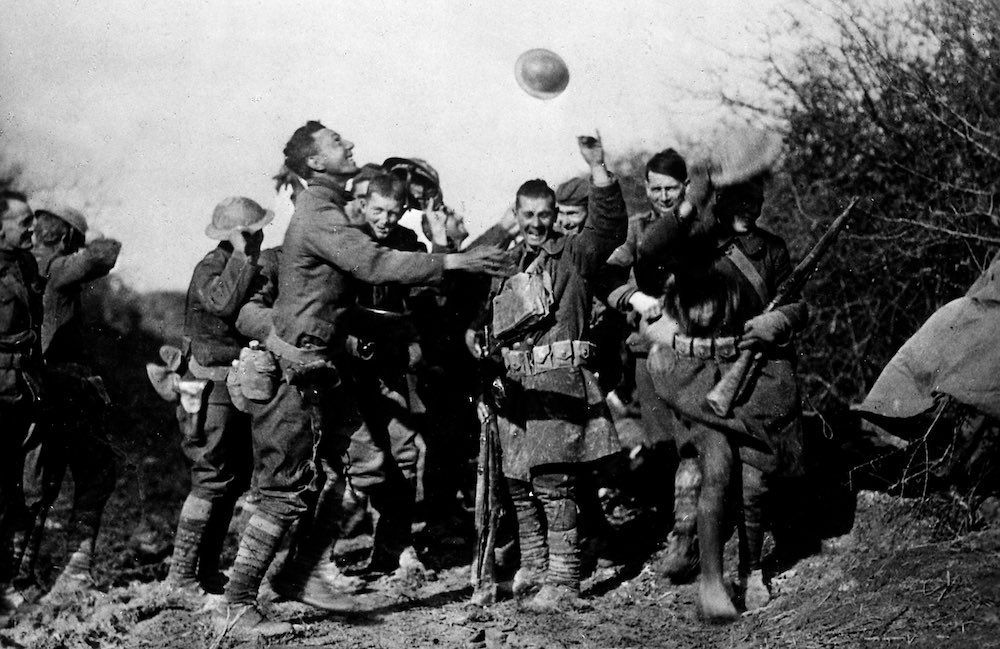
War historians have given notice to it. It is a tragic subplot to a war tragic beyond most all comparison. World War I was a senseless, repeated exercise in the mass killing of young men from around the globe. This went on from August, 1914, up to the cease fire ordered for the eleventh month, the eleventh day, and the eleventh hour of 1918. Offensives on especially the western front meant men from several nations either were ordered to attack or were put in the position to defend against them. Men from many nations woke up on 11/11/18, but as casualties of war never saw the end of that day. People were celebrating the end of the war in Paris, Berlin, London, Washington, and elsewhere while men, most having heard the rumor about the armistice, fought on and died. George Edwin Allison died at 9:30 AM, the last official British casualty. Augustin Trebuchon, a message runner, was killed by a single shot at 10:50 AM, the last French casualty. George Lawrence Price was the last official Canadian casualty, dying at 10:58 AM. The last American to die was Henry Gunter, who if he understood German would have heard the machine gunners of that nation plead for his division to stop their offensive. His time of death was 10:59, and divisional records indicate, “Almost as he (Gunter) fell, the gunfire fell away and an appalling silence prevailed.” If possible, one story is even more tragic. While historians cannot be absolutely certain, they believe the last casualty of this tragic war was a German officer named Tomas. Allegedly, he told Americans approaching a house that he and his men occupied that they could have the house since the war was over. No one had told the Americans who, not trusting the officer, shot him as he walked toward them right after 11:00 AM. Official records indicate over 10,000 dead, wounded, and missing men on the last day of World War I. Historians have found letters, interviewed fellow soldiers of these unfortunate men, and through such correspondence give chilling insights. These men were optimistic. Many felt charmed to have cheated death, some of them veterans whose service had spanned the entire length of a war that exacted staggering, daily death tolls. Others had a strong sense of foreboding, a fatalistic resignation that somehow, despite the cheerful optimism of comrades, they would not survive the day (much historical information gleaned from www.historylearningsite.co.uk).


It is extremely difficult to read this legacy from World War I of men doing their duty to the end, to come so close to escaping the clutches of death, only to be felled in the final hours. Armistice Day and the ending of World War I are the roots of one of our greatest National Holidays and observances, Veterans Day. We honor those living and dead who fought to keep us free from tyranny and evil. Even in that first world war, where war prosecution is much questioned and debated, mothers, fathers, family and friends are beholden to the men and women who risked everything to defend our beloved country.
With that in mind, please allow me to draw this spiritual parallel. How tragic for a child of God to follow for so much of the way only to fall away later in life (2 Peter 2:20-22). How tragic for one to come so close to the cross of Calvary and salvation, only to die short of that goal (cf. Mark 10:22). Jesus spoke of one not far from the Kingdom (Mark 12:34). Agrippa was “almost persuaded” (Acts 26:28). Only eternity and the Judgment Day will reveal the stories of those battling with themselves on the battlefield of Ephesians six, maybe close to obedience, who died outside of Christ. What a tragedy for anyone to die lost. Especially tragic are the examples of those who knew the truth, were convicted about it, but who died without having resolved the greatest problem known to man.
We honor the soldiers who fought and died, even in the “11th hour.” We pray for the souls who are living but will die, who have yet to come to the Captain of the Lord of hosts.

http3a2f2fa-amz-mshcdn-com2fwp-content2fuploads2f20142f112farmistice-14

WE ARE RACING UP A MOUNTAIN

Neal Pollard
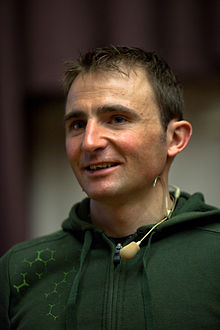
Ueli Steck was the world’s greatest free-soloist climbing. He was routinely snatching up new records in the part of the sport of mountain climbing that is most dangerous. It was not unusual for him to attempt dangerous routes without ropes and other safety gear. The Swiss alpinist was, as you would imagine, about as fit as a human being can be, and he attempted what most cannot (and would not). He was described by friends and fellow competitors as focused, deliberate, and thoughtful. He did not climb for the beauty of the nature around him–which he often only briefly glimpsed. No, he was a mountain marathoner. Speed climbing, as it is considered, was something Steck wanted to apply to higher mountains in the Himalayas–the final frontier for mountain climbers. He did, setting several records in the loftiest part of the world. The 2015 National Geographic Adventurer of the Year died earlier this year doing a climb on one of the western routes up Mount Everest, without supplemental oxygen, falling 1,000 meters during an early morning climb.

While you and I would not consider ourselves world class athletes, we are in a race (cf. 1 Cor. 9:26; Phil. 2:16; 2 Tim. 4:7). How often does it seem not only like a steep race course, but a perilous one, too? Many times, it will seem tempting to simply give up the trek toward heaven. What it takes for us to succeed comes right out of Steck’s “playbook”–focus, deliberation, and thoughtfulness. It is easy to forget why we are climbing. Or, we fail to properly plan or execute our plans. Or, maybe we just do not think about what the purpose of our rapid climb up this mountain is. We are not climbing for earthly recognition or monetary reward. Of course, we are not going solo, either. We have each other for support. Even when we feel alone in our meteoric ascent, we will safely and triumphantly summit as we rely on our Savior! God has given us the tools, resources, and make up to endure exceedingly difficult and complicated turns in the course upon which we find ourselves. Time is going by so quickly, but the way does not get less steep or challenging. Let us keep our resolve to race up the mountain until we get there and not put ourselves into a position to fall! We can, like others before us (Heb. 12:1), succeed!

220px-ueli_steck
Photo of the late Euli Steak

THE DIFFERENCE BETWEEN MARTYRDOM AND A MARTYR COMPLEX

Neal Pollard

Will the day come when government attempts to shut down our Bible study and worship services? Looking back at history, particularly the books of Acts and Revelation, we know this can occur. Certainly, the current environment in our society reveals a trend toward greater intolerance of the biblical worldview. We are growing more secular and more sensual as a nation. Public symbols of Christian religion are disappearing from the public square, while public expressions of Christian religion have long since disappeared from public education. That said, we do not do service to Christ by manufacturing problems where they do not exist.

Isn’t it interesting that back when Christians were experiencing mistreatment, the Holy Spirit guided men and women to have a different attitude than that of a victim. From a prison cell he would never leave alive simply because he was preaching Christ, Paul sought to bolster a young preacher’s faith by saying, “God has not given us a spirit of fear, but of power and of love and of a sound mind. Therefore do not be ashamed of the testimony of the Lord, nor of me His prisoner, but share with me in the sufferings for the gospel according tot he power of God” (2 Tim. 1:7-8). When Peter and John were beaten for their faith, “They departed from the presence of the council, rejoicing that they were counted worthy to suffer shame for His name” (Acts 5:41). When they were mistreated and released earlier in this episode, the church gathered to worship and pray (Acts 4:24ff). Peter urged readiness (1 Pet. 3:15). John urged faithfulness (Rev. 2:10). Stephen showed endurance, boldness, and compassion as he became the first Christian martyr (Acts 6-7).

It is an incongruous idea to imagine the early Christians wasting precious time organizing email campaigns, seeking to draw sympathy from the media, picketing, and playing the victim. Instead, driven by their living hope (1 Pet. 1:3), they committed their lives to Jesus while they spent their days trying to spread the good news of Christ (Acts 8:4; Col. 1:23). Even as Christians were martyred (Stephen, James, those assaulted by Saul of Tarsus’ efforts, and those during the time of the book of Revelation and shortly thereafter), there is no hint of any of them roaming around with a martyr complex. Let us emulate their great example!

work-martyr

“Being A Christian Is Hard”

Neal Pollard

The church office receives a monthly publication called Faith Connect. In the latest edition, they include some data from Barna Group on faith in America. In a sidebar of statistics to an interview with Barna’s Vice President, Bill Denzel, writer Kelly Russell reveals what the research organization found in interviewing those who identify themselves as Christians. They report feeling:

  • “Misunderstood” (54%)
  • “Persecuted” (52%)
  • “Marginalized” (44%)
  • “Sidelined” (40%)
  • “Silenced” (38%)
  • “Afraid To Speak Up” (31%)
  • “Afraid Of Looking Stupid” (23%)

These findings accompany the assertion that America is a “Post-Christian nation,” having forgotten or rejected its roots, history, and former culture and practices (Summer 2017, 49-51). The thing that strikes me is how “Christians” report feeling. Barna did not exist in the first-century, and as such there is no record of any polling of the original Christians. But if there was, can you imagine the New Testament church answering the way these respondents did? I’m sure they felt misunderstood and persecuted. How could they not? Reading New Testament books like Acts, Hebrews, 1 Peter, and Revelation, along with early church fathers, we’re sure the Jews and Romans sought to marginalize, sideline, and silence them from the marketplace to the temples and synagogues. Our ancient spiritual family members were arrested, murdered, driven from their homes and cities, ostracized, stolen from, ridiculed, and more.

How they responded to such treatment is instructional for us today.  Peter reports their feeling:

  • “Living hope” (1:3)
  • “Great rejoicing” (1:6; 1:8)
  • “Love” and “believing” (1:8)
  • “Joy inexpressible” (1:8)

There are a lot of imperatives and exhortations throughout the rest of this epistle, written to encourage them to hold onto their faith however poorly they were treated by the people around them. Peter wants them living holy lives, but he also wants them to appreciate how great living the Christian life is. That’s a message we need to take to heart.

I hope we never put the focus in our spiritual lives on how hard it is to be a Christian. It can be! But, what will make the greatest adversity bearable is keeping our focus on our purpose, our promise, our privileges, and our peace. There is no better life than the Christian life. May we focus on our opportunities rather than our obstacles!

carry-cross-600x350

Wanting To Want To


Neal Pollard

Do you want your marriage to flourish and grow?
Do you want to read through the Bible this year?
Do you want to lead someone the Savior to know?
Do you want to live life without worry and fear?
Do you want to lose weight and be healthy and fit?
Do you want to attain to more financial discipline?
Do you want self-confidence, courage, and grit?
Do you want to get better at caring and listening?
Do you want a closer place near the heart of God?
Do you want to trust Him when trouble finds you?
Do you want to have heaven after earth you’ve trod?
Then it all must begin with you wanting to want to! —NP

Call it desire, motivation, or willpower.  Whatever you call it, it is central to succeeding at whatever your goals are. What does it take to become a Christian? Wanting to! What does it take to defeat the sin in your life? Wanting to! What does it take to break bad habits and repeated blown judgment calls? Wanting to! What does it take to be a stronger, more faithful Christian? Wanting to! That is not to minimize or ignore our dependence on God and the strength He provides. But He is not going to overwhelm or overtake our will and make us do or be something. He did not operate that way in the age of miracles.

What will be your motivation? There are so many potential incentives. There’s the love God has shown us (2 Cor. 5:14). There’s the fear of hell (Mat. 10:28). There’s the yearning for heaven (John 14:1-3). There’s the concern about how we influence other’s destiny (Mat. 5:14-16). There’s the love we have for God (1 Jn. 4:19). There’s the longing to be like Jesus (1 Jn. 3:2). For each of us, some motivations are more powerful than others. Whatever it takes to be more for God in this needy world, latch onto it and pursue it. You can do it because you won’t be doing it alone. God gave you the church, His Word, prayer, and a personal will to help arrive at the ultimate goal. Don’t let up. Don’t look back. Don’t lose hope. Want to want to!

img_4387
4 people have motivated me to run over the past 19 years: Kathy, Joe, Bob, and Wes. Today was a 6 miler in the snow when it felt like 4 degrees. 

FOURTEEN SUGGESTIONS FOR BUILDING YOUR DEVOTIONAL LIFE

Neal Pollard

Maybe you have resolved repeatedly to become a better, more faithful Bible student, person of prayer, or simply one who truly desires to build a closer relationship with God. While a lot of that will be personal and peculiar to you as an individual, you may lack direction about how to get started or give yourself the best chance to succeed in that goal. Perhaps these few suggestions can prove helpful to strengthening your daily connection with your Creator.

  • Adjust your wake up time. 15 to 30 minutes head start will prove the most vital moments of your day.
  • Find a quiet, solitary place. Distraction can equal detraction.
  • Study and pray with pen and paper or computer nearby. This will aid specificity and memory.
  • Do not rush. Better a paragraph or chapter pored over than ten chapters glossed over.
  • Take advantage of the commute. Pray through it or play the Bible on audio, if you can.
  • Pick a book or topic of interest and drill down.  Pick it for its relevance to your weakness, need, ignorance, or curiosity. Drink it in deliberately and carefully.
  • Be specific and transparent in your prayers. In the solitude of prayer, drop all pretense, denial, and pride. He knows it all anyway.
  • Always seek application in the Bible text you are reading. This is not a history lesson or academic exercise. This is spiritual food, armor, and survival.
  • Create a list of ways you can enact the principles you read from Scripture. See yourself in the text of Scripture, and challenge yourself to think, say, do, and be what God desires of you.
  • Ask questions of the text. Don’t pass over what you don’t understand. Don’t skim the surface. Mine for meaning.
  • Build a prayer list. Challenge yourself and add people that many others may overlook in your local circle—widows, little children, new Christians, struggling folks, those facing an anniversary of loss, leadership, missionaries, non-Christians where you work and play, the poor, etc. This ever-expanding prayer list will bless lives in ways you won’t know here on earth.
  • Mean what you say. When you tell someone you’ll pray for them, have integrity. Make an honest effort (write it down, put it in your phone) and honor your word. Ask the people you encounter how you might pray for them, then do it.
  • Review. Revisit prayer lists or notes from Bible study periodically. Make it live on through reflection.
  • Pray for what to study and study prayer. You will find that these two spiritual strength-building exercises are interconnected. This is about relationship with God. Spare no exertion.

Consider these “jump starters.” You will come up with more and far better ways to help yourself to a closer walk with God. These days, we’re being pulled in every direction and most lead away from Him. You will have to be deliberate to swim against the tide. May God bless you as you let Him bless you through a vibrant devotional life!

bible-896220_960_720

WHY WE KEEP FAITHFULLY SERVING AND LEADING

Neal Pollard

It took the Expert House Movers of Sharpstown, Maryland, 17 years and 23 days to complete the move of the Cape Hatteras Lighthouse 2900 feet away from the eroding Atlantic Ocean beach on the North Carolina Outer Banks location where it had been standing. They started in 1982 and finished in 1999. Little things may get done quickly, but big things take time.  Someone once said, “Most people tend to overestimate what they can do in a week and underestimate what they can do in a lifetime.” Paul was in a position to look back over his life and see, if his humility allowed it, a lifetime just since his conversion to Christ that was marked by much fruitful labor.  Luke chronicles some of that work from Acts 11-28. Paul reflects back on some of it in 2 Corinthians 11. But in what is firmly believed to be his last inspired writing, 2 Timothy, he has a brightly lit torch in his condemned hand. He is ready to hand it off to the young preacher, Timothy.

I imagine most of you are blessed to lay claim to someone, either still living or now dead, who was a Paul to you. Having a mentor or mentors to help us grow and develop, spiritually, is priceless. When Paul tells Timothy what he does in 2 Timothy 4:1-8, a passage we typically use to encourage preachers, he is urging a precise attitude and precise teaching. The reasons why he wanted that for Timothy are reasons that should motivate us to live faithfully and to encourage our own Timothys to persevere until the current pressures. Here are three reasons why Paul encouraged Timothy to be faithful:

  • BECAUSE PROBLEMS ARE COMING (3-4). It was a fourfold problem (you’ll notice it by reading these two verses). Paul told Timothy to handle it with great patience and teaching. You cannot always anticipate what the problem is going to be, but as long as you come in contact with people there will be problems. You cannot hope to be an influence on them if you do not cultivate the attitude of patience. When problems arise, be patient and stick to the doctrine of Christ.
  • BECAUSE YOU ARE DIFFERENT (5). No matter how you are treated (or mistreated), you cannot stoop to the level of unethical, immoral, or unscrupulous people. These false teachers Paul references were willing to discard truth, and many wanted that kind of teacher. We will encounter people who don’t play by the Lord’s rules, but we must be different. We must be sober in all things, endure hardships, do the work of an evangelist, and fulfill our ministry. We are to have a better character, and we have a better message. We aim higher because we are the people of God.
  • BECAUSE JUDGMENT IS COMING (6-8). Paul looks ahead to the very end of all things. Because he was faithful, he anticipated the crown of righteousness. Why do you want to serve the Lord? Is it for prominence, popularity, or influence? To successfully endure, do what you do in view of the Judgment. God won’t forget your faithfulness (see Heb. 6:10)!

Your faith will be tested. You may be resisted, rejected, ignored, disbelieved, and debated. The question is, “How are you going to handle it?” Will it make you better or better. It will try your patience, but will you be found guilty or not guilty? If you will be patient and faithful to God’s Word, you will be an example to more than you’ll ever know. Keep your eyes open for your own Timothys to train and members to mentor. The more we have who listen to and follow the advice of this passage, the greater the influence of Christ will be in this dark, sinful world.

3_30_home_pass_the_torch_before_it_goes_out__148950268

How Determined Are You?

Neal Pollard

Karoly Takacs has one of the most interesting stories in Olympic History. The right-handed pistol marksman and sergeant in the Hungarian Army was a world-class shooter, but was denied an opportunity to compete in the 1936 games since only commissioned officers could compete. That prohibition was lifted after these games and Takacs anticipated competing in 1940, but a faulty grenade exploded in his right hand during army training in 1938. Unbeknownst to the Polish public, Karoly began practicing shooting with his left hand. He showed up at the 1939 Hungarian National Pistol Shooting Championship, and when other competitors came to offer condolences about his accident, he said, “I didn’t come to watch, I came to compete.” In fact, he won those games. But, he was unable to compete in the 1940 or 1944 Olympic Games because they were not held due to World War II. By the time of the 1948 games, held in London, Takacs was 38 years old. But, he qualified and won the Gold Medal there. Then, he turned around and did it again at the 1952 Olympics in Helsinki. He barely missed qualifying in 1956!  For this, he holds a place as one of Poland’s greatest Olympic heroes of all time (information via Quora.com authors Ankur Singh and Swati Kadyan).

In the New Testament, God shows us how beautiful proper determination is. Starting with Jesus’ determination to save us from our sins, as we read about Him because of anticipated joy “endured the cross, despising the shame” (Heb. 12:1), we find the greatest example of resolve. But, then there was Paul. Before conversion, he was determined to exterminate the Christians (read Acts 26:9-11). After being won to Christ, he refocused his determination toward winning as many as possible to Christ (1 Cor. 2:2; 9:24-27) and he urged others to do the same (2 Tim. 2:1-6; Tit. 3:8; etc.). No one will make it to heaven without making a determined effort to do so. That does not mean that anyone will earn their salvation, but it just as true that no one accidentally goes to heaven. The way Jesus put it is, “Strive to enter through the narrow door; for many, I tell you, will seek to enter and will not be able” (Luke 13:24). How badly do you want to go to heaven? What are you willing to give up in order to go there?

karoly

Jeremiah, The Persecuted Preacher

Neal Pollard

It was hard being a preacher in Jeremiah’s day. As thanks for his work, the weeping prophet endured the following:

  • He was led as a lamb to the slaughter (11:18ff)
  • His brethren dealt treacherously w/him (12:6)
  • He was confronted by false prophets (14:13)
  • His brethren cursed him (15:10)
  • He was hit, put in stocks and condemned (20:1ff)
  • His heart was broken (23:9)
  • He was seized and threatened w/death (26:8,24)
  • His teaching was opposed (28,29)
  • He was put in prison (32:2,3)
  • He was pursued (36:26)
  • He was beaten and imprisoned (37:15)
  • He was thrown into the dungeon (38:6)
  • He was bound in chains (40:1)
  • He was falsely accused (43:2)
  • He was taken to Egypt (43:6,7)

Remember, God called him to this work. Jeremiah was doing nothing wrong in his ministry; in fact, all of those things that happened to him came in “the line of duty.” The people, on the whole, never changed for the better after all the effort Jeremiah put forth in his ministry. Jeremiah never speaks of his work as enjoyable or rewarding, but it was essential and vital. Some estimate that his ministry spanned more than six decades! Whatever we call him, we do not use adjectives like “weak” or “wimpy.”

The life of preaching is a wonderful work. The preacher works with the best people in the world fulfilling the most profound purpose possible while working, ultimately, for the best Employer there is. The retirement plan is unbeatable! Helping people connect with salvation and helping the saved better connect with their Savior is extremely fulfilling. But, if there are job hazards (the minority of brethren who are difficult to deal with, sporadic job insecurity, being misunderstood, being subjected or having your family subjected to closer scrutiny, etc.), there is a reminder from Hilkiah’s son from Anathoth. Out of our own devotion to God, we will stay at it through thick and thin. Jeremiah wrote, “I have become a laughingstock all day long; Everyone mocks me. For each time I speak, I cry aloud; I proclaim violence and destruction, because for me the word of the Lord has resulted in reproach and derision all day long” (20:7-8). This man thought about quitting, but he couldn’t! He says, “But if I say, ‘I will not remember Him or speak anymore in His name,’ then in my heart it becomes like a burning fire shut up in my bones;

and I am weary of holding it in, and I cannot endure it” (9). I have watched my father, who has preached the gospel 53 years, have some “Jeremiah moments.” I have known so many gospel preachers who have walked in that prophet’s sandals. I have even experienced a few of the lighter trials Jeremiah records as happening to him.  But Jeremiah and his modern counterparts whom I have watched serve him faithfully provide a sterling example to me of what the man of God who preaches “looks like.” He’s tough, but tender-hearted. He’s loyal and loving. He’s gritty, but gracious. He’s courageous, yet caring. He will be fallible, but he must be faithful.

Preaching is, in my opinion, the best work in the world. For whatever bumps unique to the preacher traveling the narrow way, there are ten times the blessings. To my fellow friends in this fantastic fraternity, keep the tenacity of the tearful teacher of Judah! Stoke the fire in your bones (cf. 2 Tim. 1:6).

Dad in '64 an '16
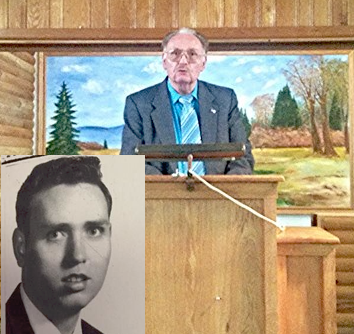
My dad preaching in Artesia, MS, in 1964 (left) and preaching in Andrews, NC, in 2016 (right). 

What “We” Do To Achieve Spiritual Success

Neal Pollard

It is an unmistakable emphasis in the book of Nehemiah. The word “we” appears 38 times in 30 of the book’s 406 verses! Working together was the continuous mindset of Judah. They knew such a mentality would ensure success (2:20).

Teamwork accomplishes much more than individual performance! If a ball team has only one “star player,” the defense wins by shutting down the one performer. If the work of the church is carried on by only one or a select few, the devil has a better chance of shutting it down. Everyone must get invested! Success hinges on it. Notice where cooperation in the local church brings spiritual success.

When we build (4:6). Not church buildings, but relationships, knowledge, and commitment. A church has never grown on the back of massive, modern facilities. But, God wants us to build up His church (1 Th. 5:11). The more visits and calls each member makes, the better we build. The more encouragement and assistance we provide, the better we build. More Christians doing more for the Lord produce spiritual success in the church.

When we pray (4:9). Facing trouble and uncertainty, God’s people came together to pray. This is reminiscent of the prayer meeting in the home of John Mark’s mother, “where many were gathered together and were praying” (Acts 12:12). What a success that was! At least 3000 or so were devoting themselves to prayer at the Jerusalem church (Acts 2:42). Preachers, teachers, and missionaries are made bold, the sick and hurting are made hopeful, those in danger, travelers, and those confused are made calm by the prayer of the saints. That is vital to spiritual success!

When we carry on (4:21). Churches encounter setbacks and suffer defeats. Willful sinners going out from among us (1 Jn. 2:19), plans or programs that fizzle or die, disorderly members (2 Th. 3:6), false teachers (1 Pe. 2:1), apathetic members (John 15:5-6), the death or loss of a church leader, or general discouragement can tempt us to give up in our labors (cf. Gal. 6:9). We need each other to spur ourselves on in completing the important works that will glorify God. It is not how many defeats a church suffers, but how well a church, no matter how many “losses,” overcomes them.

When we give (5:12; 10:37). Two interesting instances of giving are recorded in the book of Nehemiah: (1) Giving to restore what was rightfully God’s (5:12), and (2) giving the manner that God rightfully expects (10:37). Church members who will spend generously on dinner and a movie but who give the Savior of their souls comparative pocket change, like Zaccheus, need to repent by restoring what rightfully belongs to God (Luke 19:8). Churches that give by faith and sacrifice are always stronger for it, if their living matches their giving. God wants to be “first” (10:37; Mat. 6:33), and that applies to our giving.

Certainly, many other elements are needed to help a church achieve spiritual success for God. But, Nehemiah and his brethren found success by working together. That spirit of unity will help us, as a church, to go forward and do things necessary for us to continue to be a great church! Let’s grow together!

2176418_02575c1b