Sharing Trade Secrets Or Sharing The Wealth?

Neal Pollard

Last month, Von Miller gathered some of the NFL’s elite sack specialists at Stanford University for what he called a “pass rush summit.” The participates were star defensive players from around the league, with several different teams represented. Addressing concerns that each man was sharing his trade secrets, Miller replied that it was more like sharing the wealth. He said, ““A sack is a sack. I’m going to get sacks, they’re going to get sacks. You really can’t stop that. You really benefit more from really just sharing that knowledge and just trying to be the best players that you can possibly be” (Denver Post, Nicki Jhabvala, 6/29/17). Do you find that surprisingly magnanimous and unselfish? Yet, don’t you find it refreshingly classy and helpful?

When I think about the spiritual battle God calls us to, I often think about the outposts God has in towns and cities throughout our state, country, and world. These individual congregations of the Lord’s church are facing struggles with a formidable foe (cf. 2 Cor. 10:2-4; 1 Pet. 5:8-9; Eph. 6:10-17). God has endowed us with a mission and purpose, reaching those outside of Christ, showing charity and compassion to the world, and helping to strengthen those already in Christ. We seek to achieve this through various ideas, ministries, programs, efforts, and events. We bring in speakers, host activities, organize, and create. When we find ways to be productive and get results, we should be ready to help. When he hear of such things, we should be eager to hear. At times, we may inadvertently develop a sense of competition rather than a spirit of cooperation. But this ought not to be so.

What is our goal with every benevolent outreach, every evangelistic attempt, and every edifying work? Isn’t it to get more people to heaven, to shine the light of Christ into a world of ever-deepening darkness? Why do we host camps, have lectureships, train preachers, hold fellowship activities in homes and at the building, reach out to our homeless community, stock pantries, build a robust youth program, minister to young professionals, young families, and seniors, do evangelism training, have marriage seminars, worship leadership training, and the like?

What about works our brothers and sisters are doing all over the country? Polishing the Pulpit, Focal Point, Fishers of Men, Gospel Broadcasting Network (GBN), Truth.fm, Mission Printing, World Video Bible School, Bear Valley Bible Institute’s Extension Program, World English Institute, House to House, Heart to Heart, and many, many others are what our larger church family are doing to grow the church and build its strength. Yet, there’s much more that could be done by so many more of us, working together to accomplish the mission. But we must see ourselves as cooperators rather than competitors. Obviously, there can be impediments making this impossible in specific situations, but as we acknowledge that are we missing opportunities. Meanwhile, countless souls are rushing toward eternity. Let’s band together to find out how to more effectively reach more of them. That will mean more saved souls and more glory to God!

Screen_Shot_2017_06_30_at_9.49.53_AM.png
Vanguard Sports photo of the Pass Rush Summit

“He sends forth springs in the valleys; They flow between the mountains”

Neal Pollard

This statement in Psalm 104:10 is spoken literally of God’s physical provision for His creatures. But, have you ever thought about how that is true for you and me when we find ourselves in the valleys of life? In between the mountaintops of successes and happy days, we can find ourselves seemingly down in the valley of the shadow of death (cf. 23:4). I am so thankful that in those moments that might seem dry and thirsty, God sends forth springs in the valleys of life. Whatever creates the valley for us, it can seem like a deep place hard to climb out of. How does God send forth spiritual and emotional springs for us, even in the valleys of life?

  • The church is a spring in the valleys of life. Other Christians lifting and encouraging us can be the medicine we need to take the next step through the valley. No wonder the church is such an expression of God’s wisdom (Eph. 3:10-11).
  • Prayer is a spring in the valleys of life. Pouring out our hearts to a God who understands us and knows our situation perfectly strengthens us.
  • Our family can be a spring in the valleys of life. Those of us who have Christian parents, siblings, children, and other relatives have a double blessing, family twice over. They can be the support and encouragement we need to keep moving.
  • Spiritual blessings are a spring in the valleys of life. Ephesians 1:3 says in a general way what the rest of the New Testament enumerates in a specific way. God is blessing us in so many ways because we are in His Son. Never do we appreciate that more than when we struggle.
  • The Bible is a spring in the valleys of life. There is wisdom and insight on every page, guidance for our journey. God has revealed the road map to help us traverse the narrow way to heaven. The narrow way will not keep us from traveling through valleys, and often it has valleys the broad way does not.
  • Faith or trust is a spring in the valleys of life. Like Paul, who often camped in the valleys of life, “I know whom I have believed and I am convinced that He is able to guard what I have entrusted to Him until that day” (2 Tim. 1:12). My eyes may be wet with tears in the valley, but my eyes of faith see with crystal clarity.
  • Hope is a spring in the valleys of life. It anchors the soul (Heb. 6:18-19), but it also helps lift us up. Because I face the future with confidence, no setback will keep me discouraged but so long. Tomorrow will be a brighter day!
  • Christian service is a spring in the valleys of life. Maybe nothing leads me through the valley any more than finding a fellow sojourner to help out of their valleys. When I focus outside of myself on other strugglers, I soon forget my unpleasant experience.

Many years ago, I heard Franklin Camp talk about the valleys of his life and how he overcame. His young daughter accidentally burned to death in a brush fire. He faced other huge losses in life, but brother Camp through it all was a man who had his eyes fixed on the ultimate mountaintop experience. In the valleys of life, let us look for the springs God sends. They will refresh, renew, and relieve us until our journey is complete.

valley-springs-lodging

Facing The Storm

Neal Pollard

Springtime in the plains is a notorious time for storms. I was driving through northwest Texas near the time when three storm chasers were killed southwest of me on Tuesday afternoon. They died pursuing the storm, not directly because of it. They were there because conditions were ripe for tornadoes. 17 people were killed by tornadoes in 2016, but 24 have already died in them this year. Hollywood has captured our awe and fascination with them since The Wizard Of Oz. We view storms as mysterious, ominous, powerful, and frightening. They come in so many forms—hurricanes, floods, blizzards, cyclones, and more. But “storms” are synonymous with fear and sorrow.

Wouldn’t you classify some of the major, traumatic events of your life as storms.  They build and threaten, they strike, then they leave aftermath. The storm may take but a moment, but recovery can take days, months, or even years. Not surprisingly, the Bible uses the storm metaphorically to describe such moments in our lives. David wrote, “I would hasten to my place of refuge from the stormy wind and tempest” (Psa. 55:8). The man we most associate with such figurative storms, Job, laments, “You lift up the wind and cause me to ride; And you dissolve me in a storm” (30:22). Most frequently, the Bible uses storms representatively to describe God’s judgment. But, as Job and David show, sometimes storms strike the innocent and undeserving.

What do we do when facing a storm? We heed precautions. We take shelter.  We wait and endure. We ask for and trust God’s protection.

The world is full of people riding out storms today. That includes Christians. These storms are assaulting their bodies, bank accounts, relationships, spiritual strength, and spirits. Some feel safely sheltered, while others feel as if they are barely holding on. How do we face our storms?

* Seek help from others (Heb. 12:12-13; Ecc. 4:9-10).
* Search for possible benefits from it (Psa. 66:10; Rev. 21:3-4; Js. 1:2-4; etc.).
* See God’s power to help in it (Psa. 18:19; Rom. 8:28-38; 2 Pet. 2:9a).
* Shelter in the place of safety (Exo. 33:22; Psa. 91:1; Mat. 7:24-27).

God doesn’t cause evil or sin, but He allows it. We will always struggle with the “why” of this. But, we can grow our dependence on our great, perfect God when we are being battered. He is faithful. He wants to help. Lean on Him through your storms!

b3d-814151_960_720

Struggling Through Our Troubles

Neal Pollard

Have you ever had a problem or struggle that started out small but kept growing until it was larger than life? Did it come to consume your thoughts, keep you up at night, and become an overwhelming obsession? Maybe you devoted a lot of emotion to it.

Just by virtue of living on this earth, we will struggle (Job 14:1-2). Job knew struggle and turmoil! He lost one thing after another. His life seemed to unravel before his eyes.  Teddy Roosevelt is credited with saying, “When you are at the end of your rope, tie a knot and hold on.” Have you ever found yourself struggling at the end of your rope of faith? You are certainly far from alone in that. We certainly see Job dangling there, asking, “Why was I ever born?” (3:11) and “Why can’t I go ahead and die?” (3:20-22). David was there (Psa. 22:1). So was Jeremiah (ch. 37-38).

Of course, trouble takes on many forms and comes from many directions. Any number of passages can help us cope with the struggle of trouble, but consider Psalm 10. It refers to the wicked seven times and to the afflicted four times. It also speaks synonymously of the wicked as the greedy (13), evildoer (15), and those of the earth (18). It speaks of the afflicted as the unfortunate (8,10,14), humble (14), the orphan and oppressed (14,18). We know that our trouble can come from the wicked, but it can also come from no one source we can identify though it hurts just the same. Consider this Psalm about our troubles and what we can do about them.

Our perception in times of trouble (1-11). Our vision can become blurry by tears or rage, but our point of view is altered when trouble comes. The psalmist goes through this. He sees God as being distant (1). He saw the wicked as being in control or prospering (2-11). God seemed far away and life seemed unfair. The majority of every generation is wicked, and each generation of God’s faithful must reconcile the seeming success of the wicked and oppression of the affilicted righteous. We don’t begrudge the psalmist for his struggle to see through spiritual eyes. We can relate.

Our prayers in times of trouble (12-15). The psalmist admits his own struggle, then he shows us how to overcome it. His first response is to pray. He asks God to deliver (12). He asks God to remember (12-14). Finally, he asks God to vindicate (15).

Our praise in times of trouble (16). Before the prayer he’s perplexed and indignant. Afterward, he has insight, peace, and greater confidence. He springs from his knees with new perspective. Doesn’t prayer do that for us? The psalmist acknowledges God’s nature—“Lord” (Jehovah, five times in the Psalm), position—“King”, and duration—“forever and ever.” Do we spend more time focusing on the source of our troubles than on the solution?

Our proper perspective in times of trouble (17-18).  The psalmist is confident at the end of this psalm, saying, “you have heard” and “you will strengthen and listen.” Do you approach God that confident in His ability and desire to do what is best? We can be as confident as he is that God hears and helps when we hurt.

What is the greatest trouble we can face in this life? A disfiguring accident? Financial ruin? Loss of a parent, spouse, or child? The deterioration of health? The fall of our nation? Through Christ, none of these are too difficult to overcome. This Psalm reminds me that God still cares and He won’t abandon me. You and I can look at the cross and the church and be reassured of that. We know we can trust God (Rom. 8:28). God is able and willing to help us through every trouble.

6359108530478803001617573448_1112-gmat-struggle-970-630x420

Expectation Versus Euthanasia

Neal Pollard

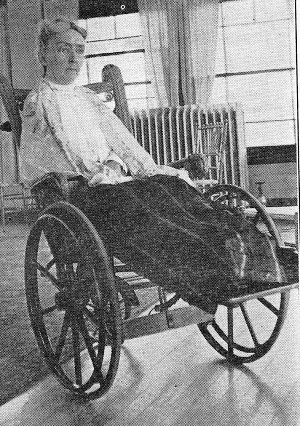
She was born the year after the Civil War. Her mother died when she was three. Her father dropped her and her newborn sister off at the home of the widow of an army friend. Unable to care for the girls, the widow ultimately transferred care to a sweet, religious couple in the community. The girls spent happy years through their school days, but the older sister came to suffer from rheumatoid arthritis as a teenager. It steadily grew worse until she could not walk. Their adopted parents died within months of each other, and the young women were poor and had little prospect of earning money for themselves. Before her affliction, she had developed aspirations as a concert pianist and shown great promise as a poet and writer. Arthritis robbed her on the musical dreams, but she flourished as a poet and hymn writer. Rather than seek relief from her pain through suicide, she channeled her suffering into beautiful writing that continues to comfort others as it did in her lifetime. Ravi Zacharias summarized her suffering, saying, “Her body was embarrassed by incontinence, weakened by cancer, and twisted and deformed by rheumatoid arthritis. She was incapacitated for so long that according to one eyewitness she needed seven or eight pillows around her body just to cushion the raw sores she suffered from being bedridden” (“The Cry For A Reason In Suffering,” np; other information from The Story of Annie Johnson Flint, Rowland Bingham). Her poetry and songs are not riddled with bitterness or even soul-wrenching questions of why. You’ll find titles like “The Grace Of God,” “Not Down, But Through,” “Rest, Tired Heart,” “Grace Sufficient,” “He Giveth More Grace,” “He’s Helping Me Now,” and on the hopeful, positive compositions flow.

We have only one of her hymns in our song book, and it is entitled, “The World’s Bible.” These familiar words include the lines, “Christ has no hands but our hands to do His work today, He has no feet but our feet to lead men in the way….” I appreciate the living testimony Ms. Flint was of the way one who believes in Christ ought to respond to the tragedies and difficulties that can strike in this fallen world. I pray that I will never be wracked by such suffering, but if I do I would want the world to see the spirit in me that so many saw in her. Her life was one of trust in God’s sufficiency and strength through the darkest moments of life.

Our state (Colorado) was one of a few that has passed physician-assisted, right to die legislation in the recent election cycle. Besides the ethical slippery slope of people, even doctors and patients, selecting when to end life, there is in such an effort a failure to see the intrinsic value of life as well as God’s sovereign right over His creation. Ms. Flint’s situation makes us cringe in discomfort at first blush, but we see the refined beauty of a trusting heart to impart profound comfort despite life’s harshest turns. To persecuted Christians, Peter offers this hope for all strugglers when he writes, “After you have suffered for a little while, the God of all grace, who called you to His eternal glory in Christ, will Himself perfect, confirm, strengthen and establish you” (1 Pet. 5:10; cf. 1 Pet. 1:6-7). Whatever the trial, we can choose life instead of death, trust in God rather than trust in our own thoughts. Let us live in triumphant expectation, no matter what we may have to endure for the moment (Rom. 8:38-39; Psa. 30:5).

flint_aj

What Vision Is

Neal Pollard

It is the ability to see what a thing could be. A carpenter, looking at a tree, sees with a trained eye much more than others can see. With his expert shaping, appropriate tools, and seasoned patience, he can make out of that tree what was once only in his mind. The Lord needs people, from the leadership down, who look at the community, each other, their income, and their abilities and see what could be done. It takes no effort, emotion, or education to say, “It can’t be done!” That’s what is expected. Vision sees what could be.

It is the ability to not obsess over what a thing has been. Due respect is owed to the labors of the past, and due recognition is owed both its successes and failures. The past, however glorious, will have ample samples of both. Yet, the people, plans, and programs of today and tomorrow should not be shackled and chained exclusively to was has been. Vision is not always settling for being “has beens.” “Will be” is what Paul seemed more focused in pursuing (cf. Phil. 3:10-12). Biblical vision recognizes that doctrine cannot change, but methods, technology, tools, and people invariably do. Vision asks how people living in the present time can best reach people living in the present time and prepare them for an endless eternity.
It is the ability to trust in what God can make it be. No plan would succeed without God’s hand in it. I love the prayers where brethren plead, “Help us in the things that are right and defeat us in the things that are wrong.” Among the Bible’s heroes are those who factor God into the plans and say, “We are well able” (Caleb, Num. 13:30). “I can do all things” (Paul, Phil. 4:13), “There is nothing too hard…” (Jeremiah, Jer. 32:17), and “No good thing does He withhold” (the sons of Korah, Psa. 84:11). Our vision can be bold when “our” is God and us! Since God made the sky, the limit exceeds even that! Our giving, our ambitions, our goals, and our sights should be set to reflect our belief in that fact.
Where will we be this time next year? In five or ten years? Vision plays a role in that. Vision attempts to see the unseen, forget the past, and trust the One who holds past, present, and future in His all-powerful hand. With those truths factored in, let us dream big dreams!

glasses-928465_960_720

Longing For The Desert Lodging Place?

Neal Pollard

The beleaguered prophet, Jeremiah, had had it. He was, in the words of Andy to Barney, “beat to the socks”—and then some! He was surrounded by sin and disobedience. At every turn, he was being disappointed by people he expected so much more from. He was fed up, and he wanted to escape from it all.  Can you relate? Have you seen so much hatred, man’s inhumanity to man, gross immorality, defiance and rebellion, God-less living, and the like that you are done with it?

Jeremiah wrote, “Oh that my head were waters and my eyes a fountain of tears, that I might weep day and night for the slain of the daughter of my people! Oh that I had in the desert a wayfarers’ lodging place; That I might leave my people and go from them! For all of them are adulterers, an assembly of treacherous men. ‘They bend their tongue like their bow; Lies and not truth prevail in the land; For they proceed from evil to evil, and they do not know Me,’ declares the Lord” (Jer. 9:1-3). Keep reading and you see a dirty laundry list of other transgressions, like treachery and deceit, immorality, and unbelief (4-8). In fact, God pronounces judgment against that nation for its collective guilt.  So, the astute and informed prophet grieved for the people and longed to escape from this agonizing reality.

Isn’t it wonderful that God has given us refuges from the similar conditions we see around us today? We can choose to consume the salacious, depressing headlines and news stories, monitoring it day and night.  We can engross ourselves in the various activist positions currently advocated in our culture and society. Or…

  • We can increase our daily devotional time.
  • We can set a goal to lead a specific someone to Christ.
  • We can unplug from the endless litany of media-driven bad news.
  • We can do our individual part to strengthen our local congregation (making visits, praying over specific prayer lists, writing encouraging cards and letters to members and visitors, volunteering for needed tasks, etc.).
  • We can deliberately focus more each day on heaven, building our desire to go there.
  • We can go the second mile to be a model citizen in this nation.
  • We can try to find people in our daily lives (co-workers, fellow students, neighbors, and others we see regularly) and build a bridge through acts of love, kindness, and humble service.
  • We can smile and be pleasant more, wherever we are (reflecting the joy and happiness we truly have in Christ).

There are probably quite a few, though lost in spiritual ignorance, who would love to know about this “wayfarers’ lodging place,” not to escape from people but to escape to God. There are brothers and sisters in Christ groping to get to such a place. Perhaps we forget that “there is a place of quiet rest, near to the heart of God. A place where sin cannot molest, near to the heart of God.” Jeremiah was discouraged by his daunting task. We who stand this side of the cross know, whatever is happening around us, “our inner man is being renewed day by day” (2 Cor. 4:16).

Wanna get away?

1619008375_9e423472e4_b

He Can Carry What’s Too Heavy For You

Jeff Wiant has been a Christian since early 2015. Since then, he has written 11 hymns. They are all beautiful, but this may be his best. It’s his first invitation song to write.

Poem inspired by this beautiful new song by Jeff Wiant, member at Bear Valley.  Click on the link below to hear it:

CLICK HERE: Jeff Wiant’s “Won’t You Come”

Neal Pollard

We struggle and strain to carry our load
We buckle as it gets heavier on our backs
We fall and hurt on this rough, rocky road
The weight makes us stop in our tracks

Looking around with a face full of pleading
We wonder who is observing our pain
We’re wounded, weary, broken and bleeding
Set to surrender from the stress and strain

Tears flow freely, we have been here before
We know how the journey seems endless
Certain we can’t make it alone to the door
We feel solitude, helpless and friendless

It’s bigger than us, crushing and enormous
And the contents shameful and unsightly
We’ve borne it so long it’s begun to conform us
To a stooped struggler holding on tightly

A voice calling gently, “Bring it over to Me,
I can help you and give you My best,
Your burden is heavy, I know you are weary,
Come to Me and I will give you rest.”

Could you double down, wincing and worn,
Grit your teeth and ignore His free aid?
Eventually, it will bury you after making you mourn
You know an exorbitant price must be paid.

He is able and willing, but waiting for you
To seek what He offers you without reservation
Let Him do for you what only He can do
Give your burdens to Christ with no hesitation.

Think of the journey, partnered with One
Without limits in power, purity and pity
Who’ll stay with you until your journey is done
As together you arrive at His heavenly city.

Dockers de Cap-Haïtien

Who Can Be Against Us?

Neal Pollard

Have you ever had someone that seemed to have it out for you? Not only did they not like you, but they actively undermined you. They may have slandered you or even lied about you. You may have even felt that they were trying to ruin your life!

Have you ever had something that seemed to overwhelm and overshadow you? It could be something from your past, present, or future, worry, guilt, regret, fear, trouble, pain, problem, or other stress. Maybe it was something that was nearly impossible to shake or something of which you were constantly reminded.

In a beautiful context writing about assurance, Paul asks, “If God be for us, who can be against us?” (Romans 8:31). That is an eminently fair question to ask. Here are some potential foes that could undo us: tribulation, distress, persecution, famine, nakedness, sword, death, life, angels, principalities, powers, the present, the future, height, depth, or any other created thing (35, 38-39). Examine that list closely. Doesn’t it include just about every potential threat and trial? Do we believe the assertion of Romans 8:31, this rhetorical question firmly implying that God is bigger and stronger than any potential problem or person?

When it comes to our righteous plans, isn’t this same principle vital to our process? What can we do and be as a church? The only limitation is that which goes against God’s will or that which can dominate God’s will. We must give great care to the first part, but we need not worry for a second about the second part. There will be factors that strain or intimidate. There will be reverses and failures. But, if we will persist and persevere, what can defeat us?

How exciting, in our personal and congregational lives, to serve a God more powerful than any foe or fear! We can succeed by His help and to His glory, come what may! Let us trust this timeless truth and live our lives as though we believe it!

24587741766_468160c634_b

THE RESCUER AND THE ONE IN TROUBLE

Neal Pollard

In Romans 8:26, speaking of the work of the Holy Spirit, Paul writes, “ In the same way the Spirit also helps our weakness; for we do not know how to pray as we should, but the Spirit Himself intercedes for us with groanings too deep for words.” The Holy Spirit “helps,” lending “a hand together with, at the same time with one” (AT Robertson) and coming to the aid of one (Bauer). This is said in connection with the Christian’s prayer life. It is an acknowledgement that sometimes we need the help of God’s Spirit in particularly agonizing times, times where words like “weakness” and “groanings” describe the struggles in prayer.

In the same passage, Paul says the Spirit “intercedes,” a picturesque word of rescue by one who ‘happens’ on one who is in trouble and ‘in his behalf’ pleads with ‘unuttered groanings’ or with ‘sighs that baffle words’” (Reinecker 367). What graphic imagery! When I am in real trouble, no one can help me like God can. Sometimes, only God can help me when I am in trouble. Paul teaches that there is no depth of struggle or trial in prayer too complex or incomprehensible for the omniscient God. As the Psalmist once wrote, “Out of the depths I have cried to You, O Lord. Lord, hear my voice! Let Your ears be attentive to the voice of my supplications” (Ps. 130:1). Paul is saying, “The Lord does hear and is attentive not only to my voice, but even to the unspoken, unutterable fears, desires, and longings in my heart that cannot be formed into words on my lips when I pray.

Our God is a God of rescue (Ps. 18:19; 116:8; 136:24). He has rescued man in dramatic ways, from the Red Sea crossing to Jericho to Gideon’s tiny army to Calvary’s cross. He has demonstrated that He wants to help us and will freely extend Himself to do so. But, He wants us to reach out to Him and appeal for help. Even when the words will not exactly come to us, He knows the intent and desire and He looks with an eye toward aiding His children (1 Pet. 3:12). Do not only come to Him when in trouble, but do come to Him when in trouble. You do not have trouble too big for Him to come along and rescue you from it.

Trust that!

maxresdefault

Embracing The Struggler

Neal Pollard

So much is said about the deficiencies of youth and young adults in our current culture. While every generation has its shortcomings, I have observed a hopeful trend. Perhaps it rests on the faulty foundations of political correctness and relativism, but young people today seem much more prone to accept and nurture those who have discernible difficulties like handicaps, mental or physical challenges, or social limitations.

Another way it shows up, specifically in the church, is the way they rally around those who are spiritually broken or in need. When a teenager or young adult responds to the invitation, watch how their peers flock to their side to show their support. This beautiful, tangible act is reflective of the father in the parable of the Prodigal Son, and it is a trait that the father so wanted from the older brother (cf. Luke 15:20,31-32). It looks a lot like the tender goodbye between Paul and the elders in Acts 20:37.

This willingness to reach out and comfort one another is a supremely biblical way of interacting within the family of God. 1 Thessalonians 5:11 says, “Therefore encourage one another and build up one another, just as you are also doing.”  God calls His people to have that kind of nurturing spirit. When we see those who are physically hurting, we should respond (Mat. 25:35-36; 1 Jn. 3:17). When we see those who are emotionally hurting, we should respond (Rom. 12:15). When we see those who are spiritually hurting, we should respond (Gal. 6:1-2; Jas. 5:19-20). The response should be more than token and certainly should not be heartless and surface. It should not be shown with favoritism, but to everyone who is in need of it.

This warm and loving response may not come as naturally to some of us who are older, but oh how crucial it is that we stretch ourselves to do it. Embracing a sinner does not mean embracing a sin. Let us discipline ourselves to see the difference. Hear the words of the Hebrews 12:12-13: “Therefore, strengthen the hands that are weak and the knees that are feeble, and make straight paths for your feet, so that the limb which is lame may not be put out of joint, but rather be healed.”

13407188_10209411714315519_8514604783791013955_n

A Literal Appeal For “Help”

Neal Pollard

In an interview given at her home, Ann Rodgers appears a bit eccentric but a wonder to behold. The 72-year-old woman survived 9 days in an Arizona desert by eating plants and drinking pond water. She was driving to Phoenix via a remote stretch of back country road on the White River Indian Reservation when she got lost and subsequently ran out of gas. Thus began a series of efforts, building signal fires to draw the attention of rescuers or the forest service. She got lost while climbing a series of ridges trying to get cell signal. She and her dog faced gloomy odds, but she kept trying. She went missing on March 31st. On April 3rd, she used sticks and rocks to spell out “help.” To further draw attention to it, she found an antelope skull nearby and placed it with her message (via nbcnews.com). Since moving out west, I have learned that people frequently get lost in the vast stretches of deserts and mountains. I cannot find statistics for how many people get lost or how many are found alive or dead in the United States, but each incident is obviously traumatic for those involved. Can’t you imagine how desperately and completely those who realize their lostness long to be saved?

Wherever you go today, the vast majority of the people you encounter are going to be wandering through this world lost in the most profound way. Without rescue, they are heading for a fate infinitely worse than physical death. “Lost” is the way Jesus, the Good Shepherd, describes those not right with God. While He uses the word that way in three of the four gospels (Mat. 10:6; 18:11; Luke 19:10; John 18:9), it is the parables of Luke 15 that most vividly speak in these terms. The first parable, that of the lost sheep, draws on the search and rescue metaphor (Luke 15:4). That’s how Jesus likens the situation with one outside of God’s redemption.

Be watching for signs from the lost. They often send signals, if we are looking in the right places. Whether personal problems, major life changes (like marriage or having children), those new to the area, or those demonstrating an open mind, they may be just like the Ethiopian Eunuch and hoping for someone to guide them (Acts 8:30-31). Jesus has us here to conduct search and rescue missions. May we have our eyes peeled and keep ourselves equipped to rescue the lost. They are out there everywhere.

331de06200000578-0-image-a-37_1460507569810

Attributing Work To The Holy Spirit

Neal Pollard

Inquiring minds want to know.  How does God work through providence? How does He answer our prayers to strengthen, help, lead, and endow us with wisdom? We are without doubt that God is active, interested, and involved in our lives today. Deism denies this, saying that a Creator set things in motion and then permanently stepped out of the picture on planet earth. Theism affirms His present involvement and interest in the affairs of men today. The dogmatic at either extreme purport to speak for God, absolutely affirming or denying what He does or does not do. There is an area in which we cannot say how God operates or whether it is the Father, Son, or Spirit who is at work simply because it has not been revealed and we are not in a position to observe what is transpiring in the heavenly realm. Moses once said, “The secret things belong to the LORD our God, but the things revealed belong to us and to our sons forever, that we may observe all the words of this law” (Deut. 29:29).  Moses told Israel that some things aren’t revealed to us, but he also said some things are revealed. We are obligated to observe what is revealed.  We are on dangerous ground when we affirm what Scripture does not reveal.

Scripture does not reveal that the Spirit is involved in our decision-making in a direct way apart from the Word. It does not indicate that He is stirring inside our hearts, influencing us to think, speak, or act in a given way for a given purpose or moment.  He does not give us our words in the miraculous way He did for the apostles, who had no need to prepare or study for a given moment (cf. Matt. 10:19-20).  When we boldly assert such things, we stand without the foundation of revealed truth beneath us and, at best, stand upon dangerous conjecture.

The Spirit’s work in written revelation informs my heart and mind, and it (Scripture) awakens me to appreciate and depend upon the power of God through that word and its promises.  The Bible says we are strengthened with might through His Spirit in the inner man (Eph. 3:16).  We do not know the full implication of that promise, though we are thrilled by it. What a leap it is to go from acknowledging the Spirit strengthens us to claiming He gives us thoughts, ideas, or direct guidance in addition to His Word.  If we say, “The Spirit led me to take this job” or “The Spirit told me to speak to that person” or “The Spirit told me I’m saved,” we speak from ignorance (i.e., lack of knowledge or information). Kathy once studied with a woman and showed her the multitude of passages proving the essentiality of baptism, but she replied, “But the Spirit told me I’m saved.” We know that it was her own will and desire in her heart that she attributed to God. That is the danger of such reckless assertions. We easily confuse what we desire and prefer with “the will of God” or even “the Spirit’s work.” God repeatedly warns that our hearts can deceive us, that we can credit God for what, in reality, is our will (Prov. 14:12; 16:25; Jer. 10:23).

We do need to study the personality, the work, and the Deity of the Holy Spirit more. It is obvious, hearing and reading after even some brothers and sisters in Christ, that we have neglected studying about Him. Let us handle each other without suspicion, in a spirit of love and kindness and without attacking people and personalities. Let us also always be careful not to “exceed what is written” (1 Cor. 4:6), never adding to or taking away from what is revealed (Rev. 22:18-19). Yet, let us be grateful that our great God is interested and involved in our lives, being content to affirm only what Scripture reveals.

“The People…In The Wilderness”

Neal Pollard

Shortly before Joab turns the tide of Absalom’s rebellion by killing him, David, the rebel’s father, had reached a low ebb in his reign.  David and his faithful followers had been on the run from Absalom for some time, hiding and trying to escape rout and death. Worry was a regular exercise for David during this time (2 Sam. 15:14), as was weeping (2 Sam. 15:30) and weariness (2 Sam. 16:14).  Just before the fateful day of his son’s death, David and his loyal followers fled for their lives and survived thanks to the crafty counsel of Hushai.  The state of the people, at this point, is described in 1 Samuel 17:29: “The people are hungry and weary and thirsty in the wilderness.”  They were at the end of their rope, worn and frazzled by their very real problems.

Have you wrestled with worry, weeping, and weariness lately?  Can you relate?  Maybe you are feeling overwhelmed and overmatched by things going on in your life.  As we read this account, there are several reasons to hope.

THEY WERE NOT ALONE.  2 Samuel 17:22 notes that it was “David and all the people who were with him” who arose and crossed the Jordan to go to Mahanaim.  Each struggled, anxious and uncertain, but how comforting that they were able to go together.  The Christian should never have to go it alone.  There are those around us who to help bear our burdens (Gal. 6:2).  From the beginning of the church, this has been the case.  Acts 2:44 says, “All who had believed were together.”  While each of us may be struggling with individual problems, struggling is part of the human condition (Job 14:1).  In God’s wisdom, He has made the church a place where we can help and support each other (1 Th. 5:11).

THEY WERE BENEFICIARIES OF KINDNESS. What happens when they get to Mahanaim? Shobi, Machir, and Barzillai are waiting for them.  That had to be encouraging by itself.  But look what they had with them—“beds, basins, pottery, wheat, barley, flour, parched grain, beans, lentils, parched seeds, honey, curds, sheep, and cheese of the herd” (28-29a).  Those three men saw their brethren were suffering, hurting, and needy.  So what did they do?  I have seen this in the church more times than I can remember.  A brother or sister was in financial, emotional, or spiritual need, and their brethren showered them with kindness and love. So many of God’s people take to heart Paul’s exhortation, “Be kind to one another, tender-hearted…” (Eph. 4:32a).  See 1 Corinthians 13:4, Colossians 3:12-15, and 1 Peter 3:8, and you see the heart of so many of our fellow-Christians.  How helpful when we are in the wilderness!

THEY WERE SOON VICTORIOUS.  David draws up a battle plan in 2 Samuel 18:1, and before long the threat was quelled. There were still plenty of challenges that lay directly ahead, but they had doubtless learned a valuable lesson in the wilderness. Their victory did not mean that they were exempt from further problems, but they had experienced God’s deliverance. What a powerful lesson for us!  Yes, we will continue to struggle so long as we are pilgrims on this earth (cf. 1 Pet. 2:11), but there is a victorious “day of visitation” on the horizon (1 Pet. 2:12).

Are you “in the wilderness”?  Hang in there!  Focus on the people God has put in your life, be attuned to their kindness and encouragement, and remember the great victory God has promised you.

A COORDINATED RESPONSE

Neal Pollard

The leading local story today has to do with how police and fire responded to the Aurora theatre shooting in the summer of 2012, a horrific crime that left 12 dead and most of the other theatre patrons injured to one degree or another.  Those tasked with evaluating the response use words like “chaotic” and uncoordinated to describe what emergency responders did in the face of the incredibly unusual and tragic scene.  It is hard to imagine how one would prepare for something so unprecedented and it is much easier to make such evaluations in hindsight, but all seem agreed about the need to work together more efficiently when faced with life or death situations.

There is no greater life or death situation than concerns the spiritual state of even a single soul.  Whether we are talking about bringing a lost soul to Christ, helping a discouraged or offended brother or sister, or retrieving a Christian who has fallen away, it requires a coordinated response! Many people are needed to work together to help a person in his or her relationship to God.  Paul urges, “Therefore encourage one another and build up one another…” (1 Th. 5:11).  He also writes, “Bear one another’s burden” (Gal. 6:2a).

When we are faced with the challenge of reaching a lost soul, think of all the coordination needed.  There is the friend or family member trying to reach them, but who else? What about the one(s) trying to study with them, not to mention members who need to reach out to them by befriending them, make them feel welcome, have them into their homes, and introduce them to other Christians?

When someone is struggling, it requires many people calling and reaching out, visiting, and doing what can be done to show them love and concern.  When someone has fallen away, it takes more than the preacher or an elder to do that “heavy lifting.”  Anyone who knows them and can influence them should coordinate with all others to rescue the perishing one!

Twelve lives ended that fateful night in Aurora.  It has been determined that emergency responders were not responsible for a single person being lost, a fact that has to provide them with solace and validation.  When we stand before Christ, each of us wants to do our part so that we can say no one was lost due to our neglect or lack of response.

SHE CARRIED HER SISTER TO THE FINISH LINE


Neal Pollard

At the southern Illinois state track meet, Claire and Chloe Gruenke, twin sisters, were signed up for several races.  Chloe would even win the one mile race in 5:23 that day.  But in the 800 meter race, Chloe heard a pop in her knee and absolutely could not run another step.  Claire saw it happen and made an incredibly sacrificial gesture.  She put her sister on her back and carried her piggyback the final 370 meters of that race.  The crowd wildly cheered her on and gave her the encouragement she needed to do the difficult and finish the race with her sister in tow (via Fox4kc.com). It was a beautiful story!

The writer of Hebrews tells us we are running a race, surrounded by many witnesses (12:1).  It is easy to grow weary and lose heart (3).  God has given us Christ as a focal point (2). However, the Bible gives us the charge to help each other, too (Gal. 6:1; Heb. 12:13).  While no one can run the Christian race for someone else or make another person do what they need to do to be saved, we are encouraged to help each other run that race.  Paul talks of helping other “runners” and watching himself in the process (1 Cor. 9:27). He urges the Romans, “Now we who are strong ought to bear the weaknesses of those without strength and not just please ourselves. Each of us is to please his neighbor for his good, to his edification” (Rom. 15:1-2).

There are times when we feel strong and can make progress without the assistance of others on this earth, but at other times we will struggle.  How terrible if we do not have someone to help us make it through the struggling times.  Of course, we also have to think of ourselves as ones willing to aid the brother or sister who needs a spiritual lift—the carrier and not just the carried.  God has made the church as a unified body, each member helping the other when the need arises.  Many will not finish the race.  May we make sure that we do what we can to prevent our spiritual family from failing to successfully cross the finish line.

“What Ever Happened To Toasters?” (*)

Neal Pollard

That’s what Tidewater resident Laila Cheikh might want to know.  She made a cash withdrawal for her cab company drivers from her Newport News, Virginia, Bank of America branch and got an unexpected “gift.”  Someone accidentally included a dye pack, like those given to bank robbers, in her bag of cash.  It exploded, leaving a huge mess and a foul smell.  That was on August 14, 2008.  In March, 2009, she sued Bank of America for bodily injuries from the dye (via USA Today Online, 8/14/08; Janie Bryant, The Virginian-Pilot, 3/14/09).  It’s unclear if the case has ever been solved.

I imagine you have had a day or two when you were delivered a less than pleasant surprise.  It may have been a dose of bad news.  Perhaps it was that person whose apparent color-blindness regarding the red light roped you into a fender bender that changed your morning plans.  It might have been a pink slip from a company you’ve faithfully served for years.  So many things can happen unexpectedly which alter your course or have a negative impact on you.

Though it will not compare to the day Job had (Job 1-2), it will test your character, your attitude, and your Christian example.  What you do when the unexpected and unpleasant “blows up in your face” is crucial!  You can be a light or you could cross over to the “dark side” (cf. Matt. 5:13-16; 1 Th. 5:8-10).  It’s up to you.  You never know what might be in the “bag of life.”  Be ready!


(*) They used to give new customers a toaster when they opened a bank account (before my time).


Have We Misunderstood Grace?

Neal Pollard

Perhaps the subject of grace has been neglected in some pulpits and congregations.  Undoubtedly, it has been misunderstood and improperly taught since the first century (cf. Rom. 6:1; Gal. 5:4).  It is vital to properly emphasize and explain such a huge concept within the gospel message.  Why? Because of what it is—the completely free and undeserved expression of God’s lovingkindness and favor toward mankind, because of what it does—brings salvation (Ti. 2:11; Eph. 2:5) and comfort and hope (2 Th. 2:16), and because of what it cost to make available (2 Co. 8:9; Heb. 2:9).  Perhaps some try to restrict God’s grace, making the requirements of Christ more stringent than Scripture teaches.  If we forbid what God permits, we are distorting grace.

However, our age tends toward the other extreme.  Far more try to make God’s grace extend further than Scripture teaches.  This is not novel to our times.  From the time of the early church, some apparently wanted to make God’s grace embrace things it simply does not cover.  Jude contended against some who attempted to have grace cover excessive indulgence in sensual pleasure (Jude 4). By leaving Christ’s grace for another gospel, teachers contradicting the gospel message distort not just the gospel but also grace (Gal. 1:6-9).  Paul also contradicts the idea that continuing in sin, without repentance, is abiding in God’s grace (Rom. 6:1).  Passages like these serve as a warning not to make God’s grace cover what it simply will not.

Grace will not cover willful disobedience, a refusal to repent, a lifestyle or habit, or relationship that violates the expressed will of God.  Some in adulterous marriages defend the relationship, trying to hide behind grace. Some feed addictions, sure that God’s grace will sweep away the guilt of it.  Some refuse to follow God’s plain plan of salvation, claiming that they will ultimately be saved by grace on the day of judgment.  Such ideas and claims are tragic misunderstandings and ignorance of revealed truth.  The source of grace is Divine.  So are the explanation and terms of it.  Paul’s teaching is definitive when he says, “How shall we who died to sin still live in it?” (Rom. 6:2).  The life in Christ is a new life (Rom. 6:4), a life characterized by turning away from sin, lust, and unrighteousness (Rom. 6:12-13).

Let us never restrict God’s grace.  By the same token, let us never redefine it—especially to excuse or validate a lifestyle of sin.  How that disgraces and cheapens the act that brought grace, Jesus’ painful sacrifice.  May each of us grow in knowledge and appreciation of this great Bible doctrine!

Studying The Sweet Samaritan

Neal Pollard

Jesus wants us concerned with people, especially those near us in some way.  It may be easier to care about someone who looks like us, who is decent or even attractive, or who is easier to help.  The unattractive, strange, dissimilar, or unpleasant may not be ones we are as easily drawn to assist.  That is why Jesus’ teaching on who our neighbor is ought to be convicting and persuasive.  Luke 10:30-37 records the infamous lesson of the good Samaritan.  Here is what the text reveals about this story.

The parable reveals a problem (30).  Someone is hurt and in need and can do nothing for himself.  It is an observable problem, as the text will reveal.

The parable reveals three pedestrians (31-33), a priest, a Levite, and the Samaritan.  The first two do nothing to help the hurting man, but the Samaritan is moved to provide assistance. The priest was passive, the Levite paused, but the Samaritan pitied.

The parable reveals a proper performance (34-35).  It is seen in what he felt—compassion. It is seen in what he did—came to him, bandaged him, soothed him, carried him, cared for him, and supported him.

The parable reveals a proof (36). Jesus asks, “Which of these three do you think proved to be a neighbor…?”  The answer did not depend on how long they were followers of God, how much they knew, or how much influence they had in the community.  The proof was in the performance, as revealed in the previous two verses.

The parable reveals the point (37).  The point of the parable is to prove to be a good neighbor by “going” and “doing.”  Learning this story or hearing its application does not make one a good Samaritan.  Feeling convicted does not, either.  Instead, the good neighbor is the one who puts the principles of this parable into practice.  Jesus would tell us all, “Go and do the same.”

Can He Accept Me As I Am?


Neal Pollard

Can God accept me as I am?  I know me better than I know anyone else—my thoughts, feelings, motives, intentions, desires, temptations, and attitudes.  I know I have sin in my life, and I have for many years.  I know I struggle today and I will continue to struggle until He takes me home or He comes again.  Can He accept me as I am?

No!  Not without a heart of resolve or an attempt to please and serve Him.  Not without obedience to the best of my ability.  Not without submitting to His Word and His plan.  Not if I am defiant and self-ruled.  Not if I continue to serve sin in order to get more grace.  Not if I am trying to write the rules or make it on the basis of my righteousness.  Not if I feel I can somehow earn His acceptance or do enough good or avoid enough bad to force His hand and make Him accept me.  Can He accept me as I am?

Yes!  He made the plan.  He set the promises and defined the conditions.  His Son offered the sacrifice.  He has the power and ability to cleanse my sins as I walk in the light.  After I have lived the way He wants me to, to the best of my ability, He provides the grace that bridges the gap between my best and perfection.  He refers me to Zaccheus, the woman at the well, the Prodigal Son, the woman who was a sinner, Peter, Saul of Tarsus, prostitutes, and sinners, the tax collector praying in the temple, the rabble, and the rest, and He says this is what is possible for you!

Can I accept that He can accept me?  Perhaps that is the question that needs addressing first.  His grace and my obedient faith is the roadway to divine acceptance.  Heaven depends on my accepting that!