Tradition is not the enemy. In fact, Scripture speaks positively about certain traditions. Paul wrote, “Stand firm and hold to the traditions that you were taught by us” (2 Thess. 2:15). The early church passed down apostolic teaching, patterns of worship, and faithful practices. In that sense, tradition can be a gift, a guardrail that keeps us rooted in truth. Tradition in this sense was truth handed down by Christ to the apostles (John 16:13).
But there is a difference between biblical tradition and traditionalism. I once heard it described as, “tradition is the living faith of the dead. Traditionalism is the dead faith of the living.”
The clearest warning comes from Jesus Himself. In Mark 7:8–9, He rebuked the religious leaders: “You leave the commandment of God and hold to the tradition of men.” They weren’t condemned for having traditions but for elevating them above God’s Word.
The Pharisees believed they were preserving holiness. In reality, they were nullifying Scripture. Their traditions became filters that distorted God’s intent. Whenever our customs carry more authority than the Bible, we step into dangerous territory.
Traditionalism says, “We’ve always done it this way.” “That’s just how church is supposed to be.” And, “If it changes, it must be wrong.” Scripture tells us, “Test everything; hold fast what is good” (1 Thess. 5:21).
Traditionalism often confuses preference with principle. Worship location, order of service, dress expectations, building designs may be wise or meaningful. But when we bind them where Scripture does not, we risk adding to God’s Word.
In Colossians 2:23, Paul warned about man-made regulations that “have indeed an appearance of wisdom” but lack true spiritual power. Human systems can look holy while missing the heart. Traditionalism tends to resist biblical correction. It fears cultural engagement. It can prioritize comfort over mission. Ironically, many traditions that feel “ancient” are only decades old.
Traditionalism becomes especially harmful when it alienates younger Christians. When faith is presented as a rigid preservation of forms rather than a relationship with Christ, it breeds either rebellion or apathy.
The church is called to guard the gospel, not freeze cultural expressions in time. The message must not change. The methods often must.
At the same time, we should guard against the opposite end of the spectrum, novelty for novelty’s sake. Not all change is healthy. Scripture calls us to contend for “the faith that was once for all delivered to the saints” (Jude 3). Stability matters. The accumulated wisdom of the church matters.
The solution isn’t to abandon tradition but to submit every tradition to Scripture. Does this practice clearly flow from the Bible? Does it help us glorify God and reach people? Or are we defending it simply because it’s familiar?
Traditionalism becomes sin when it binds where God has not bound. It divides over matters of preference (or conscience). It replaces obedience with ritual. It protects comfort over Gods mission.
Jesus didn’t die to preserve our customs. He died to redeem people. Faithfulness isn’t measured by how tightly we cling to the past, but by how fully we submit to Christ in the present. May we cherish biblical tradition, reject human traditionalism, and build churches shaped not by nostalgia, but by the Word of God.
Whether or not a Christian should take part in Halloween festivities is ultimately a matter of personal conviction and conscience. As Paul wrote, “Each one should be fully convinced in his own mind” (Romans 14.5). I respect that there is a difference between believers attending wholesome community events—such as church-sponsored “trunk-or-treats”—and those who embrace the world’s fascination with the macabre. However, I want to caution Christians not to join the world in celebrating darkness, fear, and death.
Jesus taught that His followers are to be “the light of the world” (Matthew 5.14). How can we reflect His light if we participate in a celebration that often glorifies the very darkness we are called to overcome (Ephesians 5.8–11)?
The Pagan Origins of Halloween
Halloween’s origins trace back to the Celtic festival of Samhain, which marked the end of the harvest and the start of winter. The Celts believed that on this night, the barrier between the living and the dead weakened, allowing spirits to roam freely. To protect themselves, they lit bonfires and wore disguises to confuse wandering souls.
Scripture repeatedly warns against attempts to communicate with or ward off the dead. God told Israel, “There shall not be found among you… a medium or a necromancer or one who inquires of the dead” (Deuteronomy 18.10–11). Though today’s observance may seem harmless, its roots were steeped in superstition and fear of spirits rather than faith in God’s providence.
Roman Influence and Ancient Traditions
When Rome conquered Celtic lands, two Roman observances were merged with Samhain—one honoring the dead (Feralia) and the other celebrating Pomona, the goddess of fruit and trees. Some historians suggest that the custom of bobbing for apples originated from Pomona’s symbol, the apple.
This blending of pagan and civic ritual was typical of the ancient world. Yet Christians are urged not to conform to the world’s customs (Romans 12.2) or mix holy devotion with pagan superstition (2 Corinthians 6.14–17).
The Catholic Church and All Saints’ Day
In 609 AD, Boniface IV consecrated the Roman Pantheon to “All Saints,” creating a day to honor Christian martyrs. This celebration, later shifted to November 1 in the eighth century by Gregory III, is now called All Saints’ Day or All Hallows’ Day. The night before—All Hallows’ Eve—gradually evolved into “Halloween.”
Later, All Souls’ Day (November 2) was added to pray for all departed believers, forming a three-day observance known as Hallowtide. The intent may have been to Christianize pagan customs, but as with many such efforts, the old superstitions persisted under new names.
How Halloween Came to America
Medieval Europeans practiced “souling,” going door to door to offer prayers for the dead in exchange for food. Children later began “guising,” dressing in costumes to receive gifts. These traditions were brought to America by Irish and Scottish immigrants. In America, pumpkins replaced turnips as lanterns, and Halloween evolved into a largely secular, community-centered celebration.
However, Christians should remember that not all cultural inheritance is worth keeping. Paul reminded the Corinthians that while “everything is permissible,” not everything is beneficial (1 Corinthians 10.23).
The Dark Turn: From Pranks to Violence
From the late 1800s through the early 20th century, Halloween was often marked by destructive mischief—toppled outhouses, broken fences, and vandalized property. Communities responded by encouraging “trick-or-treating” as a safer alternative, channeling youthful energy into friendly fun instead of lawlessness (cf. Romans 13.10).
The Wholesome Era: Mid-Century Innocence
For several decades, Halloween reflected a more innocent, child-centered character. The imagery of It’s the Great Pumpkin, Charlie Brown (1966) captures that gentler spirit. But this era was short-lived. Beginning with Alfred Hitchcock’s Psycho and crystallized by 1978’s Halloween, the holiday once again took a darker tone. Instead of laughter and imagination, horror and bloodshed became its trademarks.
Modern Halloween: A Culture of Fear and Death
Today, many Halloween attractions and films glorify brutality and fear. The Saw franchise, “haunted” attractions that simulate torture, and “extreme haunts” that require liability waivers all reveal a troubling fascination with terror and pain. This fascination often crosses the line from harmless fun to a celebration of evil. The prophet Isaiah’s warning feels relevant: “Woe to those who call evil good and good evil, who put darkness for light and light for darkness” (Isaiah 5.20).
When society laughs at what should make it grieve, something vital has been lost. As Thomas Aquinas noted, when fear and cruelty turn into entertainment, compassion withers.
What Does the Bible Say About Halloween?
The Bible does not explicitly mention Halloween, but its principles still apply. We are told to “abstain from every form of evil” (1 Thessalonians 5.22) and to think on “whatever is true, honorable, just, pure, lovely, commendable” (Philippians 4.8). These principles guide our decision-making and help us discern what is beneficial to our faith.
Christ’s victory over darkness is total. “The light shines in the darkness, and the darkness has not overcome it” (John 1.5). We do not need to dabble in darkness to prove our courage or find excitement. Our joy comes from walking in the light (1 John 1.7).
Practicing Christian Discernment on Halloween
Discernment is essential. Paul commands, “Abhor what is evil; cling to what is good” (Romans 12.9). The question isn’t whether a Christian can hand out candy or dress up—it’s whether we are celebrating fear or reflecting faith.
Our participation should always glorify Christ (Colossians 3.17). If we choose to engage with the day at all, let it be to share light, kindness, and the gospel with our neighbors. “Do not be overcome by evil, but overcome evil with good” (Romans 12.21).
Conclusion: Light in the Midst of Darkness
On a night when much of the world delights in fear, the Christian’s calling is to stand as a beacon of peace and truth. Rather than imitating the darkness, we can offer an alternative—a message of victory through Christ, who conquered death itself. Let us be inspired to be that beacon, to share the light of Christ in the midst of darkness.
“For once you were darkness, but now you are light in the Lord. Walk as children of light” (Ephesians 5.8).
Only God knows heart and motives, but we need to guard against a fondness for going after people for their perceived perpetrations. We need to be sure that we are not making mountains out of mole hills, mistaking what offends our sensitivities with what violates God’s will, or making our scruples the standard which others must pledge allegiance to.
Neal Pollard
A Fondness For Flogging
Neal Pollard
Richard Snow authored the book, Sailing The Graveyard Sea, which details the only alleged case of mutiny in the history of the U.S. Navy. There are many interesting circumstances and subplots in this infamous incident, including a failed apprenticeship program, the captain’s literary success, and the sitting secretary of war’s son, accused as the mutiny’s ringleader, and his fascination with piracy. Another notable detail was ship captain Alexander MacKenzie’s fondness for flogging. Snow records that “during his six weeks at anchor in New York, MacKenzie put the colt (a type of whip, NP) to use 422 times, for crimes that ranged from spitting and throwing tea on the deck to blasphemy and ‘skulking'” (69). A former sailor under his charge called out the captain in print for cruel and unusual punishment, saying “he was noted for his cruelty to the men for small offenses and trifling accidents” (ibid.).
Whatever drove MacKenzie to such fanatical levels of discipline (frequent flogging for apparently minor offenses was somewhat characteristic of that era), it would come up in his court-martial and hang over him in infamy. No less than James Fenimore Cooper would serve as his critic in what became known as “the Somers affair.”
Jesus tangled with a group who had a verbal tendency to flog those who would not conform to their views. Even the rulers (Jewish leaders) were intimidated by the Pharisees, “for fear that they would be put out of the synagogue” (John 12:42). To the healed blind man that stood up to them, they rebuked, “‘You were born entirely in sins, and are you teaching us?’ So they put him out” (John 9:34). This was part of their larger conspiracy to intimidate those who believed in Jesus (John 9:22).
No one was a more favored object of their verbal abuse than Jesus. Three times they accused Him of having a demon for accurately calling out their wickedness (John 7:20; 8:48, 52). They accused Him of working for Satan, leading them to blaspheme the Holy Spirit (Mat. 12:25ff). They watched Him closely to find a reason to accuse Him (Luke 6:7). Yet, Jesus had no problem calling them out for it. He says, “You blind guides, who strain out a gnat and swallow a camel” (Mat. 23:24). Read that entire chapter for a divine assessment of their tactics.
A love and passion for truth is praised in Scripture, but a fondness for flogging is not! Truth must be spoken in love (Eph. 4:15), kindness, patience, and gentleness (2 Tim. 2:24-25), and a spirit of gentleness (Gal. 6:1). Long ago, Solomon had said, “A gentle answer turns away wrath, but a harsh word stirs up anger” (Prov. 15:1; cf. 15:18; 25:15). God puts such actions as “disputes, dissensions, factions” in the category of works of the flesh (Gal. 5:20).
Only God knows heart and motives, but we need to guard against a fondness for going after people for their perceived perpetrations. We need to be sure that we are not making mountains out of mole hills, mistaking what offends our sensitivities with what violates God’s will, or making our scruples the standard which others must pledge allegiance to. A faith in the Father’s form of teaching is imperative, but a fondness for flogging is improper!
“As the horizon remains constant, the journey each day requires careful judgment. We encounter intersections where responsibilities intersect, understanding is limited, or insight must develop…”
Brent Pollard
“I have set before you life and death, the blessing and the curse. So choose life…” (Deuteronomy 30.19 NASB95)
From Moses’ farewell on the plains of Moab to the final verses of the New Testament, Scripture conveys a single message: God offers each generation a clear, dual choice—life in communion with Him or death in estrangement from Him. Joshua pressed the same call: “Choose for yourselves today whom you will serve… But as for me and my house, we will serve the Lord” (Joshua 24.15 NASB95). Jesus contrasts the narrow path that leads to life with the broad road that leads to destruction (Matthew 7.13-14), proclaiming, “I came that they may have life, and have it abundantly” (John 10.10 NASB95). Paul further distills it: “For the wages of sin is death, but the free gift of God is eternal life in Christ Jesus our Lord” (Romans 6.23 NASB). John adds his testimony: “He who has the Son has the life; he who does not have the Son of God does not have the life” (1 John 5.12 NASB95). The distinction remains clear throughout the ages, and the options persist without alteration.
Yet, in this sacred context, “life” signifies a profound spiritual connection rather than a comfort guarantee. The essence of eternal life is captured in the intimate knowledge of the Father and the Son, as articulated in John 17:3. It is expressed beautifully in the words, “In Your presence is fullness of joy; In Your right hand there are pleasures forever,” from Psalm 16.11 (NASB95). He warns that tribulation will accompany discipleship (John 16.33). The apostles discovered the secret of contentment in both abundance and scarcity, as their strength was rooted in Christ rather than their situations (Philippians 4.12–13)—a life “hidden with Christ in God” (Colossians 3.3 NASB95). All the while, God “has blessed us with every spiritual blessing in the heavenly places in Christ” (Ephesians 1.3)—riches that suffering cannot erode.
As the horizon remains constant, the journey each day requires careful judgment. We encounter intersections where responsibilities intersect, understanding is limited, or insight must develop (Luke 13.10‑17; Acts 16.6‑10; Proverbs 26.4‑5). The sacred writings, the profound love for God and our fellow man, the wisdom bestowed by the Spirit, and the guidance of the body of Christ illuminate our path and direct our course (2 Timothy 3.16-17; Matthew 22.37-40; James 1.5; Proverbs 11:14). “Your word is a lamp to my feet and a light to my path” (Psalm 119.105 NASB95), guiding us step by step. These guardrails protect us from the hard-edged legalism that once blighted the Pharisees and the quicksand of relativism (Mark 9.40; Matthew 23.23).
The Bible’s message is clear and comprehensive: There are two ultimate paths before us, and to follow the path of life, we must embrace a humble heart and the Spirit. Embracing life is not merely a single decision to mark off a list; it is an exquisite act of faithful trust—at times distinct, uncertain, yet always illuminated by the unwavering truth of God’s Word. “He has told you, O man, what is good; and what does the Lord require of you but to do justice, to love kindness, and to walk humbly with your God?” (Micah 6.8 NASB95). With each new dawn comes a gentle reminder—His mercies are “new every morning” (Lamentations 3.22-23)—to take another step toward the God who has already reached out to you. Trust that the One who presents the choice also walks alongside you on this journey.
Why is Romans 14 one of the most controversial chapters in the Bible? How do we balance our conscience, our liberty, and our brother’s convictions? Gary explores some helpful principles in today’s post.
Gary Pollard
One of the least quoted or studied verses in all of the New Testament is Rom 14.22 — “You should keep your beliefs about these [freedoms] a secret between yourself and God. It is a blessing to be able to do what you think is right without feeling guilty.” The ESV reads, “The faith that you have, keep between yourself and God. Blessed is the one who has no reason to pass judgment on himself for what he approves.” The NASB, “The faith which you have, have as your own conviction before God. Happy is he who does not condemn himself in what he approves.” The NKJV, “Do you have faith? Have it to yourself before God. Happy is he who does not condemn himself in what he approves.”
The verses that come after this are equally important and we’ll get to those. It does seem like the “average” Christian has an intuitive understanding of the principles we’re going to look at. Not all do, and some use these verses to justify unquestionably sinful behavior. However — at least in my limited experience — they are usually in the minority. One of the arguments used by proponents of individual liberties (in a secular and social context) is that “freedom is inherently dangerous.” The tendency of a minority to abuse this freedom does not make legitimate any restrictions placed on the majority. Jesus directed most of his anger toward the teachers and textual experts of his day, especially the Pharisees. Whether their audience is small or great, teachers and preachers have an awesome responsibility! They can and do shape the hearts and convictions of their audiences, which in turn creates culture. In the timeless and understandable spirit of abundant caution, some have very vocally implemented prohibitions where God has not. Black and white always meet at the no-man’s-land of gray; both must respect the decisions of the other in how they interact with it. Romans 14 beautifully teaches us how to manage the clashes of conviction that inevitably occur in this uncomfortable and ambiguous zone. On one hand, keep your beliefs about these things a secret between you and God. On the other, don’t do anything that will hurt the faith of your brother or sister. This is how God asks us to handle these issues, and this is what we should teach. Anything stricter or more permissive than this is unscriptural by definition!
What I’m getting to is that this verse also applies to many of the controversial, third-rail issues that have caused division, but which are not explicitly or implicitly condemned in scripture. Such questionable activities may not be intrinsically sinful, but can very quickly become sinful for different reasons. The slippery slope argument is the heart of Pharisaism (not to mention logical fallacy), so that cannot be used against such issues. However, the ways our freedoms can potentially affect our brothers and sisters in Christ are absolutely relevant! We must also remember one of the core messages of Romans 14 — Be willing to accept those who still have doubts about what believers can do, and don’t argue with them about their different ideas (1). This isn’t the only message in our text, though. Here are some other relevant verses to consider:
If you hurt the faith of your brother or sister because of something you eat, you aren’t really following the way of love (15).
Don’t destroy anyone’s faith by eating something they think is wrong. Christ died for them (15).
Don’t allow what is good for you to become something they say is evil (16).
In God’s kingdom, what we eat or drink is not important. Here is what is important: a right way of life, peace, and joy. Whoever serves Christ by living this way is pleasing to God and they will be accepted by others (17-18).
So let’s try as hard as we can to do what will bring peace. Let’s do whatever will help each other grow stronger in faith (19).
Don’t let the eating of food destroy the work of God. All food is acceptable to eat, but it is wrong for anyone to eat something that hurts the faith of another person. It is better not to eat meat or drink wine or do anything else that hurts the faith of your brother or sister (20-21).
Instead, you should keep your beliefs about these things a secret between yourself and God. It is a blessing to be able to do what you think is right without feeling guilty (22).
But anyone who eats something without being sure it is right is doing wrong. That’s because they didn’t believe it was ok. If you do anything that you believe isn’t ok, it is sin (23).
Be willing to accept those who still have doubts about what believers can do, and don’t argue with them about their different ideas (1).
Those who know they can eat any kind of food must not feel that they are better than those who abstain. And those who abstain must not decide that those who eat all foods are doing wrong. God has accepted them. You cannot condemn someone else’s servant! Their own master decides if they are doing right or wrong. And the Master’s servants will be right because the Master is able to make them right (3-4).
We don’t live or die for just ourselves. If we live, we are living for the Master. And if we die, we are dying for the Master. So living or dying, we belong to the Master (8).
So why do you condemn your brother or sister in Christ? Or why do you think you’re better than they are? We will all stand before God and he will judge us all (10).
Each of us will have to explain to God about the things we do (12).
So we should stop condemning each other. Let’s decide not to do anything that will cause a problem for a brother or sister or hurt their faith (13).
You accepted Christ Jesus as Master, so continue to live following him. You must depend on Christ only, drawing life and strength from him. Just as you were taught the truth, continue to grow stronger in your understanding of it. And never stop giving thanks to God. Be sure you aren’t led away by the teaching of those who have nothing worth saying and only plan to deceive you. That teaching is not from Christ. It is only human tradition and comes from the powers that influence this world (Col 2.6-8).
There is no question that the Holy Spirit, as an everlasting personality of God, is unlimited in power. He can do whatever it is possible for God to do, for He is God. It is interesting to read or hear religious people, from preachers to other members, claiming or asserting things the Holy Spirit is doing in churches and lives today. In fact, several of these claims demand an answer, principles from scripture that must be considered before such claims are believed and embraced. What are some things the Holy Spirit will never do?
The Holy Spirit will never override our free will. John Calvin, a 16th century protestant reformer, went to an extreme that placed salvation solely in God’s hands. He contended that man did not have a part in it at all. From this premise came five broad religious ideas that eventually became identified as Calvinism. One of these tenets is called “irresistible grace,” the idea that those God chooses for salvation are led to faith by the work of the Holy Spirit upon the human heart. Tragically, this false idea is supported by many in religion today. Yet, Scripture makes it clear that even in the first century, when the Holy Spirit operated miraculously in confirming the spoken message of Christ, His apostles, and other early Christians, He never directly operated upon the human heart in a way that overtook or overwhelmed the free will of the individual. Cornelius received the Holy Spirit (Acts 10:48-49), but how was he saved? Acts 11:14-15 indicates that it was words told to him whereby he and his house were to be saved. 1 Corinthians 1:18 tells us that God chose to save souls through the message preached. One can look in the Bible from cover to cover and never find a statement or implication that God acts directly upon the human heart in a way that overtakes our will and leads us to belief and salvation. Scripture repeatedly urges man to choose for himself, if he wills (Rev. 22:17; Matt. 11:28-30; etc.). The Holy Spirit works powerfully upon the human heart to persuade man to obey God, but He does so through the powerful word (Heb. 4:12; Rom. 1:16). This message is so compelling and convicting, but God has left it to our free will to decide whether to accept or reject this message.
The Holy Spirit will never contradict revealed truth. Increasing claims are made in churches today about what the Spirit is working in churches to accomplish. Often, the Spirit has been given credit for a church’s change of policy in women’s role, how or on what to spend money (such as for a grandiose campus), or even a strange, new doctrine. Such assertions, however, ring hollow. If these contentions were true, such would reflect most negatively on the character and nature of God. The result of God revealing one thing in scripture, then revealing something else directly, is contradiction and confusion (cf. 1 Cor. 14:40). God claimed that He was giving us His will for all people of all time (John 14:26; 16:13; Jude 3, 2 Tim. 3:16-17; 2 Pet. 1:3). If He is still revealing new truth through the Spirit, was He right in those passages? If He is still revealing new truth through the Spirit, how does this not reflect on His honesty? God cannot lie (cf. Ti. 1:2), but those who claim Holy Spirit guidance in revealing new truth today, if they are correct, make Him such.
The Holy Spirit will never assert what cannot be confirmed. Considering the work of Moses, then the later prophets, Jesus, His apostles, and others who asserted that their message was directly from God, one finds miracles being performed which confirmed without doubt the source of the message. Without such tangible confirmation, how does the one who receives the claim know that claim to be true? Anyone can claim that the Spirit revealed something to them or told them to do something, but how can anyone know they are right without clear confirmation? That is what Aaron’s rod was for. Isaiah (7:14), Jeremiah (44:29), Zechariah (3:8), and others all pointed to a sign that would confirm the veracity of their message. History bears witness to the truthfulness of their claims (cf. Deut. 18:22). After the church was established, Paul was already teaching in the first century that the miraculous gifts would not be needed once the written word was completed (1 Cor. 13:8-12). God has never left Himself unsubstantiated. How do we confirm doctrine? We go to the Word God breathed. It reveals His thoughts and His will. He will not sanction men’s unconfirmed claims, and we are wise not to rest our hopes on such. It is a dangerous and unfounded precedent to simply claim divine guidance without proof. With such an approach, every person can claim a certain revelation, guidance, and heavenly message. Without confirmation, no one’s claims can be tested!
The Holy Spirit is Divine, living, and powerful. As God, He is at work in lives today. He indwells the Christian (Rom. 8:11; 1 Cor. 3:16; 2 Tim. 1:14; etc.). He strengthens the inner man (Eph. 3:16). However, may we never fall prey to the false ideas that man creates and that cannot be verified by scripture (cf. 1 John 4:1). The Bible exists for the reason of testing such ideas as these. It must be the standard that proves and disproves men’s claims today. Know for certain that the Holy Spirit does not today, nor has He ever, overtaken man’s free will. He will never lead one to a conclusion or teaching that contradicts the Word He inspired holy men of God to pen. If one claims a Holy Spirit-given message that is more, less, or different from scripture, it must be rejected! If the alleged Holy Spirit-given message is the same as scripture, then why would God have given us scripture in the first place if He was going to directly dispense the same message apart from the Word? Finally, He will never allow men to pass off as truth that which they cannot confirm in some way that proves, beyond a shadow of a doubt, that the message is divinely given. Let God’s people be diligent students of the Bible and as such able to discern right and wrong in such matters as these!
This week’s question is, “Should we always follow the rules, even if doing so causes someone harm?”
What kind of rules? We often hear something like, “We are a nation of laws.” Yes we are — best estimates put the number of our laws and regulations in the hundreds of thousands. Some have even claimed that the average American unknowingly commits a small number of felonies every day. Not all laws/rules are created equal. Some are important (ie. to prevent serious abuse and exploitation of the vulnerable), most are totally arbitrary.
The Pharisees did the same thing with God’s law. By the time Judaism was in full swing, there were around 613 laws. But rabbis were dissatisfied with how vague some of the commands were, so rather than leaving those to a person’s conscience or common sense, they eventually produced the Mishnah and Gemara. These were commentaries on The Law that “clarified” how those 613 commands were to be followed. Those opinions were enforced as law, which infuriated Jesus on several occasions. The rabbis had made faithful Judaism functionally impossible.
So the short answer is, “What’s the rule your conscience is wrestling with?” If following the rule in question would cause you to violate love for God or love for your neighbor, that’s a legitimate reason to not follow the rule.
We do have to remember that Romans 13 and I Peter 2.13ff and Titus 3.1-2 tell us to obey the laws and rules our governments put on us. The governments those early Christians had to obey were just as corrupt as our own today. If there was any confusion, Peter clarified with “Obey everyone who has authority over you in this world” (I Pt 2.13). He does use παση, which means “all” or “every”.
I don’t like reading stuff like that. We’re supposed to be a country built on English common law tradition, with protections against government abuse explicitly listed in the Bill of Rights and in precedents from hundreds of legal cases. But this current world is not my home, and I’m more afraid of God than I am distrustful of the powers that be. The Bible doesn’t say, “Snitch on friends and family when they violate the law.” But it does say that we have to obey all governing authorities from the top down.
So do we always have to follow the rules, even if doing so causes harm to others? Yes and no — remember that loving God and loving your fellow man are the most important laws. Be willing to sacrifice self rather than cause undeserved harm to others. But any law/rule that doesn’t conflict with those two must always be followed, regardless of the consequences.
Carl sourced several of the most commonly asked questions and gave me 70 of them to write about. So I’ll try to tackle a question or three every week for a while (or until something more interesting grabs my attention). This week’s question is, “Are all morals absolute? Where does morality come from?”
Morality concerns itself with the difference between right and wrong. Some things are always wrong: murder, sexual sin, theft, neglecting people in need, etc.
But are all morals absolute?
Some things are wrong, but forgivable. Jesus used David as an example of this. Leviticus 24.9 said that a special kind of bread was for “Aaron’s descendants only.” In I Samuel, David (left with no other options) ate that bread. This was a sin. Jesus used this incident to prove God’s desire for “mercy over sacrifice” (cf. Mt 12.5-7). Rahab flat out lied about keeping Israelite spies in her home, but was praised as an example of faith because of her actions (Hb 11.31). Then, of course, there’s I John 5.16-17: There’s a type of sin that doesn’t lead to death, and a type that does.
The Bible also teaches — unambiguously — that some things are wrong for some people, and not wrong for others (Rom 14.23; I Cor 8.7-8). The message of those texts is: 1. “Keep your beliefs about these things a secret between you and God, because it’s a blessing to be able to do what you think is right without feeling guilty” (Rom 14.22). 2. “Never do anything that would cause a weaker Christian to mess up” (Rom 14.13, I Cor 8.9, cf. Mt 18.7).
Where does humanity’s sense of right and wrong come from?
Some things are self-evident to most people. Most people understand that killing someone for no good reason is morally wrong. Most people understand that taking something that belongs to someone else is wrong. Not everyone is this regulated, though — I Timothy 1.9 says that the law was made for people inclined to harm others.
On the flip side, “sin gets its power from law” (I Cor 15.56, Rom 3.20, 5.20, 7.7-8), so we should be careful not to emphasize the regulation side of Christianity with people who are generally inclined to do the right thing.
But some things are not second nature. Not everyone understands that chasing happiness (which is often conflated with euphoria, pleasure, and dopamine) at the expense of someone else’s character or feelings is wrong. Fornication and adultery fall into this category. There are many (often understandable) reasons someone might fall for these, but none of them are ultimately justifiable. Not everyone understands that ordering their lives around anything other than God, or giving immense adoration and respect to a human over God, is wrong (this is idolatry). Our understanding of what is morally right in these (and other related) areas comes from God.
God’s standard of what’s right has always existed to benefit humanity, prevent abuse of the vulnerable, to give us the most fulfilling life here, and to make us eligible for rescue when Jesus returns. Morality is an extension of God’s existence. It is the first and last line of defense against darkness. This Earth is still around, so bad people and bad things still exist. God gave us a standard of right and wrong that we can’t always live up to, and that’s where grace comes in. But some things are always very wrong and can’t be practiced by anyone who wants to live forever.
An old Cherokee grandfather is teaching his grandson about life: “A fight is going on inside me,” he said to the boy. ”It is a terrible fight and it is between two wolves. One is Evil. He is anger, envy, jealousy, sorrow, regret, greed, arrogance, self-pity, guilt, resentment, inferiority, lies, false pride, superiority, and ego. The other is good. He is joy, peace, love, hope, serenity, humility, kindness, benevolence, empathy, generosity, truth, compassion and faith. The same fight is going on inside you – and inside every other person, too.” The grandson thought about it for a minute and then asked his grandfather: “Which wolf wins?” The grandfather simply replied, “The one you feed.”
This proverb reminds me of something Paul said in Romans 7:19-25. First I would like to share vs 19-23. “For the good that I will to do, I do not do; but the evil I will not to do, that I practice. Now if I do what I will not to do, it is no longer I who do it, but sin that dwells in me. I find then a law, that evil is present with me, the one who wills to do good. For I delight in the law of God according to the inward man. But I see another law in my members, warring against the law of my mind, and bringing me into captivity to the law of sin which is in my members.” Good and Evil is a battle that can be fought and seen externally in this world. However this fight is one that is both without and within. Inside each of us is a fight, a struggle, between that of the flesh and Spirit. A battle between that which is baser, and that which is better. To become more adept in both wisdom and skill when it comes to mastering this struggle requires time, effort, and self-control. There is a quote I like which says, “Self-Discipline begins with the mastery of your thoughts. If you don’t control what you think, you cannot control what you do.”
The power and discipline of our thoughts, our mind, is paramount in controlling our actions. Henry Ford has a quote which goes, “Whether you think you can, or think you can’t, you’re right.” We must also face a hard truth in this fight to master the flesh versus the Spirit. As Paul himself said, at times we will fail. The things that we will not to do will become the things we have done, and we will fall short of the glory of God. It always seems that in these moments of failure or mistake that we are our own harshest critic. We tend to bring about our own discouragement by focusing on our shortcomings and failures again and again like a broken record until it seems hopeless to try. Yet this is not the way.
When the walls come crashing in, nothing you do works or is good enough, and this struggle against the flesh seems hopeless. I am reminded of a simple message we all know. “For God so loved the world that He gave His only begotten Son, that whoever believes in Him should not perish but have everlasting life.” (John 3:16). While everyone is equally guilty of having succumbed to sin, fallen prey to sin, we are also equally united by one single fact. Love. God’s love, Christ’s love which was freely given so that though we were chained by sin, condemned by sin, we might be set free for a brighter future. I am often reminded of Christs words in John 15:13 “Greater love hath no man than this, that he lay down his life for his friends.” These were not just Jesus’s words, they were His actions. He freely and willingly gave His life for our sakes because He knew that in our struggle between flesh and Spirit. Sometimes we would give in to the flesh. So we would not have to suffer eternal separation from God, Christ paid the debt for those and all transgressions. All we need do to benefit from this is to submit, repent, dust ourselves off, and try again. Paul confirms this in Romans 7:24-25, “O wretched man that I am! Who will deliver me from this body of death? I thank God—through Jesus Christ our Lord! So then, with the mind I myself serve the law of God, but with the flesh the law of sin.” From this message I can draw but one conclusion. We are truly completely known and completely loved by God.
I want to share one final thought with you, a line from one of Shakespeare’s plays, Henry the V. This line is part of what is known as the St. Crispins Day speech. It goes “We few, We happy few, We band of brothers.” This is what we are. A band of brothers and sisters in Christ, united by Christ’s love and empowered by His sacrifice to daily fight the battle of flesh versus Spirit. Firm in the knowledge that though sometimes the battle may be lost, ultimately the war is won.
“For the moment, all discipline seems not to be pleasant, but painful; yet to those who have been trained by it, afterward it yields the peaceful fruit of righteousness” (Hebrews 12.11 NASB).
My lumbar muscles started spasming as I sat in the infusion chair. This was also the case the last time I took this medication. My body must get used to the medicine before these side- effects disappear. Unfortunately, I had to restart the drug due to abscesses that had formed in my abdomen. Since my treatment weakens my immune system, any bacteria in abscesses may get more robust and harder to treat. So, I have to start over and take the loading dose before switching to getting an infusion every eight weeks.
These anti-inflammatory drugs target a tumor necrosis factor protein. The normal function of TNF is beneficial because it eliminates necrotic (dead) tissue. Necrotic tissue is absent, however, in autoimmune disorders. However, a rogue inflammatory response causes the body to attack itself regardless. When the immune system kills healthy cells instead of invaders, it puts the body under a lot of stress. So, you have no choice but to take what might seem like an extreme step to fix your health problem, which will hurt your immune system in the long run. However, autoimmune diseases are unusual and necessitate drastic measures.
In Hebrews 12.4–11, the inspired author discusses God’s discipline and compares it to the discipline people receive from their earthly fathers, which is not always good. Even though we know they aren’t perfect, we usually don’t hold them accountable when they discipline us because we think it’s for our good. If this is the case with a physical father, it must be even more so with the Father of our spirits. Indeed, our heavenly Father disciplines us so that we can become holy and live righteously. That’s why, although this form of discipline isn’t fun and may even be uncomfortable at times, we can’t help but value the result.
So, the next time you have “conscience spasms,” consider how they are a sign that God’s medicine is purging you of impurity.
If you want to win on the battlefield, you need to know your enemy and yourself, as Sun Tzu outlined in The Art of War. We are engaged in a spiritual conflict (Ephesians 6.11–13). As a result, in order to arm ourselves against sin, we must first recognize sin and its nature. Additionally, we need to be aware of how God will respond to any sin not atoned for by the blood of His Son. Finally, we must also properly respond to sin’s threat.
How can sin be identified?
First, it is a transgression of the law (1 John 3.4). By definition, transgression is “the act of passing over or beyond any law or rule of moral duty; the violation of a law or known principle of rectitude; breach of command” (Webster’s 1828 Dictionary). Accordingly, “transgression” describes instances in which we break the law, whether on purpose or accidentally. This infringement only needs to happen once to be considered a transgression.
Second, all unrighteousness is regarded as sin (1 John 5.17). Looking back to Webster’s original definition, we can see that unrighteousness “may consist of a single unjust act, but more generally, when applied to persons…denotes a habitual course of wickedness.” In other words, this is a condemnation of willful sinners. This is more than just breaking the law; it’s a deliberate decision to disobey God.
Third, anything not of faith is a sin (Romans 14.23). As Burton Coffman observes: “Where the conscience is in doubt, the definition of proper conduct must be made on the basis of what the word of God says; and, lacking any clear knowledge of what the word says, or, if knowing it, lacking full confidence and faith in it, the person is bound by his scruples.” This principle does not extend to situations where the conscience is not threatened.
Contextually, Paul is referring to the consumption of meat offered to idols. Meat offered to idols was technically forbidden (Acts 15.20). However, if the origin of the meat was unknown, you could gladly accept it. If, on the other hand, your host identified the meat source as coming from a pagan sacrifice, you couldn’t eat it for the sake of your conscience and the consciences of those who might see you and stumble as a result (1 Corinthians 10.27–29).
Fourth, God defines sin as not doing something. “So for one who knows the right thing to do and does not do it, for him it is sin” (James 4.17 NASB). This sin is the most concerning of all the ways we fall short. We’re aware of potential threats, but can we also spot opportunities? We can become so preoccupied with avoiding what is wrong that we miss out on what is right.
Now that we have identified sin, what is its nature?
First, sin is deceptive (Hebrews 3.13). You’ve probably heard the phrase “bait and switch.” That is what sin is. It makes promises that it cannot keep. It lures us with the appearance of pleasure, success, and freedom only to enslave us with guilt, shame, and emptiness.
Second, sin hardens the heart (Hebrews 3.8). It’s worth noting that the original Webster’s Dictionary from 1828 contains a definition for “harden” in this context. To harden means “to confirm in wickedness, opposition, or enmity; to make obdurate.” Oxford Dictionary defines obdurate as “stubbornly refusing to change one’s opinion or course of action.” As a result, the practice of sin causes one to become stubborn and reject God’s goodness in favor of the allure of sin.
Third, sin progresses (2 Timothy 3.13). David is a fantastic example of this. When one reads 2 Samuel 11, he finds David atop his palace when he should have been in the field with his soldiers. David could see into Bathsheba’s courtyard from his rooftop. He was moved with lust when he saw her bathing and had her brought to him. He had an affair with her, and she became pregnant.
Instead of admitting his sin, David brought the woman’s husband home, assuming they would have marital relations and that others would perceive his illegitimate child as her husband’s. Because he was such a great soldier, the woman’s husband forsook home comforts while he and his comrades fought. As a result, David orchestrated his death on the battlefield. When David paused atop his roof that fateful day, he had no idea what would happen. We can see, however, how quickly and far sin led him.
Fourth, sin’s pleasure is fleeting (Hebrews 11.25). Consider the phenomenon of intoxication. While under the influence, one may feel giddy or relaxed, but when sobriety returns, there may be things to deal with, such as headaches and the stupid things you did while drunk.
Fifth, sin’s price is astronomically high. (Romans 6.23). What a dreadful boss! Sin rewards you with death for your faithful service.
Sixth, sin dulls the conscience (1 Timothy 4.2). Paul depicts a conscience seared with a branding iron. He is discussing false teachers in the immediate context. One might wonder if such a person would repent if lovingly shown the truth. Unfortunately, there are times when one’s conscience is seared. They continue to teach falsehoods despite knowing they are false.
Note how God responds to sin.
God takes vengeance upon it (2 Thessalonians 1.7-9). We find this thought-provoking discussion about vengeance in Webster’s 1828 Dictionary:
“The infliction of pain on another, in return for an injury or offense. Such infliction, when it proceeds from malice or more resentment, and is not necessary for the purposes of justice, is revenge, and a most heinous crime. When such infliction proceeds from a mere love of justice, and the necessity of punishing offenders for the support of the laws, it is vengeance and is warrantable and just. In this case, vengeance is a just retribution, recompense or punishment. In this latter sense the word is used in Scripture, and frequently applied to the punishments inflicted by God on sinners.”
God punishes it (Matthew 25:46). This outcome is because, as Webster stated, God’s actions are just. God does not punish sinners because He is sadistic or because He can. Instead, God takes action because the punished person has done something deserving of the punishment. And this punishment is eternal (Matthew 25:46). Words like “eternity” are mysterious to us as beings defined by time. However, from our perspective, even one second of our skin’s exposure to fire feels like a long time. Consider a scenario in which the flames never die, and one cannot escape them.
Now is the time for a proper response to sin and its character.
We must adequately address sin. (Proverbs 28.13). However, hiding sins will not remove them. God reminds us that sin will eventually betray us, revealing its presence to all (Numbers 32.23). We can’t avoid our sins by pretending they don’t exist (1 John 1.8–10).
No, God has provided the means to save us. This method is known as the plan of salvation. “Repent, and each of you be baptized in the name of Jesus Christ for the forgiveness of your sins,” Peter says (Acts 2.38 NASB). We must walk in the light of God once He adds us to Christ’s body (1 John 1.7; Acts 2.41, 47).
However, because everyone has sinned, including God’s children, repentance never loses relevance (Acts 8.22). Similarly, we must confess our sins (1 John 1.9). By doing so, we have the assurance of Christ’s cleansing blood.
Lastly, keep away from sin by obeying the Lord’s command. “Hate what is evil; cling to what is good” (Romans 12:9 NASB). Paul also urges us to “abstain from every form of evil” (1 Thessalonians 5.22 NASB). Trust in the Lord and obey Him to cleanse your life of sin and receive your soul’s salvation.
I’ll be repeating the book of I John in present-day terminology. It’s not a true translation of the book, as I am not qualified to do so. It will be based on an exegetical study of the book and will lean heavily on the SBL and UBS Greek New Testaments, as well as comparisons with other translations (ESV, NASB, NIV, ERV, NLT). My goal is to reflect the text accurately, and to highlight the intent of the author using concepts and vocabulary in common use today. This is not an “essentially literal” translation, and should be read as something of a commentary.
This is how we know what love is: Jesus gave up his own life for everyone. We owe each other our lives, too. Let’s say one of you is living life to the fullest, financially comfortable and stress- free. If you notice that one of your brothers or sisters needs basic necessities and you suppress your feelings of compassion, can God’s love exist in you at all? Children, don’t just say you love each other – prove it by how you treat each other.
This is how we know we exist in the truth: we can pacify our guilty consciences in front of God whenever our hearts condemn us. God is more powerful than our hearts and he knows everything! Loved ones, if our hearts don’t condemn us, we can be completely confident when we pray to God. If we ask him for something, he’ll give it to us. This is because we do what he’s asked and we listen to his commands.
These are his commands: believe in his son (Jesus, the king), and selflessly love each other. Everyone who carefully practices those commands is with God, and God is with them.
For a long time it seems that every October when this ancient holiday comes around many issues come with it. Somebody will undoubtedly bring up their problems with this holiday, but are they right? If they are, I suspect there will have to be a major change in many Christian families around the US. The ancient holiday really did have some creepy and messed up origins. It was originally a day set aside for the dead. More specifically, the people’s deceased relatives (history.com). To try and communicate with their loved ones, they would perform many rituals. The idea of masks came later when people would try and ward off the evil spirits. They hoped that the masks would help them to blend in, or even scare them off. It’s understandable that this would make some people wary of this holiday. Claims have been made against this day that it is a “satanic holiday,” is this true?
In order to answer this question we need to look at what Halloween is today. I suppose there are those out there that may attempt to spend their halloween nights trying to duplicate the practices of the olden times. On the whole, Halloween is a day for kids. It’s a time for children to dress up, walk around the neighborhood and stuff themselves with candy. Like most things in this world, it can be a day that is abused. Any day, can be a day that is abused. Most people are not thinking about the devil, or trying to worship the devil. When it comes down to it, Halloween controversies are not salvation issues. It only becomes wrong when we try and force an unbiblical opinion on somebody else. This goes either way. If somebody’s conscience is affected by the celebration of Halloween, we should not be a people that try and convince them otherwise (Acts 24:16). We can explain if they’re interested, but that’s probably where we should leave it in order to maintain unity (Ephesians 4:3).
Christians live on planet earth and aren’t immune to social issues. The vaccine is one of them. This article is NOT about vaccination specifically. I am not qualified to write about it, but this wouldn’t be an appropriate forum even if I was.
However, this issue has influenced the church in a few timeless ways: misapplying scripture, creating division, and engendering hostility.
Misapplying Scripture: Applying Romans 13 to this subject is not appropriate. Nothing about the passage sheds light on which governing authority we should follow. What if federal law contradicts state or local law? Which do we follow then? I Peter 2.13-14 does address varying levels of governing authority, but does not specify which takes precedence. Both passages demand submission to everyone who has authority over us because it’s what God wants. As it stands now, neither passage applies to this issue. We cannot use God’s word to enforce or condemn issues that have no bearing on salvation. When state or local law is in conflict with federal law (or vice versa) and the issue at hand isn’t a salvation issue, it falls under the jurisdiction of Romans 14.
Creating Division: Differences in opinion aren’t new to the church. No reasonable person will call this a salvation issue, so it does fall under the purview of Romans 14. We need to remember the commands in this passage: accept those who have different opinions (1), do not think poorly of those who disagree (3), do not judge someone who exercises preference (3), make decisions based on conviction (5), do not condemn each other over opinions (13), don’t let opinions destroy relationships (15), and don’t let your decision become a problem (16). What does this mean for us? Respect your Christian family’s decision, do not think less of them because of their decision, make the decision you feel is best for you, don’t condemn someone based on their decision, and don’t let an issue that has no bearing on our Christian lives become a source of division.
Hostility: The previous point addresses this somewhat, but sinful behavior has come out of this. Thinking less of a Christian who gets the vaccine is sinful. Thinking less of a Christian who doesn’t get the vaccine is sinful.
Nothing about this issue is new or different. Controversial opinions over military service, firearms, holiday observance, or vaccination are not handled any differently. God expects us to put these kinds of issues in their proper place: the back seat.
“We have to love each other, because love comes from God and everyone who has love belongs to God and knows him. Anyone who doesn’t love doesn’t know God, because God is love” (I Jn. 4.7-8).
“Love each other deeply with a pure heart” (I Pt. 1.22). “You must continue to love each other” (Heb. 13.1). “Pursue righteousness, godliness, faithfulness, love, endurance, and gentleness” (I Tim. 6.11).
“You’re the man” is what we say when someone comes through for us. It’s used as a compliment that helps us convey our gratitude. “You’re the man” means that the person you’re saying it to deserves to be praised for what they’ve done or will do. We find this same phrase in scripture, but it’s used in a completely different manner.
David was a man after God’s own heart, but he was still a man. He made mistakes and sometimes failed to live the way he should. There’s one instance in his life that we are all familiar with. 2 Samuel 11 records for us the time David committed adultery with Bathsheba and got her pregnant. In order to cover his tracks he had her husband killed. Chapter 11 ends with Bathsheba crying over her husband’s death, while David waits for her to get over it so he can move her into his house.
This chain of sins committed by David creates a rift in his relationship with God. The last phrase we read in chapter 11 is that “the things that David had done displeased the Lord.”
What I find interesting is that God doesn’t immediately punish David. He didn’t do anything when David first slept with her, He didn’t do anything when David killed her husband, and God didn’t punish him when he bore a son with Bathsheba. For what appears to be about a year, David seems to live without any consequences for his sins. But this lack of immediate punishment didn’t mean that God was overlooking David’s sin. Rather, God had a plan that we read of in chapter 12.
David found himself in a place that he wasn’t normally in. For a year he wasn’t a man after God’s own heart, but his own heart. For 12 months David didn’t walk with God, rather, he walked away. For 365 days David was no longer a friend of God, he was an enemy. Think about what was going through his head. He had sinned, and he knew it. After David spends a year living with the sin he had committed, God comes to him with a message. It is a message that is summarized with only four words: “YOU ARE THE MAN.”
From 2 Sam. 11:27-12:1, there seems to be a gap of about 12 months, a time where nothing is said about the sin David just committed. Just because nothing was said doesn’t mean everything was normal. After the awful sins David committed, God was silent. Why? I believe it was for two reasons:
So that David could think on his sinful actions. Think about what was going on in his head. He had to live with the guilt of sleeping with another man’s wife and then killing her husband in secret. Every time David looked into the eyes of Bathsheba he was reminded. No one knew except David and Joab (the one David used to get Uriah killed in battle). After the sins were committed, David was left to think about his sin and David knew that God knew. He lived for a year knowing that God didn’t approve and was angry with him. God was silent so that the noise in David’s head could be heard.
So that David would truly feel and experience the burden of his actions. Psalm 32 and 51 were both written after David had confessed his sin, but he writes about what his life was like (Psa. 32:3-4; 51:12). David was eaten up with guilt. He carried a weight that was destroying him and his life was void of hope and joy. God was silent so that David could think about what he had done and so that he could feel the weight of his sinful actions.
David chose to ignore his sin for a year, but that year was a time filled with stress and guilt. We can either fix the sin, or ignore it and face the consequences. If we ignore it and take God’s silence as a lack of punishment we WILL face the punishment that is promised on those who live in sin. We must choose the first course of action.
When examining a passage that we need to put into practice, one of the most important things we can do is to find the imperatives in that passage. For example, the Great Commission in Matthew 28 contains one imperative–“make disciples” (19).Two participles tell us how to do that: “baptizing” and “teaching” (19-20). Another example is Ephesians 5:18-21. There is a double imperative here: “Do not be drunk with wine” (18), but “be filled with the Spirit” (18). How do you obey the command to be filled with the Spirit? There are five ways, according to Paul. You are filled with the Spirit by “speaking,” “singing,” “making melody,” “giving thanks,” and “being subject to one another.”
In his closing appeal to the Romans, Paul is concerned about how church members are treating each other. There are apparent struggles among them over their diverse religious past. Paul pictures this as those “weak in faith” (14:1)and those who are “strong” (15:1). The strong is also called one who has faith (14:2). Apparently, God not only expects that congregations will have both categories of Christians, but He expects us to successfully work through situations that arise out of this fact.
Apparently, one of the most damaging ways we handle such differences is by “judging” one another (14:3-4,10,13). The way Paul uses that word here means to “pass an unfavorable judgment upon, criticize, find fault with, and condemn” (BDAG 567). The issues in their circumstance were things like eating meets offered to idols and observing special days (14:5-6). Those things seem strange, even trivial, to us today. But the church in every generation has their own petty problems to negotiate, things that are struggles of faith nonetheless (14:16-23). This clash of convictions and maturity levels must be successfully met and overcome. How?
That’s where we turn to Romans 15. Paul gives two imperatives that are at the heart of negotiating the prickly situations like those we are facing right now. They are “please your neighbor” (15:2) and “accept one another” (15:7). Those two commands can be the hardest thing to do when we disagree with how our brother (or sister) handles a matter, especially matters without clearcut instruction. To “please” is to accommodate others by meeting their needs and sacrificing self-interest. None of us wants to do that, but if you are strong (15:1) it’s what you do. It’s what Jesus did (15:3)! To “accept one another” is best defined by contrasting it with its opposite, which in this context is to “regard with contempt” (14:3). That’s reflected in a sinful attitude, dismissing, disdaining, judging, and looking down on.
Think about the difference when one obeys or disobeys these two God-given commands. If our mentality is to “please” and “accept,” how does that affect our relationship with those drawing different conclusions in matters of judgment? If we choose to please ourselves and reject our spiritual family based on their different conclusions, where do we wind up? According to Paul, it’s not a good place (14:12,15).
I have yet to hear of a congregation without at least “two sides” in negotiating all that’s involved in reacting to the current pandemic. Everything from masks to isolating versus assembling to rational versus irrational fear gets dragged into the conversation. It’s easy to dig our trenches deeper and draw our lines bolder. What is to govern us in these tedious, perilous times? At the heart of it all, we must obey our Lord’s instruction. “Please your neighbor for his good, to his edification” (15:2) and “accept one another, just as Christ also accepted us to the glory of God” (15:7).Never lose sight of this!
This week we will do a brief study of I Peter 3.17-22.
In verse 17, the emphasis in the original text is “doing good.” If it is God’s desire (this is emphasized) that we suffer, it is better (stronger, more prominent, more advantageous) that we suffer for doing good works than evil works. How much more powerful a message do we send when we come under fire for doing something that benefits others? If we suffer for doing something bad, we’re just another criminal. But to suffer in the act of doing something good – in context – is a far more powerful evangelistic tool.
In the following verses, Peter gives a powerful example of Christ’s focus on getting rid of sin. He put everything into saving mankind – including giving His own life – so that we could all have the opportunity to come to God. Even before the destruction of the world through the flood He made sure everything had the opportunity to hear about their spiritual state. Whether this was done through Noah and his sons or whether He had a more direct hand in this is immaterial. The point of the text is that the message got out to those who are “now in prison.” His goal was to bring others to God, even when it caused Him suffering.
Only those who did listen and obey – eight people – were rescued from evil by the waters of the flood. Notice that the Spirit does not record Noah’s ark as being what saved them! They were saved in the important sense by the destruction of evil. Our focus is not earthly.
Just as water saved Noah and his family from evil, water saves us from spiritual death. Being immersed in water is how we make a formal appeal to God for a clear conscience! Some translations render this, “A promise to God from a good conscience,” as if baptism is some kind of outward sign of an inward faith. This is not reflected in Greek; it is a conscience cleared by an appeal to God, because of the resurrection of Jesus. He has all power, so He can clear our record when we submit to Him.
Having all of this as a background, we have some motivation to keep our actions pure, suffer for doing good things, and understand that God’s power is what saves us. Peter gives many other phenomenal motivators for living a pure life, which we will look at in detail in the coming weeks.
To be fair, there have been several passages I’ve neglected to apply to myself, but, given the time of year we are in, this is certainly one. Paul writes,
“One person regards one day above another, another regards every day alike. Each person must be fully convinced in his own mind. He who observes the day, observes it for the Lord, and he who eats, does so for the Lord, for he gives thanks to God; and he who eats not, for the Lord he does not eat, and gives thanks to God. For not one of us lives for himself, and not one dies for himself; for if we live, we live for the Lord, or if we die, we die for the Lord; therefore whether we live or die, we are the Lord’s. For to this end Christ died and lived again, that He might be Lord both of the dead and of the living. But you, why do you judge your brother? Or you again, why do you regard your brother with contempt? For we will all stand before the judgment seat of God” (Romans 14:5-10).
When we encounter a passage in Scripture, we are well-served to consider its practical application for daily life.
According to this passage, an individual is permitted to regard one day above another and another may choose not to do so. How might that apply to us today? What if one personally regarded December 25th over, say, August 17th (which, while it’s National Custard Day and National Thrift Shop Day, was an attempt to pick an ordinary day on the calendar)? Is that wrong?
According to this passage, one may elect to observe a day (or not) and eat certain foods (or not) “for the Lord.” If they observe and eat, they aren’t wrong and should not be judged. Remember what Paul says elsewhere: “Therefore no one is to act as your judge in regard to food or drink or in respect to a festival or a new moon or a Sabbath day—things which are a mere shadow of what is to come; but the substance belongs to Christ” (Col. 2:16-17). Is application restricted just to customs under the Old Law, or could someone today act as our judge regarding some or all of these things? Even in Colossians, Paul was dealing with more than Judaisers.
According to this passage, we must consider our actions in light of how they impact each other. As a local church and even an entire brotherhood, we don’t act in isolation because we are part of one big spiritual family. It also means each member, every weak and strong Christian, should first apply this passage to himself/herself and not just project it onto others. It is a two-way street. If one wants to personally show homage to Christ on a specific day, should he or she be respected and left alone to do that? That seems a fair application of this text.
According to this passage, we must watch judging our brother in matters like these. Further, we must avoid seeing him with contempt. That’s a strong word, meaning “to show by one’s attitude or manner of treatment that an entity has no merit or worth, disdain” (BDAG 352). Jesus reserved a scathing parable of two men praying in the temple for some because “they trusted in themselves that they were righteous, and viewed others with contempt” (Luke 18:9). Every weak and strong Christian, along with the rest of humanity, “will all stand before the judgment seat of Christ.” That should temper my spirit and speech, especially in matters which upon fair investigation turn out to be matters of judgment.
When I was younger, I sadly admit that I passed judgment on Christians who sent me religiously-themed Christmas cards or put up a nativity scene in their yard. Any sign that they attached religious significance to this season I attributed to their being spiritually weak and inferior. In light of Romans 14, I believe I was wrong to do this. This was a personal liberty granted to them by God through Paul in that text. If, as I presumptuously assumed, I was their “stronger brother,” then I should not act as their judge in the matter. I should set an example of patience, compassion, and acceptance.
This passage does not authorize the church to observe Christmas or to conclude, as one wise brother put it, “If I can do it, we can do it.” Scripture is filled with condemnation for the church, in its worship and teaching, setting up what God set down and setting down what He set up. Paul, in Romans 14, is talking about an individual Christian engaging in a personal observance. In a mountain of doctrinal and moral crises, let’s be sure to put this in proper perspective. More than that, let’s be careful to avoid being in either the camp which looses where God has bound or which binds where God has given liberty. And let it begin with me.
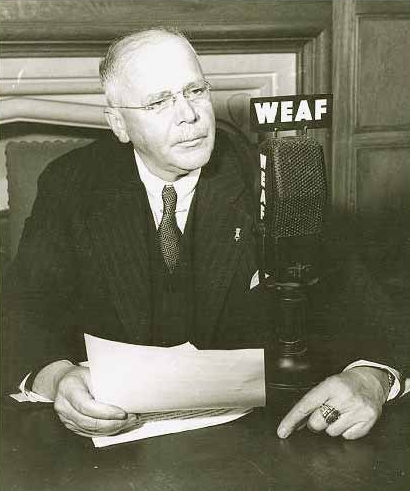
Hans Kaltenborn was an ardent admirer and defender of Adolf Hitler and the “new Germany” ushered in with the Nazi regime. Despite diplomatic warnings of assaults upon Americans, Kaltenborn, an influential American commentator for CBS and NBC and of German descent, dismissed it as flawed and skewed information gathering by biased personnel. About to return home to the states to speak against such reports and warnings, his family went to downtown Berlin to do some last minute shopping. While out, the family found themselves in the middle of one of the endless S.A. parades. When his family refused to offer the Nazi salute, his son was physically assaulted and injured. Finally, someone intervened and the incident ended with no further harm. However, the transformed Kaltenborn was apoplectic. He made a report with the American Consulate in Berlin, but no charges were filed. As Eric Larsen writes, “the senior Kaltenborn ‘could remember neither the name nor the number of the Party identification card of the culprit, and as no other clues which might be useful in the investigation could be found’” (In The Garden of Beasts, 164). Despite this, Kaltenborn was now of a different mind!
There are many ways in which life can do the same thing to us. We may be dead certain about marriage when we are single, about childrearing “pre-kids,” about our career when still in the classroom, about home ownership when in our parents’ home, dorm room, or apartment, and so on. But, life so often has a way of rudely awakening us from some well-meaning beliefs.
Sometimes, this can happen to us in the all-important area of religion. As we stay in our Bibles and gain wisdom and experience life, we may reaffirm but also clarify and even change certain positions we have long held. This can certainly be a dangerous affair, and some have allowed life to change their positions from what is true to what is false (what Jesus says about marriage, divorce, and remarriage because of a family situation, unscriptural changes in worship because of children attending church who have adopted such, etc.). But few of us will go all the way through life without reconsidering especially some conscience or judgment matters.
There are also a great many of our friends who have been taught religious error on God’s plan of salvation, the singular, undenominational nature of the church, what God wants in worship, women’s role in church and worship leadership, and the list goes on. This can be such a difficult challenge for anyone, to revisit long-held and deeply-believed positions in light of what the Bible says.
For all of us, there must be an abiding humility that approaches scripture without the blinders of prejudices, preconceived notions, and influences like family, friends, church, and so on. That is uncomfortable, but essential—for all of us! We may come to find that something we’ve clung to so tenaciously must be rejected or that something we rejected must be embraced. If we ever get to that place, may we have the kind of heart that puts the will of God above our own will. Without such, we cannot hope to make heaven our home.
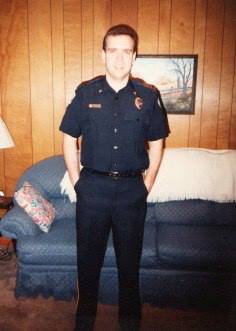
I served the Livingston Police Department in Sumter County, Alabama, as a reserve officer for two years. I had a uniform and a badge, though the service I rendered was as chaplain. The relationship between law enforcement and citizens there was very positive, but I remember talking with officers about the media bias and agenda of liberal politicians they witnessed locally and nationally. This was nearly a quarter century ago, long before the advent of social media and nearly omnipresent camera phones and videos which can be deceptive both for what they show and what they do not. In light of baffling events in Dallas, Texas, and Baton Rouge, Louisiana, in the last few weeks, as well as the inane calls to defund police, it is hard not to think that huge numbers of people have been duped by political rhetoric and a thoughtless mob mentality. While no profession can be completely free of corrupt individuals (who should be found out and prosecuted with full vigor), the existence of law enforcement and peace officers is a vital cog in the wheel of civilization and order in society. Eliminating these agencies is tantamount to removing a fence keeping a pack of bloodthirsty pit bulls from a neighboring playground full of children.
It is a characteristic of worldliness to disdain authority. The Christian’s attitude and response is to be different. To Christians living in a world with not a fraction of the liberties we enjoy in society today, Paul instructed, “Every person is to be in subjection to the governing authorities. For there is no authority except from God, and those which exist are established by God. Therefore whoever resists authority has opposed the ordinance of God; and they who have opposed will receive condemnation upon themselves. For rulers are not a cause of fear for good behavior, but for evil. Do you want to have no fear of authority? Do what is good and you will have praise from the same; for it is a minister of God to you for good. But if you do what is evil, be afraid; for it does not bear the sword for nothing; for it is a minister of God, an avenger who brings wrath on the one who practices evil. Therefore it is necessary to be in subjection, not only because of wrath, but also for conscience’ sake” (Rom. 13:1-5). There are sobering, inescapable truths here which should be revered by those who are servants of God. God is mentioned five times in these verses, and He is intrinsically tied to earthly authorities. They are from God (1), established by God (1), an ordinance of God (2), and ministers of God (4).
In 2 Timothy 3, Paul tells us the earmarks of difficult times. So many of these traits are evidenced in the growing anarchy of the present day—revilers, unloving, irreconcilable, without self-control, brutal, haters of good, treacherous, and reckless (1-4). In addition to such attitudes and actions being sinful, they are too often misguided. Police are symbols of law and order, and they are easy targets for those who commit or are effected by lawlessness. It seems that more of our passion and animus should be directed toward criminals and less toward our crime stoppers.
Let us take to heart Peter’s counsel to persecuted Christians and “submit [ourselves] for the Lord’s sake to every human institution, whether to a king as the one in authority, or to governors as sent by him for the punishment of evildoers and the praise of those who do right. For such is the will of God that by doing right [we] may silence the ignorance of foolish men” (1 Pet. 2:13-15). If we can rationalize and argue away this Bible truth, why can we not do the same with any other timeless principle of Scripture? May God help us all to hold tightly to the Light of the Bible, that the world may see how it should respond in this troublesome world.


















 The Preacher Pollard Blog