Unity Between The Old And The Young

Wednesday’s Column: Third’s Words

10423661_10207901451272315_9069631728203375436_n

Gary Pollard

An engine needs three things to run: fuel, spark, and air (compression). Engines have come a very long way since their initial designs and unless you’re driving an e-car, these items still have to be in place and tuned properly. I’m partial to older engines simply because they’re easy to understand and work on. 

When diagnosing a problem, you can often tell if you’re getting fuel by looking at the in-line filter or simply smelling for it. You can tell if you’re getting spark by disconnecting a plug, grounding it to the body, and looking for a spark. You can tell if you have compression by sticking your finger over a plug-hole and turning the engine over. The older engines were simple. 

Newer engines are far more difficult. They operate under the same basic rules, but computers and fuel injection systems and tight spaces make it much harder to work on them. However, they are generally more reliable, fuel efficient, and powerful. Carl’s 1986 F-150 with a 351 Windsor (5.9L V8) has about half the power (and a third of the fuel economy) of his 2017 F-150 with a 2.7L Ecoboost, for example. 

The church is made up of more than just one generation. There are both old people and young people. Both are prone to emphasizing the strengths or weaknesses of their generation when it comes to the health of the church. Young people might complain that old people move too slowly (getting things done), are too traditional, and have no place in the future of the church. Old people might complain that young people are too quick to change things, don’t take church seriously, and are self-centered. 

Both generations are vital to the health of the church. The elderly bring experience, toughness, and proven life experience to the table. They’ve been through it, they’ve seen it, and they got through it. Younger Christians must learn from this experience and show older Christians the love and respect they deserve. Younger Christians bring energy, enthusiasm, and a willingness to execute vision to the table. As stated before, modern engines still have the critical components of older engines at the heart of their function. They may be more efficient, but would not be operational without those functions. 

When the church works together, older and younger alike, to promote growth, unity, and faithfulness, the result is awesome. No other group can enjoy that kind of peace! A church that works together will influence the world in ways that terrify satan. Not only is this something we should want, it’s also commanded (I Timothy 5.1; Romans 12.10; See also Leviticus 19.32; Proverbs 16.31). 

In a polarized world, we can really make a difference when we’re loving and respectful to everyone in our spiritual family. It is a breath of fresh air to anyone who experiences it, it proves the church is from God, and it will save lost souls. 

august2008pictures154
My brothers and me with Ela Beth and George Bailey at Polishing the Pulpit, 2008

“They Were Together”

Monday’s Column: Neal At The Cross

pollard

Neal Pollard

When I study the phenomenal growth of the New Testament church, there is no doubt that they owed that growth to the divine source of the message they preached and the dedicated way in which the early Christians spread the good news. They also believed that message with all their heart, and that faith drove a sense of dedication and commitment no matter what obstacles they encountered. But, along with factors like those, they grew because they needed one another. They spent time together, not just in their assembly times, but at other times.

Luke highlights this fact. “They were continually devoting themselves to fellowship” (Acts 2:42).  “They were taking their meals together with gladness and sincerity of heart” (Acts 2:46). “And the congregation of those who believed were of one heart and one soul” (Acts 4:32). They got together to pray (Acts 4:23ff; 12:5,12). They got together daily for preaching and teaching (Acts 5:42). Though the word is used in a wide variety of contexts, you’ll find the word “together” over 30 times in Acts. 

Isolation is the word to best describe the trend in the current culture. Much of it is self-imposed, with so many withdrawing from social contact for such reasons as the ironically-named “social media” and technology. We have created a virtual world that, to some degree, has replaced authentic, face-to-face interaction. 

“Community” is built upon commonality and likemindedness. Sports, politics, civic and social interests, and the like all draw people together into circles of sameness. Nothing should compel any of us more than our faith in Christ, the salvation He freely gave us, and the incredible, eternal future He has promised us. What an ironclad bond, this “like precious faith” (2 Pet. 1:1)! There is no greater bond of closeness I can imagine than spending time with people whose hearts are open and submissive to the commands of Scripture and whose lives are lived in faith and hope in the promises of Scripture. They can help me grow and build my desire. Or, as the Hebrews writer says regarding assembly times, we can “stimulate one another to love and good deeds” (10:24). 

When I was a teen, I remember a song that captured this sentiment perfectly, if simply: “Fellowshipping with one another as we’re walking in the light, when we give our hearts to each other you can feel the love inside. For there’s nothing as sweet as fellowship as we share each other’s lives” (Lancaster). Not bitterness, isolation, suspicion, grudge-bearing, apathy, or disinterest. Sweet fellowship! A church that grasps this will grow and thrive, strengthened and sustained through trials, problems, and opposition. May we be a church that’s remembered this way–“They were together!”

82004486_3488315787906452_613787694597668864_n
Photo credit: Rachel Wheat

Knowing What D.C. Stands For

Neal Pollard

Inasmuch as we don’t want laws or policies enacted that violate God’s Word and we want precious freedoms, especially religious ones, preserved and protected, we can really get into what is going on in Washington, from Capitol Hill to Pennsylvania Avenue. Many know that “D.C.” is an abbreviation for “District of Columbia,” an area of land created at about the time of our nation’s founding under the direct jurisdiction of the U.S. Congress that is not a state.

However, as politics has vied for sports and entertainment as an idol in our culture, it has become the source of unnecessary and even immoral strife between Christians. Blind support and allegiance for one major political party or the other can do more than make us inconsistent. It can make us a stumbling block. It seems to me that D.C. can stand for some dangerously different things.

Distracted Christians. Search high and low in your New Testaments, written during the time of the wicked, often unfair-to-Christians, Roman Empire.  The disciples were about the business of evangelism (Acts 8:4) and growing the church (Acts 6:7). Can the rumblings and drama from the nation’s capitol get us so transfixed that we cannot see past it or through it to our individual and collective mission as God’s people? He has us here to get people into the Kingdom of His dear Son (Col. 1:13). Everything else is secondary. 

Divided Churches. For as long as I’ve been preaching, I’ve seen politics come between brethren in the local church. Thankfully, it does not usually become significant enough to trouble the entire congregation but I have seen it do so. What’s more, I’ve seen brothers and sisters become so confrontational and flagrant about politics–especially through the relatively recent medium of social media–that it has been a stumbling block to new and weak Christians. Perhaps the political world in our country has never been so intensely divisive as it currently is, and what typically troubles the world troubles the church. But, when souls are negatively impacted, God will hold the offenders accountable. 

Devil’s Cauldron. Please don’t misunderstand. Politics, like money, is a neutral matter. But, like money, it can become the root of all sorts of evil (cf. 1 Tim. 6:10)–enmities, strife, outbursts of anger, disputes, dissensions, and factions (Gal. 5:20). Just prior to this list of activities that are the carrying out of the desires of the flesh (Gal. 5:16), Paul warns, “For the whole Law is fulfilled in one word, in the statement, ‘You shall love your neighbor as yourself.’ But if you bite and devour one another, take care that you are not consumed by one another” (Gal. 5:14-15). Who benefits when things like politics distract and divide Christians? It is not the lost, the church, or the Lord!

I can think of a least three godly, wonderful Christians who are public servants in political office and making a profound impact for good–Bill Reiboldt, Sheila Butt, and John DeBerry. They demonstrate that God’s people can devote themselves to politics without sacrificing their faith and example. For those of us “on the outside looking in,” in our love of country and freedom, may we never allow our attitude, words, or actions to betray our highest calling. The more effectively we reach lost souls, reflect the mind of Christ, and reveal the hope of the gospel, the better our nation (and world) will become. What will that make us? Disciples of Christ!

11168488_10153052239815922_846243704468580330_n
From my last trip to Washington, a few summers ago. 

“THE CHURCH”

Neal Pollard

Did you know that Paul uses the phrase, “the church” nine times in the relatively brief letter to the church at Ephesus? This is a church Paul worked with for three years (Acts 20:18,31). He taught them in person and then he sends this epistle full of teaching (Eph. 1-3) and application (Eph. 4-6). In both parts of the letter, he makes important statements about “the church.”

• “(God) gave Him to be head over all things to the church, which is His body…” (1:22-23a; see 4:4).

• The manifold wisdom of God is meant to be made known by the church (3:10).

• God’s glory is meant to be shined through the church (3:21).

• Christ is the head and savior of the church (5:23).

• The church is subject to Christ (5:24).

• Christ loved the church and gave Himself up for her (5:25).

• Christ seeks to present to Himself the church in all her glory (5:27).

• Christ nourishes and cherishes the church (5:29).

• The husband/wife illustration is about Christ and the church (5:32).

When you add in the times Paul discusses “the body” (1:23; 2:16; 3:8; 4:4; 4:12; 4:16; 5:23; 5:30), it is easy to see why Ephesians has often been labeled the book which exalts the church of the Christ (in contrast with Colossians, touted as the book which exalts the Christ of the church).

Ephesians destroys the concept of the religious division also known as denominationalism. Where Christ has spoken on how to be saved, how to worship, how the church is to be organized and led, and religious bodies teach as divine doctrine the precepts of men (Mat. 15:9), they become plants which the heavenly Father has not planted (Mat. 15:13). If that is true of what the Pharisees did with God’s law concerning honoring father and mother (Mat. 15:3ff), doesn’t it follow that it would include all of Christ’s doctrine?

Ephesians is a great letter to discover the truth that Christ desires religious unity among believers, a unity derived from believers submitting to His teaching and will. But to limit our interpretation of this book to just that idea is a tragic shortcoming. The whole letter begins with a powerful, humbling truth: “God chose us” (1:4). We are His treasures, the praise of His glory. We are precious and valuable to Him–He predestined us to adoption as sons (1:5), He redeemed us with His blood (1:7), He lavished us with His grace (1:8), He made known to us the mystery of His will (1:9), He gave us an inheritance (1:11), hope (1:12), and a pledge (1:13-14) that we might be wise, knowledgeable of His will, enlightened, and strengthened (1:15ff). All these spiritual blessings (1:3) are reserved for those who submit to Jesus as the head and strive to follow the pattern of New Testament teaching. When we do, we have access to the greatest possible relationship in the whole universe! “To Him be the glory in the church and in Christ Jesus to all generations forever and ever. Amen” (3:21).

The Fight Between The Skunk And The Snake

Neal Pollard

Some time ago, I wrote, “I passed by a skunk and a snake, fighting tooth and nail. I didn’t stop and pet either or take sides. I got out of there as fast as I could.” That was metaphorical rather than actual, though I’ve had encounters with each animal individually. My point had to do with some of the “fights” that regularly occur on social media about some of the most unnecessary causes.

The common ground of these posts and articles are their extremely polarizing effect, drawing a multitude of allies and opponents. So often, they relate to matters that, of themselves, will not effect a single person’s eternity (though the poor stewardship of time, emphasis, tone, and attitude might imperil more than a few).

I have been tempted to weigh in on probably a thousand of these spats and civil wars, but I do not. It’s not that I do not have decided views on nearly all the debates. Instead, I try to project myself into the future. Will it expand my influence for Christ for good? What will my comment add to the spirit of brotherly love, magnanimity, unity, and church growth? Will I truly be helping struggling souls? Will it elevate the view of Jesus’ bride in the eyes of the lost, the weak, and the wayward? 

After reflecting, the answer is always the same. I cannot answer that for my interjecting brethren. Nor am I one to avoid preaching or personally discussing matters because they may be unpopular or alienating. However, because social media is more impersonal and lacking in the interpersonal dynamics of face-to-face interaction, we run a much greater risk of being misunderstood. 

Today, controversy can be created in real time. As a good friend of mine put it, “Everybody has a megaphone now.” What really requires courage is stepping out from behind a computer or phone and personally interacting with someone we disagree with in civil, loving discourse. It may not foster page views, mass reactions, and reams of online comments, but in the end it may reach more hearts and minds. 

In our current culture, dividing people into camps against each other is incredibly easy. But is it wise? Is it right (Proverbs 6:19b)? 

maxresdefault

You Push That Way And I’ll Pull This Way

Neal Pollard

While it is true that each of us possesses unique abilities within the Lord’s body (Rom. 12; 1 Cor. 12), that fact bears closer scrutiny. God can use each of us, with our unique personalities, backgrounds, and experiences, to reach so many among the lost and to help so many among the saved. Yet, it is easy to lose sight of how we contribute to the health and growth of the congregation we are a part of. 

For example, the following should not be considered talents useful to the Lord’s cause:

  • Being gossips and busybodies (2 Th. 3:11; 1 Tim. 5:13).
  • Causing strife and being jealous (Rom. 13:13; 1 Cor. 3:3).
  • Judging your brother (Rom. 14:10; Jas. 4:11).
  • Returning evil for evil and insult for insult (1 Pet. 3:9). 
  • Being an obstacle or a stumbling block in a brother’s way (Rom. 14:13).
  • Speaking deceit (1 Pet. 3:10).
  • Giving the devil an opportunity (Eph. 4:27).
  • Keeping your leaders from doing their work with joy and not with grief (Heb. 13:17).

Certainly this is not an exhaustive list of ways we may misuse the stewardship of our speech and actions as members of the body of Christ. It can be so tempting, when we look at the church’s imperfections and people’s inevitable shortcomings. We have new Christians. All Christians have weaknesses. Those who lead and conduct the church’s work could inevitably do it better. 

What does the Lord want each of us to do as individual members of the Lord’s church? He calls for living in harmony in the Lord (Phil. 4:2). He wants us fitted, built, and held together (Eph. 2:21-22; 4:16). He wants us “being of the same mind, maintaining the same love, united in spirit, intent on one purpose” (Phil. 2:2). Practically speaking, this means getting behind the work of the local church, contributing to it and building it up. It means asking how we can help and throwing our energy into that. It means constructively helping when a work is lagging or in need of direction. It means lovingly, respectfully interacting with the other members of the body. 

Comedian Steve Harvey compared his rise to success with pulling a wagon uphill. He said that many people may hop on that wagon and contribute something, He said they all need to be doing something to help you get that wagon up the hill. He warned against those who get on the wagon and have no value (via OWN, 9/12/14). Perhaps you’ve found yourself pushing toward a spiritual objective, only to feel the resistance of someone working against you. This is frustrating! However, never find yourself opposing good, needed works through misuses of your resources in ways like those in the bulleted list above. In the worst case scenario, we may even find that in doing so we “may even be found fighting against God” (Acts 5:39). Let’s do all we can to help build up the body of Christ, prayerfully studying what that does and does not mean!

compromise-donkey

Abraham Lincoln’s Memorandum Of August 23, 1864

Neal Pollard

Somehow, I was unaware of the existence of a document which Abraham Lincoln drafted and had endorsed by every member of his cabinet, though unseen by them, and which remained sealed until November 11, 1864. These were not only dark times for the nation, embroiled in civil war for over three years at that point, but gloomy for the war-weary north which could not end the conflict against the greatly outmanned but tactically superior south. Politicians and citizens were unhappy with the perceived lack of success and progress at such high cost—the death and disabling of so many of her sons in the prime of their lives.  Lincoln detected that popular sentiment was such that he would not be reelected. Thus, he drafted his memo, which read, 

This morning, as for some days past, it seems exceedingly probable the this
Administration will not be reelected. Then it will be my duty to so cooperate
with the President-elect as to save the Union between the election and the
inauguration: as he will have secured his election on such ground that he
cannot possibly save it afterward (Coolidge 139). 

Lincoln seemed to think that the north had had enough of this war and would rather sue for peace and allow our sea to shining sea to be two nations rather than continue with such devastating effects a war they could see no end to. He appears dedicated to whatever he could do to preserve unity.

Of course, several things changed the course of Lincoln’s fate in his bid for reelection that swept him decidedly into office for a second term. There was the north’s victorious show in The Battle of Atlanta, Fremont’s withdrawal from candidacy, the Democrats internal division between the Copperheads—eager to end the war now—and the War Democrats, and the fact that no electoral votes were counted from the Confederate States of America.  But, Lincoln could not see the future. He was preparing for what he saw as the worst.

There is a well-worn battle taking place in our world. It is not technically between two factions. It might be framed as Christianity versus other world religions. It could be cast as New Testament Christianity versus so many individual denominations. Yet, internally, there are multiple stressors to the biblical unity Christ prayed and died for, too (John 17:20-21). 

Christians are soldiers (Eph. 6:10ff), but our battle is not with flesh and blood (Eph. 6:12).  Our war and weapons are not “of the flesh” (2 Cor. 10:3-4). All the same, many have grown weary of fighting the good fight and not a few feel as though we are fighting in a losing cause. The restoration ideal of doing Bible things in Bible ways seems archaic and impossible to growing numbers of saints. Some fight with equal vigor to preserve traditions not rooted in Scripture, and unnecessarily harm the great cause. 

As we strive at all costs to be true to the pattern of New Testament Christianity, let us do so going to whatever lengths we can to maintain unity wherever possible. Not for a moment does that mean sacrificing truth or compromising even one “thus says the Lord.” But it does mean embracing a spirit of love and protectiveness for the precious Bride of Christ, the church. That involves loving and working with those who are the members of it. 

Ultimately, the Lord’s cause will prevail. His victory is as assured as every other divine promise. We must be striving on His side to share in that. For now, we cannot give up the fight! Let’s cooperate wherever and however we can, standing unitedly on the foundation of Christ and His will. The rest (which is most of it), we will leave to our Great Commander In Chief!

Works Cited:
Coolidge, Louis A. American Statesman Ulysses S. Grant (New York: Chelsea House, 1983).

blind-memo-recto-al0204

What To Do When Faced With A Sinking Ship

Neal Pollard

The ship is breaking apart. The timbers of civility. Crack! The planks of morality. Splinter!  The mast of critical thinking. Pop! As we hope to stay afloat, we cannot help but feel growing apprehension over the current state of our society. It’s not a matter of preserving or plastering over a past. It’s a matter of preserving peace in the present, but only if that means God’s people are serious about sharing the only possible remedy–Jesus! Yet, as it increasingly seems our country is ratcheted by prejudice, hatred, division, and rancor, we see the tranquility and calm from so many quarters threatened with the dark storms of violence and uncertainty.

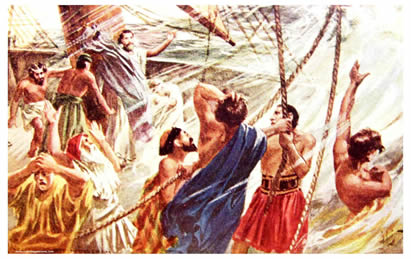
In Acts 27, Paul was with 275 other passengers on a boat bound for Rome from Caesarea, and its captain decided to test the Mediterranean Sea at a turbulent time. A violent storm, known as Euraquilo, caught the ship and ultimately battered it to pieces. It must have been an apprehensive time for the passengers and crew. Luke says the wind was violent, the ship was driven, the sun and moon didn’t appear for days, violently storm-tossed, they incurred damage and loss, and that all hope of their being saved was gradually abandoned. I cannot imagine the helpless, vulnerable feeling they must have felt. At least not literally.

It would be easy to let our national unrest and storminess tempt us to act irrationally (like some on Paul’s ship were tempted) or to give in to fear. But, Paul did five things we should do as we try to respond to the current turbulence.

  • He listened to God (Acts 27:23-24). Nobody else had a better or equal solution to their dire problem. The only way to be saved was to listen to God. Paul sought to persuade the people of this. In the ruckus and tumultuous noise, listen harder to God’s Word! It’s an anchor in stormy waters.
  • He believed God’s Word (Acts 27:25). It’s one thing to comprehend something, but quite another to put your trust in it. What God promised must have seemed quite far-fetched, that this way would save everyone. But, Paul didn’t waver. He said, “I believe God that it will turn out exactly as I have been told” (25). We are surrounded by people who need to witness our faith. As many as are persuaded will escape a shipwreck of faith (cf. 1 Tim. 1:19).
  • He encouraged hope (Acts 27:21-26). Despite the foolishness of their leaders, these people were given a message of hope. Paul says, “Keep up your courage!” (22,25). Despite the frightfulness of the moment, Paul offered a possible escape. Right now, you and I are uniquely positioned to give the only true hope available. It’s like an anchor for the soul, both sure and steadfast (Heb. 6:19)!
  • He warned the disobedient (Acts 27:31-32). There were those trying to break from God’s Word and will and do things another way. They were trying to take matters into their own hands. Paul spoke up against this! Such was defiance against the divine plan. What a message for us, who justify their sins rather than repent of them. We need to keep the message of righteousness, self-control, and the judgment to come before people (Acts 24:25).
  • He prayed faithfully (Acts 27:35). In this ordeal, Paul was a public example of prayer. Read every epistle of Paul’s and you’ll see his faithfulness in and dependency upon prayer. He appealed to the God he knew was the only hope for salvation. How much are we praying about the turmoil in our country (and world)? How much do those around us believe that we are dependent upon God?

Instead of focusing on the frightful winds currently blowing, let’s focus on the One who can calm the storm. Let’s get others to join us in that focus. Whatever happens to our nation, we must save as many souls as possible!

paul20in20storm


Sharing Trade Secrets Or Sharing The Wealth?

Neal Pollard

Last month, Von Miller gathered some of the NFL’s elite sack specialists at Stanford University for what he called a “pass rush summit.” The participates were star defensive players from around the league, with several different teams represented. Addressing concerns that each man was sharing his trade secrets, Miller replied that it was more like sharing the wealth. He said, ““A sack is a sack. I’m going to get sacks, they’re going to get sacks. You really can’t stop that. You really benefit more from really just sharing that knowledge and just trying to be the best players that you can possibly be” (Denver Post, Nicki Jhabvala, 6/29/17). Do you find that surprisingly magnanimous and unselfish? Yet, don’t you find it refreshingly classy and helpful?

When I think about the spiritual battle God calls us to, I often think about the outposts God has in towns and cities throughout our state, country, and world. These individual congregations of the Lord’s church are facing struggles with a formidable foe (cf. 2 Cor. 10:2-4; 1 Pet. 5:8-9; Eph. 6:10-17). God has endowed us with a mission and purpose, reaching those outside of Christ, showing charity and compassion to the world, and helping to strengthen those already in Christ. We seek to achieve this through various ideas, ministries, programs, efforts, and events. We bring in speakers, host activities, organize, and create. When we find ways to be productive and get results, we should be ready to help. When he hear of such things, we should be eager to hear. At times, we may inadvertently develop a sense of competition rather than a spirit of cooperation. But this ought not to be so.

What is our goal with every benevolent outreach, every evangelistic attempt, and every edifying work? Isn’t it to get more people to heaven, to shine the light of Christ into a world of ever-deepening darkness? Why do we host camps, have lectureships, train preachers, hold fellowship activities in homes and at the building, reach out to our homeless community, stock pantries, build a robust youth program, minister to young professionals, young families, and seniors, do evangelism training, have marriage seminars, worship leadership training, and the like?

What about works our brothers and sisters are doing all over the country? Polishing the Pulpit, Focal Point, Fishers of Men, Gospel Broadcasting Network (GBN), Truth.fm, Mission Printing, World Video Bible School, Bear Valley Bible Institute’s Extension Program, World English Institute, House to House, Heart to Heart, and many, many others are what our larger church family are doing to grow the church and build its strength. Yet, there’s much more that could be done by so many more of us, working together to accomplish the mission. But we must see ourselves as cooperators rather than competitors. Obviously, there can be impediments making this impossible in specific situations, but as we acknowledge that are we missing opportunities. Meanwhile, countless souls are rushing toward eternity. Let’s band together to find out how to more effectively reach more of them. That will mean more saved souls and more glory to God!

Screen_Shot_2017_06_30_at_9.49.53_AM.png
Vanguard Sports photo of the Pass Rush Summit

“Act Like You Like One Another”

Neal Pollard

Someone tasked with taking a picture of a couple or small group will coach them to stand closer together, maybe adding, “Act like you like one another.” They will typically chuckle and comply. How many moms have exhorted their squabbling children with a similar phrase?

A quick perusal of social media, with its all-too-often divisive rhetoric and pejorative comments, must frequently draw the same desire from the God of heaven. Whenever He sees His children at each other’s throats, complete with nasty put-downs, sarcasm, and venomous invectives, can we envision Him pleased? Regardless of whether one is motivated by defending the faith or some dearly-cherished viewpoint, he or she does not have to drown responses in hateful, provocative words. But, it happens many times over on a daily basis. For those of us who have non-Christian or new-Christian friends with privy to such comments from professed, mature Christians, we have to wonder if, contemptuously, they chide, “Act like you like one another.” More than that, Scripture convicts us on such a count.

  • “Since you have in obedience to the truth purified your souls for a sincere love of the brethren, fervently love one another from the heart” (1 Pet. 1:22; cf. 4:8).
  •  “To sum up, all of you be harmonious, sympathetic, brotherly, kindhearted, and humble in spirit; not returning evil for evil or insult for insult, but giving a blessing instead; for you were called for the very purpose that you might inherit a blessing” (1 Pet. 3:8-9).
  • “So, as those who have been chosen of God, holy and beloved, put on a heart of compassion, kindness, humility, gentleness and patience; bearing with one another, and forgiving each other, whoever has a complaint against anyone; just as the Lord forgave you, so also should you. Beyond all these things put on love, which is the perfect bond of unity” (Col. 3:12-14).
  • “Let love be without hypocrisy. Abhor what is evil; cling to what is good. Be devoted to one another in brotherly love; give preference to one another in honor” (Rom. 12:9-10).
  • “But no one can tame the tongue; it is a restless evil and full of deadly poison. With it we bless our Lord and Father, and with it we curse men, who have been made in the likeness of God; from the same mouth come both blessing and cursing. My brethren, these things ought not to be this way” (Jas. 3:8-10).
  • “If someone says, ‘I love God,’ and hates his brother, he is a liar; for the one who does not love his brother whom he has seen, cannot love God whom he has not seen. And this commandment we have from Him, that the one who loves God should love his brother also” (1 John 4:20-21).
  • “A new commandment I give to you, that you love one another, even as I have loved you, that you also love one another. By this all men will know that you are My disciples, if you have love for one another” (John 13:34-35).

The noble pursuit of defending the faith and protecting the purity of doctrine can get lost or totally nullified when the most casual observer of our words cannot find the love or detect the genuine concern in the midst of the biting, devouring, caustic quips and one-liners. How we need to pause and be introspective. “Every man’s way is right in his own eyes” (Prov. 21:2a; cf. 16:2). I can easily rationalize and convince myself of my own unrighteousness, as easily as the adulterer, the one in religious error, the drunkard, and the like can do with their iniquity. Why not, as we sift through the complicated maze of “interpersonal dynamics,” deal with each other patiently, giving the benefit of the doubt wherever possible, letting lovingkindness lead the way? We are not compromising divine truth, relinquishing a scriptural position, or shying away from sharing God’s Word when we make the effort to act like we like one another. We are submitting to the ethical blueprint commanded in Scripture (see above). “Let all that you do be done in love” (1 Cor. 16:4).

squabbling-brothers

THE CHRIST?ANS

Neal Pollard

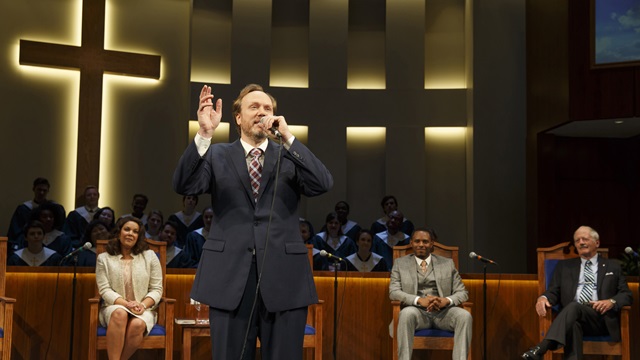
I’ve seen the play advertised locally. Lucas Hnath, a 36-year-old playwright, has a background in religion. His mother attended seminary and he even sat in her classes. The New Yorker reveals that there were expectations early on in his life for him to become a “pastor,” a choice he forewent for the arts instead (“Divine Intervention,” 9/7/15, Hilton Als). The play is about a megachurch preacher who has come to believe there is no hell and who believes God gave him this revelation. The result of his divulging this in a sermon is a church split, led by the assistant pastor who does believe in the reality of hell. While doctrine lays at the heart of the split, the play is said to focus on the personalities and behavior of various folks making up the church. Alissa Wilkinson, in a flamboyantly titled review, says this play resonates because “schisms, church splits, or at least disgruntled storming-outs are familiar to virtually everyone who stays in a church long enough to be committed to its life” (Christianity Today, 9/23/15). At least in advertising I’ve seen, the play title appears “The Christ?ans.” The idea is that, judging from their behavior, it is questionable whether or not they are truly Christians.

There are heartbreaking stories of congregations of the Lord’s church whose internal battles became known to the community and the brotherhood at large. Some have resulted from battles over doctrinal issues, whether regarding morality, fellowship, worship, leadership, or the like. Some have resulted from dueling strong personalities, jockeying for power, position, and prominence. Some have boiled down to squabbles about money. In all of them, tragically, Christ has been relegated to the corner and forced to be quiet while His “followers” duke it out.

While the implications over a doctrinal dispute and a personality power play are different, too often the predominant feature is a show of the flesh.

Many with a background in religion will be able to relate to the theme of the play because they have seen schisms in churches before. The world is a divided place, full of rancor, backstabbing, infighting, and unfair fighting. The church, particularly the church of the New Testament, must never exhibit such traits. Corinth set off such an alarm with Paul for this very reason. He urges no division to mar them (1 Cor. 1:10-13) and goes on to address both doctrine and attitudes in the letter. Philippi had two quarreling women straining the unity of that church (4:2) and Paul goes right to the heart and the mind.

We must strive to conduct ourselves with one another in a way that is always exemplary before the eyes of the community, the brotherhood, and the world. I thank God to work with a church that has been around so long and been through so much and who have weathered those storms by sticking together. Yet, too often, people have aired their dirty, unsightly laundry out on the clothesline of public purveyance. This soils the reputation of the Savior! That fact alone should horrify every child of God. May we always strive to be a beacon of light (Mat. 5:16), shining a spotlight on the Sinless Savior and not squabbling saints!

63611

A Divided People

Neal Pollard

As David let flow from his divinely-inspired pen the peaceful refrain, “Behold, how good and how pleasant it is for brothers to dwell together in unity!” (Psa. 133:1), he knew something of the absence of unity.  Though God through Samuel had anointed him king, “there was a long war between the house of Saul and the house of David”  (cf. 2 Sam. 3-4). This internal strife spanned seven years and six months (2 Sam. 5:5). While he would reign over a united kingdom for the next 33 years, his grandson would cause a rift within Israel that would never be repaired (1 Kings 12). Division weakened them, dividing brother against brother, diminishing their influence and making them more vulnerable. Israel was unique among the nations of world history, being both a physical people and the spiritual people of God. Their division was not just a geo-political problem, but also a religious one.

Our nation has known the pain and injury of division. An entire war was fought that put states and communities at odds with one another.  Currently, we are being reminded of how sharp a difference exists in this nation along so many cultural, philosophical, social, and ethnic lines. It is openly displayed with words and even protests. How that will be resolved only time will tell.

For many centuries, there has been division between people who all profess belief in and allegiance to Christ. “Denominationalism” is a word that inheres division. Because men have inserted their own will and dogma, transposing it onto Scripture, there has been massive division that has been a stumbling block for unbelievers pointing to disunity among those who claim the same Jesus as Lord. Unbelievers have seen division, often shown in ugly and worldly ways.

Among those seeking to restore New Testament Christianity, seeking to be the church of the Bible and be non-denominational or pre-denominational, there has also been so much division. Some have foisted division upon the church by introducing doctrines not authorized by Scripture or in violation of Scripture. Those in such doctrines cease to be Christ’s church so long as they continue in them. Others have created doctrines beyond what Christ has authorized, making themselves the standard and arbitrator of right and wrong instead of recognizing Christ as such. Sadly, these, too, have caused division among God’s people. It is truly difficult to get self out of the way and to be governed only by the will of God.

So it is with every matter that divides us. Self, with all its ugly, blind, poor, and wretched tendencies, so often becomes a wedge making biblical unity difficult. Paul laments that it comes in the wake of lining up behind men and following them (1 Cor. 1:10-13). If ever the world has needed to find repose from rancor, ridicule, and roiling, it is the present hour. If they ever needed a safe haven where they found people who love one another (John 13:34-35), are patient, tolerant, compassionate and forgiving with each other (Col. 3:12-13), and who treat others with respect and kindness (cf. Luke 10:30-37), it is now. Each of us needs to examine our own work (Gal. 6:4). Are we helping our community, our congregation, our friends and our family see the good and pleasant unity found in making Jesus Lord–Lord of our lives, our tongues, our jobs, our classrooms, our social media accounts, our positions, etc.?   This is a stewardship that demands tender care. May we ever be about the diligent work of destroying division! Jesus died to do the same (John 17:20-21).

divided-states

The Difference Between Unity And Union

Neal Pollard

When I was a little boy, I heard my dad contrast these two ideas, union and unity, with an interesting illustration.  He said, “You can tie two cats’ tails together and hang them over a clothes line. You may have union, but you do not have unity.”  Recently, political pundits have been making a somewhat similar contrast concerning the European Union. They are bound together economically, socially, and geographically, but there is at times a lack of unity.  These ties have not led to effective communication and information sharing in dealing with terrorist threats. Distrust, the ambitions of individual EU countries, and autonomous business dealings with nations outside its union all contribute to an uneasy synthesis between themselves.

There is great misunderstanding in the religious world and, at times, in the Lord’s church about what biblical unity is.  While there are those who believe that unity demands agreement on matters that ultimately are not established and determined in Scripture (how/if Bible classes are divided, whether to extend an invitation after a sermon, whether or not to meet on Sunday night, order of worship services—i.e., Lord’s Supper or sermon first, etc.), there are many others who believe that unity is possible where union is really what is attempted.

Scripture is the basis of unity! Jesus defined the oneness He wanted His followers to have as reflective of the unity He shares with the Father (John 17:20-21). Through His inspired writer, Paul, He emphasizes the importance of unity, saying that we are to “be diligent to preserve the unity of the Spirit in the bond of peace” (Eph. 4:3). Unity is clearly defined as existing within a diligence to preserve the truth of “one body…one spirit…one hope…one Lord, one faith, one baptism…one God and Father of all…” (Eph. 4:4-6). The New Testament tells us in specific terms what’s involved in each of these. Attempting to be tied and bound to those who reject or attempt to change what Scripture says about these is not biblical unity. It amounts to tying together what’s incompatible and incongruous. That’s just inconceivable!

2000px-eu_member_states_and_candidate_countries_map-svg

The Convictions Of The Lost

Neal Pollard

The lost are convicted, too. Don’t let anybody say they’re not. Some of the strongest-held beliefs, some of the most fully-persuaded minds, and some of the most determined hearts are attached to lost individuals. Even in the Bible, one finds the deepest rooted convictions in the heart of the lost sinner. If one wants to find a people wholly dedicated, he should take a trip into Noah’s world (see Gen. 6:5). If one wants to find a people completely set in a given pursuit, he should visit with King Solomon about the sons of men (Ecc. 8:11).

We should abhor rather than admire the lifestyle of the lost. This statement, if it has ever been true, applies to the people who spread themselves around Pilate’s judgment seat. Grounded in their hatred and jealousy of Jesus, the chief priests, the elders, and the persuaded multitude had as their singular focus the destruction of Jesus. They wanted Him gone, and any way they could do it they were willing to try. The rulers of the people had tried to ridicule, embarrass, trap, frustrate, tempt and discourage Him, but they had failed. One would think that, after three years of trying, they would have given up on their task. But, they were convicted.

The mob who finally “got rid of Jesus” (actually, they fulfilled God’s eternal plan for their and our salvation, and they did not foresee the resurrection) was a crowd we could learn a few lessons.

THEY WERE UNITED (Mat. 27:22). Pilate asked them what he should do with Jesus. All of them said, “Let Him be crucified.” No dissension is recorded by Matthew. Together, they forced a governor to submit to their wishes. How unfortunately that they were united to do evil.

When the righteous are united under the proper standard (Eph. 4:13), “how good and how pleasant it is…” (Psa. 133:1). Think of the untold good Christ’s disciples can do under the banner of brotherly love (Heb. 13:1), outdone only by our love, devotion and obedience to the Lord (Heb. 5:9).

THEY WERE DECISIVE (Mat. 27:21,22). There were no long committee meetings. There were no endless business meetings. They did not vacillate in this moment of decision. Pilate knew who they wanted crucified and who they wanted released. Though iniquitous, their decision was most expedient for their stated goal.

The Lord’s church in most places does an adequate job of planning its local work. Alas, in some cases, their best laid plans get lost somewhere between the forming and fulfilling. No congregation wants to rashly enter any endeavor–whether it be picking up support of an extra missionary or the execution of a needed program or plan. Yet, at times, the church can be overcautious and ponderous in discharging their responsibilities. Surely God was thrilled at the decisive way the disciples in the early church mobilized, spread the gospel, and reached the lost. The book of Acts is the model of decisiveness for today’s church.

THEY ACCEPTED RESPONSIBILITY (Mat. 27:25). Pilate wanted to know who was going to take moral responsibility for killing the just Jesus (24). Seemingly without hesitation, “All the people…said, His blood be on us, and on our children.” They collectively pointed the finger of guilt at themselves. Later, when Peter’s Pentecost preaching pricked their hearts, in a different way they took responsibility for this heinous acts (Acts 2:36-37).

Every person must take responsibility for his actions. Everyone must reap what he, individually, has sown (Gal. 6:7-8). In the congregational setting, the eldership must accept responsibility for what goes on among its members. When congregations individually begin to accept responsibility for themselves, theretofore avoided subjects will again be addressed courageously and frequently by the pulpit, eldership, and classroom.

We do not admire those responsible for slaying the sinless Savior. They were callous-hearted wretches darkened by the night of sin. However, they teach us the power of a united people ready and eager to stand accountable for what they decided to do. Churches will grow who follow God’s blueprint for His kingdom with enthusiasm and conviction. Let us maintain our convictions in “well doing” (Gal. 6:9).

thecrowdatcrucifixion

What “We” Do To Achieve Spiritual Success

Neal Pollard

It is an unmistakable emphasis in the book of Nehemiah. The word “we” appears 38 times in 30 of the book’s 406 verses! Working together was the continuous mindset of Judah. They knew such a mentality would ensure success (2:20).

Teamwork accomplishes much more than individual performance! If a ball team has only one “star player,” the defense wins by shutting down the one performer. If the work of the church is carried on by only one or a select few, the devil has a better chance of shutting it down. Everyone must get invested! Success hinges on it. Notice where cooperation in the local church brings spiritual success.

When we build (4:6). Not church buildings, but relationships, knowledge, and commitment. A church has never grown on the back of massive, modern facilities. But, God wants us to build up His church (1 Th. 5:11). The more visits and calls each member makes, the better we build. The more encouragement and assistance we provide, the better we build. More Christians doing more for the Lord produce spiritual success in the church.

When we pray (4:9). Facing trouble and uncertainty, God’s people came together to pray. This is reminiscent of the prayer meeting in the home of John Mark’s mother, “where many were gathered together and were praying” (Acts 12:12). What a success that was! At least 3000 or so were devoting themselves to prayer at the Jerusalem church (Acts 2:42). Preachers, teachers, and missionaries are made bold, the sick and hurting are made hopeful, those in danger, travelers, and those confused are made calm by the prayer of the saints. That is vital to spiritual success!

When we carry on (4:21). Churches encounter setbacks and suffer defeats. Willful sinners going out from among us (1 Jn. 2:19), plans or programs that fizzle or die, disorderly members (2 Th. 3:6), false teachers (1 Pe. 2:1), apathetic members (John 15:5-6), the death or loss of a church leader, or general discouragement can tempt us to give up in our labors (cf. Gal. 6:9). We need each other to spur ourselves on in completing the important works that will glorify God. It is not how many defeats a church suffers, but how well a church, no matter how many “losses,” overcomes them.

When we give (5:12; 10:37). Two interesting instances of giving are recorded in the book of Nehemiah: (1) Giving to restore what was rightfully God’s (5:12), and (2) giving the manner that God rightfully expects (10:37). Church members who will spend generously on dinner and a movie but who give the Savior of their souls comparative pocket change, like Zaccheus, need to repent by restoring what rightfully belongs to God (Luke 19:8). Churches that give by faith and sacrifice are always stronger for it, if their living matches their giving. God wants to be “first” (10:37; Mat. 6:33), and that applies to our giving.

Certainly, many other elements are needed to help a church achieve spiritual success for God. But, Nehemiah and his brethren found success by working together. That spirit of unity will help us, as a church, to go forward and do things necessary for us to continue to be a great church! Let’s grow together!

2176418_02575c1b

Things That Get The Church Excited

Neal Pollard

I grew up in the church, and something I learned long ago is that the majority of God’s people want to serve and please the Lord. There are sin problems we fight, doctrinal confusions we must confront, personality issues that arise, and distractions that sidetrack us far too often, but many times we fail to recognize and acknowledge that, with proper direction, a great many Christians are ready to mobilize and be about our Father’s business.  While the elders, deacons, and preachers have been frequently meeting together for the last couple of years to plan and organize the work here at Bear Valley, we have discovered so many positive things about each other. We are closer to each other and more excited about the church’s work.  We care more about the lost and the saved, and we are eager to prove it and spread that attitude congregation-wide.  As we have met and excitement has continued to build, I have been reminded of some basic, vital things that creates such an environment.  Here are three needed things I believe that still get the Lord’s people excited.

Purpose.  Have you ever heard a sermon on the church’s work and purpose? Of course! And bulletin and periodical articles, Bible classes, and gospel meetings and seminars. We talk a lot about purpose, but when you take tangible steps to accomplish the saving of souls, non-Christian and Christian souls, and meeting genuine needs you get excited knowing that you are partnering with God to do His will on this earth. Often, you have to measure progress in baby steps, but when you can look over an increment of time and see progress, it is absolutely exciting!  When Barnabas worked with Antioch, he “encouraged them all that with purpose of heart they should continue with the Lord” (Acts 11:23).  Purpose of heart still encourages the church!

Unity.  I’m not talking cheap union that is built upon nebulous, conviction-less coexistence, but unity built solidly upon the bedrock of truth!  That kind of unity is forged by having the difficult discussions, teaching the whole counsel, and striving together to fulfill the will of God.  When you couple doctrinal conviction with the aforementioned purpose, the net result is a unity that excites!  Joining with others who have the faith to take God at His word emboldens and propels you forward to do great things, right things, that glorify Him.  The inspired David point this out, saying, “Behold how good and how pleasant it is for brethren to dwell together in unity!” (Ps. 133:1).  Tell me that is not exciting!

Leadership. Who sets the pace in articulating purpose and urging unity? Leaders! We know who leaders are. They are the ones leading.  They know where they are going and how to get us there, too.  We hear their voice and are eager to follow.  We are not willing to blindly follow those who are not right behind the Chief Shepherd, but those who are, in word and deed, we are willing to follow even through thickets and brambles. We trust them. We believe in them.  In fact, “We esteem them very highly in love for their work’s sake” (1 Th. 5:13).  God has designed elders to be those “senior leaders,” and He expects us all to be growing our spiritual influence and example.  It’s exciting to be a part of a church full of people conscientious about their influence!

I’m not unrealistic or purely idealistic.  I know that the Devil is unhappy with the church who is actively working to fulfill God’s purpose, being united in truth, and possessed of church leaders who have Christ as their pattern. We can let selfish ambition and improper motivation undermine the Lord’s will.  But, let’s not be unmindful of how great the work is and how great our opportunity to partner together with Christ and Christians to do it. It’s exciting!

IMG_1778

“Let Them Alone”

Neal Pollard

It is a commendable mixture of righteous indignation, conviction, and affection for the Lord and His church to want to answer all the critics, rebut all the troublemakers, defend all the reputations, and fight all the false teaching out there.  Knowing how best to deal with the pot-stirrers or the novel-doctrine-peddlers can cause quite the consternation.  Do we answer every allegation and oppose every little quibble?  Are there times where the best answer is to simply ignore “one who sows discord among brethren” (Prov. 6:19) or those who attempt to “preach any other gospel” (Gal. 1:9)?  That requires great wisdom and judgment as to the specific situations which arise, but it is clear that the Bible has given disciples the counsel to just let some things lie.

A NEGATIVE EXAMPLE: The Pharisees Of Matthew 15.  These religious leaders elevated human traditions (1-2,6,9), made their own rules they bound others to follow or else (3-6), had heart problems (7-9), and spoke defiling words (11).  They intimidated the disciples, who were concerned that Jesus offended the Pharisees (12). Jesus pointed ahead to the judgment that would determine the nature of their work (13), but counseled His followers to “let them alone; they are blind guides of the blind. And if a blind man guides a blind man, both will fall into a pit” (14).  So often, those who strive and divide, as well as those swayed by them, experience the fruit of their work in this life.  Others, unheeding of cautions and pleadings to the contrary, find out in the end (cf. 1 Tim. 5:24-25).  While the Pharisees ultimately nailed Jesus to the cross, His view of their divisive tactics was to simply “let them alone.”

A POSITIVE EXAMPLE: Peter And John In Acts 5.  Gamaliel, a respected teacher of the Law and member of the Sanhedrin Council, weighed in on the work of Peter and John, two faithful gospel preachers. He looked at past movements of those claiming to be someone, Theudas and Judas, and compared them to these followers of Christ. His advice, “stay away from these men and let them alone, for if this plan or action is of men, it will be overthrown; but if it is of God, you will not be able to overthrow them; or else you may even be found fighting against God” (Acts 5:38b-40).  While we have no indication that Gamaliel’s advice is inspired, as Caiaphas did (John 11:49ff), it is hard to find fault with his logic.  In the case of the apostles in Acts five, their plan and action was of God. In the case of the other two “leaders,” it was of men.  Time typically tells.  Inspect the fruit.  Listen to the words.  Watch the attitudes.  Discern the actions demanded and urged. Examine it all in the light of carefully studied Scripture.

Apathy and indifference can lull us to sleep.  The antagonistic or the agents of unscriptural change can both serve to wake us up, get us to reexamine our stand, get into our Bibles, and work to ensure our message and our methods are “by the book.”  But do we have to accept every challenge and dare?  Jesus once drew in the dirt in the face of those who demanded an answer from Him.  There are some times when the best answer is silence.  As for those who make demands of us? Sometimes, we’re best to just “let them alone.”

KING’S CRITERIA WERE RIGHT ON THE MARK

Neal Pollard

Martin Luther King, Jr., gave his “I Have A Dream” speech on a seasonable and rain-free day in August of 1963, but this speech, delivered to at least 250,000 people, is often remembered on the holiday in January named for him. This speech is one of the most important documents of our nation’s history and was a watershed moment in improving race relationships between black and white Americans.  Eloquently and poetically pointing out the injustices his race of people had endured and were enduring at the time, King looked forward to a new and improved day.  He hoped all people, whatever their race, would “not be judged by the color of their skin but by the content of their character.” He hoped to leave Washington, D.C., and return back to his home with a faith in the powers that ruled nationally and locally which would be translated into hope, brotherhood, and unity. His final call was to “let freedom ring” (via http://www.archives.gov/press/exhibits/dream-speech.pdf).

Many people forget that Mr. King was a religious man, a preacher who often alluded to Bible characters and principles as well as directly quoting from it.  Inasmuch as he accurately referenced it, Mr. King was calling all people to God for guidance regarding right and wrong.  He said that character took priority over color.  He saw unity as right and division as wrong. He called for freedom rather than slavery, real or virtual.  While he was rightly championing these characteristics in the realm of racial equality, those principles doggedly stand regarding other matters.  Character, unity, and freedom matter in religious matters.

When we stand before Christ in the judgment, there is no indication that He will even take note of our race, ethnicity, or nationality.  He will look to see if His blood covers us.  Peter rightly says, “I most certainly understand that God is not one to show partiality, but in every nation the man who fears Him and does what is right is welcome to Him” (Acts 10:34b-35). Corrupt behavior or disobedience will not be acceptable, no matter who we are.

Furthermore, anyone who fosters division is rejected by God. He hates “one who spreads strife among brothers” (Prov. 6:19). He condemns it through Paul in 1 Corinthians 1:10-13.  In social or spiritual matters, I don’t want to be responsible for inhibiting a brotherhood God desires.  If I refuse to stand where He stands or if I stand where He doesn’t want me to stand, He will not accept it.

Finally, there is a freedom even more important than the noble cause King and his followers pursued. They wanted loosed from the manacles of a bondage imposed by others.  All of us, outside of Christ, are subject to a bondage we cause for ourselves.  Paul refers to this as being “slaves of sin” and “slaves to impurity and to lawlessness” (Rom. 6:17,19).  But, thank God, we can be “freed from sin” (Rom. 6:18). Then, we become slaves to righteousness.

Christians must care about racial equality, never treating someone different because of the color of their skin.  The way to right content of character, unity, and freedom is found in the book so often quoted by Mr. King.  No matter where or when we live, it will guide us toward an eternal home in heaven.

Cease Fire!

(Guest Baker)

Gary Neal Pollard III

On Christmas Day in World War I, British and German soldiers called a ceasefire and shared food and other comforts. They were definitely still enemies, but were able to tolerate each other long enough to celebrate a holiday.

In keeping with the prominent theme of “walking” in the book of Ephesians, Paul says, “Always be humble and gentle, with patience, showing tolerance for one another in love” (4:2). This word “tolerance” literally means “to endure something unpleasant or difficult” or “to permit the presence of something.”

I don’t like all of my Christian family. I love them all, but there are personality differences and thought processes and it’s hard to get along with them all. I like most of them! Talk to any member of the family of Christ, and they will agree, no one gets along with everyone.

According to Ephesians 4:2, we are required to put up with those who bother us or don’t get along with us or do things the way we do. We aren’t told to be their best friend, but we are going to be held accountable for how we treat those in the family of God.

Let’s be determined this week to be civil and deferential to everyone in the family of God and not think about our differences with them. Let’s remember that this is all done for the purpose of unity, which is vital to the health of the church (4:3,4). It will require effort – no one said it would be easy! But if it will help the church be healthy, it’s totally worth it.

“MY BROTHER SHOT ME!”

Friday’s Column: Brent’s Biblical Bytes

pollard

(Guest appearing for Brent, who had the first of several surgeries yesterday. He is in Erlanger Hospital and doctors are trying to get him stabilized and prepped for further procedures. PLEASE PRAY for him)

Neal Pollard

ORIGINALLY POSTED IN 2014

My sons have had some notable incidents involving guns, particularly the air-soft variety.  While these all are thankfully memories from the past, they continued a less than proud tradition from their father.  I have stories involving my BB gun, easter eggs set on a fence, and a custom van parked in the next yard, “old west shootouts” involving BB guns and all our neighborhood buddies (including the loss of at least one permanent tooth), and one other BB gun story that stands out in my mind more than any other.  It was shortly after the easter eggs incident, and my brother and I were playing cowboys and Indians on a warm Spring Sunday afternoon.  It had been a tough week for Brent, not yet school-aged. Just a few days before he was climbing on a stair rail, lost his grip, and fell head first onto the concrete.  He had recuperated enough from that to be outside with me.

Our shoutout rules were typical.  If you got shot, you had to fall down and play dead for 10 seconds. Then, you got back up and resumed action. Brent had a cool toy flintlock pistol. I had my trusty BB gun in hand. As I recall, Brent came running around the house right into my ambush.  I cried out, “Bang, bang, bang!” He fell to the ground and got up crying.  He was bleeding under his eye and had a frightening gash.  We both had great imaginations, but not that great!

Our parents heard the commotion and Brent told them, “Neal shot me!”  That was sufficient investigation, given that the concussion and the easter egg incident were both fresh on their minds.  Dad took my Daisy and in an incredible show of strength ended its functional use with a single application to his knee.  A spanking quickly followed.  Meanwhile, Mom had done triage on Brent enough to ascertain one additional fact.  I had only pretended to shoot him (the Daisy was not loaded) and Brent fell on the sight of that pistol and produced that gash.  Dad felt terrible and apologized to me before taking Brent to get stitches.  Of course, with my checkered past with my low-powered air gun, I was not very incensed.

Since I have “grown up,” I have drawn my own conclusions without having all the facts.  I have done this with my sons, and I have done it with my wife.  I have done this at times with my brothers and sisters in Christ.  I was sure I had all the facts and I reacted.  More than once, I’ve felt the regret of being hasty and premature.

When that brother or sister seems cold, distant, or unfriendly, they may simply be having a terrible day or dealing with an incredibly heavy burden.  When it seems that son or daughter has misbehaved, take the time to ascertain all the facts before reacting.  When  in a spousal spat, stave off assumptions, perceptions, and prejudices that may lead you to a hasty, false conclusion.

How many have fallen prey to “friendly fire” from loved ones? Be careful not to accidentally shoot first and ask questions later.  If you do, have the humility to admit your mistake and make it right!  If we can, we should avoid a “shoot out.” If we must, then we must fight fair!


A great pic of my favorite brother!