A Leadership Legacy

Neal Pollard

I am not sure how long our congregation has conducted what we call “Young Lions And God’s Precious Daughters,” but I would guess it has been at least 15 years and probably longer. All three of my sons participated in Young Lions and feel it was helpful in getting them over nervousness when leading in worship. Yesterday afternoon, 16 girls between the ages of 6 and 12 hosted a tea for the Bear Valley ladies. Their theme was daring to be different by serving, and they served high tea while conducting a devotional with songs, Scripture reading, prayers, and short talks.

53196677_10218677710442715_1578552806590119936_n
Photo Credit: Aimee Woolley

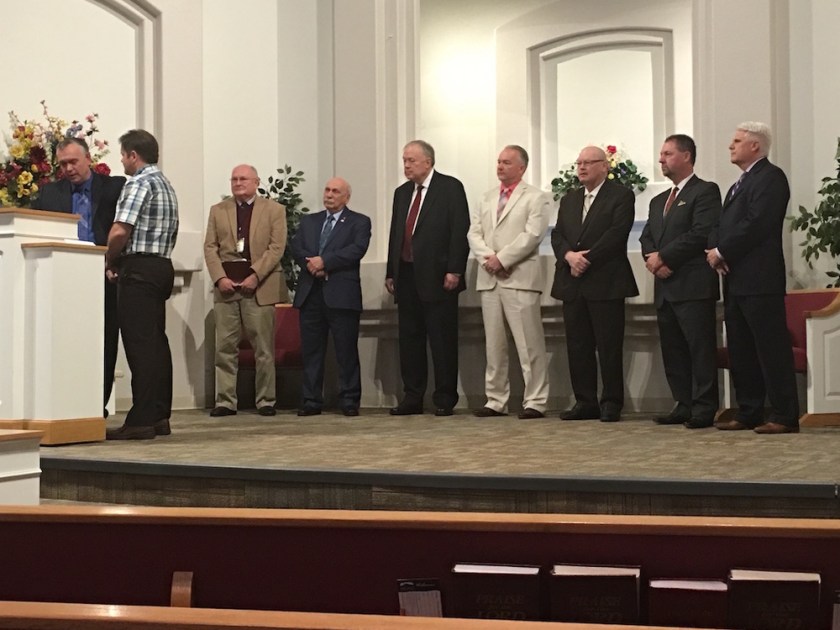
Last night, 10 boys in the same age group stood before the congregation, leading songs, reading Scripture, praying, and preaching short lessons. Some of them were nervous, but all of them were eager and enthusiastic. Hearts all over a full auditorium, even on a wintry, snowy evening, were melting as we got a preview of tomorrow’s leaders.

53595270_10218677683242035_265187872313704448_n
Photo Credit: Aimee Woolley

Several adults met with these two groups, week after week, for two months, talking to them about how to dare to be different in a world that demands conformity. There were interactive, hands on lessons. There was weekly training and instruction helping them practically implement what they were learning. What is interesting is that though the names and faces of the adults who lead this have changed through the years, we continue to see the fruit of the church’s work in the lives of an age group that can easily be overlooked. “Leadership” is the thread that has run through this program over the years. Alumni of “Young Lions” include many Christian college graduates, many gospel preachers, and a countless number of young men who are leading in worship not only in Denver but across the country. For most, their first effort was standing on a stool (or stools) behind the podium at Bear Valley.  Alumni of “God’s Precious Daughters” are found faithfully serving the Lord’s church locally and elsewhere (the elders through Facebook Live charged one of these young ladies, Jordan Balbin, in advance of her mission trip to Nicaragua this week), filling Bible classrooms, and serving the Lord in a variety of capacities.

These precious resources God gives us as parents–our children–are to be molded, encouraged, challenged, and inspired to put faith into practice, to use their abilities and minds to glorify God and serve His Son. Thank God for the wisdom of elders who encourage such works, for parents and other adult volunteers who sacrifice time and energy to teaching them, and “young lions” and “God’s precious daughters” who participate with zeal and joy. What will eternity reveal to be the good that works like this produced? I can’t wait to find out!

862085_10151345296365922_1521736652_n
After “Young Lions” six years ago. 


A Tribute To Harry Denewiler On The Morning Of His Passing

Neal Pollard

I met him 20 years ago, the man with the twinkling eyes
He and his wife opened their home to me, and I could recognize
Their love for Christ and Christians, and how well they’d harmonize
Those loves in all their actions, it was there in those twinkling eyes

He shepherded me for several years, the man with twinkling eyes
He had a tenderness so deep, he’d often maximize,
His laugh infectious, his insight savvy, so tough to criticize,
He loved Bear Valley with all of himself, this man with twinkling eyes

I visited many members here with the man with twinkling eyes
Spent hours in meetings and planning, trying God’s will to realize
He was youthful and spry for his age, his resources he’d optimize
A steward of stewards in every way, the man with twinkling eyes

A servant’s heart with savvy hands, the man with the twinkling eyes
Involved and willing, helpful and hopeful, we couldn’t help but idolize
When hearing and memory faded, you still could characterize
This man of God, through ups and downs, by those twinkling eyes

I saw him last week, he greeted me with joyful, twinkling eyes
So hard to believe this morning he gained his heavenly prize
While his long life is fresh in my memory, I’ll try hard to memorize
As kind a face and heart as I’ve seen, the man with the twinkling eyes

1935132_1226524188954_3106107_n
Photo credit: Michael Hite

Make It A Momentous Monday

Neal Pollard

  • Pick out a local church leader and pray for him and his family for several minutes, being very specific in your petitions on their behalf.
  • Email a missionary to encourage them and get an update on how their work is going.
  • Buy a gift card and try to give it anonymously to a young or struggling family you know.
  • Thoughtfully select several people to compliment and encourage by writing on their Facebook wall or other social media platform.
  • Briefly visit a brother or sister in an assisted living facility or nursing home.
  • Ask a co-worker, classmate, or neighbor what you can be praying for them about.
  • Listen to a book of the Bible in its entirety on your commute.
  • Let go of a grudge or deep-seated resentment.
  • Do an unexpected deed of kindness for a random stranger.
  • Speak to someone you see regularly about your faith–what God is doing in your life, what’s going on at church, etc.
  • Spend some one-on-one time with one of your children (playing a game they enjoy, going for a walk, taking them out to eat, etc.).
  • Show love to your mate in some tangible way you know he/she enjoys (speak their “love language”).
  • Practice pleasantness with everyone you meet today, being mindful of your facial expressions and body language.
  • Carve out some time for meaningful, personal devotion (including Bible reading, singing, and prayer)–make worship more than a Sunday matter!

None of these are overly time-consuming. Pick as many as you can. If you cannot get to them all today, then pick up where you left off tomorrow. Grow your list. Use your imagination and creativity. Find yourself looking and acting more like Jesus!  See yourself in Matthew 5:13-16.

candle-335965_960_720

“I’ll Love You Forever”

Neal Pollard

We read it to our sons when they were growing up. We made up our own tune to the song, “I’ll love you forever, I’ll like you for always, As long as I’m living, my baby you’ll be.” It’s been hard to remember those days in the rocking chair, reading it over and over to them, without getting tearful ever since they weren’t little boys. It turns out that many people can relate. The book’s author, Robert Munsch, reports that it has sold 15,000,000 copies (http://robertmunsch.com/book/love-you-forever). His publisher didn’t want to publish it because it didn’t seem like a traditional children’s book.

If just reading the title gets you choked up with personal memories, you may not want to read the true story behind the book. Munsch says that the song came first:

I made that up after my wife and I had two babies born dead. The song
was my song to my dead babies. For a long time I had it in my head and
I couldn’t even sing it because every time I tried to sing it I cried. It was
very strange having a song in my head that I couldn’t sing (ibid.).

He later built a story around the song, and the rest is history for millions of parents and their children. I imagine Gary, Dale, and Carl would tell you this is their favorite book from childhood. It’s certainly ours.

Isn’t it interesting that such a beautiful, intense love story surrounds something heartbreaking and tragic. Out of pain and sorrow, this incredible, enduring legacy was created. Knowing the backstory only intensifies the power of the words in the book.

Have you ever looked at the story of the cross in that light? Scripture teaches us from beginning to end that God loves us, His children. He cares for us, protects us, and wants us to live with Him forever.

But there is a backstory. In fact, it goes back to eternity. There, the Godhead made a plan to make sure we could live with Him forever. But it would require His Son dying for us in order to make it happen. Discovering that may bring tears to our eyes, but it also melts our hearts. What love! It’s a forever love, one that can make us the best we could ever be.

Here is God’s message throughout Scripture: “I have loved you with an everlasting love; Therefore I have drawn you with lovingkindness” (Jer. 31:3). In other words, “I’ve loved you forever and I’ll love you forever.”

tumblr_inline_o0urztubwd1t2pr7r_1280

What To See When False Prophets Speak

Neal Pollard

Peter has a sobering warning for the church, writing, “But false prophets also arose among the people, just as there will also be false teachers among you, who will secretly introduce destructive heresies, even denying the Master who bought them, bringing swift destruction upon themselves” (2 Pet. 2:1). He warns them about the model, the methods, and the message of these men. The counterparts of these modern messengers is the false prophets of old.

Jeremiah lived at a time when such prophets flourished, and the result of their work was the destruction of the people. Jeremiah 23 is a graphic depiction of what God helped Jeremiah see as he looked at and listened to these sinful seers. Notice that in Jeremiah 23:9-40), he saw:

  • Tears (9-10)–Jeremiah was heartbroken, trembling, and overcome, because he knew their message was different from God’s Word and it was taking people off course. 
  • Pollution (11-12)–The Lord found their way wickedness, and this pollution made for a slippery path that would make them fall in calamity and punishment. 
  • Offensiveness (13-14)–They looked to the wrong spiritual source and it led the people of God to commit horrible depravity. 
  • Tragedy (15)–Their message was going to cause their own spiritual sickness and death.
  • Emptiness (16-18)–The message is from their own imagination and not from the Lord’s mouth, so they tell those who hate God they’ll have peace and those who walk in stubbornness that everything will be fine.
  • Storms (19-20)–The storm is the tempest of God’s wrath upon the heads of these false messengers. 
  • Audacity (21-25)–They ran, but God didn’t send them; They prophesied, but God didn’t speak to them; God was right there listening when they said, “I had a dream, I had a dream!”
  • Heart Trouble (26-27)–The prophets had spiritual heart trouble, and their message was loved by people with heart trouble. It resulted in both of them forgetting God. 
  • Straw (28)–Just as straw and grain are totally different things, so is God’s message and their false message. 
  • Judgment (29-40)–God’s Word is like fire and a hammer. He is against their Word and against them for misusing their speaking abilities and leading His people astray. They don’t furnish the people with “the slightest benefit.” They cause the people to forget what truth is.  The end result is tragedy. 

So many can have a message that sounds good, makes one feel good, but does no good! In fact, their message contradicts what God said in His Word. As we grow our Bible knowledge, it will help us see these messengers and their messages for what they are. God’s Word is a blessing to us, both now and eternally. But, measure their message against the Master’s. Embrace only the words that are from Him! Reject the words that come from them!

jeremiah-23-29

Showing Love To Your Mate In Ways That Count

Neal Pollard

1–Do Something That Is Truly Meaningful To Them (Acts Of Service)(Phil. 2:3-4)

2–Say Something That Is Essential To Them (Cf. Col. 4:6)

3–Pray Something That Is Helpful To Them (When You’re Close Or Not, It Will Benefit You Both)(1 Pet. 3:7)

4–Lift Something That Is Too Heavy For Them (Your Thoughtful Compassion Will Be Appreciated)(Gal. 6:2)

5–Show Them Something That Is Useful To Them (Your Example)(Eph 5:22-33)

6–Give Them Something That Is Appreciated By Them (Forgiveness, Patience, Understanding, Etc.)(Gal. 5:22-23)

7–Go Somewhere That’s Special To Them (Sentimentally; Geographically)

8–Study Something That Pertains To Them (The Bible, Of Course, But Also Other Books On The Subject)

9–Hope Something That Is About Them (Their Best; Their Salvation; Their Happiness)(1 Cor. 13:7)

10–Be Someone That Is Respected By Them (Eph 5:22-33)

valentines-day-2009493_640

Destroying What God Loves

Neal Pollard

God encouraged and comforted Jeremiah, a man He had delegated for a difficult task, with these intimate words: “Before I formed you in the womb I knew you, and before you were born I consecrated you; I have appointed you a prophet to the nations” (1:5). This knowledge is intimate knowledge, spoken of God’s intimate acquaintance with Moses (Dt. 34:10) and even Adam’s sexual knowing of Eve (Gen. 4:1). This consecration is “that which belongs to the sphere of the sacred” (TWOT, 786). This appointment is an intentional act of giving something or someone based on the value of the gift. God was sending Jeremiah to the people because of how highly He regarded this one who would become His prophet. Taken together, Jeremiah the fetus was cherished and beloved by God. He recognized Jeremiah as totally human in the womb as out of it.

How startling to read, then, that God “hates…hands that shed innocent blood” (Prov. 6:16,17).  This echoes what is said elsewhere in the Old Testament (Dt. 19:10; Prov. 28:17; Isa. 59:7). Certainly, the unborn are as innocent as can be. Judah’s punishment (70 years of Babylonian Captivity) was sealed because King Manasseh’s sanctioned and encouraged the killing of the nation’s children (2 Ki. 24:3-4; Jer. 15:4). The people paid the price for destroying God’s precious children, known, consecrated, and appointed by Him for work only He knows. 

It is not newsworthy for me to tell you how many abortions have been committed in our nation just since January, 1973. Those facts are frequently shared. However, it is helpful for us to ask what influence we have in trying to turn people’s hearts toward righteousness.

  • Focus more on soul-winning. Converting men and women to Christ will persuade more to sensitivity to God’s will on everything that matters, including this.
  • Thoughtfully examine the positions and voting records of every person seeking political office. Forget party affiliation. Investigate and use your constitutional rights. The lines in the sand on this issue are already horrific, yet they still keep moving.
  • Pray for national leaders to care for the precious unborn and courageous defend them.
  • Stand with and encourage groups who fight for the rights of unborn children.

Only God knows how full America’s wine vat is with the grapes of His wrath. Perhaps, like Judah and Manasseh, it is too late to save this nation. That is a matter for constant prayer. Let’s be infinitely more concerned with saving the precious life within the womb than we are the personal comforts, freedoms, and privileges we enjoy in this nation.

9447283530_c19c45f6de_b

Proving Someone Wrong

Neal Pollard

I’m not talking about the thing too many people do on social media, where they nitpick others and put in so much effort in the “yeah, but..” game. That is ill-mannered and usually unwelcome. It usually also concerns something amounting to far smaller than a hill of beans. Instead, I refer to something God-directed and involving sin.  

A quick overview of Ephesians lays out a pretty straightforward outline. Chapters one through three lay out what a privilege it is to be a Christian. Chapters four through six speak of how privileged people behave, within the church, with the world, and their relationships, and even with the devil. The “proving wrong” section comes in the second half of the book, dealing with the world. If we isolate ourselves from the world, we cannot hope to be effective. If we allow ourselves to be influenced by the world rather than be an influence on it, we may find ourselves having fellowship with the unfruitful works of darkness. In Ephesians 5:6-14, Paul issues a difficult challenge for us as we live before and within the world on a daily basis. How do we reprove the unfruitful works of darkness?

KNOW THE DIFFERENCE (6). Paul starts this paragraph, saying, “Let no one deceive you.” Context shows that the “these things” that drew God’s wrath involved three broad categories of behavior and three specific actions: fornication, impurity, greed, filthiness, silly talk, and coarse jesting. Paul says, in essence, “Don’t be deceived into thinking these things are OK. To promote ignorance in these areas, all we have to do is remain silent about them and never teach about them. Paul’s concern is about Christians being an influence on the culture, and that’s still the need today.  There are still a great many people in the world who think of Christians as those who avoid filthy speech and who have  objective moral standards about sexual matters. The world sees enough conformation; It needs to see transformation; That requires information! 

BE THE DIFFERENCE (8-10, 13-14). Paul is concerned about people functioning in the spiritual dark. He wants them to take the information (knowledge) he’s given them and let it show in their lives. He illustrates this lifestyle with the metaphor of light. Paul uses the word “light” five times in this one paragraph. Light has characteristics (8-9)–goodness, righteousness, and truth. Light is corrective (11-14)–it remedies problems that occur in its absence (blindness, fear, ignorance, etc.). Light makes visible what was invisible before. We live in a world in serious need of correction. The majority, walking in darkness, are on a collision course with spiritual death. We’re in a position to shine light on their path. Our schools, workplaces, communities, ball fields, and national institutions cry out from the darkness for guidance. Some of the best “reproving” (exposing) occurs when we are the Lord’s lights.

MAKE THE DIFFERENCE (7,11-12). This is the most uncomfortable part of this text. Beyond building our knowledge and setting an example, we must do something. We make a difference through abstinence (7,10), not partaking and having no fellowship with evil. Saying no when invited to participate in sin turns an uncomfortable spotlight on us. Being a “new man” (4:22) means a new behavior, which Paul describes in 4:25-32. The world feels judged when we avoid something we know is wrong. We also make a difference through admonition. Reproving (exposing) means to shine the light on something (we’re shining the Light of Christ onto it, 8). 

When doctrinal error is espoused, do we try to engage people (“in love,” 4:15) or do we just sit in silence? When moral filth is peddled and promoted, do we just go along to get along or do we stand up, stand up for Jesus? In chapter 6, Paul tells us that we’re Christian soldiers, which implies a militancy that must exist (11). Twice more, in 6:13-14, he repeats the charge to “stand firm.” Maybe we’ve witnessed people standing firm in a way that was unnecessarily offensive and unloving. That’s wrong!  But that doesn’t give us an excuse to cowardly avoid saying what needs to be said, no matter what it costs us. Nobody likes to be the bad guy, but God commands that we expose sin. 

Paul follows this instruction, saying “Therefore” (15). His words are written for a purpose. The reason for exposing darkness is that God has us here to make a difference. How we do it requires wisdom, but it is “what the will of the Lord is” (17). Let’s be effective representatives of Christ in this dark world. Let’s understand the urgency of our task and make the most of our time!

how_to_help_someone_who_fell.original-613x210

My Favorite “Oh Brother” Song

When I think about the fact that my sons all live within a mile of each other, it’s like they made this song come true. I hope you enjoy the soothing sound and beautiful harmony of my favorite “Oh Brother” song of all time: Going Home

Click here to listen to “Going Home”50602323_10217654130323196_8522537574349144064_n

Of One Blood

Neal Pollard

The NHS (National Health Service of Great Britain) says, “Blood is made up of red blood cells, white blood cells and platelets in a liquid called plasma. Your blood group is identified by antibodies and antigens in the blood” (nhs.uk). There are eight blood types among human beings in the world. In most countries, more people have either [A+] or [O+], although a few countries have more [B+] blood types. But the type of blood a person has is not specific to a race. [O-] blood types can give to all blood types, and [AB+] blood types can receive from all blood types. Most blood types can give to and receive from more than one blood type. You may not think much about your blood type, but it matters to you when you need a transfusion. It matters to everyone when you donate blood. 

In Paul’s incredible sermon in Athens, he cites a scientific truth now accepted by all science. He says that God “made of one blood all nations of men for to dwell on all the face of the earth” (Acts 17:26). While the word translated “blood” is found in the Greek New Testament, modern translations do not have that original word in the text. Instead, it has literally “He made from one (“man” inserted by translators) every nation of mankind…” (NASB, ESV, ) or “he made of one every nation of men” (ASV). This produces no great tension between versions. Science tells us that blood type is determined by genetics, so the same conclusion can be drawn from either rendering. Humanity is bound together by something that transcends racial barriers. In fact, all mankind–regardless of race–is related. God saw to that by the creating us all from the same person. He designed the human body, whatever skin color or ethnicity, to survive through the same vital substance (Lev. 17:11)–blood! 

We live in a world that desperately wants to divide us by political party, nationality, skin color, gender, and a thousand subcategories. Division is worldly minded and contrary to God’s Spirit (Jude 19). I find it incredible how God reminds us, even in Paul’s subtle phrase in an apologetics lesson, that He desires us to be united according to His will. What matters to Him is not measured by such superficial, external things as race. It is the content of character. Most of all, it’s the blood of His Son!

kids-race.jpg

Observations From Perhaps The Most Difficult Passage In The New Testament

Neal Pollard

What is perhaps the most difficult statement in the Bible is not grammatically complex or difficult to comprehend from an intellectual standpoint. But what elder, preacher, or other member has not agonized over it many times. Asked point blank for His teaching on the subject of marriage, divorce, and remarriage, Jesus says, “Because of your hardness of heart Moses permitted you to divorce your wives; but from the beginning it has not been this way. And I say to you, whoever divorces his wife, except for immorality, and marries another woman commits adultery” (Mat. 19:8-9). There are quite a few observations that can be made from this reading.

  • Jesus makes a timeless statement (“from the beginning”).
  • Jesus makes a universal statement (This applies to “whoever”).
  • Jesus makes an authoritative statement (“I say to you”)–Matthew often reveals Jesus’ contrasting His teaching with the inferior Law of Moses.
  • Jesus does not mandate (necessitate) that divorce occur in the case of fornication.
  • Jesus identifies the exception to the rule (“whoever divorces his wife and marries another woman commits adultery”)–It is fornication (BDAG–“Unlawful sexual intercourse”).
  • Jesus’ teaching here cannot be negated by other Scripture (cf. 1 Cor. 7; 2 Cor. 5:17).
  • Jesus teaches that another marriage (excepting for one’s spouse’s fornication) is adulterous.
  • Jesus does not free the guilty to remarry.
  • The duration of adultery in the second marriage considered by Jesus persists as long as that subsequent marriage persists.
  • The teaching has been difficult from this inception (see Mat. 19:10-12).

This passage must be taught patiently, lovingly, wisely, compassionately, and prayerfully! Yet, on what grounds can we decide not to teach it? Treating it with the reverence it deserves, why would we seek to dismantle or discredit it? Of course, we would not.  By teaching it, we risk losing good will and favor with many but by teaching it as Jesus taught it we show respect and fidelity to His supreme authority. May God grant us “a spirit…of power and love and discipline” (2 Tim. 1:7) on this eternally important passage. 

800px-Wedding_rings_photo_by_Litho_Printers

A Strong Sense Of Family

Neal Pollard

Trevor Matich was being interviewed on ESPN radio, asked about why he thought that Clemson had built such a strong football program in the last few years. His quick response was, “They have built a strong sense of family.” He talked about how Head Coach Dabo Sweeney and his staff wanted players to see their coaches not just as coaches but also as husbands and fathers. Consequently, the coaches’ families spend a lot of time around the athletic facilities or hanging out with the players. They have intentionally built a strong family environment that doesn’t compartmentalize but rather coalesces. Recruits talk about sensing it when they make a visit, but, more importantly, players on the roster speak just as strongly about it. 

How many teams make such an emphasis isn’t clear, but you don’t seem to hear that said often enough. While I find such human interest stories heartwarming, it makes me wonder, “Do people describe our congregation with similar terminology?” Are we creating, developing, and nurturing a strong sense of family?

The early church definitely majored in that priority. From the time the first church of our Savior was established, we find this emphasis (Acts 2:42-47). Often, New Testament writers spoke of the church with family terminology (Eph. 2:19; 3:15; 1 Tim. 3:15; 5:1-2; Ti. 2:1-8; etc.). The church exists as a sub-community within the broader community around them. People from that broader community are looking for greater intimacy and meaningful relationships. One place they often turn is to various churches. Whether through our efforts to evangelize or through their seeking that brings them within our walls, we have an opportunity to expose them to a “strong sense of family.” 

But, by being faithful to New Testament teaching, we offer this in the context of truth rather than error. We cannot settle for simply offering truth, as eternally vital as that is. Along with it, we must love, embrace, and work to incorporate them into our family. God has His church designed to follow His written will in the context of a tight-knit, spiritual family. A true sense of family will draw them into a relationship with us. It will better open their hearts and minds to being drawn into a relationship with Christ. The net effect will be greater than a national championship. It will be many, many souls won to eternal life. We cannot afford to miss the opportunity to be spiritual family!

Dabo_Swinney_2008_01
Dabo in his early days at Clemson

Every Day Is “New” With God

Neal Pollard

  • We sing a new song (Ps. 40:3; Isa. 42:10; Rev. 5:9).
  • We gain new strength (Isa. 40:31).
  • We have a new name (Isa. 62:2; Rev. 2:17).
  • We have a new covenant (Jer. 31:31; Heb. 8-9). 
  • We have God’s compassions which are new every morning (Lam. 3:23). 
  • We have a new heart and a new spirit (Ezek. 36:26).
  • We observe a new commandment with each other (John 13:34).
  • We walk a new life (Rom. 6:4). 
  • We are new creatures (2 Cor. 5:17). 
  • We are part of that new man, united with all children of God (Eph. 2:15).
  • We have put on the new self (Eph. 4:24; Col. 3:10). 
  • We have been given a new and living way (Heb. 10:20).
  • We are looking for new heavens and a new earth (2 Pet. 3:13).
  • We anticipate the day when Christ makes all things new (Rev. 21:5).

Even though these promises were made thousands of years ago,  they are as fresh and bright today as they have ever been. Some help us overcome the guilt of our past. Others give us strength for the present. All of them give us hope for the future. We don’t need “new truth,” but so many of the truths of Scripture deserve our renewed dedication and attention. As a New Year descends, try and put your arms around all the daily renewal our great God makes available to us on January 1st and every other day of the year! 

” Therefore we do not lose heart, but though our outer man is decaying, yet our inner man is being renewed day by day” (2 Cor. 4:16). 

800px-22Wishing_You_a_Happy_New_Year.22

So You Have A Sinful Past? (POEM)


Neal Pollard

Moses was a murderer, Rahab was a liar,
David was an adulterer and to murder he did conspire,
Gideon and Timothy were timid, Peter a confirmed denier,
Paul wrecked havoc on the church, so full of hate and ire.

God, from time immemorial, has used the earthen vessel,
Sons of thunder or deceivers– like Jacob, who an angel did wrestle.
Just like Abraham and Isaac, very human if chosen and special
Barak, Samson, Jephthah, who with flaws their faith did nestle

From cover to cover, Scripture shows that God works through sinners
Preachers, prophets, kings and elders, saints and great soul-winners
It helps us who would serve today, to be better enders than beginners
To not let sin defeat us, to go from offenders to God defenders

Perhaps you have a sinful past or there’s guilt here in your today
A habit, sin, or weakness, crimes of deeds, thoughts, or what you say
Look back to men and women of old, they willed for they knew The Way
Conquer through Christ your old man, get busy, trust in God and obey!

Peter denying Jesus
Peter denying Christ

I-N-V-O-L-V-E-M-E-N-T Equals Church Growth

Neal Pollard

The early church grew (Acts 2:41; 5:14; 6:1,7; 9:31; 11:24). As we read of this growth explosion, we see the key role member involvement played. Christians were spreading the word (8:4), involved in each other’s lives and in the lives of the lost around them. This is such a simple concept, but churches not practicing it are not growing. What is involved in involvement?

  • I–“I” am the heart of involvement. I must resolve to be involved. I must do my part, for I will give an account for my level or lack of involvement (1 Cor. 3:8).
  • N–“Negativity” is the enemy of involvement. “I can’t help.” “It won’t do any good.” “I don’t like working with that person.” Listen closely. Involved Christians rather say “I can do” (Phil. 4:13) and “we are well able” (Num. 13:30).
  • V– “Visitation” is a part of involvement. Matthew 25:34-46 confirms it. Non-Christian visitors, sick, imprisoned, and needy folks need it. Those who do it are richly rewarded, and those who are recipients of it profoundly appreciate it.
  • O– “Obedience” is the cause of involvement. Faithful Christians believe the commands to make disciples (Mat. 28:19), build up brethren (Rom. 14:19), and meet needs (Js. 1:27).
  • L– “Love” is the motive of involvement. Paul says good deeds, without love, are profitless (1 Cor. 13:1-3). The counsel of Scripture is “by love serve one another” (Gal. 5:13).
  • V– “Victory” is the goal of involvement. By being involved, we help others win the victory (Js. 5:19-20), we help the cause of Christ advance, and we aid our own walk in the light that leads to eternal reward (1 Jn. 1:7).
  • E– “Everybody” is the scope of involvement. What able-bodied Christian is excluded from the work God has given the church? Once, a man did nothing and gave every excuse imaginable. We remember how that turned out (Mat. 25:28-30).
  • M– “More” is the adjective of involvement. That is, “more involved” and “more people involved.” Has there ever been a church with too many involved? God is able to do more than we ask or imagine (Eph. 3:20), and He wants to see us always trying to do more for Him!
  • E– “Evangelism” is the fruit of involvement. Active churches attract the curiosity of the community. Those involved in the church’s work naturally grow more spiritual-minded, and by this grow more bold in sharing the gospel.
  • N– “Now” is the time for involvement. What in our lives do we definitely know will change between now and the never-seen tomorrow (Prov. 27:1)? Let’s kill the excuses! Resurrect the enthusiasm! Start today!
  • T–“Teamwork” is the mindset of involvement. We’re to work together. No one man, no staff, no eldership, no group of deacons or others can or should do the work of an entire congregation. The local church is a team.

To become adequately involved, let’s ask three questions.

“What needs doing in this church?”
“Who needs help in doing it?”
“What can I do?”

Be an Isaiah, a child of God who enthusiastically says, “Here am I, send me” (Isa. 6:8)!

41824748_10216815660249540_2034412809957146624_n

THE MYSTERY OF INFLUENCE

Neal Pollard

Several years ago, a fourteen-year-old girl named Shannon Smith was shot to death in her own back yard. A bullet lodged in her brain. Though already tragic and horrific, the story was made more tragic by the inexplicable nature of the shooting. Police, judging from the trajectory made by the entry would, concluded that the bullet fell from the sky. Somewhere nearby, some unknown person had fired a gun for no known reason. The bullet completed its path of travel inside an unsuspecting teenager. Tragic, indeed!

Who fired the gun and why? The action pales next to the consequence. Someone aimlessly fired a weapon. A child died and parents were left to mourn her loss. It was all so unnecessary and avoidable!

Christians are a special people, a God-possessed, holy group (1 Pet. 2:9). The world sees Christians (Matt. 5:16). They react to children of God, either “glorifying” (Matt. 5:16) or “blaspeming” (2 Sam. 12:14) Him. Christians are either transformed from worldliness or conformed to it (Rom. 12:2). Conformity carries tragic consequences.

Influence is an inevitable burden carried by every Christian. Others watch what we do, hear what we say, and evaluate our judgments. What we wear, how we talk, where we go, and with what we entertain ourselves may seem harmless or at least harmful only to us. Yet, we can aimlessly fire and eternally wound another’s soul by our influence.

The man or woman who fired that gun may not realize even now what they did with one “harmless” squeeze of a trigger. Maybe they will not know on this side of time. Just so, we may be shocked on that day to realize how many or exactly whom we influenced. We’re on a spiritual battlefield (Eph. 6). Let’s be careful not to shoot at the wrong side! We may wind up doing harm to the very people we’re commissioned to save. Let’s watch our aim!

635556363784254557-phxdc5-5gjqo8l36pjzj76wfkp-original
Shannon Smith (undated photo)

AN IRRECONCILABLE IRONY

Neal Pollard

Some years ago an AP wire report yielded this incredible, true story.  Apparently a dirty joke was sent by a company employee to 6,000 people!  What was so unusual?  The perpetrator, intending to send a daily report to reporters and government officials, was a federal communications commission employee!  The headline read, “Joke Is On The FCC” (via Philadelphia Inquirer, 5/9/99). The FCC, charged with setting decency limits on various media outlets, was guilty of that which they are employed to prevent. Ironic!

The jokes abound.  Plumbers have the worst pipers.  Electricians have the faultiest wiring.  Doctors are the sickest people.  Preachers’ kids get in the most trouble.  They learn it from the elders’ kids.  While these are more axiomatic than true, there are guilty plumbers, electricians, doctors, preachers, elders, lawyers, politicians, and the like out there.  They get such attention because they fail at that which is supposed to epitomize and characterize them!

Christians become Christians through grace and obedient faith (Eph. 2:8-10).  But Christianity is more than a state of being.  It requires certain characteristics to be in one’s life.  A Christian is part of a spiritually “chosen race, royal priesthood, and holy nation” and is a person “for God’s own possession” (1 Pet. 2:9).  Moreover, a Christian is one redeemed from all iniquity, purified unto himself, and zealous of good works (Ti. 2:14).  A Christian is one who has put fleshly deeds to death (Col. 3:5).  A Christian takes on “the fruit of the Spirit” (Gal. 5:22-23), which means assuming a code of conduct and disposition of heart that is clear before the world’s eyes (Matt. 5:14-16).

There is an irreconcilable irony when a Christian is indistinct, indifferent, immoral, and inconsistent!  Like salt without taste, a Christian who dresses, talks, and behaves like a worldly person cannot be properly used by God (cf. Matt. 5:13).  A Christian without ethics, morality, honesty, and integrity is a walking oxymoron.  A Christain who talks one talk and walks another makes no sense and draws no following, at least none leading to Christ (cf. John 12:32; 1 Cor. 11:1).

Will the “Great Report” reveal that we, as Christians, spoke and showed the saving message or the wrong message?  What message are we sending to others?  Let it not be the irony of wearing a name we are not honoring.

Doctor in lab coat smoking a cigarette   Original Filename: 88300580.jpg


Self-Control Means Saying “Yes” As Well As “No”

Neal Pollard

Don’t you normally associate self-control with self-denial?  Certainly, Jesus says that following Him means denying self in a variety of ways (Matt. 16:24).  Gluttony, sexual sin, alcoholism and other physically detrimental habits, cursing, and the like involve this negative dimension of self-control.  Yet, how many times have you heard a preacher or teacher emphasize the positive sphere of this fruit of the Spirit?  Doesn’t it take self-control to get up out of the chair on Tuesday night and visit that non-Christian who came to church services the previous Sunday?  Doesn’t it take self-control to work up the nerve to speak to a co-worker about the Bible?  Doesn’t it take self-control to make time for daily Bible study and prayer?  Doesn’t it take self-control to spend quality time with your spouse and children?  My experience tells me that most people say “no” more often than they say “yes.”  Many times, our saying “no” to bad things needs to be quickly coupled with saying “yes” to better and righteous things.  Neither evangelism, edification, nor benevolence get done without this positive side of self-control!  May I encourage us all today to say “yes” to opportunities to serve our Lord, His people, and the lost (cf. Gal. 6:2,10).  He will bless us for such self-discipline.

Screen Shot 2018-12-03 at 11.07.50 AM.png

The Peril Of “Covering Up”

Neal Pollard

Misty Ann Weaver made a tragic decision.  The Houston-area licensed vocational nurse is charged in the burning death of three people after she started a fire in her six-story office building.  Why did she take such horrible measures that resulted in the unnecessary, tragic deaths of these victims?  She was  apparently behind on an audit for her plastic surgeon boss, and she feared being fired.  She just wanted to start a small fire, enough to cause a distraction and buy herself more time.  Obviously, she accomplished more than she intended.

Ms. Weaver is an extreme example of the tendency to try and avoid consequences by resorting to sin to “cover up” a shortcoming or failure.  While few of us will wind up facing three felony murder counts, we are all tempted to “cover up” in this way.  When we fail to study for a test, we may resort to cheating to “cover up” that fact.  When we have a low self-image, we may resort to gossip or backbiting to “cover up” perceived flaws about ourselves.  When we are afraid of negative consequences for not meeting some responsibility or expectation, we may turn to lying to “cover up” that inadequacy.   The irony is seen in that the “cover up” inevitably puts us in greater spiritual trouble than before we engaged in it.

We may “cover up” for fear of the disapproval of others, out of embarrassment or shame, or out of concern for certain repercussions.   Yet, to turn to sin to shield ourselves from the ramifications of our actions is to compound the problem.  Let us have the courage to face God and man, to provide things honest in the sight of all men (cf. Romans 12:17).  Israel was warned about the danger of adding sin to sin (Isaiah 30:1).  It is strength of character to do our best in our every endeavor, but it is also strength of character, when we have failed to so do, to courageously, honestly “face the music.”  However we rationalize, the fallout from this will be less severe than the “cover up” is!

1024x1024

“The Moscow Rules”

Neal Pollard

Once, while I was in the Washington, D.C., area holding a gospel meeting, I had the privilege of going through the International Spy Museum near Chinatown.   Having an avid interest in both military history and the former Soviet Union, I was thrilled at the opportunity.  The museum displays just how ancient the espionage game is, but the greater part of the exhibits covers only the last 100 years of spying.  There is a whole section of the museum devoted to espionage during the Cold War.  In fact, spies on that front had their own “ten commandments” (some say there are forty or more).  The museum itself published ten of these so-called Moscow Rules.

Some of these rules include:  “assume nothing,” “don’t look back,” “there is no limit to a human being’s ability to rationalize the truth,” “maintain a natural pace,” “…if it feels wrong, it is wrong….”   Former CIA operative Jonna Mendez, as well as countless others, is quick to say that these rules are used by agents around the globe today.  Many of these rules boil down to trusting instincts.

Whereas Christians battle a foe that will not collapse or capitulate, we still have rules of engagement that we must follow for our own spiritual preservation.   As our foe is the most formidable of them all (see 1 Peter 5:8; 2 Corinthians 11:14; Revelation 2:10; etc.), he must be fought with great intelligence.  We need to mature to the point of having our powers of discernment trained (cf. Hebrews 5:14).  This will give us the kind of instincts we need to be most aware of the devil’s tactics (cf. 2 Corinthians 2:11).   We should not become paranoid or see problems where they do not exist, but we must not let our guard down either.  God’s Word will protect us and serve us heroically in this terrific battle (cf. Ephesians 6:17), but only if we know how to use it properly.

international_spy_museum2c_8th_st-_nw_281600292629