Fellowship And Golf

Dale Wiley

For the past 3 or 4 years Harold Nicks, Jim Fuqua, Bob Raby & I have been playing golf most every week. During that time, there’s been no bad language, no nasty jokes and a minimal amount of gossiping. Occasionally, as my golfing partners advance in age, some health issues arise. Shoulder pain, knees going out or a pulled hammie. Then they have to go on the injured reserve list. No problem because we go straight to the bench and in comes Elder Jim Humphries to take his place. Still, there’s no bad language, no dirty jokes and a minimal amount of cheating. 

Last Friday Jim and I were playing at Paul Walker and around the 6th hole noticed a couple of older men behind us and asked if they cared to join us. They agreed and one of them hit his ball in the woods and then into the creek.  A few choice words followed. Then on the next hole he hit a window in a house and then more words followed, some of which Elder Jim had not heard since his Army days back in the ’60’s. 

Jim and I were talking later how nice it was to be able to play weekly with a group of brothers that chose not to behave that way, even when the ball doesn’t always go where we want it to go and that we appreciate the fellowship of our brothers in Christ.

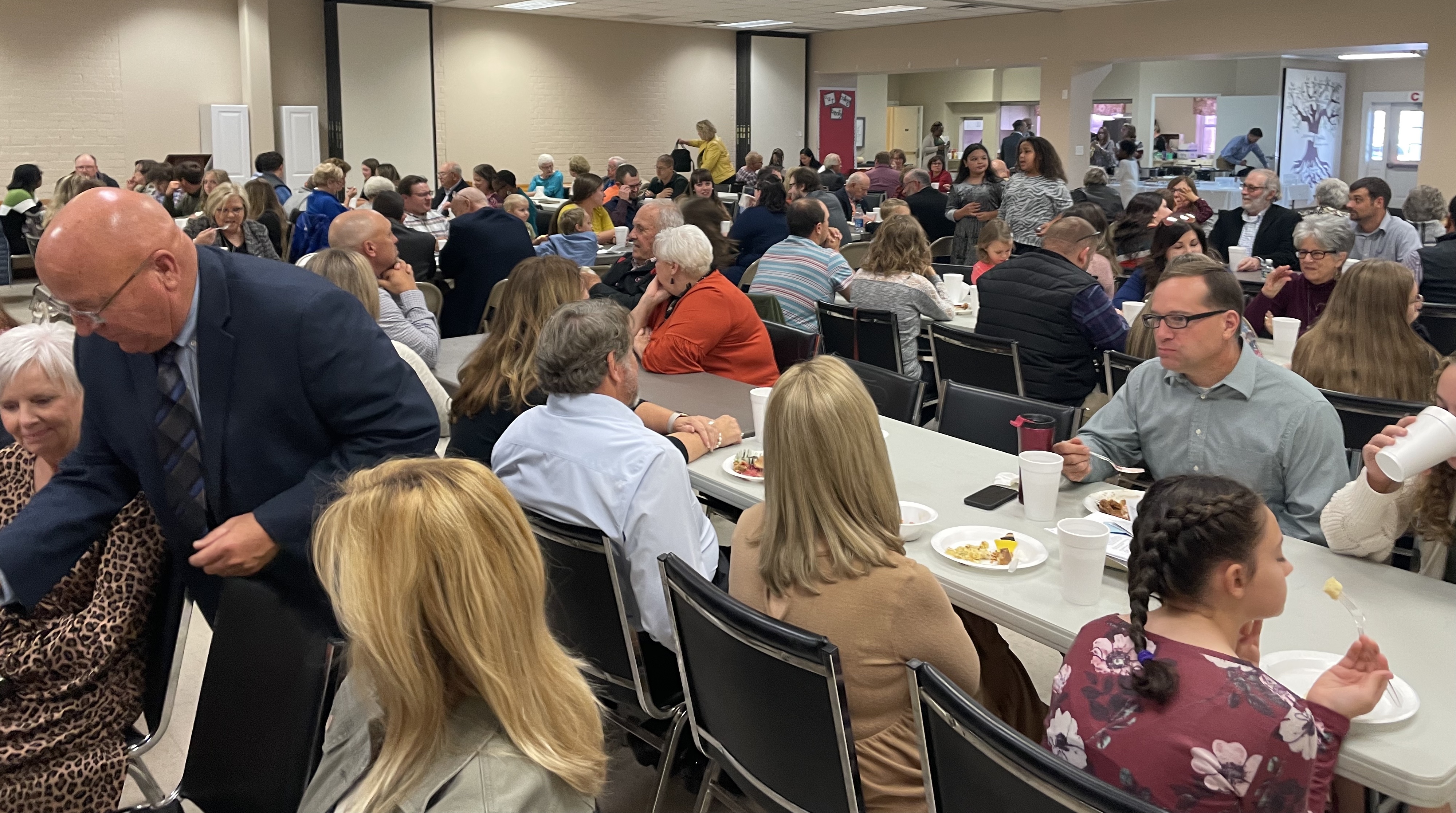
Fellowship with our Brothers and Sisters in Christ encourages and uplifts one another to be more Christ like and has a great influence on those around us, whether it be the Crew on Grub Night, the Young at Heart Ladies, or Tuesday’s Ladies Bible Class at Kathy’s, to maintain our spiritual growth. 

Remember these words:

1 Corinthians 1:9: You were called into the fellowship of His Son, Jesus Christ our Lord.

1 John 1:3: That which we have seen and heard we proclaim also to you, so that you too may have fellowship with us. 

Getting Along

Thursday’s Column: Captain’s Blog

How do you get along with people you don’t have anything in common with? 

I read an article on this very topic. It was a parenting article that was geared towards helping parents build a relationship with their kids. Honestly it was useless. Bottom line was “just love and accept them and show them you are willing and open to change.” This article teaches what most of the world is pushing for– “love and acceptance.” 

If you don’t morally agree with someone, do you just accept what they do? If you have nothing in common with them, do you just pick up some of their hobbies? These questions are important for the Christian to answer because our lives should be based on building relationships: Relationships in the world (so that we can hopefully save souls) and relationships in the church (so that we can have unity and growth). 

It’s no secret that the world is different from those in the church. They act differently, they think differently, and they speak differently. The world at its core is driven by sin and selfishness. The Christian is driven by a fear and love for God and His word. Our motivation is different, and our view of sin is different. No one in the church or even in the world, if they are honest, will argue that we are the same. With that in mind, we need to ask a very important question. How should a Christian Interact with the world? There are two extremes that we should avoid: Acting like everything is fine and treating everyone as a friend. And acting as if we are holier than the world and wanting nothing to do with them. 

The Christian life is balanced. We need to find the perfect balance between loving the world, but also having a clear set of morals that keeps us from joining them in sin. At its core, all of mankind has a sin problem, and God loves every person and wants us to be saved. So how should we interact with the world? God in His wisdom knew that we would struggle with this problem, so through His inspired Word, He tells us how we are to act. In Romans 12, Paul begins a section dedicated to the Christian and their relationships. In Romans 12:17-13:14, Paul talks about our relationship with the world.  

When it comes to our relationships and interactions in the world, Paul gives us five tips to help us in this task:

Don’t Treat Them the Way They Treat You (v. 17) 

“Repay no one evil for evil,”

Be Respectful (v. 17) 

“but give thought to do what is honorable in the sight of all.”

Seek Peace When Possible (v. 18) 

“If possible, so far as it depends on you, live peaceably with all”

Don’t Take Revenge (v. 19) 

“Beloved, never avenge yourselves, but leave it to the wrath of God, for it is written, ‘Vengeance is mine, I will repay, says the Lord.’”

Overcome Evil With Good (20-21)

“To the contrary, if your enemy is hungry, feed him; if he is thirsty, give him something to drink; for by so doing you will heap burning coals on his head. Do not be overcome by evil, but overcome evil with good.”

The danger we face as Christians is that we can let the world rub off on us. In trying to get along with the world, we may become like the world. But keep in mind, God doesn’t accept the world as they are; there must be repentance and change. In our interactions we need to remember Who we are trying to please. And be cautious so as to not become like those we are trying to save. 

What I Saw On Sunday

Monday’s Column: Neal At The Cross


Neal Pollard

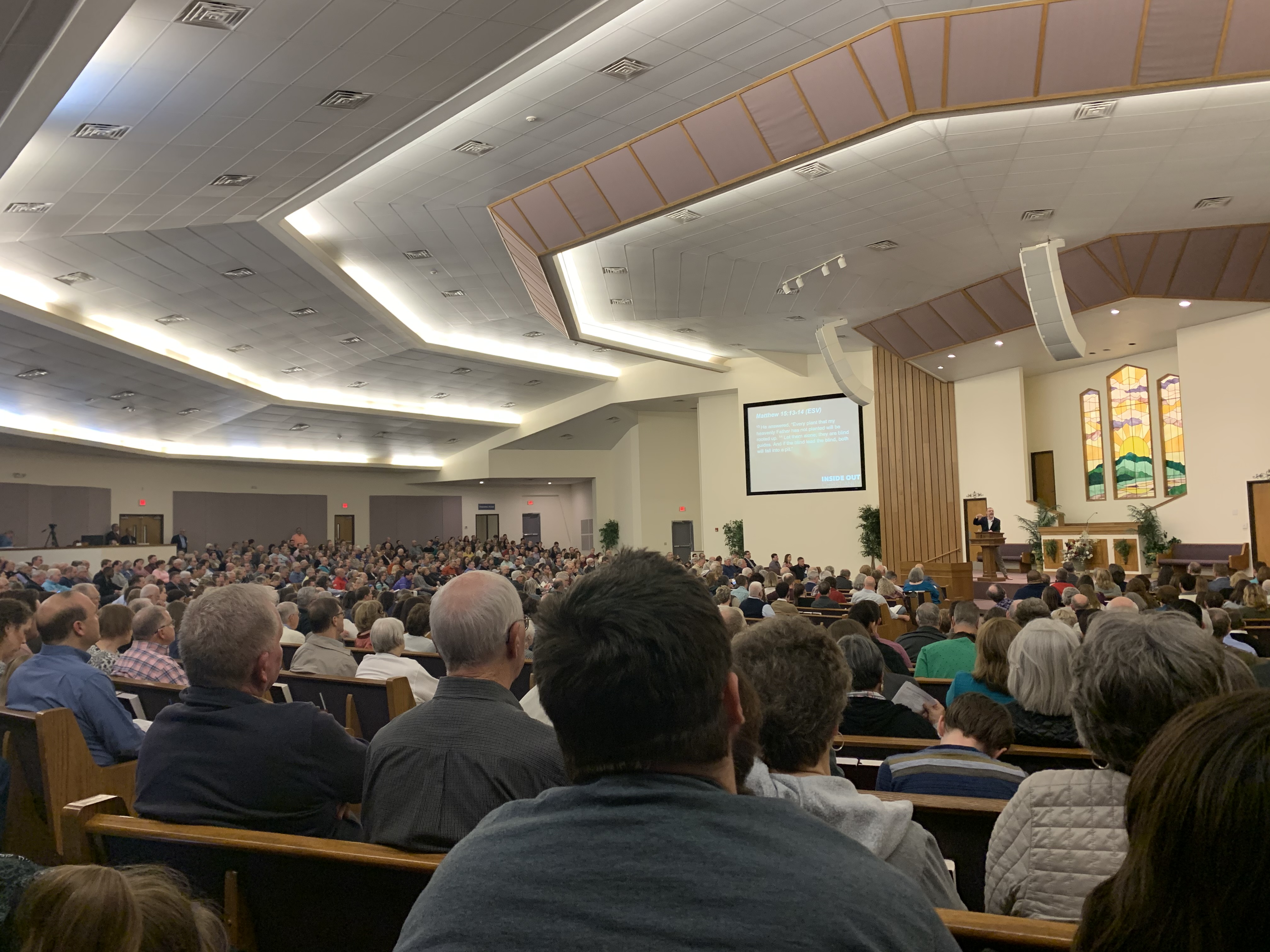
It was our largest crowd since before the Pandemic. It was a targeted effort to fill the building. The building was full! I asked several how many non-members were present and the most conservative answer was dozens, perhaps fifty. While we know that filling the pews is only one factor in encouraging people to follow Jesus (discipleship), it is a pretty fundamental and important one. Let me share a few exciting things I saw.

I saw the power of an invitation. The elders laid out a challenge to us to invite every non-member we could think of, coworkers, family members, friends, classmates, acquaintances, etc. That’s not revolutionary. Perhaps it was the sheer volume of invitations so many members issued. Such seeds were spread far and wide, and Sunday was an indication that some will come if asked. I am confident that many who were invited will come in the future, if we continue to ask. Philip invited Nathanael to “come and see” (John 1:46), and it changed Nathanael’s life! Andrew told his brother, Peter, “We have found the Christ” (John 1:41)! It changed not just Peter’s life, but the thousands of lives Peter eventually touched. Who knows the eternal impact made by all the invitations issued this weekend, but it shows that there’s still power in a simple invitation!

I saw the strength of teamwork. That was on display in so many ways. There was a huge team of people greeting those who entered our doors. Anticipating a lot of visitors, this was organized beyond the ordinary measure. It was exciting to see so many doing this, and it seemed to be infectious. Others joined in. It was evident in the efforts of multiple deacons and vision groups coordinating various works. It extended to members in the auditorium warmly welcoming unfamiliar faces and making our visitors feel at home. It continued on to the potluck after Bible class with the scores of people bringing an abundance of food, serving, assisting, and cleaning up. We were a finely-tuned machine of coordination. I could not help but think of Paul’s words, to Philippi (“make my joy complete by being of the same mind, maintaining the same love, united in spirit, intent on one purpose,” 2:2) and Colosse (“beyond all these things put on love, which is the perfect bond of unity,” 3:14). Sure, he had more in mind that one event on one day, but this is a key way such overall unity is built. 

I saw the example of leadership. This began with the eldership. They not only challenged us to invite, they led the way. It’s not an exaggeration to suggest that the four of them invited hundreds of people by text, phone, and face-to-face. They invited friends, family, acquaintances, and strangers! True leadership shows the way! This included those who led in worship. There was forethought, effort, and coordination from the greeting to the announcements and every act of worship in between them. This involved the membership who enthusiastically engaged in the worship. It also takes in every one that helped people find bathrooms and classrooms. Leadership always breeds more leadership. The writer of Hebrews says, “Remember those who led you, who spoke the word of God to you; and considering the result of their conduct, imitate their faith” (13:7). 

I saw the hope of tomorrow. The effects of the last 18-plus months have been deflating and demoralizing. We have lost members to Covid, physically and spiritually. It has derailed plans. It has distracted us. But Sunday showed that by faith in God and by following His plan, the best is yet to be! As we were reminded at the end of the day yesterday afternoon, we have worship every Sunday so let’s keep inviting. How many Bible studies will result from inviting others to church? How many future preachers, elders, deacons, soul-winners, and Bible class teachers are represented in those who walked through our doors yesterday, some for the first time ever? To some degree, we’ve got to be like Paul and say, “forgetting what lies behind and reaching forward to what lies ahead, I press on toward the goal for the prize of the upward call of God in Christ Jesus” (Phil. 3:13b-14). 

There’s more to do! There’s more inviting to do. There’s more follow up to do. But I see more than a special event in what occurred on Sunday! I see a culture change and a purposed people. Think what God can do with that!

Finding Refreshment

Friday’s Column: Supplemental Strength

brent-portrait

Brent Pollard

Lying in a bed for three and a half months will make you feel icky. You can only bathe with washcloths. Some nurses loaded those cloths with water and got me wetter than an Anglican baptism. Those “baths” made me feel better. However, before being discharged, I finally took a shower. That was the best. I felt refreshed. The only downside was seeing my hair come out in clumps as I washed my hair. It seems I am fated to look like the Stooge, Larry Fine.   

Where do you find your refreshment? Is it in a cool drink on a sultry day? Is it standing by a fireplace in winter? Such actions reinvigorate us. This result is what refreshment accomplishes. The sinner can find refreshment in obedience. In his second recorded sermon, Peter says: 

“Therefore repent and return, so that your sins may be wiped away, in order that times of refreshing may come from the presence of the Lord” (Acts 3.19 NASB1995).

This refreshing comes from being immersed in Christ (cf. Acts 22.16). I would encourage any who have not yet clothed themselves in Christ to allow their faith to lead to this total submission, in which one joins the Lord in His death, burial, and resurrection (Romans 6.3-5). No, it is not a work, nor is the power in the water. It is where we symbolically contact the blood of Christ and express a clear conscience before God (1 Peter 3.21). It is a necessity for salvation. 

Yet, there remains refreshment for the Christian as well. Paul speaks of his desire to meet with the brethren of Rome in Romans 15. He tells them to join him in prayer so his arrival will refresh him (Romans 15.32). That is an interesting word choice. In fact, this is the only time this word, συναναπαύομαι, appears in Scripture. The word means to rest along with, but here implies a spiritual refreshing.  

I like that idea of “resting with”, though, especially as it applies to Christian fellowship. We spend our weeks in the world and get beaten up by the forces of the adversary. How refreshing is it when we pause and rest with our brethren in worship and Bible study? I know I have gone to services feeling poorly, physically, only to find myself reinvigorated on my way back home. It has the same effect mentally and, most importantly, spiritually. Unfortunately, my recovery prevents me from joining the brethren currently. Still, you better believe that I eagerly await the day I can rejoin them even more than when I wished for a shower.  

It is sad when brethren find excuses to avoid refreshment since it is one of the blessings we receive in the heavenly places (Ephesians 1.3). Earthly diversions cannot reinvigorate the spirit as can God. Oh, it might bring temporary happiness, but the participant of earthly delights is left feeling empty, needing entertainment and diversion yet again. Services are not a chore when one comes seeking to worship God and rest beside their brethren.  

“And let us consider how to stimulate one another to love and good deeds, not forsaking our own assembling together, as is the habit of some, but encouraging one another; and all the more as you see the day drawing near.” (Hebrews 10.24-25 NASB1995) 

Don’t you want to find your refreshment? 

We’re Different & The Same 

Tuesday’s Column: Dale Mail


Dale Pollard

When it comes to the families that make up the church, what ties us together is a common bright future. While every family has its differences, one constant remains— the church. All strive to follow those guidelines laid out in scripture. Paul says in Philippians 1:6, “And I’m SURE of this, that He who began a good work in you will bring it to completion at the day of Jesus Christ.” 

The writer speaks with assurance, and that confidence is well-placed. From “His-story” we see that God always completes His projects. He never dreams; He creates. He decided to create the world and here it is. He decided to save the world, and here we are. 

Paul also would write in Romans 7-8 that the flesh tends to get in the way of the spiritual. God is perfect, but we’re not. That’s what makes us a work in progress. Aren’t we thankful that God provides the solutions to “fix” us up? 

We’re involved in a great work because there simply is no better work  than what is being done by His church. That being said, many of us struggle with overcomplicating things. We try to make sense of our individual lives, and when we leave God out it all becomes a discouraging battle. Where’s the peace? Joy? Confidence? Maybe it was left behind when we left God’s path. Thankfully God came down to earth years ago to teach us everything we need to know. We see that in His interactions with people. Even His twelve original followers were an odd group. 

Each had a diverse background. Some were Fishermen and some tax collectors. 

Each one had a unique personality too! They ranged from timid to assertive.

 Each one had spiritual battles from greed to crippling doubt.  

Yet each one rallied under His leadership and were united through a common hope. 

What’s changed? Not much. 

The personalities, talents, backgrounds, and flaws mixed together create a unique blend that make up each one of us. Yet, here we are rallied under His leadership, united in common hope. 

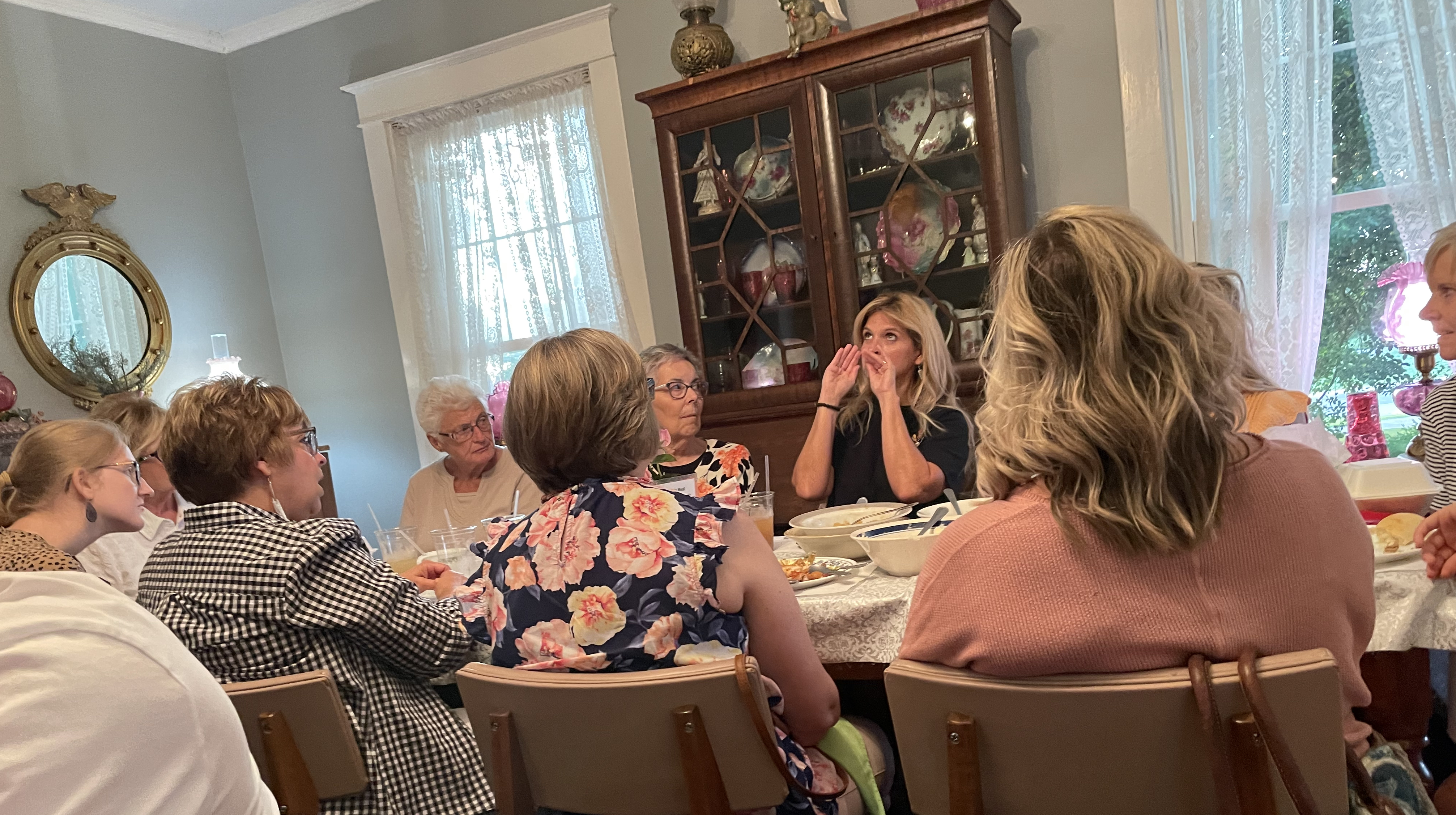
Several Lehman ladies (men are at the table in the foreground) enjoying “Federal Grove” the night before it (sadly) closed, being regaled with one of Kathy’s stories. I think this one was about snakes crawling out of a hole.

Should Christians “Go Galt?” 

Friday’s Column: Brent’s Biblical Bytes

81121814_2462862270639428_5746232403106463744_n

Brent Pollard

Christian monasticism arose within the fourth century AD. The proponents of monasticism felt they were able to live holier lives in isolation. There are still monasteries around today, but the movement is not nearly as popular as it used to be. I think all but a few introverts would enjoy the idea of spartan monasticism today. Besides, monasticism is antithetical to Christian teaching since it is hard to be salt and light to the world, secreting yourself away from where you can influence others (Matthew 5.13-16). But, oh, are we not vexed (oppressed) like Lot living in Sodom? (2 Peter 2.7-8) We are. And that is why we sometimes fantasize about living in a genuine, Christian community. 

That is a rather funny fantasy, though. Christians do have this community. It is called the ecclesia (the assembly or church). Early Christians availed themselves of it by meeting DAILY for worship and fellowship (Acts 2.46-47). We often use economic rationale to justify limiting our assemblies to a maximum of about four gatherings a week. But did our Christian forebearers not have to work? Did these brethren lack familial responsibilities? We must agree that they learned to make time for what was important to them. These earliest Christians truly embodied the command to seek God’s righteousness and Kingdom first (Matthew 6.33). 

However, “Going Galt” is a different concept entirely. The term comes from a dystopian novel by Ayn Rand in the same vein as George Orwell’s 1984. Rand’s book, entitled Atlas Shrugged, presents a mysterious man named John Galt who seeks to persuade those producers exploited by a heavy-handed government to withdraw to seclusion to deprive said government, termed “looters,” from continuing to use them. Ultimately, these “strikers” (striking from participation in said society) desire to establish a new capitalistic society founded on Galt’s philosophies, concepts like individualism and reason. It was a flop in its time but has since become popular among the politically conservative and libertarian.  

A person choosing to “Go Galt” in 2021 would move to an area where they can find political kinship with the existing population. In other words, to co-opt our current colorful political nomenclature, someone voting “red” would move from his “blue” majority state to one matching his voting preferences. “Going Galt” would also mean ditching businesses that have become overtly political in their messaging. A recent example of this would be the avoidance of the Coca-Cola Company for embracing critical race theory. As the current bogeyman is socialism, the idea of those advocating “Going Galt” is to deprive champions of socialism of the material needed to advance the political ideology further. Essentially, you cut off their access to taxpayers and lower their profit margins. 

Peter referred to the Old Law as being a burden no one could keep (Acts 15.10). In many ways, trying to isolate ourselves from others as Christians or “Go Galt” morally would prove an equally arduous task. It is easy to highlight a particular product to avoid, but the said product’s producer likely makes many other products that we may not escape. Or, if you have a 401(k), your mutual fund may buy into stock in the company you wish to punish. You would have to do your research. I do appreciate the idea. The problem, as always, is one of execution and consistency. 

As we often say, “We are in the world but not of it” (cf. John 17.15-18). Jesus said the only way we could avoid these types of problems would be for God to take us out of this world. However, that is not practical since He is sending us out into that world with the Gospel (cf. Matthew 28.19-20; Mark16.15-16). Ultimately, choosing where to live and work or the products one buys, as long as no one supports immorality, falls under the umbrella of Christian liberty (cf.  1 Corinthians 6.12; 10.23;8.1ff; Romans 14.1ff). I may have a problem with the direction that the Walt Disney Company has gone, but I cannot condemn you for subscribing to Disney Plus so you can watch “baby Yoda.” Disney Plus isn’t something like pornography, even if parents need to be mindful of the secular humanistic and evolutionary concepts found in Disney programming today. 

The most excellent solution for those contemplating something akin to monasticism or “Going Galt” is to lose yourself in the local church.  Seek opportunities for fellowship with your brothers and sisters. In so doing, not only do you find needed support, but you can find those to help shoulder your burdens as you help to shoulder theirs (Galatians 6.2,10). The church, after all, is one of those heavenly places where our blessings may be found (Ephesians 1.3).   

WHAT VIRTUAL WORSHIP CANNOT ACCOMPLISH

Monday’s Column: Neal At The Cross

pollard

Neal Pollard

This is not a judgment against those of us who have stayed home, especially those vulnerable, for whatever period of time to protect ourselves from legitimate risk of contracting the Coronavirus. It is an attempt to exhort and encourage those of us who have concluded that participating virtually meets what God intends for the assemblies. While we may get to see the church worship and engage in Bible class and receive edification, we are missing quite a bit of what God designed for the church by assembling together.

What can’t we accomplish when we remain in the virtual setting?

  • We cannot stimulate one another to either love or good deeds (Heb. 10:24).
  • We cannot exhort one another (Heb. 10:25).
  • We cannot speak to, teach, or admonish one another in psalms, hymns, and spiritual songs (Eph. 5:19). 
  • We cannot come together and edify (1 Cor. 14:26). 
  • We cannot welcome visitors from the community who have come to the assemblies.
  • We cannot engage in the enriching, faith-building, and faith-preserving fellowship the early church found so essential (Acts 2:42ff). 
  • We cannot congregate, as they did (Acts 4:32). 
  • We cannot come together and eat the Lord’s Supper, as they did (1 Cor. 11:20,33). 

Let’s not forget the responsibility God puts upon each Christian to all others who assemble. Worship is not just personal and vertical, it is also horizontal. 

I met the mom and brother of my good friend, Al Washington, last night at the Palm Beach Lakes church of Christ. They are members of the Third St. congregation.

ESSENTIAL

Monday’s Column: Neal At The Cross

Neal Pollard

  • Grocery store–Place where we buy food to sustain our physical bodies
  • Restaurant–Place where we pay someone else to provide food for our physical bodies
  • School–Place where our children receive an education to prepare them to live on earth as adults
  • Hospitals and Doctor’s office–Place where we go to address issues with our physical health
  • Workplace–Place where we go to earn money to take care of our physical needs

There are other places that have remained open or reopened whether to provide what we’d deem essential or places that are more diversionary but which various experts call essential to economic or social survival (malls, bookstores, ballfields and arenas, etc.). In fact, “essential” can be put into a lot of categories–academic, economic, social, emotional, medical, physical, and spiritual.

Pandemic restrictions have impacted and altered public behavior for almost a year. It’s more than mask mandates, hand sanitizer, social distancing, and the severe reduction of handshakes and hugs. It has been the reduction of personal interaction at the assemblies. Many congregations have devised virtual means of meeting for Bible class and worship. Just like virtual doctor visits, online instruction, and telecommuting lack the desired qualities of the in-person alternative, so it is with the virtual gathering. 

The first-century church labored under restrictions, too. The threat was not a virus, but often a virulent government hostile to their faith. Christians in various places faced severe persecution and even the death penalty if this identity was known (Mat. 24:9; Rev. 2:10; 1 Pet. 4:12-16). The assemblies were an easy way for Rome to know a Christian’s identity. Despite the potential cost of discipleship, what do we find the early Christians doing and being commanded to do? As a good preacher friend, Terrence Brownlow-Dindy, recently said, Acts 20:7 not only told the saints when to take the Lord’s Supper (the first day of the week) but also how (come together). Despite governmental interference and opposition to them, Christians were still commanded to assemble (Heb. 10:25). It was essential to be present to stimulate each other to love and good deeds (10:24). It was essential to be present to encourage one another (10:25). It was essential to be present to prepare for Christ’s second coming (10:25). 

What’s the difference between the risks incurred in Cracker Barrel, Wal-Mart, Home Depot, and Hobby Lobby walking aisles, touching items, and standing in line with strangers and coming together and running any risks we might incur by assembling together for worship and Bible class? The commodities and services provided at places like those at the beginning of this article serve us only in this life. The wisdom of God, who designed the church including the importance of coming together, commands assembling to address our most essential need. It is absolutely true that Christianity is not confined to the church building, a great lesson we discovered or remembered at the start of this crisis. Perhaps, though, we inferred from this that actually coming together was less essential than shopping, going to school, and going to work. 

I have seen brothers and sisters in Christ at stores, restaurants, weddings, and funerals who have not come into the church building to give and receive the fellowship and encouragement God made essential both for our own spiritual health and that of our spiritual family. Scripture repeatedly tells us the earth and all its works will be burned up some day (2 Pet. 3:10). Our souls will never die. As we prioritize the essentials, what is more essential than that? The dictionary defines essential as “absolutely necessary; extremely important.” If anything qualifies, our assemblies do. 

Proceed

Wednesday’s Column: Third’s Words

Screen Shot 2020-12-02 at 7.31.57 AM

Gary Pollard

I have some hobbies/passions that require caution: motorcycles, shooting, off-roading, auto mechanics. These are things that could be dangerous, but are enjoyable and safe if appropriate caution is used.
 
The reason any person would get on a motorcycle or under their vehicle or into a swamp or behind an optic is the reward associated with those activities. There’s no freedom like riding back roads or around beautiful scenery on a cruiser. Saving hundreds on auto repairs makes the effort worth it. Seeing how much mud/water/rock/terrain you can keep moving through is a blast. Racing the timer and improving consistency, all while hearing the satisfying “ding” of a steel target is exhilarating.
 
If an activity is enjoyable – potentially risky, but fun – we tend to do it anyway, with appropriate caution. Even those who don’t enjoy these kinds of activities are likely licensed drivers and are glad to assume the risks involved with driving (according to the WHO, 1.25 million die in a wreck worldwide every year, with an additional 20-50 million getting injured or disabled).
 
I cannot justify being willing to assume risks in many other aspects of my life, but cutting out the one aspect that impacts eternity. The CDC has accidents as the third leading cause of death in the U.S. Most of us drive to go anywhere or do anything more than a mile or so away, and we do this without a second thought.
 
Even if Christian fellowship were the most dangerous activity possible (for many in the early church it was, for some today it might be), we should be willing to pursue it. We could never hope for a greater reward than we will receive for the risk we might assume when we come together as a church.
 
(Acts 2:42; Hebrews 10:25)

Let’s Get Back Together

Wednesday’s Column: Third’s Words

Gary III

Gary Pollard


At the beginning of the pandemic, I wrote an article about Hebrews 10.25. In that article, we discussed the difference between a temporary stay on public gatherings and forsaking the assemblies. These are not the same thing!
 
That was probably 8 months or so ago. Many still face an uncomfortable decision: risk exposure to sickness, possibly giving it to family or friends, or violate public health orders to assemble.
 
I’d like to consider a few points:
 
  1. We are to obey government as long as it doesn’t violate God’s law (Romans 13). At some point, these recommendations violate God’s command for us to assemble.
  2. Some have become accustomed to worshipping from home or in a very limited capacity. Some have even voiced a preference for virtual worship. Fellowship, unity, relationship, and presence are a huge part of what gets us through this life with a strong faith!
  3. Many are strongly divided over the varied issues in this pandemic. Some have allowed this to create tension between members of the church. We must remember Romans 14 – if it isn’t a salvation issue, we shouldn’t make it into an issue (see also II Timothy 2.23, 24).
  4. At some point, we need to set aside our fear or any other reason we may have and worship together again. The early church faced the very real threat of death because of their faith and sometimes met in secret because of it.
 
This is not an article intending to downplay the seriousness of the virus that has made 2020 such a nightmare. Many have lost loved ones because of it. But it is my hope that we will move past our fears and fellowship together again!

Monday Through Saturday Relationships

Gary Pollard

We get an interesting glimpse into the life of the early church in Acts 2.44-47. While it is not practical for us to live in that same way, there is one principle that we should examine. The early church spent a great deal of time together outside of their worship on the first day of the week. Acts 2.46 says, “And day by day, they were devoted to the temple together and breaking bread in their homes, they received their food with glad and generous hearts, praising God and having favor with all of the people.” What’s going on here? The members of the church dedicated time every day to growing in their relationships with one another. To them, “church” was so much more than just showing up for worship every time the doors were open. It was the Monday through Saturday relationships that fortified their faith. 
What was the result of this dedication? “And the Lord added to their number day by day those who were being saved” (Acts 2.47). Are we likely to live for a faith we have not invested in? Are we likely to stand up under trials if we do not have a sense of community in the church? Are we likely to resist temptation without strong ties in God’s family? The early church faced trials we could never understand, yet they remained faithful because of their strong relationships and resulting faith. 
The early church relied on constant contact with one another to help them build their faith. Nothing builds a Christian’s faith more than being around a group of people who want the same thing (to live like Christ), genuinely care for one another, and share a common goal (heaven). 

Walking with God In a Fallen World

Thursday’s Column: Captain’s Blog

carl pic

Carl Pollard

God’s desire from the very beginning of creation was to walk with man. Scripture tells us that He would walk in the garden in the cool of the day (Gen. 3:8). This was all undone when sin entered the world and created a chasm between God and mankind.
The theme of the Bible is the salvation of man, through Christ, to the glory of God. From the moment sin entered the world, God has been proactive in seeking a relationship with His creation. Through the perfect sacrifice of Christ, that relationship has been restored, and we are once again able to walk with God.
Even though we have peace with God again, at times it feels like we don’t have peace in our everyday lives. We turn on the news and watch as courthouses are set on fire, and a widespread virus continues to harm and kill people that we love. Yes, we have peace with God, but where is the peace in our own lives?
These are questions that most everyone has asked. But there’s one question I want us to focus on for a few moments; how does God want us to react to the events that are going on today? Let’s examine three encouraging verses that tell us how we are to conduct ourselves each day.
Proverbs 15:3. “The eyes of the Lord are in every place, keeping watch on the evil and the good.” God sees the violence, the grieving families, the struggling Christian. But God also sees how His children respond. God is in every part of His creation, at every moment in time. We may feel like He doesn’t see, or that He is indifferent to what’s going on, but His eyes are on the evil and the good. We respond in love because we know that God is watching.
Psalm 23:4. “Even though I walk through the valley of the shadow of death, I will fear no evil, for you are with me; your rod and your staff, they comfort me.” God not only sees what is going on, but He is with His children. The greatest of Christians still struggle with feelings of loneliness (Elijah in 1 Kings 19). Even though we walk through the shadow of death, we don’t fear the evil that we encounter because God has promised that He will be with us. We may see the hate, the hurt and the helplessness of mankind, but the comfort of God gives hope to His people.
Matthew 28:20. “…And behold, I am with you always, to the end of the age.” This is a promise first given by Jesus to His apostles, a promise that we as Christians sometimes fail to remember. The world isn’t perfect because sin has corrupted what God has made perfect. People will do you wrong, they’ll hurt you, and they’ll do whatever they feel like doing. We have a command to fulfill, and it can only be carried out with the presence of God.
Showing love to a world that’s full of hatred can seem impossible at times, but if we will remember who we are and Whose we are, we can and will get it done. Remember that God loves you, and the church loves you. Let’s be an example to those who are without this love.
canada-forest-trees-woods


Untied States

Wednesday’s Column: Third’s Words

20638721_440919206307154_5479040032968788217_n

Gary Pollard

My wife and I were watching an NCIS episode where terrorists attempt to use fake currency to carry out an attack on the U.S. power grid. Their trail was picked up when instead of “United States” on the bills, “Untied States,” was found. 

With the pandemic we’re facing, we have briefly enjoyed some unity not seen in seven decades. A lot of the partisan stuff has slowed, a lot of the animosity between political parties has simmered down, and people are beginning to treat each other like neighbors again. 

With the cautiously optimistic breakthroughs in our fight against this virus, we seem to be slipping back into the “Untied States.”  I think our enjoyment of the peace accompanying this unity will stick around and we’ll be as neighborly as we have been, even after quarantines have been lifted. We’re witnessing the ugliness of a government not unified and perhaps we will have gained some perspective as a result of this global trial. 

That feeling of relief, calm, peace, reset, unity, and love has to be what God feels when His church is unified. It is what we experience when we put others above ourselves and treat each other like family. 

We have a super cool opportunity once quarantines are lifted! I miss my family at Hebron like crazy – I’m not alone in missing my church family. We have a chance to use that momentum to love more, be more selfless, argue less, and encourage more. If we take these qualities and run with them, the church will grow like wildfire. Beyond that, the world will see the love we have and will want to be a part of it. 

John 13.35 

christmas-dinner-2428029_960_720
Scene from a church potluck

BEWARE OF SPIRITUAL ATTRITION

Monday’s Column: Neal At The Cross

25586779_10155207977480922_6214117991468108390_o

Neal Pollard

Life has dramatically changed for us on a daily basis. Whether it be liberties that have been restricted or routines that have been disrupted, we have experienced significant upheaval. Some of it has been dramatically better, as for many we have been given a slower pace that has produced much more time with family and projects done together that we will always treasure. There is vast potential for much better marriage and family habits to come from this experience, as well as a reshuffling of priorities on the other side of this quarantine.

Of course, for many this will be remembered as a season of trial. We are hearing of members of the church who have contracted and even died with this deadly virus. Church families around the nation have members who are part of the at least ten percent of those who have lost their jobs or been laid off. How many parents, grandparents, and other loved ones are in nursing homes, assisted living facilities, hospitals, and residences where we cannot have physical contact with them for their safety’s sake? As devastating as anything, though, is the dreadful disruption to “church life” because we cannot assemble together for church services, fellowship activities, devotionals, seminars and workshops, and the like. There will be permanent, far-reaching impacts physically, economically, and socially, but what about spiritually?

Guard Against Social Disconnection

For the time being, we are more or less forced into social distancing. Hopefully, this can be modified soon and ultimately return to pre-virus levels. It will be important to return to the physical dimension of contact with each other provided uniquely through our assemblies. My prayer is that we will treasure fellowship like never before. We will zealously obey the command to consider how to stimulate one another to love and good deeds through our assemblies (Heb. 10:24-25), being “devoted to one another in brotherly love” and to “give preference to one another in honor” (Rom. 12:10) between our scheduled services (Acts 2:46). Don’t let the devil use this to form a permanent social wedge between you and the church.

Guard Against Stress And Anxiety

There are no psychological studies to measure the effects of mass isolation and sheltering in place on a scale like this has caused. No doubt, the more functional and stable the home environment and the more emotional support available to a person, the better he or she will fare. How many cut off from their normal routines are also constantly feeding themselves a steady diet of the news, which none can rightly classify as edifying? Conspiracy theories aside, there are the stressors like the ones mentioned above. Fears can eclipse faith and worry can lead to weakness. This trial is an excellent opportunity to build trust (Psa. 37:3-6), endurance (Jas. 1:3), righteousness (Heb. 12:11), hope (Job 13:15), and more. 

Guard Against Spiritual Doldrums And Self-Absorption

This has tested our time management skills. Having more time on our hands does not automatically translate into “making the most of the opportunity” (Col. 4:5). Will we have done more binge-watching or Bible reading through this? Will we have tended more to self-care or finding ways to serve (phone calls, texts, emails, cards, etc., to spiritual family and others we might influence and encourage)? Will we have focused more on how this has impacted us or how we can impact others?

The good news is that, for all of us, this is a story whose last chapters have not been written. Each day is an opportunity for spiritual growth and improvement. None of us would have wished something like this to happen, but each of us chooses what we will make of it. Let’s remain vigilant. Certainly, Satan would like to take advantage of us (2 Cor. 2:11), and he could use our current circumstances to dislodge us from faithfulness. Yet, Scripture promises something that we can count on: “Submit therefore to God. Resist the devil and he will flee from you. Draw near to God and He will draw near to you” (Jas. 4:7-8a). May that be the end result for us all! 

social-distancing-4981230_960_720

“They Were Together”

Monday’s Column: Neal At The Cross

pollard

Neal Pollard

When I study the phenomenal growth of the New Testament church, there is no doubt that they owed that growth to the divine source of the message they preached and the dedicated way in which the early Christians spread the good news. They also believed that message with all their heart, and that faith drove a sense of dedication and commitment no matter what obstacles they encountered. But, along with factors like those, they grew because they needed one another. They spent time together, not just in their assembly times, but at other times.

Luke highlights this fact. “They were continually devoting themselves to fellowship” (Acts 2:42).  “They were taking their meals together with gladness and sincerity of heart” (Acts 2:46). “And the congregation of those who believed were of one heart and one soul” (Acts 4:32). They got together to pray (Acts 4:23ff; 12:5,12). They got together daily for preaching and teaching (Acts 5:42). Though the word is used in a wide variety of contexts, you’ll find the word “together” over 30 times in Acts. 

Isolation is the word to best describe the trend in the current culture. Much of it is self-imposed, with so many withdrawing from social contact for such reasons as the ironically-named “social media” and technology. We have created a virtual world that, to some degree, has replaced authentic, face-to-face interaction. 

“Community” is built upon commonality and likemindedness. Sports, politics, civic and social interests, and the like all draw people together into circles of sameness. Nothing should compel any of us more than our faith in Christ, the salvation He freely gave us, and the incredible, eternal future He has promised us. What an ironclad bond, this “like precious faith” (2 Pet. 1:1)! There is no greater bond of closeness I can imagine than spending time with people whose hearts are open and submissive to the commands of Scripture and whose lives are lived in faith and hope in the promises of Scripture. They can help me grow and build my desire. Or, as the Hebrews writer says regarding assembly times, we can “stimulate one another to love and good deeds” (10:24). 

When I was a teen, I remember a song that captured this sentiment perfectly, if simply: “Fellowshipping with one another as we’re walking in the light, when we give our hearts to each other you can feel the love inside. For there’s nothing as sweet as fellowship as we share each other’s lives” (Lancaster). Not bitterness, isolation, suspicion, grudge-bearing, apathy, or disinterest. Sweet fellowship! A church that grasps this will grow and thrive, strengthened and sustained through trials, problems, and opposition. May we be a church that’s remembered this way–“They were together!”

82004486_3488315787906452_613787694597668864_n
Photo credit: Rachel Wheat

Working Together To Survive The Hunt

Neal Pollard

1 Peter 5:8 calls the devil a roaring lion prowling around seeking someone to devour. It is obvious that Peter’s readers would have seen or at least heard about these kings of the jungle for the analogy to make sense and be practical.  Lions lurk, longing for lunch.

In the savannas of East Africa, their meal of choice is usually either the wildebeest or zebra. Despite this, these two animals continue to graze and migrate together. In fact, because they are chief prey of the lion (and other big cats), they need to stick together. Various observers and experts give different explanations for why. Zebras have great farsightedness and the wildebeests have excellent peripheral vision, but each are poor at seeing what the other sees well. Others explain that wildebeests have mouths better suited for short grass while zebras’ are made for the long grass that grow intermittently together on the plains. Still others point to the zebras superior memories, recalling the safety routes of the previous year, and the wildebeests uncanny ability to find water even when such is scarce. Probably, it is the combination of these facts that cause the symbiotic relationship between these two large mammals. They do not all survive, but the vast majority do. The reason is because they utilize their own abilities but also because they rely on the abilities of others.

In a letter where Peter is addressing a people who were at times spiritual prey, he does more than use the simba simile. He urges Christians to stick together and look out for one another. He calls for sincere, fervent, from the heart love for one another (1:22; 4:8). He urges complaint-free hospitality toward one another (4:9). He commands serving one another (4:10). He teaches there to be mutual humility displayed toward one another (5:5). He ends the letter exhorting an affectionate, loving greeting of one another (5:14). As much as anything, this is a recognition of mutual dependence.

If we understand that we are not at home in this world (2:11) and are living and longing for the inheritance in heaven (1:4), we should come to understand our mutual need of each other. That does not just mean looking for others’ help, but also giving it. This is by God’s design. Notice, for example, the proactive protection we provide each other by being “harmonious, sympathetic, brotherly, kindhearted, and humble in spirit; not returning evil for evil or insult for insult, but giving a blessing instead…” (3:8-9a). Right before the lion passage, Peter talks about different groups looking out for and helping each other (5:1-6).

Any of us, through suffering, temptation, doubt, or some other factor, could drift away from the safety and security of the fold. Let us be more than mindful of each other. Let us depend on each other to survive the hunt and make it to eternal safety.  I will face the lion many times in this life, and I depend on you to help me survive.

DSCN0368

A Family, A Fraternity, And A Fellowship

Neal Pollard

A little over a week ago, my son Dale called me to tell me one of his elders gave him tickets for the Georgia-Missouri football game. He asked if I could swing coming. Thanks to a generous travel voucher from American Airlines, I was able to go on short notice on their nickel. The best part of this trip was getting to see one of my adult children for a couple of days. We made the most of those moments, and that game between the hedges was not a disappointment. Though Dale had watched games with me on TV, he was not the diehard fan I have been since 1979. We made the drive from Valdosta to Athens. Once on campus, he got his first glimpse into “Dawg Nation.” By the time we left the game, he was hooked. Georgia has another diehard fan. What did the trick? Perhaps the camaraderie between people who otherwise would not come into contact with each other. There was the shared lingo, shared knowledge, shared passion, and even shared clothing color schemes. There were traditions to partake in. People were excited for every play and intensely interested in the outcome. That was infectious! It was an unforgettable experience we plan to duplicate in the future.

As I look back on that great memory, I got to thinking about an infinitely stronger bond I have. Even regarding this game, I think about the part they played. I’m talking about the Lord’s church and the Christians who make it up. There was Doug Jones, the elder who gave us the tickets. There was Wes Hazel, who let Dale borrow his car so he didn’t have to pick me up from the airport or carry me around on the back of his motorcycle. There were Lance and Susan Leavens, who opened their home to allow Dale and me to take a nap before I caught a flight back to Denver yesterday morning and Dale drove back to Valdosta. While I was in Georgia, Kathy was in Texas doing a ladies day, and Carl was experiencing major trouble with his truck, an overwhelming, generous response from literally dozens of Christians helped make it possible for our youngest to resolve that heart-sinking trouble.

All too frequently, I see people who major in pointing out the perceived problems and seeming shortcomings of the saints. To listen to them, we do nothing right and even do those things from sinister motives. As a preacher’s kid who’s lived a life of a full-time preacher for more than a quarter century, I am far from naive. The church, without exception, is comprised of flawed, faulty, and finite folks. I have been extremely disappointed in the actions of church members, from the leadership to the membership. I have tearfully witnessed Christians abandon the church for the world, breaking many hearts in the process. But, the church is special. It is unique, from the doctrinal standpoint, dedicated to speaking where the Bible speaks and being silent where it is silent and seeking to replicate New Testament Christianity.

In addition to that, there is the common bond we share. What a fellowship! What a family! What a fraternity! You read it when you open up the New Testament. As importantly, you experience it today when you open your heart and life to all the others who make up this special group. We’re incurably imperfect. We should strive to be more patient and gracious. But, God’s people are the greatest in the world! Thank God for that blessing today and every day.

22540060_10155051132935922_8341247926958187048_n

It’s Not Business; It’s Personal

Neal Pollard

Some years ago, when our sons were all teenagers and they were given a cell phone, there were times when they failed to use those to communicate if they got to their destination or answer when we needed to reach them. While I never did it, I was tempted on more than one occasion to contact the cellular provider and suspend their service. Why? Was it because I thought it was wasted cost? No. It was because it reflected a lack of thoughtfulness and responsibility. It wasn’t business. It was personal.

Hebrews 10:25 is a sobering, New Testament passage. It addresses the Christian’s attitude toward the sacred assemblies of the church. What makes it sober is its contextual attachment to the eternal ramifications of abandoning those assemblies. God speaks of “no more sacrifice for sins,” “severer punishment,” “vengeance,” and “terrifying” (26-31) in connection with sinning willfully, of which forsaking the assemblies is a contextual example. But, why is God so exacting about this matter of our meeting together? In a nutshell, it is because these times, to God, are personal. The Bible is full of references to God’s desire to be worshipped and receive our worship. He is worthy. As Creator, He has the right. But, in this passage, it is personal in the sense that what He commands is so helpful to you and me.

Written on the foundation of the fact that our High Priest, Jesus, has given us access to God (19), the writer urges us to do three things: (1) Draw near (22), (2) Hold fast, and (3) Consider. It’s the third one I want to briefly notice:  “and let us consider how to stimulate one another to love and good deeds, not forsaking our own assembling together, as is the habit of some, but encouraging one another; and all the more as you see the day drawing near” (24-25).

There should be a personal connection. Notice how the writer reveals this. He says “us” and “our.” He says “one another” twice as well as “together.” Christianity is not a solitary condition. We must see ourselves in connection with the rest of the body. Assembling is about seeing ourselves as a vital piece of a more important whole. Forsaking the assemblies is, for whatever reason, selfish and self-centered. It is done blind to the needs of others.

There should be a personal submission. The command is “consider” followed by two participles that tell us how to obey the command: “not forsaking” and “encouraging” (more on that in a second). So, in a discussion about the whole group, there is a command each must strive to obey. As it is a command, ultimately this is as personal as God and the individual. I fail to consider my role, I fail in my relationship with God.

There should be a personal obligation. Each of us is obligated to stimulate and encourage everyone else. It’s not just those who publicly lead worship or teach class. The reclusive saint who dashes out before services are over has missed this. The clammed up Christian who never reaches out to fellow saints but is closed to others misses this. The discouraging and unloving brother and sister rebels against their duty. I should never be focused on how well others are stimulating and encouraging me. Instead, I should be so lost in my efforts to be a blessing to others that I have no or energy to evaluate how others are doing.

There should be a personal anticipation. This is more than social and emotional. It’s spiritual and eternal. Those other aspects are means to that end, but don’t miss the end. Be a blessing to others at “church services” “as you see the day drawing near” (25). Not Sunday. Keep reading. The Judgment Day. I need to remember that “here we do not have a lasting city, but we are seeking the city which is to come” (13:14). One of the best places to stay reminded of that is through our assemblies, as our activities in class and worship and our teaching and preaching keep us anchored to that ultimate reality. This world is not my home!

Christianity is not about the business of going through the motions, even doing right things. No, no! It is personal. May that truth permeate our attitudes toward not just God, but His children.

1024px-business_plate_green-svg

The Same Minute From Many Perspectives

Neal Pollard

A visitor comes to worship services for the first time. This person is searching for meaning, purpose, and answers, perplexed and troubled by life and wanting to know the way. The services have already started, and the visitor slips into the first vacant seat available. This one is intrigued and engaged by what has gone on, benefiting from the preaching, appreciating the singing, and eventually standing with everyone else for a final, uplifting prayer. The visitor has experienced enough to consider returning. The prayer concludes, and the visitor, with everyone else, begins to head for the aisle.

So much, good or bad, can happen in these next 60 seconds.

  • The visitor, not knowing a soul, either stands or slowly walks out of the auditorium, hoping for a friendly face, a smile, or words of kindness and encouragement.
  • The family seated next to the visitor have wrestled their baby throughout services. Exhausted and flustered, they hurry past the visitor never making eye contact.
  • Several members, each on an important “mission,” walk past the visitor to talk to that person or do that thing that, if they don’t hurry, they’ll forget or miss.
  • The visitor does make it to the preacher, shaking his hand and thanking him “for the service.” While standing with the preacher, the visitor notices a handful of those who are apparently members warmly greeting the preacher but feeling the full force of being treated as if invisible by them. These folks are good folks, but they just aren’t observant (or accustomed to being “on the lookout” for visitors).
  • Moving past the preacher, the visitor encounters the eye contact of a few people who politely smile or even say hello. These good people wonder if this is a member, someone they should know, and, afraid to offend this one, do not follow up with conversation.
  • The visitor walks past a shy member, one who would like to greet the visitor but who is afraid of being embarrassed in some way.
  • As the visitor departs, ignored by and large and concluding that while the services were unique and intriguing the people were cold and unfriendly, God looks down from heaven. He has seen that last minute unfold. He knows the tagline under this church’s bulletin masthead asserts that this is the friendliest church in town. He watches members who know one another and are comfortable with each other laughing and talking together, wanting to be together, but are oblivious to the precious opportunity embodied in that visitor. God sees that visitor as a soul precious enough to give His Son for, an impressionable person reached or rejected by the reception (or lack thereof) made by His people. He knows this visiting one has heard truth and experienced worship in spirit and truth, but that this one also believes that the participants are exclusive and disinterested.
  • The devil has to be delighted that this visitor leaves dejected and resentful, determined not to visit that unfriendly congregation again.

Though I would like to say that the scenario above is far-fetched and purely fictional, it is one I have seen play out repeatedly over a quarter-century as a preacher.  Our efforts (or lack thereof) to engage and show interest in those who visit our assemblies is our only opportunity to make the first impression redeemed, soul-conscious Christians should make. We must never assume that it’s others’ job to or that others are doing the job of making our visitors feel appreciated and welcomed. What if every Christian present would take every opportunity presented to make every visitor feel as though they’ve “come home” when they come to our services? Will you consider what you do with your first minute after the last “amen”? Who knows the eternal difference it will make, especially with some soul searching for the Savior?

5624179647_50a421d605_o_d

On The Other Side Of Security

Neal Pollard

Gary Hampton tells the story of his first missionary trip, which he made in the 1980s—shortly after the “Jonestown Tragedy” and during a time of great national instability.  He recalls soldiers lining both sides of the runway, armed to the teeth, and having his bags checked thoroughly by those whose friendliness was not exactly established.  He says that there was nothing like being able to greet the local brethren on the other side of security, singing gospel songs with them en route to the town where they campaigned together.  I have felt similar relief in coming into places that were strange, unfamiliar, and potentially menacing in different parts of the world.

Do you wonder what it was like for the apostle Paul, who had just survived a horrific shipwreck only to be bitten by a deadly snake on the island where he was stranded.  Now, he had been on an Alexandrian ship once again bound for Rome, stopping at various cities along the way.  At one of them, Puteoli, Paul, Luke, and the rest of his fellow travelers “found brethren, and were invited to stay with them seven days. And so we went toward Rome. And from there, when the brethren heard about us, they came from as far as Appii Forum and Three Inns. When Paul saw them, he thanked God and took courage” (Acts 28:14-15).  Notice how the local Christians, however far from Paul’s hometown, made Paul feel—thankful and encouraged.

There is something special and unique about the church, by God’s divine design.  Even brothers and sisters you meet in other countries, who speak different languages, and whose background and culture are different from your own, can have that effect on you.  Worshipping with God’s people in different parts of the country so often has the same effect. I’ve heard stories (so have you) from families and individuals who remarked about how unfriendly the local church they visited was.  I’ve had a few experiences where I didn’t feel the warmth I thought was proper, but that’s not nearly the norm.  However, I don’t wait for the brethren to come to me.  I’m anxious to see them!  They are my family, even if we’ve never met.

As you count your blessings today, won’t you thank God for the transcendent blessing that is the spiritual family!  The church was God’s eternal purpose (Eph. 3:9-11).  How wonderful that it bolsters us in the brief period of time we exist between birth and eternity!