The Danger Of Being Swept Away

Neal Pollard

You may have heard that I was caught in a rip tide during Carl’s senior trip. We were at St. Pete’s Beach in the Tampa-area, swimming and playing in the water not far from a fishing pier. Somehow, I was pulled into a riptide and quickly pulled out toward the Gulf. The shore quickly grew distant and my subpar swimming abilities were tellingly useless. A couple of fishermen told me I was caught in it and my best hope was to try and move parallel to the waves and angle for a point about a half-mile up from where I was. That was a painfully slow process, and the water kept taking me where it wished.  I was on the other side of the pier, moving generally toward that point but still in the grips of the tide, when Dale swam out and helped pull me out of the current until I could finally get to shallower water and make my way back onto the beach. At the risk of sounding melodramatic, I believe Dale saved my life.

Only after this did I learn that, according to the CDC, there was an annual average of 3,536 fatal, unintentional drownings in the United States from 2005 to 2014. That’s about ten deaths per day. Nearly 80% of all people who die from drowning are male. A lack of swimming ability is the greatest risk factor in drowning, and 57% of all people, age 15 and over, who drown do so in “natural water settings” (like the ocean)(cdc.gov).  I also was reminded, from the Pandora playlist Dale piped through our van’s sound system, that he has an interesting sense of humor—playing “Under the Sea,” “The Ocean,” “High Tide, Low Tide,” “In Too Deep,” “Riptide,” “Drowing,” and “How To Save A Life” (plus a bunch more).

But I also have a different perspective toward some of the songs in our songbook:

  • “Soul you are drifting along on the tide, out on life’s ocean so boundless and wide…”
  • “Some poor fainting, struggle seaman, you may rescue, you may save…”
  • “Throw out the lifeline, someone is drifting away…”
  • “While on the sea hear the terrible roaring…”

As I look back, the currents were strong but the force was subtle. It did not take long for me to be moved away from the shore and taken away. Making the right efforts played a part in my staying afloat. Ultimately, however, I needed outside help to come back to shore.

The writer of Hebrews says, “For this reason we must pay much closer attention to what we have heard, so that we do not drift away from it” (2:1). A.T. Robertson says of the word “drift”: “Here the metaphor is that ‘of being swept along past the sure anchorage which is within reach’ (Westcott), a vivid picture of peril for all” (342). BDAG says it is an imagery of flowing water and means “be washed away” or “drift away” (770). The Greek Old Testament uses the word in Proverbs 3:21, where Solomon urges his son to not let wisdom “vanish from [his] sight.” The epistle’s nautical metaphor pictures vividly what can happen in our spiritual lives. We can  lose sight of where we are, and we may begin to struggle and start to succumb to the pull of the current. We must continue to make the effort to pull away and we should accept the attempts of those who seek to rescue us.

Spiritually, none of us want to become a casualty. We do not want to perish. May we realize that falling away from God is not usually sudden or dramatic. It is often subtle and gradual. Let’s pay much closer attention to what we have heard! It’s our lifeline.

13237839_10153686555335922_4716771003949535795_n

PREVENTING A POST-ANTIBIOTIC APOCALYPSE

Neal Pollard

Economist Jim O’Neill had readied a report about drug-resistant infections, “bacteria and other microbes that have become impervious to antibiotics” (The Atlantic, Ed Yong, 5/19/16). O’Neill’s prognostication is grim and macabre. On our current trajectory, 10 million will die every year by the year 2050 and that doesn’t include those undergoing procedures only safe because of antibiotics (surgeries, transplants, and chemotherapy, for example). No doubt, this report is no fodder for a bedtime story, but it is not without suggestions of what can be done to prevent such an ominous occurrence. O’Neill gives a nice, round ten suggestions to avert this potential “plague” on humanity.  They include: improve sanitation, a global surveillance network, a public-awareness campaign, better diagnostic tools, avoid unnecessary use of antibiotics in agriculture, promote effective alternatives, improve incentives for workers, rewards those working on the problem, adequately fund those working, and build a global coalition (ibid.). All in all, this seems like a practical, workable solution.

I read this in light of the global epidemic you and I are engaged in to fight together. It is the most dangerous threat any of us will face and it will be with us, if the world continues, in 2050 and beyond. What I find interesting is that many of O’Neill’s suggestions for fighting these microbes are the marching orders God has given us to fight our plaguing antagonist—sin.  Holiness, unity, improved evangelism, Bible study, avoid unnecessary fights, example, focusing more on eternity, better giving, and increased mission efforts all factor in saving more souls! It’s a system that will work locally, nationally, and globally.

Frankly, we don’t know that O’Neill’s prediction will come to pass. But, the Bible tells us in no uncertain terms that “it is appointed unto men once to die, and then the Judgment” (Heb. 9:27). The majority will be lost (cf. Mat. 7:13-14)! God is counting on us, Christians, stemming that tide as much as possible (Mark 16:15-16).  Every individual you and I reach with the gospel is one less who will succumb to this eternally fatal threat!

novamoxin_antibiotic

What It Takes To Grow The Church In Our Culture

Neal Pollard

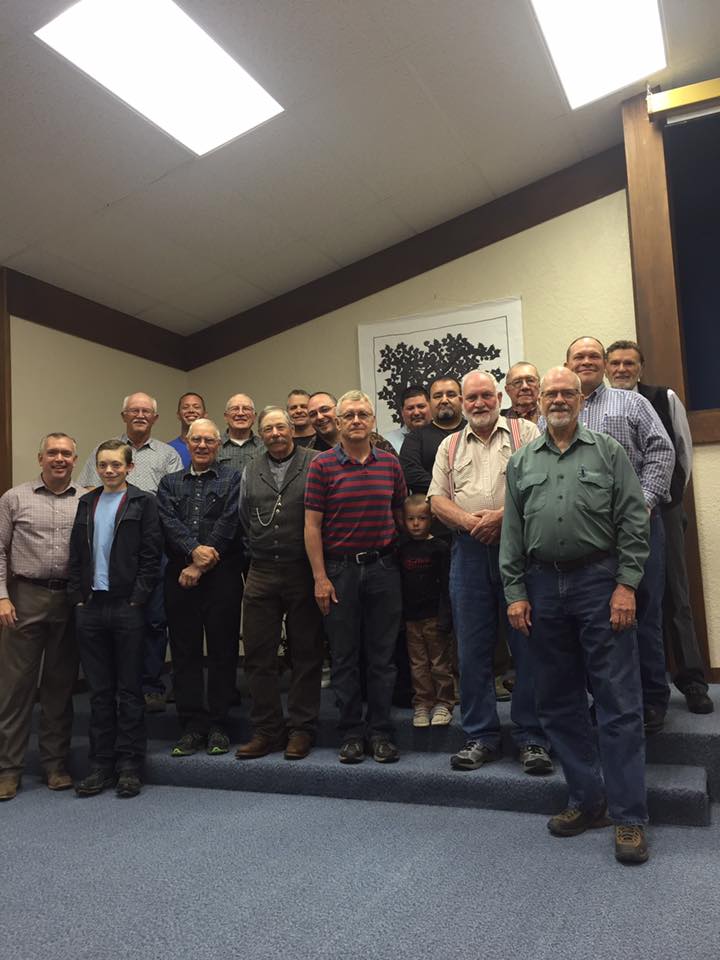
It was such a treat to be among the hearty, faithful Christian men of central Wyoming and the Bighorn Basin. By Bible-belt comparison, they come from small congregations. But their passion and desire to grow the church is humongous. Near the end of their men’s retreat, they divided into groups to discuss the obstacles to growth and suggestions for growth. What they came up with was incredibly insightful, helpful to especially anyone living in the current, western culture.

Among the obstacles they listed were:

  • Lack of commitment
  • Fear
  • Political correctness
  • Biblical ignorance
  • Sin
  • Apathy/indifference
  • Misplaced priorities
  • Lack of adequate leadership

For those in Alabama, Oklahoma, and California who would say, “Those are our obstacles!”, isn’t it interesting how common our struggle is.  The same factors are holding back our growth all over the nation.

Yet, I love the suggestions they came up with. I think they are key to tapping into our growth potential throughout the country and, to a great extent, throughout the world. They suggested the following:

  • Increase fellowship—The key to growth is being in each others’ lives more
  • Emphasize and empower Bible study—There can be no spiritual or numerical growth without growing our knowledge and understanding of God’s Word
  • Think outside the box—Staying faithful to truth, get out of method ruts and overcome fear of rejecting a different, scriptural method just because it is new
  • Challenge greater application of biblical truth—Every class and sermon must have a viable “so what”
  • Be intentional in our relationships—Realize that our jobs, community involvements, friendships, etc., are means to an end rather than an end of themselves. They all exist as opportunities to evangelize.

Our brethren in the deep south, the north, the Atlantic region, the upper midwest, the southwest, the far west, the northwest, and, in short, any recognizable region of the country share a desire to be relevant and meaningful in our communities. We want to honor Christ and grow His body. But it will take measurable steps. It won’t happen incidentally! We must act on our hopes and desires. We must personally engage ourselves in enacting these suggestions daily! In so doing, we’ll not only avoid being part of the problem but we’ll be part of the solution.

13118907_10153650222335922_7374883366678402046_n

A Literal Appeal For “Help”

Neal Pollard

In an interview given at her home, Ann Rodgers appears a bit eccentric but a wonder to behold. The 72-year-old woman survived 9 days in an Arizona desert by eating plants and drinking pond water. She was driving to Phoenix via a remote stretch of back country road on the White River Indian Reservation when she got lost and subsequently ran out of gas. Thus began a series of efforts, building signal fires to draw the attention of rescuers or the forest service. She got lost while climbing a series of ridges trying to get cell signal. She and her dog faced gloomy odds, but she kept trying. She went missing on March 31st. On April 3rd, she used sticks and rocks to spell out “help.” To further draw attention to it, she found an antelope skull nearby and placed it with her message (via nbcnews.com). Since moving out west, I have learned that people frequently get lost in the vast stretches of deserts and mountains. I cannot find statistics for how many people get lost or how many are found alive or dead in the United States, but each incident is obviously traumatic for those involved. Can’t you imagine how desperately and completely those who realize their lostness long to be saved?

Wherever you go today, the vast majority of the people you encounter are going to be wandering through this world lost in the most profound way. Without rescue, they are heading for a fate infinitely worse than physical death. “Lost” is the way Jesus, the Good Shepherd, describes those not right with God. While He uses the word that way in three of the four gospels (Mat. 10:6; 18:11; Luke 19:10; John 18:9), it is the parables of Luke 15 that most vividly speak in these terms. The first parable, that of the lost sheep, draws on the search and rescue metaphor (Luke 15:4). That’s how Jesus likens the situation with one outside of God’s redemption.

Be watching for signs from the lost. They often send signals, if we are looking in the right places. Whether personal problems, major life changes (like marriage or having children), those new to the area, or those demonstrating an open mind, they may be just like the Ethiopian Eunuch and hoping for someone to guide them (Acts 8:30-31). Jesus has us here to conduct search and rescue missions. May we have our eyes peeled and keep ourselves equipped to rescue the lost. They are out there everywhere.

331de06200000578-0-image-a-37_1460507569810

Live Beyond Yourself


Neal Pollard

“Two little lines I heard one day,
Traveling along life’s busy way;
Bringing conviction to my heart,
And from my mind would not depart;
Only one life, ’twill soon be past,
Only what’s done for Christ will last.”

The first stanza of the powerful, convicting poem by C.T. Studd has been the seeming anthem of one of God’s great, 21st Century spiritual warriors, Cy Stafford. I first met Cy around 2000, and his balanced, measured information and guidance helped us identify and deal with a false teacher in East Africa. His interest and concern were for the Christians, new and more seasoned, who might be impacted by this man’s influence.  That godly zeal for God’s people was an indicator of the mind of a missionary, minister, and mentor of men.  The subsequent years have shown me what a true leader and visionary, with God’s help and to God’s glory, can accomplish. Cy is not larger than life, gregarious, charming per se, or glossy in any way. He is steady, focused, and determined.  He has helped change the world by equipping men and women to reach the world. Alongside so many missionaries and Christians indigenous to East Africa, Cy has steadily worked to grow the church and its influence where some of the earth’s poorest and humblest people live.  He often has spoken of the window of opportunity that daily shrinks and he has worked with an urgency to do what he can to make sure everyone has the opportunity to hear the gospel at least once.

Cy and Stephanie have made countless sacrifices of time, comfort, safety, and security because their mission was far broader than themselves. While some in ministry appear motivated by self-interest, self-promotion, and self-absorption, the Staffords have valiantly sought to put the spotlight foremost on Christ and then upon others’ needs.  On whatever day each exchanges the cross for the starry crown, their legacy will have been that of living beyond themselves.   What a convicting challenge to each of us to engage in thoughtful self-examination! What is my agenda? What is my aim? What is my aspiration?

“Give me Father, a purpose deep,
In joy or sorrow Thy word to keep;
Faithful and true what e’er the strife,
Pleasing Thee in my daily life;
Only one life, ’twill soon be past,
Only what’s done for Christ will last.”

Hebrews 11 speaks of great Old Testament heroes of faith who lived and died as those with a “desire” for “a better country, that is, a heavenly one…” (16). These same ones are called “strangers and exiles on the earth” (13), whose sight was set much higher than self. The whole of the New Testament reveals that a heart set on heaven will reside in one who also has his eyes on others (cf. Phil. 2:3-4). All too rarely do we receive such vivid examples of individuals who have so fully committed themselves to the Great Commission, who challenge us to imitate them in living beyond self. Cy is one of the best examples of this I will ever know.

“Only one life, yes only one,
Now let me say,”Thy will be done”;
And when at last I’ll hear the call,
I know I’ll say “twas worth it all”;
Only one life,’twill soon be past,
Only what’s done for Christ will last. “

God, give us more Christians like Cy Stafford! Let that begin with me.

cy and stephanie

“Weapons Of Mass Instruction”

Neal Pollard

The Department of Homeland Security has a fact sheet about the threat of chemical, radioactive, and biological weapons, euphemistically referred to as “weapons of mass destruction.” The International Atomic Energy Agency’s director, Yukiya Amano, spoke recently about the potential harm terrorists could inflict if they get their hands on such materials (cf. dhs.gov; iaea.org). A self-defining term, such weapons, bombs equipped with such agents as smallpox or ricin, could tear through populated areas and cause havoc in communities. Weapon implies something aggressive and powerful. Mass suggests an untold, large number. Destruction means done away or undone. The prospect of such is unnerving.

Yet, the Bible calls itself a weapon. It’s a sword (Eph. 6:17). It is a precise, sharp sword (Heb. 4:12). God says His “word” is “like fire…and like a hammer which shatters a rock” (Jer. 23:29). The word of God fights and destroys evil. It tears down prejudice. It melts away stubborn disobedience. It slaughters the old man. Everyone who does not yield to it now will ultimately do so (Phil. 2:10-11).

This weapon is intended for the masses. As the gospel is the power of God to save (Rom. 1:16) and the gospel must be preached to save (Rom. 10:10-17), the Great Commission—“Go into all the world and preach the gospel to all creation” (Mark 16:16)—entails taking the weapon out of hiding and applying it is “all the word” by preaching it. We’re not permitted to conceal it. If the weapon is appropriately received, it elevates man in his plight here (John 10:10) while it cuts away the spiritual dross (Ps. 119:119), circumcises the heart (Col. 2:11-12), and surgically removes the sin that will keep a soul from heaven (cf. Jer. 4:4). There is not a soul on the globe that can do without exposure to this weapon.

This weapon, meant for the masses, builds up and enlivens (John 6:63). It bears fruit (Luke 8:15). It gives spiritual health (Prov. 4:22). It is an aid and help (Psa. 119:147) At least 48 times, God’s word is called instructions. The word is said to be profitable because it instructs (2 Tim. 3:16). It instructs us on how to walk and please God (1 Th. 4:1), how to have fruitful discussion (1 Tim. 1:5), and how to have wisdom and understanding (cf. Prov. 23:23). It is a weapon which, when used, can save a life for eternity.

Are we working as agents to disseminate this weapon of mass instruction? We do not want to be guilty of far worse than war crimes as we stand before the heavenly tribunal! Eternity demand that we use this weapon!

6891372851_bddcc8d834_o

CHURCH GROWTH STARTERS

Neal Pollard

  • Offer “medical missions” benevolent campaign in the neighborhood, utilizing the talents of members with medical expertise.
  • Have a worship leadership training class.
  • Incorporate periodic explanations about the purpose and biblical foundation for the acts of worship and the invitation during the worship services.
  • Have an elder/deacon intensive training class.
  • Host community Bible studies in various homes on a regular basis, inviting friends, co-workers, neighbors, unchurched family, etc.
  • Have a benevolent financial planning and strategies seminar, utilizing the talents of members with accounting and other finance-related skills and backgrounds.
  • Have a “special events Sunday,” where a special contribution is taken to fund evangelistic events for the year.
  • Host a website, which you advertise to the community, soliciting religious questions they have on their minds (for an example of this, see 12questions.net—hosted by the Mount Juliet church of Christ).
  • Utilize deacons to identify the talents of new members and new Christians, and then look for ways to leverage them.
  • Start a “come back home” campaign to retrieve erring and fallen away members.
  • Create a bumper sticker that identifies the congregation concisely and in a way that would draw community interest. The Palm Beach Lakes congregation has seen several baptisms from such an effort (pblcoc.org).
  • Make the church website current, interactive, and informative, not just about churches of Christ as a whole but what makes the local church relevant to people’s needs.
  • Give the teens an evangelistic project (teen gospel meeting, teen visitation program, feeding the homeless, etc.).
  • Incorporate as many members as possible in grading Bible correspondence courses (for students both foreign and domestic).
  • Plan, publicize, and promote a Sunday for every member in the directory to be present for worship, then use that day to present the plan and work of the church.
  • Train and use members to “carry” visitors from the parking lot to the dinner table, adopting visitors and helping them find classes and seats in the auditorium as well as connecting them to other members.
  • Keep your eyes peeled for new faces, stepping out of your comfort zone to meet and greet them. Be prepared to follow up and help them meet others, too.
  • Pray about ways you can be more involved in the work of the church and ask the leadership for ways you can be put to work.
  • Make a list of members and visitors that you can influence and encourage, then utilize it.

Launch Out Into The Deep

Neal Pollard

When Jesus met Peter, it may have seemed like an ordinary day to the Galilean fisherman. Simon Peter and his partners had just spent a long night fishing with no results.  You can imagine they were irritated and frustrated, maybe even feeling sorry for themselves. Then, Jesus commandeered Simon’s boat and used it to teach. This presumably would have been Peter’s first impression of Christ, though we do not know how closely he was paying attention to the Lord.  In Luke 5:4, Jesus stops preaching to the crowd and addresses Peter. He says, “Launch out into the deep and let down your nets for a catch.” Jesus has ulterior motives, but the command is for Peter to literally cast his nets to try to make a literal catch of fish. Immediately, though, Peter is exposed to something far greater than anything earthly or material. Notice how this account illustrates the call of scripture in which Christ tells us, like Peter to launch out into the deep in faith to do great things for Him.

Launch out into the deep…even if, despite great effort, you have failed in the past (Luke 5:5). Simon explained that he and his associates had struck out overnight. Jesus was telling him not to worry about the past. He tells us the same things today. If you have failed in trying to do right or have succeeded in doing wrong, don’t give up hope. Launch out again!

Launch out into the deep…at the prompting of God’s Word (Luke 5:5). Simon was willing. What a great character trait. He tells Jesus, “Nevertheless at Your word I will let down the net.” Simon says, “I value and respect your word enough to try again where I failed in the past.” Do we trust God’s promises and revere God’s commands enough to keep trying and biting off big things for the Lord?

Launch out into the deep…and involve others with you (Luke 5:7). Of course, with the Lord’s help, Simon became a success. In fact, the disciple knew immediately that he was not big enough to tackle his opportunities alone. He got his partners involved. In the Lord’s church today, each of us as Christians are partners and associates together with Christ (2 Cor. 5:18-6:1). Launching out into the deep requires involving as many as possible, for the task is so great and too much for one alone.

Launch out into the deep…and astonishing things can happen (Luke 5:9-11). First, the catch of fish is astonishing to them. Then, Jesus’ commissioning of them is astonishing (to turn from fish to men). Finally, their response is astonishing. They get to land, leave their boats and all they have, and follow Jesus. Eventually, they change the entire world! Launch out into the deep.  Who knows what you can do through Christ (cf. Phil. 4:13), but it will be astonishingly amazing.

Obviously, this was about men and not about fish.  Jesus was not interested in making them rich fishermen in Galilee.  He was looking to enrich the people of Galilee and far beyond through these fishermen. All it took was for some men who believed in God’s power to launch out into the deep.

The Lightning March

Neal Pollard

It was unusual for foot soldiers to play a major role in the Middle Ages. Harold II of England’s 7000 infantrymen were an exception. He marched them from London to York, about 216 miles, in a week. The rate of the march was 30 miles per day for an entire week!  “A sustained rate of thirty miles per day for seven days was in most circumstances unheard of. A sustained twenty miles per day would have been considered extraordinary.”  The army moved faster than news of its approach. This helped turn the Battle of Stamford Bride in 1066, known as “Harold’s Lightning March”  (Hackett, Jeremiah.  World Eras, Vol. 4: Medieval Europe, 814-1350, p. 128). What seems lost to history is how Harold motivated such rapid movement.  To build such resolve and determination in so many people, in unified purpose, must speak to Harold’s leadership ability.

All of us are marching with rapid pace toward the end of life and eternity.  Hasn’t it been going by so quickly?  It truly is a “lightning march.”  At the end of the march, will we have won the battle?  The church of every generation, and not just individuals, are making this march.  What impression are we leaving on the world around us, what battles of significance will have been won?  Think of the first-century church.  They “turned the world upside down” (Acts 17:6).  They “preached to every creature under heaven” (Col. 1:23).  They permeated their immediate communities, surrounding communities, and the remotest communities (cf. Acts 1:8-11).  Think of those brave, sacrificial Christians during the 19th Century who rallied together around the principle of restoring New Testament Christianity.  With a great reverence for the pattern of Scripture, they sought to imitate the faith and practice of that first-century church.  In their wake was growth and influence.

In both cases, profound as their influence was, they rapidly left the scenes of time.  Their influence remained, but succeeding generations of the Lord’s Army—for whatever reasons—slowed their pace considerably.  We may glorify the church of the 1950s, at one time known as the fastest growing religious group in our country.  But most of them have gone and those who remain have grown slower in their pace. What about the church of the early 21st Century?  How will we be remembered?  Never forget that, in part, this is influenced by what you and I are doing as soldiers under the Lord’s direction.  We could not want for better guidance and a better Commander.  We should have ample motivation.  It is high time we pick up the pace!  Victory awaits (1 Cor. 15:54-58).

Protect Yourself


Neal Pollard

Helmets, seat belts, bullet proof vests, insurance, handguns, and home security systems are all means we use to protect ourselves.  The adage, “an ounce of prevention is worth a pound of cure,” has proven itself worthy time and time again.  We want our homes, families, and health preserved, shielded from potential danger.  What about our inward selves?

It’s possible for us to become a spiritual casualty.  We can fall away.  Peter urges us as Christians to take the necessary steps to protect ourselves in 1 Peter 2:11-12.  One is negative and the other is positive, but both are necessary!

Abstain from fleshly lusts (11)!

We must do this because of who we are (“pilgrims and strangers”).  We must realize where we’re from and where our home is (cf. Heb. 11:13-16).  In a moral and spiritual sense, we have a higher law.  We don’t see right and wrong, fair and unfair, the way the world does.  Our ethics, morals, and our principles are derived from God rather than men (Acts 5:29).

We must do this because of what they are (“fleshly lusts”).  Peter is addressing base physical desires, things like he discusses in 1 Peter 4:3.  These are things the world engages in that can do physical damage, but they certainly lead us away from God.  They are morally wrong in God’s eyes and are destructive desires.  God knows there are things that harm us, hurt our influence, and are hated by His holy heart.

We must do this because of what they do to you (“wage war against your soul”).  Just as desiring the sincere milk of the word (2:1-2) gives you a taste for God’s kindness, satisfying fleshly lusts will destroy your soul.

What a valuable guidelines God gives us as we evaluate an activity, a means of entertainment, who to befriend, an indugence—whatever it is.  We should ask, “Where is this thing or person leading me, toward God or away from Him?”  Instead of debating our Christian liberty or looking for loopholes to pursue something we crave or desire, we would do well to analyze it through the prism of Peter’s petition in verse 11.

Keep your behavior excellent (12)!

Moral and holy behavior does more than just protect our souls.  It reaches others.  You are being watched on the job, at school, and everywhere you go.  More people are guided by your influence than you realize.  How many measure right and wrong by your example?  They may not the Bible, but they know you.  By your wise and righteous conduct, who knows how many you may lead to Christ?  Ultimately, there will be people who stand on the Lord’s right hand at the judgment because you led them there by excellent behavior.  So many people are looking for the purpose and meaning of life, and as Christians we know what it is. As we consistently live it out before them, they will want to know more about that way.

Diversions, Distractions, Or Deviations?

Neal Pollard

All the following are legitimate outlets, kept in proper perspective:

  • Social causes and needs.
  • Politics.
  • Sports, recreation, leisure and fitness.
  • Wholesome forms of entertainment.
  • Family events.
  • Social media.
  • Socializing and fellowship with fellow Christians.
  • Church buildings.
  • Addressing controversial issues and false teaching.
  • Material possessions.
  • Hobbies.

But our common struggle is allowing these to eclipse our purpose on this earth as Christians.  Interestingly, they all can be utilized as part of our mission, but none were ever meant to replace it.  These activities can easily hinder our faithfulness and usefulness to the cause.  Will you pray for me to keep seeking and saving the lost at the top of my “to do” list of life?  I will do the same for you, if you let me know.  Let’s pray for courage, focus, discernment, resolve, and encouragement to take the gospel as we go about each day.  This is what energized the church in its infancy (cf. Acts 8:4).  They had access to the same distractions and diversions we do, but they could not be diverted from the prime objective. Consequently, we read throughout Acts of their exponential, if unlikely, growth.  May we help each other imitate their spirit and service!

Reaching Out Without Caving In

Neal Pollard

What could we do as the people of God to reach out into our community with the gospel in such a way as to remove as many barriers as possible while striving to remain first-century in character and characteristics? Here are some ideas that come to my mind:

  • Give thought to changing the auditorium seating arrangement where we can face more of one another.
  • Sustain an emphasis, via Bible class, email communication, leadership, the pulpit, etc., on drawing as many members as possible into creating an atmosphere of friendliness when we assemble. For example, never look past or fail to engage a visitor.  Build a culture of friendliness.
  • Investigate ways to incorporate psalms, hymns, and spiritual songs that are not exclusively or primarily nostalgic favorites of members from 100-200 years ago.  That may mean we learn new songs (visitors are often trying to learn each and every one we’re singing, so it can be done).
  • Be careful about attaching an over-importance on suits and ties or dresses, or conveying that such are criteria to determine reverence or holiness.
  • Consider fellowship activities that allow small groups to get to know one another better and activities that get us away from the church building.
  • Make sure that we keep current with technology, from an attractive, updated website to that technology which is used within the assembly to any printed literature or brochures.
  • Seek to organize the program of work where all our activities and functions, if possible, are tied to a soul-centered, evangelistic purpose.  Approach every work seeking to make it more evangelistic.
  • Eliminate strafing, caustic, and otherwise thoughtless comments made in Bible classrooms that are de facto attacks on unbelievers or even those in religious errors or denominations.  Blanket statements or attacks on their intelligence or integrity do nothing but lower ours.
  • Thoughtfully, gently, and periodically give explanation for why we do what we do in worship (i.e., the frequency of the Lord’s Supper, extending the invitation, the reason for singing a capella, etc.).
  • Don’t drag out announcements.  Find multi-media ways to “get the word out” about prayer requests, announcements, and upcoming events.

I understand that the worship assemblies in the first-century were primarily geared toward members and not visitors.  Yet, thinking about these things and having such discussions are fruitful because: (1) We are blessed by visitors, often a great many of them, (2) Many of these suggestions will greatly aid new Christians, (3) We have an obligation to reach out to the young as well as the old, and many of these things are central to the world as they know it.  We must remain faithful and obedient to God’s eternal truth, but we must keep discerning eyes regarding what’s truth and tradition and what cannot change and what can and often should change.

DETERMINED TO GET OUT THE NEWS

Neal Pollard

I spoke with our newspaper deliveryman this morning, and he had some story to tell.  He summarized his experience as the longest 15 hours of his life.  He got stuck once and had been towed twice.  He delivers his newspapers in a 2014 Toyota Camry, a front-wheel drive vehicle fighting against 10-12 inches of snow in a thousand cul-de-sacs.  Surprisingly cheerful, he was plodding on until finishing his task—delivering The Denver Post to every customer on his route.  That, my friend, is dedication!

As a former subscriber to the Rocky Mountain News and current subscriber to the Post, I cannot describe his product as “good news.”  With the internet competing, the newspaper is far from the exclusive or timeliest source of news.  That notwithstanding, this man is determined to get out the news.

The gospel is, by definition, “good news.”  Without a doubt, it is the most important and timeliest news of all time and eternity.  Every person needs to be exposed to it as it contains information that will impact where they will spend their forever.  God has given the job to you and me and every Christian in this nation and around the globe. Every day, we see people and relate to people on their everlasting journey.  They may or may not be oblivious to their need, but we are well aware of it.

Are we determined to get out the news?  The first century church was.  In bad times (Acts 8:4) or in good times (Acts 2:47), the news went near and far.  Paul described it as news which had reached every creature under heaven (Col. 1:23).  Christ commissioned that the news be spread to that extent (Lk. 24:44ff).  The challenge is great today, with over seven billion people on the earth.  But we have more resources than they did, and there are more of us, too.  The difference, then, may be the level of our determination.  Until we are determined to let nothing stop us from getting out the news, darkness will eclipse light and our challenge will grow.  Let’s let nothing stop us from sharing the great salvation of Jesus to everyone we meet.

“Under The Sway Of The Wicked One”

Neal Pollard

In 1 John 5:19, John readies the close of this epistle by observing, “We know that we are of God, and the whole world lies under the sway of the wicked one” (NKJ). The Greek word translated “lies in the power of” (ESV, NAS) or “is under the sway of” is a word meaning “to be in the power of one” (Zodhiates) and “to lie in” (TDNT). Bauer adds, “As the believer abides in Christ, so that he is nourished and fruitfully sustained by Him, so the world lies in the devil, by whom it is controlled and rendered helpless and powerless, and finally killed” (ibid.).  This gives us a clear picture of not only what the saints in John’s day dealt with, but also what our current spiritual climate is.

There is a growing culture of unbelief in contemporary society, a skepticism toward a truly biblical worldview.  With that, there is an intolerance bred by ignorance, a bias against the objective truth of Scripture.  In its place, there is a glorification of and infatuation with people and things the Bible calls sin.  That is not novel to our age.  Yet, it is good for us to be reminded that such misplaced affection is the result of a culture that lies in the devil, controlled and subdued by his way of thinking.  Paul tells the would be soul-winner to approach that work this way, “gentle to all, able to teach, patient, in humility correcting those who are in opposition, if God perhaps will grant them repentance, so that they may know the truth, and that they may come to their senses” (2 Tim. 2:24-26a). What’s their problem? They are in “the snare of the devil, having been taken captive by him to do his will” (2 Tim. 2:26b).

We encounter people every day whose choices are the result of having come under the sway of the devil.  They have shaped their lives, their goals, and their desires, by the way he says that fulfillment, satisfaction, and pleasure are derived. For many, they do not know another way much less the way God has laid out in His Word.  Perhaps if we remind ourselves how people got where they are, we can help them get where Christ wants them to go. So many are looking for a better way and they know they have not found it.  Let us invest ourselves in them and through that relationship show them “the way, the truth, and the life” (John 14:6).

Why These Are Exciting Times

Neal Pollard

I am filled with a tremendous sense of optimism that is not generated by politics, current events, the media, the economy, or any other worldly thing.  Neither am I fueled by some Pollyanna spirit.  Yet, I cannot shake this swelling tide of hope that fills me on a daily basis.  It is a hope for what the church and its members can be in the face of the growing challenges we face in this culture and around the world.  Why are these such exciting times?

The darkness is allowing the light to shine brighter!  Sadly, moral, ethic, philosophical, and civil behavior is eroding.  The messages being sent by those in power and authority are increasing anti-biblical.  Those who have lived for any length of time have witnessed a pretty dramatic shift in thinking and behavior.  This is reflected in so many things from language on the job and on “the street” to what is allowed and promulgated in TV and movies to the blatant lifestyle choices of the rank and file.  What all this means is that as Christians we can, by leading “a quiet life in all godliness and dignity” (1 Ti. 2:2; cf. 1 Th. 4:11), shine the light of Christ (cf. Mat. 5:14-16).  As we share Christ with those in our circle of influence, we can countermand the marching orders of the “world forces of this darkness” (Eph. 6:12).  That, brothers and sisters, is exciting!

People are earnestly searching! I read with interest the studies about exiting millennials, new world orders (not just conspiracy theories, but fundamental shifts in worldviews), spirituality over organized religion, and the like. For all of that, down where we live day by day on our jobs, at school, in our neighborhoods, and our community and civic activities, people are longing for meaning and purpose in their lives.  Yes, they can be confused and misguided.  Yes, they have broken and messed up lives.  Yes, this produces a great challenge to churches as we are intentional and outwardly focused.  But, we have not seen a day in any of our lifetimes where biblical ignorance and, thus, directionlessness has been greater.  Remember what Jeremiah said: “I know, O Lord, that a man’s way is not in himself, nor is it in a man who walks to direct his steps” (10:23).  There are many who would say with the Ethiopian nobleman, “How can I (understand, NP), unless someone guides me?” (Acts 8:31).

The church is ripe for revival! It seems that the tale most churches with whom I have contact tell boils down to larger numbers, greater involvement, and younger members occurred in the past! Thus, panic, pessimism, and perplexity lace the private conversations and public addresses of the pulpits, the pastors, and the pews. Perhaps it is time for congregations to consider moving from the defensive to the offensive. I don’t know that individual Christians have ever been more impressed with the dire urgency of evangelizing than right now. I believe the conviction and dedication of our Christian soldiers is palpable.  With bolder leadership, concerted efforts, and a faith-filled plan of action, I believe the church as a whole is poised for growth.  This will require a change of priority, focus, and commitment, but I believe that we are more than ready for it.  We are eager for it!

But, time is short!  Paul is right.  “The night is far spent, the day is at hand. Therefore let us cast off the works of darkness, and let us put on the armor of light” (Rom. 13:12).  If ever the mantra, carpe diem, has applied, it is right now!  May our anthem become, “Rise up, O men of God!”

A COORDINATED RESPONSE

Neal Pollard

The leading local story today has to do with how police and fire responded to the Aurora theatre shooting in the summer of 2012, a horrific crime that left 12 dead and most of the other theatre patrons injured to one degree or another.  Those tasked with evaluating the response use words like “chaotic” and uncoordinated to describe what emergency responders did in the face of the incredibly unusual and tragic scene.  It is hard to imagine how one would prepare for something so unprecedented and it is much easier to make such evaluations in hindsight, but all seem agreed about the need to work together more efficiently when faced with life or death situations.

There is no greater life or death situation than concerns the spiritual state of even a single soul.  Whether we are talking about bringing a lost soul to Christ, helping a discouraged or offended brother or sister, or retrieving a Christian who has fallen away, it requires a coordinated response! Many people are needed to work together to help a person in his or her relationship to God.  Paul urges, “Therefore encourage one another and build up one another…” (1 Th. 5:11).  He also writes, “Bear one another’s burden” (Gal. 6:2a).

When we are faced with the challenge of reaching a lost soul, think of all the coordination needed.  There is the friend or family member trying to reach them, but who else? What about the one(s) trying to study with them, not to mention members who need to reach out to them by befriending them, make them feel welcome, have them into their homes, and introduce them to other Christians?

When someone is struggling, it requires many people calling and reaching out, visiting, and doing what can be done to show them love and concern.  When someone has fallen away, it takes more than the preacher or an elder to do that “heavy lifting.”  Anyone who knows them and can influence them should coordinate with all others to rescue the perishing one!

Twelve lives ended that fateful night in Aurora.  It has been determined that emergency responders were not responsible for a single person being lost, a fact that has to provide them with solace and validation.  When we stand before Christ, each of us wants to do our part so that we can say no one was lost due to our neglect or lack of response.

“What Have You Done For Me Lately?”


Neal Pollard

This is not just something Janet Jackson once wondered.  The late summer and early fall of each year, college football programs have alumni, boosters, and fans asking head coaches the same thing.  Companies ask the same of employees, and stockholders ask it of companies.  While it can be an unfair question, it cannot be unfair if God asks it.

God has a perfect view of our lives, knowing not only what we’ve done for Him in our past but what we are doing now.  As He looks into our lives, could He be wondering, “What have you done for Me lately?”

  • “Have you won a soul to Me lately?”
  • “Have you been in My Word lately?”
  • “Have you been to My throne room in prayer lately?”
  • “Have you and I been close lately?”
  • “Have you been involved in My Son’s work lately?”
  • “Have you been the spiritual leader of your family lately?”
  • “Have you watched your example and attitude lately?”
  • “Have you been the source of unity in My Son’s body lately?”
  • “Have you encouraged a hurting, lonely soul lately?”

These and other questions are ones He has already asked in principle, when He addresses our hearts (Mat. 15:8-9), teaches us our responsibilities (Mat. 7:21), talks about our relationship with Him (Mat. 22:37), and examines our lifestyles (Mat. 5:13-16).  We may have studied with several people in the past, taught a Bible class at some point for a long period of time, and been very close to and in love with God in days gone by.  But how is it now?  Is that really a thing of the past or does it describe the current state of things?  The wonderful news is that you can start right now, building a better relationship with Him and serving Him more effectively.  Today is as “lately” as it gets.  If your zeal is zapped and your fruit has shriveled, get busy right now restoring that.  Obviously, God will see it and He will bless you for it!

Tipping The Train Off Of A Trapped Man


Neal Pollard

Yesterday, a man slipped trying to board a subway train in Perth, Australia.  Closed-circuit footage shows him wedged up to his thigh as the train was filling with commuters.  First, a fellow-commuter beckons to the Transit Authority workers to stop the train from leaving.  Then, incredibly, dozens of commuters come together and tip the train over enough for the man to be freed.  The unnamed man was apparently unharmed and able to catch the next train, undoubtedly more cautious about where and how he stepped (AP story via USA Today, 8/6/14).

The story has rightly been called “heartwarming.”  It shows the compassion and empathy people can naturally and easily demonstrate. It also shows the power of people united for a common cause.  Doesn’t it also show the importance of each individual, doing his or her part, to effectively help?

The church is certainly made up of people with varying degrees and kinds of talents.  Some may be more visible and audible than others, but no one is unimportant.  My experience is that God’s people have an inclination to help and serve and often are just looking for a way to be involved.  Together, we can accomplish great good for the growth and strength of the kingdom.  Not one person is unimportant.

How many people are needed to reach a soul?  Paul writes that he planted and Apollos watered (1 Co. 3:6).  Think about it.  If a person visits our assemblies, one may greet them in the parking lot and another at the door.  One may help them find a seat and several more may greet them and converse with them.  Another may invite them to lunch.  Yet another may eventually ask them to study the Bible.  Another may conduct the study and still another baptize them.  Others may invite them into their home and conduct follow up studies.  There may be those who find where they can be involved and put them to work.  Eventually, that one dies in a saved condition.  Who was responsible for that?

How beautiful to think that God sees each of us as a vital cog in His eternal plan of salvation!  He had the church in His mind as part of His eternal purpose (Eph. 3:9-11).  No one can do everything, but each of us can do something.  Let us find out where we fit in and then start “pushing”!

FISHING FOR MEN

Neal Pollard

In July of 2001, Kjell Wilhelmsen was fishing for salmon on the Gaula River in Norway.  What he saw in the water took precedence.  It was Jens Ovesen, a 246 pound man, who had been swept away by a strong current.  Wilhelmsen had fished that river for a quarter-century, so he knew the movements of that current.  He ran across a bridge and waited for Ovesen to come his direction.  Then, with his homemade lure, Wilhelmsen caught the burly 60-year-old by his rubber waders on his first cast.  He “used every fishing trick he knew to reel the big man without breaking his light line” (via Associated Press, 7/29/01).

Whatever previous fishing stories Kjell had, this one topped them all.  How often does a fisherman catch a person?  Jesus calls for it.  He tells His disciples, “Follow Me, and I will make you fishers of men” (Mat. 4:19).  How does one succeed at such audacious angling?  Much like Wilhelmsen did.  Experience is a tremendous help.  Fishermen hone their skill by many trips and tries.  Knowing the waters is also crucial.  Fishermen must learn tides, currents, and trends.  Then, there is the effort and desire required.  Being willing to exert the energy, whatever it takes, in pursuit is essential.  What about landing the catch?  It’s one thing to get a bite, but another to land it.

God wants us fishing for men.  What will it take?  Practice.  Experience.  Knowledge.  Patience.  Desire.  Wisdom.  Endurance.  Jesus gave His disciples some early “man fishing” tips by example.  In Matthew 4, after calling Peter, Andrew, James, and John, He taught in their synagogues (where the fishing was done), proclaimed the gospel, showed interest in people, and helped them (23-24).  How much time are we spending at the “fishing hole,” fishing for men?

An Aggressive Agenda

Neal Pollard

They use every opportunity to make it a part of the conversation.  It is as if they have a one-track mind.  However they can promote their cause, they do.  They will not quit until they convince you that what they believe is right and that you should accept it, too.  They are bold and willing to risk and sacrifice to get their point of view not only heard but accepted.  That there are still several places in the world where what they are preaching is unacceptable does not daunt or deter them.  Say what you will, they believe in their conviction and will continue to spread it.  They are purpose-driven.

Can you imagine Jews and those of the Roman Empire saying this about the Christians in the first century?  Armed with a living hope (1 Pet. 1:3), they, even in the worst times, “went everywhere preaching the word” (Acts 8:4).  They were accused of having “turned the world upside down” with their teaching (Acts 17:6). They had the reputation as “the sect…that [was] spoken against everywhere” (Acts 28:22). Yet, they would not stop until they had shared the good news everywhere (Col. 1:23).  They were not interested in popularity or even acceptance.  They were trying to get their point of view not only heard but accepted because it originated from the very mind of God.

Aren’t there people in this world who seem to have such a singular obsession? They are in special interest groups, and they have the cooperation and acceptance of rich and powerful people in the media, politics, education, and even athletics.  They are indefatigable, tirelessly and relentlessly pursuing their agenda.

What about the church of the 21st Century?  Do we have an aggressive agenda? Are we willing to share the Word of God, whatever it costs to whomever we can?  It necessitates this question. Do we truly believe it is both right and essential?  If it captures our minds, hearts and souls, we will not be able to keep quiet about it.  May we develop the reputation for steadfast single-mindedness!