The BEST sermon you may ever hear on “the church of Christ”

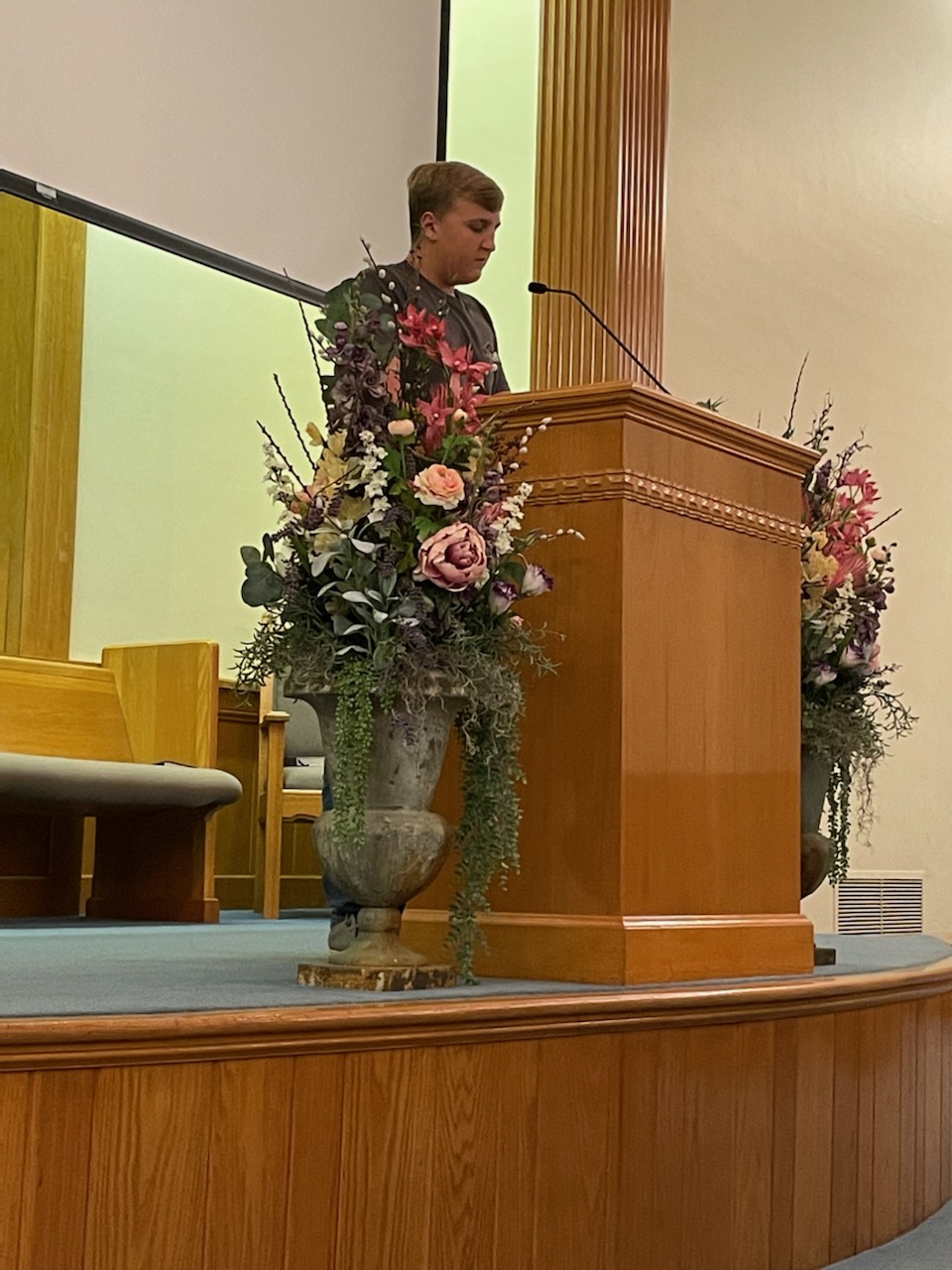
Sermon starts at 1:23:00.

The Church Is A Family

Thursday’s Column: Learning From Lehman

IMG_3998

Kason Eubanks

A few months ago, Lehman and a bunch of other churches went to church camp. During that week, I got to think about family. A quote I read once by Lisa Weed said, “Being a part of a family means you are a part of something very wonderful. It means you will love and be loved for the rest of your life.”

Let me start off by defining family. According to Webster’s dictionary, one definition is “the group of one or more parents and their children living together as a unit.” That kind of family can be shown through the illustration of a loving husband giving his wife some facial masks on Christmas Morning. As she opened the gift, her 5-year-old daughter asked what they were. The Mom replied, “It’s a present to make me beautiful.” After the mom applied one of the facial masks, the little girl looked at her mom and replied, “Mom, it didn’t work.”

Another definition Webster’s gave is “all the descendants from a common ancestry.” To me, that sounds like the relationship God has with His church. 2 Corinthians 6:18 says, “And I will be a father to you, and you shall be sons and daughters to Me,” says the Lord Almighty. Ephesians 5:25-27 defines the church family as being without blemish. “Husbands, love your wives, just as Christ also loved the church and gave Himself for her, that He might sanctify and cleanse her with the washing of water by the word, that He might present her to Himself a glorious church, not having spot or wrinkle or any such thing, but that she should be holy and without blemish.” 

Thankfully, God has given us the opportunity to be part of a perfect family. Maybe you’re not a member of the church family, and you would like to put Christ on in baptism or you want us to pray with you and for you so you can get your life on track. Whatever your need, please reach out to God’s perfect family. 

Lehman on last day of camp this year.

Why I Love The Church

Thursday’s Column: Carlnormous Comments

carl pic

Carl Pollard

I love the Church because…
  1. God loved me enough to establish it.
  2. Jesus loves the Church.
  3. The Church loves Jesus.
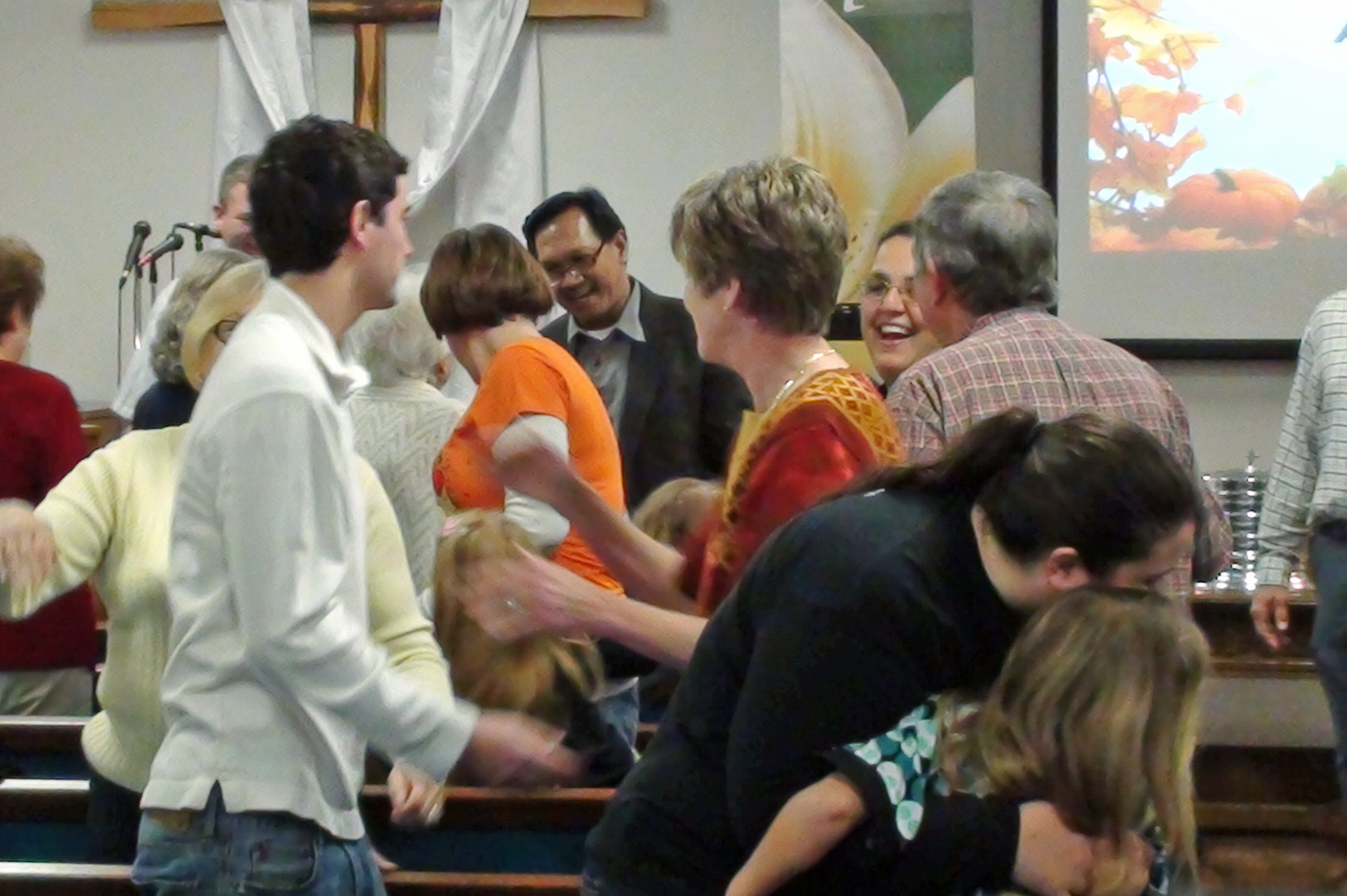
  4. The Church is a family.
  5. The Church is filled with true friendships.
  6. The Church is a source of encouragement.
  7. I’ve seen firsthand the comfort that the Church provides.
  8. The Church is considerate of others.
  9. The Church is a place for the broken.
  10. The Church is a place for the weak.
  11. In the Church I belong to God.
  12. The Church has perfected potlucks.
  13. Jesus is the Head of the Church.
  14. The Church is the unified body of Christ.
  15. The Church helps me to be a better Christian.
  16. The Church helps to show me my purpose in life.
  17. I’ve met people that have changed my life.
  18. The Church helps me love God more.
  19. The Church is motivated.
  20. The Church reminds me that this world is not my home.
  21. The Church shows me the power of song.
  22. The Church shows me the power of the Gospel.
  23. The Church creates a bond that is impossible to find anywhere else.
  24. The Church shows me how amazing grace really is.
  25. The Church is a place of spiritual support.
  26. The Church is a place of physical comfort.
  27. The Church is a place of emotional healing.
  28. I leave every service feeling renewed.
  29. The Church helps me interact better with people.
  30. The Church at times helps me practice patience.
  31. The Church is a reminder that we are equal in Christ.
  32. The Church is a place filled with servants.
  33. The Church helps bring out the best in me.
  34. I want to go to Heaven.
  35. The Church helps me glorify God.
  36. The Church is the family I worship God with.
  37. The Church is exciting!
  38. The Church is where I belong.
  39. I can’t imagine a life without the Church.
  40. The Church puts my focus where it belongs; on God, and other people.
  41. The Church is selfless.
  42. The Church is life changing.
  43. God wants me to love the Church.
  44. The Church makes you feel needed.
  45. The Church makes me more considerate of others.
  46. I want to be a part of God’s plan.
  47. The Church helps me be closer to my physical family.
  48. The Church gives me memories that will last a lifetime.
  49. The Church is filled with people that I will never have to say goodbye to.
  50. The Church of Christ helps me keep heaven in view.
1 Corinthians 12:12-13
 
 
Photo credit: Grant Wilson

Patriotism

Wednesday’s Column: Third’s Words

Gary III

Gary Pollard

I’m a red-blooded American. I love my rights, I love my guns, I love my country, I love my freedoms. I am filled with patriotic pride whenever these things come into play and whenever this great country succeeds. I love the United States of America. 

It hit me whilst mowing at my parents’ property that I do not usually feel the same sense of “patriotism” when it comes to the church. There is absolutely nothing wrong at all with being patriotic, but most of my fervor, emotional energy, love, and grace is awakened by love for a country that won’t last forever. 

We’re all — to some extent — in this boat. We live on this earth, in this time, with these problems. It’s hard to draw focus away from what’s going on here and balance that with undying love for the church. 

Our nation has made some big mistakes in the past (and present), but because it is — overall — a great nation, we don’t pack our bags and move to a different country. Yet, many allow hurt feelings, imperfections, miscommunications, differing opinions, and even stuff like dress codes and translation preference dampen their love for the church. 

If we show (and we means me, too) the same level of love, concern, and emotion for the body of Christ that we do for our country, there isn’t anything that can slow us down. If we extend the same level of grace for the imperfections of others in the church as we do for the imperfections of our nation, there’s no stopping us. Our allegiance is to our country, but even more to our King. If we can live that out, we will grow the church immeasurably. 

pledge_of_allegiance_to_the_flag2c_8th_division_lccn2001703605

What Is The Church To Be?

Monday’s Column: Neal At The Cross

pollard

Neal Pollard

Conceived of in God’s mind in the eternity before time (Eph. 3:9-11), purchased by Jesus’ blood (Acts 20:28), spoken of as the body (Eph. 1:22-23) and bride (Rev. 19:7) of Christ, and described as the temple of the Holy Spirit (1 Cor. 3:16), the church is valued and treasured by Him. As members of that church, we might develop a distorted picture of what the church should look, feel, think, and act like in our ever-changing world. What is the church to be?
A Museum? Is the church meant to be a relic of the past, a historical marker where the past is revisited, revered, and enshrined? No doubt, we stand on the shoulder of great workers and warriors of the past, but we are not meant to devote our focus to days gone by. It is but a slight renovation to go from museum to mausoleum.  Our best days should be ahead!

A Marketplace? Some see the church as a direct reflection of the culture. Stands on moral, social, and doctrinal issues are dictated by the views of the moment. “Change” is the key word, and selling the gospel becomes the preeminent goal (John 2:16; 2 Pet. 2:3). A church built foremost on society rests upon sand (Mat. 7:26-27). 

A Monastery? The church–though a haven from the craziness of the world–can become insulated and isolated. It is great to let our closest friendships and relationships to be fellow Christians, but we can become so secluded and shut off that we become a cloister that ceases to be soul-winners. Our worship services and Bible classes can be so full of insider language that the unchurched have no idea what we say much less what we mean. 

A Movement? Sometimes, we speak of the Restoration Movement whose leaders were trying to get people back to the Bible for “rule” and “practice.” But the New Testament church did not begin on the American Frontier during the Great Awakening or even shortly before it. It is not to be a political, national, or even social movement. To think of it on those terms is to degrade and devalue it. 

It is to be a model, safe to follow and imitate by others because she follows Christ (Mat. 5:13-16; 1 Cor. 11:1). It is to be a militant group, whose weapons build and save and defeat the devil (2 Cor. 10:3-5; Eph. 6:10-17). It is to be a mission, on a mission for the Master (Mat. 28:18-20; Eph. 4:11-16). It is to be a medicine dispensary, offering salve and healing from the Great Physician (Luke 5:31-32). It should reflect the Master in thought, in tone, in teaching, and target! May we all think more critically about what we think about the church!

antique-church-pew-1

“THE CHURCH”

Neal Pollard

Did you know that Paul uses the phrase, “the church” nine times in the relatively brief letter to the church at Ephesus? This is a church Paul worked with for three years (Acts 20:18,31). He taught them in person and then he sends this epistle full of teaching (Eph. 1-3) and application (Eph. 4-6). In both parts of the letter, he makes important statements about “the church.”

• “(God) gave Him to be head over all things to the church, which is His body…” (1:22-23a; see 4:4).

• The manifold wisdom of God is meant to be made known by the church (3:10).

• God’s glory is meant to be shined through the church (3:21).

• Christ is the head and savior of the church (5:23).

• The church is subject to Christ (5:24).

• Christ loved the church and gave Himself up for her (5:25).

• Christ seeks to present to Himself the church in all her glory (5:27).

• Christ nourishes and cherishes the church (5:29).

• The husband/wife illustration is about Christ and the church (5:32).

When you add in the times Paul discusses “the body” (1:23; 2:16; 3:8; 4:4; 4:12; 4:16; 5:23; 5:30), it is easy to see why Ephesians has often been labeled the book which exalts the church of the Christ (in contrast with Colossians, touted as the book which exalts the Christ of the church).

Ephesians destroys the concept of the religious division also known as denominationalism. Where Christ has spoken on how to be saved, how to worship, how the church is to be organized and led, and religious bodies teach as divine doctrine the precepts of men (Mat. 15:9), they become plants which the heavenly Father has not planted (Mat. 15:13). If that is true of what the Pharisees did with God’s law concerning honoring father and mother (Mat. 15:3ff), doesn’t it follow that it would include all of Christ’s doctrine?

Ephesians is a great letter to discover the truth that Christ desires religious unity among believers, a unity derived from believers submitting to His teaching and will. But to limit our interpretation of this book to just that idea is a tragic shortcoming. The whole letter begins with a powerful, humbling truth: “God chose us” (1:4). We are His treasures, the praise of His glory. We are precious and valuable to Him–He predestined us to adoption as sons (1:5), He redeemed us with His blood (1:7), He lavished us with His grace (1:8), He made known to us the mystery of His will (1:9), He gave us an inheritance (1:11), hope (1:12), and a pledge (1:13-14) that we might be wise, knowledgeable of His will, enlightened, and strengthened (1:15ff). All these spiritual blessings (1:3) are reserved for those who submit to Jesus as the head and strive to follow the pattern of New Testament teaching. When we do, we have access to the greatest possible relationship in the whole universe! “To Him be the glory in the church and in Christ Jesus to all generations forever and ever. Amen” (3:21).

New Testament Christianity

Neal Pollard

  • The New Testament claims to be the source of authority for all we do of eternal importance, no matter when or where we live (Col. 3:17; 2 Pet. 1:3,20-21; 2 Tim. 3:16-17).
  • The New Testament will not share authority with any other book or “revelation” (Gal. 1:6-9; Jude 3).
  • The New Testament reveals how a person becomes a Christian (Acts 2:37-47; Eph. 4:4-6).
  • The New Testament teaches us that the Lord adds Christians to His church (Acts 2:47).
  • The New Testament shows us how that church is organized and led (Acts 20:28; 1 Tim. 3:1-12; Phil. 1:1; 1 Pet. 5:1-4).
  • The New Testament gives us the day the Christians met to worship (Acts 20:7; 1 Cor. 16:1-2).
  • The New Testament clarifies for us the various roles and responsibilities God has given to each gender of Christians in the work and worship of His church (1 Tim. 2:8-15).
  • The New Testament teaches the Christian how God wants to be worshipped (John 4:24).
  • The New Testament outlines the Christian’s purpose and work (Eph. 4:11-16).
  • The New Testament is dedicated to showing how one, as a faithful Christian, has eternal life and the hope of heaven (Ti. 1:2; Rev. 2:10; ch. 21-22).
  • The New Testament helps one understand how God wants marriage and family to function, to build Christian homes (Mat. 19:1-12; Eph. 5:22-6:4; 1 Pet. 3:1-7).
  • The New Testament urges Christian growth and thoroughly teaches how that is accomplished (2 Pet. 3:18; Ti. 2:11-14; John 15:1ff; etc.).
  • The New Testament constantly speaks of how the Christian needs to and benefits from developing an intimate relationship with the Godhead (1 Th. 5:17; 2 Tim. 2:15; John 15:14; Mat. 22:36-40).
  • The New Testament teaches that Christians prove to others their discipleship to Christ by loving one another (John 13:34-35).
  • The New Testament reveals that Christians are tasked with duplicating themselves by teaching the gospel to those outside of Christ (Mat. 28:18-20; Acts 8:4; Col. 1:23).
  • The New Testament asserts itself as the unfailing, universal guide regarding anything that will ultimately matter (2 Pet. 1:3; John 14:26; 16:13; etc.).

If what we are after is divine guidance for who a Christian is, what he or she does, and how God wants one to live, where else would we turn but to the New Testament? A God who engineered us for eternity and tells us we have but two eternal dwelling places would be cruel and unloving if He did not give us clear, thorough answers to any matter that is important to Him. How loving and faithful for God to give us such an unambiguous guide.

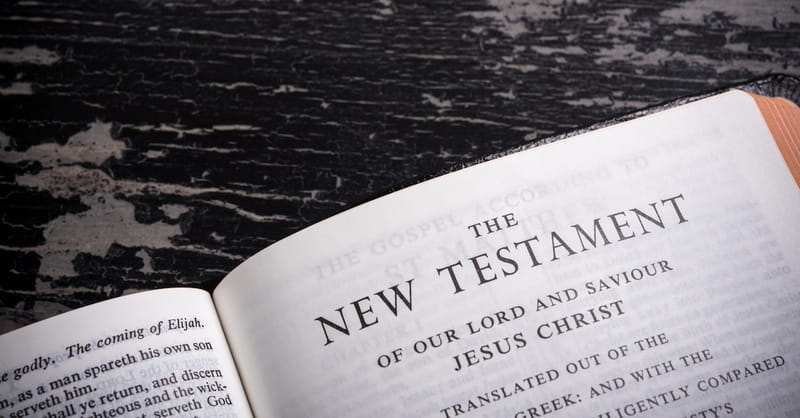
58366-nt-rely.800w.tn_

“It Shall Stand Forever”

Neal Pollard

Kathy and I visited the Notre Dame Cathedral in Paris, France, in February of 2006. It is an ornate, historic building. It dates to the 1100s, surviving the threats of many wars including World War I and World War II. But, it has been dilapidating for some time. Earlier today, a fire inside the spire caused it and one of its towers to collapse. Now, officials are saying that the whole frame is burning and will not survive. Whether or not they rebuild this Catholic Church building, this 900 year edifice will be gone.

There are buildings that have been around millennia before New Testament Days on most of the continents. If they continue until the Second Coming of Christ, they will cease to exist that day (2 Pet. 3:10). King Nebuchadnezzar had a dream over 500 years before Christ, and God helped Daniel understand its meaning (Dan. 2:28). The colossal figure he saw in that dream was a vision about the coming Kingdom of Christ. Daniel says, “In the days of those kings the God of heaven will set up a kingdom which will never be destroyed, and that kingdom will not be left for another people; it will crush and put an end to all these kingdoms, but it will itself endure forever” (Dan. 2:44). 

A careful study of unfolding history reveals this particular kingdom to be the church of our Lord, a Kingdom Jesus said would be established during the lifetime of some of His disciples (Mat. 16:28). It would come with power (Mark 9:1), a promise Jesus reiterates in Acts 1:8-11. That power came by way of the Holy Spirit’s coming upon the apostles on the Day of Pentecost in Acts 2. Through this means, the Lord’s church was established in Jerusalem that day (Acts 2:37-47). The Roman Empire, which ruled the earth that day, eventually collapsed. No nation or empire can rival the spiritual Kingdom of Christ. His church will stand forever (Heb. 12:28). Nothing can overtake or overpower it (Mat. 16:18). 

Assaults against the church have been ongoing for twenty centuries. At times, it has been invisible to recorded history, but it continues to stand. Her members have been assaulted many times throughout the centuries. Property has been destroyed. Possessions have been taken. Lives have been lost. But, still she stands! This Kingdom shall stand forever! A Divine promise encircles it. This confidence is fire proof! 

notre_dame_a_paris_01
Notre Dame Cathedral before today’s fire

Abraham Lincoln’s Memorandum Of August 23, 1864

Neal Pollard

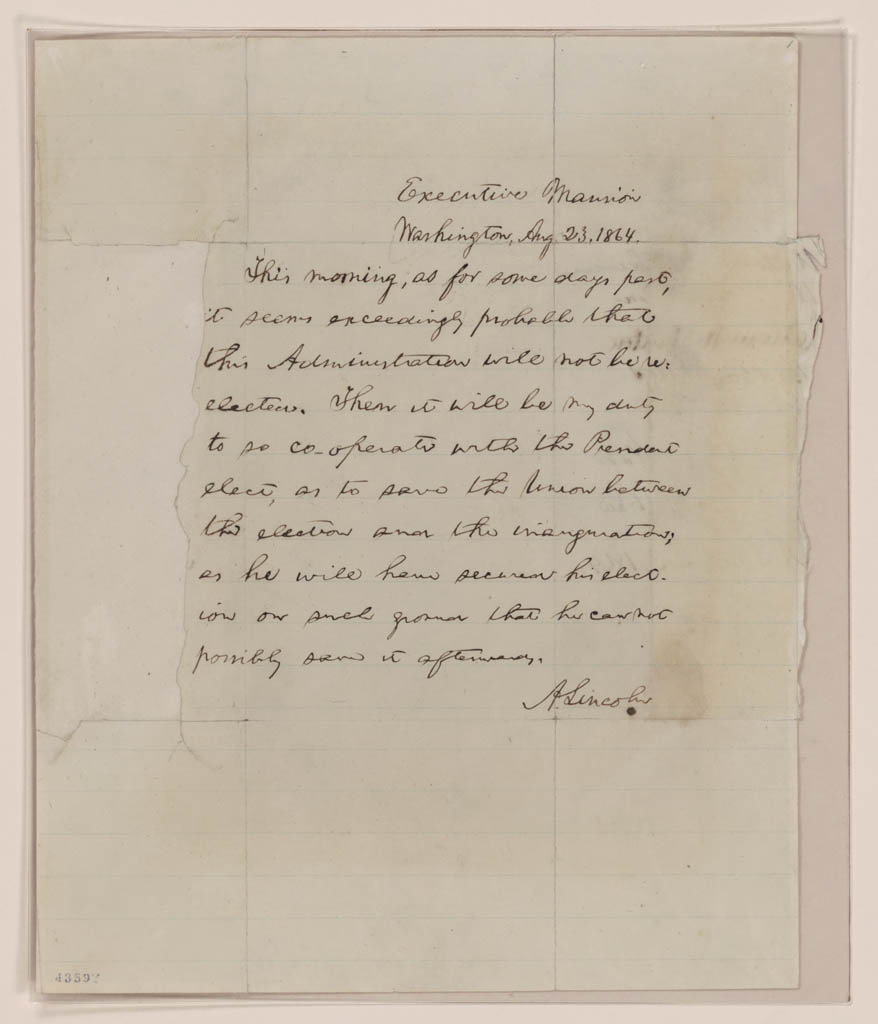
Somehow, I was unaware of the existence of a document which Abraham Lincoln drafted and had endorsed by every member of his cabinet, though unseen by them, and which remained sealed until November 11, 1864. These were not only dark times for the nation, embroiled in civil war for over three years at that point, but gloomy for the war-weary north which could not end the conflict against the greatly outmanned but tactically superior south. Politicians and citizens were unhappy with the perceived lack of success and progress at such high cost—the death and disabling of so many of her sons in the prime of their lives.  Lincoln detected that popular sentiment was such that he would not be reelected. Thus, he drafted his memo, which read, 

This morning, as for some days past, it seems exceedingly probable the this
Administration will not be reelected. Then it will be my duty to so cooperate
with the President-elect as to save the Union between the election and the
inauguration: as he will have secured his election on such ground that he
cannot possibly save it afterward (Coolidge 139). 

Lincoln seemed to think that the north had had enough of this war and would rather sue for peace and allow our sea to shining sea to be two nations rather than continue with such devastating effects a war they could see no end to. He appears dedicated to whatever he could do to preserve unity.

Of course, several things changed the course of Lincoln’s fate in his bid for reelection that swept him decidedly into office for a second term. There was the north’s victorious show in The Battle of Atlanta, Fremont’s withdrawal from candidacy, the Democrats internal division between the Copperheads—eager to end the war now—and the War Democrats, and the fact that no electoral votes were counted from the Confederate States of America.  But, Lincoln could not see the future. He was preparing for what he saw as the worst.

There is a well-worn battle taking place in our world. It is not technically between two factions. It might be framed as Christianity versus other world religions. It could be cast as New Testament Christianity versus so many individual denominations. Yet, internally, there are multiple stressors to the biblical unity Christ prayed and died for, too (John 17:20-21). 

Christians are soldiers (Eph. 6:10ff), but our battle is not with flesh and blood (Eph. 6:12).  Our war and weapons are not “of the flesh” (2 Cor. 10:3-4). All the same, many have grown weary of fighting the good fight and not a few feel as though we are fighting in a losing cause. The restoration ideal of doing Bible things in Bible ways seems archaic and impossible to growing numbers of saints. Some fight with equal vigor to preserve traditions not rooted in Scripture, and unnecessarily harm the great cause. 

As we strive at all costs to be true to the pattern of New Testament Christianity, let us do so going to whatever lengths we can to maintain unity wherever possible. Not for a moment does that mean sacrificing truth or compromising even one “thus says the Lord.” But it does mean embracing a spirit of love and protectiveness for the precious Bride of Christ, the church. That involves loving and working with those who are the members of it. 

Ultimately, the Lord’s cause will prevail. His victory is as assured as every other divine promise. We must be striving on His side to share in that. For now, we cannot give up the fight! Let’s cooperate wherever and however we can, standing unitedly on the foundation of Christ and His will. The rest (which is most of it), we will leave to our Great Commander In Chief!

Works Cited:
Coolidge, Louis A. American Statesman Ulysses S. Grant (New York: Chelsea House, 1983).

blind-memo-recto-al0204

VISITORS—HANDLE WITH CARE!

Neal Pollard

I’m not sure where the phrase, “handle with care,” originated. It’s usually reserved for advice regarding that which is fragile or even volatile. It really is applicable to those who visit our assemblies because of their value and importance. They came through the doors of our church building intentionally and with a purpose. Initially, we cannot know why or how sincere their purpose. That process of discovery could not be more important. Consider some reasons why we should handle every visitor with care:

  • Each has an eternal soul (cf. Mat. 25:46). 
  • God could not love that visitor any more than He does (John 3:16; 1 Tim. 2:6).
  • God loves that visitor as much as He loves you and me (Acts 10:34-35). 
  • That visitor is likely seeking spiritual guidance (cf. Mat. 7:7).
  • Each visitor is subjected to a first impression, being left by you and me.
  • That visitor is going to make judgments about the church, the Bible and Christ based on what he or she sees (or fails to see) from you and me.
  • The smallest gesture of kindness toward such a one could lead to the salvation of a soul.
  • We cannot know what anyone else is doing to make their first visit a good one.
  • Each one is being exposed to the Bible and to New Testament worship, and follow up can lead to further interest.
  • That soul is connected to many others, who might subsequently be reached (2 Tim. 2:2). 
  • You and I are official ambassadors for Christ (2 Cor. 5:20).
  • The Golden Rule should prompt our warmth, helpfulness, and sensitivity (Luke 6:31).
  • We are each part of a team, trying to connect each of them with what only Christ can offer them (1 Cor. 12:18; John 14:6).
  • There is no guarantee that there will be a next time (Prov. 27:1).
  • Statistics tell us that most visitors find the churches they visit to be unfriendly toward “outsiders” (see, for example: Thom Rainer).
  • Loving others is commanded, and visitors are included in “others” (Rom. 13:9; Gal. 5:14; Jas. 2:8; etc.).
  • Visitors constitute perhaps the easiest inroad to developing interest in a Bible study, as such have reached out to us by attending.
  • Our excuses (“I’m shy,” “That’s not my job,” “I’m not good at it,” “I’m busy”) ring hollow when carefully examined. 
  • We love the church and believe in its relevance and importance.
  • Each contact is a valuable way you and I can contribute service for our Servant-Savior (cf. John 13:12ff; Mat. 20:28).

The list is far from exhaustive. I am convinced that none of us neglects a visitor out of contempt or even indifference. Yet, it is good for you and I to encourage each other, to “stimulate one another to love and good deeds” especially as it pertains to assembly-related matters (Heb. 10:24-25). Wouldn’t it be exciting to be the friendliest church around, especially if our message and practice is faithful to God’s Word? What a powerful combination! Let’s help each other earn such a reputation, for reasons such as the above. 

fellowship201

A Warm And Welcoming Church

Neal Pollard

Once, I received a call from a woman who watched our TV program. She shared her religious background with me, including the fact that she was raised in a church of Christ. While she was baptized many years before, she committed fornication, became pregnant, and had a child out of wedlock. She said that she publicly repented, coming forward to ask forgiveness. While some forgave, one prominent member wouldn’t let her forget her past sins. Ultimately, she left that congregation and soon after left the Lord’s church altogether.

She joined a large denomination in the area in 1985. She gave some interesting reasons for joining them. Reflect upon them for a moment.

(1) She received personal visits from church members.

(2) She was warmly welcomed by many who greeted her when she attended the services.

(3) She was quickly put to use in the church’s works.

Very simple formula, wouldn’t you agree? Some fundamental needs were recognized by that religious group: Approach. Accept. Assimilate. While their doctrine was wrong in vital areas, their practical wisdom was on target! While she traded truth for error regarding their teaching, she sought but didn’t find among God’s people the very things many seek today. None of the things she sought were wrong.

In the church, the main emphasis should be serving rather than being served. But look at what she sought. She sought personal contact from concerned people. The denomination responded. She sought acceptance, not of sinful choices, but of herself—the sinner. She received that. She sought ways to be involved, ways to serve. She was given opportunities despite some physical handicaps that restricted her.

There is much to do, much more than is being done, though we are doing much. Some bare essentials that all of us can be doing is visiting our visitors, making visitors feel like honored guests, and finding ways to include those who become members in the work of the church.

We have opportunities every week that walk through our doors. Are we doing our part to make ourselves a warm and welcoming congregation? People will form lasting opinions about the Lord’s church by what we do to make them feel welcome. Each individual Christian is accountable for visiting (Mat. 25:34ff), accepting (Js. 2:1-13), and including (1 Th. 5:11).  Let us glow with the warmth of Christ! Who knows who we will turn onto the narrow path or who we will help stay on it?

1


A Family, A Fraternity, And A Fellowship

Neal Pollard

A little over a week ago, my son Dale called me to tell me one of his elders gave him tickets for the Georgia-Missouri football game. He asked if I could swing coming. Thanks to a generous travel voucher from American Airlines, I was able to go on short notice on their nickel. The best part of this trip was getting to see one of my adult children for a couple of days. We made the most of those moments, and that game between the hedges was not a disappointment. Though Dale had watched games with me on TV, he was not the diehard fan I have been since 1979. We made the drive from Valdosta to Athens. Once on campus, he got his first glimpse into “Dawg Nation.” By the time we left the game, he was hooked. Georgia has another diehard fan. What did the trick? Perhaps the camaraderie between people who otherwise would not come into contact with each other. There was the shared lingo, shared knowledge, shared passion, and even shared clothing color schemes. There were traditions to partake in. People were excited for every play and intensely interested in the outcome. That was infectious! It was an unforgettable experience we plan to duplicate in the future.

As I look back on that great memory, I got to thinking about an infinitely stronger bond I have. Even regarding this game, I think about the part they played. I’m talking about the Lord’s church and the Christians who make it up. There was Doug Jones, the elder who gave us the tickets. There was Wes Hazel, who let Dale borrow his car so he didn’t have to pick me up from the airport or carry me around on the back of his motorcycle. There were Lance and Susan Leavens, who opened their home to allow Dale and me to take a nap before I caught a flight back to Denver yesterday morning and Dale drove back to Valdosta. While I was in Georgia, Kathy was in Texas doing a ladies day, and Carl was experiencing major trouble with his truck, an overwhelming, generous response from literally dozens of Christians helped make it possible for our youngest to resolve that heart-sinking trouble.

All too frequently, I see people who major in pointing out the perceived problems and seeming shortcomings of the saints. To listen to them, we do nothing right and even do those things from sinister motives. As a preacher’s kid who’s lived a life of a full-time preacher for more than a quarter century, I am far from naive. The church, without exception, is comprised of flawed, faulty, and finite folks. I have been extremely disappointed in the actions of church members, from the leadership to the membership. I have tearfully witnessed Christians abandon the church for the world, breaking many hearts in the process. But, the church is special. It is unique, from the doctrinal standpoint, dedicated to speaking where the Bible speaks and being silent where it is silent and seeking to replicate New Testament Christianity.

In addition to that, there is the common bond we share. What a fellowship! What a family! What a fraternity! You read it when you open up the New Testament. As importantly, you experience it today when you open your heart and life to all the others who make up this special group. We’re incurably imperfect. We should strive to be more patient and gracious. But, God’s people are the greatest in the world! Thank God for that blessing today and every day.

22540060_10155051132935922_8341247926958187048_n

REDUCING RIOTOUS RACE RHETORIC

Neal Pollard

At various times when I was growing up, I called Hawkinsville, Rockmart, Cairo, Sylvester, Franklin, and Hinesville, Georgia, home. While my dad was once fired from a congregation for converting a black woman, race relations in those rural towns—at least among us children—were excellent. While High School was very cliquish (along a great many lines more significant than racial ones), many of us had close, great relationships across racial lines. Certainly, there were instances of prejudice—from every race toward every race—but it was not characteristic. Perhaps it was because we were not constantly obsessed with it. We just got along.

Are you getting sick of hearing politicians, the media, and even social media (including from some members of the church) fanning the flames of dissension on this topic? I am. From my imperfect observations, I see the following:

Less Productive:

  • Placing blame on any one side
  • Having our minds closed to discussion
  • Stereotyping and pigeon-holing
  • Guilt-tripping and manipulating
  • Living in the past rather than dealing with the present
  • Categorizing everyone on the basis of their skin color
  • Blaming or praising based on geographic or political boundaries
  • Cherry-picking historical incidents to validate one’s point of view or assertion
  • Thinking our personal experience is indicative of everyone else’s

More Productive:

  • Eradicating concepts like “predominantly white” or “predominantly black” congregations
  • Showing Christ-like love and acceptance to people who look and sound different from us
  • Showing hospitality and associating with people of every race and walk of life (publicly and privately)
  • Getting to the point where we don’t associate anyone with their race or ethnicity
  • Teaching our children to choose friends and spouses based on the content of their character rather than color of skin
  • Extending the “Golden Rule” to race relations like we should every other issue
  • Selecting preachers, deacons, elders, and other church leaders with no regard to anything so superficial as skin color

The Bible says that God made every race (ethnos—nation, culture) from one man (Acts 17:26). The Bible says the whole earth was populated from Noah’s three sons (Gen. 9:19). The Bible speaks of the “human race” (Jas. 3:7), and doesn’t emphasize a red, yellow, black, or white race. The Bible says that heaven will be populated by people of “every nation and all tribes and peoples and tongues” (Rev. 7:9). Let us make sure, especially as Christians, that we are not fanning the flames of division, animosity, controversy, and hatred by treating this important subject in a way that takes people’s eyes off of Jesus or the church’s true mission! Surely this will reach more people of every nation, tribe, people, and tongue.

14695543_10154021892615922_311136469182200443_n

Sharing Trade Secrets Or Sharing The Wealth?

Neal Pollard

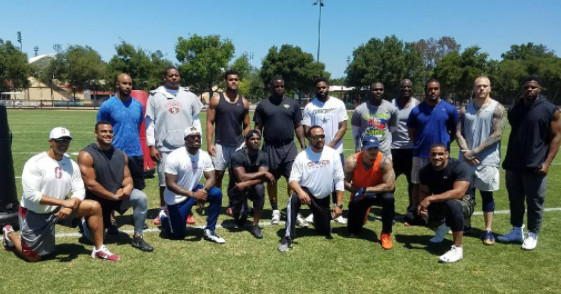
Last month, Von Miller gathered some of the NFL’s elite sack specialists at Stanford University for what he called a “pass rush summit.” The participates were star defensive players from around the league, with several different teams represented. Addressing concerns that each man was sharing his trade secrets, Miller replied that it was more like sharing the wealth. He said, ““A sack is a sack. I’m going to get sacks, they’re going to get sacks. You really can’t stop that. You really benefit more from really just sharing that knowledge and just trying to be the best players that you can possibly be” (Denver Post, Nicki Jhabvala, 6/29/17). Do you find that surprisingly magnanimous and unselfish? Yet, don’t you find it refreshingly classy and helpful?

When I think about the spiritual battle God calls us to, I often think about the outposts God has in towns and cities throughout our state, country, and world. These individual congregations of the Lord’s church are facing struggles with a formidable foe (cf. 2 Cor. 10:2-4; 1 Pet. 5:8-9; Eph. 6:10-17). God has endowed us with a mission and purpose, reaching those outside of Christ, showing charity and compassion to the world, and helping to strengthen those already in Christ. We seek to achieve this through various ideas, ministries, programs, efforts, and events. We bring in speakers, host activities, organize, and create. When we find ways to be productive and get results, we should be ready to help. When he hear of such things, we should be eager to hear. At times, we may inadvertently develop a sense of competition rather than a spirit of cooperation. But this ought not to be so.

What is our goal with every benevolent outreach, every evangelistic attempt, and every edifying work? Isn’t it to get more people to heaven, to shine the light of Christ into a world of ever-deepening darkness? Why do we host camps, have lectureships, train preachers, hold fellowship activities in homes and at the building, reach out to our homeless community, stock pantries, build a robust youth program, minister to young professionals, young families, and seniors, do evangelism training, have marriage seminars, worship leadership training, and the like?

What about works our brothers and sisters are doing all over the country? Polishing the Pulpit, Focal Point, Fishers of Men, Gospel Broadcasting Network (GBN), Truth.fm, Mission Printing, World Video Bible School, Bear Valley Bible Institute’s Extension Program, World English Institute, House to House, Heart to Heart, and many, many others are what our larger church family are doing to grow the church and build its strength. Yet, there’s much more that could be done by so many more of us, working together to accomplish the mission. But we must see ourselves as cooperators rather than competitors. Obviously, there can be impediments making this impossible in specific situations, but as we acknowledge that are we missing opportunities. Meanwhile, countless souls are rushing toward eternity. Let’s band together to find out how to more effectively reach more of them. That will mean more saved souls and more glory to God!

Screen_Shot_2017_06_30_at_9.49.53_AM.png
Vanguard Sports photo of the Pass Rush Summit

Pilgrims And Strangers

Neal Pollard

The two Sundays Kathy and I spent in Israel were with the church in Nazareth, about two hours north of where we are staying near Jerusalem. An interesting fact in a nation where an overwhelming majority of citizens are either Jews, the largest group, or Muslims, still a significant, but smaller group, is that there is a fairly small number of those professing to be Christians. The congregation in Nazareth, which has around 40 members, is comprised almost entirely of Arab people. As I spoke with one of the men yesterday, he said something that will stay with me a long time. He talked about how Arab Christians are viewed by their fellow-citizens. If Jews sees him standing beside a Muslim, they think he’s a Muslim. As most Arabs in Israel are Muslim, that seems logical. They see him as a potential threat and enemy. But, Arabs who find out he’s a Christian, and there are so many ways to readily see he’s not a Muslim–clothing, customs, etc.–see him as infidel or even a traitor. His remarks were in response to the sermon I preached from 1 Peter 2:21-25 on how Jesus handled persecution. He says that the Arabic Christians can tend to feel like people without a country.

Now, while you and I do not share the unique circumstance of Arab Christians in Israel, there is a similarity we see from earlier in 1 Peter 2. Peter tells Christians, “ Beloved, I urge you as aliens and strangers to abstain from fleshly lusts which wage war against the soul. Keep your behavior excellent among the Gentiles, so that in the thing in which they slander you as evildoers, they may because of your good deeds, as they observe them, glorify God in the day of visitation” (11-12). We’re going to “look” different, abstaining from fleshly lusts. We’re going to “act” different, keeping our behavior excellent doing good deeds. Whether we physically look like the people who observe us or we look different from them, our Christianity will be noticeable and observable. That’s not the same as doing your works in order to be seen of men (Mat. 23:5). Instead, living the Christian life–no matter what–will inevitably catch the attention of the people around us. 

I’m grateful for the object lesson I received. Pray for our Arab brethren, men and women in a spiritual sense who are “without a country.” Pray for our brethren in places where their faith in Christ is scorned and more overtly persecuted. Pray for us, that we will be salt and light which stands out and stands up for Jesus in our daily places where darkness persists.

19990219_10154823106870922_5613897177568887225_n
John and Carla learning a few Arabic words and phrases from the local Christians.

What To Expect When You Build 

Neal Pollard

The old saying, “The more things change, the more they stay the same,” seems applicable to time, place, and action. Though the rebuilding of the wall around Jerusalem in Nehemiah’s day stretches back 2500 years and occurred in a totally different culture about 7000 miles from here, it is amazing how what they faced and how they faced it is similar to our world and work right now. What can we learn from the physical building of Nehemiah to help in our spiritual building in the church today? Let’s look at Nehemiah four for the answers.

  • There will be opposition. Then, the opposition was from unbelievers who are introduced to us as those who “mocked and despised” (2:19). They will be driven by emotion (4:1,7). They will actively work to undermine and upset the work (4:8). They will actively work through verbal assault (4:2-3). They will succeed in striking fear in the hearts of some of God’s workers (4:11ff). If we can settle it in our hearts that the devil will never be satisfied until he defeats every faithful work for God, we will expect opposition to exist. The key is not to put the focus on the opposition.
  • There must be devotion. Nehemiah, who narrates much of this Bible book, shows us how you defeat opposition. You depend on God through prayer (4:4-5,8). You trust that God is at work in answer to prayer (4:15,20). You keep the focus on His power (4:14). If we can remind ourselves that “our [great and awesome] God will fight for us,” we can keep going through the most frustrating failures along the way.
  • There must be direction. Someone has to lead people to focus on God rather than His enemies. Nehemiah exemplifies godly leadership. As noted, he led the people to rely on God when doing His work. Notice that he also communicated to the leaders and workers (4:14). He reminded them of their motivation (4:14) and gave them a tangible plan (4:19-20). He also led by example (4:21-23), rolling up his sleeves along with the rest of the people. Such servant-leaders inspire and encourage success.
  • There must be action. Though their success ultimately came about because of God’s power, this did not nullify their need to work. They built because “the people had a mind to work” (4:6). The late Wendell Winkler was known to say, “Programs don’t work. People do!” Walk through Nehemiah four and observe the action verbs. You see them “each one to his work” (15), “carrying on the work” (16, 21), and “doing the work” (17). So it is today.

These were ordinary folks. They faced fear, doubt, and discouragement. They had limitations. But they “built the wall” (4:6). In other words, they succeeded in the task God gave them to do. We are not inferior to them in any way unless it is in execution. We have opposition. We can defeat it with proper devotion, direction, and action. The work God has given us in His church today must be done, but it can be done! Let’s do more than believe that. Let’s embody it!

New Horizons humanitarian assistance in Haiti

Is The Church Broken?

Neal Pollard

You hear comments in Bible classes that amount to what’s wrong with the church, what we’re doing wrong, what we’re not doing, and what it’s doing to us, our children, and the world. You read people’s minds through their social media rants, raves, and ramblings, and the bottom line message is that the church is inept, irrelevant, irresponsible, or, worse, insidious. To hear some tell it, the church is not only unhelpful, but actually hurtful.  I know that we can be prone to say things out of hurt, disappointment, anger, and bitterness, but the words themselves are no less potent even if influenced by such emotions.

Is the contention, as one Christian sister put it, that “the church is broken,” true? Another way to put that is, “Are elders, preachers, deacons, Bible class teachers, and every other Christian broken?” Perhaps we impersonalize it and overly-institutionalize it with a nameless, faceless designation of “church.” But the church is, as we were taught as children, “the people.” People who are prone to say the right thing at the wrong time, the wrong thing at the right time, and, sadly, the wrong thing at the wrong time. We disappoint, we mishandle, we poorly execute, we unfairly judge and criticize, and we simply blow it. That is definitely not an excuse or a permission slip for bad behavior. Yet, it is not likely to ever change.

Because the church is made up of sinners saved by grace, the church is broken. We who are quick to condemn the church as broken need to face that we ourselves, as those placed by Christ into that church when we were saved, are broken, too. Show me the perfect person who never mishandles a situation, never sins with tongue, attitude, or deed, and I’ll show you someone who will stand before Christ at the Judgment saved on the basis of their own merit and goodness. That won’t happen.

Let’s be reminded of what the church is.  It is the precious, beloved bride of Christ (Eph. 5:22-25; Rev. 19:7; 21:2). It is that institution purchased by His very life’s blood (Acts 20:28). It is that which was thought up by God from the eternity before time as is the expression of His manifold wisdom (Eph. 3:9-11). It is the place where Christ is glorified (Eph. 3:21; 5:27). It is the present the Son will present to His Father when time is no more (1 Cor. 15:24). It is that and truly so much more.

God designed the church. Reckless criticism of it is reckless criticism of Him. All of us should be determined to improve in every area of our spiritual lives, to be for others what we need to be, to conquer faults and sins in our lives. We should also extend to others the grace we intensely desire to receive when we stand before the King at the last day! Yes, the church is broken, but not in the sense that it cannot help, serve, minister, love, and encourage. Let each of us strive to be the church we want the church to be. Model and exemplify it. Emit the fragrance of Christ. That way, the broken church can help mend the broken lives that make it up.

broken_church_2c_areman_28_masud_abad_29_village_2c_azna_d8a7d8b2d986d8a7_d988db8cd8b1d8a7d986d987_d987d8a7db8c_daa9d984db8cd8b3d8a7db8c_d985d8b3d8b9

Victories Of Our Friends And Family Day

[Disclaimer: I mention specific names, knowing that I cannot possibly know every story and detail. These are included to encourage. God saw it all and will reward accordingly!]

Neal Pollard

  • There was an air of excitement. We did not meet our numerical goal, but there was a noticeable buzz yesterday. So many new faces milling around and so much focus on that, from Bible class to worship to the sermon, just charged the atmosphere.
  • We were very deliberate and thoughtful about how we approached worship.  Thom Vaught and Michael Hite put together the “explanation slides” for the acts of worship (which would be great to use every Sunday, I think). Doug McNary did a masterful job planning the worship and each man shined in leading us. There appeared to be such enthusiastic participation. Thom’s elder remarks at the end were worth the price of admission!
  • Many of our members got out of their comfort zone to meet and greet visitors. This is a significant area where we need to grow, but where we have grown. While there will always be some who do not step outside the known, so many did!  Some were “pulled in.” Others did the pulling in (Mike Ripperton was almost like a traffic cop in the foyer!). A warm, loving church is merely reflecting the face of Jesus.
  • We got future commitments from invitees.  Many of us invited several people to come, but they did not come or even backed out. Madie Murphy had two friends back out yesterday morning, but one is coming next week and bringing her mother! The Parkers and Maria Thompson invited a wonderful young couple who are searching for a church home. Look for that to bear fruit! I believe we will see people show up in the weeks and months to come because of our Friend And Family Day.
  • We asked people to come to church. Dean Murphy called this the biggest victory of the day, 100 people asking people to come to church. That is who we all need to become if we are not already that. God saw your attempts and was pleased. And if you, like me, had to fight nerves and fears to invite friends, keep practicing! It gets easier with the effort.
  • We planted so much seed. I am convinced that efforts like these will pay off in many ways we do not anticipate. I have never seen an endeavor like yesterday fail to yield return visits, Bible studies, community impressions, and unseen impacts that yield souls won to Christ. What we did in inviting friends and family was right and pleasing to God! He will not let that work produce nothing.
  • There were great, individual victories. Many of us did have non-Christian visitors in the assembly. The Walkers had a neighbor there. Danielle Thompson had her husband there. Guy and Kathryn Lindsay had a guest. The Fleury guys were back. No doubt there were other individuals. Derek Rose tracks our visitors and says that our response was off the chart. But the day would have been worth it if the only success was Janice Edwards. She’s not been a member of the Lord’s church very long, but she had NINE family members come with her yesterday—four children, two in-laws, and three grandchildren!
  • We focused on our “3 P’s.” Our mantra is “devoted to getting it right, inside and out” from Acts 2:42-47. That involves praise (worship), participation (family/community), and proclamation (evangelism). The more we can remind ourselves of our purpose as a church, the more productive and successful we will be at accomplishing the Lord’s work to His glory.

I loved the Bear Valley church of Christ before yesterday, but I love her even more this morning! Thank you for loving the Lord and souls enough to do what you did. Now, let’s keep doing it.

17352047_1358574034165630_9157918034812969913_n


Producers Versus Consumers

Doug McNary

Allow me to take you back to the early 1930’s, when the U.S. economy was in the throws of the Great Depression. It was a time of record setting negative economic growth. Many Americans lost their means to sustain basic life functions. Many Americans lost all Hope.

At the time, President Herbert Hoover believed in the importance of the role of individuals in society and the economy.

He said, “Economic depression cannot be cured by legislative action or executive pronouncement. Economic wounds must be healed by the action of the cells of the economic body – the producers and consumers themselves.”

Now, let us fast forward to the church today. We find the church in a time of record setting negative growth. And according to a 2014 Pew Research Study, less than 27% of Millennials (defined as ages 18 to 35) regularly attend religious services. Yet, 67% say they believe in a heaven and 84% think there is a God. So, what does the mean?  

I think deep down inside, millennials believe there is a God, but worldly distractions and alternate priorities keep them from contemplating what that really means. A lack of understanding or knowledge of the truth translates into a lack of action. Their ignorance may lead to eternal demise.

So, let’s rewrite Hoover’s insight:

“Church growth cannot be cured by the action or pronouncement of church leaders. Church wounds must be healed by the actions of the members of the church body – the producers and consumers themselves.”

Church growth will not be achieved by elders, deacons or preachers alone. It must be cured by each of us also doing our part.

So I ask myself, “Am I a producer, or a consumer?”

In Matthew 5,  Jesus said,

“You are the light of the world. A city set on a hill cannot be hidden; nor does anyone light a lamp and put it under a basket, but on the lampstand, and it gives light to all who are in the house. Let your light shine before men in such a way that they may see your good works, and glorify your Father who is in heaven.”

Honestly, I have been a consumer long enough. I sit in my pew every worship service, I do my daily bible reading, and dwell on God’s word… I have been a faithful Christian, with a proverbial basket over my head.

I want to be a producer…

–Sharing, Caring, and Acting to make a difference for the Lord’s church.

I want to be a producer…

–Proclaiming to others the Truth found in the Bible.

I want to be a producer…

–Openly Praising the Lord, each and every day, in my words and actions.

I want to be a producer…

–Participating in the building up of the body of our church by being involved in the work of the church.

I can no longer be just a consumer, I want to be a producer… Finding creative ways to prick the heart of a lost soul, for the sake of Christ!

Now here is the challenge:

I want to do these things… But, will I?… And how about you?

My brothers and sisters, I pray that each one of us can get up out of our “consumer” pew and DO Something Each Day to help our Lord’s church grow! I pray that we can all become “producers” for Christ.

I leave you with this thought…

In one of my favorite movies, Shenandoah, Jimmy Stewart played the role of the father, Charlie Anderson. He sat at a campfire with his family as they were searching for his lost son. They were all about to give up hope when Charlie said: “If we don’t try, we don’t do. And if we don’t do, why are we here on this earth?”

Brothers and Sisters, if we truly love the Lord’s church, we must try, we must do!

nakedspur_trailer_3

The Best Thing To Do For The Body This Year

Neal Pollard

When it comes to caring for the physical body, I have a lot to learn. While I work out nearly day, my most developed muscle is the table one. I will be working to use that muscle far less this year. But judging from all the new faces in the gym this morning, there are a lot of people who are going to be exercising their bodies who haven’t been doing so—at least for the next few days or weeks.

When it comes to caring for the spiritual body of Christ, I have even more to learn. Helping the church grow, develop, and fulfill its purpose better is a challenge that grows more daunting with each new year as our culture changes, our own distractions mount, and our sight is so easily eclipsed by the influence of this world. With that in mind, there is something we can do for His body that will give it its best opportunity to please God.  It centers around what we do with the Bible, as a church.

We must have confidence that God’s Word will give us what we need to have to be what we need to be. Through such, we will be “nourished on the words of the faith and of the sound doctrine” (1 Tim. 4:6). It takes the Word to cause “the growth of the body for the building up of itself in love” (Eph. 4:16). Isn’t this what Paul is also saying to Colosse, when he urges them to hold fast to the head so that the body would grow “with a growth which is from God”? (Col. 2:19).  We cannot hope to strengthen and protect Christ’s spiritual body locally without consulting the training manual of the Great Physician.  Let’s make that specific and practical:

  • Preachers must lovingly preach even the difficult subjects (i.e., God’s law of marriage, divorce, and remarriage, the distinct plan of salvation, the undenominational, singular nature of the New Testament church, God’s sexual ethics, the role of men and women, God’s pattern of worship, personal purity, etc.) and be a living example of the believer as their ethic is driven by that Word.
  • Elders must shepherd guided by the infallible Word and not with personal favoritism, deciding solely on popularity or what the majority favors, bending to political correctness, fear of offending influential members, and the like.
  • Deacons must function in a way that shows discipline, dedication, devotion, and discretion which is shaped and guided by the New Testament pattern for their works.
  • Members must follow with love, esteem, and cooperation when their leaders urge them to follow God’s truth, even if it’s distasteful to us or challenges our comfort and complacency.
  • Individual Christians must discipline their hearts and minds to be open and submissive to what they encounter in Scripture rather than be defensive and rebellious.
  • Families must dedicate themselves to studying and honoring the Word at home, in their daily lives, to grow and mature in the Words of truth.
  • Each of us must see the mandate to save souls, repeated throughout the New Testament, as a personal responsibility for which God holds us all accountable.

Isn’t it exciting to think about how much stronger the body of Christ where we are might be this time next year? If each of us will allow God’s inspired word to be the beacon and guide of our lives, His body is going to be powerful, noticeable, and desirable. We will draw men to Christ. We will be the picture of spiritual health. As you make your resolutions, won’t you determine to let the Word of Christ richly dwell within you (Col. 3:16).

Working out