Who Is God to Me? (Psa. 46:1-2)

Thursday’s Column: Captain’s Blog

IMG_0806

Carl Pollard

We are obsessed with our phones. A new study has found, that the heaviest smartphone users click, tap or swipe on their phone 5,427 times a day. Now that’s the top 10 percent of users, so we would expect it to be high, but even the average smartphone users still tap their phones almost half that many times a day. This means that some of us will touch our phones a couple million times a year (Adam Alter study).
The majority of the time we are on our phones is spent on social media. A place of fake relationships. We spend hours being “social” but this time spent never builds true relationships. The world is hungry for true and meaningful relationships. They waste hours online trying to get close to someone, but it always leaves them emptier than when they began.
As Christians we have a relationship with each other because of Christ, but even more, we have a relationship with God. The creator of this world. Let’s spend some time looking at this relationship we have with God. Who is God to me? Psalm 46 is a psalm of encouragement. The psalmist tells us to trust in God, to have hope in the relationship we have with Him, but this psalm also answers the question, Who Is God to Me?
He’s My Refuge/Strength. Verse one says, “God is our refuge and strength…” In my relationship with God, He’s my refuge. A place I can run to in times of need. He’s my strength, giving me more than I could ever have on my own.
Hafþór Júlíus Björnsson, a famous strongman, recently broke the world record deadlift pulling 1,104 pounds, breaking the previous record by 2 pounds. When I think of strong, this is what I think of. Lifting half a ton from the ground up to your waist, as mind boggling and impressive as this is, Hafþór still isn’t strong enough. None of us will ever have enough strength on our own. We may be physically strong, but spiritually God is the only one strong enough to help us walk the Christian walk.
The Hebrew word for refuge conveys the idea of a protective shelter (HALOT 571). God is a place of safety, a shelter that no one can break into. Thieves will break In and steal our possessions, but no one can ever take away our relationship with God. He’s our refuge, a place of safety. The word “strength” further builds onto the description of God. God is a strong refuge. And even more, He gives us that strength and refuge to help us in our walk. The strongest man is weak when compared to God. The most impenetrable of places pales in comparison to God. Who is God to me? He’s my strength and place of refuge.
He’s My Help. Verse one continues to say, “God is our refuge and strength, a very present help in trouble.” Trouble is something all of us will face. We run into opposition in almost every area of life.
“Good help is hard to find.” You’ll hear businessmen say this all the time. It’s a struggle that every restaurant, business, and church will run into. Who can we count on? We want people that are reliable. That’ll show up to work, get their job done, and be responsible. We need help. And the psalmist here tells us that God is our help.
God’s help is not hard to find. It is a help that is always there for us when we need it. Even more, God wants to help us. We all know people that when you ask for help, they’ll help you, but they really don’t want to. God wants to help his children, and that’s who God is to us.
He’s My Courage. Verse two says, “Therefore (because he is our refuge, strength, and help) we will not fear though the earth gives way, though the mountains be moved into the heart of the sea, though its waters roar and foam, though the mountains tremble at its swelling.” God is my courage because He helps me not fear what happens to me.
According to the DSM, specific phobias typically fall within five general categories: fears related to animals (spiders, dogs, insects), fears related to the natural environment (heights, thunder, darkness, fears related to blood, injury, or medical issues (injections, broken bones, falls), fears related to specific situations (flying, riding an elevator, driving), and other (choking, loud noises, drowning) (University of Pennsylvania study).
The world is full of fear. It is an ever present problem. I can’t stand heights and it all started when I had a nightmare where I was stuck by a belt loop at the top of the Eiffel Tower. Ever since I’ve been deathly afraid of heights.
My relationship with God gives me the choice to have courage instead of fear, hope instead of dread, joy instead of worry, and peace instead of anxiety. Though the earth gives way, though our world falls apart around us, we have courage instead of fear.
How does this help us? We need courage in so many areas: evangelism (we have a loving God to proclaim, but it isn’t always easy), confrontation (no one likes to call out a brother living in sin), family (courage to lead them to heaven, to make the hard calls), as a church (since we are called to live like Christ, we will make enemies), and Christian living (living righteously takes courage).
Who is God to Me? He’s my refuge, my strength, my help, and my courage. We spend hours each day on our phones, trying to be social or just wasting time. If our relationship with God was turned into a survey, how many times would we contact him? God wants a relationship with us, and sadly we tend to spend more time on social media than we do building our relationship with Him. Who is God to you? Is He your strength? Do you turn to him for help? Building and strengthening our relationship with God is the most important thing we will ever do.

8931592835_8c4ffe6396_b


Evil Never Sleeps

Friday’s Column: Supplemental Strength

81121814_2462862270639428_5746232403106463744_n

Brent Pollard

Have you ever heard the expression, “Evil never sleeps?” I tried finding the origin of this expression with those tools available to me. From my limited search, I believe the expression likely originates from Proverbs 4.16.

“For they cannot sleep unless they do evil; And they are robbed of sleep unless they make someone stumble.” (NASB)

I have taken note of how this is true even during a pandemic.

The first thing striking me was my state still advertised its lottery. Are lottery tickets an essential item for which people should leave their house to buy?  I would think not. This soon became a moot point, though, since the state began advertising its existing lottery app one could use to buy lottery tickets online from the “safety” of their own home.  Evil never sleeps.

Second, I had seen the news reports of how pornography was profiting from the shutdown. As soon as people began sheltering in place, one purveyor of internet porn noted an immediate spike in visits to their site. India experienced a 95% rise in porn viewership. 1 Only South Korea, who did not shutdown as much of their country, did not see such a porn patronage spike. 2 When other businesses are shutdown, pornography has likewise become lucrative for women seeking employment during tough economic times. 3 Evil never sleeps.

Third, while being disappointed by the designation of religious assemblies as nonessential by government, I’ve noted that they have propped up vice as essential. For example, in Denver pot dispensaries and liquor stores were exempted from stay at home orders. 4 Meanwhile, churches have not been able to meet in their buildings, even with efforts to practice social distancing. On the weekend of April 12th, you may recall that Louisville, Kentucky, mayor, Greg Fischer, even criminalized “drive-in” church services. Fortunately, a judge overturned Fischer’s “edict.” 5 Evil never sleeps.

Fourth, the abortion industry remains alive and well during shutdown. While certain states successfully closed abortion clinics at the outset of the shutdown by stating such clinics offered only elective procedures, judges have overturned such decisions in favor of granting access to it. 6 So, we are currently living at a time when cancer screening is non-essential, but killing your unborn child is “necessary.” Yes, evil never sleeps.

Since evil never sleeps, what are we, as children of God, to do?

Be on guard (1 Peter 5.8). As we have shown, our enemy never sleeps. He is looking to devour us. Thus, we must keep up our alertness.

Redeem our time (Ephesians 5.16).  Given the uncertainty of our life, we must make the most of the opportunity God gives us to do His will. Even though COVID-19 is deadly, we note that the things taking a man’s life are far more numerous than viruses (cf. James 4.14).

Pray (1 Thessalonians 5.17). We must always maintain a prayerful heart. It is an avenue allowing us to “cast our cares” upon our Lord (1 Peter 5.7). It is likewise the only means whereby we can discover peace surpassing our ability to comprehend (Philippians 4.16-17).

Evil never sleeps, but we can avoid its darkness by remaining on the path shining as bright as day (Proverbs 4.14-15, 18), while devoting ourselves to doing our Lord’s will.

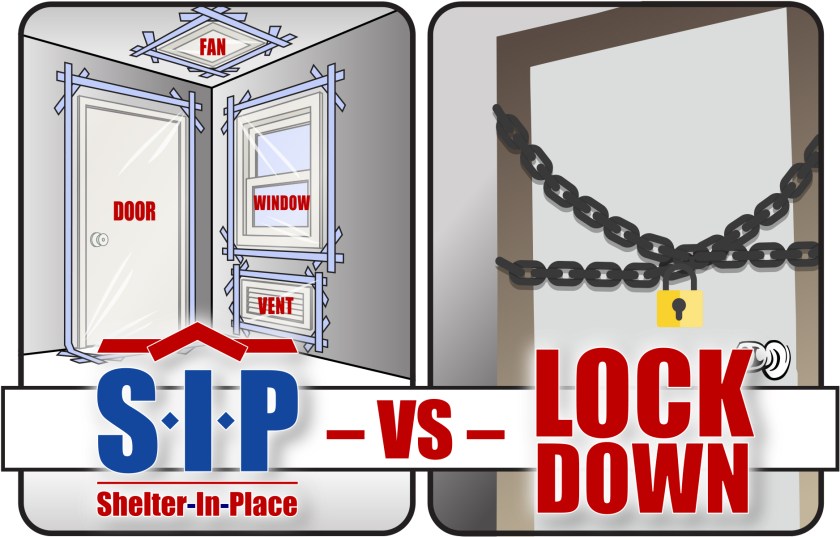
shelter in place

REFERENCES

1 Kannan, Saikiran. “Pornography Gets a Pandemic Boost, India Reports 95 per Cent Rise in Viewing.” India Today, Living Media India Limited, 11 Apr. 2020, www.indiatoday.in/news-analysis/story/pornography-gets-a-pandemic-boost-india-reports-95-per-cent-rise-in-viewing-1665940-2020-04-11.


2 Ibid.


3 Dorn, Sara. “Business Booming for Cam Girls amid Coronavirus Outbreak.” New York Post, NYP Holdings Inc., 16 Mar. 2020, nypost.com/2020/03/14/business-booming-for-cam-girls-amid-coronavirus-outbreak/.


4 Del Giudice, Vincent. “Denver Exempts Pot Shops, Liquor Stores from Stay-at-Home Order.” Bloomberg.com, Bloomberg L.P., 24 Mar. 2020, www.bloomberg.com/news/articles/2020-03-24/denver-exempts-pot-shops-liquor-stores-from-stay-at-home-order.


5 Lord, Shaquille. “District Judge Says City Can’t Stop Louisville Church from Holding Drive-in Easter Service.” WLKY, Hearst Television Inc., 12 Apr. 2020, www.wlky.com/article/district-judge-says-city-cant-stop-louisville-church-from-holding-drive-in-easter-service/32115835.


6 Tamburin, Adam. “Federal Court Tweaks Abortion Order, Still Allows Procedures during COVID-19 Pandemic.” The Tennessean, Tennessean.com, 27 Apr. 2020, www.tennessean.com/story/news/2020/04/27/court-tweaks-tennessee-abortion-order-procedures-still-allowed/3033007001/.

What It Means To Be A Christian

Thursday’s Column: Captain’s Blog

IMG_0806

Carl Pollard

The life of a true Christian is filled with change. We learn where we are weak and try to be better. It’s kind of like a never-ending home improvement project. There will always be areas of our spiritual walk with God that could be better. Because this is the case, many religious books, sermons and Gospel meetings are created around a theme that will help us to grow. In the Church there is a plethora of information to help us in our Christianity, but I want to focus on the basics and answer a vital question. What does it mean to be a Christian?
I want to answer this question with a passage in Scripture that we may not immediately think of. We may think of 1 Timothy 1:5 or 2 Peter 1:5-7, which are great verses, but I’d like to suggest that Jesus in Luke 18:15-17 gives us the bottom line of Christianity.
It reads, “Now they were bringing even infants to him that he might touch them. And when the disciples saw it, they rebuked them. But Jesus called them to him, saying, “Let the children come to me, and do not hinder them, for to such belongs the kingdom of God. Truly, I say to you, whoever does not receive the kingdom of God like a child shall not enter it.”
Jesus teaches the importance of humility. You want to enter the Kingdom of God? Have an attitude of humility. He uses the example of children, and Luke even uses the Greek word for infant. These are very young kids and babies that are being brought to Jesus. So He uses this as a moment to teach a valuable lesson.
Babies show their humility in their inability to provide for themselves. Every child that is born is completely dependent on its parents and has a wholehearted trust in them to provide what they need.
What does it mean to be a Christian? It means being humble enough to admit that we need God. It means we trust in God rather than our own “power.”
Humility plays an important role in every aspect of Christianity. It helps with showing love to others, it helps us subject ourselves to God’s Word, it helps us treat others the way we want to be treated, it helps us accept the hard topics that Scripture contains, and the list goes on and on.
Do you want to be a part of the Kingdom? Make humility an everyday practice. And that is what it means to be a Christian.
#MyToesHurt
11892209_10153120312215922_882787250566779690_n
Back before Carl was a giant. #littlebabycarl

Spiritual Maintenance

Wednesday’s Column: Third’s Words

Gary III

Gary Pollard

Since being mainly confined to home, we’ve had a lot more time to do outdoor activities. One of those activities (besides mowing and building a chicken house) has been target practice and clay shooting. Not only has it been an enjoyable activity, it has also been a great way to spend time with family and engage in some friendly competition.
After the range is cold and we’re ready to stop, the process of cleaning our guns begins. Some don’t require as much cleaning as others, but all of them get a brush, cleaning rod, and some lubricant. This helps to prevent wear and tear in the long term, but it also prevents build-up from causing malfunctions or damage next time. It’s not always the most enjoyable activity but is necessary anyway.
It’s far too easy to get caught up in the concerns of life (especially now!), to the neglect of our spiritual maintenance. Most of us are currently unable to worship physically with our spiritual family. We have had to cancel many of our church events and get-togethers. We are more-or-less confined to our homes. Financial and health concerns are at the front line of our minds.
If we don’t stay on top of our spiritual maintenance while this craziness is going on, all kinds of nastiness will build up in our lives. While the world is more or less halted, are we continuing to be tools for good? Have we used some of this time to inspect our spiritual well-being? This is such a great opportunity to do a self-checkup using scripture to clean parts of our lives that need to be removed.
As stated earlier, cleaning guns is not exactly exhilarating. It can be painstaking, monotonous, dirty, and time consuming. If it isn’t done, though, it will lead to premature wear and tear and malfunctions.
Breaking sinful behaviors, leaving our uncertainties in God’s hands, confronting our spiritual struggles, resolving doubts in our faith, repairing relationships that we have damaged, and working towards tangible growth in our spiritual lives can be far from exciting or fun. These things require effort, discomfort, confrontation, and dedication. While not the most pleasant in the moment, they will help us to be the best that we can be.
When we do our spiritual maintenance we become better encouragers, better soul-winners, better friends/family, and we develop strong endurance. Our goal in all of this is to reduce the wear and tear of our spiritual lives by living like Jesus. This kind of maintenance will allow us to do more than last a while – properly maintaining our spiritual lives and relying on God’s grace will cause us to last for eternity with Him.
gun kit

The Quality That Makes Us Excited For Hard Times

Wednesday’s Column: Third’s Words

Gary III

Gary Pollard

Joy is something we’re supposed to have when we go through trials (Jas. 1.3). It’s χαρά, which means, “to experience gladness.” It describes a forward-thinking mentality that says, “Right now isn’t great, but I can learn from this and grow.” Our joy comes from anticipating the ultimate growth we experience from conquering trials! And if those trials take my life, that joy is in anticipation of heaven. 

Joy is something experienced in heaven and in the presence of angels when someone repents (Luke 15.7, 10). It is compared to the excitement one feels when regaining something valuable that had been lost. Joy is more than just contentment;  it contains also an element of excitement. 

Joy is a fruit of the Spirit (Galatians 5.22). It is contrasted with outbursts of anger, disputes, dissensions, factions, etc. A part of living the Christian life, denying our primal desires, and not being boastful is having joy. Sometimes we find ourselves focusing on what we give up to live faithful lives, but we forget that Christianity provides for, encourages, and promotes excitement and joy! 

So what are we supposed to be excited for? Paul even had joy in the face of suffering (Phil. 2.17). Joy and happiness are not necessarily the same thing. We can have joy or gladness or excitement concerning the life that waits for a Christian while living in the sometimes harsh realities of a fallen world. 

In this life, Christians can have joy because of a profound sense of purpose, having meaning in a confusing world, healing after tragedy, and something to always look forward to. 

It may not be our first response to be excited about hard times, but if we develop a mindset that looks to the rewards and positives of difficulty (growth, endurance, empathy, perspective, heaven), we will have joy and excitement. 

Carl and Chip

DAFFODILS THAT DON’T BLOOM

Friday’s Column: Supplemental Strength

brent 2020

Brent Pollard

Like the robin, daffodils are a harbinger of spring. They begin blooming in late winter and create anticipation for the pretty spring flowers following. We planted our place in Appalachia with daffodils nearly 30 years ago. Today, we get few flowers in places where we planted them. We do have healthy-looking, green blades but no blooms. By their nature, a single daffodil bulb becomes an entire colony of bulbs within a few years because it reproduces by dividing at the bulb. Once so many bulbs are packed into a small space, the plant cannot receive enough moisture or nutrients to produce the desired flower. So, on the one hand, it’s great because just a few daffodil bulbs can yield an entire daffodil garden in a few years. On the other hand, to keep daffodils flowering one must periodically dig up these new bulbs and space them out so conditions remain conducive to their overall health.

When we think about Jesus’ parable of the sower, we likely think of the various soils presented therein. We pray we find the good soil as we go to plant the seed but realize since few are finding the strait gate and narrow way (Matthew 7.13-14), most of our seed falls on the other three poor soils. Of those poor soils, Jesus highlighted a group in whom the seed never produces fruit since they become choked by thorns (Luke 8.14). These thorny-soiled hearts didn’t recognize how detrimental their thorns were since they took the form of the cares and riches of the world. In like manner, we don’t see the problems posed by a bunch of healthy-looking, green blades where our daffodils ought to be. We keep hoping they will put on blooms, bringing us the testimony of God’s wondrous creation. Yet, conditions underground won’t allow for that.

Might I suggest those possessing thorny-soiled hearts can have a similar problem as the daffodil? It may be they don’t just wither and die (i.e. fall away). It may be they are sitting on the pew, where we planted them, looking as if they hold promise, but never producing blooms. Why? It may be their fruit is being crowded out by conditions at their root. We see no prickly thorns gathered around them. Yet, there are cares and concerns on the inside choking out God’s Word all the same. It is confounding since they may even greet us with a smile on their faces while being inwardly consumed by such things as anxiety.  If we do nothing, though, the results will be the same as if it were thorns.

It may be we need to lift these unproductive Christians to help them settle in a better environment conducive to their growth. We need to help them remove all the things choking their heart. We need to nurture them. Though we’re more considerate of the newborn in Christ, the overcrowding of the heart is a challenge potentially taking place even in the one who obeyed the Gospel years ago. Be your brother and sister’s keeper (Galatians 6.1; James 5.19-20). If you see a pretty green blade that never flowers, dig a little deeper. If one’s heart is being crowded out, help him find the space to bloom (Hebrews 3.13).

5262209_c01205ab

The World Is Desperate (Part Two)

Thursday’s Column: Captain’s Blog

IMG_0806

Carl Pollard

Last week we looked at how the world is desperate for guidance. They look in every direction for someone or something to tell them what to do. Most of the time they look to themselves for guidance and that leaves many things unsolved. Psalm 119 tells us what our guide should be. God’s word is what tells us how to live, how to act, and how to react in every situation. The world is desperate not only for guidance, but also for purpose (2 Pt. 1:3-8).

As Christians we can confidently say that we have purpose. There’s a reason to everything we do; but what about the world? Why do they wake up every day? For most, they wake up to go to work, to make money, serve self, and go to sleep.

To illustrate this, imagine going to the store without a grocery list. Without a list you end up forgetting most of the stuff you needed in the first place. You come back home and realize you forgot the milk. Without a purpose in life humans are lost. We go day to day knowing that there’s something we’re missing, but we don’t know what it is.

In 2 Peter 1, Peter is writing to them to encourage these Christians to confirm their Christianity. To be confident in their calling. Starting in verse 3 he says this,

“His divine power has granted to us all things that pertain to life and godliness, through the knowledge of him who called us to his own glory and excellence, by which he has granted to us his precious and very great promises, so that through them you may become partakers of the divine nature, having escaped from the corruption that is in the world because of sinful desire. For this very reason, make every effort to supplement your faith with virtue, and virtue with knowledge, and knowledge with self-control, and self-control with steadfastness, and steadfastness with godliness, and godliness with brotherly affection, and brotherly affection with love. For if these qualities are yours and are increasing, they keep you from being ineffective or unfruitful in the knowledge of our Lord Jesus Christ.”

Because of God, we have a purpose in life. We have become partakers in eternal life. Because of this we must live a certain way. We have a goal. Peter gives us a list to build on: virtue, knowledge, self control, steadfastness, godliness, brotherly affection, and love. If we are seeking for a purpose to life, work on this list and the end result is a knowledge of Christ that leads to eternal life.

We have escaped the corruption of the world, and now we have purpose. Peter was one who struggled with his purpose at first, he was unsure of Christ’s plan when he was on earth, and he didn’t even want to be associated with Christ after he was lead away to be crucified. He denied Christ, but after this we see his commitment and purpose in the book of Acts. His purpose is exactly like ours, he went around proclaiming Jesus and baptizing in His name. Not sure what your purpose is? Just look at how Peter lived his life, how he was committed to serving God.

My first job I ever had was when I was 13 years old. I built fences for a member at the Bear Valley Church of Christ. And talk about having no idea what you’re doing. For the longest time I’d show up every morning and have to ask how to do everything. I didn’t know how to mix concrete, how deep a fence post hole had to be dug, how to install gate hinges. I was clueless. For the average person, this is how they feel without Christ. They’re unsure, they have no purpose. Our job is to show them what life is about. This life is about getting ready for the next that is to come. Without this, we have nothing.

The world is desperate for purpose, so let’s show them the Truth.

sunlight_over_picket_fence

Your Favorite Pair Of Shoes?

Monday’s Column: Neal At The Cross

pollard

Neal Pollard

Growing up, I heard my dad preach a sermon comparing different type of shoes to various people’s religious attitudes. You can imagine the application of such shoe types as the slipper, the loafer, the work boot, the Sunday shoe, the combat boot, etc. It was a clever illustration to encourage everyone to live a faithful Christian life and avoid a mentality that hurts the church.

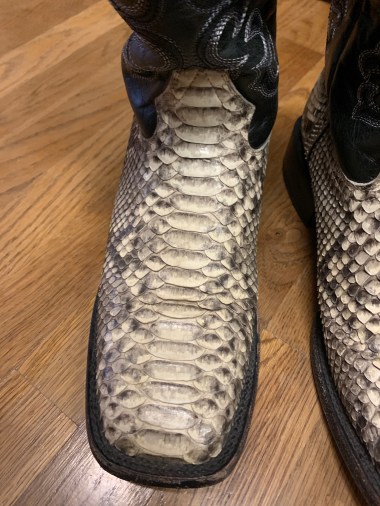
Do you have a favorite kind of shoe? I’d venture to guess that you even have a favorite pair or couple of pairs of shoes. Usually, you’ll find me either in a pair of cowboy boots or in a pair of running shoes. What goes into why you favor a pair of shoes? Quality? Style? Comfort? 

To make a spiritual point by referring to footwear is more ancient than my dad’s efforts to do so. No less than the apostle Paul referred to “having shod your feet with the preparation of the gospel of peace” (Eph. 6:15). Indirectly, Isaiah and Paul give attention to this very idea by complimenting the “beautiful feet” of those who bring good news of good things (Isa. 52:7; Rom. 10:15). 

You would think, to borrow dad’s analogy, that some “shoes,” figuratively, shouldn’t be adorned as part of our Christian armor. Flip-flops aren’t good (Jas. 1:8). Neither are skate shoes (Rom. 12:11; Col. 3:23). Camouflage boots can be a liability (Rom. 12:2). It would seem counterproductive for a preacher or teacher to favor tap dancing shoes (2 Tim. 4:3), since our responsibility is to stand firm (Eph. 6:11,13,14). 

Staying with the analogy, some shoes are excellent if used according to their design. Running shoes are essential to running the Christian race (1 Cor. 9:24,26; Heb. 12:1), but not to run in vain (Gal. 2:2; Phil. 2:16), run with sinners to sin (1 Pet. 4:4), or run after false teachers (Luke 17:23). Work boots can be misused in prioritizing occupation and career over the kingdom, but when used in the exercise of our talents and resources to grow the kingdom they are worn well (Mat. 5:16; 9:37-38). 

You get the idea, and you can no doubt add to the analogy with your own ideas. But, spiritually, what is your favorite pair of shoes? John the Baptist suggests that Jesus, like most all others of His day, wore sandals (Mark 1:7). John felt unworthy to even untie them. Yet, Peter, later on, would say “follow in His steps” (1 Pet. 2:21). Jesus’ shoes carried Him to Samaria to minister to the woman at the well. They presumably walked on water. They took Him to Lazarus’ tomb. He doubtless wore them as He ascended the mountain to preach the greatest sermon ever delivered. Was He permitted to wear them as He carried His cross to Calvary? 

We aren’t qualified and worthy to be in His shoes, but, as the song suggests, we must be “trying to walk in the steps of the Savior.” Another hymn avers, “Where He leads me, I will follow.” Our favorite shoes should be the ones revealing the footsteps of Jesus. We follow Him and anyone can follow us (1 Cor. 11:1). They will help us walk in good works (Eph. 2:10), in a worthy manner (Eph. 4:1), in love (Eph. 5:2), and carefully (Eph. 5:15). 

pythonboots

Some Marks Of A Christ-Centered Life

Neal Pollard

  • Drives one regularly, even daily, into His Word.
  • Draws one constantly to the throne room of prayer.
  • Decides matters with a view toward what He wants.
  • Declines those things that put distance between Him and oneself.
  • Deplores the things that hurt His cause.
  • Defends His name, honor, reputation, and values in one’s relationships and interactions.
  • Depicts itself in one’s home and family life–measured by regular conversations that center around Him and His will.
  • Destroys sinful habits in oneself.
  • Defuses pettiness and selfishness that grows within oneself.
  • Distributes itself into conversations and relationships naturally, as a matter of course and life.

2019-04-10-12-48-34-1200x800

HOW I SHOULD WEAR OUT MY KNEES

Neal Pollard

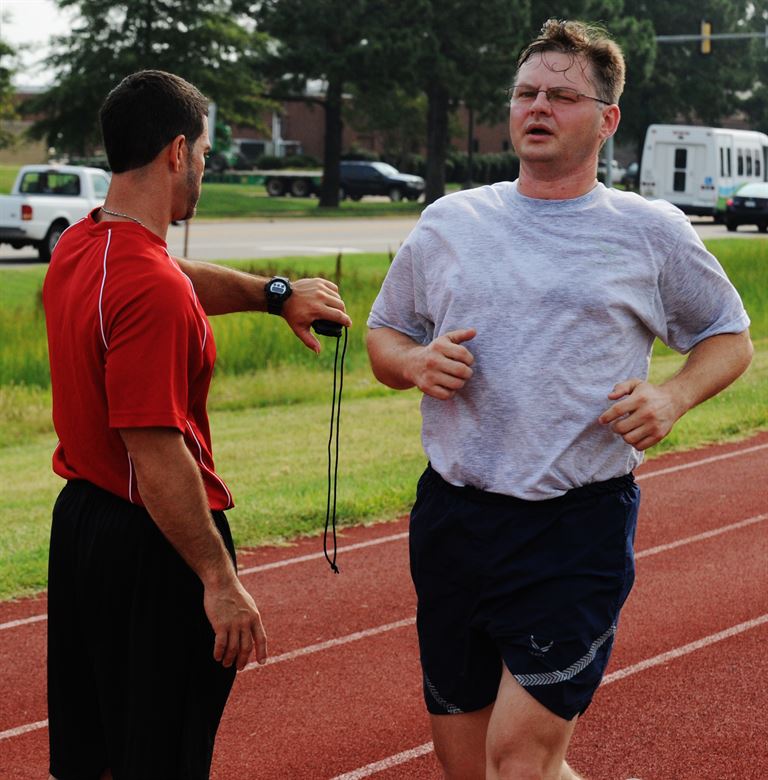
This past May, I began my twenty-second year of running. In that time, I’ve logged thousands of miles. At 49, I am happy to say that my knees are doing fine but time may change that. One of the risks of running, to listen to some, is wearing out places like knees and hips. But, I’m hoping I’m prolonging my life and helping vital organs through exercise.

Spiritually, I put my “knees” to the test, too. The challenge to protect my knees is a daily struggle that I confess I am still working on. I do not want to wear those knees out through:

  • “Knee-Jerk Reactions.” This one is hard for me. I’m prone to these when I’m subjected to frivolous or petty criticisms. I’m equally prone when I’m undisciplined enough to act impulsively through impatience or my own misunderstanding. When I fail to think through things, prayerfully and deliberately, I can unleash something that can be hard to unsay or undo. Usually, it means I have not studied, prayed, and reflected enough before spouting off. I can really wear my knees out that way. I benefit from principles like those found in Proverbs 15:2, 25:28, 26:4-5, and a multitude of similar passages. 
  • “Feeble Knees.” As a child of God whom He loves, I will undergo discipline at His omnipotent, but omni-benevolent hands. It can be unpleasant, but it is always beneficial (Heb. 12:11). But, when I’m in the midst of it, it can cause my knees to buckle. The writer of Hebrews follows up this discussion about divine discipline, saying, “Therefore, strengthen the hands that are weak and the knees that are feeble…” (12:12). When I’m tempted to give up, discouraged, worried, afraid, or lonely, I need to double up on my spiritual conditioning to strengthen those tested knees. I must trust God’s guidance and love, especially in adverse conditions.

So, then, how should I wear out those knees?

  • In prayer (Dan. 6:10; Acts 7:60; 21:5; Eph. 3:14). It’s not about the posture of the body, but of the heart. I can always be praying more (1 Th. 5:17). I can never pray enough. 
  • In worship (Psalm 95:6). Again, it’s not that I need to show off that posture in the assemblies or in my private devotions, but even the very definition of worship includes the idea, at least figuratively, of falling down before and prostrating oneself. It’s a big reason I try to never miss a single service of the church. I owe Him my all, and I love Him for all He is and has done. He wants me in the assembly, and I want to do what He wants. 
  • In submission to God’s will (Luke 22:42). When Jesus knelt to pray, He was also actively submitting to the Father’s will. He faced something dreadful and that He did not want to do, but His attitude was of total surrender to what God wanted. Oh, what a challenge to me! How often do I put my knees to the test by giving up what I want for what He wants. But, I must!

Paul says we’re running a race that we must win (1 Cor. 9:24-27). I’m going to need healthy knees to do that. That may mean wearing them out in ways like those just mentioned while avoiding behaviors like those mentioned before them. At times, spiritually, I’ve needed not knee replacement but a replacement of what I do with those knees. May I never forget to brace those knees with the resources God has given to me!

120709-f-xd389-042

What’s The Point?

Neal Pollard

Years ago, Wes Autrey sent me a copy of the “Idiot Report.” To this day, I still wonder why he thought of me as he read something with that title. I found all the entries hilarious, but one attributed to a Wichita probation officer was particularly funny. This august report said, “the stoplight on the corner buzzes when it’s safe to cross the street. I was crossing with one of my coworkers, who asked if I knew what the buzzer was for. I explained that it signals blind people when the light is red. Appalled, she responded, “What on earth are blind people doing driving?” Hopefully, you get where she missed the purpose of the corner buzzer. If not…

How many miss the point of Christianity? The decision to become a Christian is the best and most important decision this side of time. Living the Christian life is the best life to live. Worshipping the living God is a privilege that is awe-inspiring and of unsurpassed joy. Prayer is a lifeline without which none of us should feel equipped. Bible study with an eye toward applying its truths is vital to growing stronger and closer to God.

To go through life as a Christian filled with fear, sadness, anxiety, envy, anger, apathy or resentment really misses the point of what it means to be in Christ. That does not mean that we will automatically be immune from any of these feelings and attitudes. In fact, all of us will be confronted by them throughout life. But, if we spend a lifetime given in to these things, we have missed the point! Being in Christ means having the only true access to courage, happiness, trust, satisfaction, peace, zeal and acceptance that there is. We could go so many places in the New Testament which affirm this, but just look at Ephesians one. In Christ are the faithful saints (1:1), every spiritual blessing (1:3), election (1:4), grace (1:6), redemption (1:7), all-sufficiency (1:10), hope (1:12), the seal of the Holy Spirit (1:13), and strength (1:19-20). We have a forgotten past, a purposeful present, and a hopeful future in Christ!

The world’s values and thinking are backward (cf. Isa. 5:20). Do not fall prey to their convoluted way of thinking. We are Christians! We know why we are here and where we are going! That’s the point!

crosswalk-button-1

Make It A Momentous Monday

Neal Pollard

  • Pick out a local church leader and pray for him and his family for several minutes, being very specific in your petitions on their behalf.
  • Email a missionary to encourage them and get an update on how their work is going.
  • Buy a gift card and try to give it anonymously to a young or struggling family you know.
  • Thoughtfully select several people to compliment and encourage by writing on their Facebook wall or other social media platform.
  • Briefly visit a brother or sister in an assisted living facility or nursing home.
  • Ask a co-worker, classmate, or neighbor what you can be praying for them about.
  • Listen to a book of the Bible in its entirety on your commute.
  • Let go of a grudge or deep-seated resentment.
  • Do an unexpected deed of kindness for a random stranger.
  • Speak to someone you see regularly about your faith–what God is doing in your life, what’s going on at church, etc.
  • Spend some one-on-one time with one of your children (playing a game they enjoy, going for a walk, taking them out to eat, etc.).
  • Show love to your mate in some tangible way you know he/she enjoys (speak their “love language”).
  • Practice pleasantness with everyone you meet today, being mindful of your facial expressions and body language.
  • Carve out some time for meaningful, personal devotion (including Bible reading, singing, and prayer)–make worship more than a Sunday matter!

None of these are overly time-consuming. Pick as many as you can. If you cannot get to them all today, then pick up where you left off tomorrow. Grow your list. Use your imagination and creativity. Find yourself looking and acting more like Jesus!  See yourself in Matthew 5:13-16.

candle-335965_960_720

A GREAT FISHERMAN

By: A blessed fish

Let me tell you about the greatest fisherman I have ever known.

He has always found success at his favorite fishing hole. A special place where the inlet was fruitful, and many fish loved to be caught. His technique is simple. A welcoming lure. A handshake, a hug and a smile. Just to let you know you’re wanted.

He will always catch-n-release and the fish always feel better for the experience. Many wide eyed and spiritually young fish will enter the inlet, hoping that someone would catch them and show them the kind of love this great fisherman offers. He never judges a fish – their size, beauty, wealth or position. He only lets them know how glad he is to see them at the inlet.

His success is solely based on persistence, perseverance and patience. Three times a week you can always count on him being right there at the inlet. Waiting for the opportunity to hook’em and hold’em. He always makes every fish feel welcome and wanted.

He knows every fish by name. If he thinks a fish has drifted off down steam, he will go in search, armed with a tackle box full of Christian love and do his best to bring them back to the inlet. Not for him, but for their sake and for God’s sake.

He hooked this fish over 11 years ago. My wife led me to the inlet. But, he hooked me and let me know that I was welcome here. He helped save this soul for eternity.

I think he is getting tired now, but few may notice.  So many years of fishing, but he is still there almost every Sunday morning, Sunday night, and Wednesday night. I think he wants to share his favorite inlet with others who share his passion. Man, woman, or child, he wants us to join him. We don’t have to wait. We don’t have to be assigned the duty. We just need to step into the water and follow his lead. There is plenty of room at the inlet. Let’s all join this fisherman at the Bear Valley inlet and make sure every fish that enters knows they are wanted and welcome.

The great fisherman’s name is Clint and this fish will always love him.

Mathew 4:19-20

And He said to them, “Follow Me, and I will make you fishers of men.” Immediately they left their nets and followed Him.

———————————————

 NEAL’S NOTE: This was submitted to me by someone who wants to remain anonymous. Truer, more fitting words could not be spoken about one of the most special people any of us have ever known. We’re very blessed to have Clint Stephens as a member at Bear Valley, one of the men who was at the time a shepherd when I was hired. Enjoy!

1919171_1242785955488_6164179_n
Clint “fishing” on a mission trip in Cambodia a few years ago. 

The Tender Tears Of The Timeworn Travelers

Neal Pollard

I suppose I have met more than a few elderly people, including some professing to be Christians, who could be described as “crusty,” “crotchety,” “contrary,” and “curmudgeonly.” These no doubt spent decades developing such a winning personality. But one of the greatest blessings I have received as a member of the church and minister of the gospel is my association and friendship with “senior saints.” Through the years, I have discussed with them the subject of worship. The most frequent topic of that is how precious that public time of communing is to them.

A godly widow recently told me she has spent the last two years focusing more intently on concentrating more on the song service, reflecting on the words and their meaning. Songs she has sung for decades, through this exercise, have become almost like new songs to her. Another older woman, married to an elder, talked about how she finds herself much more apt to be tearful in worship these days. She’s almost embarrassed at how emotional the experience of worship is making her. An elderly man who was a longtime elder and recently passed on to paradise, struggled to pray, sing, or publicly speak in worship without being choked with emotion. I could fill pages of writing about other godly Golden Agers who treasure assembling to worship God. Their hearts are full and their emotions engaged. Their voices may be softened and broken by age, but their spirits are stronger than ever.

When I think of these faithful, aged Christians, I am reminded of Paul’s words: “Therefore we do not lose heart, but though our outer man is decaying, yet our inner man is being renewed day by day. For momentary, light affliction is producing for us an eternal weight of glory far beyond all comparison, while we look not at the things which are seen, but at the things which are not seen; for the things which are seen are temporal, but the things which are not seen are eternal” (2 Cor. 4:16-18).  Sometimes, the elderly are made scapegoats of alleged “lifeless” or habitual, but heartless worship. No doubt, there are likely Christians in that age range who struggle with and even fall prey to such (as there is in every other age category). But on the whole, these Christians have walked longer with God, know Him better, and value Him more than their younger counterparts. They are closer on the journey to the Father’s house and are anxious to see His face.

We are heirs of a heartfelt heritage handed to us by these holy hoary heads. To our seasoned brothers and sisters, we thank you for showing us how to walk with and love God as years turns into decades and the shadow of the grave looms larger. As we narrow the gap between our age and yours, we want worship and life in Christ to grow more precious to us, too. Thank you for your trembling lips, your tear-stained cheeks, and your tender hearts. They look great on you!

elderly-parent-e1448857831624

Processing…

Neal Pollard

I woke up just before 5 AM to an ominous notification from my Jerusalem Post app. Downstairs, turning on the news, the horrific truth was confirmed. The worst mass shooting in modern American history. Not long after, I was in my gym locker room. A gym buddy, Mike, a self-described C&E (i.e., “Christmas And Easter”) Catholic, greeted me. Usually, I am not tempted to ask this, but I found myself asking him, “How does something like this happen?” His 5-word, profound answer was, “No love, no Jesus, man.”

Some random thoughts occurred to me, in processing the events in Las Vegas late on Sunday night, October 1st.

  • Luke 13:1-5. This did not happen because the people in Las Vegas, Nevada, are more wicked and evil than people in other parts of this country or the world. The need among the over 20,000 accountable adults at that country music festival is the same need that all of us have, to be penitent believers in Christ.
  • Second Amendment And Gun Control. Investigations are still ongoing, but there is preliminary reason to believe that at least one or some of the guns used by the shooter would have been obtained illegally. Gun control laws would not prevent illegal weapons. At the same time, there were several fire arms on those in attendance. They proved useless against a shooter from 1000 feet away and 32 stories high. Guns are not inherently evil nor the all-encompassing answer.
  • Man. Man was both perpetrator and victim. Yet, man is so limited. We are not all-knowing or all-powerful. Highly trained law enforcement officers and first responders, who doubtless saved many lives, did not prevent this. How humbled these events make us!
  • Atheism. Nearly every news interview ended with the reporter or anchor with a pledge of prayers or similar reference to God. The president’s brief statement continuously referred to God and even quoted Scripture. Nobody invokes “survival of the fittest,” “big bang,” or “there is no God” to provide help, comfort, or strength to anyone. A Godless worldview is a hopeless one.

Big questions emerge from this fog of suffering. Christians, we not only have the answer, but as God works through us, we are the answer! I read a social media post from Sheila Butt, challenging us to take Christianity off the pew and into our daily lives. The soul we reach and life we help change might change the course of the world for good (or the prevention of evil). Mike nailed it. “No love, no Jesus, man.” Amen!

297901_10150264597445922_585245921_7806090_7777855_n-1

Do You Want A Better Life?

Neal Pollard

Who would answer “no” to that question? Who wants a worse life or a life that never gets better? But the better question is, “How do you get a better life?” Advertisers have so many answers to that, involving their currency or investment tool, their pill, diet, or workout routine, their travel agency or vacation destination, or product for your home, transportation, business, and the like. So many put so much into these promising plans, but still find their life wanting.

In religious matters, there is no room for subjective thought when it comes to what it takes to have a better life. We find ourselves often bobbing in a sea of religious confusion. Many groups claim to be the best religion and point to their ingredients as reasons for such claims. They point to their numeric size, number of programs they have, or how socially active they are. Our religious attitude ought to be one of humility, not boasting of our achievements or comparing ourselves with others (cf. 2 Cor. 10:12). Genesis 4:1-16 points us to the first recorded version where more than one kind of worship was offered to God and how God rated them. But this chapter also paints a picture of two ways of living life.

Cain is mentioned by three Bible writers after Moses writes about him in this chapter. The writer of Hebrews calls Abel’s offering more excellent than his (Heb. 11:4). John calls his works evil and his allegiance “of the wicked one” (1 John 3:12). Jude implies that the way of Cain is the wrong way to go (11). It seems that Genesis four shows us the better ingredients for a better way of living today.

  • Better living isn’t determined by age (1-2). Cain was the firstborn, a place of honor and privilege especially throughout the Old Testament.  But under the New Covenent, there is no spiritual advantage because of birth order. It is not a matter of firstborn, but a matter of being born again (John 3:1-7). Growing older should mean growing wiser, but reaching a milestone on a calendar does not equate to better living.
  • Better living isn’t determined by occupation (2).  Growing up, we might be tempted to see our occupation as the gateway to happiness and satisfaction, financial freedom and security, independence, and privilege.  When we look at Cain and Abel, what they did for a living wasn’t the determiner of the quality of their lives. Some occupations can stand in the way of better living, whether the nature of the job or the quality of the people one works with. Some can let their jobs stand between them and their relationship with God and His church. But, one can do right in unfavorable work circumstances, staying faithful to God.
  • Better living is determined by worship (3-4). That statement may be offensive to our multicultural world that says there are no absolute rights or wrongs. Contrast our culture’s thinking on this matter with what we read in Genesis four. Both Cain and Abel brought an offering to the Lord. God responded to both offerings, but He accepted one while rejecting the other. While many make worship nothing more than taste, preference, and personal, we learn here that not all worship is equal. God “had regard for” Abel’s, but not for Cain’s. It does not say if Cain was sincere. It doesn’t seem to matter. We learn here that the worshipper and the worship offered rise and fall together. God regarded Abel and his offering, but rejected Cain and his offering. Can one offer God vain worship, and have God reject it but accept him? Apparently not.
  • Better living is determined by attitude (5-7). Cain reacts to having himself and his worship rejected by God. He was very angry. His insides burned! His countenance fell. He took on an ugly look. We’re not told how old he was, but it almost sounds like a temper tantrum. Whether home training, lack of discipline, poor stress management, pride, jealousy, or anything else leads us to lose our tempers, all of them are matters only we can control. When we don’t control them, we’re responsible! Ill-tempered people are not living the better life! A positive life doesn’t require prospering, education, or earthly success. But you can’t have a positive attitude without mastering self.
  • Better living is determined by action (8-16). The word “sin” is first used in Genesis 4:7, but God was looking ahead with perfect foresight to what Cain was going to do to his brother (cf. 1 John 3:11-15). Bible writers speak of his deeds, offering, and way. These are all action words. After his sin, he is rebuked and punished by God and separated from God. Sin will not deliver what it promises. All actions have consequences (Gal. 6:7-9).

Someone said, “The line of Cain gives us murder, cities, polygamy, musicians, metal workers, and poetry, but not one who walked with God.  In fact, Cain’s legacy led to a repeat of his violent ways by a descendant (cf. 4:23). Abel leaves no physical lineage, but he leaves a great spiritual heritage (Heb. 11:4). We each get to choose what kind of life we’ll pursue. It matters which way we decide.

cain-and-abel

THE KIND OF LIFE WE SHOULD LIVE

Neal Pollard

Most of us are familiar with the intimate words spoken by Jesus to His followers in John 14:1-6. They were words of active comfort for a man who was imminently facing the worst suffering humanity could ever know. Yet, from those gentle words of guidance, we find a beacon to show us what kind of life it is possible for us to live—no matter what!

We can live a fearless life (John 14:1). Our hearts don’t have to be troubled. That doesn’t mean we won’t face fears and uncertainties. How can we avoid it? But we can let our fears be subjugated to our Father. We can trust the Bible’s promises and follow its guidance on this (cf. John 14:27; Phil. 4:7).

We can live a faith-filled life (John 14:1b). A “theocentric” (God-centered) point of view will influence our decision-making and daily living. We can have assurance and conviction (Heb. 11:1), but we must have a faith accompanied by works of obedience (Js. 2:20). All of us have lives centered around something that we make most important of all. There are many noble things that could fill in that blank—profession, family, friends, or the like. These may be part of our identity, but they should not define us. Our faith should define us.

We can live a focused life (John 14:2-4). Jesus urges His disciples to focus on at least three things:

  • Focus on the Father’s house (2). Long for heaven.
  • Focus on the Son’s coming (3). Anticipate His return. We know death is an appointment followed by the Judgment (Heb. 9:27).
  • Focus on God’s fellowship (4). Long to be where God is and to follow where He leads. Let that desire lead you to fellowship with Him and His saints publicly and privately in your personal devotional life.

We live in a world full of distractions—technology, appointments, hobbies, politics, and sports. Never let any of those things get your life out of focus.

We can live a follower’s life (John 14:6). We must believe that Jesus is the only way. We must shun the politically-correct notion that says there are many ways. We must live the exclusive way that Scripture teaches. We cannot serve God on our own terms. We must submit to His way and His truth, and we can enjoy the eternal life He offers.

Fame, fortune, fun, friendship, and such may draw and lure us. But none of those things will last. Jesus points to the kind of life we should live. May we be wise enough to listen.

blaine_mansion_during_renovation

Do Brotherhood

Neal Pollard

Hayden Holland, who obeyed the gospel less than three years ago, taught his first Bible class last night at Teens in the Word. It was an excellent, hour-plus long study of the parallels between serving in the military and living the Christian life. In this very practical study, Hayden mentioned the Army’s concept of brotherhood. The fraternity and bond built by basic training and the structural philosophy of the armed forces creates this sense of brotherhood among soldiers.  Without fellowship, he said, disputes will pull soldiers apart. Throughout his lesson, Hayden urged us to “do brotherhood.” Brotherhood is a noun, meaning “the feeling of kinship with and closeness to a group of people or all people” (Dictionary, version 2.2.1, 2016). Peter uses the word in 1 Peter 2:17, a word, according to BDAG, meaning, “A group of fellow-believers, a fellowship” (19; cf. 1 Pet. 5:9—“brethren”). Hayden’s exhortation to us was to do what it takes to create that feeling and fellowship.  Saying we are brethren, even acknowledging and teaching what God says is necessary to become part of that brotherhood, is insufficient of itself.  There is something to be done!

He directed us to the seven values touted by the army—“loyalty, duty, respect, honor, integrity, courage, and selfless service”—as examples of how we can “do brotherhood” in the Lord’s Army (cf. Eph. 6:10ff). Doing brotherhood means taking time to listen to and help our brothers and sisters in Christ when they are struggling. It means spending time together, engaging in each others’ lives. It means being faithful to live out what we say we believe daily, in the world and in the absence of our church family, because we love them and don’t want to let them down. It means talking out our problems and disagreements. As we work to see ourselves as a part of something bigger than just ourselves, the effect is revolutionary. Non-Christians see the bond we have with our brethren and it draws them. Jesus told His disciples that this brotherly love would be their identifying mark to a searching world (John 13:34-35).

How often it has been observed that Christianity is more than a state of being; it requires a life of doing. The brotherhood consists of all those within the body of Christ. But, that “group” has to be maintained, sustained, and retained. Such requires action! My action and your action. Let’s be sure we are “doing” brotherhood!

17862689_10212031358357411_591145317067498345_n

Identifying As A Christian

Neal Pollard

There are so many “identifying” stories these days. A white woman, Rachel Dolezal, identifying as a black woman, was back in the news over the weekend. A biological female who identifies as male and has taken testosterone, Mack Beggs, won the Texas girls wrestling title. In a recent interview, Dr. Keith Ablow suggested that such delusional (he is using the term in a psychological, not pejorative, sense) reasoning opens the door for a young person who “identifies” as a 65-year-old to receive Medicare benefits (foxnews.com). Really, every new case of “identifying” reveals the absurdity behind the thinking. All the wishing, wanting, and hoping in the world cannot change ironclad facts. As we used to say discussing reality of any kind growing up, “It is what it is.”

If there is anything more harmful than delusion, it may be denial. For centuries, good, sincere people have claimed to be Christians who have not followed what the New Testament reveals is necessary to become one. They have followed some humanly-devised plan or idea (accept Jesus in your heart by faith, say a prayer, believe the Holy Spirit gives you an experience of grace, etc.). Leaders and teachers who have devised such ideas do not do so from a sustainable, biblical source.  Repeatedly, whether in the gospels (Mark 16:16), the book of history (Acts 2:38; 22:16), or the epistles (Rom. 6:4; Gal. 3:27; Col. 2:12; 1 Pet. 3:21), we find a simple, but essential, act that stands between one not being and being a Christian. But the idea that one can fail to do this and still be a Christian is pervasively taught, believed, and practiced.

Akin to this is the belief that one can claim to be a Christian, then live any way they wish. Their speech, conduct, and attitude can exactly mirror and mimic the world’s. Their aspirations, pursuits, and values can be completely worldly. But, when death visits a loved one or comes to them or at some similar time when it would be advantageous to claim so, they aver that they are a Christian. While they may have followed God’s plan to become one, they think of themselves as saved and safe even while walking in darkness (cf. 1 John 1:6-9).

It takes more than a claim. Facts are stubborn things. The ultimate source of what is factual is God’s Word. It educates us about gender (Gen. 1:27) and race (Acts 17:26). It educates us about who a Christian is (Acts 2). It educates us about faithful Christian living (cf. Rom. 12:1-2). If we wish to be accurate in the way we “identify” ourselves, we must let Scripture inform our view!

rachel_dolezal_speaking_at_spokane_rally_may_2015

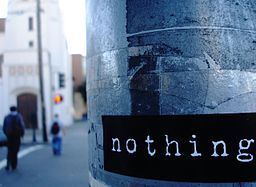
The “Nothings”

Neal Pollard

What the child is always doing, despite evidence to the contrary (“nothing”). What is wrong with one’s spouse who sits nearby, quietly and tightlippedly fuming (“nothing”). What the interrupted person was going to say (“nothing”). The word which defines itself is “nothing.” The Bible teaches, “For if anyone thinks he is something when he is nothing, he deceives himself” (Gal. 6:4).

Those low in self-esteem think of themselves as nothing. Children and spouses who are constantly told so think of themselves as nothing. Those not as wealthy as their friends or neighbors often conclude themselves to be nothing. Those unrecognized for their accomplishments can feel like they are nothing. But the inspired apostle refers to some who think themselves to be something who are actually “nothing.” The Bible makes mention of that arrogant family, The “Nothings.” They are a haughty, proud, self-involved, earthly-minded crew.

Meet The Nothings.

There Are The “Good For Nothings.” Jeremiah introduces them. He says, “This evil people, which refuse to hear my words, which walk in the imagination of their heart, and walk after other gods, to serve them, and to worship them, shall even be as this girdle, which is good for nothing” (Jer. 13:10). They were unaware of problems they had. They were evil, spiritually deaf, selfish, and idolatrous. He compares them to a good for nothing, straight from a hole in the ground, dirt-soiled belt!

No one is inherently worthless, but we can choose a lifestyle that is wicked, lukewarm, or indistinct (cf. Mat. 5:13). Christians, by our distinctive nature, are of great value to God (1 Pet. 2:9). Yet, by surrendering our Christian influence, we can become “good for nothing.”

There Are The “Brought To Nothings.” After referring to the danger of making decisions based solely on human reasoning, Jeremiah prays that God will not bring him to nothing (Jer. 10:23-24). God will rename some the Brought to Nothings, those who believe man’s ideas over God’s facts. Paul warns that God will “destroy the wisdom of the wise, and will bring to nothing the understanding of the prudent” (1 Cor. 1:19; Isa. 29:14). The wisest and most scholarly man who discounts God’s Word will be a regretful member of the Brought To Nothings someday.

There Are The “Need Of Nothings.” These are the overly comfortable, spiritually out of shape members of the Nothings clan. They live their lives saying, “I am rich, and have become wealthy, and have need of nothing,” and they do not know that they “are wretched and miserable and poor and blind and naked” (Rev. 3:17). They aren’t really bad people, but they aren’t all that good either. They’re just quite satisfied with what they have done for Christ, which isn’t all that great and not too bad. They merely yawn through their spiritually lives, only occasionally stirring from spiritual sleep (cf. Eph. 5:14). They half-heartedly do just enough to deceive themselves into thinking they’re pleasing the Lord.

Unrelated to these Nothings are some good folks, like the Ashamed In Nothings (Phil. 1:20), Terrified By Nothings (Phil. 1:28), Anxious For Nothings (Phil. 4:6), and the Wavering In Nothings (Jas. 1:6, KJV). But the Nothings family mentioned above are black sheep in God’s family. No one should want to “take after” them.

256px-nothing_is_nothing