Hope For The Christian Who Struggles With Sin

Wednesday’s Column: Third’s Words

Gary Pollard

We are imperfect people trying to get to Heaven, and we make mistakes. Throughout scripture is a distinction between people who live to sin and people who struggle with sin, but live for God. 

I John 5.16, 17 and Romans 7.5-8.17 are perhaps the most encouraging passages for a Christian who struggles with sin. These passages demonstrate God’s willingness and great desire to keep us pure, even when we struggle with sin. 

Paul teaches us that sin is something we struggle with and should hate (Rom. 7.15-20). We don’t want to sin, but we do. We love God’s law, we recognize that it’s good, and we want to live up to it, but we often don’t (7.22, 23). Paul even goes so far as to say, “I don’t understand my actions. I don’t do what I want, but I do what I hate” (Rom. 7.15). It causes him great distress, and he expresses a desire that all creation shares: release from sin’s power and life with God without the possibility of sin’s influence (7.24; 8.22-24). He says twice that sins we struggle against are not held to our account (7.17 and 7.20). 

I John 5.16, 17 shows that a Christian who struggles with sin is still pure in God’s eyes. The key idea is struggle. We can’t fool God – He looks at our hearts to determine whether we hate the sin in our lives or welcome it with open arms (Rom. 7.27). If sin is something we hate, grace keeps us pure despite our weakness (I John 1.9, 10; 3.19-24; 4.13-19; 5.18-20; Romans 7.25)! 

This is so encouraging because it shows that God does everything within His power to keep us pure. We are lost when we reject Him to pursue a sinful lifestyle, certainly. But if we hate our sin and fight our sin, He keeps us faithful! 

Heaven is attainable, God is good. 
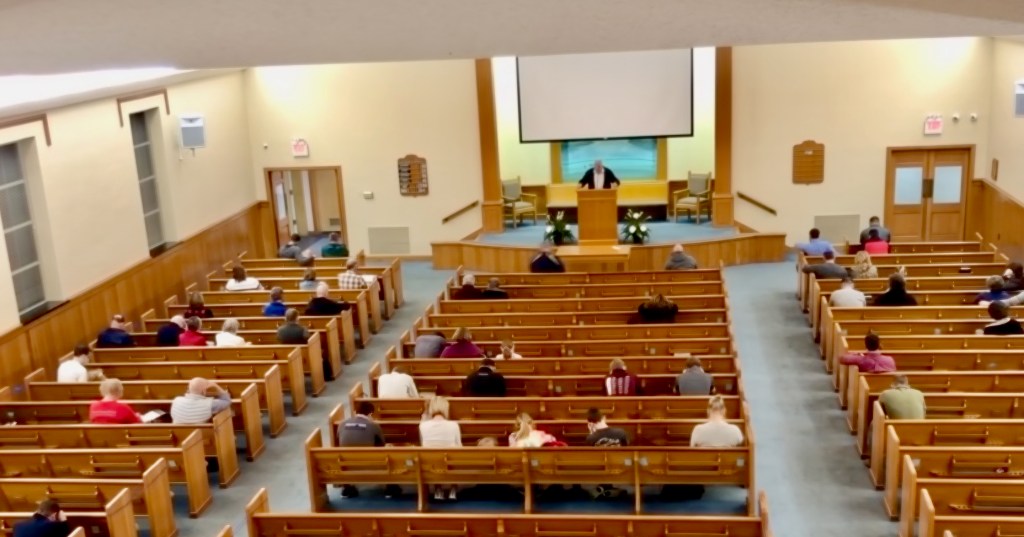
Over 50 members came to pray Tuesday night for our soul-winning plans, including our “Fill The Void” seminar (photo credit: Randy Simpson)


Where Few Dare Go 

Tuesday’s Column: Dale Mail

83538761_557569434843824_1603081807199207424_n

Dale Pollard

In the movie 20,000 Leagues Under The Sea there is a scene where one of the main characters finds himself on an island in the middle of the ocean. Suddenly he hears the faint sound of bongo drums in the distance and the sound becomes louder and closer. Out of the jungle a large group of cannibalistic natives appear, chasing this poor man across the beach. The hero escapes, but only by the skin of his teeth. That scene used to terrify me and an irrational fear of cannibals was instilled in me at a fragile age. In the 1830s when European explorers came to the Fiji islands they were horrified to discover the local practice of cannibalism. To me, the sake of exploration is not worth confronting that particular fear. 

We all fear something! The one who claims to be fearless is afraid to admit or confront their fear. Fear isn’t wrong, it’s natural. We’re supposed to have a healthy fear of the Lord (Job 28:28). Facing our fears is a noble thing, but it really only matters in a spiritual sense. 

A common phobia in our world today seems to be the fear of truth itself. Many Christians in the Lord’s church know family members and friends who have refused to listen to and act on the truth found in God’s Word. They’re afraid to give up the teachings taught to them by their families or the religious groups they grew up in. They’re afraid that the truth requires them to give up a sin they tightly hold on to and the sacrifice required to follow Christ. 

The gospel of John is all about truth. In it we learn that Jesus is the only way to salvation and heaven; that’s the truth (John 14:6, 17:17). We must teach through our actions, daily lives, and yes, by inviting them to look at this great truth in Bible study. Though confronting that truth might make some fearful, we must show others that it has the power to free and cleanse us from the guilt of our sins. 

36675494774_902e75615d_b

(Photo: Creative Commons, Flickr, James Vaughn)

A FASCINATING LINEAGE

Monday’s Column: Neal At The Cross

Neal Pollard

Kathy bought me an Ancestry DNA kit for Christmas. Last week, the results came back with my “ethnicity estimate” (if you care, it’s 41% Scotland, 35% England, 11% Ireland, 6% Wales, 3% Norway, 2% Germanic Europe, and 2% Sweden). It has been even more interesting to look through the records on the ancestry site, filling in blanks on my family tree (as well as that of Kathy’s family). It’s fun to trace back as many generations as the records will reveal, as well as finding out how certain ancestors died or what they did in their lives. My 8th-great-grandfather on my maternal grandfather’s side, Isaac Perkins, born in 1676, was a sea captain in Massachusetts. My 8th-great-grandfather on my paternal grandfather’s side, John McClain, immigrated from Scotland to Virginia in the late 1600s. Almost every day, I am still finding out new details about my family. But all of us have interesting twists and turns in our family tree. 

Lineage, the family line or people, was important to the Jews. From the time Abraham is promised, “And you will be the father of a multitude of nations” (Gen. 17:4), the Jews felt it essential to trace back to Abraham’s descendants through his grandson, Jacob (Israel). Twelve sons and twelve tribes, these people looked back to find out who they belonged to. Ethnic Jews are proud of their heritage and do everything they can to trace back to their tribe. In a study of God’s eternal plan of salvation, Matthew and Luke provide us Jesus’ lineage. In it, we find some very interesting people–Tamar (Mat. 1:3), Ruth (Mat. 1:5), Bathsheba “who had been the wife of Uriah” (Mat. 1:6), and notorious Manasseh (Mat. 1:10; cf. 2 Chron. 33). 

Your ethnic heritage may be extremely fascinating, and you may be connected to both famous and infamous folks. But, spiritually, you find yourself in a unique heritage if you are a part of the New Testament church. It is not necessary to trace back, uninterrupted, for 2,000 years of church history and have had your physical family a part of the family of God through all that time. If you hear the gospel, believe Jesus is God’s Son, repent of your sins, and are baptized for the remission of your sins, you are a part of “the household of God” (1 Tim. 3:15; Heb. 3:6; 1 Pet. 2:5; 4:17). The Father Himself adds you to His family (Acts 2:47). It matters whether or not you are part of that great heritage of faith revealed in the New Testament. What a heritage to bequeath to your children and grandchildren, too! Your obedience to the will of God can help them enjoy the benefits of this family line for eternity! 

My 3rd Great-Grandfather, Steven Dudley Pollard.
His maternal Grandfather, my 5th-Great-Grandfather, Levi Walker.

The Prodigal Cat 

Friday’s Column: Brent’s Biblical Bytes

81121814_2462862270639428_5746232403106463744_n

Brent Pollard

Our beloved cat, June-bug, returned home recently. He had been absent for over a year. We assumed he was dead. Yet, the “power of love” drew him back to the house. Oh, no, it was not his love for us. He could sense a female that has entered estrus. And that is why he is back. Will he stick around? We shall see. However, I cannot help but notice the toll his “prodigal living” has had on him in the interim. Before his departure, he began having irritation in his left eye. It wept a lot. It would sometimes seal his eye shut. He now looks like a human with ptosis (i.e., drooping eyelid). Frankly, that is how I was able to identify him since his coat is darker and matted.  

Otherwise, he seems as if he has eaten well. He was always a good hunter. The earlier generations of cats that took up with us were better hunters. These newer cats have become so accustomed to humans providing food that I wonder how well they would fare if on their own. The saddest part of June-bug’s return is noting how feral he has become. Previously, June-bug liked when we pet him. Now, he will not come near us, despite acting as if he still faintly recalls us. 

Have you ever encountered a brother or sister now living prodigally? It can be heartbreaking, correct? Sometimes the toll sin has had upon them is obvious. Hard-living might make them look haggard and aged beyond their years. The Bible paints this picture as well. What happened to the “original” prodigal? Given his hunger, we might infer he had become gaunt. He was so desperate that he was willing to eat pig slop (Luke 15.14-16). His poverty likely reduced his apparel to rags. What sight must he have presented to the awaiting father?  

And what does Solomon elsewhere say of the drunkard?  

“Who has woe? Who has sorrow? Who has contentions? Who has complaining? Who has wounds without cause? Who has redness of eyes? Those who linger long over wine, Those who go to taste mixed wine.” (Proverbs 23.29-30 NASB1995) 

“Wine is a mocker, strong drink a brawler, And whoever is intoxicated by it is not wise.” (Proverbs 20.1 NASB1995) 

Yes, sin can often devastate on this side of eternity as well. Things like substance abuse will alter a person’s demeanor, cause them to injure themselves while in a stupor, or pick fights with others.  

Beyond the physical difficulties encountered because of sin, we must likewise consider the psychological toll, particularly guilt. The psalmist refers to a sinner’s inability to stand within the assembly of the righteous (Psalm 1.5). While their lifestyle would strip them of their desire to be within the Christian community, their guilt would not permit them to endure such association for long. Seeing others striving to walk in the Light(1 John 1.7) would remind them from whence they had fallen.  

Yes, a prodigal can be a sad sight to beyond, whether a cat or especially a human being. The Father shows us how to treat those humans who have strayed. Once they have repented, we show them love and acceptance (Luke 15.20-24). It is the extension of the same grace we would all hope to receive under similar circumstances. It is not our place to punish the erring brother or sister for the time they have wasted in the far country of sin. We need to create a pleasant home environment in which they will desire to remain. Then we can all enter into the joys of our Master.  

Choosing Our Attitude

 Thursday’s Column: Carlnormous Comments

tempImagehquiDk

Carl Pollard

Two birds flew over a desert. Both birds saw the same scenery, but they each viewed them differently. The vulture noticed the rotting flesh and decay because that’s what it was looking for. But the hummingbird ignored the dead animals and instead looked for the colorful blossoms of desert flowers. The vulture thrives on what was and lives off of the past. They fill themselves with what is dead and gone. But hummingbirds live on what is, they search for new life, and they fill themselves with the freshness of life. Two birds flew over a desert, and they both found what they were looking for. 

We all have the ability to choose what it is that we focus on. Each one of us has the ability to choose our attitude in life. God saved us for a reason, and that is so we would glorify Him with our lives. If we choose an attitude of discontentment or laziness we are failing to fulfill our divinely given purpose. Having the proper attitude helps us mentally, spiritually, and even physically. So what should our attitude look like? 

God wants us to have an attitude of gratitude for letting us be a part of His saving plan (Look throughout the psalms!). Gratitude is choosing to focus on the positive. It is to be grateful for what we have been blessed with and not what we don’t have.

We should have an attitude of excitement in getting to help others find and grow a relationship with God. It is a God-given privilege to be a part of the work of the Kingdom. We are doing what really matters, and we should be excited to be apart of such a great work. 

We should also have patience (Gal. 6:9). Times will get tough. It won’t always be easy to show excitement and gratitude. It’s in the trials and testing that our patience is needed. We must have a patient attitude knowing that God holds the future in His hands (Psa. 31:14-15).

If we have this proper attitude it will help us glorify God through our actions. These actions include important things like bearing fruit for the Father (John 15), fighting as soldiers for Christ (2 Tim. 2:3-4), and running in the Christian race (1 Cor. 9:24-27).  Having the proper attitude will strengthen our dedication to the Lord. We receive salvation from God and in return we must be dedicated laborers and workers in the Kingdom (Col. 3:23; Matt. 5:16). 

Just like those two birds that flew over the same desert, we have been given the ability to choose what we focus on and what our attitude will be in life. Two people can go through the same terrible event and respond in two entirely different ways. God created us with the power of choice. We have the power to choose what our attitude will be. We can either focus on the bad in this world, the hopelessness, the sin and decay. Or we can focus on glorifying God with an attitude that He approves of. 

Persecution And Hope (Part Two)

Wednesday’s Column: Third’s Words

Gary III

Gary Pollard

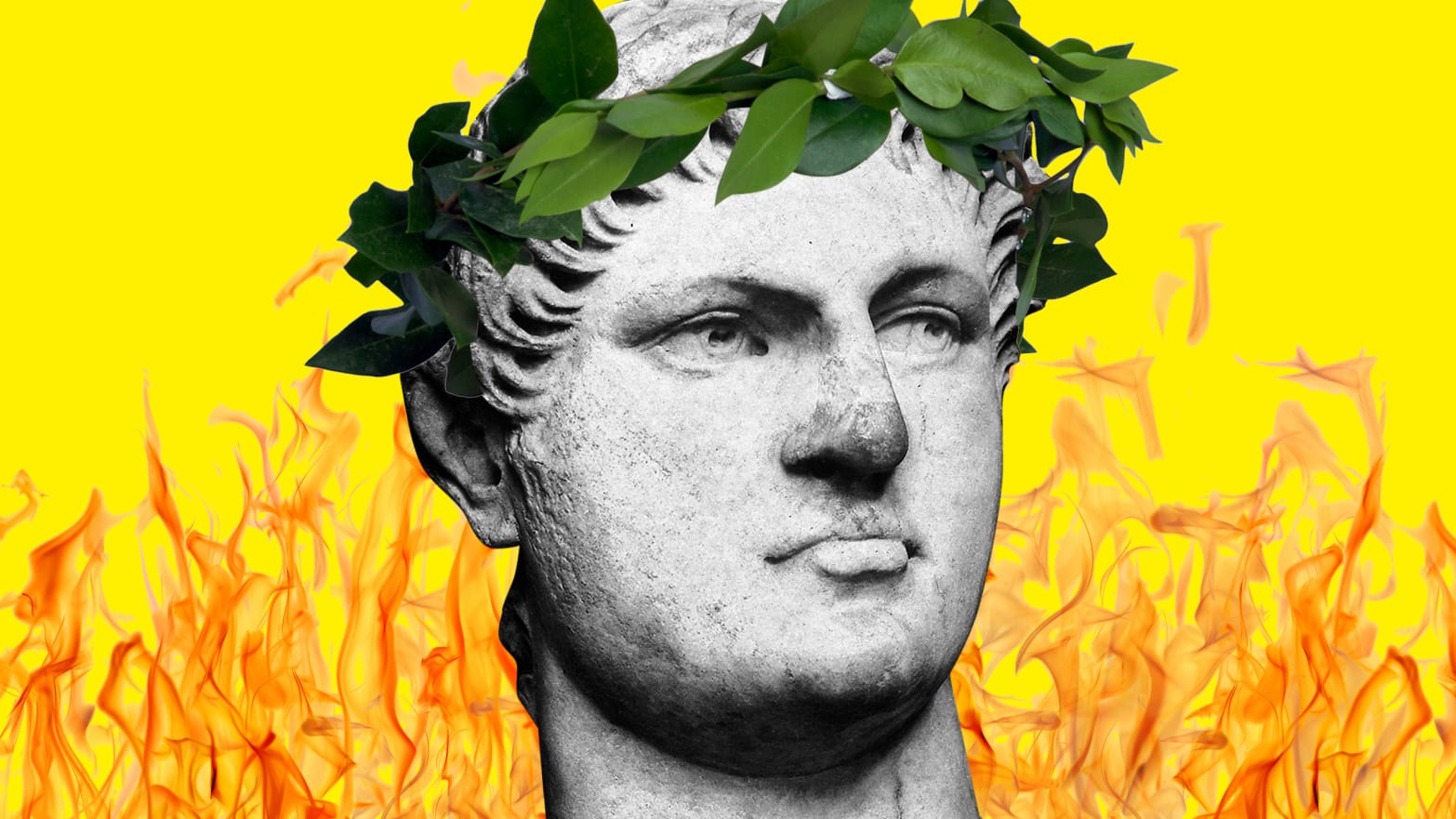
Last week we looked at an account from Tacitus describing the brutality of Nero against Christians who lived during his reign. Here are a few points to take away:
 
  • Jesus was a historical person.
  • Early Christians suffered immensely. If we want an idea of Christian endurance, we should look to this as an example. We do not really face persecution in the modern world.
  • That account makes inspired passages like I Peter 1.13-2.2 and I Peter 4.7 more personal. In 1.13-2.2, the Spirit tells Christians how to live while dealing with persecution with five commands:
    • Fix Your Hope (13)
    • Be Holy (15)
    • Conduct Yourselves in Fear (17)
    • Love Each Other (22)
    • Long for Pure Milk of the Word (2.2)
  • It gives more context for the desire to be in Heaven that early Christians had (II Peter 3.13; Romans 8.20-24; II Timothy 2.12).
 
“If only for this life we have hope in Christ, we are of all people most to be pitied” (I Corinthians 15.19).
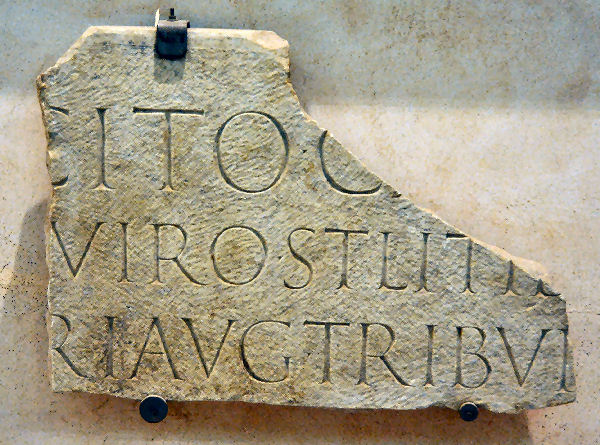
Tombstone of Tacitus (via Rome Museum)

The Fall Before The Fall

Tuesday’s Column: Dale Mail

image

Dale Pollard

The Bible indicates a battle between Satan and his rebellious followers in several key passages. The reason for this spiritual spat is not given to us in great detail but we are told that it began after they abandoned their rightful habitation (Jude 1:6). While many have speculated as to what and how this happened, we simply aren’t told. Some have also made the argument that this event took place after the Creation of the world, but this is also not certain. Genesis 2:1 says, “the heavens and the earth were completed and all their hosts.” While that may seem to clearly indicate that angels must have been created alongside everything else, Job 38:7 states that angels gave “shouts of joy” after the creation of stars.

The spiritual conflict ended with Satan and his apostate followers cast from the heavenly realm (2 Peter 2:4, Rev. 12:14, Jude) just before, it seems, the creation of earth with the Archangel Michael taking a significant role in his defeat and expulsion. 

Satan seems to have been at one time a high ranking Angel who thought he somehow stood a chance against his very Creator. That is a ridiculous thought! The application of this historical (pre-historical?) event is evident. Nobody, whether Angel or man, can win against God’s will. It’s mind boggling to imagine taking on God Almighty in some kind of battle, yet Paul tells us in Romans five that we were enemies of God at one point while living in sin, and are currently waging a war with God if we are living in sin. We should let that long ago battle in the heavenly realm be a reminder to us that God always wins the war. He’s already won! Now is the time to make sure that you’re on the side of the truth and triumph and not the devil and the defeated. 


New Life From Ancient Seeds

Monday’s Column: Neal At The Cross

Neal Pollard

The Winter 2020 edition of Biblical Archaeology Review has a fascinating article about a recently completed project involving date palm seeds from the Judean Wilderness. The Judean Date Palm (Phoenix dactylifera) was widely grown and sold for at least 1600 years, from at least the fifth-century B.C. until the 11th-century A.D. Archaeological excavations at Masada, Qumran, and Wadi Makukh netted several ancient seeds which researchers then went to work to try and germinate. Of the 32 planted, six germinated. It takes 4-10 years for female palm trees to produce fruit, and in the fall of 2019 this extinct fruit tree was brought back (“New Fruit From Old Seeds,” BAR, Vol. 46, No. 5, Megan Sauter, p. 18-19). 

To me, it’s particularly fitting that such a discovery and experiment transpired in the very area where the church was established. The fact that ancient seed was planted and successfully produced results today serves as an illustration of a Bible truth. Peter wrote, “Since you have in obedience to the truth purified your souls for a sincere love of the brethren, fervently love one another from the heart, for you have been born again not of seed which is perishable but imperishable, that is, through the living and enduring word of God” (1 Pet. 1:22-23). Peter draws on an imagery he heard his Lord use in His parables (Luke 8:11). Other New Testament writers draw the same analogy (1 Cor. 3:6-9). They planted the Word and it produced disciples of Jesus. How do we produce true followers of Him today? We plant the same, ancient seed. The researchers involved in the Judean date palm project had to soak and fertilize those seeds to coax their growth, but their perseverance paid off in reestablishing the original, fruit-bearing tree. 

How often in history have people taken the ancient seed, planted it in hearts, watered it, tended it, and produced the exact same thing despite the passing of centuries? Restoring New Testament Christianity is possible. In fact, if we believe the Bible, it’s necessary. If we plant what they planted, the living and enduring word, we will have what they had–purified souls who obey the truth and are born again. We cannot give up on that principle. It’s essential, but also doable! Let’s be looking for new soil to plant that ancient seed in, then watch God work! 

merlin_176514033_28188a63-cc1a-4821-a4b9-18fb88a09191-superjumbo


Do Not Gloat 

Friday’s Column: Brent’s Biblical Bytes

81121814_2462862270639428_5746232403106463744_n

Brent Pollard

A politically conservative thought leader died on Wednesday, February 17, 2021. Not even an hour had elapsed from when the news was broken on his ground-breaking radio show by his widow that some of the most hateful comments began appearing on social media. As one who listened to his show periodically, I can attest that I never heard him utter any of the types of hateful speech of which Wikipedia readers and contributors accused him. Most of those hating him did so because of his powerful influence against their political ideology.  

The political Left viewed him as a Svengali that would brainwash millions if allowed to remain on the radio. Thus, rather than defeat him in the arena of ideas, they chose to slander him. The fascist propagandist Goebbels once said, “Repeat a lie often enough, and it becomes the truth.” Those who never listened to him genuinely believe he was an ugly, divisive person. Thus, the deceased will have a mixed legacy depending upon whether someone took the time to listen to what he said. He will either be one to whom people said, “ditto,” or, as the Huffington Post put it, the “Bigoted King Of Talk Radio.”  

Now, the purpose of this post has nothing to do with politics or even the deceased. It has to do with the visceral reaction created by the news of the radio talker’s passing. As one who tends to soak up the room’s emotional atmosphere, I found myself negatively impacted by the unadulterated hatred. I was disappointed yet again by my fellowman. However, it was also a moment of introspection. Do I understand that God created this person in His image, just like me? (Genesis 1.26-27) If so, even if I vehemently disagreed with him, should I find even a modicum of the rationale necessary to express glee?  

Paul wrote that we must all appear before Christ’s judgment seat. And after stating this truth, Paul immediately added, “Therefore, knowing the fear of the Lord, we persuade men…” (2 Corinthians 5.10-11a). Of what do we persuade men? We convince them to accept the saving Gospel of Jesus Christ. We recall Jesus’ final marching orders to us to take the Gospel to every nation and creature (Matthew 28.19-20; Mark 16.15-16). We know our time on earth is short (Psalm 90.10 & 12; James 4.14). Time is being allowed to continue to give men everywhere an opportunity to repent (2 Peter 3.8-10). Once God’s longsuffering has ended, nothing remains for the disobedient other than flaming fire and vengeance (2 Thessalonians 1.6-12). 

We would all do well to recall the words of Solomon in Proverbs 24.17-18: “Do not gloat when your enemy falls; when they stumble, do not let your heart rejoice, or the Lord will see and disapprove and turn his wrath away from them” (NIV). Yes, God is aware of the feelings of our hearts. We must give an accounting of ourselves to Him. How terrible it would be if He found in our heart love only for those with whom we felt comfortable associating. John reminds us that our love must extend to our brother if we love God. Otherwise, we are a liar (1 John 4.20). Let us allow love to replace hatred, the Gospel’s utterance to replace vitriolic expressions, and a prayer for our enemy’s salvation supersede our schadenfreude at his downfall.   

God Shows His Love

Thursday’s Column: Carlnormous Comments

tempImagehquiDk

Carl Pollard

As Christians we are called to love like God (John 13:34). If we are to love each other in the same way that God loved us we need to ask how God shows His love? People claim that there are generally five love languages that every person relates to: 

        • Words of Affirmation
        • Quality Time
        • Gift Giving
        • Acts of Service
        • Physical touch

Each one of us feels love in different ways. Your love language may be different than mine, and your spouse’s love language may not be the same as yours. God has shown His creation that He loves us by speaking and interacting with us using all five languages. 

Words of affirmation. When we use words of affirmation we think of phrases like: “You’re the only one for me baby” or “You mean so much to me” or even “Let’s go get Krispy Kreme.”  We use words of affirmation to show our love to our significant others. God has done the same for us. In showing His love God said to us, “For the mountains may depart and the hills be removed, but my steadfast love shall not depart from you” (Isa. 54:10). God uses words of affirmation and has told us that His love will never depart from us. Even when we deserted Him and chose to live a life of sin, God still kept His word. He loved us even when we were corrupted by sin (Rom. 5:8). Words of affirmation are a way to tell someone how you feel. God opened up to us through His word, and He revealed that He loves us more than we will ever be able to understand. 

Quality time. God desires nothing more than to spend quality time with His creation. In the beginning God spent quality time in the presence of Adam and Eve. He longs for this to be the case again in heaven. Sin ruined any chance of spending quality time with Him. But God showed that He loved us. And He looks forward to the day when He can dwell with His children for an eternity. 1 John 4:16 says, “So we have come to know and to believe the love that God has for us. God is love, and whoever abides in love abides in God, and God abides in him.” I can’t think of a better way to spend quality time with God than by having Him abide in me. He loves us and He desires to spend quality time with you and me.

Gift giving.  God has clearly expressed His love to us through gift giving by giving us someone that is invaluable. “God showed His love for us in that while we were still sinners, Christ died for us” (Rom. 5:8). Want to see God’s love? Look at what He has sacrificed for you. John 3:16 says, “For God so loved the world, that he gave his only Son, that whoever believes in him should not perish but have eternal life.” God expressed His love by giving a gift that has the power to eternally change our spiritual outcome. “For the wages of sin is death, but the free gift of God is eternal life in Christ Jesus our Lord” (Rom. 6:23). There is no denying that God has expressed His love to us through gifts. 

Acts of service. A person that feels loved through acts of service enjoys acts such as: cleaning out the garage, washing the car, doing the dishes, or folding the laundry. They feel loved because they recognize that their spouse cares enough about them to make their life easier. It’s love that is felt when a spouse sacrifices their time and energy to do something for you. God has shown His love to us through several different acts of service. Christ took on the sin of the world so that we wouldn’t be condemned by it. Christ illustrated this in the flesh when He washed the disciples’ feet (John 13). What does this say about God? It says that He loves you more than you love yourself. It says that the God of the universe is willing to place Himself below His own creation. It says that God’s love is so perfect and strong that He will grab a rag and wash the feet of imperfect men. There’s no denying that someone loves you when they are willing to humble themselves and serve you. This is exactly what God has done for us. 

 Physical touch. A person that feels loved through physical touch is looking for connection. They feel love when they are close to their spouse, they experience love through the physical side of their relationship. While God doesn’t physically touch us today to show His love, He has done it in the past. Mark 1:40ff, “And a leper came to him, imploring him, and kneeling said to him, “If you will, you can make me clean.” Moved with pity, he stretched out his hand and touched him and said to him, “I will; be clean.” And immediately the leprosy left him, and he was made clean.” Leprosy was a disease that immediately made you an outcast. If you had this disease you were considered unclean and you were forced to live in isolation from everyone else (Lev. 13:45-46). The leper was forced to live alone because this disease was spread through physical touch. This is what makes what Jesus did even more incredible. Jesus didn’t have to touch the leper, but He went above and beyond by physically touching him. God expressed His love through the physical touch of a compassionate Savior. 

We serve a God that has displayed His love to us perfectly. He has shown it to each one of us, and we will never deserve the love that He gives. Thank God for His love! 

Persecution And Hope (Part One)

Wednesday’s Column: Third’s Words

Gary III

Gary Pollard

Gaius Cornelius Tacitus (AD 56-120) wrote two secular historical works describing the reigns of Tiberius, Claudius, Nero, and Gabba, Otho, Vespasian, and Vitellius (Annals and Histories).
 
He was the son-in-law of Agricola, the Roman General responsible for Roman expansion throughout Europe, especially northern Britain. He was not a Christian by any means, but a patriotic Roman with a family heritage tied to its conquests.
 
In the following excerpt, Tacitus mentions Jesus (referred to as Christus) and details the persecution of early Christians. I have abbreviated some of the excerpt (ellipsis), given contextual explanation (brackets), and added emphasis (bolded text). The information in his writings is fascinating, but I found the following to be shareable.
 
“…The next thing was to seek means of propitiating the gods [because of the burning of Rome], and recourse was had to the Sibylline books… But all human efforts, all the lavish gifts of the emperor, and the propitiations of the gods, did not banish the sinister belief that the conflagration was the result of an order.
 
Consequently, to get rid of the report, Nero fastened the guilt and inflicted the most exquisite tortures on a class hated for their abominations, called Christians by the populace. Christus, from whom the name had its origin, suffered the extreme penalty during the reign of Tiberius at the hands of one of our procurators, Pontius Pilatus, and a most mischievous superstition [of resurrection], thus checked for the moment, again broke out not only in Judæa, the first source of the evil, but even in Rome…
 
Accordingly, an arrest was first made of all who pleaded guilty; then, upon their information, an immense multitude was convicted, not so much of the crime of firing the city, as of hatred against mankind. Mockery of every sort was added to their deaths. Covered with the skins of beasts, they were torn by dogs and perished, or were nailed to crosses, or were doomed to the flames and burnt, to serve as a nightly illumination, when daylight had expired.
 
Nero offered his gardens for the spectacle, and was exhibiting a show in the circus, while he mingled with the people in the dress of a charioteer or stood aloft on a car. Hence, even for criminals who deserved extreme and exemplary punishment, there arose a feeling of compassion; for it was not, as it seemed, for the public good, but to glut one man’s cruelty, that they were being destroyed.”
 
Annals of Tacitus Book XV

TIME

Tuesday’s Column: Dale Mail

image

Dale Pollard

Our lives are based on time. Everything we do is on a schedule. We all have limited time, we waist time, we spend time, we invest time, we make time, the world is on a clock. 

God has the title of the Creator. 

He created 

  • You
  • me
  • the world 
  • Galaxy 
  • Universe 

He was and is and ever will be, the Alpha Omega beginning and end. 

He is the God of history, of Abraham, Isaac and Jacob.

He is God of the present, and God of the future. 

God is the originator of time; He invented it, it’s His. 

Here are three quick thoughts to consider about this precious commodity.

  1. Money and time share similarities. Don’t waste it. Spend it wisely. Invest it in the future. 
  2. All good things come to an end but thank God that the best thing, heaven, will never end.
  3. With the proper perspective we can clearly see that we’re all on God’s time. 

What will we do with the time God gave us today?

But do not overlook this one fact, beloved, that with the Lord one day is as a thousand years, and a thousand years as one day. – 2 Peter 3:8 

ESSENTIAL

Monday’s Column: Neal At The Cross

Neal Pollard

  • Grocery store–Place where we buy food to sustain our physical bodies
  • Restaurant–Place where we pay someone else to provide food for our physical bodies
  • School–Place where our children receive an education to prepare them to live on earth as adults
  • Hospitals and Doctor’s office–Place where we go to address issues with our physical health
  • Workplace–Place where we go to earn money to take care of our physical needs

There are other places that have remained open or reopened whether to provide what we’d deem essential or places that are more diversionary but which various experts call essential to economic or social survival (malls, bookstores, ballfields and arenas, etc.). In fact, “essential” can be put into a lot of categories–academic, economic, social, emotional, medical, physical, and spiritual.

Pandemic restrictions have impacted and altered public behavior for almost a year. It’s more than mask mandates, hand sanitizer, social distancing, and the severe reduction of handshakes and hugs. It has been the reduction of personal interaction at the assemblies. Many congregations have devised virtual means of meeting for Bible class and worship. Just like virtual doctor visits, online instruction, and telecommuting lack the desired qualities of the in-person alternative, so it is with the virtual gathering. 

The first-century church labored under restrictions, too. The threat was not a virus, but often a virulent government hostile to their faith. Christians in various places faced severe persecution and even the death penalty if this identity was known (Mat. 24:9; Rev. 2:10; 1 Pet. 4:12-16). The assemblies were an easy way for Rome to know a Christian’s identity. Despite the potential cost of discipleship, what do we find the early Christians doing and being commanded to do? As a good preacher friend, Terrence Brownlow-Dindy, recently said, Acts 20:7 not only told the saints when to take the Lord’s Supper (the first day of the week) but also how (come together). Despite governmental interference and opposition to them, Christians were still commanded to assemble (Heb. 10:25). It was essential to be present to stimulate each other to love and good deeds (10:24). It was essential to be present to encourage one another (10:25). It was essential to be present to prepare for Christ’s second coming (10:25). 

What’s the difference between the risks incurred in Cracker Barrel, Wal-Mart, Home Depot, and Hobby Lobby walking aisles, touching items, and standing in line with strangers and coming together and running any risks we might incur by assembling together for worship and Bible class? The commodities and services provided at places like those at the beginning of this article serve us only in this life. The wisdom of God, who designed the church including the importance of coming together, commands assembling to address our most essential need. It is absolutely true that Christianity is not confined to the church building, a great lesson we discovered or remembered at the start of this crisis. Perhaps, though, we inferred from this that actually coming together was less essential than shopping, going to school, and going to work. 

I have seen brothers and sisters in Christ at stores, restaurants, weddings, and funerals who have not come into the church building to give and receive the fellowship and encouragement God made essential both for our own spiritual health and that of our spiritual family. Scripture repeatedly tells us the earth and all its works will be burned up some day (2 Pet. 3:10). Our souls will never die. As we prioritize the essentials, what is more essential than that? The dictionary defines essential as “absolutely necessary; extremely important.” If anything qualifies, our assemblies do. 

Ulfbehrt 

Friday’s Column: Brent’s Biblical Bytes

81121814_2462862270639428_5746232403106463744_n

Brent Pollard

There were Viking swords 800 years ahead of their time, made of crucible steel. These blades bear a Frankish name, “Ulfbehrt.” It is unknown if this was the sword maker’s name or used in connection with crosses by the Vikings to invoke magic or like a coveted logo, such as Gucci or Apple is today. So prized were these swords that someone went to the trouble of making counterfeits. The difference? Well, the steel quality, primarily, but also the brand. Genuine Ulfbehrt swords are marked as follows: “+Ulfbehr+t.” The fake version has this mark, instead: “+Ulfbehrt+.” Modern metallurgists are puzzled by the existence of these weapons. A medieval swordsmith should not have been able to make such swords before the Industrial Revolution. 

To put that notion to the test, a blacksmith in Wisconsin set out to recreate the blade using medieval technology. It took a lot of work, but he replicated the Ulfbehrt sword. Even so, he wondered where the ancient swordsmith could get the steel he used to make these superior blades. The leading hypothesis was that the steel originated in the Middle East and traveled into Europe via the Volga trade route. Viking traders could trade Nordic goods for steel. Whatever the origin, Ulfbehrt swords remain a remarkable testimony of workmanship, whether medieval or modern. 

I should not be surprised that people esteem our ancestors as inferior to modern man. The prevailing thought is that ancient peoples were comparatively ignorant. Plus, they lacked our “superior technology.” Hence, as an example of ludicrously held beliefs, some say the ancient Egyptians must have needed extraterrestrials to help build the pyramids. No, the truth is the Egyptians were intelligent and figured it out on their own. If you go back to our recorded beginning, you will note men working with brass and iron just a few generations after Adam and Eve (Genesis 4.22). Some religious people, still unable to accept our brilliant ancestors, likewise make excuses that other heavenly visitors, the fallen angels, gave man such technologies as metallurgy. So, rather than Tubal-Cain, the apocryphal book of Enoch says that Azazel taught men how to make swords.  

Yet, God created a being intelligent enough that at a few minutes old, not only could he ascertain his situation, that he lacked a helpmeet suitable to him, but could also provide names to all the animals (Genesis 2.18-20). Let us not forget, as the adage states, “With age comes wisdom.” Our primordial ancestors lived hundreds of years. That is hundreds of years of trial and error teachable to subsequent generations. And given that these early men and women were close to being “very good,” the status assigned to the initial creation by God (Genesis 1.31), why wouldn’t their IQ be likewise? If anything, if entropy applies to intelligence, as some suggest, perhaps WE are the ones running out of it?  

So, the next time you are watching a documentary in which someone expresses surprise at the skill or intelligence demonstrated by the ancients, remember Tubal-Cain. Long before what archaeologists dubbed the “iron age,” he worked with iron. Why? Because God created us with the requisite intelligence.       

Work Consulted: 

Kliger, Isabelle. “The Secret Science behind the Viking Supersword ‘Ulfberht.’” Linde Stories, Linde, 22 Jan. 2018, linde-stories.com/the-secret-science-behind-the-viking-supersword-ulfberht/

Living Life God’s Way

Thursday’s Column: Carlnormous Comments

Carl Pollard

When it comes to sports, there are certain ways of playing. There are rules to follow, specific plays to make, and mistakes to avoid if a team wants to succeed. This same idea applies to our Christianity. In Joshua 1:5-9, we read of certain aspects needed in order to live life God’s way. By following these things we will reap the benefits that are found inside of Christ. 

Joshua says that God’s way is conditional. In Joshua 1:7, we read, “Only be strong and very courageous, being careful to do according to all the law that Moses my servant commanded you. Do not turn from it to the right hand or to the left, that you may have good success wherever you go.” God gave Israel conditions to His being their God: be strong and courageous, do all according to the law of Moses, and do not turn from the right or to the left. 

Thinking about our personal relationship with God we can still apply these same commands to our spiritual lives today. For example, the blessings we are promised are received by being strong and courageous in the work place, doing all according to the law we are under (the new covenant), and not wavering in our faith. If we want to live our lives according to God’s will we must understand that our relationship to Him is conditional. Our relationship is based on our willingness to listen to His word. 

We must also understand that God’s way is a command, not a suggestion (1:7-8). He is the creator. He has the authority to create the way, He has the authority to make what He says a command. If we want the blessings of following His way, we must practice the commands He has given each one of us. 

Just as the Israelites were given certain commands, we also are commanded to follow certain laws. Love the Lord our God with ALL of our heart, soul, mind and strength. We are commanded to love God with every aspect of our lives (Matt. 22:36-40). When we think about our lives, every decision should be based on the will of God. We must recognize that God’s way of living is a command. 

If we want to live our lives God’s way we must recognize that the blessings we are promised are conditional, and the things we read in scripture are a command. But we should find joy in knowing that God’s way is comforting. Joshua 1:9 reads, “Have I not commanded you? Be strong and courageous. Do not be frightened, and do not be dismayed, for the Lord your God is with you wherever you go.” 

There is absolutely no reason for us to tremble when the Creator is on our side. There is never a reason to be dismayed when the defeater of sin is with us. We have a loving God with us wherever we go in life. God’s way of living is best, and if we will let Him control our everyday lives we can find comfort, hope, and joy in Him. 

Picture taken by Neal Pollard at Jericho, 3/11/18

Division

Wednesday’s Column: Third’s Words

Gary III

Gary Pollard

In this volatile political climate, many Christians face some uncomfortable dilemmas. Is party line a salvation issue? How do we handle seemingly irreconcilable differences? What do we do going forward?
 
Rather than delving into those questions, I’d like to focus on the attitude of the early church, which faced internal division–Jew/Gentile controversies like in Acts 15, opinions over cultural matters as seen in I Corinthians 8 and Romans 14, and external pressures.
 
In keeping with the spirit of the early church, let’s focus on the following list.
 
  1. We must focus on and grow our own spiritual culture, independent of our earthly nationality (while observing Romans 13).
  2. We must be faithful Christians who value being righteous, no matter the cost.
  3. We must manage our concerns and worries by spending MORE time with each other and developing our faith.
  4. We may need to see ourselves less as Americans and more as Christians. If we remember that our kingdom is the church first, we will be far more united.
  5. Be awesome citizens. When outsiders hear about us, it should be that we never cause trouble, we are loyal to each other, we are selfless, we help people, we have strong families, we rely on each other, we are pleasant to be around, we are dedicated to our faith, and we love people who treat us poorly.
  6. We must remember that priority number one is heaven. Everything else is second.
  7. We must avoid talking or posting on social media about non-salvation issues that can and do create division or offense, out of courtesy and respect for each other (Romans 14.1-4; 13ff).
 
If these are the things we worry about and focus on, no political division or any other heartburn-inducing unpleasantness can affect us. Besides being happier, we’ll be a stronger church!

Supersize Your Scripture Smarts!

Tuesday’s Column: Dale Mail

Dale Pollard

The Bible is not a mysterious book of codes that can’t be cracked, though some might try and lead you to believe that. 

We know that the water can be metaphorically muddied rather quickly when there are countless faulty interpretations of books like Revelation, Daniel, Ezekiel, Isaiah, and other prophetic or apocalyptic literature. Typology is another misunderstood, and often misapplied, method of Bible study. I’m convinced that if we can spend some time studying the different “types” found in scripture, we can see God’s message for mankind more clearly and have a more profound grasp of His Word. This also happens to be a great way to grow our knowledge of scripture more quickly!

So first, let’s try to clarify exactly what Typology is. 

Summed up in one sentence it’s referring to Old Testament things which are prefigured or symbolized by events and characters of the New Testament.

This may sound a little confusing, but let’s look at a few examples. 

  1. John 3:14 says that just as Moses lifted up the snake in the wilderness, so the Son of man must be lifted up (Num. 21:9). The Christ “type” is the bronze serpent. We know because of a specific New Testament reference. 
  2. 1 Peter 3:20: “…God waited patiently in the days of Noah while the ark was being built, only a few people, 8 in all were saved through water,” This illustrates how in the same way baptismal water saves those who submit to Christ today. 

Typology is not some mystic Bible code where we are free to translate events and characters in scripture as we please because God tells us exactly what He intended to say. 

1 Cor. 14:33 says that God is NOT the “author of confusion.” He has a message for us all— and it’s a message of hope. 

Are you interested in learning more about typology? The perfect book for you to study would be the book of Hebrews as it makes more Old Testament references than any other New Testament book. By diving into Hebrews you will appreciate and understand both the Old Testament, and the Bible as a whole. 

The Bosque Redondo Blunder

MONDAY’S COLUMN: NEAL AT THE CROSS

Neal Pollard

In the wake of James Polk’s vision for “manifest destiny,” the United States purchased and/or fought for the territory that gave us the current boundaries of our nation. To maintain and protect this newfound territory, one of the military strategies included the building of forts throughout the west to protect settlers from especially the Native American tribes who were reacting to the invasion of their ancestral home. Kit Carson, former fur trapper, explorer, and extraordinary tracker, was a civilian ultimately urged into serving out west in a military stretched thin back east by the Civil War. He was appointed by General James Carleton to round up 9000 Navajo and 500 Mescalero Apache and place them in a reservation Carleton dreamed up. From the time he visited there, he was enamored with the terrain, trees, and beauty of the place. So the nearly 10,000 Native Americans were detained and displaced and forced to settle at Bosque Redondo. 

While it was a disaster on paper, it was even worse in real life. Neither the Navajo nor Apache were agrarian people, but both were forced to farm. They were enemies of one another, but they were forced to live together at Bosque Redondo. The crops were destroyed by cut worms and hail storms, and the army rations inadequate. The water was alkaline, making them sick. Smallpox decimated their numbers. Winters were bitterly cold and the inhabitants were ill-prepared and ill-equipped.  They were forced laborers, slaves ironically settled at this reservation by the U.S. Government and President Lincoln the very year of the Emancipation Proclamation. It was as much a failure for the government. It was an exorbitantly expensive venture, costly to start and even more to maintain. Beyond the inhumanity and immorality of the venture, it was inept and inane. Carlton envisioned paradise, but delivered purgatory (information a summary of content in Hampton Side’s book, Blood And Thunder).

Bosque Redondo is but one example of the disaster which follow’s man’s attempt to create what he vainly sees as either utopian or idyllic. Contrast that with some of God’s plans. First, He put man and woman in a perfect paradise wherein He supplied their every need (Gen. 2:8-14). Later, after they sinned and were expelled from there, God promised a land which flowed with milk and honey. It was a good and spacious land (Exo. 3:8). While sin tainted their existence there and ultimately cost them ownership, the provision was not the problem. 

Along the way, God promised the creation of a domain unlike any other. It would be for all nations (Gen. 22:18; Isa. 2:2). It would never be destroyed, nor left to other peoples (Dan. 2:44). It was the result of the eternal planning and purpose of God (Eph. 3:9-11). God left a perfect blueprint for its creation and for the citizens’ conduct (Isa. 2:3; Mic. 4:2). We know it as the church (Eph. 1:22-23; 4:4). It is described in that epistle: “So then you are no longer strangers and aliens, but you are fellow citizens with the saints, and are of God’s household, having been built on the foundation of the apostles and prophets, Christ Jesus Himself being the corner stone, in whom the whole building, being fitted together, is growing into a holy temple in the Lord, in whom you also are being built together into a dwelling of God in the Spirit” (2:19-22). 

In this divine institution, God has brought together people diverse and unlike each other and united them through His Son. He has taken spiritual slaves and gave them freedom. He has taken those poor and emaciated by sin and made them rich (Eph. 2:7; Phil. 4:19). He has given them boundless blessings by His Son (Eph. 1:3). His church is right in design, discharge, and destiny. Far from a blunder, His body is a bountiful blessing! Only God could take a people besieged by sin and dysfunction and give us something infinitely better. Just imagine what our eternal home is going to be (Rev. 21-22)! 

Shibboleth 

Brent Pollard

Judges 12 details a civil war between Ephraim and the Gileadites of Manasseh. God used Jephthah and the Gileadites to humble Ephraim. The haughty Ephraimites felt they could bully Jephthah and the Gileadites as they had previously bullied Gideon (Judges 8). Jephthah and his men ended up slaying 42,000 Ephraimites. One of the keys to the Gileadites’ lopsided victory was seizing the fords over the Jordan River. And when fleeing Ephraimites tried to cross, they were asked for a “password.” The password was “shibboleth.” Various commentators have offered different definitions for the word, but its meaning is not necessary to understand the text. Here is what we need to know: The Ephraimites could not pronounce the word “shibboleth,” as the Gileadites. Thus, they replied, “sibboleth.” Having been betrayed by their dialect, the Gileadites then slew the Ephraimites.  

Wordsmiths know that, beyond its Biblical source, shibboleth has come to mean any word or practice separating one group from another. Christians should have shibboleths, correct? They are called upon to transform themselves from the world rather than conform to it (Romans 12.1-2). However, while perusing several online dictionaries, I noted that they also tended to look upon a shibboleth unfavorably, calling it an “old-fashioned” or “outdated” idea still clung to by some. In the example sentences provided by those aforementioned dictionaries, shibboleths seem connected with “conservative-thinking” people. So, evidently, “progressives” must not be hampered by them. Frankly, it is hard to keep up with the self-righteousness of progressives. Their mores change so swiftly that sometimes they snare even themselves when a past tweet or video surfaces. It reminds me of the foolish man building his house upon the sand (Matthew 7.26-27).  

God is aware of the mindset that mocks established standards. Jeremiah records God’s words: “Stand by the ways and see and ask for the ancient paths, where the good way is, and walk in it; and you will find rest for your souls.” (6.16) Not unlike those living today, Jeremiah’s contemporaries replied, “We will not walk in it.” (ibid.) To borrow modern parlance, those in ancient Judah found the old paths “shibboleth.” But who gives such persons the right to esteem something as antiquated? Honestly, it seems like it is the “right” of the squeakiest wheel, those with the largest echo chamber.  Those of us with our shibboleths abandoned the arena of popular culture, education, and media. Hence, we can only blame ourselves for allowing the castigation of truth as incompatible with temporary society.    

But lest we forget, the victors from the source material had their shibboleth while the defeated had their sibboleth. As someone has said in summation of the book of Revelation, the message is that in the end, God wins. That is applicable here as well. God brings victory to those with the shibboleth, not sibboleth. No, it is not a superior concept because it is older. We can find new ways to do something that is “old.” (e.g., We may use new mediums to teach the “old Jerusalem Gospel.”) The shibboleth is what was given by God in His inspired word. Sibboleths reflect the precepts of men (cf. Matthew 15.8-9). We must not drop even one consonant sound (cf. Deuteronomy 4.2; 12.32; Proverbs 30.6; Revelation 22.18).  

When I eventually cross the Jordan River ford, I want to find life, not death. Don’t you agree? To safely cross, an obedient life is our “password.”  

The Christian Decision

Carl Pollard

Our family used to hike a lot when we lived in Colorado. There were many hikes that I went on that were straight up miserable. Ive always been the chunky kid, but the worst part about this was that I  was surrounded by a healthy and very active family.. This meant that on every hike I was the one in the back feeling like I was about to pass away. Hiking was never really something I was the best at. There are several times I remember thinking, “I’m not going to make it.” 

We used to hike a trail called “Moffit Tunnel” It was an 11 mile hike that ended with a summit path that gained 3000 feet of elevation in under half a mile. As you can imagine the path was practically vertical, and filled with rocks, mud, snow, and sadness. 

When I think of “a hard path” this is what comes to my mind. In Matthew 7:13-14, Jesus describes the way to salvation as a path that isn’t for the faint hearted; it’s for the dedicated Christian that is determined to reach eternal life. There’s no denying that the Christian life can be tough. It is filled with persecution, especially for those who aren’t as fortunate to have the freedoms we enjoy in America. The Christian life is tough because we will face persecution, but we are more likely to face rejection in our society today for standing up for some very unpopular teachings. If we are devoted to teaching and standing with God’s Word this means we must defend God’s view on homosexuality, marriage, divorce, and remarriage, baptism, sin, hell, and many more divisive topics. If we are devoted to walking the difficult path we must remain faithful in the rejection, hatred and persecution we will face. 

But the rejection and hate from the world isn’t the only thing hard about this path.

As Christians we are commanded to put ourselves to death. Matt. 10:37-39 say,  “Whoever loves father or mother more than me is not worthy of me, and whoever loves son or daughter more than me is not worthy of me. And whoever does not take his cross and follow me is not worthy of me. Whoever finds his life will lose it, and whoever loses his life for my sake will find it.”

Walking the difficult path means we have put ourselves to death. In doing so we are saying we love Christ more than our parents, our children and ourselves. In order to walk the difficult path we must be willing to take up our cross and follow Jesus. The cross is an instrument of death. The cross we pick up is the instrument of death that we have used to crucify ourselves on. Once we have taken up our cross we have made the decision to love Christ over anyone and everyone. We no longer serve ourselves because we have died to Christ. 

When we choose to walk the difficult path we are no longer living without purpose. We have a goal, a meaning for our lives. God uses us to spread His saving word to others. We have purpose in everything we do. We are here to encourage each other, to save souls, and to glorify God. One of humanity’s most asked question, “Why am I here?,”is answered by God. How we serve God will ultimately change someone else’s eternal destiny. We are given the true words of life that are able to save our most valuable possession, our souls. We also experience the blessing of having confidence in death. Death is scary. Why are so many scared of death? It’s the unknown, the end of our existence as we have known it. As Christians, when we choose to walk the difficult path, we are given the promise that when we face death we can be confident in knowing our soul is in the hands of almighty God. We know what is coming, and we can find hope in this. 

It was a hard climb, but what a payoff!