Finding Refreshment

Friday’s Column: Supplemental Strength

brent-portrait

Brent Pollard

Lying in a bed for three and a half months will make you feel icky. You can only bathe with washcloths. Some nurses loaded those cloths with water and got me wetter than an Anglican baptism. Those “baths” made me feel better. However, before being discharged, I finally took a shower. That was the best. I felt refreshed. The only downside was seeing my hair come out in clumps as I washed my hair. It seems I am fated to look like the Stooge, Larry Fine.   

Where do you find your refreshment? Is it in a cool drink on a sultry day? Is it standing by a fireplace in winter? Such actions reinvigorate us. This result is what refreshment accomplishes. The sinner can find refreshment in obedience. In his second recorded sermon, Peter says: 

“Therefore repent and return, so that your sins may be wiped away, in order that times of refreshing may come from the presence of the Lord” (Acts 3.19 NASB1995).

This refreshing comes from being immersed in Christ (cf. Acts 22.16). I would encourage any who have not yet clothed themselves in Christ to allow their faith to lead to this total submission, in which one joins the Lord in His death, burial, and resurrection (Romans 6.3-5). No, it is not a work, nor is the power in the water. It is where we symbolically contact the blood of Christ and express a clear conscience before God (1 Peter 3.21). It is a necessity for salvation. 

Yet, there remains refreshment for the Christian as well. Paul speaks of his desire to meet with the brethren of Rome in Romans 15. He tells them to join him in prayer so his arrival will refresh him (Romans 15.32). That is an interesting word choice. In fact, this is the only time this word, συναναπαύομαι, appears in Scripture. The word means to rest along with, but here implies a spiritual refreshing.  

I like that idea of “resting with”, though, especially as it applies to Christian fellowship. We spend our weeks in the world and get beaten up by the forces of the adversary. How refreshing is it when we pause and rest with our brethren in worship and Bible study? I know I have gone to services feeling poorly, physically, only to find myself reinvigorated on my way back home. It has the same effect mentally and, most importantly, spiritually. Unfortunately, my recovery prevents me from joining the brethren currently. Still, you better believe that I eagerly await the day I can rejoin them even more than when I wished for a shower.  

It is sad when brethren find excuses to avoid refreshment since it is one of the blessings we receive in the heavenly places (Ephesians 1.3). Earthly diversions cannot reinvigorate the spirit as can God. Oh, it might bring temporary happiness, but the participant of earthly delights is left feeling empty, needing entertainment and diversion yet again. Services are not a chore when one comes seeking to worship God and rest beside their brethren.  

“And let us consider how to stimulate one another to love and good deeds, not forsaking our own assembling together, as is the habit of some, but encouraging one another; and all the more as you see the day drawing near.” (Hebrews 10.24-25 NASB1995) 

Don’t you want to find your refreshment? 
Light Of The World (New Episode)

“The Case For New Testament Christianity: Part One”

2 + 2 = MILK

Thursday’s Column: Captain’s Blog
Carl Pollard
 
 
28 US states have an official state beverage. 21 of those 28 chose milk.
Russians used to put frogs in their milk buckets. That seems strange at first, but frogs secrete an antibiotic liquid from their skin that keeps milk from spoiling. To get the measure of calcium that’s in an 8 ounce glass of milk, you’d need to eat 7 oranges, 1/4 cup of broccoli, or six slices of bread. In a recent report, the countries whose residents consume the most dairy per capita, win the most Nobel Prizes.
 
This may seem like a strange list of random milk facts and that’s because it is. It’s almost as if I Googled “strange milk facts.” But there’s a point to all the milk facts. The church at Corinth had problems. There was division. They failed to have unity. Paul wrote to them in an attempt to correct these issues. Because of their problems, Paul had to deal with them like little children. Since they displayed this childlike spirituality, Paul gave them milk because they couldn’t handle meat.
 
There is a very clear distinction between milk and meat. It is up to us to discern between milk and meat. Our end goal is spiritual maturity as Christians.
 
In 1 Corinthians 3:1-3, Paul writes, “But I, brothers, could not address you as spiritual people, but as people of the flesh, as infants in Christ. I fed you with milk, not solid food, for you were not ready for it. And even now you are not yet ready, for you are still of the flesh. For while there is jealousy and strife among you, are you not of the flesh and behaving only in a human way?”
 
When compared side by side, milk and meat are quite similar. Both milk and meat contain high levels of protein. Both milk and meat have fat (unless it’s skim milk aka “white water). This isn’t that surprising since they both usually come from the same source. The content of milk and meat is basically the same.
 
This principle is true in the world of education. You see this in reading, writing, math, and history. From Pre-K through college the same things are taught but with increasing complexity. In math, the milk would be 2+2 while the meat would be the square root of 10. The milk can be easily understood and the answer isn’t too hard to come up with. 2+2=4. While the meat is harder to answer since the number 10 is not a perfect square which has a number 0 at its unit place. Since the number 10 is an even number but not a prime number, it has 4 multiple factors: 1,2,5 and 10. The square root of 10 would be 1.414×2.236 which gives us the approximate answer of 3.162. Okay enough math. Do you see the difference?
 
Milk and meat have the same content, but at different levels of difficulty. Spiritual milk contains the same teaching as spiritual meat. The same spiritual nutrition is contained in both. All teachings in scripture, whether milk or meat, comes from the inspired word of God (2 Tim. 3:16-17). By drinking the milk of the word and eating the meat of scripture, there will be spiritual growth. Whether it is milk or meat it still contains the same basic truths, but at varying levels of difficulty.
 
With these facts in mind, we can deduce several points:
  1. New converts cannot digest meat.
  2. Christians must mature and grow from milk to meat.
  3. There is spiritually a time and place for both. 

Mine!

Wednesday’s Column: Third’s Words

garyandme521

Gary Pollard

When I first got into shooting, I relied pretty heavily on what others believed. There was (and is) a wide range of opinions on which platforms are the best, which calibers are the most effective, or which subcultural group is the worst (mall ninjas, fuds, tacticool operators, etc.). Most hold their opinions with great passion and will advocate for their position vehemently. I never really enjoyed shooting with the platforms and calibers I initially chose because I made all of my decisions based on the preferences of people I respected and admired. There’s nothing wrong with this, but I did not yet feel as if the sport was truly mine. Several years later, countless thousands of rounds, and hours of research, and I’ve found my place. I prefer 9mm, Glocks or Caniks, Combloc, AR platforms, 6.5 Grendel is the best intermediate round, etc. In other words, it’s not an “inherited” faith. I like what I like based on the energy I’ve dedicated to study and practice.

When it comes to elements of our faith, how often do we challenge our personal beliefs? Unlike firearms – which are subjective and spiritually irrelevant – our faith is based on an objective standard. It is difficult to have a strong, personal faith if most of what we believe is based on what others taught us or what others believe. We may even adopt their beliefs because we admire and respect them as people. That’s not a great foundation. Humans are fallible!

Approaching scripture as a blank slate, asking only, “What does God want me to believe about ______?” is the best way to grow. The only opinion that matters is God’s! When we hear something that elicits an emotional response and seems to conflict with our current beliefs, we shouldn’t panic. God’s word determines validity. If we can approach scripture without bias, we’ll grow exponentially. Challenging our beliefs does more than simply refine our understanding – it forces us to take ownership of our faith. Not only will this cause growth, it will also deepen our love for God and our confidence in eternal destination!

On an elk hunting trip in Gunnison, CO, around 2008.

It’s Not Too Far Away  

Tuesday’s Column: Dale Mail

image

Dale Pollard

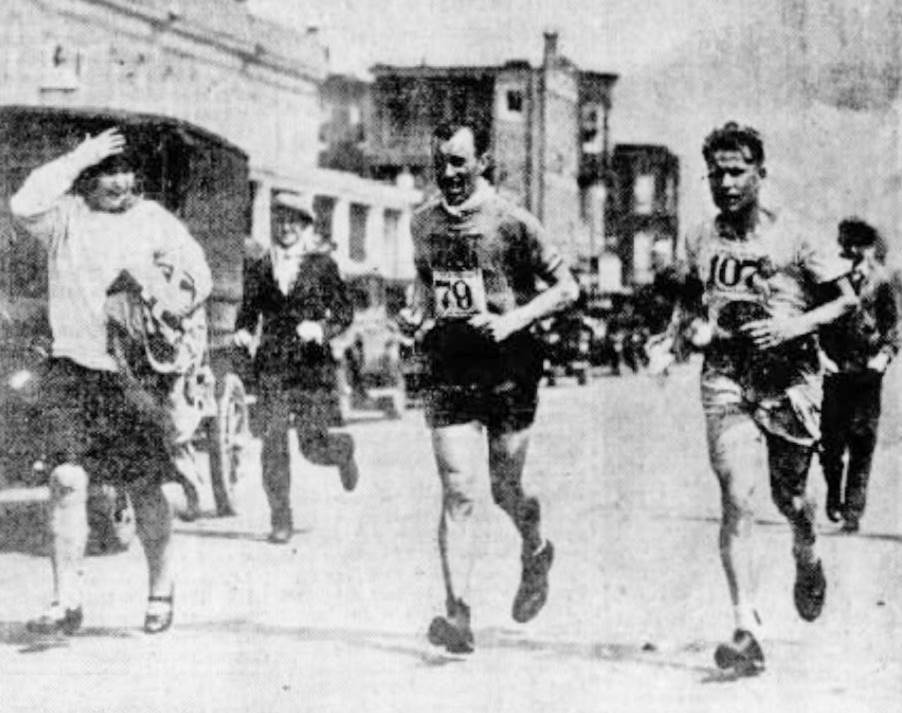
The farthest anybody has ever run on foot happened back in 1929. A trans-continental race was set from New York to California and it spanned 3,653 miles in total. It’s difficult to imagine that anybody would be willing to sign up for this race but there were. The winning place went to a man named Johnny Salo and he accomplished something spectacular and historic in just 79 days. 

In 1 Peter 2.11-12 the Christian is compared to a “sojourner” and that paints a picture of someone temporarily staying, but always on the move. Many other passages, like James 1.12, 2 Timothy 4.7, Galatians 5, and 2 Corinthians 9, all reference the race of life. 

It’s been noted that the race is one of endurance and not a sprint. While few people will ever cover the amount of physical ground that Johnny Salo did, there are many faithful Christians who have shown themselves to have incredible endurance of a different kind. Through trials, heartbreak, and severe loss there are Christians who hold fast to their faith and push on. They inspire us to keep going when the going gets tough, and we should encourage these spiritual athletes to look towards the finish line— it’s not too far away. 

What is Truth?

So proud of my daughter-in-law. Great thoughts! John 8:32!

Kathy Pollard's avatarLife and Favor (Job 10:12)

By Chelsea Pollard

The topic of truth has been on my mind a lot lately. Seeing where the world is, the confusion and how divided we are, it’s unsettling to me. I’ve come to the conclusion that it’s because – to a large number of people – there’s no objective truth. Did you know there’s a word for this? I learned this word from Hiram Kemp and it is “post-truth”. 

Oxford’s definition of post-truth: “relating to or denoting circumstances in which objective facts are less influential in shaping public opinion than appeals to emotion and personal belief.”

Basically, feelings over fact. That’s your truth but it’s not my truth. I’ve got to speak my truth. We’ve all heard a variation of this and it’s troubling because we know the truth. 

  • “Jesus told him, ‘I am the way, the truth, and the life. No one can come to the…

View original post 222 more words

“I Wish The Church…”

Monday’s Column: Neal At The Cross

pollard

Neal Pollard

  • “…Cared More About The Lost!” (But, when did I last invite someone to church or invite someone to study the Bible?)
  • “…Checked On The Sick And Shut In.” (But, when did I last make a call or visit to them?)
  • “…Was Friendly!” (But, do I talk to, welcome, and make feel at home visitors and more than my close circle of friends?)
  • “…Did A Better Job With The Singing.” (But, do I sing out, show enthusiasm, and participate with my whole heart?)
  • “…Invested More In The Youth.” (But, am I doing all I can to help them grow, from my attitude toward the church to my personal investment in them?)
  • “…Was Active!” (But, do I volunteer when help is needed, prioritizing it over the things of the world?)
  • “…Was Growing.” (But, how invested am I in being an ambassador for Christ, 2 Cor. 5:20?)

So often, we talk about “the church” in a passive, third-person way. We are critical of her leaders, her activities (or lack thereof), and her members as if we are detached observers. The picture of the early church was of individuals who were personally invested. We are overcome by the consumer mindset of the culture when we sit back and take shots at the perceived shortcomings of our local congregation. Look at the New Testament Christians. Barnabas didn’t fret about how stingy or discouraging the church was; He was generous and encouraging (Acts 4:36-37). Stephen didn’t express his frustration at the church’s lack of courage and conviction; He literally preached himself to death (Acts 6-7). Dorcas didn’t wring her hands at how uncaring and detached the church was; She continually did deeds of kindness and charity (Acts 9:36). They may have been extraordinary in their actions, but they were just “regular members of the church.” They were the church. They didn’t sit in judgment of her. Why? They were too busy working to build her up. When I am tempted to play armchair analyst, I should begin with my own faithfulness and involvement. There is so much the Lord expects me to do to help the church. My investment may cause others to be grateful and excited to be a part of the church! I can most influence me (2 Cor. 13:5)! 

On January 20, 1961, in John F. Kennedy’s inaugural address, he uttered the famous line, “Ask not what your country can do for you–ask what you can do for your country.” Here is the very ending of the address: “With a good conscience our only sure reward, with history the final judge of our deeds, let us go forth to lead the land we love, asking His blessing and His help, but knowing that here on earth God’s work must truly be our own.” If that is true of a citizen’s mindset of a nation, how much more a Christian’s mindset in that holy nation, the church? 

“Let Him Die”

Friday’s Column: Supplemental Strength

brent-portrait

Brent Pollard

It sounds like an ad pitch when you say 9 out of 10 doctors agree about something. Chewing gum manufacturers, for example, would talk about how many dentists concurred about the safe use and benefits of certain brands of gum. This past summer, at the height of a health crisis, my doctors, who swore an oath to “do no harm,” told my parents to let me die. Yes, 9 out of 10 doctors thought I’d be better off dead. They said that even if I could recover, I would have no quality of life. My parents would have none of it. Through threats of litigation, my dad “persuaded” them to take those measures that led to my return from the brink. Nine out of ten doctors were wrong. I survived. They were correct about the impact on my singing voice thus far, but none of the other dire predictions proved accurate. 

The 13th Surgeon General of the United States, C. Everett Koop proved himself an ally to the pro-life movement in the United States cautioning how abortion led to a culture of death where even euthanasia becomes acceptable. Koop saved lives as a pediatrician in his civilian life. So, he asked why he should support the destruction of the thing he had long sought to preserve. That is a good question. Doctors affirm their intentions by stating the revised Hippocratic Oath. And, as they do so, they promise not to play God. But unfortunately, what Koop feared seems to be on the horizon. In addition to doctors willing to be instruments of death, you find collaborators in society at large in pop culture and government. Perhaps you have heard of certain billionaire humanists extolling the virtues of culling the global population. The verbiage of the “elite” makes it sound as if the vile demon of eugenics, as exercised in the early twentieth century by Margaret Sanger and Adolph Hitler, has returned.  

God is pro-life, as He is the author of it. David tells us that God is watching us being knit together in our mother’s womb during gestation (cf. Psalm 139). Furthermore, God indicated that a few of His servants had pre-birth life purposes bestowed on them by God (Jeremiah, Jeremiah 1.5; Paul, Galatians 1.15; John the Immerser, Luke 1.15; Samson, Judges 13.5). Finally, as the Messianic psalm states, God takes us from the womb (Psalm 22.9-10). How do we lose sight of this?  

First, we acknowledge that not everyone believes in God. With the absence of God, there can be no morality. Murder needs no excuse. It becomes expediency.

Second, people become callous. Research has enlightened us concerning how prevalent depictions of violence and death have become. Children play video games in which they blow opponents to bits with bullets and rockets. Adults watch television shows with blood and guts. When a pandemic comes along, you get a surreal feeling. You recognize death but feel emotionally impacted only when the coronavirus takes a kinsman. If you are tired and deal daily with death, what is one more non-related person in the morgue?

Third, there is selfishness. The infirm, demented, or chromosomally-impaired become too burdensome on a child or parent. Some European countries allow for euthanasia in such cases. It happens in the United States, too but through neglect and the provision of substandard care. (I know, I just lost an aunt under those circumstances.)

Finally, there are fiduciary factors. A patient becomes too expensive to sustain. Insurance or administrators want the plug pulled. It is nothing personal. It is just money. 

Please understand that I don’t believe that all doctors would react the same under the same circumstances. Indeed, I’ve had doctors pray with me, advocate for me, and acknowledge that God has extended my life. So there are faithful, Christian doctors. But nine out of ten doctors in their fellowship at the teaching hospital in which I found myself thought I should die. It is a sad commentary of where we find ourselves in the United States today. So choose life and advocate for it. 

“God created man in His own image, in the image of God He created him; male and female He created them.” (Genesis 1.27 NASB1995) 

Two that never gave up on Brent were our parents (here is mom with him in late June).

“Stuff”

Wednesday’s Column: Third’s Words

garyandme521

Gary Pollard

We exist and interact with our reality. We drive cars, fly planes, take rockets to space, and use information technology. We study language arts and sciences. We have economies. We have feelings and opinions. We get incredible images from satellites that blow us away. We attempt to understand the complexities of life on this incredible rock. The more we learn, the more we are blown away.

We have stuff, so where did all this stuff come from? Something had to put it there. That something is clearly intelligent beyond our wildest imaginations. It would take an enormous amount of energy to fabricate all this stuff. Studying stars and galaxies leaves us dumbfounded at their sheer size and raw power. Naturalism is a comforting worldview because it removes the necessity for an entity powerful enough to create what we still don’t fully understand. Accepting the existence of such an entity forces us to admit that we’re powerless. That’s scary.

Anyways, stuff exists. We can’t do anything about that.

We have to assume that whoever’s responsible for reality is very advanced. When we research and develop incredible technologies, we’re just using extant material. Metals, power sources, polymers, silicones, electricity, all of this already exists. We just rearrange it into rockets or robots or ring lights. Whoever put everything here is, therefore, way ahead of us.

A handful of theories attempt to explain how everything got here. Many believe an explosion is responsible for reality, but cannot identify its origin. Some believe ancient aliens were responsible for life on earth, but cannot identify the origin of those aliens. Christians believe an intelligent being who exists without limitations of any kind was responsible. Of all the origin theories, this one is the most logical.

Unlike explosions or little gray men, our creator is deeply invested in his creation. He ensures our physical survival (Heb. 1.3). He gave humanity a way to live forever in a perfect world (1.3). Reality is one of the strongest evidences of a sentient, infinitely powerful being (Rom. 1.20). Once we face that reality, we have some choices to make. The choice we make determines our fate, and no choice is more critical.

(Free to use from Pixabay)

Be Still

Excellent thoughts from my excellent daughter-in-law!

Kathy Pollard's avatarLife and Favor (Job 10:12)

By Janelle Pollard

I’m so tired.

I’m exhausted.

I would (fill in the blank with some kind of social activity or event you’ve been invited to attend), but I’ve got to get some sleep.

Do any of the above phrases sound familiar? (I’m sure Dale would respond with a resounding “yes,” if I asked him.) I rarely get enough sleep and all too often complain of being tired. Thankfully, this is something I can easily change with a little intention and discipline.

In our day and age, there is so much going on and are so many distractions to fill our minds and time that we rarely get enough (good) rest. But we need rest! Not only do we need quality sleep to be able to function and be happy, but we also need rest. If there is any evidence of how badly we…

View original post 283 more words

Bring ‘Em Back Alive

Tuesday’s Column: Dale Mail

image

Dale Pollard

Frank Buck was a true adventurer. He lived in 1900’s and would travel all over the world bringing back all kinds of exotic animals. What set him apart from others in his profession was that he didn’t shoot the animals and bring back their stuffed skins. In Frank’s mind, anyone  could gun them down, but who would dare bring back a lion or a rhino— alive?

Frank Buck  probably didn’t know it, but he was very scriptural in his approach. Jesus sent us out to seek and to save the lost, not to destroy them. It seems as though some may have forgotten that key element. That infamous Wild West poster we see in movies reading, “WANTED! DEAD OR ALIVE” doesn’t fit the biblical model for evangelism.

 Soul-winning is about leading others to Christ. It’s not about winning the argument or flexing our vast amounts of knowledge. It’s not about proving someone how ignorant and wrong they are. It’s not about showing others how impossible we are to defeat in the match of verbal fisticuffs. It’s about saving their souls. Jesus is looking for those gutsy followers. The ones who are willing to take action and get out there! The Greek word “ZOGREO” only appears twice in the New Testament, as far as I know. The word literally means, “to take alive.” 
 
In Luke 5:10 the word is used to express one being taken alive for God. In 2 Timothy 2:26 Paul would us the word when talking about those who have been taken captive by the devil. These two verses remind us that all will be taken somehow. Some from life to death, others from death to life. Matthew 28 is the Great Commission, our permission to baptize people for the remission of their sins. You can be that gutsy follower since Jesus said He’s going to go out with us, “even to the end of the world.” Let’s get out there and bring ‘em back alive. 

Lessons We Learn From Jesus’ Temptations

Monday’s Column: Neal At The Cross

img_5670

Neal Pollard

Jesus knew temptation. The writer of Hebrews makes that point about Him in assuring us He, as our High Priest, knows just what we are going through in this life (2:18; 4:15). His suffering allows Him to sympathize. I am comforted to know that He understands, since He is like me (Heb. 2:17). Luke (4:1-13) records this significant and pivotal moment in Jesus’ life before He begins His public ministry. It gives me necessary insight into who Jesus is, and it helps me fight the common battle against the enticements of my flesh, my eyes, and my pride.

TEMPTATION STRIKES THOSE IN A HEALTHY RELATIONSHIP WITH GOD. To be clear, temptation strikes “every man” (Heb. 4:15). But, sometimes we conclude that it’s not so bad or so frequent for the spiritually strong. Here is the perfect Son of God, described as full of the Holy Spirit and led by the Spirit (1), who encounters the tempter (2). Being spiritually strong can help make navigating temptation easier than it is for those who live according to the flesh (Rom. 8:5-14), but no one was closer to God and more spiritually healthy than Jesus as He walked the earth. How helpful to consider Paul’s warning here: “Therefore let him who thinks he stands take heed that he does not fall” (1 Cor. 10:12). 

TEMPTATION STRIKES IN PREDICTABLE AREAS. John classifies temptation into three major categories: “the lust of the flesh and the lust of the eyes and the boastful pride of life” (1 Jn.2:16). Methodical Luke lists Jesus’ temptation in that very order (cf. Mat. 4:1-11). The serpent, approaching Eve, must have appealed to these very areas at the beginning (Gen. 3:6). The devil does not have to get more complicated than that because these avenues are overwhelmingly effective for him. Though this and other passages reveal the Evil One’s intentions and efforts, we are fully accountable for how we respond to temptation (Jas. 1:13-15). We must take responsibility for how we handle temptation. 

TEMPTATION STRIKES WHEN WE ARE VULNERABLE. Jesus has gone an unfathomable 40 days without food when He encounters the devil (2ff). The devil goes straight for this susceptible area. Think back to times when you haven’t gotten proper rest, you faced stress and pressure, you were sick or felt poorly, and other trying times. These can easily become doors we open to sin. All of us will experience physical and emotional weakness. We must be aware that these lead to spiritual exposure. 

TEMPTATION CAN MAKE US CALL WHAT WE KNOW INTO QUESTION. Twice, the devil uses conditional statements to try and create doubt. First, he says, “If You are the Son of God” (3). He called Jesus’ identity into question. Then, he says, “if You worship me” (7). He seeks to get Jesus to question His loyalty. It was not a matter of what Jesus intellectually knew, but Jesus dwelled in the flesh (John 1:14; Heb. 2:14). Be aware that temptation will cause us to question things we know, too. That includes our exalted identity and our true motivation.

TEMPTATION IS THWARTED BY AN OMNIPOTENT TOOL. Jesus wins His battles with the devil and temptation by leaning on truth. There are 86 quotations of Deuteronomy (the second giving of the Law of Moses) in the New Testament, and Jesus quotes this book in reference to each of the devil’s temptations (8:3; 6:13; 6:16). Proper knowledge and handling of Scripture help even when enemies of truth, even the devil, try to misuse Scripture against us (as he does with Jesus, misapplying Psalm 91:11-12). Scripture is God’s own weapon, given to us not to cut and maim others but to fight off temptation and fend off the biggest threats to our faith and soul (Heb. 4:12; Eph. 6:17). 

It is wonderful to contemplate a day in which temptation will be permanently past-tense (cf. Rev. 21:1ff; 1 Cor. 15:55-58). Until then, we benefit so much from seeing how Jesus coped with the bane of temptation. It also helps us appreciate what He endured in order to give us salvation. 

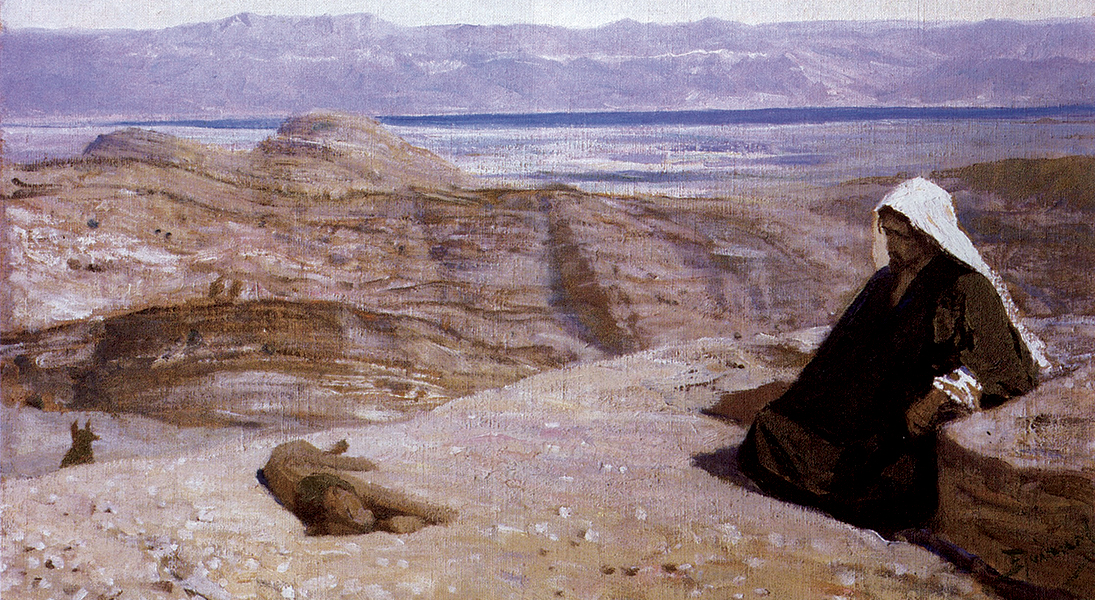
Vasily Polenov (1909), “Christ In The Desert”

The Parable of the Lost Coin

Friday’s Column: Learning From Lehman

IMG_3998

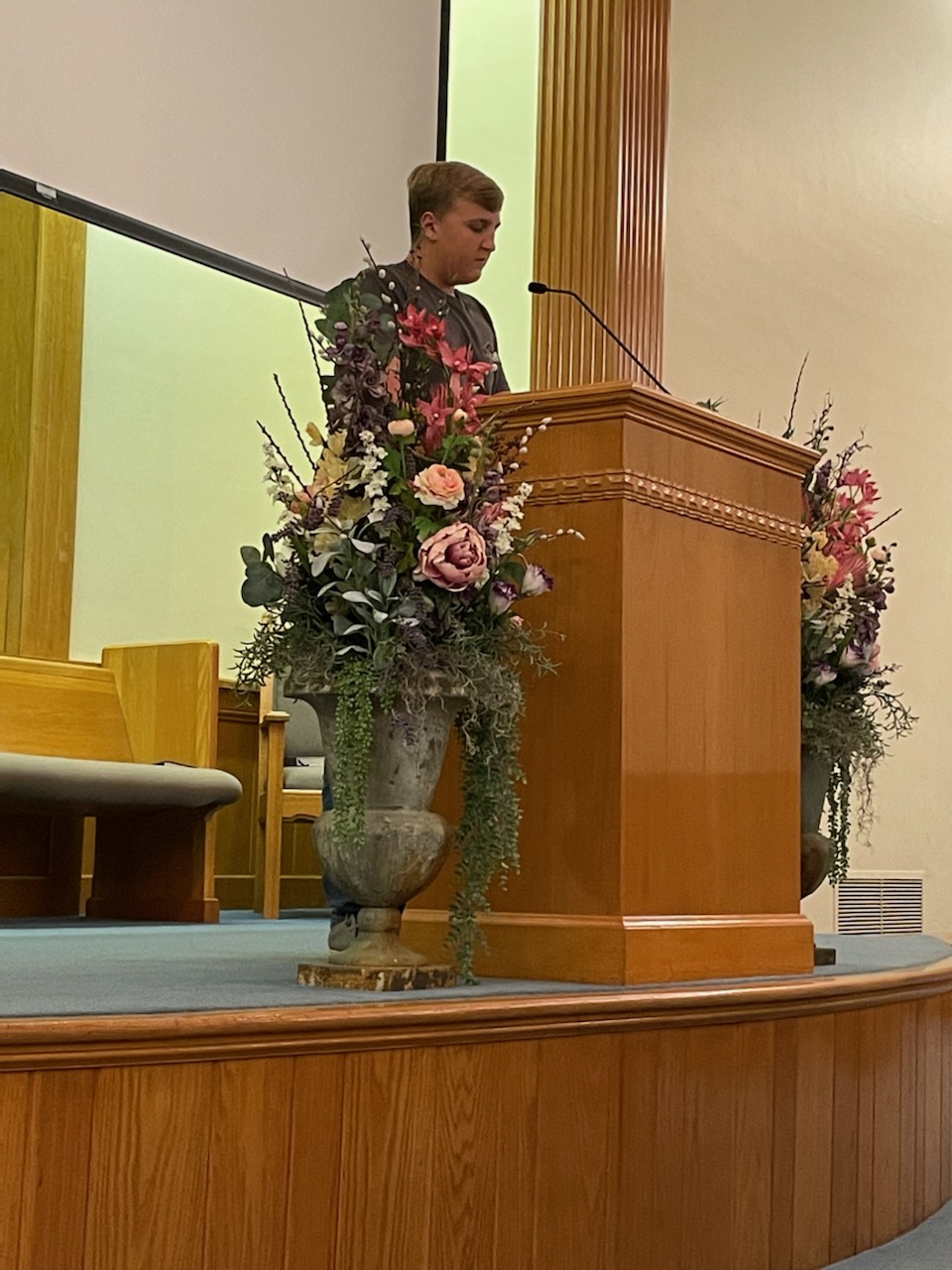
Kason Eubanks

A little boy was riding his bike in the cemetery while his mother ran.  Obviously this mother isn’t very bright because who in the world runs in a cemetery surrounded by dead bodies.  Anyway, this boy rode his bike along the path and eventually could not find his mother.   After looking and calling for her, he became frantic.   His mother was also frantic at the far end of the cemetery. She picked up her pace and ran to retrace her steps. The further she ran the more frantic she became. Almost in tears she saw no sign of the little boy. She ran to the gate leading out of the cemetery. And that is where the little boy was. The boy was very young and I don’t know a lot about this story but what I do know is that I have a lifelong fear of cemeteries.

The Parable of the Lost Coin

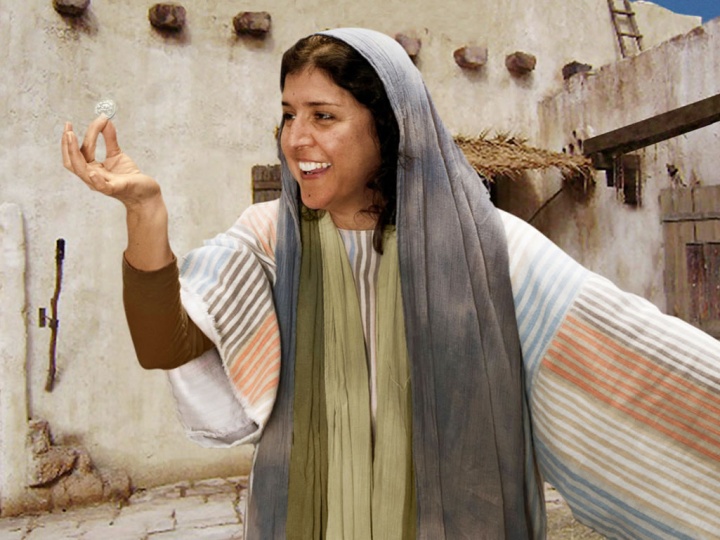
We read about a woman in Luke 15:8.  It states, “Or what woman, having ten silver coins, if she loses one coin, does not light a lamp, sweep the house, and search carefully until she finds it? And when she has found it, she calls her friends and neighbors together, saying, ‘Rejoice with me, for I have found the piece which I lost!’  Likewise, I say to you, there is joy in the presence of the angels of God over one sinner who repents.” This woman in the parable of the lost coin lit a lamp.  She uses the light to see. She knows the light is what she should follow to find the coin.  She also swept the WHOLE house.  She uses her physical energy to find the coin.  She doesn’t wait for the coin to just reappear; she puts effort into looking for it, and she receives her reward by finding the coin.  She spends time rejoicing with her neighbors.

If you lost a coin, would you search your whole house? Would you turn your house upside down just to find one coin? If I lost a coin I would not care one bit about that one coin that I lost. Matter of fact, I have lost a bunch of coins and I have never swept the house just to find them.  

It may be that you haven’t searched for God so you can have a home in heaven in the end, and maybe it is that you want to fix that issue. Or maybe you need to get your life on track. Whatever your need may be, do not remain lost! 

If You’re Reading This You’re Probably A Camel.

Thursday’s Column: Captain’s Blog

tempImagehquiDk

Carl Pollard

One of the many reasons you’ll never find me sewing is because I can never seem to thread the needle. It takes a good 45 minutes of fumbling around, licking the thread, and missing the hole before I finally get it. This is because the eye of your average sewing needle is approximately 0.6 mm wide. Or a better way to describe it is about the width of two periods placed side by side. Now try to imagine your average camel that stands at over seven feet tall and weighs 1300 pounds fitting through this space that is so small a toothpick can’t even fit through it.
 
Jesus uses this exact illustration in one of his interactions with a ruler during His earthly ministry. This account is found in three of four gospels, Luke, Mark and Matthew.
 
Jesus met many different people in His ministry on earth, from those of weak faith to great faith, from those in opposition to those in support. The account in Matthew 19 stands out for a few reasons. It applies to us more than we realize. We normally don’t think of ourselves as being rich. Rich is Bill Gates or Jeff Bezos. Many of us are richer than we think. For example if you earn $25,000 or more annually, you are in the top 10 percent of the world’s income-earners. The average income in America is $56,180. In America, if you make $32,000 you are considered to be apart of the poor to near poor income bracket, and yet even then you’re still making three times more than the average person worldwide. All of this to say, we are rich. Which makes what Jesus says to the rich young ruler hit a little closer to home.
 
Matthew 19:16 says, “And behold, a man came up to him, saying, “Teacher, what good deed must I do to have eternal life?” From the outside looking in, this person had it all. He was young so he had lots of life left to live. He was rich so he had no worries financially. He was a ruler so he had power and authority. While he had all of these qualities, he felt a need to go to Jesus for help.
 
The rich young ruler made many right decisions. He came at the right time (while he was young). He came to the right person (he ran and knelt at the feet of Jesus Mark 10:17). He asked the right question (“how can I inherit eternal life?”).
He received the right answer (Jesus tells him the truth). BUT…he made the wrong choice (he left the Lord broken-hearted).
 
The rich young ruler came to Jesus and asks, “what good deed must I do…?”
This question is singular. He was looking for a single action that would save his soul and give him eternal life. Sadly the action Jesus tells him to do was too much for him to handle. His riches kept him from salvation. If you live in America chances are Jesus would say to you, “How difficult it is for you to enter the kingdom of God.” May we never let what God blesses us with keep us from spending an eternity with Him.

Keeping It Together

Wednesday’s Article: Third’s Words

Gary Pollard

Peter dropped a bombshell on the early church: “Everything’s about to end…” (I Pet. 4.7). For those early Christians, that meant death was close. Our natural reaction when facing imminent death is usually panic, followed by desperate attempts at self-preservation. History (even recent history) has shown us humanity’s trend when faced with potential calamity.

So, what does God expect us to do when we face the end? We’ll look at I Peter 4 for answers.

  • Be reasonable and self-controlled for the sake of our prayers (7). God can’t work with us when we’re freaking out.
  • Love each other with dedication (8). Love hides mistakes, and we’re full of them. When everything falls apart, we have to lean on each other.
  • Take care of each other without complaining (9).
  • Use your abilities to help each other (10-11). This could be through finance, words, or serving each other.

More could be said about this! The bottom line is that we can’t react like everyone else. When everything falls apart, we should stand out in a good way. We should be lights in a dark room. Our response to crisis could very well attract people stuck in darkness. We could not possibly help our fellow man more than by giving them the same hope we have!

A Box Of Mushrooms

Tuesday’s Column: Dale Mail


Dale Pollard


It’s special to receive a gift from someone who truly cares. You know why? Because they know you, and they know what you like. If someone got me a box of mushrooms for my birthday, I’d assume that person didn’t know me very well. Mushrooms are a fungus and should never be consumed— in my humble opinion.

Let’s take a moment to think about how well the average person in this world knows Jesus. Many people would say that Jesus was a great guy. Some would say that He was a good teacher, and still others would say that Jesus was an important figure in world history. All of those things are true. But, how well do they know Him? 

Too often phrases like, “well the Bible says…” or “well Jesus said…” are thrown around thoughtlessly, but there’s no biblical backing behind the words spoken. It happens in the world, and truth be told it happens in the body of Christ. Usually it’s said when we’re trying to make a point or when we don’t or can’t remember where some scripture is, or maybe even what that particular scripture actually says. It’s as easy to declare “Jesus says” as  “Simon says.” 1 John 17:3 it says, “This is eternal life, that they may know you, the only true God, and Jesus Christ whom you have sent…” Now, without ripping this out of context, you might notice the simple phrase, “that they may know…Jesus Christ.” There was a reason that Christ came. He came so that we might know Him. What are we doing in our daily lives that is helping us to know Jesus better? 

Communicating with Him, and letting Him communicate with you is vital to a healthy and intimate relationship when it comes to your spouse and certainly— your Savior. 

Our God Is An Awesome God!

Monday’s Column: Neal At The Cross

Neal Pollard

Are there songs that really pump you up in your faith? While there are several that strike that chord in me, none do that more than the song, “Our God is an awesome God.” I know the melody helps, but just that short, sweet, and profound reminder puts wind in my spiritual sails. It reminds me that I can overcome because of who He is.

Psalm 104 is a much more detailed, exhaustive song that lays out how “very great” our God is. It is exciting to think about who we are serving, and sobering to think of the cost of rejecting Him. Look at the awesomeness of God.

LOOK UP (1-4)

My boys call me “sky guy.” I am known to take some pictures of sunrises, sunsets, and skies in general. I remember a night at the Ngorogoro Crater with our oldest son, Gary, when the sky looked, as the late Andrew Connelly once described it, like diamonds laying on black velvet. I remember looking over the Caribbean Sea with Kathy in Cozumel, Mexico, with the moon above us and reflected in the water as yellow as gold. But, I get the same sense on many nights when I cut off the porch light and walk out my front door. God did that!

God’s garments are splendor, majesty, and light (1-2). He stretches out heaven like a curtain, rides the clouds, and walks on the wings of the wind (2-4). How can anyone look up and fail to see God?

LOOK AROUND (5-23)

Where is the most beautiful place on earth? Often, we could say it is wherever we are at the moment. Creation’s beauty is so diverse and its complexity is so incredible. Look at its order and durability (5). Think back to how He changed it all through the flood, using water to raise up mountains, form valleys, and then prevent it from ever happening like that again (6-9; Gen. 9:11). Look at how he sustains us and all creation with water (10-11,16), food (13-15), habitat (12,17-18), seasons (19), and daylight and darkness (19-23). The earth is full of His possessions (24), the sea (25), animals (25), the sea and its wonders (26). He sustains and provides and He shows His power (27-30). On the first hike my family ever took as residents of Colorado, in Rocky Mountain National Park, we met a young woman on a trail. We had in common the fact that we had all just moved there from out of state.  We told her why we had moved, to work with the church in Denver. She, though very polite, said that she moved out there to get away from God. We were all standing, facing such incredible grandeur, and I thought, “Good luck with that!” Where do you go to get away from God when His fingerprints are everywhere? 

LOOK BEYOND (31-32)

As the psalmist begins to wrap up this tribute to God’s awesomeness, he speaks of God’s unlimited power. He makes earth tremble and mountains smoke (32). It gives Him glory and gladness (31). Really, this point is made throughout the entire psalm. Everything we see is a reflection of the One who is above all, through all, and in all (Eph. 4:6). 

LOOK WITHIN (33-35)

In a psalm paying tribute to creation, what should be my response? How should it change and shape me? I will sing to Him as long as I am (33). I will meditate about Him (34). I will be glad in Him (34). I will follow Him, knowing what awaits the sinner and the wicked (35). Listen to the psalmist’s summary: “Bless the Lord, O my soul. Praise the Lord!”  What I see above, around, and within me should melt my heart in praise. It should leave me singing every day, “Our God is an awesome God!”

(taken near the summit of Torrey’s Peak, 2018)

YOUR JUNK DRAWER


Sunday’s Column: Learning From Lehman

Dale Wiley

 
I read recently that one of the fastest growing business is storage units, closely following the Dollar General Stores. People have more ‘stuff’ than places to put them.
 
In our house, we have storage units we like to call  ‘Junk Drawers’. If we have an unexpected visitor we’ll do a swipe of stuff into the nearest drawer to hide all remnants of our ‘clutter’. I recently performed an ‘uncluttering’ and found some interesting items I forgot still existed. 
 
Items included:
  • 10 old TV remote control batteries that I hoped would regenerate but found that it wasn’t meant to be. 
  • 62 ink pens, each representing one of our many banks in the area. 
  • A 5 year old receipt from Auto Zone on a lawn mower battery with a 24 month guarantee. 
  • Some eclipse glasses from our big one 3 years ago. We have to be ready for the next one.
  • A receipt from Jim Fuqua Appliance Repair dated 1987. Although we don’t have the washing machine and Jim has since retired, a lifetime guarantee was promised and I holding him to it.
  • And finally, a love letter from my fiancé from 1972. After 48 yrs of marriage, She was disappointed to find it was in the junk drawer, but is now happy to have it framed and hanging on our bedroom wall.
 
You know, it’s hard to throw away old stuff and our old ways.
Eph 4:21-24 says to get rid of the Old Self and to put on the New Self.
Col 3:9-10 says to lay aside the Old Self and put on the New Self.
 
It could be that the drawers represent our lives. What we put in the drawers or leave in the drawers is up to us. We have the freedom to fill our lives with ‘junk’ or rubbish or with whatever the world gives us, or we can make sure we put  ‘in the drawer’ The things of Christ. 
 
Paul, in his letter to the church of Ephesus, pointed out some things that may be in the drawers of our lives, that we need to make a conscious decision to avoid, to lay aside, and to clear out. Look to Eph 4:17-32. Especially clear out  deceit, falsehood, anger, unwholesome words, bitterness, wrath, slander, and malice. But what happens if we just clear out the junk and then put the drawers back into the cabinet, empty?  How long will that cabinet stay empty? 
 
A 17th Century philosopher wrote, “There is a God-shaped vacuum in every person that can only be filled by the Creator and He is made known through Jesus Christ”. 
 
So, we just can’t leave the drawers of our lives empty…because something or someone or specifically the devil is always ready to creep in and fill it up again.  First Peter 5:8 reminds us to be vigilant against that adversary waiting to devour us..
 
Find the open, self-explanatory solutions to our ‘Junk Drawer’ dilemma in Col 3, 8-17.
 
  • Verse 8…To put them aside.
  • Verse 10..To put on the new self.
  • Verse 12..have a new heart.
  • Verse 13..To forgive.
  • Verse 15..Let the peace of Christ rule your heart.
  • And especially, “Beyond all things, Put on Love”. The perfect bond of unity, doing all things in the name of The Lord Jesus (Col. 3: 14-17). 

How Satan Tempts

Thursday Column: Captain’s Blog

carl-pic

Carl Pollard

 
Genesis 3 records for us the fall of man. This account reveals to us the methods Satan uses to tempt us, and the choice that changed the course of the world. We can learn a lot about the devil in his first interaction with God’s creation.
 
“Now the serpent was more crafty than any other beast of the field that the Lord God had made. He said to the woman, “Did God actually say, ‘You shall not eat of any tree in the garden’?” And the woman said to the serpent, “We may eat of the fruit of the trees in the garden, but God said, ‘You shall not eat of the fruit of the tree that is in the midst of the garden, neither shall you touch it, lest you die.'” But the serpent said to the woman, “You will not surely die. For God knows that when you eat of it your eyes will be opened, and you will be like God, knowing good and evil.””
 
We don’t know how long Adam and Eve were in the garden. There is no timeframe between chapter 2 and 3.
It could’ve been a month, a year, a century that has gone by. Whatever the time frame, Satan comes to Eve and places doubt in her mind. This is quite possibly the worst lie ever told. “Did God really say…?” While Satan doesn’t physically appear and speak to us today, he still uses this same tactic. He has destroyed many churches’ worship to God. “Did God really ask for music with no instruments?” “Did God really say for the women to be silent?” By casting doubt Satan has corrupted the worship and faith of millions.
 
After he casts doubt, he then blatantly contradicts God, “you will not surely die.” And once again he continues to blatantly contradict God’s word today. The message Satan tells the world is completely different from what God has given to us. Satan contradicts the Father. Rather than “love you neighbour as yourself” he says “love yourself above your neighbour.” Rather than “serve God and keep his commandments, he says “serve yourself and listen to no one.” Satan contradicted God in the past and continues to do so today.
 
After he casts doubt and blatantly contradicts God, he then offers power, “you shall be like God.” Obviously in their close relationship with God, they understood who created the world. The created wanted to be like the creator, but the devil offered a lie. Satan only has one thing to offer– sin. He oftentimes portrays this lifestyle of sin as a lie.
He offers happiness and joy, but at the end of the day all he has to offer is sin and regret.
 
Eve was tempted by Satan, and he used the same methods then as he does now. Eve experienced:
  • The lust of the flesh (she wanted to eat of the fruit)
  • The lust of the eyes (literally says “it was a delight to the eyes,” v.6)
  • Pride of life (she wanted to become wise and have power)
The devil always knows what to say in order to get us to stumble. We must be vigilant and ready to refuse the tempter when he appears.

Soldiers Of Christ

Wednesday’s Column: Third’s Words

IMG_3575

Gary Pollard

Christianity is important to us. Making sure we live the right way is important to us. Because our loyalty to God is important to us, and because our lifestyle is characterized by avoiding evil, many believe that our mission in life is to defeat evil. Some Christians believe that this involves social activism or influencing public opinion. Nothing about this is intrinsically wrong, but it cannot be our primary focus. 

Evil exists, period. Humanity introduced evil when we disobeyed God. As we noted last week, evil is on borrowed time thanks to Jesus, but it will exist until the end of time. So, what’s our job if fighting evil isn’t top of the list? 

Christians are people who decide to follow God. That means living based on his moral code, not on humanity’s. That means we avoid practicing morally evil things. We recognize the influence that evil has on the world. We understand the consequences of choosing evil over God. 

Christians are recruiters! We’re a tight knit group of people with shared goals, views, and struggles. Part of our job is to keep each other strong (Gal. 6.10; I Pet. 1.22; Heb. 3.12,13). The rest of our job is to recruit people to populate heaven (Matt. 28.19; Acts 20.24; Jn.15). God also expects us to be good citizens and live quiet, peaceful lives (Rom. 13; I Pet. 2.13; I Tim. 2.2; I Thess. 4.11). 

Jesus defeated evil (I Jn. 3.8, 4.4; Col. 2.15), and he will personally destroy it forever at the end (Rev. 20; II Pet. 3.7). For now, though, evil is inevitable (I Jn. 5.19). Our job is to share God’s hope with those who don’t have it. By avoiding evil ourselves and helping others escape its influence, we help diminish its influence on the world!