Friday night’s snow storm was almost blizzard-like, in manner if not in measure. With the winds, visibility was near zero. The drive from the church building to our house, all 8.8 miles of it, had to be negotiated at speeds of about 20 miles per hour at times. It was the first night of our gospel meeting with Melvin Otey, who did an excellent job! In attendance were all of our sons and their wives. I’m grateful that all three of our children learned to drive in Colorado and have a lot of experience handling snowy conditions. But, as a parent, you are never without concern. Thanks to Life360, I could watch their progress. And I did. I watched as one by one each made it to their homes. Only one of them did not. I saw that one of them was stuck at “0 MPH” kind of in the middle of nowhere. Thanks to cellphones, I could call him. Turns out that he had slidden off the road and was stuck. Another of our sons was not far away and he was able, with difficulty, to reach them and take them to his home. I watched every bit of it “unfold” on Life360. The saga ended with their safe arrival at 12:30 AM. They were able to pull out his truck without difficulty or damage. It turned out as well as it could.
This all made me think about what the heavenly perspective must be like. The Father does not rely on an App to see fuzzy details of His children’s situation. He sees with the perfect omniscience and is present with the perfect omnipresence of an Almighty God. While He has the power to do whatever He pleases, He has bound Himself to allow His children to exercise free will. When one of His children drifts into danger, He is dependent upon others of His children to rescue them. I am reminded of how anxiously He desires their safe return, how thankful He is when others of His children intervene, and how joyful He feels when He sees His children safe at home. Do you remember in the parable of the prodigal son? Luke 15:20-24 shows the joy and celebration of a father overjoyed that his son, astray in a sinful condition, had come back home. He could not contain his happiness. That story depicts God.
It also makes me appreciate Paul’s words in Galatians 6. “Brethren, even if anyone is caught in any trespass, you who are spiritual, restore such a one in a spirit of gentleness; each one looking to yourself, so that you too will not be tempted. Bear one another’s burdens, and thereby fulfill the law of Christ” (1-2). Or James’ closing admonition, that “if any among you strays from the truth and one turns him back, let him know that he who turns a sinner from the error of his way will save his soul from death and will cover a multitude of sins” (5:19-20). It should be the natural response of one brother who knows of another brother overtaken and astray to act, to “restore” and “turn him back.” The Father is happy when this happens! The stakes are infinitely higher than physical safety. Eternity is in the balance! Is there a brother or sister out there who needs you and me to rescue? If so, it is time for us to act! Consider the Father. Consider the brother. Let’s go get them back!
Armando Alvarez was a former gang member that was giving an interview with Jesse Watters. They were talking about crime and what’s driving people to commit crime. Armando said that the biggest reason is they think they have to be better than everyone else. It is like a game in a way, he said.
The gang members think they will be happy with more and more things. They listen to what the world says will cause happiness. They compete with each other to see who can gain the most. They don’t know that there is an eternal place that you get to choose at the end of this life that will lead to eternal happiness. I would like to share just five scriptures about why we should not do our own thing but instead listen to God.
First, in Psalm 32:8 God is telling us that he will instruct us in the way we should go.
Then, Isaiah tells us in chapter 55 and verses 7-8 that our thoughts are not his thoughts and our words are not his words and our ways are not his ways. He is telling us that we need to follow God’s instruction because he knows what we don’t. He also sees all things that we cannot see.
Also in Jeremiah 17:7 we read that there are a lot more benefits of following God instead of leaning on our own understanding. There is a story about a kid in school that never hung up his jacket. The teacher warned him many times that if he left his jacket on the floor she would throw it away. The next time he left it on the floor she threw it away with intentions of getting the jacket out shortly after. That is until a kid got sick and threw up in the same trash can. The kid should have listened to the teacher. When we lean on our own understanding bad things can happen.
Then, Psalm 37:3-4 tells us that we should always have faith in him and all that he says to us.
Finally, Proverbs 3:5-6 ties back to Jeremiah about not leaning on our own understanding but trust in Him with all our heart, soul, and mind.
The question I want to ask you today is, “Do you listen to God’s instruction or do you do everything on your own?” I want to challenge us to go through the week and put God first however hard it may be to do it. We should let our light shine always for Christ and hopefully plant a seed in somebody’s life whether we know the person or not.
God’s instructions give us peace here on earth. We read in Romans that If God is for us, who can be against us. If you realize that you haven’t been following God’s instructions as you should and feel the need to make some changes in your life, know that God will always be with you.
Though worship consists of five elements that worshipers may or may not participate in during every assembly of the saints, the one aspect of worship receiving the most attention on Sunday, at least, is the Lord’s Supper (aka Communion or Eucharist). One might say this is because the observance of the Lord’s Supper is exclusive to Sunday, or should be. However, I think we forget that giving of our means was commanded on every Sunday as well (1 Corinthians 16.1-2). So, it is not the relative rarity of this action compared to singing, prayer, and Bible study, making it precious to us. Instead, it is the purpose and meaning of the Lord’s Supper.
The Lord’s Supper is an item of worship that is horizontal and vertical in its scope; it is something done to demonstrate our relationship with God and our fellow Christian. Though not as often referenced concerning the Lord’s Supper as 1 Corinthians 11.23ff, Paul highlights the communal aspect of the Lord’s Supper in chapter 10. He states that we cannot partake of the elements of the Lord’s Supper with our Lord and likewise eat and drink at the table of “demons” (10.21).
Contextually, Paul’s words refer to the issue of dining in a pagan venue, even while professing that pagan gods are not real. The Corinthian Christians could not engage in activity, implying they shared the same faith with pagans. Even if they knew that those gods were not real, they created misunderstanding among the pagans and other Christians. So, while we commemorate our Lord’s death, burial, and resurrection with the Lord’s Supper, we share in the same hope and devotion towards the same.
Yet there is another characteristic of the Lord’s Supper, making it precious to us. The Lord’s Supper provides us with the opportunity to evangelize. Paul states that this memorial feast is one we will keep until our Lord returns (1 Corinthians 11.26). And the very fact that we engage ourselves in its observance proclaims “the Lord’s death.”
I am mindful of the opportunity presented by the Passover to fathers in their children’s instruction (Exodus 12.24-27). When the children asked, “Why do we observe this rite?” the fathers could explain the Passover and God’s deliverance of the children of Israel. So likewise, the child or visitor may ask, “Why do you observe the Lord’s Supper?” Or “Why do you observe the Lord’s Supper weekly?” In response to these questions, we can proclaim the Gospel of Jesus Christ.
Despite being viewed as the “centerpiece” of the Sunday assembly, it seems odd how swiftly some congregations seem to fly through their observance of the Lord’s Supper. As it is a door to evangelism, one would think we should linger longer therein. Not only would the time of special communion be extended, but it could serve to plant seeds in good soil, which, if watered by Bible study, will enable God to provide an increase.
So, next Sunday, as we observe the Lord’s Supper, let us remember everything making it a memorable feast, including personal introspection (1 Corinthians 11.29-31). We will demonstrate our fellowship with our brethren and the Lord. And we can use the time evangelistically. Therefore, let us provide non-Christians an opportunity to learn about the Gospel as we partake of the bread and drink the cup.
A person that feels loved through physical touch is looking for connection.
They feel love when they are close to their spouse, and they experience love through the physical side of their relationship.
While God doesn’t physically touch us today to show His love, He has done it in the past.
Mark 1:40-42 says, “And a leper came to him, imploring him, and kneeling said to him, “If you will, you can make me clean.” Moved with pity, he stretched out his hand and touched him and said to him, “I will; be clean.” And immediately the leprosy left him, and he was made clean.”
In the time of Christ, leprosy was a disease that immediately made you an outcast. If you had this disease you were considered unclean and you were forced to live in isolation from everyone else. Lev. 13:45-46 tells us, “The leprous person who has the disease shall wear torn clothes and let the hair of his head hang loose, and he shall cover his upper lip and cry out, ‘Unclean, unclean.’ He shall remain unclean as long as he has the disease. He is unclean. He shall live alone. His dwelling shall be outside the camp.”
The leper was forced to live alone because this disease was spread through physical touch.
This is what makes what Jesus did even more incredible. Jesus didn’t have to touch the leper, but He went above and beyond by physically touching him.
It says, “Moved with pity, He stretched out His hand and touched him.” Through this we see the compassion of Christ. Mark through inspiration makes it a point to tell us that Jesus physically touched this leper. God expressed His love through the physical touch of a compassionate Savior.
This same loving Savior is who we serve today.
While He doesn’t personally touch us today, He has given us a family to physically care for us. God loved us so much that He made sure we would never be absent of physical comfort and encouragement. The church is a place where we can experience comfort and compassion from fellow-believers, a hug when we are struggling and a shoulder to cry on in times of grief.
Contained within the pages of scripture we read of a truly touching Savior. So how will we respond to the love of God?
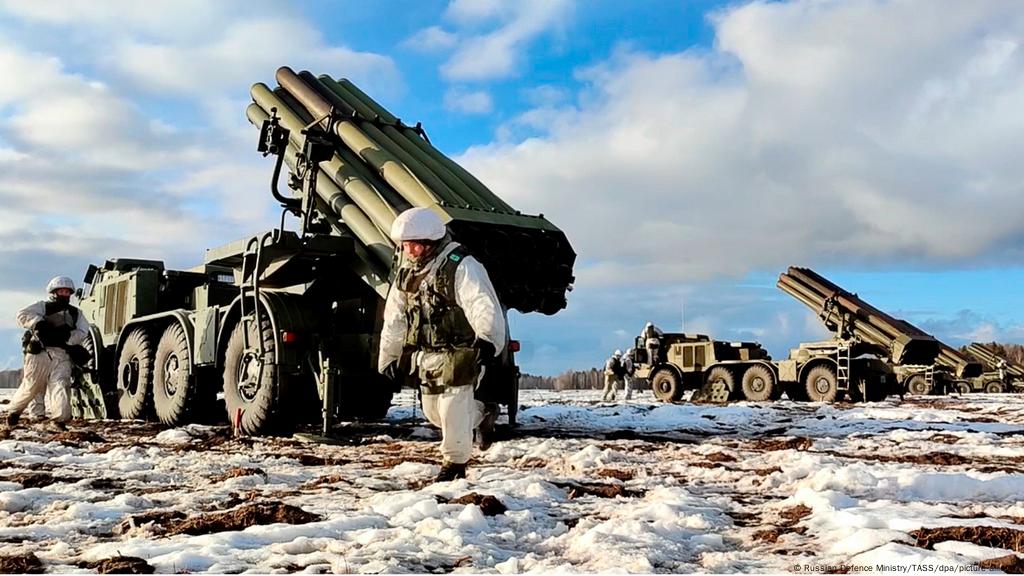
The war in Ukraine is tragic, with loss of life in the several thousands already. Families have been displaced. Untrained civilians fiercely resist invasion. NATO can’t make up its mind, leveling sanctions as though at war, but not declaring war formally. This – among other factors – is escalating an already volatile situation. A great many feel as though we’re at the brink of WWIII.
Maybe we are. Humans tend to show their very worst or their very best in times of crisis. When the pandemic started, millions forgot their humanity. Fights broke out in grocery stores, people forgot what patience, selflessness, and compassion were, and hoarding was the name of the game. Besides all that – as if we needed another polarizing issue – families, friends, and neighbors bitterly fought about masks and vaccines and social distancing.
But for many (most?) other people, it brought out their best. People checked on each other regularly. Personal feelings were put aside to accommodate the apprehension some felt. Resilience and benevolence was/is strong. The church was heavily invested in each others’ lives.
War is a tragic part of the human experience. Some may be fought for good reasons, but war itself is never good. We all hope the conflict in Europe will be resolved soon and with minimal loss of life. It might not, though. So what will we do?
Train the Brain – Determine to respond with levelheadedness and compassion, period. If it comes to war, we won’t forget our humanity. We will look out for others and act rationally. Our conditioned response will be, “How can I help other people?”
Be Like Jesus – He didn’t exploit weakness to gain an advantage. He didn’t stockpile supplies to the detriment of others. He wasn’t concerned about maintaining his standard of living. He fed people, healed people, gave them counseling, and gave them hope. That will be our response, whatever the future holds.
Be Cool – We might get scared, but it’ll never override our desire to look out for each other. We’ll demonstrate genuine faith in the creator by not acting like people who are controlled by fear.
Those are easier said than done. But we can do them, and I’m confident that we will. If the threat never exceeds high fuel prices or inflation, we’ll have made the best of a bad situation. If the threat becomes war, we’ll make the best of a bad situation. Dark days make it that much easier to shine God’s light. So that’s what we’ll do!
The Bible is filled with so many helpful verses on daily living. Many of us can find it difficult at times to work with people, especially if we’re having a stressful day. Here are eleven practical passages that will help us in our interactions with others this week.
A soft answer turns away wrath, but harsh words stir up anger (Proverbs 15:1)
The wise of heart is called perceptive, and pleasant speech increases persuasiveness (Proverbs 16:21)
Be gentle and show courtesy to all people (Titus 3:2)
Do good to everyone (Gal. 6:10)
Bear one another’s burdens (Gal. 6:2)
As you wish that others would do to you, do so to them (Luke 6:31)
Discern your own thoughts, identify your intentions (Heb. 4:12)
Treat others like you would treat Jesus. How would you interact with Him? (Matthew 25:40)
Season your speech with grace. It’s the Savior’s All-Spice for every relationship-building goal (Col. 4:5-6)
Praise God and be joyful, it attracts people (Psalm 100:1-5)
Be ready for every good work, speak evil of no one, avoid quarreling, be gentle, show courtesy to all people (Titus 3:1-15)
One thing you might notice about these scriptures is how many of them deal with our speech. According to the book of James, the tongue is incredibly difficult to tame. Reading these verses, it becomes clear that there are several advantages of placing the bridle over our lips.
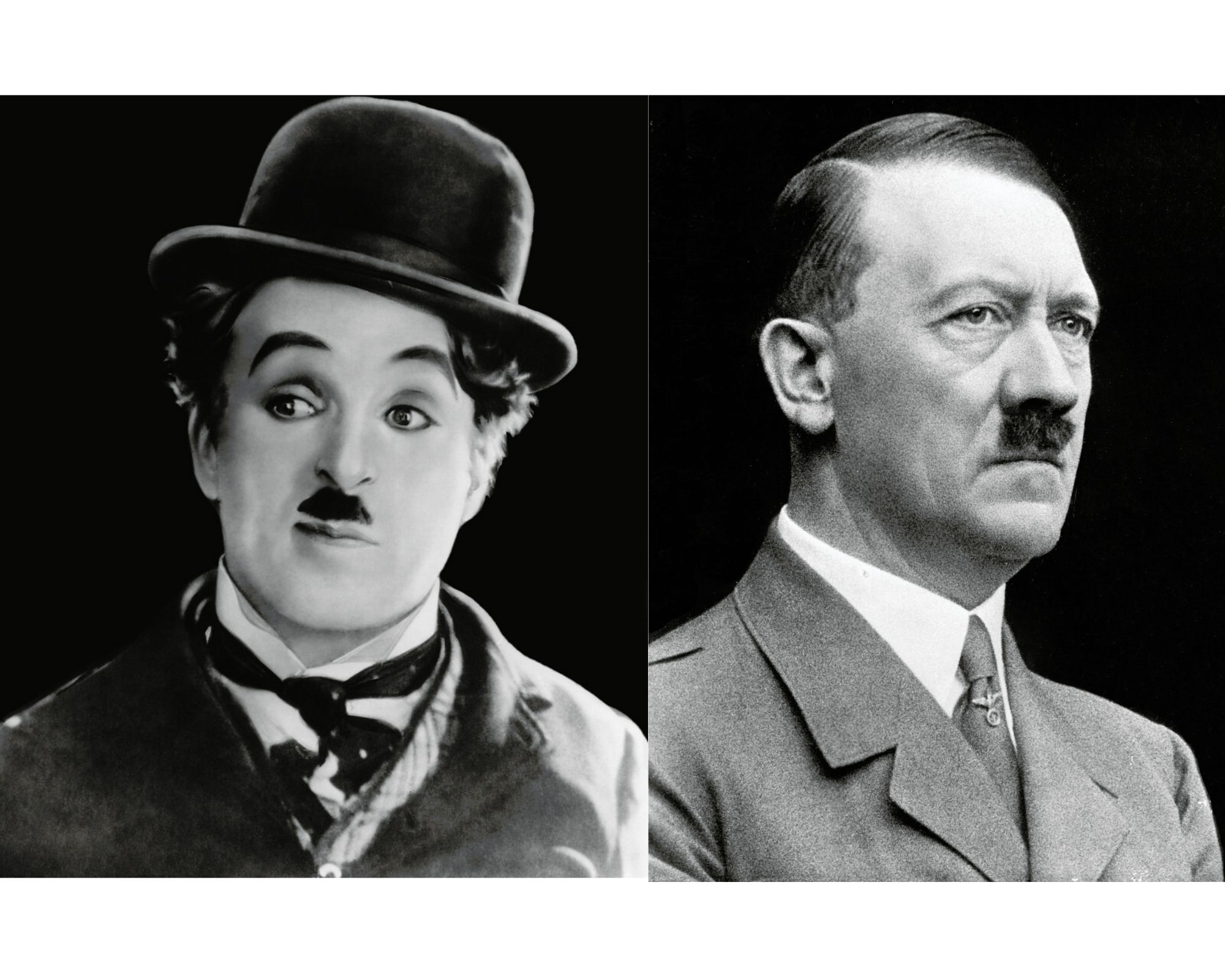
They were born within four days of each other, both on the European continent. Both adored their mothers and resented their drunken fathers. Both grew up knowing real poverty. Both were incredibly intense and ambitious. Both were mesmerizing performers who commanded crowds. Both sported the same, strange mustache and bore a striking resemblance.
One became a comedian who made people laugh. The other became a dictator responsible for the death of millions. Neither were moral giants, but each used their influence for very different ends.
It doesn’t matter where or when one is born. To a certain degree, we do not have to be defined by the home we grew up in. Being poor is not an automatic determiner of either success or failure. Our looks are a neutral commodity. Our talents and opportunities are a blank canvas we choose to decorate as we please.
The parable of the talents in Matthew 25:14-30 is a Divine reminder that we all take what God gives us and decide what we will do with it. Nothing is foreordained or forced upon us. We determine, both by action and inaction, to be a servant or slothful. What we must be aiming for is much greater and higher than earthly ambition, whether to be loved or feared by the world. Our purpose must be to be “a vessel for honorable use, set apart as holy, useful to the master of the house, ready for every good work” (2 Tim. 2:21). The good news is that where, when, and how you were born is a fact, but it does not have to define you. If we empty ourselves of ourselves and let Him fill us, He will define us!
Luke moves from a sample of Jesus’ teaching and work in the synagogues to His teaching and work among the common people in Luke 5:1-11. For the first time, in Luke five, we see individuals responding to His teaching by following Him. Though Luke only identifies one of the men at this point, the three other gospel writers mention that Simon Peter’s brother, Andrew, was also in that number. Matthew and Mark tell us that the men in the other boat were James and John. These four fishermen would soon “be catching men” (10). Luke seems to focus his attention on the reaction these men had to Jesus, His teaching, and the impact the miracle with the fish had on them. Their reaction to Jesus mirrors the reaction we need to have when called by His Word to follow Him.
DISCIPLESHIP REQUIRES EXPOSURE TO JESUS’ WORD (1-4).
Luke shows us Jesus teaching in close proximity to the fishermen, but gives no clear indication of how much or if they are listening to Him. He does show how compelling Jesus’ teaching is and how the people were listening (1). John tells us, though, that Andrew had already been listening to Jesus and was trying to persuade Simon to follow Him (1:40-42). Paul’s teaching that faith comes by hearing the word of Christ (Rom. 10:17) will be apparent in the lives of these followers, as Luke will demonstrate in this gospel and the book of Acts. We cannot follow one whose ideas, instruction, and incentives we do not know or believe.
This is not a one-time act. Submission is a process that must be practiced continually. But, no one can choose to follow who does not surrender his or her own will to Christ’s (cf. 9:23-26). Jesus, the carpenter, tells these fishermen how to fish. Despite their all-night total failure at their craft, they trust Jesus’ word. Simon says, “Master, we worked hard all night and caught nothing, but I will do as You say and let down the nets” (5). Success followed submission, something they would see in greater, more important ways as they continued to follow Him. Jesus asks us to do difficult and perplexing things. Our task is not to question, but simply to surrender.
DISCIPLESHIP REQUIRES A HUMILITY TO SEE OUR SINFUL SELVES (8).
Simon will show traits which prove him to be a work in progress, from impetuousness to inconsistency. Yet, Jesus could see his heart and the inspired Luke sheds light on it, too. When Peter sees the power of His Lord, he says, “Go away from me Lord, for I am a sinful man!” (8). All of us will disappoint Jesus in our walk with Him, but He loves a heart that harbors no stubborn pride. This is the man Jesus will choose as a leader and spokesman, one who does not try to project perfection and superiority. So it is today (1 Pet. 5:5-6).
Exposure to Jesus left these fishermen “seized” (enclosed, completely taken hold of) with “amazement” (9). It made them “fear” (10). Others felt emotion like this who were exposed to Jesus’ power and preaching, and they audaciously reject Him (4:22-30; 8:26-39). These four men, amazed and afraid, will be prompted by this to make the life-changing (and life-giving) choice to follow Him. I have seen people in Bible studies and in their pew who realize the truth of the gospel, showing (and even telling of) remorse, dread, and anxiety over their lostness, but who just cannot make the decision to deny self and follow Jesus. I cannot think of a greater tragedy. In my own life, it is not simply enough to feel sorrow over my sin. I must allow this to move me to obedience (2 Cor. 7:9-11).
DISCIPLESHIP REQUIRES RADICAL CHANGE (11).
Luke will record several positive examples of people whose encounter with Jesus is transformational! Think the sinful woman (7:36-50), the demoniac (8:26-39), the grateful leper (17:11-21), and Zaccheus (19:1-10). Some, though, were just not willing (18:18-27). Luke records multiple occasions where Jesus warns that discipleship requires radical change (cf. 9:57-62). Other writers will contrast it as putting off the old man and putting on the new man (Eph. 4:22-32; Col. 3:5-17; Heb. 12:1; 1 Pet. 2:1ff). Here, Luke simply relates how that they immediately left everything and followed Him. While that may not be a literal necessity today, we cannot hope to have eternal life while holding onto this life so much that we are not following His will.
These men were about to see things they could not have imagined, experience highs and lows they did not know existed, and be given opportunities they could not have anticipated. It wasn’t going to be an easy life; in fact, it would demand everything they had. But it gave them something only Jesus could give them. This hasn’t changed. If we want what they received, we must do what they did!
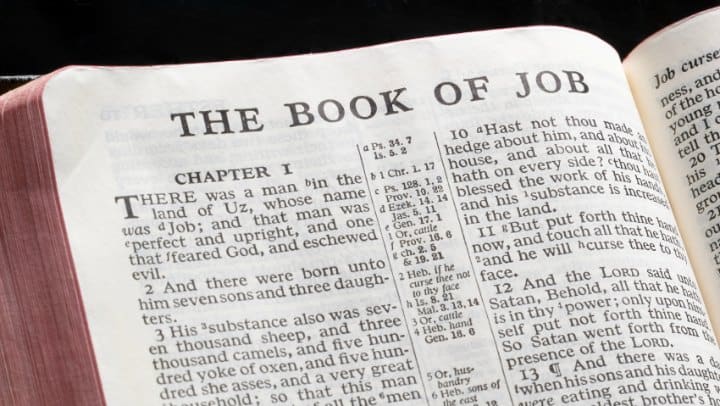
Recently at the suggestion of some teachers and podcasts I listen to, I took some time and in one setting read through whole books in the Bible. If you haven’t done this I would highly recommend it. Just read through the book not looking for anything or zeroing in on any specific point; just read through the book and let it teach you its main themes and allow it to speak for itself. One of the books I recently read through and want to briefly discuss is the book of JOB. We are very familiar with this book and story and can learn a lot of things from it including sufferings, patience, steadfastness, God’s perspectives, and others. However, I would like to share with you what really stood out and stayed with me as I read through the 42 chapters of this book. Job 1:8-9 says,
Then the Lord said to Satan “Have you considered My servant Job, that there is none like him on the earth, a blameless and upright man, one who fears God and shuns evil?” So, Satan answered the LORD and said, Does Job fear God for nothing?
Right there is the true question: “Will you fear and serve God for nothing.” It is not only a question that Satan asks the Lord referring to Job, but it is also for us today. Satan was assuming that Job would have a transactional relationship with God, that as long as he was doing what was righteous that Job would assume that he has earned his blessings or somehow God is obligated to bless him. Do we fall into this mindset that Satan is stating her is verse 9? Is it easy to fear and serve God while things are going good in our life or for fear of punishment? Do we have this transactional relationship that says I have done all these righteous X’s so I deserve these Y’s (blessings)? Would we serve God if everything (wealth, family, health) in an extremely short period of time was taken from us and we were in the situation Job found himself in? Satan is saying that taking comforts of this life away will push even the strongest to curse God to his face. Satan states this in Ch 1:11 and notice that as early as 2:9 Job’s wife actually uses the same language when she tells Job, “Do you still hold fast to your integrity? Curse God and die!”
Sometimes bad things happen because we make bad decisions and we must deal with those consequences. However, Job shows us that sometimes bad things happen outside of our decisions and we do not know all like our Creator GOD. God lays this out in his answer to Job out of the whirlwind in Chapters 38-42 basically stating that, “I created everything and have it all under My control, I AM GOD, even when you don’t realize it and so you must trust Me no matter what circumstances you find yourself in.” In chapter 42 we read exactly what Job did in response to God’s challenge to Job. Now as he repents and fears God he is in dust and ashes. This is the definition of serving God for nothing. Every worldly comfort had been taken from him and he had nothing, not even physical health, and nothing as of yet had been restored to him. But he through great tribulation feared God for nothing except he is God the creator and sustainer of everything.
We do need to serve God just because he is God and the creator of all things but the good news is we don’t serve him for nothing. Read Job 19:25: For I know that my Redeemer lives, and he shall stand at last on the earth; Just as we read Job and see his longing for a mediator between him and God, we now have that through Jesus. God gives us eternal life that can be found in Christ our mediator, not because we deserve it like a transactional agreement but because He is a benevolent, gracious and loving God.
People all over the eschatological spectrum have been watching recent news events with bated breath. Putin’s invasion of Ukraine must be a sign of the “end-times.” To some, in the premillennial camp, Putin is an antichrist. Yes, he has military might and money. And he could undoubtedly become a global dictator ushering in “The Great Tribulation,” which those unlucky enough not to be raptured must endure before Christ sets up His earthly kingdom.
But, to postmillennialist Pat Robertson, Putin fulfills Ezekiel’s prophecy showing that “God is getting ready to do something amazing…”1Postmillennialism is more optimistic than premillennialism with its doom and gloom of the worst trials and tribulations the world has ever seen. So, first, the world will come to Christ, more or less. (Though Robertson believes it will involve warfare.) Then Jesus will set up a kingdom on earth, and we will enjoy a golden age.
There is a big problem with this thinking, though. We have been in the “end-times” since about the day of Pentecost A.D. 30 or 33. In Acts 2, Jesus fulfilled His promise to pour the Spirit upon the apostles (John 16.7; Acts 2.33). Thus filled with the Spirit, the apostles began speaking in tongues, languages they had never studied. We know they were languages rather than unintelligible gibberish because the people listening to them were from various places. The people wondered why they could hear these Galileans speak their native tongues. Peter told them that it was a result of the pouring out of the Spirit upon men, something the prophet Joel wrote would happen during the “last days” (Acts 2.16-21; Joel 2.28-32).
Hence, it has been the “end-times” for about 2,000 years. And what of the kingdom? It might surprise some to hear me say that the kingdom is here. Now, I hear even someone who has only dabbled in theological studies respond, “That just makes you an amillennialist.” No, that is a misnomer. That term means “no millennium” since the prefix “a” negates the following word. It is not a denial of a period of the kingdom’s reign; instead, the Scriptures demonstrate that we are not waiting for the kingdom’s establishment. Jesus told His disciples in Mark 9.1 that there would be those listening to Him who would not die until they had seen the kingdom arrive with power. Therefore, unless there are 2,000-year-old disciples, the kingdom is with us now.
And the kingdom’s present reality is what the Bible teaches. In Revelations, the beloved apostle John wrote that he was already in the kingdom (Revelation 1.9). Furthermore, Paul thanked God for rescuing us from the “domain of darkness” and transferring us to the “kingdom of His beloved Son.” (Colossians 1.13 NASB1995) And Jesus already sits upon His throne at the right hand of God. Note the penultimate verse of Mark’s Gospel: “So then, when the Lord Jesus had spoken to them, He was received up into heaven and sat down at the right hand of God.” (Mark16.19 NASB1995) Jesus will remain on His throne until His enemies are defeated, the last of whom is death (1 Corinthians 15.24-26).
I have only touched the hem of the garment on this issue. There is much more to be said. However, to paraphrase Jude, I had intended to write a different article but thought I should write this one in response to all the “end-times” talk caused by Putin’s invasion of Ukraine. Rather than fear the unfolding of events, take comfort in knowing that you have the ear of a King. Yes, Jesus now reigns and makes intercession for us (Romans 8.34).
Romans 12:1 says, “I appeal to you therefore, brothers, by the mercies of God, to present your bodies as a living sacrifice, holy and acceptable to God, which is your spiritual worship.” What is a holy sacrifice? Holy means, “to be set apart.” It’s living free of moral filth and being devoted to God. A holy sacrifice is one who is devoted to the service of God. Matthew 6:33 says, “But seek first His kingdom and His righteousness, and all these things will be added to you.”
God’s agenda comes first. We are now used as an instrument of righteousness. Romans 6:13 says, “and do not go on presenting the members of your body to sin as instruments of unrighteousness; but present yourselves to God as those alive from the dead, and your members as instruments of righteousness to God.” We should want to be useable in the hands of God! We should also look to accomplish that which is pleasing to God.
Ephesians 5:6-10 says, “Let no one deceive you with empty words, for because of these things the wrath of God comes upon the sons of disobedience. Therefore do not be partakers with them; for you were formerly darkness, but now you are Light in the Lord; walk as children of Light (for the fruit of the Light consists in all goodness and righteousness and truth), trying to learn what is pleasing to the Lord.” Who are we trying to please? If we want to be a holy sacrifice we must be aiming to please God.
People make sacrifices all the time, but think about something or someone you love. It’s easier to sacrifice for family. God is our family, so why do we not sacrifice for Him? If anyone is deserving of sacrifice, it’s God. I once had a pet squirrel when I was 11. My older brother Gary and I saved it from falling out of a tree. Every day I used an eye dropper to feed it milk and nurtured it into an adult.
It would be with me during school, and at night I’d have to stay up super late feeding and caring for it. Stuart the squirrel was great, but to nurture him back to health and care for him took a lot of sacrifice on my part. But I was willing to do it. I loved that squirrel.
Love makes sacrifice easier. How do you feel about living the Christian life? Do you feel like you are sacrificing other pleasures in order to live a life for God? How much does your sacrifice take from you? Be a holy sacrifice when others around you are unholy. Imitate Christ around your coworkers, your kids, your spouse, your friends. Be holy in your service to God and wholly sacrifice your life.
Not much is worse than investing time, emotion, and resources into something that doesn’t pay off. Like spending days working on an engine, only to have the transmission give out. Parents with small children are familiar with the frustration of cleaning their house, then having it trashed nanoseconds later. Or putting time, financial risk, and great sacrifice into starting a business, only to have a terrifically mismanaged pandemic destroy it.
In each of these examples, a person’s reaction to negative outcomes is rarely positive. Having invested so much in something, we hope to have good outcome.
Jesus invested heavily in Judas, only to be betrayed by him. He healed people, brought dead loved ones back, fed people, and gave them hope. He worked very closely with his apostles for years, only to have them miss the point the entire time he was on earth (Acts 1.6; Mk 8.14-32).
I am grateful that he isn’t like us. He doesn’t give up on us when we mess up (I Jn 1.9). He has immense patience with us (II Pt 3.9; I Tim 1.16). But it isn’t blind acceptance of dysfunction — God is patient with our flaws to give us a chance to change (Rom 2.4). God doesn’t make decisions the same way we do!
From our perspective, humanity was a terrible investment. Jesus invested something we aren’t capable of investing, only to have most of humanity reject him. But he didn’t scrap the car, yell at the kids, or harbor resentment. He gives us his patience, his love, and time. It’s up to us to make the most of those things while we’re here!
For the past six days Russia has made significant advancements on several strategic locations in Ukraine. Every news outlet is showing photos and videos of devastation that has already occurred, and it’s predicted to escalate still. There are complicated foreign policies being discussed over topics like NATO, sanctions, and the effects on the rest of the world after Putin’s recklessness.
Many countries are mad, some indifferent, while some cheer on their favorite country like it’s their favorite sports team. It’s chaotic and it’s concerning, but it’s not the Christian’s long-term problem. If this earth was our eternal home then I would be biting my nails and losing my hair. However, Christians all over the world should take comfort in the fact that heaven is a place where there is no war. We should remind each other that in order to make it, we are not required to be Republicans or Democrats. There are two camps in this world, but those aren’t it. The two groups are those who are lost and those who are saved. When you look at your TV or maybe out of your window and you see the death and carnage, we aren’t witnessing the death of heroes and villains. We’re watching souls walk through the door of eternity.
Our focus is easily pulled away from the reality that is only seen through a spiritual lens but it’s the reality that matters the most. The lyrics of two hymns have been strung together in my mind this week, “There’s a Great Day coming and this world’s not my home.”
“Beloved, never avenge yourselves, but leave it to the wrath of God, for it is written, “Vengeance is mine, I will repay, says the Lord.”
My first foreign mission trip was to eastern Ukraine in the Spring of 2002. I returned in 2003, and each time we flew in and out of Kharkiv (which is under siege as I type). We worked with the Bear Valley Bible Institute’s first foreign extension school, but also worked with brethren in the village of Slavyanogorsk.
I took this picture of Slavyanogorsk from the monastery overlook.
We held Bible studies and taught English using the book of Mark and enjoyed success especially with young people and young adults. The influence of the Russian Orthodox Church was strong among the locals, but there was a congregation of about 30 there.
Russian Orthodox monk at the monastery in Slavyanogorsk. Having fellowship with the brethren at Slavyanogorsk. The local preacher at the time, Victor Semikoz, is barely in view (right). Terry Harmon, at the time the director of the Bear Valley extension, is wearing the tie.
On my second trip, Kathy was able to go with me along with several other members of the Cold Harbor Road congregation in Mechanicsville, Virginia, where I preached at the time.
Members of the Cold Harbor and Pikeville, KY, congregations at the Kharkiv airport. Do you see Kathy?
The memories we made together and with our brothers and sisters in Ukraine have left a lasting impression on my mind and my faith. Though I had always known that the church existed in places outside the United States, this was my first tangible experience with them. While we were separated by language and cultural barriers, we were drawn together by our common faith and hope. These first few trips increased my desire to teach and evangelize not only those in other nations, but also motivated me to try harder to do so locally. Those travels to Ukraine were extremely faith-building.
Right now, those brethren are displaced, distressed, and disturbed by the Russian invasion well underway. Their relatively modest houses and apartments have been at the center of fighting between Ukrainians and Russian separatists, with many of the cities in that region controlled by those separatists. They are in the crosshairs of danger, facing an uncertain future.
As I read the New Testament, inspired writers addressed congregations and asked them to care about, pray for, and provide the needs of brethren who faced various crises. There were the poor and needy saints of Jerusalem, whom Paul tells Rome that Macedonia and Achaia had financially supported (Rom. 15:26; cf. 1 Cor. 16:1). The writer of Hebrews told his audience, “Remember the prisoners, as though in prison with them, and those who are ill-treated, since you yourselves also are in the body” (13:3). He praised them earlier in the letter for showing sympathy to the prisoners (10:34). We never know when similar circumstances might befall us. As Paul told Thessalonica, “For you, brethren, became imitators of the churches of God in Christ Jesus that are in Judea, for you also endured the same sufferings at the hands of your own countrymen, even as they did from the Jews, who both killed the Lord Jesus and the prophets, and drove us out. They are not pleasing to God, but hostile to all men, hindering us from speaking to the Gentiles so that they may be saved; with the result that they always fill up the measure of their sins. But wrath has come upon them to the utmost” (1 Th. 2:14-16). While their suffering was primarily spiritual persecution, Paul urged empathy and endurance.
What can we do for our brethren who are at ground zero of this awful conflict? We can better inform ourselves of the specifics there (https://christianchronicle.org/ukraineexplainer/). We can pray, congregationally and individually (daily!). We can listen for opportunities to assist our brethren. Heaven will be filled with saints from every nation (Rev. 7:9). These brethren are part of our “household”; let us stand ready to do good for them (Gal. 6:10). Remember them as they suffer!
Having tea in our sister, Luba’s, apartment on a rain-soaked evening in Slavyanogorsk.
The fear I’m talking about is not the kind that tells us be cautious or keeps us from harm, it’s the kind that fills our hearts and minds with doubt, apprehension, and anxiety. When this fear keeps us from doing things that please God, things that he expects from us and commands of us, it is a big deal.
When preparing for this I was given the advice that we should speak about things we are familiar with. I say that because fear has kept me for a long time avoiding opportunities such as this. I have never given a devotional before tonight. It is because of that Fear I mentioned. This type of fear convinces us of things that aren’t true. It convinces you that you’re not good enough to get up here and speak. You are not qualified or educated enough to speak to a group of people; you care too much about what people think of you and the things you say. It convinces you that you are terrible at public speaking, you won’t speak well, or say the right things. This is my personal fear, but all of us here tonight deal with fears that keep us from doing what God wants us to do and what pleases him.
A great biblical example of this is:
Moses, in Exodus 3: 8-10 when God called him to go lead Israel out of Egypt and speak to pharaoh.
In vs 11 you can tell he is afraid because he says, “who am I that I should go to pharaoh and that I should bring the children of Israel out of Egypt?” God is quick to reassure Moses “I will certainly be with you.”
He continues in chapter 4:1 to make excuses to God “what if they will not believe me or listen to my voice” So, God sent miraculous signs to help convince the people.
In 4:10 he basically said I can’t speak “I’m not eloquent, I’m slow of speech and slow of tongue.” So, God reminded him who made man’s tongue, have not I?! He then said He would be his mouth and teach him what to say.
And finally in vs 13 he even asked the Lord to send someone else. We should never get to this point.
We should always look to God, put our faith and trust in the Lord, because fear is not from God. He is a God of love and fear does not have to consume us.
We should always trust in God when we are afraid. If we draw near to God, he will cast out that fear. In Isaiah 41:10, God reassured Israel – “Fear not, for I am with you; Be not dismayed, for I am your God. I will strengthen you, Yes, I will help you, I will uphold you with My righteous right hand”
II Timothy 1:7 reminds us that “God gave us a spirit NOT OF FEAR, but of power and love and self-control”.
“I will never leave you nor forsake you. So, we may boldly say: ‘The Lord is my helper; I will not fear. What can man do to me?’” in Hebrews 13: 5-6
Ultimately, we can’t let fear keep us from doing what God has commanded of us – we are to go into all the world to spread the gospel with everyone. How can we do that if we carry around the burden of Fear.
In closing tonight, I want to ask each of us to think about what gets us out of our comfort zone when it comes to doing the will of God? Is it speaking to someone about Christ? Is it inviting our friends or co workers to come to worship service with us? Maybe having a Bible study with a complete stranger? Perhaps leading a devotional for the first time, or maybe leading singing.
Whatever those things are, we should set aside our fears, put our trust in God, let our hearts be full of Love, not Fear. We should be on fire for God as Jeremy said last week. We as Christians are capable of much more than we realize but how will we ever know those capabilities if we are too afraid to try.
Philippians 4:13 doesn’t say I can do some things….it says I can do ALL things through Christ who strengthens me.
How amazing is it that we serve a God that loves us so much, and says he will always be with us, that he will never leave our side. He tells us time and time again we have no reason to be afraid.
(From Travis’ first-ever devotional delivered at Lehman on Wednesday night, 2/16/22)
There are days when one must turn off the news and go to the prayer closet. Current events sometimes make us uneasy, and the “if-it-bleeds-it-leads” type of yellow journalism permeates the twenty-four-hour news cycle. And while I sit here and write, the big story is the Russian invasion of Ukraine. Putin’s pretense is that Ukraine is committing genocide against the “ethnic Russians” living in Ukraine. There has been no evidence produced supporting this claim, of course, but there is evidence that pro-Russian militants have committed crimes, some violent, within Ukraine.
In 2014, for example, Pro-Russian militants seized the building housing the Bear Valley Bible Institute of Ukraine in Horlivka. Armed men gave the brethren of the congregation assembling in the same building as the Central church of Christ three hours to remove those contents from the building the members wanted. Thankfully, no one was injured.1 But as I think of the location of the current branch of the Bear Valley Bible Institute of Ukraine2, about 50 miles southwest of Kyiv, I cannot help but be concerned for my Christian brethren impacted by the specter of war in Ukraine. After all, Russia has already bombed the Ukrainian capital.
Then there are the less important factors than human life that produce potential anxiety. For example, what is going to happen to the price of petroleum? Authorities say it is going up. WSB in Atlanta reported that “experts” believe that the sanctions placed on Russia will cause gas prices to increase to a national average of $4 a gallon by March or April.3 Higher gas prices lead to higher transportation costs, which causes the costs of goods to increase. In a country already hit by the highest inflation in 40 years, we might view such painful side effects from trying to rein Putin as too much.
Plus, one wonders if we now hear the renewed drumbeats of global war. Some pundits lay the blame for this at the feet of the current U.S. President, whom they claim looks weak to foreign leaders. Thus, neither Putin nor Xi Jinping may refrain from acting upon imperial ambitions. Ukraine is one thing, but what if Putin desires to reconstitute the former Soviet Union? Eventually, that would mean that Putin would invade a NATO country. We would be obliged by treaty to intervene.
Meanwhile, soon after Putin invaded Ukraine, nine Chinese fighter jets violated Taiwan’s airspace.4 This is not the first Chinese incursion into Taiwanese airspace, but the timing is unsettling. China still believes that Taiwan belongs to China. Since 1954, we have been in a bilateral treaty with Taiwan.5 Therefore, if China invades Taiwan, we would be obliged to respond to China’s actions. Granted, we are assuming that the United States will keep the word that it has given to its treaty partners. Possibly, our leaders may try to do so economically rather than placing boots on the ground.
During this time, when the waters of the sea roar and foam and the mountains shake, it is marvelous to know that God is our refuge. This truth is the assurance the sons of Korah provide in Psalm 46. Commentators believe the author wrote the psalm when the Moabites, Ammonites, and Edomites moved to attack the kingdom of Judah (cf. 2 Chronicles 20.1ff). King Jehosophat prayed for God’s intervention, and God replied by confusing Judah’s enemies. Those enemies ended up killing one another. When Jehosophat rose to face them as God commanded, he found every one of them dead. Thus, God was Judah’s refuge.
Turning our attention once more to Psalm 46, we note three quick points. First, God is our place of refuge when everything around us seems insecure (1-3). Thus, we are told not to fear (2). When we look at the boisterous sea rather than our Lord, we will quickly sink as Peter when he joined Jesus walking on the Sea of Galilee (Matthew 14.30). Therefore, we must increase our faith (Matthew 14.31). So, there is no reason to feel insecure when the God of peace is with us (Romans 15.33).
Second, God provides us with a walled city (i.e., stronghold) secured by a flowing river of life (4-7). There is debate whether this is a picture of Heaven. Indeed, Heaven has its River of Life. But it was a tactic of siege warfare to cut a walled city off from food and water sources. One such siege by Sennacherib led Hezekiah to construct a tunnel to bring water to Jerusalem (2 Kings 20.20; 2 Chronicles 32). Despite Sennacherib’s bravado, Hezekiah knew that his people would not cry out from thirst. Providence would spare them. Martin Luther, reading Psalm 46.7, was moved to pen the hymn “Ein Feste Burg ist Unser Gott” (“A Mighty Fortress Is Our God”). Yes, we find in God that bulwark that is never failing.
Third, God will provide us with what man cannot (8-11). Sometimes we try and solve things on our own. When we feel exasperated, we might even look to our fellow man for answers. It seems that we look around everywhere but to where we should. To this practice, God tells us, “Stop!” The NASB1995 renders it, “Cease striving and know that I am God” (46.10). God will be exalted! And indeed, we see His mighty works that attest to His great power. The sons of Korah tell us in conclusion that God is with us.
Our world feels like a crazy place now. I recently commented that it feels more like 1938 than 2022. In 1938, Adolph Hitler annexed Austria to reabsorb the “ethnic Germans.” In the United States, Americans were still struggling to overcome the Great Depression. So, current events do seem comparable. But, by God’s help, we survived that turbulent time, and we will also live through an uncertain future. God is in control, and He tells us that He will provide us with refuge. So, we must cease our striving and enter it.
Each Sunday, Christians come together to worship our Creator. But before we can properly worship God, we need to know what He wants from us. We can’t just come together and do what we think God would want. There is no guesswork required because God has plainly told us. This isn’t an article on our singing, taking the Lord’s supper, or reading scripture. But worship requires knowledge, and this knowledge will help us to properly prepare when we come together.
If our knowledge is lacking, what happens? In Leviticus 10, Nadab and Abihu offered God something He did not ask for. “Now Nadab and Abihu, the sons of Aaron, took their respective firepans, and after putting fire in them, placed incense on it and offered strange fire before the Lord, which He had not commanded them. And fire came out from the presence of the Lord and consumed them, and they died before the Lord” (1-2).
“Strange fire?”
Depending on your translation there are several different interpretations of what they offered.
ESV “Unauthorized”
NKJV “Profane”
RSV “unholy”
None of these translations speak well of their actions, and we read the consequences of their actions. They offered God a sacrifice without proper knowledge. Some would say that how God responded was uncalled for, and while His actions may seem extreme, there are several facts we learn about Worship.
We learn that when God tells us how to do something, we better listen. We learn that proper knowledge of how to worship is essential. We learn that God takes worship seriously.
I’m thankful that God doesn’t deal with us today in the same way. The times that I’ve caught my mind wandering in the songs we sing, or when I loose my train of thought during the Lord’s supper, I’m sure that God has had plenty of opportunities to strike me down.
Leviticus 10 is a sobering reminder. And we need to ask ourselves, “Are we offering strange fire to God?”
We can avoid doing this by having the proper knowledge of what God has commanded.
It’s not about what we think sounds good, or what we think God would like.
It’s about our Creator. We don’t need to guess; He has clearly told us. In John 4:23-24, Jesus in speaking with the Samaritan woman says, “You worship what you do not know; we worship what we know, for salvation is from the Jews, But an hour is coming, and now is, when the true worshipers will worship the Father in spirit and truth; for such people the Father seeks to be His worshipers.”
What does God want us to know about worship? The people God seeks to be His are the ones who worship in Spirit and Truth.
The word Spirit literally means, “As the source and seat of insight, feeling, and will.”
Basically what Jesus is trying to convey is that:
When we sing, we sing with feeling
When we pray, we pray with feeling
When we remember Christ, we feel the weight of the sacrifice.
When we read God’s word, we do it with feeling.
God wants our hearts to be in worship.
A knowledge of God helps us accomplish this command. Which is exactly why Jesus says to worship in spirit, but also in Truth. Our emotions and feelings are based on the truth that God has revealed. The truth that comes from divine inspiration. If we worship in spirit and neglect the truth, we are offering strange fire. If we worship in truth alone without emotion, we are offering strange fire to God.
In order to worship, we must have a knowledge of what God wants from us.























 The Preacher Pollard Blog