Devoted Faith

Carl Pollard

In 1799, Conrad Reed discovered a seventeen-pound rock while fishing in Little Meadow Creek. Not knowing what it was made of, his family used it as a doorstop for three years. In 1802, his father, John Reed, took it to jeweller who identified it as a lump of gold worth about $89,000. That lump of gold, which was used as a doorstop for three years in North Carolina, is one of the biggest gold nuggets ever found east of the Rockies. Until its composition was determined, its value was unknown.

Until the composition of our faith is determined, its strength is unknown. God will give you the opportunity to prove your faith. What kind of faith will we have? James wraps up a section in chapter 2 on faith and works with two examples. 

Verses 20-26 say, “Do you want to be shown, you foolish person, that faith apart from works is useless? Was not Abraham our father justified by works when he offered up his son Isaac on the altar?  You see that faith was active along with his works, and faith was completed by his works;  and the Scripture was fulfilled that says, “Abraham believed God, and it was counted to him as righteousness”—and he was called a friend of God. You see that a person is justified by works and not by faith alone.  And in the same way was not also Rahab the prostitute justified by works when she received the messengers and sent them out by another way?  For as the body apart from the spirit is dead, so also faith apart from works is dead.” 

These two examples could not be any different from each other to the Jewish mind. Abraham, the father of faith, and Rahab a gentile prostitute. Abraham was justified by works. When was he justified? When he physically took his son to a physical mountain, and placed his physical son on a physical altar. 

HIS FAITH LED HIM TO DO SOMETHING IN THE WORLD AROUND HIM. 

What is your faith causing you to do? At some point your faith needs to move from your mind to the world around you. Rahab was justified through the WORKING OF HER FAITH. Faith demands action. It requires Intellect, Emotion, and ACTION. Noah had a devoted faith so he believed AND obeyed. God told him what was going to happen, and how to avoid the destruction of the world. 

God has warned us what is going to happen, and how to avoid the destruction of the world. Do you believe that? Then have a devoted faith. A belief that will lead you to devote your life to God. A faith that ACTS on the word of God. What is the designed end of faith? Why are we to have faith? Because true faith leads to Justification (Salvation). Just like Abraham and Rahab obeyed. 

If Abraham didn’t offer Isaac, what kind of faith is that? God expects us to have a work of trust. Abraham didn’t know what would happen to Isaac, but he knew God made a promise to Him. Noah spent 100 years building a boat on dry land, but he knew that rain was coming. 

What will we do with our faith? God has warned us of the destruction of our world with fire one day, are you gonna build a boat? He has told us how to be saved, through His son. Many will struggle with dead faith. All talk, no action. Many struggle with demonic faith, God has their intellect and emotion, but He doesn’t have their life. Some have a devoted faith, a trust that is seen through the life they live. 

What kind of faith do I have? If I don’t have works, if God doesn’t own my life, my faith is no good. My belief in God is useless without works. The only thing that comes from that is regret, because one day we will know exactly why we aren’t paradise with God–if we failed to act on our belief.

Genesis: These Are The Generations (XIV)

Lot And Abram Separate (13:1-18)

Neal Pollard

If you grew up going to Sunday School, this may be one of the lessons you learned as a child. The kernel I remember is that Abram gave Lot the first choice of land and Lot chose the one that looked better; that would cost him, but God would richly bless Abram. As I recall, the takeaway for us preschoolers was not to be selfish and trust that God will take care of us. Not bad, sister Gober!

But, keeping with the context of the call of Abram, perhaps we can glean even more. Let us examine how they got to this point and what significance it has on the overall objective given to Abram.

First, we see Abram’s prosperity (1-4). As we saw, the Pharaoh unwittingly adds to his resources when he thought he was wooing a potential wife. But with all Abram brought and accumulated, it amounted to him being “very rich in livestock, in silver and in gold” (2). He has left Egypt and returned to Bethel, where he had formerly built an altar (3-4; 12:8). 

Second, we see Abram’s piety (4b). Abram was an altar-builder (12:8; 13:4,18; 22:9). No doubt, he influenced his son, Isaac, who would also become an altar-builder (26:25). Abram repeatedly found it necessary, in arriving at some significant point, to call on the name of the Lord. While his faith is still developing, he understands the uniqueness and power of Jehovah. It drives him to his knees in worship. 

Third, we see Abram’s problem (5-7). Sometimes, we refer to “good problems”–dilemmas that grow out of otherwise positive circumstances. That is what happens on this part of the journey (cf. 36:7). Lot and Abram both had so much flocks, herds, and tents that “the land could not sustain them while dwelling together” (6). There was strife between the men’s herdsmen (7), and perhaps it threatened the peace between them (8). Sometimes, growth and progress create problems that would not exist in periods of decline and difficulty.

Fourth, we see Abram’s proposal (8-13). Choosing unity over plenty, Abram proposes that they separate with all their goods and possessions so that each could sustain and provide for their own (8-9). For him, the overriding concern was, “we are brothers” (8). Abram tells Lot that whichever way he chose, he would then chose the other way (9). Lot looked down on the valley of the Jordan and saw well-watered plains “like the garden of the Lord” (10). Lot took all he had with him and went east to the land of Canaan in the cities of the valley (12). There is foreboding in Moses’ summation of Lot’s destination, first alluding to the coming destruction of Sodom and Gomorrah (10) and the little city of Zoar where Lot and his daughters will flee during that destruction (10). Second, there is the startling statement: “Now the men of Sodom were wicked exceedingly and sinners against the Lord” (13).

Finally, we see Abram’s prospects (14-18). The Lord appears to Abram and tells him to look in every direction. God promises to give all the land he could see to his descendants, offspring that would be as prevalent as the dust of the earth (16). He tells Abram to walk the land and survey it, with the promise, “I will give it to you” (17). Abram takes his household and belongings and camps in Hebron, where he promptly builds a place of worship (18). 

God is blessing this man of faith, who, in turn, is remembering God and following the ways of God in his dealings with others. God rewards His proper prioritizing, and sees fit to use him in furthering His plans and intentions. God uses faithful, selfless people to accomplish His will. May we have a heart of wisdom which approaches life’s decisions, big and small, with the sole motivation of loving God wholeheartedly and loving our neighbors as ourselves. Out of this drive, we will be people God partners with to do great things to His glory! 

Let God Work

Gary Pollard

I often wonder why the country seems to be falling apart, despite what most people want. There is no popular support for many of those things, or for the people causing those problems. What happened to competence and pride in our work? Why does everything cost more while quality has tanked? Why does it seem like so many people care only about themselves now? We have a space program, but the average high schooler is nearly illiterate. Where did this two-tier justice system come from? Why can government agencies lose trillions of dollars (and fail six audits) and be ok, but the average citizen loses their freedom for many orders of magnitude less? On that note, where did all of our freedom go?! Why are taxes, bloated regulatory codes, and constitutional violations the norm? I’m still pretty young — why is the divorce rate in my generation so staggeringly high? 

Most people I’ve talked to seem to feel the same way: it’s going to take serious upheaval to correct this problem. For awhile, I agreed. But I think I’ve been looking at our problems incorrectly this whole time. These may not be problems we can fix, but I don’t mean this in a pessimistic sense. 

Look at Isaiah, draw your own conclusions. This was a message specifically to ancient Judah/Jerusalem, but the narrative and methods God uses have not changed. Replace the towns in these statements with your own country’s name. 

“This is what the Lord says: ‘I raised my children and helped them grow up, but they have turned against me’” (1.2). 

“When you raise your arms to pray to me, I will refuse to look at you. You will say more and more prayers, but I will refuse to listen because your hands are covered with blood. Wash yourselves and make yourselves clean. Stop doing the evil things I see you do. Stop doing wrong. Learn to do good. Treat people fairly. Punish those who hurt others. Speak up for the widows and orphans. Argue their cases for them in court” (1.15-17). 

“Look at [insert your city here]. She was a faithful city. What made her become like a prostitute? In the past, [she] was filled with justice, and goodness should live there now. Instead, there are murderers” (1.21). I recommend reading all of chapters one through three. 

“The Lord God All-Powerful will take away everything [your cities] depend on. He will take away all the food and water. He will take away all the heroes and soldiers. He will take away all the judges, the prophets, the fortunetellers, and the elders. He will take away the army officers and important officials. He will take away the skilled counselors, the magicians, and those who try to tell the future. He says, ‘I will put young boys in charge of you. They will be your leaders. The people will turn against each other. Young people will not respect those who are older. The common people will not respect important leaders’” (3.1-5). 

All hope is not lost, though: “I, the Lord, am the one speaking to you. Come, let’s discuss this. Even if your sins are as dark as red dye, that stain can be removed and you will be as pure as wool that is as white as snow” (1.18). 

The problems in our country (and every country) are not ones we can necessarily fix with policy changes or better political leaders or societal upheaval. We have a systemic sin problem, and God only ever does the right thing. Judah and Jerusalem suffered because they constantly harmed the innocent with their business and legal practices. They suffered because their people left God. There are still many good people in this country who want to do what God wants! But if God is punishing us, we may want to think twice about attempting to block his justice.  

How To Avoid Defrauding Deity

Neal Pollard

At the end of the Old Testament, the prophet Malachi simply asked, “Will a man rob God?” (3:8). Now that’s not a thought that naturally occurs to most. It would seem impossible to take by force what belongs to an all-powerful, all-knowing Being. Knowing about His supernatural nature, who would dare to try? Especially when you read that those who do so are  “cursed by a curse” by the One we just described (3:9). But Malachi said they robbed God in “tithes and offerings.” When it came to their financial giving, they stole from the Sovereign!

Is it possible to do that today? Wouldn’t we want to steer so far away from such a practice? Consider:

  • We rob God when we put our giving to Him anywhere but the top of our priorities. Malachi’s peers gave God the blind, the lame and the sick, which they would not dare offer their governor, for sacrifice (1:8). God calls this “evil.” What about when we put bills, entertainment, and other spending and saving first, then give God what, if any, is left over. Under the first covenant, God commanded His people give Him “the first fruits” (Ex. 23:16,19). But that covenant is inferior to what we have in Christ (Heb. 8:6). This should motivate us to make giving a “first fruit” and not an after thought.
  • We rob God when giving is a duty rather than a delight. For Malachi’s brethren, offering to God was described as despised, tiresome, and disdainful (1:13). When it came time to give, apparently they had a grimace rather than a grin on their faces. The God who gave them everything was met by a people who begrudged giving back to Him anything. Later, God will teach us that giving begins in the heart, with ourselves. Paul praises the impoverished Macedonians who exceeded expectations (2 Cor. 8:3) in their giving because they first gave themselves to the Lord, then gave their money to His work (2 Cor. 8:5). Paul could characterize them as cheerful givers (2 Cor. 9:7). This was not because they were prosperous and gave a big contribution from the overflow. Their wealth was their generosity (2 Cor. 8:2). They gave beyond their ability and it made them happy to do so. 
  • We rob God when do not test Him with our giving. This is an unexpected admonition. God wanted a chance to show them what He does for the one who gives sacrificially and by faith. The principle does not work and is inconsistent with God’s will if we do not test Him by giving sacrificially and generously. God says, “test me now in this” (3:10). Give generously and see “if I will not open for you the windows of heaven and pour out for you a blessing until it overflows” (3:10). In light of how we can see God work like this in our lives, why would we take that opportunity from Him to show His incredible power. He always proves that He cannot be out-given.

We may ask, “How much should I give?” Truly, there is no set percentage stipulated under Christ’s covenant. They gave a tenth of everything they owned under the Old Law (Deut. 14, 26). What we have is better! We do not have to bring sacrifices for our sins year after year. Christ sacrificed Himself once for all (Rom. 6:10; Heb. 10:10; 1 Pet. 3:18)! It’s hard to imagine a Jew, accustomed to giving a tenth, coming up out of the mikvah (baptistery) on Pentecost, forgiven of their sins, and rejoicing, “Now that I’m a Christian, I don’t have to give ten percent any more!” 

No, God doesn’t give us estimates or projections. He gives us exhortations and principles. He wants us to give to Him out of our trust in His care and out of our love and appreciation for His gifts to us. When we take inventory of that (and start with Calvary!), we will learn to give the way He wants us to give. 

Praying Paul’s Prayers

Carl Pollard

Seeing Paul’s prayer life and how strong it was and how much he relied on it shows me how much I lack in my personal prayer life. A major eye-opener is reading about the absolute and total trust that he had in prayer. 

In Philippians 1:3-8, we read Paul’s prayer of thanksgiving. Most often in our own prayers we are not specific in our requests. And it seems like more and more, the only times we pray is when we need something. But this is not the case for Paul. Just by reading through a few of his prayers you can see his genuineness and the true relationship that he had with God.

Not only did Paul have a genuinely healthy personal prayer life, he also didn’t pray for just himself. The next time you read one of Paul’s prayers, notice in how detailed a way he prays for others. In Philippians 1, we read of how he prayed for the Christians there. But he wasn’t vague; his prayers were specific to their needs. He prayed that they would approve the things that are excellent, that they would be sincere, that they would be without spot, for their perseverance, that they would be filled with the fruit of righteousness, and that God would be praised and glorified.

Paul recognized the power of prayer and what praying for others can accomplish. And I think sometimes we can forget just how powerful prayer truly is. Most say, “All we can do now is pray.” But we have it all wrong when we say this. The very first thing we should do in trials and struggles is to pray. We see our greatest example, Jesus, do this before He went to the cross. We read of Paul and how he was always praying for others.

Paul prayed for the Philippians’ perseverance, and we need to persevere in our prayers during trials. Paul says in Philippians 1:3-4, “I thank my God in all my remembrance of you, always in every prayer of mine for you all making my prayer with joy…” He says “every prayer” not some or a few of his prayers. He was dedicated to praying. Paul tells the Philippians he prayed that “your love may abound more and more…” And I pray the same thing, that our love may grow more for others and that we might be able to pray for others more and remember their needs when we go to the Father. 

Examples To Imitate

Carl Pollard

Faith impacts every aspect of life and that’s why we should always strive to grow our faith. A quick look at the church and we will see that there is a need for greater faith! We can grow our faith by looking to those who Jesus commended for their great trust. 

Throughout Jesus’ ministry he encountered several people that showed great faith. There are only two occurrences in scripture where Jesus “marvelled.” Mark 6:7 says Jesus marveled at their unbelief (lack of faith). Luke 7:9 tells us that Jesus marveled at the centurions great faith. With our faith we have the ability to cause Jesus to marvel. The question is, will Jesus marvel at our belief or our unbelief? Let’s look at a few examples to imitate: 

Example #1 Matthew 8:5-10

The centurion comes to Jesus with a faith that caused Jesus to marvel. It’s rare to find someone with this kind of faith. Many today have a hard time trusting others. And for good reason since many have evil intentions.

But we must be careful not to let this impact our faith in God. We can and should trust in the Lord! He cares for our well being and we can rely on Him. We can be wary of the world, but we should never believe God to be a liar. The centurion came to Jesus with a great faith. 

Why was it great? Notice what he says to Jesus, “You don’t even have to come.” He believed that Jesus had the power to heal his servant without even being present. Most people in his position would have wanted to see Jesus heal them in person. That way you could watch Jesus do it, and watch the sickness leave. But the centurion was so confident in Christ that he knew his servant would be healed, even though he was separated from him. He saw Jesus for who He was. A man/God with power and authority.

In verse 13 we read the result of this great faith. The centurion’s faith was placed in the right thing. His faith paid off and his servant was healed “at that very moment.” He would go home to a perfectly healthy servant. And that’s the result of a great faith in the Almighty. 

Example #2 Matthew 9:1-2

It says that Jesus “saw” their faith. They didn’t speak, they didn’t tell Jesus anything that showed faith. Jesus saw their faith. What did He see? He saw a group of people coming to Him carrying a paralytic. What faith did Jesus see? He saw people that came to Him for help. 

They had a problem and they believed that Jesus could fix it. Do we see Jesus as the answer to our problems? Do we believe that He is what we need? Does Jesus see our faith? Do our actions show that we believe in Him? 

These people saw Jesus as the master physician and they acted on their faith.

Example #3 Matthew 9:19-22

This woman’s faith was so strong she knew that just a touch would heal this problem that she had been dealing with for 12 years. She didn’t believe it was necessary for Jesus to look at her, lay hands on her, or speak. Just a touch would do the trick. Jesus responds by saying “your faith has made you well.” Jesus had the power, but the woman had the Faith to be healed. If she lacked faith she wouldn’t have been healed. 

Example #4 Matthew 9:27-30 

Jesus asks the men an important question, “Do you believe I can do this?” When we experience suffering and heartache what is our response? If Jesus came to you and asked, “Do you believe I can fix this?” How would you respond? These blind men came to Jesus and believed that He could heal them. 

Vs. 29 says, “According to your faith be it done to you.” Once again their healing was based on the faith they possessed. God rewards those who have faith. 

If you read through the accounts where Jesus heals the sick there’s a phrase that keeps coming up, “Your faith has made you well.” 

  • Mark 10:52 “go your way, your faith has made you well” 
  • Luke 7:50 “your faith has saved you, go in peace” 
  • Luke 17:19 “Rise and go your way; your faith has made you well.”
  • Luke 18:42 “Recover your sight; your faith has made you well.”

Based on these verses, what quality saved them? Their faith. Which begs the question…

Will your faith save you? Do you believe in heaven and hell? Will your faith in God cause you to live according to His word? Will your faith save you? Or do you cause Jesus to marvel at your lack of belief? 

Lessons From A Nameless Teacher

Friday’s Column: Brent’s Bent

In Genesis 24, we meet a man who only identifies as “Abraham’s servant” (v. 34). This unnamed servant is most likely Eliezer, Abraham’s household servant, whom he expected to be his heir (Genesis 15.2). Jewish tradition is in favor of this. However, because the chapter fails to identify him, we will also refrain from doing so. Hence, this unnamed servant teaches us three things as he obeys his master’s will to obtain a wife for his son from among his relatives in modern-day Iraq.

The unnamed servant teaches us humility. The fact that the unnamed servant only refers to himself as a servant of his master says a lot. He considers his identity to be secondary to his position in his master’s household. Our Great Example was similarly humble, much like this servant. We can see that Jesus Christ, the Son of God, was the most humble person of all when he took on human form and died for the salvation of mankind (Philippians 2:5–10).

Humility is an essential virtue. Humility, according to the Bible, is necessary for Christians to cultivate. For example, the book of James says, “God is opposed to the proud, but gives grace to the humble.” (James 4:6 NASB 1995) Thus, Christians are to approach God with modesty, acknowledging their shortcomings.

But we should not confuse humility with self-deprecation. God’s word doesn’t tell us to belittle ourselves or our accomplishments. Instead, humility involves acknowledging that all good things come from God, upon Whom we depend for our success (James 1.17). Humility also requires service. The Bible calls us to be the servants of others, just as Jesus modeled servant leadership (John 13.14-16). Humility consists in putting the needs of others ahead of our desires and ambitions.

And God doesn’t overlook this service. Instead, humility is a key to spiritual growth, and those who humble themselves will be exalted. In the book of Matthew, Jesus says, “Whoever exalts himself shall be humbled; and whoever humbles himself shall be exalted” (Matthew 23.12 NASB1995). James reminds us: “Humble yourselves in the presence of the Lord, and He will exalt you.” (James 4.10 NASB1995)

Therefore, when Christians talk about humility, they stress the importance of knowing our limits and weaknesses, helping others, and coming to God with a humble heart.

The unnamed servant teaches us to trust in God’s Providence. The nameless servant believed that God’s providence would help him succeed in his task. So likewise, God’s word instructs us to trust in God’s providence throughout the Bible, which means we accept that God is in charge of everything and has a plan for our lives. “For I know the plans that I have for you,’ declares the Lord, ‘plans for welfare and not for calamity to give you a future and a hope.” (Jeremiah 29.11 NASB1995). I would be amiss if I did not point out that this is not a personal promise to us, as it was spoken to the Israelites on the verge of Babylonian captivity. However, we can accept that it means that God has plans for His people.

Thus, God urges us to trust that His purpose for our lives is beneficial, even if it may not seem logical or beneficial. This trust is part of submitting ourselves to God’s will. Surrendering to God’s will is part of trusting in providence. Christians are urged to pray for God’s direction and guidance and believe that God’s plan for their lives is what is best for them. “I know, O Lord, that a man’s way is not in himself, nor is it in a man who walks to direct his steps,” Jeremiah says again (Jeremiah 10.23 NASB 1995).

The Bible teaches us to trust in God’s provision, which implies that we believe that God will provide for our necessities (Matthew 6.33). Even in challenging circumstances, we know God will provide for our needs. So, the Christian doctrine of trust in providence stresses the importance of believing in God’s plan for each person’s life, submitting to His will, and trusting in His provision.

The unnamed servant teaches us to be shrewd. The servant who put Rebecca through the “camel test” was astute. Have you ever thought how this man must have appeared to the young Rebecca? The unnamed servant was a physically fit man. In addition, he needs other strong men to travel with him and a caravan of ten camels. Why, then, would he need a woman to bring him water and tend to his livestock?

What could this servant learn from administering the “camel test”? Rebecca’s response suggested much about her character. For example, what concern would she have for her family if she returned the water she had given a stranger to drink? Did she have the servant’s heart to recognize and want to meet a need when it was within her power? Did she consider others first? Finally, Rebecca had to demonstrate her worth to Isaac and, eventually, to Abraham, his master.

Jesus told his disciples to “be shrewd as serpents and innocent as doves” (Matthew 10.16 NASB 1995). In other words, Jesus tells us to be wise and intelligent when we talk to other people but also to be kind and safe. The term “wise as serpents” might be understood to suggest that the disciples should be as intelligent and crafty as snakes in their relationships with others. But it’s important to remember that Jesus didn’t want his followers to lie or trick people. Instead, he wanted them to be honest and wise in their relationships with others. Likewise, “harmless as doves” alludes to the doves’ gentleness and lack of aggression. Even in challenging or hostile circumstances, Jesus pushes his followers to remain calm and non-threatening in their relationships with others.

Jesus asked his followers to be intelligent and astute in their interactions while being mild and non-threatening. We should apply this advice and use it when applicable.

The unnamed servant in Genesis 24 teaches essential lessons about humility, faith in providence, and shrewdness. His humble demeanor reminds us of the importance of admitting our flaws and prioritizing the needs of others. Trusting in God’s providence entails believing that God has a plan for our lives and that everything will work out for the best. Finally, being shrewd implies being wise and intelligent in our interactions with others while maintaining our integrity. As Christians, we can learn from the example of the unnamed servant and strive to live a life that honors God. The unnamed servant in Genesis 24 teaches essential lessons about humility, faith in providence, and shrewdness. His humble demeanor reminds us of the importance of admitting our flaws and prioritizing the needs of others. Trusting in God’s providence entails believing that God has a plan for our lives and that everything will work out for the best. Finally, being shrewd implies being wise and intelligent in our interactions with others while maintaining our integrity. As Christians, we can learn from the example of the unnamed servant and strive to live a life that honors God.

Brent Pollard

PRAY RIGHT WITH PROVERBS

Tuesday’s Column: Dale Mail 

APPROACH HIM RIGHT 

Humble Yourself – The reward for humility and fear of the LORD is riches and honor and life. Proverbs 22:4

  • One’s pride will bring him low, but he who is lowly in spirit will obtain honor. Proverbs 29:23

Respect the Lord – The fear of the LORD is instruction in wisdom, and humility comes before honor. Proverbs 15:33

  • Blessed is the one who fears the LORD always, but whoever hardens his heart will fall into calamity. Proverbs 28:14

MAKE THINGS RIGHT 

Turn Your Lips – Whoever conceals his transgressions will not prosper, but he who confesses and forsakes them will obtain mercy.  – Proverbs 28:13

Turn Your Life – Be not wise in your own eyes; fear the LORD, and turn away from evil. It will be healing to your flesh and refreshment to your bones. Proverbs 3:7-8

  • One who is wise is cautious and turns away from evil, but a fool is reckless and careless.  Proverbs 14:16
  • The highway of the upright turns aside from evil; whoever guards his way preserves his life. Proverbs 16:17

HAVE THE RIGHT ATTITUDE 

Pray Confidently – For the LORD gives wisdom; from his mouth come knowledge and understanding; Proverbs 2:6

Pray Humbly – Trust in the LORD with all your heart, and do not lean on your own understanding, In all your ways acknowledge him, and he will make straight your paths. Proverbs 3:5-6 

  • My son, do not despise the LORD’s discipline or be weary of his reproof, for the LORD reproves him whom he loves, as a father the son in whom he delights. Proverbs 3:11-12

Pray Ready – Honor the LORD with your wealth and with the firstfruits of all your produce Proverbs 3:9 

MAKE THE RIGHT REQUESTS 

Seek Him – Evil men do not understand justice, but those who seek the LORD understand it completely. Proverbs 28:5

Many seek the face of a ruler, but it is from the LORD that a man gets justice. Proverbs 29:26

Speak to Him –  The LORD is far from the wicked, but he hears the prayer of the righteous. Proverbs 15:29

Make Godly Requests:

“Two things I ask of you; deny them not to me before I die 

  1. Remove far from me falsehood and lying; give me neither poverty nor riches; 
  2. feed me with the food that is needful for me.” Proverbs30:7-8

Seek His Favor – A good man obtains favor from the LORD – Proverbs 12:2 

Seek His Answers – The plans of the heart belong to man, but the answer of the tongue is from the LORD. – Proverbs 16:1 

Dale Pollard

Man Digs Tunnel Through Mountain With Hand Tools

Thursday’s Column: Dale Mail

Dale Pollard

In the El Paso Mountains of the Mojave Desert, there’s a strange and mysterious tunnel. This tunnel cuts a half-mile into solid granite— but goes nowhere. William Henry Schmidt, or “Burro” Schmidt, began digging this tunnel by hand in order to provide a shortcut through the mountain. 

This solo construction project began around the year 1902 while Schmidt was hauling iron ore around the mountain to get to a railroad which would then take the ore to be smelted. 

This strenuous trip around the mountain proved to be a dangerous and time consuming journey. At some point, Schmidt decided to burro straight through the mountain which would, in his mind, save him time. With a simple pick axe and other various hand tools, he began to dig. 

And dig. 

And dig some more. 

For roughly thirty eight years he alone would continue to chisel and bore into the mountain. When he was sixty eight years old, he finally saw rays of sunlight shining through cracks in the rock wall in front of him. He finally emerged on the other side of the mountain— but his efforts were all for nothing. 

Not only did his tunnel end at the top of a steep cliff in the middle of nowhere, but unbeknownst to him during the years he had been digging, a construction crew had built a road providing the more convenient route he had been working so hard to create.

THAT SCARY SENSATION OF DESPERATION 

With four hundred men, Esau marches towards Jacob. The two brothers had parted ways years earlier under strained and deceitful conditions. Jacob, with the help of his mother, had taken advantage of his aging father and stole the birthright belonging to his older sibling. Now Jacob is filled with fear and an overwhelming sense of desperation he cries out to God.

Save me, I pray, from the hand of my brother Esau, for I am afraid he will come and attack me, and also the mothers with their children. But you have said, ‘I will surely make you prosper and will make your descendants like the sand of the sea, which cannot be counted.” 

Gen. 32.11-12 

Jacob, like so many others since his time, had spent his life carving out his own path. He attempted to create shortcuts to his own success and he suffered great losses on account of it. His family relationships were shattered, his finances took unnecessary blows, and his standing with God was turbulent at best. 

Instead of waiting on the LORD to deliver or even answer him, Jacob operates in a predictable manner. He creates a plan and sets in motion without counsel. Hundreds of cattle, servants and goods are collected and prepared as peace offerings for Esau. 

“I will pacify him with the gifts I am sending on ahead; later, when I see him, perhaps he will receive me.”

Gen. 32.21 

Let’s take a moment to assess the tense situation as it’s unfolding. 

Jacob was desperate when he didn’t have to be. Esau wasn’t angry. 

To make matters worse, the night before Jacob is to meet Esau we read that Jacob wrestles with God— when he didn’t have to. In the process he lost sleep, spent all of his energy, and then limps away with an injured hip (Gen. 32.22-32). 

WINNING WITH LESS WRESTLING 

How many times in our personal lives do we make matters more stressful than they have to be? We do that when we’re determined to find our own solutions and we leave God out of the crucial planning process. We’ll carve into metaphorical mountains thinking that we’ll solve a problem and emerge victorious only to discover that the efforts put forth were futile. 

God’s waiting for us to wait on Him. Let Him lead and let Him be the guide. Pray and wait in a ready state. When God answers and we follow with action, life is less stressful and we’re more successful. 

Burro Schmidt’s Tunnel 

The Local Preacher (Part 4)

Thursday’s Column: Captain’s Blog

Carl Pollard

Acts 20:22-24 says, “And now, behold, I am going to Jerusalem, constrained by the Spirit, not knowing what will happen to me there, except that the Holy Spirit testifies to me in every city that imprisonment and afflictions await me. But I do not account my life of any value nor as precious to myself, if only I may finish my course and the ministry that I received from the Lord Jesus, to testify to the gospel of the grace of God.” 

From these verses we understand that the local preacher must learn to trust in the Lord to take care of them no matter what happens in their ministry. We read here of Paul and the affliction and imprisonment he faced in every city. Paul had his priorities in order, he did not wish to save his life, but to lose it for Christ (Matthew 10:39; Galatians 2:20). As a local preacher we may face trials in our ministries, but if there is a trust in the Lord to get you through, then there is always hope. 

Notice that Paul says, “Not knowing what will happen to me there…” Another quality we must have as preachers is that we must fully rely on God. Even when we don’t know what will happen to us. Applying this practically, we should rely on God even when we don’t know where our next paycheck is coming from. We must rely on God when we travel overseas to foreign countries. Many in the world react harshly to Christianity and we may not know how they will receive us. Do we trust in God when the world hates us? How will the members of the congregation act when they see a man who puts that much trust in God? It will inspire them to do the same thing. Their trust in God will grow through our example. 

There were times in Paul’s life when he had no idea what the outcome would be. Sometimes he did not even know whether or not he would die, but he kept on in the service of the Lord regardless of his circumstances. That is faith, and that is the kind of faith we need as ministers for the church in the 21st century. We serve a God that promises a great reward if we live a faithful life, so there is no reason why we shouldn’t trust in Him the way Paul did. 

We also learn from verse 24 that the local preacher must put the Word of God first in life. By doing this, the most important piece of life is given the attention that it needs. Many ministries fail because of a lack of putting God’s Word first. We could never help a local church the way it should be helped without God’s Word. Also, ministers must not fret over the physical. Being so focused on what could happen, or what has happened could cause a train wreck for both the preacher and the congregation. Many ministers are focused on what people want to hear rather than what they need to hear. From reading the writings of Paul we can see that he preached and taught some very difficult topics. As preachers today we need to preach an unadulterated gospel. We should teach those hard topics. We should teach even when we may be the only one willing to stand by the scriptures. 

A congregation must feel some growing pains in order to be strengthened. They need to hear the hard lessons and as preachers we need to be preaching to ourselves as well. When we study the Bible, we should be applying the lessons to our lives first. People will not listen to a preacher who is not living what he is preaching. 

Filled To The Brim

Tuesday’s Column: Dale Mail

Dale Pollard

The first miracle of Jesus is found in John chapter two. While many won’t give much thought to the servants in this account, let’s place the focus on them here. 

John 2.1-11 

On the third day there was a wedding at Cana in Galilee, and the mother of Jesus was there. Jesus also was invited to the wedding with his disciples. When the wine ran out, the mother of Jesus said to him, “They have no wine.” And Jesus said to her, “Woman, what does this have to do with me? My hour has not yet come. His mother said to the servants, “Do whatever he tells you. 

When Jesus refers to His mother as “woman” He was using a term of respect in that day and age. John writes that the hour of His death had not come because that is an underlying narrative of his book. 

Continuing on, 

“Now there were six stone water jars there for the Jewish rites of purification, each holding twenty or thirty gallons. Jesus said to the servants, “Fill the jars with water.” 

Now, notice the response of the servants. 

“So they filled them up to the brim.” 

They never questioned why they should fill these jars with water. This was no simple task and it was no doubt a time consuming chore. The jars held anywhere from one hundred and twenty to one hundred and eighty gallons of water. They likely drew the water out of a well— one bucket at time. 

Jesus then tells the servants, 

 “Now draw some out and take it to the master of the feast.” 

Once again, notice the response of the servants. 

“So they took it.” 

The servants didn’t ask why they should draw the water out or even why they should take it to the master of the feast. They don’t seem to hesitate even though it could have been a humiliating experience to serve water to the head of the wedding feast. They just took it! They simply listened to what Jesus told them to do. 

The servants and their unquestioning obedience is praiseworthy. As servants of Christ, we should do whatever He tells us. We shouldn’t do the bare minimum but we should, in a spiritual sense, fill our jars to the brim. We should live our lives completely dedicated to fulfilling His commands, even if it’s difficult or when it doesn’t make much sense to us. 

Will He Marvel At Me?

Thursday’s Column: Captain’s Blog

Carl Pollard

What is faith? According to the world, faith is seen as a blind trust. It is belief in something regardless of a lack of proof. Many believe that as Christians we are called to have a blind faith. But this is simply not the case. 

The word for faith in scripture is “pistis” and it is defined as “that which evokes trust.” This is trust that is formed from an objective basis. It is a confidence in the proof that has been revealed in scripture. The biblical definition is far from this idea of a blind faith. 

We know what faith is, but what does it look like practically? Faith is holding on to God through tragedy and loss. Faith is knowing that no matter what sickness or trial we go through, God is still in control. Faith is persevering through life with a confidence and hope in our eternal home. 

Faith impacts every aspect of life and that’s why we should always strive to grow our faith. 

There is a need for greater faith. We can grow our faith by looking to those who Jesus commended for their great faith. 

Throughout Jesus’ ministry he encountered several people that showed great faith. There are only two occurrences in scripture where Jesus “marveled.” One is Mark 6:7, where Jesus marveled at their unbelief (lack of faith).  The other is Luke 7:9, where Jesus marvels at the Centurion’s great faith. With our faith we have the ability to cause Jesus to Marvel. The question is, will Jesus marvel at our belief or our unbelief?

creative common via PxHere

The Faith Of A Centurion

Thursday’s Column: Captain’s Blog

Carl Pollard

In 1999 John F. Kennedy Jr. flew his small airplane from New York City to his family home in Massachusetts for a wedding. On board were his wife Carolyn and her sister. Though Kennedy was a licensed pilot, he had not yet been approved for instrument flight (using only instruments to navigate). When their takeoff was delayed until after dark, Kennedy should have waited for daylight or sought a more experienced pilot to help. Yet, Kennedy took off into the darkness. The plane never reached its destination, and all three passengers were killed in the crash.

Investigators determined that the crash was likely caused by disorientation from flying over open water at night without any landmarks or visible horizon. Kennedy’s lack of experience may well have led him to trust what he thought he was seeing more than what his instrument panel was telling him.

As humans we tend to feel comfortable with what we can see with our own eyes. That’s why blind dates never seem to go well. We want to see who we are going out with before we get there. We read of a man in Scripture who trusted the Messiah more than his own eyes. 

In Matthew chapter 8, starting in verse five, it says, “When he had entered Capernaum, a centurion came forward to him, appealing to him,  ‘Lord, my servant is lying paralyzed at home, suffering terribly.’ And he said to him, ‘I will come and heal him.’ But the centurion replied, ‘Lord, I am not worthy to have you come under my roof, but only say the word, and my servant will be healed. For I too am a man under authority, with soldiers under me. And I say to one, “Go,” and he goes, and to another, “Come,” and he comes, and to my servant, “Do this,” and he does it.’ When Jesus heard this, he marveled and said to those who followed him, ‘Truly, I tell you, with no one in Israel have I found such faith.’”

This centurion comes to Jesus with a faith that caused Jesus to marvel. It’s rare to find someone with this kind of faith. Many today have a hard time trusting others, and for good reason since many have evil intentions. But we must be careful not to let this impact our faith in God. We can and should trust in the Lord. He cares for our well being and we can rely on Him. We can be wary of the world, but we should never believe God to be a liar. 

The centurion came to Jesus with a great faith. But why was it great? Notice what he says to Jesus, “You don’t even have to come.” He believed that Jesus had the power to heal his servant without even being present. Most people in his position would have wanted to see Jesus heal in person. That way you could watch Jesus do it, and watch the sickness leave. But the centurion was so confident in Christ that he knew his servant would be healed, even though he was separated from him. He saw Jesus for who He was. A man/God with power and authority. 

Verse 13 says, “And to the centurion Jesus said, ‘Go; let it be done for you as you have believed.’ And the servant was healed at that very moment.” The centurion’s faith was placed in the right thing. His faith paid off and his servant was healed “at that very moment.” He would go home to a perfectly healthy servant. And that is the result of a great faith in the Almighty God. 

Is my faith as strong as this centurion? 

The Wandering Albatross

Tuesday’s Column: Dale Mail

Dale Pollard

Did you know? 

  1. The wandering Albatross is the biggest flying creature on earth today. 
  2. It’s lifespan can be over 60 years. 
  3. They can go years without ever touching the ground. 

Did you know? 

Many people today haven’t decided that God is the answer to the void we have in our lives. For this reason, James will give us the following instructions to help us in our prayer lives. 

He writes, 

“But when you ask, you must believe and not doubt, because the one who doubts is like a wave of the sea, blown and tossed by the wind.” James 1.6 

God wants His children to trust Him, and He is ready to reward the evidence of our trust in Him. 

The Evidence 

We show God our faith in Him in two major ways based on this verse and its original context. 

  1. God’s where we go when we need wisdom (verse 5). 
  2. We’ve decided and are convinced that God is the answer by praying to Him without doubting His ability to aid us. 

Unlike the albatross that wanders for years without touching the ground, we’re not commanded to drift through the air without landing. We’re expected seek out the truth, land, and stay there. 

Maybe you’ve wandered off and you’re starting to see the signs. Signs like constant panic, unrest, anxiety, and feeling a loss of control. These can all point to a spiritual problem that you’re no longer grounded.

 God is always the answer and we can prove to Him that we believe this truth by letting Him take the lead. 

via Pixabay

“Be Not Dismayed Whate’er Betide”

Friday’s Column: Brent’s Bent

Brent Pollard

Our younger and non-U.S. readers may not be able to relate to the economic news that the U.S. economy is experiencing inflation, unlike anything we’ve seen in 40 years. Indeed, this period of “stagflation” (i.e., stagnant economy plus inflation) began even before my birth, noticeably during the Administration inherited by Gerald Ford after Richard Nixon’s resignation.  

The genesis for this economic downturn started with the decision of President Nixon to take the United States off the gold standard in 1971. It was necessary to prevent the country from defaulting on its debts but was only a short-term solution. Had government become fiscally responsible, they could have gotten the nation out of debt and reinstituted the gold standard. But, rather than curb spending, the government began spending more since they could print more bills. And Ford was honest to a fault, from a political perspective, since he admitted the poor state of the Union in his address in 1975. 

“I must say to you that the state of the Union is not good: Millions of Americans are out of work. Recession and inflation are eroding the money of millions more. Prices are too high, and sales are too slow. This year’s Federal deficit will be about $30 billion; next year’s probably $45 billion. The national debt will rise to over $500 billion. Our plant capacity and productivity are not increasing fast enough. We depend on others for essential energy. Some people question their Government’s ability to make hard decisions and stick with them; they expect Washington politics as usual.”1  

Looking to make a change, Americans voted for the Democrat candidate running against Ford in 1976. Supreme Court Justice Warren Burger swore in President Jimmy Carter on January 20, 1977. However, instead of bringing positive changes to the economy, things grew worse under President Carter. Ironically, candidate Carter had successfully used Arthur Okun’s “Misery Index” in his campaign to highlight the miserable performance of Ford’s economy.Yet, it would not be long until the “Misery Index” became an albatross around Carter’s neck. Carter’s opponent in the 1980 presidential race, Ronald Reagan, even made a point to note that Carter was mum about the “Misery Index” of his tenure.3 I dare say that most laymen still associate the “Misery Index” with Jimmy Carter, not Gerald Ford.  

The CPI (consumer price index) is used to gauge inflation. Unfortunately, it has risen to 8.5%.4 To curb inflation, the Federal Reserve Bank will inevitably raise interest rates. The simple explanation for this is that the Federal Reserve Bank wants to discourage you from spending money. So, with rising interest rates, that new automobile or house will cost even more, and you will decide to make do with what you have. As a result, demand will decrease and theoretically lower inflation. The only positive thing resulting from such an economy is that your savings account will finally accrue more interest. The bad news is that the money you earn will not have the same buying power if inflation is high.  

I was but a child, but I recall the stagflation of the Carter Administration. My father preached for a domestic mission church in west Georgia. He received financial support from a congregation in Tennessee but still had to find other employment periodically to provide for his family. Briefly, my mother even tried to get a job as a seamstress at a Hanes factory outside of LaGrange, Georgia. We lived austerely and had more than one of Dolly Parton’s “Hard Candy Christmas.” However, my father could parlay those savings into later real estate purchases when the economy improved. The point is that even Christians experience lean times, but they don’t last forever. 

Would you believe that this is what Paul talked about with his financial supporters in Philippi? He told them he had learned to get along with much or little (Philippians 4.11-12). Paul said that even meant having to go hungry at times. Yet, he could do it because Christ gave him strength (Philippians 4.13). So, yes, that oft-quoted verse is about money. Though it is nice to think we can tap into our Lord’s power to accomplish difficult tasks, like quitting a bad habit, we should not lose sight of the context, especially in a terrible economy.  

David said long ago that he had never seen the righteous forsaken or his seed begging for bread (Psalm 37.25). Indeed, Jesus reminds us that God will supply the needs of those seeking Him and His Kingdom first (Matthew 6.33). But our necessities are just that, necessary. Beans and cornbread can sate hunger as effectively as filet mignon and mushroom Bordelaise. So, God is not promising you the “king’s dainties” (cf. Daniel 1.8 ASV). But you will receive enough sustenance to maintain life.  

Moreover, as a Christian, you have the added blessing of your church family. The first Christians saw after one another’s needs, even selling their property to help support their brethren (cf. Acts 4.32-35). I am not suggesting that things will become bad enough today to necessitate such drastic measures, but it is still encouraging to know that we have others watching our backs. Indeed, they will help us with our burdens as we help carry theirs (Galatians 6.2,10). 

Yes, things may get worse before getting better. The younger generations may not know what to make of these things. And we might see people sinning as the post-exilic Jews who robbed God by withholding their tithes to Him (Malachi 3.8-12). In these times, God encourages more generosity, not stinginess. As He told the Jews of old, He is more than capable of opening the portals of heaven to shower us with blessings. Do not lose that faith and trust that as we learn to do without, we might also learn how to properly conduct ourselves when we abound in this world’s goods. 

Sources Cited 

1  Ford, Gerald. “President Gerald R. Ford’s Address before a Joint Session of the Congress Reporting on the State of the Union.” Gerald Ford’s 1975 State of the Union Address, Gerald R. Ford Presidential Library and Museum, www.fordlibrarymuseum.gov/library/speeches/750028.htm

2  Phelan, John. “The Return of the ‘Misery Index’.” American Experiment, Center of the American Experiment, 27 Jan. 2022,www.americanexperiment.org/the-return-of-the-misery-index/

3 Ibid 

4 McCormick, Emily. “Inflation Rises by the Most since 1981 as CPI Jumps 8.5% in March.” Yahoo! Finance, Yahoo!, 12 Apr. 2022, finance.yahoo.com/news/consumer-price-index-cpi-inflation-march-2022-123202319.html

Why We Need To Listen To God

Saturday’s Column: Learning From Lehman

Kason Eubanks

Armando Alvarez was a former gang member that was giving an interview with Jesse Watters. They were talking about crime and what’s driving people to commit crime. Armando said that the biggest reason is they think they have to be better than everyone else. It is like a game in a way, he said.

The gang members think they will be happy with more and more things. They listen to what the world says will cause happiness. They compete with each other to see who can gain the most. They don’t know that there is an eternal place that you get to choose at the end of this life that will lead to eternal happiness. I would like to share just five scriptures about why we should not do our own thing but instead listen to God.

First, in Psalm 32:8 God is telling us that he will instruct us in the way we should go.

Then, Isaiah tells us in chapter 55 and verses 7-8 that our thoughts are not his thoughts and our words are not his words and our ways are not his ways. He is telling us that we need to follow God’s instruction because he knows what we don’t. He also sees all things that we cannot see.

Also in Jeremiah 17:7 we read that there are a lot more benefits of following God instead of leaning on our own understanding. There is a story about a kid in school that never hung up his jacket. The teacher warned him many times that if he left his jacket on the floor she would throw it away. The next time he left it on the floor she threw it away with intentions of getting the jacket out shortly after. That is until a kid got sick and threw up in the same trash can. The kid should have listened to the teacher. When we lean on our own understanding bad things can happen.

Then, Psalm 37:3-4 tells us that we should always have faith in him and all that he says to us.

Finally, Proverbs 3:5-6 ties back to Jeremiah about not leaning on our own understanding but trust in Him with all our heart, soul, and mind.

The question I want to ask you today is, “Do you listen to God’s instruction or do you do everything on your own?” I want to challenge us to go through the week and put God first however hard it may be to do it. We should let our light shine always for Christ and hopefully plant a seed in somebody’s life whether we know the person or not.

God’s instructions give us peace here on earth. We read in Romans that If God is for us, who can be against us. If you realize that you haven’t been following God’s instructions as you should and feel the need to make some changes in your life, know that God will always be with you.

(Armando Alvarez, gvwire)

What It Takes To Follow Jesus

Monday’s Column: Neal At The Cross

Neal Pollard

Luke moves from a sample of Jesus’ teaching and work in the synagogues to His teaching and work among the common people in Luke 5:1-11. For the first time, in Luke five, we see individuals responding to His teaching by following Him. Though Luke only identifies one of the men at this point, the three other gospel writers mention that Simon Peter’s brother, Andrew, was also in that number. Matthew and Mark tell us that the men in the other boat were James and John. These four fishermen would soon “be catching men” (10). Luke seems to focus his attention on the reaction these men had to Jesus, His teaching, and the impact the miracle with the fish had on them. Their reaction to Jesus mirrors the reaction we need to have when called by His Word to follow Him.

DISCIPLESHIP REQUIRES EXPOSURE TO JESUS’ WORD (1-4).

Luke shows us Jesus teaching in close proximity to the fishermen, but gives no clear indication of how much or if they are listening to Him. He does show how compelling Jesus’ teaching is and how the people were listening (1). John tells us, though, that Andrew had already been listening to Jesus and was trying to persuade Simon to follow Him (1:40-42). Paul’s teaching that faith comes by hearing the word of Christ (Rom. 10:17) will be apparent in the lives of these followers, as Luke will demonstrate in this gospel and the book of Acts. We cannot follow one whose ideas, instruction, and incentives we do not know or believe. 

DISCIPLESHIP REQUIRES UNCONDITIONAL SUBMISSION (5-7).

This is not a one-time act. Submission is a process that must be practiced continually. But, no one can choose to follow who does not surrender his or her own will to Christ’s (cf. 9:23-26). Jesus, the carpenter, tells these fishermen how to fish. Despite their all-night total failure at their craft, they trust Jesus’ word. Simon says, “Master, we worked hard all night and caught nothing, but I will do as You say and let down the nets” (5). Success followed submission, something they would see in greater, more important ways as they continued to follow Him. Jesus asks us to do difficult and perplexing things. Our task is not to question, but simply to surrender. 

DISCIPLESHIP REQUIRES A HUMILITY TO SEE OUR SINFUL SELVES (8).

Simon will show traits which prove him to be a work in progress, from impetuousness to inconsistency. Yet, Jesus could see his heart and the inspired Luke sheds light on it, too. When Peter sees the power of His Lord, he says, “Go away from me Lord, for I am a sinful man!” (8). All of us will disappoint Jesus in our walk with Him, but He loves a heart that harbors no stubborn pride. This is the man Jesus will choose as a leader and spokesman, one who does not try to project perfection and superiority. So it is today (1 Pet. 5:5-6). 

DISCIPLESHIP REQUIRES PROPERLY CHANNELING EMOTION (9-10).

Exposure to Jesus left these fishermen “seized” (enclosed, completely taken hold of) with “amazement” (9). It made them “fear” (10). Others felt emotion like this who were exposed to Jesus’ power and preaching, and they audaciously reject Him (4:22-30; 8:26-39). These four men, amazed and afraid, will be prompted by this to make the life-changing (and life-giving) choice to follow Him. I have seen people in Bible studies and in their pew who realize the truth of the gospel, showing (and even telling of) remorse, dread, and anxiety over their lostness, but who just cannot make the decision to deny self and follow Jesus. I cannot think of a greater tragedy. In my own life, it is not simply enough to feel sorrow over my sin. I must allow this to move me to obedience (2 Cor. 7:9-11). 

DISCIPLESHIP REQUIRES RADICAL CHANGE (11).

Luke will record several positive examples of people whose encounter with Jesus is transformational! Think the sinful woman (7:36-50), the demoniac (8:26-39), the grateful leper (17:11-21), and Zaccheus (19:1-10). Some, though, were just not willing (18:18-27). Luke records multiple occasions where Jesus warns that discipleship requires radical change (cf. 9:57-62). Other writers will contrast it as putting off the old man and putting on the new man (Eph. 4:22-32; Col. 3:5-17; Heb. 12:1; 1 Pet. 2:1ff). Here, Luke simply relates how that they immediately left everything and followed Him. While that may not be a literal necessity today, we cannot hope to have eternal life while holding onto this life so much that we are not following His will. 

These men were about to see things they could not have imagined, experience highs and lows they did not know existed, and be given opportunities they could not have anticipated. It wasn’t going to be an easy life; in fact, it would demand everything they had. But it gave them something only Jesus could give them. This hasn’t changed. If we want what they received, we must do what they did! 

Will You Serve God For Nothing?

Saturday’s Column: Learning From Lehman

Dave Eubank

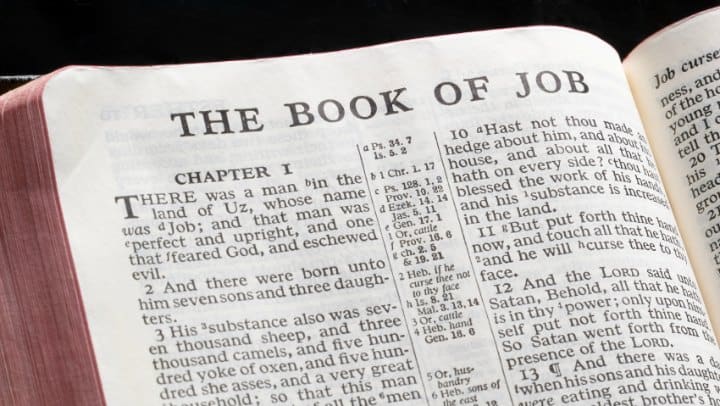
Recently at the suggestion of some teachers and podcasts I listen to, I took some time and in one setting read through whole books in the Bible. If you haven’t done this I would highly recommend it. Just read through the book not looking for anything or zeroing in on any specific point; just read through the book and let it teach you its main themes and allow it to speak for itself. One of the books I recently read through and want to briefly discuss is the book of JOB. We are very familiar with this book and story and can learn a lot of things from it including sufferings, patience, steadfastness, God’s perspectives, and others. However, I would like to share with you what really stood out and stayed with me as I read through the 42 chapters of this book. Job 1:8-9 says,

Then the Lord said to Satan “Have you considered My servant Job, that there is none like him on the earth, a blameless and upright man, one who fears God and shuns evil?” So, Satan answered the LORD and said, Does Job fear God for nothing?

Right there is the true question: “Will you fear and serve God for nothing.” It is not only a question that Satan asks the Lord referring to Job, but it is also for us today. Satan was assuming that Job would have a transactional relationship with God, that as long as he was doing what was righteous that Job would assume that he has earned his blessings or somehow God is obligated to bless him. Do we fall into this mindset that Satan is stating her is verse 9? Is it easy to fear and serve God while things are going good in our life or for fear of punishment? Do we have this transactional relationship that says I have done all these righteous X’s so I deserve these Y’s (blessings)? Would we serve God if everything (wealth, family, health) in an extremely short period of time was taken from us and we were in the situation Job found himself in? Satan is saying that taking comforts of this life away will push even the strongest to curse God to his face. Satan states this in Ch 1:11 and notice that as early as 2:9 Job’s wife actually uses the same language when she tells Job, “Do you still hold fast to your integrity? Curse God and die!”

Sometimes bad things happen because we make bad decisions and we must deal with those consequences. However, Job shows us that sometimes bad things happen outside of our decisions and we do not know all like our Creator GOD. God lays this out in his answer to Job out of the whirlwind in Chapters 38-42 basically stating that, “I created everything and have it all under My control, I AM GOD, even when you don’t realize it and so you must trust Me no matter what circumstances you find yourself in.” In chapter 42 we read exactly what Job did in response to God’s challenge to Job. Now as he repents and fears God he is in dust and ashes. This is the definition of serving God for nothing. Every worldly comfort had been taken from him and he had nothing, not even physical health, and nothing as of yet had been restored to him. But he through great tribulation feared God for nothing except he is God the creator and sustainer of everything.

We do need to serve God just because he is God and the creator of all things but the good news is we don’t serve him for nothing. Read Job 19:25: For I know that my Redeemer lives, and he shall stand at last on the earth; Just as we read Job and see his longing for a mediator between him and God, we now have that through Jesus. God gives us eternal life that can be found in Christ our mediator, not because we deserve it like a transactional agreement but because He is a benevolent, gracious and loving God.

TRUTH: FROM CONFUSED TO CONVICTED

Tuesday’s Column: Dale Mail

blond man with goatee smiling at camera with blazer on
Dale Pollard

If you were to flip on the TV and watch a news channel, it can quickly become frustrating. Channels like CNN will often say something entirely different than FOX or vice versa. What’s actually true? Who can we trust? What should we believe? 

Just when your mind begins to become convinced of one thing, you hear or see something that changes your thinking once again. This creates the skeptic, the double-thinker, and the cynic. 

Since a variety of propaganda will always be pushed and those personal agendas will always be hidden, it’s more comforting than ever to read and soak in pure unadulterated truth. So, here are some of those truths we can count on that our found in the Bible. 

  1. God is real and His message to mankind can only be found in every inspired word written in the scripture (2 Tim. 3:16-17). 
  2. The scriptures teach mankind the means by which we are saved and added to His church. God adds us through our action- based belief, repentance, and immersion (Acts 2:42ff, Titus 1:5-11). 
  3. Christians must live faithfully and in accordance to His instructions (1 Peter 1:15). 
  4. The faithful can only truly worship by following the pattern which is demonstrated by the 1st-century church and Apostolic examples (1 Tim. 2:8-15). 
  5. The Bible teaches that one day everyone will walk through the door that leads out into eternity. Whether or not we are lost or saved as we pass through that door will be the determining factor that dictates where our final destination will be (Rev. 20.12).
  6. It’s our Christian duty to ensure that others are aware of this spiritual reality (Matt. 25:46, Ecc. 12:7, 1 Jn. 1:7). 
  7. God can’t lie and every word He wrote is true (Ti. 1:2; Ps. 119:160). 
  8. It’s our responsibility to study His message because it’s the only thing that matters. 

These truths will never change. They are a constant you can count on and we’ve only scratched the surface. It’s crucial that every follower of Christ is convicted and well versed in His Word. This is where and how we find peace and direction. The Bible is the only source that we can rely on  100% and that’s something that’s increasingly hard to find today. 

Fears Are Funny

Tuesday Column: Dale Mail

image-e1601983688162

Dale Pollard

Do you remember what any of your childhood fears were? Maybe you never really grew out of those fears.  I can remember a number of phobias I had as a child but one of them was not arachnophobia. In fact, me and my younger brother would collect spiders from the backyard and put them all in a container in our bedroom. At night we would put a flashlight behind a clear cage and watch all the spiders make their webs— occasionally fight each other. I don’t believe mom ever discovered this little secret. For some reason as I grew older (more mature) I developed a fear of spiders, despite having played with them often as a young kid.

Fears can be funny like that. They can come from bad experiences or just somewhere in the back of our minds. There’s a lot of fear in the world today!

One of my favorite psalms in the Bible is Psalm 46. We read about what seems to be those worst case scenarios, but God still reigns over all. What if the earth gives way? What if the mountains are thrown into the sea? What if the wrong man becomes our new president? What if this virus never goes away? Even so, we have no reason to fear. God is bigger than our fears. We serve a Being with that much power and it should fill us with courage. What are you afraid of?