Doubting Can Be Good

Gary Pollard

Today’s article will be a brief excerpt from Today’s Handbook for Solving Bible Difficulties (1990, D.E. O’Brien, pp. 18-19). I do not agree with everything this author wrote and have found some of this excerpt — read in the broader context of his own sometimes-narrow interpretations — to be ironic. If we read this excerpt out of context, though, it’s an excellent reminder to read scripture with the goal of finding truth rather than merely affirming existing beliefs. 

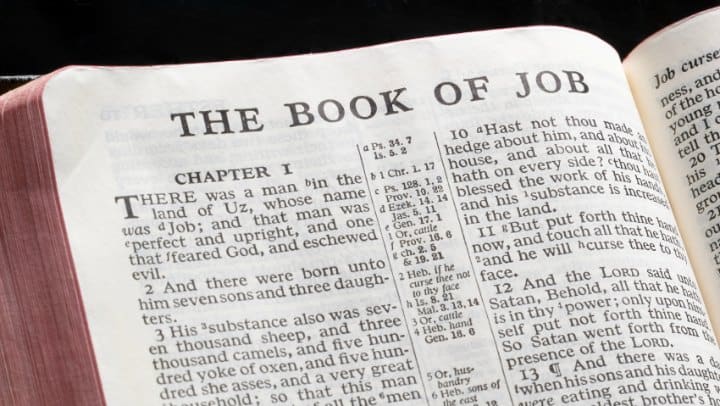
[In] all of Job’s questioning, he never doubted God’s existence or power. What Job couldn’t understand was how his lifelong friends could turn against him. Job didn’t doubt God; he doubted his own intellectualized framework for understanding God. I would paraphrase and condense Job’s argument like this: “If everything I believe about God is true, then what does He think He’s doing?” To understand Job, we need to focus on the incomplete and sometimes inaccurate understanding of God that Job shared with his friends. There was no disagreement among them over the commonly held theology of the day. The difference between Job and his friends was that they had not suffered (16:4-5). Their theology worked in the ivory tower, but not in the misfortunes of life. Job loved God and called out to Him as a bewildered friend (10:8-13), but received no answer. Job’s friends spoke only from the limited wisdom of their sterile lives, which reduced God and all His creation to predictable equations that they could manipulate for their own interests. 

When all the arguing had ended and Job had hurled all his questions heavenward like javelins, God appeared. As Job had affirmed, his redeemer did indeed live and came to take His stand on the earth (19:25) to utter His ringing vindication of His friend’s righteousness (42:7-9). Imagine the chagrin of Eliphaz when his theoretical, theological God appeared before him and said, “I am angry with you and your friends, because you have not spoken of me what is right, as my servant Job has.” At first, Job’s friends had all the answers and Job had all the questions. But when God appeared it was in response to questions, not unthinking certainty. 

George MacDonald wrote some time ago, “True and good and reverent doubts, springing from devoutness and aspiration — are far more precious in the sight of God than many so-called beliefs.” In the throes of his agony, Job intuitively turned to the only one with the answer to his questions. As the answer, God offered Himself. As with Abraham, Job’s doubts were the building blocks of deepened faith. Without the profound questioning that makes up so much of Job’s story, would he ever have been able to say, “My ears have heard of You, but now my eyes have seen You”? 

I don’t want to canonize doubt any more than I want to encourage continued silence. Just as we need to be free to ask genuine questions, we need to learn to recognize an answer when we see it. For many who call themselves Christians but reject the authority of biblical revelation, the perpetual quest for some spiritually impossible dream is the only goal of their faith. If it looks like a duck, walks like a duck, and quacks like a duck, it’s probably a duck, they tell us. In the search for solutions to biblical problems the same holds true. If it looks like a solution, it probably is. 

Just as it dishonors the Lord for Christians to remain in continual ignorance because they are afraid to ask questions, so it dishonors Him when we ask questions for which we really don’t want answers. When we get to the place where we don’t want to be confused with any more information because our minds are made up and we are comfortable, we mire ourselves in spiritual mediocrity. Runners who finish a day’s run dripping with sweat, exhausted, and with their joints aching also feel exhilarated and strangely fulfilled. The Christian’s quest for more of the Lord, a quest that has to be undertaken with both heart and mind, can be like that. The habit of pushing ourselves to the limit of our mental endurance is missing from our American brand of Christianity. The most neglected of spiritual disciplines is a serious study of God’s Word. 

Answers follow questions. Growth follows struggle. Our goal in approaching Scripture is to seek and find, to ask and to have opened. Christians who fear study and questioning remain in darkness, but those who refuse answers are more profoundly darkened because their darkness is self-imposed. The goal of questioning in the Christian life is not to come up with answers, but to conformity with the image of Christ. George MacDonald capture the essence of this quest when he said: “A man may be haunted with doubts, and only grow thereby in faith. Doubts are the messengers of the Living One to the honest. They are the first knock at our door of things that are not yet, but have to be, understood…Doubt must precede every deeper assurance; for uncertainties are what we first see when we look into a region hitherto unknown, unexplored unannexed.” 

The I AM

Dale Pollard

God speaks of Himself as simply “I Am.” This is one powerful statement depicts His infinite presence and His existence through every age. What does it mean to know Him? How do you know if you do? To know of Jesus is very different than knowing Him. 

John is one of those books in the New Testament that will help us to become better aquatinted with the Christ. It’s the last of the gospels that paints a vivid picture of who He was and is on a deeper level than even the three previous gospels. He’s the Bread of life, Light of the world, the Gate, Good Shepherd, Resurrection and Life, the Truth, and the Vine. All of these titles found within the book teach us a little more about the Savior of the world. 

There are seven “I Am” statements in John referring to Jesus and three hundred throughout the entire Bible. They begin in Genesis and end in Revelation, and in many books in-between. You just can’t read very far without discovering something very profound about its Writer. He’s eternal. God’s desired response to this is simply for us to believe, respond, and live with our minds and hearts prepared to live with Him. When Jesus describes Himself as the “I Am” it makes the religious leaders want to kill Him (John 8). 

To know Jesus, to really know Him, is something that many people have not fully understood. Even as Jesus walked among us mortals and we witnessed His miraculous power there were still several that didn’t realize what it meant to follow Him (Luke 9:57-62). While it’s true that everyone is made in the image of God, few reflect the Father’s image. 

Those that know Jesus introduce others to Him. With the knowledge that we are imperfect, let’s not forget that we also have the ability to have a relationship with Him. I am flawed and I am weak, but the Great I Am is interested in who I am. By the grace of God, we are called His children. He is the bread of life that sustains us, the light that guides us, the gate we’ll walk through, and the Truth that will save us. It’s not how great I am, but how great the Great I Am is. 

David’s Song Of Victory

Neal Pollard

David penned roughly half of the psalms. His name appears above 73 of the psalms and the New Testament attributes him as the author of two more (Psalm 2 and 95). He may also have been the author of several more of the 50 anonymous or unattributed psalms. But we also find poetic work from David outside the psalms. There is 1 Chronicles 16:8-36, given by David to the sons of Asaph as a song of thanksgiving and worship (some of which appears also in Psalm 105:1-15). Then, there is 2 Samuel 22:1-51, which reflects much of the content of Psalm 18:2-50. 

The occasion of this psalm is explicitly stated. It is a song to the Lord, acknowledging His delivering David from Saul and his other enemies. David was a man of war, and he was challenged and disrespected by so many over time during his 40 year reign. We might call him embattled, continually weighed down by difficulties with others. While he had some extreme spiritual low points and multiple lapses in judgment, his overall character was of a man who trusted in God to deliver him and who tried to faithfully follow Him.

In 2 Samuel 22, David centers his thoughts on who God is. Notice what about God he focuses on.

  • GOD IS OUR RESCUER (1-20,44-49).
  • GOD IS OUR REWARDER (21-22,24-27).
  • GOD IS OUR RULER (23). 
  • GOD IS OUR REDEEMER (28).
  • GOD IS OUR ROCK (32,47).
  • GOD IS OUR REFUGE (29-31,33-34).
  • GOD IS OUR REINFORCER (35-43).
  • GOD IS OUR REASON (50-51). 

Read through this beautiful psalm and see the gratitude and praise David pours out toward God. He had been in many valleys and through some uncertain and frightening times, but he refused to blame God and was unwilling to believe he had been abandoned by God. Perhaps we have no better example of how to respond to personal adversity and unfair treatment than David. Instead of turning bitter and losing faith, David doubled down on what he knew about God! He put his trust in Him and counted on Him to carry him through. He was confident in God’s ability to prove Himself the victor against any and every foe. Whatever you are going through right now, please focus on who God is–your rescuer (2 Tim. 4:18), your rewarder (Heb. 11:6), your ruler (Rev. 1:5), your redeemer (Ti. 2:14), your rock (1 Cor. 10:4), your refuge (Heb. 6:18), your reinforcer (Eph. 6:10), and your reason (John 20:30-31)!

Will You Serve God For Nothing?

Saturday’s Column: Learning From Lehman

Dave Eubank

Recently at the suggestion of some teachers and podcasts I listen to, I took some time and in one setting read through whole books in the Bible. If you haven’t done this I would highly recommend it. Just read through the book not looking for anything or zeroing in on any specific point; just read through the book and let it teach you its main themes and allow it to speak for itself. One of the books I recently read through and want to briefly discuss is the book of JOB. We are very familiar with this book and story and can learn a lot of things from it including sufferings, patience, steadfastness, God’s perspectives, and others. However, I would like to share with you what really stood out and stayed with me as I read through the 42 chapters of this book. Job 1:8-9 says,

Then the Lord said to Satan “Have you considered My servant Job, that there is none like him on the earth, a blameless and upright man, one who fears God and shuns evil?” So, Satan answered the LORD and said, Does Job fear God for nothing?

Right there is the true question: “Will you fear and serve God for nothing.” It is not only a question that Satan asks the Lord referring to Job, but it is also for us today. Satan was assuming that Job would have a transactional relationship with God, that as long as he was doing what was righteous that Job would assume that he has earned his blessings or somehow God is obligated to bless him. Do we fall into this mindset that Satan is stating her is verse 9? Is it easy to fear and serve God while things are going good in our life or for fear of punishment? Do we have this transactional relationship that says I have done all these righteous X’s so I deserve these Y’s (blessings)? Would we serve God if everything (wealth, family, health) in an extremely short period of time was taken from us and we were in the situation Job found himself in? Satan is saying that taking comforts of this life away will push even the strongest to curse God to his face. Satan states this in Ch 1:11 and notice that as early as 2:9 Job’s wife actually uses the same language when she tells Job, “Do you still hold fast to your integrity? Curse God and die!”

Sometimes bad things happen because we make bad decisions and we must deal with those consequences. However, Job shows us that sometimes bad things happen outside of our decisions and we do not know all like our Creator GOD. God lays this out in his answer to Job out of the whirlwind in Chapters 38-42 basically stating that, “I created everything and have it all under My control, I AM GOD, even when you don’t realize it and so you must trust Me no matter what circumstances you find yourself in.” In chapter 42 we read exactly what Job did in response to God’s challenge to Job. Now as he repents and fears God he is in dust and ashes. This is the definition of serving God for nothing. Every worldly comfort had been taken from him and he had nothing, not even physical health, and nothing as of yet had been restored to him. But he through great tribulation feared God for nothing except he is God the creator and sustainer of everything.

We do need to serve God just because he is God and the creator of all things but the good news is we don’t serve him for nothing. Read Job 19:25: For I know that my Redeemer lives, and he shall stand at last on the earth; Just as we read Job and see his longing for a mediator between him and God, we now have that through Jesus. God gives us eternal life that can be found in Christ our mediator, not because we deserve it like a transactional agreement but because He is a benevolent, gracious and loving God.