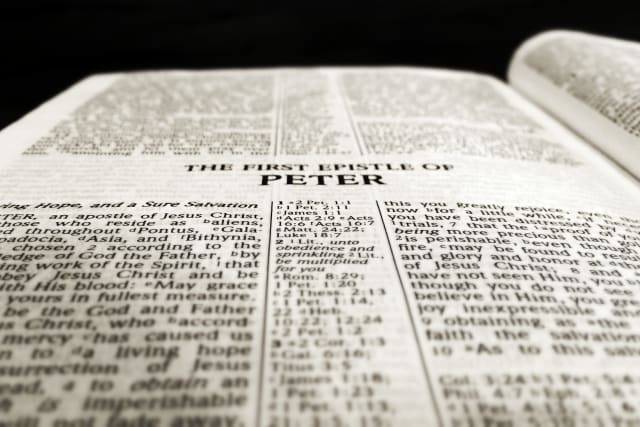
1 Peter 5:10 says, “And the God of all grace, who called you to his eternal glory in Christ, after you have suffered a little while, will himself restore you and make you strong, firm and steadfast.”
The entire purpose of 1 Peter is to encourage and exhort Christians in their suffering. Peter ends the entire book with a promise that God will make them strong, firm and steadfast. This same God has called us into His eternal glory in Christ. John Gill once said, “This call is not a mere external one by the ministry of the word, which is not always effectual and unto salvation; but an internal, special, and efficacious one, and which is high, holy, heavenly, and unchangeable.”
This call is what labeled us as Christians, what saved us from darkness, and what gave us God’s Son. We can learn so much about who we are as Christians by studying this word in the New Testament. The Greek word kaleo is used by several authors to explain our spiritual state.This word teaches us what we used to be without Christ. Without being called we would not be holy, we would still be in the darkness, without being called we would not be labeled as God’s children, and without being called we would not be in the eternal glory in Christ.
Peter’s use of the word “called” in his letter is through inspiration. It helps us recognize our condition outside of Christ. It shows servants how to endure suffering. It gives an example to wives on how to submit to their husbands. We can see that we were outside of Christ and the blessings of the light before being called.
In 1 Peter, almost every use of the word “called” is followed by a definite article. Five times out of six “you” is said immediately following the word “called.” This call is directed towards us as Christians. We are called to do or be these various things for God. God also has called us. Peter writes that God is the one calling which implies that we must do the answering. So when are we going to answer the call from God?
As we live our Christian lives we must keep in mind our former condition, and be thankful for where we are now. God has truly blessed us by calling us as Christians. So do we give thanks to Him for what He has done? Do we carry out the standards that are in place by being called out? We must evaluate our christian walk and see if we are living up to our call to be separated from the world, and connected to Christ.
In I Thessalonians 1.2-3, we’re motivated to work for each other for three reasons. First is our faith, which is a confidence that Jesus is coming back for us. It’s enough to make us go out of our way for each other. Our love for God is another motivator. We love God because he promised us a life with Jesus forever. Because he showed this kind of love, we show the same love to each other. Our hope is the last motivator listed in this section. A better word for this is anticipation. According to research led by Dr Andrew Huberman (neurobiologist and behavioral scientist at Stanford School of Medicine), anticipation is one of the strongest human emotions. This makes perfect sense, as our anticipation of Jesus’s return is why we live the Christian life. This is almost a word-for-word parallel to I Corinthians 13.
I Thessalonians 1.4-6 reminds us that God loves us, so he chose us to be rescued. A few thousand years ago, God chose Israel to be his special people. When they were faithful to him, they enjoyed physical blessings and a relationship with him. God chose us to live with him forever. We’re his special people. Paul also points out that we can trust God to deliver on his promise. This will show up again later in the letter. God promised that we’ll live with him forever when his son comes back for us. Faith means confidence or trust. When we trust God to deliver on his promise, we’re demonstrating faith.
This section also teaches that we can find happiness while we’re suffering. The anticipation we have of Jesus’s return is the only reason this statement is true. If this life is all there is, we’re the most miserable group of people in the world. What makes death, suffering, and anxiety worth the pain? How can we have any semblance of sanity when all the bad stuff happens? We keep going because he promised he’d come back for us, and because this life is short any way!
In Acts 20:24, Paul says, “…But I do not consider my life of any account as dear to myself…in order that I may finish my course.”
What an incredible attitude. In verse 24 Paul stated the reason he was willing to face the dangers in Jerusalem. He was ready to surrender his life for the gospel. In his epistles Paul often stated his readiness to suffer, even to die for Christ. Paul had completely given his life to Christ. He was willing to die for what he believed. Are we? As ministers we should believe in the word of God so much that we are willing to give our lives for it. What are our lives to us? How much do they mean to us? Do we care so much about our lives that we are willing to preserve them over preserving the word? Those are a lot of questions, but there’s one simple fact that we must remember. A preacher that is not willing to give his life for the cause of Christ is not worthy to preach.
God’s church, the Bride of Christ, deserves a man willing to lay down his life for the gospel. When Jesus came to Paul on the road to Damascus, He gave Paul his life’s mission. By the grace of God, Paul completed a lifelong service to Him. As ministers, there is not a better life to model ours after, besides Jesus, than the life of Paul. He was selfless to the very end. His body was a mere tool just for the cause of Christ. What does that take? A lifetime of studying and growing our relationship with the Lord. A man with a poor or lacking relationship with God does not belong in the pulpit.
From the book of Acts we can pull many examples from Paul’s life and apply them to that of the modern day minister. The Bible is 1900 years old, but it is still a practical guide to today’s preachers. We have different challenges that may seem like new issues, but Paul proves over and over again that following Christ wholeheartedly is all we truly need to make it as successful ministers in the church today. Who does the church see in the pulpit? Who does the church need in the pulpit? These are often two very different things. The preacher can act one way in front of everyone, but who he is when he’s alone is what counts. Does he study and pray constantly? A minister should follow closely the example of Paul, and in doing so he will not fail. If every church had a preacher like Paul the church would be a strong and thriving group.
The country seems to be falling apart. What can we do right now in our messed up culture? These are some observations from I & II Peter:
Focus, first and foremost, on our reward (I Pt 1.3-5).
View hardship as a way to grow (1.6-9).
Appreciate our grace, since it gives us sustained innocence in God’s eyes (1.10-12).
When times get hard, put 100% of our hope in the second coming (1.13).
We won’t get caught up in our worldly culture, but double down on being moral like Jesus (1.14-20).
Put all of our confidence and hope in God (as opposed to people) (1.21).
Practice genuine love for our Christian family (1.22-23).
Keep the brevity of our lives in the forefront of our minds (1.24-25).
Get rid of negative character attributes (2.1).
Spend more time in Bible study (2.2-8).
Remember that we’re a sovereign nation as God’s people (2.9-10).
Set a good example, especially around worldly people (2.11-12).
Submit to all governing authorities, both because it’s what God wants and because it reflects the church well (2.13-17).
Go through difficulty with patience and grace (2.18-25).
Husbands and wives can cultivate and strengthen their marriages (3.1-7).
Make our church family our highest priority (3.8).
Be good to people who mistreat us (3.9-13).
Don’t stress about people who mistreat us because of our beliefs (3.14-22).
Resist the temptation to fall back on sinful habits when difficulty happens (4.1-6).
Remember that our lives are short (4.7).
Love our Christian family, take care of them, and be unified in our relationship with God (4.8-11).
Expect difficulty, and see it as suffering with Jesus (4.12-14).
Trust God with our lives when things get difficult (4.15-19).
Give our lives completely to God (5.6).
Give all of our anxieties to God (5.7).
Remember that Satan is our true enemy, and he wants us to mess up — don’t let him win (5.8-9).
Remember that even worst-case scenarios are short-lived (5.10).
Remember that apostles and prophets predicted that things would get rough toward the end (II Pt 3.1-4; cf II Thess 2.1-3; II Tim 3.1).
Remember that God is fully in charge of Earth’s destiny (3.5-8).
Remember that this Earth is temporary (3.10).
Remember that God expects us to live as if tomorrow’s the end (3.11-12).
Remember that we’re living for a new earth and sky (3.13, cf Rev 21.1-2; Is 65.17; Mt 19.28).
“Therefore, beloved, since you are waiting for these, be diligent to be found without spot or imperfection, and at peace. And consider God’s patience to be salvation…” (3.14-15).
For the past four years I have been going though what I believe to be the toughest battle I have ever had to face in my life with our warrior princess Kiyomie’s medical condition. God blessed me with my greatest desire and greatest fear as a father; which was to have my daughter; and one of my babies getting sick and me not being able to do anything to make them better.
We decided that my wife would come to the United States in October of 2017 after our homeland was devastated by category five Hurricane Maria. It was a difficult but necessary decision because Kerssel was pregnant and the prenatal care she needed wasn’t available post-hurricane. I joined my wife in February of 2018 and we had flights booked to return home in April of 2018. Before traveling I had set up everything in Kiki’s nursery which was also my office where I did my studies; her crib was right next to my desk, I had so many plans for my baby girl and was ready to bring her home.
What we had no idea of is that we were heading right into another hurricane; one of a different nature. Kiki suffered severe brain injury during birth and this changed our entire life: we could not return home, we had to leave my six year old son Éjiké and our families behind in Dominica which ached our hearts daily. The life we knew was basically over. We had our family’s support but were here all alone, in a foreign land with no one close to come help during the toughest period of our life.
We both had to resign from our jobs. We were forced to sell everything we owned in order to survive here, we went from being one hundred percent independent to one hundred percent dependant on others, we had to seek assistance to pay our monthly bills and purchase the most basic of necessities for our children and ourselves– diapers, wipes, deodorant, toothpaste, bath soap and everything else. We were unable to care for ourselves the way we used to, unable to provide for our children, only going to the doctor or dentist if we were very ill, not purchasing new clothing or undergarments even though we desperately needed them.
Through so many sleepless nights, emergency room visits and hospital stays we managed to keep surviving, by the grace of God. It is hard and lonely but we have no choice other than continuing to be resilient and keep focused on Kiki getting better. (We’ve had so many nights that we got little to no sleep that right now we consider a night of 4 hours of sleep a good night rest)
We didn’t think that our life could have gotten any worse but then on August 10th 2020 we got the dreadful news that my wife’s mom had suddenly passed at only 56 years old. From that day our lives was under a dark cloud; well, that’s how it felt. Mom, as we all called her, was our main pillar of support; our greatest cheer leader and prayer warrior; she sent messages every single day to both Kerssel and I telling us how strong we are and great parents we are and that Kiki will be healed and to remain faithful. That day in August took so much away from us, after mom’s passing everyday just felt like we were going through motions, like robots, just floating around under that dark cloud.
Mrs. Dawn Pitcock had been working with Kiki since she was discharged from the NICU. She and her family became a friend and remained in close contact even after Kiki aged out of the First Steps program. She had mentioned her church and asked if we’d like to visit, but we never did then. We were still under this dark cloud. Sometime after mom’s passing Dawn asked whether we would mind if she and elders from her church come by to visit and pray with us.
Russell, Dana and Dawn came one Sunday after service, we conversed for a while, we prayed and we cried; that blessed Sunday afternoon is one I will never forget as it felt like that first ray of sunshine piercing through the dark clouds. We started studying and getting a better understanding of God’s word with the assistance of Russell, Neal and Greg. Our faith started to grow stronger and we began feeling better, our lives felt a little less cloudy day by day. We started attending Sunday service when we were
able to, Kiki’s condition determines whether we can but we kept studying via zoom.
We had discussed baptism a few times but I didn’t feel fully ready until April 6th, 2021, on that day, I called Neal and told him that we were ready. When we got to church building there were several other members of our Leman Avenue family there to support us. Kerssel and I were baptized on that day and man that felt good, it was a new life in every aspect.
Yes we are still going through tribulations. Kiki still has tons of medical complications and has a long way to go. Yes we still seek assistance to cover every single expense that we have. BUT, because our faith in God, and ourselves have grown, our bond with God is getting stronger and our understanding of God’s word and love for us and his purpose for allowing us to go through what we are going through; we are able to better appreciate our situation. God have been right there with us all along, he continues to supply our every need; he has, housed us, fed us, and clothed us physically and spiritually.
In our lives on a daily basis we encounter troubles, problems, adversity; no matter how small or complex they are, they always pose a challenge physically, emotionally, psychologically and spiritually.
In these moments we feel weak, we feel defeated and are forced to face problems to great for us to handle; so we turn our attention to God and begin questioning him, WHY? Why am I going through this? Why me? What Lord can I do to solve this problem? During these challenges we are unable to continue our tasks like normal; so we stop, evaluate our situation, ask God for wisdom, obey his word, have faith and trust him to bring the help that we need.
The apostle James had a response to adversity which has helped me through my own troubles.
James 1:2-6
Consider it pure joy, my brothers, when you are involved in various trials, because you know that the testing of your faith produces endurance. But you must let endurance have its full effect, so that you may be mature and complete, lacking nothing. Now if any of you lacks wisdom, he should ask God, who gives to everyone generously without a rebuke, and it will be given to him. But he must ask in faith, without any doubts, for the one who has doubts is like a wave of the sea that is driven and tossed by the wind.
When going through these challenging times in life the best resort is to turn to Jesus, I can guarantee without any doubt that no matter what the problem is, you will find guidance to a solution within the word of God. Apply the appropriate scripture, faith and the very best effort you can, to every adversity you face and you will be victorious.
In conclusion I say to you, through every adversity, trial and tribulation seek God for he is always waiting to guide us through our troubles and ultimately draw us closer to him.
Have faith no matter how small it is: Faith in God, faith in yourself, faith that God is greater than your problem, faith that God is helping you through the adversity, faith that you will overcome.
Nurture your faith and watch your faith grow. Mathew 17:20 tells us, “…Because of your lack of faith. I tell all of you with certainty, if you have faith like a grain of mustard seed, you can say to this mountain, ‘Move from here to there,’ and it will move, and nothing will be impossible for you.”
If you can move a mountain with faith the size of a mustard seed, can you imagine the magnitude of power you would possess with faith the size of a tennis ball or basketball or greater?
I’ll close with some words and verses I recite whenever I’m having a moment of weakness during a challenge and the effect that they have on me is miraculous, I recited them right before coming up here; they are:
I believe that God is with me. I believe that God is helping me. I believe that God is guiding me.
I can do all things through Christ who strengthens me (Philippians 4:13). What shall we then say to these things? If God be for us, who can be against us? (Romans 8:31)
Thank you for listening, thank you for being our family when we most needed one, thank you for the support given to my family in every single way.
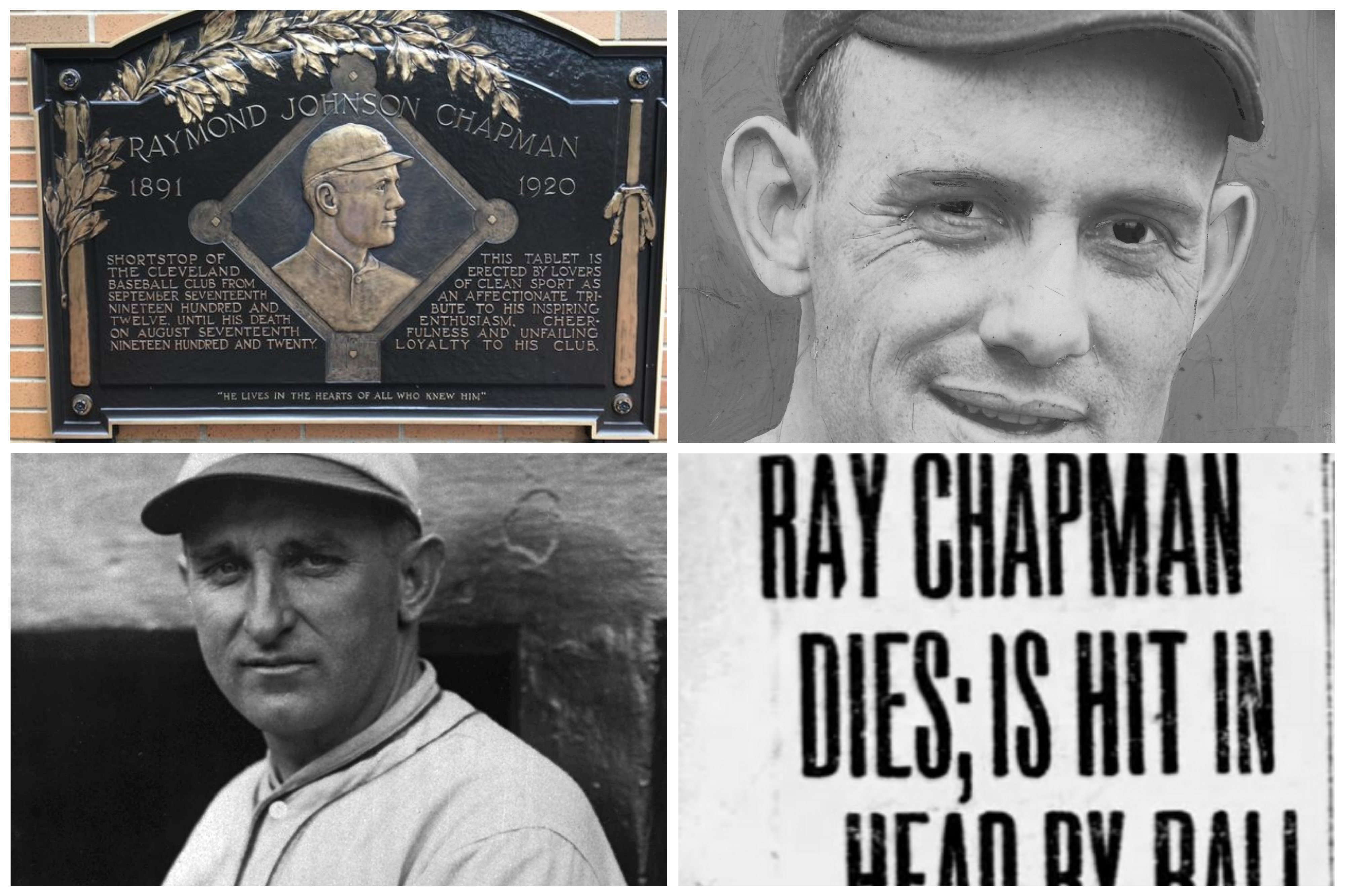
Up the road in Ohio County, Kentucky, Beaver Dam native Ray Chapman grew up to be a great baseball player. He was so good, in fact, that he was able to play nine seasons as the Cleveland Indians shortstop. He was renowned at the time for his defense, bunt singles, batting average, and stolen bases, but he is remembered as the only Major League baseball player to be killed on the field in a game. When he played, the baseball could be scuffed and sullied with everything from dirt to licorice to tobacco juice. This not only made it harder to see, but more erratic out of the pitcher’s hand. On August 16, 1920, near twilight at Yankee Stadium in New York City, Yankee pitcher Carl May hit Chapman in the side of the head with a fastball. The errant throw caused fatal brain damage, and Chapman died the next morning. It shook the baseball world.
This tragedy brought both immediate and eventual change to the game. It was because of this incident that umpires began a practice that continues over a century later of replacing a baseball when it becomes scuffed and dirty. The “spit ball” pitch was banned, for similar reasons. While it would take a few decades, the implementation of the baseball helmet is traced back to Chapman’s untimely death. While it would have been better for Chapman, a newly wed and newly expectant father, to have avoided this devastating end, it has likely saved several lives. It’s impossible to know how many might have been harmed by dirty baseballs through the years, but one can find sports articles detailing the likes of Kirby Puckett, Sammy Sosa, Chris Dickerson, and others who may have been spared a worse result by having on the protective helmet.
It is so easy to view tragic circumstances in isolation, especially those that happen to us personally. In light of the many tragedies that can happen in life, I say this with fear and trepidation. But, Scripture has already made that point. Out of various, fiery trials, these can “result in praise and honor and glory at the revelation of Jesus Christ” (1 Pet. 1:6-7). James said to consider your various trails as a cause for all joy, “knowing that the testing of your faith produces endurance” (Js. 1:2-3). James even says of the ultimate Old Testament sufferer, “We count those blessed who have endured. You have heard of the endurance of Job and have seen the outcome of the Lord’s dealings, that the Lord is full of compassion and is merciful” (5:11). To make such an application of a man who endured such tragedy is startling! Why does he mention Job? So that we can learn, adjust, and overcome!
Make no mistake about it, we all prefer to avoid heartache, sorrow, and loss. But, when those things come to us, Scripture urges us to adopt a heavenly mindset. See the produce in the pain, the hope on the other side of the hurt. Sometimes, it may be that others witness our faith in the midst of our trial and it may help them in their own walk of faith (Phil. 1:14). Whatever the case, even our own greatest adversity can result in someone else’s advantage. That’s an unintended benefit of suffering.
I’ll be repeating the book of II Peter in present-day terminology. It’s not a true translation of the book, as I am not qualified to do so. It will be based on an exegetical study of the book and will lean heavily on the SBL and UBS Greek New Testaments, as well as comparisons with other translations (ESV, NASB, NIV, ERV, NLT). My goal is to reflect the text accurately, and to highlight the intent of the author using concepts and vocabulary in common use today.
This is not an essentially literal translation, and should be read as something of a commentary.
Message is Credible
Family, you have to make sure you’re in a good place when it comes to your relationship with Jesus. If you’re practicing all those qualities we just talked about, you’ll be ok. You’ll make it to eternal life. You know this stuff already, but it’s always a good idea to remind you. You’re already in a good place, but as long as I’m alive, I’ll keep reminding you. I’m going to die soon. Jesus made that clear to me. Because of this, I want to make sure you’ll remember everything I taught you. What we taught you originally is still valid. Jesus is powerful and he’s coming back to us. We weren’t duped into believing an intricate lie. We were firsthand witnesses to his superior nature! One time, the ultimate power – God – validated this by saying, “This is my son. I love him and I think very highly of him.” He said that right in front of us while we were with Jesus on a mountain. His voice came from the sky. This made us confident that we have the right message. Since we’re confident in this message, you should be, too! Focus on what we’ve told you like you’d focus on a light source in a dark room. Hang onto this until the end, when everything will be light and darkness won’t exist. It’s very important that you understand something: we don’t get to decide what a prophecy means. No human has ever produced a legitimate prophecy. Those came from men who were influenced by God’s spirit.
For the next several weeks, I’ll be repeating the book of I Peter in present-day terminology. It’s not a true translation of the book, as I am not qualified to do so. It will be based on an exegetical study of the book and will lean heavily on the SBL and UBS Greek New Testaments, as well as comparisons with other translations (ESV, NASB, NIV, ERV, NLT). My goal is to reflect the text accurately, and to highlight the intent of the author using concepts and vocabulary in common use today.
This is not an essentially literal translation, and should be read as something of a commentary.
Everything’s about to come to an end. You have to be reasonable and self-controlled for the sake of your prayers. Most importantly, don’t ever lose your love for each other. Love hides all kinds of mistakes. Take care of each other without complaining. Use your assets to help each other, since God helps us in so many ways. If your talent is speaking, speak as if you’re talking for God. If helping others is your talent, do it with limitless energy. This way every aspect of our lives gives credit to God by our dedication to Jesus. He gets all recognition and authority forever!
Family, don’t let these hard times shock you. Don’t feel like you’ve been targeted. You are suffering like Jesus did, so let that keep your spirits up! When he comes back, we’re going to be indescribably happy! If people insult you because you love Jesus, you’re lucky! The full weight of God’s spirit and power is with you. Just make sure none of you suffer because of something you’ve done wrong, like murder, stealing, practicing morally bad things, or sticking your nose where it doesn’t belong. If you suffer because of your faith, though, don’t feel bad! Instead, give all the credit to God.
We’re about to be judged by God. Since we’re going to be judged first, how do you think it’s going to be for people who rejected God? It’s hard enough for a morally good person to be saved, so what’s going to happen to morally bad people who don’t follow God? Since we’re about to suffer, we have to trust God with our lives. He’s going to take care of us if we’re doing the right thing!
Since we’re about to face difficulties, it’s very important that your elders lead you carefully. I’m an elder, too, and also look forward to sharing in the recognition we have coming to us. Elders, don’t lead people because you feel like you have to. Do it because it’s what God wants! Don’t lead because you want to get something financially out of it. Don’t abuse your power, but lead by example. When the ultimate leader shows up, your reward will be indestructible!
For the next several weeks, I’ll be repeating the book of I Peter in present-day terminology. It’s not a true translation of the book, as I am not qualified to do so. It will be based on an exegetical study of the book and will lean heavily on the SBL and UBS Greek New Testaments, as well as comparisons with other translations (ESV, NASB, NIV, ERV, NLT). My goal is to reflect the text accurately, and to highlight the intent of the author using concepts and vocabulary in common use today.
This is not an essentially literal translation, and should be read as something of a commentary.
I Peter – Part VI
We’re independent of any human government, but don’t use that as an excuse to disobey your governments. You have to see every person as valuable. You have to love each other. You have to obey your government. Employees must listen to their employers. Be respectful to them, even when they aren’t good to you. We don’t do this for them, we do it for God. He thinks very highly of us when – because we love him – we act like we should, even when we’re being mistreated. You don’t get credit for putting up with mistreatment if you bring it on yourself with bad behavior. If you’re mistreated because you’re trying to do the right thing, though, it makes God happy.
This is why God called us in the first place! Jesus suffered to benefit us. He intended for that to be the example we could follow. He never did anything wrong, he never said anything wrong, he didn’t fire back at people who said hurtful things. He never threatened anyone who put him through suffering. He constantly trusted God, knowing that God judges perfectly. He voluntarily took the punishment for our sin when he physically suffered on the cross. He did that to give us the chance to kill our old lifestyles and live morally pure lives. His injuries healed us. We had no direction, aimlessly wondering around like a sheep. Now we follow the one who leads us and protects us.
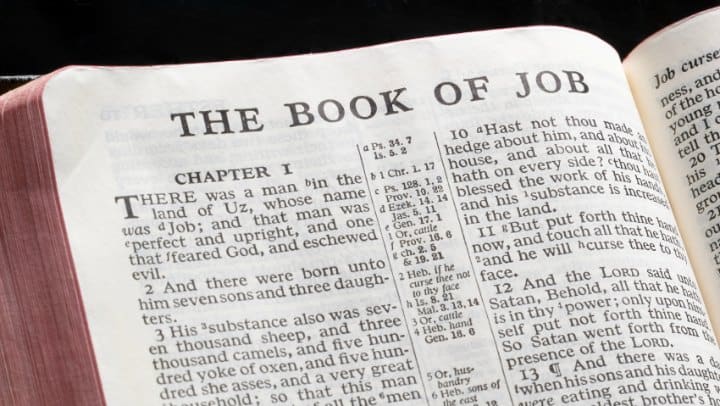
Recently at the suggestion of some teachers and podcasts I listen to, I took some time and in one setting read through whole books in the Bible. If you haven’t done this I would highly recommend it. Just read through the book not looking for anything or zeroing in on any specific point; just read through the book and let it teach you its main themes and allow it to speak for itself. One of the books I recently read through and want to briefly discuss is the book of JOB. We are very familiar with this book and story and can learn a lot of things from it including sufferings, patience, steadfastness, God’s perspectives, and others. However, I would like to share with you what really stood out and stayed with me as I read through the 42 chapters of this book. Job 1:8-9 says,
Then the Lord said to Satan “Have you considered My servant Job, that there is none like him on the earth, a blameless and upright man, one who fears God and shuns evil?” So, Satan answered the LORD and said, Does Job fear God for nothing?
Right there is the true question: “Will you fear and serve God for nothing.” It is not only a question that Satan asks the Lord referring to Job, but it is also for us today. Satan was assuming that Job would have a transactional relationship with God, that as long as he was doing what was righteous that Job would assume that he has earned his blessings or somehow God is obligated to bless him. Do we fall into this mindset that Satan is stating her is verse 9? Is it easy to fear and serve God while things are going good in our life or for fear of punishment? Do we have this transactional relationship that says I have done all these righteous X’s so I deserve these Y’s (blessings)? Would we serve God if everything (wealth, family, health) in an extremely short period of time was taken from us and we were in the situation Job found himself in? Satan is saying that taking comforts of this life away will push even the strongest to curse God to his face. Satan states this in Ch 1:11 and notice that as early as 2:9 Job’s wife actually uses the same language when she tells Job, “Do you still hold fast to your integrity? Curse God and die!”
Sometimes bad things happen because we make bad decisions and we must deal with those consequences. However, Job shows us that sometimes bad things happen outside of our decisions and we do not know all like our Creator GOD. God lays this out in his answer to Job out of the whirlwind in Chapters 38-42 basically stating that, “I created everything and have it all under My control, I AM GOD, even when you don’t realize it and so you must trust Me no matter what circumstances you find yourself in.” In chapter 42 we read exactly what Job did in response to God’s challenge to Job. Now as he repents and fears God he is in dust and ashes. This is the definition of serving God for nothing. Every worldly comfort had been taken from him and he had nothing, not even physical health, and nothing as of yet had been restored to him. But he through great tribulation feared God for nothing except he is God the creator and sustainer of everything.
We do need to serve God just because he is God and the creator of all things but the good news is we don’t serve him for nothing. Read Job 19:25: For I know that my Redeemer lives, and he shall stand at last on the earth; Just as we read Job and see his longing for a mediator between him and God, we now have that through Jesus. God gives us eternal life that can be found in Christ our mediator, not because we deserve it like a transactional agreement but because He is a benevolent, gracious and loving God.
My first foreign mission trip was to eastern Ukraine in the Spring of 2002. I returned in 2003, and each time we flew in and out of Kharkiv (which is under siege as I type). We worked with the Bear Valley Bible Institute’s first foreign extension school, but also worked with brethren in the village of Slavyanogorsk.
I took this picture of Slavyanogorsk from the monastery overlook.
We held Bible studies and taught English using the book of Mark and enjoyed success especially with young people and young adults. The influence of the Russian Orthodox Church was strong among the locals, but there was a congregation of about 30 there.
Russian Orthodox monk at the monastery in Slavyanogorsk. Having fellowship with the brethren at Slavyanogorsk. The local preacher at the time, Victor Semikoz, is barely in view (right). Terry Harmon, at the time the director of the Bear Valley extension, is wearing the tie.
On my second trip, Kathy was able to go with me along with several other members of the Cold Harbor Road congregation in Mechanicsville, Virginia, where I preached at the time.
Members of the Cold Harbor and Pikeville, KY, congregations at the Kharkiv airport. Do you see Kathy?
The memories we made together and with our brothers and sisters in Ukraine have left a lasting impression on my mind and my faith. Though I had always known that the church existed in places outside the United States, this was my first tangible experience with them. While we were separated by language and cultural barriers, we were drawn together by our common faith and hope. These first few trips increased my desire to teach and evangelize not only those in other nations, but also motivated me to try harder to do so locally. Those travels to Ukraine were extremely faith-building.
Right now, those brethren are displaced, distressed, and disturbed by the Russian invasion well underway. Their relatively modest houses and apartments have been at the center of fighting between Ukrainians and Russian separatists, with many of the cities in that region controlled by those separatists. They are in the crosshairs of danger, facing an uncertain future.
As I read the New Testament, inspired writers addressed congregations and asked them to care about, pray for, and provide the needs of brethren who faced various crises. There were the poor and needy saints of Jerusalem, whom Paul tells Rome that Macedonia and Achaia had financially supported (Rom. 15:26; cf. 1 Cor. 16:1). The writer of Hebrews told his audience, “Remember the prisoners, as though in prison with them, and those who are ill-treated, since you yourselves also are in the body” (13:3). He praised them earlier in the letter for showing sympathy to the prisoners (10:34). We never know when similar circumstances might befall us. As Paul told Thessalonica, “For you, brethren, became imitators of the churches of God in Christ Jesus that are in Judea, for you also endured the same sufferings at the hands of your own countrymen, even as they did from the Jews, who both killed the Lord Jesus and the prophets, and drove us out. They are not pleasing to God, but hostile to all men, hindering us from speaking to the Gentiles so that they may be saved; with the result that they always fill up the measure of their sins. But wrath has come upon them to the utmost” (1 Th. 2:14-16). While their suffering was primarily spiritual persecution, Paul urged empathy and endurance.
What can we do for our brethren who are at ground zero of this awful conflict? We can better inform ourselves of the specifics there (https://christianchronicle.org/ukraineexplainer/). We can pray, congregationally and individually (daily!). We can listen for opportunities to assist our brethren. Heaven will be filled with saints from every nation (Rev. 7:9). These brethren are part of our “household”; let us stand ready to do good for them (Gal. 6:10). Remember them as they suffer!
Having tea in our sister, Luba’s, apartment on a rain-soaked evening in Slavyanogorsk.
Character is defined as the mental and moral qualities distinctive to an individual and involves a person’s good reputation. The Greek word “charakter” first referred to the die used in minting coins, then came to include the sense of an image, stamp, seal, or copy. The Greeks used the word to speak of the typical features of an individual or nation, from which came the idea of “moral character” and then “the “distinctiveness” of a language, the “style” of a writer, or a “type” of philosophy (Kittel and Bromiley, TDNT, 1308). Arndt tells us the word means something produced as a representation or reproduction, and that human beings are formed by God as a representation of His own identity (1078).
The word is only found in the Bible in Hebrews 1:3. The epistle’s writer is describing Jesus, saying, “He is the radiance of His glory and the exact representation of His nature, and upholds all things by the word of His power.” It is an absolutely amazing truth that we are made in the image of God (Gen. 1:27), but the writer of Hebrews is saying something even more powerful about Jesus in Hebrews 1:3. He was not created by God as a reflection of God’s identity. The writer uses this specific word in Hebrews as part of His explanation that the Son is God! The NASB and NIV translate χαρακτήρ (CHARAKTER) as “exact representation.” The ESV has “exact imprint,” the NKJV has “express image,” the NLT says “expresses the very character of God,” and the ASV puts “the very image of His substance.”
The author of this epistle leads out in his overall theme that Jesus is better by establishing the most important reason why. He is God. The writer uses Old Testament Scripture to prove it, citing Psalm 45 and Isaiah 61 to call Him God (Heb. 1:8-9). He then quotes Psalm 102:25 to say of Jesus, “You, Lord, in the beginning laid the foundation of the earth….” Then, in Hebrews 1:13, he quotes Psalm 110:1, which begins, “The LORD (Yahweh) said to my Lord (Adonai)….”
Let’s not miss the initial point of the letter driven home by the unknown writer. With a multitude of Old Testament passages, he proves this point about the essential character of Jesus Christ. He is God. He is as much God as Father and Holy Spirit. He is as powerful, all-knowing, omnipresent, perfect, sovereign, transcendent, self-existent, eternal–He is as Divine as Deity can be.
That makes His willingness to be made a little while lower than the angels to taste death for everyone (Heb. 2:9) and to call us His brethren (2:11ff) all the more incredible. God lowered Himself not only to save us but to make us part of His family. We could spend the rest of the day meditating on that profound truth and still not fully grasp it.
Here’s the question. God made us, became one of us, died for us, and then opened the door to us to be His brother. What does that say about His character? As we try to fathom and appreciate that, it should give rise to another question? How should that affect our character?
We don’t typically associate salvation with death. Normally the opposite is true! In the New Testament salvation normally describes forgiveness of sins (Acts 4.12, for example). Escaping spiritual death is how the word is primarily used. The exception to this rule is fascinating and sobering.
Human instinct compels us to avoid unpleasantness, suffering, and death. When faced with danger or difficulty, our default response is avoidance at all cost. This was a great temptation for many in the early church.
Peter wrote to Christians who were about to face some awful hardships. He encouraged them by promising salvation, but it was a hard message to swallow. In the following examples, Peter used “salvation” to mean something different (it would have been understood to mean this because of context):
I Peter 1.5 – Death
I Peter 1.8ff – Death
I Peter 2.2ff – Death
How is death the same thing as salvation? For those who were suffering and stayed faithful, death was the ultimate salvation. For those whose lives were upended because of persecution, being with God forever was salvation. For those who lost their family members, salvation meant reunion. The ultimate result of faith is eternal life with God.
How do we view difficulty? Do we compromise faith to avoid suffering? At worst, suffering leads to death. At best, suffering leads to death. Nothing can slow a faithful Christian down! We have salvation in this life (guilt does not weigh us down), and the end of this life is salvation. We have an awesome God.
Since March Madness begins later this week, I was reading about all the teams to help me fill out my brackets. I came across the incredible story of Damian Chong Qui, a guard for the Mount St. Mary’s basketball team that won the Northeast Conference tournament and will play Texas Southern for the right to play against Michigan. The odds of Mount St. Mary’s winning the NCAA tournament are so astronomical that the team is more likely to be hit by an asteroid in their team bus going to the arena to play, but Chong Qui symbolizes the team’s grit, determination, and uncanny ability to defy the odds. His story is both heartbreaking and inspiring. Born and raised in crime-riddled East Baltimore, his father and mother were shot in separate incidents less than two months apart in 2002, when he was only four. His father recovered, but his mother was murdered. Eight years later, his father was shot again and paralyzed from the waist down. Damian has been his father’s most consistent caregiver since then, dressing him and helping him into his wheelchair. Damian found an outlet in basketball, starting on his High School basketball team as a freshman. He was only 4 feet, 9 inches tall. A growth spurt helped him reach his current height of 5 feet, 8 inches tall. No Division One teams showed interest, so he walked on with the Mountaineers. Not only did he go on to earn a scholarship, but he is a star and the heart and soul of this scrappy squad. From his father to coaches and teammates, Damian is called dependable, hardworking, and focused (much biographical data from a 1/17/20 Baltimore Sun article by Edward Lee: “…Damian Chong Qui has overcome tragedy to shine at Mount St. Mary’s”).
There is no one who would want to go through what this young man has endured. Many might use such tragedy as an excuse or a crutch to let life defeat them, but Chong Qui shows the resiliency and resolve which is in mankind. While the Chong Quis do not sound especially devout, Damian’s father, Edward, said of him, “I feel like God has been working things out for him” (ibid.).
God does not cause evil (Jas. 1:13), but God is able to bring about good in the worst of circumstances. It is evidence of His omnipotence and omniscience. Do you remember Job’s wise and righteous assessment, even as he was in the dark about the cause of his pain and suffering? He tells God, “I know that You can do all things, And that no purpose of Yours can be thwarted” (42:2). As James assesses Job’s situation, he writes, “We count those blessed who endured. You have heard of the endurance of Job and have seen the outcome of the Lord’s dealings, that the Lord is full of compassion and is merciful” (5:11). Paul experienced this, too. He speaks of his “thorn in the flesh,” which God saw fit to allow him to retain. Why? Paul explains, “And He has said to me, “My grace is sufficient for you, for power is perfected in weakness.” Most gladly, therefore, I will rather boast about my weaknesses, so that the power of Christ may dwell in me. Therefore I am well content with weaknesses, with insults, with distresses, with persecutions, with difficulties, for Christ’s sake; for when I am weak, then I am strong” (2 Cor. 12:9-10).
Maybe you are struggling with some thorn in the flesh, some pain and suffering, some adverse circumstance that looms over you and seems poised to undo you. How will you respond? Will you see it as an advantage? A chance for God’s power to be perfected in weakness? For the power of Christ to dwell in you? As the means of strength in weakness? Do not forget that there is no force, earthly or spiritual, that can withstand the advantages that God can bring into your life even in times of greatest adversity! His purpose cannot be thwarted. And if our lives are being lived according to His purpose (Rom. 8:28), that is confidence that can propel us through the worst of situations!
This week we will do a brief study of I Peter 3.17-22.
In verse 17, the emphasis in the original text is “doing good.” If it is God’s desire (this is emphasized) that we suffer, it is better (stronger, more prominent, more advantageous) that we suffer for doing good works than evil works. How much more powerful a message do we send when we come under fire for doing something that benefits others? If we suffer for doing something bad, we’re just another criminal. But to suffer in the act of doing something good – in context – is a far more powerful evangelistic tool.
In the following verses, Peter gives a powerful example of Christ’s focus on getting rid of sin. He put everything into saving mankind – including giving His own life – so that we could all have the opportunity to come to God. Even before the destruction of the world through the flood He made sure everything had the opportunity to hear about their spiritual state. Whether this was done through Noah and his sons or whether He had a more direct hand in this is immaterial. The point of the text is that the message got out to those who are “now in prison.” His goal was to bring others to God, even when it caused Him suffering.
Only those who did listen and obey – eight people – were rescued from evil by the waters of the flood. Notice that the Spirit does not record Noah’s ark as being what saved them! They were saved in the important sense by the destruction of evil. Our focus is not earthly.
Just as water saved Noah and his family from evil, water saves us from spiritual death. Being immersed in water is how we make a formal appeal to God for a clear conscience! Some translations render this, “A promise to God from a good conscience,” as if baptism is some kind of outward sign of an inward faith. This is not reflected in Greek; it is a conscience cleared by an appeal to God, because of the resurrection of Jesus. He has all power, so He can clear our record when we submit to Him.
Having all of this as a background, we have some motivation to keep our actions pure, suffer for doing good things, and understand that God’s power is what saves us. Peter gives many other phenomenal motivators for living a pure life, which we will look at in detail in the coming weeks.
1 Peter 3.8ff is a passage with tons of application. What I’d like to do is simply break it down and apply as we go.
3.8 – Is addressed to every Christian, as opposed to the gender-specific commands of the previous section. Christians are told to have a unified mindset, understanding of the needs of others, affection for each other, compassion for each other, and a sober view of self.
3.9 – In the context of being ridiculed or outright persecuted for faith, we’re commanded not to stoop to a hostile person’s level. Instead, we are only to say good things to and about them. The word for “bless” here would be like us giving a glowing review of someone, even when they’re hostile to us. Why? Because God promised us a glowing review, even though our lifestyle was hostile to Him before we were faithful.
3.10-12 – If we want to have good days, we have to control our tongues, reject evil, and actively do beneficial things for others. If we do, God looks at us with approval. If not, He is against us.
3.13 – If we pursue doing good things with energy, no one can say anything against us. Who can assault the character of someone passionate about bringing good into others’ lives?
3.14 – But even if they do is a contrast not as plainly seen in English. This verse starts with a powerful contrastive (αλλα) that points to how we should act in the face of totally unwarranted hostility. Even if our pursuit of good gets us in trouble, we can still be happy! Even in this life we cannot lose. We cannot let fear dictate our behavior, and we cannot let anyone’s intimidation cause us to react with hostility.
3.15 – Instead, we should make the most special place in our heart God’s place. We don’t serve fear, we serve God. If someone shows hostility to us when we’re doing good, we have to be ready to give a rational explanation for our hope with an attitude that proves our supernatural allegiance. Our fear of God must be greater than our fear of man.
We do this because our goal is to bring others to God! It’s hard, but we can only do it when we remove self from the equation. People tend to attack what they do not understand. By using reason and by restraining our emotional response, we can help save their souls. We were all hostile to God at one point, but we now have mercy. Being controlled and rational while under “attack” is not a normal human response. Our response can mean the difference in someone’s eternal destination!
We’re going through I Peter in the college class at Lehman Avenue and we most recently studied part of chapter three. This chapter further discusses the theme of submission (giving up our power willingly to another) frequently appearing throughout the book. Christians are essentially told, “It’s not about me,” that we should get rid of certain behaviors, and an explanation for why we give up certain behaviors or power is given.
For example, we should get rid of hatred, taking advantage of others, hypocrisy, jealousy, and character assassination (2.1), because we know that God has shown us mercy (2.9, 10). That’s hard. We should listen to our government, even when we disagree with them (as long as it doesn’t violate God’s word), because God uses them to maintain some semblance of law and order (2.13-17). That’s hard. We should be good employees, even when our bosses aren’t fair, because Christ suffered, too, and God looks at us favorably when we suffer for doing the right thing (2.18ff). That’s hard.
In the same way – that is, keeping with the theme of surrendering our own power and doing something difficult for the sake of goodness – Peter addresses women and men specifically in chapter three.
This is an interesting study because it sheds light on a controversial topic: wives being submissive to their husbands. Let’s look at the text:
Γυναίκες (wives/women): Submit to ιδιοις (your own) husbands. Not all men, just husbands. Peter is not saying that women are inferior and should submit for that reason.
Ινα (in order that): For the purpose of cultivating godliness and influencing a fallen husband. It’s not for the purpose of manifesting inferiority, but to influence a lost husband! This involves a difficult task – as in 2.18 – which demonstrates the power of the word.
Δια (through/by): γυναικών αναστροφής (womanly or “wifely” conduct). Through her submission to her husband and through an emphasis on timeless inner beauty, she can save his soul. “Men and women have different ways of expressing godliness. Peter is showing how women can powerfully influence their husbands, which is by submitting to them” (Edwin Jones).
This sensitive topic is nonetheless a powerful one. Wives are not told to submit because it’s “just what women should do,” or because of a belief that women are somehow inferior, but are told to submit because it can save souls. Men are told to assign value to their wives and to be respectful and considerate with them if they want to be right with God (3.7), followed by a general set of commands for all Christians to act a certain way for the sake of godliness (3.8ff).
We submit and suffer as Christians to save souls and to remember that, “It’s not about me.”
(Gary teaching 1 Peter in the college class at Lehman Avenue)
Peer pressure is a topic that is usually directed toward young people. While this is something that is possibly more temping to teens and young people, adults will struggle with it as well.
Since I was in my teens just two years ago, I can still clearly remember all the times I was pressured into doing something dumb. I sometimes hung with a rowdy crowd (my brothers), and ended up paying the consequences. Fishing on a golf course at night is apparently illegal, and that can get the police called on you. Shooting at geese with a slingshot is apparently animal harassment, and park rangers won’t exactly be happy. Stringing a dead beaver over a walking trail is illegal and you can be fined up to 10,000 dollars. These are just a few random examples or hypothetical scenarios…and definitely not something I did personally.
Peer pressure is a problem we will face. Whether we are in high school, college, or at work. Our peers won’t always make the right choices, but the question is whether or not we will participate? Notice with me four steps that will help us overcome peer pressure:
Develop A New Mindset.
1 Peter 4:1 says, “Since therefore Christ suffered in the flesh, arm yourselves with the same way of thinking, for whoever has suffered in the flesh has ceased from sin.” Think like Christ. Do what’s right, even if it leads to suffering. If we say no to peer pressure we won’t be popular, we won’t feel like we fit in, we won’t feel accepted and we may even lose a few friends. But since we are in Christ we focus on what’s truly important. Christ focused on the bigger picture. Instead of listening to the mindset of the day, He stuck to his purpose.
Peer pressure will tempt us to desert Christ. We don’t join in because we have developed a new mindset. We are reborn and no longer live like the world (Rom. 6:1-2; Gal. 5:24).
Make Decisions Based On This New Mindset.
1 Peter 4:2 says, “so as to live for the rest of the time in the flesh no longer for human passions but for the will of God.” We have ceased from sin so that we can make the most of our time on earth. No longer living for ourselves or for human passions, but for the will of God.
How can we avoid the sin of peer pressure? Make decisions based on our new mindset. We have established our reasoning. We now have a higher calling, and now our decisions are based on this new mindset in Christ.
Love The Sinner, Hate the Sin.
The mood always seems to feel a little uncomfortable when we say no to participating in sin. Our friends may get upset or call us a wet blanket, or even try and say we are acting “holier than thou.” This is one of the biggest obstacles we will face as Christians.
When we say no we must keep 1 Peter 4:8-9 in mind: “Above all, keep loving one another earnestly, since love covers a multitude of sins. Show hospitality to one another without grumbling.” How can we overcome peer pressure? Love the sinner, but hate the sin. We love the sinner because we want them to receive the same forgiveness and salvation we received. We hate the sin because it’s ugly and opposed to God and our new way of living.
Build Positive Relationships.
Find likeminded people that won’t tempt you to join in with sin. 1 Peter 4:10-11 says, “As each has received a gift, use it to serve one another, as good stewards of God’s varied grace: 11 whoever speaks, as one who speaks oracles of God; whoever serves, as one who serves by the strength that God supplies—in order that in everything God may be glorified through Jesus Christ. To him belong glory and dominion forever and ever. Amen.”
What do we use our gifts from God for? If you’re good at working on cars or lawn mowers are you using it for good? Are you good at cooking? Use it for the glory of God. If you’re a funny person, use it for the glory of God. Each one of us must use what God has given us to build positive and strong relationships, ones that are built on support and encouragement.
How can I overcome peer pressure? Build relationships that are centered around Christ. Around His church. Around His plan. Around His people. Build relationships filled with a mutual love and zeal for God.
Why do we hurt? In Bible classes and in sermons you have been pointed to scriptures such as James 1:2, which says, “Count it all joy my brethren, when you fall into various trials.” You may then find yourself wondering about that specific trial you are forced to miserably wade through.
Perhaps you think, “But what good could possibly come from this?” Or maybe you even question, “why would God let me experience this kind of heartache?” This is when a faithful Christian may sink into a pessimistic kind of bitterness that slowly steals each smile and smothers even the faintest glimmer of hope. If Jesus could sit with you and lovingly give you some wisdom, I’d imagine this is what He’d say.
I dreaded that cross, the cruel instrument of death. I felt such intense emotion with each painful and strained breath.
Embarrassed, I was stretched naked amid a hateful crowd—
but prayed for their forgiveness, with my bleeding head bowed.
I intimately knew trauma, isolation, abandonment, and shame. I lost everything for everyone, so peace and glory you would gain. It’s that joy I’ve set before you, even seen through tearful eyes,
that will push you, as it did Me, through each valley and each sigh.
No matter what you’re fighting here, don’t worry, stress or fear. Today it hurts, tomorrow it’s over, in the twinkling of an eye I’ll appear. Life is brief and fragile like that of a lowly dove, and like the dove, with broken wing still mending,look hopefully above.
–Dale Pollard (These words were inspired by the words found in Hebrews 12:1-3.)
I’d like to encourage you, if you’re suffering through a trial in life, to read Psalm 69. It’s a lament psalm, which may help you put into words what your aching heart is feeling.
“What we really need and what the psalms of lament provide is a way to live through times of disorientation with God as an intimate traveling companion.”
– Glenn Pemberton
Walk with me through the crowd. At times, it will be frightening, heartbreaking, disgusting, even angering. Some are in masks. Some aren’t. You see far-left and far-right extremists, assaulting each other and maybe threatening you. Past the rioters, the protesters, the grief-stricken. You even see political activists posing as Christians spewing divisive rhetoric around–acting and reacting. There are racists of every color. Politicians. The lukewarm and apathetic. Some are jobless. Some homeless. Some wealthy and well-to-do. Many enjoy a comfortable lifestyle. They are from literally every walk of life. In many ways, this crowd is full of folks who are nothing alike or have little in common with others in it. But, in the way that counts most, they are so much alike.
You try to push through the enormous crowd full of the listless, the rudderless, the hopeless, the lonely, and the misunderstood. As you get back behind them, there’s the devil and his angels pouring over their playbook. He is the ruler of this world (John 12:31), unleashing the spiritual forces of wickedness (Eph. 6:12). There is a connection between this “prince of the power of the air” and “the spirit that is now working in the sons of disobedience” (Eph. 2:2). He wants us all distracted from what he’s trying to hide behind him. He’s pushing the crowd further away from it. But look. You see bands of faithful, committed disciples at the foot of a rough hewn cross. You join them there and look up at your Savior. It was worth the effort to swim through the crowd and see through the devil at God’s answer. He is hanging there for that enormous crowd, to help them escape the clutches and curse of darkness. He offers light, love, grace, goodness, hope, forgiveness, reconciliation, and life. Contrast this with the carnage you have just sifted through.
Now, go back through that crowd and find someone else who needs Him, someone who realizes that for all the sin, evil, suffering, and problems they will not find the answers in that crowd. They certainly will not find it in the one who’s behind that crowd, inciting and inflaming it. Get them through the crowd to the cross (Mat. 7:13-14). Each one liberated from the crowd will be eternally grateful!





























 The Preacher Pollard Blog