God’s Spiritual Stimulus Plan

Wednesday’s Column: Third’s Words

Gary III

Gary Pollard

Many Americans have recently been recipients of a stimulus check. Quite a few have taken that and made some big purchases or padded a savings account or used it for much-needed relief. Whether or not this stimulus was an economically sound decision, most have seen it as a well-timed gift that – at least in the short term – has lessened some of the difficulties of this pandemic. It was designed to bring relief, and for many it has. 

We often look at salvation as something we received at baptism (which we did, I Pt. 3.21, Acts 2.38, Col. 2.12-14). We are grateful to have grace and a mediator for when we fall short as Christians, and this gift is not something we should ever take for granted. 

When we think about how we got salvation, though, we don’t always think about the enormous amount of preparation that went into it. The ability to have our sin problem erased (Colossians describes it as a certificate of debt with legal demands in 2.14) is no small gift. 

I Peter 1.10-12 says, “As to this salvation, the prophets who prophesied of the grace that would come to you made careful searches and inquiries, seeking to know what person or time the Spirit of Christ was indicating as He predicted the sufferings of Christ and the glories to follow. It was revealed to them that they were not serving themselves, but you, in these things which now have been announced to you through those who preached the gospel to you by the Holy Spirit sent from Heaven – things into which angels long to look.” 

Briefly, I’d look to look at how this passage brings out the enormous value of salvation. Firstly, ancient prophets were told that this salvation was for future generations. They wrote about this while living under a far more difficult system of godly living, knowing that they would not be beneficiaries of that salvation. 

Secondly, the early church benefited from the sacrifices and hardships of those who brought the message of salvation to them. It was valuable enough that those men were willing to assume that risk to give it to others. 

Thirdly, angels – who, like the early prophets, are not beneficiaries of this salvation – were extremely interested in salvation. 

If two of the groups mentioned here were not even beneficiaries but strongly desired to know more about it or recorded it for all time, what does that tell us about salvation’s value? Peter set up its value this way to encourage the early church to live holy lives. 

Knowing just how valuable our salvation is should push us to live like we appreciate it! Not only does it have enormous value as a gift, the One who gave it wants us to have it. With that in mind, let’s cultivate greater appreciation and godliness because of the awesome gift of salvation. And if we know anyone who could use it, let’s pass the good news on to them, too. 

49776934207_46b3afb190_b

THE PASSOVER LAMB

Neal Pollard

  • Every home needed it (Exodus 12:3-4)
  • It was to be a male (Exodus 12:5)
  • It was to be unblemished (Exodus 12:5)
  • It was to be killed (Exodus 12:6)
  • Its blood was to be applied (Exodus 12:7)
  • Its blood was the difference in life and death (Exodus 12:13,23)
  • Its sacrifice was to be commemorated (Exodus 12:14-22,24-27)
  • Its sacrifice drew reverence and worship from the obedient (Exodus 12:27)

Interestingly, Paul says, “For even Christ our passover is sacrificed for us” (1 Corinthians 5:7). Jesus, as a faithful Jew, had observed the passover throughout His public ministry (John 2:13; 6:4; 11:55), but He knew that the one recorded in Matthew 26 would be different. He told His disciples, “You know that after two days, the Passover is coming, and the Son of Man is to be handed over for crucifixion” (2). On that Passover, He would be sacrificed for us. Jesus of Nazareth, an unblemished (1 Peter 1:18) male (Mark 8:31; 9:31), was killed (Acts 2:23). His blood is applied (Romans 3:25; 5:9; Ephesians 2:13; Hebrews 9:22; 10:19; 12:24; 13:20; Revelation 1:5; 5:9) to the obedient (Hebrews 5:8-9) and is the difference in spiritual life and death (John 6:53-54). As we do every Sunday, this Sunday, which the world recognizes as Easter, we will commemorate the sacrifice of Jesus as part of our weekly worship (Acts 20:7; 1 Corinthians 11:23-29). 

Jesus was arrested on Thursday, crucified on Friday, lay buried all day Saturday, and arose on Sunday. Today, New Testament Christians commemorate this sacrifice every Sunday. The unleavened bread represents His body, and the fruit of the vine represents His blood. The God of perfect foreknowledge made these “emblems” part of the Passover feast which Israel celebrated the night they left Egypt, and it predated the first covenant (Exodus 20). The physical passover lamb sacrificed by Israel had significance to them in their generation and it was to be handed down to their descendants. But, God was drawing a picture that night that would be completed the moment His Son said “It is finished,” bowed His head, and gave up His spirit (John 19:30).  We celebrate and rejoice because He died, was buried, and rose again! May we never let this sacrifice lose its significance to our past, present, and future. 

12194600_10153259351415922_5422029149569280206_o

Heaven’s “Start Up”: The Ultimate “Rags To Riches” Story

Monday’s Column: Neal at the Cross

16174665_10154303308455922_2453812807432667966_n

Neal Pollard

Some of the wealthiest companies, Apple, Hewlett-Packard, Amazon, Mattel, Google, Tesla, and The Walt Disney Company, started in the quaint, quiet haven of a garage. Often, they had little more than an idea of a product or service, but they refused to stop until they achieved success. These rags to riches stories intrigue us and fire our imaginations.

Have you thought about the “start up” that began in heaven? It was conceived in the eternity before time. A couple of millennia ago, a poor couple staying in an obscure little village laid a newborn baby boy in an animal trough. This Child continued to grow and become strong, increasing in wisdom; and the grace of God was upon Him as He kept increasing in wisdom and stature, and in favor with God and men. Nothing more is said about this amazing adolescent until He is thirty years old and began sharing new ideas and promising the thing every person in every place in every generation absolutely cannot afford to be without. 

Though He was executed for His radical claims, thoughts, and actions, His followers refused to keep what He had to offer hidden. Many of them gave their lives to advance this cause, they believed so much in it. Most of them were poor, uneducated, and ordinary people, but they relentlessly carried His offer to every creature under heaven. People began to describe their efforts by saying these men have turned the world upside down! 

And indeed they have. Those who heard the Man who started it all shared it with those who shared it until this ultimate hope went everywhere. Today, multiplied centuries today, their work lives on. Taking that same, original plan, written down in one Book, people of every race, color, country, and economic strata continue to start from nearly nothing and grow in extraordinary ways. 

No wonder! That newborn is God in the flesh. What He came to offer is the eternal salvation of our souls. Where He offers it is in His body He calls the church. Anyone can have it, if they are willing to give Him everything they are and have. At this very hour, there is an untold number of men, women, and young people who desperately want what He has to offer, but they need to know how to get it. That’s where we come in. He is counting on us to share His offer today, while there’s time for them to take advantage of it. If we truly believe in the power of it, nothing will keep us from getting this indescribable gift to the masses!

29472998_1861193667226061_7295196647418494976_o

The Infamy Of The Edsel

Monday’s Column: Neal At The Cross

16174665_10154303308455922_2453812807432667966_n

Neal Pollard

The Ford automobile named for Henry’s own son made its debut in 1957 after unprecedented hype. They had started planning and developing the Edsel back in 1955 based on consumer research, polls, and interviews. Ford thought it had tapped into the heart of the buying public with a car that would win its heart. It turned out to be a disaster in every way one can measure such–it was too big, too unreliable and poorly-made, too unattractive, too expensive, and, well, too weird. Even the name is strange. When Ford’s marketing department polled people about how they liked the name, many asked, “Did you say ‘pretzel’?” (info from “The Flop Heard Round The World,” Peter Carlson, Washington Post, 9/4/07).  While today the Edsel has become a collector’s item, selling for as much as $100,000 or more, it will forever live among the automotive lemons’ Hall-of-Fame lineup that includes such stellar machines as the AMC Gremlin, Ford Pinto, Chevy Chevette, Yugo GV, and De Lorean DMC-12. 

Marketing can be a mean business. Especially is it risky when you take a proven, respected name and attach it to something that dishonors and degrades it–like “Ford” and “Edsel.” So many researchers have sought to identify why the Edsel was such a colossal failure, but the answer often goes back to the problem that “with too many hands working on the Edsel, the project had no direction” (“The Edsel Proved Why You Should Never Design A Car By Committee,” Chris Perkins, Road & Track, 1/23/17). 

What does all of this have to do with God and the Bible or Christ and the church? Well, several things.

  • Jesus is the Perfect Man who offers something unique that cannot be outdone–salvation which is located in His body, the church (Eph. 1). This is what we have to offer this world, and this is what the world needs. 
  • Sometimes, we spend too much time in gimmickry, marketing hype, and mining for felt needs, and at the end of the day we wind up offering a cheap, poor, and disappointing product that dishonors and degrades His perfect name. May we ever respect the warning of Galatians 1:6-9. 
  • It is easy for us to lose sight of our mission and sense of direction, if Jesus is not the heart of our mission, purpose, plans, and activities. As disciples, He leads and we follow (Luke 9:23-26). 
  • We never want, as a church or as an individual, to sully His precious name by our association with it–whether by ungodliness, worldliness, legalism, mean-spirited, hateful behavior, doctrinal compromise, etc. I suppose that David’s name, as king of Israel, defamed God for a long time after his sin with Bathsheba (2 Sam. 12:14). We should disdain the very prospect of such.
  • It’s not too late to correct even infamous blunders. Ford is not defined by the Edsel. It went on to produce some automobiles that more than restored its good name. That can be true for churches and individuals. Jesus would not have gone to the trouble to admonish Ephesus, Sardis, and Laodicea if they were a lost cause. The same is true of Euodia, Syntyche, the man in 1 Corinthians 5, and others.  There cannot “un-be” an Edsel, but there can be a brighter future.

The Ford Edsel became the focus of a great many studies by the likes of John Brooks and Bill Gates. Its failures helped many industries, not just the auto industry, learn from its basic mistakes. I think there’s insight in it for the greatest “business” of all–i.e., soul-winning. May we get the greatest name (Jesus) to the greatest audience (the world) through the greatest message (the gospel)! That’s a guaranteed recipe for the greatest success (salvation)!

ford-3886280_640

Two Important Ways Water Is Found In the Bible

Thursday’s Column: Captain’s Blog

IMG_0806

Carl Pollard

The longest anyone has ever gone without air is 22 minutes. The longest anyone has ever gone without food is 74 days. But when it comes to water, our bodies can only last so long without it. Water is one of the most essential parts of the human body. It makes up two- thirds of our bodies. The common answer for how long the average person can go without water is about 3 days, but it actually varies from person to person. In strenuous conditions you can lose up to 1.5 liters of sweat an hour, but in comfortable conditions an adult man can go a week or more without water.

Andreas Mihavecz, an 18-year-old Austrian man, may have survived the longest without drinking water: Police accidentally left him in a holding cell for 18 days in 1979. It’s a fuzzy record, though, since he allegedly licked condensation off the walls of the prison. The point is this, water is essential to physical life. What does scripture have to say about water? I’d like to notice two brief ways that water is used in scripture.

Water is mentioned as a way to salvation (John 3:5; Acts 2:38). John 3:5 says, “Jesus answered, “Truly, truly, I say to you, unless one is born of water and the Spirit he cannot enter into the kingdom of God.” What happens if we are not born of water and the Spirit? Eternal life will not become a reality. Water itself is not what saves, but the process of obeying the holy command of God. A very well known quote is this, “My faith is not in the water, but in the One that told me to get into the water.” Water is what gives us eternal life, but only through the act of baptism.

One of the cool attributes of water is that it has the ability to take on impurities, and it
can also release them when it evaporates and becomes purified. What happens at baptism? We are lowered into water and our spiritual impurities are taken away and we come up pure.

I stumbled across an article one time that said this, “Thirst Drives Sailors to Drink Sea Water.” It was July 30th, 1945 and the Battle Cruiser USS Indianapolis was returning home from a mission. On the way back it was struck by a Japanese torpedo. Sadly this ship didn’t make it home. In fact, in just 12 minutes 300 men died and 900 were in the water.

Those in the water went on to endure 4 days and 5 nights in the water. No food, no water and under the blazing sun of the pacific. Of the 900 that went into the water, only 316 survived the lack of water and the shark attacks. One of the survivors was the chief medical officer. He recorded his experiences and said this, “There was nothing I could do, nothing I could do but give advice, bury the dead at sea, save the lifejackets, and try to keep the men from drinking the water. When the hot sun came out, and we were in this crystal clear ocean, we were so thirsty. You couldn’t believe it wasn’t good enough to drink. I had a hard time convincing the men they shouldn’t drink. The real young ones…you take away their hope, you take away their water and food, they would drink the salt water and they would go fast. I can remember striking the ones who were drinking the salt water to try to stop them. They would get dehydrated, then become maniacal. There were mass hallucinations. I was amazed how everyone would see the same thing. One man would see something, and then everyone else would see it. Even I fought the hallucinations off and on. Something always brought me back.”

A lot of times people think, “There is no way that this won’t save me.” How couldn’t I be saved if I’m sprinkled with water? Or if I say a prayer asking Jesus into my heart? Whatever it is, they look at salt water and think it will quench their thirst, that it will save them. But God has told us what to do, and it is up to us on whether we listen or not.

Water is also used as a metaphor describing a way to strengthen our resolve. Isaiah 43:2 says, “When you pass through the waters, I will be with you. And through the rivers, they will not overflow you. When you walk through the fire, you will not be scorched, Nor will the flame burn you.” Water here is used as an example of trials and hard times. These waters help us to lean on Christ. We can have comfort in Him. But what is the point of these trials? God can’t use us if we are filled with sin and imperfections. Through these trials and hard times we are purified and God is able to use us.

Water is essential for survival, as every living thing would die without it. Did you know that 97% of water is undrinkable? Thankfully God designed the ocean to evaporate and rain down on us as purified water. When water freezes it gets lighter and floats, saving arctic sea life from getting squished under the weight of the ice.

What does the tired athlete ask for after he performs? Water. What is the word you hear from the traveler lost in the desert? Water. What do you hear from the sick and feverish man laying in his bed? Water. What does the wounded soldier on the battlefield cry for? Water. How beautiful it is that we come to the Living Water for nourishment. We must ask ourselves, Are we quenching our spiritual thirst with the one and only true source?

Lessons from the Apostasy

Wednesday’s Column: Third’s Words

20638721_440919206307154_5479040032968788217_n

Gary Pollard

One of the more difficult passages to understand in scripture is found in II Thessalonians 2. This chapter talks about a figure known as the Man of Lawlessness. Theories abound concerning his/its identity which, thankfully, is immaterial to our salvation and will not be the focus of this article. I would prefer to focus on the apostasy (also translated “rebellion” [ESV] or “falling away” [KJV]) preceding the appearance of the man of lawlessness in our passage. 

Paul wrote to the church in Thessalonica because some false teachers, evidently posing as Paul and Sylvanus (2.2), had convinced several members that they had missed out on the second coming (2.1-3). Paul begins by telling them not to believe anything other than what he had already taught them (2.2, 5) and rehashes a proof he taught in person (2.5). Before the second coming, two things had to occur: 1. The Apostasy, 2. The Man of Lawlessness. This would not be a sign of the second coming but an event that would be obvious (2.8, 9) and of unknown duration, eventually brought to an end by the appearance of Christ (2.3, 8). Clearly this had not happened yet or it would be an irrelevant comfort or proof to the Thessalonian church. 

Whoever/whatever the man of lawlessness may be, no one argues that its advent is preceded by the apostasy (2.3). The construct of the original language seems to describe this apostasy as being a major, far-reaching event rather than an isolated or regional one. Regardless of the timing of its advent (as in, has it happened or is it yet to come?), the apostasy was or is to be a tragic event. 

The word is ἀποστασία which means, “Defiance of established system or authority” (BDAG 121). Keeping the context in consideration this apostasy is an event characterized by a mass “falling away” from the church. It is a tragic event. To quote a great fictional philosopher, “Today is not that day.” It is easy to get caught up in the doom and gloom of current events and think, “There’s no hope.” 

Bear Valley Bible Institute recently released their annual report on the work being done through its mission efforts. This is just one school and one evangelistic effort among hundreds, but the church is doing great work in a world that seems to falling apart. Last year alone over 800 preachers were trained and over 3,000 people converted. Again, this is just one great effort among many. The soil is still fertile. There is still work for us to do. There is still hope. When we get overwhelmed by the political chaos in our own country or stressed about events overseas, let’s remember this: this world is not our home, and with our limited time here there is still so much good to be done! 

15138380_10208166212493957_8859475062011671645_o
Photo credit: Keith Kasarjian (Limbe, Cameroon, near Bear Valley Bible Institute extension)

THE HEART OF JONAH

TUESDAY COLUMN: “DALE MAIL”

IMG_1381.jpeg

Dale Pollard

The book of Jonah is a unique book in the Old Testament. Unlike other prophetic books, God chooses to focus on the prophet himself rather than the message being preached by him. While many lessons can be pulled from this four chapter book, there’s one in particular that we can all benefit from hearing from time to time. That lesson is that in order for true change to occur in our lives there must be a genuine transformation of the heart.

The book begins with God’s call to Jonah to preach to the wicked people of Nineveh and then closes with God’s response to Jonah’s anger at the penitent hearts of the Ninevites. Between these two divine speeches you read about the prophet’s incredible experience in the belly of a great fish. Many artist’s have painted pictures of Jonah desperately trying to keep his head above the waves while a terrifying monster breeches the surface with its mouth wide open preparing to swallow him. While this may be the image that comes to mind, Jonah gives us an interesting detail in his prayer. He recalls how the waters closed over him and he eventually reaches the sea floor where he is helplessly tangled in the weeds. While the murky waters cloud his vision his fate seemed very clear. Jonah admits that he called out to the Lord provoked by his great distress and this mental plea was a desperate attempt to preserve his life. God answers this cry by sending him a slippery savior. Jonah, while known to be a little on the dramatic side, will later recall how it was in the moment when his life was fainting away that he “remembered the Lord.” God saved a blatantly rebellious man who in no way deserved that salvation but He also allowed Jonah to reach great depths and come face to face with his own spiritual reality. Jonah was a long way from God, but not geographically.

Before Jonah became soaked by the stormy seas, he was soaked in a sin problem that had taken root in his heart. God allowed Jonah to physically experience rock bottom so that he could acknowledge some spiritual issues that distanced him from God. While Jonah may have desired to run from God, he came to the conclusion that being away from God was not the relief he thought it would be.

As traumatic as this event was, Jonah seems to emerge from the belly of the fish with lingering spiritual issues. Though he preaches to the city of Nineveh, there is still anger and hatred dominating his heart. The last chapter gives us a glimpse of this as he directs this anger towards the very God that saved him. In order for true change to occur, there must be a genuine change of heart. While low points can help us examine our heart health for a moment, relentless determination to live life differently is the key to success. A hopeful reminder for anyone who may find themselves in the depths of sin, there is no place too dark where God is not able to hear your prayers. 

My Recent Sermon On Baptism

Listen Here

“THE CHURCH”

Neal Pollard

Did you know that Paul uses the phrase, “the church” nine times in the relatively brief letter to the church at Ephesus? This is a church Paul worked with for three years (Acts 20:18,31). He taught them in person and then he sends this epistle full of teaching (Eph. 1-3) and application (Eph. 4-6). In both parts of the letter, he makes important statements about “the church.”

• “(God) gave Him to be head over all things to the church, which is His body…” (1:22-23a; see 4:4).

• The manifold wisdom of God is meant to be made known by the church (3:10).

• God’s glory is meant to be shined through the church (3:21).

• Christ is the head and savior of the church (5:23).

• The church is subject to Christ (5:24).

• Christ loved the church and gave Himself up for her (5:25).

• Christ seeks to present to Himself the church in all her glory (5:27).

• Christ nourishes and cherishes the church (5:29).

• The husband/wife illustration is about Christ and the church (5:32).

When you add in the times Paul discusses “the body” (1:23; 2:16; 3:8; 4:4; 4:12; 4:16; 5:23; 5:30), it is easy to see why Ephesians has often been labeled the book which exalts the church of the Christ (in contrast with Colossians, touted as the book which exalts the Christ of the church).

Ephesians destroys the concept of the religious division also known as denominationalism. Where Christ has spoken on how to be saved, how to worship, how the church is to be organized and led, and religious bodies teach as divine doctrine the precepts of men (Mat. 15:9), they become plants which the heavenly Father has not planted (Mat. 15:13). If that is true of what the Pharisees did with God’s law concerning honoring father and mother (Mat. 15:3ff), doesn’t it follow that it would include all of Christ’s doctrine?

Ephesians is a great letter to discover the truth that Christ desires religious unity among believers, a unity derived from believers submitting to His teaching and will. But to limit our interpretation of this book to just that idea is a tragic shortcoming. The whole letter begins with a powerful, humbling truth: “God chose us” (1:4). We are His treasures, the praise of His glory. We are precious and valuable to Him–He predestined us to adoption as sons (1:5), He redeemed us with His blood (1:7), He lavished us with His grace (1:8), He made known to us the mystery of His will (1:9), He gave us an inheritance (1:11), hope (1:12), and a pledge (1:13-14) that we might be wise, knowledgeable of His will, enlightened, and strengthened (1:15ff). All these spiritual blessings (1:3) are reserved for those who submit to Jesus as the head and strive to follow the pattern of New Testament teaching. When we do, we have access to the greatest possible relationship in the whole universe! “To Him be the glory in the church and in Christ Jesus to all generations forever and ever. Amen” (3:21).

After Cuts Become Scars

Neal Pollard

David was broken and battered by sin. He would feel its effects from his public life to his private life for the rest of his life. In the aftermath of his actions with Bathsheba and the subsequent cover-up, the wounds of sin left visible scars. Nathan’s accusing words perhaps ringing in his ears, he sits down to pen by inspiration the haunting, but hopeful, 51st Psalm. We often dwell more on the first part, the multifaceted description of sin and the more beautiful pictures of forgiveness. But, to me, the most beautiful part of the psalm is when David starts using the word “then.”

Satan would love for sin to defeat us. He would like the guilt to overwhelm us, to keep us from the restoration David longs for here. David is speaking prospectively, asking for a clean heart, renewed spirit, spiritual fellowship, joy and sustenance from God. But, he asks for it for a purpose. In doing so, he shows us what God wants to do with us and for us after our “cuts” become “scars.”

After the cuts become scars…

REACH OUT TO THE LOST (Psalm 51:13). On the other side of repentance, David was anxious to help others reeling from their spiritual wounds. As we overcome through God’s help, we can be a tool in His hand to relate to and rescue others struggling just like we did. It would be far better to have never gone down the road of sin, but having truly come back we can understand the desperate, dark place transgressors are walking. 

BE A FAITHFUL WORSHIPPER (Psalm 51:14). David, the master musician, had lost his song in the far country. He yearned for joyful song. Worship loses its power and purity in our lives when we are living in darkness. We feel hypocritical and empty, just going through the motions. But, back in His glorious light, we can experience that lifted up feeling once more. David shows us the blessing of restoration, a spirit renewed to enjoy further renewal in faithful worship.

GIVE GOD SACRIFICES (Psalm 51:15-17). David mentions the sacrifice of praise, a broken spirit, a broken and a contrite heart. It is obvious, from context, that these sacrifices would reveal themselves in his service to God and to others. This is not merely guilt-driven service, an effort to make amends for the evil influence of his sin. Having been made whole, David has a clarity of purpose that appreciates better what God wants from him. We can be fruitful and useful to Him, scars and all. 

ACCEPT GOD’S DELIGHT (Psalm 51:18-19). How many times did David relive those moments from the rooftop to the prophet’s visit? How often did he wish he could just go back and undo it all? How long did he wrestle with accepting God’s forgiveness and wondering if God could take him back? He shows an appreciation for the prospect of God’s delight. He rightly feels responsible for others, and he wants to lead them to do what’s right. But, I love what he anticipates. He knows God will be delighted with the offering.  Did you know that? Did you know that God can delight in you again, when you bring him your sin-scarred life and offer your righteous sacrifices? He doesn’t want to discard you. He wants to delight in you!

It must have continued to be hard for David. He had reminders everywhere. He could not undo his past. But, he did the right thing. Having dealt with his past, he focused on the present and looked to the future. That’s what God wants us to do after our cuts become scars!

people-2566201_960_720

“WHAT PREVENTS ME FROM BEING BAPTIZED?”

Neal Pollard

Philip encounters a man returning from worshipping God in Jerusalem. The man, an Ethiopian eunuch, was reading from the scroll of Isaiah.  Philip engages him in conversation, asking the African man if he understood what he was reading.  This very important man was humble enough to ask for help, and Philip climbed into the chariot and delved into the text, Isaiah 53 as we would recognize it today, and taught him about Jesus.  This led the Ethiopian to ask, “Look! Water! What prevents me from being baptized?” (Acts 8:36, NASU).  He is saying that he understood who Jesus is, understood his need, and was now at a place where there was sufficient water for him to be baptized in order to have his sins forgiven.  Perhaps Philip pointed out the fact that Jesus died, was buried, and rose again and through baptism we reenact those very aspects (cf. Rom. 6:1-6). Perhaps Philip discussed the fact that a baptism “washes away sins” for believers in Christ who act in obedient faith (cf. Acts 22:16).  Whatever Philip preached about Jesus, it led the eunuch to correctly deduce his need to be baptized.

There are a good number of people who are currently or were formerly in a Bible study with someone, learned their need to be baptized into Christ (cf. Gal. 3:27), but have yet to do so.  There are an untold number of young people who are of accountable age who as of yet have not been baptized.  How many spouses of Christians know they need to do it, but have not been baptized?  Each individual mentioned in the groups above, as well as all others, are of infinite value to God (cf. Matt. 16:26).  No doubt, God would desire anyone who has yet to come to the knowledge of the truth to do so and be saved (1 Tim. 2:4).  Would he not want us all to ask, “What prevents me from being baptized?”

Certainly, one might give many answers to this question.  Let us examine some answers commonly given to this question.

“I’m Not Ready.”

Some individuals are not ready.  There are some too young to truly know right from wrong.  There are some who have not yet been sufficiently taught.  However, there are some who are not ready for the commitment, the sacrifice, and the submission needed to make Jesus Lord. There will never be a better sacrifice than Jesus.  One will never have more time left to give to the Lord than right now. God cannot possibly extend more love or grace. If one is not ready, he or she should ask, “What will ready me?”

“I’m Afraid.”

Fear is understandable.  Jesus apparently experienced it (cf. Heb. 5:7; Lk. 22:42). Paul experienced fear (Col. 4:4).  Peter certainly grappled with fear (cf. Matt. 26:69-74; 1 Pet. 3:14-15).  John exhorted the Christians in his audience not to succumb to fear, as it is a barrier to salvation (Rev. 21:8).  

One might fear the change that follows becoming a Christian.  One might fear failure in their Christian walk.  One might fear the reaction and even the rejection of others.  Jesus once taught, “Do not fear those who kill the body but are unable to kill the soul; but rather fear Him who is able to destroy both soul and body in hell” (Matt. 10:28).  One must evaluate those fears and ask if any of them is worth risking the fearful prospect of standing before the Lord without His blood covering their sins.
“I’m Not Sure.”

Peter unquestionably says, “Make certain about His calling and choosing you” (2 Pet. 1:10).  However, he is not giving people an excuse to put off obeying Christ.  Remember, he is speaking to those already purified from their former sins (1:9)–those who had already been baptized. There is a need to reason through scripture (cf. Isa. 1:18). Paul reasoned with individuals about Christ on many occasions (Acts 17:2, 17; 18:4, 19; 24:25).  The fact is that the biblical claims about who Jesus is and how one receives the benefits of His grace are most reasonable. Rationalization, hard-heartedness, and self-will may be the seeds that grow into weeds of doubt, but there is no need to doubt or allow doubt to prevent one from submitting to Christ.

“I Don’t Believe.”

One may or may not say those specific words.  Yet, when one sees the truth of scripture, knows the personal accountability demanded, and does nothing about it, that one essentially does not believe.  At least, faith is insufficient to properly respond to God’s amazing grace. This is a hard truth to confront in ourselves.  I see it.  I know it.  But, I will not act upon it.  The Hebrews writer says the Israelites could not enter the promised land because of unbelief (Heb. 3:19), and he warns us against imitating them (Heb. 3:12ff).  Even the demons believe and tremble, though it does them no good (cf. Jas. 2:19).  We must believe and be baptized to be saved (Mark 16:16).

Perhaps you are one who could ask yourself, “What prevents me from being baptized?”  Cast a long mental gaze at the cross of Calvary and comprehend the love and sacrifice evidenced there.  Such was for you (cf. Gal. 2:20).  God’s love for you is personal. He wants nothing more than for you to live with Him eternally, and He has told you what is involved in that (cf. Acts 2:38).  What prevents you from being baptized?

59334951_2375790432443980_1175219523108732928_n

Speaking What Must Be Heard

Neal Pollard

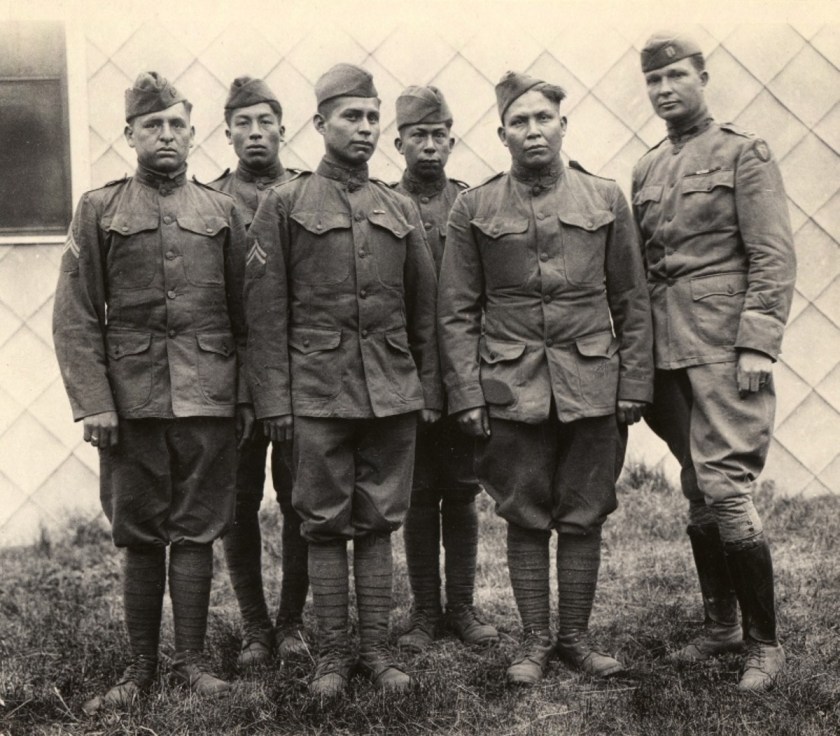
In World War I, German intelligence was able to steal American plans at will. Tapping enemy lines was extremely easy, especially at night. Faced with such a dilemma, a regiment full of Choctaw Indians thought of a potential solution. The commander inquired into how many Choctaws knew their mother tongue. The men hesitated. The first English word some of them had learned was “soap.” In basic training, they were threatened with having their mouths washed out if caught speaking their native language. Now, their regimental leaders wanted them to speak it. The Choctaws were dispersed among the various divisions and attached to communications. From that point to the end of the war, all important orders were passed along in Choctaw. The Germans were stymied and finally caught off guard by the Americans’ war plans (from PBS’ American Experience: The Great War, Episode 3).

Today, our society does not want to hear us speak the message of Christ. Many find it offensive and restricting. They may even put great pressure on us to keep quiet. But, we cannot. These have been taken captive by the devil to do his will (2 Tim. 2:26). Especially when someone sees the spiritual crisis in his or her life, there will be a desperate desire for an answer. Where will they turn? If they have heard us speak of Christ and His way, they may need us to communicate the most important message ever spoken. Don’t keep quiet about Jesus, especially given the dire danger in this spiritual warfare (2 Cor. 10:3-5). God is counting on us to speak for Him, and so is a lost and dying world! Keep sharing Him.

hith-wwi-native-american-code-talkers-choctaw_code_talkers-800x701-2

Adopting Orphans

Neal Pollard

It was nearly twenty years ago that I walked with Keith Kasarjian through an orphanage in eastern Ukraine. I cannot remember how many children were there, but there were many. My first impression was their appearance–unwashed and tattered clothes, dirty bodies, and many had mussed or shaved heads. But my overwhelming impression was regarding their behavior. They clung to us, wanting our attention. They couldn’t speak much, if any, English, and our Russian was sparse. There was a hunger in their eyes, not for food but for attention and affection. While we were not there for very long, the memory of that evening is as fresh today as it has ever been. They had no family, few possessions, and terribly uncertain futures. Legally, culturally, and financially, adopting dozens of foreign children was virtually impossible. Not a few tears were shed when we said goodbye and as we looked back at that evening.

An orphan “is someone whose parents have died, are unknown, or have permanently abandoned them” (Merriam Webster online; Concise Oxford Dict.). While Scripture mentions physical orphans 36 times, including twice in the New Testament, the concept of spiritual adoption is an important way the New Testament describes what God does through Christ to make us part of His family. Particularly, Romans 8-9, Galatians 4-5, and Ephesians 1 describe this process.

Consider how we appear to God. Even our righteous deeds are like filthy garments (Isa. 64:6). He even figuratively described His Old Testament people as like castoff children abandoned and helpless whom He bathed, clothed, and took care of (Ezek. 16:1ff). But, that figure could certainly be applied to us today. Scripture depicts sin as making us stained (2 Pet. 2:13), spotted (Eph. 5:27; 1 Pet. 1:19), and unclean (Rev. 21:27). Yet, God saw us and loved us (Rom. 5:6-8). He wanted us to be part of His family (Eph. 2:19).

The difference between God and us is that He is able to take all of us. He wants to, and He has the resources and power to make it a reality. He feels perfect pity for us who are orphaned by sin, and He acts on that compassion by inviting us into His family. If we accept His offer, He makes it happen. That being the case, why would we ever reject what only He can give? We can go from being the lowliest reject to being a child of God!  Truly, it doesn’t seem like much of a dilemma. If we see ourselves, spiritually, as we are, we will anxiously accept what only He can give us.

Ukraine 2003

“I’ll Love You Forever”

Neal Pollard

We read it to our sons when they were growing up. We made up our own tune to the song, “I’ll love you forever, I’ll like you for always, As long as I’m living, my baby you’ll be.” It’s been hard to remember those days in the rocking chair, reading it over and over to them, without getting tearful ever since they weren’t little boys. It turns out that many people can relate. The book’s author, Robert Munsch, reports that it has sold 15,000,000 copies (http://robertmunsch.com/book/love-you-forever). His publisher didn’t want to publish it because it didn’t seem like a traditional children’s book.

If just reading the title gets you choked up with personal memories, you may not want to read the true story behind the book. Munsch says that the song came first:

I made that up after my wife and I had two babies born dead. The song
was my song to my dead babies. For a long time I had it in my head and
I couldn’t even sing it because every time I tried to sing it I cried. It was
very strange having a song in my head that I couldn’t sing (ibid.).

He later built a story around the song, and the rest is history for millions of parents and their children. I imagine Gary, Dale, and Carl would tell you this is their favorite book from childhood. It’s certainly ours.

Isn’t it interesting that such a beautiful, intense love story surrounds something heartbreaking and tragic. Out of pain and sorrow, this incredible, enduring legacy was created. Knowing the backstory only intensifies the power of the words in the book.

Have you ever looked at the story of the cross in that light? Scripture teaches us from beginning to end that God loves us, His children. He cares for us, protects us, and wants us to live with Him forever.

But there is a backstory. In fact, it goes back to eternity. There, the Godhead made a plan to make sure we could live with Him forever. But it would require His Son dying for us in order to make it happen. Discovering that may bring tears to our eyes, but it also melts our hearts. What love! It’s a forever love, one that can make us the best we could ever be.

Here is God’s message throughout Scripture: “I have loved you with an everlasting love; Therefore I have drawn you with lovingkindness” (Jer. 31:3). In other words, “I’ve loved you forever and I’ll love you forever.”

tumblr_inline_o0urztubwd1t2pr7r_1280

Every Day Is “New” With God

Neal Pollard

  • We sing a new song (Ps. 40:3; Isa. 42:10; Rev. 5:9).
  • We gain new strength (Isa. 40:31).
  • We have a new name (Isa. 62:2; Rev. 2:17).
  • We have a new covenant (Jer. 31:31; Heb. 8-9). 
  • We have God’s compassions which are new every morning (Lam. 3:23). 
  • We have a new heart and a new spirit (Ezek. 36:26).
  • We observe a new commandment with each other (John 13:34).
  • We walk a new life (Rom. 6:4). 
  • We are new creatures (2 Cor. 5:17). 
  • We are part of that new man, united with all children of God (Eph. 2:15).
  • We have put on the new self (Eph. 4:24; Col. 3:10). 
  • We have been given a new and living way (Heb. 10:20).
  • We are looking for new heavens and a new earth (2 Pet. 3:13).
  • We anticipate the day when Christ makes all things new (Rev. 21:5).

Even though these promises were made thousands of years ago,  they are as fresh and bright today as they have ever been. Some help us overcome the guilt of our past. Others give us strength for the present. All of them give us hope for the future. We don’t need “new truth,” but so many of the truths of Scripture deserve our renewed dedication and attention. As a New Year descends, try and put your arms around all the daily renewal our great God makes available to us on January 1st and every other day of the year! 

” Therefore we do not lose heart, but though our outer man is decaying, yet our inner man is being renewed day by day” (2 Cor. 4:16). 

800px-22Wishing_You_a_Happy_New_Year.22

THE MYSTERY OF INFLUENCE

Neal Pollard

Several years ago, a fourteen-year-old girl named Shannon Smith was shot to death in her own back yard. A bullet lodged in her brain. Though already tragic and horrific, the story was made more tragic by the inexplicable nature of the shooting. Police, judging from the trajectory made by the entry would, concluded that the bullet fell from the sky. Somewhere nearby, some unknown person had fired a gun for no known reason. The bullet completed its path of travel inside an unsuspecting teenager. Tragic, indeed!

Who fired the gun and why? The action pales next to the consequence. Someone aimlessly fired a weapon. A child died and parents were left to mourn her loss. It was all so unnecessary and avoidable!

Christians are a special people, a God-possessed, holy group (1 Pet. 2:9). The world sees Christians (Matt. 5:16). They react to children of God, either “glorifying” (Matt. 5:16) or “blaspeming” (2 Sam. 12:14) Him. Christians are either transformed from worldliness or conformed to it (Rom. 12:2). Conformity carries tragic consequences.

Influence is an inevitable burden carried by every Christian. Others watch what we do, hear what we say, and evaluate our judgments. What we wear, how we talk, where we go, and with what we entertain ourselves may seem harmless or at least harmful only to us. Yet, we can aimlessly fire and eternally wound another’s soul by our influence.

The man or woman who fired that gun may not realize even now what they did with one “harmless” squeeze of a trigger. Maybe they will not know on this side of time. Just so, we may be shocked on that day to realize how many or exactly whom we influenced. We’re on a spiritual battlefield (Eph. 6). Let’s be careful not to shoot at the wrong side! We may wind up doing harm to the very people we’re commissioned to save. Let’s watch our aim!

635556363784254557-phxdc5-5gjqo8l36pjzj76wfkp-original
Shannon Smith (undated photo)

The Greatest Longing Of The Soul

Neal Pollard

Quick. Name the top three accomplishments of Grover Cleveland’s presidency. I’ll wait. 

Nothing? Don’t feel dense or unpatriotic. He’s not in most historians’ top 10 (25?) of American presidents. But on yesterday’s date, 132 years ago, he was at the helm and dedicated the Statue of Liberty in New York Harbor.  This, if you don’t recall, was the proposed gift of French historian Edouard de Laboulaye in honor of America’s alliance with France during the Revolutionary War, sculpted by Frederic-Auguste Bartholdi, designed by Viollet-le-Duc and Alexandre-Gustave Eiffel (yes, that Eiffel), completed in France in 1884, and delivered to America the next year with the last rivet fitted on October 28, 1886 (via Instagram). The pedestal of the statue contains a sonnet by poet Emma Lazarus, well-known to most of us, that reads, 

“Give me your tired, your poor,
Your huddled masses yearning to breathe free,
The wretched refuse of your teeming shore.
Send these, the homeless, tempest-tost to me.
I lift my lamp beside the golden door” (ibid.).

With all the debate about immigration–a Reuters story revealed that immigration tops the economy and healthcare as the top issue for voters (Read here)–there is no denying why so many people around the world want to come to the United States. We have long been regarded as the haven for poor masses yearning to breathe free and wanting a home inside “the golden door.” Many have come and achieved incredible success in our country. Many more than that have come to find that immigrating here did not solve their problems or make their dreams come true.

There is a greater longing of the soul, a desire for something even more than prosperity.  Jesus teaches us that material things won’t last (Mat. 6:19-20). Peter tells us what comes of such ultimately (2 Pet. 3:10). 

There is a greater longing of the soul than even freedoms afforded by nations and governments. Many will abuse those freedoms through immoral choices.  Proverbs 14:34 strongly applies.

The most noble, highest longing of a soul is for the freedom only Christ can provide. To be free from the slavery of sin (John 8:31-36), from guilt of sin (Psa. 51:1-14), and from the power of sin (Heb. 2:14) is man’s wisest quest. A person with an abundance of money, liberty, and other earthly advantages may still be buried by the influence of sin. To know there’s a solution right now–who wouldn’t want that?

Don’t forget what Jesus tells people everywhere: “Come to Me, all who are weary and heavy-laden, and I will give you rest” (Mat. 11:28). 

23905208_10155150150870922_199173094846852320_n

Are You Grateful?

Neal Pollard

Jesus asked a lone, appreciative soul, “Were there not ten cleansed? But the nine–where are they? Was no one found who turned back to give glory to God, except this foreigner?” (Luke 17:17-18). They were terrified (13), terminal (12), transformed (14), but they were not thankful. They were saved, but to what end? They were selfish and not spiritual. God made them whole, and what did they do? They blended into the world when they should have blessed The Word.

Ingratitude increasingly characterizes man’s interaction with man–the etiquette of thank you cards is rarer, the feelings of loyalty and appreciation for the American military and first responders is waning, and many have forgiven themselves of the debt owed to generations past whose sacrifice has led us to national plenty. This is not all-inclusive and at times there are spikes of improvement and pleasant, positive change toward greater thankfulness.

Yet, since the time when Christ’s sandals kicked up dust in Palestine, people have failed to show gratitude to Him. that the ingratitude comes from those whom He saved from the devil’s disease and death is remarkable! Yet, we all struggle with that sin.

New Testament writers point out how grave an error ingratitude is. Paul warned about the “ungrateful” (2 Tim. 3:2) who would ultimately make no spiritual progress. God rejects as foolish and futile those who “glorified Him not as God, neither were thankful” (Rom. 1:21). Someone may ask, “Why make such a big deal about something so seemingly minor?”

Is it minor? If we’re not thankful to God, one or more things have occurred. (1) We are convinced there is no eternity and it’s all about here and now. (2) We have forgotten how it felt to be forgiven. (3) We believe that everything is about us and nothing is about anyone else, let alone God. (4) We have come to believe that sin is just no big deal. (5) We think we owe everything we have and are to no one but ourselves. No doubt, more answers could be postulated, but here is the bottom line. A failure to thank God for His abundant blessings makes one in more dire condition than any leper ever was. We may not be losing our extremities, our hair may not be turning bleach white, we may not have painful sores, and we may not be social outcasts. But, here is what has happened. Our heart is cold, our soul is endangered, we’re in denial, and we’re blinded to the realest of realities.

Won’t you say with David, “Enter His gates with thanksgiving And His courts with praise. Give thanks to Him, bless His name.For the Lord is good; His lovingkindness is everlasting and His faithfulness to all generations” (Ps. 100:4-5)? Stop and think how much you owe to God. Translate that gratitude into godly servitude. Give Him your best. Give Him yourself. Give Him your thanks. 

800px-gebhard_fugel_christus_und_die_aussc3a4tzigen_c1920


Truth Is Truth, No Matter WHO Disagrees With It

Neal Pollard

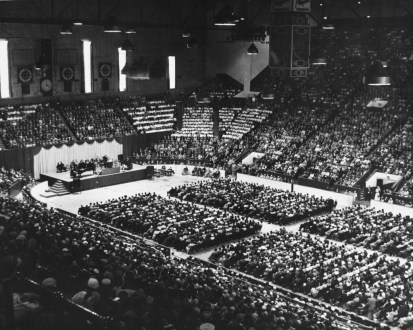
Today, one of the most famous preachers of modern times died just short of his 100th birthday. Not only did he achieve longevity, his name was almost synonymous with American religion in the 20th Century. He reached hundreds of millions of people through live crusades, radio, and television. He was regularly listed as one of the “Ten Most Admired Men in the World.” His website claimed that he preached to more people in live audiences than anyone else in history (info via FoxNews.com).  His influence on society is unmistakeable.

However, this much loved and now much lamented man used the weight of his name and influence to oppose something which Scripture seems very clearly to teach. In the answer section of his website, he addresses the question, “Is baptism necessary for salvation?” While answering that he believed it to be important and that he had done it himself, he also said, “If baptism were a requirement for salvation, we would certainly say that.” His answer makes clear that one becomes a saved convert before baptism, the thief on the cross being used as proof of that claim. Many of those who left comments under his answer shows how deeply influential and popular his teaching on this was.

I believe in the vitality of the saying, “It’s never a matter of ‘who’s right,’ but ‘what’s right.’” Something is never right because I say it, some other preacher, or even the most famous preacher of the 20th Century says it. Something is right because Jesus and His apostles and prophets said it. Here is what they said:

  • “He that believes and is baptized shall be saved” (Jesus)
  • “Repent, and each of you be baptized in the name of Jesus Christ for the forgiveness of sins” (Peter)
  • “Get up and be baptized, and wash away your sins, calling on His name” (Ananias)
  • “Or do you not know that all of us who have been baptized into Christ Jesus have been baptized into His death? Therefore we have been buried with Him through baptism into death, so that as Christ was raised from the dead through the glory of the Father, so we too might walk in newness of life” (Paul)
  • “For you are all sons of God through faith in Christ Jesus. For all of you who were baptized into Christ have clothed yourselves with Christ” (Paul)
  • “ Corresponding to that (Noah and family brought safely through the water, 20, NP), baptism now saves you—not the removal of dirt from the flesh, but an appeal to God for a good conscience—through the resurrection of Jesus Christ” (Peter)

I feel the loss of this renowned preacher is sad and tragic.  I appreciate his vast influence and the way he tried to use that for good in so many regards. Yet, if the Bereans found it necessary to compare the great apostle Paul’s preaching and teaching with Scripture, any of us who preach and teach today should want people to do the same. That’s the only way we will be able to determine what’s right!

55b-3246-1-1024x819

A Saved Life Saved Hundreds More

Neal Pollard

Ray Wallace, a great preacher friend of mine in Bayfield, Colorado, sent me an article about an incredible, heartwarming rescue. It happened late at night in Fresno, California, in 1971. Rick Freund was driving home when he saw a house going up in flames. Outside the house were three little girls and their mother, who was desperately crying for her baby trapped inside his bedroom. Firefighters had not arrived, so the slender, 24-year-old Freund was hoisted into the window, where he found the infant smiling in his crib. He rescued the baby, then simply walked away. Just minutes after the rescue, fire collapsed the ceiling and destroyed the bedroom. Little did he know that the family he helped would track him down 46 years later. The baby boy he saved, Bobby Magee, grew up hearing about this daring rescue and because of that has devoted his life to saving others. Now 47 and the father of three, Bobby has saved hundreds of lives by organizing a large blood drive over the last 18 years. Freund and Magee kindled a friendship built upon an incredible bond. Incidentally, Freund has also rescued a choking stranger by performing the Heimlich maneuver. On yet another occasion, he administered CPR on an elderly woman who had a heart attack at a funeral (Carmen George, The Fresno Bee, 2/5/18).

In the early 1990s, one of my elders in Mechanicsville, Virginia, Russell Young, studied with and baptized a man named Tom. Tom would influence his ex-wife, ex-daughter-in-law, future wife, and daughter, Debbie, to obey the gospel. Debbie would help convert several of her co-workers, including Shannon. Shannon and her husband, Michael, obeyed the gospel the same night. Shannon and Michael have gone on to go on several mission trips. Only eternity will tell how many souls have been saved through those. Who knows how many of those converted in these mission fields have reached others and how many have been reached? That is just one case I personally know about. Many people can share similar stories of dramatic rescue! It is a modern demonstration of 2 Timothy 2:2.

As we go about our daily business, God has us here on a rescue mission. We can never know, when we care enough to share Christ with a lost soul, where it will end. The person may seem humble and ordinary, but they may influence many more to be saved. And those saved ones may save many more. It’s truly exciting to think about this wonderful chain of rescued souls standing on the Lord’s right side at the Judgment! Let’s be heroes of the highest kind! A saved life may save hundreds more!

JRW BABY RESCUE 1
Rick Freund (L) and Bobby Magee