Personal Responsibility Meets Divine Grace:

A Deep Dive into the Parables of the Talents and the Hired Laborers

Brent Pollard

The Parable of the Talents (Matthew 25.14-30) and the Parable of the Hired Laborers (Matthew 20.1-16) delve into profound themes of stewardship and reward, each shedding a unique light on these concepts.

The Parable of the Talents reminds us of our duty to employ the gifts and resources entrusted to our care. It teaches that those who cultivate their talents can expect more significant rewards, revealing a structure where the fruits of one’s labor align with diligent stewardship.

In contrast, the Parable of the Hired Laborers reveals a profound truth about divine grace. It shows that laborers receive equal rewards regardless of when they begin their work. This parable demonstrates that God’s kingdom operates through grace rather than human metrics of effort or worthiness. The equal compensation given to all workers testifies to the Creator’s boundless generosity rather than merely accounting for their toil.

These parables weave together a profound narrative illustrating the delicate balance between human accountability and divine grace. Each carries a distinct truth that neither diminishes our responsibilities nor the grace bestowed upon us. One emphasizes our sacred duty to steward our blessings, while the other reveals God’s boundless generosity, which transcends our human understanding of merit.

Scholars and theologians have grappled with these parables’ apparent contradictions throughout Christian history. Augustine emphasized the call to earnest service in the Parable of the Talents, while Martin Luther highlighted the concept of grace alone, as illustrated in the Parable of the Hired Laborers. Today, these timeless stories continue to shape our understanding of merit, justice, and the nature of grace.

In our contemporary world, where productivity and performance often dominate the discourse, the Parable of the Talents highlights the importance of faithful effort and wise stewardship of our gifts. Meanwhile, the Parable of the Hired Laborers reminds us that human measures of worth pale compared to divine grace. In modern congregations, these teachings offer wisdom for stewarding our communities and nurturing relationships.

They guide us in developing our talents while grounding our communities in the grace that sustains us all. These parables encourage a delicate balance: striving for excellence in service while embracing the inclusive nature of God’s kingdom, which welcomes all regardless of when they join the work. This inclusiveness offers comfort and reassurance, affirming that God values all.

Rather than conflicting, these parables present a harmonious view of the Christian journey. They reveal a sacred balance where personal responsibility and unmerited grace work as partners in spiritual growth. The Parable of the Talents affirms that our efforts and choices matter—that careful stewardship of our gifts has genuine significance in God’s kingdom. The Parable of the Hired Laborers reminds us that grace forms the foundation of our relationship with God, surpassing human attempts to measure worth.

Together, they paint a vivid picture of discipleship, calling us to excellence while grounding us in humility. They encourage us to invest ourselves entirely in kingdom work while remembering that our worth stems not from our achievements but from God’s boundless love. This perspective offers enduring wisdom for navigating the interplay between human effort and divine grace, speaking as powerfully to modern truth-seekers as it did to its original audience.

King Jotham

A Model of Principled Leadership and Spiritual Integrity

Brent Pollard

King Jotham of Judah, who reigned in the 8th century BC, is often overlooked in the historical pantheon of biblical kings. However, he was known for his prudent leadership and unwavering moral integrity. After succeeding his father, Uzziah, Jotham distinguished himself by actively studying his father’s reign and taking measures to avoid repeating his mistakes. He focused on enhancing his kingdom’s defenses and infrastructure. Additionally, he dedicated himself to religious duties, ensuring he stayed within his limits. The astute blend of political acumen and spiritual dedication ensured stability and prosperity in Judah under his rule and set a benchmark for effective leadership, highlighting the importance of balancing authority with piety. Contrasting Jotham’s decision to prioritize constructive projects with Uzziah’s focus on personal glorification highlights vital leadership lessons that can shape individual and communal growth.

Jotham’s Wisdom and Prudence (2 Chronicles 27.1-2):

Jotham was determined to learn from his father Uzziah’s errors, which defined his otherwise successful reign. He wisely avoided overstepping his boundaries by considering his experiences, family history, and lessons from observing others. Unlike his father, Jotham remained humble and discerning and never trespassed into sacred spaces. His prudence, demonstrating his dedication to being a proper leader, underscored his effectiveness in guiding his kingdom.

Jotham’s Constructive Endeavors (2 Chronicles 27.3-5):

While his father concentrated on building structures for war and glorification, Jotham prioritized constructive projects that would benefit his people. This included fortifying Judah and rebuilding the Temple’s Upper Gate to improve the community’s security and welfare. His dedication to public service and the welfare of his people exemplified his altruistic leadership style and priorities.

Jotham’s Spiritual Integrity (2 Chronicles 27.6–9):

Jotham had a solid and unwavering bond with God, showcasing the depth of his spiritual devotion. He prepared to walk before the Lord his God, demonstrating his intentional alignment with God’s will. Jotham shared King Jehoshaphat’s deep commitment to seeking God. This underscores the importance of spiritual integrity as a cornerstone for effective leadership.

The Challenge of Righteous Leadership:

Despite Jotham’s exceptional leadership, his people did not emulate his virtuous example and continued practicing idolatry, revealing the complexities of leadership and followership dynamics. This highlights a crucial lesson: being a good leader does not necessarily ensure followership. Leaders ought to maintain their integrity regardless of whether or not they have public approval or support.

King Jotham’s life inspires us to uphold righteousness and integrity despite external pressures or historical influences. His story encourages us to steer clear of societal corruption and familial mistakes, guiding us toward a path that aligns with the divine expectations of justice, compassion, and righteousness. Jotham’s example encourages us to dedicate our time and talents to higher principles, instilling a vigilant and cautious approach to personal and communal responsibilities. Following King Jotham’s example can assist in constructing a society where integrity, fairness, and ethical behavior are prioritized, fostering a community built on trust and righteousness. It may not always be the easiest or most popular choice, but maintaining our integrity is crucial for earning the trust and respect of others. Amid life’s challenges, King Jotham is a resilient role model, showcasing the strength of staying committed to one’s values and beliefs in the most adverse circumstances. Ultimately, his legacy serves as a reminder that character strength and an unwavering commitment to doing what is right are the actual indicators of success. 

King Saul: Lessons from a Proud Monarch

Brent Pollard

“The Lord resists the proud; but he gives grace to the humble” (Proverbs 3.34 LXX).

The rise and fall of King Saul is worthy of any Shakespearean drama. When God chose Saul as King of Israel, he attempted to hide from the people (1 Samuel 10.22). For his part, Saul looked the part, standing head and shoulders taller than everyone else (v.23). The people believed he was the right person to rule over them and shouted, “Long live the king” (v.24). However, Bible readers are already familiar with the entire story. The longer Saul reigns, the prouder he becomes.

In 1 Samuel 15.1-3, Saul failed to carry out God’s vengeance on the Amalekites. He made a weak excuse for his failure (vv. 15, 20–21) and was proud of his actions, building a monument to remember them (v. 12). When Samuel arrived, Saul was unaware of God’s anger. Saul greeted Samuel warmly, boasting of his obedience in carrying out God’s commands (v. 13). Samuel not only rejected Saul’s excuse but also asked him to recall a time when he had been humble (v. 17). God chose Saul as king while he was still humble.

Saul’s failure to “hack Agag to pieces” (as described in 1 Samuel 15:33 ESV) was just one of many examples of his arrogance. Further reading of 1 Samuel reveals more instances where Saul’s pride caused him to make poor decisions. By examining these examples, we can learn an important lesson about the importance of humility.

In 1 Samuel 13.8–14, Saul made an unauthorized sacrifice, a duty nearly exclusively assigned to priests but also permitted for some prophets, such as Samuel and Elijah. Saul took this action because Samuel took longer than expected to arrive in Gilgal, and he was concerned about his men scattering. He wanted to demonstrate his dominance or power. However, Samuel chastised Saul for this act, claiming that his kingdom would not last because of it. This incident could be interpreted as an early indication of Saul’s pride, as he overstepped his authority and assumed a priestly role.

In 1 Samuel 14:24–46, Saul makes a hasty vow prohibiting his soldiers from eating. Even when it puts the battle at risk and endangers the life of his son Jonathan, who unknowingly ate some honey, Saul refuses to admit his mistake. Jonathan criticizes the vow, arguing that the army would have been better off eating from their enemies’ spoils. However, Saul puts his command above his troops’ safety and the situation’s practical needs. The people must intervene to save Jonathan from execution, and this episode demonstrates Saul’s flawed leadership and decision-making. He prioritizes his pride and desire for authority over the welfare of his people, resulting in decisions that lack wisdom and compassion.

We see Saul’s angry reaction to a song about David’s victory over Goliath in 1 Samuel 18:6–9. The song says, “Saul has slain his thousands, and David his ten thousands.” As a result, Saul becomes very angry and envious. He says, “They ascribed ten thousand to David, but thousands to me. What else can he have besides the kingdom?” Due to his jealousy, Saul keeps a close eye on David and makes several attempts on his life. He pursues him relentlessly, as he cannot bear the thought of someone else receiving more praise and admiration than him.

In 1 Samuel 20.30–34, when Saul confronted Jonathan, his jealousy, rage, and fear of losing his kingship to David were evident. However, his pride also played a significant role in his actions. Saul’s reaction to Jonathan’s defense of David revealed the extent of his pride, paranoia, and violent desire to rule. He insulted Jonathan and even tried to kill him with a spear for supporting David, whom he saw as a threat to his throne. Saul’s pride and ego were so intertwined with his kingship that any challenge to his rule or authority provoked a drastic and irrational response. To Saul, Jonathan’s loyalty to David was a direct challenge to his kingship.

Saul’s behavior reveals his unwillingness to accept Samuel’s prophecy that David will replace him as king and his kingdom will end. His pride prevents him from considering the situation from a divine or practical perspective, causing him to focus only on his desires and fears. Saul’s pride is more than just arrogance; it is a harmful combination of fear, authority, and a refusal to acknowledge his mistakes or comprehend that his actions may cost him God’s favor and reign. Therefore, Saul’s clash with Jonathan illustrates how his pride and desire to retain power at any cost have damaged his character and leadership abilities.

In the book of 1 Samuel chapter 28, we read about Saul’s visit to the witch of Endor. Saul found himself in a desperate situation as he confronted the Philistine army. Despite his efforts, God did not respond to Saul’s prayers through dreams, prophets, or the Urim and Thummim. As a result, Saul turned to an Endor medium to summon the spirit of Samuel, who had died. This act of seeking the aid of a medium contradicted God’s commands, as stated in Deuteronomy 18.10–12. This move demonstrates Saul’s departure from reliance on God, possibly motivated by a prideful belief in his ability to control his destiny through any means available, even if forbidden.

Saul’s tragedy is a powerful warning about the corrupting influence of pride. Initially, he reigned with humility and submission to God, but his behavior degenerated into arrogance, defiance, and self-destructive actions. Saul’s elevation to kingship fed his ego, leading to impulsive decisions that separated him from God’s favor and ultimately caused him to lose his kingdom. His story highlights the significance of remaining humble, wise, and reliant on God’s guidance, even when in positions of power and authority. Pride can lead to ruin, but cultivating a humble heart enables us to make decisions that honor God and benefit those around us. Saul’s life reminds us that uncontrolled pride precedes the fall.

The New Birth

Neal Pollard

“The signs” are a thread that run throughout the gospel of John. It is the signs observed by Nicodemus that brings this Pharisee to Jesus by night to speak with Him. He is a member of the Sanhedrin (7:50; 19:39), which is what John highlights by calling him a “ruler of the Jews” (cf. 7:48). The Sanhedrin, from the Greek word meaning “seated together,” was “a council in Jerusalem that functioned as the central judicial authority for Jews” (Myers, Eerdmans, 912). Yet, while that group will notoriously and constantly oppose Jesus and plot His death, Nicodemus approaches Jesus as a believer. He says, “Rabbi, we know that You have come from God as a teacher; for no one can do these signs that You do unless God is with him” (2). Who is the “we”? We are not told, but we do know that faith in Jesus is already beginning to spread. 

Jesus, however, controls the direction of the conversation. He responds by teaching Nicodemus about the necessity of one being born again (3ff). This intrigues and mystifies that respected teacher. In this starlit classroom, Jesus lays the groundwork for a truth which future students like you and I also need to grasp. 

The new birth is essential (3-5). Jesus says one must be born again. One must be born of water and the Spirit. Without this new birth, one cannot see or enter the kingdom of God. Paul is going to call this the “washing of regeneration and renewing by the Holy Spirit” (Titus 3:5). 

The new birth is spiritual (6-8). Nicodemus is trying to understand Jesus’ teaching from a physical perspective, wondering if He meant literal rebirth–which he knew was impossible. Jesus contrasts that fleshly idea with being born of the Spirit. He likens this rebirth to the wind, something real but not something observable. We can see someone being baptized, but the cleansing of the soul and becoming a child of God is something actual which God sees but which we accept by faith. 

The new birth is understandable (9-15). Now, Nicodemus is struggling to make sense of it, but Jesus says that is because he is thinking in earthly rather than heavenly terms. Those signs Nicodemus marveled at were designed to verify the truths He was teaching. All of it was meant to create faith in open hearts. To aid his understanding, Jesus asserts that He had come down from heaven to be “lifted up” (14). He refers this Old Testament scholar to an event during the wilderness wandering, when the brazen serpent was put on a pole to save the sinful Israelites who had complained and been bitten by serpents (Num. 21:9). Those who trusted in this remedy God provided to save their lives and looked on the pole did not die. Those who did not believe and look died. Jesus ties God’s grace and man’s obedient faith together to teach the new birth.

The new birth is providential (16-21). Simply put, God provided the new birth as part of His eternal plan. Jesus came to earth to teach that plan, but also to enact that plan. He was like the brazen serpent. He would have to be lifted up (14). He would have to be “given” (16). It was because men would not believe this that they would act in violence to kill Him, ironically facilitating God’s eternal plan of redemption (18-20). Jesus was going to expose the evil of men’s deeds, and they would hate Him for it. But Jesus, referring to Himself as Light (five times from verse 19 to 21), was illuminating the path of righteousness for those who believe (21). 

I wonder what went through Nicodemus’ mind when he left Jesus that night. How many times did he review this lesson in his mind, pondering the weighty truths Jesus shared with him? What about when he tactfully defended Jesus when the Sanhedrin doubtfully disputed about Him (7:50-52)? What about when he helped fellow-Council member Joseph prepare Jesus’ body for burial after His crucifixion (19:38-39)? However that went, Nicodemus was taught one of the most important, yet basic, truths of all. He was faced with embracing it, and so are we. A place in God’s kingdom, eternal life, salvation, and coming to the Light are all blessings of being born again! It is an awesome thought that Jesus not only invites us to that, but gave His life to make it a reality. 

“All Things Are Possible To Those Who Believe”

Carl Pollard

There’s a good chance you’ve probably heard this phrase before. While the sentiment is understandable, is this true? 

I believe a better way we could say this is, “All things are possible for God.” Whether we believe it or not, for God all things are possible! What I mean is that God blesses and uses those who will faithfully trust him, but our belief isn’t what makes things possible. It’s the One we choose to believe in who does that. I believe that Georgia is going to be the number one team this year, but not everyone will agree with me. 

So according to the phrase, “all things are possible to those who believe” whoever believes the most is the team that’s going to win…sadly that’s not how it works. All things are possible for God, but it doesn’t depend on our belief. 

This is one of those phrases that can ruin someone’s faith. If they believe and the desired outcome doesn’t happen, does that mean God doesn’t care? This is exactly what faith healers say. If someone isn’t healed, what is their response? “They didn’t have enough faith.” This isn’t what scripture tells us. 

This phrase comes from a wrong interpretation of Mark 10:27. Beginning in verse 24, it says:

“And the disciples were amazed at his words. But Jesus said to them again, “Children, how difficult it is to enter the kingdom of God! It is easier for a camel to go through the eye of a needle than for a rich person to enter the kingdom of God.” And they were exceedingly astonished, and said to him, “Then who can be saved?” Jesus looked at them and said, “With man it is impossible, but not with God. For all things are possible with God.””

For us to understand what Jesus is talking about we have to look at context. He’s not talking about a football game, or taking a test, He’s talking about entering the kingdom of God! Without God it would be impossible for us to enter Heaven and to have eternal life, but with God, all things (pertaining to our walk with Him and our journey to heaven) are possible. 

Thankfully we have a caring Father that wants nothing more than for us to succeed in our walk with Him. All things are possible WITH God. We should never forget what we can accomplish when He is in our life. But our greatest accomplishment is eternal life in the Kingdom of God.

Why Do You Come?

Brent Pollard

I hope I am not injuring Matthew’s text by sharing this. Still, I have recently been reflecting on Jesus’ testimony about John the Immerser as recorded in Matthew 11.7ff. Jesus asked the assembled crowd about their rationale for venturing into the wilderness to hear John. Were they going to see: “A reed shaken in the wind?” “A man dressed in fine clothes?” “A prophet?” What were they hoping to find?

Had they anticipated someone whose opinions and beliefs could be easily changed? John did not easily change his mind or bow to the masses’ will. Did they think they would meet someone living a life of luxury? John’s simple lifestyle, which included camel-hair clothing and the consumption of locusts and wild honey, was meant to highlight his prophetic calling and set him apart from the rest of society. John was a prophet, Jesus says, and not just any regular prophet. He prophesied in the Old Testament to come before the Messiah and pave the way for him (see Malachi 3.1).

Jesus spoke highly of John and emphasized the significance of His upcoming kingdom, stating that even the least in it would be greater than John. We must recognize that we can be a part of this kingdom by obeying the gospel. With this understanding in mind, let’s consider a new perspective. Why should we attend church assemblies now that Jesus has established His kingdom and added to it those He saves (Acts 2:47)?

To paraphrase Jesus, “Did you come here for a show?” Like Jesus’s question about the reed, this challenges the idea of fickleness and superficiality in worship. If attendees primarily seek entertainment, they may miss the depth and reverence of a genuine relationship with God. Desires to develop spiritually, interact with other Christians, and actively participate in the body of Christ should be the driving forces behind attending church services. It is an opportunity to learn from biblical teachings, receive guidance and support, and collectively worship and glorify God. Engaging in these gatherings strengthens our faith, builds meaningful relationships, and contributes to advancing God’s kingdom on earth.

Would Jesus ask, “Did you come here for personal gain?” Analogous to the question about “a man dressed in fine clothes,” this question challenges those who attend church for social status, networking opportunities, or personal recognition. Jesus would prioritize the sincerity of one’s intentions and the desire to grow spiritually rather than seeking personal gain. He emphasized humility, selflessness, and a genuine love for God and others. Therefore, attending church should be driven by a genuine hunger for spiritual growth and a desire to serve and love others rather than personal gain or recognition.

Or would He ask, “Did you come here to meet God?” As Jesus confirmed John’s prophetic role, this question reinforces the primary purpose of the church: to engage in communal worship and seek a deeper relationship with God. Attending church is more than fulfilling a religious obligation; it is about connecting with a higher power and finding meaning in our lives. Through this connection, we can experience personal transformation and contribute to the well-being of our community.It’s important to regularly evaluate our reasons for attending church services and ensure that we understand what true worship means. Worship is not about us but showing our love, respect, and admiration for God. It’s not about receiving anything but about giving. We should avoid letting the latest gimmicks or methodology take away from the message or purpose of coming together, which is to honor God. Each of us can contribute by demonstrating humility and service and emphasizing that the focus is on God, not on any one person.

The Greatest Sermon Ever Preached (Praught)

Tuesday’s Column: Dale Mail

It’s sounds wrong— but it makes sense! 

Praught definition: (nonstandard) Simple past tense and past participle of preach

Speaking of praught…

Matthew chapter five records the greatest sermon ever praught. This has been known as the “Declaration of the Kingdom” and the “Sum of Jesus.” It’s powerful and it covers nearly all aspects of the Christian walk. It covers topics that are still relevant and close to home for every person on the planet— past or present. It breaks down as follows.

1-12 “The blessed ones”

13-16 “salt, light, cities”

17-48 “understanding the law of God” 

Jesus makes His way to the top of the mountain and His listeners stands while Jesus is seated. 

After sitting down He opened his mouth to teach.” 5.2 

Someone commenting on this seemingly small detail said, 

“It is not superfluous to say that ‘he opened his mouth, and taught them,’ for he had taught them often when his mouth was closed.”

The sermon on the mount is a lesson on the totality of life. Jesus teaches the objective truth. He said what was needed, and not what was necessarily easy to say. He preached the truth and He did so perfectly and with perfect love. It would be worth our while to familiarize ourselves with this lesson especially in the world we’re living in today. Jesus told us what to tell others. Let’s live for and like Jesus this week. 

Dale Pollard

Vicarious Faith

Saturday’s Column: Learning From Lehman

David Chang

Joshua, at the end of his life in Joshua chapter 24, summons all the tribes of Israel and their leaders to Shechem. He reminds them of their journey as a nation so far, what all God has done for them since the days of their forefathers, and everything God has done for them from Egypt until that present moment. Starting in verse 14, Joshua calls the people to fear the Lord and serve Him in sincerity and in faithfulness and to put away the gods beyond the River and of Egypt. 

Joshua issues a challenge to the people, that if it’s evil in their eyes to serve the Lord, to choose that day whom they will serve—whether the gods beyond the River or the gods of the Amorites whose land they conquered. As for Joshua and his house, they will serve the Lord. Israel answers, “Far be it from us that we should forsake the Lord to serve other gods” (v. 17a). They review what they have seen and what they know that God did for them since bringing them out of Egypt. Joshua continues to challenge their response. They respond the same way: “No, but we will serve the Lord” (v. 21). Joshua once again warns them, that by renewing this covenant, they are becoming witnesses against themselves. The words they say are weighty; it is nothing to play around with. The moment they choose God, that decision comes with accountability and responsibilities. Israel answers, “We are witnesses” (v. 22). 

This scene of unity as the entire nation of Israel come together to answer their calling to serve God is incredible. Just imagining all of those people coming together to renew their covenant relationship with God is a chilling image, in a good way. However, the other side of this story, the part that makes this scene a tragic one, is the reality of their eventual disobedience and apostasy. Just a single page after this part of the Bible, we know what begins to take place in Judges. Israel’s continual downfall as they constantly forget their God and stray towards other pagan gods of the peoples they failed to drive out as God commanded them.

Reading this interaction between Joshua and the people of God and knowing what takes place shortly after makes us wonder: how many people in that crowd that day were truly zealous for God?

We do not do faith alone; Christianity was designed by God to be something that we share with each other and with those around us. However, it is also a double-edged sword in that we as participants of this faith journey can mistaken other’s zeal for our own. When things are going well and you see work being done, it is easy for our emotions to get heightened. And there is a sense in which we need to promote that kind of synergy among the members of the Body in all that we do. However, boil it down to the core. At the end of the day, we are accountable for what we do individually. As difficult as it is, we have to constantly challenge ourselves and ask: “Is my faith truly mine? Is this zeal for God that I feel truly my zeal for Him—or is it a momentary passion that I feel vicariously through others?”

It is a dangerous thing, living vicariously through others. Passion in the hands of others does not do much good to us in the long run. The same goes for faith. I wonder just how many people among the number that was present there when the covenant was renewed were truly zealous for God. And I wonder how many in that number was just saying the right things, looking the right way, and just went along with the flow. Feeling the passion and the emotions around them in that moment, mistaking it for their own zeal for God. Living vicariously through others is dangerous for obvious reasons, but it is harmful in that it is deceiving. The deception is that the congregation’s overarching atmosphere, culture, and zeal can replace one’s own true desire for God. Personal zeal for God requires real work, effort, and endurance.

Let us never become a people who lives vicariously through others’ faith. Rather, let us individually be producers and workers for the kingdom, that when we do come together corporately like tonight, the fruits we bear are hundred-fold. 

A Surprising Find

Thursday’s Column: Captain’s Blog

Carl Pollard

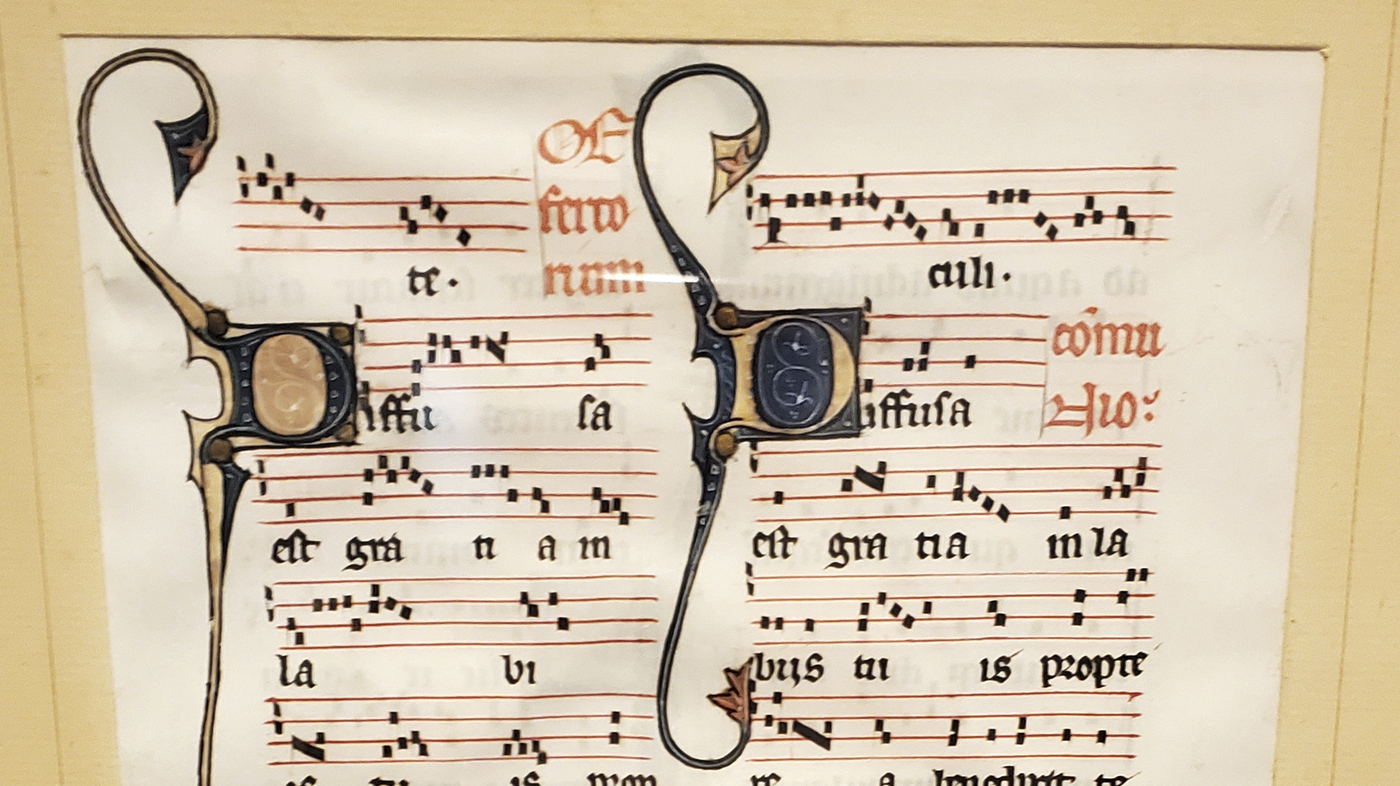
I recently read a news article about a bargain hunter that went to an estate sale in Portland, Maine, to find a KitchenAid mixer. Rather than finding his kitchen appliance, he ended up walking away with a 700 year old treasure. Will Sideri stumbled upon a framed document hanging on a wall that caught his eye. It had an elaborate script in Latin, along with musical notes and decorative gold edges. Based on what he’d seen in a manuscripts class at College, he figured that this document was from the medieval ages. And it was a bargain at $75. Academics confirmed the parchment was from The Beauvais Missal, used in the Beauvais Cathedral in France, and dated to the late 13th century. It was used about 700 years ago in Roman Catholic Church. An expert on manuscripts said the document, first reported by the Maine Monitor, could be worth as much as $10,000. Will Sideri walked away with a priceless treasure that cost him just 75 bucks.

This news story reminded me of a parable taught by Jesus in Matthew 13:44. It reads, “The kingdom of heaven is like treasure hidden in a field, which a man found and covered up. Then in his joy he goes and sells all that he has and buys that field.” In this short verse we read that: 

  • The treasure is hidden 
  • The treasure is valuable 
  • Sacrifice was needed to gain the treasure
  • The field was bought, but the treasure came free 

What did Jesus mean with this parable? You can’t find The kingdom without looking (the treasure was hidden). Seek and you will find (you’ll never find it if you aren’t looking). The kingdom of God is valuable, and sacrifice is required to obtain the kingdom. The man in this parable joyfully went and sold everything. The Kingdom is freely given. When we seek and sacrifice for Christ, he freely gives us grace, mercy, peace and salvation. 

Will we recognize the value that is found in the Kingdom of God?

Swords Into Plowshares 

Friday’s Column: Brent’s Bent

Brent Pollard

“And He will judge between the nations, And will render decisions for many peoples; And they will hammer their swords into plowshares and their spears into pruning hooks. Nation will not lift up sword against nation, And never again will they learn war.” (Isaiah 2.4 NASB1995) 

Once upon a time, my family and I shared a condo in Hinesville, Georgia. It was 1989. Life in a condominium was…interesting. Aside from the paper-thin walls, strangers were coming and going at all hours. Unfortunately, some of those strangers were individuals proselytizing for their religious beliefs. One lazy Saturday, a couple knocked on my door and started talking to me, eventually directing my attention to Isaiah 2.4 and asking what I thought of it. 

I was only 14 then, and my knowledge of the Scriptures was still immature. However, a glance revealed it seemed too idyllic to be related to earth, so I responded with “heaven.” My visitors agreed that I was on the right track with my interpretation and explained how it referred to the Millennial Kingdom that Christ would establish on Earth one day. I politely listened but knew that their explanation, at the very least, did not match what my parents and teachers had shown me in the Bible. 

I’m an adult “of a certain age” in 2022, and I’ve had more time to study the Scriptures. Nonetheless, I wish I had known what I know now in 1989 so that I could have tried to persuade my solicitors where they went wrong in their understanding. My initial response had been partially incorrect. What God revealed to Isaiah was heavenly in origin but established on earth in the first century AD. Verse two gives an obvious hint by stating that the events of verse four will happen in the “last days.” 

The Holy Spirit descended on Peter and the other apostles on Pentecost, around 33 AD. They started preaching the first Gospel message. People wondered if Peter and his companions were inebriated, but Peter assured them that they had witnessed the fulfillment of Joel’s prophecy about the end times (Acts 2.17-21; Joel 2.28-32). God was pouring out His Spirit on men, heralding the arrival of the end times, the final dispensation governed by Christ’s Covenant. 

On Pentecost, Peter used the keys entrusted to him by the Lord to unlock the kingdom God promised (Matthew 16.18-19; Daniel 2.44-45). The fact that it was the promised kingdom is also evident in Jesus’ statement in Mark 9.1. He stated that those to whom He spoke would be alive to witness the kingdom’s arrival with power (i.e., the Holy Spirit). Unless 2,000-year-olds are walking around, the kingdom has already arrived. 

However, take note of the end of Isaiah 2.2: “…all the nations will stream to it.” This statement refers to Abraham’s Messianic promise (Genesis 22.18). Through Abraham’s seed, God would bless the nations of the earth. So, we have Jacob or Israel through Abraham’s seed, and through Israel, we have Judah. David was born of Judah’s lineage, to whom God promised an heir to establish His kingdom, build a house for God’s name, and establish His throne forever (2 Samuel 7.12-13). 

God’s promise to Jehoiakim, a descendant of David, that none of his descendants would sit on David’s throne in perpetuity shows that this cannot refer to the same earthly throne on which David sat (Jeremiah 36.30-31). Indeed, no son of David would reign over Israel after their return from captivity. Descendants of Levi ruled the Hasmonean kingdom until the Romans conquered it about six decades before Christ’s birth. The Romans made Herod the Great, an Idumean who had married into the Hasmoneans, a vassal king over Judah. 

When Jesus stood before Pontius Pilate, the Roman governor, Pilate asked Jesus if He was a king. Jesus informed Pilate that He was, but that His kingdom was not of this world (John 18.36-37). Instead, Jesus declared Himself to be the ruler of a spiritual kingdom whose subjects heeded His voice of truth. Jesus’ answer prompted Pilate to ask the age-old question, “What is truth?” (John 18.38) Before ascending to the Father, Jesus told His apostles to preach the forgiveness of sins to all nations, beginning in Jerusalem, where they would wait until clothed with power from on high (Luke 24.44-49). Take note of the word “power” (24.49) and Jesus’ statement in Mark 9.1. 

So, the church is the kingdom. We could have determined this without reading these Scriptures by looking at Matthew 16.18-19, where Jesus uses the terms “church” and “kingdom” interchangeably. However, false beliefs about Christ’s kingdom and premillennialism seriously threaten generic Christendom. As we’ve seen, Jesus intended His followers to preach the Gospel to all nations, so He would also save Gentiles. In Acts 10, Peter converted a Gentile and his family. From that point forward, God’s kingdom included non-Jews.  

Previously, a barrier separated Jews and Gentiles. That wall was the Mosaic Law. In the second chapter of the epistle bearing their name, Paul explains to the Ephesian brethren that enmity existed while the wall stood. Jesus tore down that barrier, making Jews and Gentiles one in the body of Christ (Ephesians 2.11ff). Jesus brought peace through this act. Let us return to Isaiah 2.4. The prophecy’s poetic language points to a time when warring parties living under the auspices of one Judge would transform their weapons of war into peacetime tools. Despite being on Earth, it sounds like heaven because the church is a heavenly place (Ephesians 1.3). 

So, the church is this wondrous place where we turn swords into plowshares. The church has “neither Jew nor Greek, slave nor free man, male nor female” because we are all one in Christ (Galatians 3.28). As a result, rather than fighting one another, we must focus our efforts on our common foe, the devil (Ephesians 6.10ff). 

I Want To Be A Lipizzaner

Friday’s Column: Brent’s Bent

Brent Pollard

The majestic Lipizzan horse is a sight to behold. One of its dressage gaits is called the levade. If you’ve seen a horse in a heraldic setting, you’ve likely seen something akin to this pose. The horse raises and draws in its forelegs, balancing its bodyweight on its bent hind legs. Lipizzaners are relatively few today, with about 3,000 of them in the world. However, owners prize them for their docile and highly obedient natures. These characteristics are something I wish to emphasize as I consider Jesus’ appeal for us to be “meek” or “gentle” (Matthew 5.5).  

The history of the Lipizzan breed goes back to around 800 A.D. Muslims invaded the Iberian peninsula and brought their Arabian and Berber horses with them. The Muslims bred their Arabians and Berbers with local Spanish horse breeds. One of the resulting horse breeds was the Andalusian. Fast forward to the late 1500s, and you find Archduke Charles II establishing a stud in Lipizza, Austria, known today as Lilica. He bred this Andalusian with Arabian, Berber, Baroque, and the now-extinct Neapolitan horses. The horses produced in Lipizza were equally at home on the battlefield and in aristocratic riding venues.  

In the same latter half of the sixteenth century, the Spanish Riding School began in Vienna. This school has trained these Austrian bred horses for over 450 years using the classical dressage, which the Greek, Xenophon, described. And that is the glue that brings this entire discourse together. Xenophon referred to properly trained horses, ready for battle, as praus. That is the Greek word used by Jesus in Matthew 5.5. So, if you want to see a horse that has been meeked, look at the Lipizzaner during its performance.  

Interestingly, with time’s passage, meekness has been equated to weakness or timidity. Surely weakness or timidity would not be a mindset needed for those wishing to enter the Kingdom. If a horse acted as the modern conception of that word, it would be useless. Is this desirable trait watered down due to its probable source of Psalm 37.11? David wrote: “But the meek shall inherit the earth; and shall delight themselves in the abundance of peace” (KJV).  

Newer translations of that passage, like the NASB1995, will substitute “humility” for the word meek. However, if you look to the original Hebrew, the term employed is anav. The Brown-Driver-Briggs Hebrew and English Lexicon suggests that within this context, anav means “poor, weak, and afflicted Israel.”1 If you read the entire thirty-seventh Psalm, you note that David describes the destruction of evildoers, which creates a void to be filled by the anav (meek or humble) persons (Psalm 37.7-11). 

The problem with bringing David’s meaning to Jesus’ Sermon on the Mount is the Septuagint would have likely influenced Matthew as he recorded the words of our Lord, and it uses praus. Of course, it may be that Jesus quoted the Septuagint, too. Christ seems to do so on several occasions. As Koine Greek was the lingua franca, why wouldn’t He use the Septuagint in His public teaching? Ultimately, it matters little whether Jesus quoted from the Masoretic Text or the Septuagint since we must deal with the Greek in which the Holy Spirit wrote it for you and me today.  

As a quick aside, the church or Kingdom is not an institution that Jesus’ meek will be inheriting from defeated evildoers, as were David’s meek. Instead, Jesus built this institution Himself and now adds the saved to it (Acts 2.47). These saved may be sin-weary and spiritually afflicted upon entry (cf. Matthew 11.28-30), but Jesus adds them to a spotless church without blemish (Ephesians 5.27). Even if Psalm 37.11 was in the mind of our Lord when He preached, He made an entirely different application of it centered on the idea of the “meeked man.” 

Aristotle said that a meek man was one remaining between the extremes of cowardice and recklessness. In other words, a courageous man. 2 That takes us back to Xenophon and our Lipizzaners, the descendants of the Greek war-horse. What kind of a horse would Alexander the Great ride to glory on the battlefield? We know because historians have written much about him. The horse’s name was Bucephalus. Plutarch said Alexander perceived that Bucephalus was spooked by his own shadow and so situated the animal to face away from his source of fear. 3 No man could ride Bucephalus but Alexander. Alexander brought Bucephalus’ power under control. Following the body of knowledge passed down by such men as Xenophon, young Alexander meeked Bucephalus.  

So, what virtue was Jesus urging us to adopt? Naturally, we cannot physically become Lipizzaners. Still, we can discipline ourselves to become docile (i.e., ready to receive instruction) and highly obedient (i.e., willing to carry out those orders) as that magnificent horse. As such, we are equally as fit for service in the war against Satan as being a Barnabas to fellow Christians. Hence, a meeked Christian is far from poor and weak. He knows who holds his reins. As such, he enjoys what is his and what the Lord has promised him. Doesn’t that make you want to be like the Lipizzaner too?   

Sources Cited and Consulted 

1 “Strong’s Hebrew: 6035. עָנָו (Anav) — Poor, Afflicted, Humble, Meek.” Bible Hub, Bible Hub, biblehub.com/hebrew/6035.htm

2 Chaignot, Mary  Jane. “Definition of Meekness.” BibleWise, Biblewise.com, www.biblewise.com/bible_study/questions/definition-meekness.php

3 Wasson, Donald L. “Bucephalus.” World History Encyclopedia, World History Encyclopedia, 2 Feb. 2022, www.worldhistory.org/Bucephalus/

Kawsar, Iffat. “Lipizzan Horse: A Horse Dedicated to Spanish Riding School in Vienna.” The Vet Expert, The Vet Expert, 11 June 2021, www.thevetexpert.com/lipizzan-horse-a-horse-dedicated-to-spanish-riding-school-in-viena/.  

Photo credit: Max Pixel (Creative Commons)

God Desires Humility

Friday’s Column: “Captain’s Blog”

Carl Pollard

The life of a true Christian is filled with change. We learn where we are weak, and try to be better. It’s kind of like a never ending home improvement project. There will always be areas of our spiritual walk with God that could be better. Because this is the case, many religious books, sermons and Gospel meetings are created around a theme that will help us to grow. In the Church there is a plethora of information to help us in our Christianity, but I want to focus on the basics and answer a vital question. What does it mean to be a Christian?


I want to answer this question with a passage in scripture that we may not immediately think of. We may think of 1 Timothy 1:5, or 2 Peter 1:5-7, which are great verses, but I’d like to suggest that Jesus in Luke 18:15-17 gives us the bottom line of Christianity.


It reads, “Now they were bringing even infants to him that he might touch them. And when the disciples saw it, they rebuked them. But Jesus called them to him, saying, “Let the children come to me, and do not hinder them, for to such belongs the kingdom of God. Truly, I say to you, whoever does not receive the kingdom of God like a child shall not enter it.”


Jesus teaches the importance of humility. You want to enter the Kingdom of God? Have an attitude of humility. He uses the example of children, and Luke even uses the Greek word for infant. These are very young kids and babies that are being brought to Jesus. So He uses this as a moment to teach a valuable lesson.


Babies show their humility in their inability to provide for themselves. Every child that is born is completely dependent on its parents and has a wholehearted trust in them to provide what they need. What does it mean to be a Christian? It means being humble enough to admit that we need God. It means we trust in God, rather than our own “power.”


Humility plays an important role in every aspect of Christianity. It helps with showing love to others, it helps us subject ourselves to God’s Word, it helps us treat others the way we want to be treated, it helps us accept the hard topics that scripture contains, and the list goes on and on.


Do you want to be a part of the Kingdom? Make humility an everyday practice. That is what it means to be a Christian.

Infant laying on soft white blanket with black background

THE CHURCH’S OPPORTUNITIES

Monday’s Column: Neal At The Cross

Neal Pollard


No pandemic or problem can suppress or destroy the church’s opportunities. If it could withstand the withering attacks of persecution in its first few centuries, the body of our Lord can come through this current storm stronger than it was before. The church’s opportunities are limitless because…

  • The gospel is still powerful (Rom. 1:16). 
  • Christ is still the Savior of the world (1 John 4:14). 
  • The church is still the manifold wisdom of God (Eph. 3:9-11).
  • The mission is still in force (Mat. 28:19).
  • We still have the only answer to the world’s biggest problem (Rom. 5:6-10). 
  • We can demonstrate the most powerful attraction of discipleship (John 13:34).
  • His kingdom will never be utterly shaken or destroyed (Dan. 2:44; Heb. 12:28). 
  • The recent crisis has awakened a sense of purpose in so many Christians.
  • Heaven is as desirable as ever and hell as unwelcome (cf. Mat. 25:31-46).
  • We know we are bigger than pettiness, division, and senseless strife (1 Cor. 1:10-13). 
  • Man still senses that life is bigger than a few years on this earth (Ecc. 12:13-14).
  • Hope still serves as an anchor for the soul (Heb. 6:19). 
  • The world has no viable competition to what only Jesus can give (1 John 4:4; 5:4). 
  • We are not ignorant of the devil’s devices (2 Cor. 2:11).
  • There is no substitute for fellowship, the assembly, and corporate worship and study (Heb. 10:24).
  • We may appreciate the importance of relationships like never before (Rom. 12:3-21).

Truly, this list is much longer, but suffice it to serve as a reminder that these need not be “the worst of times.” God can make them the best of times as we move forward, eyes fixed on eternity and the wonderful work between here and there. Let’s seize those opportunities (Gal. 6:10)! 

Saturday morning’s Ladies Retreat with guest speaker, Whitney Watson, of Corsicana, TX. Over 60 were in attendance Friday and Saturday.

An Evangelist For An Unworthy Gospel?

Friday’s Column: Supplemental Strength

brent 2020

Brent Pollard

I convinced my parents to watch a show I enjoyed with me. I doubt I converted them to watching the same kind of programs as I like but I was happy they enjoyed what we watched together. I was acting as an evangelist, wasn’t I? I told them about something that I felt fervently about, convinced them to look into it themselves, and then encouraged them to commit to following through with it. As I enjoyed the afterglow of the moment, I was hit by a realization. Why is it easy for us to tell others about a book or movie but not about the Gospel of Jesus Christ?

I suppose one answer is fear. If a friend thinks my movie suggestion is stupid, then he will just think I have bad taste in movies. At worst, he won’t ask me my opinion about movies again. The Gospel is different, though. We’re putting ourselves out there. What we present doesn’t just require the forfeiture of an hour and a half, but a lifelong commitment. What we fear is the loss of that companion since we feel as if we are requiring something great from them. The truth, however, is that it is not we who put forth the requirement. God does. We merely relay the information. Thus, regardless of a negative reaction, if we’ve spoken the truth in love (Ephesians 4.15) we’ve done what we are supposed to do in letting them hear what God requires of them (Ezekiel 3.17-19).

I suppose another answer is shame. I don’t fear what my friend thinks about my secular choices. However, I am reminded of the adage that one never publicly discuss religion and politics. Certainly, we have seen with the latter how divisive of a subject it can be. People unfriended me following the last Presidential election simply because they knew I supported the candidate for whom they didn’t vote! Imagine how that person will take the news that the cherished religion of his grandmother was not one that was true to the teaching of the New Testament? The Thessalonians felt their world had been turned upside down (Acts 17.5-8), and I am sure that my friend would feel the same way too.

Yet, that is not the truth, either. I have no power to condemn any grandmother to hell or grant her access to Heaven. God’s Word is truth (John 17.17). If the truth turns one’s world upside down, the fault lies within the worldview that was turned the wrong way, to begin with. As brother Keeble used to say to such a one bothered by the fate of grandmother, “If she had been taught what you’ve been taught, how do you suppose she would have reacted?” Just the fact that discussing religion in polite company is frowned upon is insufficient to dissuade the one genuinely loving his neighbor.

The next time you find yourself excitedly chattering on about something you’re zealous about to a friend, remember that it is possible to talk with them about Jesus that way as well. The only reason that we don’t is that we feel that we cannot. Love casts out fear (1 John 4.18). And if we deny Him before men, He will deny us before the Father (Matthew 10.32-33). Hobbies are great, but may we not find ourselves more energized by them than by the Living God.

pexels-photo-935944

“It Shall Stand Forever”

Neal Pollard

Kathy and I visited the Notre Dame Cathedral in Paris, France, in February of 2006. It is an ornate, historic building. It dates to the 1100s, surviving the threats of many wars including World War I and World War II. But, it has been dilapidating for some time. Earlier today, a fire inside the spire caused it and one of its towers to collapse. Now, officials are saying that the whole frame is burning and will not survive. Whether or not they rebuild this Catholic Church building, this 900 year edifice will be gone.

There are buildings that have been around millennia before New Testament Days on most of the continents. If they continue until the Second Coming of Christ, they will cease to exist that day (2 Pet. 3:10). King Nebuchadnezzar had a dream over 500 years before Christ, and God helped Daniel understand its meaning (Dan. 2:28). The colossal figure he saw in that dream was a vision about the coming Kingdom of Christ. Daniel says, “In the days of those kings the God of heaven will set up a kingdom which will never be destroyed, and that kingdom will not be left for another people; it will crush and put an end to all these kingdoms, but it will itself endure forever” (Dan. 2:44). 

A careful study of unfolding history reveals this particular kingdom to be the church of our Lord, a Kingdom Jesus said would be established during the lifetime of some of His disciples (Mat. 16:28). It would come with power (Mark 9:1), a promise Jesus reiterates in Acts 1:8-11. That power came by way of the Holy Spirit’s coming upon the apostles on the Day of Pentecost in Acts 2. Through this means, the Lord’s church was established in Jerusalem that day (Acts 2:37-47). The Roman Empire, which ruled the earth that day, eventually collapsed. No nation or empire can rival the spiritual Kingdom of Christ. His church will stand forever (Heb. 12:28). Nothing can overtake or overpower it (Mat. 16:18). 

Assaults against the church have been ongoing for twenty centuries. At times, it has been invisible to recorded history, but it continues to stand. Her members have been assaulted many times throughout the centuries. Property has been destroyed. Possessions have been taken. Lives have been lost. But, still she stands! This Kingdom shall stand forever! A Divine promise encircles it. This confidence is fire proof! 

notre_dame_a_paris_01
Notre Dame Cathedral before today’s fire

What Are We Saying About The Church?

Neal Pollard

Recently, in an excellent lesson about gossip, the teacher recounted an incident I, and many others, could echo from the background of our own experience either in ministry or our personal lives. A mother asked her wayward daughter why she no longer was a member of the church. Her convicting reply, “The way that you always talked about the church, why would I be?” The way this daughter heard her parents talk about the church, she concluded the church was full of hypocrisy, flaws, and inadequacy. She was simply modeling what she heard them say throughout the years.

I’m thankful for the sound counsel we received well before we had children. We were advised never to speak ill of the church in front of our children, to run down elders, deacons, preachers, and other members. Knowing Kathy, she would have done this intuitively. For me, it was extremely helpful with my impetuous nature. Even whispered words in the front seat of the car, going home from church, will inevitably be heard by the little ears in the back seat (the same is true of the dinner table and other times the family is together). We may be blowing off steam, we may not have deep vendettas against the object of our criticism and complaint, and we may soon forget what we’ve said, but impressionable ears and hearts may internalize the words and materialize the message with their deeds and lives. 

The attitude, relationship, and loyalty our children have toward the church is most shaped and determined, for good or ill, by our example as parents. What will help us speak well of the Lord’s church? 

  • Remember who conceived of it, from nature to organization to purpose, etc. (Eph. 3:9-11).
  • Remember whose it is (Mat. 16:18-19; Eph. 5:33).
  • Remember our mission to bring others into it and that our home is our primary mission field (Mat. 28:19).
  • Remember how Jesus feels about the church (1 Tim. 3:15; Eph. 5:25).
  • Remember that the church is the location of the saved and we should do all we can to help our children make up that number (Acts 2:47; 1 Cor. 12:13).
  • Remember all that the Bible says God seeks to accomplish through the church: growth (Eph. 4:16), His glory (Eph. 3:20-21), and His grace (2 Cor. 8:1), among so many other things.

We may struggle to see our family harbor grudges and hard feelings against the church. Many factors may contribute to that, but we should begin with ourselves. What are we saying about the Lord’s bride? What is our attitude toward her? I cannot imagine that anything is more impactful than that, and that is probably the thing we can most control! May our family remember that our theme song, concerning the church, is, “I love Thy kingdom, Lord!” Surely this will influence how they feel about her, too. 

3

BEAUTIFUL FAITH

Neal Pollard

Every day Johnson Kell visits is a good day.  Today was a good day.  Though we were initially talking about some sad and depressing matters happening currently within churches of Christ and particularly a west coast university traditionally affiliated with the church, Johnson cannot help but talk about good and wonderful things he’s seen and experienced within God’s family.  He told the true story of how one positive experience has made such a ripple effect within our wonderful brotherhood.  It centers around a young man steeped in a denomination but dissatisfied with their teaching.  He had a friend, a love interest, who was from Wyoming. She attended a funeral in Casper and was so impressed by what was said and done by the local church of Christ there that she was converted.  She told this young man, who had moved to work on a golf course in Ventura, California, where Johnson and Dorothy was attending at the time, about the church.  He visited. The Ventura preacher, Floyd Davis, studied with Ken, who obeyed the gospel.  Ken went on to marry, not the Wyoming girl, but another young woman attending with him at Harding University.  He went on to get his doctorate degree in Texas and has built a fine Christian home.

That story by itself shows the power of the gospel upon an honest and open heart. When someone is searching for truth, he or she will find it!  If one has no interest in God’s truth, no amount of persuasion or argumentation may be enough.  The gospel still works, however dark our world seems to be getting.

Yet, as beautiful as anything I’ve ever seen is a heart seasoned by decades of trial and triumph.  As Johnson relayed this story to me, he choked up several times in his elation over the conversion of the young woman and the young man.  Never have I known one as touched by the gospel and its positive effects on others as Johnson is.  Get him to talk about the cross of Calvary, heaven’s plan of salvation, the joy of Christian fellowship, or any such similar subject and tender emotion will follow.  Listen to him pray.  Tap into his vast reservoir of memories of the church and you get a transparent view of beautiful faith.  Spend any length of time with Johnson and you know he’s spent lengthy time with Jesus.  Every time we part company, I pray, “Lord, let my faith shine like Johnson’s.”  Hebrews 13:7 seems to be speaking of elders, but the principle applies to this former elder: “Considering the result of their conduct, imitate their faith” (7b).  When it comes to Johnson’s life (and all those like him), that’s my advice!

Taken almost 8 years old, when Johnson (then 88) was teaching our boys to play tennis at the courts on Dartmouth.

NO GOVERNMENT SHUTDOWN EVER!

Neal Pollard

Depending on your point of view, “government shutdown” may mean an undermining to your livelihood, a reduction of Washington interference, or a symbol of partisan politics.  Questions arise as to what government services and civilian activities will be impacted, and tensions are ratcheted from Pennsylvania Avenue to Wall Street.  A government shut down is so rare that it is headline newsworthy.

Of course we know that the strongest, largest empires the world has ever known have toppled, in some cases forever shutting down their governments.  Even countries that were once the seat of world power are now led by a much-weakened and much-reduced governmental authority.  Did you know that there is one government not in danger of ever facing a shutdown? It is not China, Russia, or Switzerland, either.  In fact, this government is ever-increasing and that is even a good thing.  Isaiah foresaw this, prophesying, “For a child will be born to us, a son will be given to us;  And the government will rest on His shoulders; And His name will be called Wonderful Counselor, Mighty God, Eternal Father, Prince of Peace. There will be no end to the increase of His government or of peace, On the throne of David and over his kingdom, To establish it and to uphold it with justice and righteousness From then on and forevermore. The zeal of the LORD of hosts will accomplish this” (9:6-7).

The Holy Spirit through Isaiah looked ahead to the birth and reign of Christ.  He refers to Him by a couple of names that reveal His Deity–Mighty God and Eternal Father.  He refers to Him by a couple of names that demonstrate His work–Wonderful Counselor and Prince of Peace.  Then, He turns to His coming reign as King.  Words like peace, justice and righteousness describe it.  In this, He also says “there will be no end to the increase of His government.”  Jesus wants to reign and rule over His creation.  The more He has control of our lives, the better our lives become.  The more fully we submit to Him, the greater good can be accomplished to His glory!  The best news is that, so long as He lives (and that’s FOREVER!), His reign will continue (cf. Dan. 2:44).  No matter which side of the aisle of American politics you stand, you should agree that this is the kind of “Big Government” we should all enthusiastically support!