Contrasting Situations, Same Power

Whether He is responding to the faith of a devout Roman or responding to the grief of an indigent widow, He knew He could help and He was willing. He knew He had something to offer they could not find anywhere else.

Neal Pollard

Luke shows us two demonstrations of Jesus’ power as He traverses the roads and villages of the northern half of Palestine during the early part of His public ministry (Luke 7:1-17). These show the diversity of Jesus’ work, even what He did simultaneously. This ultimate example of “multi-tasking” was performed for two situations that were about as opposite of each other as could be. Notice some of these contrasts:

The Centurion’s Servant

The Widow’s Son

The Centurion reaches out to Jesus (3)

Jesus reaches out to the widow (12-13)

The Centurion was already convinced of His power

The widow was seemingly oblivious to His power

The Centurion was rich and powerful (2,5,8)

A widow with no children had no prospects (12)

The servant is about to die (2)

The son is dead already (12)

Jesus marveled at the man’s faith (9)

Jesus felt compassion for the grieving mother (13)

The Centurion was a Gentile

Nain, a Galilean city, would be Jewish (12)

Jesus healed the servant from afar (6-10)

Jesus touched the coffin and raised the son (14)

Nothing is said of the people’s reaction (10)

The crowd fears and glorifies God (16-17)

Yet, Jesus is the thread that holds them both together. Whether He is responding to the faith of a devout Roman or responding to the grief of an indigent widow, He knew He could help and He was willing. He knew He had something to offer they could not find anywhere else. He is willing and able to transform sorrow into celebration. These events serve to spread good news about Him all around Him (17). People may not yet understand who He is, but these actions let them know He was no ordinary man or rabbi. Those in the funeral procession say, “A great prophet has arisen among us!” And, “God has visited His people!” (16). As glowing a tribute as this was, they didn’t yet grasp the full picture of Jesus. But, they knew He was special. 

I think about the diverse people we see and know every day. They are black and white, young and old, male and female, rich and poor, educated and uneducated, natives and transplants. Perhaps you can take two people in your circle of influence and make up a column of contrasts like the one above. Despite their differences, they will be united by one significant thing. They need what only Jesus can give, and He can certainly give it to them. Whether they are actively seeking Him or unaware of their need of Him, you and I can forever change their life and circumstance when we introduce them to Jesus. May God help us to do that for someone today! 

Through Heaven’s Eyes

Landon Bryant

Have you ever felt worthless? Or at the very least unimportant? 

These are very human thoughts and feelings. It doesn’t take very long in scripture to find numerous examples of how God values the people in his kingdom. 

Just a few examples being: 

Matthew 10:29-31, ESV “Are not two sparrows sold for a penny? And not one of them will fall to the ground apart from your Father. But even the hairs of your head are all numbered. Fear not, therefore; you are of more value than many sparrows.”

Or Jeremiah‬ ‭31‬:‭3‬ ‭NASB2020 “The Lord appeared to him long ago, saying, “I have loved you with an everlasting love; Therefore I have drawn you out with kindness.”

And last but not least, Psalm 139:13-14 NIV, NASB “For you created my inmost being; you knit me together in my mother’s womb. I praise you because I am fearfully and wonderfully made; your works are wonderful, I know that full well.”

With that in mind, I want to tell you about a movie I used to watch as a young boy. 

The Prince of Egypt is an animated children’s movie that attempts to tell the story of the Exodus. As a kid I just thought it was a good movie and never really understood the biblical aspect of the story. Watching it again with children of my own now gave me a fresh perspective. 

Here are the lyrics from one of the musical numbers in the film, and I want you to think about how this might apply to your own life. 

THROUGH HEAVEN’S EYES

“A single thread in a tapestry

Though its color brightly shines

Can never see its purpose

In the pattern of the grand design

And the stone that sits on the very top of the mountains mighty face

Does it think it’s more important than the stones that form the base?

So how can you see what your life is worth or where your value lies?

You can never see through the eyes of man. 

You must look at your life, Look at your life through heaven’s eyes

‬‬ A lake of gold in the desert sand Is less than a cool fresh spring

And to one lost sheep, a shepherd boy is greater than the richest king

If a man loses everything he owns, has he truly lost his worth?

Or is it the beginning of a new and brighter birth?

So how do you measure the worth of a man?

In wealth or strength or size? In how much he gained or how much he gave?

The answer will come to him who tries, to look at his life through heaven’s eyes

And that’s why we share all we have with you, Though there’s little to be found

When all you’ve got is nothing, there’s a lot to go around

No life can escape being blown about by the winds of change and chance

And though you never know all the steps, You must learn to join the dance

So how do you judge what a man is worth, By what he builds or buys?

You can never see with your eyes on earth, 

Look at your life through heaven’s eyes

  • Through Heaven’s Eyes: By Stephen Schwartz. 

Another way of saying this is that it’s about perspective. We all have a purpose, whether we have found it yet or not. We are made in the image of God. The alpha and the omega, the one who spoke everything, literally everything, into existence. No matter how broken this life becomes nothing in this world can take that away from you. 

Don’t count yourself out on any grounds. Just because you can’t see how you are supposed to shine in this brightly colored tapestry of Gods people doesn’t mean you aren’t as important as any other of those threads around you. 

Bread And Circuses

Neal Pollard

An early second-century Latin satirist named Juvenal is credited with giving the world the phrase, “bread and circuses.” In context, he wrote, “They shed their sense of responsibility long ago, when they lost their votes, and the bribes; the mob that used to grant power, high office, the legions, everything, curtails its desires, and reveals its anxiety for two things only, bread and circuses (Book 2, lines 10.56-89). The predominant idea in this now-famous line is that the populace lost its interest in political freedom and civic responsibility, being numbed and lured most by physical satisfaction and entertainment. In modern times, the phrase has been used to speak of food and entertainment being used by the government to keep people happy and submissive.

What makes this such an effective strategy? Perhaps it is a human tendency to favor pleasure over hard work and laziness over critical thinking, among other things. A love of ease and the illusion of peace can cause a person to surrender things of far greater value to keep them. Those things might be absolute truth, God-given moral values, personal sacrifice, care of and connection to community, charity, and similar building blocks of society. When we reduce our existence to placating our baser desires, we let go of what is much more valuable and this is to our ultimate harm. 

No doubt we see this increasingly in our national political environment, but can we succumb to the mindset of yearning for “bread and circuses” in the religious realm? Apparently so. Paul warned about “difficult times” when men would be “lovers of self, lovers of money…and lovers of pleasure rather than lovers of God” (2 Tim. 3:1,2,4). In such times, they would “not endure sound doctrine, but wanting to have their ears tickled, they will accumulate for themselves teachers in accordance to their own desires, and will turn away their ears from the truth and will turn aside to myths” (2 Tim. 4:3-4). It seems easier to follow the flesh than to live by faith, but it is spiritually fatal. It is described as going from bad to worse, deceiving and being deceived (2 Tim. 3:13). In the first letter to Timothy, Paul wrote, “But she who gives herself to wanton pleasure is dead even while she lives” (1 Tim. 5:6).

This isn’t to suggest that being a foodie or that watching TV shows and movies is sinful. That misses the greater point of Scripture. It is possible to let life become more about gratifying our bodies and putting our greater focus on the things of this world, and that is sinful. Paul tells us how to put all of that in its proper place, urging, “Whether, then, you eat or drink or whatever you do, do all to the glory of God” (1 Cor. 10:31). “Bread and circuses” can be legitimate ways to build connections with people whose never-dying souls will live somewhere, but they can never become an end in themselves. We were created for infinitely more! 

Crucified With Christ

Carl Pollard

In Galatians 2:20, the Apostle Paul states, “I have been crucified with Christ; it is no longer I who live, but Christ who lives in me.” This concept speaks to the core of what it means to follow Jesus and to experience a true relationship with the Father.

Identity

To be “crucified with Christ” is identification with Jesus in His death on the cross. This concept is not merely theoretical; it speaks to the reality of what happens when we follow Christ. It involves a change where the old self—marked by sin and separation from God—is put to death. In this sense, it represents a fresh start, a new beginning in our life

Freedom

One of the most powerful implications of being crucified with Christ is the freedom it brings from the power of sin. As Christians, we believe that through Jesus’ sacrifice, we are no longer bound by our sinful nature. Instead, we are free to live in a way that reflects God’s love and righteousness. Romans 6:6 emphasizes this by stating, “We know that our old self was crucified with him so that the body ruled by sin might be done away with.” This freedom allows us to break free from guilt and shame, and serve God with everything in us! 

Change

Being crucified with Christ also speaks to the transformation that occurs in our lives. When we follow Christ, we are not only forgiven but also made new. This transformation is an ongoing process, allowing us to reflect Christ’s character in our lives. The Spirit works within us, producing the fruits of the Spirit—love, joy, peace, etc. Crucify yourself with Christ, and what used to define you will be no more. You are a totally new person in Christ! 

Perspective 

Living out the truth of being crucified with Christ requires daily surrender. It means recognizing that life is no longer about our own desires but about living in accordance with God’s will. This surrender can be challenging, but it is essential for spiritual growth. It forces us to let go of our worries and fears, trusting that God is in control.

Ultimately, being crucified with Christ calls for a life of faith. It means trusting in Jesus for every aspect of life, knowing that He is present and active. Living by faith helps us to navigate life’s uncertainties with hope and confidence, rooted in the promises of God.

“Who Do People Say I Am?”

Neal Pollard

Mark 8:27ff is the pivotal moment of Mark’s gospel. Before the conversation in this section of Scripture, Mark records 20 miracles performed by Jesus. There are only six miracles recorded in the last half of Mark, which follows this conversation. People have been marveling at Jesus and people have been trying to determine who He is. So Jesus’ question here, “Who do people say that I am?,” is not just important for the disciples walking with Jesus in Mark 8, but for those of us who read the book today. Notice a few answers we glean from Mark 8:27-9:1.

He is “Jesus” (27). The name means “Savior,” and is, in fact, the Greek form of the Hebrew name “Joshua” (“Jehovah saves”). Matthew connects the name and the person of this Jesus with the salvation He came to bring. An angel of the Lord explains to Joseph, “Do not be afraid to take Mary as your wife; for the Child who has been conceived in her is of the Holy Spirit. She will bear a Son; and you shall call His name Jesus, for He will save His people from their sins” (1:20-21).  “Jesus” also expresses His humanity, as it is the name He goes by and even used with His hometown when He is called “Jesus of Nazareth” (1:24; 10:47). The fact that my Savior shares my humanity encourages me. I know He can empathize with me (Heb. 2:14; 4:15; 5:7). 

He is “Christ” (29). While this designation of Jesus is found seven times in the gospel, He does not use it of Himself until after Peter confesses Him to be the Christ (9:41; 12:35; 13:21). It is this claim that enrages the High Priest (14:61) and draws the mockery of the crowd at His crucifixion (15:32). “Christ” means “anointed one” or “Messiah.” In the Old Testament, the anticipated deliverer is called “Anointed” (Ps. 2:2) and “Messiah” (Dan. 9:25-26). Kings (1 Sam. 24:7), priests (Lev. 4:3), and the patriarchs (Ps. 105:15) are said to be anointed. All of these have connection to Jesus. He came to become “King of kings” (1 Tim. 6:15; Rev. 17:14; 19:16). He is our great High Priest (Heb. 4:14). Those patriarchs are part of the Messianic lineage. No wonder Jesus (John 14:6) and His disciples (Acts 4:12) communicate that salvation from sin can only come through Him. Peter correctly discerned that Jesus is no mere prophet or harbinger. He is the expected deliverer. I must come to, live with, and share with others this conviction! That fact is the central difference in how I live my daily life!

He is “Son of Man” (31,38). Jesus connects this designation with more than one thing. First, He connects it to His upcoming suffering, death, and resurrection (31). Then, He connects it to His Lordship (8:34-9:1). Properly understood, “Son of Man” will “convey if possible a (messianic) sense of dignity, authority, and responsibility. Strictly to be avoided is any translation which would equate the title merely with ‘man,’ ‘a human being” (Bratcher-Nida, Handbook on Mark, 81). It is Mark’s most common designation for Jesus, found thirteen times in this book (2:10,28; 8:31,38; 9:9,12,31; 10:33,45; 13:26; 14:21,41,62). But by using this designation, which Jews would equate with authority and majesty (Dan. 7:13-14), Jesus is connecting dots in revealing the great mystery of God’s eternal plan. The majestic Messiah was about to suffer. It’s this aspect that Paul shares with us in the necessary development of our mindset, illustrated by God emptying Himself and lowering Himself for the purpose of sacrificing His life for us (Phil. 2:5-8). When I consider this designation for my Savior, I am reminded of the greatness of service and His worthiness to be completely followed and obeyed. But, His suffering does not indicate weakness, but rather power (9:1). The Lamb will one day be the Judge. 

In his book The Essence Of Life: The Book Of Answers, Ralph B. Smith noted that children ask 125 questions per day (many parents can attest to this being a reasonable estimation). Adults ask only six questions per day, on average. Yet, there is one question we all must ask and properly answer. Who do we say that He is (29)? Is He my Savior? Is He my King and High Priest? Is He my Deliverer? Is He my Lord and Master? Is He my Authority? He must be my everything and my all! If not, I have missed who He is but I will also miss all He came to offer. I cannot do that! 

Why You Matter

Carl Pollard

God expects us to treat each other with love and humility. He holds us accountable for the ways that we interact with our neighbors. Every command from God is essential to follow, but Jesus identifies two of the greatest commands in Matthew 22:36-40. “Love God with heart, soul and mind.” And, “Love your neighbor as yourself.” All are worthy of love, but we are called to love and value others the way we love and value ourselves. 

However, a problem that many struggle with is how to love others if we don’t even love ourselves? God sees each one of us as valuable and worthy of love. He expects us to treat each other with respect, dignity, and honor. How will we fulfill the second greatest command if we don’t even love ourselves? 

Your view of yourself directly impacts how you will treat others. If you struggle with loving others it is often as a result of low self esteem or an unhealthy dislike of who you are. Hurt people hurt people, and if you can’t see the value of your soul, how can you see the value in others? 

If you had a friend that talked to you the way you talk to yourself, how long would they be your friend? This article isn’t supposed to be a self-help, life coach lesson, but at the same time we are going to dive into what makes us worthy of love. 

This article is all about why you matter, not just to God, but to the church, your physical family, and to the world. 

Every person on earth is unique, but you will never talk to someone that God doesn’t love! That’s why we are expected to treat each other with love. When you turn away from someone in need, you are turning your back on someone God values. When you speak hateful things to someone, you are saying these things to someone God loves. When you gossip, insult and belittle someone, you are doing it to a human that God sent His Son to die for. Every human soul is precious. Anyone who says otherwise contradicts our Creator. His opinion of you matters most. 

Why treat God’s pride and joy of creation this way? 

Do you see why you matter? In The Declaration Of Independence you read the phrase, “we hold these truths to be self evident, that all men are created equal.” If all are created equal, why do we treat others as if they are any less valuable? Is it true that all are created equal? According to God the answer is a resounding YES! 

The joy of the gospel is that no matter how you may feel, or what others say, no matter how good or bad your life is, YOU MATTER TO GOD. I’m not just saying this as an opinion, it is the truth. Problem is, society today has some difficulty with this truth. Let’s imagine that there is no God. Imagine that we all came from a singular source of matter that evolved throughout time. Imagine that in order to become humans we had to be smarter and stronger than other species. 

Imagine that existence is simply a battle of survival. If you are one of the weak ones who dies, nothing exists beyond your death.

Your life was ultimately meaningless when all memory of you dies with your lifeless cells. If all of that were true, would you matter at all? Or are we just a product of chance and time? 

Theres no value found in that! According to secular science we are where we are today because we survived in a brutal fight with all other species. That doesn’t lead to valuing life at all. If there is no God, no one can say with certainty that life is of any value. 

Thankfully, there is a God. And because of HIS goodness we are able to have full assurance that our lives matter.

Our view of whether someone is valuable or not is usually superficial. Our value doesn’t come from the success we’ve had in life, it comes from something far greater than anything we could do on our own. Our value is ascribed to us by God Himself. Genesis 1:26 God says, “Let us make man in our image, after our likeness.” Before we ever did anything, our origin began with God making us in His image. The value of your life isn’t based on how much money your family has. It’s not based on what physical features you have. Your value is not based on what talents or skills you have to offer. You are valuable because in the beginning God made you in HIS image! Not just a select few. ALL of mankind is made in the image of God! That’s why we are valuable and why YOU matter!

The Questions of Christ

Carl Pollard

It’s always refreshing to spend time with young children. Often, we as adults aren’t always willing to be honest. No worries about that with young kids; they are brutally honest. If you ask a small child, “How do I look?,” you will get the truth. Emily’s nephew, when he was around 3-4, came up to me while I was sitting on the couch and asked why my stomach moved so much when I laughed. It wasn’t an insult; he was genuinely curious. You’re going to get the honest truth from the young, and maybe that’s not such a bad thing! 

If you spend any amount of time with children, you’ll also be guaranteed to get a million questions. 

“What’s this?” “Why?” Our cousin, when he was younger, would ask “why?” to every thing you said. But everything is new and unknown to a child. Asking questions is how they learn! This is something worth imitating. Never stop asking questions, as questions are how we grow! That’s one thing you’ll never hear a know it all do: ask a question. Especially in our spiritual lives, we must never stop asking questions. 

In His ministry, Jesus was always asking questions. These were asked not out of ignorance, but because His questions got those listening to think. His questions made people confused, angry, sad, curious, and excited. These questions are worthy of our attention as we try to answer some personally, that He asked His followers. 

“Why are you afraid?” 

“Why do you call me good?” 

“Where is your faith?” 

Each of these need answering on a personal level. Jesus’ natural response when confronted was to ask a question. If He were to look at your personal life, what questions would He ask? He sees your faith now, and there are questions we need to answer. 

Christ sees our hearts, He knows our thoughts, He watches our daily actions. 

What would the Son of God ask of me? 

If you were to count every question posed by Jesus from start to finish you’d find around 307. Why? Why so many questions? Perhaps, it’s because when we ask ourselves questions, we grow. And Jesus is solely concerned about our spiritual growth. 

When we ask ourselves questions, or we read a question from Jesus, we are forced to ponder the answer. Why DO I call the Lord good? Where IS my faith? Why AM I afraid? 

Asking the right questions is everything. 

Answering the perfect questions of Christ is essential if we are going to grow in our faith. 

“Who Do You Say That I Am?” (Matthew 16:15)

In the verses leading up to this point Jesus asks His disciples who the people think He is. The apostles begin answering with some of the things they have heard the people say. “Some say you’re John the Baptist. Others say Elijah or Jeremiah. Some say you’re a prophet.” There were many who acknowledged the Lord’s power and wisdom. 

His miracles were too blatant to ignore, so that even the Pharisees acknowledged He was a miracle worker. The people heard Him teach, they saw His interactions with the sick, the blind, the possessed. Their conclusion? He is a prophet! 

In verse 15, Jesus narrows the focus. His first question was broad, concerned with how everyone saw Him. Notice what He asks next: “But who do YOU say that I Am?” Who you believe Jesus is can only be answered by YOU. 

Many in our culture believe Jesus existed, but He was just a good teacher, a wise man, or a prophet. Many in our part of the country even believe that He is the Son of God. 

But who do YOU say that He is? Our personal view of Christ determines how much we will take what He says seriously. 

Who is Christ to you? Do you truly believe in Him? Peter responds in verse 16 with the answer we should all have for this question. 

“You are the Christ (anointed one), the Son of the Living God.” This is the only right answer. If we are unable to grasp the implications of this statement, we may need to spend more time in God’s word. The fact that Jesus is the Son of God is the SOLE reason we have eternal life. Many will go their entire life claiming to believe Jesus is the Son of God, but never live as though this were true. 

Who do You say that Christ Is? 

Who Is Man? Unraveling Our Identity In Psalm 8:3-4

Brent Pollard

“When I consider Your heavens, the work of Your fingers, The moon and the stars, which You have ordained; What is man that You take thought of him, And the son of man that You care for him?” (Psalm 8.3–4 NASB95)

We discover divine wisdom hidden in the heart of these lovely words as we delve into their heart. Consider King David, the author of this psalm. David, a humble shepherd who rose to become king, was astounded by how the Lord created the world and chose him to lead His people.

Even though the universe, the moon, and the stars are all beautiful, they pale in comparison to God’s choice of David, an ordinary person. But the Bible repeatedly demonstrates that God’s ways are not our ways. He selects the humble, familiar, and overlooked and then uses them to accomplish amazing things (cf. 1 Samuel 16.7). For example, the Sanhedrin even thought that Jesus’ chosen twelve were “uneducated and untrained men” (Acts 4.13 NASB95).

David’s words reassure us that God genuinely cares. Even though he has done many bad things, David claims that God has been thinking of him because of His great love and mercy. Let this serve as a reminder to all of us that God loves us regardless of what we’ve done or have done in the past.

The second way to interpret this psalm is as a representation of Christ, the true personification of the psalms. We encounter divine awe in Christ. The wonder of His birth, His teachings, the extent of His love that cost Him His life, and His miraculous resurrection demonstrates how much God loves people. He is mindful of us.

The psalm demonstrates how much God the Father loved His one and only Son, even though He allowed Him to die for us. This gracious gift is the most effective way to demonstrate how much God loves and cares for us.

Finally, let’s look at the psalm through our own eyes. The psalm asks us to view ourselves honestly. We seem so insignificant and unworthy compared to the marvels of God’s creation. Nonetheless, amid all this, we find an acknowledgment and a joyful realization that God cares about us, despite our smallness. God watches out for us. He is concerned about us (cf. Matthew 6.25ff). This truth allows us to learn more about God, His promise, and His love for each of us. 

The psalm also makes us reflect on ourselves. What are we as individuals? We are born into a fallen world and will inevitably choose sin with our free moral agency, but God’s grace makes us new. God loves and selects us despite our flaws.

Ultimately, this psalm drives home an important truth: we need to give God the same amount of thought He gives us. We should not view this requirement as a burden but as a source of comfort. Even though we know God is always present, He calls us to maintain a deep, loving relationship with Him.

Let’s keep our eyes fixed on God and constantly remind ourselves of His presence and the eternal future He has promised us as we navigate life with its ups and downs, joys and sorrows.

The God We Serve

Thursday’s Column: Captain’s Blog

Carl Pollard

25 ways God has shown His love to us: 

  1. Creation (Genesis 1-2) 
  2. The Cross (Matthew 27:32-56) 
  3. Salvation (John 3:16) 
  4. The Bible (2 Timothy 3:16) 
  5. The Church (Ephesians 2:19-22) 
  6. The Ability To Pray (Philippians 4:6) 
  7. A Caring High Priest (Hebrews 4:15) 
  8. The Holy Spirit (Romans 5:5) 
  9. True Peace (Philippians 4:7) 
  10. Purpose (1 Peter 2:9) 
  11. Made Us Alive (Ephesians 2:5) 
  12. Servitude (Matthew 12:18) 
  13. Gave Us An Identity (John 1:12) 
  14. Joy (Proverbs 10:28)
  15. An Example (John 13:1-17) 
  16. Revealed Knowledge (Ephesians 1:17)
  17. Compassion (2 Corinthians 1:3-4) 
  18. The Good Shepherd (John 10:11) 
  19. Strength (Exodus 15:2) 
  20. Good Advice (Matthew 6:34
  21. Takes Our Anxiety (1 Peter 5:7) 
  22. A Refuge (Psalm 46:1) 
  23. A Resurrection (John 11:25) 
  24. A Place Of Rest (Matthew 11:29)
  25. He’s Coming Back (1 Thessalonians 4:16-17)

Do You Know Him Or Know Of Him?

Tuesday Column: Dale Mail

blond man with goatee smiling at camera with blazer on
Dale Pollard


God speaks of Himself as simply “I Am.” This is one powerful statement depicts His infinite presence and His existence through every age. What does it mean to know Him? How do you know if you do? To know of Jesus is very different than knowing Him.

John is one of those books in the New Testament that will help us to become better aquainted with the Christ. John paints us a vivid picture of who He was and is on a deeper level than even the three previous books.

He’s the Bread of life, Light of the world, the Gate, Good Shepherd, Resurrection and Life, the Truth, and the Vine. All of these titles found within the book teach us a little more about the Savior of the world. There are seven “I Am” statements in John referring to Jesus and three hundred throughout the entire Bible. They begin in Genesis and end in Revelation, and in many books in-between. You just can’t read very far without discovering something very profound about it’s Writer.

He’s eternal. God’s desired response to this is simply for us to believe, respond, and live with our minds and hearts prepared to live with Him. When Jesus describes Himself as the “I Am” it makes the religious leaders want to kill Him in John 8. To know Jesus, to really know Him, is something that many people have not fully understood. Even as Jesus walked among us mortals and witnessed His miraculous power there were still several that didn’t realize what it meant to follow Him Luke 9:57-62.

While it’s true that everyone is made in the image of God, few reflect the Father’s image. Those that know Jesus introduce others to Him. With the knowledge that we are imperfect, let’s not forget that we also have the ability to have a relationship with Him. I am flawed and I am weak, but the Great I Am is interested in who I am.

By the grace of God, I am His child. He is the bread of life that sustains us, the light that guides us, the gate we’ll walk through, and the truth that will save us. It’s not how great I am, but how great the Great I Am is. Do you know Jesus?

What’s My Purpose?

Thursday’s Column: Carlnormous Comments

carl-pic

Carl Pollard

As humans we want our lives to have direction and meaning. We want to wake up and know what our goal is for the day. Having purpose is what keeps us from feeling like we are spinning in place, it gives us a reason to live. When our lives lack purpose, what does it look like?
 
There will be confusion. When we don’t have purpose our goal in life is unclear. We will ask questions like, “why am I here?” And “what have I accomplished?” A lack of purpose leads to confusion, a lack of clarity, and direction.
 
Without purpose there will also be doubt. We will find ourselves second guessing every decision. If there’s no purpose, then we will begin to doubt the choices we make.
 
A life without purpose contains uncertainty. As humans we want to know for sure that we are making the right call. When we make those important decisions we want to be confident that it was the right choice. If there is no purpose, we will have no ultimate goal to base our decisions on.
 
A life without purpose is a wasted life. So what is our purpose?
 
1 Peter 2:9, “But you are a chosen race, a royal priesthood, a holy nation, a people for his own possession, that you may proclaim the excellencies of him who called you out of darkness into his marvelous light.”
 
As Christians we are described as:
 
  • Chosen Race (God chose you to be part of something far bigger).
  • Royal Priesthood (we no longer have to be a Levite to gain access to God).
  • Holy Nation (set apart and useable by God).
  • Owned By God (a part of The Creator’s possessions).
 
Because we are chosen, royal, holy and owned by God, we have a purpose to fulfill. Peter tells us that our purpose is to proclaim the excellence of God, the one that called us out of darkness and into light (10).  
 
Our life now has a purpose. We have a calling that is greater than anything else we could set out to accomplish. We are a part of God’s plan.
 
He needs us to help Him. Our purpose in life is to help change the eternal outcome of those trapped in sin. We have meaning and direction.
 
We no longer have to worry about what we should be doing with our lives. God had told us our purpose, and we can find true happiness in serving God.

I Am Not A Preacher

Tuesday’s Column: Dale Mail

image

Dale Pollard

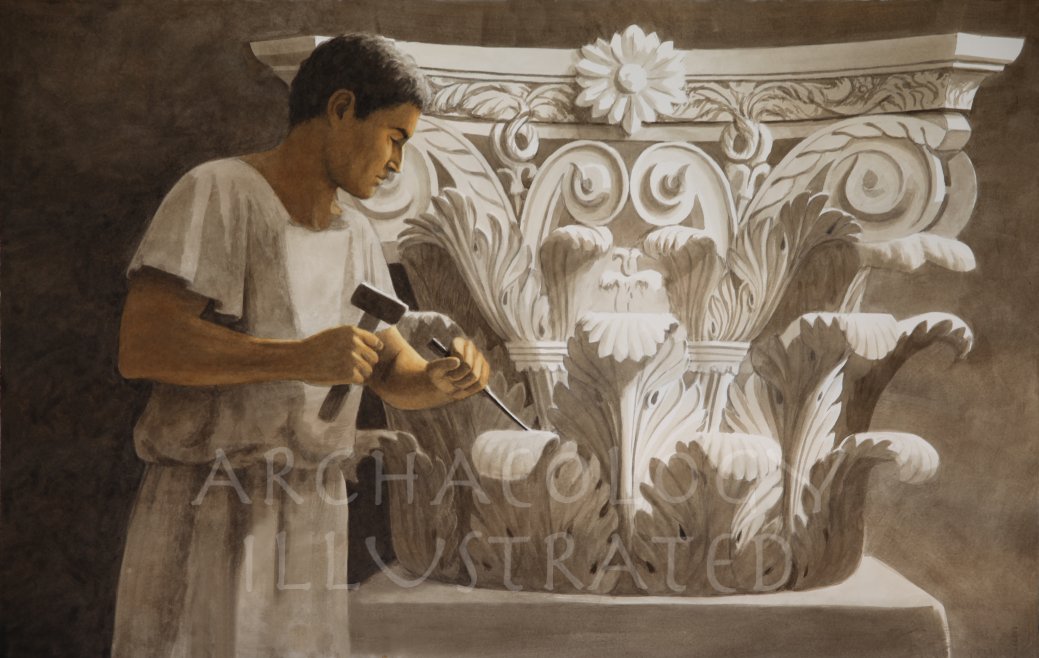
We don’t know that much about the life of Christ between the ages of twelve and thirty, but many of us have this image of Jesus in our minds doing the work of a carpenter with His father, Joseph. 

One Hebrew scholar, by the name of James Fleming, makes the argument the word “carpenter” in Mark 6:4 and Matthew 13:56, could actually be a bad translation of the Greek word “Tekton.” Fleming points out that the homes in Nazareth were largely made of Stone, not wood. We also know that the Herod at the time, Antipas, spent a great deal of energy making the city of Sepphoris (Zippori) his “Jewel of Galilee” by giving it a total makeover. This developing city was located only three miles away from the hometown of our Lord. 

There was a rock quarry half way between Nazareth and Sepphoris where Jospeh, and perhaps Jesus, could have spent their time cutting stones for the Herod’s great project. An undertaking of this size would have likely employed all the surrounding builders, including those in Nazareth. Of course, Jospeh and Jesus working as stonemasons is pure speculation.

 Scripture doesn’t give us a detailed account of Jesus’ childhood, but Luke 2:52 tells us that He, “…grew in favor with God and men.” This passage indicates that Jesus was well liked by those who knew Him growing up, but when you compare this verse with Matthew 13:57, that “favor with man” isn’t there anymore. Matthew records, “And they took offense at Him.”

 In both Matthew and Marks account of Jesus’ returning to His hometown, the locals ask the question, “Is this not the son of a carpenter?” After Christ is questioned, He doesn’t perform any great miracle for all to see, but He heals a few of their sick. He doesn’t try to argue with them, but He goes through the town teaching. The gospels don’t tell us exactly what He was teaching, but there’s a simple lesson here for all of us. 

Don’t be a carpenter. 

Jesus lost favor with many when He broke out of their social mold and when He did things they weren’t accepting of. People no longer liked Him when He also began teaching things they weren’t used to hearing. The identity of Jesus was not wrapped up in the job He was trained to do, He was and is much more than that. If you’re a follower of Christ, your identity is not your profession. 

Jesus is not the son of a carpenter, He’s the Son of God. He’s given us a new identity, and we should never cheapen who we are by seeing ourselves as doctors, engineers, truck drivers, preachers, teachers, butchers, bakers, and candlestick makers. We’re Christians. 

Even when He lost some positive popularity, Jesus looked for those who were willing to be healed and willing to hear. This is exactly what should be filling our time as well. Who do you know that needs to be spiritually healed by Jesus? Who do you know that needs to hear the wonderful soul-saving truth about the real Identity of Jesus? 

I’m a Christian— not a preacher. 

stone-mason-at-work-3572

What Is The Church To Be?

Monday’s Column: Neal At The Cross

pollard

Neal Pollard

Conceived of in God’s mind in the eternity before time (Eph. 3:9-11), purchased by Jesus’ blood (Acts 20:28), spoken of as the body (Eph. 1:22-23) and bride (Rev. 19:7) of Christ, and described as the temple of the Holy Spirit (1 Cor. 3:16), the church is valued and treasured by Him. As members of that church, we might develop a distorted picture of what the church should look, feel, think, and act like in our ever-changing world. What is the church to be?
A Museum? Is the church meant to be a relic of the past, a historical marker where the past is revisited, revered, and enshrined? No doubt, we stand on the shoulder of great workers and warriors of the past, but we are not meant to devote our focus to days gone by. It is but a slight renovation to go from museum to mausoleum.  Our best days should be ahead!

A Marketplace? Some see the church as a direct reflection of the culture. Stands on moral, social, and doctrinal issues are dictated by the views of the moment. “Change” is the key word, and selling the gospel becomes the preeminent goal (John 2:16; 2 Pet. 2:3). A church built foremost on society rests upon sand (Mat. 7:26-27). 

A Monastery? The church–though a haven from the craziness of the world–can become insulated and isolated. It is great to let our closest friendships and relationships to be fellow Christians, but we can become so secluded and shut off that we become a cloister that ceases to be soul-winners. Our worship services and Bible classes can be so full of insider language that the unchurched have no idea what we say much less what we mean. 

A Movement? Sometimes, we speak of the Restoration Movement whose leaders were trying to get people back to the Bible for “rule” and “practice.” But the New Testament church did not begin on the American Frontier during the Great Awakening or even shortly before it. It is not to be a political, national, or even social movement. To think of it on those terms is to degrade and devalue it. 

It is to be a model, safe to follow and imitate by others because she follows Christ (Mat. 5:13-16; 1 Cor. 11:1). It is to be a militant group, whose weapons build and save and defeat the devil (2 Cor. 10:3-5; Eph. 6:10-17). It is to be a mission, on a mission for the Master (Mat. 28:18-20; Eph. 4:11-16). It is to be a medicine dispensary, offering salve and healing from the Great Physician (Luke 5:31-32). It should reflect the Master in thought, in tone, in teaching, and target! May we all think more critically about what we think about the church!

antique-church-pew-1

I-N-V-O-L-V-E-M-E-N-T Equals Church Growth

Neal Pollard

The early church grew (Acts 2:41; 5:14; 6:1,7; 9:31; 11:24). As we read of this growth explosion, we see the key role member involvement played. Christians were spreading the word (8:4), involved in each other’s lives and in the lives of the lost around them. This is such a simple concept, but churches not practicing it are not growing. What is involved in involvement?

  • I–“I” am the heart of involvement. I must resolve to be involved. I must do my part, for I will give an account for my level or lack of involvement (1 Cor. 3:8).
  • N–“Negativity” is the enemy of involvement. “I can’t help.” “It won’t do any good.” “I don’t like working with that person.” Listen closely. Involved Christians rather say “I can do” (Phil. 4:13) and “we are well able” (Num. 13:30).
  • V– “Visitation” is a part of involvement. Matthew 25:34-46 confirms it. Non-Christian visitors, sick, imprisoned, and needy folks need it. Those who do it are richly rewarded, and those who are recipients of it profoundly appreciate it.
  • O– “Obedience” is the cause of involvement. Faithful Christians believe the commands to make disciples (Mat. 28:19), build up brethren (Rom. 14:19), and meet needs (Js. 1:27).
  • L– “Love” is the motive of involvement. Paul says good deeds, without love, are profitless (1 Cor. 13:1-3). The counsel of Scripture is “by love serve one another” (Gal. 5:13).
  • V– “Victory” is the goal of involvement. By being involved, we help others win the victory (Js. 5:19-20), we help the cause of Christ advance, and we aid our own walk in the light that leads to eternal reward (1 Jn. 1:7).
  • E– “Everybody” is the scope of involvement. What able-bodied Christian is excluded from the work God has given the church? Once, a man did nothing and gave every excuse imaginable. We remember how that turned out (Mat. 25:28-30).
  • M– “More” is the adjective of involvement. That is, “more involved” and “more people involved.” Has there ever been a church with too many involved? God is able to do more than we ask or imagine (Eph. 3:20), and He wants to see us always trying to do more for Him!
  • E– “Evangelism” is the fruit of involvement. Active churches attract the curiosity of the community. Those involved in the church’s work naturally grow more spiritual-minded, and by this grow more bold in sharing the gospel.
  • N– “Now” is the time for involvement. What in our lives do we definitely know will change between now and the never-seen tomorrow (Prov. 27:1)? Let’s kill the excuses! Resurrect the enthusiasm! Start today!
  • T–“Teamwork” is the mindset of involvement. We’re to work together. No one man, no staff, no eldership, no group of deacons or others can or should do the work of an entire congregation. The local church is a team.

To become adequately involved, let’s ask three questions.

“What needs doing in this church?”
“Who needs help in doing it?”
“What can I do?”

Be an Isaiah, a child of God who enthusiastically says, “Here am I, send me” (Isa. 6:8)!

41824748_10216815660249540_2034412809957146624_n

“Immediately”

Neal Pollard

The astute reader of the book of Mark finds the word 40 times in 39 verses (the Greek word most often translated “immediately” in Mark is actually found 44 times). It is a key word found consistently throughout the gospel but especially in the first six chapters. Usually, the word is used to quantify the time between Jesus performing a miracle and it taking effect. The point seems to be to show the power and Divine nature of Jesus. It is also a thread that runs throughout the book to highlight key thoughts and main ideas in this second book of the New Testament. The word is used to highlight the Father’s affirmation of Christ following His baptism (1:10), Jesus’ journey into the wilderness to triumph over the Devil’s temptations (1:12), the disciples’ decision to leave their occupation to follow Jesus (1:18,20), Jesus’ entering the synagogue to show unparalleled authority and power (1:21), the news and fame that followed Christ’s teaching and healing (1:28), and the immediate response of the one healed by Jesus–the first of many uses of the word “immediately” to highlight such (1:29-30). The proof for Jesus’ identity was immediate. The effect of Jesus’ miracles was immediate. The impact of Jesus’ miracles and teachings on friend and foe was immediate. Mark’s use of this word seems to indicate how overwhelming and unmistakable the proof of Jesus was.

This is not to say that one should rashly decide about the Lord. The book of Mark is part of God’s way to convince man about who Jesus is. Take the time to read it and learn of Him. Like the other three gospels, Mark contains the miracles, teaching, claims, and events in Christ’s life at the end of which one must ultimately make a decision concerning who He is. Remember, though, “He who believes and is baptized will be saved; but he who does not believe will be condemned” (Mark 16:16). Weigh the evidence, and then decide. Follow the example of so many in the book of Mark and let the power and person of Jesus have an immediate impact on your life and your soul.

15843359028_6e6cbd3894_b

A Lonely, Lonely Man

Neal Pollard

My sons and I often say that we don’t really want to know much about our favorite singers. It seems that there’s always immorality and stories of their ungodliness. That’s as true of many of the rock, country, and easy listening singers from decades ago as those making music today. Despite my having grown up in the south, today I was able to do something I’ve never gotten the opportunity to do. Kathy and I toured Graceland with our gracious hosts, Barry and Celicia Grider. We enjoyed ourselves. This tour tended to glamorize and sanitize his life and career. Elvis Presley enjoyed a meteoric rise to stardom, and he was a global icon. He made more money than he could spend, though his lavish collections of furniture, cars, instruments, clothes, and the like shows that he tried. Despite his love of gospel music and religious roots, there were the affairs, drugs, and fast living that likely contributed to his premature death at age 42. His daughter, Lisa Marie Presley, who remembers him reading often, “He had stacks next to his bed. He read all the time…Always of a spiritual nature. Always looking. Always searching for something” (from a placard in the mansion). Gospel preacher, C.W. Bradley, preached his funeral thanks to the connection of Elvis’ stepmother. But there is no evidence that his search led him to obey and live the truth, and there’s evidence to the contrary.  He once sang a song where he said, “It’s a lonely man who wanders all around, It’s a lonely man who roams from town to town.  Searching, always searching

for something he can’t find, hoping, always hoping that someday fate will be kind.”

Billions never achieve the fame or wealth of Elvis, but live their lives on a similar quest. They live, always searching for something they can’t find. Solomon spends so much time, with access to wisdom, wealth, wine, and women. He found, in his grand experiment, that these did not fill the void. Instead, the answer was to “fear God and keep His commandments” (Ecc. 12:13). This beautiful hope is shared by Jesus in the greatest sermon ever preached. He teaches, “Ask, and it will be given to you; seek, and you will find; knock, and it will be opened to you. For everyone who asks receives, and he who seeks finds, and to him who knocks it will be opened” (Mat. 7:7-8).  These things are written to keep mankind from duplicating the future search for purpose and meaning. It has been revealed. Let’s look in the only place where loneliness is vanquished—in the presence of God!

23519311_10214099401337193_6063397463412721560_n

Meeting The Needs Of Newcomers

Neal Pollard

It has been said that visitors make up their mind about a church in the first ten minutes of their visit. Before they’ll even discern the doctrine we teach or form an impression about the distinctiveness of our worship, they’ve already decided. If you will walk through the first ten minutes of each time you come to services, you can discern the needs visitors have when they “enter” (cf. 1 Cor. 14:23-24) our midst. Consider these needs.

  • Where to park. Designating visitor parking and having members park as far from the main entrance is thoughtfulness. Having a greeter or greeters in the parking lot who can make contact quickly and facilitate with friendliness makes a positive impression.
  • Where the restrooms are. Good hospitality ought to drive us to be thoughtful and even proactive (i.e., when greeting, point out the nearest facilities). Along with this is showing them where the nursery is. If they have infants, toddlers, or small children, they are likely to have needs during their time in attendance.
  • Where to sit. An obvious practical help here is not to crowd the seats at the rear of the auditorium. It’s less awkward to be seated without parading past rows and rows of people. If there’s a full crowd, have designated personnel, pleasant, friendly, and considerate, to help them find a seat. Never, ever, never have a designated pew! “Pew-itis” is a disease that should be eradicated from every congregation.
  • What to expect. This is something worship leaders can do, explaining periodically why we do what we do in a “user-friendly” (as opposed to browbeating) way. Door greeters and those at a welcome center can help, as can visitor packets that cogently explain things. Such packets can include not just activities we do, but a map of where we do them.
  • How to find out more. Have a “new member orientation class” or a “Church 101” class available for those who are “seeking.” It can include an annual church calendar of events, ministries, church leadership (complete with pictures and bios), ways to be involved, and the like to orient newcomers.

At first, it may seem hard to identify book, chapter, and verse for the foregoing suggestions. But consider these principles. There’s the Golden Rule (Mat. 7:12; Luke 6:31). There’s the principle of the Law of Moses, which says, “The stranger who resides with you shall be to you as the native among you, and you shall love him as yourself, for you were aliens in the land of Egypt; I am the Lord your God” (Lev. 19:34). Colossians 4:5 urges wisdom with outsiders, making the most of the opportunity. Being Christians, we should be ever increasing in the mentality that puts others before self (Phil. 2:3-4). How do we best serve Jesus? By serving others, including our visitors and newcomers.

Singing Hymns in Church

What Kind Of Church Do We Want To Be?

Neal Pollard

V–ictorious? Faith is the victory that overcomes the world (1 Jn. 5:4). No coach hopes to win without first planning and architecting. The blueprints have already been put in place (Rom. 6:17), but we must work the plans to be a success in God’s eyes!

I–nvolved? Do we want to merely keep house and meet together each week? That is not New Testament Christianity (cf. Acts 2:46). They took Christianity out of the church building’s doors. They were tangibly involved in doing God’s work. Will be be?

S–erving? This is a self-serving world. Many seem intent to climb over whoever is in their way to the top. Jesus’ religion runs contrary to that (John 13:12-17), and He calls us to follow His example. A serving church is a living, thriving, arriving, surviving church.

I–mpactful? Do our neighbors know who we are? What about the surrounding communities? What about the farthest reaches of our world? Don’t you want to be part of a church putting a Christ-sized impression on those around us?

O–bedient? We have one authority (Col. 3:16-17; John 14:1-6; Acts 4:12). There are potential masters, but only one will lead us to heaven. A church that steps outside His “lines” will become eternally out of bounds. Those intent on obeying Him will be saved (Heb. 5:9).

N–urturing? Don’t we want to be part of a people with an infinitely more profound purpose than that found by the patrons and workers portrayed in the old sitcom Cheers? We want everyone to know our name and be glad that we came, but we should also want a place where we can grow in every right, positive way. This must be a church that cares about all, whatever our age, background, interests, income, or education!

A–ble?  Do we want to focus on our liabilities or, through Christ, our limitless resources? We have so much to do, but we’ve been given so much to do it. Don’t we want to be part of a “can do” church, doing with our might what our hands find to do?

R–eaping? If we are a working church, we will see results. They will come through baptisms, programs of work, outreaches, visitation, stronger fellowship, missionary success, and much, much more. As my good friend, Cy Stafford, says, “What God controls, grows.” The law of sowing and reaping is positive, too (Gal. 6:8).

Y–earning? A church that is alive and growing is full of holy desire, enthusiasm, and a confidence that we can do all things through the Christ alive within us (Phil. 4:13). Our greatest desires will be to do spiritual things to the glory of God.

How does a church become a visionary church? We must be intentional! What do we intend to do?  With God’s help, that is up to us!

12642872_1029468160409554_6928711640322573340_n

AFTER 31 YEARS, MURDER VICTIM IS FOUND ALIVE

Neal Pollard

There was a disappearance and a murder confession.  So, the last thing police expected when they stopped at “Mrs. Schneider’s” apartment in Dusseldorf, Germany, was to find the 1984 murder victim, Petra Pazsitka, talking to them.  Thus began the unraveling of an elaborate plot by Ms. Pazskitka to disappear and reemerge with a new identity.  She was successful for 31 years, living in several West German cities without a passport, driver’s license, and social security card. She supported herself by “living off illicit cash-in-hand work” (via uk.news.yahoo.com). Why did the college student who had just completed her thesis on computer languages leave the grid and go into hiding? So far, there has been no explanation given. Perhaps there will eventually be more details and insight into this bizarre situation, but for now a grief-stricken family can take some measure of comfort in knowing their loved one they thought was dead is alive.

Spiritually, we are surrounded by the living dead.  It is the result of choices they’ve made.  This is even true for some who have abandoned God’s family and reemerged in the world having cast off the privileges and position of that honorable name they took on when they were baptized into Christ.

Paul says, “The mind set on the flesh is death” (Rom. 8:6). He tells Timothy, “But she who gives herself to wanton pleasure is dead even while she lives” (1 Tim. 5:6). God diagnosed an entire church, Sardis, “having a reputation of being alive” as being dead (Rev. 3:1). Of course, nothing illustrates the point better than Jesus’ parable of the Prodigal Son.  The younger son was off in the “far country,” and through that lifestyle he reached the point of desperation and despair. He repented and came home, where his father declared “my son was dead and is alive again” (Luke 15:24).

Sometimes, it makes no sense to us why a brother or sister leaves God’s family, abandoning spiritual life, hope, and heaven for spiritual death, hopelessness, and hell.  Yet, we must continue to search for them.  Let us pray that we can find those long since declared dead and encourage them so that we “save a soul from death and cover a multitude of sins” (Jas. 5:20). Search for them. Appeal to them. Help them reclaim the blessed identity they had when they had “life and peace” (Rom. 8:6).