AREN’T WE ASKING THE WRONG QUESTION?

Monday’s Column: Neal At The Cross

ATF2020 crop

Neal Pollard

  • I’ve never heard the avid fisherman say, “Do I have to go back to the lake?”
  • I’ve never heard the shopaholic say, “How often do I have to go to the store?”
  • I’ve never heard the committed sports fan say, “How many games do I have to watch?”
  • I’ve never heard the foodie say, “How often do I have to try a new restaurant or dish?”
  • I’ve never heard the head-over-heels-in-love say, “How many times do I have to see him/her each week?”
  • I’ve never heard the devoted mom say, “How often must I hold my baby?”

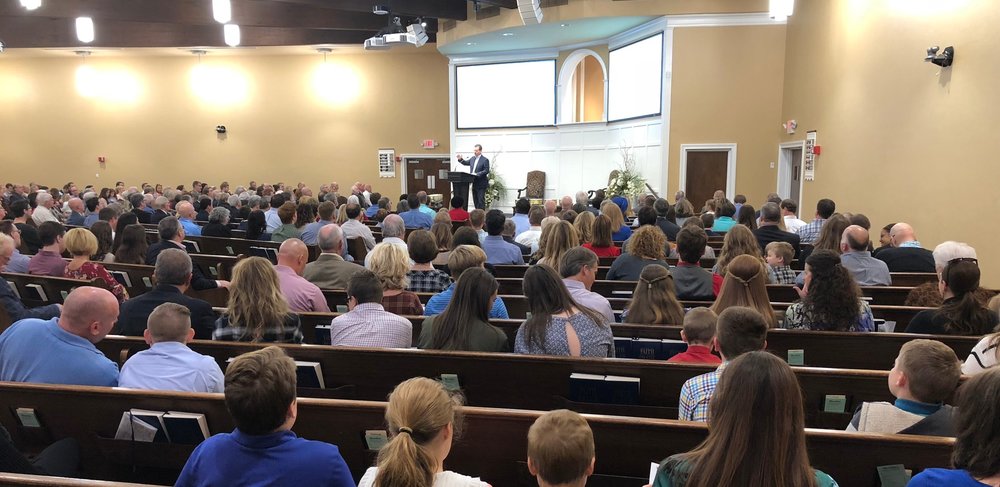
We’ve lost the battle when our sermons, articles, and classes center around answering the question, “How often must I assemble? How many times a week do I have to come to church? Are Sunday night and Wednesday night mandatory?”

How unnatural for a disciple, a committed follower of Jesus who is in love with Him and who has such a relationship with Him that He is priority number one, to approach the assemblies in such a way! Must? Have to? You see, the question is wrong. The mentality and approach is where the work needs to occur.

When Jesus and His church are my passion, the thought-process becomes “I get to,” “I want to,” and “I will!” Neither parents, grandparents, spouses, elders, preachers, siblings, nor anyone else have to get behind anyone and push the one who has put Jesus at the heart and center of their lives.

Not a legalistic or checklist mindset. Instead, an outgrowth of what’s happening in my life between my God and me. Church “attendance” is but one evidence of this, but it certainly is an evidence of this. Church and religion are not just a slice of the pie of a committed Christian’s life. Christ is the hub in the wheel of their life, and each spoke of the wheel is attached to that hub. The difference could not be more dramatic!

Concord-Road-Congregation-Worship-Church-of-Christ-Brentwood-Nashville

DAFFODILS THAT DON’T BLOOM

Friday’s Column: Supplemental Strength

brent 2020

Brent Pollard

Like the robin, daffodils are a harbinger of spring. They begin blooming in late winter and create anticipation for the pretty spring flowers following. We planted our place in Appalachia with daffodils nearly 30 years ago. Today, we get few flowers in places where we planted them. We do have healthy-looking, green blades but no blooms. By their nature, a single daffodil bulb becomes an entire colony of bulbs within a few years because it reproduces by dividing at the bulb. Once so many bulbs are packed into a small space, the plant cannot receive enough moisture or nutrients to produce the desired flower. So, on the one hand, it’s great because just a few daffodil bulbs can yield an entire daffodil garden in a few years. On the other hand, to keep daffodils flowering one must periodically dig up these new bulbs and space them out so conditions remain conducive to their overall health.

When we think about Jesus’ parable of the sower, we likely think of the various soils presented therein. We pray we find the good soil as we go to plant the seed but realize since few are finding the strait gate and narrow way (Matthew 7.13-14), most of our seed falls on the other three poor soils. Of those poor soils, Jesus highlighted a group in whom the seed never produces fruit since they become choked by thorns (Luke 8.14). These thorny-soiled hearts didn’t recognize how detrimental their thorns were since they took the form of the cares and riches of the world. In like manner, we don’t see the problems posed by a bunch of healthy-looking, green blades where our daffodils ought to be. We keep hoping they will put on blooms, bringing us the testimony of God’s wondrous creation. Yet, conditions underground won’t allow for that.

Might I suggest those possessing thorny-soiled hearts can have a similar problem as the daffodil? It may be they don’t just wither and die (i.e. fall away). It may be they are sitting on the pew, where we planted them, looking as if they hold promise, but never producing blooms. Why? It may be their fruit is being crowded out by conditions at their root. We see no prickly thorns gathered around them. Yet, there are cares and concerns on the inside choking out God’s Word all the same. It is confounding since they may even greet us with a smile on their faces while being inwardly consumed by such things as anxiety.  If we do nothing, though, the results will be the same as if it were thorns.

It may be we need to lift these unproductive Christians to help them settle in a better environment conducive to their growth. We need to help them remove all the things choking their heart. We need to nurture them. Though we’re more considerate of the newborn in Christ, the overcrowding of the heart is a challenge potentially taking place even in the one who obeyed the Gospel years ago. Be your brother and sister’s keeper (Galatians 6.1; James 5.19-20). If you see a pretty green blade that never flowers, dig a little deeper. If one’s heart is being crowded out, help him find the space to bloom (Hebrews 3.13).

5262209_c01205ab

A PROVEN RECIPE FOR PEACE

Wednesday’s Column: Third’s Words

10423661_10207901451272315_9069631728203375436_n

Gary Pollard

Peace conjures a number of different images in our minds; from hippies to nature’s beauty to inner calm to lack of anxiety. Nearly every group of people in the world craves peace – no rational human being wants to live in constant upheaval. We all want to have peace, but our world somehow is still getting worse and worse. Why is this? The prince of this world is not a being who desires peace (II Corinthians 4.4; Ephesians 2.2; John 12.31). His very existence is dedicated to bringing down anyone who believes in God (I Peter 5:8) and he has no care or concern for the fate or well-being of anyone on this earth. Total, lasting world peace will never be possible as long as time continues (see Romans 8.18-25: sin caused the earth to be subjected to futility). 

Total, lasting world peace may not be possible in this life, but this does not mean the world cannot experience any peace at all. How can we experience peace in our lives? 

Firstly, it has to come from us. The world will never act in a way that brings peace. Anytime the world wishes to better its conditions, it incites civil unrest, riots, protests, and other not-very-peaceful behaviors. Christians, however, are called to be different. I Timothy 2.1ff tells us that praying to God on behalf of all men, for kings, and all who are in authority will allow us to lead quiet and tranquil lives in all godliness and dignity. We can have peace by being obedient to government authorities – even if we do not agree with them politically – because God put them in place (Romans 13). If we want peace, we have to show that peace by how we live. Since man is naturally attracted to peace, our quiet, godly lives will draw others to Christ. 

Secondly, even if our world is in chaos we can have inner peace. Philippians was written to break up a nasty fight between Euodia and Syntyche. To have the “peace beyond what we can understand,” they had to rejoice in the Lord, be reasonable, not be anxious, and reach out to God for their every need. The same applies to us today! Do we get our joy from God or from worldly pursuits? Are we worried about meeting personal needs or do we rely on God (see Phil. 4.19; Matt. 6.25)? Do we try to fix our own problems, relying on our own strength, or do we place them in God’s hands and work with His guidance and providence? The Christian life is not easy, nor is it always peaceful, but the inner peace that a faithful Christian experiences, knowing that their name is in the book of life and that nothing in this short life can disrupt God’s love for them, makes every struggle in this life worth the pain. 

If we want peace, we have to be that peace. We have to live peaceful lives. We have to submit to governing authorities (as long as it is within the parameters of godliness). We have to be unified as a church. We have to look to God for all of our needs. We have to trust that He will take care of us, even if that isn’t in this life. If we can do these things, we will have peace.

33335219_10155570504230922_7279042811561771008_n

The Mouse And The Cups 

Thursday’s Column: Dale Mail

83538761_557569434843824_1603081807199207424_n

Dale Pollard

In the pantry there’s a package of white foam cups. A small gray mouse struggles to carry a cup out into a man’s front yard one at a time. Just one cup and one each day. The man sticks to a normal routine. He goes to work early, and he comes home late. He watches TV, cooks a meal, tinkers on projects in the garage, and goes to bed. It’s mindless, it’s robotic, but day in and day out the cycle repeats itself. He leaves for work and the mouse drags yet another cup out onto his lawn. It isn’t until his yard is filled with foam cups that the man takes notice. What a mess! He walks through the yard and picks a few of them up. As he examines them he says, “What a waste. Perfectly good cups, now useless and dirty. We have a limited amount of foam cups in our package, and there’s a day when the mouse will grab the last one. We better put them to use. ”

If God came to you and gave you the chance to make a single request, what would you ask for? Our prayer lives are usually filled with our personal wants and needs. There are countless things that tug at different areas of our heart as we approach our Father, the Creator of the universe. He can do anything, He has all the power, and in one way or another we all desire some Divine intervention. I would like my family to be healthy and happy. I would like to live out the rest of my days with no more worries or anxieties. I would like the peace that comes with total financial stability. I wish my dog would live to be one hundred and five. I would like to be successful in everything I put my mind to.

There are five hundred wants in my heart, but what do I desire more than anything? The answer to that question is deeply connected to our spiritual life. What my heart chases after, where my time and energy goes, and even what I ask God for spreads my top priorities before me. David writes in Psalm 27:4, “One thing I ask of the Lord, this is what I seek. That I may dwell in the house of the Lord all the days of my life, to gaze upon his beauty and inquire in His temple.” David is known as the man after God’s own heart, simply because his heart was after God. David’s one desire was to form a deep and meaningful relationship with God. He understood what truly matters in this life. He even makes that his specific and singular request of the Lord. He puts his faith in action as he seeks that relationship with God. His life was built around this, and everything else is secondary to him. His seeking was that hopeful expectation— the effort he put in to this pursuit was a demonstration of that belief in God’s ability to grant him his one thing. David spent his time wisely. Almost every day that was granted to him he used as an opportunity to seek His Lord.

God is the Alpha the Omega, the beginning and the end. His eyes can see the very point in time in which He decided to create everything. He can also step back and look at His timeline and see the exact moment in which He will bring all things to an end. The Bible is a gift and glimpse into His mind. In it we can see the powerful beginning to the world we live in. We can see how God works in our present, and we can read about a grand event that will come when the days run out.

What is that one thing you want more than anything else? Don’t let the cups pile up in your yard. Let’s all use the time we have to pursue the only thing that matters.


racing-mouse-3499446_1280

MODESTY AND THE MEDIA SEXUALIZATION OF OUR GIRLS

Monday’s Column: Neal At The Cross

16174665_10154303308455922_2453812807432667966_n

Neal Pollard

In 2008, M. Gigi Durham wrote a blunt book entitled: The Lolita Effect: the Media Sexualization Of Young Girls And What We Can Do About It. Durham is not at all writing from a Christian worldview, being a militant, secular feminist instead. In the book, she writes about several myths created by the media and the culture.

  • The “if you’ve got it, flaunt it” myth: Fashion magazines and media urge girls to dress in a way that’s “hot” and as such sets up the danger girls will attract harmful sexual attention.
  • The “anatomy of a sex goddess” myth: The runway model or the Barbie doll is projected as the ideal body, but both are unnatural.  They are genetic anomalies.
  • The “pretty babies” myth: “Ideal sexiness is about being young—very young it seems.”
  • The “what boys like” myth: “The ideal spectator is said to be male and the image of the woman is designed to flatter him.”

Durham is definitely on to something, even if it serves her own and different agenda. She is not alone in the secular world, worrying about the unhealthy consequences of the sexualization of our girls, even at the youngest of ages (Read more here).

Christian families, who believe and follow the Bible, already had these warnings in place. Consistently, God calls women (and girls) who profess godliness to reflect that by how they project themselves (cf. 1 Tim. 2:9-10; 1 Pet. 3:3-4).  Many preachers and Bible class teachers through the years have taken great pains to try and define and describe modesty, but what we have observed above would have been indisputably immodest in most people’s eyes in the world just a generation or so ago.

Too many parents, including Christian parents, have been swayed by the world’s fashion standards.  Even girls being raised in a Christian home have at times been encouraged and allowed to dress in ways that can easily produce lust. Jesus says that those who lust after a woman are committing adultery with her in their hearts (Mat. 5:28).  Men, young and old, have a responsibility to combat lust in their hearts, but Christian love would seem to dictate that women, young and old, would make that as easy as possible for them.

Fashions that are marketed as hot, sexy and daring, that reveal the body in a sexual way, are immodest!  The world, even without the Word, sees and understands that. We dare not rationalize it!  The world sexualizes everything from Cheetos to plant food and everything in between.  God commands purity of His people, but His Word must inform our standard of purity rather than what we think is pure.  Proverbs 30:11-13 says, “There is a kind of man who curses his father and does not bless his mother.  There is a kind who is pure in his own eyes, yet is not washed from his filthiness. There is a kind—oh how lofty are his eyes! And his eyelids are raised in arrogance.”

It’s important for us to ask, “What kind am I?”  Fashion choices and body obsession that say “if you’ve got it flaunt it” must be honestly examined and carefully avoided. God bless our homes which thoughtfully consider and decide with hearts set to honor Him.

THE HEART OF JONAH

TUESDAY COLUMN: “DALE MAIL”

IMG_1381.jpeg

Dale Pollard

The book of Jonah is a unique book in the Old Testament. Unlike other prophetic books, God chooses to focus on the prophet himself rather than the message being preached by him. While many lessons can be pulled from this four chapter book, there’s one in particular that we can all benefit from hearing from time to time. That lesson is that in order for true change to occur in our lives there must be a genuine transformation of the heart.

The book begins with God’s call to Jonah to preach to the wicked people of Nineveh and then closes with God’s response to Jonah’s anger at the penitent hearts of the Ninevites. Between these two divine speeches you read about the prophet’s incredible experience in the belly of a great fish. Many artist’s have painted pictures of Jonah desperately trying to keep his head above the waves while a terrifying monster breeches the surface with its mouth wide open preparing to swallow him. While this may be the image that comes to mind, Jonah gives us an interesting detail in his prayer. He recalls how the waters closed over him and he eventually reaches the sea floor where he is helplessly tangled in the weeds. While the murky waters cloud his vision his fate seemed very clear. Jonah admits that he called out to the Lord provoked by his great distress and this mental plea was a desperate attempt to preserve his life. God answers this cry by sending him a slippery savior. Jonah, while known to be a little on the dramatic side, will later recall how it was in the moment when his life was fainting away that he “remembered the Lord.” God saved a blatantly rebellious man who in no way deserved that salvation but He also allowed Jonah to reach great depths and come face to face with his own spiritual reality. Jonah was a long way from God, but not geographically.

Before Jonah became soaked by the stormy seas, he was soaked in a sin problem that had taken root in his heart. God allowed Jonah to physically experience rock bottom so that he could acknowledge some spiritual issues that distanced him from God. While Jonah may have desired to run from God, he came to the conclusion that being away from God was not the relief he thought it would be.

As traumatic as this event was, Jonah seems to emerge from the belly of the fish with lingering spiritual issues. Though he preaches to the city of Nineveh, there is still anger and hatred dominating his heart. The last chapter gives us a glimpse of this as he directs this anger towards the very God that saved him. In order for true change to occur, there must be a genuine change of heart. While low points can help us examine our heart health for a moment, relentless determination to live life differently is the key to success. A hopeful reminder for anyone who may find themselves in the depths of sin, there is no place too dark where God is not able to hear your prayers. 

Reflections On Worship, From A-Z

Neal Pollard

How great to say with David, “I was glad when they said to me, “Let us go to the house of the Lord” (Psalm 122:1).  Another psalm also urges, “Come, let us worship and bow down, Let us kneel before the Lord our Maker” (95:6).  Both verses are the attitude of a redeemed, transformed heart.  Worship is not a substitute for daily living, and we may find ourselves primarily or solely focused on assembling to the neglect of Christian duty or evangelism. But, though those be true, we cannot lose sight of the importance of fulfilling God’s command for His people to faithfully worship Him (John 4:24; Heb. 10:24ff).  More than that, as recipients of His grace, we will want to come before Him with what He wants, giving Him our best from an enthusiastic heart. What can help us do that?

A–TTENDANCE (It puts us in the right position–for ourselves, each other, and God)
B–
RETHREN (There’s a community, communion, and camaraderie in worship)
C–
HILDREN (Is there anything sweeter than seeing and hearing them worship?)
D–
ELIVERANCE (Delivered for a few moments from the profane, delivered for a lifetime by the Prince of Peace)
E–
FFORT (Hardwork, dedication, and preparation truly pay off!)
F–
AITHFULNESS (Obedience, consistency, and holiness fuels acceptable worship)
G–
OSPEL (Bible-centered worship highlights the best news of all time)
H–
EAVEN (Worship better prepares us for it, reminds us of it, and gives us a foretaste of it)
I–
NTEREST (See “attendance” and “faithfulness”; At some level, you can’t fake this)
J–
ESUS (We lift Him up, obey Him, and center everything around Him in every service)
K–
NOWLEDGE (We seek to know God more and understand Him better, in part, by worship)
L–
ISTENING (To God, through His Word, and each other, through the various acts)
M–
EMORIES (Young or old, each occasion provides an opportunity to make more of them)
N–
OTHING (What’s more special, important, fulfilling, and encouraging)
O–
PPORTUNITY (Different places and times have been forbidden from what we get to do multiple times per week)
P–
ARTICIPATION (Not just in the door and in a seat, but actively taking part)
Q–
UALITY (Not measured by voice quality or dynamic speech, but the very best we can with what we bring)
R–
ESPONSE (Each time we assemble to worship, we are responding to God and His gospel)
S–
ACRIFICE (You cannot properly define worship without it; It may be a sacrifice to come, but it must be an offering when you do)
T–
OGETHERNESS (Worship means fellowship and building our common bond)
U–
RGENCY (Feeling a pressing need to be here, and then to act on what we hear)
V–
ISITORS (These take note of how much worship means to us; They can see and sense it)
W–
ONDERFUL (God knew we needed worship, and that can touch us deeply)
X–RAY (Worship should lay our hearts bare and show us ourselves)
Y–OU (The presence of everyone, including you, spells the difference!)
Z–EAL (Passion and enthusiasm is observable, by others and, most of all, by God!)

Maybe we cannot fully grasp all of why God wants us worshipping Him, but He, as our Creator, knew we would need it to draw us closer to Him and each other. Let’s never let anything occupy a higher place in our hearts!

537893_378947542128289_990183257_n


Learning To Pray From A Man After God’s Own Heart

Neal Pollard

When the disciples asked Jesus to teach them to pray (Luke 11:1), they were asking the most qualified instructor. However, they had a good teacher from the background of their own heritage in David. The book of Psalms is at times a songbook and at other times a prayer journal. Numerous examples of David’s prayers are contained in this beautiful book of Old Testament poetry. In Psalm 141, for example, we have several characteristics of prayer from a man after God’s own heart (cf. Acts 13:22).

First, David’s prayer was urgent (Psalm 141:1). He writes, “Lord, I cry out to You; make haste to me!” David saw prayer, not as a last resort, but as a first retreat. Since David knew God was able to help, he wasted no time in bringing matters into God’s own hands.

Then, David’s prayer was intense (Psalm 141:1b). He continues, “Give ear to my voice when I cry out to You.” You will not hear rote memorization of prayers or lackadaisical lethargy in David’s prayer. David cried out to God. He is pleading with God. These are indicators of a fervent prayer life, which God includes as typical of righteous people of prayer (James 5:16).

Further, David’s prayer was sincere (Psalm 141:2). He treated his prayers as if they were actually offerings or sacrifices. He says, “Let my prayers be set before You as incense, the lifting up of my hands as the evening sacrifice.” He was willing to lay open his prayers to the All-Seeing eye for His scrutiny. The entirety of this psalm reflects no superficial piety or pretentiousness. David simply laid his heart before God.

David put obvious trust and hope in the power of prayer. He had confidence in God’s ability and he had cognizance of his own dependence upon God’s ability. Never wait to turn to prayer until the need is desperate. The man after God’s own heart made prayer a staple in his religious diet. So should we.

pray-2558490_960_720

What Preachers Wished All Members Knew About Their Elders

Neal Pollard

While there are doubtless men who wear the name “elder” that do not meet the biblical qualifications, many of the church’s greatest heroes and biggest assets are her shepherds. I have been privileged to serve under a total of 21 elders in 26 years of full-time preaching, and what I am about to say applies to each of them. Part of their work is public and visible, but I dare say so much more of it is conducted before the eyes of only a few or one sheep or even at times only before the eyes of God. My experience with elders is that they are humble men and they will never tell you what I am about to tell you.  Here are a few things elders wish all members knew about them.

—Elders do…

  • Care.
  • See people at their messiest.
  • Sometimes get the brunt of the lashing out people do when in pain.
  • Always, always put people first.
  • Give generously of their time.
  • Agonize.
  • Hard things none of the rest of us can or will do.
  • Have insight into sensitive situations that others may not.
  • Have feet of clay.
  • Pray fervently for the needs and problems of the flock.
  • Desire to communicate to the church as much as they feel they can.
  • Want to have a relationship with every member.
  • Love God and seek to please Him above all else.

—Elders don’t…

  • Give up on sheep.
  • Defend themselves.
  • Do it for the glory.
  • Seek the praise of men.
  • Hold a grudge.
  • Play favorites or have double standards.
  • Read minds or judge motives.
  • Want to lose a single sheep.
  • Publicly share everything that’s on their plate or comes their way.
  • Want to lead God’s people away from Him and His will.

In an elders meeting last night, one of our shepherds was asked to read Hebrews 13:17. The elder chairing the meeting said, “This passage encourages me.” The elder who read said, “This passage frightens me!” As each of them discussed the sober meaning of that passage, I thought back to things I’d seen each of them do recently. It made me so thankful to serve under an eldership that takes their work seriously. Are they perfect men? Impossible! Are they God’s men? Absolutely! Please pray for the eternal work elders do in congregations around the world every day!

shepherd-and-sheep-e1446124496929

“You Can Find Somebody To Tell You What You Want To Hear”

Neal Pollard

Someone wants to be involved in an illicit relationship, defend an unscriptural marriage (or enter into one), engage in some vice or sinful behavior “in moderation” (or otherwise), and they talk to someone who shows them from scripture why it should not be done. Perhaps they ask several people and get the same discouragement. Sometimes, the inquirer is wise enough to let that guide them away from wrongdoing. Other times, they persist in looking for someone to tell them what they want to hear. Without exception, such a searcher will eventually—and probably sooner than later—find someone to validate and endorse their desire.

Solomon wrote, “The thoughts of the righteous are just, But the counsels of the wicked are deceitful” (Prov. 12:5). His father kicked off the songbook of Israel by saying, “How blessed is the man who does not walk in the counsel of the wicked…” (Psa. 1:1a). Job speaks of how he shunned “the counsel of the wicked” (Job 21:16; 22:18). Wicked Ahaziah was rejected by God, in part, “for his mother was his counselor to do wickedly” (2 Chr. 22:3).  This characteristic of human nature, whether giving or taking wicked counsel, is timeless. But, seeking counsel from the proper sources is encouraged by Scripture (Prov. 11:14; 15:22; 24:6). How can we make sure that we are hearing what we need to hear, not just what we want to hear?

  • We must realize our personal accountability (2 Cor. 5:10). No matter what anyone else tells us, we’ll stand individually in the Judgment. Christ’s word, as Judge, is the only one that ultimately matters. What has He said?
  • We must pray for wisdom and discernment (Col. 1:9). Are we ignoring a pricked conscience, clear teaching, or red flags? Is self in control, or is the Savior’s will?
  • We must grow in knowledge (2 Pet. 3:18).  Have we studied this out yet? Are we convinced beyond a doubt? What does the Lord say?
  • We must be honest with ourselves (Psa. 15:2). We cannot deal fairly in any situation if we’re deceiving ourselves. Lying to ourselves does not change God’s truth. It simply hurts us.
  • We must train our hearts to desire what is good (cf. 2 Pet. 2:14). This can be excruciatingly hard! Proverbs 21:10 says, “The soul of the wicked desires evil.” But listen to a cleansed heart: “Behold, You desire truth in the innermost being, and in the hidden part You will make me know wisdom” (Psa. 51:6).
  • We must put emphasis on the eternal rather than the temporary (2 Cor. 4:16ff). Is what we wish to pursue destructive to heavenly objectives? Are we risking an eternity in heaven for a few years of fleeting pleasure on earth? Nothing is worth sacrificing salvation!
  • We must weigh the advice of our counselors on the scales of truth (Prov. 18:17). The Berean Christians fact-checked an inspired apostle (Acts 17:6). We owe it to ourselves to compare what our advisers tell us—however much we love and respect them—with what God’s Word says. Many times they will align. If they do not, we must choose God’s Word every time!

Beware! At times, what we want to hear is right and good. Many times, it is not. As we lean on others, let us lean most heavily on “the rock” (Mat. 7:24)!

dreamstime_l_20586429

Build That Wall!

Neal Pollard

The partisan vitriol ramps up whenever subjects like border security and immigration are mentioned. It is a subject as much a part of the political divide as “Russian Collusion,” tax reform, and affordable health care. Let the politically passionate debate all those topics, but did you know Scripture talks about the importance of having a properly-built, fortified wall? There were walls erected around a city to protect it from external dangers. If the citizens inside were righteous, they were kept safe even against all seeming odds (2 Kings 18-19). If the citizens inside were wicked, no wall, however seemingly impregnable, would hold (Joshua 6).  But, I’m referring to a different kind of wall.

Scripture tells us that the individual must build a wall and properly maintain it, too. The way Solomon put it is, “Like a city that is broken into and without walls is a man who has no control over his spirit” (Prov. 25:28). Words flow without restraint, many of which wound, offend, and separate. Anger and even rage can erupt over even the slightest or even perceived infractions. Personal conduct that indulges the flesh, from overeating to pornography to fornication, can be impulsive and destructive of self and others. Indecent thoughts, fed and fueled by the thinker, can crumble this vital hedge.

What a challenge for me on many levels! How easily do trials and setbacks in the normal functions of life, from standing in line to driving in traffic to dealing with customer service, set me off in unrestrained thoughts, words, and actions? How do I handle words of opposition, face to face, by written correspondence, or through some form of social media? How strong is my wall when I disagree with my mate, children, neighbors, or brethren?

Solomon teaches me that I can have control over my spirit. No cop out or blame game changes that. Whatever sinful thing I allow over that border into my life is guaranteed to be harm me! So, I must build a wall that preserves my spirit. My eternity literally hinges upon it.

170216172849-griffin-dnt-trump-border-wall-lead-full-169

WikiLeaks (And God)

Jeff Wiant (guest baker)

Up until this past election cycle I had never even heard of WikiLeaks. Months and endless press later, I have become very familiar with this website. For those who may have been living under a rock for the past few months, WikiLeaks is a website that publishes secret information, news leaks, and classified media that they receive from anonymous sources for the world to see. Just looking on their page the other day, I discovered links that would allow me to read private emails from a presidential candidate and her associates, secret files about global surveillance, private emails between top employees at Sony Pictures, and I could have even watched a classified video.

Through all of this browsing it made me start to wonder. With hindsight being 20/20, would the ones who wrote these emails or committed these acts have written or done things differently if they knew that in the future they would be exposed and the whole world would be able to see and judge them because of these leaks?

More importantly, this also got me thinking further about myself. Do I have any secrets that I would fear if they ever got out? Do I ever have thoughts in my head that are impure and unfaithful? Do I allow myself to continue to have these thoughts because, after all, I’m keeping them to myself? After all, who’s going to know?

Allow me to answer that question for us all:  GOD KNOWS! Like WikiLeaks in our world, God can, and does, unearth all these dark spots in our personal lives. But whereas there are still plenty of classified files and incriminating private emails out there that haven’t been, and won’t ever be, exposed by WikiLeaks, God already knows EVERYTHING there is to know about us.

As it says in Psalm 139:1-4, “O Lord, You have searched me and known me. You know when I sit down and when I rise up; You understand my thought from afar. You scrutinize my path and my lying down, and are intimately acquainted with all my ways. Even before there is a word on my tongue, behold, O Lord, You know it all.” God knows everything we do on the outside and the inside. Having that realization is very intimidating.

For more evidence of this you can also look at Hebrews 4:12-13, which states, “For the word of God is living and active and sharper than any two-edged sword, and piercing as far as the division of soul and spirit, of both joints and marrow, and able to judge the thoughts and intentions of the heart. And there is no creature hidden from His sight, but all things are open and laid bare to the eyes of Him with whom we have to do.”

We will all be judged. Not just based on what our family, friends, and the rest of the world see, but based on the EVERYTHING that God sees. You can’t hide anything from God. Knowing this, are there changes we need to make in our lives? Are there things we need to do and think about differently?

The good news is that it’s never too late and God is a forgiving God. If we do sin, we need to confess these sins to God ask for forgiveness (1 John 1:9). I challenge you to live with the knowledge in the front of your mind that God is always watching and listening. There are no secrets with God and there is no misleading God. Live the life He requires and you will receive your eternal reward in Heaven.

“Finally, brethren, whatever is true, whatever is honorable, whatever is right, whatever is pure, whatever is lovely, whatever is of good repute, if there is any excellence and if anything is worthy of praise, dwell on these things” (Phil. 4:8).

jeff-wiant-2
Jeff (holding Dallas)

When “Help” Is Actually “Harm”

Neal Pollard

Rob Heusevelet and his son came upon a bison calf in Yellowstone National Park that was shivering in the cold. They were afraid for the health and survival of the animal, so they put it into their SUV and drove it to a ranger station in the park. A witness who took a picture of the calf in the car said, “They were demanding to speak with a ranger. They were seriously worried that the calf was freezing and dying” (NPR). Ironically, their “intervention” ultimately cost the animal his life. His mother and the rest of the family rejected him because of the contact with people, and, isolated and alone, the baby bison had to be eventually euthanized. This act of ignorance was more than foolish; it was fatal!

Good intentions are fine enough, as long as they are built on the right foundation. A 12th-century French mystic and Catholic monk, Bernard of Clairvaux, is often credited with a saying antecedent to our modern aphorism, “The road to hell is paved with good intentions” (Ammer, The American Heritage of Idioms, np).  We appreciate the meaning of the proverb. No matter how well-meaning our motivation, how we act from it have consequences and they matter.  The Bible shows us those whose motivation was unimpeachable, but whose resulting actions were tragic. There was Jephthah’s rash vow (Judges 11:30ff). There were so many examples provided by Peter’s impetuousness. There was Paul’s persecution of the church, motivated by religious fervor (Acts 26:9). These are examples enough to show that simply intending to do right is not enough.

Today, we can do much harm in trying to help. Consider three specific ways that are common, though critical.

  • Making the gospel plan of salvation or gospel requirements broader, easier, or different than what Scripture teaches. We do not want to offend or hurt feelings. We do not want to face rejection. We do not want to seem arrogant. Paul calls such “scratching itching ears” (Acts 4:3-4). There is only one way (John 14:6; Gal. 1:6-9).
  • Offering false hope or peace. This is often done at funerals for the non-Christian or unfaithful Christian. We should always be comforting and gentle, but we cannot swing to the other extreme and tell anyone living (or on behalf of the dead) that they are “right” when they are not. We do them no service, and we do disservice to our own souls.
  • Pretending like nothing is wrong when a loved one (relative, friend, Christian family member) is living in sin. Sometimes, we act as though time equals repentance. We gradually accept and embrace one whose deeds are in rebellion to God. We may even never have the nerve to imitate the great spirit of Nathan and tell the guilty, “You are the man!” (2 Sam. 12:7). But such pretense cannot change divine facts!

Paul preaches the imperative of proper motivation (cf. Phil. 1:15-17). Jesus stresses the value of a good heart (Luke 8:15). Neither of these is a substitute for the grave duty we face as Christians to not do harm as we seek to do good. It is not an either-or proposition. It is both-and.

cikpk3rwuaab97a
Photo Credit: Karen Olsen Richardson

Are You “Boiling Over” Or Just “All Wet”?

Neal Pollard

The word translated “zealous” is from the Greek word zero (Dzay-lo-o). It is found 17 times in the New Testament. It means to “burn with zeal; to be heated or to boil, whether with envy, hatred, anger, or to be zealous in the pursuit of good; to desire earnestly, to strive after, busy one’s self about” (Thayer 271). It is found in both the positive and negative sense:

  • Negatively–Acts 7:9; 17:5 (“became jealous”), 1 Corinthians 13:4 (“jealous”), Galatians 4:17 (“eagerly seek”), James 4:2 (“envious”)
  • Positively–1 Corinthians 12:31 (“earnestly desire”), 1 Corinthians 14:1,39 (“desire earnestly”), 2 Corinthians 11:2 (“jealous”–with a godly jealousy), Galatians 4:18 (“eagerly sought”–in a commendable manner), and Revelation 3:19 (“be zealous”).

(The object of the zeal and the attitude it describes
determines whether it is an acceptable emotion or not.)

We have all known people who are prone to boil over with jealousy and anger. They seethe. They grit their teeth. They explode! They are just like that unattended pot on the stove, and they usually leave an even bigger mess. They are proving that there is something underneath them leading to such “outbursts of anger” (Gal. 5:20).

We also know people who always seem enthusiastic about serving the Lord. They are effervescent. They have an infectious smile and positive attitude about almost everyone and everything. They are eager to serve and help. They go the extra mile. They seem genuinely thrilled to be able to engage in spiritual service, no matter what it is! Guess what? They are proving that there is something underneath them leading them to be “zealous of good works” (Ti. 2:14).

Both vessels, boiling over, impact the church. Both have influence. Yet, one is using his or her passion constructively, but Satan is using the other destructively. What lights your fire? Is there one underneath you? Let it be an earnest desire to build up the Kingdom! This is one instance where a “watched pot” needs to boil–boil over with enthusiasm for serving Christ!

water_at_boil

Petrified!

Neal Pollard

Perhaps you have seen the incredible collections of petrified wood in some of our National Parks or Monuments, or maybe you have seen individual examples in any number of other places. A geology site briefly explains how material becomes petrified:

Petrified wood is a fossil. It forms when plant material is buried by sediment and protected from decay by oxygen and organisms. Then, groundwater rich in dissolved solids flows through the sediment replacing the original plant material with silica, calcite, pyrite or another inorganic material such as opal. The result is a fossil of the original woody material that often exhibits preserved details of the bark, wood and cellular structures (geology.com/stories/13/petrified-wood).

There are a few interesting aspects to this process—the burial, the protection, the replacement, and the resulting appearance.

Twice in the gospel of Mark, the writer uses a term to describe the condition of His disciples’ hearts. In Mark six, they have seen him feed the 5,000 men and immediately thereafter they are in the boat in a strong wind when Jesus came walking on the water. They were troubled and fearful, amazed and marveling “for they had not gained any insight from the incident of the loaves, but their heart was hardened” (52). Ironically, the second incident happened in a boat following Jesus feeding thousands of people again. They misunderstand Jesus’ warning about the leaven of the religious leaders, and Jesus laments, “Is your heart still hardened?” (8:17).

BDAG defines this word, πωρόω, in this way: “To cause someone to have difficulty in understanding or comprehending, harden, petrify, make dull, obtuse, blind, close the mind” (900).  The truth was buried from their understanding, their preexisting, preset points of view blocking its penetration, and the result was their missing the important point. The truth couldn’t get through to their petrified hearts.

Why do we fail to understand basic, vital Bible truths, like the essential nature of baptism, the abrogation of the Law Of Moses (including the Ten Commandments), the emotionally difficult teaching of Jesus about marriage, divorce, and remarriage in Matthew 19, God’s law regarding sexual purity, and the like? Why do we struggle with worry, fear, and doubt? Why do we lack the courage to boldly share Jesus with the lost? Often, the answer to each of these and similar questions is the same as why the disciples feared and faltered.

We should pray for our hearts to stay soft, receptive, and moldable to Jesus. We cannot let our ignorance, resistance, or outside influences to harden our hearts. In fact, that very prospect should make us, well, petrified!

petrifiedwood

What Are You Consuming?

Neal Pollard

A 17-year-old girl had a stomach ache so bad that she had to go to the hospital. She had lost her appetite, she could barely walk, and doctors for three years had simply given her pain medicine for her inexplicable abdominal issues. The girl’s family had paid over $7000 in medical tests to determine the root cause. The emergency visit, with two CT scans, finally revealed that the massive “tumor” inside her was actually hair—which had formed into a massive hairball. It was her own hair, which she had been compulsively eating for years. The next doctor visit will be for counseling to see if she suffers from trichotillomania (compulsively pulling out one’s own hair) and trichophagia (eating it) (via opposingviews.com).

Apparently, no one ever saw her doing this. It took time for the problem to grow and develop. Yet, there were symptoms that steadily worsened and became more apparent. It was a problem that required help to solve. It is a problem that will require continued efforts to overcome.

This young lady graphically illustrates a pervasive spiritual problem.  Solomon wrote, “Keep your heart with all diligence, for out of it springs the issues of life” (Prov. 4:23). Jesus illustrates this principle speaking of normal, digestible food (not hair) as not defiling a person but rather that which comes from within a person defiling that one. He says that such things as evil thoughts, sexual sins, sinful attitudes, and sins of the tongue “proceed from within and defile the man” (Mark 7:23).

No one may see us engage in it. It may take time for the symptoms to show up in our lives, but they will eventually show up in such things as our attitudes, speech, dress, and conduct. It will not go away by itself without efforts on our part to get rid of it and to stay free from it. Whether we perceive the pain of the problem or not, it is doing damage to us and we must take steps to remove it from our lives.

What are you consuming? Is it consuming you? Get help. Get rid of it. Get over it. The Great Physician stands ready to help, if you will go to Him!

pierre_auguste_renoir_-_portrait_de_julie_manet

The Convictions Of The Lost

Neal Pollard

The lost are convicted, too. Don’t let anybody say they’re not. Some of the strongest-held beliefs, some of the most fully-persuaded minds, and some of the most determined hearts are attached to lost individuals. Even in the Bible, one finds the deepest rooted convictions in the heart of the lost sinner. If one wants to find a people wholly dedicated, he should take a trip into Noah’s world (see Gen. 6:5). If one wants to find a people completely set in a given pursuit, he should visit with King Solomon about the sons of men (Ecc. 8:11).

We should abhor rather than admire the lifestyle of the lost. This statement, if it has ever been true, applies to the people who spread themselves around Pilate’s judgment seat. Grounded in their hatred and jealousy of Jesus, the chief priests, the elders, and the persuaded multitude had as their singular focus the destruction of Jesus. They wanted Him gone, and any way they could do it they were willing to try. The rulers of the people had tried to ridicule, embarrass, trap, frustrate, tempt and discourage Him, but they had failed. One would think that, after three years of trying, they would have given up on their task. But, they were convicted.

The mob who finally “got rid of Jesus” (actually, they fulfilled God’s eternal plan for their and our salvation, and they did not foresee the resurrection) was a crowd we could learn a few lessons.

THEY WERE UNITED (Mat. 27:22). Pilate asked them what he should do with Jesus. All of them said, “Let Him be crucified.” No dissension is recorded by Matthew. Together, they forced a governor to submit to their wishes. How unfortunately that they were united to do evil.

When the righteous are united under the proper standard (Eph. 4:13), “how good and how pleasant it is…” (Psa. 133:1). Think of the untold good Christ’s disciples can do under the banner of brotherly love (Heb. 13:1), outdone only by our love, devotion and obedience to the Lord (Heb. 5:9).

THEY WERE DECISIVE (Mat. 27:21,22). There were no long committee meetings. There were no endless business meetings. They did not vacillate in this moment of decision. Pilate knew who they wanted crucified and who they wanted released. Though iniquitous, their decision was most expedient for their stated goal.

The Lord’s church in most places does an adequate job of planning its local work. Alas, in some cases, their best laid plans get lost somewhere between the forming and fulfilling. No congregation wants to rashly enter any endeavor–whether it be picking up support of an extra missionary or the execution of a needed program or plan. Yet, at times, the church can be overcautious and ponderous in discharging their responsibilities. Surely God was thrilled at the decisive way the disciples in the early church mobilized, spread the gospel, and reached the lost. The book of Acts is the model of decisiveness for today’s church.

THEY ACCEPTED RESPONSIBILITY (Mat. 27:25). Pilate wanted to know who was going to take moral responsibility for killing the just Jesus (24). Seemingly without hesitation, “All the people…said, His blood be on us, and on our children.” They collectively pointed the finger of guilt at themselves. Later, when Peter’s Pentecost preaching pricked their hearts, in a different way they took responsibility for this heinous acts (Acts 2:36-37).

Every person must take responsibility for his actions. Everyone must reap what he, individually, has sown (Gal. 6:7-8). In the congregational setting, the eldership must accept responsibility for what goes on among its members. When congregations individually begin to accept responsibility for themselves, theretofore avoided subjects will again be addressed courageously and frequently by the pulpit, eldership, and classroom.

We do not admire those responsible for slaying the sinless Savior. They were callous-hearted wretches darkened by the night of sin. However, they teach us the power of a united people ready and eager to stand accountable for what they decided to do. Churches will grow who follow God’s blueprint for His kingdom with enthusiasm and conviction. Let us maintain our convictions in “well doing” (Gal. 6:9).

thecrowdatcrucifixion

OPTIMISM

Neal Pollard

Joshua and Caleb were positively optimistic. They surveyed the situation and saw the taking of Canaan as a no-lose situation (cf. Num. 14:7-9). But have you stopped to consider what made them so optimistic? When the majority was cursed with a pessimistic spirit, these men saw looming victory.

They were optimistic about the land (7). They didn’t just refer to it as the land, but as a good land. They saw it not just as a “good land,” but an exceedingly good land. The Hebrew word translated “exceedingly” means “power and strength.” The idea is that it’s exceptional. It’s the same word used in Deuteronomy 6:5, that “you shall love the Lord your God with all….”  The word is a word with great depth and the word God used to describe His view of creation in Genesis 1:31, which was “very” good. A passion that strong can’t be faked or contrived! They saw such potential in Canaan.

They were optimistic about the labor (9). Their faith led them to the optimistic conclusion that the Canaanites were their prey and that those native people’s protection was removed from them. They repeatedly admonished Israel not to fear them. Someone has said, “Fear wants to give your present to your past so you don’t have a future.”

They were optimistic about the Lord (8). He was the heart of their optimism. Joshua and Caleb mention His name three times in encouraging the people to take possession. They say that the Lord is with them and is pleased with them. To act with the assertion that the Lord is on our side is the height of optimism. They weren’t fooling themselves. God had already said He’d be with them, and they could look into the past and see His assistance and provision.

We have the same reasons to see this life with the same level of optimism. We don’t have a physical territory to inherit, but we still have a heavenly inheritance. Hebrews 9:15 tells us it’s eternal. Our labor is different, but we still should be optimistic about the battle with the enemy (Heb. 2:14-15). We live in a different age, but we serve the unchanging God (Mal. 3:6). A.W. Tozer has said, “He is immutable, which means that He has never changed and can never change in any smallest measure. To change he would need to go from better to worse or from worse to better.  He cannot do either, for being perfect He cannot become more perfect, and if He were to become less perfect, He would be less than God.”  All of this should give us the fuel for optimism however dark or doubtful the situation seems!

7755365008_6b2c390a60_o

THE HUMAN HEART (POEM)

Neal Pollard

That part of each man crafted by God
But unseen by mortal observation,
That figurative place of our emotions and thinking
Helping our spiritual station.
A place where we alone can nurture and tend,
To work to better or embitter
That directs our whole body and life on a path
That makes us a winner or quitter.
God put in place ways to help our own heart
Stay in tune to His perfect intentions.
To mold us and make us like Him in our thinking,
To stave off man’s wicked inventions.
The Bible, as His mind, He has given to mankind,
A heart monitor as well as a mirror.
It gauges our true selves and guides our footsteps,
If used it will make His will dearer.
He has given us music, a wide world of nature,
And people as living examples,
So much that exists we can see and by seeing
Can resist Satan’s slick sinful samples.
Yes, true, human hearts can be darkened and hardened,
Becoming a frightful container,
That holds in the worst, the depraved and perverted,
That becomes such a wicked retainer.
But such is the work of neglect and of lust,
A struggle that fights a higher objective,
For when in human hearts there’s willing submission,
They become more spiritually selective.
So spiritual battles are lost or they’re won
In a place where no other can see,
Keep your heart, you alone with heavenly help
Will determine your soul’s eternity.

Take Time To Be Holy

Neal Pollard

In 1 Peter 1:13-19, there are three commands that relate to something that must be done regardless of how much time it takes to complete.  They are, “fix your hope completely on grace” (13), “be holy in all your behavior” (15), and “conduct yourselves in fear” (17). There’s a fourth command of this type in verse 22: “Love one another from the heart.” All of these are done as the result of a salvation taught by the prophets and revealed to us. Because we’ve been saved, we should fix our hope on grace, be holy in behavior, conduct ourselves in fear, and love one another from the heart. Considering what God has done for us, we should be eager to do what He tells us to do. At the heart of the discussion, Peter calls for holiness. “Holy” is found 10 times in 1 Peter, but there are synonyms in the book, too (“behavior” or “manner of life”—7 times; “do good” or “right”—13 times).  We want to be holy, do good, and behave, and this letter says a whole lot about how that looks. It’s faithfulness in suffering, distinctiveness in daily living, and keeping heavenly in focus. It’s captured in Peter’s petition (2:11). Our world places more emphasis on happiness than holiness, and if you have to choose one the world says choose happiness. But, God calls us to choose holiness. How do we do that?

  • Look within (13). Moral behavior begins in the heart.  So, he says to keep sober in spirit and fix your hope on grace. These are both heart matters.
  • Look out (14,17). Sanctification and obedience appear together in three different verses in chapter one (2,14,22). Holiness is a matter of obeying the truth. This has a negative aspect (14—“Don’t be conformed”) and a positive aspect (17—“Conduct yourselves in fear”). To be holy, we’ve got to keep our eyes peeled and be vigilant. We’re going to look out for the traps and tricks of this world because we know we’re only strangers here.
  • Look up (15-16). This letter is about our need of God’s help to be holy. There’s a wide gap between our holiness and God’s holiness, and we can never forget that. Peter says to be holy like He is holy.  That is an endless aspiration, a goal we’ll never achieve but must constantly work at.
  • Look ahead (17). God is going to impartially judge according to each one’s work. We should be holy now because we will stand before the Perfect Judge some day.
  • Look back (18-19). I love the way Peter ends the paragraph. It gives us such hope! The way to take time to be holy is to turn around and look back—at our salvation (1:4) and at our Savior (1:2,21). I can’t look at sin in my life and glorify it, rationalize it, defend it, hide it, or minimize it. Peter reminds us why He had to die (2:24-25).

We take the time for what is most important to us—sports, social media, hobbies, work, shopping, and the like. None of that ultimately matters. As we do anything, these or other things, we must make sure that we are holy in heart and conduct. It’s worth the time and will be worth it when there is no longer time.