Walking Worthy

Carl Pollard

In Ephesians 4:2, the Apostle Paul urges Christians: “Be completely humble and gentle; be patient, bearing with one another in love.” This verse comes as Paul transitions from the profound doctrines of God’s grace in chapters 1–3 to practical living. Having been called into one body through Christ’s redemptive work (Ephesians 4:1), we are to “walk worthy” of that calling. These four virtues, humility, gentleness, patience, and forbearance in love, form the foundation for preserving “the unity of the Spirit in the bond of peace” (Ephesians 4:3).

Humility means having a low estimation of oneself, not out of self-loathing, but from recognizing our utter dependence on God’s grace. It is the opposite of pride, which destroys relationships. Jesus exemplified this perfectly, saying, “Take my yoke upon you and learn from me, for I am gentle and humble in heart” (Matt. 11:29). Philippians 2:5–8 calls us to have the same mindset as Christ, who emptied Himself and took the form of a servant. Without humility, we cannot serve one another or maintain unity.

Gentleness, often translated as meekness, is strength under control. Aristotle described it as the balance between excessive anger and passivity. It is not weakness but controlled power, as seen in Jesus driving out the money changers yet never sinning in anger. Galatians 5:23 lists gentleness as fruit of the Spirit. In a divided church, gentleness defuses conflict and reflects Christ’s character.

Patience. or longsuffering, means being “slow to anger.” It mirrors God’s character: “The Lord is… patient with you, not wanting anyone to perish” (2 Peter 3:9). Love “is patient” (1 Corinthians 13:4). In relationships, patience endures irritations without retaliation, remembering how much God has patiently borne with us.

Finally, we are to “bear with one another in love.” This means making allowances for others’ faults, forgiving as God forgave us (Colossians 3:13). Agape love motivates this forbearance, seeking others’ good even when it costs us.

These virtues are not optional suggestions but commands for every follower of Christ. In a world defined by division, pride, and impatience, the church must shine as a countercultural community. Imagine families, workplaces, and congregations transformed by this grace. But we cannot manufacture these traits in our strength; they flow from the Spirit as we abide in Christ (Galatians 5:22–23).

So, examine your heart: Where do pride or impatience hinder unity? Repent and yield to God. Walk in humility, gentleness, patience, and love, for in doing so, you glorify the One who first loved us and display the beauty of His calling to a watching world!

Dealing With Sin Aggressively

Sin won’t quit on its own. It has to be killed. The Bible doesn’t offer a gentle plan; it hands us a sword. Cut off the hand. Gouge out the eye. Put the old nature to death. This is love for the One who died so we could live free.

Carl Pollard

I was listening to a preacher on Facebook the other day and he said something that made me think. He said, “stop treating your sin like a pet, it’s time for us to deal aggressively with our sin!” I started looking for all the places in scripture that this concept is described. 

Jesus is clear: “If your right eye causes you to sin, tear it out and throw it away. For it is better that you lose one of your members than that your whole body be thrown into hell” (Matthew 5:29,). Sin isn’t a bad habit to manage, it’s a deadly growth that has to be cut out. The Bible never tells us to make peace with it. It tells us to kill it. That’s the normal Christian life.

Paul is clear: “So now it is no longer I who do it, but sin that dwells within me” (Romans 7:17). That word “dwells” means sin has set up camp inside us. It’s not a visitor; it’s a squatter that wrecks everything it touches. The only answer is eviction, forceful, immediate, and final. The Spirit is the one who hands us the tools.

Colossians 3:5 is clear: “Put to death therefore what is earthly in you: sexual immorality, impurity, passion, evil desire, and covetousness, which is idolatry.” “Put to death” is a command to act now, not later. It’s not about slow improvement; it’s execution. Lust doesn’t get a warning, it gets killed. Greed doesn’t get an excuse, it gets the cross. Every morning we take sin’s corpse out to the curb.

Jesus continues: “And if your right hand causes you to sin, cut it off and throw it away” (Matthew 5:30). He’s using strong language on purpose. If something in your life, your phone, your habits, your friendships, keeps tripping you up, get rid of it. No debate. The word “causes you to sin” is the same one used for setting a trap. Whatever sets the trap has to go.

Romans 8:13 shows how we win: “For if you live according to the flesh you will die, but if by the Spirit you put to death the deeds of the body, you will live.” Notice it’s “by the Spirit.” We don’t grit our teeth and try harder. We pray, read Scripture, fast, and stay accountable, then the Spirit does the heavy lifting. This is daily, ongoing war, not a one-time fix.

Sin won’t quit on its own. It has to be killed. The Bible doesn’t offer a gentle plan; it hands us a sword. Cut off the hand. Gouge out the eye. Put the old nature to death. This is love for the One who died so we could live free. Fighting sin hard is just what grace looks like in real life. Start today: name the sin, grab the weapon, trust the Spirit. Eternity is too close for anything less.

Crucifying The Flesh

Being a follower of Christ demands constant self-examination. Each day, we wake up asking, “What do I need to work on today?” One persistent battle we face is the flesh, our sinful nature that pulls us off track, like that wobbly Walmart shopping cart wheel that requires constant correction.

Carl Pollard

Being a follower of Christ demands constant self-examination. Each day, we wake up asking, “What do I need to work on today?” One persistent battle we face is the flesh, our sinful nature that pulls us off track, like that wobbly Walmart shopping cart wheel that requires constant correction. Galatians 5:24 says, “Those who belong to Christ Jesus have crucified the flesh with its passions and desires.” But what does it mean to crucify the flesh, and how do we live it out in a world brimming with temptation?

In Galatians 5, Paul describes the flesh not as our physical bodies but as our sinful desires that rebel against God. Galatians 5:17 explains, “The flesh lusts against the Spirit, and the Spirit against the flesh; they are contrary to one another.” The flesh urges us to lash out in anger, indulge in lust, gossip, or hold grudges. Paul lists its acts: sexual immorality, hatred, jealousy, rage, selfish ambition (Galatians 5:19-21). These are symptoms of a heart not fully surrendered to God. The flesh promises satisfaction but delivers emptiness, chaining us to sin. Recognizing this enemy within is the first step to living for Christ.

Crucifixion, in Roman times, was a brutal, final punishment. Paul’s use of this term signals a decisive, no-turning-back commitment to put sinful desires to death. Jesus said, “If anyone would come after me, let him deny himself and take up his cross daily” (Luke 9:23). This daily choice means saying no to pride, bitterness, or greed and yes to humility, forgiveness, and generosity.

The key to crucifying the flesh lies in belonging to Christ. When we surrender to Him, we’re united in His death and resurrection (Romans 6:5-6). His victory over sin becomes ours, and His Spirit empowers us to resist temptation. This is why Paul confidently states we “have crucified” the flesh, a present reality for Christians. Living like we belong to Jesus means choosing the Spirit daily, allowing it to produce love, joy, peace, and other fruits (Galatians 5:22-23) in our lives.

To crucify the flesh, start with confession and repentance, naming and turning from sin (1 John 1:9). Rely on the Spirit through prayer and God’s Word. Choose daily obedience, saying no to temptation and yes to love. Crucifying the flesh isn’t restriction, it’s liberation, freeing us to run the race God has set before us. What needs to be nailed to the cross today? Lay it at Jesus’ feet and live the life He promised.

Bread And Circuses

Neal Pollard

An early second-century Latin satirist named Juvenal is credited with giving the world the phrase, “bread and circuses.” In context, he wrote, “They shed their sense of responsibility long ago, when they lost their votes, and the bribes; the mob that used to grant power, high office, the legions, everything, curtails its desires, and reveals its anxiety for two things only, bread and circuses (Book 2, lines 10.56-89). The predominant idea in this now-famous line is that the populace lost its interest in political freedom and civic responsibility, being numbed and lured most by physical satisfaction and entertainment. In modern times, the phrase has been used to speak of food and entertainment being used by the government to keep people happy and submissive.

What makes this such an effective strategy? Perhaps it is a human tendency to favor pleasure over hard work and laziness over critical thinking, among other things. A love of ease and the illusion of peace can cause a person to surrender things of far greater value to keep them. Those things might be absolute truth, God-given moral values, personal sacrifice, care of and connection to community, charity, and similar building blocks of society. When we reduce our existence to placating our baser desires, we let go of what is much more valuable and this is to our ultimate harm. 

No doubt we see this increasingly in our national political environment, but can we succumb to the mindset of yearning for “bread and circuses” in the religious realm? Apparently so. Paul warned about “difficult times” when men would be “lovers of self, lovers of money…and lovers of pleasure rather than lovers of God” (2 Tim. 3:1,2,4). In such times, they would “not endure sound doctrine, but wanting to have their ears tickled, they will accumulate for themselves teachers in accordance to their own desires, and will turn away their ears from the truth and will turn aside to myths” (2 Tim. 4:3-4). It seems easier to follow the flesh than to live by faith, but it is spiritually fatal. It is described as going from bad to worse, deceiving and being deceived (2 Tim. 3:13). In the first letter to Timothy, Paul wrote, “But she who gives herself to wanton pleasure is dead even while she lives” (1 Tim. 5:6).

This isn’t to suggest that being a foodie or that watching TV shows and movies is sinful. That misses the greater point of Scripture. It is possible to let life become more about gratifying our bodies and putting our greater focus on the things of this world, and that is sinful. Paul tells us how to put all of that in its proper place, urging, “Whether, then, you eat or drink or whatever you do, do all to the glory of God” (1 Cor. 10:31). “Bread and circuses” can be legitimate ways to build connections with people whose never-dying souls will live somewhere, but they can never become an end in themselves. We were created for infinitely more! 

Our Struggle With Self

Neal Pollard

The word was used of politicians and prostitutes, and neither in flattering ways. It referred to “those who, demeaning themselves and their cause, are busy and active in their own interests, seeking their own gain or advantage” ( Büchsel, TDNT, 660). The Greek word, eritheia, translated either as “selfish ambition” (Rom. 2:8; Phil. 1:17; 2:3; Js. 3:14,16), “disputes” (2 Cor. 12:20; Gal. 5:20), or “selfishness” (Phil. 2:3), “may be rendered as ‘what they do is just to make themselves look bigger’ or ‘what they do is just for themselves’” (Louw-Nida, 760). Is there anyone exempt from the temptation to want to be better than others or make people think we’re better than others (ibid.)?

There are other principles warning and exhorting an unselfish mindset.

  • “Let no one seek his own good, but that of his neighbor” (1 Cor. 10:24).
  • “Each of us is to please his neighbor for his good, to his edification” (Rom. 15:2).
  • “Love…does not seek its own” (1 Cor. 13:5).
  • “For they all seek their own interests, not those of Jesus Christ” (Phil. 2:21).

God wants us to trust Him to be involved in our lives and bless us with what we need. This applies not only to material things (Mat. 6:19-34), but also any area of perceived needs in our lives. Especially must we leave it in His hands when we wrestle with the fleshly desire for others to praise, admire, or envy us. Or with the fleshly desire for others to meet our needs, fit our schedule, submit to our will and wishes, and the like rather than our being oriented toward meeting theirs and accommodating them. We may find ourselves angry if our schedule or plans are interrupted or hurt if our good deed goes un-praised or seemingly unnoticed. We may resort to selfish, even sinful tactics to make sure we gain the upper hand in a situation.

So, Scripture directs us to dig down to the heart level in our lives. Weed out self interests and selfish ambitions. Separate yourself from the perceived need to be right. Really, examine every corner of your heart to clean out selfish ambition and selfishness. Jesus emphasized service (John 13:12-17). Scripture touts Christ as the master example of this, saying, “Do nothing from selfishness or empty conceit, but with humility of mind regard one another as more important than yourselves; do not merely look out for your own personal interests, but also for the interests of others” (Phil. 2:3-4). He will help us accomplish the rooting out of self-focus so we can better see Him and His will for our lives!

Beyond The Fruit

Recognizing The “Big Three” Temptations In The Bible And Today

Brent Pollard

The number three is significant in many areas, reflecting its longstanding presence in human consciousness and the natural world. Often, it represents balance, harmony, and the union of opposites, making it a powerful symbol in spiritual practices. The “rule of threes” is a common phenomenon, likely due to confirmation bias, where people tend to notice and remember patterns more quickly, leading them to attribute significance to events that occur in threes.

The number three holds significant importance in religious contexts, especially in Christianity. In 1 John 2.16, John identifies three fundamental categories of temptation leading to sin: the lust of the flesh, the lust of the eyes, and the pride of life. These categories offer insight into the underlying causes of human moral struggles, with most sins attributable to one or a combination of these three factors.

This pattern of temptation is evident in several biblical narratives:

The Beguiling of Eve (Genesis 3.1–6):

  1. Lust of the flesh: The fruit was “good for food.”
  2. Lust of the eyes: It was “a delight to the eyes.”
  3. Pride of life: It was “desirable to make one wise.”

The Choice of Lot (Genesis 13.10–13)

  1. Lust of the flesh: Fertile plains to support abundant livestock.
  2. Lust of the eyes: The appealing appearance of the land.
  3. Pride of life: Desire for social and economic advancement near Sodom.

The Temptation of Jesus (Luke 4.1–13)

  1. Lust of the flesh: Satan tempted Jesus to turn stones into bread.
  2. Lust of the eyes: Satan offered Jesus all the kingdoms of the world.
  3. Pride of life: Satan challenged Jesus to prove His divinity by jumping from the temple.

These examples show how the “big three” temptations shaped human decision-making and moral choices throughout biblical history. Recognizing these patterns allows us to understand better temptation and how it affects human behavior.

In today’s world, Christians face similar temptations in various forms. The lust of the flesh manifests itself in overconsumption, addiction, and sexual immorality (Galatians 5.16–17). The lust of the eyes manifests itself in materialism, covetousness, and the constant pursuit of the next best thing (1 John 2.15–17). The relentless pursuit of status, power, and self-importance gives rise to life’s pride (James 4.6). However, just as Jesus resisted temptation by referring to Scripture (Luke 4.4, 8, 12), modern believers are encouraged to arm themselves with God’s Word (Ephesians 6.17). They are encouraged to “flee from youthful lusts and pursue righteousness, faith, love, and peace” (2 Timothy 2.22), remembering that God has provided a way out of every temptation (1 Corinthians 10.13). By recognizing these patterns of temptation and actively seeking God’s guidance, Christians can navigate the complexities of modern life while remaining spiritually intact.

No Death

Gary Pollard

Many substances give a temporary feeling of euphoria/well-being while harming the cells and systems of our bodies. Some of them don’t alter our state of consciousness (refined sugar, salt, tobacco products), some of them do (alcohol, amphetamines, narcotics). Sin is the transcendent version of those things — it often makes us feel good for a little while, but always leads to death. 

Sin is simultaneously opposed to law (I Jn 3) and uses law to kill us (Rom 6-8). This is a very confusing dynamic at first, but it all comes down to the heart. Paul says that a heart set on God is going to sin, but not because it wants to. It’s because sin uses our weakness compared to the standard of God’s law to trip us up. John says that we’ll always have sin, and that not all sins lead to eternal death. What John and Paul both agree on is this — we are totally powerless by ourselves, but God’s grace covers our mistakes. 

Sin is also a relentless, enslaving force. Few passages more clearly demonstrate this than Romans 6-8. This discourse seems almost contradictory at several points, but I believe this is by design. There is a constant tension between gratitude for grace and recognition of our own sinful nature. I believe this is stated the way it is to keep us in the proper mindset. On the one hand, we have God’s grace and that covers our sins. On the other, we don’t want to run too far with it and fall from grace. This section details a struggle within each Christian to serve God only, while our bodies furiously pull us towards sinful actions and thoughts. Paul’s conclusion at the end is two-fold: Wretched man that I am, who will deliver me from this body that only brings me death and There is no condemnation for those who are in Christ Jesus.

1 Corinthians: That There Be No Divisions Among You (XV)

Unity And Israel’s “How Not To” Example (10:1-14)

Neal Pollard

The past is a valuable teacher. Often, we look back and are humbled at how much our forefathers achieved with relatively fewer resources and opportunities. Society often reflects back and sees ancestors who appear to have been more moral and righteous, and we decry our comparative spiritual decline. We say, “These things would not have happened back then.” Well, Paul reminds us that sometimes we should look to the past as an example of how not to behave. If you take the generation of Jews who were part of the wilderness wandering, you have a people so faithless and disobedient that God washed His hands of them.  Yet, Paul warned that some of their traits and tendencies could taint the thinking and actions of the Christians at Corinth.

Disunity Arises When We Ignore Our Blessings (1-5)

Israel had every spiritual advantage they needed to succeed. God was leading them (1). He did so through Moses (2) and Christ (4). God provided for their every need (3-4). Despite this, they displeased God (5a).  Every congregation of God’s people ought to seriously reflect on how much God has blessed us. He has given us a perfect Word to lead and guide us. He gives us every spiritual blessing in Christ (Eph. 1:3). He gives liberally (Jas. 1:5,17). We fail and fall short despite our advantages, not because of them. 

Disunity Arises When We Give In To Our Flesh (6-11)

Paul enumerates the divisive behavior of these wandering Jews. They craved evil things (6; Num. 11:4), were idolatrous, worshipping pleasure and comfort (7; Ex. 32:4-6), were sexually immoral (8; Num. 25:1ff), tried the Lord (9; Num. 21:5ff), and grumbled (10; Num. 16-17). Notice the spectrum of immoral behavior they put on display. Also notice God’s strong response to it. They fell and were destroyed (8-10). As their next generation learned, a congregation cannot thrive with unchecked sin in the camp (Josh. 7). Paul had just made that point with Corinth earlier in the letter (1 Cor. 5). It is vital to remember something Paul told Galatia: “Now those who belong to Christ Jesus have crucified the flesh with its passions and desires. If we live by the Spirit, let us also walk by the Spirit. Let us not become boastful, challenging one another, envying one another” (5:24-26). Israel shows us how to rise above the call of our flesh (11). 

Disunity Arises When We Mishandle Temptation (12-14)

Churches are full of people, which is also to say full of sinners. Christians are pardoned, but not perfect. How do we properly handle the temptations that can plague us and prevent our unity?

Be humble (12). How often do we personally fail when we consider ourselves immune from and impervious to temptation? The emphasis of our preaching, teaching, fellowship, and relationships within the body ought to be sober vigilance (1 Pet. 5:8) and active resistance (1 Pet. 5:9; Jas. 4:7) regarding the Tempter. We also must honestly view our own tendencies and understand we are prone to be weak and willing in the face of temptation (Jas. 1:13ff). Spiritual giants so great as David, Solomon, and Peter fell hard by giving in to temptation. So, the counsel is wise to “let him who thinks he stands take heed that he does not fall.” 

Avail yourself of God’s help (13). These are some of the most comforting words in all of Scripture. You are not alone nor are you the first to encounter this temptation. You always have a door of escape, if you will take it. The temptation is not bigger than you and God! How could it be? The key to this principle is that “God is faithful.” Maybe it does seem bigger than you. It is never bigger than God. 

Run (14). You won’t escape if you hold hands with, embrace, and nurture that temptation. Joseph didn’t just stand there with Potiphar’s wife. He didn’t ease away or even walk. He fled. Some sins are more subtle than sexual sins, and Paul deals with a variety of behaviors. We must build our conviction to handle temptation in all areas the same way. Get away from it as quickly as possible!

Congregations full of people committed to Christ’s standards of ethics and morality, in speech, attitude, and conduct, rise up together and do great things. Unity is disrupted and prevented, though, when sin runs amuck among us. We have an individual and collective responsibility to imitate Christ and those who effectively model Him (11:1). We also do well to see how not to do it, too! 

The Advantages Of Faith

Neal Pollard

Paul settles into the heart of his argument and thesis of the epistle to the Galatians in 3:1-14. It is a letter full of contrasts–law and gospel, Spirit and flesh, Jew and Gentile, circumcision and uncircumcision, slave and free, Jerusalem of earth and above, Abraham’s seed of old and now, and faith with works of law (2:16), There is no mistaking Paul’s decided emphasis upon the advantages of faith, a word he uses 22 times in 20 verses of Galatians. He also uses the verb form an additional four times (2:7,16; 3:6,22). In this paragraph, Paul reminds these Christians that false teachers (1:6-9) were “bewitching” them into believing they were required to submit to “works of the law” in order to be acceptable to Christ. Relying on that threatened to render their Christian lives “vain” (4). It would make them “foolish” (1,3). 

Positively, Paul makes his case for the pure, true gospel of Christ by highlighting what they gain by faith in Him. Notice what he says.

  • One receives the Spirit by faith (2-3,5,14). While Paul is talking about the miraculous work of the Spirit as part of this discussion (5), he also seems to be referring to the indwelling of the Spirit common to all who are in Christ (cf. Acts 2:38; Gal. 3;14; 4:6). The benefits of that are multiplied. We are perfected (3:3). We eagerly wait for the hope of righteousness (5:5). We do not gratify the desires of the flesh (5:16). We bear the right fruit (5:22-23). We live spiritual lives, keeping in step with the Spirit (5:25). We ultimately reap eternal life (6:8). The Holy Spirit never directly operated on the hearts of Christians, never interfered with man’s free will. One cannot rightly claim that the Spirit is moving him or her to do “X” or not do “Y,” imparting divine revelation apart from God’s revealed word in the Bible. Yet, neither should we discount or minimize the great blessing of God’s indwelling presence that comes by faith (Rom. 8:11; 1 Cor. 6:19; 2 Tim. 1:14). 
  • One suffers with purpose by faith (4). Paul teaches this by asking, “Did you suffer so many things in vain—if indeed it was in vain?” Much as Paul argues the vanity of suffering if there is no resurrection (1 Cor. 15:2), he argues that suffering for Christ is pointless without faith in His life, death, resurrection, and total rule and authority. Why are we willing to be ridiculed, ostracized, and rejected by friends, family, co-workers, fellow-students, and others, if not for faith in Christ?
  • One is counted righteous by faith (6). Abraham lived 430 years before the Law (17), but he was justified. How? By faith. Paul is telling the Galatians they are not counted righteous by law, but by faith. So are we.
  • One is a child of Abraham by faith (7). Paul is going to continue to develop this throughout the chapter and into the next chapter. We are spiritual descendants of Abraham by faith in Christ, not by the works of law (29). 
  • One is justified by faith (8). We looked at justification in chapter two, but remember that it means to be made righteous. Law does not do that. Faith in Christ does. 
  • One is blessed by faith (8-10,13,14). Paul’s point is that to be justified by law, one would have to keep all of it perfectly. None of us can do that! The blessing is that because Christ became a curse for us (13), we can be blessed by trusting in that sacrifice. I strive to live a sin-free life, but because I cannot perfectly do so I am blessed by Him as I walk in His light (1 John 1:7). 
  • One lives by faith (11-12). The “living” in this context is not primarily referring to living on earth, but ultimately living eternally with God after this life. We enter into a spiritual condition of life by our obedient faith, and we ultimately escape spiritual death by faith! 

Sadly, the influence of some in religious error can make us shy away from faith as well as grace. Faith and grace can be misunderstood, causing people to minimize the importance and necessity of obedience (12). But, if we are not careful, we can lose sight of the Christ we are to obey. We can trust in ourselves and our works, forgetting that He is the power. Without His saving work, nothing we do would matter at all. It is never “faith alone” that saves. Even in this chapter, faith leads one to be baptized and thereby clothed with Christ (26-27). It never could have entered Paul’s mind to argue that faith does not have works of obedience which accompany them. He is combating a mindset that argued that one’s salvation came because of the works (in context, the works of the Old Law) rather than the saving power of Christ. Who or what do you trust in? 

Living A Self-Controlled Life

Thursday’s Column: Captain’s Blog

“Since therefore Christ suffered in the flesh, arm yourselves with the same way of thinking, for whoever has suffered in the flesh has ceased from sin.” 1 Peter 4:1 

Christ suffered in the flesh for doing good and for being the Messiah. He had a mindset that went against what was common at the time. Since Christ suffered, Paul tells us to arm ourselves with the same way of thinking, think the same way that Christ thought. As His followers we will suffer in the flesh, since those who think like Christ have ceased from sin. Think like Christ. Do what’s right, even if it leads to suffering. 

Since we are in Christ we focus on what’s truly important. Christ focused on the bigger picture. Instead of listening to the mindset of the day, He stuck to His purpose. Because of this, He went through with the plan and now we have forgiveness of sins. The world will tempt us to desert Christ. We don’t join in because we have developed a new mindset. We are reborn and no longer live like the world.

“What shall we say then? Are we to continue in sin that grace may abound? By no means! How can we who died to sin still live in it?” (Romans 6:1-2). Paul’s reasoning is that if we have died to sin, why would we continue to live in it? We say no to the world because we have died to sin. The old life, the way we used to think, the way we used to act, the way we used to talk, is dead. We have a new mindset that is focused on God and eternal life. 

Galatians 5:24 says, “And those who belong to Christ Jesus have crucified the flesh with its passions and desires.” Do you belong to Christ? If the answer is yes, then you no longer own yourself. God owns you and He expects us to have a mindset that mirrors His own. Self control is essential if we are to live Christ-like lives. To do this we must develop a new mindset. A mind that thinks differently from the majority. Making this choice won’t always be easy, but it’s what our Father desires of us as His children.

Carl Pollard

They’re Not Gifts

Monday’s Column: Neal At The Cross

Neal Pollard

In Romans 12:6-8, Paul lists some marvelous gifts that help us be living sacrifices that overcome this world (1-2) who don’t think too highly of self (3). These gifts include such beautiful attributes and actions as proclaiming the gospel (6), service (7), teaching (7), exhortation (8), giving (8), leading (8), and mercifulness (8). Who could fail to see the value of these gifts, on full display and at work in the body of Christ?

That being said, let’s be reminded that the following are not gifts:

  • Hypercriticism
  • Complaining
  • Gossip
  • Strife 
  • Drama
  • Outbursts of anger
  • Pride and boasting
  • Selfcenteredness 
  • Manipulation
  • Grudge-bearing

Too often, these drain the life of a congregation and are a drag on its attempted works. God is not glorified and the body is not edified. In Paul’s discussion about some specific gifts in 1 Corinthians 12-14, the word edification repeatedly comes up as rationale for the exercise of those gifts (14:3-5,12,17, 26).  Gifts build up by design.

It’s proper and necessary for us to gauge our actions, to see if we are living as Paul urges the churches of Galatia: ” Now those who belong to Christ Jesus have crucified the flesh with its passions and desires. If we live by the Spirit, let us also walk by the Spirit. Let us not become boastful, challenging one another, envying one another” (Gal. 5:24-26).

God desires us to find our gifts and place in the body and pursue using them for His glory. The “non-gifts,” He wants us to crucify! They take no talent, but they rob us of peace and joy.

The Lost Are Still Lost

Tuesday’s Column: Dale Mail

blond man with goatee smiling at camera with blazer on
Dale Pollard

It hurts and it’s hard to become attached to anyone who isn’t living faithfully because they’re lost. That means they’re not going to heaven. Sometimes lost people pretend like that’s not their reality by distracting themselves with things that make them feel like they’re not lost (Ecc. 2.24-25). 

There’s a good chance that you know people who aren’t going to heaven and many of you love people who aren’t and we’ve got to convince them to hear Jesus out. 

What can we do? 

We can simplify spiritual concepts so that people can understand a message that they desperately need to hear. 

Please don’t let anything get in your way of going home. If you think something might be in your way, God can use us to help you. There are more things to fear than Covid, vaccines, tornados, elections, and riots. 

Everybody responds to the invitation that Jesus extends. Many choose to say no— but nobody ever regrets saying yes. 

To you, responding might be a personal resolve and commitment to christ. 

“For those who live according to the flesh set their minds on the things of the flesh, but those who live according to the Spirit set their minds on the things of the Spirit.”

Romans 8.5 

Tortured Spirits 

Friday’s Column: Brent’s Biblical Bytes


Brent Pollard

From the title, one might assume I am writing an article about hell. While it is true that God’s Word describes hell as eternal torture for disobedient spirits, my topic is something else entirely. You see, I have become more aware of a disparity between those three parts comprising my singular being with each passing birthday. There is my intellect that still recalls youthful exuberance. In my mind, I can still free climb Mount Yonah in White County, Georgia. My body snarkily responds, “Are you crazy?” And then there is that part of me that will never die. Yes, my spirit. My spirit becomes tired. Not only do I crave to be clothed with my heavenly habitation (2 Corinthians 5.1ff), but I also want to leave this body that is subject to the temptation of sin (cf. Romans 7.14-8.1). I grow weary of hurting God.  

Fortunately, God created the “inner man” with the ability to experience daily renewal (2 Corinthians 4.16). Yet, this renewal will not occur if I am passive, sitting around waiting on God. Yes, He provides the inner man with strength through His Spirit (Ephesians 3.16). But you and I must engage in spiritual service, thereby enabling this renewal (Romans 12.1-2). This service requires that we strive for mastery over the boorish flesh holding our spirits prisoner. If we indulge our flesh, we will reap corruption (Galatians 6.8). Conversely, if we sow to the Spirit, we will reap eternal life. This choice makes all of the difference.  

So, to facilitate our daily renewal, our mindset plays a crucial role. Following Paul’s exhortation to “be anxious for nothing,” he reminds us that we have better things upon which to meditate (Philippians 4.6-8). In addition, we must follow David’s example of hiding God’s Word in our heart to prevent sin (Psalm 119.11). Thus fortified from within, we positively affect our actions (cf. Proverbs 23.7; Matthew 15.18-20). The execution of this task comprises the majority of our battle against the whims of our flesh. When successful, we maintain a tender heart that retains awareness of sin and prompts swift repentance when we occasionally stumble.   

Yes, we are all tortured spirits imprisoned by crude flesh.  But “Thanks be to God through Jesus Christ our Lord!” (Romans 7.25a NASB1995) His blood will offer continuous cleansing as long as we walk in fellowship with Him (1 John 1.7).        

“Pollard Boys” practicing for a great Doyle Lawson tune for Carl’s wedding today.

So You Have A Sinful Past? (POEM)


Neal Pollard

Moses was a murderer, Rahab was a liar,
David was an adulterer and to murder he did conspire,
Gideon and Timothy were timid, Peter a confirmed denier,
Paul wrecked havoc on the church, so full of hate and ire.

God, from time immemorial, has used the earthen vessel,
Sons of thunder or deceivers– like Jacob, who an angel did wrestle.
Just like Abraham and Isaac, very human if chosen and special
Barak, Samson, Jephthah, who with flaws their faith did nestle

From cover to cover, Scripture shows that God works through sinners
Preachers, prophets, kings and elders, saints and great soul-winners
It helps us who would serve today, to be better enders than beginners
To not let sin defeat us, to go from offenders to God defenders

Perhaps you have a sinful past or there’s guilt here in your today
A habit, sin, or weakness, crimes of deeds, thoughts, or what you say
Look back to men and women of old, they willed for they knew The Way
Conquer through Christ your old man, get busy, trust in God and obey!

Peter denying Jesus
Peter denying Christ

Which Is Worse: Lawbreaking Or Lawmaking?


Neal Pollard

Scruples, proclivities, judgments, convictions,
“I would prefers” as well as “It’s betters”
Men put these on par with divinely revealed positions
Make laws they bind on others like fetters

Freedoms, liberties, rights, excesses,
“God’s grace” gives me license to sin,
Men loose themselves, and self-will professes,
“No matter how I live I’m still ‘in.'”

Perhaps all men lean to the left or the right
Are prone to rebel or restrict
But it’s darkness to be away from the light
Whichever direction one picks

These extremes are two sides of one penny
Only one way to correct either faulty course
Be sure it’s in Scripture, for way too many
Are self-led and don’t seek a heavenly source

No “thus saith the Lord,” no book, chapter, verse
That in context supports their position,
Instead, they labor under that ancient curse
Placed on binding and loosing, both are sedition!

Our task is most clear, to place ourselves under
The Sovereign will God left in His Work of inspiration
Other ground is sand, leaves our souls all asunder
Such is to build on the only firm foundation!

Man walking and balancing on rope over precipice in mountains

Enmities

Neal Pollard

“Enmities” is a work of the flesh, found in Galatians 5:20. It’s something we may not quite understand. How do “enmities” arise and is this something you and I may fall prey to?

  • Enmities arise by holding a grudge.  In fact, it can be very difficult to know when you cross the line from the one to the other.  When you harbor feelings of resentment toward someone from an offense real or imagined, it will eventually grow into hostile feelings and possibly hostile acts.  The old law warns against bearing a grudge and even makes it antonymous (i.e., opposite) with love (Lev. 19:18).  The Lord tells us what to do when we have a problem with a brother or sister (Mat. 18:15ff).  If we do not follow this, to whom are we listening?
  • Enmities arise through prejudice.  Prejudice occurs on much more than the basis of the color of one’s skin or one’s ethnicity.  Prejudice is nothing more than a preformed opinion, one formed without all the facts but instead through “insufficient knowledge, irrational feelings, or inaccurate stereotypes” (Encarta Dictionary).  How often, based on how we think, feel, or believe another to be, do we work ourselves up against another and allow enmity to rule our hearts?
  • Enmities arise when the mind is set on the flesh (Rom. 8:7).  Paul is contrasting the Old Law with the gospel of Christ in this context, but he reveals a compelling principle.  When we fail to live spiritual lives, but instead make our decisions driven by our passions and fleshly inclinations, we open ourselves up to works like enmity.  Incidentally, this same bent will lead one further and further down the road of those ensuing works in Galatians 5.  Notice that this hostility is pointed toward God and His law (cf. Jas. 4:4), but it will impact our demeanor and attitude in all relationships.  This hostility plays out “in the flesh” (Rom. 8:8), the very activities and attitudes upon which Paul focuses in Galatians 5:19-21.

Are you and I immune from “enmities”?  We can strengthen ourselves against such
especially through the “antidote” of love in the fruit of the Spirit (Gal. 5:22).  Love actively seeks and strives for others’ good.  If we sincerely give our hearts to loving others, our brethren or the lost, we will have a harder time harboring hostility and hatred for them.  Maybe if we will take the time to know others better and try to get insight into their circumstances, struggles, and challenges, it will temper our feelings toward them.  It will certain demonstrate that we are led by the Spirit and not by the flesh!

2190903226_1be8b3766b_b

THE CHRIST?ANS

Neal Pollard

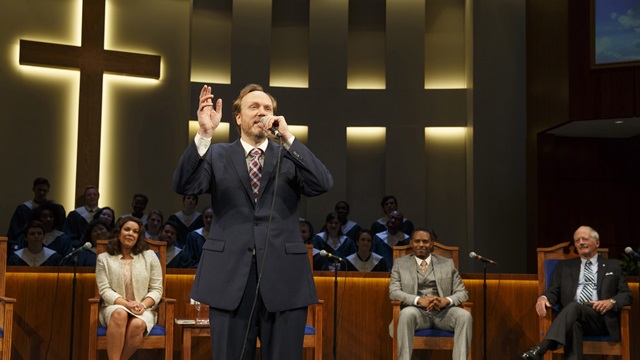
I’ve seen the play advertised locally. Lucas Hnath, a 36-year-old playwright, has a background in religion. His mother attended seminary and he even sat in her classes. The New Yorker reveals that there were expectations early on in his life for him to become a “pastor,” a choice he forewent for the arts instead (“Divine Intervention,” 9/7/15, Hilton Als). The play is about a megachurch preacher who has come to believe there is no hell and who believes God gave him this revelation. The result of his divulging this in a sermon is a church split, led by the assistant pastor who does believe in the reality of hell. While doctrine lays at the heart of the split, the play is said to focus on the personalities and behavior of various folks making up the church. Alissa Wilkinson, in a flamboyantly titled review, says this play resonates because “schisms, church splits, or at least disgruntled storming-outs are familiar to virtually everyone who stays in a church long enough to be committed to its life” (Christianity Today, 9/23/15). At least in advertising I’ve seen, the play title appears “The Christ?ans.” The idea is that, judging from their behavior, it is questionable whether or not they are truly Christians.

There are heartbreaking stories of congregations of the Lord’s church whose internal battles became known to the community and the brotherhood at large. Some have resulted from battles over doctrinal issues, whether regarding morality, fellowship, worship, leadership, or the like. Some have resulted from dueling strong personalities, jockeying for power, position, and prominence. Some have boiled down to squabbles about money. In all of them, tragically, Christ has been relegated to the corner and forced to be quiet while His “followers” duke it out.

While the implications over a doctrinal dispute and a personality power play are different, too often the predominant feature is a show of the flesh.

Many with a background in religion will be able to relate to the theme of the play because they have seen schisms in churches before. The world is a divided place, full of rancor, backstabbing, infighting, and unfair fighting. The church, particularly the church of the New Testament, must never exhibit such traits. Corinth set off such an alarm with Paul for this very reason. He urges no division to mar them (1 Cor. 1:10-13) and goes on to address both doctrine and attitudes in the letter. Philippi had two quarreling women straining the unity of that church (4:2) and Paul goes right to the heart and the mind.

We must strive to conduct ourselves with one another in a way that is always exemplary before the eyes of the community, the brotherhood, and the world. I thank God to work with a church that has been around so long and been through so much and who have weathered those storms by sticking together. Yet, too often, people have aired their dirty, unsightly laundry out on the clothesline of public purveyance. This soils the reputation of the Savior! That fact alone should horrify every child of God. May we always strive to be a beacon of light (Mat. 5:16), shining a spotlight on the Sinless Savior and not squabbling saints!

63611

Coping With Thorns

Neal Pollard

Satan is the accuser of the brethren (Rev. 12:10). He is the author of audacity, and he showed it first in Eden. He is at work today through temptation and suffering to try and dismantle our faith. He is a presence in our personal lives (1 Pet. 5:8). If there’s hurt, he’s happy. If there’s sin, he’s satisfied. He can’t force anyone to sin (Js. 1:13-15). He can’t make us fall away (John 10:28-29). But, he’s at work. Paul writes about something that has long mystified the Bible student, in 2 Corinthians 12:7-10. In that passage, we have:

  • The reality of the thorn (7)
  • The reproach of the thorn (7)
  • The reason for the thorn (7)
  • The result of the thorn (7)
  • The response to the thorn (8-10).

Paul reveals Satan’s involvement in that thorn. This troubles me. I have never asked for a thorn in the flesh and I have no reason to think Paul asked for his, but he got one anyway. What do you do when you have a thorn in the flesh? Consider at least three things Paul teaches us in this powerful passage.

No one is immune from thorns. Who’s talking in this text? The great apostle Paul, a man God gave revelations, who’s preaching across the world, converting so many, and achieving name recognition for the best of reasons. If you ever thought anybody would be sheltered for doing right, it would be him. But Paul says there was given to him a thorn in the flesh. That makes me uncomfortable. I need spiritual lessons about God and myself, as Paul and even Job, who Satan was allowed to buffet, did. If a great Old Testament patriarch and great New Testament preacher had thorns to deal with, I know I am not immune.

Sometimes, God lets the thorn stay. We may have to accept that our given affliction may never come to an end as long as we’re on this earth. A recurring or chronic illness, constant adversary, or irreversible limitation may not be removed. I wish I knew why God told Paul “no” and why he sometimes tells us “no” when we ask for our thorns to be removed. But, even if we keep the thorn, God’s grace is sufficient and He can use that very thing to accomplish good through us for the Kingdom. God uses thorns to supply us with humility and grace. If our thorn comes and stays rather than comes and goes, God will use it for our good and to accomplish good if we will properly view it.

Thorns are growth opportunities. If we remain faithful to God through our thorns, we will spiritually grow. Satan is rebuffed and defeated, as he was with Paul and Job. But, for every Paul and Job, how many have let affliction and adversity destroy their faith? We know God’s power eclipses Satan’s. But don’t underestimate this enemy (2 Cor. 2:11; 11:14; 12:7). One of Paul’s final points in the letter is about God’s great power (13:4). Paul was weakened by affliction, but he could endure because of faith. God is more powerful than Satan and Paul’s thorn is but one proof of it. Lyte wrote,

As woods, when shaken by the breeze, take deeper, firmer root,
As winter’s frosts but make the trees abound in summer fruit;
So every Heaven-sent pang and throe that Christian firmness tries,
But nerves us for our work below, and forms us for the skies.

Is it a trial or a blessing in disguise? Doesn’t it depend on how we view it and what we do with it? Satan wants to use afflictions to destroy us, but God is greater. He can transform our tragedies into triumphs. Trust Him through the thorns. The roses will appear!

d854897661b1aa845ddca7a690139563

The Eye Test

Neal Pollard

We covet those parking spaces close to the store, whether because we think we will save a little time or several steps by nabbing them.  Yet, we are in “competition” with others who are seeking the same spaces. No one rushes to the back of the parking lot to grab up those spots. But at a Costco in Canada recently, this vying turned violent as two middle-aged couples literally fought over a parking space. As in, it came to fisticuffs. As of this writing, police are still investigating and there may be fine details to be added to the story. Basically, however, as a YouTube video shot by a local realtor shows, anger over who should put their automobile in that space escalated to foul language, pushing, shoving, name-calling, and thrown punches. Four people who might otherwise be respectable, dignified contributors to society now share an infamy that may dog them for a long time. All because of a failure to conduct themselves properly in a public place.

We shake our heads at this animalistic behavior, but in our self-righteous sense of superiority we might do well to examine how exquisitely we execute our example before the eyes of the world. Consider some places where Christians can be oblivious to the watchful eyes of others:

  • Social media brawls, whether over matters clearly addressed in Scripture or matters of judgment and opinion.
  • Bible class discussions, where visitors, new Christians, and weak Christians might see the redeemed’s  inhumanity to the redeemed.
  • Public arenas, from the retailers to the restaurants and from the grocery store to the department store, where subpar (or even adequate) customer service evokes an unChristlike response from a disciple of Christ.
  • Arguments between spouses or parents and children, members of a “Christian home,” who resort to the tactics of their worldly counterparts as they wage war before such witnesses.
  • At ball fields, concerts, movie theaters, and the like, where something displeasing to us provokes an impatient, harsh, and retaliatory response that eclipses any view of Christ.

Certainly, these are just a few ways and places where we might forget ourselves and squash our precious influence by allowing the flesh to dominate our presumed spirituality. It is good for us to consider that those things cannot come out of us unless we are allowing improper things come into us. We must guard against the things that might creep in—“immorality, impurity, passion, evil desire, and greed, which amounts to idolatry” (Col. 3:5), “…enmities, strife, jealousy, outbursts of anger, disputes, dissensions, factions…” (Gal. 5:20, which are a bulk of the works of the flesh specifically identified by Paul), and more (cf. Mark 7:22-23, etc.).  We must work to control what comes out, harnessing the tongue (Jas. 3:2ff) and controlling the temper (cf. Eph. 4:26). We must strive to cultivate thoughts and feelings that, when expressed, build up and draw others to Christ (Col. 3:12-13; 1 Pet. 3:8-11; Gal. 5:22-23; etc.).

Like it or not, we’re hilltop cities and lighthouses (Mat. 5:14-16). Let us keep our behavior excellent among the “Gentiles,” as they observe our deeds, so that they will see Jesus at work in us (cf. 1 Pet. 2:12). Our attitudes, speech, and actions may not become a viral video, but we are still being watched. Let’s take care to display ourselves in a way that would not embarrass (or condemn) us were we to see it again, played by the Lord, at the Judgment Day.

cju0cyfw0aaufb9

TAKE A PILL OR EXERT YOUR WILL?

Neal Pollard

They are currently touting a diet pill that is a normal size when one takes it, but it expands up to 100 times its original size when taken with a 16 ounce glass of water before a meal.  This is to give the one who takes it the exaggerated feeling of being full.  Then the pill eventually reduces in size afterwards.  Some are calling it the answer for those who are severely overweight but who have a harder time cutting back how much they eat.

Ours is an age prone to offer easy alternatives to what the Bible calls self-control (2 Pe. 1:6). This word is defined as “‘to hold oneself in,’ ‘to command oneself,’ ‘to be a chief of oneself,’ ‘to make one’s heart be obedient,’ ‘to command one’s own desires,’ ‘to be the master of what one wants,’ or ‘to say No to one’s body'” (Louw & Nida, np).  Few of us excel at this all the time, but the Holy Spirit through His inspired writers call it a characteristic of the sanctified.  Paul preached it to individuals like Felix (Ac. 24:25) and to congregations like Corinth (1 Co. 9:25).  Perhaps some limit their understanding of “self-control” to sexual matters. While that is certainly an important area, all passions and desires must be kept in check.  Paul told Galatia, “Now those who belong to Christ Jesus have crucified the flesh with its passions and desires” (5:24).

That applies to diet and exercise as surely as it does tobacco, alcohol, and various lusts.  If one looks to a pill as a substitute for portion control and healthy food choices, he or she is bypassing the exertion of a trait that is supposed to be a sign of faithful Christian living. How many of God’s people have eaten themselves into health conditions like heart disease, diabetes, and the like?  It is often easier to excuse our unhealthy lifestyle by pointing to stress, heredity, metabolism, or busyness than to exert the necessary discipline needed for us to better care for our bodies.

Some of us may have to work harder at this than others thanks to genetics, age, or the other factors just mentioned, but that is what self-control is all about.  It is about exerting the effort required to master our wants and say no to our bodies.

This may be an unpopular subject to address, but in our ever-expanding society that has eaten its way into weight problems and obesity God’s people are to lead by example.  That means demonstrating self-control not only by what comes out of our mouths or from our deeds, but by what we put into our bodies.  We don’t do that by taking a pill, but instead by exerting our will.