Proving Someone Wrong

Neal Pollard

I’m not talking about the thing too many people do on social media, where they nitpick others and put in so much effort in the “yeah, but..” game. That is ill-mannered and usually unwelcome. It usually also concerns something amounting to far smaller than a hill of beans. Instead, I refer to something God-directed and involving sin.  

A quick overview of Ephesians lays out a pretty straightforward outline. Chapters one through three lay out what a privilege it is to be a Christian. Chapters four through six speak of how privileged people behave, within the church, with the world, and their relationships, and even with the devil. The “proving wrong” section comes in the second half of the book, dealing with the world. If we isolate ourselves from the world, we cannot hope to be effective. If we allow ourselves to be influenced by the world rather than be an influence on it, we may find ourselves having fellowship with the unfruitful works of darkness. In Ephesians 5:6-14, Paul issues a difficult challenge for us as we live before and within the world on a daily basis. How do we reprove the unfruitful works of darkness?

KNOW THE DIFFERENCE (6). Paul starts this paragraph, saying, “Let no one deceive you.” Context shows that the “these things” that drew God’s wrath involved three broad categories of behavior and three specific actions: fornication, impurity, greed, filthiness, silly talk, and coarse jesting. Paul says, in essence, “Don’t be deceived into thinking these things are OK. To promote ignorance in these areas, all we have to do is remain silent about them and never teach about them. Paul’s concern is about Christians being an influence on the culture, and that’s still the need today.  There are still a great many people in the world who think of Christians as those who avoid filthy speech and who have  objective moral standards about sexual matters. The world sees enough conformation; It needs to see transformation; That requires information! 

BE THE DIFFERENCE (8-10, 13-14). Paul is concerned about people functioning in the spiritual dark. He wants them to take the information (knowledge) he’s given them and let it show in their lives. He illustrates this lifestyle with the metaphor of light. Paul uses the word “light” five times in this one paragraph. Light has characteristics (8-9)–goodness, righteousness, and truth. Light is corrective (11-14)–it remedies problems that occur in its absence (blindness, fear, ignorance, etc.). Light makes visible what was invisible before. We live in a world in serious need of correction. The majority, walking in darkness, are on a collision course with spiritual death. We’re in a position to shine light on their path. Our schools, workplaces, communities, ball fields, and national institutions cry out from the darkness for guidance. Some of the best “reproving” (exposing) occurs when we are the Lord’s lights.

MAKE THE DIFFERENCE (7,11-12). This is the most uncomfortable part of this text. Beyond building our knowledge and setting an example, we must do something. We make a difference through abstinence (7,10), not partaking and having no fellowship with evil. Saying no when invited to participate in sin turns an uncomfortable spotlight on us. Being a “new man” (4:22) means a new behavior, which Paul describes in 4:25-32. The world feels judged when we avoid something we know is wrong. We also make a difference through admonition. Reproving (exposing) means to shine the light on something (we’re shining the Light of Christ onto it, 8). 

When doctrinal error is espoused, do we try to engage people (“in love,” 4:15) or do we just sit in silence? When moral filth is peddled and promoted, do we just go along to get along or do we stand up, stand up for Jesus? In chapter 6, Paul tells us that we’re Christian soldiers, which implies a militancy that must exist (11). Twice more, in 6:13-14, he repeats the charge to “stand firm.” Maybe we’ve witnessed people standing firm in a way that was unnecessarily offensive and unloving. That’s wrong!  But that doesn’t give us an excuse to cowardly avoid saying what needs to be said, no matter what it costs us. Nobody likes to be the bad guy, but God commands that we expose sin. 

Paul follows this instruction, saying “Therefore” (15). His words are written for a purpose. The reason for exposing darkness is that God has us here to make a difference. How we do it requires wisdom, but it is “what the will of the Lord is” (17). Let’s be effective representatives of Christ in this dark world. Let’s understand the urgency of our task and make the most of our time!

how_to_help_someone_who_fell.original-613x210

Be Patient!

Neal Pollard

In James 5:7, James gives us some specific instructions concerning being patient. It is said as a response to those whose patience was being inflamed by the sinful actions of those in James 5:1-6. In just a few words, James has some pretty exhaustive instruction.

He addresses the who—“Be patient brethren.” There’s an ethic and morality expected of those in God’s family that is more than for everyone else.  Almost every use of the word “brethren” in the New Testament is addressed to Christians. As light-shiners and salt-spreaders, we must exhibit patience with others and especially other Christians.

He addresses the when—This command has a duration (an expiration date)—“Until the coming of the Lord.” How long are we to remember Christ in the Lord’s Supper? 1 Corinthians 11:26 says, “Until He comes.” How long was Thyatira to hold onto what they had? Revelation 2:25 says, “Until Jesus would come.” How long was Corinth to refrain from unrighteously judging one another? 1 Corinthians 4:5 says, “Until the Lord comes. You don’t encounter this phrase very often, but every time it regards a matter of significance.  There will not come a point in time when you can cease being patient—it’s as long as you live or until Christ comes again, whichever comes first.

He addresses the howYou’ve got to strengthen your heart (be inwardly committed, cause to be more firm in attitude or belief).  James is saying, “Steel yourself because this is going to get hard sometimes.” When I think of people who have fallen away from the Lord, I think of conversations with people who say they gave up on the church or the elders or the preacher. They weren’t responsive enough, caring enough, or too nosy or not what they needed when they needed it.  But ultimately this means these fallen ones weren’t firm and unchanging within.

He addresses the why“The coming of the Lord is near.” Don’t focus on a time element here, but on the need to endure for as long as the time is. It’s constantly drawing nearer, not in a chronological sense, but an expectation and assurance that we expect it any time. I don’t want to be caught living in a state of impatience with my brethren. If I am, it means I’ve lost focus on Christ’s second coming!

I need to be convicted that impatience is not “no big deal.” James ties it to spiritual harmony, divine superintendence, and eternal safety. We can’t chalk up failure in this area as just our makeup, personality, and temperament. We must be obedient to the heavenly injunction and “be patient”!

blog-july-20

Working Together To Survive The Hunt

Neal Pollard

1 Peter 5:8 calls the devil a roaring lion prowling around seeking someone to devour. It is obvious that Peter’s readers would have seen or at least heard about these kings of the jungle for the analogy to make sense and be practical.  Lions lurk, longing for lunch.

In the savannas of East Africa, their meal of choice is usually either the wildebeest or zebra. Despite this, these two animals continue to graze and migrate together. In fact, because they are chief prey of the lion (and other big cats), they need to stick together. Various observers and experts give different explanations for why. Zebras have great farsightedness and the wildebeests have excellent peripheral vision, but each are poor at seeing what the other sees well. Others explain that wildebeests have mouths better suited for short grass while zebras’ are made for the long grass that grow intermittently together on the plains. Still others point to the zebras superior memories, recalling the safety routes of the previous year, and the wildebeests uncanny ability to find water even when such is scarce. Probably, it is the combination of these facts that cause the symbiotic relationship between these two large mammals. They do not all survive, but the vast majority do. The reason is because they utilize their own abilities but also because they rely on the abilities of others.

In a letter where Peter is addressing a people who were at times spiritual prey, he does more than use the simba simile. He urges Christians to stick together and look out for one another. He calls for sincere, fervent, from the heart love for one another (1:22; 4:8). He urges complaint-free hospitality toward one another (4:9). He commands serving one another (4:10). He teaches there to be mutual humility displayed toward one another (5:5). He ends the letter exhorting an affectionate, loving greeting of one another (5:14). As much as anything, this is a recognition of mutual dependence.

If we understand that we are not at home in this world (2:11) and are living and longing for the inheritance in heaven (1:4), we should come to understand our mutual need of each other. That does not just mean looking for others’ help, but also giving it. This is by God’s design. Notice, for example, the proactive protection we provide each other by being “harmonious, sympathetic, brotherly, kindhearted, and humble in spirit; not returning evil for evil or insult for insult, but giving a blessing instead…” (3:8-9a). Right before the lion passage, Peter talks about different groups looking out for and helping each other (5:1-6).

Any of us, through suffering, temptation, doubt, or some other factor, could drift away from the safety and security of the fold. Let us be more than mindful of each other. Let us depend on each other to survive the hunt and make it to eternal safety.  I will face the lion many times in this life, and I depend on you to help me survive.

DSCN0368

A Family, A Fraternity, And A Fellowship

Neal Pollard

A little over a week ago, my son Dale called me to tell me one of his elders gave him tickets for the Georgia-Missouri football game. He asked if I could swing coming. Thanks to a generous travel voucher from American Airlines, I was able to go on short notice on their nickel. The best part of this trip was getting to see one of my adult children for a couple of days. We made the most of those moments, and that game between the hedges was not a disappointment. Though Dale had watched games with me on TV, he was not the diehard fan I have been since 1979. We made the drive from Valdosta to Athens. Once on campus, he got his first glimpse into “Dawg Nation.” By the time we left the game, he was hooked. Georgia has another diehard fan. What did the trick? Perhaps the camaraderie between people who otherwise would not come into contact with each other. There was the shared lingo, shared knowledge, shared passion, and even shared clothing color schemes. There were traditions to partake in. People were excited for every play and intensely interested in the outcome. That was infectious! It was an unforgettable experience we plan to duplicate in the future.

As I look back on that great memory, I got to thinking about an infinitely stronger bond I have. Even regarding this game, I think about the part they played. I’m talking about the Lord’s church and the Christians who make it up. There was Doug Jones, the elder who gave us the tickets. There was Wes Hazel, who let Dale borrow his car so he didn’t have to pick me up from the airport or carry me around on the back of his motorcycle. There were Lance and Susan Leavens, who opened their home to allow Dale and me to take a nap before I caught a flight back to Denver yesterday morning and Dale drove back to Valdosta. While I was in Georgia, Kathy was in Texas doing a ladies day, and Carl was experiencing major trouble with his truck, an overwhelming, generous response from literally dozens of Christians helped make it possible for our youngest to resolve that heart-sinking trouble.

All too frequently, I see people who major in pointing out the perceived problems and seeming shortcomings of the saints. To listen to them, we do nothing right and even do those things from sinister motives. As a preacher’s kid who’s lived a life of a full-time preacher for more than a quarter century, I am far from naive. The church, without exception, is comprised of flawed, faulty, and finite folks. I have been extremely disappointed in the actions of church members, from the leadership to the membership. I have tearfully witnessed Christians abandon the church for the world, breaking many hearts in the process. But, the church is special. It is unique, from the doctrinal standpoint, dedicated to speaking where the Bible speaks and being silent where it is silent and seeking to replicate New Testament Christianity.

In addition to that, there is the common bond we share. What a fellowship! What a family! What a fraternity! You read it when you open up the New Testament. As importantly, you experience it today when you open your heart and life to all the others who make up this special group. We’re incurably imperfect. We should strive to be more patient and gracious. But, God’s people are the greatest in the world! Thank God for that blessing today and every day.

22540060_10155051132935922_8341247926958187048_n

It’s Not Business; It’s Personal

Neal Pollard

Some years ago, when our sons were all teenagers and they were given a cell phone, there were times when they failed to use those to communicate if they got to their destination or answer when we needed to reach them. While I never did it, I was tempted on more than one occasion to contact the cellular provider and suspend their service. Why? Was it because I thought it was wasted cost? No. It was because it reflected a lack of thoughtfulness and responsibility. It wasn’t business. It was personal.

Hebrews 10:25 is a sobering, New Testament passage. It addresses the Christian’s attitude toward the sacred assemblies of the church. What makes it sober is its contextual attachment to the eternal ramifications of abandoning those assemblies. God speaks of “no more sacrifice for sins,” “severer punishment,” “vengeance,” and “terrifying” (26-31) in connection with sinning willfully, of which forsaking the assemblies is a contextual example. But, why is God so exacting about this matter of our meeting together? In a nutshell, it is because these times, to God, are personal. The Bible is full of references to God’s desire to be worshipped and receive our worship. He is worthy. As Creator, He has the right. But, in this passage, it is personal in the sense that what He commands is so helpful to you and me.

Written on the foundation of the fact that our High Priest, Jesus, has given us access to God (19), the writer urges us to do three things: (1) Draw near (22), (2) Hold fast, and (3) Consider. It’s the third one I want to briefly notice:  “and let us consider how to stimulate one another to love and good deeds, not forsaking our own assembling together, as is the habit of some, but encouraging one another; and all the more as you see the day drawing near” (24-25).

There should be a personal connection. Notice how the writer reveals this. He says “us” and “our.” He says “one another” twice as well as “together.” Christianity is not a solitary condition. We must see ourselves in connection with the rest of the body. Assembling is about seeing ourselves as a vital piece of a more important whole. Forsaking the assemblies is, for whatever reason, selfish and self-centered. It is done blind to the needs of others.

There should be a personal submission. The command is “consider” followed by two participles that tell us how to obey the command: “not forsaking” and “encouraging” (more on that in a second). So, in a discussion about the whole group, there is a command each must strive to obey. As it is a command, ultimately this is as personal as God and the individual. I fail to consider my role, I fail in my relationship with God.

There should be a personal obligation. Each of us is obligated to stimulate and encourage everyone else. It’s not just those who publicly lead worship or teach class. The reclusive saint who dashes out before services are over has missed this. The clammed up Christian who never reaches out to fellow saints but is closed to others misses this. The discouraging and unloving brother and sister rebels against their duty. I should never be focused on how well others are stimulating and encouraging me. Instead, I should be so lost in my efforts to be a blessing to others that I have no or energy to evaluate how others are doing.

There should be a personal anticipation. This is more than social and emotional. It’s spiritual and eternal. Those other aspects are means to that end, but don’t miss the end. Be a blessing to others at “church services” “as you see the day drawing near” (25). Not Sunday. Keep reading. The Judgment Day. I need to remember that “here we do not have a lasting city, but we are seeking the city which is to come” (13:14). One of the best places to stay reminded of that is through our assemblies, as our activities in class and worship and our teaching and preaching keep us anchored to that ultimate reality. This world is not my home!

Christianity is not about the business of going through the motions, even doing right things. No, no! It is personal. May that truth permeate our attitudes toward not just God, but His children.

1024px-business_plate_green-svg

Some Things I Love About Assembling On The Lord’s Day

Neal Pollard

  • Watching young parents gather their kids and lead them into the building
  • The happy, excited chatter of people who act like they’re attending their favorite reunion ever
  • The many brief, but meaningful, conversations
  • Seeing the new faces that are inevitably there and being thrilled at the prospect
  • Noticing members greeting and welcoming people who are visiting
  • Feeling the anticipation of class and worship
  • The steady faithfulness of widows and widowers who, despite the loss of their partner, are still in love with the Lord
  • New Christians leading and enthusiastically participating in the worship service
  • Witnessing worshippers who appear to be very engaged and enjoying themselves
  • The sound of Bible pages rustling (or being close enough to see mobile devices going to the Scriptures cited)
  • Elders making spiritual encouragement and admonition
  • Little boys picking up the attendance cards
  • Young parents persevering in training their learning lads and lasses (even when that means occasioning the “training room”)
  • Even the tone-deaf lifting up their voices to make a “joyful noise” to the Lord
  • Husbands and wives united in their desire to be present before the Great I Am (and appear to be enjoying doing so together)
  • The display of emotion and heartfelt engagement by those leading us in worship
  • The very elderly or infirm, sometimes on walkers or in wheelchairs, who with great effort make the appointment they disdain missing
  • The many ways being in Christ brings interesting combinations of people together (educated with uneducated, rich with poor, the very old with the very young, those of different races, etc.)
  • Hearing the Bible conversations that start and continue after “the last amen”
  • Watching Christians rally around and embrace those who respond to the invitation
  • Knowing Christ is present and participating in the assembly (Heb. 2:12)
  • The intimate connection with God that results from His pattern and design for worship, perhaps especially in the weekly observance of the Supper
  • The piercing conviction to live better and serve Him for actively that results from assembling
  • Realizing how many things that are to love about assembling on the Lord’s Day

What would you add?

200227925-001

What It Takes To Grow The Church In Our Culture

Neal Pollard

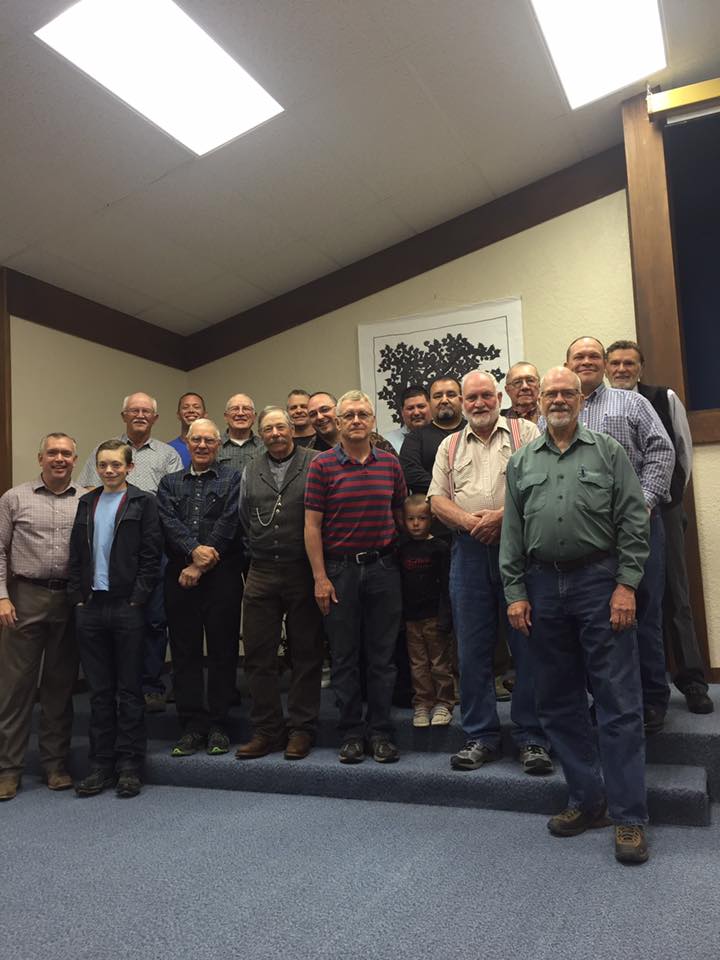
It was such a treat to be among the hearty, faithful Christian men of central Wyoming and the Bighorn Basin. By Bible-belt comparison, they come from small congregations. But their passion and desire to grow the church is humongous. Near the end of their men’s retreat, they divided into groups to discuss the obstacles to growth and suggestions for growth. What they came up with was incredibly insightful, helpful to especially anyone living in the current, western culture.

Among the obstacles they listed were:

  • Lack of commitment
  • Fear
  • Political correctness
  • Biblical ignorance
  • Sin
  • Apathy/indifference
  • Misplaced priorities
  • Lack of adequate leadership

For those in Alabama, Oklahoma, and California who would say, “Those are our obstacles!”, isn’t it interesting how common our struggle is.  The same factors are holding back our growth all over the nation.

Yet, I love the suggestions they came up with. I think they are key to tapping into our growth potential throughout the country and, to a great extent, throughout the world. They suggested the following:

  • Increase fellowship—The key to growth is being in each others’ lives more
  • Emphasize and empower Bible study—There can be no spiritual or numerical growth without growing our knowledge and understanding of God’s Word
  • Think outside the box—Staying faithful to truth, get out of method ruts and overcome fear of rejecting a different, scriptural method just because it is new
  • Challenge greater application of biblical truth—Every class and sermon must have a viable “so what”
  • Be intentional in our relationships—Realize that our jobs, community involvements, friendships, etc., are means to an end rather than an end of themselves. They all exist as opportunities to evangelize.

Our brethren in the deep south, the north, the Atlantic region, the upper midwest, the southwest, the far west, the northwest, and, in short, any recognizable region of the country share a desire to be relevant and meaningful in our communities. We want to honor Christ and grow His body. But it will take measurable steps. It won’t happen incidentally! We must act on our hopes and desires. We must personally engage ourselves in enacting these suggestions daily! In so doing, we’ll not only avoid being part of the problem but we’ll be part of the solution.

13118907_10153650222335922_7374883366678402046_n

That’s The Church For You!

Neal Pollard

  • Where you can build relationships with some of finest, most enjoyable people on earth.
  • Where the world gets smaller and mutual connections are usually a conversation away.
  • Where God’s Word is honored and imperfect people try to follow it.
  • Where Christ is at the heart of every idea, program, and plan, but also every class period and worship assembly.
  • Where you connect with people throughout the week, from thoughts and prayers to cards, calls, messages, and visits.
  • Where hope is always vibrant whatever in the world is happening, where joy is always possible however gloomy the forecast.
  • Where there’s always room for more members to be added to the family.
  • Where young and old, rich and poor, educated and uneducated blend together in a harmony that cannot be found anywhere else on earth.
  • Where we literally get a foretaste of glory divine.
  • Where you feel a part of something so truly profound in purpose and exciting in destiny that sometimes you have to pinch yourself to make sure it’s real. And it is.
  • Where you have clarity and grounding in the midst of chaos and confusion.
  • Where you have heritage and history, but just as much hope and hankering.
  • Where truth is honored, and the way, though difficult, is clear.

A couple of closing caveats. No, I do not think the church, from the human side, is perfect. We have our foibles, fragility, and faults, but our foundation is flawless. No, the church is not a place, it is a people. “Where” indicates that the church, as a body, is a place where I can fit, belong, and function. No, this is not a Pollyanna-like, rose-colored glasses view of the church that glosses over or is ignorant of times when God’s people do not behave like they ought. But, when too often the diatribe is “what’s wrong with the church” and the mantra is, with negative and sarcastic spin, “that’s the church for you,” maybe it’s time we take a moment to count some of the blessings and perks of membership in the institution bought with the life and blood of Jesus (Acts 20:28). Obviously, there are other items to be added to the list. Feel free to do so! Generously.

IMG_2894
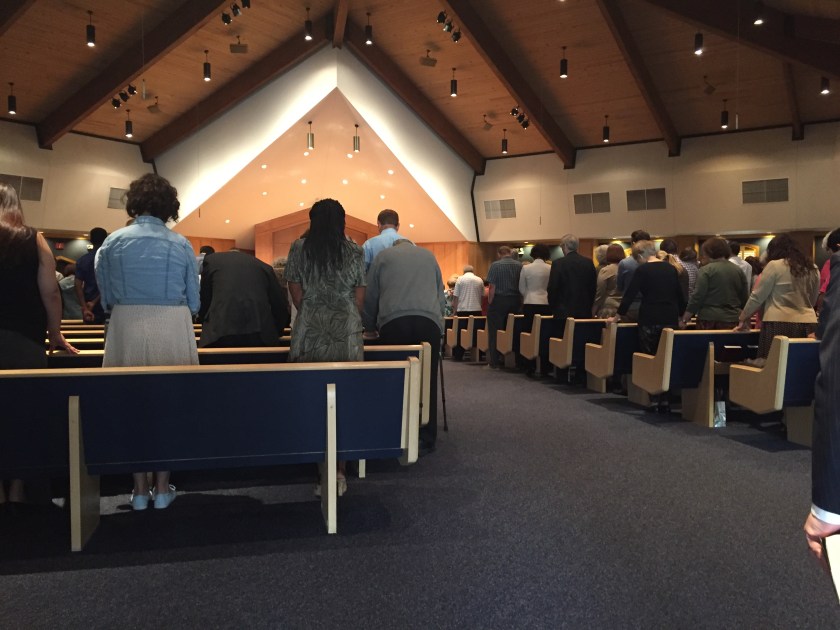
At the end of morning worship at the Katy, TX, church of Christ, 4/10/16.

The Same Minute From Many Perspectives

Neal Pollard

A visitor comes to worship services for the first time. This person is searching for meaning, purpose, and answers, perplexed and troubled by life and wanting to know the way. The services have already started, and the visitor slips into the first vacant seat available. This one is intrigued and engaged by what has gone on, benefiting from the preaching, appreciating the singing, and eventually standing with everyone else for a final, uplifting prayer. The visitor has experienced enough to consider returning. The prayer concludes, and the visitor, with everyone else, begins to head for the aisle.

So much, good or bad, can happen in these next 60 seconds.

  • The visitor, not knowing a soul, either stands or slowly walks out of the auditorium, hoping for a friendly face, a smile, or words of kindness and encouragement.
  • The family seated next to the visitor have wrestled their baby throughout services. Exhausted and flustered, they hurry past the visitor never making eye contact.
  • Several members, each on an important “mission,” walk past the visitor to talk to that person or do that thing that, if they don’t hurry, they’ll forget or miss.
  • The visitor does make it to the preacher, shaking his hand and thanking him “for the service.” While standing with the preacher, the visitor notices a handful of those who are apparently members warmly greeting the preacher but feeling the full force of being treated as if invisible by them. These folks are good folks, but they just aren’t observant (or accustomed to being “on the lookout” for visitors).
  • Moving past the preacher, the visitor encounters the eye contact of a few people who politely smile or even say hello. These good people wonder if this is a member, someone they should know, and, afraid to offend this one, do not follow up with conversation.
  • The visitor walks past a shy member, one who would like to greet the visitor but who is afraid of being embarrassed in some way.
  • As the visitor departs, ignored by and large and concluding that while the services were unique and intriguing the people were cold and unfriendly, God looks down from heaven. He has seen that last minute unfold. He knows the tagline under this church’s bulletin masthead asserts that this is the friendliest church in town. He watches members who know one another and are comfortable with each other laughing and talking together, wanting to be together, but are oblivious to the precious opportunity embodied in that visitor. God sees that visitor as a soul precious enough to give His Son for, an impressionable person reached or rejected by the reception (or lack thereof) made by His people. He knows this visiting one has heard truth and experienced worship in spirit and truth, but that this one also believes that the participants are exclusive and disinterested.
  • The devil has to be delighted that this visitor leaves dejected and resentful, determined not to visit that unfriendly congregation again.

Though I would like to say that the scenario above is far-fetched and purely fictional, it is one I have seen play out repeatedly over a quarter-century as a preacher.  Our efforts (or lack thereof) to engage and show interest in those who visit our assemblies is our only opportunity to make the first impression redeemed, soul-conscious Christians should make. We must never assume that it’s others’ job to or that others are doing the job of making our visitors feel appreciated and welcomed. What if every Christian present would take every opportunity presented to make every visitor feel as though they’ve “come home” when they come to our services? Will you consider what you do with your first minute after the last “amen”? Who knows the eternal difference it will make, especially with some soul searching for the Savior?

5624179647_50a421d605_o_d

Even When You’re Alone, You’re Not

Neal Pollard

If I have a favorite chapter of the Bible, it would have to be 2 Timothy 4.  Yes, I love the first eight verses, but that alone is not what cinches this chapter as dearest to me.  It’s Paul’s personal remarks starting in verse nine.  There’s his longing to see his spiritual son, Timothy.  Twice he implores Timothy to come see him (9, 21).  He’s in prison, persecuted for preaching the Prince of Peace. He longs for Christian companionship.  Then, he shares his dejection over the abandonment of certain fellow-workers (10). He wants to see cohorts with whom he has done spiritual battle (11). He has personal needs and wants (13). He warns Timothy of a spiritual troublemaker (14-15).  Then, he shares personal feelings of isolation and loneliness, a time when he needed a Christian brother by his side but had none (16).  Bold, risk-taking Paul, who would stand up to any opposition, the epitome of true manliness, was now in undoubtedly dire, dank conditions, the smell of squalor in the air.  Whatever he saw, heard, and felt as he wrote, Paul scratched out these words: “At my first defense no one supported me, but all deserted me; may it not be counted against them.  But the Lord stood with me and strengthened me, so that through me the proclamation might be fully accomplished, and that all the Gentiles might hear; and I was rescued out of the lion’s mouth. The Lord will rescue me from every evil deed, and will bring me safely to His heavenly kingdom; to Him be the glory forever and ever. Amen” (16-18).  These words aren’t the end of the letter, but they are the end of the matter!

This faithful Christian was deserted by men, but he felt God’s presence and power:

  • The Lord stood with him.
  • The Lord strengthened him.
  • The Lord spoke through him.
  • The Lord saved him.
  • The Lord was steering him.

You and I cannot fathom the price Paul paid for proclaiming Jesus. But even if we were ever to face privation, punishment and pain for our faith, what was true for this apostle will be true of us.  He promised to be with us always (Mat. 28:20) and never forsake us (Heb. 13:5). Even if you ever feel physically alone, you will have the spiritual assistance Paul speaks of in 2 Timothy 4.  Through it all, you can say with Paul, “To Him be the glory forever and ever. Amen!”

paulmosiac

On The Other Side Of Security

Neal Pollard

Gary Hampton tells the story of his first missionary trip, which he made in the 1980s—shortly after the “Jonestown Tragedy” and during a time of great national instability.  He recalls soldiers lining both sides of the runway, armed to the teeth, and having his bags checked thoroughly by those whose friendliness was not exactly established.  He says that there was nothing like being able to greet the local brethren on the other side of security, singing gospel songs with them en route to the town where they campaigned together.  I have felt similar relief in coming into places that were strange, unfamiliar, and potentially menacing in different parts of the world.

Do you wonder what it was like for the apostle Paul, who had just survived a horrific shipwreck only to be bitten by a deadly snake on the island where he was stranded.  Now, he had been on an Alexandrian ship once again bound for Rome, stopping at various cities along the way.  At one of them, Puteoli, Paul, Luke, and the rest of his fellow travelers “found brethren, and were invited to stay with them seven days. And so we went toward Rome. And from there, when the brethren heard about us, they came from as far as Appii Forum and Three Inns. When Paul saw them, he thanked God and took courage” (Acts 28:14-15).  Notice how the local Christians, however far from Paul’s hometown, made Paul feel—thankful and encouraged.

There is something special and unique about the church, by God’s divine design.  Even brothers and sisters you meet in other countries, who speak different languages, and whose background and culture are different from your own, can have that effect on you.  Worshipping with God’s people in different parts of the country so often has the same effect. I’ve heard stories (so have you) from families and individuals who remarked about how unfriendly the local church they visited was.  I’ve had a few experiences where I didn’t feel the warmth I thought was proper, but that’s not nearly the norm.  However, I don’t wait for the brethren to come to me.  I’m anxious to see them!  They are my family, even if we’ve never met.

As you count your blessings today, won’t you thank God for the transcendent blessing that is the spiritual family!  The church was God’s eternal purpose (Eph. 3:9-11).  How wonderful that it bolsters us in the brief period of time we exist between birth and eternity!

Diversions, Distractions, Or Deviations?

Neal Pollard

All the following are legitimate outlets, kept in proper perspective:

  • Social causes and needs.
  • Politics.
  • Sports, recreation, leisure and fitness.
  • Wholesome forms of entertainment.
  • Family events.
  • Social media.
  • Socializing and fellowship with fellow Christians.
  • Church buildings.
  • Addressing controversial issues and false teaching.
  • Material possessions.
  • Hobbies.

But our common struggle is allowing these to eclipse our purpose on this earth as Christians.  Interestingly, they all can be utilized as part of our mission, but none were ever meant to replace it.  These activities can easily hinder our faithfulness and usefulness to the cause.  Will you pray for me to keep seeking and saving the lost at the top of my “to do” list of life?  I will do the same for you, if you let me know.  Let’s pray for courage, focus, discernment, resolve, and encouragement to take the gospel as we go about each day.  This is what energized the church in its infancy (cf. Acts 8:4).  They had access to the same distractions and diversions we do, but they could not be diverted from the prime objective. Consequently, we read throughout Acts of their exponential, if unlikely, growth.  May we help each other imitate their spirit and service!

BEAUTIFUL FAITH

Neal Pollard

Every day Johnson Kell visits is a good day.  Today was a good day.  Though we were initially talking about some sad and depressing matters happening currently within churches of Christ and particularly a west coast university traditionally affiliated with the church, Johnson cannot help but talk about good and wonderful things he’s seen and experienced within God’s family.  He told the true story of how one positive experience has made such a ripple effect within our wonderful brotherhood.  It centers around a young man steeped in a denomination but dissatisfied with their teaching.  He had a friend, a love interest, who was from Wyoming. She attended a funeral in Casper and was so impressed by what was said and done by the local church of Christ there that she was converted.  She told this young man, who had moved to work on a golf course in Ventura, California, where Johnson and Dorothy was attending at the time, about the church.  He visited. The Ventura preacher, Floyd Davis, studied with Ken, who obeyed the gospel.  Ken went on to marry, not the Wyoming girl, but another young woman attending with him at Harding University.  He went on to get his doctorate degree in Texas and has built a fine Christian home.

That story by itself shows the power of the gospel upon an honest and open heart. When someone is searching for truth, he or she will find it!  If one has no interest in God’s truth, no amount of persuasion or argumentation may be enough.  The gospel still works, however dark our world seems to be getting.

Yet, as beautiful as anything I’ve ever seen is a heart seasoned by decades of trial and triumph.  As Johnson relayed this story to me, he choked up several times in his elation over the conversion of the young woman and the young man.  Never have I known one as touched by the gospel and its positive effects on others as Johnson is.  Get him to talk about the cross of Calvary, heaven’s plan of salvation, the joy of Christian fellowship, or any such similar subject and tender emotion will follow.  Listen to him pray.  Tap into his vast reservoir of memories of the church and you get a transparent view of beautiful faith.  Spend any length of time with Johnson and you know he’s spent lengthy time with Jesus.  Every time we part company, I pray, “Lord, let my faith shine like Johnson’s.”  Hebrews 13:7 seems to be speaking of elders, but the principle applies to this former elder: “Considering the result of their conduct, imitate their faith” (7b).  When it comes to Johnson’s life (and all those like him), that’s my advice!

Taken almost 8 years old, when Johnson (then 88) was teaching our boys to play tennis at the courts on Dartmouth.

FAMILY TOGETHERNESS

Neal Pollard

It was a bit ironic to me as a stood up to preach on the subject of family that I had my parents and two of my children sitting and listening.  How rare and wonderful that, normally separated by a couple of time zones and over a thousand miles, we were all able to be together in the same worship service!  It makes me long for heaven, when we can be in the presence of God in eternal adoration of Him and sweet fellowship with one another.  Being together with family is a blessing many of us take for granted and can maybe only fully appreciate when it tends more toward the exception than the rule.

One of the many incredible facets of God’s perfect design for the church is that He made us a family.  Paul depicts us as fathers, mothers, brothers and sisters (Titus 2:1-4).  He refers to it as God’s house (1 Timothy 3:15).  Christ is the bond that brings us together, with all our diversities (skin, background, income, education, etc.), to be a spiritual family.  The best attributes of family—love, acceptance, encouragement, motivation, understanding, heritage, leadership, unity, sympathy, assistance—come together in God’s family.  This is what has always baffled me when I think of brothers and sisters who can stay away from their spiritual family for weeks, months, and years at a time.  Who could sustain us and fill the vacuum caused by earthly life like God’s children, our spiritual siblings?

When you look at the church, you perceive it a certain way.  I’m convinced you are either drawn to it or repelled by it.  You long for her members or loathe them.  Certainly, there are the indifferent, the lukewarm, and those who are essentially unfeeling toward other members. But these are steadily moving toward abandoning their family.  Their hearts have already done so, if their bodies haven’t yet.  The indifferent and hostile may blame the church for their attitude, but we choose our mindset.  God puts us in this family (Acts 2:47), a plan He gave to help us successfully survive this life and obtain eternal life.  It’s a sign of spiritual health to long to be around, grow closer to, and be in love with the church.  Luke records, “And all those who had believed were together…” (Acts 2:44a).  What a beautiful picture!  We get to enjoy the same blessing today.  May we never take it for granted, but relish it.

pollards-in-georgia

Cease Fire!

(Guest Baker)

Gary Neal Pollard III

On Christmas Day in World War I, British and German soldiers called a ceasefire and shared food and other comforts. They were definitely still enemies, but were able to tolerate each other long enough to celebrate a holiday.

In keeping with the prominent theme of “walking” in the book of Ephesians, Paul says, “Always be humble and gentle, with patience, showing tolerance for one another in love” (4:2). This word “tolerance” literally means “to endure something unpleasant or difficult” or “to permit the presence of something.”

I don’t like all of my Christian family. I love them all, but there are personality differences and thought processes and it’s hard to get along with them all. I like most of them! Talk to any member of the family of Christ, and they will agree, no one gets along with everyone.

According to Ephesians 4:2, we are required to put up with those who bother us or don’t get along with us or do things the way we do. We aren’t told to be their best friend, but we are going to be held accountable for how we treat those in the family of God.

Let’s be determined this week to be civil and deferential to everyone in the family of God and not think about our differences with them. Let’s remember that this is all done for the purpose of unity, which is vital to the health of the church (4:3,4). It will require effort – no one said it would be easy! But if it will help the church be healthy, it’s totally worth it.

Recruiting Children

Neal Pollard

It was Adolf Hitler who famously said, “When an opponent declares, ‘I will not come over to your side,’ I calmly say, ‘Your child belongs to us already… What are you? You will pass on. Your descendants, however, now stand in the new camp. In a short time they will know nothing else but this new community’” (Shirer, The Rise and Fall of the Third Reich).  Recently, an AP article by Zeina Karam and Vivian Salama reports of ISIS militants luring children from Iraq and Syria to fight in the battles they are waging across the middle east.  One photo shows two children posing with automatic weapons as an Islamic militant fighter has his hand affectionately on one of their shoulders (The Denver Post, 11/24/14, 13A).  Lest our culture get too sanctimonious, ideologues in our educational, political, and media realms have long been indoctrinating our youth on matters like radical feminism, abortion, homosexuality, climate change, evolution, and the continuing list is lengthy.  The world has long known that the way to effect and control philosophical change is by reaching the hearts of children.

Once, in the context of teaching about possessions and stewardship, Jesus made the observation that “the sons of this age are more shrewd in relation to their own kind than the sons of light” (Luke 16:8b).  Have we, in the body of Christ, ever conceded to the spiritual enemy regarding our children?  Do we let the world set the standard of right and wrong? Arrange their priorities? Set their moral compass and define their worldview?

At no time is the human heart more impressionable and moldable than in the days of youth.  What can we do to reach the hearts of our children? Consider these areas:

  • Worship.  To me, a most practical disadvantage of programs like “Children’s Church” is that it deprives children of the culture and environment of worship, where they not only practice engagement but also group participation.  Since children are such quick and able learners, we can teach them so much about praise and adoration to God with each other in worship (cf. Psa. 95:6).
  • Acts of service.  Rather than creating an atmosphere that caters to children’s desires, why not create opportunities that teach them the value and importance of service, unselfishness, and giving. By helping them serve, we open their eyes to the joy and fullness of heart that follows doing for others (cf. Acts 20:35).
  • Fellowship.  Why not do more as a church and as individual families to emphasize the beauty and joy of Christians being together? Involve children in preparing for these times and making them an active part in times spent together with others—teaching them requisites like good manners, courtesy, thoughtfulness, and respect for adults.  It will live and grow in them as they pass from childhood to adulthood (cf. 1 Th. 5:11).

Give thought to other areas where we can reach the hearts of our children, helping them  to remember their Creator at their tender age (Ecc. 12:1).  They are such a vital resource to the heart of God, so much that He calls them “a gift” (Psa. 127:1).  May we not, by neglect, default, or shortsightedness, let the world shape and influence them. Through both the church and Christian homes, may we “recruit” our children to love and follow God with all they are (cf. Mat. 22:37).

“As We Go Our Separate Ways…”

Neal Pollard

I’ve heard this prayed my whole life: “Be with us as we go our separate ways.”  I fully appreciate what is meant, but I lament a trend I’ve seen for many years.  Too often, we go our separate ways until the “next appointed time.”  We have no contact with one another. Instead, the bulk or totality of our contact is with worldly people with ungodly philosophies.  While we need to be among the world to exert salt and light, perhaps we have neglected something else that first century Christians took full advantage of.  Luke describes it this way, saying, “Day by day continuing with one mind in the temple, and breaking bread from house to house, they were taking their meals together with gladness and sincerity of heart” (Acts 2:46).  As he had observed in verse 42, they were continually devoting themselves to fellowship.  This created a close knit community that could not only weather some huge storms of opposition, but it helped them produce an attractive environment that thousands of people wanted to be a part of. Perhaps we discount or even overlook what a vital part of church growth that fellowship and time together had on the early church.

Today, we have our civic activities, our kids’ full slate of responsibilities, our work and overtime, our personal entertainment regimen, and similar time-consuming matters that are not inherently wrong but that can help create a dramatic separation from our spiritual family during the week.  Where is the time allotment for getting together with other Christians during the week?  Have we relegated or resigned ourselves to Sunday morning, Sunday night, and Wednesday night?  Are we losing the art of hospitality, of having spiritual family over to deepen Christian relationships?

Wouldn’t it be wonderful to be able to speak of each other and say that our hearts have “been knit together in love” (Col. 2:2)?  In that same context of the church’s beginning mentioned earlier, Luke adds, “All those who had believed were together and had all things in common” (2:44).  What will happen to the local church that becomes very intentional about this, not just with an exclusive few but in a way that includes new Christians, potential Christians, the otherwise disconnected, and those of different as well as similar demographics? Certainly, it requires time, effort, and even some expense, but what will it yield?  A feeling of connection in the place of separation.

How To Make Others Friendlier

Neal Pollard

I am exasperated at how unfriendly the people at church are. They never speak to me.  When they do speak, I feel as though I am simply being tolerated. I do not feel a part of their “crowd.” It is so unfair! Yet, I have the answers for me and any other poor soul who has encountered such unfriendliness when at the assemblies.

I AM GOING TO MAKE EVERYONE CONVERSE WITH ME.  I’ll strike up conversations with everyone at church, including those I hardly even know. To make it better, I am going to find out what interests them so I’ll have plenty to say and hear with the. I’m not going to give them the chance to not speak to me. I will eagerly listen to what they say, and they will think they’ve never met someone so sincerely interested!

I AM GOING TO WEAR A BIG SMILE. I am going to develop a personality so magnetic that no one can resist getting to know me better. My grin will be like an open invitation to visitors and members alike. I bet they’ll wonder what’s gotten into me, that I’m so happy. They’ll be eager to be a part of what makes me so cheerful!

I AM GOING TO DO UNSOLICITED ACTS OF KINDNESS. I’ll send them notes of cheer, cards of sympathy, and letters of encouragement. I’ll visit their sick family members and neighbors. They won’t know what hit them. I’ll pray for those folks down at church…by name…every night!

I AM GOING TO STAY AROUND LONGER AFTER THE LAST “AMEN.” I’ll hang around the auditorium, get to the foyer early enough to catch the early departures, talk to the elderly, the small children, and the visitors. I bet they’ll mistake me for a deacon or an usher.

I AM GOING TO STUDY EVERY PASSAGE ON KINDNESS AND FRIENDLINESS I CAN FIND. I’ll memorize, ” Be kind to one another, tender-hearted, forgiving each other, just as God in Christ also has forgiven you” (Eph. 4:32). I will model Colossians 3:12: “So, as those who have been chosen of God, holy and beloved, put on a heart of compassion, kindness, humility, gentleness and patience.” I’ll carry a plaque with me that reads, “A friend loves at all times, and a brother is born for adversity” (Prov. 17:17). I am going to memorize the beatitudes (Mat. 5:3-12), the fruit of the Spirit (Gal. 5:22-23), and the Christian graces (2 Pet. 1:5-7).  I can’t kill them with kindness unless I’ve got my guns loaded.

Now I’m ready! Those unfriendly folks at church don’t stand a chance. I’ll melt every cold stare. I’ll dodge every harsh word. I’ll reflect every criticism with the shield of warmth. I’ll be so friendly…hmmmmm…maybe that was a part of the problem anyway. If were friendlier….

Why Has There Been A Decline In Public Responses?

Neal Pollard

While I am certain that there are those who will say that they are still seeing as many public responses in their assemblies as ever, most will observe what I have observed.  As I think back to my childhood, public responses to the invitation were commonplace—nearly every service.  When I first began preaching, public responses requesting baptism or public repentance by members very regularly occurred.  Steadily, particularly in the last five to 10 years, such responses have declined. The burning question is, “Why?”

One might point to the growing influence of the world and its impact on the heart of hearers.  One may point to weaker, less distinct preaching.  One could talk about how potential responders will feel judged or condemned by the others present.  One could speak of the philosophies and world views of the age, whether secularism, naturalism, postmodernism, or emergent theology.

Though these are no doubt factors, I am not fully satisfied with them.  Weren’t these stumbling blocks in place in previous generations.  The names of the philosophies may have changed, but they were there. Consider another theory.  Are we losing the traditional, real social connection and fellowship of days gone by as we lose ourselves in the virtual world of social media (some of the same desensitizing factors could apply to TV and movies, too)?  Before you dismiss this theory, consider some reasons why I promulgate it.

  • Some use social media as their “confessional” or front pew, where they confess their failings in marriage, attitude, speech, or actions.
  • On the other hand, social media outlets—particularly those having photos as part of their makeup—create an artificiality.  We don’t post unflattering pictures (and may plead with those that tag us in them to delete them), don’t generally admit to weaknesses of character or anything that may make us seem inferior to others (financially, socially, intellectually, etc.).  Image replaces integrity.
  • Increased time on social media, cultivating that virtual world and its relationships, may be robbing us of real-time, real-life relationships.  We often neglect those in front of us for those we’re “visiting” by phone or tablet.

How might this impact public responses?  Are we meeting the needs of James 5:16 and 1 John 1:9 via the virtual world? Are we afraid to show vulnerability, need, or weakness, lest we be deemed “inferior”?  Have we desensitized ourselves, losing the ability to be “real”?  There may be huge holes in my theory, but I suspect there is at least some truth to it.

What can we do to reverse the trend? Hopefully, giving it some serious thought is a start.  We cannot reduce ourselves to mindless minions who are consumed with the superficial while disconnecting from the authentic.  We must renew a dedication to fellowship and relationship, now more than ever!  The people on Pentecost were disturbed enough by clear, divine teaching to make that known in the clearest terms (Acts 2:37).  Let’s help the church be a place of real connections and relationships so we can help each other when spiritual needs exist.

DENNIS RODMAN AND FORGING FRUITFUL FELLOWSHIP

Neal Pollard

The latest twist in the latest Dennis Rodman saga, being admitted to rehab, may help explain what led to his state of mind in his recently-completed “diplomacy trip” to North Korea.  Except for his most ardent supporters, people were left scratching their heads over his extremely friendly overtures and fawning over a regime recently described by Robert Marquand in this way: “The regime is repressive in a way unthinkable in the West. Loyalty to the Kim family is paramount. There is no exile movement, no dissent, no opposition newspaper. Access to South Korean media is outlawed, as is free travel. Famously repressive Cold War states like Albania and Romania were fabulous models of freedom compared to the North today” (via Christian Science Monitor, 1/19/14).  Execution, torture, and starvation is a routine form of population control there, and this is a nation possessing nuclear weapons.  Why Rodman would call its dictator a “beloved friend” and a “very good guy” is beyond baffling.  He seems out of touch with reality.

The Bible warns the Christian against forging associations that hurt the cause of Christ.  In 2 Corinthians 6:14-18, Paul addresses the matter of being “bound together with unbelievers.”  Notice what the text reveals.

THE EXHORTATION (14).  He writes, “Do not be bound together with unbelievers.”  Paul found this matter both urgent and important.  Who we connect ourselves with makes a difference.

THE EXPLANATION (14-16).  Paul says such fellowship is spiritually irrational, showing examples of how non-sensical it is.  He also says such fellowship disregards the fact that we are God’s temple.  We cannot be flippant about that!

THE EVIDENCE (16-17).  Paul cites at least six different Old Testament passages, proof for his point of the destructiveness of these evil associations (Ex. 29:45, Lev. 26:12; Jer. 31:1; Ezek. 37:27; Ex. 25:8; Isa. 52:11).  By doing this, Paul shows that this is a concept—avoiding fellowship with unbelievers—proven by Scripture.

THE ENRICHMENT (18).  When we avoid unrighteous fellowship, we help open the door to fellowship with God.  He welcomes us, adopts us, and forges relationship with us.  The choice of enjoying fellowship with God or the unbeliever seems clear and easy.

I cannot understand guys like Mr. Rodman.  He may be seeking attention.  His motives may never be known.  Yet, when it comes to how we as Christians conduct ourselves with the world, we are going to have the spiritual insight to choose wisely!