The Tragedy of Judas: When a Heart Hardens Against Grace

Let us search our hearts with ruthless honesty, bringing every hidden sin, every cherished idol, every secret compromise into the light of Christ’s presence. Let us choose Peter’s path of humble repentance over Judas’s path of proud despair.

Brent Pollard

 The Humanity of Christ in the Face of Betrayal

In John 13:21-30, Christ reveals a profound insight into His humanity. Jesus, with a troubled spirit, revealed the identity of His betrayer through an act of fellowship—the sharing of bread. Jesus’ action was not a casual disclosure. The text reveals a Savior who experienced the weight of impending betrayal with genuine human anguish. He had chosen someone He knew to be a devil (John 6.70), and now the hour had arrived for that devil to execute his dark purpose.

Even in this moment of revelation, we witness Christ’s unwavering mercy. His acknowledgment of what Judas was about to do served as a final lifeline extended to the infamous traitor—one last opportunity to turn back from the precipice. This enduring mercy is a beacon of hope for all of us, reminding us that no matter how far we may have strayed, Christ’s grace is always within reach.

The Hardening Power of Unrepentant Sin

Sadly, Judas’s love of money and his own twisted ambitions had calcified his heart against both the deeds and words of Jesus. He had already negotiated his treachery, his mind fixed on the thirty pieces of silver promised by the chief priests (Matthew 26.14-16). Here we see a sobering truth: sustained exposure to Christ does not guarantee transformation. One can walk in the very presence of the Son of God and yet remain unmoved, unchanged, unredeemed.

The text tells us that “Satan entered” Judas (John 13.27). But what does this mean? We must resist the temptation to absolve Judas of responsibility by imagining some irresistible demonic possession. No, Satan did not override the will of a helpless man. Instead, he exploited the foothold Judas had already granted through his unrepentant sin, his corrosive greed, and his fundamental lack of faith. The phrase “Satan entered” signifies Judas’s complete surrender to the evil influence he had been cultivating in his own heart. It marked a decisive point of no return, the final rejection of Jesus’s appeals to repentance.

The Reality of Moral Agency Even in Darkness

Here we encounter a mystery that the shallow mind cannot fathom: even after Satan entered Judas, he retained sufficient moral agency to feel guilt, to return the blood money to the chief priests, and ultimately to take his own life (Matthew 27.3-5). This remorse, though powerful, was not genuine repentance. True repentance would have driven him to God for forgiveness, as Peter’s denial later drove him to weeping restoration. Instead, Judas’s guilt led only to despair—a worldly sorrow that produces death rather than the godly sorrow that leads to salvation.

James illuminates the progression: a person becomes enslaved to sin by yielding to their own lust. When that lust conceives, it gives birth to sin. When sin reaches full maturity, it brings forth death (James 1.13-15). Judas walked this path to its bitter end, each step a choice, each choice hardening the next.

The Contrast of Two Betrayers: Judas and Peter

The story of Judas serves as a stark warning about the human capacity to reject grace, even when confronted with overwhelming love and unmistakable conviction. While God’s offer of salvation extends to everyone, it requires a willing and humble heart to receive it. Judas’s ultimate fate—despair and suicide—stands in sharp contrast to Peter, who, despite his own devastating denial, turned to Jesus in repentance and received complete forgiveness.

Both men betrayed Christ. Both felt crushing guilt. Yet their responses diverged at the crucial point: Peter ran toward mercy; Judas ran from it. Peter believed forgiveness was possible; Judas believed his sin was unforgivable. This stark contrast serves as a powerful reminder of the impact our choices can have on our lives.

Practical Warning: The Danger of Walking with Jesus Without Surrender

Judas serves as a tragic example of someone who allowed his lust for money and power to lead him toward betrayal and destruction. His story reveals an uncomfortable truth: even people who walk closely with Jesus, witness His miracles, hear His teachings, and participate in His ministry can fall prey to the temptations of this world if they do not genuinely surrender their hearts.

What distinguished Judas from the other disciples was not the absence of sin—they all sinned—but the presence of unrepentant, cherished sin that he refused to bring into the light.

Closing: A Call to Self-Examination

The question Judas’s life poses to each of us is searingly personal: Are we cultivating hardness in our hearts through unconfessed sin? Are we, like Judas, close to Jesus in proximity but distant in devotion? Do we serve Him with our hands while withholding our hearts? The grace that could have saved Judas is the same grace offered to us today. But grace must be received, not merely observed. You should embrace it rather than acknowledge it.

Let us search our hearts with ruthless honesty, bringing every hidden sin, every cherished idol, every secret compromise into the light of Christ’s presence. Let us choose Peter’s path of humble repentance over Judas’s path of proud despair. The same Christ who extended mercy to His betrayer still extends it to us—but we must reach out and take hold of it before our hearts grow too hard to feel His touch. The time to respond is now, while the Spirit still speaks, while grace still calls, while the door of repentance remains open. Tomorrow may find us, like Judas, having crossed a point of no return that we never saw coming.

God’s People Care

Neal Pollard

  • For Their Community. Patriotic, civic-minded, generous, helpful, involved, and connected, God’s people strive to be good citizens and neighbors. Acts 2:47a; 5:13b).
  • For Visitors. Smiling, greeting, welcoming, inviting, and connecting, God’s people know that many visitors to church events and assemblies are future brothers and sisters and they want to do what they can to help facilitate that objective. Colossians 4:6; Philippians 2:15; Matthew 5:13-16.
  • For The Lost. Co-workers, family, friends, fellow-students, acquaintances, neighbors, and strangers, God’s people see the people in their lives as fellow-strugglers whose souls will spend eternity somewhere and they want it to be in heaven with them. Daniel 12:3; James 5:19-20; Proverbs 11:30
  • For Each Other. Empathetic, tuned-in, concerned, familiar, intuitive, and loving, God’s people rise to occasions of crisis and love in ordinary moments because they are intimately connected to each other by precious blood and like precious faith. 1 Thessalonians 5:11; Romans 12:9-10.
  • For Children. Wise, visionary, foresightful, nurturing, and of tender affection, God’s people hear their Savior’s admonition to imitate, encourage, and develop these impressionable, dear ones. Matthew 18:3ff; 19:14
  • For The Elderly. Concerned, attentive, prayerful, and connected, God’s people know it’s wise and important not to neglect and forget the part of our population that grows more lonely, isolated, frail, and needy with each passing day and they let them know they see and care. James 1:27; Proverbs 16:31; Proverbs 23:22
  • For Their Families. Responsible, judicious, properly-prioritizing, and consistent, God’s people realize that no advancement or success in the world is worth sacrificing the souls they most cherish and can most influence. Matthew 6:33; Ephesians 6:1-4; Proverbs 22:6; Deuteronomy 6:6-7
  • For Their Souls. Vigilant, conscientious, self-aware, and introspective, God’s people know all too well their humanity, weakness, and inconsistencies but grow more in love with God and heaven and less in love with this world every day. 1 John 2:15-17; Matthew 22:37-40.
  • For God’s Will. Whether gospel meetings, retreats, ladies days, daily Bible reading, workshops, lectureships, special or regular Bible classes, or worship assemblies, God’s people so often show up hungry for the bread of life and the spiritual meat, thirsty for the milk of the word, and considering all of it sweeter than honey. Hebrews 10:24-25; John 6:35; Hebrews 5:14; 1 Peter 2:2; Psalm 19:10

Aren’t there so many reasons to love God’s people?

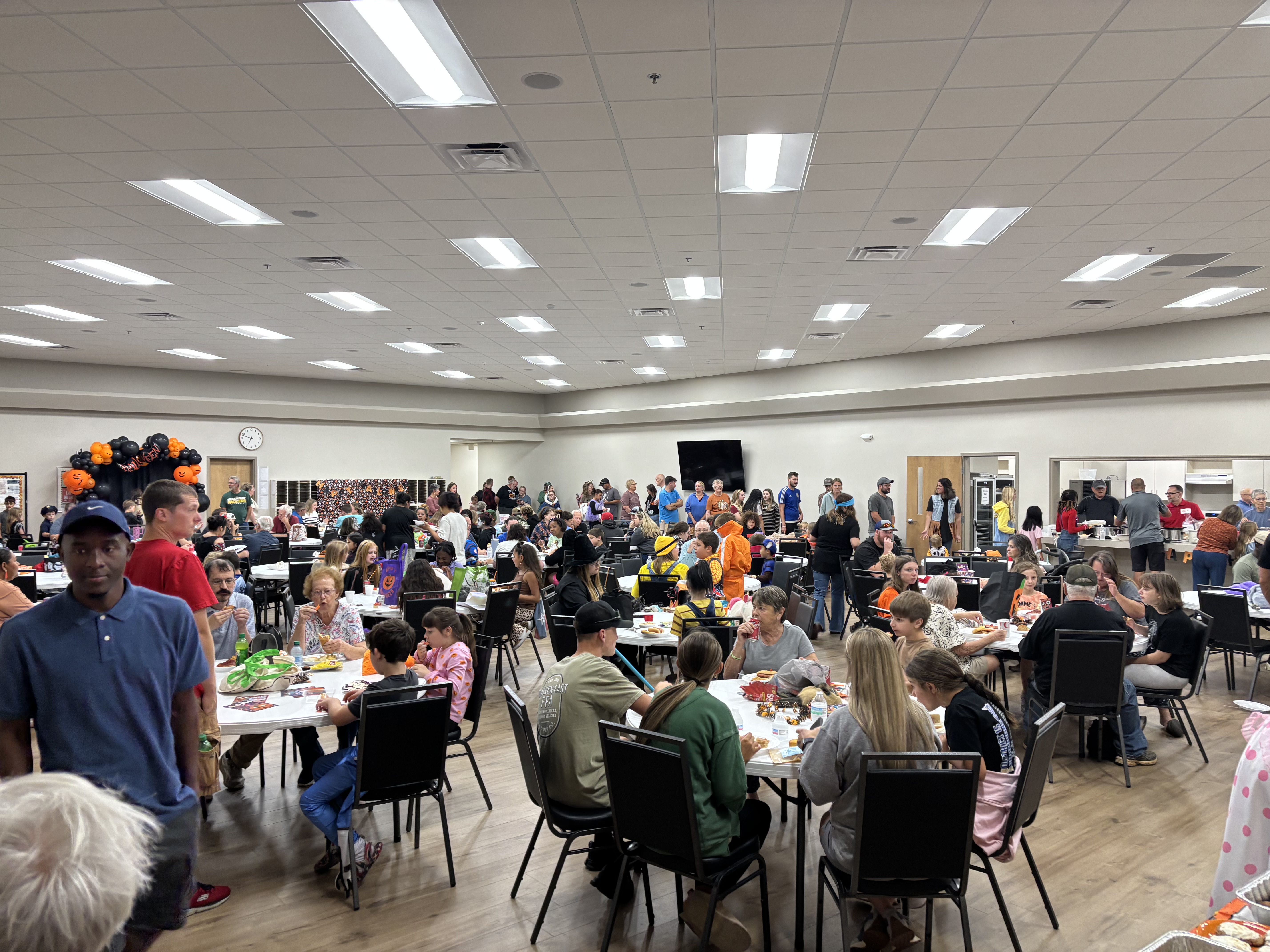
A couple of pictures (credit Russell Simpson) from Saturday night’s Trunk or Treat. God’s people at Cumberland Trace really shined!

No Ordinary Man, No Ordinary Story

Neal Pollard

The tribune (commander), in charge of the Roman regiment posted at Jerusalem, rescues Paul from the Jewish mob in Acts 21. He proves an interesting character, exposed to the local plots and intrigues and familiar with the temperamental behavior of the local Jews. He could have been a foreigner in the eyes of the Empire who earned the right of citizenship through military service, or perhaps he was a slave freed by his owner and given opportunity to buy his citizenship. His story must have been pretty interesting. We learn that his name is Lysias (23:26; 24:7,22). 

But the man he found even more interesting whose story is equally intriguing is the apostle Paul. He was surprised when he heard this controversial Jewish man speaking Greek (21:37), and he mistook him for an Egyptian revolutionary (21:38). If he understand Hebrew, Lysias would have also heard Paul say that he was highly educated (22:3) and a former persecutor of the way he now preached and promoted (22:3-5). He would have discovered that Paul had a supernatural encounter with Jesus on Damascus Road (22:6-9), instructed by Him to go to the city and wait until ultimately a man named Ananias came and told him what Jesus wanted him to do: (1) Immediately arise and be baptized to wash away his sins (22:16) and (2) Be Jesus’ witness to everyone, but especially to the Gentiles (22:15,17-21). The Jewish mob, who understood everything Paul was saying, threatened to attack Paul upon hearing he was offering salvation to Gentiles (22:22-23). So, Lysias had to isolate Paul from the crowd in the barracks (22:24). Seeing Paul as this huge enigma, Lysias decides to chain Paul, flog him, and beat information out of him (22:24-25). This is when Paul tells a centurion that what he was about to do was illegal. He was a Roman citizen (22:25-26). Then, Lysias finds out that Paul was a free-born citizen, meaning his parents were citizens before him. That obviously impresses and frightens the tribune, since he had acted illegally against Paul. What we read next (22:30ff) shows us that Lysias is extremely curious to get the root of this riot and know more of this fascinating man’s story.

But as fascinating as Lysias was and even more fascinating as Paul surely was, the truly extraordinary man with the extraordinary story was the man Paul was persecuted for declaring–the Son of Man! This “Jesus of Nazareth” (22:8), “Lord” (22:8,10), and “Righteous One” (22:14) had changed a man so accomplished and impressive as Paul, and Paul had been transforming lives and saving souls by preaching and teaching Him throughout the known world. The story of God in the flesh, living among His creation, dying for them, and being raised for their justification, who now was back in heaven, is the most extraordinary of all. Its implications are eternal! 

Perhaps you have lived a fascinating life and can wow people with your story. But, God has you here to share His story and to help transform the life and change the story of people destined to stand before Him some day. It’s a story too good to keep to ourselves! 

Seven Ways To Pursue Joy

Dale Pollard

We’ll keep this really simple. Let’s start with a few facts about joy and then dive into seven ways to find joy when we lack it. 

1. Joy is not a feeling, it’s a godly perspective

2. A Christian’s hardships aren’t pointless, they’re productive

Consider it pure joy, my brothers and sisters, whenever you face trials of many kinds, because you know that the testing of your faith produces perseverance.

 – James 1.2-3 

“Be joyful in hope, patient in affliction, faithful in prayer.”

 —Romans 12:12

Seven Ways To Pursue Joy 

  1. God’s direction brings joy (Ps. 94.19)
  1. The Resurrection brings joy (Matt. 28.8)
  1. Unity of mind and sharing the same love brings joy (Phil. 2.2)
  1. Loving the Lord’s people brings joy (Phil. 1.7)
  1. A mature faith brings joy (I Pt. 1.8)
  1. Fellowship brings joy (2 John 1.12
  1. God’s presence brings joy (Jude 24)

Keep Hurtin’

Gary Pollard

This is a break from Origen’s First Principles. I’m slow: it takes me a long time to wrap my head around something. Romans 7 and 8 are about our constant battle against our sinful nature. We have the side that wants to be holy and serve God, and we have the side that betrays our human weaknesses. It’s an awful existence in many ways. Even Paul said, “What a miserable person I am! Who will save me from this body that brings me death?”

Then we get to 8.17 where Paul talks about suffering. I always assumed this was a shift in topic because he gets into stuff that won’t happen until Jesus returns. But since he spent the previous several paragraphs talking about our constant, sometimes-demoralizing struggle against sin, I don’t think this is necessarily about physical suffering.

God’s Spirit helps our spirit — our mind, emotion, intent, any aspect of being that can’t be measured — in that fight. There are outside influences in our struggle against sin, of course, but Paul really focuses on the stuff that hurts: our own sinful weakness. We hate that we’re weak. We’re ashamed of our failures. We’re “waiting for God to finish making us his own children…we are waiting for our bodies to be made free.”

In the meantime, we suffer. Maybe not physically — though in some places on this earth that’s a reality — but certainly spiritually. We know our faults and failures better than anyone. Our spirits, burdened by the knowledge of our own weakness, groan to God with pain too deep for words. And he helps us!

“We are very weak, but God’s Spirit helps with our weakness. We don’t know how to pray like we should, but the spirit speaks to God for us, begging on our behalf with groaning too deep for words.”

Guilt is a powerful weapon in the enemy’s hands, and we all have too much of it. The struggle and the pain is normal — it’s guaranteed for anyone who wants to be like God. It’s never going to happen in this life! We can’t ever be good like God! But we can try, and we can at least ensure that sin isn’t the master we serve. If you feel that pain, odds are you’re on the right track.

Right after this section, full of empathy and hope and reassurance and warning, Paul says,

“Who can accuse the people God has chosen? No one! God is the one who makes them right.

Who can say that God’s people are guilty? No one! Christ Jesus died for us, but that is not all.

He was also raised from death. And now he is at God’s right side, speaking to him for us. Can anything separate us from Christ’s love? Can trouble or problems or persecution separate us from his love?”

The struggle and its pain is normal. It’s a sign that our hearts are set on something we won’t achieve until our bodies have been freed. God helps us, he understands, and we cannot let the enemy demoralize us into giving up. It’s harder to keep struggling against our sinful weakness, but it will be so worth it!

“But in all these troubles we have complete victory through God, who has shown his love for us. Yes, I am sure that nothing can separate us from God’s love—not death, life, angels, or ruling spirits. I am sure that nothing now, nothing in the future, no powers, nothing above us or nothing below us—nothing in the whole created world—will ever be able to separate us from the love God has shown us in Christ Jesus our Lord.”

Fan The Flame

Carl Pollard

A few months ago, we were at Walmart, and they had their charcoal grills on sale. I jumped on the opportunity and immediately put it to work when we got home. Salmon, burgers, more salmon and burgers – something about a charcoal grill just makes the meat taste so good. If you’ve ever used a charcoal grill, you’ll know that there’s a good bit of prep time involved. You pile up your charcoal, soak it in lighter fluid, light it, and wait a good 20 minutes. Once the flame is gone and the coals are gray, it’s time to cook.

One evening a few weeks ago, I decided to use the grill. It was pretty cold out, but when you get the craving, you don’t care how cold it is, you light up the grill. I did everything as I normally would and started cooking once the coals were gray. Except this time, they quit cooking after only a few minutes. Turns out, in cold weather, charcoal doesn’t last as long. So, what do you do? With half-cooked salmon, you don’t want to start the process all over and wait another 20 minutes. I, of course, did the wrong thing and just sprayed a bunch of lighter fluid and burned everything to a crisp.

Little did I know, that event is a perfect illustration for what Paul says in verse 6: “For this reason, I remind you to fan into flame the gift of God, which is in you through the laying on of my hands.” Timothy’s charcoal was going out, and what happens when your faith grows cold? You lose the impact you have on others, you lose the joy of salvation. Paul says, “I want you to fan the flame.” True faith, like a roaring fire, can be felt and seen. The words used for “fan the flame” mean to rekindle, revive, to begin again.

To keep the flame alive, we need to:

1. Stay strong in our walk with God. When our time spent with God is pushed to the back burner, that is when our faith grows cold. Fellowship with God is our connection to the source of the fire.

2. Stay strong in our walk with the family of God. When time spent in fellowship is neglected, we fail to help fan each other’s flame.

3. Stay strong in worship. Worship should be intimate and personal, a reflection of our love for God.

4. Stay strong in study. It is impossible to stay on fire for God and not spend time in the word of God. Like Jeremiah, God’s word is the very fire in our bones, and if you want to keep that fire burning, study the word.

When fear threatens to ruin your faith, rekindle the flame.

“Udderly” Dependent!

“When things go well, I almost get to the point where I get complacent and maybe a bit overconfident. When things don’t go so well, I remember how dependent I am upon God and others.” That’s true of more than milking a cow.

Neal Pollard

In only my second winter as a “dairy farmer” (a term used only in the loosest sense), I forgot some of the hard fought lessons of the first winter. Most of them center around how to keep a milk machine working when temperatures plunge below freezing. I will not begin to try and explain (as if I fully understood) how the vacuum pump and hoses work, but I do know that water and ice are enemies of suction and pumping. A freshened cow needs to be milked about every twelve hours, and the alternative to a machine is the old-fashioned way (by hand). That is not my first choice.

This past weekend, I had some trying moments doing what I could to figure out the problem(s) in the milking machine. Prayer, troubleshooting, help from my son Gary, and consulting Jeremy Waddell all were key factors in keeping my sanity and keeping me from selling Peaches! When things go well, I almost get to the point where I get complacent and maybe a bit overconfident. When things don’t go so well, I remember how dependent I am upon God and others. It keeps me from taking milking and the milk for granted.

If I am honest, this mirrors life in general. The past teaches me lessons which, if learned, prepares me for present and future trials. If I fail to internalize that education, I am sure to falter in similar circumstances. Have you ever forgotten a valuable lesson from the past, only to remember it when repeating a mistake, sin, or lapse in judgment? Peter illustrates this graphically with a dog and a pig in 2 Peter 2:20-22!

Sometimes, the lapses in my prayer life parallel times of prosperity, ease, and happiness. Complacency can easily set in when life is good. I may forget my need of God when I’m healthy, thriving, and enjoying His good and perfect gifts (cf. Jas. 1:17). I should not need crises and difficulties to drive me to my knees in His presence. We are taught by example (Acts 1:14) and exhortation (Rom. 12:12) to be devoted to prayer! That devotion suggests intense effort, even in difficult circumstances.

How easy it is to try and do life without asking for others’ help. We’ve seen people take advantage of others and be overly dependent, but we should guard against pride. It could be that we don’t want to appear weak or somehow less than. Paul needed Epaphroditus (Ph. 2:25). Jesus depended on the support of the women in Luke 8:1-3.

The last few times milking have been back to normal, uneventful in that blissful way it has so often come to be. As I type, I cannot imagine forgetting again! But I have forgotten before. May I not forget my need of God and His people, especially in matters that affect my spiritual life!

Let’s Stop Hiding!

(POEM)

Neal Pollard

We wall ourselves in and keep others out,
In fear that our struggles will be known,
We let Satan attack us and thrash us about
As we struggle, feeling all alone
“No one can know of my weakness or sin,
My worries, insecurities, or fears,
Or I’ll feel less than others, I’ll lose, they will win,
So I’ll languish in secret sorrows and tears.”
Why do we believe this biggest lie
That being known we won’t be loved and embraced ?
Others are perfect, together, why try
To share what will make us disgraced.
Who wants us to hide in humiliation
To isolate ourselves from each other?
Isn’t the devourer, who in his degradation
Makes us hide from our sister and brother?
Or our spouse, who we need to help us overcome
We must not run away from the flesh of our flesh!
Or hide or withhold, in any part or sum
From our helpmeet with whose heart we should mesh.
Alone we are vulnerable, fodder for Satan
We must come out of the shadows into light,
Lean on His family, there is no debating
Be transparent before Him, it’s what’s right!

Fellowship And Golf

Dale Wiley

For the past 3 or 4 years Harold Nicks, Jim Fuqua, Bob Raby & I have been playing golf most every week. During that time, there’s been no bad language, no nasty jokes and a minimal amount of gossiping. Occasionally, as my golfing partners advance in age, some health issues arise. Shoulder pain, knees going out or a pulled hammie. Then they have to go on the injured reserve list. No problem because we go straight to the bench and in comes Elder Jim Humphries to take his place. Still, there’s no bad language, no dirty jokes and a minimal amount of cheating. 

Last Friday Jim and I were playing at Paul Walker and around the 6th hole noticed a couple of older men behind us and asked if they cared to join us. They agreed and one of them hit his ball in the woods and then into the creek.  A few choice words followed. Then on the next hole he hit a window in a house and then more words followed, some of which Elder Jim had not heard since his Army days back in the ’60’s. 

Jim and I were talking later how nice it was to be able to play weekly with a group of brothers that chose not to behave that way, even when the ball doesn’t always go where we want it to go and that we appreciate the fellowship of our brothers in Christ.

Fellowship with our Brothers and Sisters in Christ encourages and uplifts one another to be more Christ like and has a great influence on those around us, whether it be the Crew on Grub Night, the Young at Heart Ladies, or Tuesday’s Ladies Bible Class at Kathy’s, to maintain our spiritual growth. 

Remember these words:

1 Corinthians 1:9: You were called into the fellowship of His Son, Jesus Christ our Lord.

1 John 1:3: That which we have seen and heard we proclaim also to you, so that you too may have fellowship with us. 

A Word Of Hope To The Lonely

Neal Pollard

She sits alone in an empty house, the TV her only companion,
Her children grown, her husband gone, she feels deserted, abandoned.
A visitor who brings a cheery smile and sits, to spend some time together.
Breaks up the clouds of isolation, and brings her sunny weather.

A family is seeking for community, they step inside our door,
Their faith unshaped, their search intense, they know there must be more. 
The experience is new, they feel uncertain, how will they be received?
Warmth and connection will influence if the gospel is believed.

A teenager who lives in a virtual world, unsure and insecure,
A room full of peers can’t undo their feeling lonely and unsure.
Purpose and identity are still being shaped and formed,
Fear and insecurity can be expelled if those peers are kind and warm.

It is not good for man to be alone, God said from the beginning,
Before He made us He had a thought both wise and also winning.
“The church,” He said, “will be a place where my wisdom will be known,”
He paid for it with His dear Son, made a people of His own.

Within that church a fellowship, where lives are shared completely,
Where hearts are touched and lives are filled so fully and so sweetly.
The world’s a cold and lonely place, and life brings pain and sorrow,
We need each other yesterday, today, and still tomorrow.

1 Corinthians: That There Be No Divisions Among You (VIII)

Unity Through Subtraction (5:1-13)

Neal Pollard

As Paul works his way through some of the challenges and issues the Corinth congregation was dealing with, he turns his attention to an awful situation. As he says, “It is actually reported that there is immorality among you, and immorality of such a kind as does not exist even among the Gentiles, that someone has his father’s wife” (1). This was being openly practiced at the congregation, and Paul compares how they were reacting to how they should react. Even if the congregation unanimously embraced this situation, the end result would not be unity in truth. As Moses said in his day, “You shall not follow a multitude in doing evil” (Ex. 23:2).

Paul rallies them to unite in doing what pleased God. This began with amending their hearts, mourning rather than being arrogant (2). It should be followed by removing this man from their midst (2). Based on the report (presumably from Chloe’s household), Paul already knew what needed to be done (3). While the term “church discipline” is not used in the text, that is the action. Paul uses such words and phrases as “deliver to Satan” (5),  “clean out” (purge, 7), “do not associate” (9,12),  and “remove” (13). Why was such a drastic action necessary?

“THAT HIS SPIRIT MAY BE SAVED IN THE DAY OF THE LORD JESUS” (5)

By withdrawing fellowship from him, the goal was to induce his sorrow and cause his repentance. This relationship was unrighteous, and it would cost him his soul if he did not end it. How uncaring is it to validate an unscriptural relationship, knowing what Scripture says about it? Paul is about to write that fornicators and adulterers will not inherit the kingdom of God (6:9). 

“A LITTLE LEAVEN LEAVENS THE WHOLE LUMP OF DOUGH” (6-8)

Paul calls this the leaven of “malice and wickedness” (8). Allowing sin unchecked and unaddressed to continue in a congregation does not make the sin all right. It allows the influence of sin to spread throughout the congregation. Remembering that the church is the body of Christ (see chapter 12), how can the body act in rebellion to its head and still please God? For the purity of Christ’s body, this action must be taken.

THERE IS GUILT BY ASSOCIATION (9-11)

Paul expands this beyond just the situation of the man with his father’s wife. He says not to associate with the immoral, covetous, idolatrous, reviling, drunkard, or swindling brother in Christ (11). Even eating a fellowship meal with them sent them the message that they were okay living in rebellion against God. Remember, this is not about vengeance or angry resentment. This was about honoring God’s will in a matter that God’s word clearly addresses. 

IT IS AN EXERCISE OF DIVINE JUDGMENT (12-13)

This was not a matter for human courts, which in most civilizations do not legislate morality. This is an “internal matter,” a child of God “judged” by the people of God according to the will of God. God established the pattern. 

When I preached in Virginia and Colorado, the elders in both churches practiced church discipline. It was done in such a loving way, with the elders first going to the individuals in various sinful situations and pleading with them to repent. When they refused, the elders brought the matter before the congregation urging any and all with any influence and relationship to plead with them. When that did not work, they announced that it was necessary to withdraw fellowship from them. There was no angry or hateful rhetoric, no gleeful attitude that such an action would be taken. To the contrary, it was as sad and solemn a moment as I’ve experienced in the family of God. I am happy to say that I have witnessed on several occasions the ultimate repentance and return of some of these wayward Christians. That was the goal in every situation. It would seem to me that one of the most neglected, disobeyed commands among God’s people is the practice of church discipline. It is unpleasant, frightening, and unpopular, but it is what God commands. God knows what is best and what is the best way to handle every situation among us. We should always trust Him and submit to His pattern for handling every difficulty and dilemma among us. The end result is biblical unity. 

Genesis: These Are The Generations (IX)

“But God Remembered Noah” (9:1-22)

Neal Pollard

On the 17th day of the second month in his 600th year, they entered the ark (7:11). This is followed by 40 days of rain and flooding. The water prevailed on earth for 150 days. The ark rested on the 17th day of the seventh month (8:4). From that day until the cover is removed on the first day of the first month of Noah’s 601st day (8:13), there were 163 days in which the water recedes. During that period, the mountains are seen on the first day of the 10th month of his 600th year (8:5) and the raven is sent on the 10th day of the 11th month (8:6). From the day the cover is removed until they exit the ark, there is 57 days spent waiting. The 27th day of the second month of his 601st year, they do finally leave (8:14). The total time of the flood, then, is 313 days and their total time in the ark is 370 days. 

This past fall, we went on our first cruise as part of a Bibleland Passages tour. We spent 12 nights at sea in very comfortable accommodations, all the food you could eat, and even amenities like fitness centers and theaters. When we moved to Bowling Green, we stayed in the Hammers’ RV for a month in the KOA. Though the quarters were cramped, it was very comfortable and had indoor plumbing, running water, and air conditioning. Can you imagine spending just over a year in a floating barge without electricity, running water, climate control (apart from nature), and so many conveniences we simply take for granted today?

Noah and his family waited on the Lord as He, the great and original scientist (the very maker of the laws of science), not only destroyed the earth but provided a feasible timetable to make it habitable again (2) for the eight souls who would leave the ark up on Mt. Ararat (4). It was a gradual, but steady process (5) until the ground was dried (13-14). 

Moses begins the chapter with a summary, including the idea that “God remembered Noah” (1). On His timetable, He affects the conditions necessary for Noah and the rest of his family to repopulate the earth. It is equally beautiful that Noah remembers God, sacrificing “of every clean animal and of every clean bird” (20). The Lord accepts Noah’s worship and vows never to duplicate this act, despite man’s evil inclinations (21). Instead, God would perpetuate “seedtime and harvest, and cold and heat, and summer and winter, and night and day” (22). No wonder Moses would encapsulate this great patriarch’s faithful life as a man who walked with God (6:9). And what a humbling truth that God walked with Noah, all the way through these cataclysmic events and brought them safely through the water (1 Pet. 3:20).

While you will not ever face any global floods, you will be deluged with difficulties in this short life. Do not think that God could ever forget you, even as you are tossed about in the sea of struggle! God will remember you, rescue you, and reward you as you keep walking with Him! The waters of weeping will dry up and you will again stand on solid ground–whether in this life or in the eternity which follows! Trust that! 

Bible Land Tours (Mediterranean)(IX)

Neal Pollard

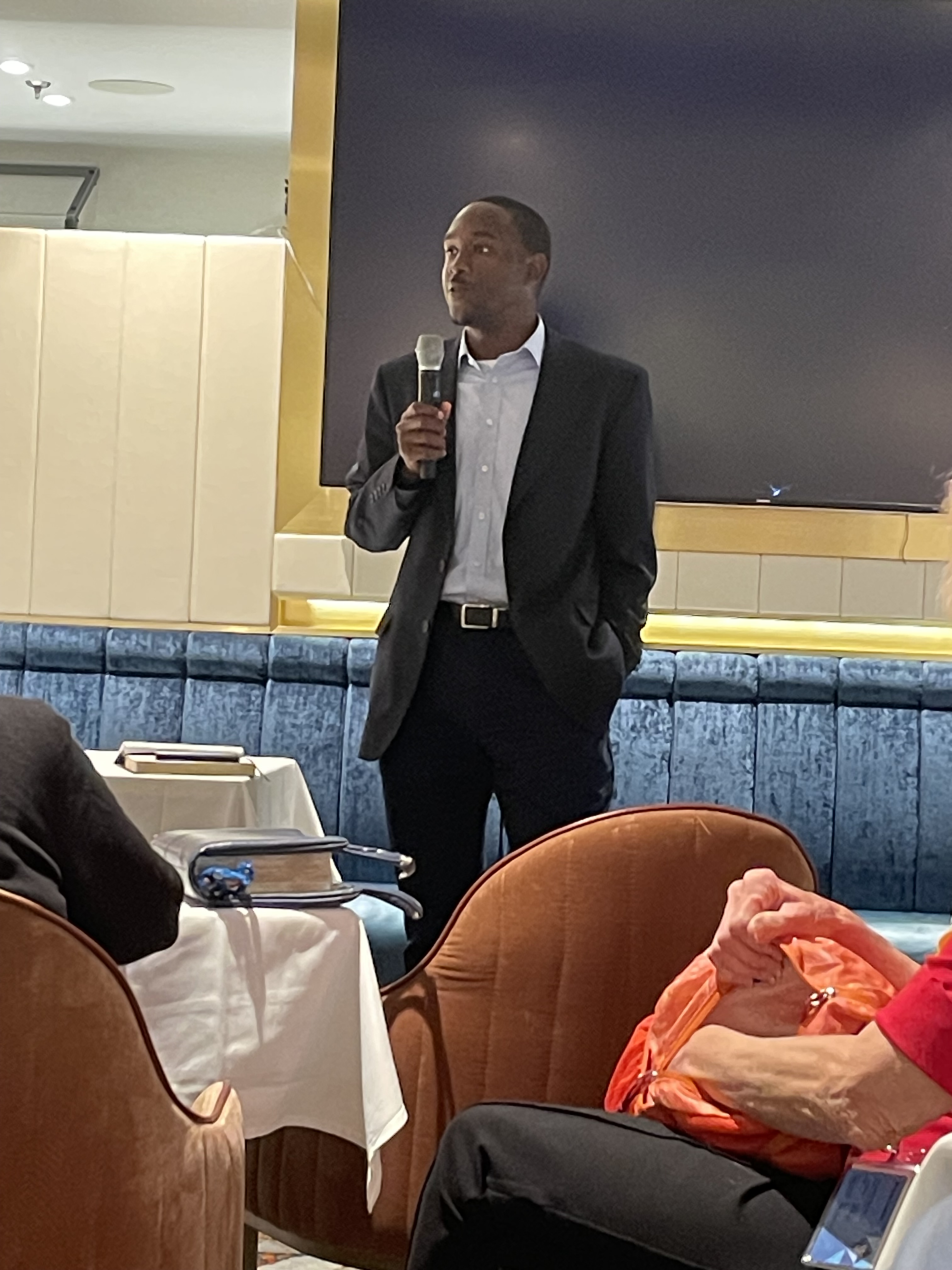
Today was a special day, not just because it was our last day in Turkey or an exciting holiday for the Turkish people that included being buzzed by fighter jets. It was special because of both God’s people and the privilege of worshipping God in such a meaningful way. We met for worship this morning in a large conference room. We had about 10-12 guests from the ship in addition to our Bible Passages group of 56. Among the several who led us in worship were Lehman’s Clint Raymer, Andrew Gott, and Hiram Kemp. Hiram’s sermon was an excellent look at 1 Peter 3:10-12, written to churches all around the very area that is the country of Turkey today (cf. 1 Pet. 1:1).

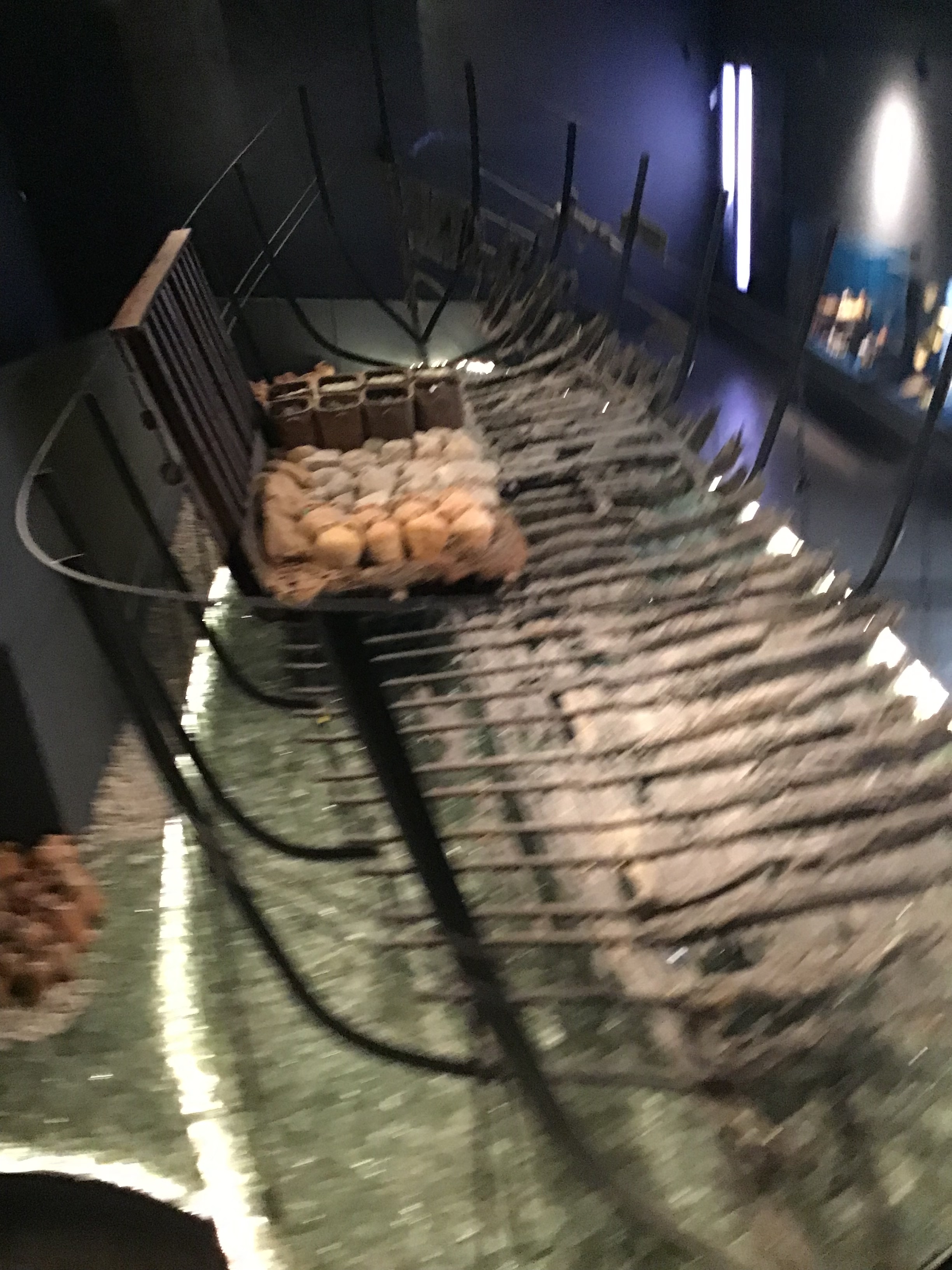
Afterward, many of our Lehman members spent several hours walking around Bodrum, seeing an archaeological museum devoted to underwater wreckage recovery. The finds went back to the 14th Century B.C. and included a ship from almost 1500 years ago that was retrieved and placed on display. It was yet another opportunity to experience the history of the areas we’re traveling in. We also were able to spend some time looking in the markets.

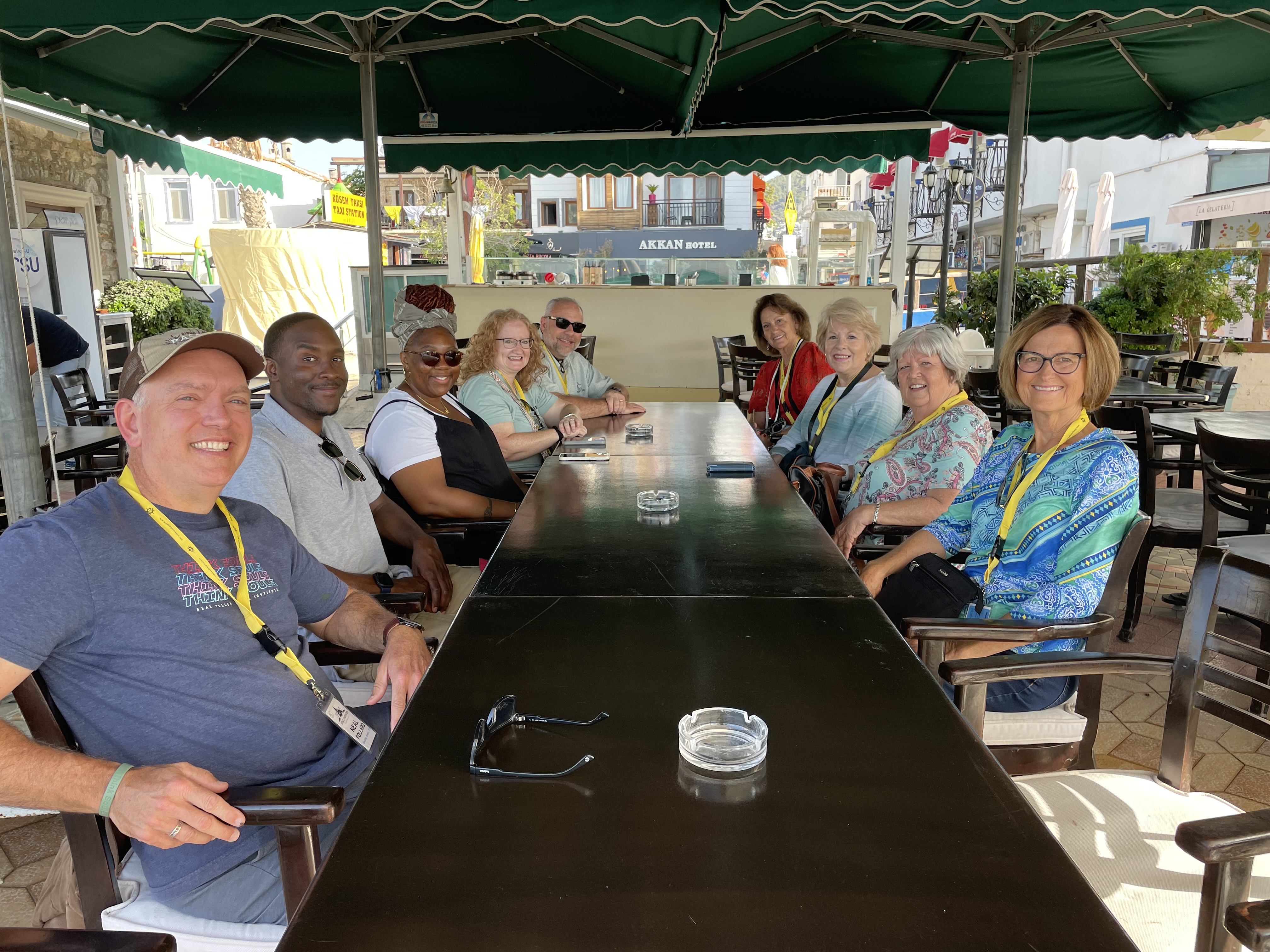
It was wonderful to fellowship with God’s people from all around the country and wonderful to fellowship with the brothers and sisters we spend so much time with. To do so in what was Asia Minor is a visual illustration of how we must continue to build God’s family for the generations to come. Tomorrow is another day in which we will be where the Bible records Paul’s steps. It will be exciting to continue that odyssey!

Bible Land Tours (Mediterranean)(IV)

Neal Pollard

Today was the first day we did not leave the ship, but we were able to get a preview of Ephesus from John Moore as we considered one of the most important cities of the New Testament. We This day was a day about fellowship. One of the great things about a trip like this is that you get to spend quality time with brothers and sisters you go to church with or that you just met. Each night, like right now, we have the opportunity to spend time playing cards and visiting. Earlier today, there were opportunities to do bumper cars, go to the gym, or other activities with brothers and sisters in Christ. That is a serious benefit of a trip like this.

When we study the early church, we see that from the very beginning they made time to be together. The church was established in Acts 2:41, then in the very next verse we read, “They were continually devoting themselves to the apostles’ teaching and to fellowship, to the breaking of bread and to prayer” (42). They were close because they shared a common bond, had the same worldview and God-view, and they faced the same challenges of growing their faith in adverse circumstances. They shared so much together (1 Cor. 10:16). Fellowship was precious (1 Jn. 1:3,7).

Tomorrow, we embark again on a tour of a biblical site. We will have that memory in common. But, even when we return to the ship, we will continue to share! That’s just the way God set up His church!

Bible Land Tour (Mediterranean)(II)

Neal Pollard

Today, we completed our land tour of Rome. I mentioned that there are 56 of us, ranging in age from teenagers to pushing 80. So, we move different speeds and are in different degrees of health. We are often having to go far and somewhat fast, requiring patience on the part of everyone. It has been pretty hot and sunny all weekend, too! Would you believe that everyone has kept such a great attitude and been so pleasant? Of course! We have been with God’s family, who you would expect to act more like Him than anyone else.

This morning, we all piled into our tour bus (packing about 90 bags into the bottom of it) and made our way to meet with the “Chiesa di Cristo” in Rome. This church of about 30, which has two elders, welcomed us with open arms. Some of their brethren led us in worship, some of our group led us in worship, and we sang, prayed, heard the word proclaimed, contributed, and observed the Lord’s Supper together. We sang in Italian, in English, and even in Xhosa (a South African language). We greeted and talked as best as we could with the language barrier and got to know some of each other’s stories. It was emotional.

I thought about what happened to Paul right before he was arrested and wound his way to Rome to appeal to Caesar. Nearing the end of his third missionary journey, he met in Miletus with the elders of the church at Ephesus (a city we’ll visit later this week)(Acts 20:17-38). Paul had worked with them for three years. At their parting, they wept, hugged, and said an emotional goodbye. The next place we know that he stopped was at Tyre (past Cyprus, which we plan to visit next week) in Acts 21:3-6. Paul and his fellow-missionaries were with these Christians just a few days. When they said goodbye, it was still an emotional, heartfelt goodbye.

That was the general feeling as we pulled away from brethren we only knew a couple of hours. Separated by language, culture, and background, we felt the bond of Christ strongly! It was hard to leave. It was wonderful to be there, to be with God’s family. How eternally wise our God was in building the church like He did. We will make some lifelong friendships as we tour so many places where Paul once walked and preached. We will have difficulty saying goodbye to some we’ve known and others we’ve met. But, that’s always the way it is when you’ve been with God’s family! They are the best!

Seeing The Future With Our Family

Carl (and Rich) Pollard

 On February 3, 2018, Robert Meilhammer, 51, of Crapo, Maryland, was struck in the head by a dead Canada goose. The bird that hit him was 14 pounds and had a nearly 6 foot wingspan. It plunged from the sky after a fellow waterfowl hunter fired a blind shot on a flock overhead. Meilhammer was in the midst of a hunting party with three friends in Easton, Maryland. The goose fell about 90 feet, knocking the hunter out instantly and causing head and facial injuries. If you could see what was coming you would prepare. Odds are, if Robert Meilhammer would’ve known about the goose coming he could’ve taken a step forward to keep from getting knocked out. 

If we knew what was coming, we would prepare. Thankfully, we know! God in His love and grace has revealed what is coming and what needs to be done in order to prepare. 

That’s why as a church we come together to remind each other of the day that is coming in the future. We come together to encourage our church family to fight the good fight, keep the faith, and to stay the course. 

Mark 16:16, “Whoever believes and is baptized will be saved, but whoever does not believe will be condemned. The judgement day is coming and God is clear on what we should be doing. Get prepared and stay prepared through constant fellowship with likeminded brothers and sisters. 

2 Peter 2:9, “then the Lord knows how to rescue the godly from trials, and to keep the unrighteous under punishment until the day of judgment.” Does going to church make us more godly or unrighteous? Which one do we want to be on that day of judgment? 

In 2 Timothy 4:7-8 Paul says, “I have fought the good fight, I have finished the race, I have kept the faith. Henceforth there is laid up for me the crown of righteousness, which the Lord, the righteous judge, will award to me on that day, and not only to me but also to all who have loved his appearing.”

We go to church so we can say what Paul once said. God has revealed to us the future event that is going to take place. Have we fought the good fight? Have we kept the faith? Fighting and faith are strengthened with our church family. 

How The Church Can Use Technology To Reach A Changing World

Friday’s Column: Brent’s Bent

You’ve probably seen the results of the recent WSJ-NORC poll showing how much Americans’ views on patriotism, religion, and community involvement have changed in the past 25 years. It is disheartening. On a lark, I decided to query ChatGPT about this issue, asking:

How should the Christian community respond to generate interest in religion while remaining ambivalent about ideas of patriotism?

Here is ChatGPT’s response:

Firstly, the Christian community could focus on promoting the core values and teachings of their faith that resonate with people on a personal level, such as compassion, forgiveness, and unconditional love. This can be done through various means, such as community outreach programs, social media campaigns, and interfaith dialogues.

Additionally, the Christian community could leverage modern technologies to make their religious teachings more accessible to younger generations who are more inclined towards digital media. This could involve creating engaging and informative content, such as podcasts, videos, and blog posts, that can be shared on various online platforms.

It is also essential for the Christian community to remain open-minded and inclusive towards people of all backgrounds and beliefs. By fostering an environment of respect and understanding, the Christian community can demonstrate that religion is not about exclusion or superiority, but rather about embracing diversity and promoting universal values.

Lastly, the Christian community could work towards building meaningful connections with other faith-based communities and organizations to promote interfaith collaboration and mutual respect. By coming together with other groups and working towards common goals, the Christian community can demonstrate that religion is a unifying force that can transcend political ideologies and nationalistic sentiments.

You’ve probably noticed ChatGPT’s and all AI’s known leftist bias. But, again, this is something that the media has covered. These new technological marvels are known as LLMs (Learning Language Models). In other words, reading what humans have written makes them more intelligent. And many of these AIs got their samples from the internet. 

The internet is not exactly a haven for right-wing or Christian ideas. Values-oriented internet monitors have estimated that at least 80% of the non-dark web was pornography. Others argue that it is more likely to be around 30% pornography. Whatever the exact figures are, it should be evident that the ratio of non-Christian to Christian content on the internet is higher. Thus, we don’t expect AI to present God’s plan of salvation. That is why preachers exist (Romans 10.13–17).

That said, the insight of ChatGPT is fantastic, with a few caveats. Unfortunately, open-mindedness and inclusivity are typically buzzwords for turning a blind eye to sin, which we cannot do (Isaiah 5.20). Likewise, societal acceptance of abortion and sexual immorality doesn’t mean such things are acceptable to God (Acts 5.29). We also cannot fellowship with those who do not teach the truth, even if they call themselves “Christians” or are part of a monotheistic, Abrahamic faith (2 Corinthians 6.13–15; 1 Corinthians 10.21). Otherwise, this advice is surprisingly sound. 

As the gospel changes lives like nothing else can, why shouldn’t we preach God’s word to make it as accessible to others as possible? We should help people see how to apply the good news to their lives (Acts 8.30ff). To that end, we should go back to more expository-style preaching. 

There are so many broken homes that providing people with a sense of community and family is inviting. Who would not want to experience compassion, forgiveness, and unconditional love? But this requires getting out of our buildings and going where the people are. 

And, while we should not change the “old Jerusalem Gospel,” there is no reason why we cannot use modern methods to reach out to a lost and dying world (Matthew 10.16, emphasis mine). Unfortunately, more conservative mindsets are slow to adopt the latest technology. By the time more conservative minds feel comfortable venturing into new areas, those with whom they disagree ideologically will have dominated them. 

That said, the number of podcasts and videos our brothers and sisters are beginning to make available inspires me, and I hope this pattern continues. Political pundits, gamers, and true crime fans bury our offerings with their content. So you have to know what you are looking for to find it. It requires advertising and sharing our content with others. 

Even though we don’t want to waste our Lord’s money by following trends, it is prudent to keep up with new technology and figure out how to use it to spread God’s message worldwide. It’s important to remember that technology is constantly evolving, and we must adapt to it and use it in ways that reflect our values. By doing so, we can reach a larger audience and share God’s message with those who might not have heard it otherwise. 

How would you have answered this question I put to ChatGPT? 

Brent Pollard

Thinking Through The Alphabet During The Lord’s Supper

Monday’s Column: Neal At The Cross

Neal Pollard

Every Sunday (Acts 20:7), we take time during our worship to “observe the Lord’s Supper” (1 Cor. 11:23-29). What that looks like and what we do during this special time has changed over time and in different cultures. What appears to have been more interactive in the time of the early church is today more individual and introspective. Paul instructed churches like the one in Corinth to correct abuses (1 Cor. 11:17-22; 30-34). God seems concerned that we focus on His Son’s sacrifice for our sins. Examining self seems to indicate looking carefully into the heart (1 Cor. 11:28). 

What we do and how we do it is very personal and subjective (Read More Here). Surely, our mind will turn in both morbid and merry directions during that time. Considering the cross, we will alternate between conviction and celebration. Years ago, Wendell Winkler suggested something practical that can help us keep focus on this “feast” as we worship. He suggested thinking through the alphabet, then gave us a few examples. Every Sunday for decades, I have been building those words in my mind. Each word carries with it related thoughts. They carry my mind back to that fateful day, make me think of my current way of life, and cause me to look ahead to the end. 

Obviously, I do not get very far in my list. I do not always start with “A.” I vary my approach, but this has proven very helpful to my keeping my mind on the Lord during the Lord’s Supper. Those precious moments each week are not to be frivolously and mindlessly spent, but what you do is individual to yourself. But, perhaps this will prove helpful to you. Here is an incomplete list of words I think about during the Lord’s Supper:

A–Abuse, Alone, Anxiety, Atonement, Adversary, Abandoned, Anger, Anointed, Able
B–Battered, Blood, Beaten, Blessings, Brave, Burden, Bruised, Brave, Body
C–Christ, Cruelty, Cowards, Callous, Cursing, Criminals, Caring, Crowd
D–Denial, Disciples, Dread, Death, Devil, Darkness, Doubt
E–Eternity, Evil, Everlasting Life, Everyone, Elect
F–Faults, Faith, Faithful, Factual, Father, Foreknowledge, Flogged, Future
G–Grace, Guilt, Gladness, Gift, Gethsemane, Gloom, Grave
H–Heaven, Hell, Hill, Hope, Heart, Hanging, Hurting, Hours 
I–Iniquity, Injustice, Isaiah 53, Inscription, Irritation, Important, Innocent, Insurrection
J–Joy, Jesus (Man), Justice, Jews, Jealousy, John, Judas
K–Kindness, Knowledge, Kiss, Key, Killed, King
L–Love, Load, Life, Lamb, Lashes, Lifted Up 
M–Master, Mercy, Murder, Myrrh, Mingled, Mary, Mother, Memorial
N–Newness, Nails, Naked, Near (John 19:20)
O–Only Son, Obedient, Open, Offering, Objective, Others
P–Pilate, Peter, Power, Pure, Paschal, Pharisees, Planned
Q–Questions, Quake, Qualms, Quotations, Quest (Luk3 19:10)
R–Rebellion, Railing, Righteous, Romans, Resurrection
S–Spiritual, Shame, Scapegoat And Slain, Seven Sayings, Speechless, Slaughter, Savior
T–Thirsty, Torture, Thankful, Tired, Temple, Trembling, Thieves
U–Unavoidable, Ugly, Unbelievers, Utterance, Ultimate, Upright
V–Vicarious, Victory, Vicious, Vail, Vilified, Vindication, Vulnerable
W–Wood, Woe, Weary, Wail, Wine, Women, Worship
X–Excruciating, Extreme, Expiate, Examine, Execution
Y–Young, Yearning, Yelling, Yield
Z–Zeal, Zenith, Zealots 

An Inspired Appeal To Assemble

Neal Pollard

I’m writing this during one of the best gospel meetings I’ve ever attended. Robert Hatfield is doing an incredible job! He has a way of telling even challenging truths with kindness while reaching the heart and the mind. He has been prepared and has presented each sermon masterfully. I’m also grateful our elders had the wisdom to invite him to come.

Have you thought about why special events like gospel meetings, like our “regular services,” are so beneficial? Why should they draw our interest and be important to us? The writer of Hebrews gives us at least three reasons in an exhortation in Hebrews 10:24. He writes, “Let us consider how to stimulate one another to love and good deeds…” The context of this passage is assembling together. He contrasts “neglecting to meet together” with “encouraging one another” in verse 25, but the why is in verse 24.

COOPERATION–“Let Us…One Another”

You will find the exhortation “let us” three consecutive times in Hebrews 10, in verses 22-24. The first is about our relationship with God (22), the second is about our relationship with the world (23), and the third is about our relationship with each other (24). The writer identifies it as “one another.” It requires each of us to do our part, to decide to act. The more who embrace this encouragement, the more effective we will be at obeying this command. “Us” can be a small number of people or a large number of people, but truly “the more, the merrier.” 

CONSIDERATION–“Consider”

This literally means “think carefully about.” It pictures sitting down and being intentional. Perhaps visualize specific faces of brothers and sisters, those who are friends, new Christians, visitors, newcomers, family members, and the like. Visualize that great High Priest who is also there (19-21). We will hop in our cars after a long day (or week) of work and school and rally together when we have taken the time to reflect on who we are going to meet with. 

CAUSATION–“Stimulate…To Love And Good Deeds”

It never fails! When you think about how the reason for assembling is to praise and glorify our Lord and Savior, there is already ample motivation. But then there is what our mutual presence and participation does for one another. It causes us to think and feel and to do right. We constantly need that prompting and urging. The world is all too ready to be unloving and to either do wrong or neglect right actions. Every opportunity to assemble holds stimulating possibilities.

There have been non-Christian visitors at each service of our gospel meeting. That’s exciting! But just as exciting, you and I get to be together in a time of worship and study. We’ll come with buckets emptied by the day and week, then leave with them filled to overflowing. God knew that’s how life is! It’s why he urges us, “Let us consider how to stimulate one another to love and good deeds.” He gives us assembling together as a powerful outlet. “Let us” take advantage!  

“Partnership” (1 John: Part One)

Wednesday’s Article: Third’s Words

Gary Pollard

I’ll be repeating the book of I John in present-day terminology. It’s not a true translation of the book, as I am not qualified to do so. It will be based on an exegetical study of the book and will lean heavily on the SBL and UBS Greek New Testaments, as well as comparisons with other translations (ESV, NASB, NIV, ERV, NLT). My goal is to reflect the text accurately, and to highlight the intent of the author using concepts and vocabulary in common use today. 

This is not an “essentially literal” translation, and should be read as something of a commentary. 

Partnership

It’s existed since the beginning. We’ve heard it ourselves and we’ve seen it with our own eyes. We’ve studied it and touched it with our own hands. This is the word of life, and this life was shown to us. Everything we’ve heard and witnessed and told you about is this eternal life. He came from the father and was revealed to us. We’ve told you everything we’ve seen and heard so you can partner with us. We have this partnership with the father, as well as with his son Jesus Christ. We’re writing this to you to make our joy complete.

The message that we’ve been hearing from him is the same one we’re giving you: God is made of light, and no darkness exists in him whatsoever. If we claim to be partners with him while our lives are defined by walking in darkness, we’re liars and can’t even practice the truth. But if our lives are defined by walking in light, we have partnership with each other. On top of that, the blood of God’s son Jesus gets rid of any and all sins we have!

If someone says they don’t have sin, they’re lying – no truth exists in them. If we admit that we have sin in our lives, he is consistent and morally pure, so he’ll forgive us and get rid of our moral impurity. If someone says they’ve never even sinned, they make God a liar. His word will have nothing to do with them.