NO SMILE RULE!


Neal Pollard

“Stop smiling!”  DMV photographers in Virginia, Arkansas, Nevada, and Indiana are among the states requiring grin-free pictures on residents’ drivers licenses.  Apparently, face-recognition software is thrown off by curled up kissers.  The objective is to curtail fraudulent drivers licenses.  So, by rule, there will be no smiling when the photographer says “cheese.”

Like you, I know a great many people who need no such rule–whether at a DMV or any one of a million other locations.  They are perpetually miserable, and their faces show it.  Incredibly, too many of those I know like this claim to be Christians.  They sport their sour dispositions and spread thunder clouds and downpours wherever they go.  To borrow Paul’s words on more than one occasion, “My brethren, these things ought not so to be.”

“Happiness” is synonymous with “Christianity.”  The Christian’s life is far from  problem-, stress-, or trouble-free, but the greatest problem (sin) is solved, the greatest stress (earthly concerns) is benign, and the greatest trouble (death) is surmountable.  People hurt us, betray us, offend us, and undermine us, but we are heaven bound!    We can be happy because “if God is for us, who can be against us?” (Rom. 8:31).  Isn’t it hard to obey commands like “be thankful” (Col. 3:15), “rejoice in the Lord always” (Phil. 4:4), “rejoice and be exceedingly glad” (Matt. 5:12; Luke’s account says, “Rejoice in that day and leap for joy”–6:23), or similar injunctions with a sour face and a permanent frown?

Matthew Hite was eight years old when he took his first missionary trip to Tanzania.  While there, he made up a little game he called “Sweet And Sour.”  He would smile at all the pedestrians walking down the road.  If they smiled, he counted it as a “sweet.”  If they scowled or simply failed to smile, he counted it as a “sour.”  Almost everyone of the impoverished people of that nation were “sweets.”  Are you a “sweet” or a “sour”?  If you are a Christian, remember that God has not imposed a “no smile rule” on you.  If anything, He’s done the opposite!

4605621230_89213e53b8_z

The REAL Terry Symansky Can’t Stand Up

Neal Pollard

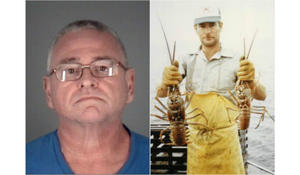
There is a famous line from the longstanding game show, To Tell The Truth, that is so apropos here. On the show three people would all claim to be someone and make their pitch to “prove” it, then at the end the host would ask, “Will the real __________ please stand up?” Recently, a real-life version of this game surfaced in Pasco County, Florida, regarding a seemingly harmless man with a normal life in Zephyr Hills. He was a husband, father, landlord, pilot, and upstanding citizen, and he carried off the ruse for over 20 years! But the real Terry Symansky drowned in 1991.

Richard Hoagland, who had once boarded with Terry’s dad in Palm Beach, Florida, learned of Terry’s death, stole the death certificate to get his birth certificate from Ohio, which he used to obtain an Alabama’s driver’s license in order to obtain a Florida’s driver’s license! He also married Mary Hossler Hickman in 1995, with whom he has a teenage son. Meanwhile, back in Indiana, Hoagland has a wife and four children whom he abandoned with a story that the FBI was after him for embezzling millions of dollars (The Washington Post, “He Left A Family And Started A New One Using A Dead Man’s Identity, Police Say,” Peter Holley, 7/24/16). Think of the carnage for at least three families: the real Symanskys, the fake, Florida Symanskys, and the Indiana Hoaglands. Untangling this mess will not be easy, all because a man decided to try and be someone he obviously wasn’t. A professor who studies identity theft summed it up rightly, saying, “It will all catch up with you” (Holley).

Sure, this is outrageous and despicable. But, have we stopped to consider that something far worse than this happens, spiritually, more times than can be counted? Whenever a Christian behaves one way among the saints but another way away from that fellowship and environment, a similar phenomenon unfolds. Some would be blown away to learn that their co-worker, fellow team parent, neighbor, classmate, and the like, is actually a Christian. Were they to see them participating in worship, they would be baffled, using God’s name in a reverent, respectful way. To know that they, perhaps, were a church leader would be beyond the pale. In this way, it can be quite easy to assume an identity. All it requires is keeping “Group A” (the church) separated, as much as possible, from “Group B” (worldly associations). But, persisting in such a life will, sooner or later, catch up with the perpetrator (cf. 1 Tim. 5:24).

God sent Jeremiah to stand at the “front door” of the “church building” (so to speak) and tell the people entering for worship, “‘Hear the word of the Lord, all you of Judah, who enter by these gates to worship the Lord!’” Thus says the Lord of hosts, the God of Israel, “Amend your ways and your deeds, and I will let you dwell in this place” (7:2-3). He specifies, “Will you steal, murder, and commit adultery and swear falsely, and offer sacrifices to Baal and walk after other gods that you have not known, then come and stand before Me in this house, which is called by My name, and say, ‘We are delivered!’—that you may do all these abominations? Has this house, which is called by My name, become a den of robbers in your sight? Behold, I, even I, have seen it,’ declares the Lord” (7:9-11).  They thought a day of worship substituted for six days of ungodly living, but the last word is most chilling. God says, “I, even I, have seen it.” Whoever else we may fool with a double-life, we cannot fool God.

Integrity requires honesty and strong, moral character. There must be genuineness, wherever we are and whoever we are with. May God help us to be the genuine article, all the time.

richard-hoagland-terry-symansky
Hoagland (L) and Symansky (R)

Characteristics of Hope

Neal Pollard

An epistle centering around the superiority of Christi as our all-sufficient One would certainly be expected to contain a message of hope. While some had apparently given up Jesus as their hope (6:4-6), the writer of Hebrews had a higher estimation of those to whom he writes. for one thing, they had a legacy of good works and brotherly love and benevolence (6:10). His desire was that they would continue to stay strong. In expressing this, the writer suggests hope as an integral tool to keep them hanging onto their faith in Christ. In these final ten verses of Hebrews six, he mentions three qualities of hope that would help them–and will help us–hang onto our hope in Christ no matter what.

This hope is durable (11). Look at the language he uses. This hope was tied to an assurance that would endure “until the end.” It was a hope that would lead them to “inherit the promises” (12), just as Abraham’s hope in God led him to his inheritance (13-17). God desires to show us, as heirs of the promise through Christ, His unchanging purpose (17), so He guarantees that promise through an oath build upon the foundation of Himself. Hope which is guaranteed by the very nature and character of God is hope that will outlast anything! Nations rise and fall. Presidents serve only one or two terms. Supreme court justices, at most, can serve only a lifetime. Our hope transcends time.

This hope is tangible (18). These Christians needed to count on a refuge in difficult times (see 12:4), and we desire the same thing in our lives! Knowing that God is so trustworthy, we are encouraged to “take hold of hope” that is found only in Christ. To say that we can take hold of hope and that it is set before us means that it has substance. In a world where nothing seems certain, evidence from scripture, nature, order and design of the universe, and so much more allows us, by faith, to grab this hope. He had already told them to hold onto that hope in Christ earlier in the letter (3:6) and to encourage this response he points them to scripture (cf. 3:7-11; Psa. 95:7-11). Scripture helps us see the solid hope we have in Jesus.

This hope is stable (19). It is an anchor. Anchors keep a vessel from drifting, an appropriate illustration since the Christians were tempted to drift from Christ (2:1). By maintaining their hope, they could anticipate three blessings: (1) sureness, (2) steadfastness, and (3) the service of the sacrificial Savior (19-20). All three of these descriptions of this Almighty anchor underline the security found in keeping ourselves anchored in Christ. Those who keep Jesus as their hope are able to weather the most horrific storms of life!

As Christians, we may find ourselves ready to abandon Jesus as our hope. So many things attempt to pull us from Him. Let us draw encouragement from this inspired writer, as surely these first Christians did, and rejoice in these changeless characteristics of hope!

anchor_england_-_scan01

Embracing The Struggler

Neal Pollard

So much is said about the deficiencies of youth and young adults in our current culture. While every generation has its shortcomings, I have observed a hopeful trend. Perhaps it rests on the faulty foundations of political correctness and relativism, but young people today seem much more prone to accept and nurture those who have discernible difficulties like handicaps, mental or physical challenges, or social limitations.

Another way it shows up, specifically in the church, is the way they rally around those who are spiritually broken or in need. When a teenager or young adult responds to the invitation, watch how their peers flock to their side to show their support. This beautiful, tangible act is reflective of the father in the parable of the Prodigal Son, and it is a trait that the father so wanted from the older brother (cf. Luke 15:20,31-32). It looks a lot like the tender goodbye between Paul and the elders in Acts 20:37.

This willingness to reach out and comfort one another is a supremely biblical way of interacting within the family of God. 1 Thessalonians 5:11 says, “Therefore encourage one another and build up one another, just as you are also doing.”  God calls His people to have that kind of nurturing spirit. When we see those who are physically hurting, we should respond (Mat. 25:35-36; 1 Jn. 3:17). When we see those who are emotionally hurting, we should respond (Rom. 12:15). When we see those who are spiritually hurting, we should respond (Gal. 6:1-2; Jas. 5:19-20). The response should be more than token and certainly should not be heartless and surface. It should not be shown with favoritism, but to everyone who is in need of it.

This warm and loving response may not come as naturally to some of us who are older, but oh how crucial it is that we stretch ourselves to do it. Embracing a sinner does not mean embracing a sin. Let us discipline ourselves to see the difference. Hear the words of the Hebrews 12:12-13: “Therefore, strengthen the hands that are weak and the knees that are feeble, and make straight paths for your feet, so that the limb which is lame may not be put out of joint, but rather be healed.”

13407188_10209411714315519_8514604783791013955_n

The Eye Test

Neal Pollard

We covet those parking spaces close to the store, whether because we think we will save a little time or several steps by nabbing them.  Yet, we are in “competition” with others who are seeking the same spaces. No one rushes to the back of the parking lot to grab up those spots. But at a Costco in Canada recently, this vying turned violent as two middle-aged couples literally fought over a parking space. As in, it came to fisticuffs. As of this writing, police are still investigating and there may be fine details to be added to the story. Basically, however, as a YouTube video shot by a local realtor shows, anger over who should put their automobile in that space escalated to foul language, pushing, shoving, name-calling, and thrown punches. Four people who might otherwise be respectable, dignified contributors to society now share an infamy that may dog them for a long time. All because of a failure to conduct themselves properly in a public place.

We shake our heads at this animalistic behavior, but in our self-righteous sense of superiority we might do well to examine how exquisitely we execute our example before the eyes of the world. Consider some places where Christians can be oblivious to the watchful eyes of others:

  • Social media brawls, whether over matters clearly addressed in Scripture or matters of judgment and opinion.
  • Bible class discussions, where visitors, new Christians, and weak Christians might see the redeemed’s  inhumanity to the redeemed.
  • Public arenas, from the retailers to the restaurants and from the grocery store to the department store, where subpar (or even adequate) customer service evokes an unChristlike response from a disciple of Christ.
  • Arguments between spouses or parents and children, members of a “Christian home,” who resort to the tactics of their worldly counterparts as they wage war before such witnesses.
  • At ball fields, concerts, movie theaters, and the like, where something displeasing to us provokes an impatient, harsh, and retaliatory response that eclipses any view of Christ.

Certainly, these are just a few ways and places where we might forget ourselves and squash our precious influence by allowing the flesh to dominate our presumed spirituality. It is good for us to consider that those things cannot come out of us unless we are allowing improper things come into us. We must guard against the things that might creep in—“immorality, impurity, passion, evil desire, and greed, which amounts to idolatry” (Col. 3:5), “…enmities, strife, jealousy, outbursts of anger, disputes, dissensions, factions…” (Gal. 5:20, which are a bulk of the works of the flesh specifically identified by Paul), and more (cf. Mark 7:22-23, etc.).  We must work to control what comes out, harnessing the tongue (Jas. 3:2ff) and controlling the temper (cf. Eph. 4:26). We must strive to cultivate thoughts and feelings that, when expressed, build up and draw others to Christ (Col. 3:12-13; 1 Pet. 3:8-11; Gal. 5:22-23; etc.).

Like it or not, we’re hilltop cities and lighthouses (Mat. 5:14-16). Let us keep our behavior excellent among the “Gentiles,” as they observe our deeds, so that they will see Jesus at work in us (cf. 1 Pet. 2:12). Our attitudes, speech, and actions may not become a viral video, but we are still being watched. Let’s take care to display ourselves in a way that would not embarrass (or condemn) us were we to see it again, played by the Lord, at the Judgment Day.

cju0cyfw0aaufb9

The Logical Progression Of The Line

Neal Pollard

Suddenly, it has become imperative that bathroom concessions be made for those who are struggling with gender identity issues. The comprehensively consuming coverage it has garnered, the blistering backlash against any opposing of this baffling blurring of the lines, and the preeminent priority this has become for a problem pestering a puny percentage of the population is actually not surprising. At least, it should not be.

The premise behind “transgender rights” is the same as that behind gay rights, but also the “right” to choose abortion, the “right” to become sexually active before marriage, the “right” to divorce and remarry at will—as well as the “right” to commit adultery. Neither does this clamor for rights reserve itself to matters identified in scripture as sexual sins. The watchwords of our culture include “feel,” “want,” “choose,” and the variants of “I,” “me,” and “my.” Self has been enthroned and each call to express, practice, and flaunt each co-opted right is expected to be not just tolerated by everyone else, but wholly embraced by them.

If you think our society lost its collective mind overnight, you have not been paying attention. If you think that this sickening syndrome was born in the 21st Century, you are likewise mistaken. We are seeing the spoiled fruit of sinister seed planted by mankind in every generation since the first generation.  There is a moral ebb and flow in every civilization and generation, but the issue is ever-present. The majority succumb to the temptation to crown our desires and condemn the declarations of Deity.

It was an illuminating moment, looking at Mark 8:34-35 last night during Teens In The Word. Michael Hite pointed out a thread used by Mark that’s summed up in those two verses. Several times, Mark speaks of what individuals “want” or “desire.” Herodias wanted to kill John the Baptist (6:19). Her daughter wanted his head as payment for the dance which pleased Herod so much (6:25). Herod did not want to refuse her (6:26). People did whatever they wished with John the Baptist (9:13). Jesus speaks of those who desire to be first (9:35). James and John wanted a position of prominence (10:35). Jesus warns about those who desire greatness (10:43-44). But, if we desire to come after Jesus—to be His disciple—we must put self to death! This is a radical idea, one completely rejected by the world. Instead, the world says to keep moving the line to wherever you want it. You decide! You’re the boss. Discipleship acknowledges that God and His Word determine where the lines are drawn. We follow Jesus and stay behind His lines.

But Jesus does not ask us to do what He did not do to the greatest degree. Facing His imminent death on the cross, Jesus prayed in the garden, “Abba, Father, all things are possible for You. Take this cup away from Me; nevertheless, not what I will, but what you will” (14:36). All these words, variously translated “desire,” “want,” and “will” in Mark’s gospel, are from a single Greek word meaning “to desire to have or experience something; wish to have” (Louw-Nida, BDAG). Jesus followed His Father’s will and denied His own. In essence, He says to us in Mark 8:34-35, if you want My salvation, you must do the same thing. The world doesn’t get that, but we must! This life is not about getting everything we want. It’s about self-denial, murdering self-will, and following Jesus. It’s about staying within His lines when it comes to everything. That’s a message we must gently share with a world bent on a self-destructive, self-guided journey!

line-in-the-sand

Tools In God’s Toolbox

Neal Pollard

Romans 6:13 tells us our body is an instrument, and we choose to use it for righteousness or unrighteousness. The Greek word translated “instrument” there means “tool or weapon.” What kind of tool or weapon are you? Are you an instrument God holds in His hand to do His will?

  • Are you a battering ram? The ancients would use a log or some other hard object to break down a wall or door. Have we filled our hearts with the Word to the degree that we can, speaking the truth in love (Eph. 4:15), break down barriers keeping the honest-hearted from God?
  • Are you a crowbar? Crowbars pry objects apart. There are things we should separate from our thinking and lifestyle. Are we trying to pull away from worldliness (Js. 4:4)?
  • Are you a chisel? This is a tool that does meticulous, detailed work. Its blade carves or cuts hard materials. Do we have the tenacity and trust needed to use God’s Word and benefit from His providence to remake our lives into the image of Christ (cf. 2 Co. 3:18)?
  • Are you a level? We live in not only a dishonest world but also a corrupt world. So many call good evil and evil good (Isa. 5:20). Can people find in us a reliable standard of right and wrong, as we reflect the principles of God’s Word? Levels are used to determine whether something is true and as it ought to be.
  • Are you a plane? The plane smooths rough surfaces by repetitiously moving back and forth across the surface. All four Gospels (Mat. 3:3; Mk. 1:3; Lk. 3:4; Jn. 1:23) speak of John the immerser’s work as making ready the path of the Lord, making His paths straight. We are not forerunners of Jesus; we follow in His steps (1 Pe. 2:21). As we do follow Him, we are going to forge a path safe for others to follow (1 Co. 11:1).
  • Are you a magnet? A magnet is an object that draws and holds another object disposed toward such attraction. Magnets can be used as tools themselves, but they are often made a part of other tools, such as hammers and screwdrivers. By living like Jesus, you will draw people to Him.

Paul also referred to “tools” or “weapons” when talking to the Corinthians. He mentions “armor of righteousness” and “weapons of our warfare” (same word). In both cases, the tools or weapons are spiritual and figurative, yet with them we can help shape and build up those around us. Be a tool in God’s toolbox!

toolbox_226362564


The Demeanor Of A Disciple


Neal Pollard

Jesus had taught them about money (Luke 16), causing weak, new Christians to stumble (Luke 17), the coming of the church and the end of the world (Luke 17), and prayer (Luke 18). Now, He continues to teach but shifts His focus to attitude and outlook. In doing so, He leaves a pattern for the kind of perspective we should have if we are truly a follower of Jesus.

  • There is a pride to swallow (Luke 18:9-14). Jesus tells a parable about a Pharisee and a tax collector. Both were in the temple. Both were praying. Both were addressing God. But, the prayer was different, the attitude was different, and the result was different. Jesus’ point in the parable is clear:  Instead of justifying ourselves and looking down on others, we need to keep our eyes open to the fact of our sinfulness. This will keep us from sinful pride and will keep us humble
  • There is a purity to seek (Luke 18:15-17). Jesus presents children as our example. We should receive the kingdom like them or we’ll be rejected. Children are innocent, receptive, trusting, and want to please—that’s got to be us, too!
  • There is a possession to seize (Luke 18:18-22). The rich young ruler seems exemplary. He came to Jesus (18), wanted Jesus to teach him (18), was respectful of Jesus (18), and was a moral person (20-21). But he knew he had a problem. Jesus knew he had a problem. His ultimate reaction was rejection. Do we ever let “stuff” keep us from spiritual health, from taking hold of the only thing that ultimately matters?
  • There is a principle to see (Luke 18:23-27). The Bible gives us a catalog of individuals who maintained deep spirituality while having deep pockets (cf. Abraham, Barzillai, Joseph of Arimathea, Barnabas, etc.). But Jesus makes a strong point that it’s exceedingly difficult for the rich (i.e., Americans) to enter heaven. Can the rich be saved? Yes! How? By having a proper attitude toward riches.
  • There is a prize to share (Luke 18:28-30). Jesus promises you cannot give up more than you will get by following Jesus. He promises reaping now and eternal life in the age to come. He’s saying it pays in the most important ways to follow Jesus.
  • There is a prophesy to satisfy (Luke 18:31-34). Jesus goes from telling His disciples what they stood to gain to talking about what He was going to lose for their sakes and ours. It is a thorough (31), costly (32-33), hopeful (33b), and hidden (34) fulfillment. Fulfilled prophesy is a vital way of proving Jesus as God’s Son. After the resurrection, they get it (Luke 24:44-47). Do we?
  • There is a pauper to serve (Luke 18:35-43). We end the chapter reading about Bartimaeus. He was in physical, financial, and spiritual need. But Jesus takes time to interact with him and gives us an example. Discipleship means ministering to the needy.

They had a strange contest in Deerfield Beach, Florida. The prize was a python worth $850. How did they determine the winner? They had a roach and worm-eating contest. Edward Archibald was among 20 to 30 contestants. He won, but soon after the contest ended, he fell ill and started to regurgitate. Eventually, he fell to the ground and was rushed by ambulance to a nearby hospital where he was pronounced dead. The cause of death was choking from arthropod body parts stuck in his airway. Archibald entered the contest to win the python and sell it for a profit. It was foolish and costly.  What are we trying so hard to get on this earth and what are we doing to get it? Jesus urges a proper outlook, one that is essential for His disciples. May we embrace that and act accordingly.

16418889391_2ce83876cf

A Literal Appeal For “Help”

Neal Pollard

In an interview given at her home, Ann Rodgers appears a bit eccentric but a wonder to behold. The 72-year-old woman survived 9 days in an Arizona desert by eating plants and drinking pond water. She was driving to Phoenix via a remote stretch of back country road on the White River Indian Reservation when she got lost and subsequently ran out of gas. Thus began a series of efforts, building signal fires to draw the attention of rescuers or the forest service. She got lost while climbing a series of ridges trying to get cell signal. She and her dog faced gloomy odds, but she kept trying. She went missing on March 31st. On April 3rd, she used sticks and rocks to spell out “help.” To further draw attention to it, she found an antelope skull nearby and placed it with her message (via nbcnews.com). Since moving out west, I have learned that people frequently get lost in the vast stretches of deserts and mountains. I cannot find statistics for how many people get lost or how many are found alive or dead in the United States, but each incident is obviously traumatic for those involved. Can’t you imagine how desperately and completely those who realize their lostness long to be saved?

Wherever you go today, the vast majority of the people you encounter are going to be wandering through this world lost in the most profound way. Without rescue, they are heading for a fate infinitely worse than physical death. “Lost” is the way Jesus, the Good Shepherd, describes those not right with God. While He uses the word that way in three of the four gospels (Mat. 10:6; 18:11; Luke 19:10; John 18:9), it is the parables of Luke 15 that most vividly speak in these terms. The first parable, that of the lost sheep, draws on the search and rescue metaphor (Luke 15:4). That’s how Jesus likens the situation with one outside of God’s redemption.

Be watching for signs from the lost. They often send signals, if we are looking in the right places. Whether personal problems, major life changes (like marriage or having children), those new to the area, or those demonstrating an open mind, they may be just like the Ethiopian Eunuch and hoping for someone to guide them (Acts 8:30-31). Jesus has us here to conduct search and rescue missions. May we have our eyes peeled and keep ourselves equipped to rescue the lost. They are out there everywhere.

331de06200000578-0-image-a-37_1460507569810

Not All Peace Is The Same!

Neal Pollard

“Peace” is a geopolitical term associated with such terms as talks, treaties, accords, and the like. It’s the political antithesis of war. Of course, the term is co-opted by a wide variety of people in society, but so often peace is a misunderstood concept.  Or, people turn to the wrong source for peace.

The primary New Testament word for peace means “a set of favorable circumstances involving tranquility” or “to be without trouble, to have no worries, or to sit down in one’s heart” (Louw-Nida). BDAG defines it as harmony in relationships, a state of concord, and state of well-being. But, what is sometimes asserted as peace is not necessarily peace as God defines it.

There is false peace (1 Th. 5:3).  Paul addresses the words of those characterized as “in darkness” (4-6), lacking sobriety (7-9), as offerers of peace and safety in the face of destruction. These people are not after the right kind of peace and Paul implies they are “destined for wrath” and condemnation (9).  People who want peace on their own terms, living sinful lifestyles in rebellion against the will of God, advocate false peace. Whether or not they achieve some measure of that in this life, they are not destined to enjoy it eternally.

There is forged peace (1 Th. 5:13). Paul teaches that peace and harmony between people is something that must be worked toward. He tells the Christians to “live in peace with one another,” and then he proceeds to tell them how this is done. It includes submitting to the church’s leadership (12-13), and it calls for church leadership to give the church family whatever is needed from admonition to encouragement (14) and to lead the congregation to pursue peace and follow their example (cf. 15-22).  The kind of harmony and unity God wants is not accidental or incidental. It is the product of diligence and determination.

There is the Father’s peace (1 Th. 5:23).  Paul begins both epistles to the Thessalonians by tying together true peace and the Heavenly Father. Here he writes, “Now may the God of peace Himself sanctify you entirely; and may your spirit and soul and body be preserved complete, without blame at the coming of our Lord Jesus Christ.”  God’s peace is comprehensive, complete, and conquering. It strengthens one now and saves one at Christ’s second coming. Contrast this peace with the peace offers. Jesus does. He tells His disciples, “Peace I leave with you; My peace I give to you; not as the world gives do I give to you. Do not let your heart be troubled, nor let it be fearful” (John 14:27).

Right now, people have a growing desire for peace. There are turning in many directions for it. Ultimately, it won’t be found in the White House, the military, on Wall Street, or from within our own resources apart from the Father. Let us strive to forge peace between ourselves as His people, and model and offer it to a lost world desperately desiring it.

17855697235_165fcec995_o_d

I Don’t Want To Know!

Neal Pollard

Too often, it’s a great disappointment to learn about the personal lives of politicians, athletes, musicians, actors and actresses, and other professional entertainers. Their public persona and abilities may attract, inspire, and move us, but the aforementioned details are all too sordid. What might look wholesome on closer examination has a very seedy side.  Perhaps this says as much about any of us who place them on a pedestal, but that doesn’t lessen the chagrin.

Hypocrisy is something that can occur among “normal” people like Christians, too. Sadly, we can appear to be one thing around those of “like, precious faith” but have a different side that we show away from them. This is a spiritual malady that can afflict anyone, preachers, elders, deacons, and their families included. It can have such a devastating effect. To think that our poor example could cause a new, a weak, or any other Christian to stumble and fall should fill us with dread.  The precious influence we build by our talents and positions must never be squandered by defects of character or even bowing to pressures in specific circumstances.

Peter preached the first and second recorded gospel sermons. He was an apostle and one of Jesus’ closest friends on earth. Yet, Paul recalls an occasion where Peter succumbed to his flesh and sinned in a way that hurt his influence. In Galatians 2:11-14, Paul says,

But when Cephas came to Antioch, I opposed him to his face,
because he stood condemned. For prior to the coming of certain
men from James, he used to eat with the Gentiles; but when they
came, he began to withdraw and hold himself aloof, fearing the
party of the circumcision.  The rest of the Jews joined him in hypocrisy,
with the result that even Barnabas was carried away by their hypocrisy.
But when I saw that they were not straightforward about the truth of the
gospel, I said to Cephas in the presence of all, “If you, being a Jew, live
like the Gentiles and not like the Jews, how is it that you compel
the Gentiles to live like Jews?

Peter was driven by fear and favoritism. His action was devastating, dragging even “the son of encouragement” to follow his discouraging behavior. Thankfully, Paul loved Peter (and the Lord) enough to challenge the hypocrisy.

Friends, none of us will ever be perfect. We’re continually susceptible to sinful words and deeds. But let us guard against secret, double, or insincere lives knowing that such can totally destroy the faith of those who look to us to show them what Christlikeness looks like. In other words, let us be what we tell others that we are and that they should be. Consistency and integrity are some of the Lord’s most potent tools in our lives to bring others to Him.  Take care of His tools!

SONY DSC

“It’s All About Me”

Neal Pollard

“It’s all about me.” I would see that saying on a car tag frame nearly every day. Is that really the message we need? Aren’t we self-centered enough, as it is? Truly, the man who lives only for himself runs a very small business. What a bankrupt business it is, at that.

According to the Bible, it’s hardly about the individual at all. In fact, the Lord makes a strong point of it to call our attention to others. Paul says, “Do not merely look out for your own personal interests, but also for the interests of others” (Phil. 2:4). “Selfish ambition” is condemned in Scripture (Phil. 1:17; Gal. 5:20). In fact, James says, “For where envying and strife (literally, “selfish ambition”) is, there is confusion and every evil work” (Js. 3:17).

That is both provable and measurable. Abortion is a horrid, evil practice–the most literal way one could shed innocent blood (cf. Prov. 6:17). What is at the heart of the commission of every such abomination–whether one pleads inconvenience or hardship or any other reason given? Self-interest is. Selfishness is putting self above others, in this case taking another human life to protect selfish interest.

Adultery is a contemptible crime, ripping families apart and giving what may be the most intimate heartbreak a human is capable of experiencing. What compels someone to lie to God and others (breaking vows and covering indiscretions)? What drives one to fill physical and emotional wants in ways that fly in the face of God’s written will? Selfishness does! For that matter, selfishness drives every sexual sin, every departure from God’s design and structure for sexual needs and fulfillment (cf. pornography, homosexuality, fornication, etc.).

Every New Testament writer roundly renounces false teaching (Matthew–7:15; Mark–13:22; Luke–Acts 13:6; Paul–Galatians 2:4; Peter–2 Peter 2:1; John–1 John 4:1; Jude–Jude 4ff; James–2:14ff). Untold millions of people will lose their souls because of false doctrine. Hell will be populated with followers of false teachers (cf. Mat. 7:21-23) and the teachers themselves (cf. Jas. 3:1). The New Testament gives insight into some common motivations that drive men and women to teach false doctrine. The motives are so often selfish. Jude says of them, “Woe to them! For they have gone the way of Cain, and for pay they have rushed headlong into the error of Balaam, and perished in the rebellion of Korah” (11). Greediness propels fold to “practice every kind of impurity” (Eph. 4:19). What is the problem? Often, it is unmixed, shameless selfishness.

I will never make it to heaven if my attitude is that “it’s all about me.” It is not all about me. It is all about Him. It is about Jesus–serving Him, obeying Him, and imitating Him. It is about the lost–loving them, teaching them, and winning them. It is about the church–helping it, strengthening it, and supporting it. Selfishness is unattractive, but common. Remember, the one who lives for self alone usually dies the same way.

2091438688_2b123c90c3_z

Ignoring The Symptoms

Neal Pollard

“What is that smell in the kitchen sink?” “Ah, honey, I’ll look at it, uh, soon.” “When?” “Uh…soon.” “It’s been like this for six month now, honey…honey, are you listening to me? Agh! Look, the drain is bubbling…”

“Mr. Smith, when did you first notice the mole discoloring and becoming asymmetrical?” “Well, um, I think it was last fall.” “Why did you wait a year to get this checked out? I’m pretty sure it’s cancer. To be straight with you, Mr. Smith, I don’t know how this will turn out for you.”

“Brother Jones, have you noticed that sister Blue is acting withdrawn?” “Yea, she lost her job last month and her children are grown and gone.” “Brother Jones, I’ve noticed that she’s recently stopped coming on Sunday nights.” “Yea, Brother Jackson, we need to go visit her this week.” “I know. We’ve been saying that…every week.” “Well, we’ll get there.”

May I suggest that none of these three scenarios is likely to turn out pleasantly? Yet, damage and expense to our material things, or even the loss of physical life to a dreaded disease, are not as devastating or frightening as the loss of a soul. The tragedy is that there are normally symptoms that accompany apostasy (i.e., turning away from the Lord). It is not enough to see the symptoms. We must respond in a timely manner.

One symptom is a decrease in faithful attendance. When individuals who would not miss a service choose to do something else, an alarm has been sounded. Something is replacing their dedication and commitment to Christ. When it is odd or noteworthy that someone is missing services, we need to respond with a card, call, or visit. Somehow, let them know they are missed. Do not lay this solely at the doorstep of preachers and elders. These folks need to be inundated with our concern. Run the risk of offending them. Why should they get offended at genuine brotherly love?

Another symptom is a decrease in reliability in doing church work. The tasks they once did and were counted on to do they no longer do with consistency. Maybe they felt unappreciated or overly burdened. Maybe they needed relief or at least a break. Or, maybe spiritual struggles and worldly concerns have overwhelmed them. Whatever explains the cause, respond to the effect. Tell them how important and special they are. Praise their work. Help them. Encourage them.

Yet another symptom is a change in behavior and withdrawal. This is perhaps the most common precursor and symptom in a spiritual struggle. Distancing themselves from the rest of the church family, a loss of enthusiasm for the church, worship, and/or its programs, and a change in personality within the congregation are all telling signs something isn’t right. We are taught that individuals in a marriage are constantly changing. Those same individuals fill our pews and participate in the church’s work. Let us never take each other for granted or ignore this symptom.

Ultimately, it is not the church’s responsibility to stand for an individual in the judgment (2 Cor. 5:10). Yet, we have a mutual responsibility to each other (1 Pet. 3:8). To borrow from the medical analogy above, when one member of the body hurts, we should all respond to help him or her (1 Cor. 12:26). Please do not be blind to the symptoms of those around you. Ask them how you can help. Do not let them spiritually die because of our neglect.

maxresdefault

THE PRISON OF “NOT”

Neal Pollard

Strayer University shared their video from the day they ran an ingenious experiment in New York City.  They put up a chalkboard on a busy street with this caption written at the top: “Write Your Biggest Regret.”  Scores of people wrote on the chalkboard.  Nearly every answer visible in the video included the word “not.” Interestingly, it was not confessions of sins of commission. Instead, it was about opportunities missed, dreams not pursued, and things they failed to do.

That exercise made me wonder how many are inmates in the prison of “not.”  While Strayer seemed more interested in highlighting regrets that were tied to career, that impacted quality of physical life, and the like, regret reigns in people’s hearts and has dominion over their spiritual and eternal lives, too.  Scripture shows us those challenged with the gospel message who ultimately refused to follow Christ. The rich young ruler was not willing to choose Christ over his stuff (Mat. 19:22). Many of the rulers believed in Him, but they put their stock in the approval of men rather than God (John 12:42-43). Felix trembled at truth, but ultimately turned away (Acts 24:25). His cohort, Agrippa, was nearly there but not quite (Acts 26:28).  Other examples can be found of those who came so far but would go no further.

How many people have been shown the way to eternal life and have acknowledged, to a point, that it is the way they should go? Yet, when push comes to shove, they refuse to leave the cell of self and confine themselves to the chains of a condemning choice. Before Christ, they will see their regrets realized in a rejection that cannot be remedied.

The incredible news is that they keys are in reach of this prison.  It was a running gag in the Andy Griffith show that particularly Barney would leave the keys on the peg of the Mayberry jail where the prisoners could reach the keys and let themselves out. Would you picture our spiritual circumstances this way? The Psalmist praises God for many reasons, including the fact that “the Lord sets the prisoners free” (146:7). In a Messianic passage, Isaiah writes of His mission to “proclaim liberty to captives and freedom to prisoners” (61:1; cf. Luke 4:18; 7:22; Mat. 11:5). He can emancipate lifelong slaves to sin (Heb. 2:15). He has left the keys where we can grab them, but we must want to be free and choose to be free.

This video ends with the participants taking an eraser and removing all the regrets from the board. One of them writes just two words in their place: “Clean slate.”  What an optimistic, hopeful, empowering difference that contrasting concept is. Regret can be replaced with resolve. Do you believe that is possible for your spiritual life? Don’t you think God wants you to experience that exhilarating hope? The proof is there at Golgotha and the sepulcher that could not keep His Son entombed. What He did there can provide you with a clean slate! Take possession of the freedom He came to give you!

Strayer video link: http://aplus.com/s/83d4dc91dee

paxp-deijewhat-is-your-biggest-regret-strayer-university-chalkboard-video-new-york-city-960x420

What Are You Living For?

Neal Pollard

A man had the good fortune and insight to take a chance with a credit card company in the Baltimore area several decades ago. He retired a wealthy, high ranking executive. In the course of his career, he put together a streak so impressive–35 years in which he never missed a day of work–that “Iron Man” Cal Ripken, Jr., wrote him a letter commending him for it. When he retired, the company gave him a classic car as well as many other lavish gifts. He had a great many benefits and perks, the admiration of peers and competitors, resort townhouses, and considerable wealth. But, one day very soon after he retired his life was dramatically changed after a visit to the doctor. He had an aggressive form of cancer. A few months later he was dead.

This is not a commentary on the morality or priorities of the man. I know nothing about either. His story points out that his well-laid plans and successful career could not forestall the inevitable end result common to every man.

It should also provoke a question. What are we living for? Is our identity tied to our career? Do we want to be known as the life of the party? Is it all about travel and adventure? Does life revolve around going to the river, campground, fishing hole, beach, or mountains? Is it sports, shopping, spending, or spirituality? Of necessity, all of us have a central focus. It is the thing that forms the bull’s eye we repeatedly find ourselves aiming at. Too many times, some thing becomes the thing in “first place” over Christianity. Colossians 1:18 reminds us Christ must come to have first place. When it comes to our jobs, Jesus must take first place. When it comes to our recreation, same thing. When it comes to relationships, He deserves primary position. Whatever we say or do, Jesus must be at the forefront.

He warns that we may invest in the wrong kind of treasure rather than the true riches (Mat. 6:19-21). He admonishes us to seek the kingdom first over “things” (Mat. 6:33). He warns against choosing family members over Himself (Mat. 10:37).

When life draws to a close, one will be confronted by the reality of what he or she made first place. Certainly, when we cross the sea of time to eternity, there will be no denying, rationalizing, debating, or arguing what our “bull’s eye” was. But, in our heart of hearts, don’t we all know what’s most important to us right now? It’s what occupies the greatest amount of our interest, time, energy, emotion, and effort. It is what we live for. When we die, will what we live for help us live eternally or be the cause of eternal death (cf. Rev. 21:8)? Let’s hear Paul’s encouragement to “set your affection on things above and not on things of the earth” (Col. 3:2).

Spofforth Church Grounds

We Walk By Sight And Not By Faith

Neal Pollard

Yes, Paul does say it the other way in 2 Corinthians 5:7, and this isn’t an attempt to contradict the Holy Spirit there. His message, in that context, is trust in a Lord you can’t physically see rather than place your faith in what might be set up as an alternative to Him.  Evolutionists reject the idea of God because He cannot be quantified, measured, sampled, or empirically experienced. They walk by sight. Some give up the Christian life because they have a preference for the things of the flesh, things they can experience through their senses.

Some are putting their faith in the wrong things while failing to look in the right direction. Consider what God says in His Word about this.

Some things do not deserve our faith and trust:

  • Military might or weapons (Ps. 44:6)
  • Brute force or robbery (Ps. 62:10)
  • Government or nobility (Ps. 146:3)
  • Self-delusion (Jer. 7:4)
  • Sinful associates (Jer. 9:4)
  • Men and women who aren’t loyal to the Lord (Mic. 7:5)
  • Ourselves as opposed to God (2 Co. 1:9)
  • The uncertainty of riches (1 Ti. 6:17)

But, sometimes God urged us to “see”:

  • “Behold the Lamb of God” (Jn. 1:29)
  • We “look” for Jesus to come from Heaven some day (Ph. 3:20)
  • We are to be found “looking for the blessed hope and His glorious appearing” (Ti. 2:13)
  • We “see Jesus,” One who by God’s grace died for everyone (He. 2:9)
  • We “look” unto Jesus, the author and finisher of our faith (He. 12:2)
  • We are to “see to it” that we do not come short of God’s grace (He. 12:15)
  • We are to be found “looking for the coming of the day of God” (2 Pe. 3:12).

Obviously, this is a play on words. The only way to “see” the things God urges is “by faith.” And, as Paul writes, “Hope that is seen is not hope; for why does one also hope for what he sees?” (Ro. 8:24b).

The exhortation of the Bible is to “wake up” and think about what it is you put your trust in. Is it a good job? Is it a “perfect” relationship? Is it money? Is it pleasure? Is it things? Is it power and control? Is it family? Is it recreation? What is it? Is it the Bible? Is it Christ? Is it heaven? We should walk by spiritual sight, never by misguided faith!

eye-321961_960_720

CHAMELEONS

Neal Pollard

Chameleons are truly one of God’s most fascinating creations.  Their tongue can be twice the length of their body! Their feet are climbing marvels. Their eyes can focus on two objects at once, and they have a 360-degree arc of vision. They can see both visible and ultraviolet light (information via Journal of Comparative Physiology, 2/98, PNAS, Vol. 107, No. 12, A Field Guide to Amphibians and Reptiles, et al). Despite all of this, what do we associate the chameleon with?  It changes colors to blend in with its environment.  From this alteration of appearance, we have come to use the word in a figurative sense. To be a chameleon has come to mean one who becomes like those around them in order to blend in with them.  Often, the term is not used in a complimentary way.

Paul tells us that he was able to relate to people of different circumstances, adapting himself to peoples of different backgrounds in 1 Corinthians 9:19-22. Context and other passages would not lend support to the idea of compromising biblical truth in order to fit in with anyone. He would not sacrifice doctrine for fellowship with those in error nor would he sacrifice moral truth to accommodate those of a worldly mindset. Motivated by a burning desire to convert the lost to Christ, Paul went among the Jews, those under the Law, those without the law, and the weak and used his knowledge, experience, and familiarity with people in those circumstances “for the sake of the gospel” (23). But he did all of that, being under the law of Christ, in a disciplined way (27).

We are tempted to alter our speech, compromise our convictions, hedge our beliefs, and place ourselves in ungodly situations in order to fit in with people whose acceptance we seek. We may feel we have to put our lights under a basket (cf. Mat. 5:15) to appease a client, coworkers, non-Christian family, or others whose association or friendship we’ve made. It can feel more comfortable to blend in, to conform to them (cf. Rom. 12:1).

Peter writes to Christians faced with persecution, encouraging them to suffer in this world in order to gain unsurpassed joy and blessings in eternity. They were tempted to enjoy comfort and acceptance here only to forfeit God’s acceptance at the Judgment. It is so hard to see past what we’re facing right now, but we must ready to suffer with Christ (cf. 1 Pet. 4:12-19). Our challenge is to relate to as many people as possible, understanding and loving them without participating with them in what’s not right or making them think that they are right in living contrary to the way of Christ. Politicians may “go along to get along,” but Christians have a higher calling. Make sure your Christian light shows up in the crowd!

bradypodion_pumilum_cape_chameleon_female_img_1767_cropped

HONESTY PAID JOHNNY DUCKWORTH NEARLY $4,000

Neal Pollard

A customer who ate at Randy’s Southside Diner in Grand Junction unluckily left $3,000 in a bank envelope at his booth. Fortunately, his busboy was Johnny Duckworth. Johnny gave it to his boss, who through the ATM bank slip in the envelope was able to track down the rightful owner. That unnamed person gave Johnny a $300 tip, but strangers started a “gofundme” page for the struggling Duckworth and have raised nearly $4000 for the young man. In an interview, he said he did not for a moment consider keeping the money, adding, “I work for a living” (denverpost.com).

You’ve not likely had honesty pay so well for you. At least not financially. But, as the proverbial adage goes, “honesty does pay.”  How?

  • In reputation. Honestly builds businesses, friendships, leadership, and the like, when people have implicit confidence in your word (cf. Proverbs 14:25).
  • In relationships. People trust you and are closer to you when you are honest with them. The opposite is true, too, that people keep their emotional distance from you if you are dishonest (Ephesians 4:25).
  • In righteousness. Your character is built through dedication to unconditional truthfulness (Proverbs 12:17).
  • In reliability. Who will people come to, lean on, and go to? The honest. They know where they stand with such a one (Proverbs 12:19).
  • In respect. While you may fear hurting feelings and alienating others through courageous honesty, you gain the admiration of most through transparency and scrupulous speech and behavior (1 Kings 22:13-14).

Sadly, doing the right thing was once routine but now it merits newsworthiness. May the tribe of Johnny Duckworths increase. When we as Christians are renowned for our kind honesty, we will draw a world in search of goodness and trustworthiness to the One who “cannot lie” (Titus 1:2).

Things That Get The Church Excited

Neal Pollard

I grew up in the church, and something I learned long ago is that the majority of God’s people want to serve and please the Lord. There are sin problems we fight, doctrinal confusions we must confront, personality issues that arise, and distractions that sidetrack us far too often, but many times we fail to recognize and acknowledge that, with proper direction, a great many Christians are ready to mobilize and be about our Father’s business.  While the elders, deacons, and preachers have been frequently meeting together for the last couple of years to plan and organize the work here at Bear Valley, we have discovered so many positive things about each other. We are closer to each other and more excited about the church’s work.  We care more about the lost and the saved, and we are eager to prove it and spread that attitude congregation-wide.  As we have met and excitement has continued to build, I have been reminded of some basic, vital things that creates such an environment.  Here are three needed things I believe that still get the Lord’s people excited.

Purpose.  Have you ever heard a sermon on the church’s work and purpose? Of course! And bulletin and periodical articles, Bible classes, and gospel meetings and seminars. We talk a lot about purpose, but when you take tangible steps to accomplish the saving of souls, non-Christian and Christian souls, and meeting genuine needs you get excited knowing that you are partnering with God to do His will on this earth. Often, you have to measure progress in baby steps, but when you can look over an increment of time and see progress, it is absolutely exciting!  When Barnabas worked with Antioch, he “encouraged them all that with purpose of heart they should continue with the Lord” (Acts 11:23).  Purpose of heart still encourages the church!

Unity.  I’m not talking cheap union that is built upon nebulous, conviction-less coexistence, but unity built solidly upon the bedrock of truth!  That kind of unity is forged by having the difficult discussions, teaching the whole counsel, and striving together to fulfill the will of God.  When you couple doctrinal conviction with the aforementioned purpose, the net result is a unity that excites!  Joining with others who have the faith to take God at His word emboldens and propels you forward to do great things, right things, that glorify Him.  The inspired David point this out, saying, “Behold how good and how pleasant it is for brethren to dwell together in unity!” (Ps. 133:1).  Tell me that is not exciting!

Leadership. Who sets the pace in articulating purpose and urging unity? Leaders! We know who leaders are. They are the ones leading.  They know where they are going and how to get us there, too.  We hear their voice and are eager to follow.  We are not willing to blindly follow those who are not right behind the Chief Shepherd, but those who are, in word and deed, we are willing to follow even through thickets and brambles. We trust them. We believe in them.  In fact, “We esteem them very highly in love for their work’s sake” (1 Th. 5:13).  God has designed elders to be those “senior leaders,” and He expects us all to be growing our spiritual influence and example.  It’s exciting to be a part of a church full of people conscientious about their influence!

I’m not unrealistic or purely idealistic.  I know that the Devil is unhappy with the church who is actively working to fulfill God’s purpose, being united in truth, and possessed of church leaders who have Christ as their pattern. We can let selfish ambition and improper motivation undermine the Lord’s will.  But, let’s not be unmindful of how great the work is and how great our opportunity to partner together with Christ and Christians to do it. It’s exciting!

IMG_1778

19 WAYS TO TANGIBLY IMPROVE YOUR RELATIONSHIP WITH GOD TODAY

Neal Pollard

  • Try to spend 5 minutes of prayer in which you do nothing but praise Him.
  • Do something for Him that requires you to step out of your comfort zone—initiate a conversation with a stranger, give a tract to a co-worker you’ve been talking with, etc.
  • Have a devotional with your family.
  • Call a shut-in or stop by and visit a widow(er).
  • Write a missionary, expressing appreciation and giving encouragement.
  • Anonymously give a sacrificial amount of money for a family in need or someone dependent upon support (school of preaching student or teacher, missionary, etc.).
  • Contact an elder, asking him something you could do to help them in their work.
  • Make a list of at least 20 blessings God has given specifically to you.
  • Speak to someone at church services you have never spoken to before.
  • Invite a family from church you don’t know well over for dinner.
  • Put a packet with bottled water and granola bar, along with a tract, into a Ziplock bag to give to the person at the intersection asking for assistance.
  • Pick out a Bible book you are unfamiliar with and start breaking it down, looking for key words, purpose statement, and other clues to better understanding it. Take copious notes.
  • Pray for someone you are having problems with, an enemy, critic, or one who has offended you.
  • Alone or with your spouse and/or children, sing several songs of praise and admonition.
  • Carry a meal to a young mother who has had a difficult day.
  • Give a big smile and warm greeting to a fellow shopper or employee at a store or restaurant.
  • Ask the secretary for a list of last Sunday’s visitors and send them each a warm, brief note.
  • Think of an area for spiritual improvement in your life and ask God to help you focus on it, being transparent and sincere as you petition Him.
  • Ask the person closest to you (parent, spouse, sibling, etc.) something they need for you to pray for on their behalf.

Can you think of additional ways?