Walking Worthy

Carl Pollard

In Ephesians 4:2, the Apostle Paul urges Christians: “Be completely humble and gentle; be patient, bearing with one another in love.” This verse comes as Paul transitions from the profound doctrines of God’s grace in chapters 1–3 to practical living. Having been called into one body through Christ’s redemptive work (Ephesians 4:1), we are to “walk worthy” of that calling. These four virtues, humility, gentleness, patience, and forbearance in love, form the foundation for preserving “the unity of the Spirit in the bond of peace” (Ephesians 4:3).

Humility means having a low estimation of oneself, not out of self-loathing, but from recognizing our utter dependence on God’s grace. It is the opposite of pride, which destroys relationships. Jesus exemplified this perfectly, saying, “Take my yoke upon you and learn from me, for I am gentle and humble in heart” (Matt. 11:29). Philippians 2:5–8 calls us to have the same mindset as Christ, who emptied Himself and took the form of a servant. Without humility, we cannot serve one another or maintain unity.

Gentleness, often translated as meekness, is strength under control. Aristotle described it as the balance between excessive anger and passivity. It is not weakness but controlled power, as seen in Jesus driving out the money changers yet never sinning in anger. Galatians 5:23 lists gentleness as fruit of the Spirit. In a divided church, gentleness defuses conflict and reflects Christ’s character.

Patience. or longsuffering, means being “slow to anger.” It mirrors God’s character: “The Lord is… patient with you, not wanting anyone to perish” (2 Peter 3:9). Love “is patient” (1 Corinthians 13:4). In relationships, patience endures irritations without retaliation, remembering how much God has patiently borne with us.

Finally, we are to “bear with one another in love.” This means making allowances for others’ faults, forgiving as God forgave us (Colossians 3:13). Agape love motivates this forbearance, seeking others’ good even when it costs us.

These virtues are not optional suggestions but commands for every follower of Christ. In a world defined by division, pride, and impatience, the church must shine as a countercultural community. Imagine families, workplaces, and congregations transformed by this grace. But we cannot manufacture these traits in our strength; they flow from the Spirit as we abide in Christ (Galatians 5:22–23).

So, examine your heart: Where do pride or impatience hinder unity? Repent and yield to God. Walk in humility, gentleness, patience, and love, for in doing so, you glorify the One who first loved us and display the beauty of His calling to a watching world!

When Obedience Condemns

Noah did not speak his condemnation; he delivered it with a hammer.

Brent Pollard

“By this he condemned the world…” (Hebrews 11.7 ESV)

Noah did not speak his condemnation; he delivered it with a hammer.

The Paradox of Faithful Action

God warned Noah of what had never happened. No flood had come, maybe not even rain, but Noah believed. Here lies the essence of faith: trusting God’s word over visible evidence. Faith always looks foolish to those who measure reality by sight alone.

But Noah did more than believe—he obeyed. He built when building made no sense. For perhaps a century, every timber he shaped was a sermon, every nail he drove was a declaration: God has spoken, judgment is coming, salvation requires obedience.

Faith and obedience cannot be separated. You cannot say you trust God while ignoring what He commands. Abel offered, Abraham went, Moses led, and Noah built. Faith provides the motive; obedience supplies the evidence.

The Silent Sermon

How did Noah condemn the world? Although he was a preacher of righteousness (2 Peter 2.25), he didn’t have to preach fire and brimstone. Simply living differently —a lifestyle that caused him to gain God’s favor (Genesis 6.8) —was enough.

His obedience proved a devastating truth: men can do what God asks. Every person who watched Noah work and turned away chose their fate. They had a living demonstration that obedience was possible. Their rejection was therefore inexcusable.

Light does not condemn through accusation but through illumination (Ephesians 5.11-14). It simply shines, and darkness is exposed. Noah’s righteousness revealed his generation’s corruption. His faith validated God’s warnings and justified God’s judgment.

People often find holy living difficult to accept because it eliminates all justifications for their actions.

The Standard That Stands

The principle persists. Our world still measures itself by its own broken standards. It expresses surprise that God’s children refuse to join in sinful deeds (1 Peter 4.4). It ridicules divine authority (Jude 1.8) and promotes independence from God.

But when believers walk in obedience—when they love enemies, forgive debts, remain pure, speak truth, sacrifice comfort—they become living witnesses that God’s way works (Matthew 5.13-16). The faithful need not condemn with words. Their transformed lives speak louder (see 1 Corinthians 4.20).

Your obedience declares to the world: “It can be done. God’s commands are not impossible. Your disobedience is a choice.”

Obedience isn’t about pride; it’s about sharing a testimony. It’s not about judging others from a position of superiority, but rather facing the reality of the situation head-on.

The Reward of Response

Noah “became an heir of the righteousness that comes by faith.” His obedience saved his household—not because works earn salvation, but because faith receives grace on God’s terms.

We can relate to this as well. When we obey the gospel by believing, repenting, confessing Christ, and being baptized, we do not earn salvation through our actions; instead, we accept the gift. The very act that saves us sets us apart. By faith we walk differently, and by walking differently, we expose the world’s rebellion.

God’s sovereignty ordains both the gift and the response. He saves through obedient faith because it pleases Him to do so.

The Echo Continues

Noah’s hammer still sounds across the ages. Each blow proclaimed that faith builds while others mock, that obedience acts while others doubt.

Every soul who moves “with godly fear” becomes an unwitting judge—not through malice but through faithful contrast. The world may scoff, but God saves through obedient faith.

Your life is either a sermon or a silence. Which will it be?

We are still constructing the ark. The rain continues to pour down. And God saves those who believe in Him and choose to obey.

Show Your Trust

Carl Pollard

In 1799, Conrad Reed discovered a seventeen-pound rock while fishing in Little Meadow Creek. Not knowing what it was made of, his family used it as a doorstop for three years. In 1802, his father, John Reed, took it to a jeweler who identified it as a lump of gold worth about $89,000. That lump of gold, which was used as a doorstop for three years in North Carolina, is one of the biggest gold nuggets ever found east of the Rockies. Until its composition was determined, its value was unknown. 

Until the composition of our faith is determined, its strength is unknown. God will give you the opportunity to prove your faith. What kind of faith will we have? James 2:20-26, “Do you want to be shown, you foolish person, that faith apart from works is useless? Was not Abraham our father justified by works when he offered up his son Isaac on the altar?  You see that faith was active along with his works, and faith was completed by his works; and the Scripture was fulfilled that says, “Abraham believed God, and it was counted to him as righteousness”—and he was called a friend of God. You see that a person is justified by works and not by faith alone. And in the same way was not also Rahab the prostitute justified by works when she received the messengers and sent them out by another way? For as the body apart from the spirit is dead, so also faith apart from works is dead.” 

These two examples could not be any different to the Jewish mind. Abraham, the father of faith, and Rahab, a Gentile prostitute. Abraham was justified by works. 

When was he justified? When he physically took his son to a physical mountain, and placed his physical son on a physical altar. HIS FAITH LED HIM TO DO SOMETHING IN THE WORLD AROUND HIM. What is your faith causing you to do? At some point your faith needs to move from your mind to the world around you. Rahab was justified through the “working of her faith.” Faith demands action. 

It requires Intellect, Emotion, and ACTION. 

Noah had a devoted faith so he believed and obeyed. God told him what was going to happen, and how to avoid the destruction of the world. And Noah believed and obeyed. God has warned us what is going to happen, and how to avoid the destruction of the world. Do you believe that? Then have a devoted faith. A belief that will lead you to devote your life to God. A faith that acts on the word of God. What is the designed end of faith? Why are we to have faith? Because true faith leads to justification (salvation) 

Just like Noah obeyed, and Abraham and Rahab obeyed. 

If Abraham didn’t offer Isaac, what kind of faith is that? If Noah didn’t build an ark, what kind of faith is that? God expects us to have a work of trust. Abraham didn’t know what would happen to Isaac, but he knew God made a promise to Him. Noah spent 100 years building a boat on dry land, but he knew that rain was coming. What will we do with our faith? 

God has warned us of the destruction of our world with fire one day; are you gonna build a boat? He has told us how to be saved–through His son. Many will struggle with dead faith. All talk, no action. Many struggle with demonic faith, God has their intellect and emotion, but He doesn’t have their life. Some have a devoted faith. A trust that is seen through the life they live. What kind of faith do I have? If I don’t have works, if God doesn’t own my life, my faith is no good. 

My belief in God is useless. The only thing that comes from that is regret, because one day we will know exactly why we aren’t in paradise with God. 

We failed to act on our belief.

Devoted Faith

Carl Pollard

In 1799, Conrad Reed discovered a seventeen-pound rock while fishing in Little Meadow Creek. Not knowing what it was made of, his family used it as a doorstop for three years. In 1802, his father, John Reed, took it to jeweller who identified it as a lump of gold worth about $89,000. That lump of gold, which was used as a doorstop for three years in North Carolina, is one of the biggest gold nuggets ever found east of the Rockies. Until its composition was determined, its value was unknown.

Until the composition of our faith is determined, its strength is unknown. God will give you the opportunity to prove your faith. What kind of faith will we have? James wraps up a section in chapter 2 on faith and works with two examples. 

Verses 20-26 say, “Do you want to be shown, you foolish person, that faith apart from works is useless? Was not Abraham our father justified by works when he offered up his son Isaac on the altar?  You see that faith was active along with his works, and faith was completed by his works;  and the Scripture was fulfilled that says, “Abraham believed God, and it was counted to him as righteousness”—and he was called a friend of God. You see that a person is justified by works and not by faith alone.  And in the same way was not also Rahab the prostitute justified by works when she received the messengers and sent them out by another way?  For as the body apart from the spirit is dead, so also faith apart from works is dead.” 

These two examples could not be any different from each other to the Jewish mind. Abraham, the father of faith, and Rahab a gentile prostitute. Abraham was justified by works. When was he justified? When he physically took his son to a physical mountain, and placed his physical son on a physical altar. 

HIS FAITH LED HIM TO DO SOMETHING IN THE WORLD AROUND HIM. 

What is your faith causing you to do? At some point your faith needs to move from your mind to the world around you. Rahab was justified through the WORKING OF HER FAITH. Faith demands action. It requires Intellect, Emotion, and ACTION. Noah had a devoted faith so he believed AND obeyed. God told him what was going to happen, and how to avoid the destruction of the world. 

God has warned us what is going to happen, and how to avoid the destruction of the world. Do you believe that? Then have a devoted faith. A belief that will lead you to devote your life to God. A faith that ACTS on the word of God. What is the designed end of faith? Why are we to have faith? Because true faith leads to Justification (Salvation). Just like Abraham and Rahab obeyed. 

If Abraham didn’t offer Isaac, what kind of faith is that? God expects us to have a work of trust. Abraham didn’t know what would happen to Isaac, but he knew God made a promise to Him. Noah spent 100 years building a boat on dry land, but he knew that rain was coming. 

What will we do with our faith? God has warned us of the destruction of our world with fire one day, are you gonna build a boat? He has told us how to be saved, through His son. Many will struggle with dead faith. All talk, no action. Many struggle with demonic faith, God has their intellect and emotion, but He doesn’t have their life. Some have a devoted faith, a trust that is seen through the life they live. 

What kind of faith do I have? If I don’t have works, if God doesn’t own my life, my faith is no good. My belief in God is useless without works. The only thing that comes from that is regret, because one day we will know exactly why we aren’t paradise with God–if we failed to act on our belief.

Passive Prayer

Carl Pollard

Far too often we believe (or act) as though once we pray about something, we don’t have to do anything more. It’s almost as if we see devotion to God and helping others as being mutually exclusive. We will pray for someone who is hurting, sick, or hungry and then do nothing more. Jesus prayed often, for long periods of time, but He was never passive. He didn’t separate faith from action. Jesus would pray, then heal. He believed, then acted. He would preach, then live what He taught. 

Why do we think it would be any different? 

Could it be that we are the answer to our prayers more often than we realize? Maybe we are the ones to comfort those who are mourning. Maybe we are the ones who are supposed to feed the hungry. Maybe we are the ones who need to study with the lost. 

It’s important we pray for others, but we cannot be passive and expect our prayers to be answered. 

Jesus warned against being passive. 

In Matthew 25:31-46, Jesus is teaching about the final judgment we will all face in the end. 

Notice how Jesus rejects those who aren’t concerned for the physical well-being of others. He will have nothing to do with Christians who fail to have an active prayer life. Verses 33-40 say, “And he will place the sheep on his right, but the goats on the left. Then the King will say to those on his right, ‘Come, you who are blessed by my Father, inherit the kingdom prepared for you from the foundation of the world. For I was hungry and you gave me food, I was thirsty and you gave me drink, I was a stranger and you welcomed me, I was naked and you clothed me, I was sick and you visited me, I was in prison and you came to me.’ Then the righteous will answer him, saying, ‘Lord, when did we see you hungry and feed you, or thirsty and give you drink? And when did we see you a stranger and welcome you, or naked and clothe you? And when did we see you sick or in prison and visit you?’ And the King will answer them, ‘Truly, I say to you, as you did it to one of the least of these my brothers, you did it to me.’” 

A prayer by itself won’t clothe someone. 

Prayer by itself won’t fill an empty stomach

A prayer with no action will never give someone a drink. Jesus accepts those who DO SOMETHING. Prayer should open our eyes to the needs of those around us. If we have a say in the matter, if we have the ability to change someone’s circumstances WE ARE THE ANSWER TO OUR PRAYERS. 

Then, in verses 41-46, Jesus says, “Then he will say to those on his left, ‘Depart from me, you cursed, into the eternal fire prepared for the devil and his angels. For I was hungry and you gave me no food, I was thirsty and you gave me no drink, I was a stranger and you did not welcome me, naked and you did not clothe me, sick and in prison and you did not visit me.’ Then they also will answer, saying, ‘Lord, when did we see you hungry or thirsty or a stranger or naked or sick or in prison, and did not minister to you?’ Then he will answer them, saying, ‘Truly, I say to you, as you did not do it to one of the least of these, you did not do it to me.’ And these will go away into eternal punishment, but the righteous into eternal life.”“

Jesus will reject a spirituality that is not concerned for the tangible needs of those around us. People matter to God, so much so that our eternity depends on how we care for anyone we may meet. Don’t get me wrong, God expects us to pray for others (Jesus’ example of prayer included praying for our enemies and those we love), but He also expects us to be His hands and feet. 

James 2:14-17 says, “What good is it, my brothers, if someone says he has faith but does not have works? Can that faith save him? If a brother or sister is poorly clothed and lacking in daily food, and one of you says to them, “Go in peace, be warmed and filled,” without giving them the things needed for the body, what good is that? So also faith by itself, if it does not have works, is dead.”

Unfortunately, we often use prayer as a substitute for action. In fact, it sounds so spiritual to say that we will pray about it; but highly hypocritical to have the tools and resources to do something about it but not act. Wives, how would you feel if you went to your husbands and asked them to put together that piece of furniture you bought from the store and they answered by saying, “I’ll be praying about it.” Maybe you need the oil changed on your car and they say, “I’ll definitely be praying that gets taken care of.” How frustrating would that be? 

At some point our prayers should open our eyes to the works we should be doing!

Like Jesus, we should pray as though it all depended on God, but act responsibly and obediently as though it all depended on us.

He prayed over big decisions, then did something. In His prayers, He was never passive. We would do well to imitate His example! 

Jesus Did It

Gary Pollard

Colossians 2.11ff teaches us that Jewish customs from the old system are no longer valid. Our relationship with Jesus was initiated in a totally different way. No flint knives were necessary — he made us his special people by freeing us from the power of our sinful selves. Rather than going through a painful procedure, we go through the painless act of immersion. Immersion buries us with Jesus and allows us to access the same resurrection he did. Our faith in God’s power makes that possible. 

Notice the emphasis in Col 2.11-15 on the passive nature of our forgiveness! Judaism was all about doing stuff for the purpose of being forgiven of bad actions. The whole purpose of the old law was to show us that we’re incapable of working off our existential debt. We are completely powerless by ourselves. 

Verse 11 — not done by human hands, you were made free, this is circumcision Christ does

Verse 12 — you were baptized, you were buried with Christ, you were raised up, God raised Christ

Verse 13 — you were spiritually dead, you were not free from the power of your sinful self, God gave you new life together with Christ, he forgave all of our sins

Verse 14 — we broke God’s laws, we owed a debt, God forgave that debt, God nailed that debt to the cross

Verse 15 — God defeated the ancient ruling powers of earth through the cross, they are now defeated and powerless prisoners 

God was and is responsible for our status. We can’t dig ourselves out of any sin-debt, but he can and does forgive. God’s grace through Jesus’s sacrifice is how we’re immortal! 

Praying Like Christ

Carl Pollard

Very clearly seen in His ministry, Jesus believed that prayer worked. He realized the effectiveness and power of prayer. Because of this, He had an intimate relationship with the Father. Before He came to this earth, He was close to the Father. He refused to let His flesh separate Him from God. He had a desire to spend time with the Father. 

Sometimes, our motivation to pray is put out because we doubt that our prayers will work or make a difference. I for one have gone through periods of time where I failed to pray as I should, solely because of doubt. 

This is straight from the mouth of Satan. What better way to weaken our faith than to place doubt in our minds in the Creator to which we pray through the Son? 

What happens is we get this view of prayer that its all about the prayer requests. Not that it’s wrong to ask God for help, or pray for the sick, but all too often we see prayer as a help wanted billboard. We miss the point of prayer if this is all we see it as! Prayer is about talking with our Father, building and maintaining our relationship with our Savior! 

How close would you be to your physical father if the only reason you called him and talked to him was to ask for favors? Prayer is all about connection. If we reduce prayer to nothing more than asking for things, we have failed to pray like Christ. 

Making requests is one of the many needed aspects of prayer. It is true that Jesus spoke confidently to God, and requested things. 

God is more than willing to answer His obedient children. James tells us that the prayer of a righteous man is effective. Jesus believed and acted on the confidence that God would answer or hear His prayers. We need to understand the heart and mind of Christ if we are to imitate His prayer life. 

Jesus Was Not Passive. Far too often we believe (or act) as though once we pray about something, we don’t have to do anything more. It’s almost as if we see devotion to God and helping others as being mutually exclusive. We will pray for someone who is hurting, sick, or hungry and then do nothing more. Jesus prayed often, for long periods of time, but He was never passive. He didn’t separate faith from action. Jesus would pray, then heal. He believed, then acted. He would preach, then live what He taught. Why do we think it would be any different? Could it be that we are the answer to our prayers more often than we realize? 

Maybe we are the ones to comfort those who are mourning. Maybe we are the ones who are supposed to feed the hungry. Maybe we are the ones who need to study with the lost. It’s important we pray for others, but we cannot be passive and expect our prayers to be answered. 

Jesus warned against being passive in Matthew 25:31-46. Jesus is teaching about the final judgment we will all face in the end. 

Notice how Jesus rejects those who aren’t concerned for the physical wellbeing of others. He will have nothing to do with Christian’s who fail to have an active prayer life (33-40). A prayer by itself won’t clothe someone. Prayer by itself won’t fill an empty stomach. A prayer with no action will never give someone a drink. Jesus accepts those who DO SOMETHING. Prayer should open our eyes to the needs of those around us. 

If we have a say in the matter, if we have the ability to change someone’s circumstances WE ARE THE ANSWER TO OUR PRAYERS. 

Jesus will reject a spirituality that is not concerned for the tangible needs of those around us. People matter to God. So much so that our eternity depends on how we care for anyone we may meet. Don’t get me wrong, God expects us to pray for others (Jesus’ example of prayer included praying for our enemies, and those we love), but He also expects us to be His hands and feet. 

James 2:14-17, “What good is it, my brothers, if someone says he has faith but does not have works? Can that faith save him? If a brother or sister is poorly clothed and lacking in daily food, and one of you says to them, “Go in peace, be warmed and filled,” without giving them the things needed for the body, what good is that? So also faith by itself, if it does not have works, is dead.”

Unfortunately, we often use prayer as a substitute for action. In fact, it sounds so spiritual to say that we will pray about it; but highly hypocritical to have the tools and resources to do something about it but not act. Wives, how would you feel if you went to your husbands and asked them to put together that piece of furniture you bought from the store and they answered by saying “I’ll be praying about it.” Maybe you need the oil changed on your car and they say, “I’ll definitely be praying that gets taken care of.” How frustrating would that be? 

At some point our prayers should open our eyes to the works we should be doing! Like Jesus, we should pray as though it all depended on God, but act responsibly and obediently as though it all depended on us.

Defining Love

Carl Pollard

“Love is patient, love is kind, love does not envy or boast.” Many of us know exactly where this verse is found. 1 Corinthians 13, which is quite possibly the most well-known chapter in the entire Bible. When many people hear “love is patient, love is kind,” they start hearing wedding bells and think of a white dress. This profound chapter is all about defining true love, and Paul isn’t talking about the feeling you have when you want to marry someone. There is so much depth to this chapter and that is what we are going to dig into in this article.

True love is increasingly harder to find and practiced by few. So many are chasing a feeling that comes and goes with each moment. The love that Paul is talking about is agape love. This chapter is all about explaining why TRUE, sacrificial love is the greatest. Before we get into this chapter we need to understand why Paul is writing about love. The main reason for this letter is because the church at Corinth was an absolute mess. 

This congregation was filled with all kinds of sinful behavior, drama, and misunderstandings. Their behavior was a negative influence on others, and it was unacceptable before God. Chapter 13 was written so that these Christian’s would correct their behavior by practicing true agape love. 

The Corinthians were obsessed with spiritual gifts, especially the gift of speaking in other languages. Paul spends chapter 12 dealing with spiritual gifts in the church. They have a purpose, and ultimately they are for unity and glorifying God. God gave these gifts to help strengthen the church in its beginning stages. They were abusing their gifts, they were bragging about their abilities and acting like children. “Oh you only have the gift of wisdom? I have the gift of prophecy!” Some were bragging, others were trying to use gifts they didn’t even have! Like fake prophesying just to seem cool. Chapter 12 ends with Paul saying, “you can strive towards greater gifts, but there is a more excellent way.” That better way is having the gift of love. 

This is something EVERYONE can have. The love that Paul is speaking about is not the love of romance and warm fuzzy feelings. Paul is using the Greek word “Agape” which means self-sacrificing love. Agape love is behind all actions that put others before self. This is the love with which God loved us when He sent His Son (John 3:16). A love that does what’s difficult, because it is a choice. We are called to imitate this love. 

As Paul begins to describe love in chapter 13, he tells us that love is essential. “If I speak in the tongues of men and of angels, but have not love, I am a noisy gong or a clanging cymbal. And if I have prophetic powers, and understand all mysteries and all knowledge, and if I have all faith, so as to remove mountains, but have not love, I am nothing. If I give away all I have, and if I deliver up my body to be burned, but have not love, I gain nothing” (1 Cor. 13:1-3). These gifts that the Corinthians were obsessed with were meaningless if they didn’t have love. If you are speaking without love, it’s empty noise! Have you ever pulled a trailer that was empty? As you’re going down the road every bump and pothole sends it banging up and down. It makes a whole bunch of noise because it’s empty. No matter what our words contain, if they are said without love it’s just a load of nothing. 

It was the same for any other gift they had! Whether it’s prophecy, wisdom, or even faith, if there is no love they are irrelevant. This is why love is essential! The Corinthians failed to see the true purpose of the gifts. They didn’t use them out of love. Paul quotes Jesus when he says “faith to move mountains” (cf. Matt. 17:20). You could have faith to do the impossible, but again if you have no love it won’t do you any good. A faith to move mountains is great, but if you don’t have love your faith won’t do you any good. Faith, wisdom, or any other gift isn’t a sign that you’re a Christian, it’s LOVE!

If we’re not willing to deny ourselves for the sake of others, our religion is worthless. You could give everything you own to the poor, you could even be martyred for Christ, but again if you do it without love you’ve sacrificed for no reason. Everything that Paul mentions in verses 1-3 are good things! Tongues were good for the church at the time. Prophecy, knowledge, faith, all wonderful things. Sacrifice is good, but love is SO valuable, SO important, that apart from it every other good thing is useless. 

As Christians, we need to remember that love is essential. No matter what good thing you may do, if you don’t have love you might as well not do it. Agape love is hard to find, so be the one to sacrifice for others. Make choices out of love, speak with love, and live imitating the agape love of God!

Thoughts On Love (I)

Gary Pollard

I’ve been studying the nature of Christian love recently. I try to study where my knowledge is insufficient or personal character is lacking. It has been difficult for me to love others the way Jesus loved others. I still have a long way to go. Other people can be unlovable, and threats are to be dealt with! This is the perhaps one of the more common baselines of human thought. 

Jesus calls us to transcend these primal dispositions and pursue a truly selfless love. We have many obstacles to overcome in our pursuit of the kind of love Jesus shows. The idea of “love of self” has been perverted by the world. We’ve all seen a saying that goes something like, “You can’t love others unless you love yourself.” While the underlying motive behind that saying may have been pure, it has been used to justify narcissistic tendencies or excuse bad behavior. 

But what if I genuinely don’t love myself? How can I love my neighbor like I love myself if I don’t feel anything (or very little) positive about myself? Our understanding of biblical love may need to change a little. In all of scripture (and even in apocryphal and pseudepigraphal writings), love for our neighbors almost always translates to providing for their needs. 

A person may not love self, but they will not starve their bodies out of hatred (remember, an exception by its nature is not the rule; a rule is something so often true that it is reliably predictable). They will not neglect the basic functions of being just because their view of self is not completely perfect. 

Love does not necessarily have anything to do with how we feel about a person. It is sometimes called “the strongest emotion” but this is not completely accurate. There is an emotional aspect to love, often described as σπλαγχνον (splanknon, compassion) or οικτιρμος (oiktirmos, heartfelt pity), though this is not exhaustive. But αγαπη love is a decision to help another person, despite how we might feel about them. 

What does biblical love look like? If we love our neighbor, we’ll feed them when they’re hungry, encourage or give affirmation when they need it, help them financially (anonymously, if we want to avoid God’s judgment), give grace to their weaknesses and mistakes, and overlook hurtful actions done to us. 

Who are our neighbors? Our enemies, our friends, and everyone else who lives on this planet. More realistically, any other human in our proximity. If we see a need and have the ability to help, godly love compels us to help. When Jesus comes back he will ask, “Did you take care of my people?” So much more could be said about this, but next week we will look at the kind of love God wants us to have for him. 

“Do As I Say, Not As I Do” 

Thursday’s Column: Captain’s Blog

Carl Pollard

At the 1993 annual meeting of The American Heart Association, 300,000 doctors, nurses, and researchers met in Atlanta to discuss, among other things, the importance a low fat diet plays in keeping our hearts healthy. Yet during meal times, they consumed fat-filled fast foods such as bacon cheeseburgers and fries at about the same rate as people from other conventions. When one cardiologist was asked whether or not his partaking in high fat meals set a bad example, he replied, “Not me, because I took my name tag off.”

Seeing hypocrisy in the church has caused many people to fall away. Sadly there are some who claim to be Christians, and it’s in name only. These people often give the church a bad reputation. Many in the world look at the church and say that it runs rampant with hypocritical people. 

Being a Christian means following Christ all the time. No natter the circumstances. We can’t just “take our name tag off” so to speak. People are always watching. They’re looking to us on how to act. 1 Thessalonians 2:9 reads, “For you recall, brethren, our labor and hardship, how working night and day so as not to be a burden to any of you, we proclaimed to you the gospel of God.” 

Paul and the other apostles showed the Christians at Thessalonica, by example, how to act. Notice what Paul says: “For you recall, brethren, our labor and hardship.” The Thessalonians could look back and remember the example that the Apostles gave for them to follow. Are we like this? Or are we all talk? People will follow the examples that our actions portray. 

The example that our actions set are powerful. 

So the question is, “what kind of example are we setting?” We can have only two types of example–good or bad. Our example, whether good or bad, can decide the eternal fate of those that see our actions. Paul and the apostles set a great example for the church at Thessalonica. 

Paul writes in Philippians 4:9, “What you have learned and received and heard and seen in me—practice these things, and the God of peace will be with you.” We see from this how Paul’s example was so good that he tells the Philippians to practice it and God would be with them. Are we confident enough to say this to another Christian? We must be careful that we show by the way we live that we truly believe what we preach to others. 

Some Exciting Gifts From God   

Tuesday’s Column: Dale Mail

DaleandJanelledirectorypic

Dale Pollard

There’s a magic moment when a child discovers that two different paint colors combined can create an entirely different color. The possibilities seem endless! Red and yellow paints are dumped on a blank canvas and mixed to create a bright orange. That same excitement, on a whole new level, can be experienced when we discover that God mixed with “human nature” creates something far better and more beautiful. God is often the ingredient missing from our potential success as well as those goals we sometimes attempt to make alone. Consider the impact He has on our common life struggles…

1. When God is mixed with our sin – He creates forgiveness (Romans 4:7)

2. When God is mixed with our finances – He creates a healthy view of money and how to use it (Proverbs 13:11)

3. When God is mixed with our relationships – He creates a stronger and more      fulfilling bond (Eph. 4:2-3)

4. When you mix God with uncertainty – He creates certainty (Romans 8:28)

5. When you include God in difficult decisions – you find direction (Prov. 3:5-6)

6. When you mix God with depression/anxiety – you discover some relief (1 Peter 5:6-7)

7. When you include God in your work – you will get the best results (1 Cor. 2:9)

8. Add God to any fear – you not only get courage, but a total removal of fear (1  John 4:18)

In short, the more yellow you add to red, the brighter the orange. The more God you add to your life, the brighter the future becomes. If you desire a vibrant life, then God is what needs to saturate your mind, heart, and decisions.

When God is in my mind my mind becomes more holy.

When God finds His way into my heart, my heart develops more purity.

No meaningful and lasting change can be accomplished by sheer willpower and determination— if those two things are not mixed with an all-powerful God.

dale and tyler

Do You Want A Better Life?

Neal Pollard

Who would answer “no” to that question? Who wants a worse life or a life that never gets better? But the better question is, “How do you get a better life?” Advertisers have so many answers to that, involving their currency or investment tool, their pill, diet, or workout routine, their travel agency or vacation destination, or product for your home, transportation, business, and the like. So many put so much into these promising plans, but still find their life wanting.

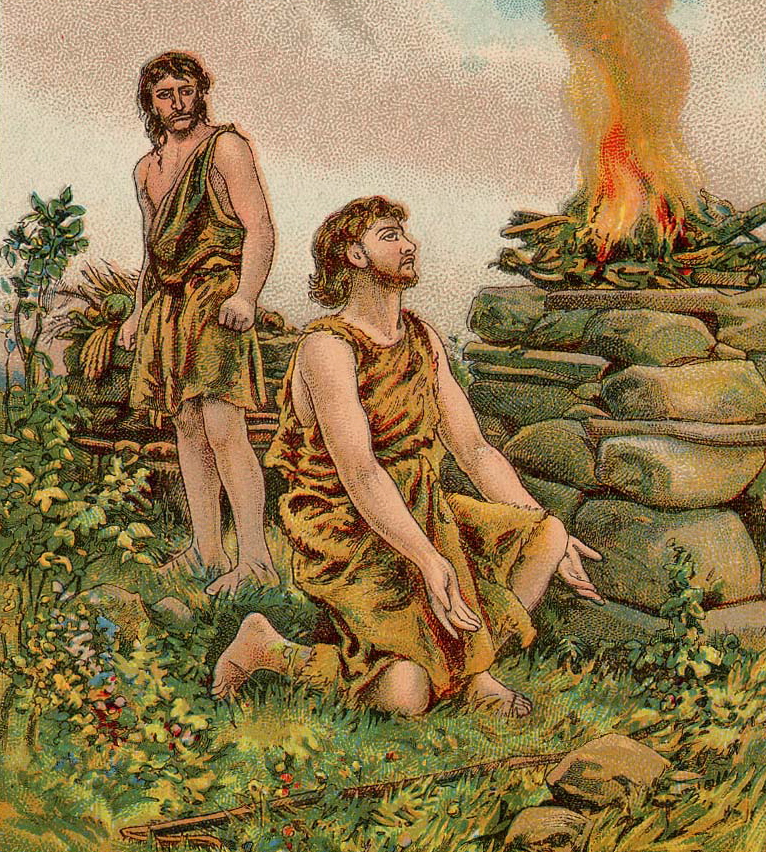
In religious matters, there is no room for subjective thought when it comes to what it takes to have a better life. We find ourselves often bobbing in a sea of religious confusion. Many groups claim to be the best religion and point to their ingredients as reasons for such claims. They point to their numeric size, number of programs they have, or how socially active they are. Our religious attitude ought to be one of humility, not boasting of our achievements or comparing ourselves with others (cf. 2 Cor. 10:12). Genesis 4:1-16 points us to the first recorded version where more than one kind of worship was offered to God and how God rated them. But this chapter also paints a picture of two ways of living life.

Cain is mentioned by three Bible writers after Moses writes about him in this chapter. The writer of Hebrews calls Abel’s offering more excellent than his (Heb. 11:4). John calls his works evil and his allegiance “of the wicked one” (1 John 3:12). Jude implies that the way of Cain is the wrong way to go (11). It seems that Genesis four shows us the better ingredients for a better way of living today.

  • Better living isn’t determined by age (1-2). Cain was the firstborn, a place of honor and privilege especially throughout the Old Testament.  But under the New Covenent, there is no spiritual advantage because of birth order. It is not a matter of firstborn, but a matter of being born again (John 3:1-7). Growing older should mean growing wiser, but reaching a milestone on a calendar does not equate to better living.
  • Better living isn’t determined by occupation (2).  Growing up, we might be tempted to see our occupation as the gateway to happiness and satisfaction, financial freedom and security, independence, and privilege.  When we look at Cain and Abel, what they did for a living wasn’t the determiner of the quality of their lives. Some occupations can stand in the way of better living, whether the nature of the job or the quality of the people one works with. Some can let their jobs stand between them and their relationship with God and His church. But, one can do right in unfavorable work circumstances, staying faithful to God.
  • Better living is determined by worship (3-4). That statement may be offensive to our multicultural world that says there are no absolute rights or wrongs. Contrast our culture’s thinking on this matter with what we read in Genesis four. Both Cain and Abel brought an offering to the Lord. God responded to both offerings, but He accepted one while rejecting the other. While many make worship nothing more than taste, preference, and personal, we learn here that not all worship is equal. God “had regard for” Abel’s, but not for Cain’s. It does not say if Cain was sincere. It doesn’t seem to matter. We learn here that the worshipper and the worship offered rise and fall together. God regarded Abel and his offering, but rejected Cain and his offering. Can one offer God vain worship, and have God reject it but accept him? Apparently not.
  • Better living is determined by attitude (5-7). Cain reacts to having himself and his worship rejected by God. He was very angry. His insides burned! His countenance fell. He took on an ugly look. We’re not told how old he was, but it almost sounds like a temper tantrum. Whether home training, lack of discipline, poor stress management, pride, jealousy, or anything else leads us to lose our tempers, all of them are matters only we can control. When we don’t control them, we’re responsible! Ill-tempered people are not living the better life! A positive life doesn’t require prospering, education, or earthly success. But you can’t have a positive attitude without mastering self.
  • Better living is determined by action (8-16). The word “sin” is first used in Genesis 4:7, but God was looking ahead with perfect foresight to what Cain was going to do to his brother (cf. 1 John 3:11-15). Bible writers speak of his deeds, offering, and way. These are all action words. After his sin, he is rebuked and punished by God and separated from God. Sin will not deliver what it promises. All actions have consequences (Gal. 6:7-9).

Someone said, “The line of Cain gives us murder, cities, polygamy, musicians, metal workers, and poetry, but not one who walked with God.  In fact, Cain’s legacy led to a repeat of his violent ways by a descendant (cf. 4:23). Abel leaves no physical lineage, but he leaves a great spiritual heritage (Heb. 11:4). We each get to choose what kind of life we’ll pursue. It matters which way we decide.

cain-and-abel

Do Brotherhood

Neal Pollard

Hayden Holland, who obeyed the gospel less than three years ago, taught his first Bible class last night at Teens in the Word. It was an excellent, hour-plus long study of the parallels between serving in the military and living the Christian life. In this very practical study, Hayden mentioned the Army’s concept of brotherhood. The fraternity and bond built by basic training and the structural philosophy of the armed forces creates this sense of brotherhood among soldiers.  Without fellowship, he said, disputes will pull soldiers apart. Throughout his lesson, Hayden urged us to “do brotherhood.” Brotherhood is a noun, meaning “the feeling of kinship with and closeness to a group of people or all people” (Dictionary, version 2.2.1, 2016). Peter uses the word in 1 Peter 2:17, a word, according to BDAG, meaning, “A group of fellow-believers, a fellowship” (19; cf. 1 Pet. 5:9—“brethren”). Hayden’s exhortation to us was to do what it takes to create that feeling and fellowship.  Saying we are brethren, even acknowledging and teaching what God says is necessary to become part of that brotherhood, is insufficient of itself.  There is something to be done!

He directed us to the seven values touted by the army—“loyalty, duty, respect, honor, integrity, courage, and selfless service”—as examples of how we can “do brotherhood” in the Lord’s Army (cf. Eph. 6:10ff). Doing brotherhood means taking time to listen to and help our brothers and sisters in Christ when they are struggling. It means spending time together, engaging in each others’ lives. It means being faithful to live out what we say we believe daily, in the world and in the absence of our church family, because we love them and don’t want to let them down. It means talking out our problems and disagreements. As we work to see ourselves as a part of something bigger than just ourselves, the effect is revolutionary. Non-Christians see the bond we have with our brethren and it draws them. Jesus told His disciples that this brotherly love would be their identifying mark to a searching world (John 13:34-35).

How often it has been observed that Christianity is more than a state of being; it requires a life of doing. The brotherhood consists of all those within the body of Christ. But, that “group” has to be maintained, sustained, and retained. Such requires action! My action and your action. Let’s be sure we are “doing” brotherhood!

17862689_10212031358357411_591145317067498345_n

Better Living 

Neal Pollard

We find ourselves often bobbing in a sea of religious confusion. Many groups claim to be the best religion and point to their ingredients as reasons for such claims. Several years ago, our boys played basketball in a league hosted by a huge community church in the Denver area.  Their church’s campus includes a K-12 school, two restaurants, a gymnasium half the size of our church building, a coffee shop, and a hundred social program. Other groups would make their claim as “better” or “best” based on their numeric size, the number of programs they have, or how socially active they are.

Our religious attitude ought to be one of humility, which does not boast of our achievements or compare ourselves with others (cf. 2 Cor. 10:12).  Genesis 4 is not just about two kinds of worship, but also about two ways of living life. Cain is mentioned by three Bible writers after Moses introduces him in Genesis. The writer of Hebrews calls Abel’s offering more excellent than his (Heb. 11:4). John calls Cain’s works evil and his allegiance “of the wicked one” (1 Jo. 3:12). Jude implies that the way of Cain is the wrong way to go (11). Let’s make a few brief observations from Genesis four and see if we can find the elements which make for a better way of living today.

  • BETTER LIVING IS NOT DETERMINED BY AGE (1-2).  By birth order, Cain came first. He was the first person to be born in the natural order of childbirth. He was the very first newborn to be held in his mama’s arms. She didn’t realize that her cooing, sweet infant was a future murdering, and she was proud of him. She called him “a man child with the help of the Lord.” This depicts such a bright, optimistic future, and by contrast Scripture says, “Again, she gave birth to his brother, Abel” (2). Abel began in his brother’s shadow, first known to us as “his (Cain’s) brother.”
  • BETTER LIVING IS NOT DETERMINED BY OCCUPATION (2). When we look at these brothers, what they did for a living was not the determiner of the quality of their lives. While what they did had an indirect bearing on the events of this account, the fact of their occupation was spiritually neutral—Cain farmed and Abel tended sheep. One can reap blessings from tilling the ground (Heb. 6:7), but they may have to fight thorns, thistles, and weeds doing it (Gen. 3:18-19). Tending sheep may be done by slaves (Luke 17:17), kings (1 Sam. 17:34), or apostles (John 21:17). God’s pleasure or displeasure was not connected to either’s occupation.
  • BETTER LIVING IS DETERMINED BY WORSHIP (3-4). Moses says both brought an offering to the Lord. He also says God responded to bother offerings, accepting one and rejecting the other. That very notion is foreign to many people in our society today, even those in religion. Many make worship nothing more than taste, preference, and personal inclination. But, Moses shows us (1) Not all worship is equal: God had regard for Abel’s, but not Cain’s. The words “had respect to” signify in Hebrew to look at something with a very serious glance. God tells us how He wants worship done, in attitude and action; (2) The worshipper and the worship rise and fall together: God had regard for Abel AND his offering and did not for Cain AND his offering. That’s a sober reminder for me that my personal relationship with God is hindered or helped based on the way I worship God. Can I offer God vain and ignorant worship, and have God reject it but accept me? We are not earning God’s favor by getting worship right. At the same time, are we tempting God and hoping we stay in His favor while disobeying His commands for worship? People have tried to make this an “either-or” proposition, that Cain and Abel’s offering was either about getting the worship right or was about the nature of the person offering the worship. In other words, is it sincerity or obedience, our both sincerity and obedience? To thoughtfully ask the question is to answer it!
  • BETTER LIVING IS DETERMINED BY ATTITUDE (5-7). Cain reacts to having himself and his worship rejected by God by burning with anger and his face taking on an ugly look. He sounds like a small child in the throes of a tantrum or a teenager huffing and sulking in anger. God warns Cain of the recipe for disaster he was making through his attitude. He told Cain that his tempestuous attitude was an invitation for sin to pounce on him, but He told him he could master it! You can have a positive attitude without prosperity, education, or earthly success, but you cannot have a positive attitude without mastering self.
  • BETTER LIVING IS DETERMINED BY ACTION (8-16). Improper worship and attitude preceded and precipitated improper action. The first time “sin” is used (Gen. 4:7), God was looking ahead with perfect foresight to what Cain would do to his brother. He does the unthinkable, killing his own brother (cf. 1 Jo. 3:11-15). His deeds and ways were a recipe for disaster: He is rebuked by God, punished by God, and separated from God. Sin promises a good time and fulfillment, but it’s not true.

It’s been said that the lineage of Cain gave us murder, cities, polygamy, musicians, metal workers and poetry, but not one who walked with God! Thanks to his legacy, a descendant repeats his violent ways (Gen. 4:23). Abel seems to leave no physical lineage, but he still speaks after death. His was a life of faith, generosity, good works, righteousness, and obedience. We get to choose the kind of life we want to pursue. If we choose well, we will be satisfied, others will be blessed, and God will be pleased.

the_story_of_cain_and_abel_bible_card

19 WAYS TO TANGIBLY IMPROVE YOUR RELATIONSHIP WITH GOD TODAY

Neal Pollard

  • Try to spend 5 minutes of prayer in which you do nothing but praise Him.
  • Do something for Him that requires you to step out of your comfort zone—initiate a conversation with a stranger, give a tract to a co-worker you’ve been talking with, etc.
  • Have a devotional with your family.
  • Call a shut-in or stop by and visit a widow(er).
  • Write a missionary, expressing appreciation and giving encouragement.
  • Anonymously give a sacrificial amount of money for a family in need or someone dependent upon support (school of preaching student or teacher, missionary, etc.).
  • Contact an elder, asking him something you could do to help them in their work.
  • Make a list of at least 20 blessings God has given specifically to you.
  • Speak to someone at church services you have never spoken to before.
  • Invite a family from church you don’t know well over for dinner.
  • Put a packet with bottled water and granola bar, along with a tract, into a Ziplock bag to give to the person at the intersection asking for assistance.
  • Pick out a Bible book you are unfamiliar with and start breaking it down, looking for key words, purpose statement, and other clues to better understanding it. Take copious notes.
  • Pray for someone you are having problems with, an enemy, critic, or one who has offended you.
  • Alone or with your spouse and/or children, sing several songs of praise and admonition.
  • Carry a meal to a young mother who has had a difficult day.
  • Give a big smile and warm greeting to a fellow shopper or employee at a store or restaurant.
  • Ask the secretary for a list of last Sunday’s visitors and send them each a warm, brief note.
  • Think of an area for spiritual improvement in your life and ask God to help you focus on it, being transparent and sincere as you petition Him.
  • Ask the person closest to you (parent, spouse, sibling, etc.) something they need for you to pray for on their behalf.

Can you think of additional ways?

A BLIND SPOT TO MY BALD SPOT

Neal Pollard

Positively traumatic.  I don’t know another way to describe it.  Sure, I knew about the gentle receding of hair on my forehead—or “sixhead,” as my good friend Dean Murphy recently called it. However, nothing prepared me for “the picture.”  Sure, I’ve had people, even recently, noting the thinning of my hair on top.  I found the noting of that irritating and even, at times, amusing. But, the stark, unflinching, and brutally honest photo was utterly convicting.  There, in living color, was my immutably glabrous cranium.  OK. My bald spot.  I have no idea how long I’ve walked around sporting this condensed coif, but I can see it now… every time I look at that picture.

That blind spot was more vain than dangerous.  There are situations in life where a blind spot can be more serious.  Driving down the highway, we may miss another vehicle that is in our blind spot—not visible in our rearview mirrors but still most definitely there.  But the far more common blind spots of our lives have to do with what we cannot, do not, or choose not to see.

It is easy for us to see the faults of others, their sins of attitude, speech, and action.  We marvel that they seem oblivious to them.  After all, we see it all so clearly.  Yet, in our own lives, we may not be seeing clearly.  We do not realize how unfriendly we appear to others, how self-promoting, how braggadocios, how sarcastic, how unhelpful, how harsh, or how suggestive our words and deeds appear to others.  Solomon notes that “all the ways of a man are clean in his own sight” (Prov. 16:2a). Relying on others to tell us is really not fair to them.  After all, they must navigate around and through their own blind spots on the commutes of their daily lives.

Paul helps us identify these social and spiritual blindspots. He writes, “Test yourselves to see if you are in the faith; examine yourselves” (2 Cor. 13:5).  The best way to actively view our lives is through the mirror of God’s Word (cf. Jas. 1:23).  As we look closely and carefully into it, we see ourselves better.  How vital that we get a better view of how our own lives impact others, for good or ill!  This is about more than vanity.  This has more serious far-reaching implications.  May the Lord give us the courage to see our blind spots and the strength to eliminate them.

There it is on the fella in the sweater in the far left seat of the front row.