The I AM

Dale Pollard

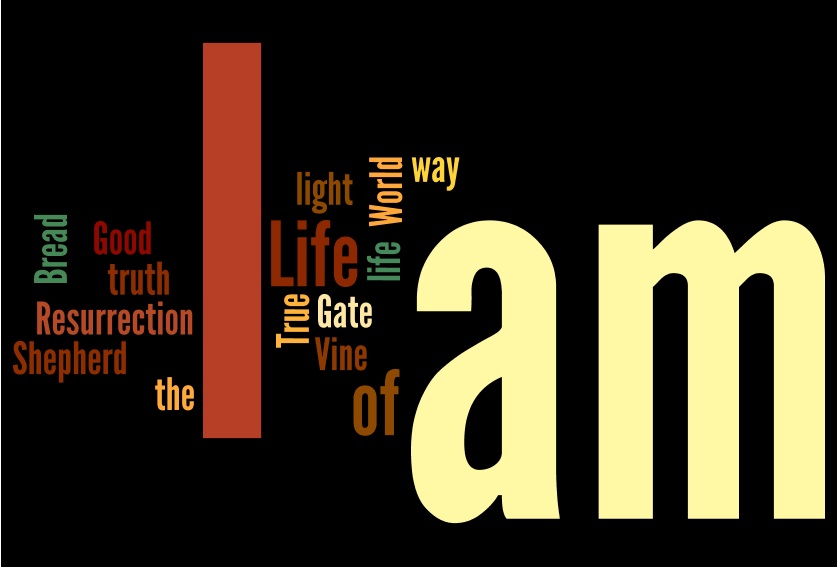
God speaks of Himself as simply “I Am.” This is one powerful statement depicts His infinite presence and His existence through every age. What does it mean to know Him? How do you know if you do? To know of Jesus is very different than knowing Him. 

John is one of those books in the New Testament that will help us to become better aquatinted with the Christ. It’s the last of the gospels that paints a vivid picture of who He was and is on a deeper level than even the three previous gospels. He’s the Bread of life, Light of the world, the Gate, Good Shepherd, Resurrection and Life, the Truth, and the Vine. All of these titles found within the book teach us a little more about the Savior of the world. 

There are seven “I Am” statements in John referring to Jesus and three hundred throughout the entire Bible. They begin in Genesis and end in Revelation, and in many books in-between. You just can’t read very far without discovering something very profound about its Writer. He’s eternal. God’s desired response to this is simply for us to believe, respond, and live with our minds and hearts prepared to live with Him. When Jesus describes Himself as the “I Am” it makes the religious leaders want to kill Him (John 8). 

To know Jesus, to really know Him, is something that many people have not fully understood. Even as Jesus walked among us mortals and we witnessed His miraculous power there were still several that didn’t realize what it meant to follow Him (Luke 9:57-62). While it’s true that everyone is made in the image of God, few reflect the Father’s image. 

Those that know Jesus introduce others to Him. With the knowledge that we are imperfect, let’s not forget that we also have the ability to have a relationship with Him. I am flawed and I am weak, but the Great I Am is interested in who I am. By the grace of God, we are called His children. He is the bread of life that sustains us, the light that guides us, the gate we’ll walk through, and the Truth that will save us. It’s not how great I am, but how great the Great I Am is. 

A Shutdown That Never Happens

Neal Pollard

It seems that government shutdowns have become political footballs both parties have thrown around increasingly in recent years. There have been ten actual shutdowns since 1976, happening during the administration of seven different presidents. Since 1980, when the attorney general ruled that federal agencies cannot operate without funding, shutdowns have meant certain services stop and those, like the military, doing essential jobs must continue to work without pay. We don’t have to be political junkies to perceive that shutting down something has negative impacts on those affected.

Aren’t you glad that heaven never experiences a shutdown of any kind?

  • Jesus always lives to make intercession for us as Christians (Hebrews 7:25).
  • God always leads us in triumph in Christ (2 Corinthians 2:14).
  • God is able to make all grace abound to us so we always have sufficiency in everything (2 Corinthians 9:8).
  • God’s throne is forever and ever (Psalm 45:6; Hebrews 1:8-9).
  • Our forever God will guide us until death (Psalm 48:14).
  • God’s precepts are upheld forever and ever (Psalm 111:8).
  • His decrees will never pass away (Psalm 148:6).
  • Jesus is glorified through His church forever and ever (Ephesians 3:21).
  • He will never forsake us (Hebrews 13:5).
  • God is faithful (1 Corinthians 1:9; 10:13; 2 Corinthians 1:18).
  • Multiplied passages tell us blessing and honor and glory and dominion are His forever.

Broken promises, stalls, stalemates, expirations, and change are all attributes that describe man and his works. Thank God that “Jesus Christ is the same yesterday and today and forever” (Hebrews 13:8). Remember that when it comes time to pray, to seek His wisdom in His word, when contemplating His promises, or when faced with a decision to do His will. God is trustworthy and He is always on the job (Isaiah 40:28-31)!

The Eye of God

Carl Pollard

We used to sing a song in church growing up called, “There’s An Eye Watching You.” The chorus goes like this, “watching you, watching you, every day mind the course you pursue; watching you, watching you, there’s an all-seeing eye watching you.” As a kid and even into adulthood, I would sing this song and envision a giant eyeball in the sky. While this isn’t case, maybe it would do us good to think of God’s eye watching us each day. 

Psalm 33:13-14 says, “The Lord looks down from heaven; he sees all the children of man; from where he sits enthroned he looks out on all the inhabitants of the earth.”

If God sees “all the inhabitants of the earth,” He is automatically breaking the laws of time and space. Tanzania, Africa is 8 hours ahead of where I am in Kentucky. Cambodia is 12 hours ahead. Half the world is asleep because half the world is in darkness at any given point in time. God is naturally present in every aspect of the natural order of things, in every manner, time and place. He sees EVERYONE! 

God saw Hagar when she was on the run from Sarah (Gen. 16), and Hagar gives God a new name…”the God who sees” because God saw she was in need and helped her.

God saw righteous Noah in a world of wickedness. God saw Cain when he slaughtered his brother. God saw Israel in Egyptian captivity. God saw Joseph thrown into a pit and sold off by his brothers. God saw David as he hid from Saul and his men while they were trying to kill him. God saw Abraham obey His words and try to sacrifice his son Isaac. God saw His own Son, abused, rejected, spit on, and killed. God saw the early church as they were persecuted for following Christ. God sees you as you’re reading this article right now. God sees every deed and it is written down for the judgement day. 

God sees everyone. Proverbs 15:3, “the eyes of the Lord are in every place, watching the evil and the good.” We live in a physical world with its four known space-time dimensions of length, width, height (or depth) and time. However, God dwells in a different realm—the spirit realm—beyond the perception of our physical senses. It’s not that God isn’t real; it’s a matter of His not being limited by the physical laws and dimensions that govern our world. 

“For thus says the One who is high and lifted up, who inhabits eternity, whose name is Holy: ‘I dwell in the high and holy place, and also with him who is of a contrite and lowly spirit, to revive the spirit of the lowly, and to revive the heart of the contrite’” (Isaiah 57:15, ESV). God is spirit in the realm of timelessness rather than flesh in the sphere of time.

As Christians, we have a deep sense of comfort knowing that God, though timeless and eternal, is in time with us right now; He is not unreachably transcendent, but right here in this moment with us. And because He’s in this moment, He can respond to our needs and prayers.

We serve an incredible God. There’s no denying His amazing power and holiness. 

A God who created everything with His Words. A God who sees all the inhabitants of the earth. A God who has the power and might to be everywhere on this earth at one time. A God who looked at me, who looked at you, and saw that we needed a savior. 

So why then do we understand God’s power and yet still neglect our prayer life to Him? Or forget to study His Holy word? He sees what we do with our time, so make the most of it! 

True understanding of Who God is will always result in righteous living.

The Lord Endures Forever

Carl Pollard

I’m not much of a runner. And when I say not much I mean I’m not a runner at all, period. Reason being my endurance is awful. I once tried to go on a run to the kitchen and had to drop out at the living room. But very much unlike me, Serge Girard, a French ultra runner, has run 14,031 miles in just under a year! To break that down, that’s 1,169 miles run in a month or 39 miles a day! This ultra runner has incredible endurance, and we could even say it’s almost superhuman. Serge Girard has amazing endurance, but it is nothing at all compared to the endurance of God.

Psalm 111 is a beautiful description of how God “endures forever.” A quick glimpse at this psalm and we learn that the Lord endures for all eternity. He endures through His righteousness (vs. 3). The Psalmist begins by setting the stage by using the Hebrew word for “Hallelujah.” Then says “I will give thanks to the LORD with all my heart.” When he says “with all my heart,” this seems to imply that he is coming to God with every intention of giving his all to the LORD. 

The psalmist gave thanks with all his heart for a reason. Verse 2 says, “Great are the works of the LORD; they are studied by all who delight in them.” If we as Christians truly delight in the Lord then we should be studying the works of the Lord! When we study His works we learn about the great God we serve. Verse 3 shows us the Lord’s endurance. “Splendid and majestic is His work, and His righteousness ENDURES forever.”

As One who is unerringly faithful to His covenant with Israel, God constantly executes justice on behalf of His people. In the bringing of Israel out of Egypt, His works declare His righteousness. This impeccable characteristic of His nature does not nor will it ever change. What a great comfort to know that God will always be there for us, even in our darkest times! We will only learn about our God if we take the time to study and grow in the knowledge of His Word. Knowing that the God who delivered Israel from slavery listens to us when we pray is truly life changing. 

He is always there for us. Because the Lord endures forever!

“You Thought That I Was One Like Yourself”

Neal Pollard

Asaph was a spiritual Renaissance man, a musician (1 Chron. 15:17-19), a worship leader (1 Chron. 16:4-15), a prophet (2 Chron. 29:30), and a poet, whose inspired work is found in twelve of the psalms in the book of Psalms. In numerical order, Psalm 50 comes first. In that psalm, he addresses the whole earth (1-6), His people (7-15), and the wicked (16-23). He establishes His right and power to judge “His people” (4)…”for God Himself is judge” (6). He tells His people that He wants their true worship (7-13), and by giving it they would find a responsive, protecting God (14-15).

How He ends the chapter is jarring! He addresses “the wicked” presumably from among His people. They tell of His statutes and His covenant is in their mouths (16), but they are worldly to the core. They hate His teaching and His Words (17). They love to hang out with dishonest, dishonorable people (18). Their tongue is an unruly evil (19-20). This is a comprehensive and graphic picture of the hypocrite. What emboldened them to live in such an audacious way? God’s silence (21). They thought they were getting away with it because God did not respond to this as He did with Nadab and Abihu (Lev. 10:1-3), Korah and his clan (Num. 16), and Uzzah (2 Sam. 6:7). He says, “These things have you done and I kept silence….” (21a). God explains how one can perceive the lack of immediate punishment as an endorsement of a lifestyle or a mindset, saying, “Because the sentence against an evil deed is not executed quickly, therefore the hearts of the sons of men among them are given fully to do evil” (Ecc. 8:11).

This can cause us to bring God down to our level, to think that He thinks like we think and that He feels like we feel. “You thought I was just like you” (21b). If one is tolerant of sin and permissive of a sinful situation, he or she may naturally think God will overlook it. If one is willing to accept in fellowship a person who is living in rebellion against God’s will, he or she may conclude that God does too. This leads to rationalizing and embracing things God, in His Word, has already declared His thoughts and feelings about. That is why He says, “Let the wicked forsake his way and the unrighteous man his thoughts; and let him return to the Lord, and He will have compassion on him, and to our God, for He will abundantly pardon” (Isa. 55:7). Like in Psalm 50:21, Isaiah reminds us God’s thoughts and ways are not ours (Isa. 55:8-9).

God longs for a relationship with His people (22-23), but it will be on His terms. If we forget God, the result is frightening (22), but if we honor Him with righteous living He shall “show the salvation of God” (23). For this to occur, we cannot bring God down to our level and think that because we want to endorse willful sin He does, too. There is an enormous difference between wrestling with sin and wallowing in it. The one He sees with compassion, the other He sees with condemnation.

God Doesn’t Hate You

Tuesday’s Column: Dale Mail

Dale Pollard

“Who does he think he is?”

It’s easy to imagine how the grumbling began among Korah and other religious leaders of the Israelites. Eventually 250 joined and as the grumbling grew so did Korah’s confidence. It all came to a head as the mob approached Moses and the heated accusations start. Korah cries out, “We’re all just as righteous as you are! Why do you stand before us and bark orders?” 

Moses does something unexpected and falls face down. He tells them, “In the morning the Lord will show you all who is holy.” How did those wicked Levites sleep that night? Were they confident that God would deliver them from their “tyrannical” ruler? Maybe they tossed and turned as all sleep escaped them. The following day we read in Numbers 16.32-35, 

“and the earth opened its mouth and swallowed them and their households, and all those associated with Korah, together with their possessions. They went down alive into the realm of the dead, with everything they owned; the earth closed over them, and they perished and were gone from the community. At their cries, all the Israelites around them fled, shouting, “The earth is going to swallow us too!” And fire came out from the Lord and consumed the 250 men who were offering the incense.”

This wasn’t the end of the line for all of Korah’s family though. We read in Numbers 26.9-11, 

“…Nemuel, Dathan, and Abiram. These are the Dathan and Abiram, chosen from the congregation, who contended against Moses and Aaron in the company of Korah, when they contended against the Lord and the earth opened its mouth and swallowed them up together with Korah, when that company died, when the fire devoured the 250 men, and they became a warning. But the sons of Korah did not die.”

Some of Korah’s family live on. Now, how would many people feel about God if they had watched their family and possessions swallowed up by the earth? A horrific event like that might make them bitter, angry, and traumatized. What a cruel and selfish God. 

Interestingly enough, the sons of Korah are responsible for writing a few of the Psalms. They aren’t laments reflecting back on how God had treated them unfairly. In fact, it seems as though they had their eyes opened to the character of God. He is holy and they are in awe of their awesome Father. 

Here are a few segments taken from Psalm 84, written by the sons of Korah. 

Verses 1-2 

“How lovely is your dwelling place,
    Lord Almighty!

My soul yearns, even faints,
    for the courts of the Lord;
my heart and my flesh cry out
    for the living God.”

Verse 4 

“Blessed are those who dwell in your house; 
    they are ever praising you.”

Really? Blessed? Ever praising Him? 

Verse 10 

“Better is one day in your courts
    than a thousand elsewhere;
I would rather be a doorkeeper in the house of my God
    than dwell in the tents of the wicked.”

The language does not reflect a family who has witnessed tragedy brought on by the hand of God. It seems they were spared because the Lord saw something inside them that wasn’t found in the hearts of the others. A heart willing to repent and live differently. God knew they could handle rebuke and had a sincere desire to live righteously. It’s been speculated that perhaps they were too young to understand why their father and the other Levitical leaders were outraged. Maybe they thought they were a part of a just cause? After all, these evil men were in a position of authority. They were their teachers. How could 250 religious rulers be wrong? Whatever the reasons, God proved to be right again. 

There are people in this world who don’t understand the righteousness of the Lord. This lack of knowledge leads to terrible—often costly, decisions, and lifestyles. 

If you ever find yourself questioning God and His Law we should look in rather than up for who’s to blame. History proves time and again that God is never the issue— we are. Sin, injustice, unfairness, and evil are human inventions. God has given us His son as the solution and in Him we find answers. Those answers bring us satisfaction and peace every time. 

Water well dating back to the early 1800s. Location, Valhermoso Springs hotel. 
Lacey’s Spring, Alabama 

The God We Serve

Thursday’s Column: Captain’s Blog

Carl Pollard

25 ways God has shown His love to us: 

  1. Creation (Genesis 1-2) 
  2. The Cross (Matthew 27:32-56) 
  3. Salvation (John 3:16) 
  4. The Bible (2 Timothy 3:16) 
  5. The Church (Ephesians 2:19-22) 
  6. The Ability To Pray (Philippians 4:6) 
  7. A Caring High Priest (Hebrews 4:15) 
  8. The Holy Spirit (Romans 5:5) 
  9. True Peace (Philippians 4:7) 
  10. Purpose (1 Peter 2:9) 
  11. Made Us Alive (Ephesians 2:5) 
  12. Servitude (Matthew 12:18) 
  13. Gave Us An Identity (John 1:12) 
  14. Joy (Proverbs 10:28)
  15. An Example (John 13:1-17) 
  16. Revealed Knowledge (Ephesians 1:17)
  17. Compassion (2 Corinthians 1:3-4) 
  18. The Good Shepherd (John 10:11) 
  19. Strength (Exodus 15:2) 
  20. Good Advice (Matthew 6:34
  21. Takes Our Anxiety (1 Peter 5:7) 
  22. A Refuge (Psalm 46:1) 
  23. A Resurrection (John 11:25) 
  24. A Place Of Rest (Matthew 11:29)
  25. He’s Coming Back (1 Thessalonians 4:16-17)

Bragging On The Shepherd

Tuesday’s Column: Dale Mail

image-e1601983688162

Dale Pollard

 
Have you ever been in the habit of praying the same prayer over and over again?
You’ve said that prayer as a child and it’s so familiar to you that it just rolls off the tongue. It can seem robotic and maybe this is how we read Psalm 23.
 
Many of us know this Psalm and can quote it quickly— the words fly past our lips. The author, David, practically writes this Psalm like a young boy bragging about how awesome his Father is. Let’s look at this Psalm from his perspective.
 
He says that the Shepherd is always there to protect him, lead him, restore him, and He’s concerned with his needs. He’s nothing without God, and God inspires David to articulate his view of Him.
 
Do we think of God in this way? Some might feel ashamed of Him because standing  up for Christ means saying something or doing something that makes us uncomfortable from time to time. You don’t see that in David. He’s bursting with pride because to him that relationship with the Shepherd is like no other. Today let’s humbly bow in thanksgiving and praise the perfect shepherd.

Our God Is An Awesome God!

Monday’s Column: Neal At The Cross

Neal Pollard

Are there songs that really pump you up in your faith? While there are several that strike that chord in me, none do that more than the song, “Our God is an awesome God.” I know the melody helps, but just that short, sweet, and profound reminder puts wind in my spiritual sails. It reminds me that I can overcome because of who He is.

Psalm 104 is a much more detailed, exhaustive song that lays out how “very great” our God is. It is exciting to think about who we are serving, and sobering to think of the cost of rejecting Him. Look at the awesomeness of God.

LOOK UP (1-4)

My boys call me “sky guy.” I am known to take some pictures of sunrises, sunsets, and skies in general. I remember a night at the Ngorogoro Crater with our oldest son, Gary, when the sky looked, as the late Andrew Connelly once described it, like diamonds laying on black velvet. I remember looking over the Caribbean Sea with Kathy in Cozumel, Mexico, with the moon above us and reflected in the water as yellow as gold. But, I get the same sense on many nights when I cut off the porch light and walk out my front door. God did that!

God’s garments are splendor, majesty, and light (1-2). He stretches out heaven like a curtain, rides the clouds, and walks on the wings of the wind (2-4). How can anyone look up and fail to see God?

LOOK AROUND (5-23)

Where is the most beautiful place on earth? Often, we could say it is wherever we are at the moment. Creation’s beauty is so diverse and its complexity is so incredible. Look at its order and durability (5). Think back to how He changed it all through the flood, using water to raise up mountains, form valleys, and then prevent it from ever happening like that again (6-9; Gen. 9:11). Look at how he sustains us and all creation with water (10-11,16), food (13-15), habitat (12,17-18), seasons (19), and daylight and darkness (19-23). The earth is full of His possessions (24), the sea (25), animals (25), the sea and its wonders (26). He sustains and provides and He shows His power (27-30). On the first hike my family ever took as residents of Colorado, in Rocky Mountain National Park, we met a young woman on a trail. We had in common the fact that we had all just moved there from out of state.  We told her why we had moved, to work with the church in Denver. She, though very polite, said that she moved out there to get away from God. We were all standing, facing such incredible grandeur, and I thought, “Good luck with that!” Where do you go to get away from God when His fingerprints are everywhere? 

LOOK BEYOND (31-32)

As the psalmist begins to wrap up this tribute to God’s awesomeness, he speaks of God’s unlimited power. He makes earth tremble and mountains smoke (32). It gives Him glory and gladness (31). Really, this point is made throughout the entire psalm. Everything we see is a reflection of the One who is above all, through all, and in all (Eph. 4:6). 

LOOK WITHIN (33-35)

In a psalm paying tribute to creation, what should be my response? How should it change and shape me? I will sing to Him as long as I am (33). I will meditate about Him (34). I will be glad in Him (34). I will follow Him, knowing what awaits the sinner and the wicked (35). Listen to the psalmist’s summary: “Bless the Lord, O my soul. Praise the Lord!”  What I see above, around, and within me should melt my heart in praise. It should leave me singing every day, “Our God is an awesome God!”

(taken near the summit of Torrey’s Peak, 2018)

 The Doom of Jerusalem 

Tuesday Column: Dale Mail

image

Dale Pollard

Have you ever been to a “show and tell”? Maybe it was in school and the teacher asked you to get up in front of the class and show a particular object and explain and talk a little bit about it. I remember as a child dragging my giant yellow dump truck to class and showing everyone how the scoop on the back worked. I was very proud of it and after the class I sat on the truck and rode it down the hill in the parking lot. 

Jeremiah’s “show and tell” was not nearly as lighthearted. Instead of bringing a toy truck to show the people, he brought a sword and began to shave his face with it. The hair that he shaved off was what has been left alive by the people. The point of him dividing it into thirds was to make a point. That one third are the ones that survived the siege. Then the few that survive will be taken off but taken care of by God. In Zechariah 13 we find out that the fire of destruction took care of the first third. This wasn’t a fire that was meant to refine them. 

When we look at accounts like these it should make us think. Why was that account there? It’s definitely for our learning, but what is it that we need to take away? I believe at least two lessons can be learned from this. The first is that God will keep His word. If God says that He is going to punish the wicked for their wickedness, then He will most definitely do so. The second lesson to be learned is that in all of this, we can clearly see God’s love. Did God have to take care of the remnant? We know from previous scripture that God wanted to destroy them all at one point and start over. God still cares for His people and He still saw them through their trials, despite what they had done to Him. As His children today we need to realize that even though God may not necessarily strike us down on the spot for rejecting Him, He still takes it just as seriously. God still feels the same about selfishness and a self-serving lifestyle. It’s an ongoing battle to put away those human desires that pull us away from God but it’s a supernatural force that allows us to remain close to Him. 

I Am

Tuesday’s Column: Dale Mail

image

Dale Pollard


God speaks of Himself as simply “I Am.” This one powerful statement depicts His infinite presence and His existence through every age. What does it mean to know Him? How do you know if you do? To know of Jesus is very different than knowing Him.

John is one of those books in the New Testament that will help us to become better aquatinted with the Christ. It’s the last of the gospels that paints us a vivid picture of who He was and is on a deeper level than even the three previous gospels. He’s the Bread of life, Light of the world, the Gate, Good Shepherd, Resurrection and Life, the Truth, and the Vine. All of these titles found within the book teach us a little more about the Savior of the world.

There are seven “I Am” statements in John referring to Jesus and three hundred throughout the entire Bible. They begin in Genesis and end in Revelation, and in many books in-between. You just can’t read very far without discovering something very profound about its Writer. He’s eternal. God’s desired response to this is simply for us to believe, respond, and live with our minds and hearts prepared to live with Him.

When Jesus describes Himself as the “I Am” it makes the religious leaders want to kill Him in John 8. To know Jesus, to really know Him, is something that many people have not fully understood. Even as Jesus walked among us mortals and we witnessed His miraculous power, there were still several that didn’t realize what it meant to follow Him (Luke 9:57-62).

While it’s true that everyone is made in the image of God, few reflect the Father’s image. Those that know Jesus introduce others to Him. With the knowledge that we are imperfect, let’s not forget that we also have the ability to have a relationship with Him. I am flawed and I am weak, but the Great I Am is interested in who I am. By the grace of God, I am His child. He is the bread of life that sustains us, the light that guides us, the gate we’ll walk through, and the truth that will save us. It’s not how great I am, but how great the Great I Am is. Do you know Jesus?

Did God Command The Israelites To Kill Babies?

Thursday’s Column: Captain’s Blog

tempImagehquiDk

Carl Pollard

Quite possibly one of the most difficult passages to read is 1 Samuel 15:3. In this verse God commands the Israelites to kill the Amalekites and He specifically says, “kill both man and woman, child and infant, ox and sheep, camel and donkey.” This verse is used by many to discredit the Bible and mock those that believe in a “God that murders babies.” 

At first glance, this verse appears to be morally wrong. Did God really command the Israelites to commit infanticide? If He did, why would we serve a God like that? Why take the time to pursue a relationship with God knowing that He shed innocent blood? Doesn’t Proverbs 6:17 say that God “hates hands that shed innocent blood?” Maybe God’s a hypocrite and there’s a double standard. Maybe God doesn’t really love His creation. Maybe we serve a God that isn’t as pure and holy as He claims to be. Or maybe there’s a reason why God gave this command. 

1 Samuel 15:3 can be better understood if we recognize several important facts. 

The Context. In order to properly handle God’s Word, we can’t just pick a verse and read it at face value. So it is important that we read the context. Verse two shows us that the Amalekites attacked Israel on their journey out of Egypt. In return God promised to one day utterly destroy the nation (Deut. 25:17-19). From the moment the Amalekites chose to fight the nation of Israel, their fate was sealed…but not immediately. Exodus 17:8-16 records the events that took place and God says, “the Lord will have war with Amalek from generation to generation.” 1 Samuel 15:3 is God keeping His word. 

Biblical and secular history. The Amalekites were recorded as being ruthless and cruel. They would actively search for pregnant women and kill their babies before killing the mother. In raids they would kill women, children, and everything else. They killed for sport and they raided places for fun. They didn’t fight other nations trying to protect themselves or their land, they just enjoyed slaughtering people and taking their stuff. The Amalekites were known for their cruelty, but also their hate for the Israelites. History also reveals that the Amalekites required that any and every living offspring was to avenge any nation or people that attacked them. This is seen with the Israelites in scripture. For 300 years the people of Israel fought with them. “Generation after generation” experienced war with the Amalekites. 300 years God let the murdering of His own chosen people to happen. 

Why did God let them do this for so long? Well, why did God save Rahab? Or tell Noah to warn the sinful people about the flood? Why did God promise not to destroy a city if there were just ten righteous people in it? Why did God send prophet after prophet to warn the Israelites of their sin? Why did God allow His own creation to spit on, mock and crucify His only Son? Because God is a God of mercy and second chances. The Amalekites were given 300 years to repent, but 1 Samuel 15:3 is the result of their lack of repentance. God warned them what would happen, and there had to be punishment for sin. 

But what about the innocent children and babies? Do you think God knew their future and what they would eventually become? God would never destroy a person that wanted to be saved. God wants everyone to come to repentance. 300 years of children and not a single one came to God and asked for repentance. God knows a whole lot more than we do. He has a perfect knowledge of the past, present and future. Since the culture of the Amalekites demanded that their offspring continue to murder and raid, the killing of the Israelites never ceased. If only a select group were killed, the problem would persist in the future as it had in the past. 

God cannot sin, and in His infinite knowledge He gave a command that was without sin. A sinful nation that refused to acknowledge God had to face the consequences. On the judgement day there will be many people who are punished because of their sin. God in His mercy has given us a way to be saved, but it is up to each individual to make the decision that will ultimately lead to either torment or salvation. God is patient and loving, but He is also holy and righteous in His judgment. 

Word Studies: “MAJESTY”

Wednesday’s Column: Third’s Words

Gary III

Gary Pollard

We will be looking at the word “majesty” by request in today’s article. This series will look at words used in our English translations that aren’t used in modern communication or are otherwise unusual. Today, majesty usually shows up as an adjective for natural phenomena (a majestic sunrise/sunset, majestic scene, etc.). 

As a disclaimer, Hebrew studies are not my forte. For those of you with a knowledge of Hebrew, I welcome corrections. All material concerning Hebrew usage comes from the Theological Lexicon of the Old Testament or Hebrew & Aramaic Lexicon of the Old Testament: Volume 5. 

In the Old Testament, it is used to describe the beauty or awesomeness of nature. Leviticus 23.40 uses “splendid.” In Isaiah 53.2, and it means “physically attractive.” Being impressive or inspiring awe/wonder is how the word is used in reference to God, although descriptions of kings are also appropriate (Isaiah 35.2). Speaking of royalty, majesty is used to describe their power and accomplishments (see Daniel 4.30, 5.18 for examples). In the Old Testament, majesty can be understood as impressive, having honor, or as the effect left on an observer of a display of power or awesomeness. 

In the New Testament, it means to have high respect or incredible qualities (see II Peter 1.16). In that passage, Peter says that he was a firsthand witness of the majesty of Jesus. This is incredible, considering Isaiah 53 says that His appearance wasn’t special or spectacular. The majesty Jesus had on earth was due to His nature, not His appearance. Majesty is also used in reference to having high respect because of an impressive performance or display of power (Luke 9.43). In that passage, Jesus healed a boy who had a particularly violent demon. After returning him to a normal state, witnesses were blown away at God’s majesty. It was obvious that the power necessary to correct the boy’s issues was preternatural. They observed an incredible event and understood its source to be God’s power. That power is an aspect of God’s majesty. 

We are impressed with God’s majesty when we look at nature. The universe is vast and incredible! There are stars so massive they make the sun look puny. Even single-cell organisms on earth are incredibly complex. As advanced as medical science is today, we still do not understand many of the processes of the body. Count how many times some variant of the phrase, “We’re not sure how this works,” is used in clinical studies on multiple classes of medications or treatments. The complexity of our makeup is awe-inspiring! When we are impressed by nature’s power or beauty, we get a glimpse of God’s majesty. 

Is God Frustrated?

Thursday’s Column: Captain’s Blog

Carl Pollard

About a month ago I wrecked my motorcycle at The Hebron Church of Christ work day. It was very embarrassing because I wrecked it in front of everyone that was there. I decided that it would be a good idea to take my bike up the steep grass hill behind the fellowship hall. I was going a little too fast and completely forgot about the drainage ditch at the top. I came over the top of the hill, slammed my front tire into the ditch, and laid my bike down. I ended up bending the highway bars into the side of the frame, breaking my left mirror off, bending the clutch bar, toe shifter and kickstand, and cracking a couple of ribs.
After I had fixed most of the issues, I then spent hours trying to bend the highway bars back into shape. I tried using a mallet, a blowtorch, a ride mower and tow strap, and even got so frustrated I ran over the bars with my truck. Nothing was working so I eventually just gave up. I’ll admit, it’s not pleasant at all to work so hard on something only to realize it was for nothing. We don’t like giving up, but sometimes it’s the only thing we can do.
Did you know there was a time that God Himself gave up? In Romans 1, Paul spends some time describing men that have upset God. In verse 18 we read that these men refuse to acknowledge God and even go so far as to suppress the truth. These ungodly men were determined to bury the truth. Even though God had clearly revealed Himself, these men refused to see it. Because of this God gave up. Three specific reasons are mentioned by Paul.
They exchanged the truth for a lie. Romans 1:24-25 tells us that these men were involved in idol worship. God gave up because they chased after lust and the rituals involved in serving false gods. God quit trying because they exchanged the truth about God for the lies of idolatry. God is the source of Truth, and we can be guilty of accepting a lie instead of Truth. The lie here is idol worship and these men placed more importance on statues and images. While we may not be worshipping a literal idol, we can still practice this today. We can worship the lie of possessions. When we spend more time detailing our truck, boat, or house than we do in our personal relationship with God, we are bowing to a lie. If we place more importance on anything other than God, we are exchanging truth for a lie.
They exchanged the natural for the unnatural. Verses 26-27 shows us the wickedness that they were caught up in. God quit pursuing them because they exchanged the natural for the unnatural. The word “natural” here means, “that which is in accordance to the basic order of nature.” Specifically Paul is talking about human nature. God did not intend for men to be with men and women with women. And yet these people knew the consequences of their actions, and chose to continue in them. Therefore, God gave up.
They chose to ignore God. In Verse 28 these men failed to acknowledge God so He gave them up to a debased mind. This word “debased” means, “unqualified, worthless.” Their action of ignoring God resulted in a worthless mind. A mind that sought after things that are contrary to God’s will. How terrible it would be to find out on the day of judgment that God wanted me, but I chose to ignore His love. God cannot be with the person who constantly ignores His existence, and so eventually He will stop trying.
Has God given up on me?

Outside Time 

Friday’s Column: Supplemental Strength

81121814_2462862270639428_5746232403106463744_n

Brent Pollard

Our Creator is eternal. Hence, he has and will always exist. Having no beginning, He will never have an end. It hurts our feeble brains to try and comprehend this truth, but we accept it, seeing it with an “eye of faith.” Time is a concept held only by the mortal construct of an immortal God. Time means nothing to Him. Since that is the case, a couple of truth becomes evident.

Since God is outside time, He can work out what is best in our life.  From our perspective, life is a complex picture puzzle with pieces collected over some 70 or 80 years (cf. Psalm 90.10). Since Adam opened “Pandora’s Box” of sin, those pieces of the puzzle handed to us do not always make sense. Sin may cause a single bit even to hurt us. Yet, God’s Providence ensures it works out in accordance to His Divine Will (Romans 8.28). God knows how the completed puzzle picture looks. No piece escapes His observation. So, even if a part was not what He had hoped because sin marred the edges, He still ensures that those pieces fall into the right place. When we leave this world, perhaps, we will see the completed picture too. Like the apostle Paul, we might gain clarity before our departure. Paul had a good grasp of his life as he summed it up for Timothy (2 Timothy 4.6-8). Hopefully, we will speak as confidently as Paul concerning our future when granted the clarity of life’s impending end.

Since God is outside time, He is longsuffering. I do not seek to diminish God’s love in making this case. I merely emphasize what Peter wrote in 2 Peter 3.8-9:

But do not let this one fact escape your notice, beloved, that with the Lord one day is like a thousand years, and a thousand years like one day. The Lord is not slow about His promise, as some count slowness, but is patient toward you, not wishing for any to perish but for all to come to repentance. (NASB)

Contextually, the two ideas are related. God’s lack of concept of time equals longsuffering. Can you see how that makes sense? Would it not be easier to be patient with someone if you had no idea of time? We lose patience with others since we feel we can quantify progress with a predetermined amount of time: “I asked you to do this a week ago, and you still have not completed it?” (Can you not hear the frustration in that question? Maybe you even read it in your mind with a voice of exasperation.) Yet, time does not constrain God. He sees the beginning and end of our life simultaneously. Thus, that one becoming a worker at the eleventh hour is paid the same wage as those laborers working all day (cf. Matthew 20.1-15).

We could give other examples to illustrate the benefits of God’s existence outside time, such as how that quality of God enabled prophets to write with 100% about events that would occur hundreds of years after the seer’s lifetime. Hopefully, though, we have considered enough to enrich our faith. Yes, God’s existence outside time enables His Providence to work flawlessly and suffer each of us long. We serve an amazing God!

1320377

Is God Really Everywhere at Once?

Thursday’s Column: Captain’s Blog

IMG_0806

Carl Pollard

One of the most mind boggling topics we can study is the omnipresence of God. When one contemplates the power of God, it is easy to see why so many are intimidated by this subject. Most who believe in God believe in His ability to be in every location on earth at one time, and by recognizing God as the creator, we are automatically ascribing Him as the Author of time.
God is the creator of time, and as humans we are stuck in a timeline. We see everything through the eyes of time. The date we were born, the day we got married, and what time our doctors appointment is next week. God isn’t bound to time the way we are.
2 Peter 3:8 says, “But do not overlook this one fact, beloved, that with the Lord one day is as a thousand years, and a thousand years as one day.” God does not experience time the same way we do. What seems like forever to us is just a second to God, and what seems like a moment to us is forever to God. God has the power to move through His creation unrestricted. The laws of the universe do not apply to Him because He is not a part of the universe in the same sense that you and I are. God is spirit, not matter or physical substance to be measured and weighed. He is The Almighty God and is not bound to His creation of time.
Psalm 33:13-14 reads, “The Lord looks down from heaven; he sees all the children of man; from where he sits enthroned he looks out on all the inhabitants of the earth.” If God sees all the inhabitants of the earth, He is automatically breaking the laws of time and space. For example, I am writing this blog at 6:24 PM. At this very moment it is 2:24 AM in Dar es Salaam. It is 6:24 AM in Bangkok. It is 11:24 AM in New Zealand. God sees those who are awake on half the planet, and those who are asleep on the other half. God is naturally present in every aspect of the natural order of things, in every manner, time, and place.
God is omnipresent, and it is very important for us to understand this. A God with this much power and holiness, that is everywhere on earth at any given moment, takes the time to listen to us. A God who created everything with His Words, sees all the inhabitants of the earth, and has the power and might to be everywhere on this earth at one time is the God who looked at me and you and saw that we needed a Savior.
What an incredible God we serve!
space-shot-550x413-1

Walking with God In a Fallen World

Thursday’s Column: Captain’s Blog

carl pic

Carl Pollard

God’s desire from the very beginning of creation was to walk with man. Scripture tells us that He would walk in the garden in the cool of the day (Gen. 3:8). This was all undone when sin entered the world and created a chasm between God and mankind.
The theme of the Bible is the salvation of man, through Christ, to the glory of God. From the moment sin entered the world, God has been proactive in seeking a relationship with His creation. Through the perfect sacrifice of Christ, that relationship has been restored, and we are once again able to walk with God.
Even though we have peace with God again, at times it feels like we don’t have peace in our everyday lives. We turn on the news and watch as courthouses are set on fire, and a widespread virus continues to harm and kill people that we love. Yes, we have peace with God, but where is the peace in our own lives?
These are questions that most everyone has asked. But there’s one question I want us to focus on for a few moments; how does God want us to react to the events that are going on today? Let’s examine three encouraging verses that tell us how we are to conduct ourselves each day.
Proverbs 15:3. “The eyes of the Lord are in every place, keeping watch on the evil and the good.” God sees the violence, the grieving families, the struggling Christian. But God also sees how His children respond. God is in every part of His creation, at every moment in time. We may feel like He doesn’t see, or that He is indifferent to what’s going on, but His eyes are on the evil and the good. We respond in love because we know that God is watching.
Psalm 23:4. “Even though I walk through the valley of the shadow of death, I will fear no evil, for you are with me; your rod and your staff, they comfort me.” God not only sees what is going on, but He is with His children. The greatest of Christians still struggle with feelings of loneliness (Elijah in 1 Kings 19). Even though we walk through the shadow of death, we don’t fear the evil that we encounter because God has promised that He will be with us. We may see the hate, the hurt and the helplessness of mankind, but the comfort of God gives hope to His people.
Matthew 28:20. “…And behold, I am with you always, to the end of the age.” This is a promise first given by Jesus to His apostles, a promise that we as Christians sometimes fail to remember. The world isn’t perfect because sin has corrupted what God has made perfect. People will do you wrong, they’ll hurt you, and they’ll do whatever they feel like doing. We have a command to fulfill, and it can only be carried out with the presence of God.
Showing love to a world that’s full of hatred can seem impossible at times, but if we will remember who we are and Whose we are, we can and will get it done. Remember that God loves you, and the church loves you. Let’s be an example to those who are without this love.
canada-forest-trees-woods


Who Is God to Me? (Psa. 46:1-2)

Thursday’s Column: Captain’s Blog

IMG_0806

Carl Pollard

We are obsessed with our phones. A new study has found, that the heaviest smartphone users click, tap or swipe on their phone 5,427 times a day. Now that’s the top 10 percent of users, so we would expect it to be high, but even the average smartphone users still tap their phones almost half that many times a day. This means that some of us will touch our phones a couple million times a year (Adam Alter study).
The majority of the time we are on our phones is spent on social media. A place of fake relationships. We spend hours being “social” but this time spent never builds true relationships. The world is hungry for true and meaningful relationships. They waste hours online trying to get close to someone, but it always leaves them emptier than when they began.
As Christians we have a relationship with each other because of Christ, but even more, we have a relationship with God. The creator of this world. Let’s spend some time looking at this relationship we have with God. Who is God to me? Psalm 46 is a psalm of encouragement. The psalmist tells us to trust in God, to have hope in the relationship we have with Him, but this psalm also answers the question, Who Is God to Me?
He’s My Refuge/Strength. Verse one says, “God is our refuge and strength…” In my relationship with God, He’s my refuge. A place I can run to in times of need. He’s my strength, giving me more than I could ever have on my own.
Hafþór Júlíus Björnsson, a famous strongman, recently broke the world record deadlift pulling 1,104 pounds, breaking the previous record by 2 pounds. When I think of strong, this is what I think of. Lifting half a ton from the ground up to your waist, as mind boggling and impressive as this is, Hafþór still isn’t strong enough. None of us will ever have enough strength on our own. We may be physically strong, but spiritually God is the only one strong enough to help us walk the Christian walk.
The Hebrew word for refuge conveys the idea of a protective shelter (HALOT 571). God is a place of safety, a shelter that no one can break into. Thieves will break In and steal our possessions, but no one can ever take away our relationship with God. He’s our refuge, a place of safety. The word “strength” further builds onto the description of God. God is a strong refuge. And even more, He gives us that strength and refuge to help us in our walk. The strongest man is weak when compared to God. The most impenetrable of places pales in comparison to God. Who is God to me? He’s my strength and place of refuge.
He’s My Help. Verse one continues to say, “God is our refuge and strength, a very present help in trouble.” Trouble is something all of us will face. We run into opposition in almost every area of life.
“Good help is hard to find.” You’ll hear businessmen say this all the time. It’s a struggle that every restaurant, business, and church will run into. Who can we count on? We want people that are reliable. That’ll show up to work, get their job done, and be responsible. We need help. And the psalmist here tells us that God is our help.
God’s help is not hard to find. It is a help that is always there for us when we need it. Even more, God wants to help us. We all know people that when you ask for help, they’ll help you, but they really don’t want to. God wants to help his children, and that’s who God is to us.
He’s My Courage. Verse two says, “Therefore (because he is our refuge, strength, and help) we will not fear though the earth gives way, though the mountains be moved into the heart of the sea, though its waters roar and foam, though the mountains tremble at its swelling.” God is my courage because He helps me not fear what happens to me.
According to the DSM, specific phobias typically fall within five general categories: fears related to animals (spiders, dogs, insects), fears related to the natural environment (heights, thunder, darkness, fears related to blood, injury, or medical issues (injections, broken bones, falls), fears related to specific situations (flying, riding an elevator, driving), and other (choking, loud noises, drowning) (University of Pennsylvania study).
The world is full of fear. It is an ever present problem. I can’t stand heights and it all started when I had a nightmare where I was stuck by a belt loop at the top of the Eiffel Tower. Ever since I’ve been deathly afraid of heights.
My relationship with God gives me the choice to have courage instead of fear, hope instead of dread, joy instead of worry, and peace instead of anxiety. Though the earth gives way, though our world falls apart around us, we have courage instead of fear.
How does this help us? We need courage in so many areas: evangelism (we have a loving God to proclaim, but it isn’t always easy), confrontation (no one likes to call out a brother living in sin), family (courage to lead them to heaven, to make the hard calls), as a church (since we are called to live like Christ, we will make enemies), and Christian living (living righteously takes courage).
Who is God to Me? He’s my refuge, my strength, my help, and my courage. We spend hours each day on our phones, trying to be social or just wasting time. If our relationship with God was turned into a survey, how many times would we contact him? God wants a relationship with us, and sadly we tend to spend more time on social media than we do building our relationship with Him. Who is God to you? Is He your strength? Do you turn to him for help? Building and strengthening our relationship with God is the most important thing we will ever do.
8931592835_8c4ffe6396_b


Some Exciting Gifts From God   

Tuesday’s Column: Dale Mail

DaleandJanelledirectorypic

Dale Pollard

There’s a magic moment when a child discovers that two different paint colors combined can create an entirely different color. The possibilities seem endless! Red and yellow paints are dumped on a blank canvas and mixed to create a bright orange. That same excitement, on a whole new level, can be experienced when we discover that God mixed with “human nature” creates something far better and more beautiful. God is often the ingredient missing from our potential success as well as those goals we sometimes attempt to make alone. Consider the impact He has on our common life struggles…

1. When God is mixed with our sin – He creates forgiveness (Romans 4:7)

2. When God is mixed with our finances – He creates a healthy view of money and how to use it (Proverbs 13:11)

3. When God is mixed with our relationships – He creates a stronger and more      fulfilling bond (Eph. 4:2-3)

4. When you mix God with uncertainty – He creates certainty (Romans 8:28)

5. When you include God in difficult decisions – you find direction (Prov. 3:5-6)

6. When you mix God with depression/anxiety – you discover some relief (1 Peter 5:6-7)

7. When you include God in your work – you will get the best results (1 Cor. 2:9)

8. Add God to any fear – you not only get courage, but a total removal of fear (1  John 4:18)

In short, the more yellow you add to red, the brighter the orange. The more God you add to your life, the brighter the future becomes. If you desire a vibrant life, then God is what needs to saturate your mind, heart, and decisions.

When God is in my mind my mind becomes more holy.

When God finds His way into my heart, my heart develops more purity.

No meaningful and lasting change can be accomplished by sheer willpower and determination— if those two things are not mixed with an all-powerful God.

dale and tyler

“AND HE WILL BE THE STABILITY OF YOUR TIMES”

Monday’s Column: Neal At The Cross

pollard

Neal Pollard

In a world facing ever-changing circumstances, we need to be reminded of some truths about God. A great text that can help us do this is found in the writings of the Messianic prophet, Isaiah. He tells us some exciting facts about God in Isaiah 33:5-6.  In brief, Isaiah reminds us of God’s transcendence (“exalted…on high”), His trustworthiness (“has filled Zion with justice and righteousness”), and His treasure (“a wealth of salvation, wisdom and knowledge; The fear of the Lord is his treasure”).  In the midst of upholding God’s perfect character, the prophet makes this reassuring statement: “And He will be the stability of your times.”

In part, here is what that means to us today

  • There is no minimum distance we have to keep from Him under any circumstance (Jas. 4:8).
  • There is no restriction or limit on our access to Him and His blessings, on prayer or His Word (Phil. 4:19). 
  • There is no chance that you will look for Him and He will not be there (Psa. 50:15).
  • There is no possibility that you will learn that what was true of Him yesterday is not true of Him today (or tomorrow)(Heb. 13:8)
  • There is no cancellation policy at the throne of grace for the child of God (Heb. 4:16).
  • There is no threat or danger that can keep you from the love of God (Rom. 8:38-39).
  • There is no earthly thing to nullify the truth that “the Lord is my helper, I will not be afraid” (Heb. 13:6). 
  • The more we expose ourselves to Him, the healthier we will be.
  • There is zero chance that you will go to Him for healing and have it fail (Jer. 8:22; Luke 5:31).

Scripture calls Him the Rock (Deut. 32:4), the shield (2 Sam. 22:31), my protection (Isa. 27:5), my shield, stronghold, and protection (2 Sam. 22:3), and a strong tower (Prov. 18:10). As Nebuchadnezzar understood, “all His works are true and His ways just” (Dan. 4:37). 

Take heart. Take on the day. Take comfort and refuge. “And He will be the stability of your times.”

pollard weddingDJ 410a
Random great photo: courtesy Baker Street Photography