
Serving The Living God

Carl Pollard

I know I’m not old enough to say this, but when I was younger I used to lay in bed at night and try to imagine what God looked like. I would try to put a face to Him, I’d wonder what He was doing, and I would ask myself if God knew that I was thinking about Him. I still ask those same questions to this day. I’m sure that most if not all of you who are reading this believe that there is a God, and that He does see and hear all that we say. So the question I’d like to ask is, “since there is a God that has all power, why do we sometimes have difficulty following the commands that we find in the Bible?” I’d like to look at a verse that may help us realize the importance of following what God has told us to do as Christians.

Jeremiah 10:12 says, “It is He who made the earth by His power, who established the world by His wisdom; and by His understanding He has stretched out the heavens.”

God has ALL power. There isn’t an area that He is lacking power in. He controls the weather, He created us, and, as Jeremiah 10:12 said, He made this earth that we live on. I believe that we sometimes forget just how powerful God truly is. Since God has all power, shouldn’t we be following what the Creator of everything has told us to do? In seven days He thought of everything we see around us. Think of it this way. We’ve never had an original thought. For example, I could say that I’m the only person to have ever thought about a pink Aardvark. But before I thought of pink Aardvarks, there was such thing as the color pink, and there were Aardvarks before I thought of them. So what I’m actually doing is taking two things that God created and putting them together. God has given us specific commands to do as Christians. Since God has given us rules on how to live, we shouldn’t have a problem following them. They may be difficult, but God knows how to take care of His creation. The thought of the God of the universe watching out and guiding me through life is a great comfort to me!

But what if we aren’t following what God has told us to do? There’s a saying that we all have heard that says, “Actions speak louder than words.” Our actions are a direct window to how we truly feel. If I don’t do what God has commanded, then that’s like us saying to God, “I don’t truly believe that there are consequences to my actions.” But that is a deadly place for us to be, because God IS real and there ARE consequences to our actions. God is real and the consequences of our actions are very real! In the end, it comes down to this: Not obeying what God has said is a reflection of how real we make God out to be. If we truly believe He is real, then we shouldn’t have a problem doing what He tells us to do. As Christians, we serve the one true God, and He is very real. I pray that this fact will push us to obey the commands He has given us because our God is alive and we all have an eternity with Him if we do what He tells us to do.

Looking back at when I was younger, I’ve realized that I asked the right question, but the most important part of those questions is how I answer them. Will I show through my actions that I truly believe He is alive? Or do I doubt the reality of God by not taking His commands seriously? Let’s try to always prove God is alive by following what He has told us to do!

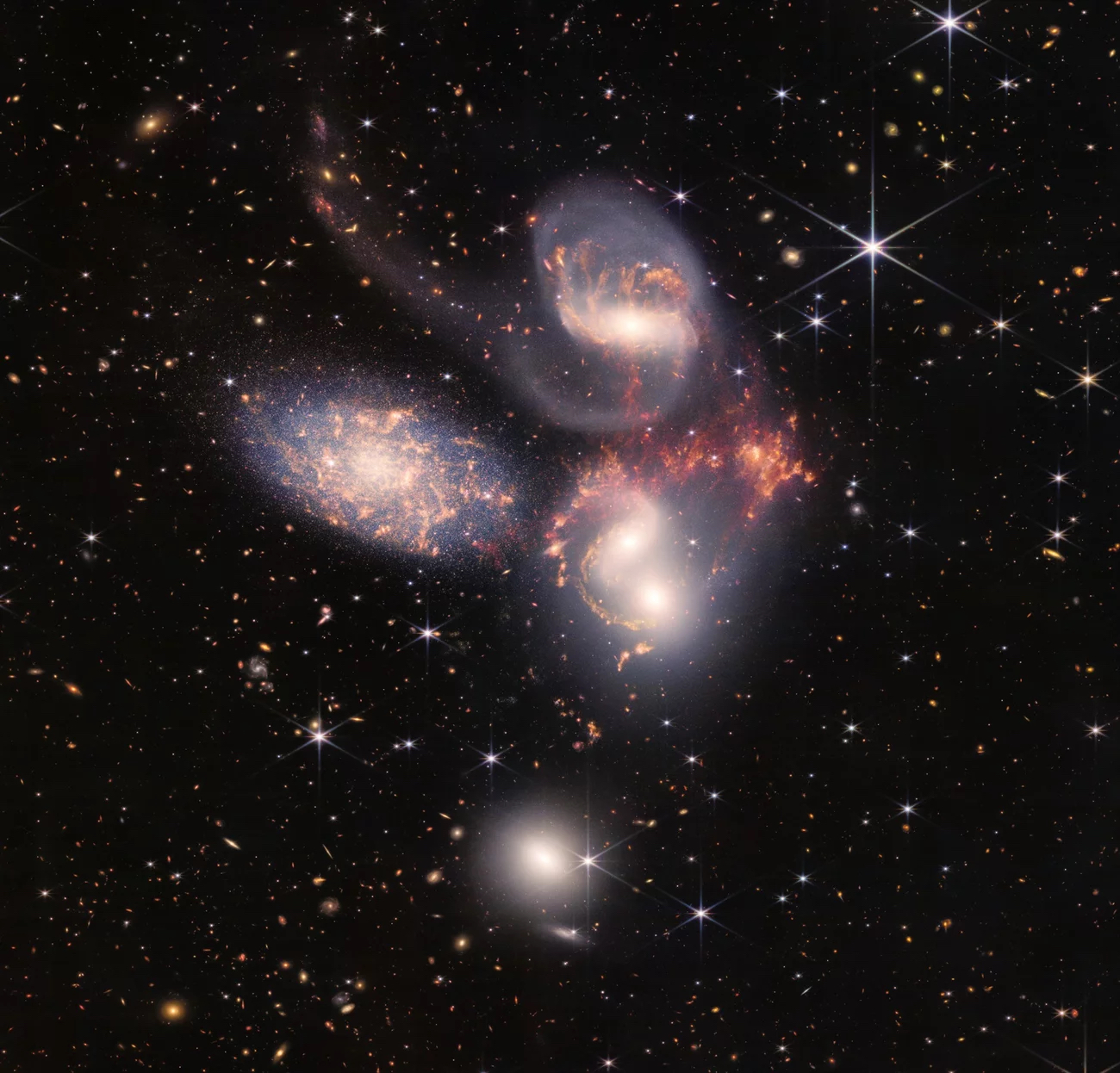
Space & Scripture 

Tuesday’s Column: Dale Mail

THE WAY UP THERE

Dale Pollard

“If you held a grain of sand on the tip of your finger at arm’s length, that is the part of the universe you are seeing — just one little speck of the universe…”

NASA Administrator  Bill Nelson

Isaiah Chapter 40

“Surely you understand who made the earth. It is the Lord who sits above the circle of the earth.” 

V.21b-22a

“He rolled open the skies like a piece of cloth…He stretched out the skies like a tent to sit under.”

V.22b

Lift up your eyes on high and see: 

who created these? Who created all those armies in the sky?

Who knows every star by name?

“He is very strong and powerful,

so not one of these stars is lost.

Surely you know the truth.
Surely you have heard.

The Lord is the God who lives forever!”

V.26-28a

Praise The Lord!

Neal Pollard

Your version may use the word “hallelujah” to begin Psalm 135. Hallelujah means “praise the Lord.” While it is synonymous with giving thanks, it means to laud a superior quality or act, to acclaim and express joy in doing so. What is so noteworthy is that the psalmist does this in very specific ways, recounting times in history when God demonstrates His power and glory on behalf of His people. As we walk through the psalm, we see this. Why is He to be praised?

  • HIS CHOOSING OF HIS PEOPLE (4)
  • HIS NATURE (5)–Great, Above All
  • HIS WORK IN CREATION (6-7)–Heaven, Earth, Seas, All Deep, Vapors, Lightning, Wind, Rain
  • HIS DEFEATING OF THEIR ENEMIES (8-11)–Egypt, Amorites, Canaanites
  • HIS BLESSINGS (12)–Gave His People A Heritage (Possession)
  • HIS POWER (13)–His Name And Remembrance
  • HIS PROMISES (14)–Compassionate Judgment
  • HIS SUPERIORITY OVER HIS RIVALS (15-18)–Deaf, Dumb, And Blind Idols, Just Like Humans

The writer calls on God’s people to praise and worship Him in song, expressing their adoration (1-3). He ends with a threefold call to “bless the Lord” (19-21). May I suggest that you work through something both in your daily life and in your preparation before every time you assemble to worship? Call it setting the table for fellowship with the Divine. Either meditate on the specific works and ways of God that are worthy of admiration, praise and honor or pray to Him, expressing these matters in specific terms. Focus on how He’s demonstrated greatness in blessing your life and the lives of those around you. Perhaps it’s answered prayer, providence, deliverance, or relief. Focus on His power and might in the affairs of our nation, in the activities of our congregation, and the occurrences within your family and personal life. Let the worship flow as you look around at all you see in nature, from the universe to right out your window. Think about the gift of Jesus for your sins. All of this will surely cause you to echo the writer in Psalm 135 and call out to others, “Praise the Lord!”

Photo credit: Kathy Pollard

The Law Of The Lord

Friday’s Column: Captain’s Blog

IMG_0806

Carl Pollard

How much does your Bible mean to you? Each time we pick it up and read from its pages, we are reading the very words of God. God has revealed His Character, His will, and His love through inspired men. Each time we open our Bibles we are seeing the mind of God. 

What an awe inspiring fact to think about.

We aren’t the first ones to feel this way.

In response to the perfect Law of God, David wrote Psalm 19. It is a tribute to the perfection of scripture. As we read through this chapter, David puts into words these feelings of awe and gratitude.

He begins by stating a fact that has always been true.

“The heavens declare the glory of God, and the sky above proclaims His handiwork.”

In a psalm dedicated to the perfect Law of the Lord, David starts by praising the Author. The God of creation, who can be seen in every aspect of our world, is the One responsible for writing such a perfect book. We can look around and the world declares the glory of God. The Author of life itself gave us a book that leads to eternal life.

In verse 7 David describes the Law of the Lord as being perfect. Notice what this perfect Law does for us: it “revives the soul.” The words of God are sure and steadfast. They are truly perfect and are ever relevant to us, His creation.

We continue reading and he goes on to say that God’s Word:

  1. Gives us wisdom (wisdom we would otherwise never have)
  2. Is always right (there is no doubting, thinking that they might be wrong)
  3. His commandments are pure (no false motive)
  4. His word enlightens our eyes (we can now see the truth)
  5. His rules are true
  6. His word is righteous

With such a perfect Law, it is only natural that we should desire it more than Gold.
David says in verse 10 that the words we read in scripture are “sweeter than honey.”
His response to God’s word should be every Christian’s response. We should value and cherish God’s perfect Law.

The Bible is a blessing like no other. In its pages we are warned about the things we should avoid. By keeping His commands we receive a great reward. Psalm 19 is a beautiful tribute to a beautiful book.

With these facts in mind, how much does God’s book mean to you?

Word Studies: “MAJESTY”

Wednesday’s Column: Third’s Words

Gary III

Gary Pollard

We will be looking at the word “majesty” by request in today’s article. This series will look at words used in our English translations that aren’t used in modern communication or are otherwise unusual. Today, majesty usually shows up as an adjective for natural phenomena (a majestic sunrise/sunset, majestic scene, etc.). 

As a disclaimer, Hebrew studies are not my forte. For those of you with a knowledge of Hebrew, I welcome corrections. All material concerning Hebrew usage comes from the Theological Lexicon of the Old Testament or Hebrew & Aramaic Lexicon of the Old Testament: Volume 5. 

In the Old Testament, it is used to describe the beauty or awesomeness of nature. Leviticus 23.40 uses “splendid.” In Isaiah 53.2, and it means “physically attractive.” Being impressive or inspiring awe/wonder is how the word is used in reference to God, although descriptions of kings are also appropriate (Isaiah 35.2). Speaking of royalty, majesty is used to describe their power and accomplishments (see Daniel 4.30, 5.18 for examples). In the Old Testament, majesty can be understood as impressive, having honor, or as the effect left on an observer of a display of power or awesomeness. 

In the New Testament, it means to have high respect or incredible qualities (see II Peter 1.16). In that passage, Peter says that he was a firsthand witness of the majesty of Jesus. This is incredible, considering Isaiah 53 says that His appearance wasn’t special or spectacular. The majesty Jesus had on earth was due to His nature, not His appearance. Majesty is also used in reference to having high respect because of an impressive performance or display of power (Luke 9.43). In that passage, Jesus healed a boy who had a particularly violent demon. After returning him to a normal state, witnesses were blown away at God’s majesty. It was obvious that the power necessary to correct the boy’s issues was preternatural. They observed an incredible event and understood its source to be God’s power. That power is an aspect of God’s majesty. 

We are impressed with God’s majesty when we look at nature. The universe is vast and incredible! There are stars so massive they make the sun look puny. Even single-cell organisms on earth are incredibly complex. As advanced as medical science is today, we still do not understand many of the processes of the body. Count how many times some variant of the phrase, “We’re not sure how this works,” is used in clinical studies on multiple classes of medications or treatments. The complexity of our makeup is awe-inspiring! When we are impressed by nature’s power or beauty, we get a glimpse of God’s majesty.