Five Reasons God’s Law Of Marriage, Divorce, And Remarriage Applies To All

Neal Pollard

People approach the very sensitive subject of marriage, divorce, and remarriage in several ways. Some, ignorant of what Jesus says about it, are a law to themselves and come up with any number of “alternatives” including living together without marriage, homosexuality, adultery, and the like. Some have become stricter than Jesus, saying that divorce for any reason is a sin. This is making a law where God has not (Prov. 30:6; Rev. 22:18-19). Some have become less strict than Jesus, making allowance where He has not. One of the most common allowances is the idea this law does not apply to everyone. Also, some have tried to make the sin of adultery something other than what context shows it to be. Here are five reasons why God’s law of marriage, divorce, and remarriage applies to all.

(1) Jesus Goes Back To The Beginning Of Creation (19:4,8). Jesus is not teaching something that was limited to His own time and it certainly was not an articulation of the Law of Moses (see 19:7-8). Instead, Jesus goes back to the dawn of time to Adam and Eve in the Garden. Jesus, in giving His command, reaches behind Moses to “the beginning.” This shows a timelessness to the command. God designed it a certain way, man distorted it, and Jesus dictates a new way that is universal in nature. He points ahead by pointing back to the beginning.

(2) What God Has Joined Should Not Be Separated (19:6). When two people have a right to be married, whether or not a preacher or religious person performs the ceremony, God is joining those two together. Verse nine gives God’s only exception for allowing the marriage bond to be severed and only then for the one against whom fornication is committed (the “innocent party”)(see the last phrase in verse nine). There is no qualifying phrase beyond that one exception to justify ending one marriage and forming another.

(3) Jesus’ Teaching Is Explicitly Clear (19:9). It truly takes “expert help” to misunderstand what Jesus teaches here. Take out the exception and here is how the “rule” reads: “Whoever divorce his wife and marries another, commits adultery; and whoever marries her who is divorced commits adultery.” That could not be clearer! The exception is also perfectly clear.

(4) The Disciples’ Reaction (19:10). Their reaction is actually extreme. They conclude that it is better not to get married. Jesus does not validate such thinking, but it gives us insight in to what they understood. Jesus’ law for marriage, divorce, and remarriage is stringent! If “adultery” merely meant “covenant breaking,” would the disciples react so? One would simply need to “repent” of having broken their marriage vows, and then enter another marriage. If Jesus meant that, the disciples would hardly have reacted at all.

(5) Christ’s Final Response About Eunuchs (19:11-12). Jesus clears up any doubt by how He ends this discussion. He speaks of three classes of eunuchs-those born that way, those made that way by men, and those who make themselves that way “for the kingdom of heaven’s sake.” Being delicate here, we understand what it means to be a “eunuch.” That cuts to the heart of what our Lord is saying and one of the blessings accompanying the marriage relationship. Those who divorce for reasons other than the exception Jesus gives in verse nine would have to be in that third category of person discussed in verse 12.
This is not a truth that can be delivered with cold stare, pounding fist, and judgmental heart. It is one that more likely will be accompanied with breaking heart, blinding tears, and extreme hesitation. Probably nothing is more unpleasant to teach, but as part of the “whole counsel” (Acts 20:27) it must be taught. Culture cannot be the authority on this matter. Neither can emotion. Instead, as always, we must let Jesus be the authority (cf. Col. 1:18; 3:17; Matt. 28:18).

I REMEMBER CALE VERSUS DONNIE


Neal Pollard

1979 was the year I discovered sports, developing a fledgling interest in my home state’s greatest football team, the Georgia Bulldogs, watching Dale Murphy and Bob Horner, young stars on a woeful Atlanta Braves team, learning names like Steve Bartkowski, William Andrews, and Greg Brazina. I started collecting baseball, football, and basketball cards.  But my clearest memory and biggest sports’ memory in that seminal year of sports-fan-man-ship came when I walked into our living room in Cairo, Georgia, at the end of the Daytona 500.  I can’t remember how many laps I watched, but I watched them all in utter fascination—including the historic final lap.  The suspense, drama, and excitement was palpable, climaxed by Cale Yarborough coming down the inside in an attempted “slingshot” move and triggering a crash between himself and Donnie Allison.  The maneuver cost them both the victory as Richard Petty took the checkered flag.  But what I remember was not Petty’s win, but the altercation between Cale and Donnie’s brother, Bobby, who had stopped to check on his brother.  Cale hit Bobby in the face with his helmet, then, as Bobby famously recounted, Cale went to beating Bobby’s fist with his nose.  That moment (“the fight”) is credited with putting NASCAR “on the map” and leading it into the mainstream of American interest.

While it’s ultimately a matter of indifference that a fight led a sport to success, it’s profoundly sad that the religious world is often known for its division and difference rather than its being united in truth.  One of the biggest arguments against Christianity is that “Christians” (as the world sees them and understands the term) argue with each other.  As world religions spread and as secularism and atheism grow in our world, the strife and division among us is more negatively noticeable than ever.

This fragmentation could not be farther from heaven’s desire.  Jesus prayed for His followers to be united (John 17:20-21).  Paul condemned religious division (1 Co. 1:10-13) and called for the body of Christ to be one (1 Co. 12:13; Eph. 2:16; 4:4).  The world is heading toward eternal punishment and religious people who follow manmade doctrine are said by the Bible to share that tragic fate (Mat. 7:21-23; 15:8-9; John 12:48; Gal. 1:6-9; Rev. 22:18-19).

When the world looks at those professing to be Jesus’ disciples, what should they see?  I know what Jesus wanted them to see.  He said, “”A new commandment I give to you, that you love one another, even as I have loved you, that you also love one another. By this all men will know that you are My disciples, if you have love for one another” (John 13:34-35).  Let’s be known to the world as lovers, not fighters!

Bieber’s Baptism

Neal Pollard

It was reported on the news and all I heard was that the pop star turned bad boy, Justin Bieber, was baptized this weekend in the bathroom of a megachurch’s building in New York City.  As has often been the case, this event was surrounded by a sea of controversy involving the 20-year-old singer.  The “pastor” who baptized him said that the act was preceded by a month of intense Bible study.  Bieber sought baptism for cleansing of sin following the release of a racist-filled 5-year-old video featuring the young man. I am not contending in the least that Bieber’s baptism fulfilled the biblical requirements or that he is now, in the New Testament sense, “born again.”

However, it provides a great opportunity to ask what elements must be present in a baptism that does meet New Testament requirements.  First, it must be predicated upon knowledge.  One must understand the significance of the one baptism (cf. Eph. 4:4). Practically speaking, one must either do the personal study or have someone teach what the Bible says about the place of baptism in God’s plan.

Second, baptism must be preceded by sorrow for sin and a desire to have sins washed away.  Sorrow for sin is a part of repentance, which is a change of the mind that results in a change of action (Acts 2:38; 3:19; 2 Co. 7:10).  Repentance is more than sorrow for sin, but it includes such.

Third, baptism must be by immersion to follow the teaching and examples of the New Testament.  We read of baptism as a burial in water (Rom. 6:1-6; Col. 2:12).  We see the Ethiopian go down into the water and come up out of it (Acts 8:38).  In the New Testament, baptism took place where there was “much water” (John 3:23).

Though lacking complete knowledge of Lentz’s Hillsong Church, where Bieber was baptized, there is enough on their website to identify them as thoroughly erroneous in their teaching regarding salvation, worship, and various doctrinal matters (women’s role, instrumental music, tongue speaking, omission of baptism as part of what must be done to have forgiveness).  However, it is possible that Bieber and anyone else we would deem spiritual wrecks—which we all are to some degree and in various ways—can be taught as they were in the first century and become what they then became. May we be searching for those who desire to follow Jesus, making disciples of, baptizing, and teaching them (cf. Mat. 28:19-20).

“THE GM NOD”


Neal Pollard

The Wall Street Journal says General Motors made a “deadly defect in ignition switches used on as many as 2.6 million cars” (blogs.wsj.com, Spector, White, et al). The switches could suddenly slip from the on position, “stalling the vehicles and disabling airbags” (ibid.).  But, it didn’t get fixed and, according to WSJ’s Mike Ramsey and Jeff Bennett, the National Highway Traffic Safety Administration (NHTSA) is certain that there were more than the 13 deaths as GM has been maintaining.  Some safety experts speculate that the number could be as high as 100 (blogs.wsj.com).  A 315 page report on the GM corporate culture reveals that solutions were proposed but died in committees. “But determining the identity of an actual decision maker was impenetrable. No single person owned any decision” (ibid.). The phenomenon was dubbed “the GM nod” or “the GM salute,” where everyone agreed that something should be done but nobody did anything.

A proposal is made, everyone agrees it should be enacted, and then everyone thinks someone else will do it and not them. There is no taking of ownership or accepting of responsibility.  “Someone” will handle it.  But, nobody did!

It is easy to fall into this way of thinking.  When sermons are preached on evangelism or encouraging wayward members, we nod at its importance.  When announcements are made of those facing surgery or being hospitalized and visits are encouraged, we nod that it should happen.  We’re asked to pray for someone and we sympathetically nod. Appeals to attend worship services and Bible classes may be met with a nod.  Calls for duty, involvement, and commitment might get a dutiful nod.

Sometimes, though, the nod is the last action we take.  We’re busy.  It’s not our job.  Someone will do it, but not me.

Let’s be challenged to be moved by right, scriptural calls to action.  Let’s not assume someone else will do it.  Let’s take these appeals personally and act accordingly.

Can You Do Something With Your Children?


Neal Pollard

“Older people”—in which I include not just the elderly but anyone whose children are older—and even others should practice compassion and sympathy toward our dear parents who are making the effort and sacrifice to be present in our assemblies with their wonderful small children.  Attention spans and articulation of needs are challenges up to a certain age.  Even good children wrestle with rambunctiousness and precociousness.  This is natural and certainly forgivable.  With compassion, we must acknowledge that some children have special needs and cannot help some of their behaviors.

Yet, there can be children who are simply spoiled and undisciplined.  While all of us are experts on how others should be raising their children, we all come to the task regarding our own children as rank novices.  God knew that, and so He instructs us as to what to do with our children.

“Train” them (Pro. 22:6). If we are not careful, we can let our children train and condition us.  Have you ever seen children who consistently “ruled the roost” in their homes?  Training implies intention, planning, forethought, and concerted effort. When children seek to impose their will, it takes great will-power and discipline on our part to show them what is and is not appropriate.

“Bring them up” (Eph. 6:4).  Who was it that said “if you don’t bring them up, you’ll let them down?”  I agree with them.  Paul urges fathers to raise children “in the discipline and instruction of the Lord.”  We must mold them into God-followers, which means appealing to their minds and bodies.  The instruction addresses the mind. The discipline guides the body.  The antithesis would be undisciplined, ignorant children in the most important area of life—the spiritual!

“Love” them (Tit. 2:5).  Here, Paul urges mothers in this all-important, pervasive action.  Sadly, some think love equates to indulgence, permissiveness, and helpless by standing.  Not at all!  Only loving parents will make their children obey the rules, be polite and well-behaved, and considerate of others.  How sad and unloving when parents constantly shift blame or excuse misbehavior rather than address it and help correct it.

Train them, bring them up, and love them.  Do this, and others will sincerely enjoy being around your children, will compliment them consistently, and thank you for making the effort.  Fail to do it at the potential peril of the child and yourself!  Do what God says should be done with your children!  You will be glad you did.

Why Has There Been A Decline In Public Responses?

Neal Pollard

While I am certain that there are those who will say that they are still seeing as many public responses in their assemblies as ever, most will observe what I have observed.  As I think back to my childhood, public responses to the invitation were commonplace—nearly every service.  When I first began preaching, public responses requesting baptism or public repentance by members very regularly occurred.  Steadily, particularly in the last five to 10 years, such responses have declined. The burning question is, “Why?”

One might point to the growing influence of the world and its impact on the heart of hearers.  One may point to weaker, less distinct preaching.  One could talk about how potential responders will feel judged or condemned by the others present.  One could speak of the philosophies and world views of the age, whether secularism, naturalism, postmodernism, or emergent theology.

Though these are no doubt factors, I am not fully satisfied with them.  Weren’t these stumbling blocks in place in previous generations.  The names of the philosophies may have changed, but they were there. Consider another theory.  Are we losing the traditional, real social connection and fellowship of days gone by as we lose ourselves in the virtual world of social media (some of the same desensitizing factors could apply to TV and movies, too)?  Before you dismiss this theory, consider some reasons why I promulgate it.

  • Some use social media as their “confessional” or front pew, where they confess their failings in marriage, attitude, speech, or actions.
  • On the other hand, social media outlets—particularly those having photos as part of their makeup—create an artificiality.  We don’t post unflattering pictures (and may plead with those that tag us in them to delete them), don’t generally admit to weaknesses of character or anything that may make us seem inferior to others (financially, socially, intellectually, etc.).  Image replaces integrity.
  • Increased time on social media, cultivating that virtual world and its relationships, may be robbing us of real-time, real-life relationships.  We often neglect those in front of us for those we’re “visiting” by phone or tablet.

How might this impact public responses?  Are we meeting the needs of James 5:16 and 1 John 1:9 via the virtual world? Are we afraid to show vulnerability, need, or weakness, lest we be deemed “inferior”?  Have we desensitized ourselves, losing the ability to be “real”?  There may be huge holes in my theory, but I suspect there is at least some truth to it.

What can we do to reverse the trend? Hopefully, giving it some serious thought is a start.  We cannot reduce ourselves to mindless minions who are consumed with the superficial while disconnecting from the authentic.  We must renew a dedication to fellowship and relationship, now more than ever!  The people on Pentecost were disturbed enough by clear, divine teaching to make that known in the clearest terms (Acts 2:37).  Let’s help the church be a place of real connections and relationships so we can help each other when spiritual needs exist.

“SMALL CONGREGATIONS”


Neal Pollard

I grew up in Georgia mostly attending congregations that weren’t numerically large.  I never attended a church of more than 200 until I went to college, but even then the two churches I preached for during that time were smaller than that. I have preached full-time for three congregations, and two of them were smaller than 200. Yet, when I speak of small congregations, I am talking about those less than 50.  They typically have a hard time supporting a preacher full-time, almost never have elders or much spiritual leadership at all, and would often consider themselves to be “struggling” in some way.  While they have their share of weaknesses and reasons for being small—from internal strife to a lack of evangelistic zeal—they are special and valuable to God and often striving to get Christ into their communities.  Out here in the west, I’ve attended several of them in Colorado, Utah, Kansas, Idaho, Wyoming, New Mexico, and California.  But it is not a phenomenon unique to regions outside the Bible belt.  My father works to help and strengthen churches in the Carolinas in that state, as he did for so many years in Georgia, Mississippi, Kentucky, and even Tennessee.  My brother and I both began full-time preaching in small churches in Alabama.  Rural America is full of small churches, but we are fully aware that these exist on every continent and many nations.  Some countries have fewer than 50 Christians in them, and there are even nations where the Lord’s church does not exist.

Having recently been with a small congregation, I was reminded of how big their faith, sense of family, and desire to make an impact for the Lord such churches can be.  I visited with a man who was one of about 5 members in a church about 50 miles from Twin Falls, Idaho.  They support a preacher in Kenya, mass media via Gospel Broadcasting Network (GBN), and buy Bibles to distribute in several nations. Their building is paid for and they are so desirous of doing whatever they can to reach their tiny community but also the global community.  Would you really call them a “small congregation”?

I have been exposed to more than one church where hundreds or more attended that rarely grow except through membership transfer, whose activities are heavily weighted inwardly—focused on entertaining, pleasing, and spending on themselves, and whose leaders are visionless and whose pulpits are powerless.  Couldn’t we call these “small congregations” in a way much more tragic?

I don’t want to ever be a part of a small congregation.  Even if the group with whom I work and worship are a few dozen or a handful, I pray I will do what I can to help them dream, plan, and do big things and not be small.  Our Lord is big and great.  The church is His body and as such should never be small!

Evel Knievel At Snake River Canyon

Neal Pollard

Today I took a picture of a famous pile of dirt.  It was the “launch site” for an infamous jump made by an infamous figure of the ’60s, ’70’s, and ’80s.  On September 8, 1974, almost 40 years ago, Evel Knievel used a rocket-powered cycle known as the Skycycle X-2 to jump the Snake River Canyon in Twin Falls, Idaho.  Having now seen this foreboding span between the north and south rim with my own two eyes, I can only wonder why he would have even attempted it. If you aren’t familiar with how it turned out, it was a dud.  His chute deployed at the beginning of the jump and he fell to the canyon floor narrowly missing the river in what would have been a certain drowning due to a malfunctioning harness. Tim Woodward, a now retired columnist for Boise’s Idaho Statesman newspaper, was there covering the event.  He describes the atmosphere, saying, “It was, in the terminology of the day, a ‘happening.’ Spectators and groupies came by the thousands from all over the country, bringing drugs, alcohol and nudity in profusion. It was Woodstock without the music. Or the peace and love” (Woodward, Idaho Statesman, 12/1/07). A local member of the church says that the event cost the city untold money, due to vandalism, theft, and other destructive acts.  He also says the common belief is that the daredevil lost his nerve and panicked, triggering the parachute himself.  Whether that was the case or not, it was a much-anticipated event at which many raucous spectators gathered only to be disappointed.

As I heard and read these details, it made me think of an event that will be far different from this one.  It will involve a figure who has been the center of far greater controversy than any other—one who some love but many more hate.  It will involve a promised event infinitely more spectacular than anything man has devised.  It will include the largest crowd ever assembled to witness any other event, and it will include raucous rabble-rousers as well as righteous religious people.  But it will be neither a dud nor a flop.  Its magnificence defies adequate words of description.  The second coming of Christ will be no mere “publicity stunt.” It will be at the center of the ending of time and the ushering in of eternity.  It will draw every person from every nation for all time.  It will bring everyone to our knees.  God has foretold us of this day and we cannot afford to take it lightly (cf. John 5:28-29; 2 Pe. 3:10).  We must be prepared for it (Mat. 24:44).  We have never seen anything like it, but we can be ready for it!

DSCN8647

LONGEST SPEECH, SHORTEST TERM

Neal Pollard

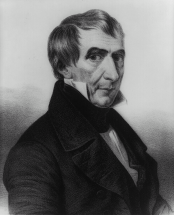
The shortest inaugural address was George Washington’s second, in 1793, and it was comprised of 193 words! William Henry Harrison, though raised a cultured, educated man, campaigned on a folksy ticket symbolized by the log cabin. To set a different, more cultured tone for his presidency, Harrison decided to give a lengthy, erudite speech on a bitterly cold, early March day in 1841. He spoke for nearly two hours, doing so without benefit of a topcoat or hat. Historians are generally agreed that Harrison’s motivation was to show himself not be a country bumpkin or simpleton. While it is unclear if his exposure led to the pneumonia that killed him exactly a month later, it still boils down to a lot of talk and very little execution.

How often do we, as congregations, spend a seemingly endless amount of time outlining, discussing, and rehashing grand plans? Goals and planning are vital to a church’s existence, but so often much talk produces little action. In any congregation’s mind, they are going to be a fast-growing, active, moving, and shaking bunch. Yet, so few churches are that. We spend our time laying out the plan and give ourselves so little time to do it.

We do that in our individual lives, too. We make big plans for tomorrow (cf. Jas. 4:13-15). Like the poet expressed it, “He was going to be all that man should be…tomorrow; no one would be kinder or braver than he…tomorrow.” Yet, the poet depicts the dreamer as one who died today while hoping for tomorrow. Are we making grand, long-winded speeches about all we are going to do? Are we spending such time outlining it that we have so little time left to execute it?

Think of all you know about William Henry Harrison compared to George Washington. Both were thinkers and planners, but oh the difference in how we remember each of the. Think, then do!

You Won’t Graduate From Our Love (Poem)

2014_05_13_14_07_55
Neal Pollard
We heard your voice at your first cries
Were the first to see your vibrant eyes
Held your tiny body, how fragile you were
Like yesterday we remember you sweet and pure
We laughed as you first tottered and walked
And wrote down what you said as you first talked
Marveled at every change and growth
Your wit and humor has always cheered us both
How time took wings and swiftly brought you to now
It’s been only a moment, hasn’t it? We ask “how?”
How has the infant grown into such a fine young man?
Into one who so sincerely follows God’s plan?
Who wants to serve others and share God’s great Word?
Who dreams of foreign fields where many haven’t heard?
Yes, you still bear the vigor and strength of young age
And so much lies before you and this is but one page
But it sends us backward in time for a moment or two
You’ve had 18 years of living, but to us they seem few
Who knows in God’s plan what for you lies ahead?
Just keep His will first as toward your future you tread.
Keep your sweet spirit and tender heart as it is
And continue to keep your strong hand in His
He’ll open the doors and He’ll always provide
As you stay in His Word and in His love abide.
We could not be more proud of your momentous milestone
Or pray more for you as you face your future unknown
As you take your diploma and plot your next move
Whatever you achieve, you’ll never graduate from our love.

(in honor of the graduation of our favorite middle son, James Dale Pollard)

A GLOBAL EPIDEMIC

Neal Pollard

MERS is the latest pathogen to seize the world’s attention, and this middle-eastern sprung virus, having a 30% mortality rate, is cause for some concern.  Yet, it is the latest in a long line of alarming diseases that have struck fear in people—AIDs, Asian Flu, Spanish Flu, smallpox, bubonic plague, and leprosy, just to name a few.  Whether the horrific presentation, swift action, or painfulness of these conditions, just the names of these diseases raise the shudders of those informed about how deadly they are.  An ailment that commonly brings about mortality gets our attention.

Sin, however, often does its work on the individual without the dramatic presentation and many times in a way that feels painless to the “sufferer” until it is too late.  But, nothing is deadlier or more serious.  That is why God made it a prominent subject in the only book He ever wrote.  He identifies it in its every form, reveals the symptoms, warns of the potentially deadliness of it, and provides the cure.

The majority do not recognize it for what it is, they incorrectly identify it, offer the wrong cures for it, and a great many just ignore what it is doing to them.  They call it by other names, thinking that by doing that they are eradicating it from themselves.  While that may numb them through this life, it will not serve them well in eternity.

Variously, the Bible says “sin is exceedingly grave” (Gen. 18:20), “sin is unhealthy” (Psa. 38:3), “sin is a disgrace” (Prov. 14:34), “sin brings guilt” (Mark 3:29), “sin brings spiritual death” (Rom. 6:23; Jas. 1:15), “sin enslaves” (Rom. 7:14,23), “sin is deceitful” (Heb. 3:13), “sin entangles” (Heb. 12:1), “sin is lawlessness” (1 John 3:4), “sin is of the devil” (1 John 3:8), and “sin is unrighteousness” (1 John 5:17).  Yet, despite this, we know “fools mock at sin” (Prov. 14:9).  A vicious disease is at work in them and, unresolved and untreated, it will lead them to eternal pain, but because it afflicts the unseen part of a person they cannot see the damage to their souls.  They often see its effects in their own lives and in others’.

That’s where Christians come in, Physician’s assistants for the Great Healer.  We are to get healing to as many as are willing to take the cure.  We may be treated hostilely by some of those eternally ill, but we must risk sharing it for their good.  We face a terrible epidemic but we have a cure that is 100% effective when properly applied!

IS TRUTH “OBJECTIVE” OR “SUBJECTIVE”?


Neal Pollard

“You folks believe baptism is essential, but we believe we are saved when we accept Jesus in our hearts by faith.” “Why does the church of Christ think it is wrong to use a piano?”  “You must not like women.  You sure don’t let them use all their ‘gifts’ in your worship and leadership.”  These are just three random examples of statements of perception made by our friends and family concerning “our beliefs.”

How would you answer these?  Even within the Lord’s church, more than one answer is often offered.  Sadly, too often the heat of emotion eclipses the light of scripture in these matters.  How is truth determined?  Is it man’s right to decide what truth is “for him”?  Can I have my truth and you have your own, different truths, and we both are right?  Please understand that I am not speaking of matters of judgment, opinion, matters that must be determined by principles of scripture, scruples, and conscience.  Take the three examples mentioned-baptism, church music, and the role of women.  Are these matters that must be decided by mere human judgment, opinions, and conscience?  Or can we “know the truth” on these things (cf. John 8:32)?

All of this ultimately boils down to our attitude and approach to God’s Word.  Do we accept it at face value and glean from it what it has already said, or do we infuse (insert) into it our predetermined values and desires?  Consider the three examples.

Baptism is connected to salvation in the gospels (Mk. 16:16), the history book of the New Testament (Acts 2:38; 22:16; etc.), and the epistles (Rom. 6:1-6; Gal. 3:27; Col. 2:12; 1 Pet. 3:21; etc.).  Why would we deny it?  Do we really hope to make scripture fit our view by trying to make Bible verses conflict with each other (cf. John 3:16; Acts 16:31)?  If the Bible repeatedly says baptism is necessary for salvation, isn’t that a truth objective and universal?  If not, why not?

Singing is specifically commanded in major worship passages like Colossians 3:16 and Ephesians 5:19.  We have no doubt that God wants us to sing.  Now, some say that it is a matter of preference whether you sing with or without instrumental accompaniment.  I find it interesting that a New Testament writer teaching a New Testament principle makes his point with an example from the first covenant.  In Hebrews 7:14, the penman writes, “For it is evident that our Lord arose from Judah, of which tribe Moses spoke nothing concerning priesthood.”  Moses did not forbid a man of Judah from serving as a priest.  God simply specified that the tribe of Levi was to be the priestly tribe.  Was priesthood selection a matter of personal preference?  Absolutely not (see 1 Kings 12)!  

Women’s role in the church is discussed in the midst of an epistle the thesis of which is that the church may know how to conduct herself (1 Tim. 3:15).  Part of that conduct regards women’s role in the church (1 Tim. 2:9-15).  The Christian woman is not to teach or have authority over the man (2:11-12).  The reason is not tied to Greek culture, but way back to original design at the beginning of the world (2:13-14).  When some push for an “expanded” role for women, are they letting cultural pressure of heavenly desire drive them?

Certainly, we cannot be callous or altogether dispassionate in studying or discussing these matters.  But, without recognizing a sovereign, divine standard of truth, what are we doing with Scripture?  Whether meaning to or not, we are subjugating God’s stated will to our subjective, ever-shifting will.  John 12:48 reminds us that the latter will ultimately be irrelevant.

SHE CARRIED HER SISTER TO THE FINISH LINE


Neal Pollard

At the southern Illinois state track meet, Claire and Chloe Gruenke, twin sisters, were signed up for several races.  Chloe would even win the one mile race in 5:23 that day.  But in the 800 meter race, Chloe heard a pop in her knee and absolutely could not run another step.  Claire saw it happen and made an incredibly sacrificial gesture.  She put her sister on her back and carried her piggyback the final 370 meters of that race.  The crowd wildly cheered her on and gave her the encouragement she needed to do the difficult and finish the race with her sister in tow (via Fox4kc.com). It was a beautiful story!

The writer of Hebrews tells us we are running a race, surrounded by many witnesses (12:1).  It is easy to grow weary and lose heart (3).  God has given us Christ as a focal point (2). However, the Bible gives us the charge to help each other, too (Gal. 6:1; Heb. 12:13).  While no one can run the Christian race for someone else or make another person do what they need to do to be saved, we are encouraged to help each other run that race.  Paul talks of helping other “runners” and watching himself in the process (1 Cor. 9:27). He urges the Romans, “Now we who are strong ought to bear the weaknesses of those without strength and not just please ourselves. Each of us is to please his neighbor for his good, to his edification” (Rom. 15:1-2).

There are times when we feel strong and can make progress without the assistance of others on this earth, but at other times we will struggle.  How terrible if we do not have someone to help us make it through the struggling times.  Of course, we also have to think of ourselves as ones willing to aid the brother or sister who needs a spiritual lift—the carrier and not just the carried.  God has made the church as a unified body, each member helping the other when the need arises.  Many will not finish the race.  May we make sure that we do what we can to prevent our spiritual family from failing to successfully cross the finish line.

Please Hang Up Your Smartphone

Neal Pollard

Prefatory note: I am writing as a guilty party rather than an innocent bystander.  The following words are directed inwardly at least as much as outwardly.

It is getting hard to remember what we did before we got our smartphones.  How did we keep from answering everyone’s texts immediately or looking up the minutest factoids about athletes, actors, and ancient history before we let another moment pass? What did husbands and wives, other family, and friends do at dinner and other public and private places?  Why did we ever engage in face to face conversations with the person in front of us when we could have been blowing them off to inbox or text a person hundreds or thousands of miles away from us?  Wasn’t good manners and courtesy way overrated?

It seems like an epidemic, whether an etiquette virus or relationship dementia.  Too often, we have become so absorbed with posting, tweeting, Facebooking, and like communicating with our cellular device that we have slowly started disconnecting with the real world and the moment.  Last Sunday, sitting at the airport, I was amazed to see rows and rows of future passengers glued to their seats with eyes glued to their laptops and phones.  The airlines have even modified their policy in recent times to allow one to never have to cut off their “handheld devices” so long as they are in airplane mode.  I’m no expert, but I wonder for how many of us our tools of technology have become avenues of addiction?  I have given a little thought to this, and now offer some totally unsolicited advice:

  • Choose the person in the room who can see whether you are paying attention to them over the one elsewhere who won’t know you didn’t answer their message immediately.
  • If you choose face-to-face interaction, try putting your phone away and even out of convenient reach.
  • Try to be self-aware of how much time you are spending with and how often you gravitate toward your phone.
  • If it is an urgent or emergency situation, consider excusing yourself (if possible without divulging that you are tending to your phone) until after you’ve completed the text, call, or message.
  • As much as possible, stow the phone when it’s family time, date time, double-date time, or social or spiritual fellowship time.
  • Realize that any excuse given for why you are answering that text or message will almost always sound lame.  Don’t excuse rudeness.  Eliminate it.

We can really help each other break this habit, and we need to do so with love and patience while realizing most of us are guilty of these things at least sometimes.  Let us not let the virtual and technological worlds interfere with and even hamper our “realtime relationships.”  May we all practice “hanging up” our smartphones more often!

HAPPY MOTHER’S DAY TO MY MOM, BRENDA POLLARD (POEM)

Neal Pollard
Not a day goes by but that I remember something you said
Or did or showed me. I often play it out in my head
From when you read story books or sang to me
Or made breakfast for supper or tended a scraped knee
Peanut butter and chocolate sandwiches made me smile
Or strolls in the woods, identifying trees or flowers by the mile
When you helped me plant potatoes and saw me throw the cat
Or told me riddles and old sayings, cut my hair while I squirmingly sat
You made much of little but it felt like we had an abundant plenty
And you knew how to treat me when I was five, twelve and twenty
Homemade clothes I was proud of, and your gentle kind way
Mom, you’ve blessed me and shaped me. God bless you this day! 

WHO IS A SLUGGARD?

Neal Pollard

The slothful or sluggard man is condemned many times in Proverbs. God treats laziness with contempt. God says the sluggard is so lazy he buried his hand in his food and won’t even bring it back up to his mouth (Prov. 19:24; 26:15)! Since he knows all the answers, he has no need for work (cf. Prov. 26:16). Notice how Proverbs describes him.
HE HAS NO INITIATIVE (Prov. 6:6-11). He lacks the ambition to work, the foresight to plan, and the desire to provide necessities. He is the one who constantly needs a fire lit under him. He cannot conceive of the idea of being a “self-starter.” No doubt, he has difficulty finding and keeping employment. He constantly seeks out the easy way. He is lethargic. A Christian should never lack determination, for there is great purpose in Christ and His love should motivate us to act (Gal. 5:6).
HE’S UNRELIABLE AND IRRESPONSIBLE (Prov. 10:26). He cannot be entrusted with a task. His word means little. His effort is sub par. The verse says, “As vinegar to the teeth, and as smoke to the eyes, so is the sluggard to them that send him.” Are there ever sluggards in the church, who promise involvement, pledge support, talk up church plans, but never or irregularly produce? They make promises, but people quickly learn not to expect of them. The sluggard forgets that his or her words mean something (cf. Matt. 12:36-37). Too, Jesus says, “Ye shall know them by their fruits” (Matt. 7:16,20).
HE HAD RATHER WISH THAN WORK (Prov. 13:4). He is long on cravings, short on diligence. Therefore, he spends his life in a dream world. Someone said, “If wishes were horses then beggars would ride.” The lazy man is a poor steward of his time (Eph. 5:16) and his mind. Dreams alone are vanity (cf. Ecc. 5:7).
HE WANTS BENEFIT WITHOUT INVESTMENT (Prov. 20:4). He wants something for nothing. This proverbs says that the sluggard goes hungry because he won’t hitch up the team in plowing season. He wants to eat, but he doesn’t want to work for it. Paul suggests that such should not be allowed a spot at the dinner table (cf. 2 Thess. 3:11-12). What about churches that want growth without evangelism? Or individuals who want success without self-discipline? Anything worthwhile requires effort!
There may be a bit of sluggard in us all. The tendency to slough off is often tempting. The devil will surely use idleness to try and defeat the cause of Christ. What sagacity is found in doing with all the might what the hand finds to do (Ecc. 9:10)!

FUELED BY FELLOWSHIP

DSCN8036


Neal Pollard

There are occasions like family reunions, class reunions, church seminars, lectureships, and forums, and the like which allow us to see friends and loved ones sometimes for the first time in years.  There is a joy and rejuvenation of spirit which comes along with such being brought together again. The reunion may seem to come at just the time we feel we needed it, to aid us in coping with trouble, temptation, or trials. A kind word or warm greeting may by itself be enough to keep us moving forward.

This is a testimony to how God created us and how we need those human interactions to encourage and help us.  Without it, we can feel misunderstood, isolated, and dismayed. From the dawn of creation, God, who designed us, knew that “it is not good for the man to be alone” (Gen. 2:18).  We innately crave that togetherness and socialization without which we cannot hope to spiritually thrive.

The longer we are in Christ and growing in a relationship with Him, the less we may be compelled by a command to assemble.  There should be a yearning, based on what we see of Him and receive from Him, to want to praise and magnify Him in worship and learn more of Him through the study and preparation of a Bible class teacher.  The longer we are in the body of Christ and growing in our relationship with them, the less we are compelled by a command to assemble.  There should be a yearning, as we know our brothers and sisters better, to be reunited with them at every opportunity we are given!  If for no other reason, I would be opposed to “dropping services” because of what it would represent in my ongoing development of that vertical and that horizontal relationship.  I do not want to worship Him less often or see my church family less often!  I long for that fellowship.

This fellowship, which is modeled for us in the example of the early church (Acts 2:42-47), fuels me and so often helps me with what I seemed to need most that day.  This is not accidental, but by design.  God, who made us, knew we would need each other and that is why He created the church as He did—not perfect, not always easy or necessarily warm and fuzzy, but as a family.  We are not under the same roof, necessarily, but we are in the same family (1 Cor. 12:13).  God gives us fellowship with Him and each other to help us survive this life and to receive eternal life!  The question is, “Are we trying to do it alone or together?”

Gay Marriage, Miley Cyrus, Clive Bundy, School Shootings


Neal Pollard

The internet is such a great search tool.  Many, including Christians, use it on a daily basis to be informed, inspired, and intrigued. Yet, it seems to me in the years I have been blogging, and especially in the last year or two, that so many are most interested in provocative and salacious ideas.  Perhaps it is the same morbid curiosity that makes us rubberneck when driving past a wreck on the highway.  Yet, the metrics that indicates searches on my blog show a much greater interest in the political and social latest trends and topics than articles that are more straightforwardly biblical or doctrinal (i.e., grace, the judgment, worship, etc.).

Why are we so intrigued with marathon bombings, LGBT, missing airplanes, national tragedies, outrageous and outlandish behavior from athletes and celebrities, second amendment and other political and governmental topics, hot-button-issues in our brotherhood, or controversial topics?  Certainly, as we live in this world and particularly western culture, these are daily topics of conversation.  As we immerse ourselves in our technological tools (phones, tablets, computers), these are often the “trending topics.”

In our haste and zeal to slake our thirst for these things, let us be sure to also feed our souls on what will strengthen us and prepare us for the bigger fish we have to fry.  The blessed, righteous man is described as one “whose is in the law of the Lord, and in His law he meditates day and night” (Ps. 1:2).  That in no way means the righteous person is aloof and uninterested in his or her world, current events, and even popular icons of the age.  The key difference is on what he or she meditates upon and delights in.  What thrills and appeals to us more? What do we more actively pursue?

The answers to those questions are dependent upon the individual.  One can be both informed about the world and more interested in the Word.  However, may we each be cautioned about what proper balance is as well as where our greater interest lay.  What draws our attention and attracts us?  Let us be sure it is hunger and thirst for righteousness (Mat. 5:6) more than anything under the sun!


SUNDAY MORN

Neal Pollard

I love to watch the sun come up
The first day of the week
I long for the bread and the cup
For the privilege of the gospel to speak
I love to see the saints assemble
To blend my voice with them in song
To smile, engage, contemplate, tremble
How ever much time it takes is not long
Each day is a blessing given from God
And filled with gifts and blessing
But one day helps the others get trod
“Which one?” There is no guessing!
It is that special day the church unites
The day when the church was born
And shouldn’t this all God’s ones excite
To worship God on Sunday morn?

The Origin Of Scruples

Neal Pollard

Wes Autrey gave me an incredibly cool book by Charles Earle Funk.  The title of it is, “Thereby Hangs A Tale.” The book divulges the origin of words in modern usage, a study known as etymology. The fascinating explanations of many of our words is virtually endless, but the origin of our word “scruples” is particularly interesting.  Apparently, the Romans were prone to get sharp pebbles in their sandals.  They called those “pointed bits of stone” scrupulus. Funk says, “It is easy to see how the uneasiness one would feel from a pebble in the sandal gave rise to the figurative use of scrupulus for an uneasiness of the mind” (254).  In time, scrupulous has come to mean “extreme caution and carefulness.”  Scruples are “a feeling of doubt or hesitation with regard to the morality or propriety of a course of action.”

There is a connection between scruples and conscience.  It is the conscience that informs our scruples.  Our sense of right and wrong determines our caution, care, and even hesitation when we are in a given situation.  How sharp our conscience is effects how scrupulous or unscrupulous we are.

The Bible does not use the word “scruples,” but the word “conscience” is mentioned 27 times in the New Testament alone. Some people’s conscience forbids them to do what may be acceptable (cf. 1 Cor. 8:7), but others’ consciences allow them to do what is forbidden (Acts 23:1; 1 Tim. 4:2). Thus, the goal is for us to properly train and adequately sharpen the conscience.

What helps in this process is growing close to God by communing with Him in Scripture, application of Scripture, and prayer.  As we walk the narrow way, we want to feel the pain of those “pebbles” that may keep us from finishing the journey.  Is this not the idea conveyed by the writer of Hebrews, who says, “Let us also lay aside every encumbrance and the sin which so easily entangles us, and let us run with endurance the race that is set before us” (Heb. 12:1).  That rock in the shoe may be some ethical or moral practice that ultimately takes us off course.  Let us be careful to gauge the morality or propriety of any course of action, making sure it is in harmony with the goal of eternal life and not more likely to ultimately lead us away from God.