Reality’s Architect

Wednesday’s Column: Third’s Words

Gary Pollard

We’re impressed by the intricacies of craftsmanship or artistry. A well-made instrument or diorama or painting can sell for thousands or more. Watching the process of those things coming to life leaves an even more profound impression of the talent required! I’ve lost track of time while watching hyper-realistic dioramas take shape (by other artists, not me). The sheer effort involved is incredible.
While those artists are very, very talented and impressive, they’re nothing compared to reality’s architect! Hours, weeks, or months are invested in breathtaking artwork, yet those pieces come from extant materials and are based on extant concepts. Humanity cannot create anything new.
It took God less than a week to fabricate an unfathomably large universe. We explore and investigate our world, only to be blown away by its complexities. Even the simplest life forms require highly intelligent minds and sophisticated equipment to understand. The more we discover, the more we understand how little we know.
For several years, science has been adopted by many as an explanation for reality. Besides the fact that science is merely our observations of what already exists, it still leaves plenty of questions unanswered.
For example, look into how many medications say something like (paraphrased, of course), “We don’t know how this works, but we think it…” We can perform complex surgeries using robots, but we can’t cure the common cold. We can explore our galaxy, but we’re not sure how exactly some antidepressants work to alleviate symptoms. Humanity has accomplished some amazing things, but even the most “basic” issues continue to evade our understanding.
Therefore, it isn’t entirely unreasonable to assume that something or someone intelligent was responsible for our incredible existence. Our greatest accomplishments pale in comparison to the magnitude of our universe. Every great piece of art has an artist behind it. Every piece of groundbreaking technology has a design team behind it. Our universe must have also had an immensely powerful, creative, compassionate designer.
Far from somehow disproving the existence of God, our greatest accomplishments merely highlight how powerful God really is. He gave us a beautiful world and way more than we need to survive. The sheer beauty of this planet alone should tell us that our God is a loving God.
“I look at the heavens you made with your hands. I see the moon and the stars you created and I wonder, ‘Why are people so important to you? Why do you even think about them? Why do you care so much about humans? Why do you even notice them?’ But you made them only a little lower than angels and crowned them with glory and honor. You put them in charge of everything you made. You put everything under their control…Lord our Lord, your name is the most wonderful name in all the earth” (Ps 8.3-9)!

Our God Is An Awesome God!

Monday’s Column: Neal At The Cross

Neal Pollard

Are there songs that really pump you up in your faith? While there are several that strike that chord in me, none do that more than the song, “Our God is an awesome God.” I know the melody helps, but just that short, sweet, and profound reminder puts wind in my spiritual sails. It reminds me that I can overcome because of who He is.

Psalm 104 is a much more detailed, exhaustive song that lays out how “very great” our God is. It is exciting to think about who we are serving, and sobering to think of the cost of rejecting Him. Look at the awesomeness of God.

LOOK UP (1-4)

My boys call me “sky guy.” I am known to take some pictures of sunrises, sunsets, and skies in general. I remember a night at the Ngorogoro Crater with our oldest son, Gary, when the sky looked, as the late Andrew Connelly once described it, like diamonds laying on black velvet. I remember looking over the Caribbean Sea with Kathy in Cozumel, Mexico, with the moon above us and reflected in the water as yellow as gold. But, I get the same sense on many nights when I cut off the porch light and walk out my front door. God did that!

God’s garments are splendor, majesty, and light (1-2). He stretches out heaven like a curtain, rides the clouds, and walks on the wings of the wind (2-4). How can anyone look up and fail to see God?

LOOK AROUND (5-23)

Where is the most beautiful place on earth? Often, we could say it is wherever we are at the moment. Creation’s beauty is so diverse and its complexity is so incredible. Look at its order and durability (5). Think back to how He changed it all through the flood, using water to raise up mountains, form valleys, and then prevent it from ever happening like that again (6-9; Gen. 9:11). Look at how he sustains us and all creation with water (10-11,16), food (13-15), habitat (12,17-18), seasons (19), and daylight and darkness (19-23). The earth is full of His possessions (24), the sea (25), animals (25), the sea and its wonders (26). He sustains and provides and He shows His power (27-30). On the first hike my family ever took as residents of Colorado, in Rocky Mountain National Park, we met a young woman on a trail. We had in common the fact that we had all just moved there from out of state.  We told her why we had moved, to work with the church in Denver. She, though very polite, said that she moved out there to get away from God. We were all standing, facing such incredible grandeur, and I thought, “Good luck with that!” Where do you go to get away from God when His fingerprints are everywhere? 

LOOK BEYOND (31-32)

As the psalmist begins to wrap up this tribute to God’s awesomeness, he speaks of God’s unlimited power. He makes earth tremble and mountains smoke (32). It gives Him glory and gladness (31). Really, this point is made throughout the entire psalm. Everything we see is a reflection of the One who is above all, through all, and in all (Eph. 4:6). 

LOOK WITHIN (33-35)

In a psalm paying tribute to creation, what should be my response? How should it change and shape me? I will sing to Him as long as I am (33). I will meditate about Him (34). I will be glad in Him (34). I will follow Him, knowing what awaits the sinner and the wicked (35). Listen to the psalmist’s summary: “Bless the Lord, O my soul. Praise the Lord!”  What I see above, around, and within me should melt my heart in praise. It should leave me singing every day, “Our God is an awesome God!”

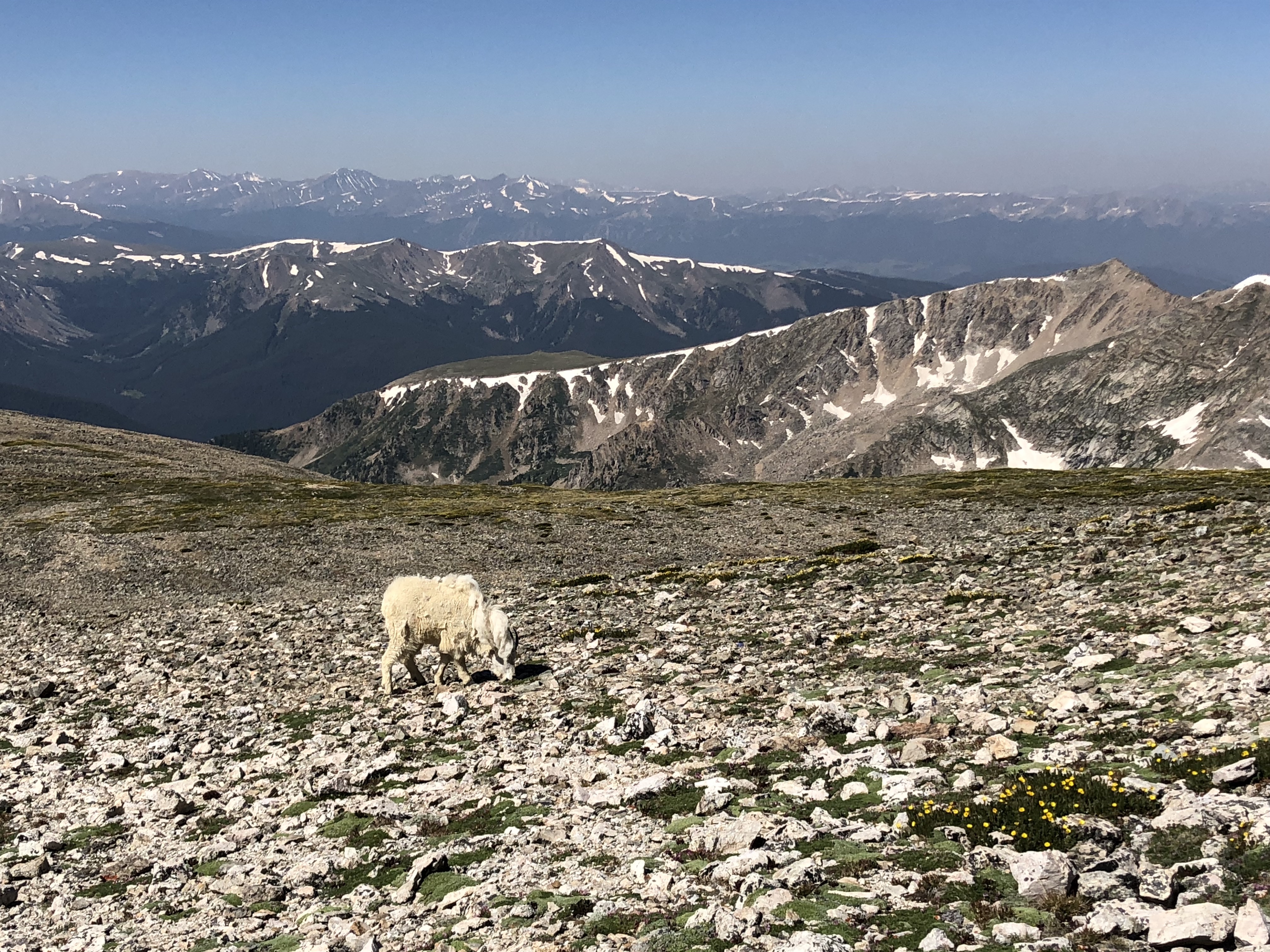
(taken near the summit of Torrey’s Peak, 2018)

The Art Of Humility (Luke 18:15-17)

Friday’s Column: Captain’s Blog

carl-pic

Carl Pollard

The life of a true Christian is filled with change. We learn where we are weak and try to be better. It’s kind of like a never-ending home improvement project. There will always be areas of our spiritual walk with God that could be better. Because this is the case, many religious books, sermons and Gospel meetings are created around a theme that will help us to grow. In the Church there is a plethora of information to help us in our Christianity, but I want to focus on the basics and answer a vital question. What does it mean to be a Christian?

I want to answer this question with a passage in scripture that we may not immediately think of. We may think of 1 Timothy 1:5 or 2 Peter 1:5-7, which are great verses, but I’d like to suggest that Jesus in Luke 18:15-17 gives us the bottom line of Christianity.

It reads, “Now they were bringing even infants to him that he might touch them. And when the disciples saw it, they rebuked them. But Jesus called them to him, saying, “Let the children come to me, and do not hinder them, for to such belongs the kingdom of God. Truly, I say to you, whoever does not receive the kingdom of God like a child shall not enter it.”

Jesus teaches the importance of humility. You want to enter the Kingdom of God? Have an attitude of humility. He uses the example of children, and Luke even uses the Greek word for infant. These are very young kids and babies that are being brought to Jesus. So He uses this as a moment to teach a valuable lesson.

Babies show their humility in their inability to provide for themselves. Every child that is born is completely dependent on its parents and has a wholehearted trust in them to provide what they need.

What does it mean to be a Christian? It means being humble enough to admit that we need God. It means we trust in God, rather than our own “power.”

Humility plays an important role in every aspect of Christianity. It helps with showing love to others, it helps us subject ourselves to God’s Word, it helps us treat others the way we want to be treated, it helps us accept the hard topics that scripture contains, and the list goes on and on.

Do you want to be a part of the Kingdom? Make humility an everyday practice. Without this, one cannot be a Christian.

PLEASE LOOK BEHIND THE CANVAS!

Monday’s Column: Neal At The Cross

Safari 2017

Neal Pollard

I sat next to a man at dinner the other night, a retired Marine officer named Anthony who was now a successful businessman. Though he was in his sixties and had six grandchildren, he could have passed, even with a smattering of gray hair, for an elite athlete. He was incredibly intelligent, articulate, a war hero, wealthy, and, by anyone’s estimation, a true Renaissance man. He was also a brand new Christian.

Despite his apparent success, he confessed to having experienced decades of emptiness inside. He described it as I have often heard people describe it, that there was a hole inside and nothing he tried would fill it. He pictured it as painting a facade. He held out the canvas for others to see what he projected, but the man behind the painting was hollow, depressed, and ever searching. 

That changed when his neighbor, a man named David Grimes, took an interest in his life. They began walking together in their neighborhood, discussing life. David would always refer Anthony to the Bible and what God’s Word had to say. At some time later, when Anthony faced a crisis, he found himself reaching out to David for help. Ultimately, through David’s friendship and his efforts to teach him, Anthony obeyed the gospel!

Anthony said, “There are a lot of people like me out there! They seem secure, confident, in control, and without need. But they are searching to fill a void in their lives. I know. I was one of them.” We can convince ourselves in these troubling, ungodly times that nobody is interested in God and His Word. Anthony would encourage you to get involved in the lives of your coworkers, neighbors, classmates, and the people you connect with through your children’s activities. No matter what they are projecting, invest in them. At some point, they will let you in. They will allow you to look behind the canvas and the pretty picture they have painted, and you will see a soul searching for something only God can satisfy! God is counting on us to see past the pretense and help that person He loved enough to give His Son for. The picture of success in the world’s eyes was secretly aching for something deeper and better. He found it in the only place it can be found–in Christ! 

Please look behind the canvas!

The Law Of The Lord

Friday’s Column: Captain’s Blog

IMG_0806

Carl Pollard

How much does your Bible mean to you? Each time we pick it up and read from its pages, we are reading the very words of God. God has revealed His Character, His will, and His love through inspired men. Each time we open our Bibles we are seeing the mind of God. 

What an awe inspiring fact to think about.

We aren’t the first ones to feel this way.

In response to the perfect Law of God, David wrote Psalm 19. It is a tribute to the perfection of scripture. As we read through this chapter, David puts into words these feelings of awe and gratitude.

He begins by stating a fact that has always been true.

“The heavens declare the glory of God, and the sky above proclaims His handiwork.”

In a psalm dedicated to the perfect Law of the Lord, David starts by praising the Author. The God of creation, who can be seen in every aspect of our world, is the One responsible for writing such a perfect book. We can look around and the world declares the glory of God. The Author of life itself gave us a book that leads to eternal life.

In verse 7 David describes the Law of the Lord as being perfect. Notice what this perfect Law does for us: it “revives the soul.” The words of God are sure and steadfast. They are truly perfect and are ever relevant to us, His creation.

We continue reading and he goes on to say that God’s Word:

  1. Gives us wisdom (wisdom we would otherwise never have)
  2. Is always right (there is no doubting, thinking that they might be wrong)
  3. His commandments are pure (no false motive)
  4. His word enlightens our eyes (we can now see the truth)
  5. His rules are true
  6. His word is righteous

With such a perfect Law, it is only natural that we should desire it more than Gold.
David says in verse 10 that the words we read in scripture are “sweeter than honey.”
His response to God’s word should be every Christian’s response. We should value and cherish God’s perfect Law.

The Bible is a blessing like no other. In its pages we are warned about the things we should avoid. By keeping His commands we receive a great reward. Psalm 19 is a beautiful tribute to a beautiful book.

With these facts in mind, how much does God’s book mean to you?

I Am

Tuesday’s Column: Dale Mail

image

Dale Pollard


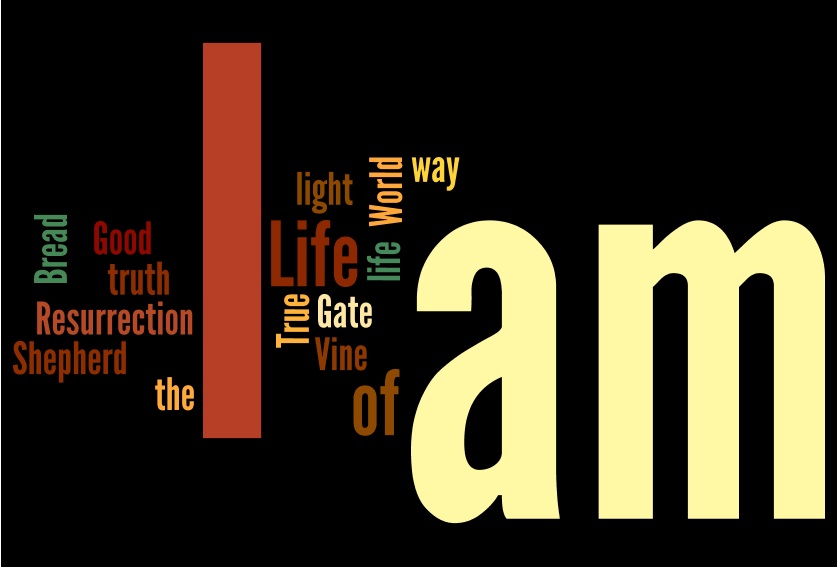
God speaks of Himself as simply “I Am.” This one powerful statement depicts His infinite presence and His existence through every age. What does it mean to know Him? How do you know if you do? To know of Jesus is very different than knowing Him.

John is one of those books in the New Testament that will help us to become better aquatinted with the Christ. It’s the last of the gospels that paints us a vivid picture of who He was and is on a deeper level than even the three previous gospels. He’s the Bread of life, Light of the world, the Gate, Good Shepherd, Resurrection and Life, the Truth, and the Vine. All of these titles found within the book teach us a little more about the Savior of the world.

There are seven “I Am” statements in John referring to Jesus and three hundred throughout the entire Bible. They begin in Genesis and end in Revelation, and in many books in-between. You just can’t read very far without discovering something very profound about its Writer. He’s eternal. God’s desired response to this is simply for us to believe, respond, and live with our minds and hearts prepared to live with Him.

When Jesus describes Himself as the “I Am” it makes the religious leaders want to kill Him in John 8. To know Jesus, to really know Him, is something that many people have not fully understood. Even as Jesus walked among us mortals and we witnessed His miraculous power, there were still several that didn’t realize what it meant to follow Him (Luke 9:57-62).

While it’s true that everyone is made in the image of God, few reflect the Father’s image. Those that know Jesus introduce others to Him. With the knowledge that we are imperfect, let’s not forget that we also have the ability to have a relationship with Him. I am flawed and I am weak, but the Great I Am is interested in who I am. By the grace of God, I am His child. He is the bread of life that sustains us, the light that guides us, the gate we’ll walk through, and the truth that will save us. It’s not how great I am, but how great the Great I Am is. Do you know Jesus?


Spirit One 

Tuesday’s Column: Dale Mail

image

Dale Pollard

In the first chapter of Genesis we read that God made man dominion over every creature He had made. Then in James 3:7 the inspired writer says, “For every kind of beast and bird, of reptile and sea creature, can be tamed and has been tamed by mankind.” When we think about the implications of that and then apply it to the world of the Old Testament it becomes even more impressive. The first humans lived with all kinds of beasts, including the dinosaurs. Whatever image comes to mind when you think of those extinct reptiles, it’s probably not that of a tame animal. God gives us a curious glimpse into the past where humans and dinosaurs not only coexisted, but we managed to tame them. In Ecclesiastes, the preacher concludes his sermon in chapter 12 by saying we must prepare ourselves for the day we meet our Creator. The spirit that He made will one day return back to Him. Solomon then says, “fear God.”

The correlation between “spirit” and “fear” is also seen in the New Testament. Paul writes to a fearful and wavering Timothy, “God did not give us a spirit of fear but of power, love, and a sound mind” (2 Timothy 1:7). The message in the Old and New Testament then is, “fear nothing but God.” When Adam and Eve were in the garden they feared nothing because that’s not the spirit that God gave them. He gave us one of power, because of the God we serve. He is our Father and He has all the power. He gave us a spirit of love. We aren’t animals. We aren’t lions who display great power but lack the ability to love. We were made in the image of God and that means we have both a spirit, which is our life force, and a soul— our eternal life force. On top of all this God gave us the spirit of a sound mind. The Greek word used there means a mind that is calm. Even in the face of calamity and craziness, we can be calm. Why? Because we are God’s children and God is in control. One day every faithful Christian will get back that perfect spirit given to His original creations. Spirits without fear.

“Leviathan” by Lewis Lavoie
(https://apologeticspress.org/APContent.aspx?category=9&article=1247)

Word Study: “Meekness”

Wednesday’s Column: Third’s Words

Gary III

Gary Pollard

If a person is described as being meek, we often picture a kind but timid, submissive, hand-wringing, non-confrontational, or powerless individual. Our idea of meekness doesn’t really work well with the biblical idea. Here are a few ways πραΰς (prah-oos) is used.

  1. Not thinking too highly of self (Matthew 5.5; II Timothy 2.25; James 1.21) is one way to understand meekness. It doesn’t mean we undervalue or demean ourselves, but it does mean we keep our egos in check. In James 1.21, meekness means we have the good sense not to fight what God says and allow his Word to be part of us.

  2. Meekness is also used to describe Jesus (Matthew 11.29; II Corinthians 10.1). If meekness is the absence of power, we have a problem. In contrast to a Pharisaical attitude, Jesus is gentle (πραΰς). Instead of summoning an angelic army to punish those who were about to kill him, Jesus allowed everything to happen (II Cor. 10.1).

  3. Meekness is an attitude we must have when we face the unpleasant task of correcting a member. In Galatians 6.1, correcting is described as “fixing/mending” and must be done with a gentle disposition.

The word is used in several other passages, but we should understand it to mean “gentle” or “humble” or “lenient” (context is important). Meekness is when we value others above ourselves. A meek person is not necessarily a powerless person, but is one who doesn’t misuse the power they have.

Word Studies: “MAJESTY”

Wednesday’s Column: Third’s Words

Gary III

Gary Pollard

We will be looking at the word “majesty” by request in today’s article. This series will look at words used in our English translations that aren’t used in modern communication or are otherwise unusual. Today, majesty usually shows up as an adjective for natural phenomena (a majestic sunrise/sunset, majestic scene, etc.). 

As a disclaimer, Hebrew studies are not my forte. For those of you with a knowledge of Hebrew, I welcome corrections. All material concerning Hebrew usage comes from the Theological Lexicon of the Old Testament or Hebrew & Aramaic Lexicon of the Old Testament: Volume 5. 

In the Old Testament, it is used to describe the beauty or awesomeness of nature. Leviticus 23.40 uses “splendid.” In Isaiah 53.2, and it means “physically attractive.” Being impressive or inspiring awe/wonder is how the word is used in reference to God, although descriptions of kings are also appropriate (Isaiah 35.2). Speaking of royalty, majesty is used to describe their power and accomplishments (see Daniel 4.30, 5.18 for examples). In the Old Testament, majesty can be understood as impressive, having honor, or as the effect left on an observer of a display of power or awesomeness. 

In the New Testament, it means to have high respect or incredible qualities (see II Peter 1.16). In that passage, Peter says that he was a firsthand witness of the majesty of Jesus. This is incredible, considering Isaiah 53 says that His appearance wasn’t special or spectacular. The majesty Jesus had on earth was due to His nature, not His appearance. Majesty is also used in reference to having high respect because of an impressive performance or display of power (Luke 9.43). In that passage, Jesus healed a boy who had a particularly violent demon. After returning him to a normal state, witnesses were blown away at God’s majesty. It was obvious that the power necessary to correct the boy’s issues was preternatural. They observed an incredible event and understood its source to be God’s power. That power is an aspect of God’s majesty. 

We are impressed with God’s majesty when we look at nature. The universe is vast and incredible! There are stars so massive they make the sun look puny. Even single-cell organisms on earth are incredibly complex. As advanced as medical science is today, we still do not understand many of the processes of the body. Count how many times some variant of the phrase, “We’re not sure how this works,” is used in clinical studies on multiple classes of medications or treatments. The complexity of our makeup is awe-inspiring! When we are impressed by nature’s power or beauty, we get a glimpse of God’s majesty. 

Tearing Lions And Toeing Lines

Tuesday’s Column: Dale Mail

image

Dale Pollard

He wore a name we know well but accomplished the will of a Name we know better. Samson the judge was the man who dropped a thousand Philistines with a jawbone while dropping the jaws of those who would read these accounts years later.
In Judges 13 through 16 we find the awesome, yet tragic life of the strongest man who ever walked the earth. From the moment of his miraculous conception to those dramatic moments between the pillars, he captivates our imagination. Some tend to idolize his prowess as a warrior and rebel, but the real lessons we can learn from Samson can be appreciated by everyone. What if a mortal human could act in place of God? While impossible, let’s just humor this thought. In a way we get a glimpse of how miserable life would be if we didn’t serve a righteous Lord. When Samson lost his temper, became annoyed, bored, or defiant he would always choose to act in his own self interest. He was empowered by a God he didn’t serve and that is seen time and again in these three chapters. His final act of killing over three thousand Philistines who mocked him in their pagan temple were slain out of revenge (Judges 16:28) and hatred. His eyes had been gauged out and he is led by a servant through a crowd of people who were not even supposed to be living in the same land as the Israelites (Numbers 31:17). In other words, the Philistines were a hole dug by God’s children in the first place. Samson was a tool in God’s hand to relieve His people from the oppression of these ruthless “fish people.”

I’m sure you know many of the accounts from the life of Samson so here are a few things that God intended for us to learn from him.

1. God is infinitely more powerful than His creation (including Samson) and is infinitely more loving and patient than His creation. If Samson had the power of God, his own humanity would provoke him to destroy anyone who irritated or upset him. How many times has God forgiven us and then placed those sins out of His sight? Too many times to count, I’d imagine.
2. God can use the self-seeking people in the world to accomplish His own will. He never lost control of Samson and God hasn’t lost control in the world today.
3. Nothing could make us serve God, even if He paid us a supernatural visit (see Jesus). Samson’s abilities were given to him by the Lord, and yet that wasn’t enough to convince him to dedicate his life to Him. Consider Solomon that was given wisdom in a miraculous way— yet still fell. In the end it comes down to the individual heart, the desire, and the determination to commit ourselves to His service.
4. God’s desire to protect His people is great and His methods are creative. The Israelites could have never dreamed that their savior would be a man like Samson. They were plagued by a race of wicked warriors, but God used one man to turn the tables. When we look at our country today we may think there’s no way that things could be different but let’s not forget how powerful and how creative God is. It doesn’t matter whether or not WE can see a path forward when God has proven that He is more than capable and willing to see us through.

You could ponder over the life of Samson and come up with more great lessons to build your faith. Why not read through Judges 13-16 to remind yourself of God’s control in this world? As a bonus, you’d be treating yourself to one of the most fascinating sections in the Old Testament.


The Power Of The Word

Wednesday’s Column: Third’s Words

Gary III

Gary Pollard

Angels are not the dainty, long-haired Western Europeans they’re often depicted as being. In Matthew 28, their appearance was like lightning and they had white clothes. Evidently their appearance was other-worldly enough to frighten these soldiers almost to death (28.4). Whether this was some cardiac event or simply shock we cannot know. But to frighten someone that tough to that extent would take something pretty crazy. 

But some of these same guys still went straight to the chief priests and took a bribe to keep quiet and spread disinformation (28.11-15). After what they had just seen and experienced, you’d think they would run to a therapist and not the chief priests to help perpetuate something they knew to be false. 

We can be tempted sometimes to think that evangelism requires more than just showing someone the word. We might think the miraculous or incredible could persuade even the most stubborn non-believer. The power of our job (making disciples) is in the Word and in faith. The Bible has many accounts of people seeing incredible feats of supernatural power with their own eyes and still rejecting God. Abraham informed the rich man in Luke 16.29-31 that God’s Word is what saves; if that is rejected, no miracle will change this. 

If we place our faith in the power of the Word and work to deepen our understanding of the Word, we have all we need to show the power of Jesus. 

Tell Me About Grace

Thursday’s Column: Carlnormous Comments

carl-pic

Carl Pollard

  1. Grace brings peace (1 Thessalonians 1:1).
  2. Grace gives us favor with God (Romans 3:24).
  3. Grace is the generous attitude God has towards His people (Ephesians 1:6).
  4. Grace brings salvation to sinful man (Titus 2:11).
  5. Grace teaches us how to live (Titus 2:11-12).
  6. Grace gives us a glimpse of God’s Character (John 1:16).
  7. Grace appeared in the flesh (Titus 2:11).
  8. Grace originated from God (Eph. 2:4-5).
  9. Grace is powerful (2 Corinthians 12:9).
  10. Grace helps put Heaven in view (Acts 15:11).
  11. Grace helps us be the salt of the earth (Acts 4:33).
  12. Grace is an attribute of Christ (John 1:14).
  13. Grace is an attribute of Christians (2 Corinthians 8:7).
  14. Grace puts the word “Christ” in Christian (John 1:17).
  15. Grace is a powerful motivator (Titus 2:13-14).
  16. Grace is a gift (that is often left unopened, Ephesians 2:8).
  17. Grace gives us hope (Romans 6:14).
  18. Grace shows us the love of God (Romans 5:8).
  19. Grace brings comfort (Hebrews 4:16).
  20. Grace is given to the humble (James 4:6).
  21. Grace gives us strength ( 2 Timothy 2:1).
 
Amazing Grace, how sweet the sound,
That saved a wretch like me.
I once was lost but now am found,
Was blind, but now I see.
 
T’was Grace that taught my heart to fear.
And Grace, my fears relieved.
How precious did that Grace appear
The hour I first believed.

“I Will Survive” 

Friday’s Column: Brent’s Biblical Bytes

81121814_2462862270639428_5746232403106463744_n

Brent Pollard

Gloria Gaynor rose to fame in the late 1970s with her B-side recording of “I Will Survive.” Yes, that is correct. Gaynor secured her musical legacy with a song added as filler. The A-side recording was a cover of the Righteous Brothers’ song, “Substitute.” Yet, who other than an ardent fan even recalls Gaynor’s cover? Rolling Stone magazine included “I Will Survive” in their “500 Greatest Songs of All Time” in 2004. In 2016, the Library of Congress added the song to its National Recording Registry to ensure its preservation. I do not mean to diminish the rest of Gaynor’s career, but it is doubtful that her name would be long remembered without her disco anthem.   

The Apostle Paul says something like “I will survive” in Philippians 4.13. “I can do all things through Him who strengthens me.” (NASB) I realize that this is an oft-abused Scripture. For example, athletes cite it after achieving a difficult win.  We likewise note aspiring Don Quixotes quoting it to rationalize their efforts to obtain their impossible dream. As with many Scriptures, however, the context clues us in on the meaning. The Apostle Paul wasn’t supplying us with a handy aphorism to pull out when needing to boost troop morale. He was letting us know how to survive any and everything. Note the preceding verses where Paul tells the Macedonians that he has learned how to get by with surplus or shortage. In the proceeding verses, Paul tells the Philippians that were a part of God’s Providence that enabled him to do “all things” since they provided financial support.   

So, is God promising us in Philippians 4.13 that we can do whatever it is that we have set our hearts to do? Of course not. But God is letting us know that He has our back. We can count on Him and His Providence. We might wear thrift store clothing and supplement our groceries with Dollar Tree items, but God will provide our needs in keeping with His promise (cf. Matthew 6.33).  Hence, we can move forward with boldness as we do the Father’s Will. We can survive, whether that be with little or much. That is a beautiful message to lean on as we face the uncertainty of this world.   

As I travel US 129 in White and Hall Counties, I note handmade signs that have popped up along the shoulders of the road, presumably in the wake of COVID-19. The placards state, “We will be OK.” I appreciate those signs. They speak to us truthfully whether we are talking about pandemics or uncertain election results. Because of God, we will survive. We might even say that we will do more than survive. We will thrive!      

Sources Cited 

“I Will Survive.” Wikipedia, Wikimedia Foundation, 3 Nov. 2020, en.wikipedia.org/wiki/I_Will_Survive


“Moments of Meekness”

Friday’s Column: Brent’s Biblical Bytes

90357007_2526509177608070_2207438835946618880_n

Brent Pollard

Have you ever experienced a moment of meekness? I did recently. I was driving “over the mountain” to go to a doctor’s appointment in Gainesville, Georgia. As I was making my way around the curves of US 19/129, I came upon a truck pulling a camper. He was the engine of a “train” consisting of about four cars. I was the “caboose.” Fortunately, I was in no rush. So, despite the driver’s lack of courtesy, making the traffic back up behind him without utilizing the slow vehicle pull-offs, I just enjoyed the tunes on my radio and tried to let the transmission do more braking than my brakes.  

As I sang along to a 1990s song, the truck pulling the camper drove through dense leaf debris. An enchanting scene suddenly unfolded. The sun shone through the trees, illuminating the fall colors. The bright blue sky was visible above. The rocky walls along the shoulder of the road glistened with water. And drifting leaves filled the air. The entire spectacle was likely only nanoseconds in length but magically seemed longer. That is an example of a moment of meekness. 

Have you ever wondered how the meek “inherit the earth” (Matthew 5.5)? Moments of meekness as the one described above punctuate the days of the meek. Such moments arise because of what it means to be meek. Meekness is not weakness. As used Biblically, meekness denotes gentleness and humility. Meekness was an adjective used to describe Moses (Numbers 12.3) and Jesus (Matthew 11.29). Neither men were weak. Moses died at 120, still full of vigor (Deuteronomy 34.7). Jesus made a “scourge of cords” (NASB) to drive out the temple’s money changers (John 2.15). Yet, Moses and Jesus were humble servants of God. They embodied the “still lifestyle” that knows the “I Am” is God (Psalm 46.10). Thus, as Burton Coffman notes in Matthew 5.5: 

“This is not a mere prophecy that the Christians shall be the landed gentry, but it is a statement that their relationship to the earth and its possessions shall be such as to bring them the greatest possible benefit and enjoyment of it.” 1  

There is nothing special about me. I am quite ordinary, except for having endured many physical hardships. Yet, I refused to become perturbed by life’s circumstances on that day, and that allowed the joy of my salvation bubble to the surface. I recognized my insignificance and God’s greatness. God created this beautiful world, and He showed me something fantastic in an instant. I could have easily been too distracted to notice. How sad!  

This moment of meekness makes me wonder how often I have squandered my inheritance. How oft have I refused to be still enough to see something special shown by God? Did I miss a moment of meekness when I worried about making it to an appointment on time? Did a miss a meek moment while distracted by my smartphone? Such moments of meekness may be a regular occurrence, and it is just that I have overlooked them.  

Let us strive to be still to see the moments of meekness God sends our way.     

Sources Sited: 

1 Coffman, James Burton. “Commentary on Matthew 5:4”. “Coffman Commentaries on the Old and New Testament”. https://www.studylight.org/commentaries/bcc/matthew-5.html. Abilene Christian University Press, Abilene, Texas, USA. 1983-1999. 


“WHO’S IN CONTROL?”

Tuesday’s Column: Dale Mail

image

Dale Pollard

The employees complained that they couldn’t control the temperature in office buildings. A simple and effective solution was set in place by corporate when they secretly placed dummy thermostats in the work area. They were then able to give all  the unsuspecting workers the illusion that they were in control at last. 

Today there are many that believe they can control more than they really can in their lives. Some have even managed to give others the illusion that they have some kind of supernatural ability to change the nation and world. This entirely false reality takes place on the very planet held in the hands of the One who really has all the control. 

In the Old Testament we find that people thought a lot of David— once he proved his worth as a warrior. As he rose in fame he continued to bring positive change for God’s people but all along the way David understood that he was making a difference only because God allowed him to. 

So many are worried about controlling every aspect of their lives and the lives of others, but I’m thankful that I’m not in control. As a human, I’m prone to make mistakes— God knows that. He provides for His faithful exactly what we need. 

What is God’s will for your life? 

He wants you to recognize His power, His control, His compassion, and His desire for all to be saved. I hope that today this served as a simple reminder to let Jehovah take the lead and that we don’t actually want the control that we may think we do. 

 Is Our Savior Sleeping? 

Tuesday’s Column: Dale Mail

Daleheadshot

Dale Pollard

Have you ever been afraid of your imagination? At times that fear can be so convincing that you truly believe that the worst case scenario is somehow inevitable. Try and make that opening question relevant to your life. Think about a specific event or experience where you were afraid of something that never came to fruition. The grip of anxiety can be debilitating as you wait for your medical test results to come in. You agonize over the poor quality of life you might have if there is ever an unexpected economic collapse. Your hairline might rapidly recede as you stress over the outcome of the war our nation is still involved in, and do I even need to mention the new global pandemic? You’re robbed of sleep as you imagine the potential horrible outcomes that may never happen. These things may never happen because the Lord could come. They may never happen because whatever you’re afraid of— it’s simply worse in your own mind. It may never happen because God has proven Himself to be one who calms the storm instead of letting you perish.

I believe we would all benefit from recalling those occasions in our past where fear proved unnecessary and we worked ourselves up for nothing! If the fear in your life has a big appetite and it’s devouring all your time and peace, maybe it’s time to feed something else. Sitting Bull once said, “Inside of me there are two dogs. One is mean and evil and the other is good. They fight each other all the time. When asked which one wins I answer, ‘the one I feed the most.’” How vividly this illustrates a daily struggle for so many. Fear and faith will scrap with one another until we decide which one will win. Do you think our faith would emerge victorious every day if we could physically witness God’s power, but in a miraculous way? If my own eyes could witness Jesus bring the dead back from the grave, cast out a demon, or walk on stormy waters, then I would never worry again. Or would I? Seeing Jesus perform miracles never made anyone perfect. His disciples were far from perfect and they stood feet from the Savior while He did things only God could do.

On one occasion, which was hinted at earlier, Jesus calms the storm after being abruptly awakened by His terrified followers (Mark 4). There are some details about this account that will help us feed our faith when fear threatens to win the day.

First, our cries to God, even in the desperate times, are heard. The disciples exclaim, “Don’t you care that we’re about to die?” Following this fearful plea, Jesus will demonstrate a fraction of His awesome power. After all, what is calming a stormy sea to the One who spoke every drop of water into existence?

Second, excessive fear of anything in this world is a foolish mistake. God is bigger and greater than our worries.

Third, God is not asleep. It may seem like He is when we don’t feel optimistic about the future, but it’s when we recognize that He’s the only answer to our peace that He will calm our storm. 

IMG_4740

Serving the Living God 

Thursday’s Column: Captain’s Blog

IMG_0806

Carl Pollard

I know I’m not old enough to say this, but when I was younger I used to lay in bed at night and try to imagine what God looked like. I would try to put a face to Him, I’d wonder what He was doing, and I would ask myself if God knew that I was thinking about Him. I still ask those same questions to this day. I’m sure that most if not all of you who are reading this believe that there is a God, and that He does see and hear all that we say. So the question I’d like to ask is, “since there is a God that has all power, why do we sometimes have difficulty following the commands that we find in the Bible?” I’d like to look at a verse that may help us realize the importance of following what God has told us to do as Christians.

Jeremiah 10:12 says, “It is He who made the earth by His power, who established the world by His wisdom; and by His understanding He has stretched out the heavens.”

God has ALL power. There isn’t an area that He is lacking power in. He controls the weather, He created us, and, as Jeremiah 10:12 said, He made this earth that we live on. I believe that we sometimes forget just how powerful God truly is. Since God has all power, shouldn’t we be following what the Creator of everything has told us to do? In seven days He thought of everything we see around us. Think of it this way. We’ve never had an original thought. For example, I could say that I’m the only person to have ever thought about a pink Aardvark. But before I thought of pink Aardvarks, there was such thing as the color pink, and there were Aardvarks before I thought of them. So what I’m actually doing is taking two things that God created and putting them together. God has given us specific commands to do as Christians. Since God has given us rules on how to live, we shouldn’t have a problem following them. They may be difficult, but God knows how to take care of His creation. The thought of the God of the universe watching out and guiding me through life is a great comfort to me!

But what if we aren’t following what God has told us to do? There’s a saying that we all have heard that says, “Actions speak louder than words.” Our actions are a direct window to how we truly feel. If I don’t do what God has commanded, then that’s like us saying to God, “I don’t truly believe that there are consequences to my actions.” But that is a deadly place for us to be, because God IS real and there ARE consequences to our actions. God is real and the consequences of our actions are very real! In the end, it comes down to this: Not obeying what God has said is a reflection of how real we make God out to be. If we truly believe He is real, then we shouldn’t have a problem doing what He tells us to do. As Christians, we serve the one true God, and He is very real. I pray that this fact will push us to obey the commands He has given us because our God is alive and we all have an eternity with Him if we do what He tells us to do.

Looking back at when I was younger, I’ve realized that I asked the right question, but the most important part of those questions is how I answer them. Will I show through my actions that I truly believe He is alive? Or do I doubt the reality of God by not taking His commands seriously? Let’s try to always prove God is alive by following what He has told us to do!

maxresdefault

“Immediately”

Neal Pollard

The astute reader of the book of Mark finds the word 40 times in 39 verses (the Greek word most often translated “immediately” in Mark is actually found 44 times). It is a key word found consistently throughout the gospel but especially in the first six chapters. Usually, the word is used to quantify the time between Jesus performing a miracle and it taking effect. The point seems to be to show the power and Divine nature of Jesus. It is also a thread that runs throughout the book to highlight key thoughts and main ideas in this second book of the New Testament. The word is used to highlight the Father’s affirmation of Christ following His baptism (1:10), Jesus’ journey into the wilderness to triumph over the Devil’s temptations (1:12), the disciples’ decision to leave their occupation to follow Jesus (1:18,20), Jesus’ entering the synagogue to show unparalleled authority and power (1:21), the news and fame that followed Christ’s teaching and healing (1:28), and the immediate response of the one healed by Jesus–the first of many uses of the word “immediately” to highlight such (1:29-30). The proof for Jesus’ identity was immediate. The effect of Jesus’ miracles was immediate. The impact of Jesus’ miracles and teachings on friend and foe was immediate. Mark’s use of this word seems to indicate how overwhelming and unmistakable the proof of Jesus was.

This is not to say that one should rashly decide about the Lord. The book of Mark is part of God’s way to convince man about who Jesus is. Take the time to read it and learn of Him. Like the other three gospels, Mark contains the miracles, teaching, claims, and events in Christ’s life at the end of which one must ultimately make a decision concerning who He is. Remember, though, “He who believes and is baptized will be saved; but he who does not believe will be condemned” (Mark 16:16). Weigh the evidence, and then decide. Follow the example of so many in the book of Mark and let the power and person of Jesus have an immediate impact on your life and your soul.

15843359028_6e6cbd3894_b

HE QUALIFIED US

Neal Pollard

When I was a student at Faulkner University, Schick Corporation sponsored a three-on-three intramural basketball competition known as Super Hoops. The school’s student activity director organized the tournament, and the winning team won a paid trip to the national tournament to compete for the national title. My senior year, four of us decided to form a team and compete for this coveted prize. We had a guy, Patrick Hunter, who was a slick ball handler and had been a point guard in High School. We had another guy, Bart Carter, who had actually played baseball at Mississippi State before transferring to Faulkner to become a Bible Major. There was me, more of an outside shooting threat if anything. But it was our fourth man, Mike Whisenant, who truly tipped the scales in our favor. He was a High School basketball star and was our big man. He also had a great shot, but we could depend on him to score inside consistently. Every team could have four players and you could rotate in and out to keep players fresh. But the guy who had to stay in, our workhorse, was Mike. It was certainly a team effort, but it was Mike who carried us to victory at Faulkner and punched our ticket to Atlanta. We got to stay at a very nice Hyatt hotel for free. We got meal vouchers, cool T-shirts, and I didn’t buy a razor for a couple of years. Although our glory was short-lived on the “national stage,” getting beat by Morehouse and then Valdosta State in a double-elimination format, we got to compete—thanks mostly to Mike’s skillset and abilities.

Perhaps that’s a crude way to illustrate a term used by Paul in Colossians 1:12, but follow me for a moment. Paul is in the middle of his prayer for the Colossians, telling them he wanted them (and by extension he wants us) to please God in all respects. The four ways to do that follow that imperative: bearing fruit, increasing in knowledge, being strengthened, and giving thanks. Paul says to give thanks to the Father, “who has qualified us to share in the inheritance of the saints in Light.” The word translated “qualified” here is only found one other time, in 2 Corinthians 3:6, where Paul says “our adequacy is from God, who also made us adequate as servants of a new covenant.” The same idea is conveyed in both passages.

Though I could not find the Greeks using this verb in an athletic sense, it literally means “to cause someone or something to be adequate for something” (Louw-Nida 678). The adverb form of the word appears many times in the New Testament, and means “sufficient in degree, sufficient, adequate, large enough” (Arndt, Danker, et al 472). Our word means to “render competent or worthy” (Zodhiates np). God is the cause of adequacy, the One who makes us competent and worthy to receive the inheritance. We have a part to play. We must be obedient, fruitful, knowledgeable, strong, and thankful. Without this proper response to God’s grace, we do not qualify for the prize. But, who is most responsible? Who do we most depend upon? It’s not us. It’s Him!

My illustration is feeble, but it helps give me a faint glimpse of what Paul is talking about. In an infinitely greater way, I owe my eventual, eternal prize to God’s ability and identity. But, because I want to please Him in all respects, I am going to work hard and with gratitude for the One who makes it all possible.

Screen Shot 2018-01-17 at 6.36.27 AM

FEAR!

Gary Pollard III

Have you ever been terrified? I have: I’ve been hit head-on at highway speed, been attacked by feral dogs on the Navajo reservations, and once had to eat kale.

Fear is a normal part of our life, and is sometimes an annoying reminder that we are vulnerable. Fear can save your life, or cause you to push yourself to overcome. Fear can also help you get to heaven.

The Bible talks about the fear of the Lord all throughout. The concept of fearing God is mentioned over 578 times in scripture! How do we fear the Lord? A very long time ago, a man named Jonathan Edwards preached a sermon called “Sinners in the Hands of an Angry God.” The premise of his sermon is that we are all walking a frayed tightrope over the fires of Hell with God just waiting for us to trip up and be eternally lost. His sermon is extremely well-known (even today), but is not an accurate portrayal of God’s disposition toward us (I John 1.7). Our fear of God – literal fear – comes from knowing that He is our judge and creator. It stems from a sense of awe at who He is and what He can do.

We’re all told to fear the Lord, but how do we do that in 2017? When you’re about to do something that the back of your mind tells you is probably not a good idea, think about the power of God. Think about standing in judgment before Him and how He would view your decisions. Think about the fact that your very existence is due to Him – do you think He’s not aware?

God is love by nature (I John 4.7, 8), but God is also our righteous Judge (Romans 2.2). Let’s keep that in mind this week while we’re making our decisions.

fear460