“Trust The Process”

Monday’s Column: Neal At The Cross

Neal Pollard

In the lead up to the College Football Playoff National Championship, I have read a few articles about tonight’s game. More than once, the players and coaches have talked about the need to “trust the process.” That idea applies to the entire program, to the season, to preparing for every game including this last one, to both sides of the ball, down to the individual player’s preparation for this game. “The process” is comprised of every fundamental principle intended to bring about the highest success. There will be trying moments and setbacks, even failures. But when the tendency to doubt is the greatest, it is then that you most need to “trust the process.”

They say that athletics are a metaphor for life. The inspired apostle Paul thought so. Long before Nick Saban or Kirby Smart and their players used the mantra, the first-century native of Tarsus was teaching the idea in the Bible. Here is how he put it, “Share in suffering as a good soldier of Christ Jesus. No soldier gets entangled in civilian pursuits, since his aim is to please the one who enlisted him. An athlete is not crowned unless he competes according to the rules. It is the hard-working farmer who ought to have the first share of the crops” (2 Tim. 2:3-6). No, he does not say, “Trust the process.” He gives it instead: Endure, focus, follow the rules, and work hard. Just as coaches use metaphors, making comparisons to chopping wood, flying the plane, rowing the boat, etc., Paul refers to the soldier, the athlete, and the farmer to illustrate principles in the process of living the Christian life.

Our goal is the enjoy ultimate success. The Bible defines that as overcoming the world (Jn. 16:33; 1 Jn. 4:4; 5:4; Re. 2:7,11,17, etc.). There are times this is very difficult, but at all times we must “trust the process.” Trust the process…

  • When you are encountering various trials (Js. 1:2ff). 
  • When you are aiming at church growth (Acts 2:42-47).
  • When you are combatting temptation (Js. 4:7-8).
  • When you are offended or have offended (Mt. 5:23-24; 18:15-17).
  • When you are trying to win back a fallen brother (Gal. 6:1-2). 
  • When you are seeking to follow Jesus (Lk. 9:23-26).
  • When you are working on your marriage (Eph. 5:22-33).
  • When you are running the marathon of childrearing (Eph. 6:1-4; Dt. 6:4-9).
  • When you are building your relationship with God (Ps. 1; Col. 3:1ff).
  • When you are shepherding the flock (1 Pt. 5:1-4; Acts 20:28).
  • When you are dealing with prosperity (1 Ti. 6:17-19) or poverty (Js. 1:9-12).
  • When you are struggling with sins of the tongue (Js. 3:1-12).
  • When you are wondering if it’s worth it to keep going (2 Tim. 4:1-8).
  • When you are being persecuted for your faith or for no good reason at all (Mt. 5:38-48).

In other words, whatever our specific struggle, problem, difficulty, or trial, God has given us a proven process. How many, through the ages, have overcome and won simply because they trusted it? As a loyal, long-suffering fan of the guys in red and black, I am hoping their overall process ends a 41-year drought. If it doesn’t, life will go on. As you follow Jesus, I am hoping that by trusting the process found throughout Scripture you win the crown of eternal life (Js. 1:12). When all is said and done, that is all that matters! 

What I am hoping, not predicting.

It Only Takes A Crack

Friday Column: Brent’s Bent

brent-portrait

Brent Pollard

“Therefore, beloved, since you look for these things, be diligent to be found by Him in peace, spotless and blameless” (2 Peter 3.14 NASB1995). 

Mike Schmit of Markesan, Wisconsin, grew the largest pumpkin in the United States in 2021. The pumpkin weighed in at 2,520 pounds. Yet, Schmit is not winning the $22,680 prize he could otherwise have received from California’s Safeway World Championship Pumpkin Weigh-Off. (They pay $9 per pound for the winning pumpkin.) Schmit is not the winner because the pumpkin he grew developed a fingernail-sized crack from internal forces within the pumpkin. That tiny flaw was sufficient to disqualify his pumpkin from the competition.*  

In like manner, spiritually, there will be those surprised by the Judgment of God since they esteem themselves worthy of His eternal prize. They will discover too late that they had a crack in their discipleship. No, it is not a matter of lacking sinless perfection. We all sin and fall short of God’s glory (Romans 3.23). But there will be those who disqualify themselves by failing to be obedient to God’s Will (Matthew 7.21-23). They may do good things, even in the name of Christ. Yet, men ignore God’s Word regarding what he must do to receive eternal life.  

By what name do men call their religious bodies? What do men teach is necessary to receive salvation? How do they teach that we worship? How is the church they attend organized? Opinions and methodology vary among practitioners within generic Christendom because no one checks to see what the Bible teaches. They ignore God’s guidance about neither adding to nor taking from God’s Word (Deuteronomy 4,2; 1212.32; Proverbs 30.6; Revelation 22.18). “God didn’t say that I could not do thus-and-such.” “Surely, God is OK with this.” As Jesus said of the religious leaders of His day: “This people honors Me with their lips, But their heart is far away from Me. But in vain do they worship Me, Teaching as doctrines the precepts of men” (Matthew 15.8-9 NASB1995). 

We began by sharing Peter’s admonition to be diligent in our efforts to remain spotless and blameless. The only way that is possible is through obedience. Through obedience, we walk with God enabling His Son’s blood to provide continuous cleansing from our sin (1 John 1.7). Essentially, God’s grace covers the cracks that form because of human nature. That grace makes it seem as if no cracks began. However, for the disobedient or those whose obedience is incomplete, the flaws remain. As Mike Schmit can tell you, a tiny crack is sufficient to disqualify one’s efforts. As costly as a crack is to the pumpkin grower, it is even more so to the lost soul. Therefore, we owe it to God to ensure that while we live, we do so according to His Will.   


*Hooper, Ben. “Tiny Crack Disqualifies Pumpkin Thought to Be Largest in U.S.” UPI, UPI, 18 Oct. 2021, www.upi.com/Odd_News/2021/10/18/heaviest-pumpkin-disqualified-Markesan-Wisconsin/8621634581685


The Art Of Humility (Luke 18:15-17)

Friday’s Column: Captain’s Blog

carl-pic

Carl Pollard

The life of a true Christian is filled with change. We learn where we are weak and try to be better. It’s kind of like a never-ending home improvement project. There will always be areas of our spiritual walk with God that could be better. Because this is the case, many religious books, sermons and Gospel meetings are created around a theme that will help us to grow. In the Church there is a plethora of information to help us in our Christianity, but I want to focus on the basics and answer a vital question. What does it mean to be a Christian?

I want to answer this question with a passage in scripture that we may not immediately think of. We may think of 1 Timothy 1:5 or 2 Peter 1:5-7, which are great verses, but I’d like to suggest that Jesus in Luke 18:15-17 gives us the bottom line of Christianity.

It reads, “Now they were bringing even infants to him that he might touch them. And when the disciples saw it, they rebuked them. But Jesus called them to him, saying, “Let the children come to me, and do not hinder them, for to such belongs the kingdom of God. Truly, I say to you, whoever does not receive the kingdom of God like a child shall not enter it.”

Jesus teaches the importance of humility. You want to enter the Kingdom of God? Have an attitude of humility. He uses the example of children, and Luke even uses the Greek word for infant. These are very young kids and babies that are being brought to Jesus. So He uses this as a moment to teach a valuable lesson.

Babies show their humility in their inability to provide for themselves. Every child that is born is completely dependent on its parents and has a wholehearted trust in them to provide what they need.

What does it mean to be a Christian? It means being humble enough to admit that we need God. It means we trust in God, rather than our own “power.”

Humility plays an important role in every aspect of Christianity. It helps with showing love to others, it helps us subject ourselves to God’s Word, it helps us treat others the way we want to be treated, it helps us accept the hard topics that scripture contains, and the list goes on and on.

Do you want to be a part of the Kingdom? Make humility an everyday practice. Without this, one cannot be a Christian.

THE BEGGING MAN WHO KNEW HE NEEDED JESUS

Monday’s Column: Neal At The Cross

Neal Pollard

One of the most intriguing people in all the gospels, to me, is the beggar sitting by the road near Jericho. Mark 10:46 tells us that the man’s name is Bartimaeus. Matthew tells us that there is another man sitting with him, and that man’s name is not given (20:30). This man was shameless in a good way, persistent despite the crowd sternly discouraging him (39). I wonder if there is a more pathetic person disclosed to us in the Bible (maybe Lazarus back in Luke 16). He is needy in at least five ways, according to Luke 18:35-43:

  • He’s physically impaired (35)–“a blind man”
  • He’s economically disadvantaged (35)–“by the road begging”
  • He’s socially outcast (39)–He’s not depicted as a respected member of society, but one to be corrected by the others
  • He’s emotionally distraught (38-41)–Begging for mercy and longing for sight
  • He’s spiritually incomplete (42)–When Jesus heals him, He tells the man, “Your faith has saved you.”

I love how the man is so stripped of his dignity, power, and resources that he boldly pleads for Jesus’ help. It may seem strange, but all of us need to get to that place if we will receive what only He can give. He wanted His mercy. When he received it, look at the response. He “began following Him, glorifying God; and when all the people saw it, they gave praise to God” (43). Don’t you want your submissive, obedient life to be a drawing card for others to see their need of God and to glorify Him? God really shows His power when He takes the lowliest and transforms them by what He does with and through them. That’s why I love this account.


What Can Be More Minimalist Than the Gospel? 

Friday’s Column: Brent’s Biblical Bytes

81121814_2462862270639428_5746232403106463744_n

Brent Pollard

Minimalism is a term often associated with the arts and humanities. It can also be a term used to describe a lack of decoration or adornment in design. One notes that minimalism features everywhere today, from webpage design to people’s desire to live in tiny houses. Despite sounding like a paradox, I suppose one can make the case that minimalism is the ultimate form of refinement. Even Leonardo DaVinci allegedly proclaimed that simplicity is the art of sophistication.   

Since minimalism appears to be beloved, why is it so difficult to share the simple Gospel to a postmodern world? What could be more straightforward than the Gospel of Jesus Christ? Paul distilled it to three topics about Christ, even though each of those topics can fill volumes of their own accord (cf. 1 Corinthians 15.1ff). Yes, the Gospel, at its core, is the death, burial, and resurrection of Jesus Christ. Our salvation is contingent on symbolically reenacting His death, burial, and resurrection (Romans 6.3-6). Indeed, the salvation plan is so simple that kids sing a song detailing those steps to the tune of “Pop Goes the Weasel.”  

Yet, when it comes to religion, complex human emotion appears to trump Divine simplicity. Ask Naaman. When told how to cure his leprosy, Naaman balked. The prophet told him to dip himself seven times in the Jordan River to cleanse his leprosy. Naaman stormed off. 

“Behold, I thought, ‘He will surely come out to me and stand and call on the name of the Lord his God, and wave his hand over the place and cure the leper.’ Are not Abanah and Pharpar, the rivers of Damascus, better than all the waters of Israel? Could I not wash in them and be clean?” (2 Kings 5.11-12 NASB1995) 

Luckily, Naaman’s wise servants were not turned away by simplicity. They reminded their master he would do any great thing to cure his leprosy. So, why not just wash? (2 Kings 5.13) Similarly, I do not think that telling people to be immersed so that they can wash away sins and call on the Lord’s name (Acts 22.16) is a matter of complexity. It is simple. The stumbling block for those unwilling to obey is typically prejudices and fears. They think another way is better. Perhaps, this other way was taught to them by a dear, departed loved one. They do not want to “condemn” their relative by obeying the Gospel.  

However, obeying the Gospel is not an act of judgment. In rendering obedience, I am demonstrating a good conscience before God (1 Peter 3.21). We allow God to take care of the implications and trust, like Abram, “Shall not the Judge of all the earth deal justly?” (Genesis 18.25 NASB1995). No doubt, if that loved one who taught us something differently had the opportunity to be preached the simple Gospel of Jesus Christ, then they would have obeyed too.  

If time permitted, I could expound upon other areas in which human emotion overly complicates the minimalism of God’s Divine plan for items such as worship. Yet, as with the virtue I am extolling, minimalism, it is best to keep this focused and concise. We should not be surprised that God would make the most critical things, like salvation, simple for us all to understand. Minimalism, experts remind us, is user-friendly and accessible. That is why we like it so. And it is also why God, the Master Designer, set up things so that the simplest among us can gain wisdom from it (Psalm 19.7).  

Indeed, what can be more minimalist than the Gospel?  

Screen Shot 2021-04-16 at 7.57.01 AM


Guilt Can Be a Positive


While feeding the cats this morning, two males got into a kerfuffle. I stuck my foot between the two moggie pugilists and gently but firmly sent them to their mutual corners.  One of the participants, the victim, decided to make himself scarce for a time. Meanwhile, the instigator continued chowing down. Enter my father. My siblings can attest that my dad can cut quite the intimidating figure. It seems apparent that even cats can appreciate this. Dad sternly stated the aggressor’s name and walked towards him. The feline perpetrator may be the alpha among the cats, but he slinked away from my father. The guilty glances he returned to my father said, “Yes, I did something I should not have done.” Even so, the guilty cat lacks the intellect to grow from having been caught in his transgression. 

Despite being human, there may be many persons able to identify with our mischievous cat. They may feel guilty when confronted with their sin, but they will not allow that discomfort to prompt restoration. Eventually, they will sufficiently recover to resume their everyday life. Hence, wrongdoers may view guilt as a wholly negative emotion, a pesky nuisance. Sadly, they might find validation from a few pop psychologists. I recall one Christian telling me that her therapist assured her that she would feel better if she would discard her pesky religious convictions. Despite what such pop psychologists have said in the past, this guilt can be a positive. The apostle Paul addresses this subject in his second epistle to the Corinthians. 

“For the sorrow that is according to the will of God produces a repentance without regret, leading to salvation, but the sorrow of the world produces death.” (2 Corinthians 7.10 NASB1995) 

So, if you will permit me to anthropomorphize my cats further, my cat experienced worldly sorrow. This lack of godly sorrow means that the next time a similar situation confronts this male cat, he will fall back into the same behavior that earned his initial rebuke. 

Fortunately, God gave humans the propensity to experience sorrow according to His will. This sorrow can lead to repentance (2 Corinthians 7.8-9). No one enjoys being like Nathan, pointing the accusatory finger at a friend (cf. 2 Samuel 12.1-15), not even Paul.  Paul said that he initially regretted his role (2 Corinthians 7.8). However, such finger-pointers realize, like Paul, that inflicting momentary guilt leads to a restoration of another’s relationship with God. The only prerequisite for imposing godly sorrow upon another is to ensure your eye is free of beams while spotting specks in your brother’s eye (Matthew 7.3-5). 

We feel guilt for a reason. Guilt helps us understand that our actions have strained our relationship with God and others. As such, guilt causes us to preserve our connective bonds. When acknowledging we have wronged someone, we make amends to them. We will not allow the rift to continue or grow. Research also suggests that you may be more trustworthy if you are more prone to feel guilt (Emamzadeh). Such guilt-prone people are more reliable because they want to avoid the guilt that comes from strained relationships entirely.  Therefore, they will avoid situations imperiling a relationship. Just as a quick aside, we should not confuse shame with guilt either. Shame causes a person to see themselves as a failure rather than seeing a mistake that they can rectify with another. We all sin and fall short of God’s glory (Romans 3.23). So, we all have flaws. However, we can make sure that we do not purposely do anything disrupting our relationship with God and others. To that end, guilt can be a positive thing that though uncomfortable, leads to our refining in the fire. 

Work Cited 

Emamzadeh, Arash. “New Research Determines Who You Can Trust the Most.” Psychology Today, Sussex Publishers, 20 Sept. 2018, www.psychologytoday.com/us/blog/finding-new-home/201809/new-research-determines-who-you-can-trust-the-most


Living Life God’s Way

Thursday’s Column: Carlnormous Comments

Carl Pollard

When it comes to sports, there are certain ways of playing. There are rules to follow, specific plays to make, and mistakes to avoid if a team wants to succeed. This same idea applies to our Christianity. In Joshua 1:5-9, we read of certain aspects needed in order to live life God’s way. By following these things we will reap the benefits that are found inside of Christ. 

Joshua says that God’s way is conditional. In Joshua 1:7, we read, “Only be strong and very courageous, being careful to do according to all the law that Moses my servant commanded you. Do not turn from it to the right hand or to the left, that you may have good success wherever you go.” God gave Israel conditions to His being their God: be strong and courageous, do all according to the law of Moses, and do not turn from the right or to the left. 

Thinking about our personal relationship with God we can still apply these same commands to our spiritual lives today. For example, the blessings we are promised are received by being strong and courageous in the work place, doing all according to the law we are under (the new covenant), and not wavering in our faith. If we want to live our lives according to God’s will we must understand that our relationship to Him is conditional. Our relationship is based on our willingness to listen to His word. 

We must also understand that God’s way is a command, not a suggestion (1:7-8). He is the creator. He has the authority to create the way, He has the authority to make what He says a command. If we want the blessings of following His way, we must practice the commands He has given each one of us. 

Just as the Israelites were given certain commands, we also are commanded to follow certain laws. Love the Lord our God with ALL of our heart, soul, mind and strength. We are commanded to love God with every aspect of our lives (Matt. 22:36-40). When we think about our lives, every decision should be based on the will of God. We must recognize that God’s way of living is a command. 

If we want to live our lives God’s way we must recognize that the blessings we are promised are conditional, and the things we read in scripture are a command. But we should find joy in knowing that God’s way is comforting. Joshua 1:9 reads, “Have I not commanded you? Be strong and courageous. Do not be frightened, and do not be dismayed, for the Lord your God is with you wherever you go.” 

There is absolutely no reason for us to tremble when the Creator is on our side. There is never a reason to be dismayed when the defeater of sin is with us. We have a loving God with us wherever we go in life. God’s way of living is best, and if we will let Him control our everyday lives we can find comfort, hope, and joy in Him. 

Picture taken by Neal Pollard at Jericho, 3/11/18

Korah’s Rebellion 

Tuesday’s Column: Dale Mail

IMG_1381

Dale Pollard

For the next few weeks we will look at some of the lesser known Biblical accounts, and the lessons we can learn from them. 

In Numbers sixteen there is a strange and terrifying event that unfolds. It has all the ingredients of a great movie. There’s rebellion, jealousy, vengeance, and drama but it’s so much more than a story. It’s history, and it’s been divinely recorded for our learning.

Korah seems to be the individual that starts a rebellion against God’s chosen leader, Moses. He hops up on his high horse and rallies together two hundred and fifty other leaders among the people. This group, no doubt, gave him the confidence to directly confront Moses face to face. He says, “You’ve overstepped yourself, Moses! Take a look around at the people you’re trying to lead. They are just as righteous as you, and God is in their midst!” Moses falls on his face, then says, “Tomorrow, God will make His stand with who He chooses.”

When morning comes, Korah and his fellow rebels bring incense to the Tent of Meeting to offer up to God. In the meantime, an intense conversation between God and Moses takes place. God, filled with righteous anger, is about to demolish every one of them in their tents, but Moses pleads with God to give them a chance. So, a warning is given to the people, “stay away from the tents of these evil men!” No sooner had the warning been given, the earth opens up and Korah and all those belonging to him are swallowed up by the earth. Fear spreads among the people as they were afraid for their lives, and who could blame them? God then strikes down the two hundred and fifty leaders with fire— the worship offerings still in their hands. What an account! Of course there are several applicable lessons for us, but here are just three.

Mind your Maker.

God chose for His people who He wanted to be in the leadership positions. When Korah felt that he knew better, the consequences were fatal. May we never fall victim to the mindset that tells us that we know better than God. Our Lord wants us to live a certain way, and worship a certain way. When we make changes to His divine commands, just like Korah, we have overstepped our bounds.

Mind your mingling.

How did so many band together with Korah? They were all mingling in the wrong crowd. Every one of those men made a choice. They chose to grumble and complain together, then they died together. It doesn’t matter how many people think the same way we do if that thinking isn’t Patterned after God’s thinking.

Mind your motives.

What drove these men to take such a stance? They were motivated by pride, discontentment, anger, greed, and self-righteousness. All of these attitudes are toxic for the church today, and all of them still lead to destruction.

While this account is a humbling reminder of God’s reaction to disobedience, there’s more to the story. Although Korah was out of line, his descendants would prove to be more upright (Numbers 26:11). They even go on to write some of the Psalms in the years to come, including Psalm 42. Your upbringing and roots do not have to dictate your eternity. Like Korah, we all have a choice. My prayer is that as these historical events are read we learn from them and press forward, more determined to be faithful children to a perfect Father.

“As the dear thirsts for water, so my soul longs for you, O God. My soul thirsts for God, for the living God.” 

Psalm 42:1-2

40455086_10155783567500922_7374175323555889152_n

Serving the Living God 

Thursday’s Column: Captain’s Blog

IMG_0806

Carl Pollard

I know I’m not old enough to say this, but when I was younger I used to lay in bed at night and try to imagine what God looked like. I would try to put a face to Him, I’d wonder what He was doing, and I would ask myself if God knew that I was thinking about Him. I still ask those same questions to this day. I’m sure that most if not all of you who are reading this believe that there is a God, and that He does see and hear all that we say. So the question I’d like to ask is, “since there is a God that has all power, why do we sometimes have difficulty following the commands that we find in the Bible?” I’d like to look at a verse that may help us realize the importance of following what God has told us to do as Christians.

Jeremiah 10:12 says, “It is He who made the earth by His power, who established the world by His wisdom; and by His understanding He has stretched out the heavens.”

God has ALL power. There isn’t an area that He is lacking power in. He controls the weather, He created us, and, as Jeremiah 10:12 said, He made this earth that we live on. I believe that we sometimes forget just how powerful God truly is. Since God has all power, shouldn’t we be following what the Creator of everything has told us to do? In seven days He thought of everything we see around us. Think of it this way. We’ve never had an original thought. For example, I could say that I’m the only person to have ever thought about a pink Aardvark. But before I thought of pink Aardvarks, there was such thing as the color pink, and there were Aardvarks before I thought of them. So what I’m actually doing is taking two things that God created and putting them together. God has given us specific commands to do as Christians. Since God has given us rules on how to live, we shouldn’t have a problem following them. They may be difficult, but God knows how to take care of His creation. The thought of the God of the universe watching out and guiding me through life is a great comfort to me!

But what if we aren’t following what God has told us to do? There’s a saying that we all have heard that says, “Actions speak louder than words.” Our actions are a direct window to how we truly feel. If I don’t do what God has commanded, then that’s like us saying to God, “I don’t truly believe that there are consequences to my actions.” But that is a deadly place for us to be, because God IS real and there ARE consequences to our actions. God is real and the consequences of our actions are very real! In the end, it comes down to this: Not obeying what God has said is a reflection of how real we make God out to be. If we truly believe He is real, then we shouldn’t have a problem doing what He tells us to do. As Christians, we serve the one true God, and He is very real. I pray that this fact will push us to obey the commands He has given us because our God is alive and we all have an eternity with Him if we do what He tells us to do.

Looking back at when I was younger, I’ve realized that I asked the right question, but the most important part of those questions is how I answer them. Will I show through my actions that I truly believe He is alive? Or do I doubt the reality of God by not taking His commands seriously? Let’s try to always prove God is alive by following what He has told us to do!

maxresdefault

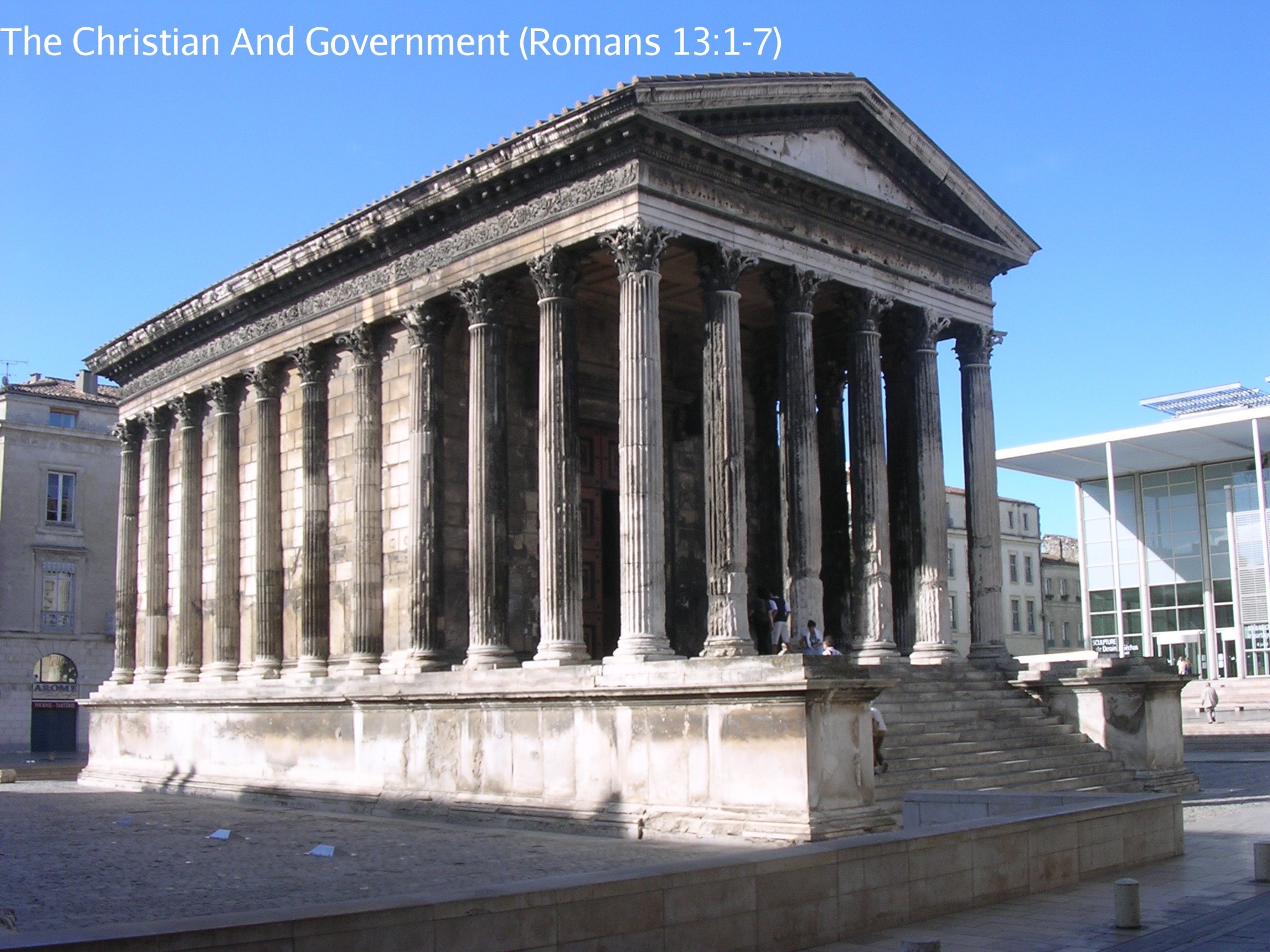
The Christian And Government 

Neal Pollard

There is a passage that can be so disturbing because it is so adamantly clear. That passage is Romans 13:1-7. The early church fathers had a lot to say about this passage. They lived at a time when the government sponsored and led persecution and even execution of Christians simply for being Christians and sharing Christ with others. Nobody living in our country today has any experience with what this is like. Despite the pain and price inflicted by the Roman Empire on them, over and over the early Christians defended Paul’s words in Romans 13.

  • Basil—It is right to submit to higher authority whenever a command of God is not violated thereby
  • Ambrosiaster—Those who believe cannot play fast and loose with the law
  • Apollinaris—To disobey rulers is condemned as a mistaken way of thinking
  • Chrysostom—There should be rulers and ruled and…that things should not just lapse into anarchy is the work of God’s wisdom (Ancient Christian Commentary, Vol. VI, Oden, ed.).

Whether you long for the Obama administration or love the Trump administration, whether you love or loathe your governor, senators, and congressmen, Romans 13 applies to us today.  Whatever your feelings about law enforcement or our judicial system, Romans 13 applies to us today. No one should be more conscientious about their relationship to the Civil Government than a Christian. What does this text reveal to us about “the earthly powers that be?”

  • The government has a Divine source (1). They are “from God” and “established by God.”
  • The government is a divine statute (2). Paul calls their ruling “the ordinance of God” and he warns against opposing such.
  • The government is comprised of Divine servants (3-6). The term Paul repeatedly uses of those within such earthly institutions is “ministers of God” (“servants of God,” 6) bearing the sword, bringing wrath, and devoting themselves to maintaining divinely-ordained order on earth.
  • The government carries Divine stipulations (7). God calls for Christians to render them what is due to them, namely taxes, customs, fear, and honor.

The limit to this is if they command us (forbidding or making us) to do what would cause us to disobey God (cf. Acts 5:29). That is not the same as commanding us to do something that restricts our “rights,” “freedoms,” or “liberties.” There may be privileges we enjoy in a free nation which contribute to our comfort, happiness, and enjoyment. They may even be dubbed “unalienable rights” in our national constitution. May we never confuse earthly privilege with divine precept. The inspired Paul makes it clear that God is behind government for the reasons seen above. Peter, in a context about civil government, reminds us that we are “aliens and strangers” on this earth (1 Pet. 2:11; cf. 13ff). As we loudly, lustily sing, “This world is not my home, I’m just a passing through…”  “For such is the will of God that by doing right you may silence the ignorance of foolish men” (1 Pet. 2:15). May God give us the strength and wisdom to this end!

Maison Carrée, Temple of Rome and Augustus

Deathbed Repentance?

Neal Pollard

“From the stirrups to the ground,
Mercy I asked for, mercy I found”
That is a distorted view of grace,
Which seeks God only in death’s face.

It cheapens that which cost Him much,
To use Him only as a deathbed crutch.
Unlike the seeker at his eleventh hour,
Who sincerely reaches for His saving power,

The hardened sinner who in last resort
Hedges his bets for some eternal life support.
So many never reach a deathbed sound in mind,
Or care for His will ’til their death warrant’s signed.

While God is long-suffering, wanting all to be saved,
The majority spend their lives to sin’s power enslaved
They only think heaven when earth’s living is through,
But an afterthought gesture will just not do.

Scripture says “come now,” not “wait til tomorrow,”
So many delayed to their own regret and sorrow.
Instead of relegating God to a last-ditch recourse,
Submit to Him now, you He’ll publicly endorse.

Deathbed repentance is not found in His Word,
No matter what men from their wisdom you’ve heard.
Obey from the heart what His doctrine requires,
Let His word be your truth, let all others be liars.

thinkstockphotos-sb10069454g-001

“It’s Meant To Be”

Neal Pollard

Sometimes a person wants so desperately to do something that they rationalize their decision to do so by crediting God with “sending a sign” or by concluding that “it’s meant to be.” In an age where God communicates to man, neither by voice nor directly through His Spirit but by His Word, this can prove dangerous thinking. The dilemma often is when we pray for something having multiple choices or outcomes, and then we have to make a decision. Most of us have been in this position. We want God’s will to be done, and we cannot be 100% sure we did the right or best thing at the time.

The danger comes in confusing our own will with God’s will. We can be certain that we are making the wrong decision if what we seek to do is blatantly unwise or clearly in violation of what Scripture says. Congregations have claimed Spirit-guidance for unauthorized changes in worship or their women’s roles within the church, and they have even claimed feeling God’s working among them or receiving a sign indicating God led them to such innovation. Men and women have dissolved their marriages, having blamed God for the move by saying they felt, or were even led to the conclusion, that such a move (and subsequent involvement in a new relationship) was His will. This simply cannot stand the test of scrutiny.

A famous example of the folly of such thinking comes from Nazi Germany in the 1930s. In 1938-39, Hitler brilliantly and bloodlessly divided his enemies through economic and political strategy. On September 1, 1939, Hitler’s troops occupied Poland and took it over. Incidentally, that day was the anniversary of one of their biggest military victories. On September 1, 1870, they overran Sedan in a day of war and strategy that long stood as a symbol of Germany’s military might. Throughout Germany, the populous lined up behind Hitler, optimistically concluding that a new world order led by Germany–no matter how achieved–“was meant to be.” Hindsight now shows how mistaken a notion this was. On May 2, 1945, Hitler committed suicide. the next day at 2:41 A.M. in a Reims’ schoolhouse, General Gustav Jody signed Germany’s unconditional surrender…five years, eight months, and two days after the occupation of Poland. Of course, world supremacy by a country led by a murderous madman was not “meant to be” nor was it “divine guidance.” Yet, many Germans in the late ’30s and early ’40’s thought so (For more information, follow this link.

Let us be careful not to confuse what we want with what God wants. May we never transpose selfish desires with divine guidance. Otherwise, we may stand to lose more than our nation and freedom (cf. Prov. 14:12). By shaping our mind and hearts through faithful, unprejudiced Bible study and constant prayer, we will be in a better position to recognize–when faced with tough choices–which one better glorifies God and achieves His purpose in this world.

image-111620-860_poster_16x9-ykjv-111620
Polish citizens being overrun on the day Germany occupied in 1939.

Do You Want A Better Life?

Neal Pollard

Who would answer “no” to that question? Who wants a worse life or a life that never gets better? But the better question is, “How do you get a better life?” Advertisers have so many answers to that, involving their currency or investment tool, their pill, diet, or workout routine, their travel agency or vacation destination, or product for your home, transportation, business, and the like. So many put so much into these promising plans, but still find their life wanting.

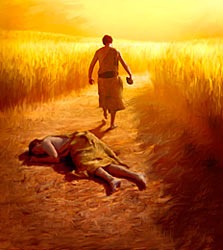
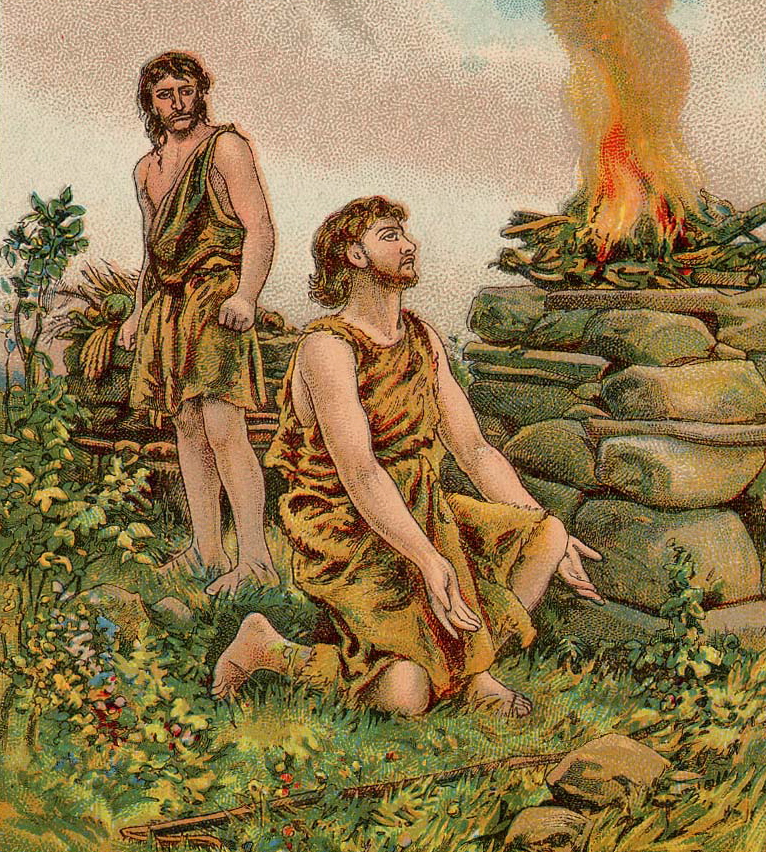
In religious matters, there is no room for subjective thought when it comes to what it takes to have a better life. We find ourselves often bobbing in a sea of religious confusion. Many groups claim to be the best religion and point to their ingredients as reasons for such claims. They point to their numeric size, number of programs they have, or how socially active they are. Our religious attitude ought to be one of humility, not boasting of our achievements or comparing ourselves with others (cf. 2 Cor. 10:12). Genesis 4:1-16 points us to the first recorded version where more than one kind of worship was offered to God and how God rated them. But this chapter also paints a picture of two ways of living life.

Cain is mentioned by three Bible writers after Moses writes about him in this chapter. The writer of Hebrews calls Abel’s offering more excellent than his (Heb. 11:4). John calls his works evil and his allegiance “of the wicked one” (1 John 3:12). Jude implies that the way of Cain is the wrong way to go (11). It seems that Genesis four shows us the better ingredients for a better way of living today.

  • Better living isn’t determined by age (1-2). Cain was the firstborn, a place of honor and privilege especially throughout the Old Testament.  But under the New Covenent, there is no spiritual advantage because of birth order. It is not a matter of firstborn, but a matter of being born again (John 3:1-7). Growing older should mean growing wiser, but reaching a milestone on a calendar does not equate to better living.
  • Better living isn’t determined by occupation (2).  Growing up, we might be tempted to see our occupation as the gateway to happiness and satisfaction, financial freedom and security, independence, and privilege.  When we look at Cain and Abel, what they did for a living wasn’t the determiner of the quality of their lives. Some occupations can stand in the way of better living, whether the nature of the job or the quality of the people one works with. Some can let their jobs stand between them and their relationship with God and His church. But, one can do right in unfavorable work circumstances, staying faithful to God.
  • Better living is determined by worship (3-4). That statement may be offensive to our multicultural world that says there are no absolute rights or wrongs. Contrast our culture’s thinking on this matter with what we read in Genesis four. Both Cain and Abel brought an offering to the Lord. God responded to both offerings, but He accepted one while rejecting the other. While many make worship nothing more than taste, preference, and personal, we learn here that not all worship is equal. God “had regard for” Abel’s, but not for Cain’s. It does not say if Cain was sincere. It doesn’t seem to matter. We learn here that the worshipper and the worship offered rise and fall together. God regarded Abel and his offering, but rejected Cain and his offering. Can one offer God vain worship, and have God reject it but accept him? Apparently not.
  • Better living is determined by attitude (5-7). Cain reacts to having himself and his worship rejected by God. He was very angry. His insides burned! His countenance fell. He took on an ugly look. We’re not told how old he was, but it almost sounds like a temper tantrum. Whether home training, lack of discipline, poor stress management, pride, jealousy, or anything else leads us to lose our tempers, all of them are matters only we can control. When we don’t control them, we’re responsible! Ill-tempered people are not living the better life! A positive life doesn’t require prospering, education, or earthly success. But you can’t have a positive attitude without mastering self.
  • Better living is determined by action (8-16). The word “sin” is first used in Genesis 4:7, but God was looking ahead with perfect foresight to what Cain was going to do to his brother (cf. 1 John 3:11-15). Bible writers speak of his deeds, offering, and way. These are all action words. After his sin, he is rebuked and punished by God and separated from God. Sin will not deliver what it promises. All actions have consequences (Gal. 6:7-9).

Someone said, “The line of Cain gives us murder, cities, polygamy, musicians, metal workers, and poetry, but not one who walked with God.  In fact, Cain’s legacy led to a repeat of his violent ways by a descendant (cf. 4:23). Abel leaves no physical lineage, but he leaves a great spiritual heritage (Heb. 11:4). We each get to choose what kind of life we’ll pursue. It matters which way we decide.

cain-and-abel

Accept Jesus As Your Personal Savior

Neal Pollard

The phrase is abused by those in denominations. With it, they suggest that such is the totality of one’s responsibility in order to receive salvation. It is synonymous with the idea of the “faith only” doctrine of Christendom. Yet, it is biblical to the core. Observe.

   “Accept.” Jesus says, “He who rejects Me…has one who judges him” (John 12:48). We accept Jesus when we humbly receive the implanted word (James 1:21). 1 Timothy 1:15 says, “It is a trustworthy statement, deserving full acceptance, that Christ Jesus came into the world to save sinners, among whom I am foremost of all.” We must accept Jesus’ will as well as the assertions He makes. The question is, “Have we fully accepted Jesus at the point of our belief in Him?” No! He commands us to repent (Luke 13:3-5) and be baptized (Mark 16:16). Refuse those commands and you have not accepted Jesus. Can we take only part of Him and be whole?

     “Accept Jesus as your…Savior.”  He came to this world for that purpose. Before Jesus’ birth, Joseph was told, “You shall call His name Jesus, for it is He who will save His people from their sins” (Matt. 1:21). Jesus is identified as the Savior throughout the epistles. 2 Timothy 1:5 and Titus 3:5 both say, “He saved us” by His mercy, purpose and grace. Salvation is the common need (Rom. 3:10,23) and there is no other way but Jesus to meet it (Acts 4:12). We cannot stop at accepting who Jesus is, but must further accept what Jesus has done.

“Accept Jesus as your Personal Savior.” The Bible teaches that Jesus’ redemptive work at Calvary was for the whole world (John 3:16; 1 John 2:2). Yet, will the whole world be saved? No! In fact, most will not be saved (Matt. 7:13-14). Even some religious folks will be lost (Matt. 7:21-23). Therefore, accepting Jesus must be done at the personal level! must act upon the saving knowledge of Jesus. As I will be held personally accountable for my life (2 Cor. 5:10), I cannot blame my parents, children, friends, people at church, people in the world, or even my mate for my disobedience. In my own mind, I must accept what the Bible says about Jesus and do what Jesus says do. Nobody can do that for me (Rom. 10:9).

The baggage surrounding the phrase is most unfortunate. The facts, as presented here,  must be understood. It is not as our religious friends teach, who share that as the totality of our responsibility, and yet it is true that each of us–while we have breath in the body and the hope of heaven–must accept Jesus as our personal Savior!

By The Name of Jesus


“Wait Until Fall”

Neal Pollard

It was a beautiful experience, talking with our newest brother in Christ last night. It was beautiful watching him be bombarded with love and attention from member after member. Listening to him tell his story built my confidence in the simplicity of the Bible when a person reads it without prejudice or agenda. What an affirmation that God has a will for us and He made sure it was understandable to the seeker. As Jesus put it, “Seek, and you shall find” (Mat. 7:7).

Roberto has been seeking. As he has been attending a large, area Community Church, he has also been studying his Bible. He’s been a diligent student. Along the way, he read the repeated emphasis upon baptism as a necessity for salvation. This prompted him to approach his church and ask if he could be baptized. He was told that they baptize in the fall, and he could be baptized then. His immediate concern? What if I am killed in a car wreck or my phone blows up when I charge it? There was no manipulative or badgering teacher filling his head with such scenarios. Instead, he could make the connection between a command from God and the consequences of disobeying it.

He started Googling the importance of baptism and eventually found World Bible School. This led him to connect with Terry Pace, a Christian in Flint, Michigan, who studied with him. Roberto wanted to know if he could be baptized. Terry went to work. Terry’s son, Sam, happens to preach at the Northwest congregation in Westminster. One of the Northwest members, Allan Javellana, met him to study with him on Monday and found out he had sufficient understanding to be baptized. Since he lives close to Bear Valley, Allan brought him to our building where Wayne Nelson let him in. Allan stressed with Roberto the importance of working and worshipping with a group that is trying to answer Bible questions with Bible answers.

On Pentecost, they asked “What shall we do?” (Acts 2:37). They were told (Acts 2:38), and they acted that day (Acts 2:41).

On the road to Gaza, the eunuch asked Philip (who had preached Jesus to him, Acts 8:35), “Look! Water! What prevents me from being baptized?” (Acts 8:36). They stopped the chariot right there and then, and he was baptized (Acts 8:38).

At Cornelius’ house in Caesarea, this Gentile asked Peter to come over from Joppa (Acts 10:23ff). Cornelius knew Peter would be speaking words by which he could be saved (Acts 11:14). When it was clear that God wanted Gentiles to be saved (Acts 10:44-47), Cornelius and his household were baptized on the spot (Acts 10:48).

In the prison in Philippi, the jailor asked, “What must I do to be saved?” (Acts 16:30). He’s told to believe on the Lord Jesus Christ (Acts 16:31), Who they proceed to teach him about (Acts 16:32). Armed with this knowledge of the Savior, this jailor “immediately…was baptized, he and all his household” (Acts 16:33).

Nobody waited because God’s answer was “now.” What has changed from then to now? What would make a different answer acceptable today? Roberto is another, amazing example of what a receptive heart does when faced with God’s Word and will. Simply, humbly do what He says. Oh, that I will approach God’s Word the same way!

water-baptism

It’s Not Business; It’s Personal

Neal Pollard

Some years ago, when our sons were all teenagers and they were given a cell phone, there were times when they failed to use those to communicate if they got to their destination or answer when we needed to reach them. While I never did it, I was tempted on more than one occasion to contact the cellular provider and suspend their service. Why? Was it because I thought it was wasted cost? No. It was because it reflected a lack of thoughtfulness and responsibility. It wasn’t business. It was personal.

Hebrews 10:25 is a sobering, New Testament passage. It addresses the Christian’s attitude toward the sacred assemblies of the church. What makes it sober is its contextual attachment to the eternal ramifications of abandoning those assemblies. God speaks of “no more sacrifice for sins,” “severer punishment,” “vengeance,” and “terrifying” (26-31) in connection with sinning willfully, of which forsaking the assemblies is a contextual example. But, why is God so exacting about this matter of our meeting together? In a nutshell, it is because these times, to God, are personal. The Bible is full of references to God’s desire to be worshipped and receive our worship. He is worthy. As Creator, He has the right. But, in this passage, it is personal in the sense that what He commands is so helpful to you and me.

Written on the foundation of the fact that our High Priest, Jesus, has given us access to God (19), the writer urges us to do three things: (1) Draw near (22), (2) Hold fast, and (3) Consider. It’s the third one I want to briefly notice:  “and let us consider how to stimulate one another to love and good deeds, not forsaking our own assembling together, as is the habit of some, but encouraging one another; and all the more as you see the day drawing near” (24-25).

There should be a personal connection. Notice how the writer reveals this. He says “us” and “our.” He says “one another” twice as well as “together.” Christianity is not a solitary condition. We must see ourselves in connection with the rest of the body. Assembling is about seeing ourselves as a vital piece of a more important whole. Forsaking the assemblies is, for whatever reason, selfish and self-centered. It is done blind to the needs of others.

There should be a personal submission. The command is “consider” followed by two participles that tell us how to obey the command: “not forsaking” and “encouraging” (more on that in a second). So, in a discussion about the whole group, there is a command each must strive to obey. As it is a command, ultimately this is as personal as God and the individual. I fail to consider my role, I fail in my relationship with God.

There should be a personal obligation. Each of us is obligated to stimulate and encourage everyone else. It’s not just those who publicly lead worship or teach class. The reclusive saint who dashes out before services are over has missed this. The clammed up Christian who never reaches out to fellow saints but is closed to others misses this. The discouraging and unloving brother and sister rebels against their duty. I should never be focused on how well others are stimulating and encouraging me. Instead, I should be so lost in my efforts to be a blessing to others that I have no or energy to evaluate how others are doing.

There should be a personal anticipation. This is more than social and emotional. It’s spiritual and eternal. Those other aspects are means to that end, but don’t miss the end. Be a blessing to others at “church services” “as you see the day drawing near” (25). Not Sunday. Keep reading. The Judgment Day. I need to remember that “here we do not have a lasting city, but we are seeking the city which is to come” (13:14). One of the best places to stay reminded of that is through our assemblies, as our activities in class and worship and our teaching and preaching keep us anchored to that ultimate reality. This world is not my home!

Christianity is not about the business of going through the motions, even doing right things. No, no! It is personal. May that truth permeate our attitudes toward not just God, but His children.

1024px-business_plate_green-svg

But, They Were Certain!

Neal Pollard

Have you ever been absolutely sure about something, only to find out you were wrong? Maybe, it was the name of the band that sang your favorite song or the name of the third baseman on your favorite team when you were in elementary school. Sometimes, the stakes are higher and being wrong more costly than that.

Erik Larson’s book, Isaac’s Storm: A Man, A Time, and the Deadliest Hurricane in History, is about a man and an entire bureau’s certainty that cost probably 6,000 their lives. And because they were so certain that a hurricane could not strike Galveston, Texas, a lot of people made fatal choices based on their own certainty—they were certain of houses that would stand, trains and tracks that would get them to their destinations, and that the slope of the coast would deter tidal waves and storm surges. Yet, in September, 1900, on Saturday and Sunday, probably the worst hurricane in modern history struck the exposed, helpless booming Texas city.

Some have been so certain about spiritual matters, but were wrong. They have been certain about what to bring God to worship (Gen. 4:2-3), about how to be saved from death (2 Kings 5:11-12), and about how to carry out God’s command (1 Sam. 15:13ff).

In the Sermon on the Mount, Jesus speaks of some who seemed certain, but were certainly wrong. Depicting the Judgment scene, Jesus preaches, “Not everyone who says to Me, ‘Lord, Lord,’ will enter the kingdom of heaven, but he who does the will of My Father who is in heaven will enter. Many will say to Me on that day, ‘Lord, Lord, did we not prophesy in Your name, and in Your name cast out demons, and in Your name perform many miracles?’ And then I will declare to them, ‘I never knew you; depart from Me, you who practice lawlessness’” (Mat. 7:21-23). These folks will have done religious acts in Jesus’ name. They will haven been certain they were on the right path, but Jesus says they will have been mistaken. They will not have done the will of the Father.

How many people will this ultimately describe? They have confidence in a preacher, a teaching, a tradition, a feeling, or a belief. Sadly, they have not even questioned whether or not it might not be what the Bible says on the matter. Jesus ends His sermon by talking about storms. This storm is more powerful than the one Larson writes about. It determines destiny (Mat. 7:24-27). We must base our certainty on the Rock!

ursuline_academy_galveston
Ursuline Academy in Galveston, Texas, before the hurricane.

My Daily “To-Do” List

Neal Pollard

  1. Be Productive With Your Time (Eph. 5:16).
  2. Be Pure In Your Heart (Mat. 5:8).
  3. Be Proactive In Your Relationships (Eph. 5:21-6:4).
  4. Be Peaceable With Your Provokers (Rom. 12:17-21).
  5. Be Purposeful With Your Life (Rom. 8:28).
  6. Be Praiseful With Your God (Psa. 150).
  7. Be Pleasant In Your Demeanor (Prov. 16:24).
  8. Be Prayerful In Your Decisions (Phil. 4:6).
  9. Be Patient In Your Challenges (1 Th. 5:14; Psa. 37:7).
  10. Be Positive About Your Future (Phil. 1:20-21; 4:13).
  11. Be Persistent In Your Evangelistic Pursuit (1 Cor. 9:19-22; Mat. 28:19).
  12. Be Pitying Of The Downtrodden (Prov. 19:17).
  13. Be Picky About Your Associates (1 Cor. 15:33).
  14. Be Passionate About Your Spirituality (Rom. 12:11).
  15. Be Perseverant In Your Trials (2 Th. 1:4).
  16. Be Prospective In Your Opportunities (Gal. 6:10).
  17. Be Petrified Of Falling Away From God (Heb. 6:1-6; 10:26-31).
  18. Be Powerful In Your Faith (Luke 7:9; 2 Th. 1:3).
  19. Be Persistent In Your Study (2 Tim. 2:15).
  20. Be Penitent In Your Sins And Failures (2 Cor. 7:10; Acts 3:19).
  21. Be Plentiful In Your Gratitude (1 Th. 5:18).
  22. Be Permeating In Your Influence (Mat. 13:33-34).
  23. Be Profuse In Your Generosity (3 John 5; Prov. 11:25).
  24. Be Prolific In Humility (Mat. 23:12; 1 Pet. 5:5).
  25. Be Pining For Heaven (Heb. 11:16; Phil. 1:23).

to-do-list-tools

Better Living 

Neal Pollard

We find ourselves often bobbing in a sea of religious confusion. Many groups claim to be the best religion and point to their ingredients as reasons for such claims. Several years ago, our boys played basketball in a league hosted by a huge community church in the Denver area.  Their church’s campus includes a K-12 school, two restaurants, a gymnasium half the size of our church building, a coffee shop, and a hundred social program. Other groups would make their claim as “better” or “best” based on their numeric size, the number of programs they have, or how socially active they are.

Our religious attitude ought to be one of humility, which does not boast of our achievements or compare ourselves with others (cf. 2 Cor. 10:12).  Genesis 4 is not just about two kinds of worship, but also about two ways of living life. Cain is mentioned by three Bible writers after Moses introduces him in Genesis. The writer of Hebrews calls Abel’s offering more excellent than his (Heb. 11:4). John calls Cain’s works evil and his allegiance “of the wicked one” (1 Jo. 3:12). Jude implies that the way of Cain is the wrong way to go (11). Let’s make a few brief observations from Genesis four and see if we can find the elements which make for a better way of living today.

  • BETTER LIVING IS NOT DETERMINED BY AGE (1-2).  By birth order, Cain came first. He was the first person to be born in the natural order of childbirth. He was the very first newborn to be held in his mama’s arms. She didn’t realize that her cooing, sweet infant was a future murdering, and she was proud of him. She called him “a man child with the help of the Lord.” This depicts such a bright, optimistic future, and by contrast Scripture says, “Again, she gave birth to his brother, Abel” (2). Abel began in his brother’s shadow, first known to us as “his (Cain’s) brother.”
  • BETTER LIVING IS NOT DETERMINED BY OCCUPATION (2). When we look at these brothers, what they did for a living was not the determiner of the quality of their lives. While what they did had an indirect bearing on the events of this account, the fact of their occupation was spiritually neutral—Cain farmed and Abel tended sheep. One can reap blessings from tilling the ground (Heb. 6:7), but they may have to fight thorns, thistles, and weeds doing it (Gen. 3:18-19). Tending sheep may be done by slaves (Luke 17:17), kings (1 Sam. 17:34), or apostles (John 21:17). God’s pleasure or displeasure was not connected to either’s occupation.
  • BETTER LIVING IS DETERMINED BY WORSHIP (3-4). Moses says both brought an offering to the Lord. He also says God responded to bother offerings, accepting one and rejecting the other. That very notion is foreign to many people in our society today, even those in religion. Many make worship nothing more than taste, preference, and personal inclination. But, Moses shows us (1) Not all worship is equal: God had regard for Abel’s, but not Cain’s. The words “had respect to” signify in Hebrew to look at something with a very serious glance. God tells us how He wants worship done, in attitude and action; (2) The worshipper and the worship rise and fall together: God had regard for Abel AND his offering and did not for Cain AND his offering. That’s a sober reminder for me that my personal relationship with God is hindered or helped based on the way I worship God. Can I offer God vain and ignorant worship, and have God reject it but accept me? We are not earning God’s favor by getting worship right. At the same time, are we tempting God and hoping we stay in His favor while disobeying His commands for worship? People have tried to make this an “either-or” proposition, that Cain and Abel’s offering was either about getting the worship right or was about the nature of the person offering the worship. In other words, is it sincerity or obedience, our both sincerity and obedience? To thoughtfully ask the question is to answer it!
  • BETTER LIVING IS DETERMINED BY ATTITUDE (5-7). Cain reacts to having himself and his worship rejected by God by burning with anger and his face taking on an ugly look. He sounds like a small child in the throes of a tantrum or a teenager huffing and sulking in anger. God warns Cain of the recipe for disaster he was making through his attitude. He told Cain that his tempestuous attitude was an invitation for sin to pounce on him, but He told him he could master it! You can have a positive attitude without prosperity, education, or earthly success, but you cannot have a positive attitude without mastering self.
  • BETTER LIVING IS DETERMINED BY ACTION (8-16). Improper worship and attitude preceded and precipitated improper action. The first time “sin” is used (Gen. 4:7), God was looking ahead with perfect foresight to what Cain would do to his brother. He does the unthinkable, killing his own brother (cf. 1 Jo. 3:11-15). His deeds and ways were a recipe for disaster: He is rebuked by God, punished by God, and separated from God. Sin promises a good time and fulfillment, but it’s not true.

It’s been said that the lineage of Cain gave us murder, cities, polygamy, musicians, metal workers and poetry, but not one who walked with God! Thanks to his legacy, a descendant repeats his violent ways (Gen. 4:23). Abel seems to leave no physical lineage, but he still speaks after death. His was a life of faith, generosity, good works, righteousness, and obedience. We get to choose the kind of life we want to pursue. If we choose well, we will be satisfied, others will be blessed, and God will be pleased.

the_story_of_cain_and_abel_bible_card

Some Powerful Promises

Neal Pollard

“You Will Have…”

—Treasure in heaven if you follow Jesus (Mat. 19:21; Mk. 10:21).
—Honor in the sight of all if you are humble (Lk. 14:10).
—Praise of rulers and authority if you do good (Rom. 13:3).
—An answer for the sinfully proud if you are persuaded about the Lord (2 Cor. 5:12).
—Brief tribulation if you are faithful, but then the crown of life (Rev. 2:10).

“You Will Be…”

—Judged in the way you judge (Mat. 7:2).
—Hated by all for Christ’s name (Mat. 10:22).
—Justified or condemned by your words (Mat. 12:37).
—Sons of the Most High by loving unconditionally (Lk. 6:35).
—Repaid for charitable kindness at the resurrection of the righteous (Lk. 14:14).
—Free indeed if freed by the Son (Jn. 8:36).
—Saved by faith in Christ (Ac. 16:31).
—Saved by confessing Christ (Rom. 10:9).
—Able to overcome any temptation (1 Co. 10:13).
—Enriched by being generous (2 Co. 9:11).
—Able to stand firm against the devil’s schemes if you put on the full armor of God (Eph. 6:11ff).
—A good servant of Christ Jesus by pointing out His Word (1 Tim. 4:6).
—Tested (Rev. 2:10).

“You Will Not…”

—Enter the kingdom of heaven without a righteousness surpassing the scribes and Pharisees (Mt. 5:20).
—Enter the kingdom of heaven without being converted like little children (Mt. 18:3).
—Carry out the desire of the flesh if you walk by the Spirit (Gal. 5:16).
—Grieve like the hopeless if you face the death of a faithful Christian (1 Th. 4:13).
—Grow weary and lose heart if you consider Jesus’ example of endurance (Heb. 12:3).

“You Will See…”

—Others faults more fairly when you look accurately at your own (Mt. 7:5).
—The Majesty and power of Jesus if you look with spiritual eyes (Mt. 26:64).
—The glory of God if you believe (Jn. 11:40).
—The King some day (Jn. 16:16-19).

“You Will Know…”

—Teachers by their fruits (Mt. 7:16,20).
—The emancipating truth (Jn. 8:32).
—The hope of God’s calling through faith in His revealed will (Eph. 1:18).
—How to respond to every man if you use gracious, well-seasoned speech (Col. 4:6).
—How to conduct yourself in the Lord’s church if you consult God’s Word (1 Tim. 3:15).

“You Will Receive…”

—All things you ask in prayer, believing (Mt. 21:22).
—If you ask in Christ’s name (Jn. 16:24).
—The gift of the Holy Spirit if you repent and are baptized for the remission of sins (Acts 2:38).
—The reward of the inheritance as the result of works of obedience (Col. 3:24).
—The unfading crown of glory if you are an elder who serves faithfully (1 Pet. 5:4).

In view of just a portion of God’s generosity, may we stand on the promises of God today and every day. One of the most thrilling statements of all Scripture is this: “He who promised is faithful” (Heb. 10:23). Whatever you are struggling with, claim this ironclad fact with its many implications! Holding onto it, surely you can handle any trial, temptation, or trouble you are facing.

pexels-photo-42379