HOW TO TRULY MAKE A DIFFERENCE IN THE LIVES OF OTHERS

Neal Pollard

Bloomberg Businessweek’s Ira Boudway wrote a fascinating article about the perennially successful head basketball coach of the San Antonio Spurs. He called the piece, “The Five Pillars of Popovich.” Gregg Popovich, who has led the Texas team to five NBA championships in a little over 20 years, is the epitome of steady in a league notorious for constant change. Boudway laments that Popovich wouldn’t actually cite his own pillars of success, but the thoroughly researched column definitely exposes the principles that have made this legendary coach tick with exquisite precision. Those five pillars, in order, are:

  • Own your luck. That is, be modest, humble, and don’t try to take credit for things you didn’t do.
  • Do your work. The same tenacious ethic that made him way more of a player than he should have been has translated into his incredible success as a coach.
  • Unleash your anger (strategically). Know when (and how) to get angry, channeling your passion and conviction into others.
  • Widen your world. Always be a learner, and inspire others to do the same.
  • Know your people. Build relationships, taking time to really know the people in your circle of influence. Former player Will Perdue articulates what so many say of the coach, saying, “I was kind of amazed by how much he wanted to know about you as an individual… He saw you as a human being first and a basketball player second.” In Pop’s own words to Sports Illustrated in 2013: “Relationships with people are what it’s all about. You have to make players realize you care about them. And they have to care about each other and be interested in each other. Then they start to feel a responsibility toward each other. Then they want to do for each other.”

(Bloomberg Businessweek article)

We would modify and adapt the wording of some of the pillars, but the principles are unmistakably sound. When it comes to spiritual leadership, whether in the home or the church, these qualities are powerfully attractive.

Great leaders work hard to give others the credit and, most of all, God the praise. The goal is more important than the glory (Eph. 3:20-21).

Great leaders will not ask others to do what they won’t do (Mat. 23:3-4). They exemplify what they expect (Heb. 13:7).

Great leaders get the difference between the “big stuff” and the “small stuff.” Spiritual wisdom helps them channel their passion nobly. They reserve emotion for the eternal and temperance for the temporary.

Great leaders are learners, growers, and improvers. They hate complacency and disdain settling. Nowhere do they demonstrate this more than their pursuit of sacred truth, as consummate Bible students (2 Pet. 3:18).

Great leaders truly know those whom they lead. Assumptions, perceptions, prejudices, and appearances hamstring and even sabotage leaders. There is no substitute for loving people, genuinely caring about and being intimately involved in the lives of those whom they lead (John 10:1ff).

People are looking for leaders like this. They will follow them to the ends of the earth and, consequently, to heaven! None of these qualities necessitates a Ph.D. or a million dollars. They simply require dedication and discipleship! May God raise up more men who have the will and want to be successful leaders for Him!raburntrip-gunnison-9-21-07069

A New Testament Leadership Style

Neal Pollard

USA Today ran a story about New York Knicks’ owner James Dolan. He’s depicted as a heavy-handed micromanager who feels more allegiance to his shareholders than the fans of the iconic professional basketball team. He’s contrasted with successful franchises, which the Knicks certainly are not at present, whose leadership sees themselves as stewards of a public trust and who casts a vision of a team which belongs to the people more than it does to those writing the paychecks and making the profits (Zillgitt, Jeff. USA Today, 3/15/19, 6C). 

While the article is prone to the subjective and fallible viewpoint of the author and his ability to properly research the subject, there’s a valid point to be made and applied much more broadly than just the world of sports.  Leadership approach is pivotal to the way and degree to which “followship” responds and participates in the vision and direction provided. Leaders who micromanage, arbitrarily dictate, fail to facilitate opportunity to be involved, and lead from fear stifle and prevent those in their stewardship from investing and contributing to the overall success of the organization.

Think about how this applies in the context of church leadership. When the Bible describes an elder’s role, one of the terms it uses for him is an “overseer” (Acts 20:28). This word means “one who has the responsibility of safeguarding or seeing to it that something is done in the correct way” (Arndt, Gk.-Eng. Lex. Of the NT, Et al,  2000: 379).  Neither the definition nor New Testament passages outlines, specifically, how that is to be done by means of method and judgment. It has to get done and it must be done correctly. Sometimes, elders hang on to “deacon duties” because it’s easier to do something than seeing to it that others do it correctly. Sometimes, it can be easier just to say “no” to some program idea or ministry than to endure the headaches of the trial and error in getting it off the ground.

Yet, there is wisdom in shepherding as stewards who help members invest and share in the success of fulfilling the purpose of the church as laid out in the New Testament. Such leadership encourages members to find ways to serve, to propose new ideas and methods to fulfill the New Testament mandates to evangelize, edify, and be benevolent. It facilitates their success–it announces, promotes, and advocates. It provides a watchful oversight that puts biblical rails around whatever the specific work is. Paul’s counsel helps elders know how to oversee: be on guard and shepherd. That means pay attention and take care rather than be aloof and detached. It also means to watch out for people and provide for and help them what it takes for them to spiritually survive. 

This leadership style is what makes such works as Bible camps, Lads to Leaders, Monday Night for the Master, lectureships, Bible classes, in-home Bible studies, fellowship groups, workshops, and the like thrive and grow. The more of us that feel invested in the work and success of the church, the more effort will be put toward growing and improving how it all gets done. Let’s show our appreciation (1 Th. 5:12), loving esteem (1 Th. 5:13), and cooperative submission (Heb. 13:17) to our overseers as they continue to try and lead us in this way. 

bvelders2
So thankful for the great, godly elders. of the Bear Valley church of Christ

A Leadership Legacy

Neal Pollard

I am not sure how long our congregation has conducted what we call “Young Lions And God’s Precious Daughters,” but I would guess it has been at least 15 years and probably longer. All three of my sons participated in Young Lions and feel it was helpful in getting them over nervousness when leading in worship. Yesterday afternoon, 16 girls between the ages of 6 and 12 hosted a tea for the Bear Valley ladies. Their theme was daring to be different by serving, and they served high tea while conducting a devotional with songs, Scripture reading, prayers, and short talks.

53196677_10218677710442715_1578552806590119936_n
Photo Credit: Aimee Woolley

Last night, 10 boys in the same age group stood before the congregation, leading songs, reading Scripture, praying, and preaching short lessons. Some of them were nervous, but all of them were eager and enthusiastic. Hearts all over a full auditorium, even on a wintry, snowy evening, were melting as we got a preview of tomorrow’s leaders.

53595270_10218677683242035_265187872313704448_n
Photo Credit: Aimee Woolley

Several adults met with these two groups, week after week, for two months, talking to them about how to dare to be different in a world that demands conformity. There were interactive, hands on lessons. There was weekly training and instruction helping them practically implement what they were learning. What is interesting is that though the names and faces of the adults who lead this have changed through the years, we continue to see the fruit of the church’s work in the lives of an age group that can easily be overlooked. “Leadership” is the thread that has run through this program over the years. Alumni of “Young Lions” include many Christian college graduates, many gospel preachers, and a countless number of young men who are leading in worship not only in Denver but across the country. For most, their first effort was standing on a stool (or stools) behind the podium at Bear Valley.  Alumni of “God’s Precious Daughters” are found faithfully serving the Lord’s church locally and elsewhere (the elders through Facebook Live charged one of these young ladies, Jordan Balbin, in advance of her mission trip to Nicaragua this week), filling Bible classrooms, and serving the Lord in a variety of capacities.

These precious resources God gives us as parents–our children–are to be molded, encouraged, challenged, and inspired to put faith into practice, to use their abilities and minds to glorify God and serve His Son. Thank God for the wisdom of elders who encourage such works, for parents and other adult volunteers who sacrifice time and energy to teaching them, and “young lions” and “God’s precious daughters” who participate with zeal and joy. What will eternity reveal to be the good that works like this produced? I can’t wait to find out!

862085_10151345296365922_1521736652_n
After “Young Lions” six years ago. 


What Preachers Wished All Members Knew About Their Elders

Neal Pollard

While there are doubtless men who wear the name “elder” that do not meet the biblical qualifications, many of the church’s greatest heroes and biggest assets are her shepherds. I have been privileged to serve under a total of 21 elders in 26 years of full-time preaching, and what I am about to say applies to each of them. Part of their work is public and visible, but I dare say so much more of it is conducted before the eyes of only a few or one sheep or even at times only before the eyes of God. My experience with elders is that they are humble men and they will never tell you what I am about to tell you.  Here are a few things elders wish all members knew about them.

—Elders do…

  • Care.
  • See people at their messiest.
  • Sometimes get the brunt of the lashing out people do when in pain.
  • Always, always put people first.
  • Give generously of their time.
  • Agonize.
  • Hard things none of the rest of us can or will do.
  • Have insight into sensitive situations that others may not.
  • Have feet of clay.
  • Pray fervently for the needs and problems of the flock.
  • Desire to communicate to the church as much as they feel they can.
  • Want to have a relationship with every member.
  • Love God and seek to please Him above all else.

—Elders don’t…

  • Give up on sheep.
  • Defend themselves.
  • Do it for the glory.
  • Seek the praise of men.
  • Hold a grudge.
  • Play favorites or have double standards.
  • Read minds or judge motives.
  • Want to lose a single sheep.
  • Publicly share everything that’s on their plate or comes their way.
  • Want to lead God’s people away from Him and His will.

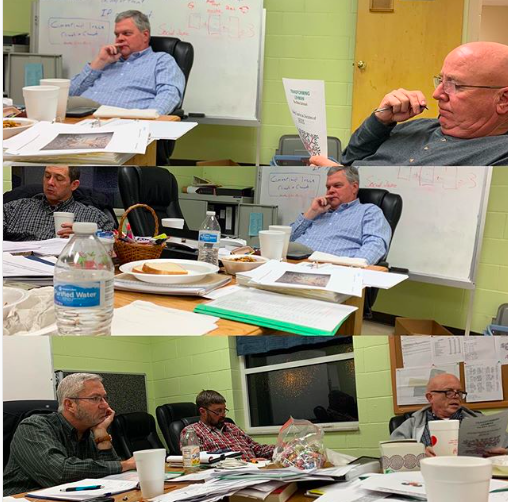
In an elders meeting last night, one of our shepherds was asked to read Hebrews 13:17. The elder chairing the meeting said, “This passage encourages me.” The elder who read said, “This passage frightens me!” As each of them discussed the sober meaning of that passage, I thought back to things I’d seen each of them do recently. It made me so thankful to serve under an eldership that takes their work seriously. Are they perfect men? Impossible! Are they God’s men? Absolutely! Please pray for the eternal work elders do in congregations around the world every day!

shepherd-and-sheep-e1446124496929

“I Praise, I Participate, I Proclaim”

Neal Pollard

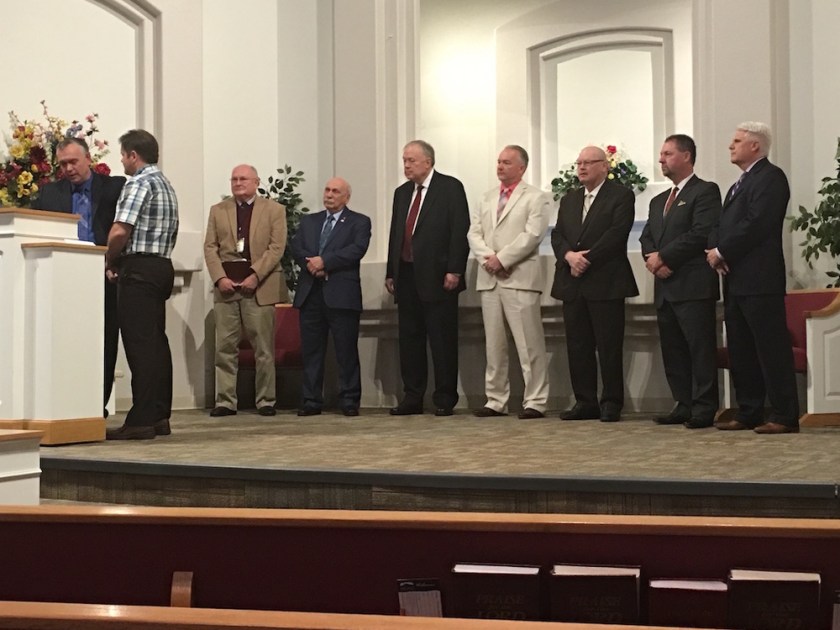
Yesterday afternoon, the Bear Valley eldership stood before us one by one to talk about their priorities both for themselves and for us. They distilled them into five simple words that describe five profound concepts: (1) Worship, (2) Communication, (3) Fellowship, (4) Accountability, and (5) Leadership. They told us that as the religious world is growing more homogenous in their worship style (a la community church model; rock concert-ish), distinctive New Testament worship has a chance to stand out even more. Yet, we need to always be improving our efforts in leadership and participation. They emphasized that communicating news, ideas, and needs is a process that will always need work and priority. No church ever arrives in this regard. They spoke of the importance of building a closer church family, knowing each other through age-related opportunities and entire congregation opportunities. This happens when we’re all together, in the classroom, and away from the building. They stressed the importance of holding one another accountable, for faithfulness, commitment, and support. Otherwise, there is no way to move from ideas to action. They told us that all of us exert leadership in some area. There is formalized leadership positions, as outlined in the New Testament (elders, deacons, preachers, teachers). But, inasmuch as we all have a sphere of influence (cf. Mat. 5:14-16), God expects us to lead. Throughout their entire presentation, they were specific about strategies aimed at helping us be successful. I appreciated the great challenge this was for us to work and grow. There were so many quotable sayings from their collective lesson, but the one that struck me most was made near the end. As we have adopted three planks of emphasis as a church, based on Acts 2:42-47 (praise—worship, participation—fellowship, and proclamation—evangelism), we were challenged to think: “I praise,” “I participate,” and “I proclaim.” It can be so easy for us to approve the church’s need to grow and improve in these areas or to expect the elders to do these things. But, no matter who we are, we can and must ask, “What can I do?” The key to being a great church is the willingness of every member to make personal application. It’s not, “What are they doing?,” “what are you doing?,” or even “what are we doing?” No! It must always primarily be, “What am I doing?” I’m thankful that our elders spoke with confidence and clarity about the fact that there is plenty of opportunity to be involved in making Bear Valley a strong, relevant church, a city set on a hill shining a light in spiritual darkness. Thank God for strong leadership, which encourages me to say, “Here am I, send me!” (cf. Isa. 6:8).

29513166_10155440294575922_8869656347900125980_n

Armchair Elders

Neal Pollard

He shouts at his TV with a mouthful of Cheetos. “I can’t believe you! Four receivers downfield and you throw it behind the line of scrimmage to a man who’s double covered! You’re pathetic. Must be nice to get millions of dollars to make awful decisions. Where do I sign?” After several additional one-sided conversations with the TV, Mr. Potato (first name: “Couch,” aka “Armchair Arnie”) dusts crumbs off his potbelly with those trademark orange fingertips and limps into the kitchen, stiff from sitting three hours, to get another snack before the second half of the NFL doubleheader.

Water cooler wide receivers. La-Z boy linebackers. The game’s true experts do not prowl the sidelines with headsets, nor do they actually suit up, strap on, and sweat it out. The guys with all the answers are the ones who would crumble with fear if placed on the same field with the athletes they so roundly criticize for bungling with the ball.

I have observed that the same temptation can occasionally strike some with regard to elders. Whether it be their judgment or painstaking decisions, their handling of a member’s problems or needs, or their overall “job performance,” elders get taken to task more often than they realize by pew chair presbyters. They may criticize elders for what they did or for their failure to act, for being too strict or too lenient, for showing favoritism or trying to please everyone, for being too conservative or too liberal–all with the regard to a single action taken or decision made.

There is a striking similarity to the “armchair quarterbacking” done by unfit, unqualified spectators at sporting events. Those who can’t are apt to criticize those that can and do. It is far easier to question and condemn the actions taken by elders without the benefit (and angst) of wrangling with problems and decisions oneself. How we can eloquently outline the plan of action we would take absent the pressure and responsibility of being in the position.

Let’s pray more for our elders and pass judgment less! Let’s support them with might, not scrutinize them under a microscope. They need our cooperation and submission (Heb. 13:17). They could do with less backbiting and murmuring (cf. 1 Co. 10:10).

That’s not to say that elders are beyond reproach and rebuke (1 Tim. 5:20). Occasionally, an elder or eldership may be deserving of question–particularly in the area of doctrine or their personal qualification. As a longtime Falcons fan, I had to endure the likes of Scott Hunter, Pat Sullivan, and June Jones! They were terrible quarterbacks, though much better than I could ever have been. Elders will answer directly to Christ for their shepherding of the local flock. We, as embers, will also answer for how we cooperated with and supported them. Let’s all resolve to get out of the chair and join them on the field (cf. John 4:35)!

sedentary

Watching Godly Elders

Neal Pollard

We are blessed with seven wonderful elders here! They span in age from 48 to 81, are of varying backgrounds, personalities, and skillsets, but collectively they reflect God’s wisdom for a plurality of godly men shepherding the flock. With the magnitude of the work and workload here, I cannot help but stand in awe of the great job they are doing. To watch men like these, I’m reminded of the powerful good done by apt, able elders. Far from an exhaustive list, they:

  • Show Hospitality—They open their homes freely and frequently, getting to know the sheep.
  • Keep Track—They make it their business to account for the sheep, knowing they will give an account for each of them ultimately.
  • Cast Vision—They do not lead from the rear; they thoughtfully, decisively get out front and show the way.
  • Greet Visitors—They care about our members, but they are constantly focused of who’s new around here.
  • Contemplate Problems—In the spirit of Solomon, they are presented with and must decide often complex, hairy matters…in real time.
  • Faithfully Pray—Listen to men pray and you get a pretty good idea how practiced they are. These men are devoted to it.
  • Show Heart—They aren’t afraid to demonstrate their care, concern, and love. We see it in their passion, their tears, and their involvement.
  • Manage People—Sheep are also of differing temperaments, needs, problems, and levels of maturity. They deal with “all kinds.”
  • Consult God—How exciting to see overseers humbly searching for and submitting to a “Thus saith the Lord.”
  • Balance Time—They do all of this while being competent employees, conscientious family men, and character-filled Christians.
  • Set Direction—They are tone setters in a basic way; What they emphasis, we will make important. We hear their voice, in the assemblies, meetings, and private conversations.
  • Make Mistakes—Despite sometimes unreasonable expectations from some, they are terminally human and inevitably subject to imperfection.
  • Follow Jesus—They are good shepherds walking behind the Good Shepherd. They want to serve, please, and imitate Him. Ours do a fantastic job of that.

Have you seen what a great job these men are doing? Have you taken the time to stop and let them know? Many churches veer from the straight and narrow path because of ungodly elderships. Thank God for the shepherds at Bear Valley!

13239021_10153682591930922_3851531815462243933_n

WHERE ARE THE ELDERS?

Neal Pollard

  • At the hospital, attending a surgery
  • At home, hosting a family or families and getting closer to the sheep
  • Hosting and attending church activities
  • In private meetings with hurting, needy members
  • In meetings together, praying over and discussing the needs of the sheep
  • Spending time with their wives and children, nurturing that needed part of their lives
  • On their knees and in their Bibles, strengthening their walk with the Good Shepherd
  • Teaching our Bible classes, leading our worship, and even preaching as needed
  • On the job, exemplifying Christ before the world in a superlative way
  • Weeping with the weepers at funerals
  • Found among our graduates, parents of newborns, celebrating newlyweds, and other happy moments experienced within the flock
  • In Bible studies with non-Christians or Christians wrestling with some Bible matter
  • Looking for visitors and new faces in our assemblies
  • Working, sleeves rolled up, on workdays and other occasions where they can serve
  • Enjoying fellowship, their very actions reminding us they’re normal and one of us
  • Watching and listening carefully, especially at the teaching and preaching that is done, ensuring the spiritual food their sheep ingest is healthy and nourishing
  • Holding up the hand of faithful gospel preaching, having their hands help up by their preachers
  • Touching base with the deacons, encouraging and aiding their success in ministry
  • Attentive to little children, the elderly, the alone, and others that many might unintentionally overlook
  • Ensuring the unity of the Spirit in the bond of peace, rooting out divisiveness
  • On the phone and in the homes with erring sheep, striving to retrieve them and, sadly, if necessary, leading the flock to withdraw fellowship from the irretrievable
  • Setting the spiritual tone, emphasis, and direction of the flock

Our elders, like faithful elders everywhere, do a lot that is unseen by the majority.  It is hard to quantify the time and effort each of these godly men put into their work, but God sees it. What is more, God rewards it. My prayer is that righteous elders everywhere will take heart at what an inspired elder once wrote: “Therefore, I exhort the elders among you, as your fellow elder and witness of the sufferings of Christ, and a partaker also of the glory that is to be revealed, shepherd the flock of God among you, exercising oversight not under compulsion, but voluntarily, according to the will of God; and not for sordid gain, but with eagerness; nor yet as lording it over those allotted to your charge, but proving to be examples to the flock. And when the Chief Shepherd appears, you will receive the unfading crown of glory.”

13239021_10153682591930922_3851531815462243933_n
Bear Valley elders among our 2016 High School graduates

The Shepherd Of The Sheep

Neal Pollard

“That grass is greener,” so he thought,
The sheep who wandered from the fold
Watching carefully the shepherd caught
The wanderer, so soon in the overseer’s hold.

The roaring waters so dangerously near
Forms a hazard for the trembling herd
But the herdsmen is wise, his vision is clear
With his guidance their safety is assured.

Surveying the cliffs or helping them rest
His vigilance is timely and needful,
For the sheep he labors to give them the best
For their well-being the shepherd is heedful.

The Lord chose imagery, graphic and vivid
To illustrate how His church should function
Lackadaisical leadership leaves Him livid
He urges them have compassionate compunction.

Watchful shepherds who tend with care
Are assets in the heavenly realm
Who carry, calm, who steer and spare
Who are willing to assume the helm

Stewards for the Great Shepherd of the soul,
They lead as they point out the way
And help us keep our sight on the heavenly goal
And prepare us for the Great Judgment Day!

shepherd-489292_960_720

HOW CAN WE ENSURE THE CHURCH WILL NOT GROW?

Neal Pollard

  • Talk Up Big Plans And Follow Through With Inactivity. This will build frustration and discouragement. Satanfears not the plan, but rather the working of it.
  • Make No Plans For The Future: Just Accept The Status Quo.  Just hope that the future will take care of itself. Buy into the “is/ought” fallacy: “The way it is is the way it ought to be.”
  • Do Not Practice Church Discipline. Let the disorderly walk unchecked in ungodliness. Let all members see how nonchalantly bad or grossly negligent behavior is treated.
  • Under-appreciate The Leadership. Do not pray for the elders, actively seek to help them, encourage them, express appreciation for them, submit to their authority (Heb. 13:7,17), or respect them. Just expect them to be without flaw or feelings.
  • Do Not Actively Enlist. Allow a small nucleus of folks to do the brunt of the work. Leave the majority of the members in the dark as to how and where to be involved. Ignore the fact that people must be personally invested to be faithful.
  • Pressure Or Allow The Pulpit To Be Form Over Substance. Make sure the preached message is soothing and non-offensive, fostering comfort and expecting little to nothing. Have the pulpit heavy on the social and light on Scripture.
  • Get Into The “Change Extremes”: “Nothing Is Sacred” Or “Nothing Is Changeable.”  Departing from the left or right will kill the church, whether its identity or effectiveness. Buy into every new fad that comes along or suspect and oppose any change which may scripturally improve the life and work of the church.
  • Make Personal Preferences And Opinions Binding. Equate personal discomfort with doctrinal sin. Take presumptuous positions, supposing there is biblical foundation without finding such. Allow the nay-saying of one or two thwart effective, soul-winning, and needed programs.
  • Have No Follow-up Program For New Christians. Let them make their own way to heaven after the water of baptism dries. Have no Bible study follow-up, fellowship mechanism, or other effort to integrate and educate these spiritual babes.
  • Maintain An Unchallenging Budget. Do not risk offending non-sacrificial members. Make plans by sight, not by faith. Do not make ambitious financial goals as a congregation.
  • Be Distant And Unloving With One Another. Confine association and fellowship to the building, and that in passing. Stay out of each others’ homes. Do not visit. Do not build friendships with those of like faith. Do not be involved in one another’s lives.
  • Take “Christ” Out Of Christianity. Be secular and worldly. Fail to be distinctive to a world desperately seeking something different from itself.
  • Ignore The Small And Voiceless. Be it children, elderly members, or the sick and shut-in, let them fall through the cracks of inattention. Treat singles, new Christians, and weak, struggling members as second-class citizens of the Kingdom.

It is easy to arrange things in the local congregation so that the church fails to grow. But, the Lord wants His body to grow. The early church grew (Acts 6:1,7; 9:31). A growing church reflects a church on fire for the Lord’s mission (Mat. 28:18ff) and in focus with the Lord’s desire (2 Pet. 3:9). May we overcome these church-shrinking tendencies and build a great church!

2908804_1b43e842

CHURCH GROWTH STARTERS

Neal Pollard

  • Offer “medical missions” benevolent campaign in the neighborhood, utilizing the talents of members with medical expertise.
  • Have a worship leadership training class.
  • Incorporate periodic explanations about the purpose and biblical foundation for the acts of worship and the invitation during the worship services.
  • Have an elder/deacon intensive training class.
  • Host community Bible studies in various homes on a regular basis, inviting friends, co-workers, neighbors, unchurched family, etc.
  • Have a benevolent financial planning and strategies seminar, utilizing the talents of members with accounting and other finance-related skills and backgrounds.
  • Have a “special events Sunday,” where a special contribution is taken to fund evangelistic events for the year.
  • Host a website, which you advertise to the community, soliciting religious questions they have on their minds (for an example of this, see 12questions.net—hosted by the Mount Juliet church of Christ).
  • Utilize deacons to identify the talents of new members and new Christians, and then look for ways to leverage them.
  • Start a “come back home” campaign to retrieve erring and fallen away members.
  • Create a bumper sticker that identifies the congregation concisely and in a way that would draw community interest. The Palm Beach Lakes congregation has seen several baptisms from such an effort (pblcoc.org).
  • Make the church website current, interactive, and informative, not just about churches of Christ as a whole but what makes the local church relevant to people’s needs.
  • Give the teens an evangelistic project (teen gospel meeting, teen visitation program, feeding the homeless, etc.).
  • Incorporate as many members as possible in grading Bible correspondence courses (for students both foreign and domestic).
  • Plan, publicize, and promote a Sunday for every member in the directory to be present for worship, then use that day to present the plan and work of the church.
  • Train and use members to “carry” visitors from the parking lot to the dinner table, adopting visitors and helping them find classes and seats in the auditorium as well as connecting them to other members.
  • Keep your eyes peeled for new faces, stepping out of your comfort zone to meet and greet them. Be prepared to follow up and help them meet others, too.
  • Pray about ways you can be more involved in the work of the church and ask the leadership for ways you can be put to work.
  • Make a list of members and visitors that you can influence and encourage, then utilize it.

Lessons From Yogi Berra’s “Yogi-isms”

Neal Pollard

One of the great American personalities of the 20th Century, Yogi Berra, has died. The 90 year old died Tuesday, September 22, in West Caldwell, New Jersey.  In his wake, Berra, a Hall of Fame catcher with the New York Yankees in the 1940s-1960s, left a book full of memorable quotes, such as:

  • “It’s deja vu all over again”
  • “you should always go to other people’s funerals, otherwise, they won’t come to yours”
  • “if I can hit it, it’s a good pitch”
  • “when you come to a fork in the road…take it”
  • “you can observe a lot by watching”
  • “it gets late early out here”
  • “a nickel isn’t worth a dime anymore”
  • “if it’s an emergency, it’s usually urgent”
  • “nobody goes there anymore. It’s too crowded”
  • “never answer an anonymous letter”
  • “pair off in threes”
  • “I really didn’t say everything I said”    (via USA Today and Fox News)

Yogi’s inimitable wit and wisdom will long outlive him.  Those of us who were born after his amazing baseball career more likely remember him for the Yoo-Hoo ads or the Aflac Commercials. However, observers of human behavior can learn a lot from this legendary figure.

—“Death and life are in the power of the tongue” (Prov. 18:21). Yogi reminds us of the influence we wield by the very words we speak.  Paul would urge us to let our “speech always be with grace, seasoned with salt” so that we will know how we should answer every man (Col. 4:6).  Daily, people hear our speech. Are we “killing” them or “saving” them?

—Cause people to think.  The longer you mull over a “Yogi-ism,” the more profound it becomes. With the Bible, our source material is unmatched. Whether a preacher or a Bible class teacher or a one-on-one Bible teacher or even as a Christian being light and salt in the world, the “attention getter”—not to ever draw attention to us but to the Lord—is powerfully effective. Jesus caused hardened officers to confess, “No man ever spoke like this Man!” (John 7:46). He had a wisdom and insight we’ll never attain, but we have a message unmatched by even a wordsmith like Berra.

—You will be remembered. Do you remember how the writer of Hebrews memorialized righteous Abel? “…Through faith, though he is dead, he still speaks” (11:4).  Of course, how we are remembered is etched by the lives we live in these bodies. We will be recompensed for this before Christ one day (2 Cor. 5:10).  We’ll be remembered by the people we leave behind, from the eulogy and obituary to the memories people keep with them of us. We’ll be perfectly remembered by God (cf. Rev. 14:13).

We lost an iconic cultural figure with Yogi Berra’s demise. But people like that continue to leave an impression on us after they are gone. As Christians, may we live so that when we die the impression we leave can influence and positively alter the eternal destiny of those we touch.

How To See The Good In Others

Neal Pollard

Some just can’t! They assume bad motives, intentions, and behaviors in others. They like to predict failure and disaster. Some take that attitude toward people, including Christians. “They won’t last!” “They can’t cut it as a deacon/elder.” “He won’t ever be a good preacher!” “They just want the praise of men.” Think about all the people you know and interact with. Some are exceptionally talented and pleasant and some are pretty worthless and repulsive, but most are in-between the two extremes. But, what if I told you that you could influence what others become?  Barnabas did (Acts 4:36).  He was so good at encouraging people, “encouragement” wasn’t his middle name but his first name. Who was the first one to see good in Saul of Tarsus (Acts 9:27)? Who saw great potential in Antioch (Acts 11:23-26)? Who still believed in John Mark (Acts 15:37), who Paul would later think valuable once more (2 Tim. 4:11)? Barnabas was a great leader because of what he could see in others. We can make an eternal difference in people by seeing the good in them.

First, take them where they are. Jesus did.  Do you remember when Jesus met Peter (Luke 5:1-11)? Peter calls himself sinful.  We know he was impetuous (John 18:10) and could use unsavory words (Mat. 26:74). Peter’s business partners, the Sons of Thunder (Mark 3:17) seemed to have some anger management issues. In fact, Jesus made it an emphasis to take sinful people and work with them wherever they were (the woman at the well, the sinful woman caught in adultery, Bacchus, publicans, sinners, etc.). We will never help people get to heaven if we can’t take them where they are.

Then, see them for what they could be. Whether it’s a non-Christian or Christian, they need us to be able to see their potential and think the best of them. I don’t mean gullibility or compromise, but optimism! Why did Christ put such effort into Peter? He was a sinful man when He met him, made many mistakes while he was with Him, and denied Him in His greatest moment of need (Luke 22:60-62). He saw what Peter could be (John 21:15-17). Look past people’s quirks and flaws; imagine the possibilities.  There’s got to be a soul-winner in every Christian, since Christ commands it of us all (Mark 16:15-16). Every one of us can be faithful, dedicated, and fruitful Christians. Every lost person could have their hearts softened by the gospel–at the least the gospel has the power (Heb. 4:12; Rom. 1:16). Remember, love “hopes all things” (1 Cor. 13:7).

Finally, help them be what they can be. It’s far easier to be the critic and tell people what they’re doing wrong. But remember, “To belittle is to be little.” Criticism alone is useless.  It’s a lot tougher to help people improve and to go about helping with patience. Jesus didn’t end His work by telling people what sinners or failures they were. He guided them to the better way (Mat. 7:13). He told the adulteress to stop sinning (John 8:11). He told Peter to go feed His sheep (John 21). When He was through with Zaccheus, he went from thief to philanthropist. Jesus’ whole purpose was to take people afflicted with sin and transform them. It is rewarding work to invest in people and to help them grow. The Bible tells us to help people do better and be better (Gal. 6:1). To see the best in others, be willing to help and lead them (Luke 6:39-40).

If we are negative and pessimistic, that really is just a commentary on us. Look for good in others. Accept, anticipate, and assist!

L.E.A.D.

Neal Pollard

When speaking of the work of elders, there are multiple aspects of his work and his life outlined in Scripture.  He is an “elder” (“A person of responsibility and authority in socio-religious matters,” Louw-Nida, 53.77; “being relatively advanced in age, older, old,” BDAG).  He is a “pastor” or “shepherd” (“To care for, provide,” WSNT, Zodhiates; “To care for the congregation…to seek the lost…and to combat heresy,” TDNT, Kittel, et al, eds.).  He is an “overseer” (“one who serves as a leader in a church…caring for the needs of a congregation as well as directing the activities of the membership,” Louw-Nida, 53.71).  His qualifications are seen in 1 Timothy 3 and Titus 1, his relationship to the membership seen in such passages as 1 Thessalonians 5:12-13 and Hebrews 13:7,17, and his authority in such passages as 1 Timothy 5:17, but among the three designations identifying him nothing may be more pressing and important than his leadership.  Too often, preachers or other influential members fill the vacuum and void of leadership left by elders who fail to assume this role.  When this happens, God’s pattern for church life is not followed.

Wendell Winkler once wrote, “Leaders cannot lead where they do not go anymore than they can come back from where they have not been.  They influence some by what they say, more by what they do; but, most by what they are” (Leadership: The Crisis Of Our Times, 15).  Citing the example of Isaiah, Franklin Camp wrote, “Isaiah’s response (to God’s question in Isa. 6:8, NP) was as though he were afraid that someone else might volunteer before he did. This attitude is that of which real leadership is made. When there is a challenge placed before the church, read leaders, like Isaiah, are ready to accept it” (Principles and Perils of Leadership, 50). Then, J.B. Myers adds this, that “a leader is one who guides others and directs a course of action. Fundamental to leadership is the willingness to take the initiative in behalf of a group, such as the church” (Elders and Deacons, 166).  These and other men have written books or articles, preached sermons, and taught classes urging the church’s elders to be leaders.  The need is as great today for this as ever!

How can elders effectively lead today?

Love.  Be tender and compassionate, as a shepherd. Be gentle and wise, as an elder.  Be faithful to God’s will, loving Him first, as a leader.

Exemplify.  Study and follow the example of the Great Shepherd.  Have a long track record of righteous living, as an elder. Show before you tell as a leader.

Admonish.  Realize the care attached to warning, as a conscientious shepherd. Summon the benefit of experience, as an elder, to be reminded of the abject neglect attached to ignoring sin “in the camp.”  Appreciate that sheep need a clarion, understandable voice from the leaders.

Decide.  Know that confusion and scattering lies in the wake of an indecisive shepherd. Trust the accumulation of wisdom gained as one who has reached the age befitting an elder. Grasp the connection between decisiveness (even if unpopular) and leadership.

Bigger, stronger congregations hinge upon good, godly leaders.  The faithfulness of Christians rests in the hands of capable leaders. Evangelism flags and fails minus the sure guidance and equipping of leaders.  Pray for every elder everywhere to L.E.A.D.!

Enthusiasm Is Contagious!

Neal Pollard

Have you seen The Weather Channel’s Jim Cantore video where he is ebulliently exulting over the thunder snow he witnesses and knows to be captured by his cameraman?  The YouTube video montage where he is on camera for six lightning strikes says it all.  At one point, he implies that he’d rather experience this weather event than win the $500 million lottery.  The enthusiasm is transparent and honest.  You can’t help to feel excited about what he’s excited about because he so enthusiastically expresses it.

Being a Christian is not necessarily a non-stop fist-pumping, mountain-top experience.  The late Wendell Winkler used to say that there are not very many mountain-top or valley days but that most were “in between.”  He called it “the glory of the ordinary.”  What we do on the ordinary days is what typically makes the bigger impact.  However, the genuine enthusiasm of Christians is certainly contagious!  Some of the best church leaders I have known have known how to inject others with zeal.  Other words are “passion,” “desire,” and “excitement.”  If this is artificial and contrived, it is eventually detected. True enthrallment for pursuing the will of God, though rare, leaves its mark far and wide.

What should fire our enthusiasm?

  • A baptism
  • A wayward Christian being restored
  • A well-delivered, challenging, and biblically accurate lesson
  • A demonstration of decisive, godly leadership
  • A challenge to growth or involvement
  • Godly conviction from our youth
  • Hearing of a good work within our brotherhood
  • Singing in worship
  • A sound idea for church growth
  • The dedication shown by a spiritual brother or sister

Challenge yourself.  Ask, “What gets me excited?”  If the Georgia Bulldogs were to ever win the National Championship again, look out world!  I’d give those around me a “Jim Cantore” moment.  My honest prayer is, “Lord, help my greatest passion and enthusiasm be reserved for the things that will endure after the heavens and the elements burn and melt” (2 Pet. 3:11).  Let’s get excited about serving Jesus and doing His will!

THE TACTICS OF TROUBLEMAKERS

Neal Pollard

When you come across Sanballat, Tobiah, Geshem the Arab, and the unnamed others of Nehemiah six, you can’t help but be struck by how timeless some things are.  The book of Nehemiah recounts the great construction project led one of the Bible’s great leaders, Nehemiah.  In fact, this Bible book is a great instruction manual on great traits of leadership.  Despite his skill, though, Nehemiah faced several obstacles.  He had overcome poverty, internal strife, and discouragement, only to encounter the opposition of troublemakers at this stage of the work. Notice what they did and how great leaders respond to such tactics.

He faced insincerity (1-3,10-12).  The aforementioned men tried to pull Nehemiah away from wall-building under the guise of a “meeting.”  Yet, the text says they sought him harm.  Later, we see that these troublemakers have hired an associate of Nehemiah’s, who fabricates a story meant to frighten him.  Both times, Nehemiah saw through the deception.  His answer was to focus on the work, refusing to leave it to become trapped in their snare.  When we are engaged in great works for Christ, there will be those, either out of jealousy or their own heart problems, who don’t want it to succeed.  Perhaps even despite an air of piety or “righteous concern,” they are willing to twist the truth to undermine our work.  Like Nehemiah, we must refuse to leave the work to be dragged into unproductive distractions.

He faced insistence (4).  They sent this same message at least five times!  Imagine Nehemiah and the others, up on the wall, finishing the job as the troublemakers keep pestering them with the same mantra.  Look at what Nehemiah does.  He sticks to his guns.  What grit and determination!  We should know that troublemakers often have nothing better to do.  They aren’t working on their own “walls,” so they choose to do nothing better than try to tear down the walls of others.  We must be prepared to keep working, however much they pester.

He faced insinuation and invention (5-7).  This is a favorite weapon in the troublemaker’s arsenal. They used talebearing, slander, gossip, and the like to try and undermine the work.  You can imagine the sneaky, slithery way in which they did it, can’t you?  “It is reported.” “Gesham says.”  “We’re going to report you to the king.”  What Nehemiah did in response is such a lesson for us.  He didn’t wring his hands or spend a lot of time with counterarguments.  He had truth on his side and did not feel compelled to wallow in the mud with the mudslingers.  He knew he was doing right, and he simply told them so.

He faced intimidation (9).  God gives us insight into the motivation of the troublemakers. Nehemiah says, “They all were trying to make us afraid.”  Why these mean-minded men were so obsessed with halting the work is not exactly clear, but pride and self-importance seem to play a part.  Nehemiah counteracts their bullying by going way over their head! He took it to God, praying for strength to overcome their pressures and threats. Obviously, as we read, God answered Nehemiah’s noble prayer.  When we face such intimidation, we have access to the same power!  That’s the first place we should turn when bullied by troublemakers.

How incredible that something which happened 2500 years ago can be so relevant to us today.  The old adage attributed to Aristotle is true: “To avoid criticism say nothing, do nothing, be nothing.”  Well, for Christians trying to do God’s work today, “nothing” is not an option.  We must be ever at work building His kingdom.  Thus, expect trouble and troublemakers.  Then, look to Nehemiah for the strategy to overcome them!  It still works.

HE WAS COACHING ON ONE KNEE

Neal Pollard

What I’m about to do is painful and very nearly contrary to my nature.  It involves praising something about New England Patriots’ head coach Bill Bellichick, he of “Spy Gate” and “Deflate-Gate” infamy.  Yet, something he was witnessed doing on the sidelines during the late stages of Super Bowl XLIX gives great insight into why he has coached a record-tying four Super Bowl champions.  While Pete Carroll was on the other sideline, commendably patting players on the back and showing excitement and energy, Bellichick was seen on the other side of the field down on a knee speaking with players on both the offense and the defense.  For whatever we want to say about what we don’t like about him, he’s renowned within the team as a strict disciplinarian that even makes players nervous.  Without negotiation, he expects everyone to give their best.  And, he expects it done without fanfare, a Wall Street Journal article showing this with a memorable Bellichick quote: “Playing well is playing well. You can break it down into 17,000 adjectives, but it’s doing your job” (Kinkhabwala, 1/15/11).  But, when the Pats were down by 10 and panic might have overtaken him, he was calmly, coolly sharing an expectation or going over a game-plan to overcome the adversity.

So, I still don’t have to like him or the Patriots, but I appreciate that.

Leadership is about so many different, vital qualities. Energy and effervescence, passion and praise all can play a part.  However, there is hardly a substitute for a mentor, one who is serious, thoughtful, and caring enough to pull someone aside and give him or her individual attention.  The word usually translated “exhort” in the New Testament is from a Greek word which means “calling to,” “appeal to and earnestly request,” or “call to one’s side” (Kittel, np, Louw, np, and BDAG, 764).  Who doesn’t appreciate the loving, caring approach of an elder or other spiritual leaders, whether preachers, older members, deacons, and the like, who guide us and help us with biblical understanding, moral dilemmas, and ethical quandaries. They have that timely word when we are discouraged, that nugget of wisdom that seems meant for that moment.

I think we all desire leaders who will get down on one knee with us, as it were.  Leaders like these are who Paul had in mind when he wrote, “But we request of you, brethren, that you appreciate those who diligently labor among you, and have charge over you in the Lord and give you instruction, and that you esteem them very highly in love because of their work. Live in peace with one another” (1 Th. 5:12-13).   Thank God for great leaders who, with weighty responsibilities on many fronts, take a moment to come alongside us with encouragement and insight.

Why These Are Exciting Times

Neal Pollard

I am filled with a tremendous sense of optimism that is not generated by politics, current events, the media, the economy, or any other worldly thing.  Neither am I fueled by some Pollyanna spirit.  Yet, I cannot shake this swelling tide of hope that fills me on a daily basis.  It is a hope for what the church and its members can be in the face of the growing challenges we face in this culture and around the world.  Why are these such exciting times?

The darkness is allowing the light to shine brighter!  Sadly, moral, ethic, philosophical, and civil behavior is eroding.  The messages being sent by those in power and authority are increasing anti-biblical.  Those who have lived for any length of time have witnessed a pretty dramatic shift in thinking and behavior.  This is reflected in so many things from language on the job and on “the street” to what is allowed and promulgated in TV and movies to the blatant lifestyle choices of the rank and file.  What all this means is that as Christians we can, by leading “a quiet life in all godliness and dignity” (1 Ti. 2:2; cf. 1 Th. 4:11), shine the light of Christ (cf. Mat. 5:14-16).  As we share Christ with those in our circle of influence, we can countermand the marching orders of the “world forces of this darkness” (Eph. 6:12).  That, brothers and sisters, is exciting!

People are earnestly searching! I read with interest the studies about exiting millennials, new world orders (not just conspiracy theories, but fundamental shifts in worldviews), spirituality over organized religion, and the like. For all of that, down where we live day by day on our jobs, at school, in our neighborhoods, and our community and civic activities, people are longing for meaning and purpose in their lives.  Yes, they can be confused and misguided.  Yes, they have broken and messed up lives.  Yes, this produces a great challenge to churches as we are intentional and outwardly focused.  But, we have not seen a day in any of our lifetimes where biblical ignorance and, thus, directionlessness has been greater.  Remember what Jeremiah said: “I know, O Lord, that a man’s way is not in himself, nor is it in a man who walks to direct his steps” (10:23).  There are many who would say with the Ethiopian nobleman, “How can I (understand, NP), unless someone guides me?” (Acts 8:31).

The church is ripe for revival! It seems that the tale most churches with whom I have contact tell boils down to larger numbers, greater involvement, and younger members occurred in the past! Thus, panic, pessimism, and perplexity lace the private conversations and public addresses of the pulpits, the pastors, and the pews. Perhaps it is time for congregations to consider moving from the defensive to the offensive. I don’t know that individual Christians have ever been more impressed with the dire urgency of evangelizing than right now. I believe the conviction and dedication of our Christian soldiers is palpable.  With bolder leadership, concerted efforts, and a faith-filled plan of action, I believe the church as a whole is poised for growth.  This will require a change of priority, focus, and commitment, but I believe that we are more than ready for it.  We are eager for it!

But, time is short!  Paul is right.  “The night is far spent, the day is at hand. Therefore let us cast off the works of darkness, and let us put on the armor of light” (Rom. 13:12).  If ever the mantra, carpe diem, has applied, it is right now!  May our anthem become, “Rise up, O men of God!”

MR. OBAMA’S EXAMPLE OF LEADERSHIP

Neal Pollard

As one who grows less political each day, I have hesitated to write anything that would look partisan or otherwise politically divisive.  The answer to man’s biggest problems starts with neither “R” nor “D” but rather “J” and “C.”  However, as one who loves our country, I am concerned at our president’s seeming and increasing aloofness, inattention, disengagement, and unconcern with international and domestic crises. The latest Rasmussen poll reveals that 45% of likely voters consider the president a poor leader (www.rasmussenreports.com). Earlier this year, a Gallup poll found that more Americans (53%) than not (41%) believe our president is not respected “on the world stage” (www.gallup.com). This may stem from the fact that he lacks, as Doug Mataconis suggests, “executive experience…” (Christian Science Monitor, 7/29/14). Even prominent people within the president’s party, like former AOL Time Warner CEO, describe themselves as “beyond disillusioned” at the chief executive’s “hugging and hobnobbing” rather than appearing more engaged in the various, volatile current situations.  Taken together, the growing disapproval of Barak Obama’s leadership stems from such things as apparent disinterest, failure to listen, inexperience, and blind adherence to an ideology without examining the specifics of a situation.

In every context, leadership is seen as an essential cog in the proper function of any organization.  If a church, a home, a company, a school, or a nation seem to be failing and floundering, look at leadership.  In a church, that includes especially elders but also preachers and deacons.  In a home, it is the father and husband. In a company, it’s the president or CEO.  In a school, it’s the principal, president, or director. Whatever the organization, it is fair to look at the example of the leadership.  Typically, everyone else in the organization has to live with the decisions and is effected by the direction of the leadership.

The church’s leaders will give an account (Heb. 13:17). The man of the home is likewise accountable (Eph. 5:22-6:4).  This holds true for leaders all the way up to the leaders of nations (Psa. 82:1; 110:5).  We all find ourselves in positions of responsibility and most of us serve in some leadership capacity.  Let us take seriously the accountability that we have to lead, be it children, the lost, neighbors, friends, or entire groups of people.


HAVE YOU HEARD ABOUT THE LONESOME LEADER?

Neal Pollard

He feels displeasure. An event usually triggers this. He reacts to the behavior or problems of another through negative emotion. An element of disbelief or disappointment may be the catalyst for his displeasure.

He feels disfavored. He may feel that God is against him, since he is going through the crisis. He will repeatedly ask, “Why?!”

He feels resentful. In these “lowlight” moments, he can resent the people who rely on his leadership. He may even feel like a surrogate, though stressed-out, parent. He may wonder why God put him into this caregiver role.

He feels helpless. He may feel unequal to the challenge before him. He may not know where to turn or how to resolve whatever the matter or issue is.

He feels overwhelmed. This is where the lonesomeness can feel greatest. He feels burdened down and incapable of carrying such a load. There may even be panic or at least severe dismay.

He feelsdepressed. He may even want “out of the job.” In severe cases, the depression can give him a distaste for life itself.

It is easy to see that problems leaders confront can seem like a snowball. Often, the reason the problem grows is because the leader is trying to do the work alone. The scenario painted above is not from my expertise or experience. It is an analysis of Moses’ problem in Numbers 11. the displeasure (11:10) and feelings of disfavor (11:11), resentment (11:12), helplessness (11:13), being overwhelmed (11:14) and depression (11:15) had brought this amazing leader to the brink. Moses apparently had a problem with letting go and getting others’ help (see Exodus 18).  The answer to both leadership dilemmas was identical. “Let others help!”  This time, instead of Jethro, God gave the answer to the “lonesome leader” syndrome. The solution came in the form of 70 men, helpers who would ease Moses’ burdens.

Many other Bible examples show the wisdom of delegation and letting others help shoulder the load. It was God’s idea, so we would expect it to work.  It worked for Old Testament Israel. It will help those who lead in spiritual Israel today. Elders and other church leaders who “get” it show wisdom and insight while finding relief and peace of mind in serving God.  You can break out of the “lonesome leader” syndrome!