The Tragedy of Judas: When a Heart Hardens Against Grace

Let us search our hearts with ruthless honesty, bringing every hidden sin, every cherished idol, every secret compromise into the light of Christ’s presence. Let us choose Peter’s path of humble repentance over Judas’s path of proud despair.

Brent Pollard

 The Humanity of Christ in the Face of Betrayal

In John 13:21-30, Christ reveals a profound insight into His humanity. Jesus, with a troubled spirit, revealed the identity of His betrayer through an act of fellowship—the sharing of bread. Jesus’ action was not a casual disclosure. The text reveals a Savior who experienced the weight of impending betrayal with genuine human anguish. He had chosen someone He knew to be a devil (John 6.70), and now the hour had arrived for that devil to execute his dark purpose.

Even in this moment of revelation, we witness Christ’s unwavering mercy. His acknowledgment of what Judas was about to do served as a final lifeline extended to the infamous traitor—one last opportunity to turn back from the precipice. This enduring mercy is a beacon of hope for all of us, reminding us that no matter how far we may have strayed, Christ’s grace is always within reach.

The Hardening Power of Unrepentant Sin

Sadly, Judas’s love of money and his own twisted ambitions had calcified his heart against both the deeds and words of Jesus. He had already negotiated his treachery, his mind fixed on the thirty pieces of silver promised by the chief priests (Matthew 26.14-16). Here we see a sobering truth: sustained exposure to Christ does not guarantee transformation. One can walk in the very presence of the Son of God and yet remain unmoved, unchanged, unredeemed.

The text tells us that “Satan entered” Judas (John 13.27). But what does this mean? We must resist the temptation to absolve Judas of responsibility by imagining some irresistible demonic possession. No, Satan did not override the will of a helpless man. Instead, he exploited the foothold Judas had already granted through his unrepentant sin, his corrosive greed, and his fundamental lack of faith. The phrase “Satan entered” signifies Judas’s complete surrender to the evil influence he had been cultivating in his own heart. It marked a decisive point of no return, the final rejection of Jesus’s appeals to repentance.

The Reality of Moral Agency Even in Darkness

Here we encounter a mystery that the shallow mind cannot fathom: even after Satan entered Judas, he retained sufficient moral agency to feel guilt, to return the blood money to the chief priests, and ultimately to take his own life (Matthew 27.3-5). This remorse, though powerful, was not genuine repentance. True repentance would have driven him to God for forgiveness, as Peter’s denial later drove him to weeping restoration. Instead, Judas’s guilt led only to despair—a worldly sorrow that produces death rather than the godly sorrow that leads to salvation.

James illuminates the progression: a person becomes enslaved to sin by yielding to their own lust. When that lust conceives, it gives birth to sin. When sin reaches full maturity, it brings forth death (James 1.13-15). Judas walked this path to its bitter end, each step a choice, each choice hardening the next.

The Contrast of Two Betrayers: Judas and Peter

The story of Judas serves as a stark warning about the human capacity to reject grace, even when confronted with overwhelming love and unmistakable conviction. While God’s offer of salvation extends to everyone, it requires a willing and humble heart to receive it. Judas’s ultimate fate—despair and suicide—stands in sharp contrast to Peter, who, despite his own devastating denial, turned to Jesus in repentance and received complete forgiveness.

Both men betrayed Christ. Both felt crushing guilt. Yet their responses diverged at the crucial point: Peter ran toward mercy; Judas ran from it. Peter believed forgiveness was possible; Judas believed his sin was unforgivable. This stark contrast serves as a powerful reminder of the impact our choices can have on our lives.

Practical Warning: The Danger of Walking with Jesus Without Surrender

Judas serves as a tragic example of someone who allowed his lust for money and power to lead him toward betrayal and destruction. His story reveals an uncomfortable truth: even people who walk closely with Jesus, witness His miracles, hear His teachings, and participate in His ministry can fall prey to the temptations of this world if they do not genuinely surrender their hearts.

What distinguished Judas from the other disciples was not the absence of sin—they all sinned—but the presence of unrepentant, cherished sin that he refused to bring into the light.

Closing: A Call to Self-Examination

The question Judas’s life poses to each of us is searingly personal: Are we cultivating hardness in our hearts through unconfessed sin? Are we, like Judas, close to Jesus in proximity but distant in devotion? Do we serve Him with our hands while withholding our hearts? The grace that could have saved Judas is the same grace offered to us today. But grace must be received, not merely observed. You should embrace it rather than acknowledge it.

Let us search our hearts with ruthless honesty, bringing every hidden sin, every cherished idol, every secret compromise into the light of Christ’s presence. Let us choose Peter’s path of humble repentance over Judas’s path of proud despair. The same Christ who extended mercy to His betrayer still extends it to us—but we must reach out and take hold of it before our hearts grow too hard to feel His touch. The time to respond is now, while the Spirit still speaks, while grace still calls, while the door of repentance remains open. Tomorrow may find us, like Judas, having crossed a point of no return that we never saw coming.

Two Cuts To The Heart

Growing up, my brother and I had blowgun battles. We’d roll up paper, shape sticky notes into cones, stick bobby pins in the tips, and—voila—homemade blowgun darts. These weren’t toys! One day, I’m hiding behind a wall, and Dale, from across the kitchen, spots my hand. He shoots with deadly aim. One second I’m fine;

Carl Pollard

In the book of Acts, we find two moments where people were “cut to the heart” by the preaching of God’s truth. In Acts 2, Peter, filled with the Spirit, preaches on Pentecost, and his words cut thousands, leading to repentance, salvation, and the start of the church. In Acts 7, Stephen’s bold preaching before the Sanhedrin cuts their hearts, but instead of turning to God, they turn to rage and murder. Two cuts, two responses—one to life, one to destruction. What made the difference? How do we respond when God’s Word cuts our hearts?

To get this, we need to dig into “cut to the heart” in the Greek. In Acts 2:37, after Peter preaches about Jesus’ death and resurrection, we read, “Now when they heard this, they were cut to the heart.” The Greek word is katanyssomai, a rare term meaning “to be pierced” or “stung sharply.” Picture a dart hitting your conscience. Growing up, my brother and I had blowgun battles. We’d roll up paper, shape sticky notes into cones, stick bobby pins in the tips, and—voila—homemade blowgun darts. These weren’t toys! One day, I’m hiding behind a wall, and Dale, from across the kitchen, spots my hand. He shoots with deadly aim. One second I’m fine; the next, a dart’s stuck in my wrist, needle in the bone! Talk about pain! We yanked it out, and my wrist instantly swelled up. When Acts 2 says “cut,” it’s not a paper cut—it’s deep. Peter’s words pierced their core, exposing their sin, and they cried, “What shall we do?” (Acts 2:37).

Now, Acts 7:54. Stephen’s preaching cuts the Sanhedrin’s hearts (“enraged,” ESV), and “they gnashed at him with their teeth.” The Greek word here for “cut” is diapriō, meaning “to saw through” or “cut violently,” like a saw tearing through wood. Their hearts were cut, but with rage, not godly sorrow. Two men stabbed by the same sword: one drops to his knees, seeking a medic; the other, enraged, grips the blade, worsening his wound. Both are cut, but one seeks life, the other death. How often has Scripture stepped on your toes, called out your sin? Ever felt that stab of conviction? Jesus’ words cut the rich young ruler, and he walked away (Mark 10:21-22). In John 6:66, many left after Jesus’ hard teaching. God’s Word is meant to cut and convict, but not all accept it.

In Acts 2, Peter preaches to a diverse crowd on Pentecost, declaring Jesus, whom they crucified, as the risen Messiah. The gospel hits, and they’re “cut to the heart.” They ask, “What shall we do?” (Acts 2:37). Peter says, “Repent, and let every one of you be baptized in the name of Jesus Christ for the remission of sins” (Acts 2:38). That day, 3,000 souls were added to the church. Why? They didn’t resist. They saw their sin—guilty of killing God’s Son—and felt the weight. They humbled themselves, repented, were baptized, and found life. David was “a man after God’s own heart” (Acts 13:22) because he listened and obeyed when God’s Word cut him, even when he messed up. God’s Word will call out your sin—lying, lust, pride—and show you the way out. The Acts 2 crowd chose life through humility.

In Acts 7, Stephen, full of faith, stands before the Sanhedrin, exposing their rebellion. He says, “You stiff-necked and uncircumcised in heart and ears! You always resist the Holy Spirit” (Acts 7:51). The truth cuts deep, but they gnash their teeth, rush him, and stone him, making Stephen the first Christian martyr. Why? Their pride wouldn’t budge. Like Pharaoh in Exodus, whose heart hardened with each plague (Exodus 7:13-14), they rejected the truth to protect their status. Imagine a doctor diagnosing a deadly disease, saying, “Surgery can save you.” One patient trusts and lives; another storms out, angry, and dies. The Sanhedrin chose the latter—truth exposed their sin, but pride blinded them.

Humility separates these responses. Acts 2’s crowd humbled themselves, sought mercy, and found grace. Acts 7’s Sanhedrin clung to pride, choosing judgment. Proverbs 15:33 says, “Before honor is humility.” James 4:6 adds, “God resists the proud, but gives grace to the humble.”

Be like Acts 2, not Acts 7. How will you respond when God’s Word cuts? First, listen with an open heart. Hebrews 4:12 says God’s Word is “sharper than any two-edged sword, piercing even to the division of soul and spirit.” Don’t push it away. Second, submit and obey quickly. The Acts 2 crowd didn’t delay—they repented and were baptized. Like the prodigal son (Luke 15), run to God when truth hits. If you’re in their shoes, repent and be baptized—don’t wait. You don’t know when you’ll stand before God. Third, seek God’s help. He empowered Peter and Stephen’s preaching and convicts us today. Pray for a soft heart. Has God’s Word cut you? Is there sin you’ve ignored, a relationship to mend? Will you choose life through humility or death through pride? 

The stakes are eternal.

Show Your Trust

Carl Pollard

In 1799, Conrad Reed discovered a seventeen-pound rock while fishing in Little Meadow Creek. Not knowing what it was made of, his family used it as a doorstop for three years. In 1802, his father, John Reed, took it to a jeweler who identified it as a lump of gold worth about $89,000. That lump of gold, which was used as a doorstop for three years in North Carolina, is one of the biggest gold nuggets ever found east of the Rockies. Until its composition was determined, its value was unknown. 

Until the composition of our faith is determined, its strength is unknown. God will give you the opportunity to prove your faith. What kind of faith will we have? James 2:20-26, “Do you want to be shown, you foolish person, that faith apart from works is useless? Was not Abraham our father justified by works when he offered up his son Isaac on the altar?  You see that faith was active along with his works, and faith was completed by his works; and the Scripture was fulfilled that says, “Abraham believed God, and it was counted to him as righteousness”—and he was called a friend of God. You see that a person is justified by works and not by faith alone. And in the same way was not also Rahab the prostitute justified by works when she received the messengers and sent them out by another way? For as the body apart from the spirit is dead, so also faith apart from works is dead.” 

These two examples could not be any different to the Jewish mind. Abraham, the father of faith, and Rahab, a Gentile prostitute. Abraham was justified by works. 

When was he justified? When he physically took his son to a physical mountain, and placed his physical son on a physical altar. HIS FAITH LED HIM TO DO SOMETHING IN THE WORLD AROUND HIM. What is your faith causing you to do? At some point your faith needs to move from your mind to the world around you. Rahab was justified through the “working of her faith.” Faith demands action. 

It requires Intellect, Emotion, and ACTION. 

Noah had a devoted faith so he believed and obeyed. God told him what was going to happen, and how to avoid the destruction of the world. And Noah believed and obeyed. God has warned us what is going to happen, and how to avoid the destruction of the world. Do you believe that? Then have a devoted faith. A belief that will lead you to devote your life to God. A faith that acts on the word of God. What is the designed end of faith? Why are we to have faith? Because true faith leads to justification (salvation) 

Just like Noah obeyed, and Abraham and Rahab obeyed. 

If Abraham didn’t offer Isaac, what kind of faith is that? If Noah didn’t build an ark, what kind of faith is that? God expects us to have a work of trust. Abraham didn’t know what would happen to Isaac, but he knew God made a promise to Him. Noah spent 100 years building a boat on dry land, but he knew that rain was coming. What will we do with our faith? 

God has warned us of the destruction of our world with fire one day; are you gonna build a boat? He has told us how to be saved–through His son. Many will struggle with dead faith. All talk, no action. Many struggle with demonic faith, God has their intellect and emotion, but He doesn’t have their life. Some have a devoted faith. A trust that is seen through the life they live. What kind of faith do I have? If I don’t have works, if God doesn’t own my life, my faith is no good. 

My belief in God is useless. The only thing that comes from that is regret, because one day we will know exactly why we aren’t in paradise with God. 

We failed to act on our belief.

Painful, But Exhilarating

Neal Pollard

    On a particular occasion, I was listening to a great sermon on worship. It was interesting and, in a very real way, enjoyable.  But it was also forceful and convicting.  The longer he preached, the more the message kept penetrating and pricking my heart.  His sermon consisted of two points, that worship is an intentional meeting with God and, when we come, we must bring an offering.  That may sound somewhat plain, but it was powerful.

   Do not think that my view is that it is not a good sermon if your toes have not been crunched and you have not gone on a guilt trip.  I love feel good sermons on grace and heaven, the same as the next brother or sister.  However, as I listened to him preach that night, I thought of so many sermons by Camp, Clark, McCord, Winkler, Nichols, and others of their ilk.  The rich overflow from a man who has studied, prepared, and honed his ability to present gospel truths reaches into the heart of a hearer.  If we open our hearts during such sermons, we will be convicted by our shortcomings but motivated by the lesson to improve, grow, and increase what is good. 

   As he spoke about the “bucket,” I thought about the fact that more times than I want to admit I have come with an empty or nearly empty bucket.  But hearing him preach about it, I felt resolve to fill it up next time I meet God in worship.  In fact, that was what struck me most about his sermon.  The more I heard, the more I wanted to please, love, and obey my Lord.  It was painful, but exhilarating!

   In our dramatically consumer-centric culture, you and I must break out of such selfishness and humbly approach the Audience of worship and give our everything to please Him.  We need to come with our prayers, praise, thoughts, longings, meditation, money, and the like, urgently desiring to give and give some more to our great God!   That will do more than transform our worship.  It will change our very beings to the core! 

Lessons From The Men Of Issachar

Brent Pollard

1 Chronicles 12 describes David’s loyal followers gathering and supporting him as he prepared to become King of Israel. This chapter emphasizes the unity and strength that resulted from the various tribes rallying behind David, laying the groundwork for his reign and the kingdom’s unification.

The men of Issachar stood out among these tribes for their understanding of the times and their knowledge of what Israel should do (1 Chronicles 12.32). They understood that God had anointed David as king while Saul was on the throne. Their kinship with their brethren and willingness to support Israel led them to assist David and his men at Ziklag (1 Chronicles 12.40). Their leadership in this matter served as a model for other tribes that were still undecided.

We can draw inspiration from the men of Issachar and apply their lessons to our modern world during our current cultural civil war, characterized by fierce rhetoric and ideological conflicts.

We need wisdom and insight above all else. We must understand the complexities of our times like the men of Issachar did while avoiding falling prey to mere sentiment or rhetoric. We must recognize the cultural shifts, ideologies, and conflicts shaping our world today.

A usurper rules the world (1 John 5.19). We recognize that this usurper is a master manipulator who duped our mother, Eve, into sin (Genesis 3.1–7). Jesus referred to him as the father of lies and a murderer from our beginning (John 8.44). On the other hand, Revelation 19.16 reminds us that Christ is the King of Kings and Lord of Lords, God’s anointed (Acts 10.38). Yet, unfortunately, many people, including some of our family, friends, and neighbors, still regard Satan as their king.

We must demonstrate the men of Issachar’s willingness to put our efforts into action since we know what we must all do. When making decisions, we must use sound judgment by weighing various options and understanding the consequences. The Gospel’s teachings give us a sound mind, which leads to discipline. These characteristics enable us to face our opponents and carry out our duties without fear (2 Timothy 1.7). Amid our cultural civil war, it is critical to make decisions guided by God’s truth and values, contributing to the well-being of others and the pursuit of justice.

Second, even in discord, we should strive for harmony, following in the footsteps of the men of Issachar, who were instrumental in establishing and maintaining national peace. Even though we offer peace terms to people whose sins have gotten the best of them (cf. Matthew 5.9), they must know that their rebellion against God warrants death (Romans 6:23). Nonetheless, we bring the good news of God’s gift of eternal life through Christ. Regardless of contentious issues, we are encouraged to approach discussions and conflicts humbly, preaching the truth in love (Ephesians 4.5).  We can contribute to a more constructive and peaceful engagement with those harboring different points of view by encouraging dialogue and building bridges.

Third, Christian ethics should guide our responses to current issues, just as God’s commandments guided the men of Issachar. God has given us everything we require for life and godliness (2 Peter 1.3). We look to the Scriptures in our cultural context because the words of Christ will judge us (John 12.48). We can apply Christian ethics to issues of cultural civil war by drawing on Christ’s teachings and grounding our engagement in love, truth, and reconciliation. Even during heated debates, our words and actions should reflect Christ’s character (1 Peter 2.23). Peter reminds us that Christ suffered for us, leaving an example for us to follow in His footsteps (1 Peter 2.21).

Finally, the example of the men of Issachar encourages us to develop a voice of reason in these contentious times. We must cultivate a reasoned voice that speaks the truth, confronts sin, and offers hope, just as the men of Issachar did.

An event in the divided monarchy’s history illustrates this task. Ben-hadad, the Aramean king, had besieged Samaria, resulting in extreme conditions and even cannibalism. In a twist of events orchestrated by God, the Arameans were frightened into fleeing, leaving their supplies behind. The discovery of the abandoned camp by four lepers resulted in abundant riches and food.

Their consciences, however, troubled them, and they realized they couldn’t keep the good news to themselves (2 Kings 7.9). Likewise, we have information that is too good to keep to ourselves. As a result, we, like Issachar, should provide leadership and point people to the transformative power of the cross.

By incorporating these insights into our understanding of the men of Issachar, we can navigate the challenges of the cultural civil war with discernment, seek unity amid division, apply Christian ethics, and cultivate a reasoned voice. As a result, we can contribute to a more constructive and transformative engagement in our culture, even amid heated rhetoric and ideological clashes.

May the Lord give us the wisdom and courage to apply these principles daily. May we be reconcilers, peacemakers, and bearers of Christ’s transformative power.

The Power Of God’s Word

Saturday’s Column: Learning From Lehman

Stephen Pitcock

One of the greatest influences I have had in my life is my mom. I’m not sure if you were aware, but my mom has frequently been in and out of jail over the past several years. Not that she did anything to be thrown into jail, but rather she volunteers to go to the Detention Center in Elizabethtown and conduct bible studies with the women there. However, when she goes, she is only allowed to take her Bible in with her and they shut the door and lock it behind her. We’ve talked about it several times and there is only a couple of instances when she felt scared, when she felt like she was in danger.

Once she was having a Bible study and the topic was things we must do as Christians. Ephesians 2:10 tells us, “For we are His workmanship, created in Christ Jesus for good works, which God prepared beforehand that we should walk in them.” However, there was one woman there that was adamant that she did not have to do anything once she was “saved”. It got to the point that the woman was furious, and my mom was scared, and she wasn’t sure what to do or if the woman would harm her in some way. So, mom very calmly opened her Bible to Matthew 25 and gave it to the woman and asked her to read verses 31-46.

These verses reveal a judgment scene where the nations are gathered before God’s throne and are separated as a shepherd divides the sheep from the goats. Those to the right will inherit the kingdom prepared for them (meant for us) because they ministered to the least of these their brethren. Those to the left will depart into the everlasting fire prepared for the devil and his angels (not meant for us) because they did not minister to the least of these.

Upon reading the verses the woman broke down crying. She knew what she believed to be true wasn’t. If you ask my mom, she’ll tell you it was nothing she said that provoked this sudden and instant change in the woman, but rather it was the word of God.

Hebrews 4:12-13 tells us “For the word of God is living and powerful, and sharper than any two-edged sword, piercing even to the division of soul and spirit, and of joints and marrow, and is a discerner of the thoughts and intents of the heart. And there is no creature hidden from His sight, but all things are naked and open to the eyes of Him to whom we must give account.”

  •  Living – God’s word is active, able to achieve its purpose, working in people’s lives and it’s as relevant today as it was 2000 years ago.
  • –  Powerful – God’s word has the power to change our thoughts, change our lives and change our eternal destiny.
  •  Pierces – God’s word pierces our soul with truth, points out our sins and provides the cure.
  • –  Discernment – God’s word can perceive and recognize our every thought and intention.Isaiah 55:11 tells us “So shall My word be that goes forth from My mouth; It shall not return to Me void, but it shall accomplish what I please, and it shall prosper in the thing for which I sent it.” I’m not sure about the rest of the story. I hope the woman was able to leave with a new resolve to study and obey God’s word. However, we have God’s word available to us and it can do the same in our lives if we allow it.
    James 1:21 tells us, “Therefore lay aside all filthiness and overflow of wickedness, and receive with meekness the implanted word, which is able to save your souls.” That is, if we read and meditate in it, pray for understanding and if we are faithful and obedient to God’s commandments therein. God’s word is able to do instantly what man is unable to do.

A Box Of Mushrooms

Tuesday’s Column: Dale Mail


Dale Pollard


It’s special to receive a gift from someone who truly cares. You know why? Because they know you, and they know what you like. If someone got me a box of mushrooms for my birthday, I’d assume that person didn’t know me very well. Mushrooms are a fungus and should never be consumed— in my humble opinion.

Let’s take a moment to think about how well the average person in this world knows Jesus. Many people would say that Jesus was a great guy. Some would say that He was a good teacher, and still others would say that Jesus was an important figure in world history. All of those things are true. But, how well do they know Him? 

Too often phrases like, “well the Bible says…” or “well Jesus said…” are thrown around thoughtlessly, but there’s no biblical backing behind the words spoken. It happens in the world, and truth be told it happens in the body of Christ. Usually it’s said when we’re trying to make a point or when we don’t or can’t remember where some scripture is, or maybe even what that particular scripture actually says. It’s as easy to declare “Jesus says” as  “Simon says.” 1 John 17:3 it says, “This is eternal life, that they may know you, the only true God, and Jesus Christ whom you have sent…” Now, without ripping this out of context, you might notice the simple phrase, “that they may know…Jesus Christ.” There was a reason that Christ came. He came so that we might know Him. What are we doing in our daily lives that is helping us to know Jesus better? 

Communicating with Him, and letting Him communicate with you is vital to a healthy and intimate relationship when it comes to your spouse and certainly— your Savior. 

Non-Conformist

Monday’s Column: Neal At The Cross

65093899_10156405640240922_1795016641457684480_o

Neal Pollard

Our hens are good layers, even when molting and during bitter cold temperatures. Now that Spring and warmer temperatures are here, they are averaging an egg per day per chicken. But getting into the head (brain?) of a chicken is an impossible task. Many times, we have no idea why they do what they do. Their habits down to their individual decisions defy explanation. The hens have three nesting boxes, but many months ago they all decided they preferred just one. They all use it. Occasionally, you can find all four eggs neatly nestled together in one pile. More often, you will find that one of them has done her own thing. We have found eggs under the roost, at their feed trough, or in some stray, lone position. I need to post a game camera inside to solve mysteries like this.

What I do know is that none of them are acting out of a rational, intelligent decision to act out of step with the crowd. They are just being odd and quirky. There’s neither rhyme nor reason.

All of us, by intelligent design, are social creatures (Gen. 2:18; Ecc. 4:9-12). Whoever makes up our circle, however small or large it is, we do not typically like to be at odds with or stand out from them. At school, at work, wherever our social life takes us, we do not usually crave to speak or act in a way that ostracizes ourselves. 

However, there are times when following the guidance of God and His Word will put us at odds with the world. Describing the sacrificial life we are called to as Christians, Paul writes, “Do not be conformed to this world, but be transformed by the renewal of your mind, that by testing you may discern what is the will of God, what is good and acceptable and perfect” (Rom. 12:2, ESV). Using the faculty of intellectual perception (mind, BDAG 680), which has been “renewed” (caused to become new and different, with the implication of becoming superior, LN 593), we use the filter of God’s Word to understand what is morally good, acceptable to God, and meeting His highest standard. If we are asked or pressured to do something by “the crowd” that does not pass this test, we cannot comply. Even though we dislike their disapproval, even if it makes us uncomfortable, even if it means potential sacrifice and suffering, and even if it means isolation and ostracism, we make the choice to stand alone. It is more important for us to know and to help others to know God’s will on the matter than to blend in with the group in doing what violates His will. 

Few of us want to be seen as odd and strange, but Scripture warns that it can happen. Peter writes, “For the time that is past suffices for doing what the Gentiles want to do, living in sensuality, passions, drunkenness, orgies, drinking parties, and lawless idolatry.  With respect to this they are surprised when you do not join them in the same flood of debauchery, and they malign you; but they will give account to him who is ready to judge the living and the dead” (1 Pet. 4:3-5). We may bear the scorn of the crowd on occasion, but we are more concerned about the judgment. There, the number of those unprepared to stand before Him will be much greater than those who are ready. Let’s always be more concerned with what He thinks about our conduct! 

The Power Of The Word

Wednesday’s Column: Third’s Words

Gary III

Gary Pollard

Angels are not the dainty, long-haired Western Europeans they’re often depicted as being. In Matthew 28, their appearance was like lightning and they had white clothes. Evidently their appearance was other-worldly enough to frighten these soldiers almost to death (28.4). Whether this was some cardiac event or simply shock we cannot know. But to frighten someone that tough to that extent would take something pretty crazy. 

But some of these same guys still went straight to the chief priests and took a bribe to keep quiet and spread disinformation (28.11-15). After what they had just seen and experienced, you’d think they would run to a therapist and not the chief priests to help perpetuate something they knew to be false. 

We can be tempted sometimes to think that evangelism requires more than just showing someone the word. We might think the miraculous or incredible could persuade even the most stubborn non-believer. The power of our job (making disciples) is in the Word and in faith. The Bible has many accounts of people seeing incredible feats of supernatural power with their own eyes and still rejecting God. Abraham informed the rich man in Luke 16.29-31 that God’s Word is what saves; if that is rejected, no miracle will change this. 

If we place our faith in the power of the Word and work to deepen our understanding of the Word, we have all we need to show the power of Jesus. 

“Does the Bible Really Teach That?”

Monday’s Column: Neal At The Cross

16174665_10154303308455922_2453812807432667966_n

Neal Pollard

Have you ever heard “chimney corner Scriptures”–those things that sound like or we think that are in the Bible but are not (“Let your conscience be your guide” or “confession is good for the soul” or “God works in a mysterious way”).  It is not as funny when our hearts and minds are not adequately protected from a teacher or preacher who promotes something as biblical that is not.  It may be someone who touts a thing as acceptable to God which the Bible teaches is not.  It may be someone who asserts that something must be believed or done, though the Bible does not bind it.  Either way, God holds each of us accountable for knowing His will.  We are cheating ourselves and our souls who allow a teacher or preacher to dictate to us how we should feel or think about a given matter.  I am not saying we should be suspicious or distrusting.  Instead, I am saying we should be like the Bereans.  One of the most powerful, positive statements made about any group of people is said of them in Acts 17:11: “Now these were more noble-minded than those in Thessalonica, for they received the word with great eagerness, examining the Scriptures daily to see whether these things were so.” You have likely read that passage before, but what is the Holy Spirit saying about them?

They Were Characterized By EXCELLENCE.  They were noble-minded. Notice that it began here.  All else positive that is said about them began with their mindset.  Jesus praises people who hunger and thirst for righteousness (Mt. 5:6). These people were predisposed to accept God’s Word.  What higher praise can be lavished on anyone?

They Were Characterized By EAGERNESS.  The antithesis of this would be apathy and indifference.  These were “word-receivers.”  They were sponges, anxious to know God’s Word.  The Bible, from cover to cover, touts itself as the message of salvation.  Doesn’t it deserve our greatest enthusiasm?

They Were Characterized By EXAMINING. But, they were not uncritical, undiscerning students.  They were listening to one of history’s greatest Christians, borne along by the Holy Spirit, but they still checked after him.  Every man who purports to be God’s proclaimer deserves that same level of scrutiny.

They Were Characterized By EVERYDAYNESS.  They were not content to wait for the next Bible class or sermon.  They were daily devourers of these Divine dictates!  Aren’t there things you feel compelled to do on a daily basis (eat, sleep, brush your teeth, check social media)? We prove to God we are serious about the blessing of having a relationship with Him by constant, consistent consultation of His revealed mind and desires–we only find that in His Word!

How can we tell whether something is just a man’s conviction or is God’s command?  How do we know that some strange, new doctrine is true or false? Do not be content to let somebody be your sole source of gauging that!  Be a Berean!

4 Steps To Overcoming Peer Pressure

Thursday’s Column: Carlnormous Comments

IMG_0806
Carl Pollard
 
Peer pressure is a topic that is usually directed toward young people. While this is something that is possibly more temping to teens and young people, adults will struggle with it as well.
 
Since I was in my teens just two years ago, I can still clearly remember all the times I was pressured into doing something dumb. I sometimes hung with a rowdy crowd (my brothers), and ended up paying the consequences. Fishing on a golf course at night is apparently illegal, and that can get the police called on you. Shooting at geese with a slingshot is apparently animal harassment, and park rangers won’t exactly be happy. Stringing a dead beaver over a walking trail is illegal and you can be fined up to 10,000 dollars. These are just a few random examples or hypothetical scenarios…and definitely not something I did personally.
 
Peer pressure is a problem we will face. Whether we are in high school, college, or at work. Our peers won’t always make the right choices, but the question is whether or not we will participate? Notice with me four steps that will help us overcome peer pressure:
 

Develop A New Mindset.

1 Peter 4:1 says, “Since therefore Christ suffered in the flesh, arm yourselves with the same way of thinking, for whoever has suffered in the flesh has ceased from sin.” Think like Christ. Do what’s right, even if it leads to suffering. If we say no to peer pressure we won’t be popular, we won’t feel like we fit in, we won’t feel accepted and we may even lose a few friends. But since we are in Christ we focus on what’s truly important. Christ focused on the bigger picture. Instead of listening to the mindset of the day, He stuck to his purpose.
 
Peer pressure will tempt us to desert Christ. We don’t join in because we have developed a new mindset. We are reborn and no longer live like the world (Rom. 6:1-2; Gal. 5:24).
 

Make Decisions Based On This New Mindset.

1 Peter 4:2 says, “so as to live for the rest of the time in the flesh no longer for human passions but for the will of God.” We have ceased from sin so that we can make the most of our time on earth. No longer living for ourselves or for human passions, but for the will of God.
 
How can we avoid the sin of peer pressure? Make decisions based on our new mindset. We have established our reasoning. We now have a higher calling, and now our decisions are based on this new mindset in Christ.
 

Love The Sinner, Hate the Sin.

The mood always seems to feel a little uncomfortable when we say no to participating in sin. Our friends may get upset or call us a wet blanket, or even try and say we are acting “holier than thou.” This is one of the biggest obstacles we will face as Christians.
 
When we say no we must keep 1 Peter 4:8-9 in mind: “Above all, keep loving one another earnestly, since love covers a multitude of sins. Show hospitality to one another without grumbling.” How can we overcome peer pressure? Love the sinner, but hate the sin. We love the sinner because we want them to receive the same forgiveness and salvation we received. We hate the sin because it’s ugly and opposed to God and our new way of living.

Build Positive Relationships.

Find likeminded people that won’t tempt you to join in with sin. 1 Peter 4:10-11 says, “As each has received a gift, use it to serve one another, as good stewards of God’s varied grace: 11 whoever speaks, as one who speaks oracles of God; whoever serves, as one who serves by the strength that God supplies—in order that in everything God may be glorified through Jesus Christ. To him belong glory and dominion forever and ever. Amen.”
 
What do we use our gifts from God for? If you’re good at working on cars or lawn mowers are you using it for good? Are you good at cooking? Use it for the glory of God. If you’re a funny person, use it for the glory of God. Each one of us must use what God has given us to build positive and strong relationships, ones that are built on support and encouragement.
 
How can I overcome peer pressure? Build relationships that are centered around Christ. Around His church. Around His plan. Around His people. Build relationships filled with a mutual love and zeal for God.

What Does The Bible Say?

Monday’s Column: Neal at the Cross

pollard

Neal Pollard

Most people have very strong convictions, pro or con, about religious matters.  Many who claim to be religious form opinions and draw conclusions with very little if any biblical consultation.  How ironic is it to claim to follow God while ignoring and even rejecting His very revealed will?

Many religious people, church attenders and not, are guided by their feelings, desires, opinions, preferences, and consciences (cf. 2 Tim. 4:3; Prov. 14:12).  Perhaps they have a favorite preacher or other religious figure they implicitly trust.  Their religion may be submitted and subjugated to the message of the culture or even the media. It may be based on convenience and comfort.  Throughout time, man has attempted to serve God on his own terms and based on what he thinks is right.  Whether ignorantly or defiantly, he puts himself on a throne upon which only Jesus belongs (Mat. 28:18).

How long could religious error survive if potentially divided parties could lay aside personal interests and objectively study the sacred text?  So often, the religious world is divided because of man-made doctrines and traditions.  Instead of looking to the Bible to answer the important questions of time and eternity, men often come up with the answers they want and then go looking for Bible verses to support their predetermined views.  Consider that some of the most popular religious ideas—salvation by saying the sinner’s prayer, premillennialism, speaking in tongues, women worship leaders, once-saved, always-saved, and instrumental music—are not practiced or believed based upon their being taught in Scripture but instead their being the beliefs and views of mankind.  How thrilling it would be if we could unite every religious person in the desire to come to the text, the glasses of prejudice or sectarian beliefs removed, and let God tell us what to believe and how to live!  That is possible, but it begins with each of us humble, sincerely asking, “What does the Bible say?”

4543060842_e4fdb33047_b


Don’t Miss The Privilege Of Worship

Neal Pollard

Yesterday, John and Carla Moore, Kathy, and I worshipped with the church of Christ in Nazareth. We have been there a few times, but there was something extremely special about yesterday. In attendance was Wissam Al-Aethawi, an Iraqi and Muslim-born brother in Christ whom I first met at Polishing the Pulpit. What was so special is that this man, who explained that he has been a believer for 20 years and a New Testament Christian for 10 years, was able to worship in his native Arabic tongue for the first time ever. Can you imagine being a child of God for a decade before you ever had the opportunity to sing, pray, or hear preaching in the language you were born and raised to know? 

Every Lord’s Day, most of us have the privilege to worship God in our native tongue. In fact, such is probably an afterthought if a thought at all. I got the sense that brother Al-Aethawi would relish the idea of being able to worship in Arabic each week, and there’s no doubt he would not take it for granted. But do I appreciate that privilege? Does worshipping God mean so much to me that I prioritize it over everything else? When I am in attendance, do I pour my heart and soul into it? Do I let the words of the songs touch me, the prayers reach me, and the sermon change me? As I am able to stimulate the others to love and good deeds with words that come naturally to me, do I appreciate the blessing of fellowship felt before, during, and after worship?

What a shame if I let the glory of praising God seem so ordinary that I fail to treasure each service! What if we approached each time as if it was the first time we were able to worship God with the people of God ? What a difference it would make to the energy and passion of worship, if each of us did that. 

66271316_10156439099590922_7012873238573219840_n
Wissam presiding over the Lord’s Supper. 

WHY WE ARE TEMPTED NOT TO TEACH TRUTH

Neal Pollard

Most preachers know the unpleasant burden of having to preach on difficult subjects. There are some who, whether they find it unpleasant or not, are unpleasant in their demeanor and fully ready to frequently preach on moral, doctrinal, ethical, and other sin-related issues. However, it is distasteful business to most men who stand before congregations or sit before individuals to preach and teach the Word. What are reasons why we may be tempted not to teach truth?
1) Fear of repercussions. This is not said with cynicism or judgement of men’s motives and hearts, but for most of us there is usually fear of unwelcome consequences from preaching on a difficult subject. We do not want to offend people or their sensitivities. We do not want to cross people of influence who might encourage criticism or discontent against us personally. We do not want to see angry or hurt faces.
2) An overreaction to issue-oriented preachers. Most of us can think of a preacher or preachers who seemingly cannot stand before an audience without mounting their familiar hobby horse. Some have a stable of such stallions and a field of such fillies. Because we do not want to be that guy, we may be tempted to avoid difficult, thorny subjects.
3) Not being fully convinced that it’s truth themselves. I am convinced there are preachers who do not believe the truth on certain subjects, but they know the leadership or some in the membership do. So, they avoid preaching those subjects. If questioned on this, they can point to their lessons and defend themselves by saying they have not advocated error on a particular matter. Further investigation would reveal their silence on the matter altogether.
4) An assumption that people already know the truth on a subject. Without proper vigilance and attention to balanced preaching and teaching, this is inevitable. Especially if many in the audience grew up in the church and older members remember certain subjects being regularly addressed in their lifetime, they may not feel a sense of urgency that such subjects be periodically visited. We can raise an entire generation, assuming they believe what we came to believe through studying and hearing these matters preached. This assumption is both faulty and false.
Ephesians 4:15 and Colossians 4:6 are beacons and guides that determine how we preach. Acts 20:27 guides us as to what we preach. Fear is not an excuse for omitting certain subjects from our sermon repertoires (cf. Rev. 21:8). An overreaction that causes us to avoid all controversial, “hard” sermons is in itself an extreme (cf. Josh. 1:7). One not convinced about truth owes it to themselves and their hearers to stop preaching until they get that resolved (cf. Jas. 3:1). Assuming people know and understand the truth on a subject can make us poor stewards of the high charge we have as preachers and teachers (cf. 1 Cor. 9:16). Let us be transparently kind, caring, and concerned for people when we stand before them to teach and preach. Yet, let us have a righteous boldness and unwavering trust in the Lord to declare the whole truth so as to please Him.

13133128_10208994065306983_3707281101666231429_n
In loving consideration of my three most favorite preachers in the world!

STUBBORN TRUTHS

Neal Pollard

—And I say to you, whoever divorces his wife, except for immorality, and marries another woman commits adultery (Mat. 19:9).
—Repent, and each of you be baptized in the name of Jesus Christ for the forgiveness of your sins; and you will receive the gift of the Holy Spirit (Acts 2:38).
—For this reason God gave them over to degrading passions; for their women exchanged the natural function for that which is unnatural, and in the same way also the men abandoned the natural function of the woman and burned in their desire toward one another, men with men committing indecent acts and receiving in their own persons the due penalty of their error (Rom. 1:26-27).
—And He put all things in subjection under His feet, and gave Him as head over all things to the church, which is His body, the fullness of Him who fills all in all…There is one body (Eph.1:22-23; 4:4).
—And do not get drunk with wine, for that is dissipation, but be filled with the Spirit, speaking to one another in psalms and hymns and spiritual songs, singing and making melody with your heart to the Lord (Eph. 5:18-19).
—A woman is not allowed to teach or exercise authority over a man, but to remain quiet (1 Tim. 2:11-14).

Passages like these are hotly debated, denied, and derided by those who either cast them against other Scripture or subjugate them to current cultural expectations. Those who desire to accept verses like those above as simple truth are often thought to be ignorant or, worse, dangerous.

The same book reveals the person and sacrifice of Jesus. It reveals the nature and attributes of God. It tells us where we came from and where we are going. It speaks of grace and faith. We accept these truths at face value. But when we come to passages that go against the grain of popular opinion (in or out of religion), cultural mores, or religious orthodoxy, we somehow attempt to say they do not say what they say they say. Jehoiakim’s scribe’s knife and his brazier fire did not eliminate truth (Jer. 36:23). It actually intensified the message against him (36:29ff). The number of academic degrees, religious followers, or oratorical skill will not change the truth of Scripture. It is what it is. Our role is to humbly submit to it or forever beat ourselves against it. May we love and revere God enough to always do the former.

pic_related_050115_sm_burning-books

Examining Our Positions

Neal Pollard

Hans Kaltenborn was an ardent admirer and defender of Adolf Hitler and the “new Germany” ushered in with the Nazi regime. Despite diplomatic warnings of assaults upon Americans, Kaltenborn, an influential American commentator for CBS and NBC and of German descent, dismissed it as flawed and skewed information gathering by biased personnel. About to return home to the states to speak against such reports and warnings, his family went to downtown Berlin to do some last minute shopping. While out, the family found themselves in the middle of one of the endless S.A. parades. When his family refused to offer the Nazi salute, his son was physically assaulted and injured. Finally, someone intervened and the incident ended with no further harm. However, the transformed Kaltenborn was apoplectic. He made a report with the American Consulate in Berlin, but no charges were filed. As Eric Larsen writes, “the senior Kaltenborn ‘could remember neither the name nor the number of the Party identification card of the culprit, and as no other clues which might be useful in the investigation could be found’” (In The Garden of Beasts, 164). Despite this, Kaltenborn was now of a different mind!

There are many ways in which life can do the same thing to us.  We may be dead certain about marriage when we are single, about childrearing “pre-kids,” about our career when still in the classroom, about home ownership when in our parents’ home, dorm room, or apartment, and so on. But, life so often has a way of rudely awakening us from some well-meaning beliefs.

Sometimes, this can happen to us in the all-important area of religion. As we stay in our Bibles and gain wisdom and experience life, we may reaffirm but also clarify and even change certain positions we have long held. This can certainly be a dangerous affair, and some have allowed life to change their positions from what is true to what is false (what Jesus says about marriage, divorce, and remarriage because of a family situation, unscriptural changes in worship because of children attending church who have adopted such, etc.). But few of us will go all the way through life without reconsidering especially some conscience or judgment matters.

There are also a great many of our friends who have been taught religious error on God’s plan of salvation, the singular, undenominational nature of the church, what God wants in worship, women’s role in church and worship leadership, and the list goes on. This can be such a difficult challenge for anyone, to revisit long-held and deeply-believed positions in light of what the Bible says.

For all of us, there must be an abiding humility that approaches scripture without the blinders of prejudices, preconceived notions, and influences like family, friends, church, and so on. That is uncomfortable, but essential—for all of us!  We may come to find that something we’ve clung to so tenaciously must be rejected or that something we rejected must be embraced. If we ever get to that place, may we have the kind of heart that puts the will of God above our own will. Without such, we cannot hope to make heaven our home.

7256698_134185460141
Hans Kaltenborn

Devon Allen’s Baptism

Neal Pollard

I will preface this by saying I cannot determine anything specific about the religion of Devon Allen, a remarkable college student-athlete at the University of Oregon. He is in the headlines now as a starting football player who qualified for the Olympics in track and field.  It was during his training and competition for the latter that he decided the time was right to be baptized. So he was, in the Willamette River in Eugene last Friday before the watchful gaze of family and teammates from his track and football teams. No less than ESPN reported on his religious quest alongside his impressive athletic achievements. The article ended with the proper sentiment, particularly if Allen was baptized in the right way for the right reason. It reads, “It was the right starting line for two different races” (Chantel Jennings, espn.com).

I am encouraged that Jennings found this newsworthy. I am encouraged that Allen thought baptism to be so important. I am encouraged that his friends and family showed up in impressive numbers to witness this act.

When even so many in Christendom go the extra mile in denying the importance and significance of baptism, Devon troubled himself to do it. We do not know, but he might have said what the Ethiopian said: “Look! Water! What prevents me from being baptized?” (Acts 8:36b). As he studied with Oregon football team chaplain, could he have been taught the New Testament truth that baptism is for the remission of sins (Acts 2:38), baptism washes away sins (Acts 22:16), baptism reenacts Christ’s death, burial, and resurrection (Romans 6:1-4), baptism puts one into Christ (Galatians 3:27), baptism buries one with Christ (Colossians 2:12), and baptism saves one (1 Peter 3:21)? If he was taught baptism from the New Testament, these are the kinds of things he would have heard.

Regardless of Allen’s understanding about baptism’s function in God’s plan to save us, one who is taught in accordance with the several passages above and who has a good and honest heart (cf. Luke 8:15) will want to be baptized without delay (cf. Acts 22:16). Like the jailor at Philippi, they will submit to baptism even if it is the middle of the night (Acts 16:33). Like the 3,000 on Pentecost, they will demonstrate gladly receiving the word by being baptized (Acts 2:41). Thus, they will be saved.

My prayer is that Devon Allen understand these Bible facts and responded the way he did because he humbly accepted their truth. More than that, my prayer is that those who need to make the decision to be baptized will not let anything hinder them from doing what Jesus died to make possible for us all. May we ignore all rationalization that leads us to resist the act which, from a believing, penitent heart, washes our sins away.

102707-oregon-autzen-uoentrance1

LET’S BE CAREFUL WITH OUR SCRUPLES!

Neal Pollard

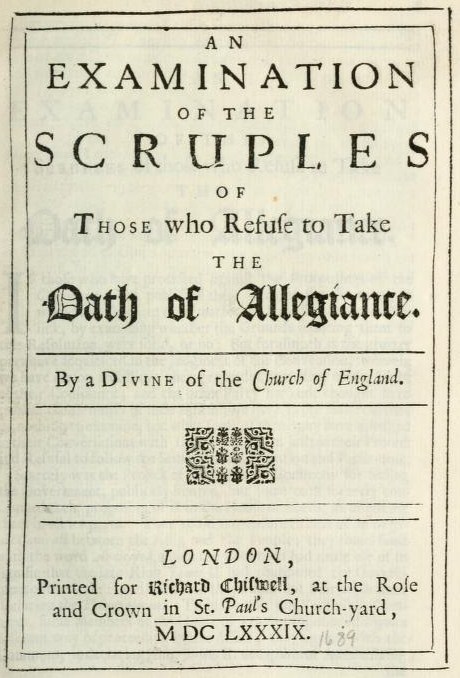
The word “scruple” comes to us, as many words do, from a Latin word (in this case, scrupus) and it literally meant “rough pebble” and figuratively meant “anxiety.” It has come to mean “a feeling of doubt or hesitation with regard to the morality or propriety of a course of action” (Apple Dictionary, version 2.2.1, 2005-2015). All of us have scruples that reveal themselves in the standards we set for ourselves.  Often, our “doubt” or “hesitation” arises because of Bible teaching. We disapprove of sexual immorality because God forbids it. We shun drunkenness because Scripture condemns it. Where God commands something be done or avoided, we are simply exercising obedience by following His Word and even echoing His will by teaching it to others. In such cases, we are not making law but only seeking to be obedient to what God has already commanded. Yet, there are areas that fall within the realm of judgment where we must be careful to distinguish between our tastes, proclivities, and convictions and what God has actually said about it. In its more serious and sinister form, we may even draw lines of fellowship or form judgments about someone because they violate, not Scripture, but our scruples. Consider a short list of areas and examples:

  • That men must wear a suit and/or tie to the assemblies and women must wear a dress to the assemblies (most especially that the preacher must don suit and tie when he preaches).
  • Abstaining from watching all TV.
  • That putting up a Christmas tree or otherwise celebrating the season is wrong.
  • That one must offer an invitation after every sermon.
  • That there must be an evening worship assembly offered for a church to be sound.
  • Opposing tattoos of any shape, size, or place.
  • That children must be educated at home or in the public school system.
  • That allowing one’s teenaged children to date is inherently sinful.
  • That a preacher must support himself with a secular job.
  • That an organized youth program is wrong.

There is no way to be exhaustive with such a list, but what all of these (and other things) have in common is that we cannot find book, chapter, and verse that causes these scruples to rise to the level of commandment. I’m not talking about whether they are wise or unwise, what role principle might play in decision-making, or what is or is not the best judgment.  Short of a heavenly mandate, we must tread so carefully.  Most of the examples above have been the source of friction between faithful brethren who otherwise stand together upon the gospel foundation. I have strong, decided feelings on most of the matters mentioned above. A few might surprise you, but many may not. When it comes down to the brass tacks of practicality, though, we need to remember to balance Paul’s injunction to not only “bear with the scruples of the weak, and not to please ourselves” (Rom. 15:1) but also “receive one who is weak in the faith, but not to disputes over doubtful things” (Rom. 14:1). This requires such Christian qualities as wisdom, grace, patience, understanding, and love. Some battles can distract us from the real enemy. Let’s not allow that to happen!

allix_examination_of_the_scruples

WHAT ABOUT ME? (POEM)

Neal Pollard

My sister is taking a meal to the sick
My brother has gone a wayward one to see
They both were busy, no “convenient” time to pick
But what about me?

They invite their neighbors to come to church
Have over people with frequency and glee
For good deeds they seem to constantly search
But what about me?

He’s a leader of others, she’s winsome and sweet,
He’s teaching the class, she’s full of hospitality,
They’re meeting the visitors, their lunch they will treat,
But what about me?

My life’s not more complicated, my resources so few,
That some little something I just cannot do
God wants me to warm so much more than my pew,
Others are active, and I can be too.

I don’t have to do some dramatic, huge act,
But with little needs every life’s brimming and packed,
If I could be impressed with just one simple fact,
I can supply something where once it had lacked.

I’ll look at life differently today, as I can,
Will spring to my feet after bowing my knee,
When asked, “Who’ll help this child or woman or man?”
I’ll say, “What about me?”

workshop-in-the-word-2007-281.jpg

A VISIT TO A TEEN’S RELIGIOUS WORLD

Neal Pollard

I love the World War II generation and the enormous impact they have had on our nation!  Perhaps no generation has had a greater challenge since them than the one presently coming to maturity.  Last night, at Teens In The Word, we asked the teens to describe the religious philosophy of their peers as they interact with them at school, their jobs, and their extracurricular activities.  It was heartening to see and hear our teens’ conviction, knowledge, and heart, but disheartening to discuss the fruit of a couple of generations of our culture’s social experiment to reprogram the thinking of people, especially this burgeoning generation.

Our teens attend schools in Douglas, Jefferson, and Denver Counties, go to large High Schools, charter schools, private schools, and homeschools. Despite these diversities, what they encounter is remarkably similar.  It might surprise you that many of their peers believe in a Higher Power and would consider themselves spiritual. More than anywhere else, these peers attend community churches.  Whatever the church growth gurus and experts claim, the teens that go to these churches tell our teens something very different.  Their religious experience is heavily dependent upon entertainment, doing fun things with a party atmosphere, not motivated or influenced by much biblical teaching, segregated from adults, hard-rocking music, dancing, and overall a very tactile experience.  What impact does it have on “faith”?  If speaking in terms of growing closer to God and learning more about Him, not that much. The prevailing worldview of many of our teens’ friends is “what’s right for me may not be right for you,” that God and the devil, heaven and hell are mindsets more than realities (really just your conscience inside of you), and that essentially the only or worst sins, the “objective wrongs,” are offending others and judging others.  When our teens seek to assert objective truth from scripture, they sometimes encounter scorn or rejection. While our teens know a varying degree of peers whose faith and beliefs are more concrete and committed, perhaps the most frequently observed comment last night was that many of their peers “believe in God but not the Bible or Christ.”  They see the Bible as a book of myths or fairytales and not the revealer of truth or a standard of authority.

As we closed our class last night, I was left awestruck.  Our teens are among my most cherished heroes.  They are on the frontline of faith, battling in a world more opposed to truth than that of any generation now living which preceded them.  We were struck with more than admiration, though.  We felt determination, the need to redouble our efforts to establish and defend the trustworthiness and integrity of the Bible, the existence of God, and from that the authoritative nature of Scripture.  Not only will this bolster the faith of our teens, but it will help them in dialoging with those among their peers possessing good and honest hearts (cf. Lk. 8:15).

Here are four things you can do right now for our teens.  (1) Pray for them. (2) Live Christ without hypocrisy before them. (3) Actively encourage them. (4) Help equip them.  Look for heroes where you will.  I have found mine!

Our teens recently feeding the homeless (photo credit: Lexi Hoagland)