Ann Turner Cook passed away at her St. Petersburg, Florida, home on Friday, June 3, 2022. She was 95 years old, was an educator, a novelist, a wife, and a mother. Her father was a well-known cartoonist. But you almost certainly know her for a charcoal drawing that was made of her by an artist neighbor, Dorothy Hope Smith. It was submitted for the label of a baby food company and chosen in 1928, then trademarked in 1931. Ann was the original Gerber baby (news report here)! You’ve seen that iconic picture. If you realized she was a real person, you never thought about the fact that this baby grew up and eventually grew old. Or that she would now be dead.
I know nothing about Mrs. Cook’s religious life or spiritual preparation. But I do know that she is part of a universal truth concerning life, and that is that death comes relatively soon for us all. How soon?
Like water spilled on the ground (2 Sam. 14:14).
Like a weaver’s shuttle (Job 7:6; Isa. 38:12).
Like a breath (Job 7:7).
Like a shadow (Job 8:9; 1 Chr. 29:15; Ec. 6:12).
Like a flower (Job 14:2).
Swift as a runner (Job 9:25).
Like a handbreadths (Ps. 39:5).
Like a wind that passes (Ps. 78:39).
Like a sigh (Ps. 90:9).
Like smoke (Ps. 102:3).
Like a lengthened shadow and grass (Ps. 102:11; 109:23).
Like a passing shadow (Ps. 144:4).
Like a fading flower or withering grass (Isa. 40:7-8; Js. 1:10; 1 Pet. 1:23-25).
Like a vapor (Js. 4:14).
With that in mind, shouldn’t we pray with David, “LORD, make me to know my end and what is the extent of my days; Let me know how transient I am” (Ps. 39:4).
Yes, we can look at the Gerber Baby and see that. Or we can look through our own family albums. The baby, childhood, and young adult photos of our grandparents, parents, or ourselves. The weathering winds of time do sure and quick work, reminding us of the many ways the Bible depicts it for us. Time is short and it passes quickly.
Rather than a depressing inevitability, this should be a respected teacher. We should pray with Moses, “So teach us to number our days, that we may present to You a heart of wisdom” (Ps. 90:9). We should take Paul’s inspired advice and “be careful how you walk, not as unwise men but as wise, making the most of your time, because the days are evil” (Eph. 5:15-16). Don’t leave undone what needs to be done. Don’t put off what must be done before this life is over. It will be over before you know it. As the writer of Hebrews tells us, “It is appointed for men to die once and after this comes judgment” (9:27).
I was chit-chatting with a friend from college about his latest work assignment, which took him to the Mississippi delta. He mentioned he had been by the birthplace of Kermit the Frog in Leland, Mississippi. Of course, I know Leland well since my mother grew up there. But sadly, I’ve not had a reason to visit Leland since my maternal grandfather passed in 2004. And while Deer Creek, which flows through Leland, is picturesque, I would have never thought it to be the place Jim Henson would choose to serve as the place of Kermit’s nativity. Yet, Jim Henson had been born in nearby Greenville, Mississippi, and spent his early childhood in Leland due to his father’s career as an agronomist for the Department of Agriculture.1
Can you believe it has been about 32 years since Henson left this life? Do you realize that there are potentially two generations familiar with Henson’s creations but are unaware of their creator? It boggles the mind of this “middle-aged” man. The older I become, the more I appreciate the Latin inscription on some clocks: Tempus fugit (i.e., “time flies”). But as I ponder the legacy of Jim Henson, the more I am struck by its tragedy. There was no reason that Henson had to die. The illness that took him was easily treatable had it been caught in time. There are certain complicating factors, to be sure. Henson’s parents reared him in the Christian Science faith.2 If you were unaware, Christian Scientists believe they should treat illness with prayer before medicine. In all fairness to Henson, he had stopped being an active practitioner of Christian Science in the 1970s,3 but one wonders if certain aspects of that upbringing did not stick with him. His friends say that he likewise did not like to think he was bothering others. So, complaining about his health or going to the doctor were things away from which he shied.
By the time Henson went to the ER, he had already been coughing up blood and had difficulty breathing. His inability to breathe landed him in the ICU and on a ventilator. X-rays showed lung abscesses, and the doctors gave him multiple antibiotics. The antibiotics were working, but Henson was still going into shock, his organs shutting down. Within twenty-four hours of his admittance to the hospital, Henson died from streptococcal toxic shock syndrome caused by Streptococcus pyogenes. The doctor announcing Henson’s death suggested that the medicine would have saved Henson had he come in a few hours earlier.4 Nevertheless, it was a shocking reminder to Americans about the lethality of pneumonia.
It is easy to armchair quarterback Henson’s decision since we possess hindsight. But when would you have gone to see the doctor? Would you have gone the moment you felt something was “off?” Maybe you would go after having a sore throat for several days? Most people would not have waited until they were coughing up blood. Relatively speaking, disorders of the body are easier to spot. Spiritual sickness, not so much. The presence of such is not to suggest there are no symptoms. There is a lie told here or skipping an assembly of the church there. But things become cumulative and indicate spiritual sickness. Paul said of the Corinthians that their transgressions invalidated their observance of the Lord’s Supper and revealed them spiritually weak, sick, and even asleep (dead?—1 Corinthians 11.30). Elsewhere, the Hebrews writer had to caution Christians of the ease with which they can drift away (Hebrews 2.1). And the problem with spiritual sickness is that a calloused heart doesn’t realize it is imperiled (Hebrews 3.12-19).
Our time to seek the Lord is limited. Thus, God cautioned His covenant people of old to seek Him while He was available for them to find (Isaiah 55.6-7). And Jesus invites us to enter the New Covenant today (Matthew 11.28-30). We have no more time promised than did they. James reminds us that our physical life is like rapidly dispersed water vapor (James 4.14), and the Hebrews writer says judgment follows death (Hebrews 9.27). So, when should you go to the doctor? I’d suggest that time is the moment you realize you are sick. But when should you go to the Great Physician? “Behold, now is the acceptable time,’ behold, now is ‘the day of salvation ’” (2 Corinthians 6.2 NASB1995). Don’t lose your soul because of something you could have prevented!
The world’s most powerful engine is mind blowing. It stands 44 feet tall, is 90 feet long and weighs 2,300 tons. It’s capable of producing 109,000 horse power, and over 5,000,000 foot pounds of torque. To say this is a powerful engine is an understatement.
You can take the most powerful engine in the world and it pales in comparison to the power of God. This engine could never speak a world into existence, this engine could never raise someone from the dead, and this engine could never forgive sins and give us the hope of eternal life.
Paul would tell us in Ephesians 1:19-20, “…and what is the immeasurable greatness of his power toward us who believe, according to the working of his great might that he worked in Christ when he raised him from the dead and seated him at his right hand in the heavenly places.”
Notice Paul’s description of this power:
It is “exceedingly great”
It is shown toward those who believe
It is the same power that raised Jesus from the dead and seated Him at the right hand of God.
Paul shows us how this power is given to those who believe in chapter 2:1-6. This power made us alive when we were dead. Colossians 2:12-13 tells us that those who were spiritually dead are now spiritually alive because of God’s power.
As Christians we must understand the power and might of God.
Do we understand what God could do to the world? Do we understand that God’s power is the only reason we are here today? Paul prays that we might know the power of God, and that that knowledge should shape our every thought and action here on earth.
I’ll be repeating the book of I Peter in present-day terminology. It’s not a true translation of the book, as I am not qualified to do so. It will be based on an exegetical study of the book and will lean heavily on the SBL and UBS Greek New Testaments, as well as comparisons with other translations (ESV, NASB, NIV, ERV, NLT). My goal is to reflect the text accurately, and to highlight the intent of the author using concepts and vocabulary in common use today.
This is not an essentially literal translation, and should be read as something of a commentary.
I Peter – Part X
Younger people, listen to the leaders. Every one of you should think of the other as being more important than yourselves. God stands against prideful people, but he’s very patient with humble people. Stay humble under God’s power and he’ll lift you up when it’s time. He cares about you, so you should always let him handle your anxieties.
Exercise self-control, and make sure you’re watching carefully. Your enemy (the devil) is on a determined path – like a hungry lion – looking for someone to kill. Fight him with determined faith, he’s not targeting just you. Everyone in God’s family is experiencing the same kind of suffering all over the world. After you’ve suffered for a short period of time, the God who gives so much grace will personally make you strong, give you confidence, restore you, and give you security. He has eternal power.
I’m sending this short letter to you through Silvanus, my faithful brother. This is all true, and it’s extremely important for you to understand God’s timeless kindness and let it keep you strong. The woman at Babylon sends her greeting; she is chosen, just like you. Mark, my son, says hi. Make sure you greet and affirm each other. I hope all of you who follow Christ enjoy peace.
It takes a special individual of both breed and brand to truly impact the world. The fact is, many will live their lives comfortable and content to never break any molds or “step outside the box,” as they say. Most believers understand that God has called us out of this world to be lights and to be different, but that means being uncomfortable (James 1:2-4). We don’t like that aspect of faithful walking and at times the fire inside us and the will to go on is at the verge of being snuffed out. On every side we are surrounded by a raging current of mainstream ideologies and beliefs that drown the masses sweeping them closer towards eternity—unprepared. That familiar and depressing reality can discourage and frustrate us to the point of tears. Preachers, elders, and leaders are constantly fighting these feelings as they huff and puff under the weight of it all. Christian fathers and mothers anxiously worry about that painfully uncertain future their children will battle. Young people are plagued with convincing thoughts that a faithful life is all but impossible today. How can we make an impact? You may wonder what difference you could possibly make as you observe such a powerful and evil force. Here is the bad news, it’s hard. But here is the wonderful news; it’s worth it! God has given us an instruction manual on how to become mighty misfits in a culture that rejects righteousness. There are permanent footprints left by the feet of godly men throughout history, and their tracks lead to victory for those that choose to follow them.
For example, there is the trailblazer and zealous disciple, Paul. He serves as an inspiring nonconformist when he abandons his previous life of riches, respect, and comfort. His courage, faith, and determination can produce a powerful stirring in our spirits. If that man with the thorn can overcome fear and defeat the devil’s endeavors, despite his own weakness, then by the grace of God we can too. Our lives can leave an impact and they can serve as beacon of light for generations to come.
Notice how Jabez demonstrates this point in 1 Chronicles 4:9-10. Within a lengthy list of family lines that make up the sons of Judah, Jabez breaks the mold. While numerous names are given, there is something more to be said of Jabez. He stands out as one who was “more honorable” than those who were before him in verse 9. Though his name means “son of my sorrow,” a label associated with affliction, he refuses to let this name define his future.
The key to his success is given in the following verse which says,
“Jabez called upon the Lord saying, ‘oh that you would bless me, your hand be with me, and that you would keep me from harm so that it might not give me pain!’ And God granted what he asked.”
That verse is loaded with valuable lessons for this age and every age to follow.
Lesson one:
Don’t interpret your future by looking at your past.
It doesn’t matter what family you were born into or how you were raised. We all have been given at least three common blessings. If you are made in the image of God, and you are, then that means you have talent, opportunity, and a life. The amount of talent, number of opportunities, and quality of that life is irrelevant. You have everything you need to succeed which is precisely what our Father desires.
Lesson number two:
Only God can grant you gainful glory.
Jabez established his lasting legacy and was victorious because he understood one thing. God is the God of impartiality. He offers a heavenly hand to help the stereotypically weak and sinful human break the stereotype. The cards of life you hold in your hand mean little to the God who owns the deck. Jabez, Paul, and many faithful others understood the weakness of humanity. Their lives are a statement and a confession— God can help anyone rise above the crowd. He can help you achieve the only recognition that counts and give you the precious gift of a future with certainty. The path to victory is a narrow one according to Matthew 7:14. Few have found it and few have finished it, but with the right Guide it can definitely be done. Are you unsure of your current location? Look down at the tracks you are following, and the guide walking with you. If you are holding the hand of the Savior— you can be sure you’re going in the right direction. Allow that comfort to strengthen you and break out of whatever mold you are in. Let God use your weakness and failures to leave an eternal mark on a world that needs it. There is no congregation that can’t grow, no Christian that can’t improve, and no unsaved person that doesn’t deserve the chance to hear that life changing message of the cross. There’s a great day coming, and that should provoke some excitement as well as motivate us all to diligently and fearlessly work until then.
Did you see the candy bar commercial where the tattoo artist was so into her chocolate that she accidentally inked the words “no regerts” onto the arm of the tough, bald guy? When somebody eats something with high calories but that is tasty or stays up too late at our house doing something fun, they might borrow that phrase. There may be some cost involved, but the point is that it was worth it.
Yet, there is really only one area where there can truly be no regrets. There is a word in the New Testament that means “experiencing remorse” (TDNT 589). With this word, there is “the sense that one wishes it could be undone, be very sorry” (BDAG 639). It is found five times and translated “regret,” “feel remorse,” and “change his mind.”
In the parable of the two sons, one was asked by his father to work in his vineyard. He answers, “I will not,” then “afterward he regretted it and went” (Mat. 21:29). In explaining the parable, Jesus rebukes the chief priests and the elders because they did not feel remorse (regret) for not believing the message of John the Baptist (Mat. 21:32).
In Matthew 27:3, Judas felt remorse about betraying Jesus. While he returned the 30 pieces of silver to the chief priests and elders, he did not return to Jesus like Peter did. He took his own life.
Paul at first felt regret for causing the Corinthians sorrow, but ultimately he did not regret it. Why? Because he helped them achieve “a repentance without regret” (2 Cor. 7:8,10).
The writer of Hebrews quotes Moses and Samuel to remind us that God “will not change His mind” (7:21). He is perfect and, unlike man, makes no mistake or misstep that he should change it.
These passages give us some great insight about how we can conduct our lives without regret. First, we will not regret serving our Father, even if it goes against the grain of what we prefer or desire. What we will regret is knowing He wants us to work in His vineyard but letting something, anything, to keep us from it. Alexander Graham Bell is credited with saying, “When one door closes another door opens; but we so often look so long and so regretfully upon the closed door, that we do not see the ones which open for us.” True regret is not seeking the open door of service.
Second, we will not regret the effort and self-denial involved in repentance. It will hurt and cause us sorrow, but it will produce an end we truly want if we are thinking as we should be. That was Paul’s message to Corinth and to us. We cannot let our remorse be so strong that it keeps us, like it kept Judas, from overcoming the overwhelming tendency of guilt which Satan will use to defeat us.
I don’t suppose any of us make it through this life without thoughts, words, and actions we regret. But, there is a difference between momentary regret and a regret you cannot overcome. Thankfully, God gives us the needed insight and encouragement to break free from the prison of regret. He calls us to a life of no regret. Let us live it!
Gratefulness is defined as warm and deep appreciation for kindness received; gratitude or thankfulness. Something that my family has to work on continually is an attitude of gratefulness. In today’s world, teaching our children gratefulness can sometimes be challenging not only for them but also for us. Have you ever met individuals who constantly complain and seem ungrateful? More specifically, have you ever met Christians who constantly complain and seem ungrateful? I would dare to say most of us try to avoid certain people because you know they are probably going to be complaining about something. Regarding church, do you ever catch yourself complaining about elders’ decisions, something the preacher might have said, or the temperature in the church building? I know I do sometimes! So, what causes a spirit of complaining or ungratefulness? Could it be a lack of faith? Maybe selfishness? In my opinion, they both can cause ungratefulness. For example, we have several accounts in the Old Testament of the Israelites complaining! In Numbers 21:5 we read, “They spoke against God and against Moses, and said, “Why have you brought us up out of Egypt to die in the wilderness? There is no bread! There is no water! And we detest this miserable food!” God had just delivered them Egyptian bondage and they still showed a lack of faith and ungratefulness.
Sometimes our selfishness can create an attitude of ungratefulness. We sometimes just want our way or want more and more which can lead to a complaining or ungrateful attitude. There’s no doubt God has blessed our country economically but sometimes that may lead to contentment problems. We have to be careful not to fall in the trap of wanting more and more. Contentment can help produce gratefulness. Paul tells us in Philippians 4:11-12, “Not that I speak in regard to need, for I have learned in whatever state I am, to be content: I know how to be abased, and I know how to abound. Everywhere and in all things I have learned both to be full and to be hungry, both to abound and to suffer need.” We know that Paul was in prison when he wrote this. Can you imagine being in prison and speaking of contentment? Then what about us? Surely, we can learn to be content and grateful for the things that we have by Paul’s example.
On top of everything else God doesn’t seem to be a big fan of complaining nor did He take it lightly. In Numbers 11:1 we read, “And the people complained in the hearing of the LORD about their misfortunes, and when the LORD heard it, his anger was kindled, and the fire of the LORD burned among them and consumed some outlying parts of the camp.” Grumbling can be a problem. None of us are above the temptation to murmur or complain, but we need to learn from the book of Numbers that this is a serious issue with God. He sent fire to consume some, swallowed up others with the earth, and sent fiery serpents among the people, all because of complaining!
The Bible also has many verses that touch on the subject of gratitude.
1 Chronicles 16:8 says…..Oh give thanks to the Lord; call upon his name; make known his deeds among the peoples!
Psalm 7:17 says….. I will give thanks to the Lord because of his righteousness; I will sing the praises of the name of the Lord Most High.
1 Thessalonians 5:16-18 says….Rejoice always, pray continually, give thanks in all circumstances; for this is God’s will for you in Christ Jesus.
Colossians 3:15 says….Let the peace of Christ rule in your hearts, since as members of one body you were called to peace. And be thankful.
Those are just a few examples, but with having so many verses regarding gratitude there’s no doubt how God feels about it. If anybody in this world should be grateful it should be Christians! God has shown us so much love, grace, and has blessed us both materially and spiritually beyond measure and we should be expressing a spirit of gratitude living as a Christian! We as Christians should being showing gratitude throughout all aspects of our life and let our light shine! If we go around complaining or being ungrateful what kind of example are we setting and how can we expect to evangelize to the lost? They’re response might be, “I don’t want any part of that religion”!
Not only should we show gratitude toward God, we should show gratitude toward our fellow man. Some simple acts of gratitude could be just saying thank you, a thank you card, email, or text. Occasionally, I will receive a thank you note or message from a fellow church member for something that I didn’t think was a big deal but it still meant a lot to receive that.
I would challenge all of us to keep working hard towards a grateful attitude. If you have a moment where you lapse, there are many scriptures to study regarding this subject. Let’s concentrate on the things God has given us not the things we don’t have. Let’s stay focused on the big picture which is our Heavenly home. Having a grateful attitude pleases our Father and is contagious. After all, would you rather fellowship with grateful or ungrateful people? Be careful, as they say misery loves company!
Correlation does not imply causation. I know this. Yet, I still cannot help noticing a concurrent rise of similar outcomes stemming from a conscious or subconscious choice: the decision to ignore God. And I am not the first to see this. One inspired by the Holy Spirit wrote about this phenomenon in the first century AD. Indeed, Paul informed the brethren at Rome that choosing to worship the creature rather than the Creator led to a laundry list of sins (Romans 1.18ff).
Paul described this descent of man as follows.
There is a failure to acknowledge and thank God, despite the evidence for God (1.21).
One turns inward to his thoughts to rationalize his existence (1.21).
One believes his reasoning is superior to revelation (1.22).
Man’s folly becomes complete; he worships the creature rather than Creator (1.23).
Man exchanges the natural for unnatural (1.26-27).
Unrestrained men plunge deep into their sins while aiding and abetting others in their corruption (1.28-32).
Current events prompt my reasons for contemplating this progression into darkness. Ours has become a culture of perversion and death. Perhaps, I am as guilty as those who have brought us here by insisting that we can understand the machinations of the fallen man; that there is a basis of rationale. Yet, I feel there is a rough outline paralleling the process described by Paul within the last three hundred years. Paul looked back into the centuries creating the world in which he found himself preaching the Gospel of Jesus Christ. Indeed, that world Paul witnessed had not quickly come into being either but had slowly descended into idolatry and sin. Humanity had begun as monotheistic and plunged into polytheism.
We likely need to go back to the Age of Enlightenment to explain our current situation. First, men began to become less likely to thank and acknowledge God. There was a Creator, but He had only wound up the clock of our universe and walked away. Some refer to this idea as deism. Thus, men like Thomas Paine said one needed to guide himself with a rational mind. Therefore, humanity began looking for alternative explanations for what he previously attributed to the purview of God. Though true that such pursuits brought helpful things like the scientific method, otherwise intelligent men like Thomas Jefferson concluded that the miracles of the Bible were not true and removed them from his Bible.
Of these new “enlightened” men, one suggested a revolutionary thought that humanity had arisen from natural rather than supernatural processes. Charles Darwin wrote his findings in The Origin of the Species. Darwin was not an atheist, per se. On the contrary, his pedigree included a belief in God. Moreover, Darwin’s grandfather had written poetry mocking the atheist. Yet, somehow Darwin thought God could coincide with the concept of humanity climbing out of the primordial ooze to become the ultimate primate, rather than being fashioned in God’s image (Genesis 1.26-27). And by 1871, in The Descent of Man, even Darwin began wondering aloud that since nature disposed of the unfit, was humanity harming itself by failing to do the same?
Those moved with interest by Darwin’s novel thoughts took his concept of “the survival of the fittest” and applied it to human reproduction. Whether it was Friedrich Nietzsche’s ubermensch (i.e., superman) or Margaret Sanger’s population control, it was a field of thought known first as Social Darwinism and later eugenics. We bristle at the latter as we think of Adolph Hitler and the murder of six million Jews during World War II. Yet, while we rightfully decry the ideology of the Third Reich, it’s an ugly truth that when Hitler wrote Mein Kampf, 30 U.S. states allowed forced sterilization of those deemed unfit to breed.
The consequences of the Second World War made eugenics less palatable to the American diet. But it did nothing to remove the ideology. Instead of going away, unpopular ideas like eugenics merely went underground into the ivy-covered walls of “higher learning” to find a simpatico relationship with other equally undesirable ideologies like communism. Here in the bosom of secular scholasticism, agents of societal change grasped the Confucian maxim that planning for a hundred years entails children’s education. And the one idea that provides the semblance of unity to these disparate ideologies is the need to remove the restraints of morality and religion. Nietzsche said God kept man from becoming the ubermensch, and Karl Marx declared faith as the opium of the masses.
Within the last fifty years, secular academia has taught youth that they are nothing but animals constrained by old standards. They have told young people to question the meaning of the written word and allow for its private interpretation. And if students can deconstruct poems to declare a preferred message, why not other documents like the Bible or U.S. Constitution? A watered-down Gospel allows for the practice of sinful behavior. Repetition normalizes it. Professors and teachers tell young people that the only thing preventing utopia are institutions like the home. Government can be the mother and father. These instructors have even told today’s youth they can deny their biology and create for themselves an identity forged by the fires of faddism.
I doubt anything I’ve written will convince those not already singing in the choir. As I stated at the outset, correlation does not imply causation. But, in truth, I never thought one article could be sufficient to discuss the ramifications of this observation regarding man’s precipitous fall within the last few centuries according to the paradigm Paul introduces in Romans one. And though we know Solomon stated long ago that there is no new thing under the sun (Ecclesiastes 1.9-10), we acknowledge that periodic times of awakening and revival have buoyed humanity and temporarily halted his self-destruction.
Suppose you realize that you are not alone in your conviction that God intended man to be something more significant. In that case, you can merge with that greater community of like-minded believers (cf. Ecclesiastes 4.9-12). God has given us the armor we need for this fight (Ephesians 6.10-17), but we still need our “Band of Brothers” to watch our backs in this war against sin (Galatians 6.1-2,6, 9-10). In the interim, we magnify the God Who grants us victory over this world through faith (1 John 5.4). And we await our Lord’s glorious return (Acts 1.11).
His name is Luke Aikins, and he is known as the first man to ever jump out of a plane at 25,000 feet with no parachute and walk away without a scratch. Luke trained for two years in order to pull the stunt off without dying. To pull this off, he would be jumping with nothing more than a helmet, an oxygen tank, and a GPS to help guide him into a net.
This net was over 1000 feet wide and 1000 feet long. It was stretched between 4 cranes and looked no bigger than a dime from 25k feet. And so, after years of training and planning, he successfully pulled off the highest jump from a plane with no parachute, and survived.
He told reporters that the only reason he did it was because he felt qualified to perform it. Since the age of 16 he has jumped out of a plane over 18 thousand times. In the past he was a safety instructor and felt like he was worthy to attempt such a daring jump.
Jesus tells us that if we want to be worthy, there are some actions that we must perform. Matthew 10:37-38 says, “Whoever loves father or mother more than me is not worthy of me, and whoever loves son or daughter more than me is not worthy of me. And whoever does not take his cross and follow me is not worthy of me.”
If we want to be considered worthy by Christ he tells us that we must:
Love Him over anything else
Take up our cross (sacrifice self)
Follow Him.
If we do these things we will be WORTHY. This word is ”hagios,” and it is the same word used by Paul to the church at Thessalonica (1 Th. 2:12; 2 Th. 1:5,11). When we look at what Paul tells this church we notice that the Thessalonians were more than willing to take up their cross, and sacrifice everything for Christ. This is why they were called worthy.
As Christians, we should want nothing more than for God to see us as worthy. If God sees us as having worth, then He calls us into His own kingdom and glory.
To be called worthy by God should be the goal of each and every one of us. So the question we must ask ourselves, are we willing to do what it takes to be called worthy?
For the next several weeks, I’ll be repeating the book of I Peter in present-day terminology. It’s not a true translation of the book, as I am not qualified to do so. It will be based on an exegetical study of the book and will lean heavily on the SBL and UBS Greek New Testaments, as well as comparisons with other translations (ESV, NASB, NIV, ERV, NLT). My goal is to reflect the text accurately, and to highlight the intent of the author using concepts and vocabulary in common use today.
This is not an essentially literal translation, and should be read as something of a commentary.
Everything’s about to come to an end. You have to be reasonable and self-controlled for the sake of your prayers. Most importantly, don’t ever lose your love for each other. Love hides all kinds of mistakes. Take care of each other without complaining. Use your assets to help each other, since God helps us in so many ways. If your talent is speaking, speak as if you’re talking for God. If helping others is your talent, do it with limitless energy. This way every aspect of our lives gives credit to God by our dedication to Jesus. He gets all recognition and authority forever!
Family, don’t let these hard times shock you. Don’t feel like you’ve been targeted. You are suffering like Jesus did, so let that keep your spirits up! When he comes back, we’re going to be indescribably happy! If people insult you because you love Jesus, you’re lucky! The full weight of God’s spirit and power is with you. Just make sure none of you suffer because of something you’ve done wrong, like murder, stealing, practicing morally bad things, or sticking your nose where it doesn’t belong. If you suffer because of your faith, though, don’t feel bad! Instead, give all the credit to God.
We’re about to be judged by God. Since we’re going to be judged first, how do you think it’s going to be for people who rejected God? It’s hard enough for a morally good person to be saved, so what’s going to happen to morally bad people who don’t follow God? Since we’re about to suffer, we have to trust God with our lives. He’s going to take care of us if we’re doing the right thing!
Since we’re about to face difficulties, it’s very important that your elders lead you carefully. I’m an elder, too, and also look forward to sharing in the recognition we have coming to us. Elders, don’t lead people because you feel like you have to. Do it because it’s what God wants! Don’t lead because you want to get something financially out of it. Don’t abuse your power, but lead by example. When the ultimate leader shows up, your reward will be indestructible!
The wandering Albatross is the biggest flying creature on earth today.
It’s lifespan can be over 60 years.
They can go years without ever touching the ground.
Did you know?
Many people today haven’t decided that God is the answer to the void we have in our lives. For this reason, James will give us the following instructions to help us in our prayer lives.
He writes,
“But when you ask, you must believe and not doubt, because the one who doubts is like a wave of the sea, blown and tossed by the wind.” James 1.6
God wants His children to trust Him, and He is ready to reward the evidence of our trust in Him.
The Evidence
We show God our faith in Him in two major ways based on this verse and its original context.
God’s where we go when we need wisdom (verse 5).
We’ve decided and are convinced that God is the answer by praying to Him without doubting His ability to aid us.
Unlike the albatross that wanders for years without touching the ground, we’re not commanded to drift through the air without landing. We’re expected seek out the truth, land, and stay there.
Maybe you’ve wandered off and you’re starting to see the signs. Signs like constant panic, unrest, anxiety, and feeling a loss of control. These can all point to a spiritual problem that you’re no longer grounded.
God is always the answer and we can prove to Him that we believe this truth by letting Him take the lead.
Yesterday marked thirty years of marriage to a woman I met when she was still technically a “girl” almost 32 years ago. God has blessed her with extraordinary beauty and youthfulness, but He has blessed me by her in ways far deeper than that. She constantly encourages my spiritual growth, helps me read my spiritual compass, and drives me to be closer to God and do His will better. This is not only a daily benefit I enjoy in marriage, but a benefit I typically enjoy throughout each day! Yet, she is also fun-loving, has a great sense of humor, and loves life and people profoundly. I could not have asked for a better mother for my children, and I could not have dreamed for a better companion to travel life’s road with.
Paul indicates that God created the marriage relationship to illustrate the relationship Christ would have with the church (Eph. 5:22-33). That’s profound! The Author of the most intimate relationship on earth wants us to learn and grow through this transformation connection we call marriage. He teaches us vital truths throughout His Word that we grasp and understand to our great benefit. Consider a few of them.
“An excellent wife is the crown of her husband” (Prov. 12:4a).
“He who finds a wife finds a good thing and obtains favor from the Lord” (Prov. 18:22).
“House and wealth are an inheritance from fathers, but a prudent wife is from the Lord” (Prov. 19:14).
“An excellent wife, who can find? For her worth is far above jewels. The heart of her husband trusts in her, And he will have no lack of gain. She does him good and not evil all the days of her life” (Prov. 31:10-12).
““You have made my heart beat faster, my sister, my bride; You have made my heart beat faster with a single glance of your eyes, with a single strand of your necklace. How beautiful is your love, my sister, my bride! How much better is your love than wine, and the fragrance of your oils than all kinds of spices” (Song 4:9-10).
“So husbands ought also to love their own wives as their own bodies. He who loves his own wife loves himself” (Eph. 5:28).
“Husbands, love your wives, and do not be harsh with them” (Col. 3:19).
“You husbands in the same way, live with your wives in an understanding way, as with someone weaker, since she is a woman; and show her honor as a fellow heir of the grace of life, so that your prayers will not be hindered” (1 Pet. 3:7).
I am impressed with how much God honors and upholds marriage. He invented and instituted it (Gen. 2:18-25). It was His sweetest gift to humanity, second only to the sacrifice of His Son for our sins! He has given us an instruction manual to help us navigate the many ups and downs that are a part of it. It can bring us some of life’s most difficult and excruciating moments. But undoubtedly, it will give us some of the sweetest, most memorable, and sustaining moments, too.
So much happens in three decades of life, especially in the marriage context. While it seems like just a moment ago that we stood before my dad in Manchester, Georgia, that Friday afternoon, seeing three grown, married children and some inevitable physical changes in the mirror tells me more time has passed than it seems. In the treasure chest of my heart, there are so many memories and events over the span of those years. Invariably, right there in my mental picture of them all is the sweet, pretty face of that blonde, witty, and intense beauty who grounds me, balances me, and pushes me to be my best me.
It scares me to think about where I would be without her. It humbles me to think she chose to spend her life with me. It blesses me to think that, as the Lord wills, I get to do life with her today and for as many days as He gives us together. Thank God for the blessing of marriage! May I bless my Kathy as she has blessed me!
It used to be so simple, that question of what a man or woman is. Now the water is unnecessarily muddied. One born with the genitalia of one sex can consider themselves another gender and find societal acceptance. Yet, biology is objective. It provides evidence one cannot dispute. You either have the chromosomes making you male or female. Of course, there is an infinitesimal chance that one can be born “intersex,” possessing the reproductive organs of both males and females. But this is not a difficulty most people will face. Thus, there is no valid rationale for a separate concept of gender.
I realize that the average person likely still uses sex and gender synonymously. Still, the Oxford English Dictionary documented the divergence of meaning from 1945.1 There, beneath the third entry for gender, the OEM cites the American Journal of Psychology, saying that gender is the “socialized obverse of sex.” In other words, it is what society perceives as male or female, independent of biology. As such, we immediately take note of the fact that gender is subjective. Societal perceptions do change from year to year and country to county.
I often cite Elizabethan-era men as an example. Have you ever seen a portrait of Sir Walter Raleigh? He was an influential figure in the colonization of America, exploring what would become North Carolina. North Carolina’s citizens named their capital city for him. Artist Nicholas Hilliard painted the only contemporary portrait we have of Raleigh. In old U.S. Southern parlance, Raleigh appears to be a popinjay. That means he dressed ostentatiously. He sports quite the large frilly lace collar, something we would not expect the twenty-first-century man to wear. One source said that it took Raleigh one and ½ hours to dress for Queen Elizabeth’s court!2
Even today, what constitutes “manliness” is subject to varying cultural concepts around the globe. In South Korea, for example, men are more likely to use cosmetics than men elsewhere in the world. And in Scotland, men might wear a kilt. It looks like a “skirt” to Americans, but we understand it is culturally appropriate apparel for Scottish men. It certainly does not detract from their virility, either, as we’ve likely seen kilt-wearing gentlemen at U.S. Scottish festivals toss 150-pound cabers!
The problem with gender is that it fails to account for variety within specimens sharing the same chromosomal pairing. For example, I cite myself. I have an XY chromosomal pairing but am unlike my brother, who likewise has an XY chromosomal pairing. While he always pursued athletics, I was a homebody. Fortunately, we are not alike spiritually, but we share this variability with another pair of brothers mentioned in the Bible. If you recall, Esau was the manly hunter. However, his brother Jacob preferred the peaceful living found within the tent (Genesis 25.27). Furthermore, Jacob was a “momma’s boy.” Esau was his father’s favorite and delighted in eating the game his son hunted (Genesis 27.1-4). But was either Jacob or Esau lacking in what it meant to be male? No. And though he preferred the easy life, Jacob proved quite adept at hard work too when he needed to secure his future happiness by laboring for his wives and livestock for twenty years.
So, depending upon whom you asked, I am more “feminine.” Yet, I know this about myself and embrace it as a part of my identity. I have never once thought that this means that I am biologically male but am gendered female. And this is not because Christian parents have brainwashed me to reject “the truth.” Instead, they allowed me to be a “free-range” child who may have, for example, played with the toys readily at my disposal, whether for boys or girls. My parents even indulged my idolization of Little Orphan Annie, buying me the record album of the movie’s soundtrack. I don’t necessarily recall wanting to be Annie, but I may well have pretended to be her in my play.
Youth can be a confusing time, and little ones do not yet understand their biology, let alone grasp a concept like being gendered, but activists claim that children as young as two can begin showing signs of transgenderism. Likewise, these activists have successfully pressured the psychological community into renaming “gender identity disorder” as gender dysphoria, removing the stigma that it is a mental illness requiring psychotherapy.
From my experience, I note one boy who expressed his desire to be a girl because he felt his parents treated his sisters better. For example, his sisters would receive new clothes while his parents made him get by with what he already had. Unfortunately, this disparity caused the boy to think that being female was preferable since his sisters got his craved love and attention. Fortunately, this boy grew into manhood because he overcame those juvenile conclusions. I can only imagine how he would have turned out had he been influenced by those telling him that what he felt was his incongruity with his biology, that he was gendered female.
The reality is that it is nurture that creates transgenderism, not nature. If not, Florida would not have had to pass a law to prevent teachers from telling their five-year-old pupils that their gender can differ from their biology! And what happened to common sense on this issue? How is it that our new Supreme Court Justice could not answer the question, “Can you provide a definition for the word ‘woman’?”3 How is it possible that a witness before a House Congressional hearing about “abortion rights” can say, with a straight face, that men can become pregnant and have abortions?4 It seems there must be a vested interest in destroying what it means to be a man or woman to achieve a goal, likely the destruction of the traditionally structured family. For example, Black Lives Matter, which is ostensibly about campaigning against violence and systemic racism towards black people, concerns itself with trans acceptance5 and eliminating the nuclear home.6 Why?
From the Christian worldview, it is clear. Genesis 1.27 says God made us male and female. And God assigned only a few sex-specific roles: 1) Women give birth to children and desire their husbands, and 2) Men provide spiritual leadership for the household and work (Genesis 3.16-19). However, even with these roles, there is no commentary about gender. For example, is it true that women cannot wear trousers? Can men not have long hair? Can a woman work outside the home?
Before someone does not rightly divide the Word of Truth and seeks to claim that Moses forbade women from wearing men’s clothing and vice versa (Deuteronomy 22.5), one needs to understand the context. One rabbinical tradition suggests the prohibition is from wearing the dress of the opposite sex to prevent them from mingling with them to fornicate.7 In ancient sexually segregated societies, men and women did not intermingle. So, a libertine man might dress as a woman to infiltrate the woman’s societal sphere.
Another rabbinical tradition states that the meaning of prohibiting women from men’s dress was to prevent women from putting on the armor of war or priestly garbs, symbols of the responsibilities given to men.8 We would also do well to note that, just as with the “squaring of the beard” (Leviticus 19.28), God’s people were not to mimic the practices of the surrounding heathen nations. For example, men worshipping Ishtar (aka Venus) would cross-dress during their pagan rituals.9 So then, God forbade using the accouterments of men and women to sin, not the practice of women wearing trousers or Scotsmen wearing skirts, I mean kilts. Men were not sinful for having Fabio’s flowing locks. And the virtuous woman of Proverbs 31 was quite the worker, even beyond her domestic responsibilities.
In conclusion, sex is biology, the way God made you. But man uses the notion of gender to allow behaviors and preferences incongruent with the identity assigned by God. It may be that we will encounter those uncomfortable in their skin. To these, we owe compassion. Befriend them and demonstrate by your example what a man and woman are (Titus 2.1ff). Ultimately, those who are confused are won by grace, not rebuke.
Sources Cited
1 “Gender, N.” Gender, n. : Oxford English Dictionary, Oxford University Press, Mar. 2022, www.oed.com/view/Entry/77468.
There’s a pretty well known quote that people often share on social media. It says, “Gratitude is the attitude that sets the altitude for living.” What is gratitude? Being grateful means recognizing our blessings. There are some people that I don’t mind being inconvenienced by. People that I’d happily help if they needed it, and that’s because these people are grateful. They appreciate and thank you for helping them…Then there are people that I don’t exactly enjoy helping. Why? Because they demand your help and almost seem like they feel entitled to your help. You help them and you don’t get a thank you and they aren’t grateful for your sacrifice. It’s interesting that these people never seem to be happy, and there’s a reason. They fail to be grateful for the blessings they receive.
When we take the time to be thankful for what we have, we don’t have as much time to think about what we don’t have. If we want to find true joy, focus on being grateful for what God has given us. For example, notice what many Christians have today:
We live in America
We worship in a building each Sunday
We don’t have to walk everywhere
We have a roof over our heads
We have a church family
We have food and clothes
The list goes on and on. We have plenty to be grateful for, yet sadly we focus on the few things we don’t have.
Being grateful leads to contentment. We won’t feel cheated in life. Being grateful keeps us from having self-pity because we won’t be stuck thinking about how much more we deserve. Being grateful keeps us from having feelings of jealousy and envy. We won’t be constantly comparing ourselves to others. Notice the gratitude of the psalmist in Psalm 118:1, “Oh give thanks to the Lord, for he is good; for his steadfast love endures forever!” Skipping down to Verse 29 he says, “Oh give thanks to the Lord, for he is good; for his steadfast love endures forever!” The psalmist begins and ends this chapter reminding us why we are to give thanks to the Lord. It is because His love for us never ceases. Again in Psalm 136 we read the words of a man dedicated to thanking God.
Notice the breakdown of this psalm:
“Give thanks to God” mentioned three times in three verses.
Why? Because He is good and His Love endures forever.
26 times the phrase “love endures forever.”
The psalmist repeats this phrase and then shows us how He loved us.
Defeated kings, gave us land, led his people in the wilderness, etc.
Why should we be grateful? Because God Loves us. And He shows us that He cares. Gratitude brings about happiness. Joy in recognizing how great God’s love is for us.
Gratitude is seeing all the many ways that God had blessed us.
For the next several weeks, I’ll be repeating the book of I Peter in present-day terminology. It’s not a true translation of the book, as I am not qualified to do so. It will be based on an exegetical study of the book and will lean heavily on the SBL and UBS Greek New Testaments, as well as comparisons with other translations (ESV, NASB, NIV, ERV, NLT). My goal is to reflect the text accurately, and to highlight the intent of the author using concepts and vocabulary in common use today.
This is not an essentially literal translation, and should be read as something of a commentary.
I Peter – Part VIII
Our lifestyles were hostile to God, but he died for us anyway! Moral perfection died to save morally imperfect people. He wanted to bring us to God! He was killed physically, but his spirit was brought back to life. This is the form he had back in Noah’s day. Even then he wanted to save people who were about to face total destruction! God waited patiently for them to change, giving them chance after chance while Noah was building the ark. They died; in fact, only eight people survived that flood.
Water saved Noah and his family from those evil people, and water saves us from evil, too. We don’t bury ourselves in water to take a bath. We bury ourselves in water to ask God for a clean slate. We can only do that because Jesus was brought back to life, sat next to God, and was given total control of every supernatural force.
Mentally prepare yourself to suffer. Jesus suffered while he was human! When we suffer physically, it’s because we stopped doing bad things. As long as we’re alive, we’re not chasing the unhealthy passions humans have. We do what God wants. You used to chase those unhealthy passions! You craved all things bad, got drunk, partied without restraint, and practiced horrible things while worshipping fake gods.
Since you used to do this, your old friends are shocked that you don’t anymore. They hate you and mistreat you now, but they’ll have to answer to God. He’s going to judge everyone who’s ever lived. Remember, the hope for rescue that Jesus gave us was offered to people who aren’t alive anymore. Since everyone’s going to face God, everyone is given the chance to live like God wants.
It was just about 2,400 years ago that a philosopher by the name of Plato would write about a place that has captured the imagination since. The legends of that fabled Atlantis have been the inspiration behind movies, TV shows, and countless documentaries.
Some believe that it was a place that held secrets and hidden knowledge of the universe. Some will even claim the inhabitants had access to advanced technology— surpassing even our own!
Disney’s movie, “Atlantis,” depicts hover crafts which are powered by crystals and robotic stone giants that guard the city.
There’s some credence to the idea that the mythology around the “City of the Sea” was a product of a pre-flood civilization. It’s not hard to see how an earth-altering event like the flood could inspire stories of a great city vanishing beneath the waves. There was a time when people’s hands grew idle after they were no longer focused on their own immediate survival. History paints a picture time and again of the spiritual and physical destruction that follows when we have time to sit and scheme. Nimrod was one of the first “mighty men” mentioned in the book of Genesis, as well as a visionary nation builder (Gen. 10.8). He broke away from the nomadic life that was modeled before him and he instead— decided to build. The end result would lead to a catastrophe that is symbolic of our own, were we to reject the invitation to board the ark (Gen. 6.5, Heb. 11.7ff).
In 1830 and almost every year since, there have been those who claim that the ancient city of Atlantis has finally been found. From Africa to Europe, archeologists and self-proclaimed experts have hotly contented the whereabouts of a place that likely doesn’t exist.
It’s undoubtedly fascinating to listen to the latest Atlantean news and it’s never in short supply but it’s a tragedy that so many people give their lives chasing a city they’ll never find.
There’s another group of people on a quest to find a city far more incredible and beautiful than Atlantis, though. Unlike Plato’s writings, the city of Heaven is based entirely on the writings of God Himself.
It’s a place made up of inhabitants spanning every generation on earth (Phil. 3.20).
A place so difficult to describe, even inspired writers struggle to find the words (2 Cor. 12.2).
It wasn’t built with advanced ancient technology, but by two hands bearing the marks of the ultimate sacrifice (2 Cor. 5.1). Oh, and it’s a place literally to die for (1 Thess. 4.16-17).
Why would anyone spend the time searching for a place the pales in comparison to the city of God? We’ve got the map and we’ve got the promise, let’s not settle for anything less than.
For we know that if the earthly tent we live in is destroyed, we have a building from God, an eternal house in heaven, not built by human hands. – 2 Corinthians 5.1
Set your mind on things above, not on earthly things. – Colossians 3.2
Before a track meet in Omaha, Nebraska, the first Saturday of this month, Terence “Bud” Crawford was most renowned for his perfect 38-0 record as a professional boxer. His unblemished record includes 29 knockouts, but he, then later millions more, saw his seven-year-old daughter deliver the most unlikely knockout blow many of us have seen. Little Talaya ran out of her shoe at the starting block, then fell behind the rest of the pack by 20 meters in this 200 meter race while she put it back on. Not only did she not give up, she stormed back and won the race with seconds to spare. She has aptly with words like grit, determination, and undaunted. Heroic and inspiring have also been bandied about. Perhaps her drive not to lose comes from her father, but she certainly reflected well on him (ESPN report here).
The Bible refers to life as running a race (Heb. 12:1). Paul urges us to run in order to win (1 Cor. 9:24). He was concerned about running in vain (Gal. 2:2). He was determined to finish the course (2 Tim. 4:7). While Paul and the writer of Hebrews describe a race that sounds more like a marathon than a couple hundred yards, it will require all the more grit and determination to successfully complete. There will be encumbrances and entanglements. Whether problems or pressures, things will happen that can bring us to a standstill. In those moments, we may be tempted to quit. Those are the times we can remember our Father and reflect His ways! In our case, He’s not just watching! He can help us win.
Are you discouraged? Do you feel defeated? Maybe it’s something someone has done to you. Maybe it’s something you have done. Whatever it is, perhaps you feel it’s useless to go on. By getting back on track, you may not only win the race yourself but inspire so many others through your successful finish! Don’t give up! The reward is worth the effort. “In the future there is laid up for me the crown of righteousness, which the Lord, the righteous Judge, will award to me on that day; and not only to me, but also to all who have loved His appearing” (2 Tim. 4:8).
“Ah! vous dirai-je, maman” is a French children’s song born from an anonymous pastoral tune in 1740. However, this melody is so well known to us that we use it to sing three English songs: 1) “Twinkle, Twinkle Little Star,” 2) “Baa Baa Black Sheep,” and 3) “The Alphabet Song.” From a musical perspective, one might think that being a “children’s song” would make the tune simple enough for a child to plunk out on the piano with a single finger. And, indeed, in the hands of a beginner, that is true. However, one might be surprised to hear what a few renowned composers did with “Ah! Vous dirai-je, maman.”
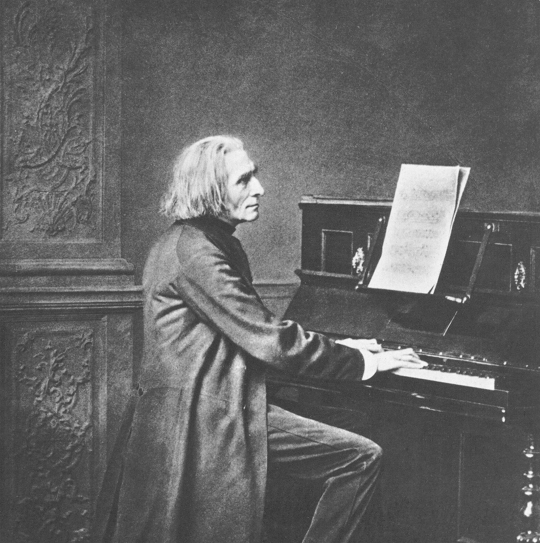
Wolfgang Amadeus Mozart wrote twelve variations on this piece. Mozart’s composition has Köchel listing number 265 and is called “Twelve Variations in C on ‘Ah! vous dirai-je Maman.’” The melody has a length of about fourteen minutes! And no one listening to it would consider it “child’s play.” Not to be outdone, harpsichordist and composer Johann Christoph Friedrich Bach created eighteen variations on the tune for the keyboard. It takes about ten minutes to play “Bückeburg Bach’s” piece, “Variations on “Ah! vous dirai-je maman” in G major.” Even romantic pianist Franz Liszt had a crack at “Ah! vous dirai-je, maman.” Liszt’s version was short and sweet, taking only twenty-two seconds to play. But Liszt still managed to embellish the song with his flourishment despite its brevity.
So, though it is the same song, its complexity and appeal derive from the musicians’ abilities. This truth reminds me of a parable of Jesus. A master departing for a journey entrusts his valuables to three of his servants (Matthew 25.14-30). One servant received five units of currency, another received two, while the last servant, later called “lazy” and “fearful,” was given but one. When the master returned, the servant given five talents gave to his master five more which he had earned. The two-talent servant likewise doubled his share. But that lazy and fearful servant hid the money given to him in the ground. This servant claimed fear of loss caused him to hoard what the master entrusted to him.
We cannot ignore the original context of this parable which is money. A talent began its life as a measurement of weight. By the New Testament, the talent equaled the buying power of that weight in gold or silver. Most scholars believe that the talent to which Jesus referred was equal to 6,000 denarii. If you recall, from Matthew 20.2, employers paid workers a denarius for a day’s wage. So, one talent equaled the salary earned from 6,000 days of work! Thus, the master entrusted the “one-talent servant” with about 16 years’ wages. So then, how much more impressive that the five-talent servant increased his master’s investment by an amount that would have required the ordinary worker roughly 82 years of labor? (If my math is correct, that is.)
Today, we tend to remove our Lord’s parable from its fiscal context to refer to our stewardship over the abilities and skills we can muster in God’s service. Or we might use talent to refer to all the resources at our disposal as we worship and serve. That it is about money is seen in the master’s scolding of the lazy servant that the least he could have done was put his talent in the bank to allow it to draw interest (Matthew 25.27). The master’s rebuke implies that the lazy and fearful servant could have still been productive despite his character flaws. All he had to do was make a safe investment of his master’s funds with the bank. See how Jesus knew about compounding interest! Compounding interest is so incredible that even Albert Einstein’s genius esteemed it as man’s greatest invention. (Granted, interest rates must be more than they are now to grow wealth. I know one fellow who only earns about fifteen cents a quarter with the current rate.)
Elsewhere, the apostle Paul reminds us that a bountiful return follows when we sow bountifully (2 Corinthians 9.6). This Scripture is also about money. So, wealth reflects what we do with what we have. Returning to Jesus’ parable, one notes that the Lord specifies that the master knew the abilities of his servants and used that knowledge to determine how much he would entrust to each man. For this reason, Jesus could also say that God expects more of the one to whom He has given more (Luke 12.48). Please understand I am not promoting the prosperity gospel of such charlatans who play preachers on the TeeVee. If you aren’t a wealthy person, it is unlikely that God will shower you with money from Heaven simply because you prayed the prayer of Jabez or sent in “seed money” to someone’s ministry.
No, the Lord has already given you something. Using what God gives you may be like the previously mentioned child striking single keys with his fingers. But that is okay since it is what you can do with the tune. However, your brother or sister may be capable of making twelve or eighteen variations on that tune, making your jaw drop. Worry not; their talents are not an indictment of your own. You are still capable of playing a lovely song. Therefore, it is a matter of ensuring you play it your best. Don’t do like the lazy and fearful servant and hoard your talent. Such people rob God (cf. Malachi 3.8). In these difficult economic times and times of future prosperity, God will judge us for what we do with those talents with which He has entrusted us.
There is a story about a father building his daughter a wheelchair from the ground up after she got paralyzed in a car crash. Her father was willing to do all the research and put all the time in to building a wheelchair for his daughter who he loved so much. I don’t think I would trust my dad to make me a wheelchair, but this father demonstrates the love he has for his daughter and the lengths he would go to to keep her safe. We are told in multiple different ways how deep the Father’s love is. As the song goes, “Why should I gain from His reward I cannot give an answer.” I want to share just three points with you tonight why we gained from his reward.
The first one is that His love is so deep that He created us. Genesis 1:27 says that God created man in His image. Since we are made in God’s image, we are His special creation. In return for Him to love us so much we need to love Him and obey Him.
Then when we messed up God loved us so much that He gave His only Son for our sins (John 3:16). He was willing to do anything for us as His children. I know this is a point that is used a lot. Would you give your son? Not just your son, but your only son. Now I don’t have children but I’m sure that if I did that I would not be willing to do that. If you go on to verse 17 it says that He did it so that we might be saved. If we do what is commanded here on earth we will have an eternal home.
The third point we gained from his reward was because he loved us so much that He wanted us to have an eternal home with Him. Go back to John 3:16. It says that whoever believes in Him shall not perish but have everlasting life. Now going back to the example I gave just a moment ago. I don’t think I will ever love anyone enough to give my son. Now let’s back up for a minute and ask ourselves why do we not love each other that much? We are all God’s creation so we should love others like God tells us.
Thinking back to my childhood when my dad would get mad at me I failed to realize that he loved me enough to help me do right. God loves me enough to give me the opportunity to stand up here and give this devo. And God loves everyone of us enough to give His only Son for our foolishness. And now our job is to love Him so much to obey his laws.















 The Preacher Pollard Blog