Four On One Play

Have you ever mishandled a situation?  More than that, have you ever compounded one mistake with one, two, or more on top of the first one?  If you have been around for any length of time, you have. 

Neal Pollard

    Lennie Merullo had a memorable day on September 13, 1942.  The Cubs’ infielder had a son that day and in the second inning of Chicago’s game, he made four errors!  His teammates nicknamed Lennie’s son “boots” (baseball fans will get that).  As bad as it was for Lennie, it may have been worse for Mike Grady.  Grady, normally a catcher, was playing third base in a game for the Phillies in 1895.  As the story goes (see The Very Worst In Sports), he booted an easy grounder allowing the batter to reach first base (first error).  His throw to first was wild, allowing the runner to advance (second error).  The runner tried to stretch it to third.  The first baseman’s throw to Grady at third was in time, but he dropped it (third error).  Finally, the runner was racing home and Grady’s throw sailed over the catcher’s head into the grandstand (fourth error).  Grady allowed the proverbial “Little League Home Run.”  This was Grady’s second year in the Majors.  You might think it would have been his last, but not so.  While he is no Hall of Famer, he did log eleven seasons in the big leagues.  In 1901, he finished fourth in batting and seventh in on-base percentage.  Oh and his career fielding percentage was only slightly below the league average when he retired.

    Now you non-baseball aficionados can wake up for the application.  Have you ever mishandled a situation?  More than that, have you ever compounded one mistake with one, two, or more on top of the first one?  If you have been around for any length of time, you have.  Maybe you lied to cover up some sin and felt compelled to add a few more lies to it.  Maybe you lost your temper, then cursed, and maybe even escalated it beyond that.  Temptation has any number of ways of getting into our way and really botching up things.  The question is, “What do you do in the aftermath?”  So far as I know, Grady stayed in the game.  Merullo probably did, too.  If you fall off the horse or the bicycle, the conventional wisdom tells you to climb back on top of it.  When you mess things up with sin, divine wisdom says to get back up and keep trying.  1 John 1:9 assures us that God will forgive us in our confessing and seeking to continue on in the Light.  How badly had the Prodigal Son behave, and yet there was acceptance for him when he returned to the father’s house.  The repeated theme of scripture for those who fall is to get up and keep going.  Do not give up the fight.  The late gospel preacher, George Bailey, put it, “Success comes in ‘cans,’ not ‘can’ts.'”  

    Have you made a mess of things?  Don’t throw in the towel.  Keep the faith, and keep fighting (cf. 1 Timothy 6:12)!  Be sure to end well.

Going The Distance

Neal Pollard

In her fascinating book, The Bloody Bozeman: The Perilous Trail to Montana’s Gold, Dorothy Johnson includes an interesting anecdote as she chronicles life in the territory of Montana in the 1860s. As the population in the territory grew, the people felt a need for a newspaper, more organized law enforcement, a legislature, schools, churches, mail service, stage coaches, and mail service. They also sought forms of entertainment like they enjoyed back east in the United States. On January 2, 1865, Virginia City held a historic prize fight between Hugh O’Neil and Con Orem. O’Neil was 34 years old, 5 feet, 8.5 inches tall and 190 pounds. Orem, a tee-totaling saloon keeper, was 29 years old, 5 feet, 6.5 inches tall and 138 pounds. Johnson summarizes it with incredible understatement: “The fight went 185 rounds, lasted three hours and five minutes, and was declared a tie. It was stopped by mutual consent of the backers” (149). Both men wore snug buckskin gloves without padding and pounded on each other round after round. Neither would give up!

I’m not sure what you make of that curiosity, but it struck me. The Bible depicts our individual lives as a spiritual fight. Especially Paul illustrates life in this world as a battle. We are in a fight with the devil. In Ephesians 6:12, Paul, having said that we must “stand firm” against the “schemes” of the devil, says, “For our struggle is not against flesh and blood…” The word he uses there means “engagement in a challenging contest” (BDAG, 752). The Greeks used the word originally to describe wrestling, then all fights and battles (ibid.). Zodhiates adds that it was “a wrestling, struggle or hand-to-hand combat. It was used of the wrestling of athletes and of the hand-to-hand combat of soldiers both of which required deftness and speed. It denoted the struggle between individual combatants in distinction from an entire military campaign” (np).

The devil’s positions, principles, and pursuits are in direct conflict with God’s. As His followers, we must fight the devil. We are not in physical combat with people, as Paul points out. But we are to “resist” and “stand firm” (Eph. 6:11,13,14). We cannot yield or forfeit that fight.

But there is another fight we are in, and Paul describes this one as equally formidable. The opponent is our own flesh. Every day, we go to battle against the lust of the flesh, the lust of the eye, and the pride of life (1 John 2:16). Paul depicts this graphically in Romans 7:14-25). As James points out, we can get “carried away and enticed by our own lust. Then when lust has conceived, it gives birth to sin; and when sin is accomplished, it brings forth death” (1:14b-15). 

Yet, it is a far from a foregone conclusion that we are doomed to lose! Not at all. Paul tells us that we are spiritual prizefighters. We must be prepared to go, not 185 rounds, but round after round, day after day, moment after moment. Here is Paul’s analogy in 1 Corinthians 9:26-27. He says, “I box (“fight with the fist,” Swanson, np.) in such a way, as not beating the air; but I discipline my body and make it my slave, so that, after I have preached to others, I myself will not be disqualified.” Your opponent, be it the devil or your own flesh, will land some punches. At times, you may even hit the deck. Through His Word, God is cheering you on and calling, “Get back up! Keep fighting! Don’t give up!” He believes in you. He is in your corner, giving you perfect instructions for defeating your bigger and stronger opponent named “sin.” Even if your lying on the floor, you can get back up. Through God’s help, you can win the fight. Remember that with this battle, eternity is in the balance. You can go the distance! 

Executed, But Still Rescued

Neal Pollard

In the very intimate correspondence to his spiritual son that we call the epistle of 2 Timothy, Paul seems very aware that the time of his departure from this earth had come (4:6). Paul was not under house arrest, like we read at the end of Acts. He is in chains (1:16). 

The city of Rome burned between July 19-24, 64 AD. The fire started in the Circus Maximus stadium, but burned 10 of the city’s 14 districts before it was extinguished. Some historians blame Nero, but there is no doubt Nero blamed the Christians. He rounded up Christians already in the city, including Peter (cf. 2 Pet. 1:14-15), and had many of them executed that same fall. 

Lenski says Paul was in Spain at the time of the fire, but he was captured in a continuing dragnet of Christians: “Christianity had become a religio illicita, and especially its propagation became a crime against the state. Not long after Paul’s return from Spain he was arrested. Now he would be charged with a crime; Paul was, therefore, thrown into a dungeon as a felon. After some delay he was tried and executed. Tradition asserts that he perished under Nero who died June 9, 68. The details of his martyrdom are not known. He must have been condemned to death for spreading a religio illicita” (474).

So, as the time drew nearer for him to die, Paul uses an interesting word to describe his anticipated situation. He reviews some of the events of his first missionary journey, reminding Timothy that at Antioch, Iconium, and Lystra he endured many persecutions, “and out of them all the Lord rescued me!” (3:11). You may remember that this including being stoned by the Jews and left for dead. That was a miraculous rescue!

Now, confined to chains with an insane emperor breathing down his neck, Paul says that the Christians had deserted him. Considering the enormous scrutiny they were under simply for being Christians, visiting a notorious, incarcerated Christian was risky! He charitably prayed that it might not be counted against them (4:16). Then, he says that he was rescued from out of the lion’s mouth (4:17), and “interpreters have identified the lion as the literal lions of the amphitheater, the emperor Nero, or Satan” (Lea and Griffin, The New American Commentary, Vol. 34, 256). But, we cannot be sure. But, even if the lion was figurative, the rescue was literal.

At nearly the end of his last letter, Paul confidently adds, “The Lord will rescue me from every evil deed, and will bring me safely to His heavenly kingdom” (4:18).  Consider Nero and the Roman machine! He had already been beaten numerous times. Who knows the terrible hardships he endured in the squalor of this dungeon? Yet, he would state with confidence that God would rescue him from the worst of them. Perhaps weeks or days after he dispatched this letter to Timothy, guards unlocked him and took him to the chopping block where, as a Roman citizen, he died by beheading rather than a harsher death like crucifixion or burning.  What about his inspired words in 2 Timothy 4:18?

Paul teaches us to think eternally and heavenly. On the other side of that beheading, there was safety and arrival to God’s heavenly kingdom. It was what he lived for. It was what he died for. What a reminder as we live in this body for such a short time, that we await our rescue. Our rescuer is Jesus, “who rescues us from the wrath to come” (1 Th. 1:10). He “delivered us from so great a peril of death, and will deliver us, He on whom we have set our hope. And He will yet deliver us” (2 Cor. 1:10). 

The Will To Survive

Neal Pollard

Juliana Koepke was 17 years old when she boarded a flight with her mother and 90 other people in Lima, Peru, on Christmas Eve, 1971. The plane had a terrible service record and her father urged his wife and daughter to wait for a better one, but they wanted to be reunited for Christmas. That was the disposition of the airline and flight crew, too. So they pressed on, even as severe weather stood between them and their arrival at Iquitos. A lightning strike broke the plane apart, ultimately killing every crew member and passenger except Juliana. She survived a fall of 10,000 feet, landing in the Amazon Jungle still strapped to her seat.

She suffered a broken collar bone, deep gash in her arm, an eye injury, and a concussion. The near-sighted Juliana lost her glasses and one of her sandals. She then walked through the dense Amazon Jungle for 10 days and finally found shelter in a hut that night. Local fishermen found her and took her by canoe to civilization. She used the survival skills her parents had taught her since early childhood and combined it with her sheer will to survive. Now 70 years old, she continues her parents’ work of biological research to this day in the same jungle where she survived the crash. There were things she had no influence over that helped her survive the initial crash, and the help of others was indispensable to her survival. But being saved from death, she didn’t give up until she was ultimately rescued.

Don’t you think our circumstances are similar, in a figurative sense? We didn’t influence God’s eternal plan of salvation, but we can benefit from it. We will not be saved without the influence and assistance of others along the way. But being saved from death, we can and must endure to the end (2 Tim. 2:12; Heb. 10:36). If we do, we will experience an eternal rescue. God wants to rescue every one of us from spiritual death (Gal. 1:4). But He won’t save us without our cooperation!

Juliana today

Much information gleaned from here

Fear Of Falling?

Monday’s Column: Neal At The Cross

It is commonly cited that human beings are only born with two fears–the fear of loud sounds and the fear of falling. These are called “innate fears” (Chaoran and Quin, nih.gov). An interesting word is found ten times in the New Testament. The word has a range of meanings, including to fall from some point to another, to be blown off course and run aground, to change from better to worse, or become inadequate for some function (BDAG, 308). The word is used three times in Acts 27 in the nautical sense, describing Paul’s ship running aground. It is used two other times in Acts to speak of something falling off, either Peter’s chains (12:7) or the ship’s ropes (27:32). Two times in the epistles, the word is used of flowers falling off (Jas. 1:11; 1 Pet. 1:24). Once, Paul says that God’s word has not, will not, and cannot become inadequate (Rom. 9:6). 

The other two occurrences, Galatians 5:4 and 2 Peter 3:17, speak of a possibility of another type of falling and failing. Paul mentions “falling from grace” and Peter “falling from your own steadfastness.” This is a synonymous idea. 

Paul tells the Galatians that they were free (Gal. 5:1). By faith, they had hope (Gal. 5:5) and they were running well (Gal. 5:7). But they were allowing themselves to be enslaved (Gal. 5:1), under obligation (Gal. 5:3), hindered (Gal. 5:7), and the like. In verse four, Paul says, “You have been severed from Christ, you who are seeking to be justified by law; you have fallen from grace.” In their case, the temptation was trying to be saved by something other than the sacrifice of Christ. Such an effort led them to fall from grace.

Peter tells his audience to live holy, godly lives (2 Pet. 3:11) anticipating Christ’s return (2 Pet. 3:12). Christ is coming again and this earth and universe will be burned up (2 Pet. 3:10). We look for new heavens and a new earth (2 Pet. 3:13), seeking to be found by Him in peace, spotless and blameless (2 Pet. 3:14) and growing in grace and knowledge (2 Pet. 3:18). However, if we are susceptible to those who distort the truth (2 Pet. 3:16), we could be carried away by unprincipled men and “fall from [our] own steadfastness” (2 Pet. 3:17). 

In these two passages, these apostles are trying to instill a healthy fear of falling into these Christians. No, they did not want them cowering in fear and ever uncertain about their spiritual condition. They wanted them to reject false ideas and teachings that would lead them to fall from steadfastness and grace to instability and condemnation (cf. 1 Tim. 3:6). They did not want them blown off spiritual course and shipwreck their faith (cf. 1 Tim. 1:19). They did not want them to change from saved to lost (cf. 2 Pet. 2:20). They did not want them disqualified from their spiritual inheritance (cf. 1 Cor. 9:27). 

The fear of falling that is so natural to a child should live inside of us to keep us from venturing beyond the bounds of spiritual safety. It should also drive us deeper into the loving arms of divine protection. Jesus makes a beautiful statement that eliminates fear of falling if it keeps us trusting in God’s guiding hand. Jesus wrote, “And I give eternal life to them, and they will never perish; and no one will snatch them out of My hand. My Father, who has given them to Me, is greater than all; and no one is able to snatch them out of the Father’s hand” (John 10:28-29). What safer place is there? Let’s stay in His hand and eliminate the fear of falling! 

Neal Pollard

Losing A Shoe, Winning The Race

Monday’s Column: Neal At The Cross

Neal Pollard

Before a track meet in Omaha, Nebraska, the first Saturday of this month, Terence “Bud” Crawford was most renowned for his perfect 38-0 record as a professional boxer. His unblemished record includes 29 knockouts, but he, then later millions more, saw his seven-year-old daughter deliver the most unlikely knockout blow many of us have seen. Little Talaya ran out of her shoe at the starting block, then fell behind the rest of the pack by 20 meters in this 200 meter race while she put it back on. Not only did she not give up, she stormed back and won the race with seconds to spare. She has aptly with words like grit, determination, and undaunted. Heroic and inspiring have also been bandied about. Perhaps her drive not to lose comes from her father, but she certainly reflected well on him (ESPN report here).

The Bible refers to life as running a race (Heb. 12:1). Paul urges us to run in order to win (1 Cor. 9:24). He was concerned about running in vain (Gal. 2:2). He was determined to finish the course (2 Tim. 4:7). While Paul and the writer of Hebrews describe a race that sounds more like a marathon than a couple hundred yards, it will require all the more grit and determination to successfully complete. There will be encumbrances and entanglements. Whether problems or pressures, things will happen that can bring us to a standstill. In those moments, we may be tempted to quit. Those are the times we can remember our Father and reflect His ways! In our case, He’s not just watching! He can help us win.

Are you discouraged? Do you feel defeated? Maybe it’s something someone has done to you. Maybe it’s something you have done. Whatever it is, perhaps you feel it’s useless to go on. By getting back on track, you may not only win the race yourself but inspire so many others through your successful finish! Don’t give up! The reward is worth the effort. “In the future there is laid up for me the crown of righteousness, which the Lord, the righteous Judge, will award to me on that day; and not only to me, but also to all who have loved His appearing” (2 Tim. 4:8).

“Trust The Process”

Monday’s Column: Neal At The Cross

Neal Pollard

In the lead up to the College Football Playoff National Championship, I have read a few articles about tonight’s game. More than once, the players and coaches have talked about the need to “trust the process.” That idea applies to the entire program, to the season, to preparing for every game including this last one, to both sides of the ball, down to the individual player’s preparation for this game. “The process” is comprised of every fundamental principle intended to bring about the highest success. There will be trying moments and setbacks, even failures. But when the tendency to doubt is the greatest, it is then that you most need to “trust the process.”

They say that athletics are a metaphor for life. The inspired apostle Paul thought so. Long before Nick Saban or Kirby Smart and their players used the mantra, the first-century native of Tarsus was teaching the idea in the Bible. Here is how he put it, “Share in suffering as a good soldier of Christ Jesus. No soldier gets entangled in civilian pursuits, since his aim is to please the one who enlisted him. An athlete is not crowned unless he competes according to the rules. It is the hard-working farmer who ought to have the first share of the crops” (2 Tim. 2:3-6). No, he does not say, “Trust the process.” He gives it instead: Endure, focus, follow the rules, and work hard. Just as coaches use metaphors, making comparisons to chopping wood, flying the plane, rowing the boat, etc., Paul refers to the soldier, the athlete, and the farmer to illustrate principles in the process of living the Christian life.

Our goal is the enjoy ultimate success. The Bible defines that as overcoming the world (Jn. 16:33; 1 Jn. 4:4; 5:4; Re. 2:7,11,17, etc.). There are times this is very difficult, but at all times we must “trust the process.” Trust the process…

  • When you are encountering various trials (Js. 1:2ff). 
  • When you are aiming at church growth (Acts 2:42-47).
  • When you are combatting temptation (Js. 4:7-8).
  • When you are offended or have offended (Mt. 5:23-24; 18:15-17).
  • When you are trying to win back a fallen brother (Gal. 6:1-2). 
  • When you are seeking to follow Jesus (Lk. 9:23-26).
  • When you are working on your marriage (Eph. 5:22-33).
  • When you are running the marathon of childrearing (Eph. 6:1-4; Dt. 6:4-9).
  • When you are building your relationship with God (Ps. 1; Col. 3:1ff).
  • When you are shepherding the flock (1 Pt. 5:1-4; Acts 20:28).
  • When you are dealing with prosperity (1 Ti. 6:17-19) or poverty (Js. 1:9-12).
  • When you are struggling with sins of the tongue (Js. 3:1-12).
  • When you are wondering if it’s worth it to keep going (2 Tim. 4:1-8).
  • When you are being persecuted for your faith or for no good reason at all (Mt. 5:38-48).

In other words, whatever our specific struggle, problem, difficulty, or trial, God has given us a proven process. How many, through the ages, have overcome and won simply because they trusted it? As a loyal, long-suffering fan of the guys in red and black, I am hoping their overall process ends a 41-year drought. If it doesn’t, life will go on. As you follow Jesus, I am hoping that by trusting the process found throughout Scripture you win the crown of eternal life (Js. 1:12). When all is said and done, that is all that matters! 

What I am hoping, not predicting.

Jesus Didn’t Retire

Wednesday’s Column: Third’s Words

garyandme521

Gary N. Pollard III

Satan tried to trip Jesus with a killer deal: “I’ll give you every nation in the world if you worship me” (Matt 4.8-10). This wouldn’t have been a temptation if he couldn’t deliver. What might Jesus have gained by having Satan give up control of every nation on earth? It would have made his job a lot easier! He wouldn’t have to fight with Pharisees or other hostiles. He wouldn’t have to disappear after teaching or healing. He could avoid the kind of rejection that broke his heart (Luke 19.41). 

Sometime after this encounter, Jesus started to recruit followers. He may have had Satan’s offer on his mind as he was calling Peter (Matt 4.18ff). He knew Peter would be so ashamed of him that he’d deny any connection to him (Matt 26.69-75). He knew that every one of his followers would abandon him when he most needed them (Matt 26.56). 

He still lived his life, he still taught, he still sacrificed himself for everyone. How many of us would still pursue something if we knew how painful or difficult the outcome would be? How many of us would continue to pursue something if we were given the option to take an easier path? 

Jesus didn’t even retire once his mission was accomplished! He faced homelessness, assault, rejection, betrayal, injustice, torture, and execution. I would have retired after that in a heartbeat, and I would feel that I had more than earned that retirement. 

After he went back to be with the father, he rolled up his sleeves and got to work. He’s a full-time mediator (I Jn 2.1-2). He’s making sure the natural universe operates as it should (Heb 1.3; Col 1.17). He’s keeping evil in check (Phil 3.21; I Cor 15.27). When the end comes, he’ll destroy the universe and judge every human who’s ever lived (Heb 9.27; II Pet 3.7-10; Rev 20.12, 21.1-2). 

Whew. He still loves us (Rom 8.35; II Cor 5.14; Gal 2.20; Rev 1.5)! He still gives grace with generosity (I Jn 1.7; Rom 5.15-21, 6.14). We serve a tireless God who invested everything in us and will do so until the end of time. Life gets us down and we ask, “Why?” Just remember who’s watching our backs and won’t ever let us down! 

The wilderness of Judea

It’s Not Too Far Away  

Tuesday’s Column: Dale Mail

image

Dale Pollard

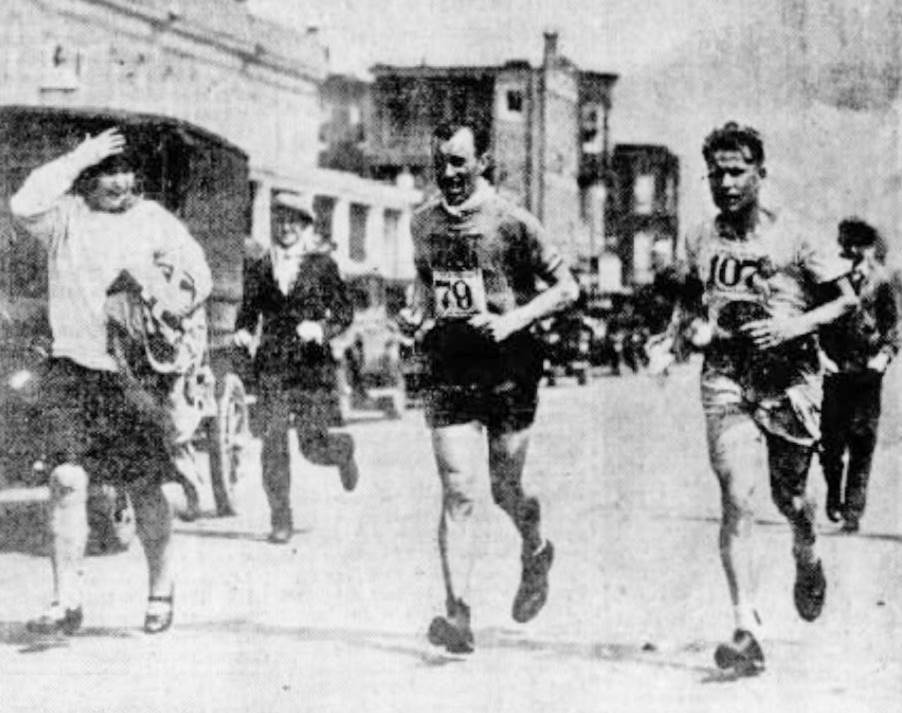
The farthest anybody has ever run on foot happened back in 1929. A trans-continental race was set from New York to California and it spanned 3,653 miles in total. It’s difficult to imagine that anybody would be willing to sign up for this race but there were. The winning place went to a man named Johnny Salo and he accomplished something spectacular and historic in just 79 days. 

In 1 Peter 2.11-12 the Christian is compared to a “sojourner” and that paints a picture of someone temporarily staying, but always on the move. Many other passages, like James 1.12, 2 Timothy 4.7, Galatians 5, and 2 Corinthians 9, all reference the race of life. 

It’s been noted that the race is one of endurance and not a sprint. While few people will ever cover the amount of physical ground that Johnny Salo did, there are many faithful Christians who have shown themselves to have incredible endurance of a different kind. Through trials, heartbreak, and severe loss there are Christians who hold fast to their faith and push on. They inspire us to keep going when the going gets tough, and we should encourage these spiritual athletes to look towards the finish line— it’s not too far away. 

Christianity: A Top Five List

Wednesday’s Column: Third’s Words

Gary Pollard

Life has been found in some of the most uninhabitable spots on earth. Bacterial life thrives in Lake Vostok in Antarctica, for example. Thiolava veneris was found thriving in the aftermath of a violent submarine volcanic eruption near the Canary Islands. Organisms that thrive in extreme environments are called “extremophiles” (noaa.gov). We’re always amazed when life thrives in extremely hostile environments.

The moral climate of our planet makes it extremely difficult to thrive. Humanity has created a moral environment consisting of self-interest, violence, apathy, and general dysfunction. In terms of population, they have the clear advantage. Christians are, by definition, extremophiles. We defy all expectations by thriving in an overwhelmingly hostile environment.

That said, we are studied by those who make up our environment. Many will come to the conclusion that we’re strange and warrant no further interest. Many will consider our loyalty to a supernatural morality to be hostile (II Tim. 3.12; Rom. 5.3,4). Few will wonder how we’re able to have hope, purpose, direction, resilience, and happiness in any condition.

Why would anyone want to be an extremophile? Why would anyone willingly assume a lifestyle that automatically puts them at odds with their own environment? Here’s why:

1. Everyone is going to live forever (Jn. 5.28,29). We want to live with the creator in a perfect world (II Pet. 3.13; Rev. 21.1,2; Rom. 8.18-25), not in an even worse world (Matt. 25; Rev. 21.8; II Thess. 1).

2. We didn’t make up the moral code we follow. Human error is not a factor in our worldview because it came from the creator (II Tim. 3; Jer. 31.31ff). This system can’t be corrupted and doesn’t take advantage of its constituents (unlike many human laws). We’re secure and confident because of this.

3. The creator went to extreme lengths to make sure we could easily have access to a perfect eternity (I Jn. 5.3; Heb. 9.11ff). Who wouldn’t want to follow a perfectly selfless leader?

4. We enjoy peace and existential purpose because our worldview isn’t from around here (I Pet. 1.1-10). It doesn’t matter what happens to us, we’re more than fine.

5. We’re not afraid of death (Heb. 2.14f). Self-preservation is not our main priority – how many people have done horrible things out of self-preservation? Lots! We don’t have a death wish, we’re just not afraid of death.

That’s just a sample of why we voluntarily become extremophiles. Done correctly, ours is the best life possible! It makes this one better, it makes the next one perfect. We can’t lose!

Fred Baur

Thursday’s Column: Learning From Lehman

bwilsons

Braden Wilson

It was 2008, just 20 days shy of his 90th birthday, when Fred Baur died. On the way to the funeral home, his kids decided to stop at a nearby Walgreens to pick up some salty snacks. They debated for a bit, should it be sour cream and onion, cheddar cheese maybe? Larry and his siblings finally decided on Original. 

You see, Fred adored his kids, but his passion was snacks. His accomplishments included a variety of frying oils and freeze-dried ice cream. 

Fred was an American organic Chemist that had received both his masters and PhD at The Ohio State University, and it was 1966 when P&G came calling. Evidently, in the 1960s, there was a problem with the packaging and shipping of potato chips. By the time the consumer would pick up potato chips at a store, well, they were merely in pieces. This is where P&G thought Fred could help solve this problem. 

After two years of experimentation, Fred developed a chip of dried potato flakes, added a bunch of unpronounceable ingredients, and cut them into thin hyperbolic paraboloids. With this shape, Fred could neatly stack his chips into his vacuum sealed tube. 

By this time, you know that I am referring to Fred’s invention of Pringles, but the story doesn’t end there. Fred still wasn’t done with his invention. 

There were problems:

First and foremost, they tasted like sawdust, so Fred spent another 2 years to improve the taste. Then, another issue. Frito-Lay sent lawyers because they said Fred’s chips weren’t potato chips at all because they were just 42% potato. 

After some time and haggling, they decided to call them potato crisps. 

Fred persevered.

He gave birth to an iconic brand that many of us still enjoy today. Through years of experimentation, development, and disappointments, lawyers-at one point P&G wanted to trash the idea. 

But Fred persevered. 

He was able to see his brand break 100 million in sales. He was able to see it break 500 million in sales. However, he wasn’t there in 2011 when P&G sold Pringles for almost 2.5 Billion Dollars. 

That brings us back to 2008 when Fred’s children showed up to the funeral home with the Original flavored can of pringles. Fred’s wish was to have his ashes be placed in a Pringles can when he passed. 

Fred got his wish.

As great as this story is, we wouldn’t have this story if it wasn’t for Fred’s perseverance. And as great as Fred’s perseverance was, we have so many examples of greater perseverance in the Bible. 

Consider Joshua, Job, Jeremiah, Nehemiah and our greatest example of perseverance, Jesus. These are just a few of the many examples the Bible gives us. 

Two points I want to quickly make about Perseverance, and the lesson is yours. 

Number 1. WE HAVE A NEED FOR PERSEVERANCE.

It’s not a matter of if, but when…Christians Will Face Tribulations in Life. Jesus says in John 16:33, “These things I have spoken to you, that in Me you may have peace. In the world you will have tribulation; but be of good cheer, I have overcome the world.” 

Christ never promised us that this life would be a bed of roses. The Gospel never said we’d go to Heaven on “flowery beds of ease.” Rather, we are promised that we shall have hardships and tribulations in this life, especially if we are faithful Children of God.

Only those who persevere receive the reward. Revelation 2:10-11 tells us, “ Do not fear any of those things which you are about to suffer. Indeed, the devil is about to throw some of you into prison, that you may be tested, and you will have tribulation ten days. Be faithful until death, and I will give you the crown of life.”

Number 2. PERSEVERANCE IS DEVELOPED IN TRIBULATION.

Romans 8: 18-28 can be summarized as this: Viewed in faith, tribulation is a friend rather than an enemy. I don’t know a lot of adversity that is necessarily fun, but we can learn from it, and we can grow from it. 

In Deuteronomy 8, the Israelites failed to see the benefits of their trials. 

In Numbers, we see there was an Exodus of over one Million Israelites. 

We later see that only two Persevered and reached the promised land. 

In 1 Corinthians and Hebrews, Paul admonishes us not to imitate the Israelites.

Rather than complain, rejoice in God’s work in your life. 

Difficulties and trials would not normally be considered an occasion for joy but think about James and Paul and how they exhort us to look beyond the immediate pain and discomforts of trials to the lasting effect they have on the character of the Christian. 

It is the development of our character, that should cause us to rejoice in adversity. Always remember who wins in the end. 

We all have mountains to climb and sometimes holes to dig ourselves out of. Perhaps you want to begin to persevere and put on the armor of God through Baptism. There is no better time than now. Perhaps you’ve been baptized, and you’re currently trying so hard to climb the mountain that you’re on and you’ve had setbacks. We would love to help you reach the peak. 

Never Give Up

Thursday’s Column: Captain’s Blog

carl-pic

Carl Pollard

I ran across an illustration on Facebook the other day that went like this:

“During a BRUTAL study at Harvard in the 1950s, Dr. Curt Richter placed rats in a pool of water to test how long they could tread water. On average they’d give up and sink after 15 minutes. But right before they gave up due to exhaustion, the researchers would pluck them out, dry them off, let them rest for a few minutes – and put them back in for a second round.
In this second try – how long do you think they lasted? Remember – they had just swam until failure only a few short minutes ago…How long do you think? Another 15 minutes? 10 minutes? 5 minutes? 60 hours! These rats swam for another 60 hours before they gave up. The conclusion drawn was that since the rats BELIEVED that they would eventually be rescued, they could push their bodies way past what they previously thought impossible.
If hope can cause exhausted rats to swim for that long, what could a belief in yourself and your abilities, do for you?”

While this illustration was made to show the value of believing in yourself, as Christians it’s more than just a belief in yourself!  How much more could we endure if we hoped in the Almighty God?

As a Christian, remember what you’re capable of. Remember why you’re here. Remember the hope that is placed within us. Never give up. When you face ridicule for the godly choices you make, don’t give up. When you start to lose zeal and the fire begins to die. Don’t let it go out.
When life seems overwhelming and you’re drowning in stress, don’t quit. When health issues plague your body, don’t give up. Never give out, never give in, and NEVER give up. Remember the cross, remember the hope, remember the eternal home that will soon replace this temporary dwelling.

As a wise fish once said in a cartoon movie, “just keep swimming.” And we are given a beautiful reason why. In Philippians 3, Paul gives every Christian our motivation. Our reason why we should never give up. We stay motivated by pressing on (14).
What lies ahead? The goal, the prize, the upward call of God in Christ Jesus.
We press on by holding fast (16). Once you’ve got it, don’t let go. Look to those who have set the example (17).
Imitate the mindset of Paul and ignoring the enemies of the Cross. Paul pleads to them with tears (18). Don’t get distracted and don’t follow the wrong example. Finally we never give up by letting go (20). Let go of this world and what ties you to it. Our true home is in heaven.

We can find motivation and comfort in recognizing what we can accomplish and endure through Christ.

Tortured Spirits 

Friday’s Column: Brent’s Biblical Bytes


Brent Pollard

From the title, one might assume I am writing an article about hell. While it is true that God’s Word describes hell as eternal torture for disobedient spirits, my topic is something else entirely. You see, I have become more aware of a disparity between those three parts comprising my singular being with each passing birthday. There is my intellect that still recalls youthful exuberance. In my mind, I can still free climb Mount Yonah in White County, Georgia. My body snarkily responds, “Are you crazy?” And then there is that part of me that will never die. Yes, my spirit. My spirit becomes tired. Not only do I crave to be clothed with my heavenly habitation (2 Corinthians 5.1ff), but I also want to leave this body that is subject to the temptation of sin (cf. Romans 7.14-8.1). I grow weary of hurting God.  

Fortunately, God created the “inner man” with the ability to experience daily renewal (2 Corinthians 4.16). Yet, this renewal will not occur if I am passive, sitting around waiting on God. Yes, He provides the inner man with strength through His Spirit (Ephesians 3.16). But you and I must engage in spiritual service, thereby enabling this renewal (Romans 12.1-2). This service requires that we strive for mastery over the boorish flesh holding our spirits prisoner. If we indulge our flesh, we will reap corruption (Galatians 6.8). Conversely, if we sow to the Spirit, we will reap eternal life. This choice makes all of the difference.  

So, to facilitate our daily renewal, our mindset plays a crucial role. Following Paul’s exhortation to “be anxious for nothing,” he reminds us that we have better things upon which to meditate (Philippians 4.6-8). In addition, we must follow David’s example of hiding God’s Word in our heart to prevent sin (Psalm 119.11). Thus fortified from within, we positively affect our actions (cf. Proverbs 23.7; Matthew 15.18-20). The execution of this task comprises the majority of our battle against the whims of our flesh. When successful, we maintain a tender heart that retains awareness of sin and prompts swift repentance when we occasionally stumble.   

Yes, we are all tortured spirits imprisoned by crude flesh.  But “Thanks be to God through Jesus Christ our Lord!” (Romans 7.25a NASB1995) His blood will offer continuous cleansing as long as we walk in fellowship with Him (1 John 1.7).        

“Pollard Boys” practicing for a great Doyle Lawson tune for Carl’s wedding today.

Hope For The Christian Who Struggles With Sin

Wednesday’s Column: Third’s Words

Gary Pollard

We are imperfect people trying to get to Heaven, and we make mistakes. Throughout scripture is a distinction between people who live to sin and people who struggle with sin, but live for God. 

I John 5.16, 17 and Romans 7.5-8.17 are perhaps the most encouraging passages for a Christian who struggles with sin. These passages demonstrate God’s willingness and great desire to keep us pure, even when we struggle with sin. 

Paul teaches us that sin is something we struggle with and should hate (Rom. 7.15-20). We don’t want to sin, but we do. We love God’s law, we recognize that it’s good, and we want to live up to it, but we often don’t (7.22, 23). Paul even goes so far as to say, “I don’t understand my actions. I don’t do what I want, but I do what I hate” (Rom. 7.15). It causes him great distress, and he expresses a desire that all creation shares: release from sin’s power and life with God without the possibility of sin’s influence (7.24; 8.22-24). He says twice that sins we struggle against are not held to our account (7.17 and 7.20). 

I John 5.16, 17 shows that a Christian who struggles with sin is still pure in God’s eyes. The key idea is struggle. We can’t fool God – He looks at our hearts to determine whether we hate the sin in our lives or welcome it with open arms (Rom. 7.27). If sin is something we hate, grace keeps us pure despite our weakness (I John 1.9, 10; 3.19-24; 4.13-19; 5.18-20; Romans 7.25)! 

This is so encouraging because it shows that God does everything within His power to keep us pure. We are lost when we reject Him to pursue a sinful lifestyle, certainly. But if we hate our sin and fight our sin, He keeps us faithful! 

Heaven is attainable, God is good. 

Over 50 members came to pray Tuesday night for our soul-winning plans, including our “Fill The Void” seminar (photo credit: Randy Simpson)

The Christian Decision

Carl Pollard

Our family used to hike a lot when we lived in Colorado. There were many hikes that I went on that were straight up miserable. Ive always been the chunky kid, but the worst part about this was that I  was surrounded by a healthy and very active family.. This meant that on every hike I was the one in the back feeling like I was about to pass away. Hiking was never really something I was the best at. There are several times I remember thinking, “I’m not going to make it.” 

We used to hike a trail called “Moffit Tunnel” It was an 11 mile hike that ended with a summit path that gained 3000 feet of elevation in under half a mile. As you can imagine the path was practically vertical, and filled with rocks, mud, snow, and sadness. 

When I think of “a hard path” this is what comes to my mind. In Matthew 7:13-14, Jesus describes the way to salvation as a path that isn’t for the faint hearted; it’s for the dedicated Christian that is determined to reach eternal life. There’s no denying that the Christian life can be tough. It is filled with persecution, especially for those who aren’t as fortunate to have the freedoms we enjoy in America. The Christian life is tough because we will face persecution, but we are more likely to face rejection in our society today for standing up for some very unpopular teachings. If we are devoted to teaching and standing with God’s Word this means we must defend God’s view on homosexuality, marriage, divorce, and remarriage, baptism, sin, hell, and many more divisive topics. If we are devoted to walking the difficult path we must remain faithful in the rejection, hatred and persecution we will face. 

But the rejection and hate from the world isn’t the only thing hard about this path.

As Christians we are commanded to put ourselves to death. Matt. 10:37-39 say,  “Whoever loves father or mother more than me is not worthy of me, and whoever loves son or daughter more than me is not worthy of me. And whoever does not take his cross and follow me is not worthy of me. Whoever finds his life will lose it, and whoever loses his life for my sake will find it.”

Walking the difficult path means we have put ourselves to death. In doing so we are saying we love Christ more than our parents, our children and ourselves. In order to walk the difficult path we must be willing to take up our cross and follow Jesus. The cross is an instrument of death. The cross we pick up is the instrument of death that we have used to crucify ourselves on. Once we have taken up our cross we have made the decision to love Christ over anyone and everyone. We no longer serve ourselves because we have died to Christ. 

When we choose to walk the difficult path we are no longer living without purpose. We have a goal, a meaning for our lives. God uses us to spread His saving word to others. We have purpose in everything we do. We are here to encourage each other, to save souls, and to glorify God. One of humanity’s most asked question, “Why am I here?,”is answered by God. How we serve God will ultimately change someone else’s eternal destiny. We are given the true words of life that are able to save our most valuable possession, our souls. We also experience the blessing of having confidence in death. Death is scary. Why are so many scared of death? It’s the unknown, the end of our existence as we have known it. As Christians, when we choose to walk the difficult path, we are given the promise that when we face death we can be confident in knowing our soul is in the hands of almighty God. We know what is coming, and we can find hope in this. 

It was a hard climb, but what a payoff!

Failing to See the Value

 Friday’s Column: Brent’s Biblical Bytes

81121814_2462862270639428_5746232403106463744_n

Brent Pollard

In the 1970s, the people at Reece’s came up with a new candy they initially called “PBs.” They later changed their name to Reece’s Pieces. Sales were good but then dropped. As fate would have it, Universal Studios was shooting a new movie by Steven Spielberg about a stranded extra-terrestrial who wanted to go home. They were planning on using candy as the bait to lure the alien out from his hiding place. Obviously, they were going to use the popular M&M’s. However, the maker of M&M’s, Mars Incorporated, turned down the offer to have their candy featured in the film.  

Since Reece’s Pieces were the same small size as M&M’s, Spielberg and company decided to use the chocolate, candy-coated peanut butter pieces instead. The Hershey Company was a little hesitant to permit the usage of their candy until the vice-president at the time, Jack Dowd, saw a few movie stills. He agreed and went in on a million-dollar joint promotion with the film. The movie, of course, was E.T. the Extra-Terrestrial.  It was a huge hit. Consequently, sales of Reece’s Piece went up 65% and surpassed sales of M&M’s for the first time in its history. One wonders what the folks at Mars Incorporated thought of their blown opportunity.  

The Hebrews’ writer speaks of something much more valuable, of which others fail to see the value: The Son of God. Note Hebrews 10.29. “How much more severe punishment do you think he will deserve who has trampled underfoot the Son of God, and has regarded as unclean the blood of the covenant by which he was sanctified, and has insulted the Spirit of grace?” In its context, the Hebrews’ writer is addressing apostate Christians. This lack of appreciation is not a matter of these Christians merely falling short of God’s glory (cf. Romans 3.23). The Hebrews’ writer talks about the willful disregard of the new covenant with its symptoms, such as forsaking the assemblies (Hebrews 10.25). These are people re-crucifying Jesus Christ (Hebrews 6.4-6). 

I suppose that Mars Incorporated’s lack of foresight only hurt them momentarily. I could not find a direct head-to-head sales count for the two products, but Mars Incorporated made more sales revenue than Hershey’s in 2019. However, the person failing to value the blessings found in Jesus Christ through the committing of willful sin does away with the efficacy of the sacrifice made for their sins (Hebrews 10.26). Furthermore, such apostates will not enter God’s rest (Hebrews 4.1-11). Don’t be guilty of giving what is holy to dogs and pearls to swine (Matthew 7.6). Respond to the invitation of our Lord: 

“Come to Me, all who are weary and burdened, and I will give you rest. Take My yoke upon you and learn from Me, for I am gentle and humble in heart, and you will find rest for your souls. For My yoke is comfortable, and My burden is light.” (Matthew 11.28-30) 

Works Consulted 

Foster, Tom. “Why Reese’s Pieces and Not M&M’s Were Featured in the Movie ‘E.T..’” TVOvermind, TVOvermind, 12 Feb. 2018,www.tvovermind.com/reeses-pieces-not-mms-featured-movie-e-t/

Kelly, Debra. “The Untold Truth of Reese’s.” Mashed.com, Mashed, 29 Apr. 2020, www.mashed.com/205754/the-untold-truth-of-reeses/

Troy, Eric. “Reese’s Pieces Instead of M&M’s For E.T. The Extra-Terrestrial?” Culinarylore.com, Eric Troy and CulinaryLore, 5 June 2018, https://culinarylore.com/food-history:reeses-pieces-instead-of-m-and-ms-in-et/

“Mars.” Forbes, Forbes Magazine, www.forbes.com/companies/mars/

“Hershey (HSY).” Forbes, Forbes Magazine, www.forbes.com/companies/hershey/

Two Important Ways Water Is Found In the Bible

Thursday’s Column: Captain’s Blog

IMG_0806

Carl Pollard

The longest anyone has ever gone without air is 22 minutes. The longest anyone has ever gone without food is 74 days. But when it comes to water, our bodies can only last so long without it. Water is one of the most essential parts of the human body. It makes up two- thirds of our bodies. The common answer for how long the average person can go without water is about 3 days, but it actually varies from person to person. In strenuous conditions you can lose up to 1.5 liters of sweat an hour, but in comfortable conditions an adult man can go a week or more without water.

Andreas Mihavecz, an 18-year-old Austrian man, may have survived the longest without drinking water: Police accidentally left him in a holding cell for 18 days in 1979. It’s a fuzzy record, though, since he allegedly licked condensation off the walls of the prison. The point is this, water is essential to physical life. What does scripture have to say about water? I’d like to notice two brief ways that water is used in scripture.

Water is mentioned as a way to salvation (John 3:5; Acts 2:38). John 3:5 says, “Jesus answered, “Truly, truly, I say to you, unless one is born of water and the Spirit he cannot enter into the kingdom of God.” What happens if we are not born of water and the Spirit? Eternal life will not become a reality. Water itself is not what saves, but the process of obeying the holy command of God. A very well known quote is this, “My faith is not in the water, but in the One that told me to get into the water.” Water is what gives us eternal life, but only through the act of baptism.

One of the cool attributes of water is that it has the ability to take on impurities, and it
can also release them when it evaporates and becomes purified. What happens at baptism? We are lowered into water and our spiritual impurities are taken away and we come up pure.

I stumbled across an article one time that said this, “Thirst Drives Sailors to Drink Sea Water.” It was July 30th, 1945 and the Battle Cruiser USS Indianapolis was returning home from a mission. On the way back it was struck by a Japanese torpedo. Sadly this ship didn’t make it home. In fact, in just 12 minutes 300 men died and 900 were in the water.

Those in the water went on to endure 4 days and 5 nights in the water. No food, no water and under the blazing sun of the pacific. Of the 900 that went into the water, only 316 survived the lack of water and the shark attacks. One of the survivors was the chief medical officer. He recorded his experiences and said this, “There was nothing I could do, nothing I could do but give advice, bury the dead at sea, save the lifejackets, and try to keep the men from drinking the water. When the hot sun came out, and we were in this crystal clear ocean, we were so thirsty. You couldn’t believe it wasn’t good enough to drink. I had a hard time convincing the men they shouldn’t drink. The real young ones…you take away their hope, you take away their water and food, they would drink the salt water and they would go fast. I can remember striking the ones who were drinking the salt water to try to stop them. They would get dehydrated, then become maniacal. There were mass hallucinations. I was amazed how everyone would see the same thing. One man would see something, and then everyone else would see it. Even I fought the hallucinations off and on. Something always brought me back.”

A lot of times people think, “There is no way that this won’t save me.” How couldn’t I be saved if I’m sprinkled with water? Or if I say a prayer asking Jesus into my heart? Whatever it is, they look at salt water and think it will quench their thirst, that it will save them. But God has told us what to do, and it is up to us on whether we listen or not.

Water is also used as a metaphor describing a way to strengthen our resolve. Isaiah 43:2 says, “When you pass through the waters, I will be with you. And through the rivers, they will not overflow you. When you walk through the fire, you will not be scorched, Nor will the flame burn you.” Water here is used as an example of trials and hard times. These waters help us to lean on Christ. We can have comfort in Him. But what is the point of these trials? God can’t use us if we are filled with sin and imperfections. Through these trials and hard times we are purified and God is able to use us.

Water is essential for survival, as every living thing would die without it. Did you know that 97% of water is undrinkable? Thankfully God designed the ocean to evaporate and rain down on us as purified water. When water freezes it gets lighter and floats, saving arctic sea life from getting squished under the weight of the ice.

What does the tired athlete ask for after he performs? Water. What is the word you hear from the traveler lost in the desert? Water. What do you hear from the sick and feverish man laying in his bed? Water. What does the wounded soldier on the battlefield cry for? Water. How beautiful it is that we come to the Living Water for nourishment. We must ask ourselves, Are we quenching our spiritual thirst with the one and only true source?

ROUTINE IS EXTRAORDINARY

Monday’s Column: Neal At The Cross

16174665_10154303308455922_2453812807432667966_n

Neal Pollard

It was my privilege last week to spend an hour or more visiting in my office with Bill Page, a longtime member at Lehman Avenue. He wanted to tell me about his interest and involvement in athletics, and he brought some pictures (including one of him below) to illustrate his interesting stories. There was a theme to everything this 88-year-old Korean War veteran shared with me. It was about routine.

He spoke of how important routine is in his life. Every day, despite being a widower who lives alone, he follows a strict routine from how and when he gets up to his workout regimen to his social calendar. It is not just that he has a routine, but he feels that it is essential to his functioning well physically, mentally, emotionally, and even spiritually. He carries that ethic of keeping a routine into sharing his faith with his neighbors, studying the Bible, and teaching as he is given the opportunity. Though he is modest and unassuming, he has lived anything but a routine life. 

He played college basketball at Georgia Southern (then, Georgia Teachers College). Then, he was a marine who stayed to play in Japan and Korea in the mid-1950s. His civilian career was as a school administrator, where he served in public schools locally in addition to many years working with Christian high schools in Houston, Texas, and Miami, Florida. He also maintained his love for sports, coaching basketball. But, as a lifelong member of the church, his routine has almost always included teaching, preaching, and sharing his faith with the non-Christians he has built relationships with.

I could say much more about the great attitude and outlook Bill has, but it’s that commitment to consistency that is so remarkable. What is the road to greatness and achievement? It necessitates a certain amount of talent and knowing what that talent is, but the difference is almost always made by those who have sticktoitiveness. The unwillingness to give up and to keep plugging away is such a difference-maker in success and failure.

Solomon said, “Poor is he who works with a negligent hand, But the hand of the diligent makes rich” (Prov. 10:4). Likewise, “The plans of the diligent lead surely to advantage, but everyone who is hasty comes surely to poverty” (Prov. 21:5). Again, “In all labor there is profit, But mere talk leads only to poverty” (Prov. 14:23). Over and over, Scripture lauds this ethic of steadfastness. Yet, the area where it is most important is the spiritual (Acts 2:42; 2 Tim. 2:15). 

Do you want to be an exceptional Bible student, servant of Christ, person of prayer, spiritual leader, soul winner, etc.? Establish a routine and stay with it. It will lead you to extraordinary results! Thanks for the reminder and the example, Bill!

Bill Page

HOW I SHOULD WEAR OUT MY KNEES

Neal Pollard

This past May, I began my twenty-second year of running. In that time, I’ve logged thousands of miles. At 49, I am happy to say that my knees are doing fine but time may change that. One of the risks of running, to listen to some, is wearing out places like knees and hips. But, I’m hoping I’m prolonging my life and helping vital organs through exercise.

Spiritually, I put my “knees” to the test, too. The challenge to protect my knees is a daily struggle that I confess I am still working on. I do not want to wear those knees out through:

  • “Knee-Jerk Reactions.” This one is hard for me. I’m prone to these when I’m subjected to frivolous or petty criticisms. I’m equally prone when I’m undisciplined enough to act impulsively through impatience or my own misunderstanding. When I fail to think through things, prayerfully and deliberately, I can unleash something that can be hard to unsay or undo. Usually, it means I have not studied, prayed, and reflected enough before spouting off. I can really wear my knees out that way. I benefit from principles like those found in Proverbs 15:2, 25:28, 26:4-5, and a multitude of similar passages. 
  • “Feeble Knees.” As a child of God whom He loves, I will undergo discipline at His omnipotent, but omni-benevolent hands. It can be unpleasant, but it is always beneficial (Heb. 12:11). But, when I’m in the midst of it, it can cause my knees to buckle. The writer of Hebrews follows up this discussion about divine discipline, saying, “Therefore, strengthen the hands that are weak and the knees that are feeble…” (12:12). When I’m tempted to give up, discouraged, worried, afraid, or lonely, I need to double up on my spiritual conditioning to strengthen those tested knees. I must trust God’s guidance and love, especially in adverse conditions.

So, then, how should I wear out those knees?

  • In prayer (Dan. 6:10; Acts 7:60; 21:5; Eph. 3:14). It’s not about the posture of the body, but of the heart. I can always be praying more (1 Th. 5:17). I can never pray enough. 
  • In worship (Psalm 95:6). Again, it’s not that I need to show off that posture in the assemblies or in my private devotions, but even the very definition of worship includes the idea, at least figuratively, of falling down before and prostrating oneself. It’s a big reason I try to never miss a single service of the church. I owe Him my all, and I love Him for all He is and has done. He wants me in the assembly, and I want to do what He wants. 
  • In submission to God’s will (Luke 22:42). When Jesus knelt to pray, He was also actively submitting to the Father’s will. He faced something dreadful and that He did not want to do, but His attitude was of total surrender to what God wanted. Oh, what a challenge to me! How often do I put my knees to the test by giving up what I want for what He wants. But, I must!

Paul says we’re running a race that we must win (1 Cor. 9:24-27). I’m going to need healthy knees to do that. That may mean wearing them out in ways like those just mentioned while avoiding behaviors like those mentioned before them. At times, spiritually, I’ve needed not knee replacement but a replacement of what I do with those knees. May I never forget to brace those knees with the resources God has given to me!

120709-f-xd389-042

Working Together To Survive The Hunt

Neal Pollard

1 Peter 5:8 calls the devil a roaring lion prowling around seeking someone to devour. It is obvious that Peter’s readers would have seen or at least heard about these kings of the jungle for the analogy to make sense and be practical.  Lions lurk, longing for lunch.

In the savannas of East Africa, their meal of choice is usually either the wildebeest or zebra. Despite this, these two animals continue to graze and migrate together. In fact, because they are chief prey of the lion (and other big cats), they need to stick together. Various observers and experts give different explanations for why. Zebras have great farsightedness and the wildebeests have excellent peripheral vision, but each are poor at seeing what the other sees well. Others explain that wildebeests have mouths better suited for short grass while zebras’ are made for the long grass that grow intermittently together on the plains. Still others point to the zebras superior memories, recalling the safety routes of the previous year, and the wildebeests uncanny ability to find water even when such is scarce. Probably, it is the combination of these facts that cause the symbiotic relationship between these two large mammals. They do not all survive, but the vast majority do. The reason is because they utilize their own abilities but also because they rely on the abilities of others.

In a letter where Peter is addressing a people who were at times spiritual prey, he does more than use the simba simile. He urges Christians to stick together and look out for one another. He calls for sincere, fervent, from the heart love for one another (1:22; 4:8). He urges complaint-free hospitality toward one another (4:9). He commands serving one another (4:10). He teaches there to be mutual humility displayed toward one another (5:5). He ends the letter exhorting an affectionate, loving greeting of one another (5:14). As much as anything, this is a recognition of mutual dependence.

If we understand that we are not at home in this world (2:11) and are living and longing for the inheritance in heaven (1:4), we should come to understand our mutual need of each other. That does not just mean looking for others’ help, but also giving it. This is by God’s design. Notice, for example, the proactive protection we provide each other by being “harmonious, sympathetic, brotherly, kindhearted, and humble in spirit; not returning evil for evil or insult for insult, but giving a blessing instead…” (3:8-9a). Right before the lion passage, Peter talks about different groups looking out for and helping each other (5:1-6).

Any of us, through suffering, temptation, doubt, or some other factor, could drift away from the safety and security of the fold. Let us be more than mindful of each other. Let us depend on each other to survive the hunt and make it to eternal safety.  I will face the lion many times in this life, and I depend on you to help me survive.

DSCN0368