Almost Too Good To Be True!

How often we hear that the gospel, defined, is “good news.” It is God’s good news, meant to be shared. That’s exactly what the women and the two disciples are doing with the larger group of disciples when Jesus makes His final appearance before returning to heaven. But there are a few things He wants to impress upon them before He goes

Neal Pollard

How often we hear that the gospel, defined, is “good news.” It is God’s good news, meant to be shared. That’s exactly what the women and the two disciples are doing with the larger group of disciples when Jesus makes His final appearance before returning to heaven. But there are a few things He wants to impress upon them before He goes. Notice how the book of Luke ends (24:36-53).

There is a reminder of His identity (36-43). The predominant reminder in this last appearance is of His humanity, the identity He took on to save us from our sins. He shows them His hands and feet (40) and then eats a meal before them (41-43). He will appeal to His Deity in His final instructions, referencing His Father in heaven (49), but He did not want them to forget the brotherhood He shared with them all. How often do I benefit by remembering, as I go about as His disciple, that Jesus fully understands what I am going through? Read Hebrews 2:9-18, for example. He was for a little while made lower than the angels in order taste death for everyone (9). He was perfected in His work as our great High Priest by suffering as a human (10). He is not ashamed to call us “brethren” (11). He partook of sharing our nature, flesh and blood (14). He had to be made like His brethren in all things to become a merciful and faithful High Priest (17). He was tempted in His suffering, which helps Him come to our aid as we suffer (18). There are a multitude of additional passages reinforcing and supplementing our understanding and appreciation of Christ’s humanity, but the resurrected Jesus wants them to remember His humanity after He ascends to heaven. 

There is a reminder of His history (44-48). It is a mind-boggling truth that Jesus’ history goes back to His preexistence, before He became human. The facet of history of highest interest to Him is sacred history. So, He opened their minds to understand the Scripture (45). He appealed to the three major divisions of the Hebrew Old Testament, the Law, the Prophets, and the Psalms (44). We might call them the books of history, prophecy, and poetry. They are saturated with the themes He elaborates upon in verses 46-47, His suffering, His resurrection, and His plan of salvation. By looking to God’s past revelation, they would be equipped for their present mission and fortified for their future reward. So it is for us today. The verification of Scripture, fulfilled prophecy, 

There is a reminder of His destiny (49-53). It included ascending to heaven to carry out the promise of His Father upon them, to be His witnesses, “clothed with power from on high” (49). Luke gives us fuller details of what happens in this discussion in Acts 1:4-8, and it includes His marching orders and an elaboration of what we read Him telling them about being His witnesses starting in Jerusalem (46-47). His immediate destination is heaven (50), and theirs is Jerusalem (52-53). They went there with great joy and, once there, “were continually in the temple praising God” (53). They were mentally preparing for their earth-shattering, world-changing mission. Heartache was overwhelmed by hope. Disappointment was conquered by determination. They were about to turn the world upside down, an intention they made good on from Jerusalem to Judea, Samaria, and the rest of the world (Acts 1:8; 17:6). Lest we forget, their role in His destiny is the same as ours. We are standing on their shoulders, carrying on their mission today. Jesus needs us to help fulfill His destiny in our world just as He needed them. They rose up and met the challenge! What about us?

The Dividing Christ

Neal Pollard

Wait a minute! We rightly say that Jesus died so that we all might be one in Him as He and the Father are one (John 17:20-21). How do we reconcile that with what Jesus says in Luke 12? He says He came to grant division (51). “Grant” means to give out, bestow, or donate, also with the idea of producing or imposing (BDAG 242-243). When Jesus makes this statement, it’s in the midst of a very distressing prospect for His own physical future (50) but also the impact His completed mission would have on His followers. 

HE REVEALS THE FACT OF THE DIVISION (Luke 12:49-53). This had to surprise His disciples for Jesus to issue this warning. Houses would divide over Him, as some tried to follow Him while others fought against Him. He desires us all to have peace (John 14:27; Col. 3:15), but it is a peace that requires submission and obedience to Him. That very prospect works like a sword (Mat. 10:34) that fights against peace for those who refuse to take Christ on His terms. Our response to Jesus may divide us from parents, children, in-laws, and no doubt siblings and even spouses (cf. 1 Pet. 3:1ff). How many of us today have experienced that very thing? Surely God would want us to be at peace, but choosing Him when loved ones refuse to do so inevitably causes division. 

HE REVEALS THE SOURCE OF THE DIVISION (Luke 12:54-56). There is a seeming abrupt change of subject here. How does their ability to read the weather relate to what Jesus has just taught? He is talking about a mindset or worldview. People in His day, like ours, were adept at analyzing earthly things like predicting weather from observing the earth and sky, but could not analyze things of greater importance. Here was Jesus who had come with the truth, something they should be able to hear, consider, and then rightly choose, but instead they chose to reject it. As long as there are those who treat Jesus this way, there will be division. 

HE REVEALS A WAY TO PREVENT DIVISION (57-59). Jesus closes this paragraph dealing with how to achieve peace when it comes to earthly things. It may be unavoidable that there will be division when it comes to who is lord of our lives, but there are ways to keep peace. If we see the spiritual as more important than the material, we will avoid unnecessary division with others. Jesus calls this judging what is right (57). Don’t fight and divide over earthly disputes. These drain our time, energy, and maybe more! It may exact a higher price than we anticipated. Reserve your fight for what really matters–things spiritual and eternal. 

We are in a divided world right now. That’s not just true politically, but certainly also spiritually. Everyone whose heart is open to the truth are those with whom we can find the common ground of unity in Christ. But our allegiance to Him may also make us some enemies. Jesus warns of this potential, but He also warns us not to unnecessarily create barriers that divide us from others. Discipleship is about priorities, prioritizing Jesus’ will above our own interests. That can be hard, but that mindset can help us win those in the world who are searching for truth. 

Whose Son Is The Christ?

Andy Wright

The last week of Jesus’ life on earth was an eventful one. He arrived in Jerusalem to thronging crowds shouting, “Hosanna!” And, His enemies peppered Him with questions. They questioned His authority. They asked Him a Catch-22 question, which was admittedly impressive since it would be almost 2000 years before Catch-22 was written. They even asked Him a gotcha questioned designed to make the resurrection look ridiculous. But after He had answered all of their questions, He had one for them. Matthew’s account of this is in chapter 22, verses 41 and following:

“While the Pharisees were gathered together, Jesus asked them, saying, ‘What do you think about the Christ? Whose Son is He?’

They said to Him, ‘The Son of David.’”

Now, at this point, especially in my younger years, I could see myself nodding along in agreement with the Pharisees. Yes, the Christ is the Son of David. That’s in prophecy, isn’t it? Wasn’t important enough that Matthew opened his gospel account with a genealogy of Jesus going back to David and Abraham? Didn’t Luke also trace Jesus’ genealogy through David back to Adam? But this is what Jesus said:

“He said to them, ‘How then does David in the Spirit call Him “Lord,” saying: “The Lord said to my Lord, ‘Sit at My right hand Till I make Your enemies Your footstool’”? If David then calls Him “Lord,” how is He his Son?’ And no one was able to answer Him a word, nor from that day on did anyone dare question Him anymore.”

Jesus pointed out something very important, which the Pharisees were missing: the Messiah was more than David’s son, He was David’s Lord. The Pharisees missed it because they were expecting an earthly kingdom, with an earthly king like David who would put Israel back on top, overthrow the Romans, and rule in Jerusalem. But God had in mind something much better; instead of freeing them from the Romans, the Christ would free them from their sins—a much more powerful and implacable enemy. In another place, Jesus talked about God giving good gifts and said, “If your son asks for bread, would you give him a stone?” An important cultural note about the way they baked bread in Jesus’ time is that they used clay ovens and heated stones, and the stones in the area were very round and smooth, resembling loaves of bread. It wouldn’t be much of stretch of the imagination to think it wouldn’t be uncommon for a small Jewish boy to point in the oven and say, “Father, I want that one,” but be pointing at a stone. And what kind of father is going to give his child that? No, he’ll give him bread instead even if it isn’t what he wanted because it’s better than what he wanted.

That’s the way God operates; He always gives us what’s better than what we want. He did it back then. When they wanted to be free of Rome, free of their taxes, free of their rules, God offered them freedom from sin, which is of infinitely greater value. It is a shame, though, that when offered bread, sometimes people still want the stone.

Tap Root

Thursday’s Column: Captain’s Blog

IMG_0806
Carl Pollard
There’s a tree in the Sonoran Desert called the Mesquite. This is a very hardy, drought-tolerant tree. It survives the harsh climate by drawing water up from the water table through its taproot. This root has been measured to reach upwards of 190 feet long.
 
How does a desert tree with a tap root apply to us? In Colossians 2:6, 7 there is a command to walk in Christ. How do we walk in Christ? Paul through inspiration explains that the one who walks in Christ is:
 
  • Firmly rooted
  • Built up in Him
  • Established in faith
  • Overflowing with gratitude, and
  • Rejects False Doctrine
Being firmly rooted (I’m talking a super-long taproot) in what you believe is an important part of how to walk in Christ. How would we know how to walk in Christ if we didn’t believe in what we…believe?
 
Being built up in Christ, is like finishing a building that already has a foundation. If we are firmly rooted, then we must continue to build. It’s like buying a night at a hotel, and trying to stay a week. You can’t do that. We either keep paying the fee, or we’re kicked out. Or, applying it to Colossians two, keep studying and growing closer to Christ.
 
Being established in faith, we have the faith that the sacrifice of Jesus will keep us holy and blameless before God.
 
Overflowing with gratitude is a very important part of this. There is a saying that goes, “Some Christians don’t want to pray in the cafe. Dogs wag their tails when they get food, and pigs grunt. But what does man do?” Are we showing gratitude for what God has done for us? Can people see it in us?
 
Making sure no one takes you captive with false doctrine can be very hard. 2 Peter 3:17 warns, “You therefore, beloved, knowing this beforehand, be on your guard so that you are not carried away by the error of unprincipled men and fall from your own steadfastness.” False doctrines can be tempting because they appeal to what we want, and not what God wants. Rejecting these teachings takes a knowledge of the word, and a desire to do what God wills.
 
Today and every day, let’s practice walking in Christ using these principles from God’s inspired word.

Can Others See the Christ In You?

Brent Pollard

Once I preferred laptops, but since the advent of Android and Apple tablets, I migrated back to the desktop PC. When attempting to accomplish work, there is something to be said for sitting at a dedicated workspace to help productivity. Even so, I usually choose desktop wallpaper to reflect my interests from the religious to whimsical. My capricious nature typically ensures that wallpaper is changed frequently.  

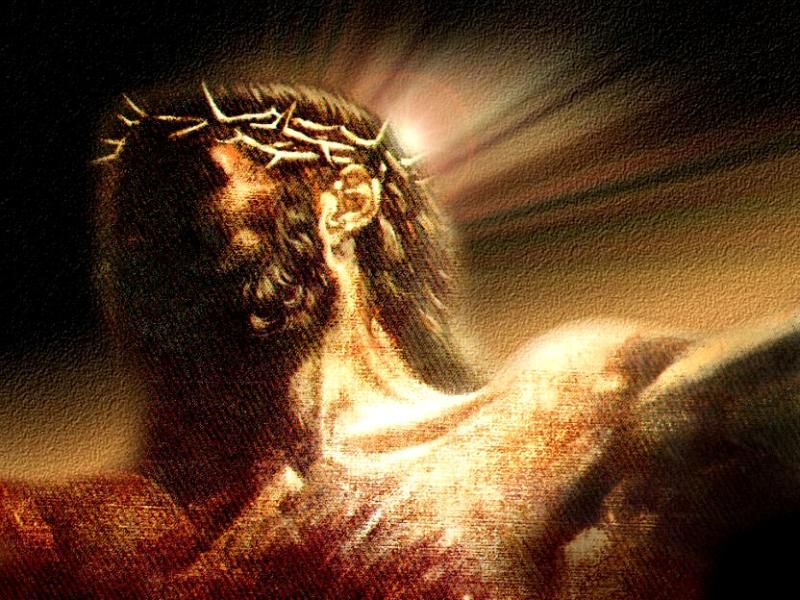
One day after having selected an artist’s rendering of the Christ wearing a crown of thorns for my wallpaper, I noted how I had allowed the desktop of my PC to become cluttered with icons and files. Though they made finding things more manageable, they obscured the image I had chosen for my inspiration. I had to do some cleaning so that I could once again see Christ! 

Spiritually, I feel as if we sometimes equally “mask” the presence of the Christ in our lives. It is not our intention to do so, of course. We are just going about our regular business. Yet, there comes the point in out lives in which we begin doing what we feel is most convenient, despite what this “convenience” does to the presence of the Christ in our lies. Soon, others are unable to readily see the Christ in our lives since He has become obscured by our ephemera. If this persists, others will be unable to see Him at all.  

When this happens, it is time to clean up or bring order to the chaos. One needs to put things in their proper place so that the image of Christ becomes accentuated rather than obscured (cf. Matthew 6.33). It may take a bit of work, but the effort is worth more than anything else in this world because of its eternal implications. 

Dear reader, are others able to see the Christ in your life? If not, perhaps it is time for spiritual cleansing. The only thing equal to the task, great or small, is the blood of Jesus Christ. For the one having never clothed him or herself in Christ (Galatians 3.27), baptism brings about the forgiveness of sins (Acts 2.38). For the immersed believer, the blood of Christ continuously cleanses us as we walk in fellowship with Him and fellow Christians (1 John 1.7).  

Check your image in the spiritual mirror (James 1.22-25). If you cannot see the Christ, rest assured others cannot see Him either. Let us always strive so others can see the Christ in us.   

Going To The Son Road

Monday’s Column: Neal at the Cross

Neal Pollard
Avalanche Lake hike (Glacier Natl. Park)

It has been on my bucket list for as long as I can remember, going to northern Montana to see Glacier National Park. Though I lived only a long day’s drive from it for 13 years, it took moving across the country before we made the trip. Sometimes, the event cannot live up to the hype, but that was not the case with this experience. The beauty is as diverse as it is breathtaking. While there is so much to see, some of the most memorable sights are to be found along a route in the park known as the Going-To-The-Sun Road.

It has to be 50 of the most beautiful miles on the planet, with diverse wonders. You’ll see mountain streams cutting through the landscape.

There are breathtaking views of the northern Rocky Mountains throughout the length of this iconic road.

And, of course, there are the lakes that dot this God-kissed path.

There may be some impressive, enjoyable creations of man, but no one can outdo the Master Creator for displays of beauty. I’m glad I took some pictures, but there is no way I could ever forget what I saw.

I could not help thinking about how such an experience reinforces my faith in the existence of God or how it shows me what kind of God He is. How could anyone see what is on display in places like that park, then come away denying Him or concluding that mere random chance produced it?

But, given the name of this road, I also could not help but think about an analogy Jesus used when He walked the earth. He referred to the path of discipleship, following Him, as the narrow way (Mat. 7:14). It is a one-lane road, a singular path (“the way,” John 14:6). It can be an uphill climb (Acts 14:22; 1 Pet. 2:21). But, not only is there much beauty to be found along the journey (John 10:10), the payoff is without rival (Mat. 10:22; Rev. 21:1ff).

The Going-to-the-Sun Road is open only for a season and, though park officials can estimate when it will close each year (mid-to-late October), this cannot be precisely predicted. The road that leads to the Son is likewise open only for a season (Heb. 9:27), but no one knows when that road will forever be closed (Mat. 24:36; 25:10).

It breaks my heart to realize that most people are not on the “Going-to-the Son” road. They have charted a path that may bring them pleasure for a season (Heb. 11:25), but it will end in their eternal destruction (Mat. 25:46). Jesus has His disciples here to show others the way to Him (Mat. 28:19). He is preparing a place far superior to this world (John 14:2-3), a place we should be looking for (2 Pet. 3:13) and longing for (Heb. 11:16).

For all its tears and sorrows, the road of life is full of so much beauty, too. There is never a regret in taking the path of the Savior. But, there are lost and weary travelers who need our help to find it, too. May we find someone today to introduce to the “Going-to-the-Son Road.”

Sharing The Filling Fullness Of Christ

Wednesday’s Column: Third’s Words

Gary III

Gary Pollard

Some phrases in the Bible are simple to read, but very difficult to comprehend. In this article, I’d like to walk through a process together in an attempt to make sense of a difficult phrase (thanks, Paul). One of those is in Ephesians 1.23: “…the fullness of him who fills all in all.” This is a description of Jesus, specifically as it relates to His being the head of the church. But what does that phrase mean? 

I will not pretend to have the answer, but I would like to make a couple of suggestions. Firstly, “fullness” appears to describe the church. In my limited knowledge of Greek, it seems to be grammatically tied to “body.” The church – His body – is His fullness. Both are nominative, both are the subject of the sentence. 

Secondly, Jesus fills all in all. It’s that last phrase that’s so hard for me to comprehend. What does it mean, that “He fills all in all?” Based on the fact that some form of “fullness” is used three times in a single phrase, it appears to have reference to his nature. He is not confined by time or space and is present everywhere. 

If the church is His fullness (the word is possessive in Greek), and He is omnipresent (or, creation is full of Him), then the church must be extremely important. Again, I am not a scholar, I may be mistaken. 

I would, though, like to attempt to make application from this difficult phrase. If the church is, ideally, representative of the very nature of Christ, are we living up to it? Is our passion for the lost like His was/is? Is our love for each other as strong as His is for the church? Do we treat the church as if it were the body of Christ (because it is)? Do we keep in mind, as we interact with each other, that we all answer to Him? Are we trying to mold culture to His image, or are we being molded to culture? 

We really have to think about this one to try to make sense of it. Comprehending this phrase is anything but easy (at least for me!). But the church – which is one distinct unit, not a series of denominations – is supposed to represent Jesus. Our values, our demeanor, our goals, our mission, our attitudes, our behavior, and our purpose should scream to others, “We are not of this world.” If these do not, we are not representing Jesus. No one will do this perfectly, but the standard is high. 

When we begin to understand this phrase a little more, it shifts from being hard to understand to being hard to hear. We have a huge responsibility, but we also have a global family to support us. The standard is high, but our Head is also our Savior. As things slowly go back to normal, let’s keep this in mind! We’re not just Christians to be good people, we’re Christians to show the world who Jesus is.

“High Carb Diet”

Thursday’s Column: Captain’s Blog

IMG_0806

Carl Pollard

We all love a good piece of bread. Whether it’s garlic bread, cheesy bread, or just plain bread, everyone loves it. Bread is the greatest invention of all time, maybe ever (can you tell I wrote this before lunch?).
Jesus is described as being our spiritual bread. In John 6:35 Jesus is the “bread of life.” And in verse 32 He is called “the bread out of heaven.” Why would Jesus be called bread? When we take a closer look at these two verses, we can notice a few reasons why.
“Jesus then said to them, “Truly, truly, I say to you, it was not Moses who gave you the bread from heaven, but my Father gives you the true bread from heaven” (John‬ ‭6:32‬). There’s an analogy given by John that helps us to wrap our mind around Jesus being the Bread. Moses provided manna in the wilderness for Israel (bread from heaven), and Jesus (the bread) was sent from heaven to feed us spiritually.
It was amazing growing up with mom, THE Kathy Pollard, as the cook. And many times we would describe her food as “out of this world.” When we think of Christ, the Bread out of Heaven, He is literally out of this world.
Point is, we need to be feeding ourselves with this Bread. We need to be consistently meditating on God’s word, continually making it apart of who we are, and courageously manifesting it in our everyday lives.
“Jesus said to them, “I am the bread of life; whoever comes to me shall not hunger, and whoever believes in me shall never thirst” (John‬ ‭6:35‬). Two words in this verse are in the present tense– “comes” and “believes.” This means that for Jesus to be our bread we must continually come to Him and believe. Jesus is nourishment to those who are spiritually starved, mentally broken, and emotionally lost.
No matter how much bread we physically eat, it will never compete with how full and complete we will be in Christ. Are we turning to Him?

12764594_10208245679077795_625453659382235834_o
Just an example of some of the bread mom sustained me with growing up

“THE CHURCH”

Neal Pollard

Did you know that Paul uses the phrase, “the church” nine times in the relatively brief letter to the church at Ephesus? This is a church Paul worked with for three years (Acts 20:18,31). He taught them in person and then he sends this epistle full of teaching (Eph. 1-3) and application (Eph. 4-6). In both parts of the letter, he makes important statements about “the church.”

• “(God) gave Him to be head over all things to the church, which is His body…” (1:22-23a; see 4:4).

• The manifold wisdom of God is meant to be made known by the church (3:10).

• God’s glory is meant to be shined through the church (3:21).

• Christ is the head and savior of the church (5:23).

• The church is subject to Christ (5:24).

• Christ loved the church and gave Himself up for her (5:25).

• Christ seeks to present to Himself the church in all her glory (5:27).

• Christ nourishes and cherishes the church (5:29).

• The husband/wife illustration is about Christ and the church (5:32).

When you add in the times Paul discusses “the body” (1:23; 2:16; 3:8; 4:4; 4:12; 4:16; 5:23; 5:30), it is easy to see why Ephesians has often been labeled the book which exalts the church of the Christ (in contrast with Colossians, touted as the book which exalts the Christ of the church).

Ephesians destroys the concept of the religious division also known as denominationalism. Where Christ has spoken on how to be saved, how to worship, how the church is to be organized and led, and religious bodies teach as divine doctrine the precepts of men (Mat. 15:9), they become plants which the heavenly Father has not planted (Mat. 15:13). If that is true of what the Pharisees did with God’s law concerning honoring father and mother (Mat. 15:3ff), doesn’t it follow that it would include all of Christ’s doctrine?

Ephesians is a great letter to discover the truth that Christ desires religious unity among believers, a unity derived from believers submitting to His teaching and will. But to limit our interpretation of this book to just that idea is a tragic shortcoming. The whole letter begins with a powerful, humbling truth: “God chose us” (1:4). We are His treasures, the praise of His glory. We are precious and valuable to Him–He predestined us to adoption as sons (1:5), He redeemed us with His blood (1:7), He lavished us with His grace (1:8), He made known to us the mystery of His will (1:9), He gave us an inheritance (1:11), hope (1:12), and a pledge (1:13-14) that we might be wise, knowledgeable of His will, enlightened, and strengthened (1:15ff). All these spiritual blessings (1:3) are reserved for those who submit to Jesus as the head and strive to follow the pattern of New Testament teaching. When we do, we have access to the greatest possible relationship in the whole universe! “To Him be the glory in the church and in Christ Jesus to all generations forever and ever. Amen” (3:21).

“Immediately”

Neal Pollard

The astute reader of the book of Mark finds the word 40 times in 39 verses (the Greek word most often translated “immediately” in Mark is actually found 44 times). It is a key word found consistently throughout the gospel but especially in the first six chapters. Usually, the word is used to quantify the time between Jesus performing a miracle and it taking effect. The point seems to be to show the power and Divine nature of Jesus. It is also a thread that runs throughout the book to highlight key thoughts and main ideas in this second book of the New Testament. The word is used to highlight the Father’s affirmation of Christ following His baptism (1:10), Jesus’ journey into the wilderness to triumph over the Devil’s temptations (1:12), the disciples’ decision to leave their occupation to follow Jesus (1:18,20), Jesus’ entering the synagogue to show unparalleled authority and power (1:21), the news and fame that followed Christ’s teaching and healing (1:28), and the immediate response of the one healed by Jesus–the first of many uses of the word “immediately” to highlight such (1:29-30). The proof for Jesus’ identity was immediate. The effect of Jesus’ miracles was immediate. The impact of Jesus’ miracles and teachings on friend and foe was immediate. Mark’s use of this word seems to indicate how overwhelming and unmistakable the proof of Jesus was.

This is not to say that one should rashly decide about the Lord. The book of Mark is part of God’s way to convince man about who Jesus is. Take the time to read it and learn of Him. Like the other three gospels, Mark contains the miracles, teaching, claims, and events in Christ’s life at the end of which one must ultimately make a decision concerning who He is. Remember, though, “He who believes and is baptized will be saved; but he who does not believe will be condemned” (Mark 16:16). Weigh the evidence, and then decide. Follow the example of so many in the book of Mark and let the power and person of Jesus have an immediate impact on your life and your soul.

15843359028_6e6cbd3894_b

He Can Carry What’s Too Heavy For You

Jeff Wiant has been a Christian since early 2015. Since then, he has written 11 hymns. They are all beautiful, but this may be his best. It’s his first invitation song to write.

Poem inspired by this beautiful new song by Jeff Wiant, member at Bear Valley.  Click on the link below to hear it:

CLICK HERE: Jeff Wiant’s “Won’t You Come”

Neal Pollard

We struggle and strain to carry our load
We buckle as it gets heavier on our backs
We fall and hurt on this rough, rocky road
The weight makes us stop in our tracks

Looking around with a face full of pleading
We wonder who is observing our pain
We’re wounded, weary, broken and bleeding
Set to surrender from the stress and strain

Tears flow freely, we have been here before
We know how the journey seems endless
Certain we can’t make it alone to the door
We feel solitude, helpless and friendless

It’s bigger than us, crushing and enormous
And the contents shameful and unsightly
We’ve borne it so long it’s begun to conform us
To a stooped struggler holding on tightly

A voice calling gently, “Bring it over to Me,
I can help you and give you My best,
Your burden is heavy, I know you are weary,
Come to Me and I will give you rest.”

Could you double down, wincing and worn,
Grit your teeth and ignore His free aid?
Eventually, it will bury you after making you mourn
You know an exorbitant price must be paid.

He is able and willing, but waiting for you
To seek what He offers you without reservation
Let Him do for you what only He can do
Give your burdens to Christ with no hesitation.

Think of the journey, partnered with One
Without limits in power, purity and pity
Who’ll stay with you until your journey is done
As together you arrive at His heavenly city.

Dockers de Cap-Haïtien

Is It A “Sign”?

Neal Pollard

I read about the discovery of World War I shells found in the Sea of Galilee, likely dumped by fleeing Turkish ships lightening their load to escape the pursuit of the British. There is a bigger story, though, than a 100-year-old wartime artifact being found in an unlikely place. The shell was uncovered through an unprecedented drought that has left exposed an island in the middle of that sea. Some religious Jews think it presages their long-awaited Messiah, their conviction based on their view of Psalm 66:6, Zechariah 14:8, and Isaiah 15:9. Adam Eliyahu Berkowitz, a veteran of the Israel Defense Forces and freelance writer, cites various rabbis who say that the present weather anomaly and its consequences are prophesied signs. Yosef Berger, the rabbi of David’s tomb in Jerusalem, says, “Just like in prayer, which is a dialogue with God, our thoughts are taken into account in Heaven, and can bring the desired prophecy into existence… By people believing that the Galilee drying up is part of the prophecy, it will help the Messiah come” (Breaking Israel News).

I appreciate any people who believe in the truth of the Messiah, and I see any such looking and longing of a transparent sincerity. However, these well-meaning Jews are 2000 years too late. The kind of Messiah they seek is not clearly stated, but their forefathers rejected the kind of Messiah Jesus Christ was and is. The Old Testament prophesies of His birth, ancestry, forerunner, earthly ministry, opposition, crucifixion, resurrection, and church were fulfilled in the time of Jesus. The New Testament often looks back at prophesies and show how Jesus fulfilled them.

The Jews of Jesus day stopped their ears and shut their eyes to the signs and miracles He did, repeatedly proving to the open-minded observer that what such revered men as Moses, David, Isaiah, Micah, Zechariah, Malachi, and others wrote concerning the Messiah was fulfilled by the nature, birth, life, death, burial, and resurrection of Jesus of Nazareth (cf. Luke 24:44-47; John 20:30-31). Their lack of faith cost them at Jerusalem in A.D. 70. It will cost them eternally, if they do not believe in the Christ who has already come.

The drought-stricken waters of Galilee are a sign of a lack of sufficient rain, but nothing more. Those still awaiting the One who already came should instead learn of Him and follow Him. Because His second coming will be without signs (cf. Mat. 24:36ff). May we all be ready for that day!

sea_of_galilee_bw_21


The Reality Of Jesus Christ

Johnson Kell

He was born of a virgin and when He was about thirty years of age He was baptized in the Jordan River by John the Baptist. And being full of the Holy Spirit He began His ministry walking the dusty roads of Judea, Samaria and Galilee, performing miracles and preaching the gospel. And He did go out carrying His own cross toward Calvary, and He did hang there for hours writhing in anguish and pain. And He did cry out, “My God, My God, why have You forsaken Me?” He did die there, shedding His blood for the sins of the world.

But there was a resurrection and He spent forty days with His apostles providing many proofs of a bodily resurrection–the tomb was found empty. And after forty days He spoke to them for the last time and as they watched intently He disappeared through the clouds on His way back to heaven. Some time later, when Stephen was being stoned to death, he cried out, “I see the heavens opened and the Son of man standing at the right hand of God.”

And so we have the assurance that our Savior is at His Father’s side making intercession for each one of us. And we can recall in the letter that the apostle Paul wrote to the Christians in Colosse, where he cried, “Christ in you the hope of glory!” So as we are born-again children, we, too, can say, “Christ in us the hope of glory!”

This was and this is the reality of Jesus Christ.

IMG_3446

Can You Imagine Being $53 Million In Personal Debt?

Neal Pollard

USA Today’s Maria Puente is reporting music star Kanye West’s tweet where he writes, “I write this to you my brothers while still 53 million dollars in personal debt…Please pray we overcome…This is my true heart….” (USAToday.com).  Hearing that Facebook creator Mark Zuckerberg and wife Priscilla were going to give away some of their billions to philanthropic causes, West tweeted that he wanted to be a recipient of some of that charity.  Since most of us will probably not make a total of $53 million in our lifetimes, we have a hard time imagining how someone could accrue that amount in personal debt! Perhaps horrible investing, profligate lifestyle decisions, and the like might explain it, but the lack of restraint and wisdom seems appalling. How could one person be so foolish and wasteful? We wring our hands and shake our heads, maybe condescendingly.
Until we consider something.

In a spiritual sense, we all faced a debt infinitely greater. Jesus illustrates this in a parable regarding a slave who owed his master 10,000 talents (Mat. 18:23ff). Biola University business professor Philip Massey did some modern-day math equivalency with that figure and estimates in 21st Century dollars that debt would be $7.04 billion dollars, and according to the 2010 Forbes list of billionaires would need to be at least the 102nd most wealthy person on the entire planet just to be able to pay such a debt (chimes.biola.edu).  Jesus’ point in the parable is to show how utterly audacious it is not to forgive the relatively minuscule transgressions others commit against us in light of how great our spiritual debt is to God.  All the combined wealth of the world is not enough to pay for one sin (cf. Mic. 6:6-8; Mat. 16:26). Colossians 2:14 uses the term “debt” to describe our sin problem, but the same verse tells us that we had someone more powerful and capable than any earthly magnate or mogul to help us pay off our debt.  In fact, “having nailed it [the certificate of debt consisting of decrees against us] to the cross,” He provided payment sufficient for the sin debt of every single person in this world.

Can you imagine anyone refusing help who faced such an insurmountable obligation? Yet, the majority of this world has done and will continue to do so. By refusing to submit to the Lordship of Jesus, they continue to pile up their debt. When the Day of Accounting comes, they’ll stand bankrupt and unable to pay. The consequences will be eternal!

Without Christ, we all face a debt that cannot be sufficiently estimated.  We need His blood applied to our sins or our situations are hopeless! How Zuckerberg will respond is unclear. How Jesus will respond is ironclad! Reach out to Him.

kanye_west_at_the_2009_tribeca_film_festival-2_cropped

THE PATTERN FOR MARRIAGE

Neal Pollard

Matthew 19:1-12 records an incident where, because the Pharisees are trying to test Jesus (vs. 3), He has occasion to reveal His will about marriage.  As we analyze this text, we find several notable facts about marriage. These verses show us the mind and will of God on an institution that is increasingly under assault. Consider four facts about this great passage of Scripture.

This is from the Christ. One of the more common arguments made even by supposed biblical scholars is that Jesus never condemns homosexuality. But what does He do? He defines marriage (4-5). The law of exclusion says that what God doesn’t authorize in His Word is forbidden in doctrine and practice. The Lord has authorized marriage as an institution between man and woman. He did not have to say, “…but not between a man and two or more women” and “not between a man and an animal” and “not between two people of the same gender.” He makes clear what He sees marriage as being.

This is from the creation. Other passages tell us Christ is actually the Creator (John 1:1-3; Col. 1:16-17; Heb. 1:2). So not only does He, as Deity, designate what marriage is—He designed it in the first place. Jesus reaches behind changes made to God’s marriage law under the Law of Moses and cites how God designed it “from the beginning” (4). Anything that does not conform to His pattern in this text runs counter to God’s original intent. You may not that this excludes more than same-sex marriage. It excludes adulterous marriage (vs. 9) as well as sex outside of marriage (this is implied here: “joined to his wife,” not “girlfriend”; of course, “fornication” or “sexual immorality” is dealt with explicitly in many other New Testament passages). Jesus goes back to the creation to state the pattern for marriage as being one man and one woman for life.

This is a command. It is not a command that you have to be married, but if you do get married you must conform to Christ’s will concerning it. We see this in the force of Jesus’ “but I say unto you.” He is exerting His right of authority, even showing His law trumps the Law of Moses. A person who is looking to be married must make sure their relationship conforms to His command.

This is controversial.  It is not just the homosexual community who balk at Jesus’ words here. I have close family members (and so do you, probably) whose marriages are at odds with what Jesus commands in this context. Jesus Himself forewarns that this is a difficult and narrow teaching (10), a rejected teaching (11), and a teaching that calls for extreme sacrifice (12). I dare say there is as much blowback from the heterosexual community as the homosexual community where this passage is clearly taught. In either case, it comes down to whether we will follow the command of the Christ, the Creator. Our submission or rebellion cannot change the immutable (i.e., unchangeable) nature of Divine truth.

Marriage is a beautiful gift given by a loving God. Though society may corrupt it and seek to redefine it, but the will of God stands forever. May we have the courage, humility, and strength to take Him at His word and conform our lives to it—on this and every subject.

WHO KILLED CUSTER?

Neal Pollard

There’s quite the controversy over who killed General George Custer at the Battle of Little Big Horn in Montana on June 25, 1876. There is even a book by the title, “Who Killed Custer?,” authored by Bruce Brown. There are so many mysterious and hard-to-document events that made up this notorious battle that symbolizes the “Indian Wars” of the late 1800s.  Brown, analyzing eye witness accounts, gives an interesting top three suspect list:  (1) an Oglala Sioux warrior named White Cow bull, shooting him near the beginning of the battle, (2) Custer himself, committing suicide as he dashed away from the battlefield near the battle’s end on his horse Victory, and (3) Brave Bear, a Southern Cheyenne warrior, given the honorary title of “Custer’s Killer” at an Indian council in 1909 (www.astonisher.com/archives).  About ten years ago, the Helena Independent Record revealed the long-circulated, but secret oral history of the Northern Cheyenne Indian storytellers, crediting a woman, Buffalo Calf Trail Woman, for striking the fatal blow (helenair.com).

It is fitting that a man surrounded by so much controversy and whose reputation and achievements are incredibly enigmatic would have such a mysterious cloud hanging over his death. His killer is upheld by many as a tangible standard-bearer of justice and righteous revenge. For others, it is simply a matter of historical fascination.  There are even those who lamented his death, as the brash and rash Custer was widely viewed as a “war hero” by his U.S. contemporaries in the years immediately following his death. Yet, one thing we know for sure.  Custer was killed.  Two fatal bullet wounds loudly testify.

There is another mystery, one with far weightier and eternal implications.  Who killed Jesus?  He is the most enigmatic figure in human history.  He was viewed contemptuously as a blasphemer and traitor by the religious leaders of His day. He was viewed with depraved indifference by the masses who switched from adoration to execration in a matter of days.  He is viewed even more diversely today, 2000 years after He died on the cross.  The power and proof of the resurrection is a matter to write about another day (see, for example, https://www.christiancourier.com/articles/644-resurrection-literal-or-merely-symbolic).

But, there is another vital question surrounding the death of Jesus.  Who was really responsible?

  • Was it the devil? Yes!
  • Was it the Jewish leaders? Yes!
  • Was it the onlookers that day? Yes!
  • Was it Pilate? Yes!
  • Was it the Roman soldiers? Yes!
  • Was it God? Yes!
  • Was it you and me? Yes!

How could all of these be mutually responsible for the death of Christ? There is no controversy.  The devil desired Jesus’ death, through which he longed to defeat the Lord’s purpose (cf. Gen. 3:15; Rev. 12:4ff). In this, he failed (Heb. 2:14). The people that day were instruments in the hands of God, who accomplished His eternal plan of salvation through Christ’s death, burial, and resurrection (Acts 2:23; 3:18; etc.). We are responsible because we sin (Rom. 4:25) and He had to be made sin for us (2 Co. 5:21). The good news is that the death of Jesus was not the defeat of God’s plan. It accomplished the plan.  However, for the plan to be effective, we must properly respond to it.  The fact of His death does nothing for us, if we do not respond to it the way Scripture tells us to.  Thus, there is a much more important question than, “Who killed Jesus?” It is, “Who will follow Jesus?”

Why Christ Became Flesh

Neal Pollard

The writer of Hebrews exhorts that Christ should be faithfully served, not abandoned, because He is a superior messenger to all other heavenly messengers (chapter one). Then, he gives another reason for holding fast to Him in chapter two. His readers were apparently struggling in their faith and gradually slipping back into the religion they had left. They lacked incentive, but the epistle gives reason after reason for why it should be restored.

In chapter two, he refers to Jesus’ humanity. Through it, He perfectly fills the role of High Priest in a way no Levitical priest could do under the old law. He enumerates the reasons why Jesus became flesh, and each reason was for each of us as individuals.

  • He became flesh to taste death for every man (9). He exercised God’s grace on our behalf. He was willing to make God’s understanding of our frailties empirical (experienced by human senses) by tasting death in a human body.
  • He became flesh to render the devil powerless (14). Before the cross, where Jesus gave up His physical body in death, the devil had the power over man. All mankind sinned and there were various sin offerings provided by God in the different ages. Yet, they could not “take away” sin (10:4,11). But, when Jesus died and was raised from the dead, He rendered the devil powerless over those who faithfully obey Christ and remain faithful unto death.
  • He became flesh to deliver the enslaved (15). Knowing no hope of deliverance from the horrible state of sinfulness makes for a miserable experience (Rom. 7:25). Christ came to deliver us from the awful slave master of sin (John 8:34).
  • He became flesh to become a merciful and faithful High Priest (17).  12 times in Hebrews, Jesus is called the Christian’s High Priest–the High Priest of our confession (3:1), in Heaven (4:14), sympathetic and sinless (4:15), appointed by the Father (5:5), without predecessor or successor (5:10), who went before us (6:20), holy, innocent, undefiled, separated from sinners, and exalted above the heavens (7:26), seated at the Father’s right hand (8:1), an offering priest (8:3), and offering His own blood (9:11). His service in administering His blood on our behalf is merciful (kind, forgiving, protecting) and faithful (trustworthy and sure).
  • He became flesh to come to the aid of the tempted (18). He well remembers what it is like to suffer in a human body. Not just that greatest moment of suffering, up on the tree, but the daily discomforts (Mat. 8:20), abandonment (John 6:66), and betrayal (John 18:27; Mark 14:45). Therefore, He can help me right now with my problem. Nothing is too big, too mysterious, or too difficult for Him.

Five reasons from Hebrews two are given for why Jesus became flesh, but all of them are for me (and for you)! What a thrilling though. Let’s serve this wonderful Savior!

THE MASTER’S MATERIAL

Neal Pollard

A while back it was popular in the religious world to talk about Jesus’ encounter with two disciples on the road to Emmaus. The emphasis has often been on the disciples’ experience. I believe the biblical emphasis is on the character of Jesus. The disciples are contemplating Him even as they encounter Him. They describe Jesus as “a man who was a prophet mighty in deed and word before God and all the people” (Luke 24:19). Notice three reasons why He was so mighty in word before all the people.

JESUS KNEW HIS MATERIAL. Luke 24:27 says, “And beginning with Moses and all the Prophets, He interpreted to them in all the Scriptures the things concerning Himself.” Truly His knowledge is perfect and ours is not, but there is no excuse for failing to study–both on our own and for a class we are teaching or sermon we are preaching.

JESUS KNEW HOW TO RELATE ITS MEANING EFFECTIVELY. The men journeying to Emma’s, after walking with Jesus, said, “Did not our hearts burn within us while He talked to us on the road, while He opened to us the Scriptures?” (Luke 24:32). The dismal method of too many Bible classes is to essentially read and paraphrase in verse by verse fashion. Preaching can too often be disorganized in delivery or vague in message. Paul told Timothy, “Do your best to present yourself to God as one approved, a worker who has no need to be ashamed, rightly handling the word of truth” (2 Tim. 2:15, NIV).  Robertson says of “rightly handling” that it means “cutting straight…Since Paul was a tent-maker and knew how to cut straight the rough camel-hair cloth, why not let that be the metaphor?” (Vol. 4, 619). As presenters of truth, tell what it meant then and in context, and then apply it!

JESUS KNEW HOW TO MAKE THE MATERIAL LIVE IN HIS STUDENTS. Luke 24:45 says, “He opened their minds to understand the Scriptures.” That is just what we are after as teachers, preachers, and proclaimers of the Word. We are not just fact-reporting. We are trying to get into the heart. Remember that Jesus sought to change lives with His teaching.

Only Jesus was the perfect teacher. But we can always be better and great. Let us mimic the Master’s approach to His material!

FAITH IN PEOPLE

Neal Pollard

There are some people with “trust issues.”  They are stuck in a negative frame of mind, believing the worst in others with little expectation that they will improve.  They may even castigate anyone who would encourage you to put faith in people.  Certainly, our greatest faith must always be in God.  He never fails, forsakes, or leaves us (Heb. 13:5-6), but people invariably do those things.  We cannot put more faith in people than God, listening to and following them when they contradict His will. That’s a false, wrong extreme, but so also is a cynicism that fundamentally, inherently distrusts people to do the right thing.  This does not mean that there are people in our lives who do not struggle with sin because we all do (Rom. 3:23).

Let me encourage you to have faith in God’s people. Why?

  • Jesus did.  He selected twelve men, salty fishermen, shady tax collectors, strident nationalists, and selfish materialists.  While the latter let Him down, the other eleven grew and accomplished much.  Jesus entrusted His mission to them (Mat. 28:18-20), having faith that they would accomplish it.  But, Jesus also had faith in others—the woman at the well, the woman caught in adultery, Zaccheus, Bartimaeus, Nicodemus, and so many others.  Some He put faith in failed Him and even left Him, but that did not ever stop Him from investing that faith in others.  Do you remember what He said to Peter after He had failed? “I have prayed for you, that your faith may not fail; and you, when once you have turned again, strengthen your brothers” (Luke 22:32; emph. mine).  That was faith in Peter!
  • It empowers others.  When somebody expresses faith in your ability to accomplish something, how do you respond?  When you are given responsibility with the explicit or tacit understanding that the giver believes in you, don’t you give it your all to live up to that trust?  2 Timothy 2:2 seems to imply this reaction is a natural consequence of being entrusted with something.
  • People live up (or down) to our expectations.  Have you ever had someone in your life who handled you this way:  “You’re no good!”; “You’ll never amount to anything!”; “You’re hopeless!”?  Maybe they don’t say it, but they convey it.  Preachers and teachers communicate the word through such a pessimistic prism. Leaders convey it in ways both spoken and unspoken.  Love “believes all things, hopes all things” (1 Cor. 13:7).
  • It brightens life.  Would you like to maintain a PMA (possible mental attitude)?  Never lose the ability to believe in others!  A glass half full approach is necessary to retaining an optimistic, hopeful way of life. I’m not saying to be delusional, but you can improve your own quality of life with a fundamental belief that most people, when they know what’s right, want to do what’s right.
  • It is biblical.   Paul had confidence in Philemon’s obedience (Phile. 1:21). He had confidence that Corinth would do the right thing (2 Cor. 2:3). He had confidence in Galatia’s doctrinal resilience (Gal. 5:10). He had confidence in Thessalonica’s continued faithfulness (2 Th. 3:4).  What an example, and oh how we should imitate him in this!

Teresa of Calcutta is often associated with certain verses found on the wall of her children’s home, even credited for authoring it. Kent Keith is the likely author.  In the composition, “Do It Anyway” (aka “The Paradoxical Commandments”), he notes that people will criticize and be petty.  He encourages doing good, loving, and serving anyway.  You can choose how you will spend your life, expecting the best or worst of others. May I urge you to have the most faith in God, but leave room for faith in people—especially God’s people! You will not regret it.

Christ-less In Crisis

Neal Pollard

It is hard to describe the beauty of faith evidenced in Room 913 yesterday as all the elders and their wives, Wes and Teri Autrey, and Tiffanie and Bethany Vaught stood with Myrna and the rest of the Murphy family at University Hospital yesterday.  We sang songs and Dave Chamberlin prayed a touching, loving prayer.  Moments later, a godly, wonderful woman made her transition from this life to the better one. Despite the inevitable, natural flow of tears, the heartache of separation, and the final earthly stanza of a beautiful, 59-year-old love song played by Ray and Myrna.  Myrna was an obvious success as a mother, wife, grandmother, and friend, but central to everything she did and who she was was Christ.  She did not fear death nor the condition that brought it.  She was ready because of Christ.

When I think of the red-letter days that have occurred in our nation and world during my lifetime, whether the bombing of the Murrah Building, the horrors of 9/11, the unbelievable natural disaster of the December 26, 2004, tsumami (“Boxer Day Tsumami”), the disappearance of the Malaysia Airliner, and the like, I am made to think how many stood in the wake of such tragedy without the hope and promise made possible through Christ.  Yet, every ordinary day where death looms through the natural course of life, people come to those final moments either ignorant or bereft of the bright prospect of what happens beyond death.  Certainly, some think they have hope, but it is not hope rested in what they can find in Scripture but rather what they think, feel, or have been told is real and true.  In some ways, those situations are the most tragic of all. Others are convinced that we are the result of chance and will cease to be when we draw our last breath, yet they continue to try and live with purpose and even act in the interest of others without bothering to ask why they behave civilized with such an animalistic point of view.

But for the one whose hope is built on the truth of what God’s Word says, there is no tidal wave of heart or explosion of life powerful enough to wrench us free from that hope. Paul exalts that we are saved by unseen hope (Rom. 8:24-25). In the rest of the chapter, he proclaims the unfailing love and promise of God for the redeemed who place their trust in Him.  Paul encourages the Thessalonians not to face death, sorrowing like a world without hope (1 Thess. 4:13).  Without Christ’s resurrection, there is no hope (cf. 1 Cor. 15:19-20).  However, because He lives, we can face tomorrow, all fear is gone, we know who holds the future, and life is worth living (Bill Gaither lyrics from “Because He Lives”).

The Murphys will have sorrow and grief to bear.  This is a testimony to their humanity.  But they look at tomorrow with an even brighter anticipation.  This is a testimony to the Christ who lives in them.  It is available for us all!

A dear sister in Christ, Myrna Murphy