What Kind Of “Man” (Or Woman) Are You? (Proverbs 28)

Neal Pollard

The proverbs in Proverbs 28 are still part of the collection of those transmitted during the reign of King Hezekiah well over 200 years after Solomon’s death. They are filled with warnings and instructions, many of them similes. In this chapter, Solomon speaks of various types of men both good and bad.

“A poor man” (3, 6, 11,15). The poor man is not always painted sympathetically, nor is he always approved by God. Solomon mentions the audacious poor man who oppresses other poor people as being a destructive rainstorm (3). But the poor man who walks in integrity is said to be better than the crooked-acting rich man (6). Solomon praises the one who looks after the poor (8). A poor man with understanding is wiser than a rich man wise in his own eyes (11). God condemns wicked rulers who trample over the poor (15). A stingy miser bequeaths poverty to his descendants (22). Giving to the poor does not impoverish a person, but the one who turns his eyes away from the poor is cursed (27). 

“An evil man” (5). This man is also referred to as “wicked” (1,4,12,15, 28), a synonym of evil meaning one who is guilty of a crime and deserving punishment. This evil one is unpleasant and malignant in God’s eyes. In Proverbs 28:5, they are depicted as being as far from God as possible such that they do not understand justice. Keeping with that contrast, law-abiding people fight against the wicked (4). People avoid wicked rulers (12,28), and with good reason (15). Yet, the wicked are full of instability and insecurity (1). Even their prayer is an abomination to God (9). 

“A rich man” (6,11). While the book of Proverbs makes clear, as does the rest of Scripture, that being rich is not inherently evil or wrong, that state of being often comes with caveats and warnings. Paul says, “But those who desire to be rich fall into temptation, into a snare, into many senseless and harmful desires that plunge people into ruin and destruction” (1 Tim. 6:9). Jesus taught, “It is easier for a camel to go through the eye of a needle, than for a rich man to enter the kingdom of God” (Mat. 19:24). He says it is hard for a rich man to enter the kingdom of heaven (Mat. 19:23). In keeping with biblical teaching in other places, Solomon, one of the wealthiest men who ever lived, speaks from experience. Wealth can easily be abused or misused. He can easily trust in himself (11). Several statements about the poor in this chapter show the danger to those who trust in their riches. As Solomon writes, “A stingy man hastens after wealth” (22) and “a greedy man stirs up strife” (25). 

“A faithful man” (20). This man is literally one who is full of faith, steady, trustworthy, honest, and dependable. He is a blessed in his ways. He walks in integrity (18). They fear the Lord always (14). “The one who keeps the law is a son with understanding” (7). They are among the righteous (28). He is not exempt from wrongdoing, but he is faithful to confess and forsake it (13). If he is rebuked (23), he will respond wisely and appropriately.

Character is built thought by thought, decision by decision. It is not dramatic. While there may be defining moments that stand out, it is mostly subtle and gradual. Each one of us is becoming some kind of man or woman, moving in one direction or another. Jesus says it most dramatically, that we are traveling on one of two roads leading to one of two eternal destinies (Mat. 7:13-14). We are not what we wish, hope, or intend to be. We are the product of our choices. God wants us to consider carefully and be faithful (Rev. 2:10). 

The Unethical Understudy

Neal Pollard

One wonders if perhaps Elisha saw Gehazi as being to him what Elisha was to Elijah, an heir-apparent to his own work. Indeed, Gehazi had been with him from at least since the miracle with the Shunammite woman (2 Kings 4:12), witnessing God’s providential care of the prophet, seeing Elisha raise the dead (4:32ff), and now the curing of Naaman’s leprosy (5:1-14). Gehazi had seen God’s power firsthand in incredible ways. He had to be aware of Elisha’s inclination to execute justice on the ungodly–from disrespectful lads to the rebellious Moabites. But Gehazi had some internal problems, moral weaknesses that would literally plague him. Notice 2 Kings 5:15-27.

First, he rationalized (20). Elisha had continuously shown his faith in God’s ability to provide. Naaman generously offers to give the prophet a handsome reward. Gehazi witnessed Elisha’s refuse to “take a present” from the army captain (16). Elisha was more focused on Naaman’s physical and spiritual cleansing. Rather than trusting God’s provision, Gehazi saw an opportunity for himself. He thought to himself, “As the Lord lives, I will run after him and take something from him” (20). We get in a lot of trouble when we feed our desires for what we want and work to convince ourselves it is the right thing to do. Maybe Gehazi forgot about Achan (Josh. 7:20-21). Remember this warning: “Every man’s way is right in his own eyes, but the LORD weighs the hearts” (Prov. 21:2). In other words, we can find a way to justify any sin in our hearts, but God sees through it. So it was with Gehazi.

Second, he premeditated (21). He chases Naaman down. How often he rehearsed the story he was about to share, we don’t know. But even if he made up the story on the spot, it was in his heart before it was on his lips. Later, the prophet Isaiah would warn, “Woe to those who deeply hide their plans from the Lord, And whose deeds are done in a dark place, And they say, “Who sees us?” or “Who knows us?” (29:15). Micah adds, “Woe to those who scheme iniquity, Who work out evil on their beds! When morning comes, they do it, For it is in the power of their hands” (2:1). 

Third, he lied (22). Up to this point, Gehazi’s sin was personal and internal. At any point, he could have reversed course with a penitent heart. He could have repented of his coveting. He could have stopped his pursuit. Instead, he catches up with Naaman, who asks him what’s wrong. Then, he audaciously tells this whopper: “My master has sent me, saying, ‘Behold, just now two young men of the sons of the prophets have come to me from the hill country of Ephraim. Please give them a talent of silver and two changes of clothes’” (22). He must have been very pleased when Naaman gave him even more than he asked for. Maybe, the rationalizing servant even convinced himself God was with him since things were turning out so well for him financially. 

Fourth, he covered up (24). After the deed was done and he was returning to his “day job,” Gehazi gives evidence that he knew he was dead wrong. He went to his house before returning to Elisha, and he dropped off his stash before nonchalantly “went in and stood before his master” (25a). 

Fifth, he lied again (25-26). Elisha does something we’ll see again in the case of Peter and Ananias and Sapphira (Acts 5:1ff). The prophet asked him where he had been and Gehazi lies to him. Lying is a cascading crime. Usually, it requires more lies to protect the previous ones. Unfortunately for Gehazi, Elisha already knew the truth. Would things have been less severe for the servant if he had come clean? We’ll never know. 

Ironically, a heathen obeyed God and was cleansed. Now, a servant of God disobeyed Him and was sullied with the stain of his sin. He found out what Moses once told Israel: “…you may be sure that your sin will find you out” (Num. 32:23). The leprosy of Naaman clung to him and would on his descendants forever (27). Thus ended the story of Gehazi, special servant of the mighty prophet. Thus began the story of Gehazi, the terminal leper. 

We live in an age where the moral compass of the world is broken. As we are in the world, we find ourselves tempted to abandon “true north.” It is so important for us to stay vigilant (1 Pet. 5:8), keeping our conscience sensitive (1 Pet. 3:16) and our motives pure (1 Chron. 28:9; 1 Th. 2:3).  The world needs examples of moral strength, in an age where rationalizing evil, plotting evil, and doing evil are commonplace. Honesty, integrity, unselfishness, humility, and the like are qualities the world will not find within. They will have to see it reflected in the lives of people whose ethics derive from God and His Word. 

Godly Character Traits

Saturday’s Column: Captain’s Blog

Carl Pollard

When I was growing up, there were certain tasks that my parents would give me that I didn’t want to do. Washing the floorboards, weeding the garden, cutting vinyl siding, and digging holes with a post hole digger are just a few examples of what many of us would consider hard work. 

I remember the hours working on these jobs, covered in sweat with blistered hands, and an all-around feeling of fatigue. There were a couple times In particular where I can remember my dad saying the classic phrase, “Son this is character-building work.” And then he would tell a story about some hard job he had to do as a kid. Looking back, these jobs really did build character, but there’s more to it than just digging a hole and sweating. 

You can be a hard worker, and still lack honesty, sincerity, and humility. Character building takes serious work and commitment. Luckily, God has given us His perfect word that tells us how we can grow our character. 

If you’ve ever struggled with living out your faith, or with your commitment to Christ, working on growing our character will help us to focus on what’s truly important in this life. 

There are many different ways that we could go about building our character, and as we look to scripture a good place to start in this endeavor is by practicing righteous thinking. If we want to grow our character, we have to start changing the way that we think. Problem is, it’s a lot easier said than done. There are two different passages that tell us how we can practice righteous thinking. 

Philippians 4:8 reads, “Finally, brothers, whatever is true, whatever is honorable, whatever is just, whatever is pure, whatever is lovely, whatever is commendable, if there is any excellence, if there is anything worthy of praise, think about these things.” As Christians we can learn to dwell on righteousness by filling our mind with godly traits. If we are truly set on transforming our minds to think on righteousness, we have to replace worldly thinking with godly traits. 

Romans 12:1-2 says, “I appeal to you therefore, brothers, by the mercies of God, to present your bodies as a living sacrifice, holy and acceptable to God, which is your spiritual worship. Do not be conformed to this world, but be transformed by the renewal of your mind, that by testing you may discern what is the will of God, what is good and acceptable and perfect.” It’s possible to practice righteous thinking by renewing our mind with the will of God. No longer looking to ourselves as master, but to God. By doing this our thinking changes. Our focus shifts from this world, and our minds will dwell on righteousness. 

Do you want to be known as a person of character? The first change we must undergo is to start thinking righteously. Righteous thinking is no easy task. It takes work, and many times we fall short of this goal. Thankfully we serve a loving God who wants nothing more than for us to spend an eternity with Him in Heaven. 

Question is, do we want this future enough to make the right decisions? 

Make My Day

Wednesday’s Column: Third’s Words

garyandme521

Gary Pollard

Conditioned response describes a person’s reaction to stimuli or situations. Those of you who watch The Office are probably already thinking about Jim Halpert’s famous prank on Dwight involving Altoids.

Conditioned response is also used in defense training. It’s developed through training and repetition. With enough preparation, a person can automatically respond to life-threatening situations with optimum safety and precision, regardless of inevitable panic. It’s basically autopilot for extreme situations.

God expects us to develop a conditioned response, too. He described it (through Paul) in I Corinthians 4.11-13.

Our conditioned response to physical beatings: nothing (4.11). Paul was punched a few times and likely did nothing in retaliation. Context reinforces this understanding of his silence on the subject.

Our conditioned response to being insulted should be to compliment the offender (4.12). If not verbally, we should mentally wish them only the best and mean it.

Our conditioned response to harassment should be acceptance with patience (4.12). Our conditioned response to character defamation should be gentle appeal (4.13).

This doesn’t come naturally at all. We’re taught to stand up for ourselves and not let people run over us! There’s a time and place for self-defense, but those times are, thankfully, quite rare.

What better way to show we genuinely love people than instinctively responding the way Paul did? Jesus made that a part of who He was, and we get eternal life because of it. We can actually help others find eternal life by instinctively reacting with love!

A Need For Honesty

Thursday’s Column: Carlnormous Comments

carl-pic

Carl Pollard

 
How much do you trust a liar? A study was conducted by Psychology Today where they asked 1000 people how many lies they’ve told in the last 24 hours. The average answer was two lies, but 75 percent of men said they would lie if they were talking about their social status. 80 percent of women said they have lied about their weight.
 
The average person we come in contact with has no problem lying to us. Whether it’s at work, in school or to friends and family, the majority of people feel that it’s morally okay to lie.
 
Ephesians 4:25 says, “Therefore, laying aside falsehood, speak truth each one of you with his neighbor, for we are members of one another.”
 
“Therefore” is a grammatical tie to previous verses. Each time we read this word we should see it as a finger pointing up to the previous verses. Contextually Paul is saying, “Therefore, since we have put on the new self lay aside falsehood.”
 
If you’re a Christian reading this verse, you have put on the new self. So we are commanded to stop lying and be truthful in our interactions with others.
 
Paul commands us to tell the truth. This seems like a simple command, yet sadly we get caught up in telling lies. We want what’s easiest. Many are tempted to take what seems to be the easy way out.
But there is something to keep in mind the next time we are tempted to lie:
 
Our reputation is ruined by dishonesty. If people catch us lying, why would they believe us at all? The boy who cried wolf is a prime example of this very fact. We all know how this story goes, and the bottom line is we lose our credibility if we lie. When we are honest and choose to tell the truth, people will trust us, and God’s Word has a better chance of reaching the lost.
 
When it comes to our Christianity, we want people to trust us. When we lie we lose our credibility and our ability to proclaim the gospel is harmed. Telling the truth in every situation is an attribute we are to have in our new walk with Christ. Plus, nobody wants to be friends with a liar.

Your Favorite Pair Of Shoes?

Monday’s Column: Neal At The Cross

pollard

Neal Pollard

Growing up, I heard my dad preach a sermon comparing different type of shoes to various people’s religious attitudes. You can imagine the application of such shoe types as the slipper, the loafer, the work boot, the Sunday shoe, the combat boot, etc. It was a clever illustration to encourage everyone to live a faithful Christian life and avoid a mentality that hurts the church.

Do you have a favorite kind of shoe? I’d venture to guess that you even have a favorite pair or couple of pairs of shoes. Usually, you’ll find me either in a pair of cowboy boots or in a pair of running shoes. What goes into why you favor a pair of shoes? Quality? Style? Comfort? 

To make a spiritual point by referring to footwear is more ancient than my dad’s efforts to do so. No less than the apostle Paul referred to “having shod your feet with the preparation of the gospel of peace” (Eph. 6:15). Indirectly, Isaiah and Paul give attention to this very idea by complimenting the “beautiful feet” of those who bring good news of good things (Isa. 52:7; Rom. 10:15). 

You would think, to borrow dad’s analogy, that some “shoes,” figuratively, shouldn’t be adorned as part of our Christian armor. Flip-flops aren’t good (Jas. 1:8). Neither are skate shoes (Rom. 12:11; Col. 3:23). Camouflage boots can be a liability (Rom. 12:2). It would seem counterproductive for a preacher or teacher to favor tap dancing shoes (2 Tim. 4:3), since our responsibility is to stand firm (Eph. 6:11,13,14). 

Staying with the analogy, some shoes are excellent if used according to their design. Running shoes are essential to running the Christian race (1 Cor. 9:24,26; Heb. 12:1), but not to run in vain (Gal. 2:2; Phil. 2:16), run with sinners to sin (1 Pet. 4:4), or run after false teachers (Luke 17:23). Work boots can be misused in prioritizing occupation and career over the kingdom, but when used in the exercise of our talents and resources to grow the kingdom they are worn well (Mat. 5:16; 9:37-38). 

You get the idea, and you can no doubt add to the analogy with your own ideas. But, spiritually, what is your favorite pair of shoes? John the Baptist suggests that Jesus, like most all others of His day, wore sandals (Mark 1:7). John felt unworthy to even untie them. Yet, Peter, later on, would say “follow in His steps” (1 Pet. 2:21). Jesus’ shoes carried Him to Samaria to minister to the woman at the well. They presumably walked on water. They took Him to Lazarus’ tomb. He doubtless wore them as He ascended the mountain to preach the greatest sermon ever delivered. Was He permitted to wear them as He carried His cross to Calvary? 

We aren’t qualified and worthy to be in His shoes, but, as the song suggests, we must be “trying to walk in the steps of the Savior.” Another hymn avers, “Where He leads me, I will follow.” Our favorite shoes should be the ones revealing the footsteps of Jesus. We follow Him and anyone can follow us (1 Cor. 11:1). They will help us walk in good works (Eph. 2:10), in a worthy manner (Eph. 4:1), in love (Eph. 5:2), and carefully (Eph. 5:15). 

pythonboots

How Will We Be Remembered?

Neal Pollard

Seven churches in Asia Minor (modern-day Turkey). Each remembered for an overall characteristic. The same is true for individual Bible characters, isn’t it? Most remember Moses, Samson, David, Jeroboam, Jonah, Jeremiah, Nehemiah, Judas, Peter, Paul, and John for a particular attribute, whatever else could describe their lives. That’s more than fascinating. It’s sobering.

What about you and me? Is there a word others–those we attend school with, work with, live near, attend church with, or share family ties with–would use to describe us? Here are some possibilities:

  • Grumpy
  • Disagreeable
  • Dishonest
  • Hot-tempered
  • Unreliable
  • Divisive
  • Worldly
  • Gossiping
  • Selfish

Such attributes are the cumulative result of the attitude, words, and actions that we portray each day we live. Everybody has good days and bad days. But, there is an overall tenor and flavor to our lives that cause people to associate something with us. However, the word might be different:

  • Gentle
  • Patient
  • Loving
  • Kind
  • Serving
  • Sacrificial
  • Unselfish
  • Humble
  • Uniting
  • Faithful
  • Courageous

That, too, is being built moment by moment, day by day.

With both groups of words, we can think of people who epitomize characteristic above. But I want to know, “Which one would best describe me?” Don’t you want to know that about you?  The good news, if you don’t like the answer there’s time to change that. Dickens’ Christmastime novel about Ebenezer Scrooge is written to make that very point. Infinitely more importantly, the Bible is written to make that point. We can be transformed through the influence of Christ in our hearts and lives (Rom. 12:1-2; 2 Cor. 3:18). How will you be remembered? 

40178175_715421765474325_1935029354081812480_n

Cure Them With Kindness!

Neal Pollard

A comedienne draws attention for being mean-spirited and cutting when roasting a White House press secretary recently. While cringe-worthy, it’s hardly an isolated incident. Nor is it confined to Washington politics, being seen across the spectrum of society. Civility has taken a beating in the current culture. Social media may be a breeding ground for insults, attacks, hostility, and animosity, but it’s hardly confined to just that forum.

Make no mistake, a lack of kindness is a hallmark of worldliness and unrighteousness. It is the antithesis of a quality God demands of the Christian. Ephesians 4:32 commands, “Be kind to one another….” The original word translated “kind” here is found seven times in the New Testament, and it is a divine quality. In fact, in six of the seven references, God demonstrates it. In Ephesians 4:32, it is to be exhibited by us in view of God’s having shown it to us through Christ. It means “pertaining to that which is pleasant or easy, with the implication of suitability” (Louw 246). It causes no discomfort, meets a high standard of value, is morally good and benevolent, and is beneficent (BDAG 1090). In common usage in New Testament times, the word, when referring to people, was synonymous with being decent, of good disposition, gentle, good-hearted, and morally upright (Kittel 1320). In other words, people in society could and did recognize its presence in people. Its absence is also, sadly, noteworthy. 

The old adage “kill them with kindness” might imply utilizing kindness to get an advantage or revenge on someone unkind, making us look good and them look bad. God calls for something more out of those of us striving to hold up the Light to a dark world. The world is sin-sick, and rude, coarse, hateful attitudes, words and actions are but a symptom of this. We have the medicine the world needs, even if it fails to see its need. Some will be drawn to it when they see it in us. 

Paul counsels Rome with inspired advice that will help us cure the rude, ugly, spiteful, and vicious behavior we often encounter. He says, “Never pay back evil for evil to anyone. Respect what is right in the sight of all men. If possible, so far as it depends on you, be at peace with all men. Never take your own revenge, beloved, but leave room for the wrath of God, for it is written, ‘Vengeance is Mine, I will repay,’ says the Lord. ‘But if your enemy is hungry, feed him, and if he is thirsty, give him a drink; for in so doing you will heap burning coals on his head.’ Do not be overcome by evil, but overcome evil with good” (Rom. 12:17-21). Look closely at what he says. Avoid the payback mentality. Go to great lengths to preserve peace. Leave revenge to God. Don’t stoop to the world’s level. 

This imitation of God with revolutionize the places where we practice this. The moral malignancy plaguing our world cries out for medicine, and we as Christians know where to access it. Let’s discipline ourselves to use it, even in the face of those spreading the spiritual sickness of spite. 

8717079909_141f57a7de

A Footprint, A Fingerprint, And An Imprint

Neal Pollard

“What do you want to be when you grow up?” “What will they put on your headstone?” It’s the kind of fundamental questions that accompany us all along the road of life. We want to have significance, to serve purpose, and to matter.  Whether motivated by legacy or something larger than self, the thoughtful periodic evaluate the difference they are making to those whose lives they touch. Of all people, Christians should take that matter seriously.  Consider this.

You Are Leaving A Footprint. Your decisions are observed by friends, family, and even those who only know you incidentally or even not at all. You are a leader.  So many people will eventually wind up somewhere because of what you do with and in your life. Paul could say, “Be imitators of me, just as I also am of Christ” (1 Cor. 11:1). In the most dramatic facet of this fact, people will be led toward an eternal destination through your influence. You are leading people toward or away from heaven. It’s in your heart, attitude, words, priorities, conduct, and passions.  To a line of folks longer than you could imagine, you are yelling, “Follow me!” Ask yourself, “Where am I going?”

You Are Leaving A Fingerprint. You are touching people’s lives. Your hands are in a variety of endeavors—your occupational life, your social life, your personal life, and your spiritual life. You are a servant of something and someone. Paul says it’s inevitable (Rom. 6:16). Everyone works at something, even if it’s laziness. It’s a legacy of labor. Where will people remember that your hands were most often seen? Will your chief legacy be whatever your occupation was? Your civic service? Your material accumulation and notoriety? Your pursuit of pleasure? Or will it be your involvement in people’s lives and with people’s souls? Consider this challenge, to “strengthen the hands that are weak and the knees that are feeble” (Heb. 12:12). Your hands will find something to do (cf. Ecc. 9:9). Make it count for God.

You Are Leaving An Imprint. Isn’t it sobering to think that all of us are associated with some quality. When our name is brought up, something—either directly or indirectly—is attached to it. For some, it will be: “grouchy,” “gossipy,” “complaining,” “foul-mouthed,” “critical,” “selfish,” “dishonest,” “arrogant,” “icy,” and the like. Fair or not, such broad labels are typically made interaction by interaction. For others, it will be: “humble,” “sincere,” “encouraging,” “dependable,” “loving,” “joyful,” “godly,” “positive,” etc.  You may feel yourself plain and insignificant, but you will leave an indelible impression on others throughout your life.  Even the one talent man, who tried to bury his talent, had to give an account for it (Matt. 25:14-30).

Leadership, labor, and legacy. These are gifts given by God to us all. What a powerful opportunity, one that lies before us daily! The great news is that if we don’t like the footprints, fingerprints, and imprints we have left and are leaving behind, we can change course. My favorite version of A Christmas Carol (and the best version!) is the one starring George C. Scott. He captures the remarkable transformation of Ebenezer Scrooge, a malevolent miser who becomes a merry mirth-maker. Charles Dickens shows us that anyone is redeemable if they’ll genuinely and fervently change. Of course, the Bible beat him to that message (Rom. 12:2; Acts 3:19; etc.).  Our time here is so short. May we all have the wisdom to know what is most important and pursue it relentlessly.

george_c_scott_fixed

Better Living 

Neal Pollard

We find ourselves often bobbing in a sea of religious confusion. Many groups claim to be the best religion and point to their ingredients as reasons for such claims. Several years ago, our boys played basketball in a league hosted by a huge community church in the Denver area.  Their church’s campus includes a K-12 school, two restaurants, a gymnasium half the size of our church building, a coffee shop, and a hundred social program. Other groups would make their claim as “better” or “best” based on their numeric size, the number of programs they have, or how socially active they are.

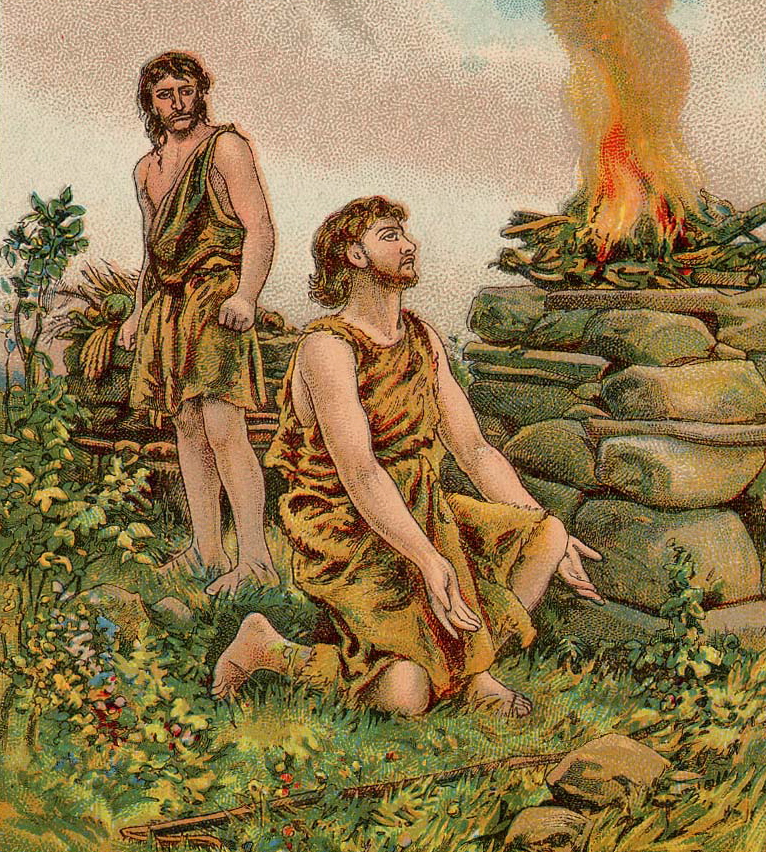
Our religious attitude ought to be one of humility, which does not boast of our achievements or compare ourselves with others (cf. 2 Cor. 10:12).  Genesis 4 is not just about two kinds of worship, but also about two ways of living life. Cain is mentioned by three Bible writers after Moses introduces him in Genesis. The writer of Hebrews calls Abel’s offering more excellent than his (Heb. 11:4). John calls Cain’s works evil and his allegiance “of the wicked one” (1 Jo. 3:12). Jude implies that the way of Cain is the wrong way to go (11). Let’s make a few brief observations from Genesis four and see if we can find the elements which make for a better way of living today.

  • BETTER LIVING IS NOT DETERMINED BY AGE (1-2).  By birth order, Cain came first. He was the first person to be born in the natural order of childbirth. He was the very first newborn to be held in his mama’s arms. She didn’t realize that her cooing, sweet infant was a future murdering, and she was proud of him. She called him “a man child with the help of the Lord.” This depicts such a bright, optimistic future, and by contrast Scripture says, “Again, she gave birth to his brother, Abel” (2). Abel began in his brother’s shadow, first known to us as “his (Cain’s) brother.”
  • BETTER LIVING IS NOT DETERMINED BY OCCUPATION (2). When we look at these brothers, what they did for a living was not the determiner of the quality of their lives. While what they did had an indirect bearing on the events of this account, the fact of their occupation was spiritually neutral—Cain farmed and Abel tended sheep. One can reap blessings from tilling the ground (Heb. 6:7), but they may have to fight thorns, thistles, and weeds doing it (Gen. 3:18-19). Tending sheep may be done by slaves (Luke 17:17), kings (1 Sam. 17:34), or apostles (John 21:17). God’s pleasure or displeasure was not connected to either’s occupation.
  • BETTER LIVING IS DETERMINED BY WORSHIP (3-4). Moses says both brought an offering to the Lord. He also says God responded to bother offerings, accepting one and rejecting the other. That very notion is foreign to many people in our society today, even those in religion. Many make worship nothing more than taste, preference, and personal inclination. But, Moses shows us (1) Not all worship is equal: God had regard for Abel’s, but not Cain’s. The words “had respect to” signify in Hebrew to look at something with a very serious glance. God tells us how He wants worship done, in attitude and action; (2) The worshipper and the worship rise and fall together: God had regard for Abel AND his offering and did not for Cain AND his offering. That’s a sober reminder for me that my personal relationship with God is hindered or helped based on the way I worship God. Can I offer God vain and ignorant worship, and have God reject it but accept me? We are not earning God’s favor by getting worship right. At the same time, are we tempting God and hoping we stay in His favor while disobeying His commands for worship? People have tried to make this an “either-or” proposition, that Cain and Abel’s offering was either about getting the worship right or was about the nature of the person offering the worship. In other words, is it sincerity or obedience, our both sincerity and obedience? To thoughtfully ask the question is to answer it!
  • BETTER LIVING IS DETERMINED BY ATTITUDE (5-7). Cain reacts to having himself and his worship rejected by God by burning with anger and his face taking on an ugly look. He sounds like a small child in the throes of a tantrum or a teenager huffing and sulking in anger. God warns Cain of the recipe for disaster he was making through his attitude. He told Cain that his tempestuous attitude was an invitation for sin to pounce on him, but He told him he could master it! You can have a positive attitude without prosperity, education, or earthly success, but you cannot have a positive attitude without mastering self.
  • BETTER LIVING IS DETERMINED BY ACTION (8-16). Improper worship and attitude preceded and precipitated improper action. The first time “sin” is used (Gen. 4:7), God was looking ahead with perfect foresight to what Cain would do to his brother. He does the unthinkable, killing his own brother (cf. 1 Jo. 3:11-15). His deeds and ways were a recipe for disaster: He is rebuked by God, punished by God, and separated from God. Sin promises a good time and fulfillment, but it’s not true.

It’s been said that the lineage of Cain gave us murder, cities, polygamy, musicians, metal workers and poetry, but not one who walked with God! Thanks to his legacy, a descendant repeats his violent ways (Gen. 4:23). Abel seems to leave no physical lineage, but he still speaks after death. His was a life of faith, generosity, good works, righteousness, and obedience. We get to choose the kind of life we want to pursue. If we choose well, we will be satisfied, others will be blessed, and God will be pleased.

the_story_of_cain_and_abel_bible_card

What Would Our Slogan Be?

Neal Pollard

A Bear Valley member gave me a mailer she received from a new, area denomination.  The oversized postcard, in attractive colors (the background of which looks to be a paint palette), leads with the header, “Messy Grace.” The subtitle reads, “It’s okay to not be okay.” The brief message beneath says, “God loves you. God cares for you. God wants a relationship with you. NO MATTER WHAT!”  Now, there is a lot of truth in that message, if we don’t necessarily care for some of the jargon. Could it leave a wrong impression? Yes, if the message does not include the response we need to make to His amazing grace. We cannot stay messy, if that means willful sin. But we will all continue to have our messes, even after coming to Him.

But, the mailer itself, with the self-appointed slogan, is what got me to thinking. If our visitors got to write our slogan, what would it be? For some places I’ve visited, it could be the following: “Don’t Sit On My Pew!”, “Race You To The Restaurants!”, “Visitors? What Visitors?”, “Joy Is For Liberals”, or “Are You Ready To Rumble?”  If the Lord wrote our slogan, what would it be?  For some congregations He diagnosed, it was also less than flattering: “We’ve Left Our First Love” (Rev. 2:5), “We’re Following False Teachers” (Rev. 2:14-16), “We Tolerate Immorality” (Rev. 2:20ff), “We Look Alive, But We’re Really Dead” (Rev. 3:1), and “We Think We’re Something Great, But We’re In Really Bad Shape” (Rev. 3:15ff).

Here at Bear Valley, there are several potential slogans I would hope represent who we are and what we are trying to convey by the way we act when we’re together on Sunday and Wednesday as well as our interaction at other times. Here are some good options:

  • “We Love One Another” (John 13:35).
  • “We Walk In Truth” (3 John 4).
  • “We Continue In His Word” (John 8:31).
  • “We Bear One Another’s Burdens” (Gal. 6:2).
  • “We Like Being Together” (Acts 2:42ff).
  • “We Look For Our Lost Sheep” (Luke 15:4).
  • “We Know Who The Enemy Is” (Eph. 6:11).
  • “We’re Not Conformed But Transformed” (Rom. 12:2).
  • “We Put Others Before Self” (Phil. 2:3-4).
  • “We Act Toward Others As If Doing For Christ” (Mat. 25:40).

The thing is, we are going to have a general character and emphasis as a congregation. Whatever we prioritize and do, that’s what it is. It’s not what we say, sing, or “sloganize.” To see it in print is sobering. May we collectively strive to earn a reputation that reveres our Master, reflects our mission, and renews our minds.

1akxyz

Unmistaken Identity

Neal Pollard

They both had a mole next to one eye and a scar on the left wrist. They lived 54 miles apart, one in Brookville and the other in Mooresville, Indiana. It was said they were practically identical twins. For notorious bank robber John Dillinger, that was no problem. But, for upstanding Ralph Alsman, it was a nightmare. Alsman was arrested 17 times and shot 11 times. When arrested, though he was always released, he had to undergo stressful interrogations in which he had to prove he wasn’t Dillinger. Only when the real Dillinger was gunned down in 1934 did the unbelievable saga end for the hapless Alsman (information taken from The Pittsburgh Press, 6/18/34, p. 11). Can you imagine having to look over your shoulder everywhere you went just because you looked like someone else—a really bad someone else?

The thought occurs to me as I read that harrowing account, based on my attitude, speech, and actions, “Who or what would people mistake me for?” As I live out my life before the world, waiting in lines or in traffic, when under pressure at work, as people mistreat or frustrate me, judging from my relationships, my ethics, and my morality, would people say that I strongly resemble Jesus? He is supposed to be living in me (Gal. 2:20). It has been the case that bystanders have recognized people as having been with Jesus (Acts 4:13). Of course, Scripture does not at all emphasize the physical appearance of Jesus (Isaiah 53:2), but Paul speaks of bearing the marks of Jesus (Gal. 6:17). While his “marks” were literal stripes from a tormentor’s whip, there are unmistakeable traits of Jesus that we, too, can and must bear.

I have so much need and room for improvement in my spiritual life.  Every day, I want to look more like Jesus. I want people to see Him when they look at me. If they do, He will be pleased and they just might be saved. Let’s work on our appearance! It may mean eternal life for somebody in our life.

588ee71ddf6914b974d4e69f24c6b8c8

HONESTY PAID JOHNNY DUCKWORTH NEARLY $4,000

Neal Pollard

A customer who ate at Randy’s Southside Diner in Grand Junction unluckily left $3,000 in a bank envelope at his booth. Fortunately, his busboy was Johnny Duckworth. Johnny gave it to his boss, who through the ATM bank slip in the envelope was able to track down the rightful owner. That unnamed person gave Johnny a $300 tip, but strangers started a “gofundme” page for the struggling Duckworth and have raised nearly $4000 for the young man. In an interview, he said he did not for a moment consider keeping the money, adding, “I work for a living” (denverpost.com).

You’ve not likely had honesty pay so well for you. At least not financially. But, as the proverbial adage goes, “honesty does pay.”  How?

  • In reputation. Honestly builds businesses, friendships, leadership, and the like, when people have implicit confidence in your word (cf. Proverbs 14:25).
  • In relationships. People trust you and are closer to you when you are honest with them. The opposite is true, too, that people keep their emotional distance from you if you are dishonest (Ephesians 4:25).
  • In righteousness. Your character is built through dedication to unconditional truthfulness (Proverbs 12:17).
  • In reliability. Who will people come to, lean on, and go to? The honest. They know where they stand with such a one (Proverbs 12:19).
  • In respect. While you may fear hurting feelings and alienating others through courageous honesty, you gain the admiration of most through transparency and scrupulous speech and behavior (1 Kings 22:13-14).

Sadly, doing the right thing was once routine but now it merits newsworthiness. May the tribe of Johnny Duckworths increase. When we as Christians are renowned for our kind honesty, we will draw a world in search of goodness and trustworthiness to the One who “cannot lie” (Titus 1:2).

How To See The Good In Others

Neal Pollard

Some just can’t! They assume bad motives, intentions, and behaviors in others. They like to predict failure and disaster. Some take that attitude toward people, including Christians. “They won’t last!” “They can’t cut it as a deacon/elder.” “He won’t ever be a good preacher!” “They just want the praise of men.” Think about all the people you know and interact with. Some are exceptionally talented and pleasant and some are pretty worthless and repulsive, but most are in-between the two extremes. But, what if I told you that you could influence what others become?  Barnabas did (Acts 4:36).  He was so good at encouraging people, “encouragement” wasn’t his middle name but his first name. Who was the first one to see good in Saul of Tarsus (Acts 9:27)? Who saw great potential in Antioch (Acts 11:23-26)? Who still believed in John Mark (Acts 15:37), who Paul would later think valuable once more (2 Tim. 4:11)? Barnabas was a great leader because of what he could see in others. We can make an eternal difference in people by seeing the good in them.

First, take them where they are. Jesus did.  Do you remember when Jesus met Peter (Luke 5:1-11)? Peter calls himself sinful.  We know he was impetuous (John 18:10) and could use unsavory words (Mat. 26:74). Peter’s business partners, the Sons of Thunder (Mark 3:17) seemed to have some anger management issues. In fact, Jesus made it an emphasis to take sinful people and work with them wherever they were (the woman at the well, the sinful woman caught in adultery, Bacchus, publicans, sinners, etc.). We will never help people get to heaven if we can’t take them where they are.

Then, see them for what they could be. Whether it’s a non-Christian or Christian, they need us to be able to see their potential and think the best of them. I don’t mean gullibility or compromise, but optimism! Why did Christ put such effort into Peter? He was a sinful man when He met him, made many mistakes while he was with Him, and denied Him in His greatest moment of need (Luke 22:60-62). He saw what Peter could be (John 21:15-17). Look past people’s quirks and flaws; imagine the possibilities.  There’s got to be a soul-winner in every Christian, since Christ commands it of us all (Mark 16:15-16). Every one of us can be faithful, dedicated, and fruitful Christians. Every lost person could have their hearts softened by the gospel–at the least the gospel has the power (Heb. 4:12; Rom. 1:16). Remember, love “hopes all things” (1 Cor. 13:7).

Finally, help them be what they can be. It’s far easier to be the critic and tell people what they’re doing wrong. But remember, “To belittle is to be little.” Criticism alone is useless.  It’s a lot tougher to help people improve and to go about helping with patience. Jesus didn’t end His work by telling people what sinners or failures they were. He guided them to the better way (Mat. 7:13). He told the adulteress to stop sinning (John 8:11). He told Peter to go feed His sheep (John 21). When He was through with Zaccheus, he went from thief to philanthropist. Jesus’ whole purpose was to take people afflicted with sin and transform them. It is rewarding work to invest in people and to help them grow. The Bible tells us to help people do better and be better (Gal. 6:1). To see the best in others, be willing to help and lead them (Luke 6:39-40).

If we are negative and pessimistic, that really is just a commentary on us. Look for good in others. Accept, anticipate, and assist!

I Had No Idea What “Pollard” Meant!

Neal Pollard

For years, I’ve told people the two things I knew about my surname—(a) It’s English and (b) it means “tree topper.” It gave me a little satisfaction to think of my solidly blue-collar roots.  Other research shows my ancestors to have been among the early inhabitants of this country, as one Robert Pollard, II, was born in Devon, England, in 1610 and died in King and Queen County, Virginia, in 1668. Anne Pollard was the first female to step foot on Boston’s shores (info from Maurice J. Pollard’s The History of the Pollard family in America, 1961). You’ll find Pollards in the French and Indian War, the Revolutionary War (Asa Pollard was “the first man to fall at Bunker Hill”), and the Civil War (Pollard Genealogy, Stephen Pollard, 1902, p. 3ff, via babel.hathitrust.org). As pride swells, I drive by ancestry.com only to find earlier history.  The name is actually Irish, dating back to the 14th Century, and it was a “nickname for a person with a large or unusually shaped head.” Wow. Not that I don’t know that from trying on hats my whole life. In my case, try freakishly huge melon. I’m extra-Pollard!

So, I maintain a mixture of pride and humility as I trace my name back through history.  That is due to more than etymology.  If I look hard enough at genealogy, I’ll find some Pollards who make me proud and some that make me ashamed that we share the same last name.  Even in contemporary times with Pollards I know I’m related to, this will be the case.

Solomon wrote, “A good name is better than a good ointment” (Ecc. 7:1a).  He said, “A good name is to be more desired than great wealth” (Prov. 22:1a).  That gets more personal.  When people hear my name, they have distinct, specific thoughts about my character, my nature, and my reputation.  Over a lifetime, there have been people who have known me who may have a bad taste in their mouths when they say my name.  Occasionally, as I’ve dealt with people in customer service situations, my name might not be the sweetest on their lips.  When I think of my failure to be an example as a Christian before the world, going back to days when I was in school, my name did not always have a true association with the name of Christ.

What does your name mean? What does your name mean to the people you work with, go to school with, do business with, and live near?  What does your name mean to the people who know you best?  We wear the name of Christ, as Christians, and we must strive to honor that great name! He’s counting on us to promote His name through the way we wear our name and His name each day.

THE BEAUTY OF PERSONAL INTEGRITY

Neal Pollard

There is an old episode of Father Knows Best where Bud, the Andersons’ son, has a glowing write up in the local newspaper for his star performance as his High School’s placekicker.  Success goes to his head, leading Bud to break the team’s training rules and stay out past 9:00 P.M.  His father finds out and urges him to tell his coach.  Bud begrudgingly does so, and he becomes convinced that his doing the right thing and being honest would lead the coach to let him off with a warning or look the other way.  When he’s told he cannot play that week because of his violation, he sulks and even blames his dad for giving him bad advice.  Eventually, Bud takes ownership of his misdeed, has a more humble attitude toward his importance, and even appreciates the decisions of his dad and coach to help him excel as a person more than a player.

Perhaps personal ethics have eroded to the point that many find such advice and subsequent actions preposterous and wrongheaded. The lesson was that actions have consequences and that honesty should be practiced, not for reward but simply because it is right to do so.  Trustworthiness and responsibility are the fruits of integrity and uprightness.

These principles, though unstated in that old television show, are thoroughly biblical in nature.  Broadly, the Bible praises those of upright heart (Ps. 7:10; 64:10).  Psalm 15 says those who walk uprightly, work righteousness, and speaks truth in his heart (2). It is often more difficult to do the right thing than the easier thing, but the path of least resistance does not usually lead us in the right direction.  We made each of our boys read Alex Harris’ Do Hard Things: A Teenage Rebellion Against Low Expectations.  An overarching principle is that your choices should not be made based on what’s most convenient or least demanding.  Character is built when we have the courage of God’s convictions and do what is right, whatever it may seem to cost us in the short-term.  Ultimately, we will be better for it and so will the people in our lives!

KING’S CRITERIA WERE RIGHT ON THE MARK

Neal Pollard

Martin Luther King, Jr., gave his “I Have A Dream” speech on a seasonable and rain-free day in August of 1963, but this speech, delivered to at least 250,000 people, is often remembered on the holiday in January named for him. This speech is one of the most important documents of our nation’s history and was a watershed moment in improving race relationships between black and white Americans.  Eloquently and poetically pointing out the injustices his race of people had endured and were enduring at the time, King looked forward to a new and improved day.  He hoped all people, whatever their race, would “not be judged by the color of their skin but by the content of their character.” He hoped to leave Washington, D.C., and return back to his home with a faith in the powers that ruled nationally and locally which would be translated into hope, brotherhood, and unity. His final call was to “let freedom ring” (via http://www.archives.gov/press/exhibits/dream-speech.pdf).

Many people forget that Mr. King was a religious man, a preacher who often alluded to Bible characters and principles as well as directly quoting from it.  Inasmuch as he accurately referenced it, Mr. King was calling all people to God for guidance regarding right and wrong.  He said that character took priority over color.  He saw unity as right and division as wrong. He called for freedom rather than slavery, real or virtual.  While he was rightly championing these characteristics in the realm of racial equality, those principles doggedly stand regarding other matters.  Character, unity, and freedom matter in religious matters.

When we stand before Christ in the judgment, there is no indication that He will even take note of our race, ethnicity, or nationality.  He will look to see if His blood covers us.  Peter rightly says, “I most certainly understand that God is not one to show partiality, but in every nation the man who fears Him and does what is right is welcome to Him” (Acts 10:34b-35). Corrupt behavior or disobedience will not be acceptable, no matter who we are.

Furthermore, anyone who fosters division is rejected by God. He hates “one who spreads strife among brothers” (Prov. 6:19). He condemns it through Paul in 1 Corinthians 1:10-13.  In social or spiritual matters, I don’t want to be responsible for inhibiting a brotherhood God desires.  If I refuse to stand where He stands or if I stand where He doesn’t want me to stand, He will not accept it.

Finally, there is a freedom even more important than the noble cause King and his followers pursued. They wanted loosed from the manacles of a bondage imposed by others.  All of us, outside of Christ, are subject to a bondage we cause for ourselves.  Paul refers to this as being “slaves of sin” and “slaves to impurity and to lawlessness” (Rom. 6:17,19).  But, thank God, we can be “freed from sin” (Rom. 6:18). Then, we become slaves to righteousness.

Christians must care about racial equality, never treating someone different because of the color of their skin.  The way to right content of character, unity, and freedom is found in the book so often quoted by Mr. King.  No matter where or when we live, it will guide us toward an eternal home in heaven.

The “Religious Condition Of The People”

Neal Pollard

After describing the “religion of the heart, not of the head,” scripture-less sermons of his contemporaries, a certain writer then focused on the consequent religious condition of the people.  He wrote,

The religious condition of the people very greatly corresponded to the teaching
of these preachers. The native common sense of some told them, that if God
gave a revelation to man, it certainly was one that man can understand.  That
it was unreasonable God should give a revelation of his will, and then need an
interpreter of it to the very men, for and to whom he gave it, so they studied it
for themselves, and learned many of its truths…

But the masses of the people did not study the Bible, made no effort to learn
what God had revealed in this Book to men, looked at it as a sealed Book to
them, made no effort to a religious life further than to live a respectable moral
life, obey the laws of the land, and maintain a reputable character among their
fellowmen…The religious life was one of impulse and feelings, days of sunshine
and cloud, moments of joy and hope, succeeded by long periods of doubt and
despair. They had no though of regular, faithful, self-denying obedience to God
bearing the fruit of joy and peace in the Holy Ghost.
(Lipscomb, David. Life and Sermons of Jesse L. Sewell.
Nashville: Gospel Advocate, 1891. p. 35-36).

Lipscomb wrote concerning those in mid-19th Century Tennessee, but it was probably true of mainstream America at the time.  They experienced different religious influences, particularly the ideas of hardline Calvinism.  Yet, how similar it sounds to even our own day.  Some are willing to hold themselves personally accountable for knowing the Bible, God’s written revelation.  They know they need to study and follow it, and they are open to do that.  Yet, the masses still try to live a self-guided, vaguely “moral” life of doing good things without learning for themselves what God’s instruction book says.  As the result, they meander through life in a sort of rudderless fashion.  That is, they have no concrete guide and show no serious interest in what God wants them to do.  At least, their interest is not great enough to drive them to read, study, and try to understand the Bible.

We have an obligation to seek searchers and point them to “the Book.” We also have a responsibility to ourselves, to faithfully delve into the Sacred pages, discern God’s will and then be changed by it.  The masses will likely always be as they were in Lipscomb’s and our day.  Our task is to go deeper and help others do the same.

Her Closet Was Her Refuge

Neal Pollard

42-year-old Sefa Cebeci was with her husband in a seven-story building in Duzce, Turkey, when just before 7:00 P.M. local time on November 12, 1999, a 7.2 magnitude earthquake shook the city.  The building collapsed, and when all was said and done nearly 1,000 people were dead—including Sefa’s husband who was right beside her.  Despite rescue team leaders from some countries calling off the search for survivors after three days, an Israeli team pulled her from the rubble after nearly 5 days without food and water.  She would have to have an arm amputated and her kidney failure from dehydration nearly killed her.  She was able to survive in freezing temperatures for 105 hours under tons of concrete. How? A closet fell on top of her and protected her from her collapsed house.  Her closet became her refuge (facts via BBC News articles, 5/11/13 and 11/17/99).

Have you ever noticed a Christian whose life seemed to be crashing in all around them?  You would not imagine they could survive the spiritual carnage.  Yet, they survive.  The reasons certainly vary, but one variable that has to be in place for them has to do with their “closet.”  Do you remember in Jesus’ great sermon that He said to “enter into thy closet” to pray rather make a vain, public show of prayer (cf. Mat. 6:6, KJV)?  That word “closet,” variously translated “inner room,” “your room,” “private room,” and “inner chamber” is one found almost exclusively in the Septuagint (Greek Old Testament) and the gospels.  It is translated “storehouse” or “warehouse” (Luke 12:24; Mat. 24:26), but also “bedroom” or “chamber” (Gen. 43:30; 2 Ki. 6:12; Zodhiates, Spiros. The complete word study dictionary: New Testament 2000: n. pag. Print).  It refers to any place of privacy where one cannot be easily seen (ibid.).

Isn’t that where spiritual survival is made or broken, not necessarily and not primarily in our public assemblies or fellowship activities but in private?  When I am alone, do I seek refuge by entering into the closet of prayer, study, and private devotion?  In happy, prosperous times, I should be found there.  It will prepare me for calamitous, catastrophic events.  When my life is shaken to the core, I will survive if in my closet.

Jesus does not specify what kind of reward enjoyed by those whose prayer life is genuine rather than showy, but certainly there is no greater reward than enduring the trials of life spiritually intact. We may come away scarred and hurt, but we will survive!  Be a spiritual survivor!  Spend as much time as you can in your closet.

Actual photo of Sefa Cebeci in an Istanbul hospital (1999)


“How’s Your Day Going?”

Neal Pollard

As we go about our day, we often hear that question.  It is an exercise in pleasant politeness, and at times it is asked with genuine, heartfelt concern.  It can also be not only asked mindlessly, but answered in the same manner.  Some are conditioned to say “fine” without stopping to assess.  Others are more curmudgeonly bent and can spout off a litany of complaints without breathing hard, if asked for an assessment of how their day is going.

As we reach the anniversary of certain events in Boston and West, Texas, or as we think back to recent tragedies in South Korea, Malaysia, or Washington state, both those who survived unscathed, who bear permanent scars, or who even perished had no doubt been asked the equivalent of that question.  Probably, some were cheerful and positive and maybe some were more negatively inclined.  Yet, especially for survivors, their view of each day was understandably and permanently altered.

Here in the land of freedom and opportunity, we can easily take for granted how well, materially and physically, things are for each of us.  Catastrophes and tragedies often alter that.  Pain and loss rearrange our priorities and refine our perspective.  Those hard events can help us see that happiness and fulfillment do not depend on external forces applied to us but radiate from within us.

I cannot help but think of the undoubtedly grimy, malnourished, and mistreated preacher scratching out those inspired words from his likely poorly lit and intemperate climes.  Body worn and disfigured from beatings, stonings, shipwrecks, endless road and boat trips, eyesight failing, and heart burdened with concern for churches and individuals, Paul could still say, “Not that I speak in regard to need, for I have learned in whatever state I am, to be content: I know how to be abased, and I know how to abound. Everywhere and in all things I have learned both to be full and to be hungry, both to abound and to suffer need. I can do all things through Christ who strengthens me” (Phil. 4:11-13).  How could one improve on that general approach to life and each day?  May God help us to appreciate the blessings and opportunities we are given today, and use them as advantageously as possible to achieve the glorification of God! Make today a great day.