Meditation: What is it? Why do it? How do I do it?

Tuesday’s Column: Dale Mail

Daleheadshot

Dale Pollard

The concept of Biblical mediation is viewed as a mystery to many of us. The simple answer to “How do I do it?” can seem frustratingly vague. Common answers are—

“you read a passage that stands out over and over and then you think about it.”

Or maybe…

“you find a verse and then pray about it.”

Here’s what you should know about true Biblical meditation.

Three Facts About Biblical Mediation

1. It does not involve emptying your mind, but rather filling your mind with God’s mind.
2. It’s not a complex ritual in which you must reach a higher “spiritual place” to accomplish. It’s a simple act that God intended for everyone to be able to do— in order to bring you to a better spiritual place.
3. It is an intentional act. You won’t find yourself meditating accidentally. We must make time for God.
Here’s why we should all be doing this.
Four Reasons To Meditate
1. For Improved Worship
2. For Perfect Instruction
3. For Needed Encouragement
4. For Spiritual Transformation
Here’s what you will need to accomplish it.
Three Tools For Great Meditation
OBSERVATION – What does the text say?
INTERPRETATION – What does it mean in context?
APPLICATION – What does it mean for me?

Note: Combine With Prayer before and after for best results.

Here’s what you will get out of it.
Ten Benefits Of Biblical Meditation
1. Proven to lower blood pressure
2. Decrease anxiety
3. Improve heart rate
4. It enables your to relax
5. It brings peace
6. It draws you closer to God
7. It gives us confidence
8. It offers an escape from temptation
9. It provides helpful correction
10. It makes us better Bible students (Psalm 119:11)

Finally, here’s an exercise to help us see the many categories on which we can mediate. Simply answer the questions in your mind, and try to develop a habit of asking yourself personal questions about what you’re reading.

A Meditation Exercise From The Psalms
You could meditate…

On His rules (Ps. 119; look up in the ESV)
• What rules do you tend to break?
• Why do you break them?
• What’s the point behind His “rules”?

On His Promises (Ps. 119:148)
• Which of His promises bring you the most comfort?
• Has God kept His promises to you? How?

On His mighty deeds (Ps. 77:12)
• Which specific mighty deeds has God performed in the history?
• What mighty deeds do you believe God has performed in your life?
• What could God do with you today if you allowed Him to?

On His unfailing love (Ps. 48:9)
• There has never been a moment in your life when God hadn’t loved you.
• What does that tell you? What does it expose about yourself?

I hope this helps clarify what real mediation is— and how it can change your life!

person-prayer-book-bible

The World Is Desperate

Thursday’s Column: Captain’s Blog

IMG_0806

Carl Pollard

Generalizations are almost always wrong. For example, just because you’re from Colorado doesn’t mean you smoke weed, or just because you’re homeschooled doesn’t mean you’ve never seen a person before. Just because you live in Alabama doesn’t make you an Alabama fan. Just because many people fall into a category, doesn’t mean that every person is the same.

There is one generalization that is true: the world is desperate. Without Christ, many issues in life go unsolved. Family problems are harder to overcome, job issues get blown out of proportion, and questions go unsolved. Over the next few weeks I’d like to look at three major issues that the world has no answer for. But these three topics are easily explained through God’s Word.

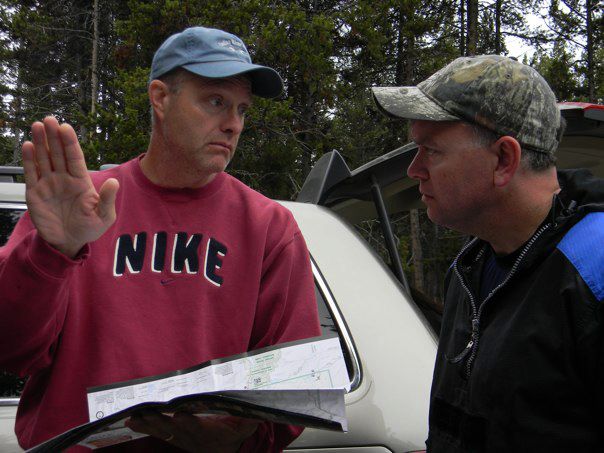
Each one of us has had these thoughts before. Every single person ever born at some point will have these questions. So number one, the world is desperate for Guidance (Psa. 119:105). Ever been lost? It is amazing how easy it is to get turned around. I’m terrible with directions, and even with maps up on my phone, I still find a way to get lost.

The world feels the same way–they’re lost. They don’t have direction in life. They float around going from one thing to the next looking for guidance. As Christians, our guide is God’s Word. It gives us a map for life. Psalm 119, the longest chapter in the Bible, has to do with guidance. Each section in this chapter covers different aspects of keeping God’s Word. In the first eight verses, the psalmist says things like, “blessed are those who walk in the Law of the Lord,” and “I shall not be put to shame, having my eyes fixed on all your commandments.” The rest of the chapter sticks with this pattern.

If you ever find yourself questioning why you follow scripture, study this chapter and you will find reason after reason. Looking at verse 105, it says this, “Your word is a lamp to my feet and a light to my path.”

Are you anxious? Turn to God’s Word. Are you hurting? Turn to God’s Word. Are you afflicted? Turn to God’s Word (119:107). Has your family disowned you? Turn to God’s Word. Have your kids left the Church? Turn to God’s Word. Did you lose your job? Turn to God’s Word. See, the world doesn’t turn to scripture when it faces these problems, and they are left without a guide, without comfort, and without something to rely on. There’s a reason God inspired men to write the Bible, and that reason is so that flawed man can have a guide through life.

563871_3978156290465_1606961254_n
As my dad and Wes Autrey demonstrated in Yellowstone Park, you also                    need to know how to use a roadmap to avoid getting lost.


“It’s all Greek to me.”

Tuesday’s Column: Third’s Words

20638721_440919206307154_5479040032968788217_n

Gary Pollard

This is a familiar phrase to most of us, usually used when responding to something so difficult to understand that it warrants saying. Advanced math brings this phrase to my mind (no one should never mix the alphabet with numbers, by the way). For most people, any topic or conversation with very difficult-to-understand components will prompt, “It’s all Greek to me.” We understand that it is used in good humor and not as a slight against Greek, but I believe that it has also discouraged the “average” Christian from studying the original language of the New Testament. 

Before I continue, allow me a disclaimer: I am not a scholar, by any means, in the use of the Attic/Ionic-based ancient language known as Koine Greek. I am an enthusiastic student of the language, but not an expert. The purpose of this article is to hopefully knock down some of the myths surrounding the language and hopefully encourage us all to pursue a knowledge of it. 

Myth #1: Greek Is Super Hard to Learn

This could not be further from the truth. Greek makes a lot more sense than English! This is not to say that it is easy (learning any language is difficult), but it is most certainly attainable. Start with the Greek alphabet and memorize it. Once you can sound out words, try memorizing as much vocabulary as you can. If you can, find a Greek New Testament with a lexicon in the back and memorize those. With that base, learning the more complex grammar rules and language structure becomes significantly easier. 

Myth #2: You Need to Be an Expert to Get the Benefits of Greek Study

Regardless of what anyone says, the New Testament really comes to life when you can read it without the third party that is translation. You get the full emotional and intellectual impact of a writer when you can read his words first-hand. You do not have to be a Greek scholar to get some of that impact! Technology today can be an incredible tool. One such tool is Logos Bible Software. It is a free app that allows anyone to look up a word in the New Testament and understand more about its meaning. Another resource is a good lexicon like BDAG. This can be had (in an earlier edition) on abebooks.com for a couple of dollars. 

Why study Greek? It will help you grow immensely in your spiritual life. It will help you understand truths more clearly. It will give you even more joy and excitement in your study. It will give you a better grasp of the English language. It will give you a firsthand look at scripture without the bias sometimes present in translation. This is not, by any means, necessary for salvation or even spiritual growth and maturity. It is, however, one of the most incredible tools any Christian will have for in-depth bible study. As an added bonus, you can chuckle a little more anytime someone says, “It’s all Greek to me.” 

authentic-greek-1649223_1280

the Bible is not boring (episode one)

Click above to hear a sample of our latest project. We’re working on a new program which will air on the Gospel Broadcasting Network (watch GBN here) in the future. The premise is just as the program title suggests: “the Bible is not boring!” It is exciting and fulfilling to drill down and study God’s Word. Each episode will follow the same format, a general topic which the four of us (Gary, Dale, Carl, and myself) will break down and discuss. Our aim is to help encourage Christians and open a door for those who may be searching for God’s truth out there. This first episode explores how to approach the Bible itself. We hope you enjoy!    –Neal


WHY DO YOU BELIEVE?

Wednesday’s Column: Third’s Words

10423661_10207901451272315_9069631728203375436_n

Gary Pollard III

I believe that God exists. I believe that He communicated with His creation by direct contact, messengers, and a series of ancient texts. I believe that He wants His human creation to be with Him after they die. I believe that He expects those who claim to be His to act within the guidelines He set in those ancient texts. I believe that there is life after death and that where we go depends on whether or not we follow this God.

Why do I believe this, though? What reason do I have to believe in something I cannot experience with my senses? I was not there thousands of years ago when the prophets and Hebrews talked to God. I was not there when God came among men and taught. I was not there when the Spirit-inspired authors of the original texts delivered their writings to the early church. The ancient texts translated into English sometimes do not effectively communicate the emotion of the words and concepts in the original language. So why do I believe these things? Why do you believe these things?

Think about this carefully.  From Genesis to Revelation the message is clear; God wants His people to exist with Him after time is destroyed. This message was communicated to an impossible variety of people, sometimes separated by hundreds of years, thousands of miles, culture, kingdom, race, and language. There are tens of thousands of manuscripts of these ancient texts in many, many different languages. There are some 25,000 New Testament manuscripts or fragments that are separated by about a thousand years, at least 8 different languages, hundreds (if not thousands) of miles of geography, and many different cultures. Yet, they are at least 95% accurate to each other. The remaining 5% do not contain a single contradiction; rather, they are spelling errors, slips of the pen, writing on the wrong line, or minor variances (“God said” vs. “He said” or “and” vs. “but”).

Of the rich libraries we have of ancient literature, none can hold even the dimmest candle to the profound accuracy and unity of the scriptures. They could not have been produced by man alone. There had to be Someone not confined by time supervising each person as they wrote. Keep in mind, these ancient cultures did not have the advantage of modern communication. They were almost totally isolated from each other and would have known little of the others’ existence, much less what they experienced or wrote from God. Our Bible has supernatural origins and its contents reveal the nature of our Creator. What I believe comes from this book because I know it is God’s message to mankind. I encourage those who have not already done so to do an in-depth study of the origin of scripture. It is one of the most faith-building studies anyone could undertake. When you know with certainty that what you are reading contains the actual thoughts and desires of God, it bolsters your faith in ways I could not begin to adequately describe.

764px-uncial_0220_rom-4.23-5.3
Uncial 220 (fragment of Romans 4:23-5:3)

Why I Attend Wednesday Night Church Services

Neal Pollard

  • I need the fellowship of Christian family in the middle of a week spent exposed to the world.
  • I draw strength from the teaching of God’s Word and the comments others make on the subject being studied.
  • Others need my encouragement and influence, and my presence can be so faith-building to them.
  • Bible class teachers have taken precious time to prepare and deliver their material.
  • I believe God is pleased with my making such a commitment and a sacrifice, though it’s so little compared to all that He has done for me.
  • It builds my interest in spiritual things.
  • I believe it helps contribute to the overall strength and influence of the local church.
  • It is an affirmation of the eldership’s wisdom to have such classes in the first place, where they seek to help give me spiritual food.
  • I live by the philosophy that I make time for what is most important and valuable.
  • My family is guided by my leadership and priorities.
  • I live in a nation that allows me to freely assemble to build and express my faith, and I do not want to take that for granted.
  • I have so many great memories of Wednesdays, and I continue to make them.
  • Though I have often arrived tired and frazzled, I have almost always left rejuvenated and rejoicing.
  • I want to.

What would you add?

IMG_6008

TRY THE CONTEXT!

Neal Pollard

“Big dummy!” That can be a derogatory statement or the description of a large mannequin. Context makes all the difference! So it is with matters of infinitely greater significance. So much religious error exists because of a failure to consider the context of biblical passages.

Our friends in religion who believe that Jesus is a created being rather than one of the three everlasting personalities of the Godhead defend their view with passages such as Colossians 1:15, which says, “He is the firstborn of all creation.” A further study of the use of the word “firstborn” shows that it is used literally (Heb. 11:28) and figuratively (Heb. 12:23) in the New Testament. Context determines the difference. What is it in Colossians 1:15? The context says that Jesus made everything that was made (16-17). Did He make Himself? No, He cannot both be literally, physically born and be the One who created “all things.” Logically, Paul is speaking in a figurative sense, that in His human nature Jesus is “at the head of His class.” He is first in order, preeminent among men (18). As a human, He is above us and first among all of us.

Others of our friends teach salvation by faith only. They appeal to a couple of passages to assert this idea. One passage is Acts 16:31, where the Philippian jailer is told, “Believe in the Lord Jesus, and you will be saved, you and your household.” This is given as proof positive that salvation comes at the point of faith. Another text cited, the “golden text of the Bible,” says, “For God so loved the world, that He gave His only begotten Son, that whosoever believes in Him should not perish, but have eternal life” (John 3:16). This statement is made as part of a conversation Jesus is having with Nicodemus.

In the case of the jailer, who saw the miraculous power of God in opening the jail doors and who asked what he must do to be saved, he is told to believe in Jesus. It is noteworthy to ask, “How much would the average Philippian jailer know about Jesus?” Thus, Luke adds the important detail that before we read of the man’s response, “They spoke the word of the Lord to him” (31). His response is found in verse 32, where he washes Paul and Silas’ wounds and is immediately baptized. This accords with the broader context of Acts, where believers are told to repent and be baptized for the forgiveness of their sins (2:38; 22:16).

In the case of Nicodemus’ instruction, Jesus’ makes the statement of John 3:16 in a certain context, too, a context that included talk of water (3:5) and an illustration from the book of Numbers. That illustration is very noteworthy for showing that more than belief is necessary for salvation. It concerns the serpents God sent upon the murmuring and complaining Israelites. Numbers 21:9 says, “So Moses made a bronze serpent, and put it on a pole; and so it was, if a serpent had bitten anyone, when he looked at the bronze serpent, he lived.” How did salvation come, simply by believing in God’s plan or by believing AND looking? Likewise, the broader context of scripture shows faith and works joined together. Israel did not earn the saving of their lives by looking any more than we earn salvation from sin by believing and being baptized. Yet, God makes it as essential to obey today as He did during the wilderness wandering. Context bears this out.

Let us never be “scripture isolationists,” those who peel a verse away from its context or who rest our confidence in doctrines that have been thus constructed. God saw to it that we would have His word and will preserved. How wise of us to make sure we properly study it in context!

8695269997_dfc20e7b8a_z

The Courage To Try

Neal Pollard

About nine months ago, a man walked into our building a day after being immersed into Christ. He had been searching diligently for the truth, a man whose hunger for the Bible caused him to study his Bible for hours every day (including on audio at his job as a metal fabricator). He continues those habits today.

A man whose life is as interesting as his name–Roberto Yrey–has been a blessing to us at Bear Valley.  One of the reasons I’ve grown to love him so much was on full display last night. Each Wednesday, a different man delivers a 90-second devotional talk. Last night, Roberto spoke. Don’t misunderstand. He writes devotions, short sermons, and articles all the time in order to articulate his understanding of a Bible chapter or topic he has been studying. He changed his mind multiple times before settling on the one he delivered last night. If you were there, you know that Roberto was nervous. He has told several of us how difficult public speaking is for him. His only previous public speaking opportunity was a Scripture reading during a devotional back during the holidays.

What he chose to speak about last night so aptly reveals a mindset that makes him so endearing. His message was that you don’t have to know everything to study with someone. Don’t be afraid to tell someone, “I don’t know.” It’s OK if you don’t know or understand everything. He encouraged us, “Say, I don’t know but let me ask someone who might know. Or let’s fellowship and find the answer.”  But his message was to not let the fear of not knowing keep you from talking to someone about the Bible.

I admire the fact that Roberto had the courage, as a babe in Christ, to speak to a room full of people some of whom have been preachers and teachers for decades, teachers in our Bible school for many years, and are mature, seasoned Christians. But I admire him even more for practicing what he was preaching. In our midst last night were two visitors–Estevan (there for the first time) and Sean (who’s become a regular attender with Roberto for several months). He had the courage to invite them. Today, we baptized Sean into Christ for the forgiveness of his sins. A young Christian has already brought a friend to Jesus. All it took was the courage to try, to do what anyone can do who is moved by simple, trusting faith to just do what God has told us to do. I don’t know about you, but Roberto’s example helps me have the courage to try harder!


6EDBBE5E-E7F1-45A2-A97C-7BDFAFAE2790
(L) Sean being baptized today by Allen Javellana, who studied with him. (R) Roberto preaching at Bear Valley last night.

Misusing The Bible

Neal Pollard

Ashley Despain now holds a dubious, ignominious distinction. Visiting an inmate in a Nevada, Missouri, jail, Ashley tried to sneak him marijuana and methamphetamines by sticking them into the binding of the Bible. Officials say they have seen many ways used to smuggle drugs to prisoners, but it’s the first time the Bible was the means chosen (via http://fox2now.com/2018/03/29/).

File that under “truth is stranger than fiction.” As incredible (and audacious) as that sounds, Ashley was not the first to misuse the Bible. How many have tried to use the Bible as a means of enriching themselves? Peter speaks of false teachers who exploit listeners with false words because of the teachers’ greed (“make merchandise of,” KJV, 2 Pet. 2:3). How many have tried to use the Bible as a means of defending personal sin or a sinful lifestyle? How many have tried to use the Bible as a billy club to pound their own hobbies, convictions, and opinions over the heads of others? How many have tried to use the Bible to peddle some false doctrine? Peter experienced that, too (2 Pet. 3:16). How many have tried to use the Bible to manipulate others into doing things they themselves aren’t doing? Jesus warned against that very thing (Mat. 23:4). How many have tried to use the Bible to tempt others into disobeying God? That’s literally a Satanic trick (cf. Mat. 4:6).

James warns potential teachers to be careful, examining themselves in light of the judgment (3:1). This is not meant to scare potential Bible teachers away, but instead should help us consider carefully how we use the Bible. Paul mentions some that misused the Bible, even if what they said was true. From prison, he writes, “ Some, to be sure, are preaching Christ even from envy and strife, but some also from good will; the latter do it out of love, knowing that I am appointed for the defense of the gospel; the former proclaim Christ out of selfish ambition rather than from pure motives, thinking to cause me distress in my imprisonment” (Phil. 1:15-17).

Like Paul, we have a stewardship (1 Cor. 9:17; Eph. 3:1-2). Let’s be faithful stewards! None of us will probably try to smuggle drugs with a Bible. But, in every sense, let’s be sure to be “accurately handling” it (2 Tim. 2:15)!

ashley-despain-mug

The Benefits Of Finding Ourselves In Scripture

Neal Pollard

Given his job, the Ethiopian of Acts 8 was one of that country’s most important people. Yet, he was more than important. He was very religious, apparently a proselyte (convert) to the Jewish faith. He didn’t restrict his religion to the assemblies. He read his Bible even when he was going about his secular tasks (Acts 8:28). Though he could not enter the assembly of the Lord (Deut. 23:1), he made the long and grueling trip from northern Africa to Palestine and was returning home. Many of us are familiar with the Old Testament passage he was reading when Philip joined him in his chariot. Reading Acts 8:32-33, we recognize the place as Isaiah 53:7-8. The Eunuch was trying to find out about who Isaiah wrote about, “of himself or of some other man” (Acts 8:34). Philip preached Jesus to him and he became a Christian (Acts 8:35-39).

Those are essentially the facts. Yet, I wonder how coincidental it was that the Eunuch was reading from that part of Old Testament scripture. This African official likely had a scroll containing the entire prophecy of Isaiah, which was not divided into the individual chapters like they are today. It would seem that the context in which Isaiah 53 occurs would be of particular interest to this man. Flip forward a few chapters to Isaiah 56. Isaiah is telling foreigners and eunuchs not to look down on themselves (3-5).

This official of Candace was very likely not some hopeless non-Jew looking for a crumb from the Jews’ table. He had the great hope and promise of Scripture. Perhaps this portion of Isaiah was of particular motivation and inspiration to him. For Philip to explain that the time of that prophecy had now been fulfilled, that access to this promise was now available, certainly led the Eunuch to urgently respond and enthusiastically react. Jesus was the One referenced in Isaiah 53, but he (the Eunuch) was the one referenced in Isaiah 56. No, not just him, but all like him–one from the “all nations” of Isaiah 56:7 who could reap the benefits brought by the “Sin-bearing Servant” of Isaiah 53 and the one who would “sprinkle many nations” (52:15).

I hope that you read your Bible with the same hunger and expectation. Perhaps there are portions that bring you greater hope and expectation, that speak with greater poignancy to your life’s circumstances. The Bible is a book filled with wonderful, relevant promises. Trust them. Let them bear you along through the rough spots of life. God designed the Bible to be a book of hope and inspiration, but it cannot do us any good unless and until we consult it! Find yourself in the Bible!

8ca1271b91f7acccd098a3db98a1689e-bible

Why We Need The Word

Neal Pollard

Many know that Psalm 119 is the greatest, inspired tribute to the Word of God known to man. 176 verses, eight verses under the heading of every Hebrew letter, grace these pages of our Bibles. All but a few verses mention some synonym for God’s Word. So many individual studies can be made of themes and thrusts in Psalm 119, but by reading it one discovers David giving many benefits or needs for studying the Bible. Consider what is no doubt an inexhaustible study.

  • To keep from sinning against God (11)
  • I am a stranger in the earth (19)
  • The influential can be against us at times (23)
  • Our soul often melts from heaviness (28)
  • To keep our eyes from worthless things (37)
  • To have an answer for him who reproaches us (42)
  • It causes hope (49)
  • For comfort in affliction (50, 76)
  • It causes righteous indignation (53)
  • It leads us to seek God’s favor with our whole heart (58)
  • It makes us choose better companions (63)
  • It brings good judgment and knowledge (66)
  • It prevents apostasy (67)
  • It makes us more attractive to the God-fearing (74)
  • That I may live (77, 93, etc.)
  • For revival (88)
  • For greater understanding (99)
  • To be upheld and safe (117)
  • To have a proper sense of self (125)
  • For a proper sense of values (128)
  • For proper emotional investment (136)
  • For righteous zeal (139)
  • For a proper sense of dependency (147)
  • It brings confidence (152)
  • It gives us the proper sentiment toward the world (158)
  • To develop a proper “praise life” (164)

psalm119

We Can Only Share What We Know 

Neal Pollard

I found a treasure in a chest of drawers in my parents’ house this week. It was a Mother’s Day present I gave my mom when I was 8 years old. Actually, it was a project our third-grade teacher helped us put together. It was a recipe book concocted by us students without any adult assistance. The spelling and the recipes confirm this fact. My two recipes were “Peanut Butter ‘Crisbys’” and “Lemon Pie.” The first recipe was brief, but profound:

Put 3 C. rice crisbys in a bowl. Then
put 2 tablespoons peanut butter in.
4 C. Sugar.
Put in oven at 200 for 30 min.

The second recipe was more complex:

Put 4 eggs in the pan
Put 3 cups of lemon mix in
1 1/2 c. sugar
2 C. “flower”
Put in pan and cook for 1 hour at 200 degrees.

I assure you that nearly every recipe in this small book showed about as much culinary acuity. Why? We had been in the kitchen, but we had no concept about ratios, temperature, or baking times (or even if we used stovetop or oven). The result were “recipes” that would have been problematic to follow or eat.

What a challenge to me as I try to grow in grace and knowledge (2 Pet. 3:18)! I want to move beyond a childlike knowledge of Scripture and move on toward maturity (Heb. 5:11-6:1)! May I never be so lacking in knowledge that I cannot tell someone what to do to be saved, help someone know Christ, or speak about any matter pertaining to life and godliness (cf. 2 Pet. 1:3). May I have the humility to never “think more highly of” myself than I ought to think (Rom. 12:3). Otherwise, I may look naive or ignorant when asserting my expertise in a matter where I need considerable growth.  I must bring the same humility to such complex subjects as marriage and parenting, as well as Christian living. That is not to say that I should not grow to the point where I cannot be helpful, but instead temper my advice and assertion with deference and cover it with lovingkindness and patience.  On multiple occasions, the younger me made this mistake. In fact, I am still prone to do so. It reminds me to grow what I know and be careful not to share what goes beyond that.

19105931_10154722729605922_8392782078943308885_n

Surrounded By Hungry And Thirsty People

Neal Pollard

I was a child when I saw news coverage of the famine in Ethiopia, the mass starvation, the distended stomachs, and the deaths from malnourishment. I had never seen anything like this, and I was deeply saddened by the images on the screen. If you had asked me if I ever expected to see or know about anything more tragic than that, I would surely have said no. Now, decades later, I routinely see something much more tragic. I can observe it whenever I wish, though it’s not something that ever gets easier. Noah Icenhour, the fine, new associate minister at the Mabelvale church of Christ near Little Rock, Arkansas, shared a concept with me that he read from N.T. Wright about our culture. Describing why so many are swallowing foolish, harmful ideas, whether false religion, fleshly indulgence, materialism and greed, evolution, atheism, narcissism, or the like, he says that so many are consuming these things because they are so hungry and thirsty that to satisfy and slake these inner yearnings they are willing to consume even sources that are polluted.

We are surrounded by spiritually hungry and thirsty people. They long for purpose, meaning, and value, but so often they seek it subjectively. Or they go to an improper source to satisfy these. Consequently, they squander their precious lives pursuing the wrong things, a path that Jesus describes as one in which “the gate is wide and the way is broad that leads to destruction” (Mat. 7:13). Spoken or unspoken, they are crying out for proper direction. They want their lives to matter. While the majority (Mat. 7:14) will refuse the biblical answer, I am convinced that our society is full of people who are honestly searching. They would be open to hearing the Bible’s answers to these preeminently important questions of origination, motivation, and destination.

Today, wherever you find yourself and whatever else you are doing, will you have the compassion and concern enough to look for and seek to help the kind of person I’m talking about? Let’s pray for courage and wisdom, and walk through the open doors we find. In so doing, we will be aiding hungry and thirsty souls who will ultimately go somewhere to satiate their cravings. With us in their lives, they can find true bread (Jn. 6:35) and living water (Jn. 4:14). Such will lift them now and save them eternally! May our hearts be touched enough by their dire condition that we cannot help but help.

4999517191_5c02fcd58d_b

STUBBORN TRUTHS

Neal Pollard

—And I say to you, whoever divorces his wife, except for immorality, and marries another woman commits adultery (Mat. 19:9).
—Repent, and each of you be baptized in the name of Jesus Christ for the forgiveness of your sins; and you will receive the gift of the Holy Spirit (Acts 2:38).
—For this reason God gave them over to degrading passions; for their women exchanged the natural function for that which is unnatural, and in the same way also the men abandoned the natural function of the woman and burned in their desire toward one another, men with men committing indecent acts and receiving in their own persons the due penalty of their error (Rom. 1:26-27).
—And He put all things in subjection under His feet, and gave Him as head over all things to the church, which is His body, the fullness of Him who fills all in all…There is one body (Eph.1:22-23; 4:4).
—And do not get drunk with wine, for that is dissipation, but be filled with the Spirit, speaking to one another in psalms and hymns and spiritual songs, singing and making melody with your heart to the Lord (Eph. 5:18-19).
—A woman is not allowed to teach or exercise authority over a man, but to remain quiet (1 Tim. 2:11-14).

Passages like these are hotly debated, denied, and derided by those who either cast them against other Scripture or subjugate them to current cultural expectations. Those who desire to accept verses like those above as simple truth are often thought to be ignorant or, worse, dangerous.

The same book reveals the person and sacrifice of Jesus. It reveals the nature and attributes of God. It tells us where we came from and where we are going. It speaks of grace and faith. We accept these truths at face value. But when we come to passages that go against the grain of popular opinion (in or out of religion), cultural mores, or religious orthodoxy, we somehow attempt to say they do not say what they say they say. Jehoiakim’s scribe’s knife and his brazier fire did not eliminate truth (Jer. 36:23). It actually intensified the message against him (36:29ff). The number of academic degrees, religious followers, or oratorical skill will not change the truth of Scripture. It is what it is. Our role is to humbly submit to it or forever beat ourselves against it. May we love and revere God enough to always do the former.

pic_related_050115_sm_burning-books

Examining Our Positions

Neal Pollard

Hans Kaltenborn was an ardent admirer and defender of Adolf Hitler and the “new Germany” ushered in with the Nazi regime. Despite diplomatic warnings of assaults upon Americans, Kaltenborn, an influential American commentator for CBS and NBC and of German descent, dismissed it as flawed and skewed information gathering by biased personnel. About to return home to the states to speak against such reports and warnings, his family went to downtown Berlin to do some last minute shopping. While out, the family found themselves in the middle of one of the endless S.A. parades. When his family refused to offer the Nazi salute, his son was physically assaulted and injured. Finally, someone intervened and the incident ended with no further harm. However, the transformed Kaltenborn was apoplectic. He made a report with the American Consulate in Berlin, but no charges were filed. As Eric Larsen writes, “the senior Kaltenborn ‘could remember neither the name nor the number of the Party identification card of the culprit, and as no other clues which might be useful in the investigation could be found’” (In The Garden of Beasts, 164). Despite this, Kaltenborn was now of a different mind!

There are many ways in which life can do the same thing to us.  We may be dead certain about marriage when we are single, about childrearing “pre-kids,” about our career when still in the classroom, about home ownership when in our parents’ home, dorm room, or apartment, and so on. But, life so often has a way of rudely awakening us from some well-meaning beliefs.

Sometimes, this can happen to us in the all-important area of religion. As we stay in our Bibles and gain wisdom and experience life, we may reaffirm but also clarify and even change certain positions we have long held. This can certainly be a dangerous affair, and some have allowed life to change their positions from what is true to what is false (what Jesus says about marriage, divorce, and remarriage because of a family situation, unscriptural changes in worship because of children attending church who have adopted such, etc.). But few of us will go all the way through life without reconsidering especially some conscience or judgment matters.

There are also a great many of our friends who have been taught religious error on God’s plan of salvation, the singular, undenominational nature of the church, what God wants in worship, women’s role in church and worship leadership, and the list goes on. This can be such a difficult challenge for anyone, to revisit long-held and deeply-believed positions in light of what the Bible says.

For all of us, there must be an abiding humility that approaches scripture without the blinders of prejudices, preconceived notions, and influences like family, friends, church, and so on. That is uncomfortable, but essential—for all of us!  We may come to find that something we’ve clung to so tenaciously must be rejected or that something we rejected must be embraced. If we ever get to that place, may we have the kind of heart that puts the will of God above our own will. Without such, we cannot hope to make heaven our home.

7256698_134185460141
Hans Kaltenborn

THE VALUE OF REMEMBERING

Neal Pollard

I am not sure what the connection is, but some people tie a string around their finger to remember an important date or appointment.  Some people just write on their hand.  Others preserve it electronically.

What do we do to keep from forgetting what is important to us spiritually?  Peter writes in 2 Peter 1:12-13 that he was stirring them up by reminding them.  Studying God’s Word awakens our memory to things we may have forgotten, things we have not looked deeply into in the past, or brings something to our attention in a way it has not previously.  It is noteworthy that he was reminding them of something they already knew.  False teachers were trying to distract and deceive them from what they knew.

Bible study is good for us to keep from falling into the traps of false teaching. Many of us come to the Lord from religious groups that teach something different from the Bible about salvation, worship, the end of time, leadership, or the like.  Keep your Bible and your heart open to what you study, and you will keep reminding yourself of the joy and blessings of New Testament Christianity.

Later in the letter, Peter writes, “Beloved, I now write to you this second epistle (in both of which I stir up your pure minds by way of reminder), that you may be mindful of the words which were spoken before by the holy prophets, and of the commandments of us, the apostles of the Lord and Savior” (3:1-2).  That covers everything–the Old Testament and the New Testament.  It is also a reminder that if you live another 50 or 75 years, you will always need to study and remind yourself of what the Bible says on every subject.

If you have ever lost or forgotten something important that cost you in some way, you learned the value of remembering.  If you have ever been to a memorial or monument, you have benefited from that reflection.  If you want to grow in your faith and knowledge, be stirred up by being reminded of the important, spiritual things revealed in Scripture.

5065345783_b2c2cab1d3_b

FOURTEEN SUGGESTIONS FOR BUILDING YOUR DEVOTIONAL LIFE

Neal Pollard

Maybe you have resolved repeatedly to become a better, more faithful Bible student, person of prayer, or simply one who truly desires to build a closer relationship with God. While a lot of that will be personal and peculiar to you as an individual, you may lack direction about how to get started or give yourself the best chance to succeed in that goal. Perhaps these few suggestions can prove helpful to strengthening your daily connection with your Creator.

  • Adjust your wake up time. 15 to 30 minutes head start will prove the most vital moments of your day.
  • Find a quiet, solitary place. Distraction can equal detraction.
  • Study and pray with pen and paper or computer nearby. This will aid specificity and memory.
  • Do not rush. Better a paragraph or chapter pored over than ten chapters glossed over.
  • Take advantage of the commute. Pray through it or play the Bible on audio, if you can.
  • Pick a book or topic of interest and drill down.  Pick it for its relevance to your weakness, need, ignorance, or curiosity. Drink it in deliberately and carefully.
  • Be specific and transparent in your prayers. In the solitude of prayer, drop all pretense, denial, and pride. He knows it all anyway.
  • Always seek application in the Bible text you are reading. This is not a history lesson or academic exercise. This is spiritual food, armor, and survival.
  • Create a list of ways you can enact the principles you read from Scripture. See yourself in the text of Scripture, and challenge yourself to think, say, do, and be what God desires of you.
  • Ask questions of the text. Don’t pass over what you don’t understand. Don’t skim the surface. Mine for meaning.
  • Build a prayer list. Challenge yourself and add people that many others may overlook in your local circle—widows, little children, new Christians, struggling folks, those facing an anniversary of loss, leadership, missionaries, non-Christians where you work and play, the poor, etc. This ever-expanding prayer list will bless lives in ways you won’t know here on earth.
  • Mean what you say. When you tell someone you’ll pray for them, have integrity. Make an honest effort (write it down, put it in your phone) and honor your word. Ask the people you encounter how you might pray for them, then do it.
  • Review. Revisit prayer lists or notes from Bible study periodically. Make it live on through reflection.
  • Pray for what to study and study prayer. You will find that these two spiritual strength-building exercises are interconnected. This is about relationship with God. Spare no exertion.

Consider these “jump starters.” You will come up with more and far better ways to help yourself to a closer walk with God. These days, we’re being pulled in every direction and most lead away from Him. You will have to be deliberate to swim against the tide. May God bless you as you let Him bless you through a vibrant devotional life!

bible-896220_960_720

Transgender Voyeurism?

Neal Pollard

It’s a clash of political correctness agendas, though the latter one is extremely legitimate.  On one side, we have the recent, insane push for recognizing transgenderism—even that which is simply claimed and asserted at the apparent whim of the claimant.  On the other side is an important, needed aspect of feminism—protecting women from the sexual aggression of men. Both are fiercely championed by those of a liberal mindset, and the two came face to face in the “gender neutral” bathrooms of Whitney Hall at the University of Toronto.  Ironically, two incidents of voyeurism, where male students were “caught holding their cellphones over female students’ shower stalls and filming them as they showered” (dailywire.com), occurred in September, 2015, just as the push was heating up for men and women to choose the public bathroom of the gender they felt themselves to be. Our sitting president even defended a federal transgender directive for public school bathrooms, allowing “transgender students to use the bathroom that matches their gender identity, saying that society must protect the dignity and safety of vulnerable children” (nytimes.com, Julie Hirschfeld Davis, 5/16/16). The outlandishness of such baseless thinking had already been demonstrated well before this “guidance” issued by the Education and Justice Departments was made public this Spring.

There is a biblical and biological answer to what has amazingly become an enigma and conundrum for everyone from politicians to corporations. Jesus said, “But from the beginning of creation, God made them male and female” (Mark 10:6). There are external ways to both test and validate these, and are as accessible as a basic medical examination. I trust a Creator whose ability is demonstrated everywhere from the order and continuous operation of the universe to the magnificence of the earth to the intricacies of the body’s circulatory and respiratory systems to somatic cells to our DNA.

In the world’s rabid desire to reject His authority, there’s no wonder that people concoct such far-fetched, senseless ideas as we are seeing put forward at the present time. Paul traces the genesis of such ludicrous ideas, saying, “And just as they did not see fit to acknowledge God any longer, God gave them over to a depraved mind, to do those things which are not proper…” (Rom. 1:28). Until that mindset changes, we are likely to see more issues like the push to accept transgenderism and welcome it into our public private places (like bathrooms in stores and dorms) even if they produce the kind of actions reported in Whitney Hall.  May more people simply and humbly follow the perfect guidance of God’s Word.

15799031740_a8ddefcdfa_o-2
On December 10, 2014, The Kaiser Permanente Center for Total Health and National Center for Transgender Equality are hosting a Community Clinician Roundtable for providers who care for transgender patients in the Washington, DC, MD, VA community. The roundtable will include physicians, nurses, therapists, attorneys, and health care staff who support this population. The Center for Total Health will convert two existing multi-stall restrooms to be Gender Neutral during the roundtable. The Center has previously made this designation for LGBTQ supportive events, and is collaborating with the Kaiser Permanente Garfield Innovation Center to pilot multi-stall gender neutral restrooms in health care facility construction moving forward

I LOVE TO LEARN HIS WORD (Poem)

Neal Pollard

Each exploration is an expedition
Into new, uncharted depths
As deeper I go, with each new mission
I steady my faltering steps.

So much to learn and understand
I will never reach the summit
But the journey is sweet, His precepts grand
That guard me from a spiritual plummet.

Desire to know enlarges each time
I dig for unsearchable treasure
Better than gold and far more sublime
Than earth can weigh, feel, or measure.

Lord, help me to grow as deeper I go
Into Your will and mind
And help me to practice the truth that I know
So the fairer land some day I’ll find.

3668060306_88cc3d93fc_b

Why Christ Became Flesh

Neal Pollard

The writer of Hebrews exhorts that Christ should be faithfully served, not abandoned, because He is a superior messenger to all other heavenly messengers (chapter one). Then, he gives another reason for holding fast to Him in chapter two. His readers were apparently struggling in their faith and gradually slipping back into the religion they had left. They lacked incentive, but the epistle gives reason after reason for why it should be restored.

In chapter two, he refers to Jesus’ humanity. Through it, He perfectly fills the role of High Priest in a way no Levitical priest could do under the old law. He enumerates the reasons why Jesus became flesh, and each reason was for each of us as individuals.

  • He became flesh to taste death for every man (9). He exercised God’s grace on our behalf. He was willing to make God’s understanding of our frailties empirical (experienced by human senses) by tasting death in a human body.
  • He became flesh to render the devil powerless (14). Before the cross, where Jesus gave up His physical body in death, the devil had the power over man. All mankind sinned and there were various sin offerings provided by God in the different ages. Yet, they could not “take away” sin (10:4,11). But, when Jesus died and was raised from the dead, He rendered the devil powerless over those who faithfully obey Christ and remain faithful unto death.
  • He became flesh to deliver the enslaved (15). Knowing no hope of deliverance from the horrible state of sinfulness makes for a miserable experience (Rom. 7:25). Christ came to deliver us from the awful slave master of sin (John 8:34).
  • He became flesh to become a merciful and faithful High Priest (17).  12 times in Hebrews, Jesus is called the Christian’s High Priest–the High Priest of our confession (3:1), in Heaven (4:14), sympathetic and sinless (4:15), appointed by the Father (5:5), without predecessor or successor (5:10), who went before us (6:20), holy, innocent, undefiled, separated from sinners, and exalted above the heavens (7:26), seated at the Father’s right hand (8:1), an offering priest (8:3), and offering His own blood (9:11). His service in administering His blood on our behalf is merciful (kind, forgiving, protecting) and faithful (trustworthy and sure).
  • He became flesh to come to the aid of the tempted (18). He well remembers what it is like to suffer in a human body. Not just that greatest moment of suffering, up on the tree, but the daily discomforts (Mat. 8:20), abandonment (John 6:66), and betrayal (John 18:27; Mark 14:45). Therefore, He can help me right now with my problem. Nothing is too big, too mysterious, or too difficult for Him.

Five reasons from Hebrews two are given for why Jesus became flesh, but all of them are for me (and for you)! What a thrilling though. Let’s serve this wonderful Savior!