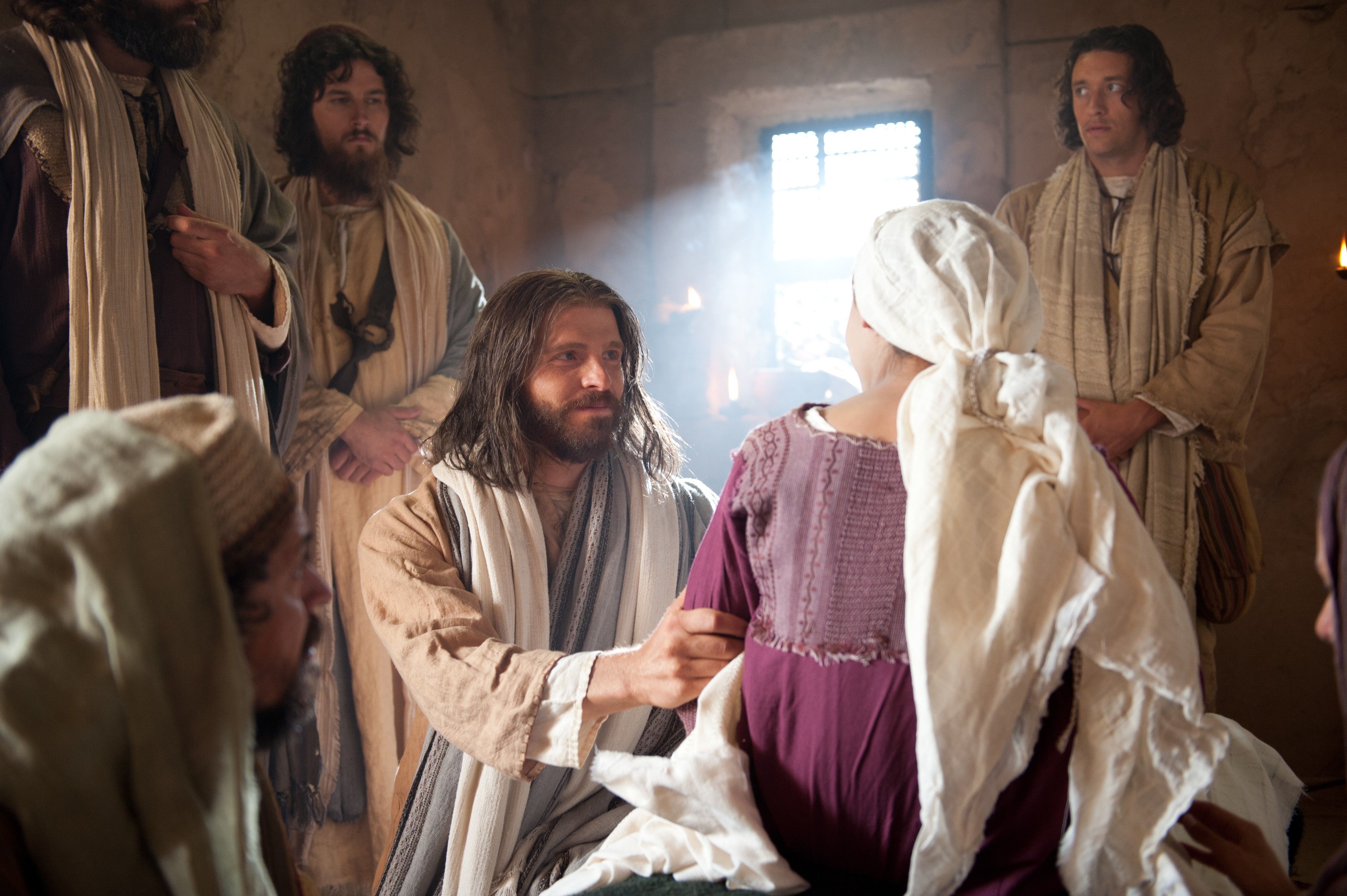
The Struggles Of The Righteous

(Pinch Hitting For Brent, Who Is Sick)

(This is from today’s Lehman Learner)

Neal Pollard

Perhaps Jeremiah seemed to be mean, harsh, even unloving, to his brethren. His message is certainly what we could categorize as negative, but we remind ourselves that its source was God. What may get lost in Jeremiah’s challenging message is how it affected him to share it. Chapter nine is full of the struggles he endured in being God’s spokesman with a message of divine judgment.

Jeremiah endured mourning (1). While Judah would be hypercritical and threatening toward Jeremiah for his message, they had him all wrong. He did not relish his unpleasant message. He would have preferred to have kept his mouth closed (20:9). They had no idea of how his mission was wearing on him. He writes, “Oh that my head were waters And my eyes a fountain of tears, That I might weep day and night For the slain of the daughter of my people!” He knew that they were hurting themselves by their lifestyle, and he wanted them to escape judgment. It can be heartbreaking work to share God’s word on any number of unpleasant, unpopular subjects. No rational preacher, elder, or teacher is excited to share such a message, but it must be done (2 Tim. 4:2).  Jeremiah is rightly called the “weeping prophet” (8:18; 13:17; Lam. 2:18). Revealing this was an emotional struggle.

Jeremiah endured isolation  (2). The pressures of sharing a message nobody wanted to hear created inevitable isolation. He felt alone and like nobody understood or cared. He longs to escape such disappointing, unrighteous behavior. He wanted to run like Jonah. He felt alone like Elijah. It can go with the business of declaring God’s message. There are times when you may feel like you are standing all alone, but you never will if you are sharing God’s word God’s way. He will never leave you (Mat. 28:20; Heb. 13:6). 

Jeremiah endured disillusionment (3-6). He expected more and better from his brethren. They knew better, but they were guilty of treachery and adultery (2), lies and deceit (3,5-6), ignorance (3), violence (4), slander (5), and general iniquity (5). Have you ever overheard someone you looked up to use foul language or stumbled upon someone doing something sinful? It’s like a punch in the gut. But imagine a congregation full of people doing what God through Jeremiah reports. It had to have been discouraging and caused feelings of hopelessness. 

Jeremiah endured a sinking realization (7-11). What was the cost of this? Sin is not without consequences (Gal. 6:7-8; Hos. 8:7; Prov. 6:26). At the heart of God’s message was this rhetorical question: “Shall I not punish them for these things?” (9). Jeremiah knew what was coming. There would be weeping, wailing, and dirges (funeral songs)(10).  Judah would be ruined and desolate (11). Jeremiah knew this ahead of time. Whatever normalcy he witnessed each morning and evening, he knew that would ultimately change. The fact of judgment looms over the horizon of time. It will be a day of rejoicing for the righteous and prepared, but not for the rest of humanity. The people of Judah were not ready for this judgment, and Jeremiah knew that. 

Jeremiah endured being overwhelmed (12-16). The message gets specific about the nature of what was coming. It was going to be more devastating than any of them had experienced. Because of their stubborn rebellion, they would be scattered and annihilated. Hope belongs to the penitent, but there’s just no good news for those who are determined to oppose God’s way.  

Jeremiah endured unpleasant duty (17-22). God tells Jeremiah to call for mourning, wailing, and tears (17-19). He is help them focus on their shame (19).  The heart of the message was death (20-22). Don’t you think Jeremiah would have loved to have spoken of grace, mercy, lovingkindness, and blessings? But the circumstances did not call for that. Jeremiah had to be faithful to God’s message. Like Micaiah, every faithful spokesman for God should say, “As the Lord lives, what the Lord says to me, that I shall speak” (1 Ki. 22:14). 

There is a ray of hope starting in 9:23. Amid the folly of idolatry, there will be a reminder of the wonderful, perfect character of God in chapter ten. But even here, there is encouragement for God’s faithful servant. It was a message for the worldly wise, for the mighty man, and for the wealthy (23) not to trust in those things, but to trust in Him. Everyone should boast of knowing and understanding God, that He is “the Lord who exercises lovingkindness, justice and righteousness on earth; for I delight in these things” (24). Punishment was for the spiritually uncircumcised (25-26). It was not for the faithful, like His man Jeremiah. Whatever we have to struggle through for the Savior, may we know that God will be with us through thick and thin. He has not left us alone. He will always be with us, help us, and strengthen us! Declaring His word is right, and He will not let us lose for being unswervingly loyal to it and Him! 

The Joy Of A Christian

Thursday’s Column: Captain’s Blog

Carl Pollard

Joy is a decision based on knowledge. It is a choice we can make. 

You can have joy in every moment of life if you choose to do so. We won’t always feel happy, but joy is a trait that goes deeper than emotions. It is a feeling of hope because of salvation. As a saved child of God, you can have joy in the knowledge of Christ, the church, and an eternity with God. 

We all know people that are joyful 24/7. No matter what happens they seem to always look on the bright side. On the other hand, I’m sure you can think of someone that’s always down. They can always find something to complain about. They could have a perfect life and still be looking for something negative to dwell on. Two people can go through the same situation and have two completely different reactions. 

As Christians we should be people of joy. Why? Because we have every reason to be joyful! But what about having joy in tribulation? How can we be joyful when our world comes crashing down around us? We need to remember that joy isn’t the same as happiness. Joy comes from an understanding of the bigger picture. Happiness is short term and based on current events. 

The faithful Christian can go through heartache and feel sadness, but still have joy in the bigger picture. We can face trials, no matter what they are, and still have joy because we know this world is not our home. James 1:2 says “count it all joy when you encounter various trials, knowing that the testing of your faith produces endurance.”

We can have joy in knowing that if we face trials with endurance, we will ultimately receive the greatest reward we could ever get. This kind of joy isn’t something that comes naturally. It takes time to develop, and trials to perfect it. 

Not every day will be a happy day, but in Christ every day can be joyful. 

2 Peter (Part Five/Conclusion)

Wednesday’s Column: Third’s Words

Gary Pollard

I’ll be repeating the book of II Peter in present-day terminology. It’s not a true translation of the book, as I am not qualified to do so. It will be based on an exegetical study of the book and will lean heavily on the SBL and UBS Greek New Testaments, as well as comparisons with other translations (ESV, NASB, NIV, ERV, NLT). My goal is to reflect the text accurately, and to highlight the intent of the author using concepts and vocabulary in common use today. 

This is not an essentially literal translation, and should be read as something of a commentary. 

The Next Earth

With that in mind, the last day is going to sneak up on us. The sky will be ripped apart, which is going to be very loud. All of the basic elements will be unraveled because of how hot it’s going to be. This planet and everything we do on it will simply disappear. Since you know the last day’s going to sneak up on you and the earth’s going to be destroyed again, how should you be living? You should be godly and avoid gratifying every impulse. You should be ready to face the end. In fact, you should be hurrying God along so we can get this over with! 

Jesus promised us a brand new sky and a brand new earth. Only good people will live on the new earth. Since we’re all looking forward to this, make sure you’re in a right relationship with God. Make sure you view God’s delay as being his compassion. Remember, he doesn’t want anyone to die lost. Paul said some of these same things in his letters, too, because God had him say it. Some of his stuff is deep and complicated, and some people have taken advantage of this. They’re ignorant and unstable and they twist the rest of scripture, too. They’re digging their own grave. 

Conclusion

Since you already know this stuff, make sure you don’t fall for their lies. Don’t let godless people drag you away from your faith! Instead, grow in your relationship with our master and rescuer Jesus Christ. Remember that he cleared your record, let that encourage you! He is incredible, powerful, and deserves all the credit until time meets eternity.  

Six Truths About Opportunities From Galatians 6:10

Monday’s Column: Neal At The Cross

Neal Pollard

In the next several weeks at Lehman Avenue church of Christ, there are several big events occurring. In two weeks, we’re having our Vacation Bible School (which we’ve even advertised on TV). The following Sunday is our “Friends And Family Day.” Then, a couple of weeks after that, we’re having a “Widowhood Seminar” with Dean Miller. A month after that, we’re having our Fall Gospel Meeting with Robert Hatfield. There are other things that affect part of the congregation during this time, but it all makes the point that these are potential opportunities to be involved, to invite non-Christian friends and family, and encourage our immediate families.

The apostle Paul asks the church at Galatia to consider each other within the body of Christ. They had a responsibility to help pull each other out of spiritual darkness (Gal. 6:1), to support each other (Gal. 6:2), to strengthen his or her own faith (Gal. 6:4-5), to support Christian teachers and preachers (Gal. 6:6), and to sow the right kind of spiritual seed (Gal. 6:7-8). They were not to lose heart in doing good (Gal. 6:9). It is in this context that Paul makes this statement: “So then, as we have opportunity, let us do good to everyone, and especially to those who are of the household of faith” (Gal. 6:10). In this short statement, Paul shares six truths about opportunities. 

Opportunities Are Conditional. Paul says, “As we have opportunity.” When should we walk through doors of opportunity? When they are open. Don’t force something that is not there, but don’t shun or avoid what is placed before you. Consider that this might well be the providence of God. 

Opportunities Are Communal. “As we” implies that God wants His people working together. He does not desire one or a few to be involved in any area that He has designed the church to do. While opportunities are also personal, and each of us must seek opportunities. But, from the beginning, we see the church working together (Acts 2:42-47; Rom. 12:3ff). 

Opportunities Are Tangible. An opportunity is an event, a person, a place, a need, etc., that can be weighed, evaluated, and engaged in. It’s not a wish, hope, or idea per se. It’s something you can put your hands on. 

Opportunities Are Practical. Seeing the opportunity, we are to “do.” Engage your brain power, think it through, seek counsel, and the like, and put them to work. In the end, it will not be “well said” or “well intended,” but “well done” (Mat. 25:21,23). 

Opportunities Are Impartial. Let us do good to everyone. That’s people like us and people nothing like us. It’s for people easy to serve and people difficult to serve. God demonstrates impartial goodness and kindness (Acts 10:34-35; Mat. 5:45; Acts 14:17). That’s what He wants from us. 

Opportunities Are Special. We are to exercise opportunities “especially to those who are of the household of faith.” God wants us to focus on helping our brethren in a special, prioritizing way in the midst of our searching for opportunities. Don’t neglect opportunities with those in the world, but keep your sharper eye on helping your spiritual family. 

In the light of all that God is affording us the opportunity to do in the near future, let’s consider what Paul says in this text. Apply it to your situation, wherever you are and whatever is going on. God doesn’t expect you to do it all or more than your fair share, but He makes clear that He has expectations of you in this realm of opportunities. Who knows what good thing He will do through you, if you are ready to meet the opportunity head on. 

Design And Efficiency

Sunday’s Column: Learning From Lehman

Darrell Dubree

For everything there is a designer. There is an expected level of efficiency for the product that is created or designed. Or maybe labeled as its intended purpose or job. Just for example purposes these parts are out of a 400-ton, Carrier Centrifugal Water-cooled chiller. Running at peak efficiency and full load this machine in a residential setting would have the cooling capacity to condition the air for 100, 2400 square foot homes or 240,000 square ft. of living space. Each part performs a specific job that will add to the final efficiency that the designer planned for the machine. Each part has a different monetary value. The impeller is $10,000 and the Main Processor board $5000, but the individual electronic parts that make up the board $1 or less at Radio Shack.

All the parts are equally important in reaching the efficiency the designer intended for the machine. In this particular machine and many other microprocessor-controlled machines, there are sub level microprocessors that are controlling a specific function in the overall operation of the machine. These sub level processors are constantly collecting data and communicating to the main processor. They are content with all that is going on and all is well, or they are requesting a change or an adjustment in their area of operation. The main processor contains a micro chip which contains the designer’s operational software. In order for all the boards to communicate efficiently and effectively they must all be operating with the same operational software.

The operational software sets the parameters and adjustable setpoints which the main processor will use to grant or deny changes requested from the sub level processors throughout the machine. The main processor will take all these requests into consideration. The main processor will compare to the operational software and make a decision based on the operational software and the overall operation of the machine.

For example, depending on many variables and conditions the machine has to be considerate of the overall operation and keep the machine online and efficiently operating. Some request are granted or denied, depending on different operating conditions and stress on the machine. Stress being the difference being, operating on a 70-degree day with no humidity or starting from ground zero on a 100- degree day and a building full of miserably hot people.

Most of you look kind of interested, but some of you have the look of, I’m trying to get my brain wrapped around what your saying. What does this have anything to do with me as a servant of God???? 😊

Let’s compare this principal to the local body of servants of God. Actually, there are many similarities.
Designer: God
Operational Software: Gods inspired word, The Bible.

Main Processor: The local Eldership Sublevel Processors: Deacons Other parts: Members
Just as parts of this machine, all members are equally important in the efficient operation of the body (1 Corinthians 12: 14-31).

Furthermore, the Bible teaches that:

  1. God looks at the heart, not the physical appearance (1 Samuel 16:7)
  2. God shows no partiality (Romans 2:7-11).
  3. Good knows our hearts (Luke 16:14-15).

As we strive to fulfill the work that God intended in his design of the church. May we consider one another and take into consideration all the members and different areas of work. Just as the main processor of this machine considers all areas of the machines operation before a change is granted. How will this request affect the body short term and long term. Will it edify and build relationships or will it teardown and slow the work and efficiency of the body. The doctrinal decisions are the easy ones. We have had centuries of biblical scholars who have taken these apart and reassembled them. It is the non-doctrinal decisions that are difficult. Those we are forced to address in a situation that we have no former experience in dealing with. Hopefully passages like Philippians 2:1-18 will help us in this.

In any recipe or in smooth operation of machinery, there is that secret additive or ingredient that makes it just perfect. God has given us something far greater than a secret lube additive or a special secret ingredient to a recipe: Love (1 Corinthians 13:1-13). Hopefully these passages will help us all perform the work of the church efficiently.

a 400-ton, Carrier Centrifugal Water-cooled chiller

Come Receive Your Wisdom at Jehovah’s School

Friday’s Column: Brent’s Bent

Brent Pollard

“This chapter is one of the most excellent in all this book, both for argument to persuade us to be religious and for directions therein,” Welsh Nonconformist theologian and commentator Matthew Henry said of Proverbs 3.1 I agree that it is a practical chapter. And a couple of verses of this section land on my toes. However, Proverbs 3 contains surprises for everyone, such as one verse that tells us that Jehovah has a school. This phrase is used in verse 11 by Lutheran commentators Karl Keil and Franz Delitzsch. 2 

I’ve seen different plans for Proverbs 3, but the one I like best right now is to divide the chapter into 8 points. Lady Wisdom tells her students to do the right thing first (1-4). Next, she advises students to believe in God’s plan (i.e., Providence; 5-10). The student is then told by Lady Wisdom not to look down on the “school of Jehovah” (11-12). After that, Lady Wisdom will offer a discourse about the practical applications of wisdom in our lives (13-26). Then, in verses 27 and 28, Lady Wisdom tells people not to put things off. (There go my toes!) Lady Wisdom then tells students to love each other and be patient, and then she tells them not to feel sorry for bad people who get what they deserve (29-32). Finally, lady Wisdom ends by comparing the house of the wicked to the home of the humble and wise (33-35). 

However, those who do the right thing will avoid many pitfalls into which the foolish repeatedly fall. Sin can have both natural and long-term consequences. Sexually promiscuous people are at risk of contracting a disease. A car accident may kill a drunken driver. When a curious teen tries illicit drugs for the first time, he or she may overdose. Those who do the right thing will avoid these scenarios. Those who do good will also have peace of mind. Their conscience does not interfere with their sound sleep. They also have peace because they have a good relationship with God. Before I go, I’d like to make one more point. Doing the right thing gives someone a sense of purpose (Ecclesiastes 12.13-14). That certainly adds to the quality of life. 

Lady Wisdom advises us to put our trust in God’s plan (i.e., Providence). Following God’s plan leads to our greater industry and avoiding the previously identified pitfalls. Lady Wisdom says wealth results from working in concert with God’s Providence, as opposed to the prosperity gospel’s teaching that faith alone can produce wealth. We trust God for the increase, but we contribute by working. Unlike those who make rash plans, we pray for God’s will to be done (cf. James 4.13-16). We have faith in God’s wisdom. 

We are now at the text portion where Lady Wisdom enrolls us in the “Jehovah’s school.” Interestingly, this passage shows that Keil and Delitsczh change God’s “chastisement” to His “school.” According to their understanding of Hebrew, the word in the original text means “taking one into school.” 3 But isn’t that in line with what God says about His correction elsewhere in the Bible? He corrects us through His love for us to share in His holy nature and bear righteous fruit (Hebrews 12.1-13). Of course, God could let us go without discipline, but that would not be in our best interests. 

Lady Wisdom describes the practical benefits of wisdom obtained through diligence after we enroll in Jehovah’s school. On a much smaller scale, the person willing to apply himself or herself can receive the same information God used to create and sustain the cosmos. No, our wisdom will never be as great as God’s (Isaiah 55.8-9), but it can be significant enough to serve as a badge of honor. Wisdom, once established, also provides a peaceful life. It’s worth noting that Solomon mentions peace twice in Proverbs 3. We could say that wisdom makes life easier, which leads to peaceful outcomes. 

When you’re feeling overwhelmed, what do you do? Anxiety and fear fill your heart. Those thus afflicted shut down and cannot process rational thought, and there is no peace. I jokingly referred to this phenomenon as “panic logic” to my speech therapist. In other words, one loses reasoning and follows the first impulse that comes to mind. I told her about when I stepped into a fire-ant bed as a kid. The ants were already halfway up my leg and stinging when I realized what I had done. My rescuer was watering his garden when he ran over to me with the garden hose. Rather than spraying my legs with water and sending the ants flying, as would have been more logical, he began swatting them away with the hose itself—what a way to add insult to injury. So, I had to contend with stinging ants as well as stinging blows from a rubber hose. A person who follows Lady Wisdom not only has peace of mind because of his relationship with God, but he can also keep his cool in worldly dealings because he “knows stuff.” It’s no surprise that wisdom is valuable! 

And now we come to the part of Proverbs 3 that I need to remind myself of daily. Lady Wisdom instructs us not to procrastinate by using a benevolent illustration. If we are in a position to act and have the resources to do so, we should act immediately. Why? It is because we are easily distracted. Remember how Joseph predicted in Genesis 40 that an imprisoned servant would return to serve the pharaoh as a cupbearer? Joseph requested that the cupbearer communicate his plight to the pharaoh since he had his ear. But the cupbearer managed to forget Joseph. Was it because he was a bad guy? No, not necessarily. We can get caught up in the minutiae of life and lose sight of our responsibilities or promises. Or, if it is a matter of money, it vanishes (Proverbs 23.5). You may intend to assist someone with his financial burden “tomorrow,” but tomorrow arrives with an illuminated check engine light. So, whenever the opportunity arises, do good (Galatians 6.10). 

Outside of the example of benevolence, how does this relate to the overall procrastination problem? When given a deadline or promise to do something, it is easy to become distracted by other things or waste resources, such as time. As someone who has written many term papers in the final hours before they are due, I can tell you that procrastination is not a good idea, even if you claim that you need the adrenaline rush to finish projects! 

At the end of the chapter, our other lessons from Lady Wisdom in Proverbs 3 now flow together. Solomon says God gives people what they deserve and sometimes uses men in His Providence. As a result, we can be blessed by others while also becoming a blessing to others. We should maintain good relationships with others and avoid arguing with anyone without justification. When we come across someone who is suffering as a result of his foolishness, we are to leave him alone. That may appear harsh, especially considering Jesus came to seek and save the lost (Luke 19.10). However, God explains it to us by making it clear what He means when He speaks of the fool. Remember that a fool is someone who lacks moral character. As a result, a fool is rebellious and stubborn. When people rejected the message, Jesus told His disciples in the limited commission to shake the dust from their sandals and walk on (Matthew 10.14). So, we preach the Gospel to the world (Mark 16.15-16), but we recognize when it devolves into throwing pearls before swine or giving holy things to dogs (Matthew 7.6).  

Finally, there is a clear distinction between these two paths. Those seeking wisdom live in homes where God’s grace has healed their wounds and declared them righteous. The foolish scoffer will live in the filth of his own dishonorable home. God will laugh when he sees his house. Are you paying attention to Lady Wisdom? Do you refrain from disparaging Jehovah’s school? All the decisions you make today and the effort you put in to become wise will make all the difference. 

Sources Cited 

1 Henry, Matthew. Commentary on the Whole Bible (Complete). Biblestudytools.com, Salem Media Group, www.biblestudytools.com/commentaries/matthew-henry-complete/proverbs/3.html

2 Keil, Karl, and Franz Delitzsch. Keil & Delitzsch Commentary on the Old Testament. Worthy.Bible, Worthy Ministries,www.worthy.bible/commentaries/keil-delitzsch-commentary/commentary-on-proverbs-3

3 ibid 

Homesick

Thursday’s Column: Captain’s Blog

Carl Pollard

I’ve never been a homebody. I tend to get stir crazy if I’m there for more than a few hours. While this may be true here on earth, this won’t be the case in Heaven. Homesickness is a desire to not only be back in a familiar place, it’s a longing to be around the ones you love and care for. 

I long for the day when I’ll never have to be away from the ones I love again. When the body of Christ, past present and future will all be together. Forever at a home free from tears. Forever at home with likeminded brothers and sisters. Forever at home with the Father, His Son, and the Spirit. 

We will be with the Father that crucified His Son. We will be with Christ, the one who hung on a cross for us. We will be with the Spirit who gave us the Words of life. Philippians 3:20 says, “our citizenship is in heaven. And we eagerly await a Savior from there, the Lord Jesus Christ.” Heaven is our true home. It’s where we belong. And it’s where God wants us to be. 

I’m homesick for heaven because it is my true home. The sad reality of heaven is that not everyone will be reunited. The wives who walked alone with God. The husbands who tried so hard to save the soul of their dearest friend. The parents that pleaded to their wayward children to come home to no avail. The heartbreaking reality of eternity is that some will get to heaven and notice family members and loved ones are missing. 

I don’t want to be the rich man in Luke 16  who wanted to warn his family but it was too late. The question we must ask ourselves, will I be the one missing in heaven? If sin is controlling your life, God will judge you based off of your decisions. Don’t be the one missing in eternity. If your family is lost, don’t stop trying to save their soul. 

2 Peter (Part 4)

Wednesday’s Column: Third’s Words

Gary Pollard III

I’ll be repeating the book of II Peter in present-day terminology. It’s not a true translation of the book, as I am not qualified to do so. It will be based on an exegetical study of the book and will lean heavily on the SBL and UBS Greek New Testaments, as well as comparisons with other translations (ESV, NASB, NIV, ERV, NLT). My goal is to reflect the text accurately, and to highlight the intent of the author using concepts and vocabulary in common use today. 

This is not an essentially literal translation, and should be read as something of a commentary. 

The End Is Coming

Family, this is the second time I’ve had to remind you about this. You have the right motives, but you need to remember what the prophets said in the past. Your master and rescuer gave this same message through us, too. The message is this: at the end of everything, arrogant skeptics will make their way into the church. They’ll give in to every impulse they have. They’ll say stuff like, “Didn’t he say he was coming back?” and, “Nothing’s really changed since our ancestors died, we’re all still here.” They forget that God built the sky and planet with some words. He built everything out of water and used water to destroy the earth during the flood. Right now, he’s preserving the planet with a special fate in mind. At the end, the planet we’re on right now will be burned with fire. That’s when morally corrupt people will be judged and destroyed. You cannot forget that God doesn’t experience time the same way we do. He isn’t dragging his feet, like some are claiming. He’s holding off because he really doesn’t want anyone to die lost. He wants every person to be saved! 

“Let’s Go Back To Church”

Neal Pollard

A law enforcement officer interviewed on a Chicago news station was commenting on the most recent, tragic shooting, this one in the Windy City’s northern suburb town of Highland Park. He began talking about root causes of these shootings, comparing these shooters to weeds that pop up various places. In the midst of this, he made an incredible statement: “Let’s go back to church.”

I got to thinking about what, if any, connection these shooters had with organized religion. Is there a trend? In 2018, John Lott, President of Crime Prevention Research Center, wrote, “What is most shocking is how few of these killers appear to be religious, let alone Christian. Just 16 percent have any type of religious affiliation at the time of their attacks, with a slight majority of those being Muslims” (https://dailycaller.com/2018/05/26/religion-of-mass-public-shooters/). His criteria was a mass public shooting in which at least four people were killed. He counted 69 killers in 66 shootings from 1998-2018. Just four of these identified themselves as Christians and just three were “clearly regular church goers” (ibid.). 

On the other side of the coin, The New York Times shared the results of a study done by the University of Kentucky of 3000 participants in 13 countries. The lead paragraph by writer Benedict Carey states, “Most people around the world, whether religious or not, presume that serial killers are more likely to be atheists than believers in any god, suggests a new study, which counters the common assumption that increasingly secular societies are equally tolerant of nonbelievers. Avowed atheists exhibited the same bias in judging sadistic criminals, the study found” (https://www.nytimes.com/2017/08/07/health/atheists-religion-study.html). 

But, truly this is not about finger-pointing. For those with a biblical worldview, we can see a connection between society’s that violate God’s will and a great many consequences (Prov. 14:34). That is perhaps a needed point for a different article. Instead, consider something about the wisdom of God in how He intended the church to function and behave. From the very beginning, the church was established to be a place of community and fellowship (Acts 2:42). It was also designed to be a place of internal accountability (1 Cor. 5; Gal. 6:1-2; Jas. 5:19-20). In Christ, the individual is given a better, more positive view of self (1 Pet. 2:5,9; 1 John 3:1-3), of fellow-believers (John 13:34-35), and even those who are different than them and even persecutors of them (Mat. 5:38-48). 

I would argue that there are so many more reasons why one should consider attending church. There is an eternal gain that makes anything which happens in this life bearable (Rev. 2:10). There are spiritual blessings in such abundance that it’s hard to count them all (Eph. 1:3ff).  There I a joy in serving with others and in the serving of others (Gal. 5:13; John 13:12-17). Yet, there is also an antidote to isolation and the frightening results of the echo chamber that occurs in the absence of others to help balance and challenge us to be better and live better. Isolation and loneliness seem to be occurring in epidemic proportions. This certainly is a scourge on mental health, but it also has social, emotional, spiritual, and even physical consequences. Perhaps that law enforcement expert is right. Maybe the answer is as simple as, “Let’s go back to church.”

“Let us hold fast the confession of our hope without wavering, for He who promised is faithful; and let us consider how to stimulate one another to love and good deeds, not forsaking our own assembling together, as is the habit of some, but encouraging one another; and all the more as you see the day drawing near” (Heb. 10:23-25).

via Flickr (creative commons)

The Psalm About The Son

Monday’s Column: Neal At The Cross

Neal Pollard

There are several “Messianic Psalms,” psalms which contain predictive prophesy about our Savior. Psalm two is the first of these. The psalm itself is a “royal” psalm (one of nearly 20 of them), a psalm referring to kingship or reign. Some of these are about David and his rule (or that of his descendants), but some, like Psalm 2, are about King Jesus. As we walk through this short psalm (it has 12 verses), let us notice the various qualities of this “Son.”

HE IS ANOINTED (1-5)

The Hebrew word for “anointed” is “Messiah” and has a wide range of meaning. It is dual-fulfillment, meaning that it would refer to David but the New Testament makes clear its ultimate fulfillment is Christ (more on that in a moment). He is chosen for an office or work. He is depicted as amused by the kings and rulers efforts to resist Him (1-4), but also angry and furious that they would try (5). God in heaven (4) has a plan He will execute through His anointed.

HE IS KING (6)

Obviously, this attribute is connected with the first one. Kings are anointed. That word means “poured out” (TWOT 562). While anointing has a royal connection, it also has a worship connection. The drink offering was a part of Old Testament worship, done by the priest to pay homage to God. Jesus, the water of life, was poured out on the alter as a sacrifice for our sins. In Psalm 2:6, the Father installs this King. Indeed, Jesus is The King (1 Tim. 6:15; Rev. 19:16). 

HE IS GOD’S SON (7-12)

This passage is repeatedly cited by New Testament writers and applied to Jesus (Acts 13:33; Heb. 1:5; 5:5). This indicates intimate connection to the Father (7). They share nature or essence. In other words, this “Son” is Deity. There is also reference to “inheritance,” conveyed from Father to Son. What is inherited? “The nations” and “very ends of the earth.” That idea is not developed here, but elsewhere we find that we, those obedient to Christ, are His treasure (read Eph. 1:3-14). There is one more dimension to this Sonship. He is invincible, omnipotent in power. He breaks and shatters with His power, deserving deference from kings and judges.

HE IS LORD (11-12)

Truly, it is difficult to decipher the exact meaning of the last two verses. “Lord,” in verse 7, definitely refers to the Father. But, notice the parallelism (a connection of meaning by an echo of form) of verse 11-12.  “Worship the Lord” (11) is parallel to “do homage to the Son.” The heart of the psalm refers to Jesus as “God’s Son.” He certainly is Master or Ruler and elsewhere in psalms is called “Lord” (110:1). 

The Jews definitely saw this as Messianic, even if they rejected Jesus of Nazareth as the fulfillment of it. Spirit-guided New Testament writers leave no doubt that this Psalm refers to Him and finds fulfillment of Him. Look at what a Savior we have!  Chosen by God, sovereign, and divine. Oh what a Savior!

Our first sunset in Israel, looking out at the Mediterranean Sea from Ashkelon (July 4, 2017).

Important Benefits From God’s Wisdom

Friday’s Column: Brent’s Bent

Brent Pollard

In the first chapter of Proverbs, Lady Wisdom was shouting at the crowd in the town square. From our last article, we know that she was looking for simpletons, mockers, and fools to warn about what would happen if they didn’t listen to her advice. In Proverbs 2, we meet another set of three people, but these are servants of Lady Folly who are ready to lead people down the path to eternal damnation. But first, we are told to find wisdom once more. 

Lady Wisdom is not always in plain sight. If she were, you wouldn’t have to dig sometimes to find her, just like a miner who digs precious metals and ores out of the ground. One can, thankfully, also cry for her (2.3-6; cf. James 1.5). Crying is a good way for a baby to get food (1 Peter 2.2), and it works just as well for people who are hungry and thirsty for righteousness (Matthew 5.6). God will not only feed us, but He will also tell us what to do to please Him.  

Lady Wisdom also helps people deal with their neighbors fairly and correctly (2.9). She shows us what God’s justice looks like so we can do the same thing when dealing with others. This example is critical because people don’t always see things as God does. But her advice is also helpful when dealing with risks posed by others. God’s wisdom, which Lady Wisdom represents, is great because it acts as a shield and watchman (2.7-11). 

But here is where our triplet comes in. We have a perverse guy, people who walk in the dark, and the adulteress (2.12ff). God’s wisdom is helpful because it tells us more than just what to avoid. It gives us what we need to do. So, when our triplet comes, we know how to send them away. This wisdom comes from letting God’s word into our hearts, where it guides us. As David said, “Your word I have treasured in my heart, That I may not sin against You” (Psalm 119.11 NASB1995). 

But we must do more than say no to evil. We must take charge of being good. How does that happen? When you don’t hang out with bad people, you hang out with good people instead (2.20-21). Paul told the Corinthians that the people they hung out with could change their morals (1 Corinthians 15.33). Lady Wisdom helps you tell the difference between good and bad people so you can be a good judge (Matthew 7.20). 

The end of Proverbs two is a warning. Those who aren’t looking for Lady Wisdom or calling for her will be led astray by our trio. Once a person is lost, God will take them out of His garden like he would a dead branch or tree. No one wants this to happen to them. In the meantime, let’s also remember what Jesus said about seeking, asking, and knocking:  

“Ask, and it will be given to you; seek, and you will find; knock, and it will be opened to you. For everyone who asks receives, and he who seeks finds, and to him who knocks it will be opened” (Matthew 7.7-8 NASB1995). 

The God Of The Mountains And Valleys

Thursday’s Column: Captain’s Blog

Carl Pollard

*main points adapted from Wayne Burger. 

In 1 Kings 18, Elijah performed the impossible through God. In this chapter we learn that a drought has occurred in the land. Elijah had just asked Obadiah to tell the King that he was there. Elijah goes before the king and tells him that he is the reason for the drought. Elijah has had enough and calls them all together at Mount Caramel. It is here that God through Elijah lights the water-soaked altar and all the prophets of Baal are slain. 

Elijah in 1 Kings 18 was on the mountaintop with God. He showed the idolatrous people the power of the Almighty. He proved without a shadow of a doubt that God is king, and idols have nothing on the living God! 

We go from this incredible victory in chapter 18 to Elijah running scared for his life in the very next chapter. From the mountaintop, to the valley. And there’s one constant that remained for Elijah: God. 

In 1 Kings 19, we learn the the cure to discouragement. The chapter begins with Elijah receiving a message from Queen Jezebel. This messenger tells Elijah that Jezebel has sworn to kill him by this time tomorrow. Of course, Elijah is afraid and he runs. 

Elijah is in the wilderness, running for his life, and all he wants to do is die. Just 24 hours earlier, he had performed the greatest miracle through God, and now he’s scared for his life and on the run. So what’s the solution? 

The next time we find ourselves in a situation like Elijah, remember to: 

  1. Tell God (1 Kings 19:10) 
  2. Tell Him what’s on your mind. God knew why Elijah was in the wilderness, but He wanted Elijah to admit it with his own mouth. When you’re in the valley, talk to God.
  3. Eat a meal (1 Kings 19:6)
  4. Get strength to carry on. Comfort food can work miracles. 
  5. Have a job (1 Kings 19:15)
  6. Get going. Elijah couldn’t just stay in the forest for the rest of his life! He had a job to do. And so do we. There are souls that are lost, friends that need encouraging, families that need us. 
  7. Have a friend (1 Kings 19:19). Elisha would carry on the torch for Elijah. Elijah not only had God, he had Elisha. God will always be there for us, but he also gives us close friends to lean on. 

If you ever find yourself in the valley, remember to talk to God, eat a meal, remember your purpose, and don’t do it alone. 

2 Peter (Part 3)

Wednesday’s Column: Third’s Words

Gary Pollard

I’ll be repeating the book of II Peter in present-day terminology. It’s not a true translation of the book, as I am not qualified to do so. It will be based on an exegetical study of the book and will lean heavily on the SBL and UBS Greek New Testaments, as well as comparisons with other translations (ESV, NASB, NIV, ERV, NLT). My goal is to reflect the text accurately, and to highlight the intent of the author using concepts and vocabulary in common use today. 

This is not an essentially literal translation, and should be read as something of a commentary.

The Liars

There have always been liars who claim to be speaking on God’s behalf, so you’ll encounter them, too. They’ll secretly teach things that will wreck your faith. They’ll even disown the one who saved them, but they’ll be destroyed soon. They don’t have moral restraint, so a lot of people will follow them. This will make the world think of us as hypocrites. They don’t even have your best interests in mind! They’ll take advantage of you and lie to you. They will face inescapable consequences. God didn’t even give angels a free pass when they sinned. He sent them to a dark place where they’ll stay until judgment. God didn’t give the ancient world a free pass. In fact, only Noah and his family survived the flood that destroyed everything else. God didn’t give Sodom and Gomorrah a free pass, either. He completely destroyed them as a warning to everyone who might be interested in living like they did. Lot was a good man and he was extremely upset by how everyone in his city was living. God rescued him from the bad conditions he had to live through, so he knows how to rescue us from temptation. He also knows how to take care of godless people who do whatever they want and reject authority. They’ll have to answer to him. These people don’t even get nervous when they insult angelic beings! Even though angels are considerably more powerful than humans, they wouldn’t ask God to condemn those liars with that kind of animosity! These liars are just like dumb animals. They act on every impulse, they insult in ignorance, and they will be destroyed. They’ll gratify their passions in broad daylight. They drag you down with them, and they’re excited about that! They’re a cancer. They are obsessed with gratifying their impulses and they won’t stop. They drag down people who aren’t strong in their faith. They only care about themselves and they’ve abandoned the right path. Remember Balaam? He enjoyed living by his own rules, too. He was reprimanded by a donkey, of all things, so that he’d get a grip on himself. Donkeys aren’t even supposed to talk, but God did whatever it took to make sure he’d get back under control. These liars are like wells that don’t have water. They’re like rain that gets blown around by the wind. They’re destined to spend forever in the darkest place. They lie with confidence and bring down people who have a hard enough time staying pure as it is. They promise freedom, even though they’re slaves. After all, we’re slaves to whatever controls us. This is really bad for them. If you learn about God and escape the influence of worldliness, but fall right back into your old ways, you’re much worse off. It’s better to not know God at all than to know him and then reject him. You’ve heard the old saying, “Dogs eat their own puke,” and, “Pigs get right back into the mud after they’ve had a bath.” That’s what these liars have done. 

Filled To The Brim

Tuesday’s Column: Dale Mail

Dale Pollard

The first miracle of Jesus is found in John chapter two. While many won’t give much thought to the servants in this account, let’s place the focus on them here. 

John 2.1-11 

On the third day there was a wedding at Cana in Galilee, and the mother of Jesus was there. Jesus also was invited to the wedding with his disciples. When the wine ran out, the mother of Jesus said to him, “They have no wine.” And Jesus said to her, “Woman, what does this have to do with me? My hour has not yet come. His mother said to the servants, “Do whatever he tells you. 

When Jesus refers to His mother as “woman” He was using a term of respect in that day and age. John writes that the hour of His death had not come because that is an underlying narrative of his book. 

Continuing on, 

“Now there were six stone water jars there for the Jewish rites of purification, each holding twenty or thirty gallons. Jesus said to the servants, “Fill the jars with water.” 

Now, notice the response of the servants. 

“So they filled them up to the brim.” 

They never questioned why they should fill these jars with water. This was no simple task and it was no doubt a time consuming chore. The jars held anywhere from one hundred and twenty to one hundred and eighty gallons of water. They likely drew the water out of a well— one bucket at time. 

Jesus then tells the servants, 

 “Now draw some out and take it to the master of the feast.” 

Once again, notice the response of the servants. 

“So they took it.” 

The servants didn’t ask why they should draw the water out or even why they should take it to the master of the feast. They don’t seem to hesitate even though it could have been a humiliating experience to serve water to the head of the wedding feast. They just took it! They simply listened to what Jesus told them to do. 

The servants and their unquestioning obedience is praiseworthy. As servants of Christ, we should do whatever He tells us. We shouldn’t do the bare minimum but we should, in a spiritual sense, fill our jars to the brim. We should live our lives completely dedicated to fulfilling His commands, even if it’s difficult or when it doesn’t make much sense to us. 

Good Out Of Tragedy

Monday’s Column: Neal At The Cross

Neal Pollard

Up the road in Ohio County, Kentucky, Beaver Dam native Ray Chapman grew up to be a great baseball player. He was so good, in fact, that he was able to play nine seasons as the Cleveland Indians shortstop. He was renowned at the time for his defense, bunt singles, batting average, and stolen bases, but he is remembered as the only Major League baseball player to be killed on the field in a game. When he played, the baseball could be scuffed and sullied with everything from dirt to licorice to tobacco juice. This not only made it harder to see, but more erratic out of the pitcher’s hand. On August 16, 1920, near twilight at Yankee Stadium in New York City, Yankee pitcher Carl May hit Chapman in the side of the head with a fastball. The errant throw caused fatal brain damage, and Chapman died the next morning. It shook the baseball world.

This tragedy brought both immediate and eventual change to the game. It was because of this incident that umpires began a practice that continues over a century later of replacing a baseball when it becomes scuffed and dirty. The “spit ball” pitch was banned, for similar reasons. While it would take a few decades, the implementation of the baseball helmet is traced back to Chapman’s untimely death. While it would have been better for Chapman, a newly wed and newly expectant father, to have avoided this devastating end, it has likely saved several lives. It’s impossible to know how many might have been harmed by dirty baseballs through the years, but one can find sports articles detailing the likes of Kirby Puckett, Sammy Sosa, Chris Dickerson, and others who may have been spared a worse result by having on the protective helmet.

It is so easy to view tragic circumstances in isolation, especially those that happen to us personally. In light of the many tragedies that can happen in life, I say this with fear and trepidation. But, Scripture has already made that point. Out of various, fiery trials, these can “result in praise and honor and glory at the revelation of Jesus Christ” (1 Pet. 1:6-7). James said to consider your various trails as a cause for all joy, “knowing that the testing of your faith produces endurance” (Js. 1:2-3). James even says of the ultimate Old Testament sufferer, “We count those blessed who have endured. You have heard of the endurance of Job and have seen the outcome of the Lord’s dealings, that the Lord is full of compassion and is merciful” (5:11). To make such an application of a man who endured such tragedy is startling! Why does he mention Job? So that we can learn, adjust, and overcome!

Make no mistake about it, we all prefer to avoid heartache, sorrow, and loss. But, when those things come to us, Scripture urges us to adopt a heavenly mindset. See the produce in the pain, the hope on the other side of the hurt. Sometimes, it may be that others witness our faith in the midst of our trial and it may help them in their own walk of faith (Phil. 1:14). Whatever the case, even our own greatest adversity can result in someone else’s advantage. That’s an unintended benefit of suffering.

Wisdom Calls, Can You Hear?

Friday’s Column: Brent’s Bent


Brent Pollard

Last week we noted that one has two reliable sources of wisdom: God and one’s parents. However, we might alter this slightly to include the adjective “godly” to describe our parents. If one’s parents are not godly, then they cannot offer much in the way of wisdom. Everything else is a tertiary source of wisdom. This truth invites harmful consequences for the one listening to the wrong source of wisdom. Solomon warns that sinners seek to seduce you with their words (Proverbs 1.10-19). 

But what do we mean by “sinner”? We have in mind those who habitually sin, not just those who have yet to enter a covenant relationship with God. In other words, these individuals make no pretense of doing good or being righteous. Solomon’s example seems extreme to us since we have a blood-thirsty gang willing to kill to plunder others’ property. How could anyone be seduced into committing an act God hates (Proverbs 6.16-19)? Unfortunately, it is not as difficult as you might think. 

Adolph Hitler remains an easy illustrative target because he is so infamous. However, during an economic depression, Hitler rose to power, promising a return to prosperity. Hitler convinced the Germans that only the Jews stood between them and their restoration. Hitler was charismatic, and he had helpers like Joseph Goebbels, able to package his message for easy consumption. How many otherwise “good” Germans turned a blind eye to atrocities committed under the pretense of creating the thousand-year reign of the Third Reich?  

When Patton discovered the atrocities committed at Buchenwald, he brought the locals into the concentration camp to see what had happened there. Some still feigned ignorance, but one eyewitness at the time declared that one could smell death in the air even outside the camp. “Death” has an unmistakable smell. Visitors to the concentration camps of Europe have told me that the scent lingers today. It is inconceivable that they didn’t know that something nefarious happened behind the locked gates of Buchenwald.   

I’ve watched enough documentaries to note how many older Germans living during that time say that Hitler had them under a spell. And some of the Hitler youth have struggled to adjust to the post-war world. But today, it is common for Germans to refer to the events of the Second World War as the liberation of Germany by the Allied Forces. In other words, contemporary Germans see the period of Nazi rule as an occupation even though the citizenry widely supported Hitler at that time. 

But what of a “softer” despotism? We have U.S. politicians parroting the Marxist ideology of redistribution. (“From each according to his ability, to each according to his needs.”) And younger generations are quick to point out the disparity between the salary of the CEO and the employee, even though the CEO may have blood and sweat equity invested in his business and that no job would exist for the employer without him. And there is this disconnect between those desiring that we plunder the “rich” and redistribute to the “poor” and the “foot soldiers” willing to “Occupy Wall Street.” The latter may be ready to commit violence to achieve revolutionary goals, but those sympathetic are likewise content to stay silent as the rabble fights. Lest we forget, the failed economic ideology of Karl Marx has never worked anywhere it has been tried. Furthermore, it has given us men like Josef Stalin and Mao Zedong, who have killed far more of their citizens than even Hitler did of the Jews.  

It is much easier to follow a multitude to do evil than we care to admit. Thus, Moses warned against such (Exodus 23.2). It is a matter of companionship. As Paul warns, if we surround ourselves with evil people, it will corrupt our good morals (1 Corinthians 15.33). On the other hand, if we tolerate the presence of evil, we will discover its shared nature with yeast that permeates the dough into which one introduces it (1 Corinthians 5.6). This cascading effect is one of the reasons a church must practice discipline when needed (1 Corinthians 5.1ff).  

Lady Wisdom’s call stands in stark contrast (Proverbs 1.20-33). But, like the effort required to enter the narrow way (Matthew 7.13-14), one must be determined to hear her voice over the noisy crowds (1.21). Lady Wisdom is especially desirous to grab the attention of three groups: simpletons, mockers, and fools. Simpleton sounds derogatory but means that one is gullible. Aren’t the gullible especially vulnerable to the misinformation supplied by the tertiary sources of earthly wisdom? Indeed. And it is not necessarily a matter of ignorance, but lack of experience making them simpletons.  

Mockers, also called scoffers, are those flouting God’s authority. As with the simpleton, this does not mean one is stupid. Instead, a mocker chooses to be such by his disposition. Like the pharaoh to whom Moses spoke, mockers ask, “Who is God that I should hear His voice?” (Exodus 5.2) Finally, we have the fool. As we have said previously, “fool” has nothing to do with intellectual capacity. A biblical fool is a morally deficient person despising wisdom and discipline. Thus, the fool is “happier” living without the intrusive “advice” of a Creator God. 

But as Lady Wisdom warns, her unheard pleas will become a calamity for those refusing her counsel. And on that day, not only will she not be an advocate at one’s side, but she will join the chorus of laughter at their downfall (1.26). Lady Wisdom sounds cruel, but truthfully, she is just a strict teacher. She knows that one eats the fruit of his own way (1.31, cf. Galatians 6.7-8). Thus, she leaves you to your own devices. And the isolation one feels when facing the consequences of his actions is not even abated by the knowledge that God’s grace is available to forgive. The fallen one wishes he could call on Lady Wisdom but realizes that all she can tell him now is, “I tried to tell you.” 

David illustrates this feeling of loneliness in facing the consequences well in Psalm 51. Do you recall his misery? He could feel the separation between himself and God. He cried out to God to restore the joy of his salvation (Psalm 51.12). As recompense, David would then teach others (Psalm 51.13). We might add that bargaining is a noted process of grief. David was grieving. It mattered not that David knew God could forgive him because he still felt that loneliness that began when Nathan pointed the finger at him and said, “You are the man!” (2 Samuel 12.7). Lady Wisdom was absent from David. Even if present, all she could have done was remind him of what he had done wrong. 

Today, Lady Wisdom still calls. Can you hear her? You may have to strain to listen to her over the world’s noise. But do not spurn her invitation lest you share the fate of the simpleton, mocker, and fool. Instead, hear her offer of security and peace of mind (1.33) and accept her counsel.   

Will He Marvel At Me?

Thursday’s Column: Captain’s Blog

Carl Pollard

What is faith? According to the world, faith is seen as a blind trust. It is belief in something regardless of a lack of proof. Many believe that as Christians we are called to have a blind faith. But this is simply not the case. 

The word for faith in scripture is “pistis” and it is defined as “that which evokes trust.” This is trust that is formed from an objective basis. It is a confidence in the proof that has been revealed in scripture. The biblical definition is far from this idea of a blind faith. 

We know what faith is, but what does it look like practically? Faith is holding on to God through tragedy and loss. Faith is knowing that no matter what sickness or trial we go through, God is still in control. Faith is persevering through life with a confidence and hope in our eternal home. 

Faith impacts every aspect of life and that’s why we should always strive to grow our faith. 

There is a need for greater faith. We can grow our faith by looking to those who Jesus commended for their great faith. 

Throughout Jesus’ ministry he encountered several people that showed great faith. There are only two occurrences in scripture where Jesus “marveled.” One is Mark 6:7, where Jesus marveled at their unbelief (lack of faith).  The other is Luke 7:9, where Jesus marvels at the Centurion’s great faith. With our faith we have the ability to cause Jesus to Marvel. The question is, will Jesus marvel at our belief or our unbelief?

creative common via PxHere

2 Peter (Part 2)

Wednesday’s Column: Third’s Words

Gary Pollard

I’ll be repeating the book of II Peter in present-day terminology. It’s not a true translation of the book, as I am not qualified to do so. It will be based on an exegetical study of the book and will lean heavily on the SBL and UBS Greek New Testaments, as well as comparisons with other translations (ESV, NASB, NIV, ERV, NLT). My goal is to reflect the text accurately, and to highlight the intent of the author using concepts and vocabulary in common use today. 

This is not an essentially literal translation, and should be read as something of a commentary. 

Message is Credible

Family, you have to make sure you’re in a good place when it comes to your relationship with Jesus. If you’re practicing all those qualities we just talked about, you’ll be ok. You’ll make it to eternal life. You know this stuff already, but it’s always a good idea to remind you. You’re already in a good place, but as long as I’m alive, I’ll keep reminding you. I’m going to die soon. Jesus made that clear to me. Because of this, I want to make sure you’ll remember everything I taught you. What we taught you originally is still valid. Jesus is powerful and he’s coming back to us. We weren’t duped into believing an intricate lie. We were firsthand witnesses to his superior nature! One time, the ultimate power – God – validated this by saying, “This is my son. I love him and I think very highly of him.” He said that right in front of us while we were with Jesus on a mountain. His voice came from the sky. This made us confident that we have the right message. Since we’re confident in this message, you should be, too! Focus on what we’ve told you like you’d focus on a light source in a dark room. Hang onto this until the end, when everything will be light and darkness won’t exist. It’s very important that you understand something: we don’t get to decide what a prophecy means. No human has ever produced a legitimate prophecy. Those came from men who were influenced by God’s spirit. 

“Get Up!”

Monday’s Column: Neal At The Cross

Neal Pollard

The phrase “got up” is found 41 times in the Bible. It is used four times in Matthew 9, of four different people and situations. I want us to make some application of that.

A struggling man got up and went home. This is the man brought to Christ by his four friends. Jesus began the encounter, “Take courage, your sins are forgiven” (2). This upset the Pharisees and Jesus proved His power by healing the man of his paralysis. He sends him on his way, saying, “Get up, pick up your bed and go home” (6). That’s exactly what he did (7). This amazed everyone who saw it. But what about this man? He never says a word. All we know is he obeyed Jesus. He got up and went home. When we are healed by Jesus, part of our responsibility is to take that to our homes. That may not seem like much, but it’s a great opportunity. We should go home and show our family how much this week has positively effected you. Be a blessing to your home!

A sinful man got up and followed Jesus. This is the narrator of the gospel, Matthew. He was a tax collector and Jesus called him to follow. Tax collectors were lumped in with other sinners (10-11), but they receive dishonorable mention. Matthew 9:9 says, “And he got up and followed Him.” Following Jesus changed him pretty quickly. All of us when we come to Jesus come as sinners (Ecc. 7:20; Rom. 3:23; 1 Jn. 5:19). But following Jesus will bring change (Mat. 16:24). When our sins are washed away, we are committing to follow Him and spend our lives growing closer to Christ.

A spiritual man got up and served. The third person to “get up” in this chapter is Jesus. Jairus’ daughter has died and he tells Jesus he believes He can raise her from the dead. What great faith! What does Jesus do? “He got up and began to follow Him, and so did His disciples” (19). Two things are noteworthy. First, the Creator of the universe was humble. He simply gets up and goes to serve. For good measure, He heals a sick lady on the way. Jesus demonstrated greatness by serving (Mat. 20:25-28; John 13:12-17). Second, servants influence others. The disciples got up too. Godly service is contagious! Following Jesus will lead us to serve. We must “get up” and take that mindset with us every day (Phil. 2:5ff)!

A sleeping girl got up and lived. Jairus’ daughter had died, but Jesus tells the mourners and the crowd, “Leave, for the girl has not died, but is asleep” (24). They thought Jesus was joking, but He showed that He could raise the dead as though she was just sleeping. But the girl “got up” (25). And the news spread throughout the land (26). It is so easy to fall asleep spiritually. Our fire can go out and our passion for Christ can leave us. Sometimes, God tells us, “Awake, sleeper, and arise from the dead, and Christ will shine on you” (Eph. 5:14). We may need to wake up, get up and live the example of Christ like never before. 

Maybe, we see ourselves in one or more of these individuals and their situations in Matthew nine. All of us must get up and go home, get up and follow Jesus, get up and serve, and get up and live. That is the essence of revival! 

Reliable Sources That Boost Your Wisdom

Friday’s Column: Brent’s Bent

Brent Pollard

Last week, we looked at our syllabus for Wisdom 101. Professor Solomon has outlined the aims of our course. And now, Solomon will introduce us to the “texts” we will be studying. The primary “text” will come as no surprise to the believer. That source is God (Proverbs 1.7). But there is also a secondary “text’ that Solomon encourages us to study. We will examine this more in a moment. 

Wisdom begins with the “fear of the Lord” (1.7). That fear is the primary text. But what do we have in mind when we say “fear?” It cannot mean that God causes an unpleasant emotion making us apprehensive to approach Him. If God were scary, how could we entice another to listen? In their commentary, Old Testament scholars Carl Friedrich Keil and Franz Delitzsch give a superb definition. Fear is a “reverential subordination” to God.1 In other words, when you recognize the superiority of God, you stand in awe of Him. Who better to learn wisdom from than the One you admire? You should desire to hang on His every word. God, for His part, is glad to impart His wisdom to us. As James reminds us, if we ask Him, He will generously give us wisdom (James 1.5). 

Yet we know not everyone esteems God highly. Those disrespecting God are called “fools” (1.7). But by calling them fools, we are not suggesting that such people lack the intellectual capacity for growth. Rather “fool” demonstrates their disposition. In the original Hebrew, the word translated as “fool’ is “evil.” No, not our English word, evil, but a word transliterated as such from the Hebrew language. Hebrew scholars Francis Brown, S.R. Driver, and Charles A. Bridge observe that the word always denotes one is “morally bad.”2 Confirming this interpretation is the Septuagint version of the Scriptures. The 70 or so Jewish scholars translating the Hebrew Scriptures into Greek used the word “asebēs” for “fool.” That Greek word means “impious.”3 Thus, one who is impious (i.e., morally bad) despises wisdom and instruction. Such foolish persons might echo the pharaoh who asked, “Who is God that I should listen to Him?” (Exodus 5.2). So, if we were to cite a secular maxim to explain this part of our proverb, it might well be that “you can lead a horse to water but cannot make him drink.”   

Yes, God can boost your wisdom, but you must desire to sit at His feet, develop a relationship with Him, and learn from Him those words leading to eternal life (John 6.68). But since I used the plural form of source in our title, you know there must be at least one other source. Indeed. You have probably heard of Wikipedia. Wikipedia is essentially an encyclopedia that anyone can edit. It is supposed to be an unbiased source of information, but a quick perusal of hot-button topics often reveals the bias of Wikipedia editors and publishers. At best, though, Wikipedia is a tertiary source of information. The word “tertiary” is from the Latin tertiariesmeaning “of or containing a third.”4 So tertiary is a fancy way to say that Wikipedia provides third-party information (i.e., information twice removed from its source). But what sources come before the tertiary one? The educational field gives us a clue by using the terms “primary” and “secondary” when describing its schooling. Primary is the category coming first and takes youth through to the age of 12, or 14, depending on the country. Following primary education, a child enters secondary education. Secondary schools will see the child through graduation from high school, the highest level of compulsory education. From there, a young person may elect to pay for “post-secondary” education in college or university.  

So, for the believer, God is the primary source of wisdom. And though we can learn wisdom elsewhere, before listening to those tertiary sources of wisdom, Solomon reminds us of our secondary source of wisdom in Proverbs 1.8. “Hear, my son, your father’s instruction, and do not forsake your mother’s teaching.” Note that God makes parents the secondary source of wisdom. Hence, parents become the secondary “text” for Wisdom 101. Recall the first institution created by God in Genesis 2.18-24. That institution was the home, the family.  

Despite causing great harm to the family by signing the so-called Great Society Legislation, Lyndon Baines Johnson nevertheless stated that “the family is the cornerstone of our society.”5 Indeed, Johnson’s “reforms” helped break the home. He bolstered single-parent households and turned birthing children out of wedlock into a cottage industry. The State stepped in to fill the vacancy left by the absent parent, and education became the responsibility of the public-school educator. This innovation was never the intention of God.  

Solomon was aware of the Law given to Moses. Fathers were to instruct their children at every opportunity (Deuteronomy 6.1-8). What we observe today in our society is that which played out countless times in Old Testament history. First, you would have a faithful generation that failed to impart wisdom to the next generation. God’s people would then enter a decline, followed by apostasy. God would then punish them using the military might of their pagan neighbors until they repented and cried out for mercy. Finally, God would bring a deliverer who would lead the people into a new righteous era. This period would persist until a new untaught generation arose, and the cycle would begin again. 

Though we are not a theocracy, righteousness still exalts a nation (Proverbs 14.34). And this democratic republic is buoyed by the faith of its citizenry. As a result, we have noted prosperity resulting from periods of “goodness” (e.g., the post-WWII boom). And times of difficulty that seem to result from times of “excess” (e.g., the “Roaring Twenties” and the Great Depression). One wonders where we are within our cycle of apostasy and renewal when he hears news stories of public-school teachers confusing children about being oppositely gendered or talking openly about their perverted lifestyles. There is a significant disconnect between what parents would teach their young and what some teachers teach in schools. That was, at least, one blessing from the COVID pandemic shutdown. Parents overheard what teachers were teaching their children and would have none of it.  

So, what happens when you have children who do not have a trustworthy secondary source of wisdom (i.e., parents)? Tertiary sources step in and instill man’s wisdom, which arises from man’s dark heart (Romans 1.21ff). The children worship the creature rather than the Creator. And these progenies ignore all authority: God, parents, and even the civil government (Romans 13.1ff). There can be no substitute for the wisdom mom and dad are to instill. You cannot even delegate instruction over to the faithful brethren of the church. The Bible school teacher can be a trusted tertiary source, it is true, but he or she does not have the amount of time with the child given by God to parents. Christian parents must stop abdicating God’s role in their children’s lives.  

And the result from having the proper primary and secondary source for wisdom? Wisdom becomes one’s attractive accessory, like a graceful wreath upon one’s head or a necklace around their neck (Proverbs 1.9). We observe this in Peter and John. We trust the secondary wisdom imparted to them by their parents was adequate but take note of the primary wisdom they received spending time with Jesus. As they stood before the Sanhedrin, the Jewish leaders noted the confidence with which they spoke. They concluded these men had been with Jesus (Acts 4.13).  

So, what are the reliable sources you have that boost your wisdom? First and foremost, it is the fear of God. The second source is the godly instruction you receive from your parents. But wherever you are in your journey to find Lady Wisdom, whether one who is still learning from his parents or who may soon be the secondary source of wisdom for a child or grandchild, remember the words of our Lord to those feeling deficient. “Ask, and it will be given to you; seek, and you will find; knock, and it will be opened to you. For everyone who asks receives, and he who seeks finds, and to him who knocks it will be opened” (Matthew 7.7-8 NASB1995).   

Sources Cited 

1          Keil, Carl Friedrich & Delitzsch, Franz. “Commentary on Proverbs 1”. Keil & Delitzsch Old Testament Commentary. https://www.studylight.org/commentaries/eng/kdo/proverbs-1.html. 1854-1889.   

2          “Strong’s Hebrew; 191.” Brown-Driver-Briggs Hebrew and English Lexicon, Unabridged, 2006, biblehub.com/hebrew/191.htm.   

3          “Strong’s Greek; 765.” Thayer’s Greek Lexicon, 2011, biblehub.com/greek/765.htm 

4          “Tertiary English Definition and Meaning.” Lexico Dictionaries | English, Lexico Dictionaries,www.lexico.com/en/definition/tertiary.  

5          Johnson, Lyndon B. “Lyndon B. Johnson Quote: ‘the Family Is the Corner Stone of Our Society.”.” Quotefancy, Quotefancy, quotefancy.com/quote/1017793/Lyndon-B-Johnson-The-family-is-the-corner-stone-of-our-society