Oh, Be Careful Little Feet Where You Go

Friday Column: Brent’s Bent

Brent Pollard

We finally get a glimpse of Lady Folly. Granted, she is factually a person our author was aware of, but she is the embodiment of Lady Folly. Our author relates to his students something he witnessed with his eyes, the seduction of the simpleton. Indeed, Solomon seems preoccupied with sexual immorality, having discussed it several times. However, Solomon knows the damage caused by sexual sin. It is ruinous in multiple ways. And repetition is often a device used within instruction to ensure a pupil learns the material.  

Solomon begins by directing students to God’s Law. What does God say about this? Indeed, God has prohibited sexual immorality within the Law. Therefore, the student need only properly esteem that Law, making it the apple of his eye. Furthermore, unlike the gaudy phylacteries worn by later Pharisees, the young man needs to write God’s Law on his heart. Those fortunate enough to live under the New Covenant already realize that God changed the nature of His Law so that the follower of the New Covenant can write God’s Law on his heart rather than a stone (Hebrews 10.15-17). It enables the disciple to carry God’s Word with him always.  

After writing God’s Law on one’s heart, he seeks Lady Wisdom. She is here pictured as a sister. Think of the relationship many brothers have with their sisters. Do they not tend to be protective of them? Even Jacob’s brood did something drastic to protect the honor of their sister Dinah (cf. Genesis 34). So, the sister figure stands in stark contrast to Lady Folly, the seductress. With Wisdom, there is life, but Folly brings death. And this analogy of brothers and sisters continues under the New Covenant within the Body of Christ (cf. 1 Timothy 5.1-3).  

These first five verses set the stage for the subsequent confrontation and seduction of the youth. As Solomon looks out his window, he sees the “simple ones” (KJV) gathered in the streets. But as is typically the case when the Bible uses words like a fool or simple, it is not about a lack of intelligence. Instead, such words denote a disdain for or a lack of instruction. Typically, it is because simple ones pursue carnal things rather than those spiritual experiences that bring wisdom. Hence, we have those who, if pure of heart, would have sought the safety of their homes. Instead, these men preferred hanging out in the dangerous streets.  

One of the young men broke away from the pack to go towards “her” house (i.e., Lady Folly). Here, Solomon uses the poetry of the lengthening shadows to demonstrate the impending doom befalling the young man he is watching. The seductress is already out in the streets, making her way toward our simpleton. Though dressed as a harlot, this woman was someone’s wife. She took advantage of her husband’s absence to satiate her carnal desires. It seems that this was something she often did.  

The seductress’ words obfuscate the evil deed by couching it similarly to the thanksgiving peace offering in which the priests sat down on the same day to consume their portion of the sacrifice (cf. Leviticus 7.15). Thus, she has a lot of food that they must eat together. It may be that the “harlot” is aware of the adage that the way to a man’s heart is through his stomach. Or it may be that this hints at her likewise being pagan on top of sexually immoral. Is she an Israelite? We don’t know. Her talk of paying vows might refer to the proceeds earned through sacred prostitution (i.e., prostitution in service to a fertility goddess like Astarte).  

If so, Lady Folly poses more than the risks discussed in Proverbs 6. She is also a threat to his spiritual life. Solomon says the young man is like an ox to the slaughter. In other words, he is oblivious to what is about to happen. The adulteress has laid a successful trap. But unfortunately, this young man does not realize the cost his actions will ultimately cost. Sadly, many breaking God’s Law is unaware of the long-term consequences. 

To such threats, Solomon offers three forms of defense. First, keep your mind safe. When a man’s thoughts wander in the direction of Lady Folly, he is in danger. Second, keep your distance, avoiding all contact, physically and mentally. Third, keep your eyes on her scorecard. In so doing, you will see the countless slain and her chambers of death. God does not shy away from telling us about men who were victims of illicit love or how they suffered afterward. Samson. David. Solomon. Each of those men sowed to the wind and reaped a whirlwind because of a woman.   

Everyone should flee sexual immorality (1 Corinthians 6.18), but let the young men not have the same tragedy befall him as the wicked Abimelech. When Abimelech attacked Thebez, a woman cast down a millstone that struck Abimelech’s head, crushing his skull. He asked his armor-bearer to run him through with his sword so no one could say of him, “A woman slew him” (Judges 7.50-57). So may it also never be said of a man, spiritually, that a woman slew him. Stay away from Lady Folly.    

Loving the Lost (Part 2): “The Lost Sheep”

Thursday’s Column: Captain’s Blog 

Carl Pollard

Luke 15:1-7, 

“Now all the tax collectors and the sinners were coming near Him to listen to Him. Both the Pharisees and the scribes began to grumble, saying, “This man receives sinners and eats with them.(background of parables)” “So He told them this parable, saying,”What man among you, if he has a hundred sheep and has lost one of them, does not leave the ninety-nine in the open pasture and go after the one which is lost until he finds it? When he has found it, he lays it on his shoulders, rejoicing. And when he comes home, he calls together his friends and his neighbors, saying to them, ‘Rejoice with me, for I have found my sheep which was lost!’ I tell you that in the same way, there will be more joy in heaven over one sinner who repents than over ninety-nine righteous persons who need no repentance.”

Sheep aren’t the smartest of animals. They can be spooked easily and if their wool gets out of hand they can get stuck just by falling over. It’s very fitting that we are compared to sheep. We don’t always make the wisest decisions, but if we would just follow the shepherd we would never have a problem. 

There are numerous ways that we can become lost, but many times it is due to our own ignorance. Just like a sheep. We become a meal for the devil the second we leave the protection of the shepherd. God’s love for the lost is something that is truly inspiring. 

Animals tend to have a wandering nature about them. We are no different in that sense. We want to wander and explore. But it can be eternally damaging if we lose our soul in the process. So many different kinds of sins can peak our interest or get us curious. But Satan has been tempting Christians for 2000 years. He knows what works. He knows how to get a Christian to wander away from the shepherd. But it happens. People do fall away. 

Thankfully that isn’t the end of the story. The shepherd longs for his sheep to return. He goes out and finds it, and when he does he’s joyful! God rejoices over our returned souls! Do we understand the pain we cause God when we fall away? Each one of us has the personal choice to make, Will I please God? Or will I break His heart? Many people have chosen to desert God. We must imitate the Father in loving those who have gone astray. We must show the same concern that this shepherd had for his sheep.

Love, Hate, And A Song (1 John: Part 3)

Wednesday’s Column: Third’s Words

Gary Pollard

I’ll be repeating the book of I John in present-day terminology. It’s not a true translation of the book, as I am not qualified to do so. It will be based on an exegetical study of the book and will lean heavily on the SBL and UBS Greek New Testaments, as well as comparisons with other translations (ESV, NASB, NIV, ERV, NLT). My goal is to reflect the text accurately, and to highlight the intent of the author using concepts and vocabulary in common use today. 

This is not an “essentially literal” translation, and should be read as something of a commentary. 

Love & Hate

Loved ones, I’m not giving you a new commandment here. It’s the same one that’s existed since the beginning of time: love each other deeply. You’ve heard this before. It is new in a way, though. The same truth that existed in Jesus now exists in you. Darkness is disappearing and the true light is already shining through. 

If someone claims to be in this light but hates their Christian family, they’re actually in darkness. If you love your Christian family, you’re a part of this light. You don’t trip other people in their walk, either. Anyone who hates their spiritual family lives and walks in darkness. They’re lost because the darkness has blinded them. 

A Song

Children, I’m writing to you because Jesus forgave your sins. 

Fathers, I’m writing to you because you’ve known this from the beginning. 

Teens, I’m writing to you because you’ve defeated the evil one. 

Children, I’m writing to you because you’ve always know the father. 

Fathers, I’m writing to you because you’ve known this from the beginning. 

Teens, I’m writing to you because you’re strong. God’s word lives in you, and has defeated the evil one. 

They’re Not Gifts

Monday’s Column: Neal At The Cross

Neal Pollard

In Romans 12:6-8, Paul lists some marvelous gifts that help us be living sacrifices that overcome this world (1-2) who don’t think too highly of self (3). These gifts include such beautiful attributes and actions as proclaiming the gospel (6), service (7), teaching (7), exhortation (8), giving (8), leading (8), and mercifulness (8). Who could fail to see the value of these gifts, on full display and at work in the body of Christ?

That being said, let’s be reminded that the following are not gifts:

  • Hypercriticism
  • Complaining
  • Gossip
  • Strife 
  • Drama
  • Outbursts of anger
  • Pride and boasting
  • Selfcenteredness 
  • Manipulation
  • Grudge-bearing

Too often, these drain the life of a congregation and are a drag on its attempted works. God is not glorified and the body is not edified. In Paul’s discussion about some specific gifts in 1 Corinthians 12-14, the word edification repeatedly comes up as rationale for the exercise of those gifts (14:3-5,12,17, 26).  Gifts build up by design.

It’s proper and necessary for us to gauge our actions, to see if we are living as Paul urges the churches of Galatia: ” Now those who belong to Christ Jesus have crucified the flesh with its passions and desires. If we live by the Spirit, let us also walk by the Spirit. Let us not become boastful, challenging one another, envying one another” (Gal. 5:24-26).

God desires us to find our gifts and place in the body and pursue using them for His glory. The “non-gifts,” He wants us to crucify! They take no talent, but they rob us of peace and joy.

Do You Want A Fireproof Life?

Friday’s Column: Brent’s Bent

Brent Pollard

In Proverbs 6, Solomon offers five items of advice. These five protective measures encompass everything from financial decisions to sexual purity. 

In verses 1-5, Solomon advises his sons not to take on someone else’s debt. Please remember that this is not a reference to the compassion God expects from His people. This guidance isn’t even about assisting a family member in need. The crucial distinction occurs in the second verse. According to Solomon, this is an example of speaking before thinking. The victim fell into a trap he created with his own words. One can only speculate why someone would make such a hasty pledge. It could be for appearances or because you believe the other person will do something good for you in the future. 

This warning makes me think of what Paul told the young preacher Timothy. “Do not lay hands upon anyone too hastily and thereby share responsibility for the sins of others; keep yourself free from sin”  (1 Timothy 5.22 NASB1995). We should remember that if we praise someone before we know what kind of person they are, they may hurt our reputation if they turn out to be less than good. “Guilt by association” is something that a lot of people think is true. Think about the damage that someone else’s debt can cause. If they don’t pay, you’ll be on the hook for a debt you never owed in the first place! The person who doesn’t do what he needs to do could ruin your finances. 

Solomon says to go immediately and ask the other party to remove you from the pledge. It would be best if you didn’t go to sleep until the other person lets you out of the promise. Solomon even says that if you have to, you should beg. Then, even though it’s unpleasant, you deliver yourself like a prey escaping the hunter. (This part of Proverbs 6 makes me want to talk about the “entitlement mentality” and how helping others isn’t always best for their personal growth, and how they should live within their means, but I’ll be good and stay on task.) 

In verses 6 through 11, we are told not to be lazy. In this passage, Solomon tells us to look at the ant. Solomon praises the ant’s tenacity in the absence of a leader. Even though ants have a queen and use pheromones to talk to each other, this doesn’t change Solomon’s point. If you’ve ever watched ants, you know that they don’t need taskmasters to watch over them all the time. The ants take charge. Whatever the queen tells them to do, they do it right away. The bigger ant doesn’t crack his whip to make the smaller ones work harder. Even the Greek Aesop noticed this, using an ant as the main character in one of his stories. The ant worked hard to prepare for winter, while the grasshopper (originally a cicada) preferred to play. When winter came, the ants were happy, but the grasshopper came to ask for food. (It’s important to note that the ant showed no kindness in the early versions of the story. The grasshopper, or cicada, got to “reap what he had sown.”) 

Again, the New Testament has a cousin to our text. Paul tells the people of Thessalonica that people who don’t work shouldn’t be allowed to eat (2 Thessalonians 3.10). Laziness creates poverty. Solomon says that if one is “twiddling his thumbs,” poverty appears as a “vagabond.” As an American, I prefer to use the term “hobo” rather than “vagabond” because it conjures a more familiar image for my fellow citizens. I don’t know if hobos still exist today, but there were many of them during the Great Depression. Trains took these (mostly) men all over the country. They would never “hit a straight lick with a crooked stick.” They even made a hieroglyphic language that they left for other hobos. These symbols told you which houses would give you food, which would share food in exchange for work, and which places would give you food if you talked about religion. (In some respects, I cannot help but compare this to the recent “Great Resignation. The hobos decided to take advantage of the economic downturn to abandon society. In some ways, the same is true of those who choose not to report to work after COVID-19 disruptions.) 

In verses 12–15, Solomon tells us to look out for bad people. Solomon says you can find “tells” about these people if you look for them. Most of the time, we use the word “tell” in the context of poker. If someone gets a good hand, he might make a specific face. In the same way, other players know when he has a good hand. The same is true for his facial expressions or body language when he gets a bad hand. The wicked’s body language may show they want to do bad things. Their offensive language can also show who they are. As another implication, tells can also be used to talk to a partner. For example, a bad guy might communicate to a partner how to best ambush you. Solomon has already said we should avoid these situations at all costs.  

Now we get to the part of Proverbs 6 that most of us know: the seven things that God hates (6.16-19). These sins are interesting because they start in the heart and take over the sinner’s actions. A haughty expression means more than just arrogance. It means that a person thinks he or she is better than others. And if he is better than other people, his will comes first. Even his whims are more important than what you need. So, his pride, shown by his eyes, comes out in his lying tongue. People who lie do it to get the upper hand in a situation or avoid getting in trouble if caught. See how arrogance leads to lying! Because people often tell lies to save their necks, the sinner shows that he cares more about himself than his neighbors. So, if he has to shed the blood of innocent people to help his cause, he will.

Once a sinner gets to this point, he plans to do bad things and is willing to put in whatever effort is needed to make them happen. After that, he will tell any lie, even if it means lying about someone else. Lastly, this sinner is ready to ruin other people’s relationships to get what he wants. You’ve probably heard that all seven of these sins were done by those betraying Christ, giving Him to the Romans. It shouldn’t be a surprise. Can you think of Caiaphas? He said that Jesus should die instead of the entire nation of Israel (John 11.47-53; 18.14). Caiaphas, Judas, and the religious leaders of the Jews all do things that are on the list of seven things that God hates. It may take more thought to put the pieces together, but I’m sure other sins will follow the same pattern (e.g., abortion). 

The remainder of Proverbs 6 is devoted to sexual immorality. We’ve already said that young men like the thrill of new experiences that a “strange woman,” like a prostitute or an adulteress, can give them. Solomon spends some time here explaining why adultery is the more expensive of the two encounters. Although he does not condone illicit relationships with prostitutes, adultery is worse than those relationships. Adultery is a sin against God, the lawful spouse, the adulterous woman, and oneself. Prostitution is a sin against God, the prostitute, and oneself. (Paul says in 1 Corinthians 6.18-19 that sexual immorality is a sin against oneself. We don’t always think of ourselves as people who could be hurt.) “Can a man take fire in his bosom and his clothes not be burned?” (6.27). Of course, this is not true. Any sexual sin will hurt him. 

But the young man pays a different price for his extramarital sex. Most English translations use awkward language in verse 26, making it hard to understand what Solomon meant. “…for the price of a prostitute is only a loaf of bread, but a married woman hunts down a precious life,” says the English Standard Version. In other words, a meeting with a prostitute is a transaction, meaning one exchanges goods or money for “services.” Solomon says that the prostitute will only cost you a loaf of bread, by comparison. But how can you make things up to the man whose wife you slept with? Sadly, the answer is that you cannot. The Law said that if the young man stole property, he had to pay back the total amount. But he can’t compensate for what he stole by sleeping with another man’s wife. Maybe this is why God made adultery a crime punishable by death in the Law. 

In chapter seven, Solomon warns his sons about “Lady Folly.” We’ll look at this chapter again next time, Lord willing. 

Illustration from Aesop’s “Ant And The Grasshopper”

Loving The Lost (Introduction) pt. 1

Thursday’s Column: Captain’s Blog

Carl Pollard

Over the next few blogs I want us to explore one of the Bible’s most powerful chapters, Luke 15. These parables spoken by Jesus transformed the lives of those who heard back then, and continue to do so today. 

I was six years old and had no idea where my parents were. Every time we went to Walmart, mom would tell us to stay by her side. But I saw the coolest toy dinosaur I had ever seen. So I went to go look at it, and got lost. I ran up and down aisles but I couldn’t find her. So I started crying and just stood there. Eventually mom found me, and apparently they had been announcing over the loud speaker that my mom was up at the front, but I never heard. 

It’s a terrible feeling to be lost. We’ve all experienced it before. There’s a very special chapter in the book of Luke. It’s called by many, “God’s Lost and Found Department.” Luke 15 contains three parables that convey God’s love for the lost. If we want to be a true child of God we must love what the Father loves. In this chapter we find three examples of the lost and God’s love for them. In this chapter, one of the things that stands out the most is God’s concern for sinners, but also His overflowing joy for their return. In this chapter we will understand better God’s love for mankind and the value of a soul. The true Christian will try to imitate this same love for the lost soul that is found here in this chapter. 

I encourage you to read Luke 15 with God’s powerful love in mind. See you next week.

Advocacy And Standards (1 John: Part Two)

Wednesday’s Column: Third’s Words

Gary Pollard

I’ll be repeating the book of I John in present-day terminology. It’s not a true translation of the book, as I am not qualified to do so. It will be based on an exegetical study of the book and will lean heavily on the SBL and UBS Greek New Testaments, as well as comparisons with other translations (ESV, NASB, NIV, ERV, NLT). My goal is to reflect the text accurately, and to highlight the intent of the author using concepts and vocabulary in common use today. 

This is not an “essentially literal” translation, and should be read as something of a commentary. 

Advocacy & Standards

My children, I’m writing all of this to you to help you avoid sin. But when we do sin, we have someone who came from God and who advocates for us: Jesus Christ, the morally perfect one who gets rid of every one of our sins. He doesn’t just take care of our sins, he does the same thing for the whole world! 

We can know for sure that we know him if we do what he’s told us. Anyone who claims to know God but doesn’t do what he’s told us is a liar. The truth doesn’t exist in them. 

If we do what he’s told us to do, the truth is in us and God’s love is, too. That’s how we know we’re with him. If we claim to be with him, we’re obligated to live by the same standard Jesus lived by. 

A Quiet Assembly

Tuesday’s Column: Dale Mail

Dale Pollard

It began with just a few men. They didn’t know exactly what kind of damage they were about to inflict on their own reputation, for all of eternity. The account is found in Acts 15 with “some men”  going down from Judea and teaching, “Unless you are circumcised according to the custom of Moses, you cannot be saved.” Paul and Barnabas debated them fearlessly, but the damage had been done. The argument had so successfully confused and stirred up the assembled group that it was decided to take matters up the command chain. They were off to meet with the apostles and elders in Jerusalem. 

Paul and Barnabas hadn’t lost faith and in fact, they proclaimed what God had done for the Gentiles to all who would listen on their trip. The news of God’s grace to all races and nations brought the listeners a great joy. In Jerusalem, the apostles and elders had already gathered to deal with the fierce conflict. It didn’t take long for the group to separate into two teams each holding two different beliefs about God’s will for all. It was at this moment where Peter stands up and begins to speak. He explains that God knows the heart of all of us and He’s always known. 

The spirit had descended on the apostles to prove that there is no discrimination between Jews and Gentiles. The demand for proof is always in our hearts, and so the Spirit demonstrated miraculous powers to give credence. Peter would explain that under the Jewish law, even Moses and the greats couldn’t bear the load. It wasn’t sustainable, and it wasn’t meant to last. 

It’s verse twelve that gives one some additional insight. It says, “And all the assembly fell silent, and they listened to Barnabas and Paul as they related what signs and wonders God had done though them among the Gentiles.” How do we solve our conflicting views that spring up in our midst? There’s only one effective way to do so and that’s to take our matters of division to the top. Not preachers, teachers, deacons, or elders, but to the very top.

If God is going to speak, we’ve got to be quiet. The assembly went silent. Everyone there, no matter what their belief was—decided to listen. Speaking over each other never solved a problem and this is true on a congregational level, as well as a personal one. How many times do we fall victim to the assembly of the thoughts and bias in our own minds when reading God’s word? It can be difficult to hush those voices, but it’s when we do that real change has a chance to take root. 

The Pressing Property Of The Power!

Monday’s Column: Neal At The Cross

Neal Pollard

It has been a good year for tomatoes in our garden. We’ve eaten them, given them away, and preserved a lot of them. In addition to canning them, Kathy decided to use our dehydrator to save time and space in preserving them. A few days ago, she filled the machine with several rows of sliced tomatoes. She would set the temperature and time, then come back when it was done. The fruit would still be wet and tacky. After this happened a few times, she was concerned that our appliance was malfunctioning. It was then that she noticed she had not pressed the tiny start button on the far right side. She pushed it, and after eight hours she came back to perfectly dehydrated tomatoes. All the prep and planning were futile without the power.

How often do we conduct our lives that way? We meticulously make plans and we do our part to try to make them happen, but we neglect to access the power that makes it all work? Do we ever forget what Paul reminded Philippi, that “it is God who is at work in you, both to will and to work for His good pleasure” (2:13)? Paul also said that while we may have a variety of gifts, ministries, and effects, it is “the same God who works all things in all persons” (1 Cor. 12:4-6). We’re told that it is God who will “equip you in every good thing to do His will, working in us that which is pleasing in His sight…” (Heb. 13:21).

How do we hope to do God’s work without God’s help? We need His guidance, His wisdom and instruction, and His help. That necessitates skillfully laboring in His Word (2 Tim. 2:15), leaning on Him in fervent, faithful prayer (Phil. 4:6; 1 Th. 5:17), and relying on His providence in setting our direction (Rom. 8:28). It makes all the difference when we tap into God’s power. Let’s not overlook the one thing that is always essential in everything we undertake! 

The power button is just to the right of the frame of this picture.

You Should Drink From Your Own Well

Friday’s Column: Brent’s Bent

Brent Pollard

Proverbs 5 provides several insights. First and foremost, be prudent. In the first 14 verses, Solomon warns against satisfying base desires. The rest of the chapter is about lustful people and the trouble they get themselves into. Solomon warns young men to resist carnal desires as if they were his sons. Yes, it is about the seventh commandment, which is not to commit adultery. Adulterous women (referred to as “strange women” in the King James Version) may also facilitate spiritual infidelity to God. God portrays the broken covenant in the Old Testament as spiritual adultery. As a result, the adulteress can be a real woman or any other sin provocateur. Do you recall who misled Solomon? His spouses (1 Kings 11.4). 

 Men are especially vulnerable to women’s wiles. I believe Satan tempted Eve because he knew he could get Adam to sin through her rather than through a direct approach. But take note of Satan’s promise of reward in words as smooth as oil. Honey drips from the adulterer’s lips as well. (The KJV makes use of honeycomb.) Keil and Delitzsch define it as “virgin honey” from intact comb cells. This translation, I believe, should not be overlooked. A prostitute or a repeat adulteress is not virginal in the literal sense, but she is a new experience for the young man. And new experiences motivate men who seek the flesh. 

Of course, Satan never fulfills his promises. Instead, the seductress’ honey tastes like wormwood. Wormwood is a bitter shrub used to produce absinthe, a deworming medicine. Wormwood is used apocalyptically by John in Revelation to describe the sorrow that befalls the earth’s rivers and fountains. The seduction eventually kills. That is the price of indulgence. “Sin will take you further than you want to go, keep you longer than you want to stay, and cost you more than you want to pay,” Ravi Zacharias says. We want to stay away from Hell’s Highway. Unlawful and promiscuous sex causes social, financial, moral, and physical devastation. This behavior harms society, family, the body, the church, and God. 

Solomon discusses the difficulties a young man’s lust can cause in verse ten. Strangers will fill themselves with their wealth, according to the KJV. In contrast to the NASB1995’s “strength,” this is worth considering. Consider a few scenarios in which sexual immorality can lead to financial ruin. First, there is the risk of blackmail from the person with whom you had an immoral relationship or a third party who discovered the tryst. What about having to make amends to the affected parties? For example, an adulterer in ancient Greece could face a hefty fine. (While this was preferable to execution or public humiliation, it was still expensive.) 

 However, sexual immorality causes physical harm (5.11). It is a sin that has resulted in terrible diseases both then and now. Many sexually transmitted diseases were fatal before the discovery of penicillin. Syphilis was particularly dreadful. In addition to blindness in infants and insanity in adults, it may occasionally attack a specific part of the body, such as the spine. Doctors call the latter condition tabes dorsalis. It effectively renders one unable to walk and move around without a wheelchair. The prevalence of tabes dorsalis is increasing among HIV-positive people.1

The issue with those young men who fall into this trap is not a lack of teachers but rather a dislike for instruction and correction. As a result, when their advisers warn them of the folly, the prodigal chooses to disregard their advice. Unfortunately, this vice appears to open the door to many other sins one desires to commit. Do you remember David, Solomon’s father? What did he do due to his adultery? (2 Samuel 11.1ff) When Bathsheba became pregnant, David attempted to conceal his sin by bringing her husband home from the war. He believed that Uriah the Hittite would undoubtedly “know” his wife while on leave. However, Uriah did not. As a result, David killed him by withdrawing his soldiers from Uriah, leaving him to fight alone on the battlefield. 

 God gives us a proper way to satisfy our sexual desires. Marriage. Solomon praises and encourages young men to pursue conjugal love. Solomon discusses a fulfilling marriage in the Song of Solomon-like language. These verses are in direct contrast to the first. Solomon describes marital love as “exhilarating.” (Contrast this verse with those at the start of the chapter, where we noted that young men seek experiences for the thrill of novelty.) Indeed, God created sexuality for us to enjoy with our spouses, but He forbids sexual relations outside of the union of a man and a woman in holy matrimony. It is worth noting that God forbids adultery in both the Old and New Testaments. However, we also require consistency in this regard. Some may be quick to point out the illicit nature of a homosexual relationship and condemn it as sexual immorality. Still, they ignore heterosexuals who have marital relations outside of wedlock. God’s word forbids either type of relationship. 

 Solomon reminds his sons that God is keeping an eye on them. Ultimately, the issue is less about sex and more about a person’s love for God. We read about Joseph, the young man approached by Potiphar’s wife. She attempted to seduce Joseph. But Joseph maintained his integrity. As he turned down Potiphar’s wife’s advances, Joseph referred to Potiphar’s trust in him but said his decision was ultimately a matter of faith. “There is no one greater in this house than I, and he (Potiphar) has withheld nothing from me except you, because you are his wife. How then could I do this great evil and sin against God? (Genesis 39.9 NASB1995) 

So, let the young man drink from his cisterns and wells, not the polluted waters of the streets. 

Sources Cited 

1 “Tabes Dorsalis.” Brain&Life, American Academy of Neurology, www.brainandlife.org/disorders-a-z/disorders/tabes-dorsalis

Do You Have Three Pennies?

Neal Pollard

Ravi Gandhi, the CFO of United Auto Credit Corporation, carries on an interesting routine every morning. When he gets to his desk at work, he puts three pennies on the left side of his computer. They are reminders for him to look for people to encourage, thank, and recognize. If he gets up from his desk, he puts the pennies in his left pocket. Each time he succeeds in blessing someone in these ways, he moves the penny from the left to the right side. Keeping up with the “three penny practice” reminds him that we live in a world filled with people deprived of encouragement, and it reminds him of what he can do to practically make a difference (Kouzes and Posner, The Leadership Challenge, 253-254).

Encouragement is an intentional rather than an accidental exercise. In other words, we have got to be looking for ways to do it. I am not sure that it comes naturally to everyone. I believe some have the gift of exhortation and encouragement (Rom. 12:8), but how many cannot be sure for lack of trying? It requires a certain amount of discipline and selflessness to look for people, often outside the spotlight, who are wearily struggling along life’s road.

The word translated “encourage” in the New Testament is, to me, one of the most beautiful words in the Bible. It literally carries the idea of coming alongside someone and putting your arm around them, “to ask to come and be present where the speaker is, call to one’s side” (BDAG, 764). Louw-Nida defines it as causing “someone to be encouraged or consoled, either by verbal or non-verbal means” (305).

Back to Mr. Gandhi’s mission, there are always people to encourage, thank, and recognize. What about the custodian, the office administrator, the intern, or the new hire? What about the person who delivers food? What about the introverted, hard worker who’s always prompt and dependable but apt to be “invisible”? There’s the lunchroom employees, the teacher’s aids, the bus drivers, teachers, administrators, and the security personnel at school.

This is a fantastic practice in our church life, too. Look for the new Christians, new members, those who are alone, the elderly, little kids, the socially awkward, the singles, the widows, and, of course, the visitors. Find a tangible way to express gratitude and recognition. Perhaps something like placing three pennies in your pocket or three rubber bands on the fingers of your left hand will keep this necessary work at the forefront of your mind.

Yes, the Scriptures command it: “Encourage one another and build up one another” (1 Th. 5:11), “encourage the fainthearted” (1 Th. 5:14), “encourage one another day after day” (Heb. 3:13), and “encourage one another” (Heb. 10:25). But, it may surprise us how rewarding and satisfying it is to bless people with some simple, sincere encouragement.

Do you have three pennies? Why not pocket them, then pursue people you can lift with a simple word of joyful cheer? Three such acts a day amounts to over a thousand acts of kindness a year. If we all did that, it would revolutionize our world! Three pennies might not buy much in the world, but they might change a life!

“Partnership” (1 John: Part One)

Wednesday’s Article: Third’s Words

Gary Pollard

I’ll be repeating the book of I John in present-day terminology. It’s not a true translation of the book, as I am not qualified to do so. It will be based on an exegetical study of the book and will lean heavily on the SBL and UBS Greek New Testaments, as well as comparisons with other translations (ESV, NASB, NIV, ERV, NLT). My goal is to reflect the text accurately, and to highlight the intent of the author using concepts and vocabulary in common use today. 

This is not an “essentially literal” translation, and should be read as something of a commentary. 

Partnership

It’s existed since the beginning. We’ve heard it ourselves and we’ve seen it with our own eyes. We’ve studied it and touched it with our own hands. This is the word of life, and this life was shown to us. Everything we’ve heard and witnessed and told you about is this eternal life. He came from the father and was revealed to us. We’ve told you everything we’ve seen and heard so you can partner with us. We have this partnership with the father, as well as with his son Jesus Christ. We’re writing this to you to make our joy complete.

The message that we’ve been hearing from him is the same one we’re giving you: God is made of light, and no darkness exists in him whatsoever. If we claim to be partners with him while our lives are defined by walking in darkness, we’re liars and can’t even practice the truth. But if our lives are defined by walking in light, we have partnership with each other. On top of that, the blood of God’s son Jesus gets rid of any and all sins we have!

If someone says they don’t have sin, they’re lying – no truth exists in them. If we admit that we have sin in our lives, he is consistent and morally pure, so he’ll forgive us and get rid of our moral impurity. If someone says they’ve never even sinned, they make God a liar. His word will have nothing to do with them. 

Secrets And Symbolism In Scripture

Tuesday’s Column: Dale Mail

Dale Pollard

The Bible’s use of symbolic numbers carry with them a mystical tone. While some numerical usage is familiar to us such as the seven days of creation, other passages can leave one perplexed. A portion of Bible readers will choose to simply glaze over what they don’t understand– others will become frustrated toward an unfamiliar abstraction. The sixth-century philosopher Pythagoras believed that numbers carried a deeper meaning and could be used for more than mathematics. It’s interesting to note that the Greeks assigned a number to their alphabet in such a way that one could turn each word into a number and each number into a letter. Alpha was equal to one, beta would be two— and so on. With the intimidating mountain of confusion that’s associated with Biblical numerology, it would be helpful to create a list (though an incomplete one) of the most popular numbers found in scripture. 

COMMON BIBLICAL NUMBERS AND THEIR MEANING 

  666: The number of the beast in Revelation 13.18 could be the most widely feared  by the superstitious. It’s possible that much of the symbolism within Revelation is due to the ongoing persecution of the church since the masking of names  and places would add a layer of protection from a vicious government. In other words, it might have been written in a coded language in the same way that military intelligence would code their sensitive messages. 

12: It’s the number that represents power and authority. Jacob has twelve sons, who then fathered seven nations. The seed of Abraham will bring about the Messiah and His twelve followers. When the number twelve is used, we can be sure of an underlying importance. It’s likely to be in a section which is only part of a prominent Biblical thread. As the holy timeline unfolds, the number twelve is then understood and fully appreciated. 

7: Used many times in both the Old and New Testaments (over 600 times), the number seven is prominently found in the book of Revelation. There are seven churches, seven seals, seven angels, seven stars.,etc. It’s a representation of perfection or completeness and is regarded by the Hebrews and Greeks alike to be a number attributed to God. God is perfect and makes all things complete just as He completed all things in a seven day period, including His day of rest. 

40: Noah and his family endure forty days and nights of rain while on the ark, Jesus would fast for the same period of time, and for forty days Moses would stay on Sinai  to receive the holy law from God. There are other examples, but the number itself symbolizes a period of trial and testing. It’s interesting to note that several ancient cultures outside of Mesopotamia believed that it took twenty days to break a habit, and twenty days to form new ones. A total of forty days. Some psychologists even believe that in order to change a negative personality trait, you’ll need to supplement the negative with a positive for forty days, if the results are to be lasting. While the use of the number outside of scripture is speculative, God is clear in how He utilizes it. 

 1: A fascinating number that’s independent, yet it makes up all other numbers after it. It represents unity and is also attributed to God along with three and seven. 

 Though God is made up of three personalities, they are all unified. The significance of both three and one can be found in Ephesians 4.5-6 where Paul would say that there is only one Lord, one faith, and one baptism. John 14.6 declares that Jesus is the way, the truth, and the life. There’s power in the verified and absolute singularity of each use of one, especially when they appear in sets of three. This number brings a heavy humility. Our minds must come to focus on the finality of the Judgment. There will only be one Great Day, and it’s on that Day where each person will be responsible for how they lived their lives here. Every nation and tribe will be there but it will come to a head in a critical moment. A time will come where each one will stand before The One to receive our perfect and just sentence. 


Outstanding Post By Sandy Tipton

The Parable Of The Lost…Hen?

Monday’s Column: Neal At The Cross

Neal Pollard

Five hens were safely back in the coop, but one would not go back inside. When the man and his wife tried to coax her back in, she began darting left and right and back and forth. The closer the couple came to her, the more frantic she grew. She darted away from her house toward the woods. When the man went after her, she flew over the fence and deeper into the neighbor’s woods. The man and his wife went inside their home and waited. Later, the hen was back outside the coop. Her sisters were pacing inside their run and she was trying to go head first through the small square of the welded wire to join them. The man and his wife herded her into the corner where the coop meets the run. The man caught the frantic hen as she tried to fly away. As he held her and tossed her inside the coop, she squawked and wailed the whole way. A few minutes later, she was mindlessly and meekly scratching and pacing with the rest of the girls. 

It was tempting to let her go, to conclude that she asked for that. But, we thought about the feed and care that has gone into her, the fact that she is just about ready to start laying eggs, but also the humane aspect. There are so many predators on or near our place–foxes, raccoons, snakes, hawks, coyotes, a bobcat, and even an occasional long-tailed weasel. We also have seen the carnage that befell a Green Egger in this current flock. So, we did not give up on Pearl. She’s safely home and doing the things hens do, scratching, pacing, eating, and so forth. 

I could not help but think how often I act like Pearl. My Father has given me so much. He supplies my every need (Phil. 4:19), and then some! He takes care of me (Mat. 6:25-32) and has my best interest at heart. He has invested more into me than I can possibly comprehend (John 3:16). Yet, so often I fail to trust Him and even run away from Him in favor of my own, misguided way (Prov. 3:5; 14:12). When I go astray and get into harmful predicaments, I reveal a rejection of His wisdom in favor of my own folly. I don’t have near the excuse of a chicken. Despite journal articles outlining the spatial capacities, very basic arithmetic capacities, complex communication system, and complex emotions of chickens, the most generous assessment is that they are, at best, of average intelligence in the animal world and not remotely comparable to humans. Of all God’s creation, only we are made in His image (Gen. 1:26-27). Only we were valuable enough to Him that He devised a plan to save us from our sins. 

Why would I run from Him? Why would I evade His care and His guidance? Why would I protest and fight His efforts to help me and bring out my best good? While the parable in Luke 15 and the 23rd Psalm are about sheep rather than poultry, the reminder is spot on: “He makes me lie down…He leads me…He restores my soul…He guides me in the paths of righteousness” (Psa. 23:2-3). He is with me, He comforts me, He generously provides for me, and He heals me (Psa. 23:4-5). The Bible helps me see the big picture, to see beyond the desires of the flesh and the perceived need of the moment. God wants me to trust Him and follow His way. May I be “smart” enough to know that and never run away! 

An update from this afternoon: Pearl is on the nest!

Acquire Wisdom, Keep Your Heart Pure

Friday’s Column: Brent’s Bent

Brent Pollard

Solomon begins chapter four by recalling his childhood and his parents’ lessons about living a godly life. Then he sets a good example for his students, addressing himself as their father. We understand this in the context of Timothy and Titus being Paul’s sons. However, this non-familial relationship does not preclude affection between teacher and student. On the contrary, Paul carried that burden for all the Christians under his tutelage (cf. 2 Corinthians 11.28). 

Solomon tells us that wisdom and understanding are commodities that we can buy and sell (cf. Proverbs 23.23), similar to the “pearl of great price” mentioned in Matthew 13.46. As a result, our spiritual father leaves wise words to the student as a valuable heirloom. The main idea in Proverbs 4.6 is that proverbs are the way to become wise. Solomon once said that the beginning of wisdom is the fear of the Lord. Solomon now instructs us on the first step we should take. Acquire. It is that simple. You must first identify wisdom. We’ve already accomplished this task by recognizing God’s Word as our primary source and our godly parents as our secondary source. (Tertiary sources are only permitted if they closely parallel the primary source.) Then you must go to any length to obtain it, even if it means selling everything we own (cf. Matthew 13.44-46). 

Lady Wisdom will make you look good as a reward for your efforts (4.8-9). In his book, His Needs, Her Needs: Building an Affair-Proof Marriage, Willard F. Harley identified affection as a woman’s number one need. 1 Now, I understand that we can only anthropomorphize wisdom so far, but since Scripture depicts wisdom as a lady, we can see that she shares some characteristics with the fairer sex. One of the characteristics shared by Lady Wisdom and human ladies is the wish to be desired. That is analogous to affection in this context. Those who have read Harley’s book understand that the point is that couples can protect their marriages by meeting each other’s needs. When a husband shows affection to his wife, she gives him what he most desires from her. In this case, the young man’s affection for Lady Wisdom prompts her to lavish him with her beauty, which is essentially the third manly need identified by Harley (i.e., an attractive spouse). 2 

The path of wisdom leads to enlightenment, whereas the path of righteousness adheres to what is good and right. If the young person continues on this path, he will not have to worry about getting lost or walking in the dark. He will not stumble and fall over an unexpected obstacle if he flies along his path. Nonetheless, Solomon issues a warning. He warns young men not to cross the course of the wicked. In verses 14 and 15, notice the expressions “do not enter,” “do not proceed,” “avoid it,” “do not pass by it,” “turn away from it,” and “pass on.” You’ve probably heard the phrase “evil never sleeps.” In verses 16 and 17, Solomon frames it in this manner. If one goes near the sinful path, he will encounter people who will not rest until they have done evil. And these shady characters are only out to corrupt you. So your options are binary (4.18-19). You will take either the lighted or the dark path. You can only find wisdom along the illuminated way. 

Our Proverbs study has already discussed how obeying God leads to a longer life. Under Moses’ Law, this indeed means that they did not have their lives cut short by the death penalty, which God instituted for many offenses. Disobeying your parents? That’s a stoning! But we’ve also seen that sin can have physical consequences, some of which Solomon will discuss in the next chapter. However, wisdom is similar to physical nourishment. You cannot survive by eating infrequently and skipping meals most of the time. Wisdom is something that the student must constantly strive for. As an ileostomate and diabetic, doctors and nutritionists frequently advise me to divide my three daily meals into six smaller ones, with snacks in between. We must approach wisdom in the same way. We can say we don’t have time to read the Bible or listen to God’s Word, but we know that’s an excuse. We can find minutes throughout the day to read, study, and pray rather than being overwhelmed by a full plate three days a week for a couple of hours. 

And we must guard our hearts as well (4.23). “Heart” does not refer to the organ that circulates blood but the location of our intellect, feelings, and will. Beliefs influence a person’s moral conduct, actions, attitudes, and goals. As a result, it should come as no surprise that Jesus later tells us that what comes from our hearts can defile us (Mark 7.20). We must practice self-discipline now that we are aware of the truth. Proverbs four’s final verses address training our heart, mouth, eyes, and feet. Why were those parts chosen? Consider how each is vulnerable to the devil’s three temptations: lust of the flesh, the lust of the eyes, and the boastful pride of life (1 John 2.16). 

However, by exercising “thought-control,” we take the first step toward being morally correct and honest. Is this why Paul tells us to focus our thoughts on certain things? (According to Philippians 4.8) This training will keep us on the path and out of the ditches. We must walk forward with our eyes straight ahead. Looking ahead implies that we will not allow sensual, earthly, selfish, or material temptations to cause us to lose sight of the true goal and focus on other things. Furthermore, we will only find extremism on both sides. So, like Josiah, we must follow God’s path without deviating to the “Left or Right” ( 2 Chronicles 34.2).    

In chapter five, Solomon discusses the dangers of giving in to the body’s desires. We’ll look at this next week if the Lord allows. 

Sources Cited 

1 Harley, Dr. Willard. “His Needs Her Needs List.” His Needs Her Needs, His Needs Her Needs, www.hisneedsherneeds.com/his-needs-her-needs-list.html

2 Ibid 

Life In The Blood

Thursday’s Column: Captain’s Blog

Carl Pollard

A common practice for thousands of years was to drain “bad blood” out of the body. In fact, there are still some cultures today that practice this. The greatest doctors who were thought to be extremely smart would commonly drain the “bad blood” out of their patients if they were sick. For the longest time it was believed that if you were sick you needed to let this poisonous blood out of your body in order to be healed. 

Leviticus 17:11 says, “For the life of the flesh is in the blood, and I have given it for you on the altar to make atonement for your souls, for it is the blood that makes atonement by the life.”

December 13th 1799 a man was riding a horse through his plantation. It was a day like any other, and everything was perfectly normal. Little did this man know that in less than two days he would be dead. The decision he made that day in December proved to be fatal. While he was out riding he got caught in the rain, and when he returned home he decided to hold off on changing out of his wet clothes because he didn’t want to be late for his dinner party. The next morning, he worked outside in the bitter cold as he had the day before. The whole day he worked through the pain that had developed in his throat. Nevertheless he pushed on and tried to ignore it. 

That evening his symptoms worsened, but he decided to see if they would improve by the morning. This man woke up and things had only gotten worse. He called in three well-known physicians and he received good news that it was just a cold and a slight fever. The physicians assured the man that he would be just fine. All they had to do was drain the sickness out of his body and he would be healed. 

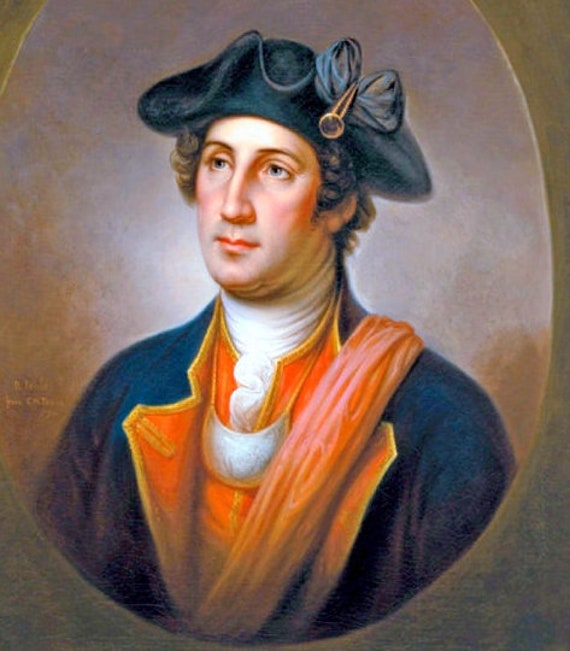
This fatal decision resulted in the death George Washington. 

Bloodletting is now seen as an incompetent practice. Yet it was practiced worldwide until the late 1800s. Millions of people died thanks to this lack of understanding, but guess who knew NOT to do this right from the start? The life is in the blood and God is the one who revealed this fact to us. 

Sometimes we are a little slow in catching on to the wisdom that God has revealed in His Word. If God was right about the blood, what else could He be right about? 

II Peter

Wednesday’s Column: Third’s Words

Gary Pollard

Introduction

This is from Simon Peter. I’m a dedicated follower of Jesus Christ and one of his apostles. I’m writing to everyone who has a faith that’s just as valuable as ours. Your faith is just as valuable because it also came from the perfection of our God and rescuer Jesus Christ. My wish for you is that you enjoy grace and peace because you know God and Jesus, our master. 

Jesus Helped You Escape

We have everything we need to be alive and live a morally good life, thanks to him. His power made that possible! We have everything we need because of our relationship with him. He called us to his family because he is amazing and perfect. He’s made some incredible promises to us. Those promises were designed to give us access to his nature. We have access because we’ve escaped a worldly lifestyle characterized by unhealthy desires. Since we’ve escaped, make sure you back your faith with moral goodness. Once you have moral goodness, expand your knowledge of God. That knowledge should lead to self-control. Self-control should lead to endurance. Endurance should lead to godliness. Godliness should lead to good relationships with each other, which should lead to love. If you are growing in these areas, you can’t be described as useless or unproductive in your relationship with our master, Jesus Christ. If you don’t have these qualities, you’re blind or shortsighted because you’ve forgotten that your record was cleared. 

Message is Credible

Family, you have to make sure you’re in a good place when it comes to your relationship with Jesus. If you’re practicing all those qualities we just talked about, you’ll be ok. You’ll make it to eternal life. You know this stuff already, but it’s always a good idea to remind you. You’re already in a good place, but as long as I’m alive, I’ll keep reminding you. I’m going to die soon. Jesus made that clear to me. Because of this, I want to make sure you’ll remember everything I taught you. What we taught you originally is still valid. Jesus is powerful and he’s coming back to us. We weren’t duped into believing an intricate lie. We were firsthand witnesses to his superior nature! One time, the ultimate power – God – validated this by saying, “This is my son. I love him and I think very highly of him.” He said that right in front of us while we were with Jesus on a mountain. His voice came from the sky. This made us confident that we have the right message. Since we’re confident in this message, you should be, too! Focus on what we’ve told you like you’d focus on a light source in a dark room. Hang onto this until the end, when everything will be light and darkness won’t exist. 

It’s very important that you understand something: we don’t get to decide what a prophecy means. No human has ever produced a legitimate prophecy. Those came from men who were influenced by God’s spirit. 

The Liars

There have always been liars who claim to be speaking on God’s behalf, so you’ll encounter them, too. They’ll secretly teach things that can wreck your faith. They’ll even disown the one who saved them, but they’ll be destroyed soon. They don’t have moral restraint, so a lot of people will follow them. This will make the world think of us as hypocrites. They don’t even have your best interests in mind! They’ll take advantage of you and lie to you. They will face inescapable consequences. 

God didn’t even give angels a free pass when they sinned. He sent them to a dark place where they’ll stay until judgment. God didn’t give the ancient world a free pass. In fact, only Noah and his family survived the flood that destroyed everything else. God didn’t give Sodom and Gomorrah a free pass, either. He completely destroyed them as a warning to everyone who might be interested in living like they did. Lot was a good man and he was extremely upset by how everyone in his city was living. God rescued him from the bad conditions he had to live through, so he knows how to rescue us from temptation. He also knows how to take care of godless people who do whatever they want and reject authority. They’ll have to answer to him. These people don’t even get nervous when they insult angelic beings! Even though angels are considerably more powerful than humans, they wouldn’t ask God to condemn those liars with that kind of animosity! These liars are just like dumb animals. They act on every impulse, they insult in ignorance, and they will be destroyed. They’ll gratify their passions in broad daylight. They drag you down with them, and they’re excited about that! They’re a cancer. They are obsessed with gratifying their impulses and they won’t stop. They drag down people who aren’t strong in their faith. They only care about themselves and they’ve abandoned the right path. 

Remember Balaam? He enjoyed living by his own rules, too. He was reprimanded by a donkey, of all things, so that he’d get a grip on himself. Donkeys aren’t even supposed to talk, but God did whatever it took to make sure he’d get back under control. 

These liars are like wells that don’t have water. They’re like rain that gets blown around by the wind. They’re destined to spend forever in the darkest place. They lie with confidence and bring down people who have a hard enough time staying pure as it is. They promise freedom, even though they’re slaves. After all, we’re slaves to whatever controls us. This is really bad for them. If you learn about God and escape the influence of worldliness, but fall right back into your old ways, you’re much worse off. It’s better to not know God at all than to know him and then reject him. You’ve heard the old saying, “Dogs eat their own puke,” and, “Pigs get right back into the mud after they’ve had a bath.” That’s what these liars have done. 

Family, this is the second time I’ve had to remind you about this. You have the right motives, but you need to remember what the prophets said in the past. Your master and rescuer gave this same message through us, too. The message is this: at the end of everything, arrogant skeptics will make their way into the church. They’ll give in to every impulse they have. They’ll say stuff like, “Didn’t he say he was coming back?” and, “Nothing’s really changed since our ancestors died, we’re all still here.” 

They forget that God built the sky and planet with some words. He built everything out of water and used water to destroy the earth during the flood. Right now, he’s preserving the planet with a special fate in mind. At the end, the planet we’re on right now will be burned with fire. That’s when morally corrupt people will be judged and destroyed. You cannot forget that God doesn’t experience time the same way we do. He isn’t dragging his feet, like some are claiming. He’s holding off because he really doesn’t want anyone to die lost. He wants every person to be saved! 

The Next Earth

With that in mind, the last day is going to sneak up on us. The sky will be ripped apart, which is going to be very loud. All of the basic elements will be obliterated because of how hot it’s going to be. This planet and everything we do on it will be examined in judgment. Since you know the last day’s going to sneak up on you and the earth’s going to be destroyed again, how should you be living? You should be godly and avoid gratifying every impulse. You should be ready to face the end. In fact, you should be hurrying God along so we can get this over with! 

Jesus promised us a brand new sky and a brand new earth. Only good people will live on the new earth. Since we’re all looking forward to this, make sure you’re in a right relationship with God. Make sure you view God’s delay as being his compassion. Remember, he doesn’t want anyone to die lost. Paul said some of these same things in his letters, too, because God had him say it. Some of his stuff is deep and complicated, and some people have taken advantage of this. They’re ignorant and unstable and they twist the rest of scripture, too. They’re digging their own grave. 

Conclusion

Since you already know this stuff, make sure you don’t fall for their lies. Don’t let godless people drag you away from your faith! Instead, grow in your relationship with our master and rescuer Jesus Christ. Remember that he cleared your record, let that encourage you! He is incredible, powerful, and deserves all the credit until time meets eternity.  

Because It’s Forbidden

Tuesday’s Column: Dale Mail

Dale Pollard

The moment evil takes hold, we’re as good as dead. The fall of man is deeper than just the poor decision to eat forbidden fruit. It began when Eve began making multiple poor choices. 

She spent time in the presence of the evil snake. There’s nothing inherently sinful taking place at this point. It’s just unwise. 

The snake struck when it saw it had an opportunity. It’s victim was in ear shot, so it began to speak. There’s nothing sinful about listening to evil, either. After all, the snake couldn’t override Eve’s freewill. 

The snake was crafty. Crafty enough to realize that Eve’s young and poor decisions could potentially develop into a strong and mature sin. He just needed to make a compelling case that was tailored to Eve’s underlying and natural human instincts. 

If the snake could manage to redirect her healthy desires in another direction, he would effectively unleash sin on the world. That’s temptation. Temptation is both universal and unique. Most of us share similar wicked proclivities, but those unique temptations that only a portion of society might find intoxicatingly beautiful can be repulsive to you. Eve’s choice to be near sin and to converse with it led her to reach, pluck, and eat. 

Now her marriage had been destroyed, whether she knew it or not. Adam and Eve are already incompatible. Eve could ask  for forgiveness but living with those consequences would be tough. It might be better to share in the guilt and suffer with someone who understands her. Her misery needed company and If she’s going to die, she didn’t want to die alone. 

That drive to have shared experiences and enjoy a commonality with someone has been tainted but she still craves intimacy. Instead of taking responsibility for her own actions alone, she decides to lead her husband into the same mess so that they might clean it up— together. 

Soon the two of them would live in a new world of hardship. Their options were, 

   1. work together and live 

2. or die alone. 

Fix the problem as a team, or make poor choices that will lead to more sins which will further the destruction of their pure desires. That’s a foundational principle and it applies to every relationship we have. God’s creation wasn’t made better by our selection of evil. Our freewill caused God pain as well. His creation would turn on Him and be the source of terrible grief, anger, and frustration. God’s forgiveness and patience is a testament to His perfect love for us. 

The Church’s First Internal Problem

Monday’s Column: Neal At The Cross

Neal Pollard

We cannot call what happens in Acts five the church’s first problem. Having your members hauled before community leaders and threatened would be stressful and concerning. Having members in financial need would be considered a tough issue. But, neither of those things were “unforced errors.” In an organization filled with people, there will be internal problems because we have struggles and sins. What we do about them and after them spells the difference in ultimate success and failure. 

THE REBELLION (1-10). We are introduced to a couple named Ananias and Sapphira, members of the Jerusalem congregation. In the spirit of sacrificial generosity, Barnabas, who owned a tract of land, “sold it and brought the money and laid it at the apostles’ feet” (4:37). This couple also sold a piece of property, an admirable and generous thing to do to prevent needs among the Christians (4:34). But, what they did after the sell was anything but righteous. They kept back part of the proceeds from the sale. What was the sin in that? Apparent there was an intent to deceive, to suggest that they were giving all the money while keeping part of it for themselves. The word translated “keep back” is the word for pilfer or embezzle, suggesting they had pledged the full price of the sale but kept back some for their own security. This would also suggest covetousness or greed, hearts influenced by worldliness. It also certainly implies pride, wanting to be seen as generous as Barnabas while not suffering the full sacrifice of surrendering all the money for the needs of the saints. This husband and wife were united, but in the worst possible way. Do we struggle with materialism, pride, greed, dishonesty, and selfishness? It is good for us to appreciate how seriously God takes the willful sin in the lives of His children (Heb. 10:26ff). God preserved this in Scripture for us to contemplate how harmful “sin in the camp” is to the spiritual health and well-being of His sacred community (the church). 

THE RESPONSE (3-10). Peter calls out Ananias (3-4), then Sapphira (8-9) three hours later. He specifies what they had done and why it was so wrong. God’s response was to strike each of them dead! Looking back on this, especially if we struggle to see the “big deal” of their sin, we might think the reaction was overly harsh or unreasonable. No doubt this event gets our attention and sharpens our focus on how seriously God views premeditated sin and sin that threatens to harm the entire spiritual community. Conceiving transgression in the heart and attempting to lie to God is such a basic betrayal of our Lord. While we should be grateful that God does not choose to respond with such immediacy today, we should also reflect deeply upon how grave it is to engage in unrighteousness. It’s not “no big deal,” something to be rationalized away. Even if church leadership does not address it in this life does not mean God will not address it at the judgment. This text encourages us to keep our heart soft to His will and to the reality of our willfulness. 

THE RESULT (11-16). We might think that people would have left that church in droves! After all, if they had a marquee in front of their “building,” it might say, “Come inside and try us. The Holy Spirit strikes down our liars.” Yet, what happens next? As we might suspect, “great fear came upon them all” (11). But, the judgment on the couple did not drive people away or even send the cause in a backward direction. The apostles demonstrate God’s power (12), the church spent more time together (12), the broader community held them in high esteem (13) and benefited from their benevolence (15-16), and, maybe most startling, “all the more believers in the Lord, multitudes of men and women, were constantly added to their number” (14). How could this be the result of the ultimate example of “church discipline”? Simply, this is God’s wisdom. Paul will later say, “the foolishness of God is wiser than men, and the weakness of God is stronger than men” (1 Cor. 1:25). Just because we don’t understand God’s ways does not make them inappropriate and improper (Isa. 55:8-9). The Potter has a right over the clay (Rom. 9:20-21). We must resist the temptation to protest the teaching and conclusions God’s Word makes because we find it too hard and narrow. If we trust God’s wisdom and pattern, we’ll find it works in any culture, time, and place.