A Need For Honesty

Thursday’s Column: Carlnormous Comments

carl-pic

Carl Pollard

 
How much do you trust a liar? A study was conducted by Psychology Today where they asked 1000 people how many lies they’ve told in the last 24 hours. The average answer was two lies, but 75 percent of men said they would lie if they were talking about their social status. 80 percent of women said they have lied about their weight.
 
The average person we come in contact with has no problem lying to us. Whether it’s at work, in school or to friends and family, the majority of people feel that it’s morally okay to lie.
 
Ephesians 4:25 says, “Therefore, laying aside falsehood, speak truth each one of you with his neighbor, for we are members of one another.”
 
“Therefore” is a grammatical tie to previous verses. Each time we read this word we should see it as a finger pointing up to the previous verses. Contextually Paul is saying, “Therefore, since we have put on the new self lay aside falsehood.”
 
If you’re a Christian reading this verse, you have put on the new self. So we are commanded to stop lying and be truthful in our interactions with others.
 
Paul commands us to tell the truth. This seems like a simple command, yet sadly we get caught up in telling lies. We want what’s easiest. Many are tempted to take what seems to be the easy way out.
But there is something to keep in mind the next time we are tempted to lie:
 
Our reputation is ruined by dishonesty. If people catch us lying, why would they believe us at all? The boy who cried wolf is a prime example of this very fact. We all know how this story goes, and the bottom line is we lose our credibility if we lie. When we are honest and choose to tell the truth, people will trust us, and God’s Word has a better chance of reaching the lost.
 
When it comes to our Christianity, we want people to trust us. When we lie we lose our credibility and our ability to proclaim the gospel is harmed. Telling the truth in every situation is an attribute we are to have in our new walk with Christ. Plus, nobody wants to be friends with a liar.

“Does the Bible Really Teach That?”

Monday’s Column: Neal At The Cross

16174665_10154303308455922_2453812807432667966_n

Neal Pollard

Have you ever heard “chimney corner Scriptures”–those things that sound like or we think that are in the Bible but are not (“Let your conscience be your guide” or “confession is good for the soul” or “God works in a mysterious way”).  It is not as funny when our hearts and minds are not adequately protected from a teacher or preacher who promotes something as biblical that is not.  It may be someone who touts a thing as acceptable to God which the Bible teaches is not.  It may be someone who asserts that something must be believed or done, though the Bible does not bind it.  Either way, God holds each of us accountable for knowing His will.  We are cheating ourselves and our souls who allow a teacher or preacher to dictate to us how we should feel or think about a given matter.  I am not saying we should be suspicious or distrusting.  Instead, I am saying we should be like the Bereans.  One of the most powerful, positive statements made about any group of people is said of them in Acts 17:11: “Now these were more noble-minded than those in Thessalonica, for they received the word with great eagerness, examining the Scriptures daily to see whether these things were so.” You have likely read that passage before, but what is the Holy Spirit saying about them?

They Were Characterized By EXCELLENCE.  They were noble-minded. Notice that it began here.  All else positive that is said about them began with their mindset.  Jesus praises people who hunger and thirst for righteousness (Mt. 5:6). These people were predisposed to accept God’s Word.  What higher praise can be lavished on anyone?

They Were Characterized By EAGERNESS.  The antithesis of this would be apathy and indifference.  These were “word-receivers.”  They were sponges, anxious to know God’s Word.  The Bible, from cover to cover, touts itself as the message of salvation.  Doesn’t it deserve our greatest enthusiasm?

They Were Characterized By EXAMINING. But, they were not uncritical, undiscerning students.  They were listening to one of history’s greatest Christians, borne along by the Holy Spirit, but they still checked after him.  Every man who purports to be God’s proclaimer deserves that same level of scrutiny.

They Were Characterized By EVERYDAYNESS.  They were not content to wait for the next Bible class or sermon.  They were daily devourers of these Divine dictates!  Aren’t there things you feel compelled to do on a daily basis (eat, sleep, brush your teeth, check social media)? We prove to God we are serious about the blessing of having a relationship with Him by constant, consistent consultation of His revealed mind and desires–we only find that in His Word!

How can we tell whether something is just a man’s conviction or is God’s command?  How do we know that some strange, new doctrine is true or false? Do not be content to let somebody be your sole source of gauging that!  Be a Berean!

“God’s Guidelines In Matters Of Judgment”

Monday’s Column: “Neal At The Cross”

pollard
Neal Pollard

In Romans 14, Paul emphasizes:

THREE FACTS ABOUT GOD

Even though Romans 14 is about the weak in faith and those who are stronger in faith, there is a decided emphasis on Deity–God’s acceptance (3), thanks to God (6), the judgment seat of God (10), praise to God (11), etc. The Lord is mentioned nine times while “Jesus” or “Christ” is mentioned several more times. Even when we have differences of opinions, we cannot forget about God’s presence and feelings. Another way to put any issue that would divide us is: “It’s all about God and not about us.” What are Paul’s three facts about God to help us here?

God Is Able To Make Our Brother Stand (4). Paul’s examples are about eating meat (3) and observing special days (5). Some did and some didn’t, and Paul says neither should judge the other’s Christianity on it for this reason. Each one is trying to please and follow the Lord the best they can (5-6). As long as they act from faith and not doubt on these judgment matters, they are not sinning (23).

God Is Lord Of All (9). We’ll be careful with each other’s convictions because we share the same Lord. We live for the Lord and die for the Lord; either way, we belong to the Lord (8). In all our political, social, and other earthly convictions, do we stop to remind ourselves abut this? We’re all on the same, level playing field as brethren, submitting to the same Lord. 

God Is Judge Of All (10-12). I don’t want to be my brother’s judge on anything, especially not things that are matters of judgment, opinion, and discretion. I’m also not qualified. If we get up at arms, let’s do so in defending God’s name and His authority. If we get worked up, let’s do so in seeking His glory and honor. 

THREE REMINDERS ABOUT THE CHURCH OF GOD

Jesus said His kingdom was not of this world (John 18:36). Christians are part of His kingdom first (Mat. 6:33), and it comes before politics, nation, race, etc. Romans 14 reveals three reminders about this kingdom. 

We Are Reminded That None Of Us Live Or Die To Ourselves (6-7). We are not an island to ourselves. What we do affects others. We’re keenly interested in how what we do affects others (cf. 1 Cor. 9:19-23). I consider how what I do affects you, and you are to do the same. That may come as a sacrifice to me, but I’m called to consider more than just me. 

We Are Reminded Of What The Kingdom Of God Is And Is Not (17). It’s easy for us to lose sight of our identity, mission, and work. If we forget who we are, why we’re here, or what we’re here to do, there’s trouble. At Rome, people were confused over what the kingdom of God was about. Paul says it is not about earthly stuff, stuff you can take or leave that is neither right nor wrong. The kingdom is righteousness, peace, and joy. Mastering this leads us to be acceptable to God and approved by men (18). By majoring in the majors and minoring in the minors, we’re most effective with God and men. 

We Are Reminded That We Pursue What Makes For Peace And Edification (19). I doubt the Lord was trying to make a bunch of doormats in Romans 14, but to think that way is to miss the point of following Jesus (cf. Mat. 20:25-28). We approach our personal convictions, and those of others, wanting harmony and preferring one another. 

THREE WARNINGS ABOUT THE PEOPLE OF GOD

Even as Paul emphasizes God’s supremacy and the church’s nature, he does not leave out how God wants us to treat each other over judgment matters.

Don’t Judge Each Other (13). We can redirect the energy it takes to try and read hearts and judge motives into trying to see through the eyes of others (1 Pet. 3:8-9). Peter gives a process. Be one, then you will see through others’ eyes, you’ll feel a sense of family, then you’ll be kind, humble, and so on. 

Don’t Destroy Each Other (15). Paul says don’t spiritually kill the brother Jesus died for. When we insist on our rights and our way, we are no longer walking in love. We’re supposed to be about building each other up. Disagreement can turn to resentment, and we start avoiding each other or being distant. Substitute “food” with “political party,” “pandemic issues,” “celebrating Christmas,” “new heavens and new earth,” “literal indwelling,” “representative indwelling,” and the like. The principle is unchanged. 

Don’t Tear Down God’s Work (20). The church may have more opportunities and open doors right now than at any time in our lifetime. Don’t think the devil isn’t bothered by that. He’d love for us to turn on each other. He’d love to see Christians dig deeper trenches of division. But of all people, God’s people should lead the way in genuine love, unity, compassion, and care. So, Paul says don’t tear down the work of God for the sake of things that won’t matter in eternity. Causing others to stumble is a problem because it can tear down God’s family. Follow your own convictions (22), but don’t equate them with God’s law!


More Than A Fish Story!

Tuesday’s Column: Dale Mail

Dale Pollard

Some times it can feel like our life is a ship on the verge of breaking apart in a violent storm. Maybe we placed too much trust in the now creaking wooden planks that buckle and groan over dark turbulent waters. In a last stitch effort to stay afloat, we madly rush about throwing any non-essentials overboard.

At times we turn to anything or anyone in an attempt to discover some lifesaving advice— perhaps a miracle? If you’re a child of God, you’ve got access to salvation even in the storms. Jonah 1:4-5 depicts chaos, panic, and overwhelming fear. Those sailors on the boat with Jonah had no idea where they should turn for their salvation. With each passing moment their ship threatened to burst into splinters and “each one cried out to his god” (v. 5).

But Jonah? He’s asleep. He has some kind of knowledge and relationship with the Creator, but he doesn’t fully understand how powerful his God really is.

The application, then, is humbling. Today our communities are filled with people whose lives are rocked and they’re looking for a savior with lifesaving power. They turn to the things in which they’ve placed their trust, and to no avail. How many of us hold the answers they need, but at times find ourselves spiritually sleeping— selfishly keeping this message to ourselves?

Learning A Lesson From A Lantern

Wednesday’s Column: Third’s Words

Gary III

Gary Pollard

I’m a big fan of old fashioned lighting, especially old kerosene lanterns because they’re simple. I went to light one of my lanterns and the flame wouldn’t stay alive for more than a few seconds. I thought, “Maybe the vent is covered in carbon and there isn’t enough oxygen for the flame.” So, I took it apart, cleaned it out, and put it back together. I was sure it was the vent.

To my chagrin, the flame died within seconds even after the lantern was cleaned. Next I trimmed the wick because it seemed too dark; perhaps having a fresh wick would allow the flame to stay alive. It wasn’t a stopped vent, so it had to be the wick. Sure enough, the flame died even with a fresh wick. At this point I was stumped. 

The next day it occurred to me whilst putting gas in my car: the lantern was just out of kerosene! It was obvious to the extreme. I knew Chelsea would never let that one go. When I got home I put the kerosene into the lantern which, of course, was the solution to a simple problem that I overcomplicated.

This is a mundane example of a profound truth: we make mistakes as humans. Worse yet, some people put words in God’s mouth that He never used. “My God is a God of love – He wouldn’t condemn me just for this one little sin.” “God doesn’t care if we live the way we want.” Some use phrases like this with great confidence while overlooking an obvious truth: God has told us what He does and does not care about in His word.

If we aren’t in the word listening to God and allowing Him to change us, our solutions will end in failure. There was only one solution to keep that flame going in my lantern. There is only one right way to follow God, and He’s told us how to do that! Life will be so much easier for those who look to God for answers before relying on their own wisdom.

welcome-home

The Virtue of an Investigative Mindset 

Friday’s Column: Supplemental Strength

81121814_2462862270639428_5746232403106463744_n

Brent Pollard

Socrates famously said, “The only true wisdom is in knowing you know nothing.” Obviously, Socrates did not say that one cannot learn since that would sabotage his career as a teacher and philosopher. Instead, Socrates meant one could not take what he believes for granted, understanding that his “knowledge” may be incorrect. Socrates told us always to investigate. There is a certain humility arising from this mindset.

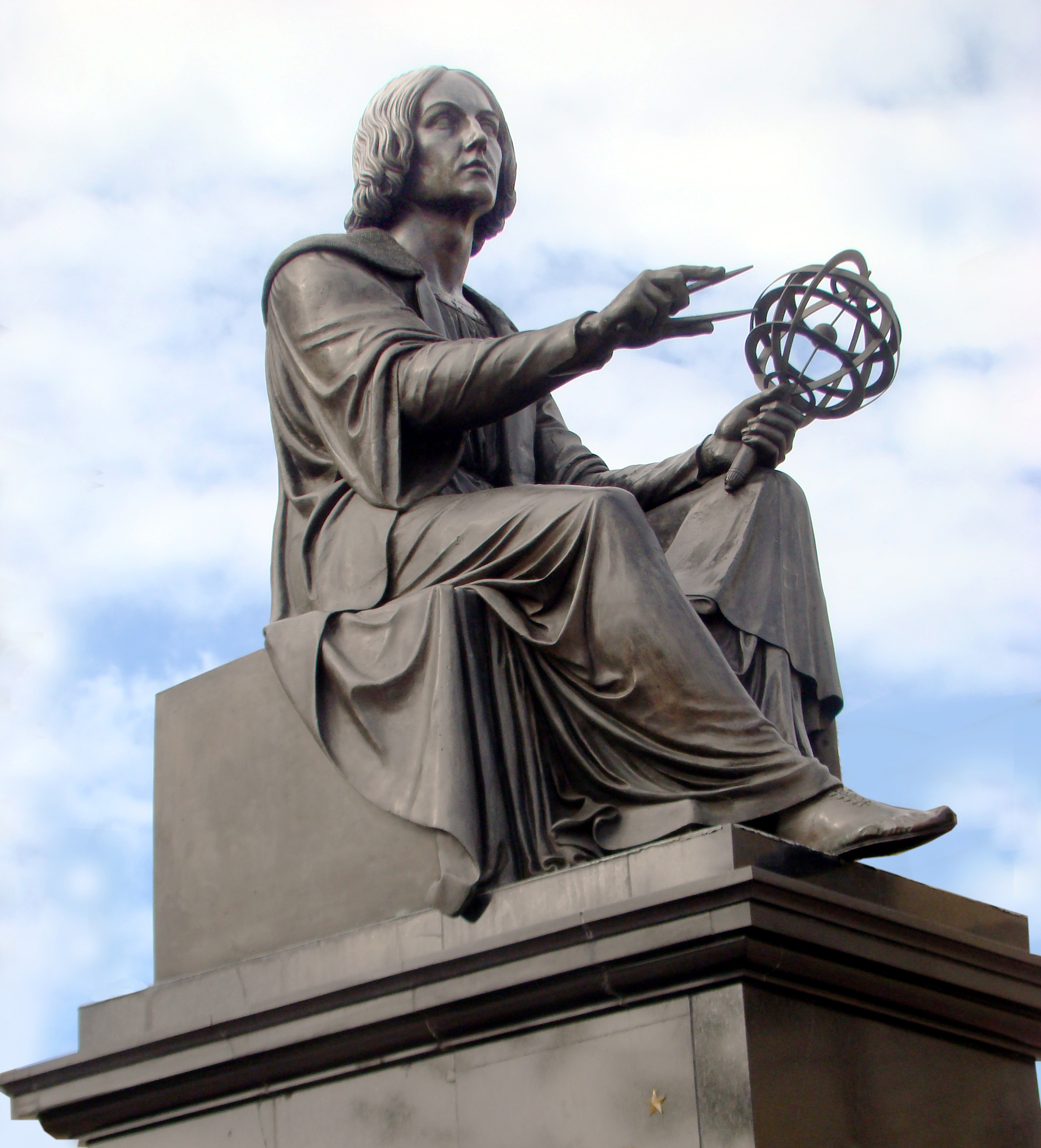
Consider an example of two such people who questioned: Copernicus and Galileo. For how many hundreds of years were people taught that the earth was the center of the universe before Copernicus showed them otherwise? Even so, Catholicism banned Copernicus’ book after his death. Within a few decades, Galileo, who assumed Copernicus’ mantle, stood trial for teaching the same heliocentric model. Galileo was forced by the Catholic Church to recant his life’s work. Yet, we know how the story ends. The Ptolemaic geocentric model of the universe, embraced by Catholicism, would not withstand future scrutiny and would be abandoned, vindicating both Copernicus and Galileo.

This virtue of the investigative mindset should not surprise Christians engaged in a study of God’s Word. We are encouraged to be noble Bereans, checking what we hear by the standard of Scripture (Acts 17.11). Furthermore, we must test the spirits to see whether they are of God (1 John 4.1). There is a warning to us that we should reject even an angel’s message if it is contrary to the revealed Gospel (Galatians 1.8). The father of lies is Satan, who used one lie to murder humanity (John 8.44). Since he works to deceive, and his ministers can take on the appearance of servants of righteousness, Paul encourages us to take our confidence in our weaknesses, which highlight God’s strength (2 Corinthians 11.13-15, 30).

Unfortunately, we seem to live in an era encouraging lockstep conformity in thought. There are those calling this “progress.” Critics rightfully call it “cancel culture,” pointing to a desire of “social justice warriors” to cancel contrarian viewpoints. If beliefs can only persist within an ideological vacuum, how is it any different from Catholicism forcing Galileo to recant? It is not. So, those ironically crying “fascism” in the streets act as the brownshirts of Hitler’s fascism in Nazi Germany. (I apply this truth secularly and politically since it is evident on the news and in the streets.)

In regards to politics, of course, the end is inconsequential for the Christian, since he or she must submit to the governing authority (Romans 13). Note we are not told to waste our time trying the political spirits, but those purporting to be spiritual. It may be that in making a stand against false religious doctrine, though, that we will enter into conflict with a political ideology glorifying what God calls abomination and permitting infanticide. However, that is not our principal task.

Praise God that our struggle for wisdom is much simpler than that of Socrates. After all, we believe in an infallible God who gave us His Truth within the Bible (John 17.17). We can admit our ignorance of what that Word says and test those things we hear from preachers, but we are not left to grope blindly for truth. Indeed, “The fear of the LORD is the beginning of wisdom, And the knowledge of the Holy One is understanding”  (Proverbs 9.10 NASB). Ultimately, it comes down to adopting the mindset of Paul, who determined to know nothing except Jesus Christ and Him crucified (1 Corinthians 2.2).

copernicus_by_thorwaldsen_warsaw_02


Maybe Nobody’s Right?

Tuesday’s Column: Dale Mail

DaleandJanelledirectorypic

Dale Pollard

Wasted potential is a terrible tragedy and this could not be more true when it comes to those who squander their potential in the church. Consider two common examples we find in many congregations today. There may be an older man who uses the respect, earned by his lengthy life experiences, as a platform to give strong opinions— disguised as gospel truth. Or, what about the young woman who has been labeled as a liberal? She has these new and fresh ideas, but many aren’t Divinely authorized in scripture.

Both of these individuals could not be any different, yet both have caused severe damage in their local church families. The older man clearly has a commanding presence. When he speaks, people will listen. What a gift! He could build up and strengthen the church in numerous ways— if he put his mind to it. He owns the power of persuasion, a talent others deeply desire. The young woman also has talent. She’s outspoken, energetic, and inspiring to many of her peers. She’s loving, gentle, and full of life. With so much to offer, how could she throw it all away by pushing her modern, but unbiblical views?

The elderly may argue that the problems we find in the church today are on account of young minds with liberal beliefs. The younger generation have become disenchanted with “church” because they believe it’s outdated, hypocritical, legalistic, and impossibly demanding. While there is truth to be found on both sides of the fence, it’s also true that talent is a tool that is often misused.

The elderly bring experience and wisdom. The young bring energy and enthusiasm— though I do acknowledge that these stereotypes may occasionally be seen in members of both groups. If there are thoughtless accusations, without thoughtful solutions, you end up with a congregation full of members fighting for the spoon which stirs the pot. A serious solution can only be scriptural. After all, God made people and He knows how to fix them.

Maybe we need to go back to those basic and foundational principles that we find in that thriving first century church. Despite adversity and an overwhelming hostile environment, they had Jesus’ power over the world (John 16:33). Since this is the case, may we never fool ourselves into believing the lie that the strange darkness of our time is too dark for The Light that is Christ. When this poison is digested, the devil smirks, and droves of people stumble into eternity unprepared all on account of a literal and tragically damning lie.

God has allowed us to discover hope, experience growth, and uncover a calming peace when simple Christianity is practiced. It’s this beautiful simplicity that makes God’s will a rewarding journey to seek and follow. The power of God can turn a struggling congregation into a thriving one, but there must be a radical transformation in the heart of each individual that makes up that Body. It’s radical, but it’s not complicated. It will take prayer, a reliance on God, courage to act, and a willful determination to follow Jesus wherever He goes (Luke 9:57-62).

So where do we begin? With a dedication to the understanding of Him, and those made in His image.

6016780468_67a298ed8e


The World Is Desperate (Part Two)

Thursday’s Column: Captain’s Blog

IMG_0806

Carl Pollard

Last week we looked at how the world is desperate for guidance. They look in every direction for someone or something to tell them what to do. Most of the time they look to themselves for guidance and that leaves many things unsolved. Psalm 119 tells us what our guide should be. God’s word is what tells us how to live, how to act, and how to react in every situation. The world is desperate not only for guidance, but also for purpose (2 Pt. 1:3-8).

As Christians we can confidently say that we have purpose. There’s a reason to everything we do; but what about the world? Why do they wake up every day? For most, they wake up to go to work, to make money, serve self, and go to sleep.

To illustrate this, imagine going to the store without a grocery list. Without a list you end up forgetting most of the stuff you needed in the first place. You come back home and realize you forgot the milk. Without a purpose in life humans are lost. We go day to day knowing that there’s something we’re missing, but we don’t know what it is.

In 2 Peter 1, Peter is writing to them to encourage these Christians to confirm their Christianity. To be confident in their calling. Starting in verse 3 he says this,

“His divine power has granted to us all things that pertain to life and godliness, through the knowledge of him who called us to his own glory and excellence, by which he has granted to us his precious and very great promises, so that through them you may become partakers of the divine nature, having escaped from the corruption that is in the world because of sinful desire. For this very reason, make every effort to supplement your faith with virtue, and virtue with knowledge, and knowledge with self-control, and self-control with steadfastness, and steadfastness with godliness, and godliness with brotherly affection, and brotherly affection with love. For if these qualities are yours and are increasing, they keep you from being ineffective or unfruitful in the knowledge of our Lord Jesus Christ.”

Because of God, we have a purpose in life. We have become partakers in eternal life. Because of this we must live a certain way. We have a goal. Peter gives us a list to build on: virtue, knowledge, self control, steadfastness, godliness, brotherly affection, and love. If we are seeking for a purpose to life, work on this list and the end result is a knowledge of Christ that leads to eternal life.

We have escaped the corruption of the world, and now we have purpose. Peter was one who struggled with his purpose at first, he was unsure of Christ’s plan when he was on earth, and he didn’t even want to be associated with Christ after he was lead away to be crucified. He denied Christ, but after this we see his commitment and purpose in the book of Acts. His purpose is exactly like ours, he went around proclaiming Jesus and baptizing in His name. Not sure what your purpose is? Just look at how Peter lived his life, how he was committed to serving God.

My first job I ever had was when I was 13 years old. I built fences for a member at the Bear Valley Church of Christ. And talk about having no idea what you’re doing. For the longest time I’d show up every morning and have to ask how to do everything. I didn’t know how to mix concrete, how deep a fence post hole had to be dug, how to install gate hinges. I was clueless. For the average person, this is how they feel without Christ. They’re unsure, they have no purpose. Our job is to show them what life is about. This life is about getting ready for the next that is to come. Without this, we have nothing.

The world is desperate for purpose, so let’s show them the Truth.

sunlight_over_picket_fence

CHURCH INVADERS

Monday’s Column: Neal At The Cross

61482521_10156347607435922_101144894977867776_n

Neal Pollard

During a prayer recently, a brother thanked God that our congregation had not been “invaded.” I thought it was an interesting, thoughtful way to thank God for His protection from physical harm, but it also took my mind in another direction. More often than we’ve faced armed intruders, the Lord’s church has had its share of others who have snuck or pushed their way in and to detrimental results.

Churches Have Been Invaded By Wolves. They are described in stark terms, being “ravenous” (Mat. 7:15) and “savage” (Acts 20:29). They do as Ezekiel described, “tearing the prey” (33:27). The Bible is describing false teachers who speak perverse things to draw away disciples after themselves. What’s so alarming is that these are “from among your own selves” (Acts 20:30). These are individuals whose teaching is false by the Bible’s standards, and the fruit of whose teaching causes people to be severed in their relationship to God. Jude describes them as those who can creep in unnoticed, “ungodly persons who turn the grace of God into licentiousness and deny our only Master and Lord, Jesus Christ” (Jude 4). God’s remedies to stop such church invaders are godly, qualified shepherds (Acts 20:28-30; cf. John 10:12) and active, thoughtful Bible students who effectively discern spiritual fruit (Jude 3; Mat. 7:15-20). 

Churches Have Been Invaded By Leaven. Paul addresses an issue “within the church” at Corinth (1 Cor. 5:12), which he illustrates by referring to “a little leaven” that “leavens the whole lump” (1 Cor. 5:6). The leavening influence here was unchecked sexual immorality that the church came to accept rather than address. Paul urges Corinth to take action regarding immoralities like those he lists in verses 9 through 11. When a church normalizes and embraces what Scripture condemns, it has been invaded and taken over from God’s will. Churches who adapt views which accommodate the moral decline of their members rather than challenge their members to rise up to The Standard have been invaded. 

Churches Have Been Invaded By Legalists. Jesus targeted the Pharisees more often than any other single group in the gospels. He is most plain in Matthew 23, noting that “the scribes and the Pharisees have seated themselves in the chair of Moses” (2). While in context Jesus is dealing with matters under the Old Law, what He observes continues to today. How many have put themselves in the seat that rightfully belongs only to God? They exact rules that are too hard for anyone, even themselves, to follow (4), that are borne of improper motives (5-12), that are harder than God’s rules (13), that make disciples of themselves rather than Jesus (15), that major in the minors (23-25), and that create superficial righteousness and inward rottenness (27-28). Such churches are afflicted with those who appear alive, but are spiritually dead. 

Surely we want “to grow up in all aspects into Him who is the head, even Christ, from whom the whole body, being fitted and held together by what every joint supplies, according to the proper working of each individual part, causes the growth of the body for the building up of itself in love” (Eph. 4:15-16). There’s only one Lord for the one body (Eph. 4:5). He is head over all things to the church, which is His body (Eph. 1:22-23). That is the basis and marching orders for us to prevent any and all “church invaders.” May we keep vigilant to protect the purity of His church (cf. Eph. 6:10-17)! 

367078204_0412ed840e


My Recent Sermon On Baptism

Listen Here

“THE CHURCH”

Neal Pollard

Did you know that Paul uses the phrase, “the church” nine times in the relatively brief letter to the church at Ephesus? This is a church Paul worked with for three years (Acts 20:18,31). He taught them in person and then he sends this epistle full of teaching (Eph. 1-3) and application (Eph. 4-6). In both parts of the letter, he makes important statements about “the church.”

• “(God) gave Him to be head over all things to the church, which is His body…” (1:22-23a; see 4:4).

• The manifold wisdom of God is meant to be made known by the church (3:10).

• God’s glory is meant to be shined through the church (3:21).

• Christ is the head and savior of the church (5:23).

• The church is subject to Christ (5:24).

• Christ loved the church and gave Himself up for her (5:25).

• Christ seeks to present to Himself the church in all her glory (5:27).

• Christ nourishes and cherishes the church (5:29).

• The husband/wife illustration is about Christ and the church (5:32).

When you add in the times Paul discusses “the body” (1:23; 2:16; 3:8; 4:4; 4:12; 4:16; 5:23; 5:30), it is easy to see why Ephesians has often been labeled the book which exalts the church of the Christ (in contrast with Colossians, touted as the book which exalts the Christ of the church).

Ephesians destroys the concept of the religious division also known as denominationalism. Where Christ has spoken on how to be saved, how to worship, how the church is to be organized and led, and religious bodies teach as divine doctrine the precepts of men (Mat. 15:9), they become plants which the heavenly Father has not planted (Mat. 15:13). If that is true of what the Pharisees did with God’s law concerning honoring father and mother (Mat. 15:3ff), doesn’t it follow that it would include all of Christ’s doctrine?

Ephesians is a great letter to discover the truth that Christ desires religious unity among believers, a unity derived from believers submitting to His teaching and will. But to limit our interpretation of this book to just that idea is a tragic shortcoming. The whole letter begins with a powerful, humbling truth: “God chose us” (1:4). We are His treasures, the praise of His glory. We are precious and valuable to Him–He predestined us to adoption as sons (1:5), He redeemed us with His blood (1:7), He lavished us with His grace (1:8), He made known to us the mystery of His will (1:9), He gave us an inheritance (1:11), hope (1:12), and a pledge (1:13-14) that we might be wise, knowledgeable of His will, enlightened, and strengthened (1:15ff). All these spiritual blessings (1:3) are reserved for those who submit to Jesus as the head and strive to follow the pattern of New Testament teaching. When we do, we have access to the greatest possible relationship in the whole universe! “To Him be the glory in the church and in Christ Jesus to all generations forever and ever. Amen” (3:21).

Walking 10 Miles To Avoid The “Bear”

Neal Pollard

Spoiler alert: This story does not make me look good.

It was 1984, and my family and I lived in Roopville, Georgia. We were enjoying one of those idyllic west Georgia October days, with temperatures cool enough for a jacket but the sun graciously, brightly beaming. It was a perfect Saturday to explore the woods, which is what my little brother, Brent, and I decided to do. I was 14 and he was 9. My parents owned several acres behind our house, and we boys felt adventurous. In such a mood, I decided I’d like to see how far those woods went, but rightly wondered if Brent was game for such a walk. Therefore, I had to have a ruse. We hadn’t walked too far when there was some noise nearby, and I went to work–concerned face, raised eyebrows, hushed voice, and panicked eyes. “Brent, I think I just saw a bear!” Trusting me to be a legitimate source of truth, he accepted my statement at face value. What was my solution to this sudden dilemma? Brent wanted to retreat back to the house, probably less than a quarter mile behind us. What sense did that make? Far better to keep walking away from the safety of our home deeper into the woods of neighbors and eventually strangers. As every older sibling knows, far too often seniority can trump sensibility. So, we ran from that “bear” for miles and hours. Eventually, our circuitous journey took us several miles south just outside the little town of Centralhatchee. We were gone for most of the daylight hours of that fateful Saturday, and the only credible decision I made that day was knowing we should walk north on Highway 27 to get back home. Suffice it to say, I was not hailed as the conquering hero upon our return that evening. But, throughout that walk, I built and strengthened the narrative that this lengthy sojourn was about escaping the razor-sharp clutches of my mythic bear. I mentioned it so often to Brent that day that it just became easy to tell my parents with such conviction. Under the vise of interrogation, my story unraveled. My punishment was swift and enduring.

I knew better. I wanted this adventure and I wanted company. One needs a calculator to compute the number of bad decisions cascading from my developing prefrontal cortex. But, in my heart of hearts, I knew I was lying to Brent. In time, I believed the lie myself. We survived my harebrained scheme, but my credibility took a hit.

“Honesty is the best policy.” That’s true of character. It’s no truer than for anyone in a position to teach someone else God’s Word. Some teachers themselves are deluded and believe a lie (2 Th. 2:10-12). Others “are false apostles, deceitful workers, disguising themselves as apostles of Christ. No wonder, for even Satan disguises himself as an angel of light. Therefore it is not surprising if his servants also disguise themselves as servants of righteousness, whose end will be according to their deeds” (2 Cor. 11:13-15). Such an eternal task befalls the teacher (Jas. 3:1). We must be honest with the text, honest with our conclusions, and that starts by being honest with ourselves. We’re leading people somewhere with how we live and what we say we believe is right and wrong. Let’s handle that with care. It’s about both the journey and the destination (Mat. 7:13-14).

51443429_2225973147661676_5918745592820924416_n
Exceedingly stylish pic of me and the bro a few years before the Centralhatchee Bear Escape.

The Inevitable Standard

Neal Pollard

Everywhere, each generation tries to figure out the why and how of living. Most will not find the right path (Mat. 7:13-14). Almost all are convicted, even passionate, about the way they wish to live life. They may be fiery about politics, social issues, relationships, and even religious ideals, and to be consistent they must appeal to some ultimately, overarching authority that makes right right and wrong wrong whatever their point of view. Will it be feelings, friends, the majority, the minority, the church, family, a teacher, culture, or something else? The Bible claims to be the arbitrator by which all matters are judged. But if not the Bible, there has to be some universal absolutes with an adequate origin to compel people to follow it. Whether the issue is rape, murder, stealing, or similar norm that stands between order and chaos, there has to be adequate reason to submit to it. 

This inevitable standard helps us decide whether or not a Creator exists. If there is nothing (no One) greater, bigger, wiser, and stronger than us, why can’t we decide right and wrong as our whims determine? Why would we desire civilization and peace? Why would we wish good will or at least peaceful coexistence with each other?

The inevitable standard helps us decide which god (God) is to be followed. Do their alleged writings and teachings cohere and show consistency? Do they adequately answer the great questions of life?

The inevitable standard helps us decide whether or not Bible doctrines taught by men are consistent with and true to what the Bible actually teaches. How do we know how to worship, be saved from sins, what roles to play in life, what our purpose is, and how to reach a desirable destiny? The nonsensical claim that you have your truth and I have mine is unacceptable in every other discipline (building construction, medicine, physics, mathematics, etc.). Even falling back on “you have your interpretation and I have mine” is a dangerous slope since there are matters of life and godless ( Pet. 1:3). 

The inevitable standard helps us fulfill our roles in the home, the church, and the world. How should we live and how should we help our physical family, spiritual family, and communities live? It matters!

It may gall us to think we all must concede to a standard of right and wrong, of absolute truth. To say that all of us are accountable to the same standard may be construed as bigoted, small-minded, or narrow, but everything falls apart if each of us follows our own set of rules. Imagine an interstate where every driver followed whatever they thought they should and ignored whatever they felt they could or should. All of us are on the road of life heading somewhere. How will we get there? There is an inevitable standard, given by God to us through men He moved to write it down (2 Tim. 3:16-17). 

tape measure.jpg

“WHAT PREVENTS ME FROM BEING BAPTIZED?”

Neal Pollard

Philip encounters a man returning from worshipping God in Jerusalem. The man, an Ethiopian eunuch, was reading from the scroll of Isaiah.  Philip engages him in conversation, asking the African man if he understood what he was reading.  This very important man was humble enough to ask for help, and Philip climbed into the chariot and delved into the text, Isaiah 53 as we would recognize it today, and taught him about Jesus.  This led the Ethiopian to ask, “Look! Water! What prevents me from being baptized?” (Acts 8:36, NASU).  He is saying that he understood who Jesus is, understood his need, and was now at a place where there was sufficient water for him to be baptized in order to have his sins forgiven.  Perhaps Philip pointed out the fact that Jesus died, was buried, and rose again and through baptism we reenact those very aspects (cf. Rom. 6:1-6). Perhaps Philip discussed the fact that a baptism “washes away sins” for believers in Christ who act in obedient faith (cf. Acts 22:16).  Whatever Philip preached about Jesus, it led the eunuch to correctly deduce his need to be baptized.

There are a good number of people who are currently or were formerly in a Bible study with someone, learned their need to be baptized into Christ (cf. Gal. 3:27), but have yet to do so.  There are an untold number of young people who are of accountable age who as of yet have not been baptized.  How many spouses of Christians know they need to do it, but have not been baptized?  Each individual mentioned in the groups above, as well as all others, are of infinite value to God (cf. Matt. 16:26).  No doubt, God would desire anyone who has yet to come to the knowledge of the truth to do so and be saved (1 Tim. 2:4).  Would he not want us all to ask, “What prevents me from being baptized?”

Certainly, one might give many answers to this question.  Let us examine some answers commonly given to this question.

“I’m Not Ready.”

Some individuals are not ready.  There are some too young to truly know right from wrong.  There are some who have not yet been sufficiently taught.  However, there are some who are not ready for the commitment, the sacrifice, and the submission needed to make Jesus Lord. There will never be a better sacrifice than Jesus.  One will never have more time left to give to the Lord than right now. God cannot possibly extend more love or grace. If one is not ready, he or she should ask, “What will ready me?”

“I’m Afraid.”

Fear is understandable.  Jesus apparently experienced it (cf. Heb. 5:7; Lk. 22:42). Paul experienced fear (Col. 4:4).  Peter certainly grappled with fear (cf. Matt. 26:69-74; 1 Pet. 3:14-15).  John exhorted the Christians in his audience not to succumb to fear, as it is a barrier to salvation (Rev. 21:8).  

One might fear the change that follows becoming a Christian.  One might fear failure in their Christian walk.  One might fear the reaction and even the rejection of others.  Jesus once taught, “Do not fear those who kill the body but are unable to kill the soul; but rather fear Him who is able to destroy both soul and body in hell” (Matt. 10:28).  One must evaluate those fears and ask if any of them is worth risking the fearful prospect of standing before the Lord without His blood covering their sins.
“I’m Not Sure.”

Peter unquestionably says, “Make certain about His calling and choosing you” (2 Pet. 1:10).  However, he is not giving people an excuse to put off obeying Christ.  Remember, he is speaking to those already purified from their former sins (1:9)–those who had already been baptized. There is a need to reason through scripture (cf. Isa. 1:18). Paul reasoned with individuals about Christ on many occasions (Acts 17:2, 17; 18:4, 19; 24:25).  The fact is that the biblical claims about who Jesus is and how one receives the benefits of His grace are most reasonable. Rationalization, hard-heartedness, and self-will may be the seeds that grow into weeds of doubt, but there is no need to doubt or allow doubt to prevent one from submitting to Christ.

“I Don’t Believe.”

One may or may not say those specific words.  Yet, when one sees the truth of scripture, knows the personal accountability demanded, and does nothing about it, that one essentially does not believe.  At least, faith is insufficient to properly respond to God’s amazing grace. This is a hard truth to confront in ourselves.  I see it.  I know it.  But, I will not act upon it.  The Hebrews writer says the Israelites could not enter the promised land because of unbelief (Heb. 3:19), and he warns us against imitating them (Heb. 3:12ff).  Even the demons believe and tremble, though it does them no good (cf. Jas. 2:19).  We must believe and be baptized to be saved (Mark 16:16).

Perhaps you are one who could ask yourself, “What prevents me from being baptized?”  Cast a long mental gaze at the cross of Calvary and comprehend the love and sacrifice evidenced there.  Such was for you (cf. Gal. 2:20).  God’s love for you is personal. He wants nothing more than for you to live with Him eternally, and He has told you what is involved in that (cf. Acts 2:38).  What prevents you from being baptized?

59334951_2375790432443980_1175219523108732928_n

New Testament Christianity

Neal Pollard

  • The New Testament claims to be the source of authority for all we do of eternal importance, no matter when or where we live (Col. 3:17; 2 Pet. 1:3,20-21; 2 Tim. 3:16-17).
  • The New Testament will not share authority with any other book or “revelation” (Gal. 1:6-9; Jude 3).
  • The New Testament reveals how a person becomes a Christian (Acts 2:37-47; Eph. 4:4-6).
  • The New Testament teaches us that the Lord adds Christians to His church (Acts 2:47).
  • The New Testament shows us how that church is organized and led (Acts 20:28; 1 Tim. 3:1-12; Phil. 1:1; 1 Pet. 5:1-4).
  • The New Testament gives us the day the Christians met to worship (Acts 20:7; 1 Cor. 16:1-2).
  • The New Testament clarifies for us the various roles and responsibilities God has given to each gender of Christians in the work and worship of His church (1 Tim. 2:8-15).
  • The New Testament teaches the Christian how God wants to be worshipped (John 4:24).
  • The New Testament outlines the Christian’s purpose and work (Eph. 4:11-16).
  • The New Testament is dedicated to showing how one, as a faithful Christian, has eternal life and the hope of heaven (Ti. 1:2; Rev. 2:10; ch. 21-22).
  • The New Testament helps one understand how God wants marriage and family to function, to build Christian homes (Mat. 19:1-12; Eph. 5:22-6:4; 1 Pet. 3:1-7).
  • The New Testament urges Christian growth and thoroughly teaches how that is accomplished (2 Pet. 3:18; Ti. 2:11-14; John 15:1ff; etc.).
  • The New Testament constantly speaks of how the Christian needs to and benefits from developing an intimate relationship with the Godhead (1 Th. 5:17; 2 Tim. 2:15; John 15:14; Mat. 22:36-40).
  • The New Testament teaches that Christians prove to others their discipleship to Christ by loving one another (John 13:34-35).
  • The New Testament reveals that Christians are tasked with duplicating themselves by teaching the gospel to those outside of Christ (Mat. 28:18-20; Acts 8:4; Col. 1:23).
  • The New Testament asserts itself as the unfailing, universal guide regarding anything that will ultimately matter (2 Pet. 1:3; John 14:26; 16:13; etc.).

If what we are after is divine guidance for who a Christian is, what he or she does, and how God wants one to live, where else would we turn but to the New Testament? A God who engineered us for eternity and tells us we have but two eternal dwelling places would be cruel and unloving if He did not give us clear, thorough answers to any matter that is important to Him. How loving and faithful for God to give us such an unambiguous guide.

58366-nt-rely.800w.tn_

THERE IS A PATTERN OF TEACHING

Neal Pollard

The Bible claims to hold the answer to your greatest problem. Not only that, but it helps you to identify what that problem is which you may or may not even know about. In Romans 6:16-18, Paul talks about a “form of teaching” given to those at Rome. 

Paul writes this powerful epistle to emphasize that salvation is by faith and not by works of law, but faith in what? One might say, “Faith in Jesus,” and Paul makes that point repeated in Romans (3:22; 3:26, for example). But how do we have faith in Jesus? He says, “So faith comes from hearing, and hearing by the word of Christ” (10:17). 

Elsewhere, Paul reminds us that there is “one faith” (Eph. 4:5), so a purely subjective faith (what we think we should believe) is not the faith commanded in Scripture. So, we’re looking a t a faith produced by reading, learning, and following God’s Word.

No wonder, then, that Paul emphasizes the importance of obedience in this text. Does God want you and me and everyone else to obey the same thing? Or can you pick what you want to obey while I pick what I want to obey and everyone else do the same? Paul talks about an objective standard of teaching that is for everyone, everywhere, for all time. Look closer at what he says in this brief passage of Scripture and what it means for us today.

THE FACT OF THE PATTERN (Rom. 6:17)

Paul talks about a form, a kind, class, or thing that suggests a model or pattern (BDAG 1020). It is the word used in the Greek Old Testament in Exodus 25:40 and quoted by Stephen (Acts 7:44). Translators chose the word form (“standard,” ESV, or “pattern,” NIV) in this verse. 

For those who pour concrete, you use “form boards” to cause it to conform to their shape in width, length, and height. Without some way to hold the concrete, what a waste of time and money! The concrete would be totally useless. It’s the same concept for those who bake and use cake moulds, muffin pans and cookie cutters. If you put dough or mix into a round pan, you don’t expect a rectangular finished product. 

Paul talks about a teaching that conforms to a certain form or pattern, having definite, identifiable structure. So, the Romans received teaching that was meant to produce the same result in every case. A growing number of people look at the Bible as basically shapeless and formless. They reject the idea of pattern theology, the very thing Paul appeals to in Romans 6:17. The alternative to there being a pattern for salvation, worship, church leadership and organization, sexuality, morality, gender roles, and all teaching is that we have no pattern.

Without a standard to appeal to, how do we determine right and wrong? Historically, when humanity rejects an absolute standard, we choose what we think is right and wrong (cf. Jud. 17:6). This is a fatal way to live (Prov. 16:25), and it destroys societies (Prov. 14:34). But everyone is going to appeal to something as the final say and authority, even if it’s only self. There is a “standard of sound words” (2 Tim. 1:13). It must be retained and it carries with it the authority of Christ Jesus.

THE FRUIT OF THE PATTERN (Rom. 6:17-18)

Since there is a pattern of teaching, what are the consequences? Paul implies that we must obey it and commit to it, just as the Romans did. The end result of such obedience is that we become slaves to the right master. Everyone will inevitably be enslaved, whether to sin or righteousness. This pattern shows us the right choice to make. We’re not just talking about information, but rather information which leads one to do something and become something. 

THE FREEDOM OF THE PATTERN (Rom. 6:18)

Ironically, those who reject the idea of pattern theology claim that such unfairly restricts and inhibits us. But, Paul draws a different conclusion. Obeying the form of teaching and committing themselves to it led them to be free from sin. Sin brings spiritual death (5:12), condemnation (5:16), enslavement (6:6), and deception (7:11). If we understand the true nature of sin (which biblical teaching defines), we will want to be free from the burden of it.  The form of teaching shows us how to do that. Anyone who wants freedom from sin can have it, but anyone who wants freedom from sin must follow the pattern. 

Obeying Christ’s teaching is not legalism. It is faith in His power, but also submission to His will. There is truth. We can know it (John 8:32). We must obey it (Rom. 6:17). It will free us (John 8:32)! 

fh07may_pourc_01-2

What To See When False Prophets Speak

Neal Pollard

Peter has a sobering warning for the church, writing, “But false prophets also arose among the people, just as there will also be false teachers among you, who will secretly introduce destructive heresies, even denying the Master who bought them, bringing swift destruction upon themselves” (2 Pet. 2:1). He warns them about the model, the methods, and the message of these men. The counterparts of these modern messengers is the false prophets of old.

Jeremiah lived at a time when such prophets flourished, and the result of their work was the destruction of the people. Jeremiah 23 is a graphic depiction of what God helped Jeremiah see as he looked at and listened to these sinful seers. Notice that in Jeremiah 23:9-40), he saw:

  • Tears (9-10)–Jeremiah was heartbroken, trembling, and overcome, because he knew their message was different from God’s Word and it was taking people off course. 
  • Pollution (11-12)–The Lord found their way wickedness, and this pollution made for a slippery path that would make them fall in calamity and punishment. 
  • Offensiveness (13-14)–They looked to the wrong spiritual source and it led the people of God to commit horrible depravity. 
  • Tragedy (15)–Their message was going to cause their own spiritual sickness and death.
  • Emptiness (16-18)–The message is from their own imagination and not from the Lord’s mouth, so they tell those who hate God they’ll have peace and those who walk in stubbornness that everything will be fine.
  • Storms (19-20)–The storm is the tempest of God’s wrath upon the heads of these false messengers. 
  • Audacity (21-25)–They ran, but God didn’t send them; They prophesied, but God didn’t speak to them; God was right there listening when they said, “I had a dream, I had a dream!”
  • Heart Trouble (26-27)–The prophets had spiritual heart trouble, and their message was loved by people with heart trouble. It resulted in both of them forgetting God. 
  • Straw (28)–Just as straw and grain are totally different things, so is God’s message and their false message. 
  • Judgment (29-40)–God’s Word is like fire and a hammer. He is against their Word and against them for misusing their speaking abilities and leading His people astray. They don’t furnish the people with “the slightest benefit.” They cause the people to forget what truth is.  The end result is tragedy. 

So many can have a message that sounds good, makes one feel good, but does no good! In fact, their message contradicts what God said in His Word. As we grow our Bible knowledge, it will help us see these messengers and their messages for what they are. God’s Word is a blessing to us, both now and eternally. But, measure their message against the Master’s. Embrace only the words that are from Him! Reject the words that come from them!

jeremiah-23-29

Proving Someone Wrong

Neal Pollard

I’m not talking about the thing too many people do on social media, where they nitpick others and put in so much effort in the “yeah, but..” game. That is ill-mannered and usually unwelcome. It usually also concerns something amounting to far smaller than a hill of beans. Instead, I refer to something God-directed and involving sin.  

A quick overview of Ephesians lays out a pretty straightforward outline. Chapters one through three lay out what a privilege it is to be a Christian. Chapters four through six speak of how privileged people behave, within the church, with the world, and their relationships, and even with the devil. The “proving wrong” section comes in the second half of the book, dealing with the world. If we isolate ourselves from the world, we cannot hope to be effective. If we allow ourselves to be influenced by the world rather than be an influence on it, we may find ourselves having fellowship with the unfruitful works of darkness. In Ephesians 5:6-14, Paul issues a difficult challenge for us as we live before and within the world on a daily basis. How do we reprove the unfruitful works of darkness?

KNOW THE DIFFERENCE (6). Paul starts this paragraph, saying, “Let no one deceive you.” Context shows that the “these things” that drew God’s wrath involved three broad categories of behavior and three specific actions: fornication, impurity, greed, filthiness, silly talk, and coarse jesting. Paul says, in essence, “Don’t be deceived into thinking these things are OK. To promote ignorance in these areas, all we have to do is remain silent about them and never teach about them. Paul’s concern is about Christians being an influence on the culture, and that’s still the need today.  There are still a great many people in the world who think of Christians as those who avoid filthy speech and who have  objective moral standards about sexual matters. The world sees enough conformation; It needs to see transformation; That requires information! 

BE THE DIFFERENCE (8-10, 13-14). Paul is concerned about people functioning in the spiritual dark. He wants them to take the information (knowledge) he’s given them and let it show in their lives. He illustrates this lifestyle with the metaphor of light. Paul uses the word “light” five times in this one paragraph. Light has characteristics (8-9)–goodness, righteousness, and truth. Light is corrective (11-14)–it remedies problems that occur in its absence (blindness, fear, ignorance, etc.). Light makes visible what was invisible before. We live in a world in serious need of correction. The majority, walking in darkness, are on a collision course with spiritual death. We’re in a position to shine light on their path. Our schools, workplaces, communities, ball fields, and national institutions cry out from the darkness for guidance. Some of the best “reproving” (exposing) occurs when we are the Lord’s lights.

MAKE THE DIFFERENCE (7,11-12). This is the most uncomfortable part of this text. Beyond building our knowledge and setting an example, we must do something. We make a difference through abstinence (7,10), not partaking and having no fellowship with evil. Saying no when invited to participate in sin turns an uncomfortable spotlight on us. Being a “new man” (4:22) means a new behavior, which Paul describes in 4:25-32. The world feels judged when we avoid something we know is wrong. We also make a difference through admonition. Reproving (exposing) means to shine the light on something (we’re shining the Light of Christ onto it, 8). 

When doctrinal error is espoused, do we try to engage people (“in love,” 4:15) or do we just sit in silence? When moral filth is peddled and promoted, do we just go along to get along or do we stand up, stand up for Jesus? In chapter 6, Paul tells us that we’re Christian soldiers, which implies a militancy that must exist (11). Twice more, in 6:13-14, he repeats the charge to “stand firm.” Maybe we’ve witnessed people standing firm in a way that was unnecessarily offensive and unloving. That’s wrong!  But that doesn’t give us an excuse to cowardly avoid saying what needs to be said, no matter what it costs us. Nobody likes to be the bad guy, but God commands that we expose sin. 

Paul follows this instruction, saying “Therefore” (15). His words are written for a purpose. The reason for exposing darkness is that God has us here to make a difference. How we do it requires wisdom, but it is “what the will of the Lord is” (17). Let’s be effective representatives of Christ in this dark world. Let’s understand the urgency of our task and make the most of our time!

how_to_help_someone_who_fell.original-613x210

Abraham Lincoln’s Memorandum Of August 23, 1864

Neal Pollard

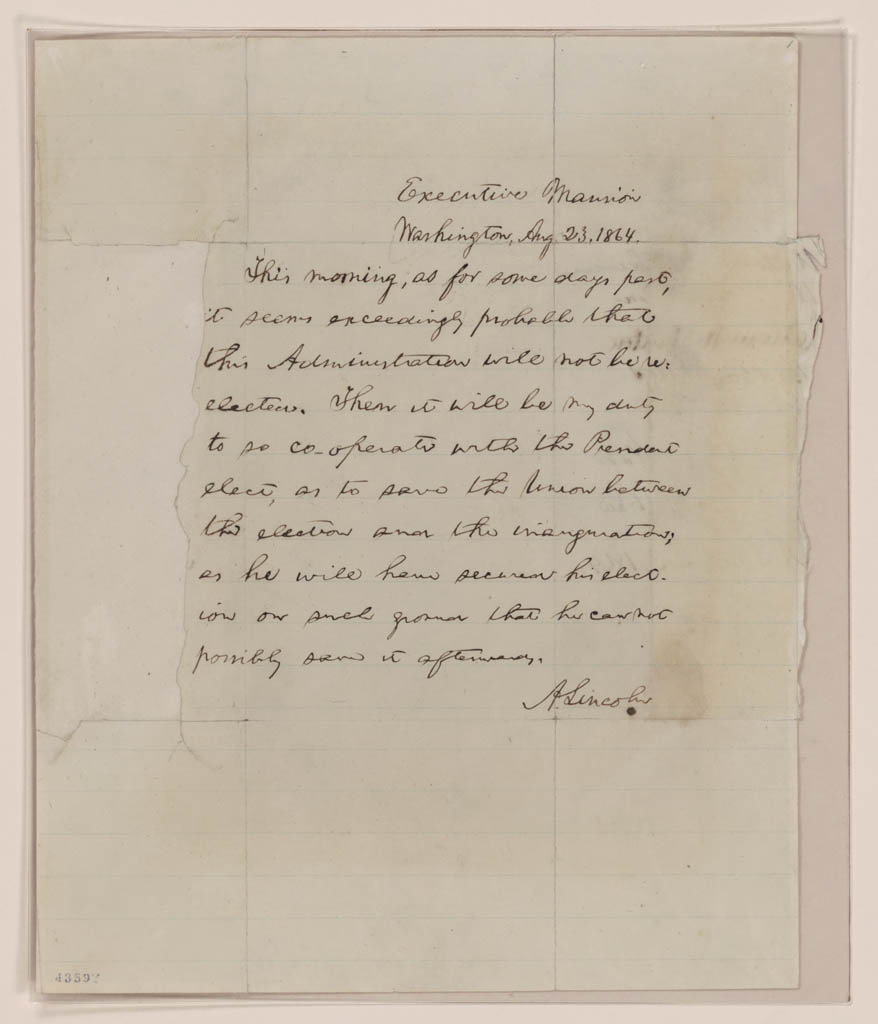
Somehow, I was unaware of the existence of a document which Abraham Lincoln drafted and had endorsed by every member of his cabinet, though unseen by them, and which remained sealed until November 11, 1864. These were not only dark times for the nation, embroiled in civil war for over three years at that point, but gloomy for the war-weary north which could not end the conflict against the greatly outmanned but tactically superior south. Politicians and citizens were unhappy with the perceived lack of success and progress at such high cost—the death and disabling of so many of her sons in the prime of their lives.  Lincoln detected that popular sentiment was such that he would not be reelected. Thus, he drafted his memo, which read, 

This morning, as for some days past, it seems exceedingly probable the this
Administration will not be reelected. Then it will be my duty to so cooperate
with the President-elect as to save the Union between the election and the
inauguration: as he will have secured his election on such ground that he
cannot possibly save it afterward (Coolidge 139). 

Lincoln seemed to think that the north had had enough of this war and would rather sue for peace and allow our sea to shining sea to be two nations rather than continue with such devastating effects a war they could see no end to. He appears dedicated to whatever he could do to preserve unity.

Of course, several things changed the course of Lincoln’s fate in his bid for reelection that swept him decidedly into office for a second term. There was the north’s victorious show in The Battle of Atlanta, Fremont’s withdrawal from candidacy, the Democrats internal division between the Copperheads—eager to end the war now—and the War Democrats, and the fact that no electoral votes were counted from the Confederate States of America.  But, Lincoln could not see the future. He was preparing for what he saw as the worst.

There is a well-worn battle taking place in our world. It is not technically between two factions. It might be framed as Christianity versus other world religions. It could be cast as New Testament Christianity versus so many individual denominations. Yet, internally, there are multiple stressors to the biblical unity Christ prayed and died for, too (John 17:20-21). 

Christians are soldiers (Eph. 6:10ff), but our battle is not with flesh and blood (Eph. 6:12).  Our war and weapons are not “of the flesh” (2 Cor. 10:3-4). All the same, many have grown weary of fighting the good fight and not a few feel as though we are fighting in a losing cause. The restoration ideal of doing Bible things in Bible ways seems archaic and impossible to growing numbers of saints. Some fight with equal vigor to preserve traditions not rooted in Scripture, and unnecessarily harm the great cause. 

As we strive at all costs to be true to the pattern of New Testament Christianity, let us do so going to whatever lengths we can to maintain unity wherever possible. Not for a moment does that mean sacrificing truth or compromising even one “thus says the Lord.” But it does mean embracing a spirit of love and protectiveness for the precious Bride of Christ, the church. That involves loving and working with those who are the members of it. 

Ultimately, the Lord’s cause will prevail. His victory is as assured as every other divine promise. We must be striving on His side to share in that. For now, we cannot give up the fight! Let’s cooperate wherever and however we can, standing unitedly on the foundation of Christ and His will. The rest (which is most of it), we will leave to our Great Commander In Chief!

Works Cited:
Coolidge, Louis A. American Statesman Ulysses S. Grant (New York: Chelsea House, 1983).

blind-memo-recto-al0204

More Light Than Heat

Neal Pollard

In Shakespeare’s Hamlet, Polonius counsels his daughter, Ophelia, about Hamlet’s vows of love, saying, “When the blood burns, how prodigal the soul lends the tongue vows. These blazes, daughter, giving more light than heat, extinct in both even in their promise as it is a-making, you must not take for fire” (Act 1, Scene 3). Her point is that passionate desire causes a man to profusely promise anything in order to get what he wants, but it may lack substance and trustworthiness. It appears more promising than it really is. We’ve likely all witnessed and experienced this. What good is a fire if it doesn’t produce heat?

When it comes to discussing religious matters, things can get pretty heated. Unfortunately, as the temperature rises, solid conclusions are elusive because there is much more emotion than illumination. Inasmuch as God’s Word is to be a light and lamp (Ps. 119:105), these are times where all are benefited by more light than heat. Too often, instead of proving or disproving something, we resort to personal attacks on the other person, assert a position appealing to a variety of alleged proofs or rationales without benefit of a singular Scripture, or we’ll abuse, distort, and contort a passage to say what it does not mean. As battle lines are drawn and trenches are dug, the two sides become wider and more intensely apart while the matter under discussion fades into the background. 

Because the New Testament repeatedly commands unity (Eph. 4:1ff; 1 Cor. 1:10-13), we must “pursue the things which make for peace and the building up of one another” (Rom. 14:19). Are there tangible actions we can take to pursue more light than heat in these matters that distress our unity?

  • Genuinely listen. That doesn’t mean merely hear what the other is saying, but listen open-mindedly, seeking to understand what the other person is saying. Don’t presuppose or listen with prejudice. Truly, “He who gives an answer before he hears, It is folly and shame to him” (Prov. 18:13). 
  • Genuinely love. Love for God should be preeminent, but such love is not in opposition to brotherly love. In fact, they are intrinsically bound together (1 Jn. 4:20-21). While love does not mean compromising truth, it will prompt us to do what love requires (cf. 1 Cor. 13:4-8)—be patient, be kind, act becomingly, don’t be provoked, etc. 
  • Genuinely learn. Do we really know their view or merely think we do? This requires great self-examination and disciplined introspection. If we champion a position and have argued the matter before, we may think our fellow disputant believes what he or she does not actually believe. Preconceptions eclipse thoughtful interaction. We should ever be students, making sure we’ve not missed it. 
  • Genuinely long. Peace and unity will sometimes be impossible, but we shouldn’t let that be because we didn’t sincerely seek it. By lovingly seeing the other person as an eternal soul for whom Christ died (as well as any and all who would be influenced by the other person), surely we will strive to gently, civilly, and earnestly discuss the matter (cf. 2 Tim. 2:24-26). 

We live in divisive times. They are carnal times, full of “bitterness and wrath and clamor and slander…with all malice” (Eph. 4:31). We must remember that the “anger of man does not achieve the righteousness of God” (Jas. 1:20). What does? God’s Word (Jas. 1:18-25)! Too often, we’ll be locked in matters of truth and error and must uphold truth. But let’s be so careful to discern when that’s the case and always speak the truth in love (Eph. 4:15). Such will produce light rather than heat!

Burn Light Wood Heat Fire Red Burning Flame