DAFFODILS THAT DON’T BLOOM

Friday’s Column: Supplemental Strength

brent 2020

Brent Pollard

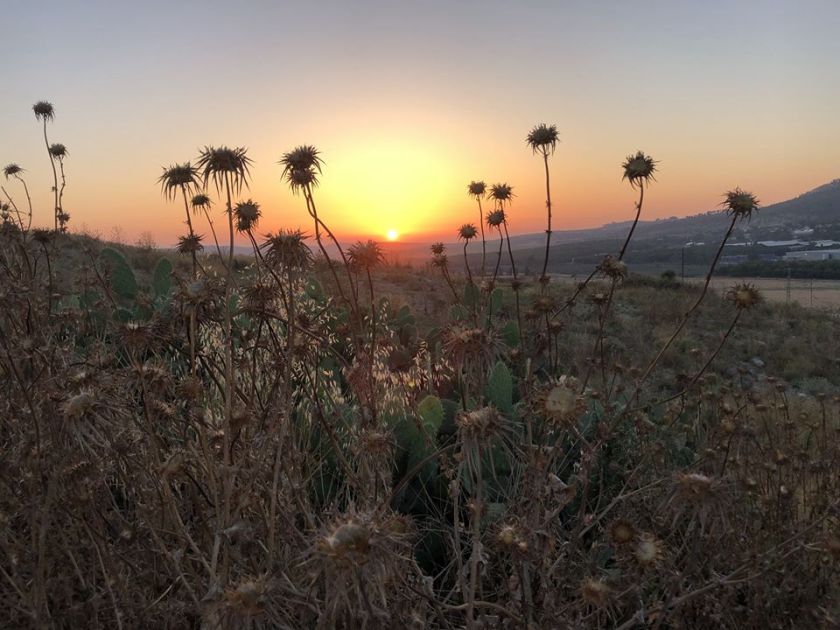
Like the robin, daffodils are a harbinger of spring. They begin blooming in late winter and create anticipation for the pretty spring flowers following. We planted our place in Appalachia with daffodils nearly 30 years ago. Today, we get few flowers in places where we planted them. We do have healthy-looking, green blades but no blooms. By their nature, a single daffodil bulb becomes an entire colony of bulbs within a few years because it reproduces by dividing at the bulb. Once so many bulbs are packed into a small space, the plant cannot receive enough moisture or nutrients to produce the desired flower. So, on the one hand, it’s great because just a few daffodil bulbs can yield an entire daffodil garden in a few years. On the other hand, to keep daffodils flowering one must periodically dig up these new bulbs and space them out so conditions remain conducive to their overall health.

When we think about Jesus’ parable of the sower, we likely think of the various soils presented therein. We pray we find the good soil as we go to plant the seed but realize since few are finding the strait gate and narrow way (Matthew 7.13-14), most of our seed falls on the other three poor soils. Of those poor soils, Jesus highlighted a group in whom the seed never produces fruit since they become choked by thorns (Luke 8.14). These thorny-soiled hearts didn’t recognize how detrimental their thorns were since they took the form of the cares and riches of the world. In like manner, we don’t see the problems posed by a bunch of healthy-looking, green blades where our daffodils ought to be. We keep hoping they will put on blooms, bringing us the testimony of God’s wondrous creation. Yet, conditions underground won’t allow for that.

Might I suggest those possessing thorny-soiled hearts can have a similar problem as the daffodil? It may be they don’t just wither and die (i.e. fall away). It may be they are sitting on the pew, where we planted them, looking as if they hold promise, but never producing blooms. Why? It may be their fruit is being crowded out by conditions at their root. We see no prickly thorns gathered around them. Yet, there are cares and concerns on the inside choking out God’s Word all the same. It is confounding since they may even greet us with a smile on their faces while being inwardly consumed by such things as anxiety.  If we do nothing, though, the results will be the same as if it were thorns.

It may be we need to lift these unproductive Christians to help them settle in a better environment conducive to their growth. We need to help them remove all the things choking their heart. We need to nurture them. Though we’re more considerate of the newborn in Christ, the overcrowding of the heart is a challenge potentially taking place even in the one who obeyed the Gospel years ago. Be your brother and sister’s keeper (Galatians 6.1; James 5.19-20). If you see a pretty green blade that never flowers, dig a little deeper. If one’s heart is being crowded out, help him find the space to bloom (Hebrews 3.13).

5262209_c01205ab

Longing For Hope

Thursday’s Column: Captain’s Blog

IMG_0806

Carl Pollard

We’ve spent three weeks looking at a few areas where the world is desperate. They long for guidance, purpose and finally, hope (1 Pt. 5:10).
We have abused this word. We say things like, “I hope there’s some food at the house” or, “I hope the weather is nice tomorrow,” and “I hope my team wins the super bowl.” The hope that’s mentioned is scripture has a completely different definition.
The word in Romans 15:13, for example, is the Greek word “elpis. “Now may the God of hope fill you with all joy and peace in believing, so that you will abound in hope by the power of the Holy Spirit.” This word is defined as, “looking forward to something with confidence” (BDAG 319).  It is an expectation that we have as Christian. We have hope because we call God our Father.
The world does not and because of this they have nothing to hope in. If they look forward to anything it’s pay day or the weekend or vacations. Every one of these come to an end and once again they are left with no hope.
Don’t get me wrong, we look forward to these things too. And there’s nothing wrong with that, but this isn’t what we look forward to solely. We know that there is more to life than vacation.
1 Peter 5:10 is an incredible verse that describes the hope we have. It says, “After you have suffered for a little while, the God of all grace, who called you to His eternal glory in Christ, will Himself perfect, confirm, strengthen and establish you.”
This is true hope. This is the God of the universe Himself that will do this for each one of his children. We may not see it every day, but the world is lost and desperate. We have what they need. They’re desperate for guidance because they’re lost. They’re desperate for purpose because they have none. They’re desperate for Hope because the world offers nothing to those who are struggling.
God has entrusted us with the answers to life, so what are we doing with this knowledge?
66510003_10156443547920922_292784965630820352_o

How To Make The Best Of A Bad Situation 

Tuesday’s Column: Dale Mail

IMG_1381

Dale Pollard

Rattlesnakes are large, venomous snakes that live throughout North and South America. In my humble opinion, they are one of the most terrifying creatures on the planet–from the hair-raising sound of that rattle to those intimidating fangs that can be up to six inches long. The bite from one of these monsters is excruciatingly painful. If you were to be bitten, at first you would experience a tingling feeling, followed by an intense burning sensation. After this you would feel lightheaded and begin sweating profusely. Your vision would become blurry, and each breath would be more strained than the last one.

If left untreated, it can be fatal to humans. All of that sounds terrible doesn’t it? What good could possibly come from a deadly rattlesnake? Well, at some point in history, somebody looked at these snakes and decided that they would make a beautiful pair of boots. That’s how to make something great, out of something terrible. There is no doubt in my mind that the inventor of snakeskin boots was an optimist. He could see the good, even when staring into the dark vertical pupils of pure reptilian evil.

When faced with hardship, that simply comes from living in a fallen world, it can be a challenge to see the silver lining in each dark cloud. American basketball player, Charles Barkley once said, “Sometimes the light at the end of the tunnel is a train.” That’s definitely how it can feel sometimes! Although we have books in the Bible like Job and James that teach us how we should view our earthly struggles, here are just a few reminders from our God.

Number one, remember that each day is worth rejoicing over. Psalm 118:24 gives us the reason why— because today is another day that the Lord has made. It’s not my day; it’s God’s day. Reminder number two, what we can’t see in times of difficulty, is worth waiting for. Paul would inform us in Romans 8:27, “But if we hope in what we don’t see, we wait for it with patience.” In the muck of life it may feel at times that there’s just no way out. Just because you may not see the end in sight, rest assured that our hope is in a promise that was put in place before time itself began (2 Timothy 1:9). The last reminder is simply this, that God made the world you are living in and Jesus is currently creating the world we will one day live in (John 14:1-3). I firmly believe each day that passes can only mean that heaven will be that much more beautiful. If God created this world in six days, in all it’s beauty, imagine the splendor of our home to come. Now, if that doesn’t make a bad situation a good one, I don’t know what will! Here are the lyrics to an optimistic hymn that I hope get stuck in your head for quite a while.

“I care not today what tomorrow may bring, if shadow or sunshine or rain. The Lord I know ruleth o’er everything, and all of my worry is vain. Living by faith in Jesus above, trusting confiding in His great love. From all harm safe in His sheltering arm, I’m living by faith and feel no alarm.”

rattlesnake boots
One of two pair of rattlesnake skin boots I own.

“High Carb Diet”

Thursday’s Column: Captain’s Blog

IMG_0806

Carl Pollard

We all love a good piece of bread. Whether it’s garlic bread, cheesy bread, or just plain bread, everyone loves it. Bread is the greatest invention of all time, maybe ever (can you tell I wrote this before lunch?).
Jesus is described as being our spiritual bread. In John 6:35 Jesus is the “bread of life.” And in verse 32 He is called “the bread out of heaven.” Why would Jesus be called bread? When we take a closer look at these two verses, we can notice a few reasons why.
“Jesus then said to them, “Truly, truly, I say to you, it was not Moses who gave you the bread from heaven, but my Father gives you the true bread from heaven” (John‬ ‭6:32‬). There’s an analogy given by John that helps us to wrap our mind around Jesus being the Bread. Moses provided manna in the wilderness for Israel (bread from heaven), and Jesus (the bread) was sent from heaven to feed us spiritually.
It was amazing growing up with mom, THE Kathy Pollard, as the cook. And many times we would describe her food as “out of this world.” When we think of Christ, the Bread out of Heaven, He is literally out of this world.
Point is, we need to be feeding ourselves with this Bread. We need to be consistently meditating on God’s word, continually making it apart of who we are, and courageously manifesting it in our everyday lives.
“Jesus said to them, “I am the bread of life; whoever comes to me shall not hunger, and whoever believes in me shall never thirst” (John‬ ‭6:35‬). Two words in this verse are in the present tense– “comes” and “believes.” This means that for Jesus to be our bread we must continually come to Him and believe. Jesus is nourishment to those who are spiritually starved, mentally broken, and emotionally lost.
No matter how much bread we physically eat, it will never compete with how full and complete we will be in Christ. Are we turning to Him?
12764594_10208245679077795_625453659382235834_o
Just an example of some of the bread mom sustained me with growing up

Lessons from the Apostasy

Wednesday’s Column: Third’s Words

20638721_440919206307154_5479040032968788217_n

Gary Pollard

One of the more difficult passages to understand in scripture is found in II Thessalonians 2. This chapter talks about a figure known as the Man of Lawlessness. Theories abound concerning his/its identity which, thankfully, is immaterial to our salvation and will not be the focus of this article. I would prefer to focus on the apostasy (also translated “rebellion” [ESV] or “falling away” [KJV]) preceding the appearance of the man of lawlessness in our passage. 

Paul wrote to the church in Thessalonica because some false teachers, evidently posing as Paul and Sylvanus (2.2), had convinced several members that they had missed out on the second coming (2.1-3). Paul begins by telling them not to believe anything other than what he had already taught them (2.2, 5) and rehashes a proof he taught in person (2.5). Before the second coming, two things had to occur: 1. The Apostasy, 2. The Man of Lawlessness. This would not be a sign of the second coming but an event that would be obvious (2.8, 9) and of unknown duration, eventually brought to an end by the appearance of Christ (2.3, 8). Clearly this had not happened yet or it would be an irrelevant comfort or proof to the Thessalonian church. 

Whoever/whatever the man of lawlessness may be, no one argues that its advent is preceded by the apostasy (2.3). The construct of the original language seems to describe this apostasy as being a major, far-reaching event rather than an isolated or regional one. Regardless of the timing of its advent (as in, has it happened or is it yet to come?), the apostasy was or is to be a tragic event. 

The word is ἀποστασία which means, “Defiance of established system or authority” (BDAG 121). Keeping the context in consideration this apostasy is an event characterized by a mass “falling away” from the church. It is a tragic event. To quote a great fictional philosopher, “Today is not that day.” It is easy to get caught up in the doom and gloom of current events and think, “There’s no hope.” 

Bear Valley Bible Institute recently released their annual report on the work being done through its mission efforts. This is just one school and one evangelistic effort among hundreds, but the church is doing great work in a world that seems to falling apart. Last year alone over 800 preachers were trained and over 3,000 people converted. Again, this is just one great effort among many. The soil is still fertile. There is still work for us to do. There is still hope. When we get overwhelmed by the political chaos in our own country or stressed about events overseas, let’s remember this: this world is not our home, and with our limited time here there is still so much good to be done! 

15138380_10208166212493957_8859475062011671645_o
Photo credit: Keith Kasarjian (Limbe, Cameroon, near Bear Valley Bible Institute extension)

Lessons From Adversity (1): Let Go and Let God

Friday’s Column: Supplemental Strength

brent 2020

Brent Pollard

We find God not in an anxious mind, but a still heart. God exhorts us in Psalm 46.10a, “Be still, and know that I am God” (KJV). Contextually, this statement occurs amid the possibility of much turmoil. We admit sometimes we must move forward to receive God’s deliverance, as the Israelites did when pressed by pharaoh’s army at the Red Sea (Exodus 14.13-16). Yet, there are also times when we can do nothing. For those times, we’re to be still.


What do we mean by “still?” Without trying to sound like a Hebrew scholar which I’m not, allow me to suggest by using this word God is saying, “Drop your arms!” In other words, quit fighting or putting up a resistance. The New American Standard states in Psalm 46.10a we are to “cease striving.” Each of us reach a point in our life when the time for our struggle ends and we must enter the vestibule of God’s Providence.


What do we do, for example, when the doctor says we have cancer? The Kubler-Ross model of grief puts anger as third on its list of seven stages. We all experience grief differently, so anger may come either sooner or later for you than at stage three. However, I can tell you from experience, anger is something you feel dealing with cancer. “Why me? Why not this sinner over here? I never smoked. I never drank. I’ve been chaste.” Yet, God says, “Be still, and know that I am God.” He has shown us through His Word, His grace is enough (2 Corinthians 12.8-10). And for any lingering anxiety, there’s prayer. What does prayer do? It grants peace we cannot even comprehend (Philippians 4.6-7).


Though an entire lesson can be given about Providence, let me briefly suggest why it’s more awesome than the miracles for which people beg when they hear “cancer.” For a miracle, God instantaneously suspends natural law, and directly intervenes. It’s amazing, I admit. It shows His power in a way one cannot ignore (e.g. parting the Red Sea). Yet, it’s also not the thing to which He must resort to heal one’s body of a disease like cancer. His Providence is there to use the immune system which He placed within us. Providence is quiet. It requires that we be still to observe it. When we do, we see God in a thousand different things. Like a domino stacking champion, God aligns the bits and pieces that, when struck, fall into place revealing the beautiful mosaic He planned for us all along.


The more still you make yourself throughout life, the more you see His Providence. Through prayer comes peace, yes, but so, too, the wisdom to know when to move and when to be still (James 1.4-6). So, let go and let God. Live faithfully and trust Him do the rest.

1930543_24646795921_6267_n
view from Pike’s Peak

My God Is So Big

Tuesday’s Column: Dale Mail

IMG_1381

Dale Pollard

My problems are so big, my worries so mighty, there’s nothing my anxieties can’t do. Wait, that’s not how that song goes. It’s been said that the there are more stars in the known universe than all of the sand on earth combined. That being said, in just one grain of sand there are more atoms than all of the stars. That’s pretty amazing. Our planet is but a speck in the grandeur of space. Countless stars, planets, galaxies, lightyears and somehow God is well aware of the happenings of people.

Have you stood on the mountain tops? Have you observed the power of the oceans as the waves crash on the shore? Has your heart almost stopped after the vibrating sensation of a thunder clap resinates in your chest? The might of the Creator is everywhere in the world around us and at times it just demands to be noticed.

1 Kings 19:11-13 is a section of scripture that is mysterious and fascinating. The Lord of hosts is about to show Himself to a depressed and exhausted Elijah, but in a way that he would never forget. “The Lord said, ‘go out on the mountain in the presence of the Lord, for the Lord is about to pass by.’ Then a great and powerful wind tore the mountains apart and shattered the rocks before the Lord, but the Lord was not in the wind. After the wind there was an earthquake, but the Lord was not in the earthquake. After the earthquake came a fire, but the Lord was not in the fire. And after the fire came a gentle whisper. When Elijah heard it, he pulled his cloak over his face and went out to stand at the mouth of the cave. Then the voice said, ‘what are you doing here Elijah?’” In the hush of Horeb, Elijah seeks to avoid the troubles of his world. The acoustics of the mountainous area along with the time spent in silence must have made the shattering rocks, raging fire, splitting hills, and rumbling earth all but deafening and definitely a terrifying display of divine power. Then in sharp contrast, a still whisper comes. This gentleness, no doubt, is the reason Elijah decides to cautiously emerge from his hiding place. God is teaching His worn-out servant a lesson that holds true for us today.

The fact is, there is no more God, His wisdom, power, and presence in an earthquake than there is in the sweet breath of a blooming flower. The quiet ticking of a wrist watch reveals just as much intelligence and purpose as does the striking of a clock tower’s bell. One may walk out into an open field at night and stare up into the vast sky, lit up with numerous twinkling stars and declare, “I’ve found God!” But God is no more in the sky than He is in the blades of grass flattened beneath your feet. The question came to Elijah from that still voice, “What are you doing here?” To the prophet, his problems were too great and too large and his solution was to run and hide. God, in a magnificent way, is trying to remind Elijah of his place. Our place in life is not to take matters into our own hands or solve life’s many difficulties on our own. The answer is not to run away, but to walk humbly with our awesome God. He is strong enough to lift our burdens, wise enough to counsel us, patient enough to allow us to learn, and loving enough to constantly forgive. My God is so big, so strong, and so mighty, there’s nothing my God cannot do— for you, too. 

28661198_10215059820467071_276448063235616888_n
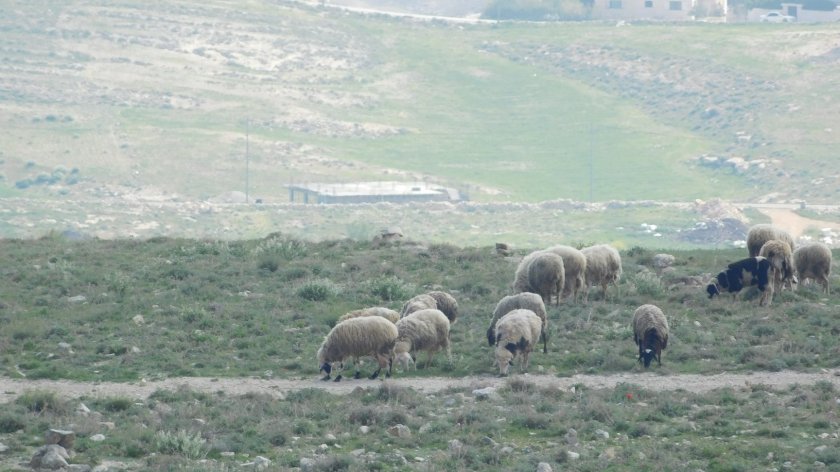
A view from Mt. Carmel (Israel)

“One Will Go Forth”

Neal Pollard

In Matthew’s account of the birth of Jesus, the writer quotes the prophet Micah. This prophet, whose ministry was to both the northern and southern kingdoms (1:1), writes much to warn these divided kingdoms united in sin and rebellion against God. But, he also extends hope for the future. He speaks of One to come, who would come from the same little village the great king David called home (1 Sam. 16:4ff). This coming king would be characterized in several ways, which Micah writes about in Micah 5:

  • From an unlikely place (2)–This coming one would defy men’s expectations. 
  • From the Lord (2)–This coming one would be given from God. 
  • From the days of eternity (2)–This coming one would be God Himself
  • For the purpose of ruling (2)–This coming one would come with authority.
  • For the shepherding of His flock (4)–This coming one would come to lead men.
  • For our peace (5)–This coming one would come for our good. 
  • For deliverance (5-6)–This coming one would come for our salvation. 

As Jesus conducted His earthly ministry, His works and teaching fulfilled over 300 prophesies written down in every major division of the Old Testament books. But there are prophesies, like Micah 5:1-6, which He fulfilled simply by being born and pursuing His ministry. These aspects of His work had to be hopeful and comforting to those with hearts of faith who lived during that time. But, as we look back over two millennia, it still has relevance to us today.  He still defies our expectations, exceeding them. He still is God’s gift for us. He still bears the same nature. He still must be Lord of our lives. He still must be the leader of our lives. He still gives peace. He still delivers. 

As you count your blessings today, look beyond the earthly and material. If there are things going poorly for you right now, be reminded of the greatest blessing of all. Because God loves and cares for us, He sent One forth for us. He accomplished His work and now has returned to the Father’s right hand. At His appointed time, God will send Him forth to judge. Those who have embraced and followed Him will enjoy eternal deliverance. For that, be thankful!

29342598_10155419194005922_4642581449059336192_o

After Cuts Become Scars

Neal Pollard

David was broken and battered by sin. He would feel its effects from his public life to his private life for the rest of his life. In the aftermath of his actions with Bathsheba and the subsequent cover-up, the wounds of sin left visible scars. Nathan’s accusing words perhaps ringing in his ears, he sits down to pen by inspiration the haunting, but hopeful, 51st Psalm. We often dwell more on the first part, the multifaceted description of sin and the more beautiful pictures of forgiveness. But, to me, the most beautiful part of the psalm is when David starts using the word “then.”

Satan would love for sin to defeat us. He would like the guilt to overwhelm us, to keep us from the restoration David longs for here. David is speaking prospectively, asking for a clean heart, renewed spirit, spiritual fellowship, joy and sustenance from God. But, he asks for it for a purpose. In doing so, he shows us what God wants to do with us and for us after our “cuts” become “scars.”

After the cuts become scars…

REACH OUT TO THE LOST (Psalm 51:13). On the other side of repentance, David was anxious to help others reeling from their spiritual wounds. As we overcome through God’s help, we can be a tool in His hand to relate to and rescue others struggling just like we did. It would be far better to have never gone down the road of sin, but having truly come back we can understand the desperate, dark place transgressors are walking. 

BE A FAITHFUL WORSHIPPER (Psalm 51:14). David, the master musician, had lost his song in the far country. He yearned for joyful song. Worship loses its power and purity in our lives when we are living in darkness. We feel hypocritical and empty, just going through the motions. But, back in His glorious light, we can experience that lifted up feeling once more. David shows us the blessing of restoration, a spirit renewed to enjoy further renewal in faithful worship.

GIVE GOD SACRIFICES (Psalm 51:15-17). David mentions the sacrifice of praise, a broken spirit, a broken and a contrite heart. It is obvious, from context, that these sacrifices would reveal themselves in his service to God and to others. This is not merely guilt-driven service, an effort to make amends for the evil influence of his sin. Having been made whole, David has a clarity of purpose that appreciates better what God wants from him. We can be fruitful and useful to Him, scars and all. 

ACCEPT GOD’S DELIGHT (Psalm 51:18-19). How many times did David relive those moments from the rooftop to the prophet’s visit? How often did he wish he could just go back and undo it all? How long did he wrestle with accepting God’s forgiveness and wondering if God could take him back? He shows an appreciation for the prospect of God’s delight. He rightly feels responsible for others, and he wants to lead them to do what’s right. But, I love what he anticipates. He knows God will be delighted with the offering.  Did you know that? Did you know that God can delight in you again, when you bring him your sin-scarred life and offer your righteous sacrifices? He doesn’t want to discard you. He wants to delight in you!

It must have continued to be hard for David. He had reminders everywhere. He could not undo his past. But, he did the right thing. Having dealt with his past, he focused on the present and looked to the future. That’s what God wants us to do after our cuts become scars!

people-2566201_960_720

Adopting Orphans

Neal Pollard

It was nearly twenty years ago that I walked with Keith Kasarjian through an orphanage in eastern Ukraine. I cannot remember how many children were there, but there were many. My first impression was their appearance–unwashed and tattered clothes, dirty bodies, and many had mussed or shaved heads. But my overwhelming impression was regarding their behavior. They clung to us, wanting our attention. They couldn’t speak much, if any, English, and our Russian was sparse. There was a hunger in their eyes, not for food but for attention and affection. While we were not there for very long, the memory of that evening is as fresh today as it has ever been. They had no family, few possessions, and terribly uncertain futures. Legally, culturally, and financially, adopting dozens of foreign children was virtually impossible. Not a few tears were shed when we said goodbye and as we looked back at that evening.

An orphan “is someone whose parents have died, are unknown, or have permanently abandoned them” (Merriam Webster online; Concise Oxford Dict.). While Scripture mentions physical orphans 36 times, including twice in the New Testament, the concept of spiritual adoption is an important way the New Testament describes what God does through Christ to make us part of His family. Particularly, Romans 8-9, Galatians 4-5, and Ephesians 1 describe this process.

Consider how we appear to God. Even our righteous deeds are like filthy garments (Isa. 64:6). He even figuratively described His Old Testament people as like castoff children abandoned and helpless whom He bathed, clothed, and took care of (Ezek. 16:1ff). But, that figure could certainly be applied to us today. Scripture depicts sin as making us stained (2 Pet. 2:13), spotted (Eph. 5:27; 1 Pet. 1:19), and unclean (Rev. 21:27). Yet, God saw us and loved us (Rom. 5:6-8). He wanted us to be part of His family (Eph. 2:19).

The difference between God and us is that He is able to take all of us. He wants to, and He has the resources and power to make it a reality. He feels perfect pity for us who are orphaned by sin, and He acts on that compassion by inviting us into His family. If we accept His offer, He makes it happen. That being the case, why would we ever reject what only He can give? We can go from being the lowliest reject to being a child of God!  Truly, it doesn’t seem like much of a dilemma. If we see ourselves, spiritually, as we are, we will anxiously accept what only He can give us.

Ukraine 2003

Every Day Is “New” With God

Neal Pollard

  • We sing a new song (Ps. 40:3; Isa. 42:10; Rev. 5:9).
  • We gain new strength (Isa. 40:31).
  • We have a new name (Isa. 62:2; Rev. 2:17).
  • We have a new covenant (Jer. 31:31; Heb. 8-9). 
  • We have God’s compassions which are new every morning (Lam. 3:23). 
  • We have a new heart and a new spirit (Ezek. 36:26).
  • We observe a new commandment with each other (John 13:34).
  • We walk a new life (Rom. 6:4). 
  • We are new creatures (2 Cor. 5:17). 
  • We are part of that new man, united with all children of God (Eph. 2:15).
  • We have put on the new self (Eph. 4:24; Col. 3:10). 
  • We have been given a new and living way (Heb. 10:20).
  • We are looking for new heavens and a new earth (2 Pet. 3:13).
  • We anticipate the day when Christ makes all things new (Rev. 21:5).

Even though these promises were made thousands of years ago,  they are as fresh and bright today as they have ever been. Some help us overcome the guilt of our past. Others give us strength for the present. All of them give us hope for the future. We don’t need “new truth,” but so many of the truths of Scripture deserve our renewed dedication and attention. As a New Year descends, try and put your arms around all the daily renewal our great God makes available to us on January 1st and every other day of the year! 

” Therefore we do not lose heart, but though our outer man is decaying, yet our inner man is being renewed day by day” (2 Cor. 4:16). 

800px-22Wishing_You_a_Happy_New_Year.22

I-N-V-O-L-V-E-M-E-N-T Equals Church Growth

Neal Pollard

The early church grew (Acts 2:41; 5:14; 6:1,7; 9:31; 11:24). As we read of this growth explosion, we see the key role member involvement played. Christians were spreading the word (8:4), involved in each other’s lives and in the lives of the lost around them. This is such a simple concept, but churches not practicing it are not growing. What is involved in involvement?

  • I–“I” am the heart of involvement. I must resolve to be involved. I must do my part, for I will give an account for my level or lack of involvement (1 Cor. 3:8).
  • N–“Negativity” is the enemy of involvement. “I can’t help.” “It won’t do any good.” “I don’t like working with that person.” Listen closely. Involved Christians rather say “I can do” (Phil. 4:13) and “we are well able” (Num. 13:30).
  • V– “Visitation” is a part of involvement. Matthew 25:34-46 confirms it. Non-Christian visitors, sick, imprisoned, and needy folks need it. Those who do it are richly rewarded, and those who are recipients of it profoundly appreciate it.
  • O– “Obedience” is the cause of involvement. Faithful Christians believe the commands to make disciples (Mat. 28:19), build up brethren (Rom. 14:19), and meet needs (Js. 1:27).
  • L– “Love” is the motive of involvement. Paul says good deeds, without love, are profitless (1 Cor. 13:1-3). The counsel of Scripture is “by love serve one another” (Gal. 5:13).
  • V– “Victory” is the goal of involvement. By being involved, we help others win the victory (Js. 5:19-20), we help the cause of Christ advance, and we aid our own walk in the light that leads to eternal reward (1 Jn. 1:7).
  • E– “Everybody” is the scope of involvement. What able-bodied Christian is excluded from the work God has given the church? Once, a man did nothing and gave every excuse imaginable. We remember how that turned out (Mat. 25:28-30).
  • M– “More” is the adjective of involvement. That is, “more involved” and “more people involved.” Has there ever been a church with too many involved? God is able to do more than we ask or imagine (Eph. 3:20), and He wants to see us always trying to do more for Him!
  • E– “Evangelism” is the fruit of involvement. Active churches attract the curiosity of the community. Those involved in the church’s work naturally grow more spiritual-minded, and by this grow more bold in sharing the gospel.
  • N– “Now” is the time for involvement. What in our lives do we definitely know will change between now and the never-seen tomorrow (Prov. 27:1)? Let’s kill the excuses! Resurrect the enthusiasm! Start today!
  • T–“Teamwork” is the mindset of involvement. We’re to work together. No one man, no staff, no eldership, no group of deacons or others can or should do the work of an entire congregation. The local church is a team.

To become adequately involved, let’s ask three questions.

“What needs doing in this church?”
“Who needs help in doing it?”
“What can I do?”

Be an Isaiah, a child of God who enthusiastically says, “Here am I, send me” (Isa. 6:8)!

41824748_10216815660249540_2034412809957146624_n

Resolutions Reinforcements–#4

Neal Pollard

Well, it has been nearly a week. Can you remember what your resolutions were? The holidays are over and you’re back in your routine. Life happens and it can eclipse our view of the better self we intended to be. Hopefully, this can be a reminder to regroup and maybe rededicate yourself to those well-thought-out resolutions. One thing that can help is “hope.”

Hope in the Bible is “the looking forward to something with some reason for confidence respecting fulfillment” (BDAG 319).  Now, with resolutions, we can have a hope that the goals we’ve established can be reached. But in harmony with an earlier reinforcement, we can have a hope grounded in God’s ability to strengthen us and providentially provide for every legitimate goal we have. If our resolutions will make us better Christians and servants in the kingdom, there’s great reason to have hope.

Make sure your goals are reasonable. Otherwise, you cannot have much hope of achieving them. If you have $100,000 in debt and your goal is to be debt-free next month, you won’t have hope to help you. Have intermediate goals that will get you from where you are now toward where you want to be.

You read about hope not only in both Testaments, but in all the different time periods of Bible history. Job longed for it during the early days of earth (Job 7:6). So did Naomi in the period of the Judges (Ruth 1:13). David spoke of it (1 Chronicles 29:15). Hundreds of years later, near the end of recorded Old Testament history, Ezra (10:2) and Esther (9:1) did, too. It features prominently in Israel’s song book (cf. Psa. 42:11). The New Testament frequently talks about it–some 73 times! It is a central driver in people’s lives.  Lean on it to keep you on track and moving toward your goals. Don’t lose hope!

anchor2

Putting A Price Tag On The Value Of Our Youth

Neal Pollard

Perhaps you’ve seen the news story about the six year old boy who made $11 million dollars this year on YouTube reviewing toys. Ryan, of Ryan ToysReview, has been reviewing toys since he was three years old. He has over 10 million subscribers to his channel, which had a 40-week streak of most viewed YouTube channel this year. He even had NBA star Kevin Durant appear in one of his video reviews in September. His videos are described as simple, innocent, and personable (Samantha Schmidt, Washington Post, 12/11/17 via www.washingtonpost.com/news/morning-mix).

That’s incredible! Such savvy, drive, and entrepreneurship. One of the traps we need to avoid is selling the intelligence and abilities of young people short. That’s even truer in the church than in the world.

When I look at our youth, I see perhaps the most evangelistic demographic in our congregation. Teens invite classmates to church just to “see what it’s about.” Then, our other teens reaching out and welcoming them into the group. They have a fearlessness about them that can drive the rest of us to greater effectiveness in this arena.

When I look at our youth, I see tenderheartedness. It doesn’t just drive them to be baptized or to publicly respond to the invitation. It moves them to be compassionate, to help the unfortunate or to be concerned for those who others may overlook. They are shamed by their sins and moved by praising the greatness of God.

When I look at our youth, I see a boundless resource of energy. They are active and alive, and when they channel that to serve–whether our elderly, the homeless, or each other–it’s exciting to see. You see it when they get together, talking and laughing. So many of us feed off of their vitality.

When I look at our youth, I see hope and idealism. Life too often depletes them of these priceless commodities. We need to do more to build them. Hope is about confident expectation, and isn’t the Christian life to be founded upon that (Romans 8:24)? Idealism may be seen as having higher expectations than are realistic, but it’s this mountain-moving faith that causes churches to grow and do what only can be done when God is factored into the equation. He is perfect and able (Ephesians 3:20-21).

Through their evangelism, example, energy, and expectation, our youth are of inestimable value to the church as a whole. Let’s nurture them and help them grow. Let’s give them opportunities to make an impact right now. All of us will reap infinite value from these infinitely valuable ones (cf. Matthew 18:1-6).

17523151_10212884844293080_7163968835894994377_n


A Lonely, Lonely Man

Neal Pollard

My sons and I often say that we don’t really want to know much about our favorite singers. It seems that there’s always immorality and stories of their ungodliness. That’s as true of many of the rock, country, and easy listening singers from decades ago as those making music today. Despite my having grown up in the south, today I was able to do something I’ve never gotten the opportunity to do. Kathy and I toured Graceland with our gracious hosts, Barry and Celicia Grider. We enjoyed ourselves. This tour tended to glamorize and sanitize his life and career. Elvis Presley enjoyed a meteoric rise to stardom, and he was a global icon. He made more money than he could spend, though his lavish collections of furniture, cars, instruments, clothes, and the like shows that he tried. Despite his love of gospel music and religious roots, there were the affairs, drugs, and fast living that likely contributed to his premature death at age 42. His daughter, Lisa Marie Presley, who remembers him reading often, “He had stacks next to his bed. He read all the time…Always of a spiritual nature. Always looking. Always searching for something” (from a placard in the mansion). Gospel preacher, C.W. Bradley, preached his funeral thanks to the connection of Elvis’ stepmother. But there is no evidence that his search led him to obey and live the truth, and there’s evidence to the contrary.  He once sang a song where he said, “It’s a lonely man who wanders all around, It’s a lonely man who roams from town to town.  Searching, always searching

for something he can’t find, hoping, always hoping that someday fate will be kind.”

Billions never achieve the fame or wealth of Elvis, but live their lives on a similar quest. They live, always searching for something they can’t find. Solomon spends so much time, with access to wisdom, wealth, wine, and women. He found, in his grand experiment, that these did not fill the void. Instead, the answer was to “fear God and keep His commandments” (Ecc. 12:13). This beautiful hope is shared by Jesus in the greatest sermon ever preached. He teaches, “Ask, and it will be given to you; seek, and you will find; knock, and it will be opened to you. For everyone who asks receives, and he who seeks finds, and to him who knocks it will be opened” (Mat. 7:7-8).  These things are written to keep mankind from duplicating the future search for purpose and meaning. It has been revealed. Let’s look in the only place where loneliness is vanquished—in the presence of God!

23519311_10214099401337193_6063397463412721560_n

SEARCHING FOR THAT SLIPPERY SERENITY

Neal Pollard

It was painful to watch my Georgia Bulldogs pulverized by the Auburn Tigers (my fellow Bronco fans can easily relate this year). Yet, later that Saturday evening, I found myself smiling and even cheering for a familiar face who was calmly embracing a signature win against college football’s number three team, Notre Dame. Level-headed. Even-keel. Happy. None of those words quite captured the way I wanted to describe Miami’s head coach, Mark Richt (former general of my beloved Dawgs). It was Dan Walken (USA Today, 11/13/17, 1C,6C) who found the one I was searching my mind for: “serene.” He is peaceful, placid, poised, and phlegmatic. But, as Walken points out, it’s not because the Hurricanes have ascended to number two in the Coaches and Press polls. He has been that all along, even the day he was fired at Georgia (his .740 winning percentage, 145-51, is the highest in college history for any coach ever to be fired). He was criticized for not being able to win the big game—which he still hasn’t. Second to that, the fan base was agitated that he was too concerned about his off-season mission work. There’s such an interesting story about how Richt came to faith, and how deeply his faith drives his life. Walken’s article mentions nothing of that, but few people who know about Richt fail to know how profoundly religion effects his life. It is, unquestionably, what drives his come-what-may serenity.

What characteristic best describes me? I know several I’d like for it to be, but, ultimately, I don’t get to describe myself. The people who know me or know about me get to do that. While the word “serene” is not found in most English translations, it is a biblical concept. 91 times, the New Testament uses a word (εἰρήνη—eirene) that is usually translated “peace.” Luke 11:21 has “undisturbed” (NASB). It can describe harmony between governments or in personal relationships, but it also describes a state of well-being within. In fact, that’s usually the way New Testament writers use it. Jesus says He offers a peace superior to what the world can give (John 14:27). A mind set on the Spirit is life and peace (Rom. 8:6). The God of hope can fill you with peace in believing (Rom. 15:13). This peace passes all comprehension and guards your heart and mind (Phil. 4:7). It can rule your heart (Col. 3:15). It can be yours in every circumstance (2 Thes. 3:16). Repeatedly, Scripture promises peace to the disciple of Christ.

But our world continually scrambles to find it, much less maintain it. It seeks to achieve peace through alcohol and drugs, firearms, money and things, achievement and success, and other earthly things to plug that void. If at our core we do not fill ourselves with the peace of God, we will find ourselves futilely searching and never finding tranquility and undisturbed calm. Richt was able to smile and be joyful at the press conference that centered around his dismissal. You and I can embrace joy and steadiness in the darkest, most painful, moments of life. We never want false hope or empty peace. But a life directed and submissive to the pure, unadulterated Word and will of God leads to unshakable peace. No matter what comes our way!

Would people say I am serene? What about you?

mark_richt_university_of_miami

Why Is The World Asking “Why?”

Neal Pollard

Today, everyone is hurting. Whether because of gun or knife violence or vehicular homicide, groups of people in our nation and other parts of the world are being torn from time and prematurely vaulted into eternity. We weep and mourn for the loss. We consider the enormous grief and heartache multiplied many families face from California to Florida, Connecticut to Texas, Colorado to Tennessee, Virginia to Nevada (and many other places).  Those whose voices we hear the most through all of this, like the national and local media, seem fixated on learning the perpetrator’s motive each time it occurs. Experts and analysts look at religious ideology or mental health issues. It seems as if they believe that if they can determine the motive, that will solve the violent epidemic that has disturbed the peace of so many people in our society. The danger of oversimplifying any specific tragedy notwithstanding, there are some right answers the world will have a difficult time embracing but that get us so much closer to resolving this plaguing problem. Why are these horrific crimes occurring?

  • The world has rejected God. Romans 1:28 says, “ And just as they did not see fit to acknowledge God any longer, God gave them over to a depraved mind, to do those things which are not proper….” “Not proper” seems benign to us in the way we use the phrase in English (bad table manners, having your shirt untucked, etc.). Kittel says, “Paul has in mind what is offensive even to natural human judgment. The decision against God leads to a complete loss of moral sensitivity, the unleashing of unnatural vices, and hence the type of conduct that even healthy pagans regard as improper” (386). Paul tells us this improper conduct includes “all unrighteousness, wickedness, greed, evil; full of envy, murder, strife” and other things we see in these current tragedies (29, cf. 30-31). Read the context to appreciate the rotten fruit of such thinking.
  • The world has redefined sin. A worldview or value system is built bit by bit, choice by choice. Paul writes, “Do not be deceived, God is not mocked; for whatever a man sows, this he will also reap. For the one who sows to his own flesh will from the flesh reap corruption, but the one who sows to the Spirit will from the Spirit reap eternal life” (Gal. 6:7-8). If we devalue human life through sinful practices like abortion or euthanasia, we plant destructive seed. If we glorify violence or imbibe in sins like pornography that objectify human beings, we plant desensitizing seed. Long ago, Isaiah warned, “Woe to those who call evil good, and good evil; Who substitute darkness for light and light for darkness; Who substitute bitter for sweet and sweet for bitter!” (5:20). Such leads to weeds which choke out spiritual fruit.
  • The world has rebelled against biblical counsel. The absolute truth of Scripture is lost in the shuffle of worldly values. Jesus says, “Treat others the same way you want them to treat you” (Luke 6:31). He says, “Love your enemies and pray for those who persecute you” (Mat. 5:44). Paul echoes, “Do not be overcome by evil, but overcome evil with good” (Rom. 12:21). He also writes, “Do nothing from selfishness or empty conceit, but with humility of mind regard one another as more important than yourselves; do not merely look out for your own personal interests, but also for the interests of others” (Phil. 2:3-4). The Bible urges us to be kind, unselfish, compassionate, and helpful through precepts and examples. The world has ignored the ethics of Scripture in preference of humanistic philosophy.
  • The world has replaced God with self as lord. What is the ultimate consequence of denying God the place that rightfully belongs only to Him? Isaiah referred to a worldly nation, saying, “I have spread out My hands all day long to a rebellious people, Who walk in the way which is not good, following their own thoughts” (65:2). Repeatedly, Scripture decries the folly of crowning ourselves king and dethroning God (Jer. 10:23; Prov. 14:12; 16:25).  When a society writes its own rules or tries to live life on its own terms, it charts a path for heartache and disaster. How concisely Solomon says this, that “Righteousness exalts a nation, but sin is a disgrace (shame, reproach) to any people” (Prov. 14:34). When whatever a person says, wants, or believes is what goes, ultimately nothing is out of bounds for him or her.

Brethren, in this frightening, dark, and uncertain atmosphere, a world which “lies in the power of the evil one” (1 John 5:19), we must share what we know! John says, “We know that we are of God…and we know that the Son of God has come, and has given us understanding so that we may know Him who is true; and we are in Him who is true, in His Son Jesus Christ. This is the true God and eternal life” (5:19a, 20). We have security, confidence, understanding, and hope, all because of God and His Son. Take courage and share that with everyone you can! It’s the only hope the world has!

kcmkjjb5i

Processing…

Neal Pollard

I woke up just before 5 AM to an ominous notification from my Jerusalem Post app. Downstairs, turning on the news, the horrific truth was confirmed. The worst mass shooting in modern American history. Not long after, I was in my gym locker room. A gym buddy, Mike, a self-described C&E (i.e., “Christmas And Easter”) Catholic, greeted me. Usually, I am not tempted to ask this, but I found myself asking him, “How does something like this happen?” His 5-word, profound answer was, “No love, no Jesus, man.”

Some random thoughts occurred to me, in processing the events in Las Vegas late on Sunday night, October 1st.

  • Luke 13:1-5. This did not happen because the people in Las Vegas, Nevada, are more wicked and evil than people in other parts of this country or the world. The need among the over 20,000 accountable adults at that country music festival is the same need that all of us have, to be penitent believers in Christ.
  • Second Amendment And Gun Control. Investigations are still ongoing, but there is preliminary reason to believe that at least one or some of the guns used by the shooter would have been obtained illegally. Gun control laws would not prevent illegal weapons. At the same time, there were several fire arms on those in attendance. They proved useless against a shooter from 1000 feet away and 32 stories high. Guns are not inherently evil nor the all-encompassing answer.
  • Man. Man was both perpetrator and victim. Yet, man is so limited. We are not all-knowing or all-powerful. Highly trained law enforcement officers and first responders, who doubtless saved many lives, did not prevent this. How humbled these events make us!
  • Atheism. Nearly every news interview ended with the reporter or anchor with a pledge of prayers or similar reference to God. The president’s brief statement continuously referred to God and even quoted Scripture. Nobody invokes “survival of the fittest,” “big bang,” or “there is no God” to provide help, comfort, or strength to anyone. A Godless worldview is a hopeless one.

Big questions emerge from this fog of suffering. Christians, we not only have the answer, but as God works through us, we are the answer! I read a social media post from Sheila Butt, challenging us to take Christianity off the pew and into our daily lives. The soul we reach and life we help change might change the course of the world for good (or the prevention of evil). Mike nailed it. “No love, no Jesus, man.” Amen!

297901_10150264597445922_585245921_7806090_7777855_n-1

“Being A Christian Is Hard”

Neal Pollard

The church office receives a monthly publication called Faith Connect. In the latest edition, they include some data from Barna Group on faith in America. In a sidebar of statistics to an interview with Barna’s Vice President, Bill Denzel, writer Kelly Russell reveals what the research organization found in interviewing those who identify themselves as Christians. They report feeling:

  • “Misunderstood” (54%)
  • “Persecuted” (52%)
  • “Marginalized” (44%)
  • “Sidelined” (40%)
  • “Silenced” (38%)
  • “Afraid To Speak Up” (31%)
  • “Afraid Of Looking Stupid” (23%)

These findings accompany the assertion that America is a “Post-Christian nation,” having forgotten or rejected its roots, history, and former culture and practices (Summer 2017, 49-51). The thing that strikes me is how “Christians” report feeling. Barna did not exist in the first-century, and as such there is no record of any polling of the original Christians. But if there was, can you imagine the New Testament church answering the way these respondents did? I’m sure they felt misunderstood and persecuted. How could they not? Reading New Testament books like Acts, Hebrews, 1 Peter, and Revelation, along with early church fathers, we’re sure the Jews and Romans sought to marginalize, sideline, and silence them from the marketplace to the temples and synagogues. Our ancient spiritual family members were arrested, murdered, driven from their homes and cities, ostracized, stolen from, ridiculed, and more.

How they responded to such treatment is instructional for us today.  Peter reports their feeling:

  • “Living hope” (1:3)
  • “Great rejoicing” (1:6; 1:8)
  • “Love” and “believing” (1:8)
  • “Joy inexpressible” (1:8)

There are a lot of imperatives and exhortations throughout the rest of this epistle, written to encourage them to hold onto their faith however poorly they were treated by the people around them. Peter wants them living holy lives, but he also wants them to appreciate how great living the Christian life is. That’s a message we need to take to heart.

I hope we never put the focus in our spiritual lives on how hard it is to be a Christian. It can be! But, what will make the greatest adversity bearable is keeping our focus on our purpose, our promise, our privileges, and our peace. There is no better life than the Christian life. May we focus on our opportunities rather than our obstacles!

carry-cross-600x350

My Hope For Youth

Neal Pollard
This week has reaffirmed a fundamental view I have about youth. It has been affirmed by what I see in  our youth group, but it is bolstered by what I have seen in so many young people this week. Hearing youthful voices singing whenever they found an opportunity, I thought about how hopeful I felt for the church’s future as these beautiful voices blended in heartfelt song. Our world is growing more vile and wicked each day, but I have bathed in a spiritual oasis this week. It led me to think about how much hope we rest on the future of the church, but how much we should.
My hope for our youth is that they will develop their own faith. Some of those youth I speak of were converted, but many more are the product of Christian homes and heritages that go back for generations. Apathy and indifference can infect our youth who go through motions they have been taught but which have not been internalized. As one in that latter category myself, I found that a challenge I faced as a youth. I want our youth to grow a conviction and belief system founded upon the rock solid nature of God and His Word.
My hope for our youth is that they will maintain their purity. The aforementioned world is bombarding all of us with insidious messages. On every hand, the devil tempts us to let go of holiness. With so many ways to “get in,” I pray our youth will lock the door of their heart when evil is on the stoop.
My hope for our youth is that they will have proper examples in us. How heavily this point hits home! So much of what we hope for our youth begins, continues and ends with our impact upon them. They will be, in large part, the product of our training, what we emphasize, value and show to be important, and what our passions and priorities are. They will have great difficulty rising above what we model before them!
I certainly hope so much more for them, but in all of this my hope is that whatever peril or persecution they must face in the years to come they will be faithful even to the point of physical death. But I believe in them! They have showed me so much now, and faith is built before the storms of life come.

19224994_10154730412325922_1050303890532924516_n
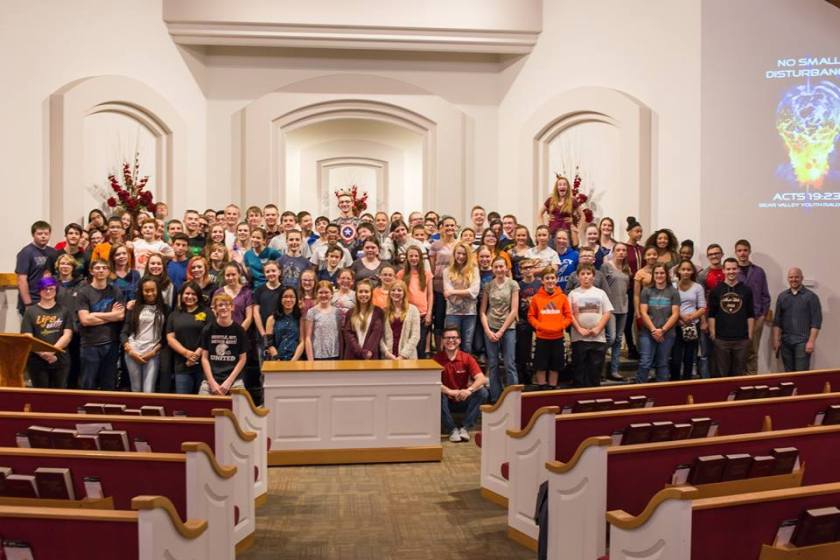
2017 edition of the Denver Future Preachers Training Camp in a more serious moment