God’s People Care

Neal Pollard

  • For Their Community. Patriotic, civic-minded, generous, helpful, involved, and connected, God’s people strive to be good citizens and neighbors. Acts 2:47a; 5:13b).
  • For Visitors. Smiling, greeting, welcoming, inviting, and connecting, God’s people know that many visitors to church events and assemblies are future brothers and sisters and they want to do what they can to help facilitate that objective. Colossians 4:6; Philippians 2:15; Matthew 5:13-16.
  • For The Lost. Co-workers, family, friends, fellow-students, acquaintances, neighbors, and strangers, God’s people see the people in their lives as fellow-strugglers whose souls will spend eternity somewhere and they want it to be in heaven with them. Daniel 12:3; James 5:19-20; Proverbs 11:30
  • For Each Other. Empathetic, tuned-in, concerned, familiar, intuitive, and loving, God’s people rise to occasions of crisis and love in ordinary moments because they are intimately connected to each other by precious blood and like precious faith. 1 Thessalonians 5:11; Romans 12:9-10.
  • For Children. Wise, visionary, foresightful, nurturing, and of tender affection, God’s people hear their Savior’s admonition to imitate, encourage, and develop these impressionable, dear ones. Matthew 18:3ff; 19:14
  • For The Elderly. Concerned, attentive, prayerful, and connected, God’s people know it’s wise and important not to neglect and forget the part of our population that grows more lonely, isolated, frail, and needy with each passing day and they let them know they see and care. James 1:27; Proverbs 16:31; Proverbs 23:22
  • For Their Families. Responsible, judicious, properly-prioritizing, and consistent, God’s people realize that no advancement or success in the world is worth sacrificing the souls they most cherish and can most influence. Matthew 6:33; Ephesians 6:1-4; Proverbs 22:6; Deuteronomy 6:6-7
  • For Their Souls. Vigilant, conscientious, self-aware, and introspective, God’s people know all too well their humanity, weakness, and inconsistencies but grow more in love with God and heaven and less in love with this world every day. 1 John 2:15-17; Matthew 22:37-40.
  • For God’s Will. Whether gospel meetings, retreats, ladies days, daily Bible reading, workshops, lectureships, special or regular Bible classes, or worship assemblies, God’s people so often show up hungry for the bread of life and the spiritual meat, thirsty for the milk of the word, and considering all of it sweeter than honey. Hebrews 10:24-25; John 6:35; Hebrews 5:14; 1 Peter 2:2; Psalm 19:10

Aren’t there so many reasons to love God’s people?

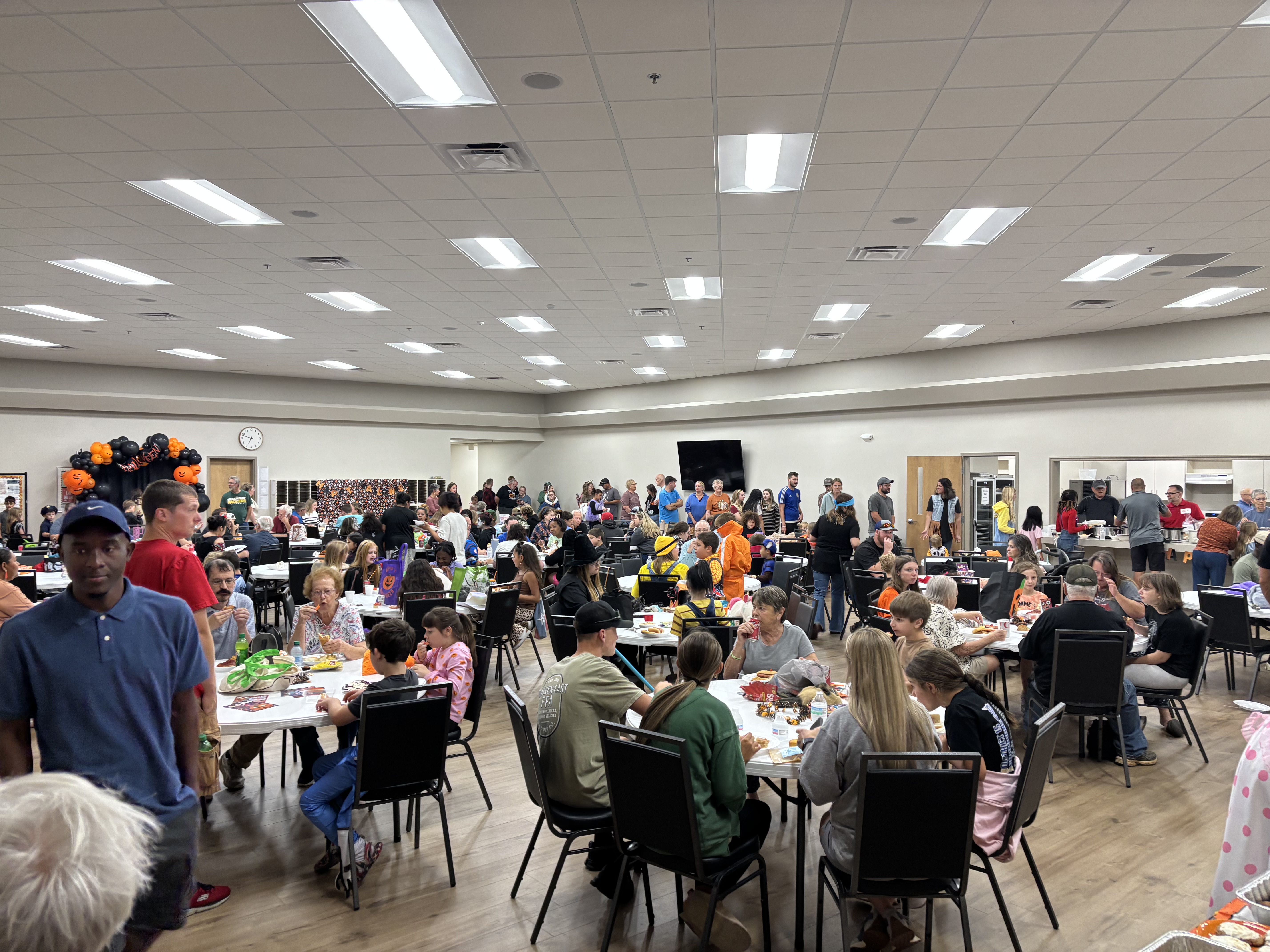
A couple of pictures (credit Russell Simpson) from Saturday night’s Trunk or Treat. God’s people at Cumberland Trace really shined!

More Than A Dinner

One of the most endearing, beautiful features of the Lord’s church is the “one another” aspect of it. Have you seen it at work when someone comes forward during the invitation song, pleading for help with something in their life?

Neal Pollard

Florida Gators’ quarterback D.J. Lagway had just endured a terrible game the week before, throwing five interceptions against the LSU Tigers. That included a “pick six,” as safety Dashawn Spears returned his third pick for a touchdown. In a post-game interview, Lagway confessed, “I played horrible football today,. I’ve never had a performance like that in my life, so it’s kind of hard to process it, but at the end of the day, it’s all about how you bounce back’ (alligator.org).

Lagway’s teammates sensed that this was crushing for the young signal caller, so they made a decision. About 40 of them, the following Wednesday, took him to dinner. Head Coach Billy Napier explained that it was to “just to put their arms around him and move past it” (hailfloridahail.com). College Gameday’s Kirk Herbstreit saw this as a positive sign about where the team culture was. While Florida fans, witnessing the Gators’ atrocious 1-3 start, may see the positive culture as little more than a “moral victory,” it is the gesture that merits closer attention.

One of the most endearing, beautiful features of the Lord’s church is the “one another” aspect of it. Have you seen it at work when someone comes forward during the invitation song, pleading for help with something in their life? People will rally on the front pew with them. Scores more will come put their arms around them afterward. Even more will text, send cards, and otherwise make contact to check on them. Here is someone who may have failed or struggled in a way much more significant than a game, who confesses to failure or weakness. They feel defeated, weak, or overwhelmed, and, in vulnerability, they make that known.

What does the rest of the spiritual team do? They put their arms around them and move past it! It is significant that the Bible talks to us about this. James writes, “Therefore, confess your sins to one another, and pray for one another so that you may be healed” (5:16a). Think back to the proverb which says, “He who conceals his transgressions will not prosper, But he who confesses and forsakes them will find compassion” (Prov. 28:13). The parable of the Prodigal Son not only shows how God responds when a sinner “comes home,” but it is the right response of the spiritually healthy to the spiritual struggler (Luke 15:22-32).

Let’s keep our eyes open for those who are limping along the road of life or even sitting there with their head in their hands. They may be ready to give up, but for a boost of encouragement from a brother or sister who cares. Your compassion might make all the difference!

Fan The Flame

Carl Pollard

A few months ago, we were at Walmart, and they had their charcoal grills on sale. I jumped on the opportunity and immediately put it to work when we got home. Salmon, burgers, more salmon and burgers – something about a charcoal grill just makes the meat taste so good. If you’ve ever used a charcoal grill, you’ll know that there’s a good bit of prep time involved. You pile up your charcoal, soak it in lighter fluid, light it, and wait a good 20 minutes. Once the flame is gone and the coals are gray, it’s time to cook.

One evening a few weeks ago, I decided to use the grill. It was pretty cold out, but when you get the craving, you don’t care how cold it is, you light up the grill. I did everything as I normally would and started cooking once the coals were gray. Except this time, they quit cooking after only a few minutes. Turns out, in cold weather, charcoal doesn’t last as long. So, what do you do? With half-cooked salmon, you don’t want to start the process all over and wait another 20 minutes. I, of course, did the wrong thing and just sprayed a bunch of lighter fluid and burned everything to a crisp.

Little did I know, that event is a perfect illustration for what Paul says in verse 6: “For this reason, I remind you to fan into flame the gift of God, which is in you through the laying on of my hands.” Timothy’s charcoal was going out, and what happens when your faith grows cold? You lose the impact you have on others, you lose the joy of salvation. Paul says, “I want you to fan the flame.” True faith, like a roaring fire, can be felt and seen. The words used for “fan the flame” mean to rekindle, revive, to begin again.

To keep the flame alive, we need to:

1. Stay strong in our walk with God. When our time spent with God is pushed to the back burner, that is when our faith grows cold. Fellowship with God is our connection to the source of the fire.

2. Stay strong in our walk with the family of God. When time spent in fellowship is neglected, we fail to help fan each other’s flame.

3. Stay strong in worship. Worship should be intimate and personal, a reflection of our love for God.

4. Stay strong in study. It is impossible to stay on fire for God and not spend time in the word of God. Like Jeremiah, God’s word is the very fire in our bones, and if you want to keep that fire burning, study the word.

When fear threatens to ruin your faith, rekindle the flame.

Raising Godly Children

Do you ever wrestle with the challenge of raising faithful children (or grandchildren)? Are there certain ingredients necessary to accomplish this task?

Carl Pollard

Every morning, I pray for the spiritual health of my family and children. My son Rich can’t even say his sister’s name right, but I pray for his future walk with God, for his spouse, and his commitment to Christ. Amara can’t crawl yet, but I spend my mornings praying that she becomes a woman of faith like Ruth or Sarah. Jed, still in the womb, is listening to sermons through an umbilical cord, and I’m already lifting him up in prayer that he follows God’s will.

I want nothing more than to spend eternity with my wife, children, and family. How I lead as a father will shape how my kids see God the Father. I often feel guilty for my failures as a spiritual leader, fearing the responsibility for my family’s faith journey. My deepest desire is to see my children grounded in faith and in love with Christ.

This article is for you as a parent to realize the role you play in your children’s spiritual health. As long as they’re under your roof, you have a chance to instill a faith that will unite you for eternity.

You might think it’s strange that someone with little parenting experience is writing about raising faithful children, and you’re right. But thankfully, you don’t have to rely solely on my experience. Let’s take a look at the example of Zechariah and Elizabeth.

Unlike other gospels, Luke begins with the backstory of John the Baptist. To quote philosopher Jake Miller, “We never talk about John the Baptist, but I think that is a mistake. He is a really powerful example.” Jesus affirmed this in Matthew 11:11, saying that among those born of women, none is greater than John.

John was a man calling for repentance and preparing the way for the Lord. So, how did he come to be such a devoted servant? It was part of God’s plan, but Zechariah and Elizabeth played crucial roles in shaping his faith. They lived contrary to their culture, serving God under a tyrannical king while remaining faithful despite their barrenness and age.

Dedicated Believers

In Luke 1:5-6, we read that Zechariah and Elizabeth were righteous and blameless before God. Wouldn’t it be great to be known as blameless parents? Even dedicated believers will make mistakes; Zechariah faced challenges, including being made mute for his disbelief. But God doesn’t expect perfection—He expects dedication. They prayed earnestly for their child before he was even born. Do you spend time in prayer for your kids? Bringing them before the Lord is one of the best things you can do.

Diligent Teachers

In Luke 1:14-17, God reveals that John will be filled with the Holy Spirit and destined to turn many to the Lord. This highlights our responsibility to teach our children. Despite society’s expectations, John fulfilled his divine purpose. What are you prioritizing for your children? Are you encouraging their involvement in church? Just like teaching them to brush their teeth or study, it’s essential to guide them in their faith.

Devoted Nurturers

John had a challenging life ahead, and his parents understood that. As devoted nurturers, Zechariah and Elizabeth provided the guidance he needed. Kids will test your patience, but showing love and mercy is vital. They raised a son who was faithful to God.

What our world needs is more parents like Zechariah and Elizabeth—dedicated believers, diligent teachers, and devoted nurturers. Sadly, many children today lack godly role models. As parents, we have a profound responsibility. God chose Zechariah and Elizabeth for their unwavering dedication. So, I ask you: what kind of role model are you being for your children?

The Fleeting Nature Of Legacy

Lessons From The Parable Of The Rich Fool

Brent Pollard

The breadth of human recollection is rather fleeting. In merely three generations, the essence of most lives—their trials, victories, and the simple moments of each day—slips quietly into the shadows of forgetfulness. Though history may enshrine its Shakespeares and Einsteins, the greater multitude of us shall fade into obscurity, our tales slipping quietly into the annals of time. This obliteration of individual narrative unfolds through various avenues. As time flows onward, the clarity of memory tends to wane, and the stories of those who came before us, beyond the realm of our grandparents, often fade into a misty obscurity. Families frequently choose to uphold only sure tales, usually centering on those kin who have forged remarkable legacies while permitting others to fade quietly into the obscurity of yesteryear. Those who depart this world without the blessing of children tread a more arduous road to remembrance since their narratives rest solely upon the commitment of distant kin to keep them alive in memory. In this age of mobility, it is all too common for families to drift apart, their bonds fraying and shared memories fading into the ether. The myriad forces at play—natural memory decay, the art of selective storytelling, the absence of children, and the scattering of families—combine harmoniously to guarantee that our recollection barely reaches a century for most of us.

The fleeting essence of human memory imparts a significant lesson regarding the quest for legacy through earthly riches, a truth vividly depicted in the Parable of the Rich Fool (Luke 12:13-21). In this narrative, a man of considerable means is convinced that his vast possessions will safeguard his future and ensure his legacy. Yet, in a twist of fate, death arrives to strip away the significance of his meticulously crafted designs. The inquiry posed by the parable—”Then who will receive what you have laid aside for yourself?”—gains a more profound significance when we reflect upon the fleeting nature of our very names within the tapestry of family remembrance. If destiny determines to erase our lives from memory within a few generations, the quest for wealth, as the means for leaving a legacy, reveals itself as a pursuit devoid of true purpose. Instead, this poignant truth beckons us to reflect upon what genuinely lasts: the far-reaching impacts of our connections, the principles we impart to those around us, and the uplifting transformations we foster within our communities. Though the allure of worldly achievements may offer fleeting solace, the unseen connections we forge—the impact we have on the lives of others, the insights we impart, the affection we extend—hold the promise of resonating far beyond our time on this earth. This viewpoint invites us to redirect our attention from the mere gathering of riches to the nurturing of a more profound spiritual and relational abundance, one that may surpass the limits of recollection, thus fostering a legacy that is both meaningful and lasting.

Rather than entangling us in a web of despair, the certainty of being forgotten liberates us to embrace life with greater authenticity and purpose. When we free ourselves from the weighty expectation of leaving a tangible legacy, we understand a profound reality: our authentic influence is not measured by what we bequeath but rather by how our deeds resonate through the ages, often beyond our sight. The folly of the Rich Fool lay not merely in his accumulation of riches but in his profound misunderstanding of the enduring legacy that binds one generation to another through unseen threads of influence. A gentle word uttered in the present may resonate within a family’s principles for generations; a selfless deed could ignite a legacy of generosity that endures beyond our remembrance; a fleeting insight imparted might influence choices long after its origin fades from memory. This insight reshapes our perspective on the fleeting moments life grants us. Rather than laboring to erect grand monuments in our honor, let us turn our efforts to sowing seeds of virtue that will blossom long after we have departed. We may find solace in the understanding that our impact can persist, even when our names have slipped into the shadows of time. This parable extends beyond its sacred beginnings to impart a wisdom that resonates universally: a profound legacy continues to yield fruit, even when circumstances cut it from its roots.

The Beauty Of Community

Neal Pollard

God created us knowing our need for socialization (Gen. 2:18). Since the making of man and woman, humanity has been in or sought community. All of us are in the global community of humanity, since “He made from one man every nation of mankind to live on all the face of the earth” (Acts 17:26). Wherever or whenever you live, you share basic needs, fears, drives, and desires no matter how different your social, economic, and political circumstances are.

But think about your more immediate community. Over the last few days, Kathy and I have been reminded of this. Last Friday morning, we received a ring notification. It was a teen girl telling us our milk cow, Peaches, was in her yard! This neighbor lived far enough away that I didn’t know who she was! I immediately followed her (without my phone) while Kathy went to grab the halter. But she didn’t know where this girl lived.

In the three hour fiasco of getting her back in our pasture, it was a cooperative effort between us and multiple neighbors. Kathy went door to door talking to our neighbors, trying to find either the girl or the cow. She and our next door neighbor, Tracy Harrell, exchanged several texts through the morning trying to find our “girl.” She walked next door to our sweet neighbor, Brenda Willoughby (whose sister is Lehman’s Gracie Norton’s dear friend), in search of Peaches. It took the help of community to resolve our “crisis.”

Later that same day, coming back from Columbia, Kentucky, Kathy and I were driving back on a back road near our house. A freak storm downed two trees on Iron Bridge Road, standing between us and returning before Kathy had to leave for our Friday night singing and my speaking at a congregation’s family retreat. Vehicles began to pile up and several of us got out of our vehicles as a couple of guys with chainsaws began cutting through branches and sectioning the trees. The rest of us drug them out of the road. We moved one, then the other. Working right next to me at both trees, ironically, was Tracy’s husband, David. We were neighbors not only in a literal sense, but in the sense of cooperating to resolve a “crisis.”

God has created the church as the ultimate community. He conceived it from eternity (Eph. 3:9-11). He knew not only that He would be glorified in it (Eph. 3:21), but that we would benefit from the support, help, and strength found in it. This community is also described as a family (1 Tim. 3:15; 5:1-2). Think about how we lean on our physical families as a community, where we share, lift loads, intervene, and more. In the church, there are times when I am strong and you are weak. God tells me to bear your burdens (Gal. 6:2). Other times, I may be the one who is weak and needs your strength (Gal. 6:1). Many crises, physically, economically, socially, and spiritually, plague our wonderful spiritual community. The proper response is to rally around each other, showing our love and care by pitching in to help resolve whatever crisis arises.

Thank God that He gave us the best social network we could have to survive the challenges of this world. Tragically, some turn to politics, sports, and similar communities what God designed to supply through the community of His people. When we trust His plan, we are blessed by experiencing the beauty of the community He thought up to help us make it through this world spiritually alive! May we lean on each other, whatever our “crisis.”

Genesis: These Are The Generations (LI)

The Fate Of The Sons Of Jacob (49:1-33)

Neal Pollard

In this chapter, Jacob delivers his last address. At the end of it, he “drew his feet into the bed and breathed his last, and was gathered to his people” (33). His final words have to do with “days to come” (1). Reading the rest of Scripture, we can see fulfillment in the land promise and seed promise. From these sons will come the tribes of the nation of Israel (28), and from one of these sons, Judah (8-12), would come the bringer of peace, a king praised by his brothers. This would first be fulfilled by David and his descendants, then ultimately by the Messiah.

There are technical concerns about a variety of Hebrew words which are difficult to translate. Reyburn and Fry say, “Chapter 49 is considered by many as one of the most difficult in the entire Old Testament. Many lines in verses 2–27 are burdened with textual uncertainties. There are many places where the meaning of the Hebrew is obscure, and the ancient versions do not agree among themselves” (UBSH, 1074). None of these effect the overall message and are burdens the translators have borne very well. 

There is an interesting suggestion for why the brothers are listed in the order that they are, since it is certainly not strictly in birth-order. Mathews suggests that they are listed in chiastic order (870). I have defined a chiasm in four previous Lehman Learners (Days 23, 422, 557, and 653). My explanation in Day 422 is my most concise effort, that a chiasm is “a rhetorical or literary figure in which words, grammatical constructions, or concepts are repeated in reverse order, in the same or modified form.”  The sons seem to be “capped” by Jacob’s wives, Leah (13-15) and Rachel (22-27), while the middle sons are those born to Bilhah (16-18, 21) and Zilpah (19-20). There is no theological significance to putting the handmaids’ children in the middle of the list, if this is chiastic. Perhaps the chiasm was simply a memory aid. 

As to the content of the chapter, what can we learn and how can we apply it?

  • Reuben (3-4). Sin brings dishonor and strips us of our potential. Reuben had the esteem and honor of firstborn, but his lack of self-control cost him that “rank.” His impulsiveness led him to sleep with Rachel’s handmaid, in utter disregard for and disrespect of his father. The old adage is true, that sin will take you further than you wanted to go, keep you longer than you wanted to stay, and cost you more than you wanted to pay.
  • Simeon and Levi (5-7).  These two sons, born to Jacob by Leah, were full-blooded siblings to Dinah. She was the sister raped by Shechem (34:2). They were given to brutality against man and beast. They took vengeance into their own hands. They had disregard for life, and it cost not only their victims but also themselves. They lost their inheritance. Levi was given 48 cities throughout the land and Simeon’s descendants would be dispersed among the tribe of Judah (Josh. 19:1-9). Reuben was driven by lust, while Simeon and Levi were driven by wrath. Both wreak havoc. Who has not witnessed the devastation of someone’s out of control anger (cf. Eph. 4:26-27)? Proverbs repeatedly warns against such anger (12:16; 19:19; 22:24; 27:4; 30:33). 
  • Judah (8-12). After pronouncing curses on his first three sons, Jacob appears to bestow on Judah the customary privileges of the firstborn upon Judah. In that sense, his brothers would bow down to him (8). Yet, there is also prophesy of the royal line coming from his seed.  While there are multiple issues involved in interpreting these verses, all basically amalgamate into the consensus idea that this is first fulfilled in David and ultimately in the Messiah. Even Jews who reject Jesus of Nazareth widely accept that Jacob foresaw the Anointed One. To Judah would belong power, authority, and riches. The Lion of Judah, Jesus (Rev. 5:5), can rightly be described as “He who is the blessed and only Sovereign, the King of kings and Lord of lords, who alone possesses immortality and dwells in unapproachable light, whom no man has seen or can see. To Him be honor and eternal dominion! Amen” (1 Tim. 6:15-16).
  • Zebulun (13). His territory would mark the place where Jesus begins His ministry (Mat. 4:15-16; cf. Isa. 9:1). Unremarkable in most ways, his descendants would still have a part in the mission of the Redeemer. Even if your part is a small part, don’t despise it (cf. Zech. 4:10)! Every part is valuable (Eph. 4:16)! 
  • Issachar, Dan, Gad, Asher, and Naphtali (14-21).These would all have allotments in the northern kingdom when once it was divided later. Heroes would arise from them, like Anna from Asher (Luke 2:36). Despite their relative anonymity, they also received promises and blessings, too. They would have a part to play in God’s unfolding plan. 
  • Joseph (22-26).  Jacob highlights the nature and character of God in his lengthiest of blessings to his favored son. He is the Mighty One of Jacob, God Almighty, the Shepherd, and the Stone. He wants Joseph to connect his blessings to the source of all blessings, who is God. With every blessing and good thing that comes into our lives, we should be quick to give credit and glory to God (Js. 1:17).
  • Benjamin (27). Despite the relative smallness of their tribe, the Benjamites would be fierce warriors especially in the early days of the nation. The first king would be from his descendants. They would be deadly and brave. What a reminder to focus on what we have and not what we do not have in serving the Lord. 

With this, Jacob reiterates his desire to be buried in Canaan. He has projected the future of his sons, who would eventually through their descendants come to that land, too. We have the benefit of the next 65 books to help us see the power and foreknowledge of God in fulfilling His word through Jacob to them (and us)!

YOU LOVE SOMEBODY WHO’S LOST

Dale Pollard

Recently I had the privilege to attend the funeral of a godly man. Since he lived faithfully—  it was a celebration. Funerals have a negative connotation with them but they’re really only all bad when the one who’s passed on did so outside of Christ. 

You and I may wish for a longer life for ourselves and those we love but the ironic truth for the faithful Christian is this— the first to accept God’s decision of death is the one who died.

The faithful go to heaven and the lost do not. While we enjoy talking about  and thinking about those who will and have been eternally saved, it’s just as important to remind ourselves of those who find themselves in the other camp.

 It’s easy to forget that people are lost and maybe it’s because they’re easier to push to the back of our minds. It’s not a pleasant thought by any means and doing something about it tends to make us uncomfortable. 

It hurts and it’s hard to become attached to anyone who isn’t living faithfully because they’re lost. That means they’re not going to heaven. Sometimes the lost pretend as if that’s not their reality by distracting themselves with the things that make them feel as if they’re not lost (Ecc. 2.24-25). 

There’s a good chance that you know people who aren’t going to heaven and it’s even likely that you love people who aren’t. We’ve got to convince them to hear Jesus out— no matter what it takes. 

What can we do? 

  1. We can simplify spiritual concepts so that people can understand a message that they desperately need to hear. Try to teach Jesus differently. Approach His will for their lives from different angles. How can Jesus help their marriage? Their children? Their addiction? 
  2. Please don’t let anything get in your way of going home. Don’t let friends and loved ones who aren’t living faithfully bring you down. Not only do you ultimately lose, but your loved ones outside of Christ have lost their greatest chance of coming into the Light. 
  3. Don’t ever lose hope. There may be unique and seemingly impossible odds stacked against you and your mission to convert the lost, but don’t put God in a human-sized box. Pray often and live in hopeful expectation. 

“For those who live according to the flesh set their minds on the things of the flesh, but those who live according to the Spirit set their minds on the things of the Spirit.”Romans 8.5 

Dealing With Disagreement In A Godly Way

Dale Pollard

Godly men and women can voice their views and opinions in a healthy and helpful way by adopting some basic principles found within scripture. Even if some disagree with you (eventually they will!) everyone can leave encouraged if it’s approached appropriately. 

First, they understand that the truth must be spoken in love (Ephesians 4.15). The faithful are able to tell the difference between matters of opinion and matters of salvation. 

Second, they are eager to maintain a unity of spirit and a bond of peace (Ephesians 4.3-6). Godly members are not purposefully divisive or quick to start heated debates. 

Third, the older Christians recognize the responsibility they have to share their wisdom with the younger generation and the godly youth respect the wisdom that is given from the older generation (Titus 2.2-12). 

When the body of Christ is unified it’s also unstoppable. The church family that respects those God-given roles that we are all assigned will find that Bible classes, Biblical discussion, and relationships are enriched and strengthened. Knowledge is both shared and received in love and humility. 

The Last Public Prayer of Jesus

Carl Pollard

Spending time focused on the family is a necessity. God has given parents a responsibility that should never be taken lightly. There are many opportunities in the church that we can take advantage of to create unified families– youth rallies, potlucks, family retreats, and so much more! Spending time together as a unified body, made up of many individual families, is a unique blessing only found in the church. When we choose to bring our families together and worship, eat food, and enjoy fellowship in Christ we imitate the early church.

In Acts 2, the church has just been established, and they eat together, sing together, learn together, pray together, and loved to spend time with each other. A close family In Christ spends time together. Worshipping together is a unifying process, but time spent together outside of the worship setting contributes to growth in our relationships with each other. 

Shared history makes for a closer bond. Creating memories with our spiritual family builds unity. 

That should be our goal today, tomorrow, and for our entire time on this earth. What does the Bible say about the fellowship we have together as a family? 

We are given all kinds of descriptive names in the Bible. 

The early church was called: 

  • Those of the Way
  • The Called out
  • Christians

All of these names paint for us a special picture. Those in Christ are FAMILY. We are unified with each other by a bond stronger than any force on earth. June 4th, 1940 Winston Churchill gave a powerful speech that changed the tone of the Second World War. In his speech he said, “we shall fight on the beaches,
 we shall fight on the landing grounds, we shall fight in the fields and in the streets, we shall fight in the hills.” 

Sadly, in today’s society this sounds like a description of most people’s family vacation…uh ha haaa. 

When there is a lack of unity in our physical families, there will be a lack of unity in the spiritual family. For us to understand the importance of the fellowship we have in Christ, we need to define some terms. The Greek word translated “fellowship” in Acts 2:42 is koinonia. This is defined as “Close association involving mutual interests.” Basically, it is a group of people who have a tight bond because they all have the same interests.

Christian fellowship, then, is the mutually beneficial relationship between Christians, who can’t have the identical relationship with those outside the faith. We are, or should be, closer to each other than anyone in the world. This is a FAMILY. God expects us to have mutual interests, (His Will) and to spend time together building a mutually beneficial relationship. 

So, what is Christian Fellowship? The context for the “high priestly prayer” in John 17 actually begins back in chapter 13. This is the last supper. Jesus washes the disciples feet, He tells the apostles one of them will betray Him, Satan enters into Judas, Jesus tells His followers to love each other, Simon is told he will deny Christ, Jesus tells us He is the Way, the truth and the life, Jesus promises the Spirit to the apostles, He tells them that He is the true vine, that they will be hated by the world, BUT, He has overcome the world. 

After He says all of this, “Jesus lifts His eyes up to heaven and begins to pray” (John 17:1). This prayer is powerful, it’s humbling, it’s personal. Jesus truly cared for His disciples, and He cares for us today. This was the last prayer the apostles would hear before His death. Immediately after He finished they went to the garden and Jesus was arrested. So the question is, what does Jesus pray for just moments before His crucifixion? UNITY! Jesus was concerned about His apostles, He wanted them to be one, and He prayed for every Christian to be one! The bond we have through Christ is so precious, we should never neglect the family Christ died to create. 

In John 17:20-26, Jesus prays specifically for those who will believe the apostles’ teachings, that is, US. 

Why should we be so concerned about our unity? Because Christ died to create what we have today. And we can show the world the Father by creating lasting relationships with each other. 

The Qualifications Of Elders

Gary Pollard

I Timothy three deals with the qualifications of Christian men who want to be elders. 

1 — Wanting to be an elder is a good thing. 

2 — An elder must have a squeaky clean reputation, both inside and out of the church. He also has to be faithful to his wife. A man who isn’t faithful to his wife certainly can’t be faithful to the bride of Christ. 

3 — An elder can’t be alcoholic or violent; he should be known for being gentle and peaceful. He also can’t be materialistic. Since elders who preach, teach, and work hard deserve to be paid (5.17-18), this shouldn’t be a weakness for them. 

4-5 — Are repeats of verse 2, but expands this to an elder’s family. If he neglects his family’s spiritual health, he’ll neglect the church’s spiritual health. 

6 — An elder can’t be a new Christian. 

7 — An elder has to have the respect of people who aren’t in the church. 

Verses 8-13 are the qualifications for deacons. They’re nearly identical to elders, and the faithful-to-their-wives issue is repeated here. This section has been a source of controversy for years, but it’s explained very clearly in 3.11-12: they must be faithful to their wives, and their wives must also have the respect of other people. It also applies to widows in 5.9 — they have to have been faithful to their husbands (and meet some other qualifications) to be financially supported by their church family. 

Getting Authority From Tradition

Gary Pollard

In I Timothy 1.3-7, we learn more about the bad influences Timothy had to confront. Verse four suggests a group of people who couldn’t let their traditions go. They tried to establish their authority by listing their prominent ancestors, proving their superior pedigree. This was a common practice among Jewish religious teachers then and today. 

While we don’t see this in our western culture to that degree, we do still see it occasionally. In defending certain man-made traditions, we might point to someone in our family history who was highly regarded by the church, and who either prohibited or encouraged certain things. 

The most common defense we might encounter when dealing with these traditions is “my dad always said” or “my grandpa always taught that it was wrong to…” In most cases, that relative was a founding or prominent member of their church in the past. Many of us grew up in a family unit and have based our beliefs on the things our parents or other relatives taught us. 

This isn’t always a bad thing — Timothy was taught by his mother and grandmother. But that wasn’t where it ended for him; he also had apostolic teaching. Today we have the New Testament. As wonderful as our families may be, there is no substitute for an honest, unbiased study of scripture. If we rely solely on what our families or respected members teach us, we open ourselves up to serious blindspots and vulnerabilities. 

The Root Of The Problem

Carl Pollard

In 1978, Thomas Hansen of Boulder, Colorado, sued his parents for $350,000 on grounds of “malpractice of parenting.” Mom and Dad had botched his upbringing so badly, he charged in his suit, that he would need years of costly psychiatric treatment.

I grew up in a family that was fully devoted to Christ. My parents created a home that in every way glorified God. The principles they taught us, the love my parents had for each other, the desire to love and serve God, were seen for as long as I can remember. They both helped create a God-fearing Home. Recently, my wife Emily and I had our first Child. He was born January 27th, and he is the cutest little chunk. I never thought babies were cute until Rich was born, and then everything changed. 

Having a child really makes you think about the future. It puts everything into perspective. 

I want to have a family that glorifies God. Mom and Dad both set the bar high, and I want to do the same for my own family. I want to glorify God through the way I love my spouse, the way I raise and teach my children, and through the influence we have on others. Glorifying God in the family is one of life’s greatest pursuits. Numerous verses teach us the importance of family, more specifically the importance of a family that glorifies our Father in heaven. 

The family was created by God. 

From the beginning Gods design has been one man and woman for life. Genesis 2:22-24, “The LORD God fashioned into a woman the rib which He had taken from the man, and brought her to the man. The man said, ‘This is now bone of my bones, And flesh of my flesh; She shall be called Woman, Because she was taken out of Man.’ For this reason a man shall leave his father and his mother, and be joined to his wife; and they shall become one flesh.”

A family unit is established by the joining of a husband and wife, and this is God’s design!

The only way for a family to glorify God is to accept and follow HIS design. Since the family was created by God, we need to recognize that we exist for the glory and purpose of God. 

God is speaking to the nation of Israel when He says this in Deuteronomy 6:2-3: “So that you and your son and your grandson might fear the LORD your God, to keep all His statutes and His commandments which I command you, all the days of your life, and that your days may be prolonged. “O Israel, you should listen and be careful to do it, that it may be well with you and that you may multiply greatly, just as the LORD, the God of your fathers, has promised you, in a land flowing with milk and honey.” 

The Israelites had a purpose for their family, fear God and keep His commandments. 

Notice that they kept these commands for their own good. God is the Designer of the family, and His commands will not only glorify Him, but will benefit us as well. Obeying God’s commands will result in a peaceful and unified family. Everything created by God exists to glorify Him; therefore, since God is the creator of the family, the family exists for His glory (Isaiah 43:7). 

Christian families are now in submission to His Son. Each person in the family is given a role in Christ and we do so to the Glory of God. Glorifying God in the family is essential because the family was created by God. 

But the question is how? How do we glorify God in the family? Very simply, we glorify God by fulfilling our purpose. We can bring glory to God if we obey His commands. We don’t have to guess what or how to bring Honor to Him. We just need to fulfill our purpose. Sadly, the world today has twisted and perverted the home. Many struggle in their relationships with family members, and children grow up in a divided home. Now more than ever, we should be showing the world what a God fearing home can achieve. The Goal of the family is to be unified in submission to God. 

If we will return to fearing God in our homes, the world will become a better place.

The Plan Is Perfect, But The Church Isn’t

Tuesday’s Column: Dale Mail

Real cowboys from the American frontier, both the good guys and the bad guys, had no interest in the big, bulky Stetsons that everyone associates with them. Contrary to our more modern cowboys, the most popular headgear among 19th century gunslingers was the bowler, sometimes called a derby.

Many people have an idea in their minds of what the church looks like, but it just might be the case that the image doesn’t match scriptural teaching. 

The “church” in the Bible is a singular, unified group of God’s people spread out across the globe in the form of multiple likeminded congregations. Though the people are God’s— they’re still people. People have problems. The difference between His family and the world, though, is that there’s a solution and a hope for His own. 

When New Testament Christians claim that there’s one church they don’t mean there’s only one group of people who have all the answers and can do no wrong. They simply acknowledge the Biblical truth that God made plans for only one church and that plan had been in motion before the creation of the world (Eph. 3.10-11). 

The New Testament is largely made up of letters that were written to correct and admonish our natural human tendencies. When these things are left unchecked and unbridled they produce more pain and destruction, which can clearly be seen all around us. For most, the product of sin is self-evident but the power of the Savior isn’t— and that’s where the church comes in. The main function of the church is to seek, save, and keep the saved saved. This is done by walking, speaking, and acting like Jesus. The form and function of  His family is simple because God’s goal is to save as many as possible (Jn. 3.16-17). The New Testament church is meant to be the hands, feet, and mouth of God. The church is to work, walk, and speak only the things He would and that’s only possible if a group of people are living by His instruction. Since God only wrote one book, there’s only one manual. Since following the instructions will produce one church family then there’s only one church. In the same way you can assembly an entertainment system wrong by incorrectly following the plans, you can also assemble the church wrong. There’s a right way and there’s a wrong way and one needs only to reference His instructions to be certain. 

Dale Pollard

A Lasting Influence

Thursday’s Column: Captain’s Blog

“Devote yourselves to prayer, keeping alert in it with an attitude of thanksgiving; praying at the same time for us as well, that God will open up to us a door for the word, so that we may speak forth the mystery of Christ, for which I have also been imprisoned; that I may make it clear in the way I ought to speak. Conduct yourselves with wisdom toward outsiders, making the most of the opportunity. Let your speech always be with grace, as though seasoned with salt, so that you will know how you should respond to each person.” Colossians 4:2-6

Speech plays a major role in our influence. Speech and actions are the two primary ways that we influence those around us. If our words differ from our actions, people will see it. Paul died 2000 years ago, and his speech is still influencing Christians today. Our words can have a lasting impact! In 1887 the coffin of Abraham Lincoln was pried open to determine if it contained his body. What makes that act so remarkable is the fact that Lincoln’s body had rested in that coffin for 22 years. Yet, even more amazing is that 14 years later a rumor circulated again that Lincoln’s coffin was actually empty. The rumor so gripped the land that the only way to silence it was to dig up the coffin–again. This was done and the rumor silenced when a handful of witnesses viewed the lifeless body of Abraham Lincoln.

Words have power. We know the harm that can come from them, but also the good. 

In fact, we can use words to build up or tear down. To build, or destroy our influence. 

Facebook is a king of spreading words. Each one of us has our own unique set of friends that see our posts. And although social media can be used for good, sadly the majority of posts are negative. Christian influence can go a long way on Facebook. But what good are we doing if all we do is argue and tear down others? Colossians 4:5 says, “Conduct yourselves with wisdom toward outsiders, making the most of the opportunity.”

A wise person isn’t going to get involved in a fruitless Facebook conversation. A wise person isn’t going to chew out someone else. A wise person doesn’t use his influence to hurt others, but he looks for ways he can be a good influence. 

“Conduct yourselves with wisdom towards outsiders, making the most of every opportunity.” You have an opportunity I will never have. You can have an influence on your family that no one else has. So make the most of it. If you’re like me, that sounds extremely hard. But we do it for the souls of our children, our spouses, and our friends. Our influence has the ability to instruct, and to lead our homes to Christ. 

If someone paid you 10 cents for every kind word/action you did for others, and you had to pay 5 cents for every bad word/action, would you be rich or poor? Our influence is so important. We must grow it, and pray for it. What has my influence done? Has it brought my family closer to Christ? Has it grown at all? Is my influence better than it was last month? Has it charged me as guilty? What kind of influence is in my book of life? Has it instructed my children? Has my influence been profitable? Let’s be sure to leave a lasting impression while we have the chance.

Carl Pollard

God’s Family

Saturday’s Column: Learning From Lehman

Nick Dubree

Around our house, my wife has pictures with different sayings, like – “In this kitchen we lick the spoon”, “Blessed”, “Gather”, and “Give Thanks”. As much as I make fun of these light-hearted sayings, one of them caught my attention this week. It says:

“In this house we – say please and thank you, never give up, love one another, show respect, think good thoughts, say I’m sorry, give second chances, sing out loud, try to do better, give hugs, are a family.”

I couldn’t help but think about how this not only applies to my personal family, but to my church family as well. Obviously we could take each one of these phrases and spend time comparing them to our church family, but I want to spend time on just a few.

#1: Love one another and show respect.

John 13:34-35 says, “A new commandment I give to you, that you love one another: just as I have loved you, you are also to love one another. By this all people will know that you are my disciples, if you have love for one another.”

Loving one another is a command from God and acts as a type of evangelism to the world. We should love in this family.

#2: Say I’m sorry and give second chances.

In Luke 15:20-24, we read about this happening in between the prodigal son and his father. In verse 21 it says, “And the son said to him, ‘Father, I have sinned against heaven and before you. I am no longer worthy to be called your son.’”

Not only did the father forgive his son, but he gave him a second chance. Verse 24 says, “For this my son was dead, and now is alive again; he was lost, and is found. And they began to celebrate.”

The church family should be one where we feel comfortable enough to say we are sorry and humble enough to give second chances. 

#3: We are a family.

Acts 2:44-47 gives a perfect picture of what the New Testament church family should look like. These new Christians were helping each other, spending time together, and praising God with one another. They were a family, just like we are today.

If you aren’t apart of this family yet, now is the time!

Loving Our Christian Family (1 John, Part 12)

Wednesday’s Column: Third’s Words

Gary Pollard

This is how we know that we’re with him and he’s with us: he gave us his spirit. We were there, we saw firsthand that the father sent his son on a mission to save the world. Whoever agrees that Jesus is actually God’s son is with God, and God is with them. Because we saw him, we came to believe and really understand the kind of selfless love that God has for us. God is love. The one who practices love is with God, and God is with them. 

This love is being matured in us for reason: so we can be completely confident on the last day when everyone is judged. If we have selfless love, we’re considered to be as pure as Jesus was when he was on earth. Love leaves no room for being afraid. If we mature our love, that love keeps us from being afraid. If we live in fear of judgment day, it’s because we haven’t matured in our love. 

We practice love because he loved us first. If someone says, “I love God,” but still hates their Christian family, they’re a liar. How’re you supposed to love a God you can’t see while failing to love a Christian family you can see? It’s not possible. Remember the commands he gave us: we have to love God and love our Christian family, too. 

Love, Hate, And A Song (1 John: Part 3)

Wednesday’s Column: Third’s Words

Gary Pollard

I’ll be repeating the book of I John in present-day terminology. It’s not a true translation of the book, as I am not qualified to do so. It will be based on an exegetical study of the book and will lean heavily on the SBL and UBS Greek New Testaments, as well as comparisons with other translations (ESV, NASB, NIV, ERV, NLT). My goal is to reflect the text accurately, and to highlight the intent of the author using concepts and vocabulary in common use today. 

This is not an “essentially literal” translation, and should be read as something of a commentary. 

Love & Hate

Loved ones, I’m not giving you a new commandment here. It’s the same one that’s existed since the beginning of time: love each other deeply. You’ve heard this before. It is new in a way, though. The same truth that existed in Jesus now exists in you. Darkness is disappearing and the true light is already shining through. 

If someone claims to be in this light but hates their Christian family, they’re actually in darkness. If you love your Christian family, you’re a part of this light. You don’t trip other people in their walk, either. Anyone who hates their spiritual family lives and walks in darkness. They’re lost because the darkness has blinded them. 

A Song

Children, I’m writing to you because Jesus forgave your sins. 

Fathers, I’m writing to you because you’ve known this from the beginning. 

Teens, I’m writing to you because you’ve defeated the evil one. 

Children, I’m writing to you because you’ve always know the father. 

Fathers, I’m writing to you because you’ve known this from the beginning. 

Teens, I’m writing to you because you’re strong. God’s word lives in you, and has defeated the evil one. 

A Touching Savior

Thursday’s Column: Captain’s Blog

Carl Pollard

A person that feels loved through physical touch is looking for connection. 

They feel love when they are close to their spouse, and they experience love through the physical side of their relationship. 

While God doesn’t physically touch us today to show His love, He has done it in the past. 

Mark 1:40-42 says, “And a leper came to him, imploring him, and kneeling said to him, “If you will, you can make me clean.” Moved with pity, he stretched out his hand and touched him and said to him, “I will; be clean.” And immediately the leprosy left him, and he was made clean.” 

In the time of Christ, leprosy was a disease that immediately made you an outcast. If you had this disease you were considered unclean and you were forced to live in isolation from everyone else. Lev. 13:45-46 tells us, “The leprous person who has the disease shall wear torn clothes and let the hair of his head hang loose, and he shall cover his upper lip and cry out, ‘Unclean, unclean.’ He shall remain unclean as long as he has the disease. He is unclean. He shall live alone. His dwelling shall be outside the camp.” 

The leper was forced to live alone because this disease was spread through physical touch. 

This is what makes what Jesus did even more incredible. Jesus didn’t have to touch the leper, but He went above and beyond by physically touching him. 

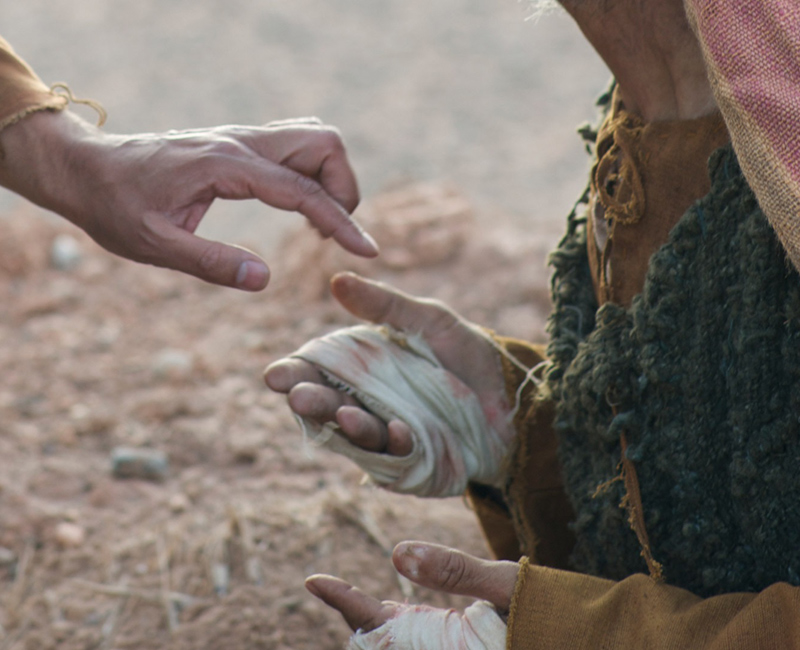
It says, “Moved with pity, He stretched out His hand and touched him.” Through this we see the compassion of Christ. Mark through inspiration makes it a point to tell us that Jesus physically touched this leper. God expressed His love through the physical touch of a compassionate Savior. 

This same loving Savior is who we serve today. 

While He doesn’t personally touch us today, He has given us a family to physically care for us. God loved us so much that He made sure we would never be absent of physical comfort and encouragement. The church is a place where we can experience comfort and compassion from fellow-believers, a hug when we are struggling and a shoulder to cry on in times of grief. 

Contained within the pages of scripture we read of a truly touching Savior. So how will we respond to the love of God?

The Real Thing

Wednesday’s Column: Third’s Words

Gary Pollard

“Let love be genuine.” This phrase from Romans 12.9 is familiar and deceptively simple. It sounds good and feels good! But what does it mean? 

It means we can’t pretend to love people. Ανυποκριτος means “not pretending” or “acting” something. In other words, don’t pretend to love people with the goal of getting something out of it. Don’t pretend to love people when we don’t. 

We don’t usually show our real selves to other people. Aside from our close friends and family, we show other people who we want them to see. There’s nothing wrong with this; all cultures adopt levels of social scripting and behaviors based on how close we are with another person. The church is a family, and it’s hard to remember that sometimes. We’d rather keep people at arm’s length (I’m guilty of this) than get into the messiness of close relationships. 

Once we get past the formal, arm’s length level of closeness, things get complicated and messy. But they’re also rewarding and uplifting! Whatever we see in our Christian family, God expects us to love like we mean it. There’s no room for fake in this family! Since our lifestyle can be challenging, we need to know that we can rely on each other.

God showed us genuine love by proving it. He proves it every day by keeping us “good to go” if we’re walking in light (I Jn 1). Showing real love has personal benefits, sure, but it mainly benefits others. We may never know how much showing genuine love impacts another person, but it could be the pivotal point of their relationship with God! How cool is it that, just by being genuine, we potentially change people’s eternity?!