5 Buckets For Life

Tuesday’s Column: Dale Mail

blond man with goatee smiling at camera with blazer on
Dale Pollard

We would all like to improve in many ways, but many of us are also well aware of the flaws we feel are holding us back. Those shortcomings tend to get in the way, slow us down, or even prevent us from achieving the quality of life that we desire. While there is plenty of room for improvement in my life, I have found that there is a simple way to clearly envision where I am currently, and also plan for where I would like to be in the future. 

It’s true that our burdens often come from our blessings. For example, the blessing of having a car may result in the burden of expensive bills that follow a mechanical issue. 

I believe that there are five major buckets of blessings that we all must give our time and attention to. They are the five categories that, if purposefully tended, help our lives to be wonderful. On the other hand, if neglected, we find ourselves in a head-spinning spiral of worry and anxiety. 

These buckets are: 

  1. Faith 
  2. Mental maturity 
  3. Physical health 
  4. Relationships 
  5. Work 

If one of those buckets isn’t filled with the proper content, the effects, I’m sure you’re aware, are negative. If these crucial categories are filled correctly, our quality of life will only improve. 

God is the Creator of life itself which makes Him the leading authority on the subject. Consider how He can help you in each of the five areas listed here.

Faith 

By denying self, our focus is diverted away from our negative self absorption. Putting God and others first can give you a better, fresh, and positive perspective. 

Acts 20:35

Mental maturity 

When we seek to understand our own minds and what makes us tick, we’ll be able to identify where these negative thoughts and reactions originate. 

Philippians 4:8

Physical health 

Poor health habits like fast-food diets, lack of physical exercise, and sleep deprivation only make dealing with stress all the more difficult. God designed your body to function properly when properly taken care of. 

Luke 1:37 

Relationships 

Every relationship, whether in marriage, friendship, family, coworkers, or the church, all have one thing in common—they were made by God. Thankfully, God wrote a book to help us understand who we are to be to each individual that make up those groups. 

Romans 12:16

Work 

God built us to work— He expects us to. Some choose to be lazy, and they suffer. Others choose to constantly work to the neglect of the four other areas mentioned. There must be a balance, and God knows that. 

Psalm 128:2 

While there’s a lot more to be said concerning these five categories, I hope this simplifies things and helps refocus on what really matters. 

Hopefully, looking at life through His divine lens is a reminder of Who we should turn to for everything. He has given us the ultimate assurance— and He is willing to give us the ultimate assistance. 

When The Storms Of Life Are Raging

Monday’s Column: Neal At The Cross

Neal Pollard

Jesus, the master teacher (Luke 8:1-21), shows His humanity as He fell asleep as the disciples sailed across the Sea of Galilee (23). Assuming the boat to be large enough to transport at least 13 people and provide Jesus room to repose, it makes the situation more impressive when “a fierce gale of wind descended on the lake, and they began to be swamped and to be in danger” (23). We know that at least four of the men in that boat made their living negotiating these waters as fishermen, and we would guess they had seen their share of storms. But this one was apparently exceptional. They woke Jesus up in a panic, exclaiming, “Master, Master, we are perishing!” (24). 

When Kathy and I were young newlyweds, we worked with the church in Livingston, Alabama. Our best song leader was a man who grew up close friends of Gus Nichols’ children. His name was Selman Falls, and his repertoire of songs was vast. He taught us the song, “He Will Hide Me,” written by Mary Servoss in 1878. The first verse says, “When the storms of life are raging, tempests wild on sea and land, I will seek a place of refuge, in the shadow of God’s hand.” Few metaphors seem more fitting than to call our trials and difficulties “storms.” I confess that more than one of these has led me to panic and to pray, “Master, Master, I am perishing!” Our trials disturb our peace, rock our world, and threaten our stability. 

Will you notice how Jesus handled this? First, He acted. Then, He admonished. He did not lecture while waves crashed and water encroached. He took care of the problem. But, then He said, “Where is your faith?” Luke mentions no sober self-reflection on the part of the disciples. Instead, they marveled. They responded, in fear and amazement, “Who then is this, that He commands even the winds and the water, and they obey Him?” (25). Storms are opportunities for us to ask, then answer, such an identity question. It’s the right question. Not, why did this storm come? Why me? But, Who then is this? Who is the master of the maelstrom? Who is the commander of the crushing confusion? 

Chances are great that several of you are in the midst of some kind of storm. The boat is rocking, the winds are howling, and the prospects are not promising. What will you do? More importantly, what will you allow Him to do? He still stills storms! 

Business on 31W bypass, relatively close to our church building

What Are You Prepared To Do?

Friday’s Column: Brent’s Bent

brent-portrait

Brent Pollard

In Brian De Palma’s The Untouchables (1987), loosely based on historical events, Elliot Ness must stop gangster Al Capone. Ness, portrayed by Kevin Costner, is recruiting capable men to help him accomplish his task. One of the men he selects is an Irish beat cop, Jimmy Malone. Malone, played by Sean Connery, asks Ness what he is prepared to do to stop Al Capone. Ness replies he is willing to do anything within the law. However, Malone reminds him that Capone doesn’t play by those rules, implying that Ness will have to dirty his hands to bring Capone to justice. Sadly, one of Capone’s cronies mortally wounds Malone later in the movie. As he lay dying, he again asks Ness what he is prepared to do. Malone’s death finally causes Ness to take his gloves off and give Capone a hard fight. 

Obviously, our devotional thoughts are just as loosely based on The Untouchables as the said movie was on the actual events occurring during Prohibition. Thus, I am primarily focusing on Malone’s question of what one is prepared to do. This question strikes me as pertinent to two parables spoken by Jesus to His disciples in Matthew 13.44-45. There are seven parables in Matthew 13, but Jesus gave only four of those to the assembled masses. The remaining three he spoke to the disciples alone. Of those three parables, two deal with people making an incredible discovery and the lengths they go to secure it. The Pearl of Great Price and the Hidden Treasure is parables requiring sacrifice from those wishing to obtain what Jesus equates to the kingdom of heaven. 

Wait a minute. Are these not disciples to whom He addresses these parables? Yes. So, have they not already found the treasure, having decided to follow Jesus? Indeed, they have. However, there remains something even they must do. Even though they have acknowledged that there is something special about Jesus, that He is the Messiah, there is still a price to be paid. If they wish to complete their faithfulness, they must be willing to forfeit all to secure God’s precious promises. In the case of some, this knowledge came because of a diligent search. For the others, they had chanced upon the Messiah. Regardless of the circumstances, though, both groups had to surrender everything to receive the kingdom.  

Recalling Matthew’s original audience, we note Matthew’s message is Jesus is the Messiah. Thus, he wrote primarily for the benefit of the Jews looking for the Messiah. They had to recognize that Jesus of Nazareth was He about whom the prophets had spoken, even Moses. Yet, they had to do more than mentally assent to Jesus’ identity. The believer’s conviction would cause them even to forfeit their former spiritual wealth obtained under the Law of Moses since God’s kingdom is invaluable in comparison. Elsewhere in Matthew’s Gospel, Jesus tells those who would follow Him that they had to remove all stumbling blocks from obedience, even if that were a foot or an eye (Matthew 18.7-9). Jesus was using this language figuratively, of course, as He was not advocating self-mutilation. But the message is the same as that of the Pearl of Great Price and the Hidden Treasure. You must remove absolutely everything coming between you and the acquisition of the kingdom of heaven without prejudice.  

That is a sober message for those of us reading Matthew’s Gospel today. We may have satisfied ourselves with the knowledge that we have grasped the identity of Christ. Perhaps, we have even taken steps to become Christians. We are His disciples. But even to us, Jesus asks, “What are you prepared to do?” If the answer is not the equivalent of forfeiting all for the sake of the kingdom, then we have not yet done enough. As those to whom the Hebrews’ writer wrote, “You have not yet resisted to the point of shedding blood in your striving against sin” (Hebrews 12.4 NASB1995). The implication, of course, is Christians elsewhere in the first century were shedding their blood for their faith. Hence, the road taken by the recipients of the Hebrews letter was calmer in comparison. Thus, as I read those parables of the Pearl of Great Price and the Hidden Treasure, I must ask myself if I likewise will give my all to receive the kingdom of heaven. So then, when the situation calls for it, I must do whatever it takes to receive the kingdom of heaven. Only then will I have obtained the Pearl of Great Price and the Hidden Treasure.      

I Hope You Read This

Thursday’s Column: Captain’s Blog

img_0806-e1578582831473

Carl Pollard

We have abused this word. We say things like, “I hope there’s some food at the house” or, “I hope the weather is nice tomorrow,” and “I hope my team wins the Super Bowl.” The hope that’s mentioned in scripture has a completely different definition. 
 
The word in Romans 15:13, for example, is the Greek word “elpis. “Now may the God of hope fill you with all joy and peace in believing, so that you will abound in hope by the power of the Holy Spirit.” This word is defined as, “Looking forward to something with confidence” (BDAG 319).  It is an expectation that we have as Christians. We have hope because we call God our Father. 
 
The world does not have that relationship and because of this they have nothing to hope in. If they look forward to anything it’s pay day, or the weekend, or vacations. Every one of these come to an end and once again they are left with no hope. 
 
Don’t get me wrong, we look forward to these things too. And there’s nothing wrong with that, but this isn’t what we look forward to solely. We know that there is more to life than vacation. 
 
1 Peter 5:10 is an incredible verse that describes the hope we have. It says, “After you have suffered for a little while, the God of all grace, who called you to His eternal glory in Christ, will Himself perfect, confirm, strengthen and establish you.” 
 
This is true hope. It is the God of the universe Himself that will do this for each one of his children. We may not see it every day, but the world is lost and desperate. We have what they need. They’re desperate for guidance because they’re lost. They’re desperate for purpose because they have none. They’re desperate for Hope because the world offers nothing to those who are struggling. 
 
God has entrusted us with the answers to life, so what are we doing with this knowledge?

Fears Are Funny

Tuesday Column: Dale Mail

image-e1601983688162

Dale Pollard

Do you remember what any of your childhood fears were? Maybe you never really grew out of those fears.  I can remember a number of phobias I had as a child but one of them was not arachnophobia. In fact, me and my younger brother would collect spiders from the backyard and put them all in a container in our bedroom. At night we would put a flashlight behind a clear cage and watch all the spiders make their webs— occasionally fight each other. I don’t believe mom ever discovered this little secret. For some reason as I grew older (more mature) I developed a fear of spiders, despite having played with them often as a young kid.

Fears can be funny like that. They can come from bad experiences or just somewhere in the back of our minds. There’s a lot of fear in the world today!

One of my favorite psalms in the Bible is Psalm 46. We read about what seems to be those worst case scenarios, but God still reigns over all. What if the earth gives way? What if the mountains are thrown into the sea? What if the wrong man becomes our new president? What if this virus never goes away? Even so, we have no reason to fear. God is bigger than our fears. We serve a Being with that much power and it should fill us with courage. What are you afraid of? 

Three Keys To Better Bible Classes

Tuesday’s Column: Dale Mail

image

Dale Pollard  

The Tompkinsville church family is blessed to have some righteous and knowledgeable elders. In the past week and in separate Bible classes these men have each shed some insight on three different biblical texts. One elder brought a passage of scripture to the table that clarified the difference between anger and sinful anger. Another elder gave a separate take on the dispersion of humanity after the language change at Babel. After a discussion surrounding the blessing that was promised to Jacob, one of the elders broadened the scope and showed how that promise played out in Jacob’s life and in the life of the Israelites. Though the insights they offered in class were contrary to some beliefs in the brotherhood, they navigated the disagreements with grace and tact. These were not matters of salvation and in some cases were simply a matter of opinion.

The biblical text is not always clear in the English translations since there is the cultural and linguistic barriers that must be taken into consideration. Since that’s the case, there are occasionally opposing views that could both be correct. To some degree, speculation and educated guess work will attempt to fill in the gaps. Is there a hard line in the sand that indicates when anger becomes sinful? Certainly. Could God have miraculously scattered the confused people after the Tower of Babel was completed? Yes. God could have also allowed them to naturally migrate to their respective regions. Are there several applications that can be taken from Genesis 32 where we read that Jacob wrestled with God? Definitely. A church family should appreciate an eldership with a heart and mind so immersed in God’s word that they have drawn their own conclusions based on their personal study. Godly men and women express their faithfulness in Bible classes in several ways. 

  • First, they understand that the truth must be spoken in love (Ephesians 4.15). They are able to tell the difference between matters of opinion and matters of salvation. 
  • Second, they are eager to maintain a unity of spirit and a bond of peace (Ephesians 4.3-6). Godly members are not purposefully divisive or quick to start heated debates. 
  • Third, the older Christians recognize the responsibility they have to share their wisdom with the younger generation and the godly youth respect the wisdom that is given from the older generation (Titus 2.2-12). 

When the body of Christ is unified it’s also unstoppable. The church family that respects those God-given rolls that we are all assigned will find that Bible classes, Biblical discussion, and relationships are enriched and strengthened. Knowledge is both shared and received in love and humility. 

“I Can’t Come To Church Because Of Covid”

(Tuesday Supplement. Note: I am well aware that there are those who are immunocompromised and cannot attend. This is not in any way meant to discourage or dishearten those in this condition. God knows and understands.)

Neal Pollard

Covid has touched nearly every family I know, including my own. It would be foolish to say that it is harmless. It has claimed nearly 5 million lives as of today. So, I have heard from many good, thoughtful people, this statement: “I can’t come to church because of Covid.” Please accept that with deep, genuine love, there are a few questions that need to be asked alongside of this.

Are we being consistent? Are we still going to the grocery store, the restaurants, the beauty shop, the office, the classroom, the gym, and the doctor? Chances are at least as great that we will contract Covid in one of those places as at church. People are not more clean or careful in those places. 

Are we properly prioritizing?  Perhaps we see the stores, the job, the school, and the medical as essential and necessary. Jesus puts our spiritual health and that of His body above all else (Mat. 6:33; 16:26). How could we conclude that any of these others are more important than His kingdom?

Are we considering others? Perhaps we console ourselves by saying that we’re getting what we need by watching Facebook, Vimeo, YouTube, or wherever services are live-streamed. But, worship and Bible class is not simply about our being fed. We must consider one another to stimulate unto love and good deeds (Heb. 10:24). That is said in connection with assembling together (Heb. 10:25), and how is this done by one who stays away from the assembly?

Are we weakening our spiritual strength? Is it getting easier to stay away or opt to just catch it on the phone, computer, or TV when we don’t feel like coming? Are we losing our desire to be with God’s people? Isolation has many effects, some more subtle than others.

Are we assessing our fears? Those who are waiting for Covid to go away will be waiting years or longer. This is a virus. Scientists doubt that it can be eradicated. It spreads too quickly. Perhaps it will be like Polio or smallpox, but how long will that be? Will we stay home for years? Meanwhile, where will be, spiritually, years from now if we have disconnected from our spiritual family? 

After 18 months, perhaps it is time to do some serious reevaluating? Instead of only allowing news outlets to be our guide, we need to balance that with careful study of God’s Word. Instead of considering just this life on earth, we should balance that by considering this life is for preparing for eternity. We need to be back together–all of us, now more than ever. 

The Art Of Excuses

Thursday’s Column: Captain’s Blog

carl-pic

Carl Pollard

 
Someone once said, “Excuses are tools of the incompetent, and those who specialize in them seldom go far.” Ben Franklin is quoted saying, “He that is good for making excuses is seldom good for anything else.”
 
Jeremiah had a complete list of excuses ready when God called on him to be a prophet to the people of Israel. Many times the excuses of Jeremiah become ours when we are called on to be a preacher to this world. We see that with every excuse Jeremiah made, God gave promises in return.
 
First, Jeremiah said, “the task ahead is difficult.” God says, “Before I formed you in the womb I knew you, And before you were born I consecrated you; I have appointed you a prophet to the nations” (Jer. 1:5).  Notice what God says to Jeremiah: “I have appointed you a prophet to the nations.” The task ahead is difficult, so Jeremiah gives off a list of excuses for why he isn’t the one for this job. God gives a promise for Jeremiah’s excuses; He says, “before I formed you in the womb I knew you.” God knew that Jeremiah was the one for the job, even if Jeremiah didn’t think so.
 
Second, Jeremiah said, “I don’t have the talent.” Jeremiah 1:6 says, “Then I said, “Alas, Lord God! Behold, I do not know how to speak, because I am a youth.” Many times people blame their cowardice on lack of talent. They say that it isn’t a natural talent to them, that there are others more suited for the job; but God knows Jeremiah and the great good he can accomplish. In Jeremiah 1:9, God promises that He would put His words in Jeremiah’s mouth.
 
As Christians today we have these same promises for our worries and excuses. Let’s not blame our cowardice on a lack of talent. That isn’t a good excuse to God. Nothing is. God has promised He will be with us, and we have HIS Word to teach to others. Let’s trust in that.

Parkour

Wednesday’s Column: Third’s Words

garyandme521

Gary Pollard

What is faith? I don’t have faith in my parkour abilities. My lack of faith comes from several factors: basic safety awareness, physique, and reality. Because of this, I have little or no confidence in my ability to scale walls. Faith is rational confidence. We’re confident about things we understand and have experience or proficiency with.

Faith in God is confidence. We’re confident that God exists. We’re confident that he made everything. We know he loves us. We know he’s coming back. We know that faithful people get to live with him.

A faithful Christian is a rationally confident Christian. When we’re doing our best to live moral lives, we’re confident in grace. We’re confident in our destination. We have reason to have confidence in God because we’ve worked on knowing him. We have the Bible and creation itself to help us know God. The more we know him, the more confidence we have.

What if I want more confidence in my parkour abilities? I’d have to hit the gym like crazy and somehow become graceful. I’d have to want to develop that skill. Confidence comes from experience and knowledge.

What if we need more faith? Get to know God more. Pay attention to all of the ways life points to a much higher power. Get close to other Christians. Get excited for heaven. No one can walk away from that without more confidence in our awesome God.

The Truth Is Out There

Wednesday’s Column: Third’s Words


Gary Pollard

I believe that God exists. I believe that He communicated with His creation by direct contact, messengers, and a series of ancient texts. I believe that He wants His human creation to be with Him after they die. I believe that He expects those who claim to be His to act within the guidelines He set in those ancient texts. I believe that there is life after death and that where we go depends on whether or not we follow this God.

Why do I believe this, though? What reason do I have to believe in something I cannot experience with my senses? I was not there thousands of years ago when the prophets and Hebrews talked to God. I was not there when God came here to teach. I was not there when the authors of the original texts delivered their writings to the early church. The ancient texts translated into English sometimes do not effectively communicate the emotion of the words and concepts in the original language. So why do I believe these things? Why do you believe these things?

Think about this carefully. From Genesis to Revelation the message is clear: God wants His people to exist with Him after time is destroyed. This message was communicated to an impossible variety of people, sometimes separated by hundreds of years, thousands of miles, culture, kingdom, race, and language. There are tens of thousands of manuscripts of these ancient texts in many, many different languages. There are some 25,000 New Testament manuscripts or fragments that are separated by about a thousand years, at least 8 different languages, thousands of miles of geography, and many different cultures. Yet, they are at least 95% accurate to each other. The remaining 5% do not contain a single contradiction; rather, they are spelling errors, slips of the pen, writing on the wrong line, or minor variances (“God said” vs. “He said” or “and” vs. “but”).

Of the rich libraries we have of ancient literature, none can hold even the dimmest candle to the profound accuracy and unity of the scriptures. They could not have been produced by man alone. There had to be Someone not confined by time supervising each person as they wrote. Keep in mind, these ancient cultures did not have the advantage of modern communication. They were almost totally isolated from each other and would have known little of the others’ existence, much less what they experienced or wrote from God. Our Bible has supernatural origins and its contents reveal the nature of our Creator. What I believe comes from this book because I know it is God’s message to mankind. I encourage those who have not already done so to do an in-depth study of the origin of scripture. It is one of the most faith-building studies anyone could undertake. When you know with certainty that what you are reading contains the actual thoughts and desires of God, it bolsters your faith in ways I could not begin to adequately describe.

What Makes A Fool Tick?

Tuesday’s Column: Dale Mail

image-e1601983688162

Dale Pollard

A qualified fool is someone who lacks wisdom and also tends to have an embarrassing lack of common sense. In the ancient past, being called a fool held a lot of weight and it wasn’t something that was taken lightly. There’s a healthy emphasis placed on the fool throughout the Psalms and Proverbs, and his time in the spotlight is far from flattering. He’s often in sharp contrast to the wise and intelligent person. What may cause some of these passages to sting in a personal kind of way is when they reflect our own actions or inclinations.

Psalm 14 begins stating, “The fool has said in his heart ‘there is no God.’” Today the atheistic minds that fill the rolls of teachers, scientists, and authors are held in high regard. To some they are seen as the “brains of society” and the pioneers of the future. Evolutionary doctrine may dominate the classrooms and laboratories, but God calls them foolish. They are not “progressive” or “admirable” because they’ve missed or rejected something crucial. The one that denies the existence of a God that they are surrounded by, alive because of, and will be judged by— is the fool. David goes on to state in the same Psalm how God had looked down on the earth to see if anyone had been seeking after Him. When God looks down on our lives what does He see? 

Maybe you would never audibly state, “I don’t believe in God!” But we can’t forget that our repetitive actions are those true statements that tell the world what we believe. 

Mine!

Wednesday’s Column: Third’s Words

garyandme521

Gary Pollard

When I first got into shooting, I relied pretty heavily on what others believed. There was (and is) a wide range of opinions on which platforms are the best, which calibers are the most effective, or which subcultural group is the worst (mall ninjas, fuds, tacticool operators, etc.). Most hold their opinions with great passion and will advocate for their position vehemently. I never really enjoyed shooting with the platforms and calibers I initially chose because I made all of my decisions based on the preferences of people I respected and admired. There’s nothing wrong with this, but I did not yet feel as if the sport was truly mine. Several years later, countless thousands of rounds, and hours of research, and I’ve found my place. I prefer 9mm, Glocks or Caniks, Combloc, AR platforms, 6.5 Grendel is the best intermediate round, etc. In other words, it’s not an “inherited” faith. I like what I like based on the energy I’ve dedicated to study and practice.

When it comes to elements of our faith, how often do we challenge our personal beliefs? Unlike firearms – which are subjective and spiritually irrelevant – our faith is based on an objective standard. It is difficult to have a strong, personal faith if most of what we believe is based on what others taught us or what others believe. We may even adopt their beliefs because we admire and respect them as people. That’s not a great foundation. Humans are fallible!

Approaching scripture as a blank slate, asking only, “What does God want me to believe about ______?” is the best way to grow. The only opinion that matters is God’s! When we hear something that elicits an emotional response and seems to conflict with our current beliefs, we shouldn’t panic. God’s word determines validity. If we can approach scripture without bias, we’ll grow exponentially. Challenging our beliefs does more than simply refine our understanding – it forces us to take ownership of our faith. Not only will this cause growth, it will also deepen our love for God and our confidence in eternal destination!

On an elk hunting trip in Gunnison, CO, around 2008.

The Church Is A Family

Thursday’s Column: Learning From Lehman

IMG_3998

Kason Eubanks

A few months ago, Lehman and a bunch of other churches went to church camp. During that week, I got to think about family. A quote I read once by Lisa Weed said, “Being a part of a family means you are a part of something very wonderful. It means you will love and be loved for the rest of your life.”

Let me start off by defining family. According to Webster’s dictionary, one definition is “the group of one or more parents and their children living together as a unit.” That kind of family can be shown through the illustration of a loving husband giving his wife some facial masks on Christmas Morning. As she opened the gift, her 5-year-old daughter asked what they were. The Mom replied, “It’s a present to make me beautiful.” After the mom applied one of the facial masks, the little girl looked at her mom and replied, “Mom, it didn’t work.”

Another definition Webster’s gave is “all the descendants from a common ancestry.” To me, that sounds like the relationship God has with His church. 2 Corinthians 6:18 says, “And I will be a father to you, and you shall be sons and daughters to Me,” says the Lord Almighty. Ephesians 5:25-27 defines the church family as being without blemish. “Husbands, love your wives, just as Christ also loved the church and gave Himself for her, that He might sanctify and cleanse her with the washing of water by the word, that He might present her to Himself a glorious church, not having spot or wrinkle or any such thing, but that she should be holy and without blemish.” 

Thankfully, God has given us the opportunity to be part of a perfect family. Maybe you’re not a member of the church family, and you would like to put Christ on in baptism or you want us to pray with you and for you so you can get your life on track. Whatever your need, please reach out to God’s perfect family. 

Lehman on last day of camp this year.

WHEN GOD CONQUERS A HEART

Monday’s Column: Neal At The Cross

img_5670

Neal Pollard

The story of Rahab the harlot is one of the better-known stories of the entire Conquest Period. Perhaps it is because it occurs before but is connected with the most famous (and first) place to be conquered, Jericho, but it is also because of who the heroine of the story is. Three New Testament writers mention her, Matthew for her place in the Messianic genealogies (Mat. 1:5), the writer of Hebrews for her faith (Heb. 11:31), and James for her works (Jas. 2:25). But, there is no escaping who she was or how she made her living when Israelite spies paid her a visit. The Hebrew word, ZANA, means “to commit fornication, be a harlot, play the harlot, illicit heterosexual intercourse,” TWOT). They say, “Such persons received hire (Deut 23:19), had identifying marks (Gen 38:15; Prov 7:10; Jer 3:3), had their own houses (Jer 5:7), and were to be shunned (Prov 23:27)” (ibid.). She is not only a Canaanite, but she operated a sordid business.

But from the moment we hear from her in Scripture, we can see that there is much more to her than the aforementioned description. Despite the fact that she needed to do more growing (don’t we all?), she shows the difference God can make in even the most unlikely places. What do we find in Joshua two?

When God conquers a heart, one will be ruled by His authority (2-5). The Bible doesn’t sanction Rahab’s lie, but consider for a moment that she was ordered by the King of Jericho to surrender the two spies from Israel. She feels no allegiance to the earthly ruler, and she will explain that it is because of her faith in Jehovah (9). If God has conquered our hearts, won’t we say with Peter and John, “We must obey God rather than men” (Acts 5:29)?

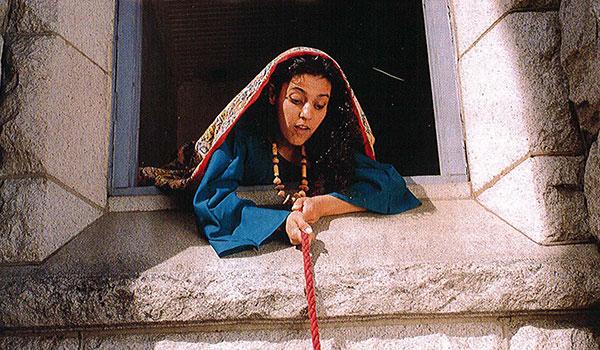
When God conquers a heart, one will help His people (6-7,14-21). She saved the spies’ lives. She hid them and helped them escape. She recognized these men as God’s servants doing God’s business. She wanted to serve and protect them. Ultimately, she lets them down through her window and enables their escape (15, 20). Those whose hearts God possess are allies of the righteous (Mal. 3:18). 

When God conquers a heart, one has faith in God’s provision (8-13). Nothing in the text tells us that the spies preached to her, yet somehow she had arrived at the conviction that she could have hope of salvation. She says she knew God had given Israel the land (9), something these spies’ fathers most likely did not believe (cf. Num. 13-14). She saw how afraid her fellow-citizens were of God’s wrath and power, working through His people (9). She had faith based on the signs and works God had performed from the Red Sea to the Amorites (10). It led her to acknowledge God as “God in heaven above and on earth beneath” (11). Therefore, she asked, in exchange for protecting the spies, for the deliverance of her family and herself (12-13). She hadn’t seen the battle yet, but she believed that it belonged to the Lord. It takes genuine faith to draw a conclusion like that. We’ve not experienced death, the resurrection, the judgment, and an eternal destiny, but do we have faith that God will provide for us through them (cf. 1 Pet. 1:3-9)? If God possesses our hearts, we do!

When God conquers a heart, one will meet the conditions of salvation (14-21). The spies made the salvation of Rahab and her family conditioned upon three things: tie a scarlet thread in her window (18), gather all she wanted to be saved into her house (18), and not tell anyone these spies’ business (20). There was no picking and choosing what she preferred to follow. Obedience meant the difference in life and death (5:25). So today, a heart which God owns will not shun to do anything His Word commands. There’s no arguing, bargaining, debating, or rationalizing, but instead a faith that does what God wills. 

The spies’ mission was a great success and Joshua was encouraged (22-24). They were ready to do battle, ready to conquer. Back in Jericho, there was a woman born into a life of godlessness who had lived a life of worldliness who now faced the hope of happiness and righteousness. Great things follow when we allow God to conquer our hearts! 

Neal’s Note: I send out an email most mornings that I call “The Lehman Learner.” I walk through books of the Bible (in the past I’ve done the Psalms, Luke, 1-2 Corinthians, 1-2 Kings, etc.). This article is from last week. If you would like to receive The Lehman Learner, write to this email and request it. You will be added to the mailing list.)

THE BEGGING MAN WHO KNEW HE NEEDED JESUS

Monday’s Column: Neal At The Cross

Neal Pollard

One of the most intriguing people in all the gospels, to me, is the beggar sitting by the road near Jericho. Mark 10:46 tells us that the man’s name is Bartimaeus. Matthew tells us that there is another man sitting with him, and that man’s name is not given (20:30). This man was shameless in a good way, persistent despite the crowd sternly discouraging him (39). I wonder if there is a more pathetic person disclosed to us in the Bible (maybe Lazarus back in Luke 16). He is needy in at least five ways, according to Luke 18:35-43:

  • He’s physically impaired (35)–“a blind man”
  • He’s economically disadvantaged (35)–“by the road begging”
  • He’s socially outcast (39)–He’s not depicted as a respected member of society, but one to be corrected by the others
  • He’s emotionally distraught (38-41)–Begging for mercy and longing for sight
  • He’s spiritually incomplete (42)–When Jesus heals him, He tells the man, “Your faith has saved you.”

I love how the man is so stripped of his dignity, power, and resources that he boldly pleads for Jesus’ help. It may seem strange, but all of us need to get to that place if we will receive what only He can give. He wanted His mercy. When he received it, look at the response. He “began following Him, glorifying God; and when all the people saw it, they gave praise to God” (43). Don’t you want your submissive, obedient life to be a drawing card for others to see their need of God and to glorify Him? God really shows His power when He takes the lowliest and transforms them by what He does with and through them. That’s why I love this account.


Apathy

Wednesday’s Column: Third’s Words

Gary III

Gary Pollard

It is a well-known fact that apathy destroys whole countries. Wealth lulls people into a state of complacency that avoids conflict at all costs. Government seizes the opportunity to gain power. Oppression always follows. “Hard times create tough people. Tough people create good times. Good times create soft people. Soft people create hard times” (loosely paraphrased from Those Who Remain by Michael Hopf). 

Faith is not immune. Hebrews 2.1-4 strongly warns us against apathetic faith. What happens when we lose interest in our awesome spiritual freedom? We put distance between ourselves and God. This isn’t without consequences. 

“How will we escape if we disregard our salvation?” (2.3). We won’t! Apathy is scary because the consequences arrive in plain sight and at a slow pace. We can easily see them coming, but choose to ignore them for a few more moments of complacent bliss. Once consequences arrive, they’re miserable on multiple levels. 

So, how do we get rid of apathy? Hebrews 2.5ff gives some hypes: 

  1. We’re in Charge of the World to Come (5)
  2. God Is Invested in Us (6)
  3. Jesus Is in Charge Now (7-8)
  4. Jesus Rescued Us (8-10)
  5. Jesus Sees Us As Family (11-16)
  6. Jesus Goes to Bat for Us (17-18)

Finally: “How much more severely do you think someone deserves to be punished who has trampled the Son of God underfoot, who has treated as an unholy thing the blood of the covenant that sanctified them, and who has insulted the Spirit of grace?” (10.29). 

The Good, The Bad, & The Lucky

Tuesday’s Column: Dale Mail

Dale Pollard

In 1951, two to three miles off the coast of Point Reyes, California, a military plane went down after battling faulty electrical issues and then eventually running out of fuel. The plane made a crash landing in the ocean and to make matters a little more terrifying, it was a Great White shark haven. There was one Army service man who managed to escape the aircraft, but once in the water he had no idea where to go. It was in the early morning and the fog was too thick to see through. Knowing he had to do something, he simply chose a direction and began to swim. After a couple of miles of swimming he finally, to his relief, reached land. Later on in life he’d go on to become the star of several Hollywood movies, direct his own movies, and even star in movies that he himself directed! His name was Clint Eastwood. 

He got lucky. Occasionally, that happens in life. We flip a coin, spin a bottle, or make a random turn and it all ends up working out in the end. Accidental fortune might happen in some areas of life, but not when it comes to our spiritual lives. There won’t be anyone in heaven who says, “I have no idea how I got here. I just randomly went through life and made the right choices, I guess!”

 If we’re looking for a deeper faith, a closer walk with God, or directions along the narrow way, we’ll have to be intentional about that. 

Psalm 25:5 reminds us that not only does God guide us into all truth, but that this is a path that must be taught. 

FIGHTING HAGRITES AND OTHERS

Monday’s Column: Neal At The Cross

Neal Pollard

1 Chronicles 5 devotes a relatively large amount of space to an incident that happened during King Saul’s reign. It involved the sons of Reuben, the Gadites, and the half-tribe of Manasseh waging war with a people identified as “the Hagrites, Jehur, Naphish, and Nodab” (18-19). The contested area of land was east of the Jordan River in the territory allotted to the Israelites mentioned in verse 18.  At least some of the people they fought seem descended from Hagar and Ishmael. The focus was on the large land grab made by these Israelites in battle. They won this war in terms of spoil (21) and casualties (21-22). 

Today, we wage war of a very different type. New Testament writers describe it. It is not according to the flesh, but is intense nonetheless (2 Cor. 10:3-5). It is a fight of faith (1 Tim. 1:18). It is against world and spiritual forces necessitating our adorning spiritual armor of God (Eph. 6:10ff). We can feel overmatched and overwhelmed by this enemy. What can help us stay in the fight? There are four statements back in 1 Chronicles 5:18-22 that we can legitimately apply to our spiritual warfare today. Will you remember these?

You Will Be Helped (20).

The chronicler says this of the Israelites. “They were helped against them,” and it is implied in this verse that their help came from above. There is no way we could overcome the world (1 John 4:4; 5:4) without Divine help. God gives His help generously, gently, and graciously (Jas. 1:5). He tells us that all we need to do is ask (cf. Mat. 7:7). God’s help is THE difference-maker! 

Cry Out To God In The Battle (20).

If we are striving to be faithful, we will be in a battle. What can be done? These Israelites were helped because they cried out to God in the midst of the strife. I love how Paul says it to the Philippians: “Be anxious for nothing, but in everything by prayer and supplication with thanksgiving let your requests be made known to God. And the peace of God, which surpasses all comprehension, will guard your hearts and your minds in Christ Jesus” (4:6-7). Don’t neglect prayer in the thick of the fight. Paul follows up his description of our spiritual armor, urging “all prayer and petition…at all times” (Eph. 6:18).

God Answers Those Who Trust In Him (20).

To me, nothing is more beautiful to consider than an army bowed in prayer to God to help them. As a citizen of this nation, it is wonderful to consider our military filled with men and women doing that. But, the most beautiful picture of all has to be of God’s Holy Nation (1 Pet. 2:9) filled with spiritual warriors who so put their trust in God that they are constantly before His throne in prayerful petition. Revelation 8 describes in beautiful imagery how carefully and preciously He handles the prayers of the saints brought unto His throne. It is likened to sweet-smelling incense. God is a loving Father who is pleased when His children demonstrate trust in His leadership and guidance. The promise of Scripture is that those who trust in Him are delivered and are not disappointed (Ps. 22:4-5). 

Understand The War Is Of God (22).

We often sing, “The battle belongs to the Lord.” This passage tells us why the enemy was slain. “The war was of God.” The result was that they settled in their place until the exile, which was over 300 years later.  As great as that was, we stand to experience a far greater victory. God disapproves of unworthy battles–“foolish and ignorant speculations, knowing that they produce quarrels” (2 Tim. 2:23), “foolish controversies” that “are unprofitable and worthless” (Tit. 3:9), or quarrels and conflicts that are fueled by our giving into the sins of our flesh (Js. 4:1ff). Be careful not to be a foot soldier carrying out the agenda of the foe. But if we are on the Lord’s side, we can be assured that He will gain the victory and we’ll be fighting on the winning side. 

Maybe we wonder why God recorded events like this in Scripture. It certainly shows His mind, nature, and power. But it also helps us understand His point of view and His desire in our lives today. The church has “Hagrites” to face. You and I have our own “Hagrites” to battle. How they won is how we’ll win. May the song on our hearts and lips ever be, “Faith is the victory that overcomes the world!”

8 Reminders For The Restless Mind

Tuesday’s Column: Dale Mail

dalejanelle2021

Dale Pollard

  1. Don’t carry burdens that aren’t yours (Proverbs 3.5-6)
  2. Remember the extraordinary times that God has carved out a path where there was no path before (Isaiah 43.16-19) 
  3. Don’t forget, God can see what you can’t see (Proverbs 16.9) 
  4. Even if you stumble, God won’t let you stay down (Psalm 37.23-24) 
  5. God’s vision is bigger and better than yours (Jeremiah 33.3) 
  6. God hasn’t forgotten about you (Proverbs 20.24) 
  7. Remember to be very specific when praying to God (2 Samuel 5.19) 
  8. Always be sure your will is His will (James 4.15) 

If you’re struggling with the anxieties that can come from making life’s difficult decisions, read these verses. Perhaps they will give you some insight that help you to answer that crucial question, 

“How should I be praying about this?” 

Give it to God and rest up! 

“When you lie down you will not be afraid, when you lie down your sleep will be sweet.” 

Proverbs 3.24 

Sunday’s Bulletin Article: “F-E-A-R”

Neal Pollard

61482521_10156347607435922_101144894977867776_n

It will make congregations forsake God’s command to practice church discipline, especially in the age of Facebook and Instagram. It will disrupt, cancel, and in other ways impact congregational plans, faced with something that has killed .0004% of the world’s population. It will cause congregations to abandon the biblical position on any number of things that accommodates the cultural point of view. But, biblically speaking, what is particularly the fear of the devil, mankind, or things of this earth?

F-AITHLESS. You’ll find fear and faith contrasted in Scripture (Mat. 14:31; Mark 4:40; Heb. 11:23). Jesus rebukes a fear which hinders faith more than anyone. When we are driven by fear rather than faith, we confess that we believe in something more than we believe in God. Fear is completely understandable, something the Bible’s greatest heroes felt. But, they overcame their fear of men and even the devil by a greater faith in God’s power. The generation of Israel Moses led were the poster children of fear (Num. 14:9), yet what does the writer of Hebrews diagnose as the root cause of their punishment and rejection? “Unbelief” (3:19).

E-PIDEMIC. Have you noticed how quickly and widely fear spreads? The spies sent to Canaan came back afraid and they transmitted it to the whole nation almost immediately (Num. 13:31-33; 14:1ff). The devil has plenty of channels to transmit fear, from traditional to social media. But even pulpits, private meetings, and informal discussions can fan the flames of fear. Fear plays to our flesh, and the voice of fear travels at light speed. 

A-MPLIFYING. Have you ever suffered from economic, relationship, occupational, or spiritual problems? Lie still in your bed at night (or wake up in the middle of the night) and those fears grow exponentially. Like worry, fear is often greater than the problem. It’s why the devil finds it a useful tool in his warfare (cf. Rev. 2:10; 21:8–“cowardly” is the word “afraid” in Mark 4:40; 2 Tim. 1:7). The enemy looks bigger and scarier than it is, but giving in to fear can make it seem gigantic.

R-ASH. Jesus makes this clear during His earthly ministry. He says, “Do not fear those who kill the body but are unable to kill the soul; but rather fear Him who is able to destroy both soul and body in hell” (Mat. 10:28). The analogy is definitely disturbing. There are physical and spiritual entities out there with the power to take our lives. We can be so quick to respond to them by retreating or withdrawing. But if the fear of those things replaces or supplants the fear that belongs rightfully only to God, we are in big trouble. 

These, are fearful times! Who doesn’t wrestle with fear? It seems that Jesus did (Luke 22:44; Heb. 5:7). God understands we’ll struggle with fear (Psa. 103:14). But His lovingkindness and compassion are “on those who fear Him” (Psa. 103:11,13,17). There is more Kingdom work to do than ever! There are numerous obstacles, but let’s not get in our own way through fear!