Immortality

Carl Pollard

Immortality

“the ability to live forever, eternal life.” 

As a Christian, the gospel you believed is not mainly about escaping hell, it’s about entering eternal life. Immortality is the center of our hope. From the beginning, God formed us for eternal life. The Tree of Life stood in Eden as a sign. Humanity was meant to live, and to walk with God without end (Gen 2:9). Sin broke that design and brought the sentence of death (Gen 3:22-24). Death became the doorway through which grace would one day lead us back to life.

And grace has come. Jesus Christ, the Resurrection and the Life, has “abolished death and brought life and immortality to light through the gospel” (2 Tim 1:10). When He rose, He unveiled the firstfruits of a new humanity, bodies raised imperishable, souls made whole, creation set free (1 Cor 15:42-49; Rom 8:21). The same power that raised Jesus from the dead is the down-payment on our own resurrection (Eph 1:13-14; Rom 8:11).

This is why the New Testament writers spoke with triumph. “Death is swallowed up in victory!” (1 Cor 15:54). The last enemy is defeated, not negotiated with.

What will this immortality feel like? Revelation gives us the clearest glimpse: God Himself will wipe away every tear. Death, mourning, crying, and pain will be former things, remembered no more (Rev 21:4). We will see His face (Rev 22:4). We will know as we are known (1 Cor 13:12). Every longing planted in us by the Creator, longings for beauty, for love, for purpose, for home, will be satisfied beyond imagination, yet never exhausted. Eternity will not be monotonous; it will be the ever-fresh discovery of the infinite God! 

The world groans, our bodies weaken, our hearts break, but none of it is the final word. Christ has died, Christ is risen, Christ will come again. And when He appears, we shall be like Him, for we shall see Him as He is (1 John 3:2).

Until that day, let this joy shape everything. Work without despair. Love without fear of loss. Suffer without bitterness. Give without calculation. The clock is broken, the future is secure. We are headed toward a life where sin cannot diminish us, death cannot touch us, and God will be our everlasting light.

This is the joy of immortality: not just that we will live forever, but that we will live forever with Him, fully alive and fully home.

Come, Lord Jesus.

Reasons To Be Thankful

Carl Pollard

As a Christian, the list is endless. But here’s a few: 

  1. God is eternally good and His steadfast love never ends (Psalm 136:1) 
  2. He chose you before the foundation of the world (Eph. 1:3–4)
  3. You are forgiven and your sins are removed as far as the east is from the west (Psa 103:12)
  4. Christ redeemed you with His own blood while you were still His enemy (Rom. 5:8)
  5. You have been adopted as a beloved child of God (1 John 3:1)
  6. The Spirit lives inside you as a guarantee of your inheritance (Eph. 1:13–14)
  7. Every spiritual blessing in the heavenly places already belongs to you in Christ (Eph. 1:3)
  8. Nothing can separate you from the love of God in Christ Jesus (Rom. 8:38–39)
  9. Your name is written in the Lamb’s Book of Life (Phil. 4:3) 
  10. Jesus is praying for you right now (Heb. 7:25)
  11. Death has been swallowed up in victory (1 Cor. 15:54, 57)
  12. One day you will see Him face to face and be made like Him (1 John 3:2)
  13. He will wipe away every tear and make all things new (Rev. 21:4–5)
  14. His mercies are new every single morning (Lam.3:22–23)
  15. He cares for YOU (1 Pt. 5:7) 

As a Christian, you aren’t just tolerated, you are infinitely loved, irrevocably chosen, completely forgiven, eternally kept, and destined for glory. That is why, in everything and always, we give thanks. 

“This is the will of God in Christ Jesus for you: give thanks in all circumstances.” 1 Thes. 5:18

Dealing With Sin Aggressively

Sin won’t quit on its own. It has to be killed. The Bible doesn’t offer a gentle plan; it hands us a sword. Cut off the hand. Gouge out the eye. Put the old nature to death. This is love for the One who died so we could live free.

Carl Pollard

I was listening to a preacher on Facebook the other day and he said something that made me think. He said, “stop treating your sin like a pet, it’s time for us to deal aggressively with our sin!” I started looking for all the places in scripture that this concept is described. 

Jesus is clear: “If your right eye causes you to sin, tear it out and throw it away. For it is better that you lose one of your members than that your whole body be thrown into hell” (Matthew 5:29,). Sin isn’t a bad habit to manage, it’s a deadly growth that has to be cut out. The Bible never tells us to make peace with it. It tells us to kill it. That’s the normal Christian life.

Paul is clear: “So now it is no longer I who do it, but sin that dwells within me” (Romans 7:17). That word “dwells” means sin has set up camp inside us. It’s not a visitor; it’s a squatter that wrecks everything it touches. The only answer is eviction, forceful, immediate, and final. The Spirit is the one who hands us the tools.

Colossians 3:5 is clear: “Put to death therefore what is earthly in you: sexual immorality, impurity, passion, evil desire, and covetousness, which is idolatry.” “Put to death” is a command to act now, not later. It’s not about slow improvement; it’s execution. Lust doesn’t get a warning, it gets killed. Greed doesn’t get an excuse, it gets the cross. Every morning we take sin’s corpse out to the curb.

Jesus continues: “And if your right hand causes you to sin, cut it off and throw it away” (Matthew 5:30). He’s using strong language on purpose. If something in your life, your phone, your habits, your friendships, keeps tripping you up, get rid of it. No debate. The word “causes you to sin” is the same one used for setting a trap. Whatever sets the trap has to go.

Romans 8:13 shows how we win: “For if you live according to the flesh you will die, but if by the Spirit you put to death the deeds of the body, you will live.” Notice it’s “by the Spirit.” We don’t grit our teeth and try harder. We pray, read Scripture, fast, and stay accountable, then the Spirit does the heavy lifting. This is daily, ongoing war, not a one-time fix.

Sin won’t quit on its own. It has to be killed. The Bible doesn’t offer a gentle plan; it hands us a sword. Cut off the hand. Gouge out the eye. Put the old nature to death. This is love for the One who died so we could live free. Fighting sin hard is just what grace looks like in real life. Start today: name the sin, grab the weapon, trust the Spirit. Eternity is too close for anything less.

God’s People Care

Neal Pollard

  • For Their Community. Patriotic, civic-minded, generous, helpful, involved, and connected, God’s people strive to be good citizens and neighbors. Acts 2:47a; 5:13b).
  • For Visitors. Smiling, greeting, welcoming, inviting, and connecting, God’s people know that many visitors to church events and assemblies are future brothers and sisters and they want to do what they can to help facilitate that objective. Colossians 4:6; Philippians 2:15; Matthew 5:13-16.
  • For The Lost. Co-workers, family, friends, fellow-students, acquaintances, neighbors, and strangers, God’s people see the people in their lives as fellow-strugglers whose souls will spend eternity somewhere and they want it to be in heaven with them. Daniel 12:3; James 5:19-20; Proverbs 11:30
  • For Each Other. Empathetic, tuned-in, concerned, familiar, intuitive, and loving, God’s people rise to occasions of crisis and love in ordinary moments because they are intimately connected to each other by precious blood and like precious faith. 1 Thessalonians 5:11; Romans 12:9-10.
  • For Children. Wise, visionary, foresightful, nurturing, and of tender affection, God’s people hear their Savior’s admonition to imitate, encourage, and develop these impressionable, dear ones. Matthew 18:3ff; 19:14
  • For The Elderly. Concerned, attentive, prayerful, and connected, God’s people know it’s wise and important not to neglect and forget the part of our population that grows more lonely, isolated, frail, and needy with each passing day and they let them know they see and care. James 1:27; Proverbs 16:31; Proverbs 23:22
  • For Their Families. Responsible, judicious, properly-prioritizing, and consistent, God’s people realize that no advancement or success in the world is worth sacrificing the souls they most cherish and can most influence. Matthew 6:33; Ephesians 6:1-4; Proverbs 22:6; Deuteronomy 6:6-7
  • For Their Souls. Vigilant, conscientious, self-aware, and introspective, God’s people know all too well their humanity, weakness, and inconsistencies but grow more in love with God and heaven and less in love with this world every day. 1 John 2:15-17; Matthew 22:37-40.
  • For God’s Will. Whether gospel meetings, retreats, ladies days, daily Bible reading, workshops, lectureships, special or regular Bible classes, or worship assemblies, God’s people so often show up hungry for the bread of life and the spiritual meat, thirsty for the milk of the word, and considering all of it sweeter than honey. Hebrews 10:24-25; John 6:35; Hebrews 5:14; 1 Peter 2:2; Psalm 19:10

Aren’t there so many reasons to love God’s people?

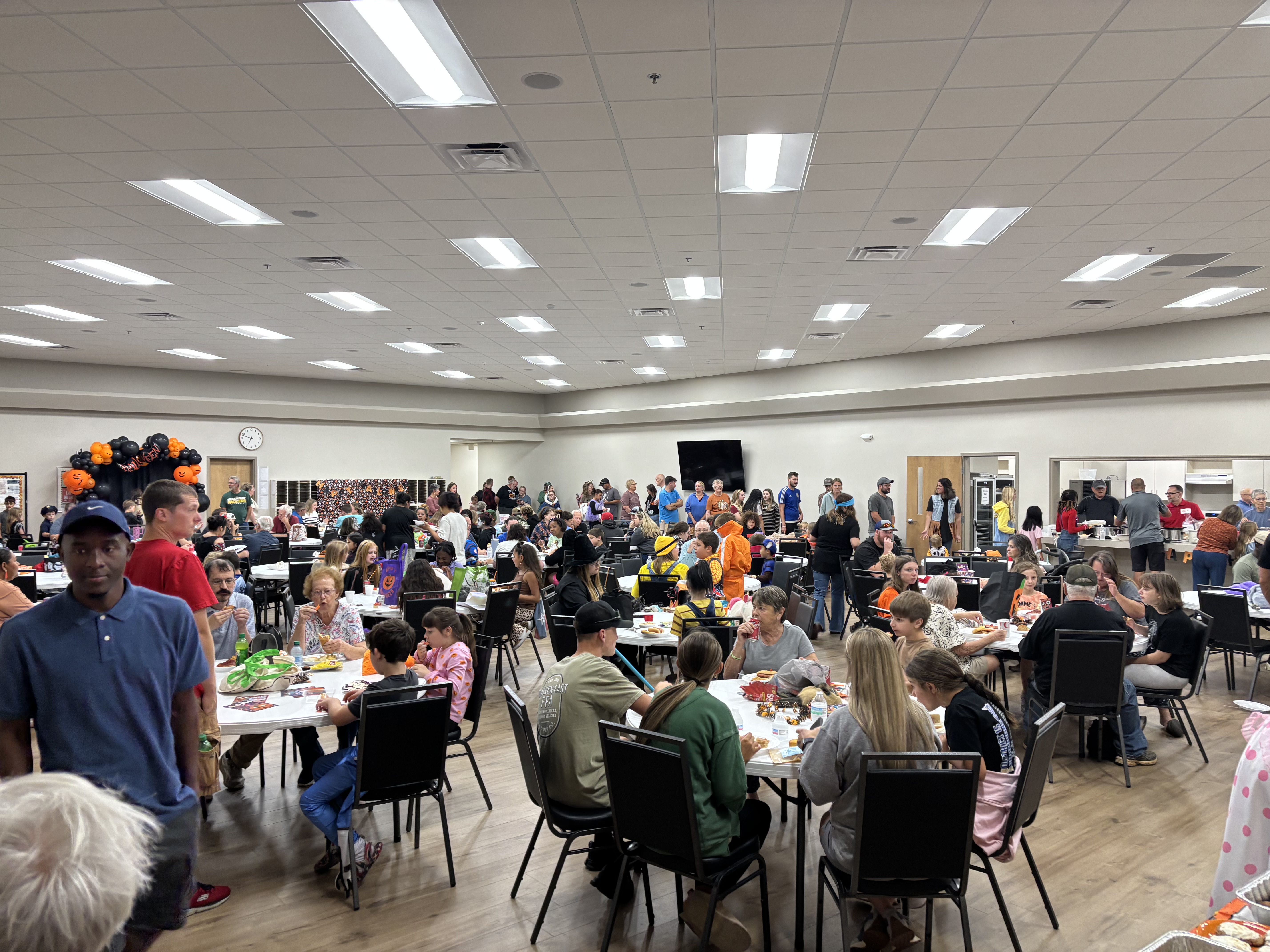
A couple of pictures (credit Russell Simpson) from Saturday night’s Trunk or Treat. God’s people at Cumberland Trace really shined!

No Ordinary Man, No Ordinary Story

Neal Pollard

The tribune (commander), in charge of the Roman regiment posted at Jerusalem, rescues Paul from the Jewish mob in Acts 21. He proves an interesting character, exposed to the local plots and intrigues and familiar with the temperamental behavior of the local Jews. He could have been a foreigner in the eyes of the Empire who earned the right of citizenship through military service, or perhaps he was a slave freed by his owner and given opportunity to buy his citizenship. His story must have been pretty interesting. We learn that his name is Lysias (23:26; 24:7,22). 

But the man he found even more interesting whose story is equally intriguing is the apostle Paul. He was surprised when he heard this controversial Jewish man speaking Greek (21:37), and he mistook him for an Egyptian revolutionary (21:38). If he understand Hebrew, Lysias would have also heard Paul say that he was highly educated (22:3) and a former persecutor of the way he now preached and promoted (22:3-5). He would have discovered that Paul had a supernatural encounter with Jesus on Damascus Road (22:6-9), instructed by Him to go to the city and wait until ultimately a man named Ananias came and told him what Jesus wanted him to do: (1) Immediately arise and be baptized to wash away his sins (22:16) and (2) Be Jesus’ witness to everyone, but especially to the Gentiles (22:15,17-21). The Jewish mob, who understood everything Paul was saying, threatened to attack Paul upon hearing he was offering salvation to Gentiles (22:22-23). So, Lysias had to isolate Paul from the crowd in the barracks (22:24). Seeing Paul as this huge enigma, Lysias decides to chain Paul, flog him, and beat information out of him (22:24-25). This is when Paul tells a centurion that what he was about to do was illegal. He was a Roman citizen (22:25-26). Then, Lysias finds out that Paul was a free-born citizen, meaning his parents were citizens before him. That obviously impresses and frightens the tribune, since he had acted illegally against Paul. What we read next (22:30ff) shows us that Lysias is extremely curious to get the root of this riot and know more of this fascinating man’s story.

But as fascinating as Lysias was and even more fascinating as Paul surely was, the truly extraordinary man with the extraordinary story was the man Paul was persecuted for declaring–the Son of Man! This “Jesus of Nazareth” (22:8), “Lord” (22:8,10), and “Righteous One” (22:14) had changed a man so accomplished and impressive as Paul, and Paul had been transforming lives and saving souls by preaching and teaching Him throughout the known world. The story of God in the flesh, living among His creation, dying for them, and being raised for their justification, who now was back in heaven, is the most extraordinary of all. Its implications are eternal! 

Perhaps you have lived a fascinating life and can wow people with your story. But, God has you here to share His story and to help transform the life and change the story of people destined to stand before Him some day. It’s a story too good to keep to ourselves! 

I Am The True Vine

Our chief end is to glorify God and enjoy Him forever, transforming even mundane moments into eternal significance. Three things endure forever: God, His Word, and human souls. By abiding in Jesus, we invest in eternity. So, how do we abide?

Carl Pollard

In Deuteronomy 32, Moses presented a song to Israel, a powerful reminder of God’s justice, power, and mercy, urging the nation to live faithfully to receive His promises. After the song, Moses declared in verse 47, “These words aren’t just empty words, they are your life.” Today, every opportunity to worship and study God’s Word offers us not just empty stories but the words of life. In John 15:1-8, Jesus teaches a powerful message about connection, urging us to “abide” in Him. The word “abide” appears repeatedly in this passage, emphasizing the need to remain connected to Jesus, especially as He spoke these words during the Last Supper, preparing His apostles for a world about to be turned upside down.

Jesus illustrates this connection by calling Himself the True Vine, a familiar image to Israel, where a branch relies on the vine for water and nutrients. Similarly, we must stay connected to Jesus, our source of life. This is His seventh and final “I AM” statement in John, underscoring its significance. Without this vital connection, we face eternal consequences. Jesus warns in John 15:4, “As the branch cannot bear fruit by itself, unless it abides in the vine, neither can you, unless you abide in me.” An independent branch withers and dies, just as a soul disconnected from Christ becomes fruitless and spiritually dead. Jesus emphasizes in verse 5, “for apart from me you can do nothing.” A fruitless branch is cut off (verse 2) and thrown away (verse 6). Without Jesus, we cannot fulfill our purpose—to bear fruit that glorifies God.

But on the flip side, abiding in Jesus leads to a fruitful life. John 15:5 promises, “Whoever abides in me and I in him, he it is that bears much fruit.” This connection transforms our prayers, aligning our desires with God’s will (verse 7). By bearing fruit, we glorify God and prove to be His disciples (verse 8). Our chief end is to glorify God and enjoy Him forever, transforming even mundane moments into eternal significance. Three things endure forever: God, His Word, and human souls. By abiding in Jesus, we invest in eternity.

So, how do we abide? First, meditate on His Word. Personalize Scripture to move it from head to heart. Second, obey His commands, particularly to “love one another” (verse 12). Third, pray continuously about everything, maintaining a constant conversation with Jesus. Finally, rest in His love, as He assures us in verse 9, “As the Father has loved me, so have I loved you. Abide in my love.”

Abiding in Jesus, the True Vine, brings life, fruitfulness, and joy while glorifying God. As Colossians 3:4 declares, “When Christ who is your life appears, then you also will appear with him in glory.” Are you connected to the Vine? If not, now is the time to put your faith in Him, obey the gospel, and live for Jesus!

The Great Invitation: Wheat Among The Tares

Gaining entry into God’s kingdom involves more than just accepting an invitation; it requires embracing God’s means of achieving righteousness. We cannot enter based on our own merits, trying to present our achievements as if they were fine garments

Brent Pollard

During His final week, Jesus told this story while standing in the temple courts, facing hostile religious leaders. It was a pointed parable—one that directly addressed the heart of God’s kingdom purposes (Matthew 22.1-14). Along with His previous parable of the wheat and tares, this reveals a profound truth: God’s kingdom embodies radical grace, presents a mixed reality, and guarantees certain judgment.

The King’s Heart Revealed

A king is preparing a wedding feast for his son. This occasion is not just a social gathering; it reflects the deepest desire of God’s heart. He longs to celebrate His Son in the company of joyful guests. The king has prepared the feast and sent the invitations. Everything is ready.

Observe that those the king invited initially decline—these were individuals who should have felt honored to attend—but instead, they make excuses and turn away. Even worse, they mistreat the king’s messengers. This behavior is a clear reflection of what Israel’s leaders did to the prophets, and what they were about to do to God’s own Son.

Their rejection, however, does not thwart God’s purpose; it reveals it. When those who considered themselves worthy prove unworthy, the king sends his servants with new instructions: “Go to the highways and invite anyone you find.”

This overture is the Gospel in its essence. God’s grace extends beyond all human boundaries. The invitation that began with the covenant people reaches out to everyone—Gentiles, outcasts, and anyone willing to accept it. Paul captured this idea perfectly when he said, “to the Jew first, and also to the Greek” (Romans 1.16).

The Uncomfortable Truth

The story takes an unsettling turn when the servants gather “both bad and good”—not just the obviously righteous, but everyone willing to accept the invitation. The wedding hall fills with a diverse crowd, and Jesus wants us to understand that this is precisely how God’s kingdom appears in the present age.

Consider the parable of the wheat and the tares (Matthew 13.24-30). In this story, good grain and weeds grow together in the same field, often appearing almost identical until it is time for the harvest. The householder instructs his servants not to separate the two too early, understanding that acting too soon could harm the wheat along with the weeds.

In the church, both genuine believers and false professors sit in the same pews, sing the same songs, and bear the same name, “Christian.” From our perspective, they are often indistinguishable from one another. Only God knows the heart.

This truth should deeply humble us. While we can’t see the heart as God does, Jesus taught us that “by their fruits you will know them” (Matthew 7.20). We can and should discern spiritual fruit—such as love, repentance, and growth in holiness. However, this discernment is vastly different from making a final judgment. We can recognize patterns of spiritual life or spiritual deadness, but we cannot declare anyone’s eternal destiny. Our responsibility is to remain faithful ourselves while exercising wise and loving discernment regarding the fruit we observe in others.

The Essential Garment

The king is shocked when he inspects his guests and discovers that one man is not wearing a wedding garment. In that culture, it was common for hosts to provide appropriate attire for their guests. Refusing to wear it was considered an insult, as it signified a rejection of the king’s grace. The king is shocked when he inspects his guests and discovers that one man is not wearing a wedding garment. In that culture, it was common for hosts to provide appropriate attire for their guests. Refusing to wear it was considered an insult, as it signified a rejection of the king’s grace.

The man stands speechless. What could he possibly say? The invitation was sincere, the host provided the garments, and the feast was ready. His exclusion came not from the king’s lack of generosity but from his own refusal to embrace grace.

This fact is at the heart of the Gospel. Gaining entry into God’s kingdom involves more than just accepting an invitation; it requires embracing God’s means of achieving righteousness. We cannot enter based on our own merits, trying to present our achievements as if they were fine garments. Isaiah reminds us that our righteousness is like filthy rags in God’s sight.

The wedding garment symbolizes the righteousness of Christ himself. Paul teaches that we must be “clothed with Christ” (Galatians 3.27). This concept isn’t about moral improvement or religious performance—it’s about letting go of our own efforts and receiving what only God can provide.

Grace for the Unworthy

What stands out to me most about these parables is that none of the guests genuinely deserve their spot at the feast. The first guests demonstrate their unworthiness by rejecting the invitation. The guests brought in from the highways aren’t worthy by any merit-based criteria. Even those who wear appropriate attire at the feast arrive solely by grace.

This reality reflects the parable of the vineyard workers (Matthew 20.1-16). Neither the early workers nor the late ones “earned” their whole day’s wage; it was the landowner’s generous decision. The same principle applies in God’s kingdom. We are all travelers on the road, gathered by grace, clothed by grace, and sustained by grace.

This truth should humble our pride and inspire our worship. If you’re at the feast, it’s because God wanted you there, not because you earned it. When you wear Christ’s righteousness, it is because He provided what you could never achieve on your own.

Living with the Mystery

I understand that the mixed nature of the church can be discouraging. You may observe hypocrisy among those who claim to follow Christ. You witness divisions, scandals, and failures within the visible church. At times, you might wonder if the entire institution is compromised.

Take heart—Jesus anticipated this very situation. The wheat and the tares will grow together until the harvest. The wedding hall will include both genuine and counterfeit guests until the King’s final inspection. This fact is not a flaw in God’s plan; it is part of His wisdom.

Our mission is not to rid the church of every false believer—that is God’s responsibility during the final judgment. Instead, our mission is to examine our own hearts to ensure that Christ’s wedding garment of righteousness clothes us. Additionally, the King compels us to extend His invitation to others who are traversing the roads of this world.

We should encourage one another to be faithful and lovingly confront sin when we notice it. However, we must remember that ultimate judgment belongs solely to God. He will separate the wheat from the tares at the right time, and His judgment will be perfect.

The Certainty of Joy

Don’t let the presence of tares discourage you from recognizing the truth of the wheat. Don’t allow counterfeit garments to diminish your confidence in the genuine righteousness you have received in Christ. The King knows His own, and the harvest will come. The feast will be glorious.

If you have accepted the invitation and come to the feast dressed in Christ, you can find comfort in this promise: what God has begun in you, He will also complete. The same grace that called you from the highways will support you until that final day when He removes every falsehood, and only the truth remains.

If you find yourself on the highways, unsure whether the invitation includes you, pay attention. The King’s servants are still reaching out to invite you. The message remains the same: “Come, for everything is ready.” The garment of righteousness is still offered freely to anyone willing to accept it.

The feast is genuine. The King is gracious. The invitation remains open.

Come to the wedding.

Chaos

The argument is often made that biblical writers ripped off much older myths and adapted them for a monotheistic faith. The problem with this is that, while creation order and chaos are indeed reflected in many of these legends, that’s basically where the similarities end.

Gary Pollard

“Chaoskampf” is a prominent theme in the myths of Babylon, Egypt, Canaan, Greece, and even the Norse sagas. It’s also in our Bible, but with obvious differences. In the Babylonian tablets collectively called the Enuma Elish, creation begins with a great battle. Marduk defeats Tiamat, a sea goddess who represents chaos. He fashions the heavens and the earth from her remains after defeating her in battle. In Canaanite myth, Baal battles Yam, the sea god, also a symbol of chaos. In Egyptian stories, Ra must overcome the serpent Apep every night—a coiling monster of darkness and disorder (and don’t forget Osiris/Seth). In Norse mythology, at the edge of the world lies Jörmungandr, the world serpent, who they said will one day rise in Ragnarök, the day of final chaos. In Greek mythology, the Titans battle the Olympians and the victors reorder the destroyed world. 

The pattern is the same: a divine being, representing order and stability, faces the chaos of the sea, often personified as a serpent. Genesis 1 is greatly simplified and much cleaner — “In the beginning God created the heavens and the earth. The earth was formless and empty, and darkness covered the deep waters. And the Spirit of God was hovering over the surface of the waters.” The great patriarchs were raised in these traditions: Abraham was from Ur of Babylonia, and Moses was raised and educated in Egypt. Asaph wrote, “With your great power you split open the sea and broke the heads of the sea monster. Yes, you smashed the heads of Leviathan and left his body for the animals to eat. You make the springs and rivers flow, you make the rivers dry up. You control day and night. You made the sun and moon. You set limits for everything on earth, and you created summer and winter” (Ps 74). 

The argument is often made that biblical writers ripped off much older myths and adapted them for a monotheistic faith. The problem with this is that, while creation order and chaos are indeed reflected in many of these legends, that’s basically where the similarities end. Unlike other cultures, whose myths are all about cosmic battles between gods, Moses and Asaph speak of the unchallenged power of the God who tamed the seas and chaos with just his words

Revelation ties this theme up nicely. John says, “Then I saw a new sky and a new earth. The first sky and first earth had disappeared. Now there was no sea. And I saw the holy city, New Jerusalem, coming down from God, down from the sky.” The detail about the sea might seem out of place, but it’s not. “Sea” was often synonymous with chaos, violence, death, and fear. It was personified as a great enemy that had to be defeated. On New Earth, tehom — chaos, the abyss, Tiamat, Leviathan, the sea — is finally gone forever.

Three quick things: 

  1. Chaos is nothing to panic over. We serve the God who calmed the seas with a word (Mk 4). 
  2. God can and does bring order from chaos. Our life might feel “formless and void” but God will ultimately bring order and beauty (Rom 8). 
  3. God has already won — the sea is on borrowed time, Leviathan has lost. 

When The Clouds Speak

Reflections on God’s Power and Presence in the Book of Job

Brent Pollard

In the book of Job, clouds represent more than just weather patterns; they embody profound metaphors for God’s inscrutable mystery, immense majesty, and sovereign authority. Such imagery offers spiritual insights for individuals seeking to understand the fullness of God’s presence in their lives. These verses combine lyrical elegance with eternal truths for those committed to honoring the authority of Scripture.

Consider what the clouds reveal about our Creator.

1. Clouds Reflect God’s Majesty and Grandeur

“He wraps up the waters in His clouds, and the cloud does not burst under them.” —Job 26.8

Here, we witness the magnificent tapestry of God’s sovereign design. Clouds transport vast quantities of water without releasing it—a stunning equilibrium that surpasses human understanding and highlights God’s supreme authority over His creation. Although science can clarify the complexities of atmospheric physics, we must not forget that behind every natural law stands the sovereign hand of the divine Lawgiver.

In this passage, Job contemplates God’s authority over the depths, the heavens, and the essence of life (Job 26.5–13). The clouds testify to His greatness, who upholds all things by His Word (Hebrews 1.3).

2. Clouds Reveal God’s Mystery and Hiddenness

“‘Clouds are a hiding place for Him, so that He cannot see; and He walks on the vault of heaven.’” —Job 22.14

Although Eliphaz’s views on Job’s culpability are mistaken, he reflects a profound biblical truth: God’s ways often remain enigmatic to humanity. Just as the cloud on Sinai obscured Moses (Exodus 19.9) and the tabernacle radiated with God’s glory (Exodus 40.34–38), the cloud in Job stands as a significant symbol of God’s concealed magnificence.

During periods of uncertainty, it’s crucial to remember that God isn’t far away; instead, He is deeply engaged, even when we can’t perceive His presence. As Paul states, “For we walk by faith, not by sight” (2 Corinthians 5.7). Genuine righteousness is demonstrated through trust in God, even when His intentions are not completely clear.

3. Clouds Symbolize God’s Sovereignty Over Nature

“Do you know about the layers of the thick clouds, the wonders of one perfect in knowledge…” —Job 37.16

Elihu urges Job to contemplate the marvels of the sky. The One who is “perfect in knowledge” has meticulously arranged the clouds. In a realm characterized by change and unpredictability, those with unwavering faith find comfort in knowing God sovereignly governs all creation.

This profound truth is echoed in Jesus’s words when He rebuked the wind and the sea, showing that the Creator commands authority over the storm (Mark 4.39–41). Job’s description of the cloud powerfully foreshadows Christ’s sovereign control over the wind and the waves.

4. Clouds Are a Backdrop for Divine Encounter

Although Job existed before the Mosaic law, clouds as vessels of divine encounters are evident throughout Scripture:

• In Exodus 13.21, the Lord guided Israel with a pillar of cloud.

• In Exodus 19.9, He came down to Sinai in a thick cloud to converse with Moses.

• In Matthew 17.5, a brilliant cloud enveloped the mount of transfiguration, and God’s voice proclaimed, “This is My beloved Son, with whom I am well-pleased; listen to Him!”

The pattern is clear: God often reveals His presence through the cloud. What seems obscure to human eyes is, in fact, the gateway to divine revelation. Much like Moses and Elijah, the faithful are urged to climb the mountain—even when surrounded by fog—to receive the Word from the Lord.

5. Clouds Teach Us to Wait on God’s Timing

“Can anyone understand the spreading of the clouds, the thundering of His pavilion?” —Job 36.29

Elihu draws our focus to the profound mystery of God’s workings. We lack control over the clouds and do not understand their complex paths entirely. They emerge, transform, and bring rain at the right moment. Similarly, God’s answers remain beyond our understanding.

The clouds teach us patience, reminding us that the Lord is active even when those clouds obscure our clarity. As the psalmist eloquently says, “Clouds and thick darkness surround Him; righteousness and justice are the foundation of His throne.” (Psalm 97.2).

Conclusion: The Cloud Is Not the End of the Story

Job might not understand the full extent of his suffering, but he experiences a profound revelation of God’s greatness, which is enough. Although the clouds may obscure, they also reveal the glory above. They announce God’s power, veil His splendor, and sustain creation. One day, those clouds will serve a different purpose.

“Behold, He is coming with the clouds, and every eye will see Him, even those who pierced Him; and all the tribes of the earth will mourn over Him. So it is to be. Amen.” —Revelation 1.7

The clouds that once hid God’s glory will eventually reveal the majestic Christ in His fullness. As we walk beneath the expansive sky—occasionally in darkness, often in reverence—we remain assured that above every cloud, the Sovereign Lord reigns.

Unless otherwise indicated, Scripture quotations are taken from the NASB® (New American Standard Bible®, 1995 Updated Edition). Copyright © 1995 by The Lockman Foundation. Used by permission. All rights reserved

Keep Hurtin’

Gary Pollard

This is a break from Origen’s First Principles. I’m slow: it takes me a long time to wrap my head around something. Romans 7 and 8 are about our constant battle against our sinful nature. We have the side that wants to be holy and serve God, and we have the side that betrays our human weaknesses. It’s an awful existence in many ways. Even Paul said, “What a miserable person I am! Who will save me from this body that brings me death?”

Then we get to 8.17 where Paul talks about suffering. I always assumed this was a shift in topic because he gets into stuff that won’t happen until Jesus returns. But since he spent the previous several paragraphs talking about our constant, sometimes-demoralizing struggle against sin, I don’t think this is necessarily about physical suffering.

God’s Spirit helps our spirit — our mind, emotion, intent, any aspect of being that can’t be measured — in that fight. There are outside influences in our struggle against sin, of course, but Paul really focuses on the stuff that hurts: our own sinful weakness. We hate that we’re weak. We’re ashamed of our failures. We’re “waiting for God to finish making us his own children…we are waiting for our bodies to be made free.”

In the meantime, we suffer. Maybe not physically — though in some places on this earth that’s a reality — but certainly spiritually. We know our faults and failures better than anyone. Our spirits, burdened by the knowledge of our own weakness, groan to God with pain too deep for words. And he helps us!

“We are very weak, but God’s Spirit helps with our weakness. We don’t know how to pray like we should, but the spirit speaks to God for us, begging on our behalf with groaning too deep for words.”

Guilt is a powerful weapon in the enemy’s hands, and we all have too much of it. The struggle and the pain is normal — it’s guaranteed for anyone who wants to be like God. It’s never going to happen in this life! We can’t ever be good like God! But we can try, and we can at least ensure that sin isn’t the master we serve. If you feel that pain, odds are you’re on the right track.

Right after this section, full of empathy and hope and reassurance and warning, Paul says,

“Who can accuse the people God has chosen? No one! God is the one who makes them right.

Who can say that God’s people are guilty? No one! Christ Jesus died for us, but that is not all.

He was also raised from death. And now he is at God’s right side, speaking to him for us. Can anything separate us from Christ’s love? Can trouble or problems or persecution separate us from his love?”

The struggle and its pain is normal. It’s a sign that our hearts are set on something we won’t achieve until our bodies have been freed. God helps us, he understands, and we cannot let the enemy demoralize us into giving up. It’s harder to keep struggling against our sinful weakness, but it will be so worth it!

“But in all these troubles we have complete victory through God, who has shown his love for us. Yes, I am sure that nothing can separate us from God’s love—not death, life, angels, or ruling spirits. I am sure that nothing now, nothing in the future, no powers, nothing above us or nothing below us—nothing in the whole created world—will ever be able to separate us from the love God has shown us in Christ Jesus our Lord.”

“Choose Life”

“As the horizon remains constant, the journey each day requires careful judgment. We encounter intersections where responsibilities intersect, understanding is limited, or insight must develop…”

Brent Pollard

“I have set before you life and death, the blessing and the curse. So choose life…” (Deuteronomy 30.19 NASB95)

From Moses’ farewell on the plains of Moab to the final verses of the New Testament, Scripture conveys a single message: God offers each generation a clear, dual choice—life in communion with Him or death in estrangement from Him. Joshua pressed the same call: “Choose for yourselves today whom you will serve… But as for me and my house, we will serve the Lord” (Joshua 24.15 NASB95). Jesus contrasts the narrow path that leads to life with the broad road that leads to destruction (Matthew 7.13-14), proclaiming, “I came that they may have life, and have it abundantly” (John 10.10 NASB95). Paul further distills it: “For the wages of sin is death, but the free gift of God is eternal life in Christ Jesus our Lord” (Romans 6.23 NASB). John adds his testimony: “He who has the Son has the life; he who does not have the Son of God does not have the life” (1 John 5.12 NASB95). The distinction remains clear throughout the ages, and the options persist without alteration.

Yet, in this sacred context, “life” signifies a profound spiritual connection rather than a comfort guarantee. The essence of eternal life is captured in the intimate knowledge of the Father and the Son, as articulated in John 17:3. It is expressed beautifully in the words, “In Your presence is fullness of joy; In Your right hand there are pleasures forever,” from Psalm 16.11 (NASB95). He warns that tribulation will accompany discipleship (John 16.33). The apostles discovered the secret of contentment in both abundance and scarcity, as their strength was rooted in Christ rather than their situations (Philippians 4.12–13)—a life “hidden with Christ in God” (Colossians 3.3 NASB95). All the while, God “has blessed us with every spiritual blessing in the heavenly places in Christ” (Ephesians 1.3)—riches that suffering cannot erode.

As the horizon remains constant, the journey each day requires careful judgment. We encounter intersections where responsibilities intersect, understanding is limited, or insight must develop (Luke 13.10‑17; Acts 16.6‑10; Proverbs 26.4‑5). The sacred writings, the profound love for God and our fellow man, the wisdom bestowed by the Spirit, and the guidance of the body of Christ illuminate our path and direct our course (2 Timothy 3.16-17; Matthew 22.37-40; James 1.5; Proverbs 11:14). “Your word is a lamp to my feet and a light to my path” (Psalm 119.105 NASB95), guiding us step by step. These guardrails protect us from the hard-edged legalism that once blighted the Pharisees and the quicksand of relativism (Mark 9.40; Matthew 23.23).

The Bible’s message is clear and comprehensive: There are two ultimate paths before us, and to follow the path of life, we must embrace a humble heart and the Spirit. Embracing life is not merely a single decision to mark off a list; it is an exquisite act of faithful trust—at times distinct, uncertain, yet always illuminated by the unwavering truth of God’s Word. “He has told you, O man, what is good; and what does the Lord require of you but to do justice, to love kindness, and to walk humbly with your God?” (Micah 6.8 NASB95). With each new dawn comes a gentle reminder—His mercies are “new every morning” (Lamentations 3.22-23)—to take another step toward the God who has already reached out to you. Trust that the One who presents the choice also walks alongside you on this journey.

The Season of Impermanence:

What does an ancient oriental custom have to do with time management and the appreciation of the preciousness of time? No one can make the connection like Brent. Read more and be challenged by his unique perspective.

Reflections Beneath the Cherry Blossoms on Time, Purpose, and Eternity

Brent Pollard

In a poem, a twelfth-century Buddhist monk named Hoshi Saigyo stated that the cherry tree, or Sakura, only had one problem: it caused people to gather. Saigyo was undoubtedly referring to the ancient practice of hanami, which translates as “flower viewing.”

Indeed, people have gathered to view the lovely sakura blooms since at least the Heian period (794–1185 AD). Regarding motivation, the Japanese value the ephemeral quality of all flowers, especially cherry blossoms.

Each year, the Japanese Meteorological Corporation releases a calendar that estimates the bloom dates for sakura, reflecting Japan’s cultural reverence for impermanence. While the residents of Japan’s northernmost climes, such as Hokkaido, usually have to wait until the end of April or the first of May to see sakura flowers, people in Okinawa come together as early as mid-January to view the hikanzakura—also known as the Taiwan cherry—blossoms. Outside of the cherry trees gifted from Japan within the Tidal Basin of Washington, D.C., or the same variety of cherries planted in sufficient numbers for Macon, Georgia, to host the International Cherry Blossom Festival, one wishing to emulate the practice of hanami might well substitute another flowering tree, such as the plum or dogwood.

Some Japanese are so committed to hanami that they will travel throughout Japan’s 47 prefectures to catch the various cherry blossom spots. As for what hanami entails beyond the camera, one brings all the accouterments of a ground picnic: blankets and bentos (lunch boxes). Should you wish to participate in the celebrations, please be advised that some locations are so popular that people camp out early to secure a prime viewing spot. The most beloved of these blossoms is the Somei Yoshino, or Yoshino cherry—a variety whose pale petals are as fleeting as they are breathtaking.

In Japanese culture, the cherry blossom season marks the beginning of numerous significant life transitions. Since the academic and fiscal years begin in the spring, sakura is often associated with new responsibilities, personal growth, and the transition into adulthood—a theme not unlike the “season for everything” described in Ecclesiastes 3. It is common in Japanese films or anime to show two characters—possibly destined lovers—meeting beneath the cherry trees, their encounter tinged with beauty and impermanence as delicate pink petals fall around them. Such moments may seem mystical, but they reflect a more profound truth: Life moves quickly, bringing opportunities we must seize or let slip away. For Christians, this symbolism echoes the call to live purposefully and steward each season well—particularly those that signal the beginning of new responsibilities or callings.

The well-known Latin phrase carpe diem, meaning “seize the day,” may serve as a fitting analogy for the Japanese passion for flower viewing. Those of us in Christendom can better understand this concept through the eyes of the wise King Solomon. In Ecclesiastes 9.10, Solomon says, “Whatever your hand finds to do, do it with all your might; for there is no activity or planning or knowledge or wisdom in Sheol where you are going” (NASB95).

In other words, as the beauty of the sakura flower is fleeting, so too are our lives (see James 4.14). Though perhaps unspoken, the practice of hanami reminds participants of the impermanence of life, teaching us to hold what we have with reverence. In this way, hanami reflects a deeply rooted Zen sensibility that embraces transience not as a cause for sorrow but as an invitation to be fully present. For those of us shaped by Christian thought, this quiet awareness harmonizes with the wisdom of Ecclesiastes: that life, though brief, is to be lived with purpose, gratitude, and wholehearted devotion (see Ecclesiastes 12.13-14).

Given this potentially upsetting truth for some, it is clear how important it is to manage our time effectively. In the context of Ephesians 5.15-17, the Apostle Paul suggests that we make the most of our time by walking—or acting—wisely. Moses tells us in Psalm 90 that we are likely to live 70 years, but if we are strong, we may live to 80 (Psalm 90.10). Even so, there is no guarantee. Each of us has a set appointment with death (Hebrews 9.27) unless God’s will allows the second coming of Christ to occur first.

Thus, would you hoard the Gospel’s sacred treasure? How quickly could you overcome procrastination if you knew tomorrow would never come? How soon would you mend your broken relationships? Would you remain silent in the face of the wicked’s schemes? The questions linger—sobering, urgent, and real.

Indeed, the words of Laura E. Newell from the hymn “As the Life of a Flower” ring true: “As the life of a flower, as a breath or a sigh, so the years that we live as a dream hasten by; true, today we are here, but tomorrow may see just a grave in the vale, and a memory of me.”

A Better Home

Carl Pollard

Do you remember going to bed on Christmas Eve as a child? Time seemed to go by at a snail’s pace! As children, we felt like we were always waiting—for birthdays, Christmas, or Halloween. Tuesday evenings felt endless because in our house we had Waffle Wednesday. Even those small joys filled us with excitement. Sadly, as we grow older, that anticipation often fades. We should strive to foster that child-like excitement in our Christian walk as we consider what’s ahead.

In 2 Corinthians 5:1-10, the Apostle Paul speaks of our future bodily resurrection. These verses remind us of God’s promise and encourage us to live differently, focusing on the hope of a Better Dwelling. Many Christians are motivated by a fear of hell rather than the reward of eternal life. However, if we embrace the truth of God’s Word, we find a greater motivation—hope.

Paul describes our bodies as temporary, like tents or clay jars (2 Corinthians 5:1-2, 4). Decline is an inevitable part of life, and our bodies are not meant to last. This leads to a natural response: groaning, expressing discomfort. For many, the desire is for relief from physical pain, but for Christians, that “something better” is the promise of resurrection life and restoration.

An essential theme of Genesis is that God created everything as good, and He is committed to restoring His creation. According to 2 Corinthians 5:1-10, He will undo death through the resurrection of our bodies. The Spirit given to us is a guarantee that God has started the work of restoration in us and will see it through to completion. 

What is still to come? Paul says we have “a building from God, eternal in the heavens” (vv. 1-2). This is a NEW body. In the resurrection, Paul says we will be “putting on” a new body. “What is mortal will be swallowed up by life” (v. 4). Life as we know it will be overshadowed by eternal, perfect existence. The best part is being “at home with the Lord” (v. 8). 

The promise of resurrection promotes a different way of living. Are you willing to give up a resurrected body for a tent? Paul affirms three resolutions we should have. First, remember what we ought to believe; we know of God’s promise of resurrection. Second, remember the resurrection as encouragement during decline. Third, remember where you would rather be: “We would rather be away from the body and at home with the Lord” (v. 8). 

With these in mind, we will “walk” according to what we believe about the future and trust that God will keep His promise. Paul phrases it as “walking by faith and not by sight” (v. 7). 

Our anticipation for new life in the presence of God shapes how we live today. If you’ve lost sight of this, refocus now. Let’s strive to be resurrected and spend eternity together with the Lord.

Origen’s “On First Principles” (Preface 7-8)

Gary Pollard

[Editor’s Note: Gary is translating the Ante-Nicene Fathers works, beginning with Origin’s work. It is meant to update the British English of Roberts and Donaldson. What follows is part of that translation]

  1. Another thing the churches teach is that the earth was created on specific days in a specific era. One day it will be destroyed because people do bad things. But when it comes to what existed before this earth (or what will exist after it), we don’t have any explicit information. No one has said anything about it. 
  2. Finally, we learned that the sacred writings were written by God’s spirit. They have two different meanings, too — one that is obvious as soon as you read it, and one that most people miss. The words that we read are a kind of transcendent mystery. They give us an idea of “divine” things. Here’s what every believer agrees on: Everything in the law is spiritual, that’s true. But the deeper meaning is only known to people who have been given special knowledge and intelligence from God’s holy spirit. The word “ασωματον” (asomaton, not having a body) doesn’t exist in our normal vocabulary. Besides, it doesn’t exist in the sacred writings either. If anyone says, “But it’s in The Doctrine of Peter,” we’ll just tell them, “No one thinks that work is inspired, and no one includes it in our collection of legitimate books.” Anyways, in The Doctrine of Peter Jesus is portrayed as saying, “I am not a non-physical daemon.” Whatever it says, we can prove that that book wasn’t even written by Peter, or anyone else guided by God for that matter. Even if The Doctrine of Peter was legitimate, though, we could prove that “ασωματον” doesn’t mean what they say it means. The way they use it, “incorporeal daemon” means something like “the kind of body that a demon has” (whatever that is). A demon-body is supposed to be totally different from our physical bodies (they say). But whoever wrote The Doctrine of Peter was clearly biased. They wanted to communicate that Jesus didn’t have the same kind of body daemons have, which they say is naturally invisible and kind of like the air around us. Their point was that Jesus had a solid, tangible body like ours. Unintelligent people say that anything beyond the material universe is “incorporeal”. They say this because the stuff outside of our material universe “can’t be touched or held or interact with the forces we understand.” 

Ghostly Apparitions

How do you talk to a people about spiritual reality and was takes place in the invisible realm who can watch CGI, have AI, and experience things (like flying and global communication) which most of history never experienced? The Bible is a timeless book…

Gary Pollard

Our technological advancements over the last two or three centuries (particularly the last century) have distracted many from a fundamental truth: What we call “spiritual” is an inseparable part of reality. We have been able to rely on means of transportation, subsistence, medical care, and exploration that would’ve historically been considered supernatural (eg. flight, drought and famine-resistant farming, robotic surgery, genetic manipulation, space exploration). We can travel in airplanes. We drive cars. We communicate instantly across vast distances. Organ transplants are a thing. These no longer exist only in our imaginations, they are right in front of our eyes. For many people the spiritual has become something either to reject or to relegate to an entirely different reality (often called the “spiritual realm”). 

As I have mentioned (perhaps ad nauseam) before, the way “spiritual” is used by the world and by many believers does not necessarily reflect the understanding our ancient believing predecessors had. It could mean wind, influence, message, teaching, breath, manifestation of power, etc. It was used of people whose concerns transcended earthly pursuits. It was used of a class of beings who inhabited the air. Its conceptual meaning seems to be something like, “Invisible force with visible effect.” Concepts are not visible, as they exist only in our minds. But bringing a concept into “reality” means making visible what existed only in our minds. Our minds are still part of this physical universe, and we don’t banish them to a parallel realm or universe because of their invisibility. In the same way, God and his servants are invisible (except for Jesus, Col 1.15), though they can and have certainly taken visible forms. I have yet to encounter any compelling evidence of these invisible powers occupying a reality outside of our own (though I’m open to the possibility if any such evidence appears). They may not be visible to our physical senses, but they are no less a part of our world. 

It may be helpful to see how many of the ancients viewed our relationship with the invisible powers of this world. I will include quotes from non-biblical writers after some New Testament passages. This is not to communicate a teaching but to get an idea of how these were understood by believers in the past. 

“You should pray this way: ‘Our father who is in heaven…” (Mt 6.9). 

“Be careful. Do not disregard these little ones. I tell you, their angels in heaven always have the attention of my father in heaven” (Mt 18.10).

“When you are praying and remember that you are angry with another person for something, forgive them. Forgive them so that your father who is in heaven forgives you” (Mk 11.25).

“When it says ‘he went up’ what does it mean? It means that he first came down low to earth. So Christ came down, and is the same one who went up high above to fill everything with himself” (Eph 4.9-10). 

“Masters, in the same way, be good to your servants. Don’t say things to scare them. You know that your master and theirs is in heaven and he treats everyone the same” (Eph 6.9).

“Our fight is not against people on earth. We are fighting against the rulers and authorities and the powers of this world’s darkness. We are fighting against the spiritual powers of evil in the heavenly places” (Eph 6.12).

“And you began waiting for God’s son to come from heaven, the one God raised from death. He is Jesus, the one who is rescuing us from God’s coming anger” (I Thess 1.10).

“Those beings, whom other philosophers call demons, Moses usually calls angels; and they are souls hovering in the air. And let no one suppose that what is here stated is a fable, for it is necessarily true that the universe must be filled with living things in all its parts, since every one of its primary and elementary portions contains its appropriate animals and such as are consistent with its nature — the earth containing terrestrial animals, the sea and rivers containing aquatic animals, … It is therefore necessary that the air should be full of living beings. And these are invisible to us, inasmuch as the air itself is not visible to mortal sight. But it does not follow, because our sight is incapable of perceiving the forms of souls, that for that reason there are no souls in the air” (Philo: On the Giants II.6-9).

“Go, say to the watchers of heaven, who have sent you to petition for them: ‘You should petition for men, and not men for you. Why have you left the high, holy, and eternal heaven, laid with women, defiled yourselves with the daughters of men? … But you were formally spiritual, living the eternal life, and immortal for all generations of the world. So I have not appointed wives for you, because the spiritual ones of the heavens belong in heaven.’ Now the giants, who are produced from the spirits and from flesh, will be called demons on the earth, and on the earth shall be their dwelling. Evil spirits have come out of their bodies, because they are born from men; yet from holy watchers is their beginning and primal origin. They will be evil spirits on the earth and they will be called demons. As for the spirits of heaven, in heaven will be their dwelling, but as for the demons of the earth, that were born on the earth, on the earth will be their dwelling” (I En 15.2-10).

Self

Gary Pollard

This week we’ll look at three more questions from the list:

Is there anything wrong with being selfish? 

Do we have an obligation to help others? 

If you rob from the rich to give to the poor is that wrong? 

  1. A selfish person cannot or will not prioritize the needs and desires of others over their own. They will do what they want regardless of its impact on others. From a naturalistic perspective, selfishness is beneficial for whoever has the responsibility of providing for their family — why not gain some kind of advantage to help the people you love? For believers, though, “You have to view yourself the same way Christ Jesus viewed himself: He was like God in every way, but he did not think that his being equal with God was something to use for his own benefit. Instead, he gave up everything, even his place with God. He accepted the role of a servant, appearing in human form. During his life as a man, he humbled himself by being fully obedient to God, even when that caused his death—death on a cross” (Phil 2.5-8). Jesus was selfless to the point of death, and that’s our standard. Therefore, it’s never morally acceptable to prioritize our own needs over others’ when we have an opportunity to help. 
  2. “We must not get tired of doing good things for others. We will receive our harvest of eternal life at the right time. We must not give up. When we have the opportunity to do something good for someone, we should do it. This is especially true for our family of believers” (Gal 6.9-10). Yes, we have an obligation to help others whenever we get the chance. The language in this text describes putting in some serious effort to do meaningful, beneficial things for others with priority going to our Christian family. Just as parents prioritize the well-being of their own children over the well-being of someone’s child on the other side of the world (because we have finite resources and cannot be in multiple places at once), believers prioritize the physical needs of their Christian family. If at all possible, we extend our effort and resources to help non-believers too! 
  3. Yes. Theft is always wrong (I Cor 6.10; Eph 4.28; Mk 10.19). James wrote to some believers who were facing the most extreme circumstances imaginable — they were being taken advantage of by wealthy “employers” who refused to pay their wages, and many of them died because of this (Js 5.4-5). Even in those horrifying conditions God’s expectation is, “Be patient, the Master will return. Hold on until then. Farmers have to be patient while their crops grow, waiting through the first and last rain before they can harvest. You must be patient too — never stop anticipating the Master’s return. Don’t complain against each other. If you always complain against each other, you will be judged guilty. And the Judge is ready to come!” (7-9). Our lives are so short that from our perspective the Master’s return is just a breath away. James encouraged the Christians who were poor and abused to hold on until their deaths because God would give them justice. He had much to say to the wealthy who were abusing them, specifically that their destiny would be horrifying. This is difficult for us to accept, but not if we actually believe that this life is nothing. 

But the government that rules us is in the heavens, and it is from there that we’re waiting for our rescuer, the Master Jesus Christ, to come. He will change our humble bodies and make them like his own glorious body. Christ can do this because of his power, the same power he can use to rule everything (Phil 3.20-21). 

Brothers and sisters, we want you to know about those who have died. We don’t want you to be sad like other people — the ones who have no hope. We believe that Jesus died, but we also believe that he came back to life. So we believe that God will raise to life through Jesus any who have died and bring them together with him when he returns. What we tell you now is the Master’s own message: Those of us who are still living when the Master comes again will join him, but not before those who have already died. The Master himself will come down from the sky with a loud command, with the voice of the archangel, and with the trumpet call of God. And the people who have died and were in Christ will come back to life first. After that, we who are still alive at that time will be gathered up with those who have died. We will be taken up in the clouds and meet the Master in the air. And we will be with him forever. You should encourage each other with these words (I Thess 4.13-18). 

Why Suffering?

Gary Pollard

This week’s is possibly one of the most-asked existential questions out there. “Why is suffering a part of the human experience?” Believer and non-believer alike struggle with this one. Believers and even many agnostics struggle to justify the existence of an all-powerful, all-loving God with “bone cancer in children” and other seemingly senseless evils. Non-believers may struggle with the existence of suffering, too, especially if their worldview involves progressivism. After thousands of years of lessons learned, shouldn’t we have found a way to eliminate suffering? 

The Bible answers this question: we brought suffering to the human experience by violating the relationship we had with God. The story of the Bible is one that ultimately repairs this condition, thanks to God becoming human and sacrificing himself to repair that breach. On top of that, he came back to life as proof-of-concept and as a promise — we will have immortality, too. The message of Christianity is one that looks forward to a time without evil’s consequences (especially suffering and death). For many people, accepting the hard truth of our (i.e. humanity’s) culpability in the existence of suffering is too much. It can’t be that simple! 

We could illustrate this with an adapted pagan myth. Pandora’s box is well-known to many — she opened a box that contained all of the evil in the world, but with hope attached to them. There was no returning those things to the box and it affected everyone. While the framework of the story is decidedly pagan, it is rooted in historical fact. The first woman on earth did actually open something like Pandora’s box, introducing entropy to the planet for the first time. The consequences were far-reaching, as Christians believe all of humanity came from her. We are living with the consequences of Pandora’s box having been opened. 

Even if we look at this from a totally naturalistic standpoint, the existence of suffering does not necessarily preclude an all-powerful, loving God. In fact, it offers a fairly reasonable explanation for why suffering affects good people! What it does lack is anything resembling meaningful hope for a brighter future — this explanation ends with physical death, the beginning of eternal non-existence. A naturalistic explanation is something like this: There is suffering in the world because we’re all born ignorant and have to learn from the mistakes we make. Mistakes often have a ripple effect, and can sometimes negatively affect others. For example, a new driver’s inexperience may cause an accident that takes the life of an innocent person. It’s seemingly random, chaotic, senseless. What did that other person do to deserve death? Nothing, they were just in the wrong place at the wrong time. Even the naturalistic worldview understands that bending nature’s laws to prevent all tragedies would have devastating consequences in our current framework. 

So why doesn’t God intervene in every situation? The short answer is “we don’t know.” He does often intervene (cf. Hb 1.14; I Kgs 17.8-16; Ruth; Dan 3.8-30, and many, many others), but we don’t always know why. His perspective is infinite, ours is not. It’s frustrating, painful, and confusing at times, but we all accept that it’s temporary. We know that he won’t allow us to deal with more than we’re capable of handling with character intact (I Cor 10.13), but not too much beyond this. Christianity views suffering as part of the human experience that we’re quite ready to leave behind. This is why death is something we look forward to! 

We have sufferings now, but they are nothing compared to the great glory that will be given to us. Everything that God made is waiting with excitement for the time when he will show the world who his children are. The whole world wants very much for that to happen (Rom 8.18-19). 

I have told you these things so that you can have peace in me. In this world you will have troubles. But be brave! I have overcome the world” (Jn 16.33). 

The Devil’s “Classifieds”: Help Wanted

Neal Pollard

Everyone must have an occupation. Paul, Aquila, and Priscilla were, “by their occupation,” tent makers (Acts 18:3). Demetrius and others at Ephesus were “silversmiths” (Acts 19:24-26). Joseph and his household were shepherds (Genesis 46:33-34). Jonah was a preacher (cf. John 1:8).

Spiritually, everyone will have a “vocation.” Christians have a calling of which they are to “walk worthy” (Ephesians 4:1). An individual, in obeying the gospel, is “hired” by God to “fulfill all the good pleasure of his goodness” and work “the work of faith…” (2 Thessalonians 1:11). The workers are “holy brethren,” the work a “heavenly calling,” the foreman is “Christ Jesus,” and the work order was appointed by “Him” (the Father) (Hebrews 3:1-2,4). but. even within the context of Hebrews 3, there is warning that Christians might, through hardness of heart, switch employers. The devil surely considers Christians as his most coveted and prized workers, for he already had the world on his “roll” (cf. 1 John 5:19). If the devil advertised, can you imagine the enticing tasks he would list to draw away God’s child?

“Needed: Hungry Cannibal. Must enjoy the taste of division and have an appetite for ‘devouring your brother.’ This job is risky, as you may get consumed by him. But, if you enjoy having ‘the brethren for lunch,’ this job is definitely for you. Ignore Galatians 5:15.”

“Skilled stage-actor wanted. If you are an experienced pretender at religion, enjoy playing church, and wear the name Christian only as a ‘front,’ your skills are needed immediately. Impure motives (Matthew 6:16), lip-service (Matthew 15:7-8), a knack for pretending to be holy while actually being wicked (Matthew 23:13-15,23, et al), and a joy of danger (Matthew 24:51) all are pluses!”

Opening for sheep thieves. Must employ ‘innovative approaches’ (John 10:1), have a willingness to ‘finish the job’ (John 10:10), have a glaring disrespect for the Shepherd, and intimidate the Shepherd’s hired hands (John 10:12). Will supply one camouflage uniform (Matthew 7:15).

“Work for pirates available. Can you shipwreck faith (1 Timothy 1:19)? Are you the type who enjoys ‘lying in wait’ to upset the ‘vessel’ of weak Christians (cf. Ephesians 4:14)? Are you bold enough to take hostages for your employer (2 Timothy 2:26)? An ability to take away from God’s word is an asset (Revelation 22:19). Apply immediately. Too much good is being accomplished.”

“Would you like a sales position? We need you to sell Divine truth (Proverbs 23:23), bargain for this world’s goods with your soul (Matthew 16:26), and be willing to make your children expendable to be a ‘success’ (cf. 1 Timothy 5:8; Proverbs 22:6). All receipts are kept on file (cf. 2 Peter 2:13).”

“Experienced travel agent desired. Can you give tours of the :Far Country” of sin (cf. Luke 15:13)? Applicant needs to be able to lead others on our charted destinations (2 Timothy 3:6; 2 Peter 3:17). If you can find creative routes away from the worship assemblies (Hebrews 10:25) and provide distracting excursions that lead groups away from involvement in church work (cf. Haggai 1:4,6; John 4:35; Matthew 25:24), we want you! Slothfulness (Hebrews 6:12) an appreciated quality for this job! Must be willing to travel away from your first love (Revelation 2:4).”

“Calling all unskilled carpenters: We are looking for individuals who build on the sand (Matthew 7:26-27). We will provide every foundation for you to build upon except Christ (1 Corinthians 3:10). You don’t even need to be good at framing (cf. Ephesians 2:21). We prefer that you keep busy rebuilding the sinful lifestyle you tore down by coming to the Lord (cf. Galatians 2:18; 2 Peter 2:0-22).”

All the while, Christ calls for workers, too (Matthew 9:37-38). Too many have answered the adversary’s ads (2 Corinthians 11:13; Philippians 3:2). both the Lord and “the Liar” (John 8:44) provide extensive retirement plans [after all, they’re both everlasting] (Matthew 25:46). While everyone will be rewarded according to his works (Matthew 16:27), the devil’s “perks” are profitless (cf. Romans 6:23)! Who are you working for?

Destination

Gary Pollard

Jesus chose the Passover as the memorial that his sacrifice would fulfill. He is the perfect lamb whose blood saves us from death. Israel was protected from the angel of death through the lamb’s blood on their doorpost, and we’re saved from death through the blood of the lamb. Death is the consequence of sin. By saving us from sin, he saves us from death’s permanence. When we say that he saved us from our sins and he saved us from death, we’re saying exactly the same thing. The two are interchangeable. Without sin there is no death. Without forgiveness of those sins, there is no life. 

Because of Jesus’s sacrifice and because he came back to life, taking a position at the Father’s right hand as our perfect high priest, he will save us from our own Egypt — this earth. Being saved from death isn’t where the Exodus story ended, right? Israel was also saved from a dysfunctional country. The Jewish people saw this parallel eight centuries before YHWH came to earth as Jesus (Is 65.17, 66.22). They were looking forward to the return of Eden, the perfect creation of the first time — before man had to fight the earth for food, and before woman had to experience pain in childbirth and submission to her husband. 

Peter makes the comparison between the first destruction of earth and the second, and quotes Isaiah and Jesus when he says, “But according to his promise, we are waiting for a new heavens and a new earth where only goodness can live” (II Pt 3.13). This new earth does not have the curse God put on this earth when humanity sinned (Rv 22.3; Rom 8.15ff). The wording used II Pt and Rev 21, 22 strongly suggests a literal understanding of this teaching. The use of γης for earth (instead of κοσμος), the use of καινην for new (instead of νεος, though this is only suggestive and not something that stands alone as proof), and the use of παλλιγγενεσια (return to a former state) in Mt 19.28 all point to a literal understanding of this promise. 

We can add to this the fact that the word “heaven” is ουρανος — a word that was primarily understood to mean “sky” by Greek speakers from the Classical period on. In its plural form — usually the dative plural ουρανοις or genitive plural ουρανους — it could be the realm of the stars (it also means “skies” when context demands). It was understood to be the place where God lives. Jesus said as much in Mt 6.9, 6.14, and 6.32 (and fifteen other passages, mostly in Matthew). Our ultimate destination is not figurative. No figurative interpretation appears to have existed before the Docetics and other gnostic groups came to prominence in the mid-to-late 1st century. 

Salvation is not some intangible platitude or vaguely-defined ethereal existence. How would that produce effective anticipation or hope? It had to make sense to the people it was written to, and it had to use language native to their thinking. If not it wouldn’t have been as powerful.  

1 Corinthians: That There Be No Divisions Among You (XXIV)

Unity And The Resurrection (Part 2)(15:29-58)

Neal Pollard

After having dealt with the many witnesses to the resurrected Christ, the erroneous denial of His resurrection, and the connection of the resurrection to His second coming, Paul turns his focus not just to the impact of His resurrection on how we live but also to our own resurrection. Notice at least three more observations in the second half of this chapter, designed to unite these Christians around the truth of the resurrection.

THE IMPLICATIONS OF THE RESURRECTION (29-34)

Paul launches abruptly from the second coming to an odd argument in support of the resurrection–this enigmatic practice of being baptized for the dead (29). It has been said that there are about 40 different explanations for “the baptism for the dead.” I believe Paul is saying that some were motivated to be baptized out of their desire to be reunited with their saved loved ones after this life. I studied with and saw a man baptized (by Riley Keown and some firefighters) who was strongly motivated by a desire to be reunited with his Christian mother. That would be for nothing if the dead are not raised. 

Furthermore, why would a Christian risk danger and death if there is no resurrection (30-31)? What keeps a Christian from “Epicureanism,” simply being devoted to indulging the senses through food and drink, if there is no resurrection (32)? Why strive to live morally and surround oneself with moral influences, if there is no resurrection (33-34)? At least four vital implications are covered by Paul, if the dead are not raised.

THE NATURE OF OUR RESURRECTION (35-49)

Now, Paul gets down to what our resurrection will be like in this section of his discussion. He addresses the question of how and what kind of body (35). Notice.

It will conform to God’s law of sowing and reaping (36-37, 42-44). Paul illustrates this with seed sowing in this life. You cannot reap what you do not sow. The body has to die before resurrection is possible. We will see this more in-depth, but what is raised is much better than what dies. 

It will be a bodily resurrection (39-41).  We cannot miss this fact. Paul refers to the “body” ten times from verses 35-49 ( in addition, “flesh and blood” is verse 50 is actually this same word, too). Our resurrection body will be of a different nature, but it will still be a body. It will be a body as God wished (38), a heavenly body (40), an imperishable body (42), a glorious body (43), and a spiritual body (44). Yes, that leaves some things unanswered, but whether or not our resurrection will be bodily is not unanswered. We will not be a disembodied spirit for eternity. We will have a new body, which Paul describes here. 

It will be spiritual and heavenly (44-49). This body will be engineered to inhabit and live for eternity. Our spirits will continue to live; there is continuity. But, we will inhabit a new, spiritual and heavenly, body! 

THE RESULTS OF THE RESURRECTION (50-58)

Paul lays down an order of operations or procedure here. We will be changed in an instant when the trumpet of God sounds (50-52). We will assume an imperishable, changed body (53-54). Death will die (54). It will be powerless over the saved and resurrected child of God (54-57). 

There is so much richness and depth to this discussion of the resurrection, but Paul gives us enough to favorably receive his final charge. He concludes, “Therefore, my beloved brethren, be steadfast, immovable, always abounding in the work of the Lord, knowing that your toil is not in vain in the Lord” (58). Persevere because living the Christian life is worth it! You are not wasting your time. Obey Him! Wait and see. Because Christ was raised, we will be raised! As the song suggests, “What a day, glorious day, that shall be!”