What To Do When The Bull Has You By The Horns

Often, we panic or worry. Or we despair and even give up. We may talk like Elisha’s servant, who seeing the Syrian army surrounding them, cried, “Alas, my master! What shall we do?” (2 Kings 6:15). The problems, pressures, and pains of life can so gouge us that we are ready to come unglued! 

Neal Pollard

What does a bull running amuck along the streets of Pamplona think about? If they have thoughts and they live to gore, then one particular bull may have been pretty pleased with his results. He gored two brothers, Lawrence and Michael Lenahan, simultaneously, in the annual running of the bulls festival. Fortunately for both of them, their wounds did not prove to be fatal (details here). 

When we tackle a problem head on, determined to be decisive, we often say we are “taking the bull by the horns.” This phrase probably comes either from rounding up cattle or bullfighting. It assumes the person has control of (or is trying to take control of) a situation. However, what do you do when the situation seems to be taking control of you? What do you do when the bull has you by its horns?

Often, we panic or worry. Or we despair and even give up. We may talk like Elisha’s servant, who seeing the Syrian army surrounding them, cried, “Alas, my master! What shall we do?” (2 Kings 6:15). The problems, pressures, and pains of life can so gouge us that we are ready to come unglued! 

What’s the answer? Elisha’s prayer holds the key when we’re gored with grief and stuck by sorrows. He pleads, “O LORD, please open his eyes that he may see” (17). In response, “the LORD opened the eyes of the young man, and he saw, and behold, the mountain was full of horses and chariots of fire all around Elisha” (17). 

When you are in the midst of a painful problem, you may not actually see the power and protection of heaven in such a visible, dramatic way. But be assured that you serve the same God with the same power! He will never leave us or forsake us (Heb. 13:5). 

As you find yourself running down the narrow way (cf. Mat. 7:13-14), you are prone to attack from one who’s set his sights on you. He may not actually have horns, but he has ways to try and afflict you (cf. 2 Cor. 2:11; 12:7; Eph. 6:11,16). Trust this. “Greater is He who is in you than he who is in the world” (1 John 4:4). 

Keep Hurtin’

Gary Pollard

This is a break from Origen’s First Principles. I’m slow: it takes me a long time to wrap my head around something. Romans 7 and 8 are about our constant battle against our sinful nature. We have the side that wants to be holy and serve God, and we have the side that betrays our human weaknesses. It’s an awful existence in many ways. Even Paul said, “What a miserable person I am! Who will save me from this body that brings me death?”

Then we get to 8.17 where Paul talks about suffering. I always assumed this was a shift in topic because he gets into stuff that won’t happen until Jesus returns. But since he spent the previous several paragraphs talking about our constant, sometimes-demoralizing struggle against sin, I don’t think this is necessarily about physical suffering.

God’s Spirit helps our spirit — our mind, emotion, intent, any aspect of being that can’t be measured — in that fight. There are outside influences in our struggle against sin, of course, but Paul really focuses on the stuff that hurts: our own sinful weakness. We hate that we’re weak. We’re ashamed of our failures. We’re “waiting for God to finish making us his own children…we are waiting for our bodies to be made free.”

In the meantime, we suffer. Maybe not physically — though in some places on this earth that’s a reality — but certainly spiritually. We know our faults and failures better than anyone. Our spirits, burdened by the knowledge of our own weakness, groan to God with pain too deep for words. And he helps us!

“We are very weak, but God’s Spirit helps with our weakness. We don’t know how to pray like we should, but the spirit speaks to God for us, begging on our behalf with groaning too deep for words.”

Guilt is a powerful weapon in the enemy’s hands, and we all have too much of it. The struggle and the pain is normal — it’s guaranteed for anyone who wants to be like God. It’s never going to happen in this life! We can’t ever be good like God! But we can try, and we can at least ensure that sin isn’t the master we serve. If you feel that pain, odds are you’re on the right track.

Right after this section, full of empathy and hope and reassurance and warning, Paul says,

“Who can accuse the people God has chosen? No one! God is the one who makes them right.

Who can say that God’s people are guilty? No one! Christ Jesus died for us, but that is not all.

He was also raised from death. And now he is at God’s right side, speaking to him for us. Can anything separate us from Christ’s love? Can trouble or problems or persecution separate us from his love?”

The struggle and its pain is normal. It’s a sign that our hearts are set on something we won’t achieve until our bodies have been freed. God helps us, he understands, and we cannot let the enemy demoralize us into giving up. It’s harder to keep struggling against our sinful weakness, but it will be so worth it!

“But in all these troubles we have complete victory through God, who has shown his love for us. Yes, I am sure that nothing can separate us from God’s love—not death, life, angels, or ruling spirits. I am sure that nothing now, nothing in the future, no powers, nothing above us or nothing below us—nothing in the whole created world—will ever be able to separate us from the love God has shown us in Christ Jesus our Lord.”

Why Suffering?

Gary Pollard

This week’s is possibly one of the most-asked existential questions out there. “Why is suffering a part of the human experience?” Believer and non-believer alike struggle with this one. Believers and even many agnostics struggle to justify the existence of an all-powerful, all-loving God with “bone cancer in children” and other seemingly senseless evils. Non-believers may struggle with the existence of suffering, too, especially if their worldview involves progressivism. After thousands of years of lessons learned, shouldn’t we have found a way to eliminate suffering? 

The Bible answers this question: we brought suffering to the human experience by violating the relationship we had with God. The story of the Bible is one that ultimately repairs this condition, thanks to God becoming human and sacrificing himself to repair that breach. On top of that, he came back to life as proof-of-concept and as a promise — we will have immortality, too. The message of Christianity is one that looks forward to a time without evil’s consequences (especially suffering and death). For many people, accepting the hard truth of our (i.e. humanity’s) culpability in the existence of suffering is too much. It can’t be that simple! 

We could illustrate this with an adapted pagan myth. Pandora’s box is well-known to many — she opened a box that contained all of the evil in the world, but with hope attached to them. There was no returning those things to the box and it affected everyone. While the framework of the story is decidedly pagan, it is rooted in historical fact. The first woman on earth did actually open something like Pandora’s box, introducing entropy to the planet for the first time. The consequences were far-reaching, as Christians believe all of humanity came from her. We are living with the consequences of Pandora’s box having been opened. 

Even if we look at this from a totally naturalistic standpoint, the existence of suffering does not necessarily preclude an all-powerful, loving God. In fact, it offers a fairly reasonable explanation for why suffering affects good people! What it does lack is anything resembling meaningful hope for a brighter future — this explanation ends with physical death, the beginning of eternal non-existence. A naturalistic explanation is something like this: There is suffering in the world because we’re all born ignorant and have to learn from the mistakes we make. Mistakes often have a ripple effect, and can sometimes negatively affect others. For example, a new driver’s inexperience may cause an accident that takes the life of an innocent person. It’s seemingly random, chaotic, senseless. What did that other person do to deserve death? Nothing, they were just in the wrong place at the wrong time. Even the naturalistic worldview understands that bending nature’s laws to prevent all tragedies would have devastating consequences in our current framework. 

So why doesn’t God intervene in every situation? The short answer is “we don’t know.” He does often intervene (cf. Hb 1.14; I Kgs 17.8-16; Ruth; Dan 3.8-30, and many, many others), but we don’t always know why. His perspective is infinite, ours is not. It’s frustrating, painful, and confusing at times, but we all accept that it’s temporary. We know that he won’t allow us to deal with more than we’re capable of handling with character intact (I Cor 10.13), but not too much beyond this. Christianity views suffering as part of the human experience that we’re quite ready to leave behind. This is why death is something we look forward to! 

We have sufferings now, but they are nothing compared to the great glory that will be given to us. Everything that God made is waiting with excitement for the time when he will show the world who his children are. The whole world wants very much for that to happen (Rom 8.18-19). 

I have told you these things so that you can have peace in me. In this world you will have troubles. But be brave! I have overcome the world” (Jn 16.33). 

The End Is Near?

Gary Pollard

The message of I Peter could be summarized like this: God calls us to endure suffering, just like Christ suffered. He calls us to live morally pure lives, if for no other reason than our fear of dying in a lost state. We can live morally pure lives through exposure to his word and through submission to each other. We have no idea how much time we have, so we should make the best of it. 

The key verse of I Peter is 4.7 — The end of all things is near. Keep your minds clear and control yourselves. This will help you in your prayers. 

Several times throughout the letter, Peter warns them of their impending suffering, which would cause many of them to die. He uses what sounds like military terminology in a few verses, the kind of pep-talk a leader would give his soldiers before doing battle. “Many of you won’t make it through this. What’s more important than this life is how you live it, because this life isn’t the end for any of us.” 

Over the next few weeks, we’ll do an application-based study of I Peter. For those interested in reading more than will be discussed in these articles, I highly recommend using the Easy to Read Version (free on biblegateway.com and on their app). It does a fantastic job of relaying the full meaning of the original text using language a child could understand.

Good Out Of Tragedy

Monday’s Column: Neal At The Cross

Neal Pollard

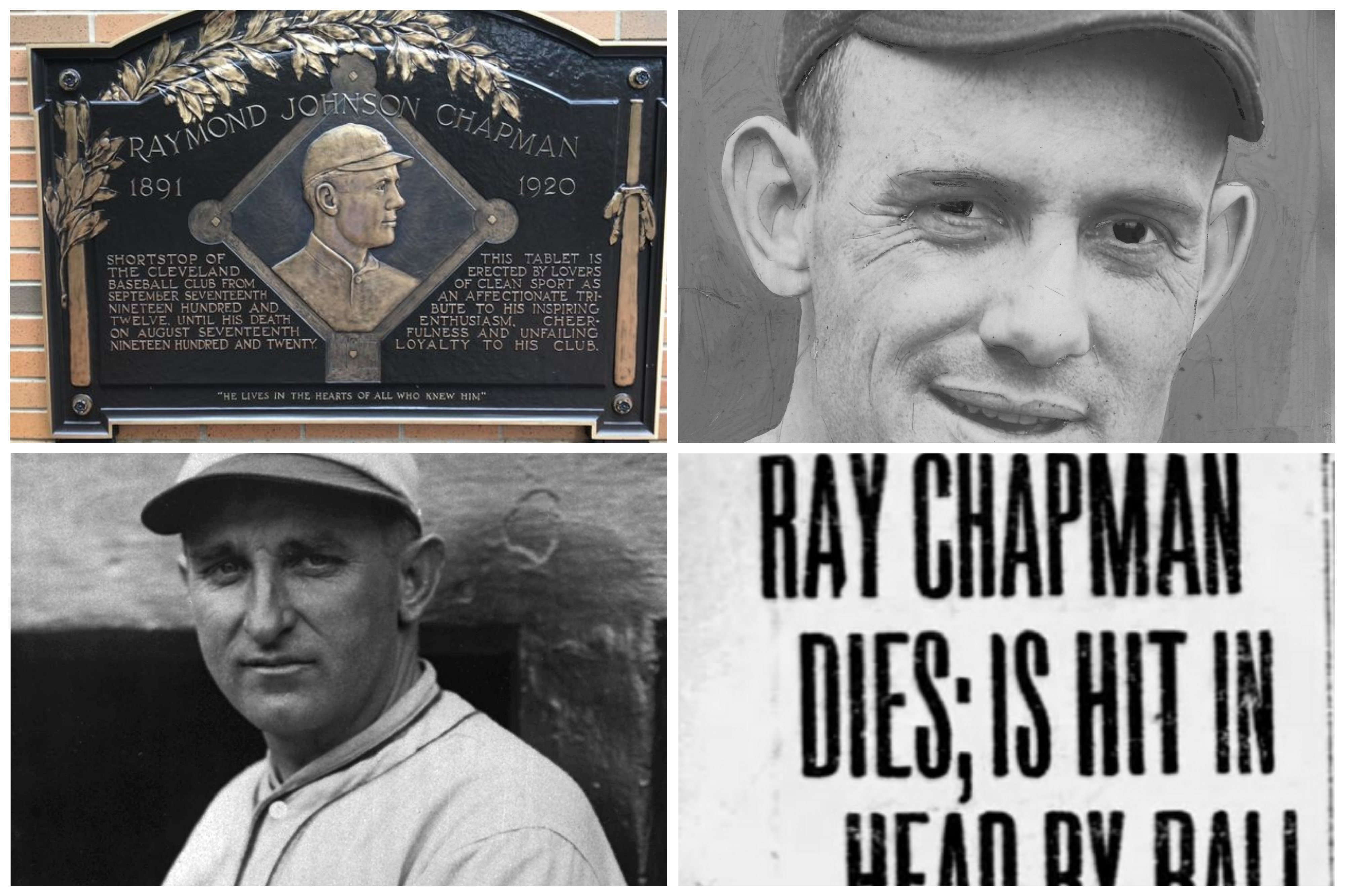
Up the road in Ohio County, Kentucky, Beaver Dam native Ray Chapman grew up to be a great baseball player. He was so good, in fact, that he was able to play nine seasons as the Cleveland Indians shortstop. He was renowned at the time for his defense, bunt singles, batting average, and stolen bases, but he is remembered as the only Major League baseball player to be killed on the field in a game. When he played, the baseball could be scuffed and sullied with everything from dirt to licorice to tobacco juice. This not only made it harder to see, but more erratic out of the pitcher’s hand. On August 16, 1920, near twilight at Yankee Stadium in New York City, Yankee pitcher Carl May hit Chapman in the side of the head with a fastball. The errant throw caused fatal brain damage, and Chapman died the next morning. It shook the baseball world.

This tragedy brought both immediate and eventual change to the game. It was because of this incident that umpires began a practice that continues over a century later of replacing a baseball when it becomes scuffed and dirty. The “spit ball” pitch was banned, for similar reasons. While it would take a few decades, the implementation of the baseball helmet is traced back to Chapman’s untimely death. While it would have been better for Chapman, a newly wed and newly expectant father, to have avoided this devastating end, it has likely saved several lives. It’s impossible to know how many might have been harmed by dirty baseballs through the years, but one can find sports articles detailing the likes of Kirby Puckett, Sammy Sosa, Chris Dickerson, and others who may have been spared a worse result by having on the protective helmet.

It is so easy to view tragic circumstances in isolation, especially those that happen to us personally. In light of the many tragedies that can happen in life, I say this with fear and trepidation. But, Scripture has already made that point. Out of various, fiery trials, these can “result in praise and honor and glory at the revelation of Jesus Christ” (1 Pet. 1:6-7). James said to consider your various trails as a cause for all joy, “knowing that the testing of your faith produces endurance” (Js. 1:2-3). James even says of the ultimate Old Testament sufferer, “We count those blessed who have endured. You have heard of the endurance of Job and have seen the outcome of the Lord’s dealings, that the Lord is full of compassion and is merciful” (5:11). To make such an application of a man who endured such tragedy is startling! Why does he mention Job? So that we can learn, adjust, and overcome!

Make no mistake about it, we all prefer to avoid heartache, sorrow, and loss. But, when those things come to us, Scripture urges us to adopt a heavenly mindset. See the produce in the pain, the hope on the other side of the hurt. Sometimes, it may be that others witness our faith in the midst of our trial and it may help them in their own walk of faith (Phil. 1:14). Whatever the case, even our own greatest adversity can result in someone else’s advantage. That’s an unintended benefit of suffering.

Remembering

https://www.wetrainpreachers.com/extension-news/2022/3/1/breaking-news-from-ukraine

Remembering:

Monday’s Column: Neal At The Cross

Neal Pollard

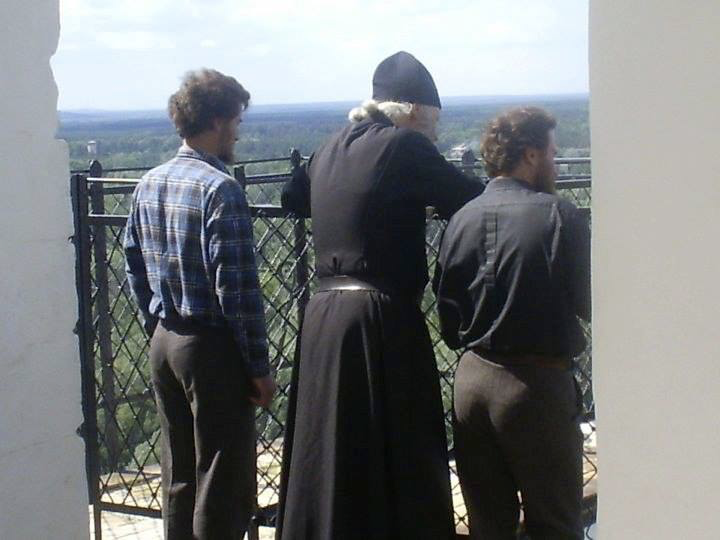
My first foreign mission trip was to eastern Ukraine in the Spring of 2002. I returned in 2003, and each time we flew in and out of Kharkiv (which is under siege as I type). We worked with the Bear Valley Bible Institute’s first foreign extension school, but also worked with brethren in the village of Slavyanogorsk.

I took this picture of Slavyanogorsk from the monastery overlook.

We held Bible studies and taught English using the book of Mark and enjoyed success especially with young people and young adults. The influence of the Russian Orthodox Church was strong among the locals, but there was a congregation of about 30 there.

Russian Orthodox monk at the monastery in Slavyanogorsk.
Having fellowship with the brethren at Slavyanogorsk. The local preacher at the time, Victor Semikoz, is barely in view (right). Terry Harmon, at the time the director of the Bear Valley extension, is wearing the tie.

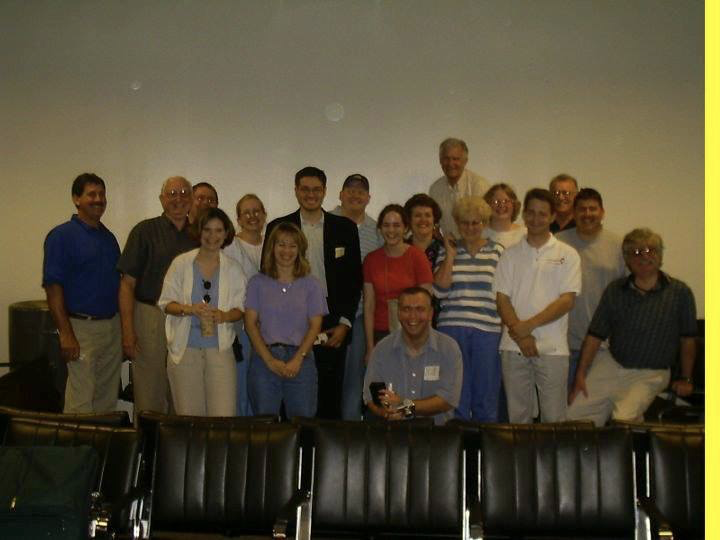
On my second trip, Kathy was able to go with me along with several other members of the Cold Harbor Road congregation in Mechanicsville, Virginia, where I preached at the time.

Members of the Cold Harbor and Pikeville, KY, congregations at the Kharkiv airport. Do you see Kathy?

The memories we made together and with our brothers and sisters in Ukraine have left a lasting impression on my mind and my faith. Though I had always known that the church existed in places outside the United States, this was my first tangible experience with them. While we were separated by language and cultural barriers, we were drawn together by our common faith and hope. These first few trips increased my desire to teach and evangelize not only those in other nations, but also motivated me to try harder to do so locally. Those travels to Ukraine were extremely faith-building.

Right now, those brethren are displaced, distressed, and disturbed by the Russian invasion well underway. Their relatively modest houses and apartments have been at the center of fighting between Ukrainians and Russian separatists, with many of the cities in that region controlled by those separatists. They are in the crosshairs of danger, facing an uncertain future.

As I read the New Testament, inspired writers addressed congregations and asked them to care about, pray for, and provide the needs of brethren who faced various crises. There were the poor and needy saints of Jerusalem, whom Paul tells Rome that Macedonia and Achaia had financially supported (Rom. 15:26; cf. 1 Cor. 16:1). The writer of Hebrews told his audience, “Remember the prisoners, as though in prison with them, and those who are ill-treated, since you yourselves also are in the body” (13:3). He praised them earlier in the letter for showing sympathy to the prisoners (10:34). We never know when similar circumstances might befall us. As Paul told Thessalonica, “For you, brethren, became imitators of the churches of God in Christ Jesus that are in Judea, for you also endured the same sufferings at the hands of your own countrymen, even as they did from the Jews, who both killed the Lord Jesus and the prophets, and drove us out. They are not pleasing to God, but hostile to all men, hindering us from speaking to the Gentiles so that they may be saved; with the result that they always fill up the measure of their sins. But wrath has come upon them to the utmost” (1 Th. 2:14-16). While their suffering was primarily spiritual persecution, Paul urged empathy and endurance.

What can we do for our brethren who are at ground zero of this awful conflict? We can better inform ourselves of the specifics there (https://christianchronicle.org/ukraineexplainer/). We can pray, congregationally and individually (daily!). We can listen for opportunities to assist our brethren. Heaven will be filled with saints from every nation (Rev. 7:9). These brethren are part of our “household”; let us stand ready to do good for them (Gal. 6:10). Remember them as they suffer!

Having tea in our sister, Luba’s, apartment on a rain-soaked evening in Slavyanogorsk.

How Can Evil And A Loving God Coexist?

Wednesday’s Column: Third’s Words

Gary Pollard

Note: This is not going to be a quick read. Any answer to the question addressed is going to require some theological/philosophical consideration. 

Stephen Fry is a well-known actor, activist, humanist, and athiest. When asked what he would say to God in a face-to-face, he replied, “Bone cancer in children, what’s that about? … How dare you create a world where there is such misery that is not our fault?” There’s more to the quote, but this sums it up. 

“How can evil and a loving God coexist?” At some point, we have to confront this question in our own faith. Some can accept the problem of evil as being a byproduct of a fallen world. Others – especially those who have experienced evil firsthand – have a hard time justifying the two. 

Most answers offered sound something like this: “The creation groans with the pains of childbirth up to now. Man, as a free moral agent, transgressed God’s law and brought the consequences of sin upon humanity. God cannot look upon evil, and certainly does not cause it. Every good thing and every perfect gift comes down from the father of lights, with whom there is no variation or shifting shadow.” 

While the principles in this explanation are correct, it fails to address the question on at least two levels. One, it does not answer how God could allow evil to affect humans. We exist, technically, against our will. Two, it utilizes jargon. It’s easier to say religious-sounding things to answer difficult questions, but anyone struggling with this problem knows how frustrating this answer can be. It doesn’t address the question, and sometimes comes across as avoiding it altogether. 

The following is based on personal study, as I’d wrestled with this problem, too. To be very clear: God loves us, and the existence of evil does not change that at all. This question was answered for me through an unrelated study that put a few things into perspective. Here’s the condensed version: 

God created reality, and it was flawless (Gen 1.31). In fact, Jesus described heaven as being a return to this flawlessness (Matt 19.28). The code of reality was intact. God didn’t force us to love him, he gave us freedom to choose for ourselves. According to Romans eight, nature was fundamentally affected by the choice we made. This choice essentially introduced a bug into the code of reality. God didn’t create evil, we did. 

Even though our choice has consistently been rejection – and we’re solely responsible for messing everything up – he still gave up everything to give us a second chance. Yes, Jesus sacrificed himself on a cross. This was extremely selfless and loving in itself. But this was NOT the only sacrifice he made. 

Jesus – the one who designed and built reality (John 1) – permanently demoted himself for humans. He gave up his status to die for us (Heb 2.7). He’s in the father’s chair right now, but will step back down after the end of time (Heb 1.14; 2.8-9). He is still God, but permanently lower because he’s still human, too (I Tim 2.5; I Cor 11.3; I Jn 3.1-3; Heb 2.11-18). 

So, how can evil and a loving God coexist? We’re stuck with the way reality is now, but he fundamentally changed himself to give us a second chance. He works full-time to get his family home (Rom 8.27; I Tim 2.5; I Jn 2.1-2). We changed the terms, but he changed the consequences. The most powerful entity in the universe stepped down – forever – knowing most of us would ignore it. When we look at it that way, it puts our own culpability into perspective and demonstrates God’s infinite capacity to love. 

Photo Credit Of Stephen Fry (Flickr)

Four Waves On The Sea Of Life

Monday’s Column: Neal At The Cross

Neal Pollard

For whatever reason, I have been fascinated with stories of maritime disaster. I have read about the Titanic, but have even read more closely about the Lusitania, the Edmund Fitzgerald, the HMS Hood (for more, click here), and more. Perhaps few things could conjure up more fear than the thought of being thrust into a cold, deep ocean with no way to stay afloat, subject to attack and almost certain drowning. Poets have drawn upon such imagery, but so do the psalm writers. Read Psalm 42:7 or Psalm 69:2, 14-15 or Psalm 88:7. It is also the way Psalm 130 begins.

It seems to me that the writer is depicting the rolling waves we encounter in life, the ups and downs and the good and bad. How will I respond when I am in the storm, whether a literal storm, a storm others bring upon me or a storm I bring upon myself? What will I do when the winds have subsided and the storm has passed? Let’s look at this psalm as depicting four successive waves. 

APPREHENSION: Our Cries And Supplications (1-2)

(Wave One)

We find the writer in a watery valley, looking up at a high, but descending, wave. It causes him to cry out and voice his pleas and supplications. The crisis may be financial, medical, familial, personal, or spiritual. It may seem like the world is crashing in on top of you. Do you sink in waves of worry, fear, and doubt? Or do you cry out to God for help? The writer sets an example for us, when we feel like we will be buried by trouble!

TRANSGRESSION: Our Iniquities And Unforgiven Sins (3-4)

(Wave Two)

Though the writer moves away from the metaphor, the idea continues. When you wade in the ocean and reach a shelf, you can no longer put your feet on the bottom. You can sink or swim, but you cannot stand. Verse three asks, “If You, Lord, should mark iniquities, O Lord, who could stand?” The question is rhetorical, but a lifesaver is thrown! “But there is forgiveness with You, that You may be feared.” Perhaps better imagery is to see the Omnipotent Hand of God reaching into the deep, grabbing our outstretched, up- stretched hand! Perhaps self-inflicted trouble, our sins, cause us to sink deeper than any other trouble. 

EXPECTATION: Our Waiting And Hoping (5-7a)

(Wave Three)

Perhaps we could envision this as one floating to the top or having their head come up out of the water. The writer uses two significant, connected words–“wait” and “hope.” Help is coming! Just wait. Hope. You’re trusting, praying, studying, serving, and enduring. Maybe you feel like you’re holding onto a splintered plank that’s separating in the aftermath of your shipwreck, but you hear the sound of the rescue vessel humming on the waters. You know Who is at the helm, so you hang on!

REALIZATION: Our Mercy And Redemption (7-8)

(Wave Four)

I don’t know about you, but I don’t think I could be coaxed off a massive barge onto a rickety rowboat. But, most of us would make the exchange in the opposite scenario. Yet, the world clings to the leaky carrier of lostness when the ship of salvation is within reach. The writer calls heaven’s help “lovingkindness” and “abundant redemption.” This is the way I want to view the tumultuous waves of this world, from the safety of God’s saving grace. Resting in His everlasting arms, I can experience confidence and assurance at life’s worst while keeping my focus on Him at life’s best! 

You are probably facing, enduring, or looking back at one of those first three waves right now. We sometimes singing, “Jesus, Savior, pilot me over life’s tempestuous sea; Unknown waves before me roll, hiding rock and treacherous shoal, chart and compass came from Thee, Jesus, Savior, pilot me.” We are echoing the sentiments of the psalmist in Psalm 130. Wherever you are in life, be sure you are letting Him lift and lead you! It’s the only way to reach eternal safety (John 14:6)! 

Does God Only Shelter Some In A Storm?

Friday’s Column: Brent’s Bent

Brent Pollard

I’ve heard some say of a house left standing after a tornado or hurricane that God must have spared the structure’s owner from material loss because of their righteousness. But, unfortunately, such statements imply that the neighboring destroyed property belonged to the unrighteous. Yet Jesus said, “for He (God) causes His sun to rise on the evil and the good, and sends rain on the righteous and the unrighteous” (Matthew 5.45, all ref. NASB1995 unless otherwise indicated). 

Even amongst the destruction, though, if someone is observant enough, he sees what he chooses to call miraculous. However, since a miracle is the suspension of God’s natural laws, we understand that the word “miracle” oft becomes an adjective to describe what defies human comprehension. In reality, laws of nature explain the “skipped” houses or why a decorated Christmas tree can remain amidst a room, missing its walls and a part of its ceiling. 

For example, there can be what scientists call “suction vortices” within tornadoes. Within a more significant tornado, these many vortices move in a looping, cycloid pattern that will hit some things while completely missing others.1 In other words, the hand of God was in the creation of the natural laws resulting in the occasional formation of tornadoes, with their suction vortices, as opposed to directing storms into particular locations.  

But did God originally intend for His natural laws to include such destructive phenomena? Think back to the world God initially created. God called it “very good” (Genesis 1.31). What changed? Humanity used its free moral agency to sin, bringing change to the world. In fact, things got so bad that God destroyed the original world. Peter says, “…by the word of God the heavens existed long ago and the earth was formed out of water and by water, through which the world at that time was destroyed, being flooded with water” (2 Peter 3.5-6). 

Among those mechanisms that God put into place in the world emerging from the flood are the weather patterns that spawn tornadoes and hurricanes. The patient patriarch, Job, observed the following regarding the wisdom known to God: “…He imparted weight to the wind and meted out the waters by measure…He set a limit for the rain and a course for the thunderbolt…He saw it and declared it; He established it and also searched it out” (Job 28.25-27). 

Now, the point of our devotional today is not to increase the misery of those having suffered loss during what insurance companies euphemistically call “acts of God.” Yes, things like tornadoes and hurricanes do arise because of sin. However, it is not a part of the chastisement God sends upon us (cf. Hebrews 12.4ff). So, if you want to see God after a tornado, do not see it in a church building with no roof, but with all its hymnals and pew Bibles still safely secured in the pew racks. That is likely but a side effect of natural law.  

No, look for God in His grace. As Fred Rogers often said, “When I was a boy, and I would see scary things in the news, my mother would say to me, ‘Look for the helpers. You will always find people who are helping.’”2 Might I suggest that it is in the helpers that we see the actual hand of God? His Providence works through the people clearing debris, handing out food, and providing shelter to those who have lost everything. These fulfill the law of Christ (Galatians 6.2). Thus, God does not only shelter some in a storm. He provides for all of the weary through the agency of those whom He made in His image (Genesis 1.26-27).  

Sources Consulted and Cited 

1 Seman, Steven, et al. “Tornado Damage, Safety, and Myths.” Tornado Damage, Safety, and Myths | METEO 3: Introductory Meteorology, The Pennsylvania State University, www.e-education.psu.edu/meteo3/l9_p8.html

2 Rogers, Fred. “A Quote by Fred Rogers.” Goodreads, Goodreads, www.goodreads.com/quotes/198594-when-i-was-a-boy-and-i-would-see-scary

Lessons We Learn From Jesus’ Temptations

Monday’s Column: Neal At The Cross

img_5670

Neal Pollard

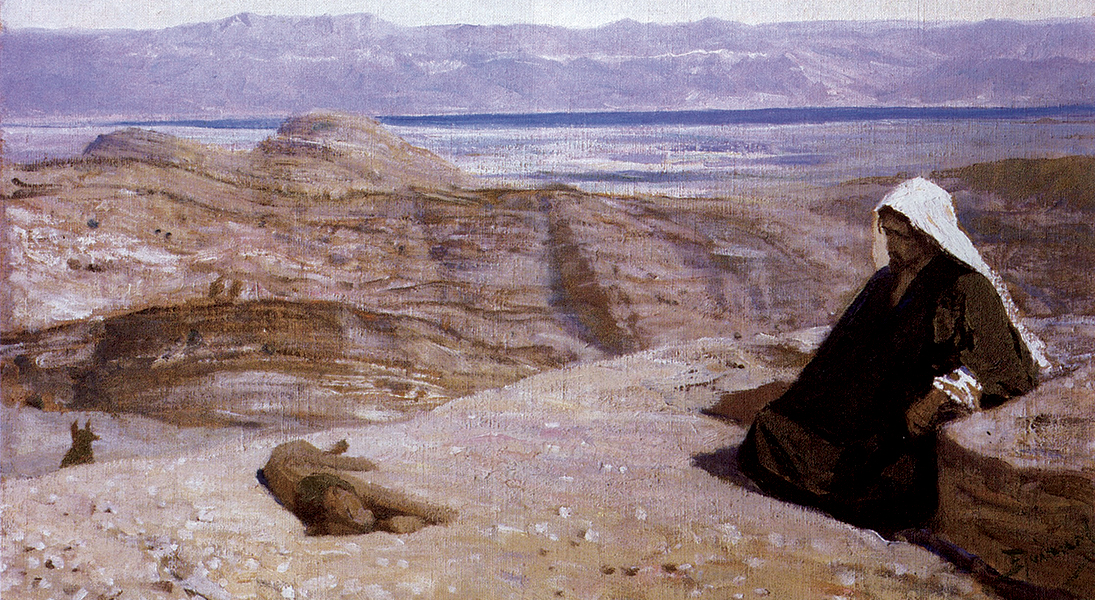
Jesus knew temptation. The writer of Hebrews makes that point about Him in assuring us He, as our High Priest, knows just what we are going through in this life (2:18; 4:15). His suffering allows Him to sympathize. I am comforted to know that He understands, since He is like me (Heb. 2:17). Luke (4:1-13) records this significant and pivotal moment in Jesus’ life before He begins His public ministry. It gives me necessary insight into who Jesus is, and it helps me fight the common battle against the enticements of my flesh, my eyes, and my pride.

TEMPTATION STRIKES THOSE IN A HEALTHY RELATIONSHIP WITH GOD. To be clear, temptation strikes “every man” (Heb. 4:15). But, sometimes we conclude that it’s not so bad or so frequent for the spiritually strong. Here is the perfect Son of God, described as full of the Holy Spirit and led by the Spirit (1), who encounters the tempter (2). Being spiritually strong can help make navigating temptation easier than it is for those who live according to the flesh (Rom. 8:5-14), but no one was closer to God and more spiritually healthy than Jesus as He walked the earth. How helpful to consider Paul’s warning here: “Therefore let him who thinks he stands take heed that he does not fall” (1 Cor. 10:12). 

TEMPTATION STRIKES IN PREDICTABLE AREAS. John classifies temptation into three major categories: “the lust of the flesh and the lust of the eyes and the boastful pride of life” (1 Jn.2:16). Methodical Luke lists Jesus’ temptation in that very order (cf. Mat. 4:1-11). The serpent, approaching Eve, must have appealed to these very areas at the beginning (Gen. 3:6). The devil does not have to get more complicated than that because these avenues are overwhelmingly effective for him. Though this and other passages reveal the Evil One’s intentions and efforts, we are fully accountable for how we respond to temptation (Jas. 1:13-15). We must take responsibility for how we handle temptation. 

TEMPTATION STRIKES WHEN WE ARE VULNERABLE. Jesus has gone an unfathomable 40 days without food when He encounters the devil (2ff). The devil goes straight for this susceptible area. Think back to times when you haven’t gotten proper rest, you faced stress and pressure, you were sick or felt poorly, and other trying times. These can easily become doors we open to sin. All of us will experience physical and emotional weakness. We must be aware that these lead to spiritual exposure. 

TEMPTATION CAN MAKE US CALL WHAT WE KNOW INTO QUESTION. Twice, the devil uses conditional statements to try and create doubt. First, he says, “If You are the Son of God” (3). He called Jesus’ identity into question. Then, he says, “if You worship me” (7). He seeks to get Jesus to question His loyalty. It was not a matter of what Jesus intellectually knew, but Jesus dwelled in the flesh (John 1:14; Heb. 2:14). Be aware that temptation will cause us to question things we know, too. That includes our exalted identity and our true motivation.

TEMPTATION IS THWARTED BY AN OMNIPOTENT TOOL. Jesus wins His battles with the devil and temptation by leaning on truth. There are 86 quotations of Deuteronomy (the second giving of the Law of Moses) in the New Testament, and Jesus quotes this book in reference to each of the devil’s temptations (8:3; 6:13; 6:16). Proper knowledge and handling of Scripture help even when enemies of truth, even the devil, try to misuse Scripture against us (as he does with Jesus, misapplying Psalm 91:11-12). Scripture is God’s own weapon, given to us not to cut and maim others but to fight off temptation and fend off the biggest threats to our faith and soul (Heb. 4:12; Eph. 6:17). 

It is wonderful to contemplate a day in which temptation will be permanently past-tense (cf. Rev. 21:1ff; 1 Cor. 15:55-58). Until then, we benefit so much from seeing how Jesus coped with the bane of temptation. It also helps us appreciate what He endured in order to give us salvation. 

Vasily Polenov (1909), “Christ In The Desert”

THE ADVANTAGES OF ADVERSITY 

Monday’s Column: Neal At The Cross

Safari 2017

Neal Pollard

Since March Madness begins later this week, I was reading about all the teams to help me fill out my brackets. I came across the incredible story of Damian Chong Qui, a guard for the Mount St. Mary’s basketball team that won the Northeast Conference tournament and will play Texas Southern for the right to play against Michigan. The odds of Mount St. Mary’s winning the NCAA tournament are so astronomical that the team is more likely to be hit by an asteroid in their team bus going to the arena to play, but Chong Qui symbolizes the team’s grit, determination, and uncanny ability to defy the odds. His story is both heartbreaking and inspiring. Born and raised in crime-riddled East Baltimore, his father and mother were shot in separate incidents less than two months apart in 2002, when he was only four. His father recovered, but his mother was murdered. Eight years later, his father was shot again and paralyzed from the waist down. Damian has been his father’s most consistent caregiver since then, dressing him and helping him into his wheelchair. Damian found an outlet in basketball, starting on his High School basketball team as a freshman. He was only 4 feet, 9 inches tall. A growth spurt helped him reach his current height of 5 feet, 8 inches tall. No Division One teams showed interest, so he walked on with the Mountaineers. Not only did he go on to earn a scholarship, but he is a star and the heart and soul of this scrappy squad. From his father to coaches and teammates, Damian is called dependable, hardworking, and focused (much biographical data from a 1/17/20 Baltimore Sun article by Edward Lee: “…Damian Chong Qui has overcome tragedy to shine at Mount St. Mary’s”). 

There is no one who would want to go through what this young man has endured. Many might use such tragedy as an excuse or a crutch to let life defeat them, but Chong Qui shows the resiliency and resolve which is in mankind. While the Chong Quis do not sound especially devout, Damian’s father, Edward, said of him, “I feel like God has been working things out for him” (ibid.). 

God does not cause evil (Jas. 1:13), but God is able to bring about good in the worst of circumstances. It is evidence of His omnipotence and omniscience. Do you remember Job’s wise and righteous assessment, even as he was in the dark about the cause of his pain and suffering? He tells God, “I know that You can do all things, And that no purpose of Yours can be thwarted” (42:2). As James assesses Job’s situation, he writes, “We count those blessed who endured. You have heard of the endurance of Job and have seen the outcome of the Lord’s dealings, that the Lord is full of compassion and is merciful” (5:11). Paul experienced this, too. He speaks of his “thorn in the flesh,” which God saw fit to allow him to retain. Why? Paul explains, “And He has said to me, “My grace is sufficient for you, for power is perfected in weakness.” Most gladly, therefore, I will rather boast about my weaknesses, so that the power of Christ may dwell in me. Therefore I am well content with weaknesses, with insults, with distresses, with persecutions, with difficulties, for Christ’s sake; for when I am weak, then I am strong” (2 Cor. 12:9-10). 

Maybe you are struggling with some thorn in the flesh, some pain and suffering, some adverse circumstance that looms over you and seems poised to undo you. How will you respond? Will you see it as an advantage? A chance for God’s power to be perfected in weakness? For the power of Christ to dwell in you? As the means of strength in weakness? Do not forget that there is no force, earthly or spiritual, that can withstand the advantages that God can bring into your life even in times of greatest adversity! His purpose cannot be thwarted. And if our lives are being lived according to His purpose (Rom. 8:28), that is confidence that can propel us through the worst of situations! 

Damian Chong Qui

WHEN THE STORMS OF LIFE ARE RAGING

Monday’s Column: Neal at the Cross

ATF2020 crop

Neal Pollard

When I preached in Livingston, Alabama, Selman Falls would often lead us in singing the song, “He Will Hide Me.”  This M.E. Servoss hymn was in the Songs of the Church hymnal.  Servoss, a woman from Chicago (“Mary Elizabeth”), was a prolific hymn writer.  This was maybe her most notable hymn.  Perhaps no imagery is more graphic in scripture than depicting troubles as a storm (cf. Psalm 55:8; Proverbs 1:27; Isaiah 25:4-5; 1 Timothy 1:19; etc.).  Storms are frightening and damaging.  I sat in a hallway with my head in my lap in Junior High in Franklin, Georgia, during a tornado and my family and I rode out a hurricane in Virginia in 2003.  The unknown of what the storm will do adds to its ferocity.

I read David McCullough’s Johnstown Flood, about the torrential rains that broke the Little Fork dam and unleashed a calamity of its kind unmatched in modern, U.S. History.  People were completely swept away, crushed by debris, drowned, and even burned to death.  The storms of that late May day in 1889 cost 2,209 people their lives.  McCullough tells about Victor Heiser’s incredible survival in this flood.  He climbed into a barn just before the powerful waters blew through the property and he watched the family house (in which his parents were) instantly demolished.  The barn was carried downstream in such a way that it barely missed whole houses, freight train cars, barns, and the like before the then sixteen year old Heiser found refuge with nineteen others in the attic of a two-story brick house commandeered by the flood.  Along the way, he witnessed the deaths of several not so blessed as he.  Heiser made the most of the blessing.  He grew up, became a doctor, and it is estimated that he saved as many as two million lives through the development of the first effective treatment against leprosy.  He died at the age of 99 in 1972.

Most storm survivors are not as acclaimed and famous as Victor Heiser.  So many have taken hold of the hand which calms the storms and have enjoyed the Lord’s guidance as they weathered their own storms of tragedy, trouble, and transgression.  They reached their end, many of them having aided others to escape through Christ!  Spurgeon and a friend saw a weather vane upon which were written the words, “God is love.”  The friend objected, saying, “God’s love is not so fickle and transient.  That vane is not correct.”  To which Spurgeon replied, “No, friend, you have misunderstood its meaning.  It is correct.  It suggests that God is love, which ever way the wind blows.”

Donna Dungan, a wonderful Christian lady who has lived along the Gulf Coast where many fierce storms have blown, wrote a poem to comfort a friend suffering from an unknown virus that eventually took her life.  Her beautiful words may bring you comfort as you deal with your storms.  I close with it.

Though a fierce storm is raging about you
And you fear there is nothing you can do
There’s a place in your heart where He meets you
And in the eye of the storm He carries you through
Don’t let go, don’t try to leave the eye, or the storm will take you in
Nothing will overtake you while you are holding on to Him
There is a place of peace and rest that is safe from the battles of life
A place in your heart where He will shield you from worry and strife
Our Lord never sleeps nor slumbers while His children are in pain
He alone has the power to hold you up until you are whole again
Oh, please don’t let go–just hold on
In the eye of the storm just hold on.

 
1002 Lehman Avenue
Bowling Green, Kentucky 42103
United States of America

A Message From The Rattling Bones

Tuesday’s Column: Dale Mail

Dale Pollard

Six hundred years before Christ would make His providential appearance, a righteous man finds himself in captivity. While exiled, Ezekiel, was able to witness the spirit of God in a very intimate way (Ezekiel 1). Even so, he was still living under the thumb of the Babylonians like every other Israelite with him. While under these unideal circumstances though, he is privileged to see awe-inspiring visions from God. Have you ever paid attention to the eerie sensations described throughout this book? In Ezekiel 1:4 the prophet feels a great and stormy wind on the bank of the river Chebar. The wind brings with it a massive cloud with fire flashing around it and a substance like glowing metal in the center of it. The wings of the creatures he saw (verse 24) made sounds like that of roaring waters. The voice of the Almighty was like the sound of a great army camp. What sights he was able to see! This great connection to God didn’t take away his pain or sorrow, though.

 Chapter 19 is one long lament as Ezekiel cries over his hardhearted Israelite brothers. Why won’t they listen to him? Even after Ezekiel performs some radical visual illustrations like eating his bread over dung and laying on his side for an entire year, they won’t respond to the “invitation.” How frustrating is that, preachers? God never abandons His faithful servant, but His confused prophet is still left to wonder what God is going to do about the mess which makes up his reality. A familiar feeling for many faithful Christians today.  

Never underestimate the hand of the Almighty. This truthful statement can be pulled from Ezekiel 37, when the prophet is taken up and then placed in the middle of a dark valley. Ezekiel is surrounded on all sides by heaps of dry human bones and he’s probably wondering why in the world God has taken him to such a place. The text answers the question by asking a question. God speaks to Ezekiel and says, “Can these dry bones live again?” What an odd thing to ask. However, Ezekiel responds, “Only you know, O Lord.”

 It’s always when we’re deep in the valley’s of life that we’re forced to answer the difficult questions about God’s abilities. When we’re surrounded by darkness, the question we have to ask is, “Does God have the power to see me through this?” If you remember, Ezekiel has become frustrated with the fact that Israel just won’t listen to him or Him. He’s lost hope in their ability to change— they’re just too far gone. However, God demonstrates to His prophet in a dramatic way that NOTHING is impossible for Him. 

He doesn’t bring the bones to life in the blink of an eye, but we know He could have. Instead, He allows Ezekiel to hear those bones rattle and to hear the sounds of fibers and flesh sticking together. He wanted to leave an impression on Ezekiel to demonstrate the might of the Almighty. Ezekiel had no idea how those bones came to life, but he knew one thing for certain. God did it. You may not understand why God has allowed you to enter your valley, but you can be certain that He has the power to see you through. You are standing on your two feet because God has given you the strength to do so. God has promised His faithful servants a heavenly light at the end of our tunnels and whatever God says— He will always accomplish (Ezekiel 37:14). 

Words For The Aching Heart 

Tuesday’s Column: Dale Mail

image 

Dale Pollard

Why do we hurt? In Bible classes and in sermons you have been pointed to scriptures such as James 1:2, which says, “Count it all joy my brethren, when you fall into various trials.” You may then find yourself wondering about that specific trial you are forced to miserably wade through. 

Perhaps you think, “But what good could possibly come from this?” Or maybe you even question, “why would God let me experience this kind of heartache?” This is when a faithful Christian may sink into a pessimistic kind of bitterness that slowly steals each smile and smothers even the faintest glimmer of hope. If Jesus could sit with you and lovingly give you some wisdom, I’d imagine this is what He’d say.

I dreaded that cross, the cruel instrument of death.
I felt such intense emotion with each painful and strained breath.
Embarrassed, I was stretched naked amid a hateful crowd—
but prayed for their forgiveness, with my bleeding head bowed.

I intimately knew trauma, isolation, abandonment, and shame.
I lost everything for everyone, so peace and glory you would gain.
It’s that joy I’ve set before you, even seen through tearful eyes,
that will push you, as it did Me, through each valley and each sigh. 

No matter what you’re fighting here, don’t worry, stress or fear.
Today it hurts, tomorrow it’s over, in the twinkling of an eye I’ll appear.
Life is brief and fragile like that of a lowly dove, and like the dove,
with broken wing still mending, look hopefully above.
–Dale Pollard
(These words were inspired by the words found in Hebrews 12:1-3.)

I’d like to encourage you, if you’re suffering through a trial in life, to read Psalm 69.  It’s a lament psalm, which may help you put into words what your aching heart is feeling.

“What we really need and what the psalms of lament provide is a way to live through times of disorientation with God as an intimate traveling companion.”
– Glenn Pemberton

gettyimages-155353005-58bdb2013df78c353c7f2a6d

Lessons From Adversity: An Introduction

Friday’s Column: Supplemental Strength

brent 2020
Brent is a 1998 graduate of Faulkner Univ. He’s done full-time ministry  in AL, TN, VA, and NC.

Brent Pollard

Without delving into the minutiae of my medical history, suffice it to say I’ve been through a lot. Consequently, I could not accomplish all I hoped and dreamed to do in life. If you were to ask others about my legacy, you might well hear expressions of admiration about how I deal with adversity. Had I the righteousness of Job and could imagine my plight the consequence of a conversation between God and the adversary, in which God allowed the latter to test me, then I might find a little bit of solace in the thought. Stripping away the complimentary aspect of those words, though, people are telling me I suffer well. Nevertheless, I suppose it permits me a small measure of wisdom, rooted in Scripture, I can share with others.

Jesus calls us to complete submission. As gracious as His invitation is (Matthew 11:28-30), it requires acceptance of a yoke. Though ours is not an agrarian society, we remain familiar with a yoke’s purpose. Yokes enable control over beasts of burden. Agriculturally-engaged animals experience harm, despite benevolent masters, only when fighting the guidance of said masters. (Consider Jesus’ words to Saul on the road to Damascus about kicking against the goads in Acts 9:5; 26:14.)

How many realize that with acceptance of a celestial yoke, one agrees to give up any pretense of control he had over his life? I am not referring to self-control, in which we govern our passions. We should discipline our bodies (1 Corinthians 9:27). Yet, we’ve been told it is hubris to make plans with disregard to Divine will (James 4:13-15). Hence, Robert Burns’ maxim: “The best-laid plans of mice and men often go awry.” There are too many factors beyond our purview to speak confidently of anything aside from that established in God’s word. Sadly, because of false confidence, it takes only tragedy to remind us of reality.

How then should we act? Obviously, we cannot be like the Thessalonians who seemingly gave up on life as they awaited the perceived imminent return of Christ. There are responsibilities that are ours alone. For example, a man must work to eat (2 Thessalonians 3:10-12). Outside of what is our concern alone, though, everything falls to the Will of God. Even the politics over which we too often become preoccupied is a matter of God’s will for the nations of the earth (Daniel 2:21; Acts 1:6-7; Romans 13:1). And what of life’s length? Barring our Lord’s return, we even have an upcoming appointment with death we cannot change (Hebrews 9:27). These truths drive home Solomon’s inspired observation:

“The conclusion, when all has been heard, is: fear God and keep His commandments, because this applies to every person. For God will bring every act to judgment, everything which is hidden, whether it is good or evil.” Ecclesiastes 12:13-14 NASB)

Thus, despite how glib it may sound, lesson one is: “Let go and let God.”

683_37247640921_7739_n
A picture of my family in 1990 (Brent, far left). 

“No One Supported Me, But All Deserted Me”

Neal Pollard

These are some of the last words written by one of the greatest men who ever lived. He wrote them while in prison, waiting to die for his faith. He has just spoken of people he trusted who had deserted him. He is lacking even the bare essentials. A man, knowing how difficult his life was, had done additional great harm to him. No wonder he would open this window into his suffering soul and let us all look inside. Despite all this, he was not bitter.

Have you ever felt mistreated, even felt like people were actively against you? Or perhaps felt like people you count on abandoned or neglected you when you needed them? Maybe you have suffered for your faith. It is tempting to become bitter, even to lash out against the church and God.  Paul is a great example of how to think when you feel unsupported and deserted by those you count on. After making that statement in 2 Timothy 4:16, he says some other things that can help us when we feel, at least in a small way, the way Paul felt. 

  • Focus On The Lord. He could see how the Lord had helped through his darkest hours in the past (17). But, as importantly, he had confidence that the Lord would help him through future trials (18). Despite his unfair treatment, he could still say, “To Him be the glory forever and ever. Amen.” When people hurt and disappoint you, look higher!
  • Find Your Higher Purpose. Incredibly, Paul could sift through these sorrows and see God at work to accomplish His will. He’s suffering, but he can see a greater good. He says that he endured these hurts “…so that through me the proclamation might be fully accomplished, and that all the Gentiles might hear.” Can you look for what God, who doesn’t cause suffering, can do to bring good even out of those times? We’re prone to feel sorry for ourselves when God may be showing us and others His power through these situations to save souls and help lives. 
  • Forgive.  Paul doesn’t hold a grudge. Concerning those who let him down and even hurt him, he could say, “May it not be counted against them” (16). Doesn’t that sound like a Savior who asked God to forgive His tormentors? What a mindset! We can nurse perceived offenses, but how much better to be magnanimous toward those who we feel failed us in our hour of trial?

If you’ve never felt unsupported and deserted, you probably will at some future time. The temptation will be great to let it become a spiritual problem for you. Why not remember Paul’s response when he was in his deepest valley? It’s the way up to the spiritual mountaintop. 

paul-in-chains


P.A.I.N.

Neal Pollard

Problems aren’t inherently negative.  Will you remember that? The middle-aged man with the persistent pain goes to the doctor, who discovers the malignant mass and gets him to the surgeon. The man’s life is saved by pain. The teenage Christian girl who endures the hurt of breaking up with the boy who is ungodly but who she loves feels pain. Eventually, though, as she raises her four children and enjoys marriage with a strong Christian man, she thanks God for that former pain. Illustrations of this point are endless.

How do you view your pain? By human nature, we tend to view suffering as the very worst thing that could happen to us. The anxiety of the medical test, the chronic disease that impacts every portion of our day and life, the permanent loss of a loved one through whatever events, or a rift in the family all can seem unbearable.

Will you remember that, as with the physical body and the emotional makeup, pain in our spiritual lives can have a positive benefit? We can learn from the painful thing. Pain can cause us to grow. Pain can serve as a spiritual refinery. After all, problems aren’t inherently negative. It is how we respond to the problems that makes all the difference. If we give up due to the problems we face, it’s devastating. If we sin in response to our pain, we fail and inflict damage on ourselves and others. If we blame God, we are in danger of allowing our pain to conquer us.

Despite those possibilities, though, none of these things have to occur. The encouraging thing is that how we respond to our problems is fully under our own control. We can be the example, in our suffering, that leads a lost soul to Christ or an erring Christian back home. We can be the role models others remember when they go down the road of trouble. We can bring glory to God by faithfully enduring such things.

Problems aren’t inherently negativeThank God for this.

photo-1-1479523346089

“He sends forth springs in the valleys; They flow between the mountains”

Neal Pollard

This statement in Psalm 104:10 is spoken literally of God’s physical provision for His creatures. But, have you ever thought about how that is true for you and me when we find ourselves in the valleys of life? In between the mountaintops of successes and happy days, we can find ourselves seemingly down in the valley of the shadow of death (cf. 23:4). I am so thankful that in those moments that might seem dry and thirsty, God sends forth springs in the valleys of life. Whatever creates the valley for us, it can seem like a deep place hard to climb out of. How does God send forth spiritual and emotional springs for us, even in the valleys of life?

  • The church is a spring in the valleys of life. Other Christians lifting and encouraging us can be the medicine we need to take the next step through the valley. No wonder the church is such an expression of God’s wisdom (Eph. 3:10-11).
  • Prayer is a spring in the valleys of life. Pouring out our hearts to a God who understands us and knows our situation perfectly strengthens us.
  • Our family can be a spring in the valleys of life. Those of us who have Christian parents, siblings, children, and other relatives have a double blessing, family twice over. They can be the support and encouragement we need to keep moving.
  • Spiritual blessings are a spring in the valleys of life. Ephesians 1:3 says in a general way what the rest of the New Testament enumerates in a specific way. God is blessing us in so many ways because we are in His Son. Never do we appreciate that more than when we struggle.
  • The Bible is a spring in the valleys of life. There is wisdom and insight on every page, guidance for our journey. God has revealed the road map to help us traverse the narrow way to heaven. The narrow way will not keep us from traveling through valleys, and often it has valleys the broad way does not.
  • Faith or trust is a spring in the valleys of life. Like Paul, who often camped in the valleys of life, “I know whom I have believed and I am convinced that He is able to guard what I have entrusted to Him until that day” (2 Tim. 1:12). My eyes may be wet with tears in the valley, but my eyes of faith see with crystal clarity.
  • Hope is a spring in the valleys of life. It anchors the soul (Heb. 6:18-19), but it also helps lift us up. Because I face the future with confidence, no setback will keep me discouraged but so long. Tomorrow will be a brighter day!
  • Christian service is a spring in the valleys of life. Maybe nothing leads me through the valley any more than finding a fellow sojourner to help out of their valleys. When I focus outside of myself on other strugglers, I soon forget my unpleasant experience.

Many years ago, I heard Franklin Camp talk about the valleys of his life and how he overcame. His young daughter accidentally burned to death in a brush fire. He faced other huge losses in life, but brother Camp through it all was a man who had his eyes fixed on the ultimate mountaintop experience. In the valleys of life, let us look for the springs God sends. They will refresh, renew, and relieve us until our journey is complete.

valley-springs-lodging

Facing The Storm

Neal Pollard

Springtime in the plains is a notorious time for storms. I was driving through northwest Texas near the time when three storm chasers were killed southwest of me on Tuesday afternoon. They died pursuing the storm, not directly because of it. They were there because conditions were ripe for tornadoes. 17 people were killed by tornadoes in 2016, but 24 have already died in them this year. Hollywood has captured our awe and fascination with them since The Wizard Of Oz. We view storms as mysterious, ominous, powerful, and frightening. They come in so many forms—hurricanes, floods, blizzards, cyclones, and more. But “storms” are synonymous with fear and sorrow.

Wouldn’t you classify some of the major, traumatic events of your life as storms.  They build and threaten, they strike, then they leave aftermath. The storm may take but a moment, but recovery can take days, months, or even years. Not surprisingly, the Bible uses the storm metaphorically to describe such moments in our lives. David wrote, “I would hasten to my place of refuge from the stormy wind and tempest” (Psa. 55:8). The man we most associate with such figurative storms, Job, laments, “You lift up the wind and cause me to ride; And you dissolve me in a storm” (30:22). Most frequently, the Bible uses storms representatively to describe God’s judgment. But, as Job and David show, sometimes storms strike the innocent and undeserving.

What do we do when facing a storm? We heed precautions. We take shelter.  We wait and endure. We ask for and trust God’s protection.

The world is full of people riding out storms today. That includes Christians. These storms are assaulting their bodies, bank accounts, relationships, spiritual strength, and spirits. Some feel safely sheltered, while others feel as if they are barely holding on. How do we face our storms?

* Seek help from others (Heb. 12:12-13; Ecc. 4:9-10).
* Search for possible benefits from it (Psa. 66:10; Rev. 21:3-4; Js. 1:2-4; etc.).
* See God’s power to help in it (Psa. 18:19; Rom. 8:28-38; 2 Pet. 2:9a).
* Shelter in the place of safety (Exo. 33:22; Psa. 91:1; Mat. 7:24-27).

God doesn’t cause evil or sin, but He allows it. We will always struggle with the “why” of this. But, we can grow our dependence on our great, perfect God when we are being battered. He is faithful. He wants to help. Lean on Him through your storms!

b3d-814151_960_720

Expectation Versus Euthanasia

Neal Pollard

She was born the year after the Civil War. Her mother died when she was three. Her father dropped her and her newborn sister off at the home of the widow of an army friend. Unable to care for the girls, the widow ultimately transferred care to a sweet, religious couple in the community. The girls spent happy years through their school days, but the older sister came to suffer from rheumatoid arthritis as a teenager. It steadily grew worse until she could not walk. Their adopted parents died within months of each other, and the young women were poor and had little prospect of earning money for themselves. Before her affliction, she had developed aspirations as a concert pianist and shown great promise as a poet and writer. Arthritis robbed her on the musical dreams, but she flourished as a poet and hymn writer. Rather than seek relief from her pain through suicide, she channeled her suffering into beautiful writing that continues to comfort others as it did in her lifetime. Ravi Zacharias summarized her suffering, saying, “Her body was embarrassed by incontinence, weakened by cancer, and twisted and deformed by rheumatoid arthritis. She was incapacitated for so long that according to one eyewitness she needed seven or eight pillows around her body just to cushion the raw sores she suffered from being bedridden” (“The Cry For A Reason In Suffering,” np; other information from The Story of Annie Johnson Flint, Rowland Bingham). Her poetry and songs are not riddled with bitterness or even soul-wrenching questions of why. You’ll find titles like “The Grace Of God,” “Not Down, But Through,” “Rest, Tired Heart,” “Grace Sufficient,” “He Giveth More Grace,” “He’s Helping Me Now,” and on the hopeful, positive compositions flow.

We have only one of her hymns in our song book, and it is entitled, “The World’s Bible.” These familiar words include the lines, “Christ has no hands but our hands to do His work today, He has no feet but our feet to lead men in the way….” I appreciate the living testimony Ms. Flint was of the way one who believes in Christ ought to respond to the tragedies and difficulties that can strike in this fallen world. I pray that I will never be wracked by such suffering, but if I do I would want the world to see the spirit in me that so many saw in her. Her life was one of trust in God’s sufficiency and strength through the darkest moments of life.

Our state (Colorado) was one of a few that has passed physician-assisted, right to die legislation in the recent election cycle. Besides the ethical slippery slope of people, even doctors and patients, selecting when to end life, there is in such an effort a failure to see the intrinsic value of life as well as God’s sovereign right over His creation. Ms. Flint’s situation makes us cringe in discomfort at first blush, but we see the refined beauty of a trusting heart to impart profound comfort despite life’s harshest turns. To persecuted Christians, Peter offers this hope for all strugglers when he writes, “After you have suffered for a little while, the God of all grace, who called you to His eternal glory in Christ, will Himself perfect, confirm, strengthen and establish you” (1 Pet. 5:10; cf. 1 Pet. 1:6-7). Whatever the trial, we can choose life instead of death, trust in God rather than trust in our own thoughts. Let us live in triumphant expectation, no matter what we may have to endure for the moment (Rom. 8:38-39; Psa. 30:5).

flint_aj