The Quality That Won The War For Independence

Neal Pollard

This week is the 250th anniversary of the birth of America, as July 4, 1776, was the signing of the Declaration of Independence. Because of this incredible milestone, I have been rereading David McCullough’s classic, simply entitled 1776. It is a captivating chronicle of one of the most monumental events in all human history. What this nation has achieved and the freedom and opportunity its citizens enjoy is unparalleled in so many ways.

As powerful, prosperous, and influential as the United States is on the world stage in 2026, the fledgling, ragtag people seeking its independence from the British was far different. McCullough writes that 1776 was “a year of far too few victories, of sustained suffering, disease, hunger, desertion, cowardice, disillusionment, defeat, terrible discouragement, and fear, as they would never forget, but also of phenomenal courage and bedrock devotion to country, and, that too, they would never forget” (294).

McCullough says this in the context of the leadership of George Washington, whom he describes as without brilliance as a strategist and tactician, not an orator or intellectual, and a general who had made “serious mistakes in judgment” (293). Yet, he preached “perseverance.” McCullough includes quotes from several of Washington’s letters to congress, officers, and general orders where he passionately admonished patience, courage, and perseverance. As McCullough informs us, “the war was a longer, far more arduous, and more painful struggle than later generations would understand or sufficiently appreciate. By the time it ended, it had taken the lives of an estimated 25,000 Americans, or roughly 1 percent of the population” (294).

Perseverance is “the capacity to hold out or bear up in the face of difficulty” (BDAG, 1039). That quality helped a humble, tiny, and outmatched fledging nation emerge victorious against seemingly impossible odds. We still reap the benefits of their endurance.

Far greater than this nation and this world, the Christian must relentlessly fight for something that is literally timeless. Regarding this war, God through His inspired writers urges “perseverance” dozens of times. We must bear fruit with perseverance (Luke 8:15). We must do good in pursuit of eternal life by perseverance (Romans 2:7). Our proven good character is forged by perseverance (Romans 5:3-4). Our hope is shaped by perseverance (Romans 15:4). We are commended as servants of God through perseverance (2 Corinthians 6:4). We are strengthened with all power by perseverance (Colossians 1:11). Spiritual warfare is won by perseverance (1 Thessalonians 1:3; 2 Thessalonians 1:4). The man of God pursues perseverance (1 Timothy 6:11). Perseverance is essential to receive what God has promised (Hebrews 10:36). We must run the spiritual race with perseverance (Hebrews 12:1). Through perseverance, we can be made perfect and complete, lacking in nothing (James 1:4)–like Job (James 5:11). Perseverance is one of those Christian graces that will get us to heaven (2 Peter 1:6). Christ commends multiple churches of Asia Minor for having perseverance (Revelation 2:2-3, 19; 3:10).

The odds are stacked against us. We are Christian soldiers more apt to gaffes and missteps than brilliant tactics and strategies (1 Corinthians 1:26-27). At so many turns, our efforts seem futile and pointless. But, with God’s help and guidance, we are guaranteed victory (1 John 5:4). However, we must not quit!

I am proud to be an American, but I am also reminded by God that “our citizenship is in heaven, from which also we eagerly wait for a Savior, the Lord Jesus Christ” (Philippians 3:20). I cannot let physical and material blessings, even liberty and freedom, to keep me from pursuing “a better country” (Hebrews 11:13-16). The quality that makes the difference in our spiritual fight is perseverance!

Don’t give up the fight!

WHEN THE STORMS OF LIFE ARE RAGING

Monday’s Column: Neal at the Cross

ATF2020 crop

Neal Pollard

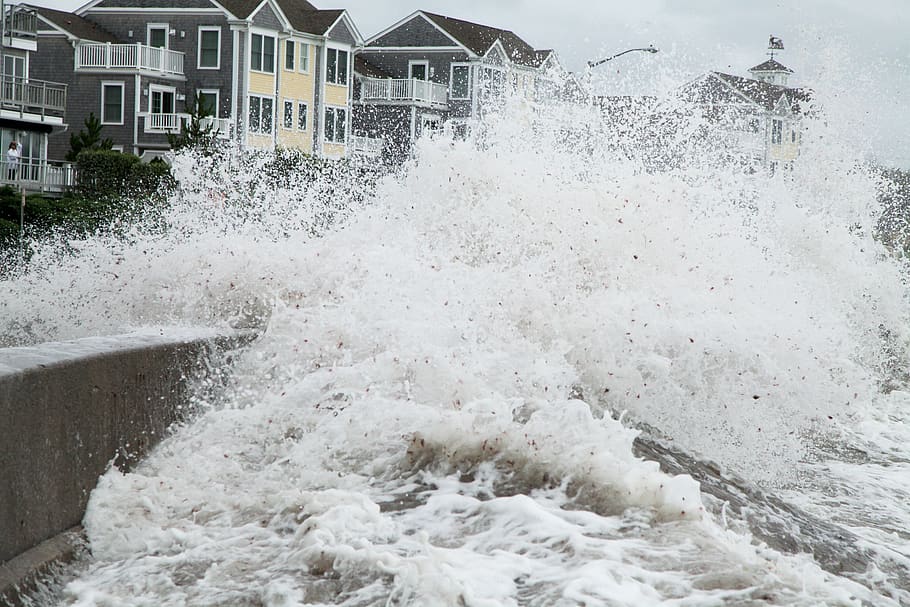
When I preached in Livingston, Alabama, Selman Falls would often lead us in singing the song, “He Will Hide Me.”  This M.E. Servoss hymn was in the Songs of the Church hymnal.  Servoss, a woman from Chicago (“Mary Elizabeth”), was a prolific hymn writer.  This was maybe her most notable hymn.  Perhaps no imagery is more graphic in scripture than depicting troubles as a storm (cf. Psalm 55:8; Proverbs 1:27; Isaiah 25:4-5; 1 Timothy 1:19; etc.).  Storms are frightening and damaging.  I sat in a hallway with my head in my lap in Junior High in Franklin, Georgia, during a tornado and my family and I rode out a hurricane in Virginia in 2003.  The unknown of what the storm will do adds to its ferocity.

I read David McCullough’s Johnstown Flood, about the torrential rains that broke the Little Fork dam and unleashed a calamity of its kind unmatched in modern, U.S. History.  People were completely swept away, crushed by debris, drowned, and even burned to death.  The storms of that late May day in 1889 cost 2,209 people their lives.  McCullough tells about Victor Heiser’s incredible survival in this flood.  He climbed into a barn just before the powerful waters blew through the property and he watched the family house (in which his parents were) instantly demolished.  The barn was carried downstream in such a way that it barely missed whole houses, freight train cars, barns, and the like before the then sixteen year old Heiser found refuge with nineteen others in the attic of a two-story brick house commandeered by the flood.  Along the way, he witnessed the deaths of several not so blessed as he.  Heiser made the most of the blessing.  He grew up, became a doctor, and it is estimated that he saved as many as two million lives through the development of the first effective treatment against leprosy.  He died at the age of 99 in 1972.

Most storm survivors are not as acclaimed and famous as Victor Heiser.  So many have taken hold of the hand which calms the storms and have enjoyed the Lord’s guidance as they weathered their own storms of tragedy, trouble, and transgression.  They reached their end, many of them having aided others to escape through Christ!  Spurgeon and a friend saw a weather vane upon which were written the words, “God is love.”  The friend objected, saying, “God’s love is not so fickle and transient.  That vane is not correct.”  To which Spurgeon replied, “No, friend, you have misunderstood its meaning.  It is correct.  It suggests that God is love, which ever way the wind blows.”

Donna Dungan, a wonderful Christian lady who has lived along the Gulf Coast where many fierce storms have blown, wrote a poem to comfort a friend suffering from an unknown virus that eventually took her life.  Her beautiful words may bring you comfort as you deal with your storms.  I close with it.

Though a fierce storm is raging about you
And you fear there is nothing you can do
There’s a place in your heart where He meets you
And in the eye of the storm He carries you through
Don’t let go, don’t try to leave the eye, or the storm will take you in
Nothing will overtake you while you are holding on to Him
There is a place of peace and rest that is safe from the battles of life
A place in your heart where He will shield you from worry and strife
Our Lord never sleeps nor slumbers while His children are in pain
He alone has the power to hold you up until you are whole again
Oh, please don’t let go–just hold on
In the eye of the storm just hold on.

 
1002 Lehman Avenue
Bowling Green, Kentucky 42103
United States of America

Eliot’s Motto

Neal Pollard

The president of Harvard University in the last part of the 19th Century, Charles Eliot, had for his motto the words of Edward Everett Hale. Hale had said, “Look up and not down; look out and not in; look forward and not back, and lend a hand” (McCullough, Mornings on Horseback, 197).  While Eliot was renowned for being in his own world and not being very observant of students or others, his motto was extraordinary!

The practice of that motto would do wonders for our world.  If all of us, as Christians, could translate the sentiment of those words into daily practice, we would keep the waters of baptism stirring.  These words, properly understand, call for divine dependency, unselfishness, vision, and service.  If I understand the help God gives me, I will reach out in faith.  If I understand my need to be concerned for the other person before I worry about myself, I will reach out in love.  If I understand the importance of forgetting what lies behind and reaching forward to what lies ahead, I will reach out in hope.  If I understand the importance of my being useful and cooperative, I will reach out in service.

Hale did not invent these ideas.  He commandeered them from the greatest source of inspiration and motivation possible—the Bible.  In fact, consider these same profound concepts just from the Philippian epistle. Paul says, “I can do all things through Him who strengthens me” (4:13).  He says, “With lowliness of mind regard one another as more important than yourselves” (2:3b; cf. 2:4).  He says that forgetting the past and reaching for the future, he could “press on toward the goal for the prize of the upward call of God in Christ Jesus” (3:13-14).  Throughout the letter, he urges these Christians to think about others and help them.

Taking on the challenge of that motto is not easy, but how rewarding it is!  How it rewards us is incidental; that is, we will receive joy in looking up, out, and forward. Yet, it will be rewarding for the many who will be touched and blessed because we had such a large view of life.  What is your motto?