The Fall Before The Fall

Tuesday’s Column: Dale Mail

image

Dale Pollard

The Bible indicates a battle between Satan and his rebellious followers in several key passages. The reason for this spiritual spat is not given to us in great detail but we are told that it began after they abandoned their rightful habitation (Jude 1:6). While many have speculated as to what and how this happened, we simply aren’t told. Some have also made the argument that this event took place after the Creation of the world, but this is also not certain. Genesis 2:1 says, “the heavens and the earth were completed and all their hosts.” While that may seem to clearly indicate that angels must have been created alongside everything else, Job 38:7 states that angels gave “shouts of joy” after the creation of stars.

The spiritual conflict ended with Satan and his apostate followers cast from the heavenly realm (2 Peter 2:4, Rev. 12:14, Jude) just before, it seems, the creation of earth with the Archangel Michael taking a significant role in his defeat and expulsion. 

Satan seems to have been at one time a high ranking Angel who thought he somehow stood a chance against his very Creator. That is a ridiculous thought! The application of this historical (pre-historical?) event is evident. Nobody, whether Angel or man, can win against God’s will. It’s mind boggling to imagine taking on God Almighty in some kind of battle, yet Paul tells us in Romans five that we were enemies of God at one point while living in sin, and are currently waging a war with God if we are living in sin. We should let that long ago battle in the heavenly realm be a reminder to us that God always wins the war. He’s already won! Now is the time to make sure that you’re on the side of the truth and triumph and not the devil and the defeated. 


If We Treated Sin Like Covid…

  • We’d socially distance from those who might expose us to it (1 Cor. 15:33)
  • We’d understand its potentially deadly nature (Jas. 1:14; Rom. 6:23)
  • We’d want to do what we could to be protected from it (Acts 2:38)
  • We’d try to warn everyone to take precautions against it (Luke 24:46-47)
  • We’d listen to the experts (2 Tim. 3:16-17)
  • We would avoid its “hot spots” (Rom. 13:12-14)
  • We wouldn’t want to expose those we care about to it (Luke 17:1)
  • It would completely affect our habits and routine (1 Pet. 2:11)

–Neal Pollard

The Price Of Flight

Tuesday’s Column: Dale Mail

image

Dale Pollard

The cost of leaving God’s presence is more than many fully realize. 

It’s interesting how the phrase “away from the presence of the Lord” is used twice in Jonah 1:2-3. 

Leading up to the second mention, the text states that Jonah “paid the fare.” In the very next verse we read of a terrible storm that would end with the beginning of Jonah’s three day stent in solitary confinement within the belly of a great fish. 

He paid the fare— but the price was a little steeper than he thought. It’s expensive to flee from the presence of the Almighty. Too many Christians run away from the responsibilities that God has given us only to discover that the dark waters of sin and separation just aren’t worth it. 

Some discover this when it’s too late, but others are fortunate enough to realize this truth and return to the safety of God’s presence. May we learn from Jonah to go where the Lord leads and not make our own alternative routes. 

“But Jonah rose to flee to Tarshish from the presence of the Lord. He went down to Joppa and found a ship going to Tarshish. So he paid the fare and went down into it, to go with them to Tarshish, away from the presence of the Lord.” Jonah‬ ‭1:3‬ 


When You’re Caught Dead To Rights

Monday’s Column: Neal At The Cross

pollard

Neal Pollard

In 1976, I was in first grade attending school in Barrackville, West Virginia, where my dad preached. One of my buddies was a black-haired kid named Carl. He got me in more trouble, wetting paper towels and throwing them on the bathroom ceiling in our school, exploring a filthy, condemned house across the street from the church building, and probably other acts of mischief I have chosen to repress. The worst Carl incident is probably still recalled in janitorial circles throughout the greater Fairmont area. Apparently, the school was replacing a lot of windows. There were sheets and sheets of panes of glass propped up against the school building. Carl, who looked a lot like Alfalfa from the Little Rascals, said he thought he could throw a pane of glass further than I could. The very suggestion made alarms go off in my head. This was wrong, dangerous, and I’m sure I threw in illegal. How I went from those thoughts to a sheet of glass- throwing-contest I honestly don’t remember. But I did and we did several times until an aforementioned janitor yelled at us to stop and stand still. I didn’t move but surprisingly Carl took off in a sprint. By the time the janitor made his way to my asphalt courtroom, I was feeling serious buyer’s remorse. I was arraigned and was told to report to the judge, better known as the principal, first thing in the morning.  I remember two things about that next day. One was that this is the only incident of my childhood that merited two spankings from my parents. The other was how gentle and kind the principal was. I later found out that the principal had told mom and dad that they would not make us pay for the broken glass.  I had no defense. Carl had hung me out to dry, but I forged my dastardly destiny the moment I cast my lots with that little rascal. I was at the mercy of one who could have made my life much harder, but he simply urged me to reform–the very thing I was eager to do. That was the last memory I have of Carl.

Have you ever been caught dead to rights–no excuse or mitigating circumstances (just plain guilty)? In John 8:1-11, there is a powerful lesson on forgiveness centering around a woman caught in adultery. We can look at this text from a variety of perspectives, but this very guilty woman was literally in the center of them all and at the heart of the text. Who was this woman to everyone present?

  • To all the people, she was an object of curiosity and possible amusement.
  • To one man, she was a sexual object to use.
  • To the scribes and Pharisees, she was a pawn for their use.
  • To the law of Moses, she was a sinner worthy of death.
  • But to Jesus, she was a person to defend, a soul to save, and a forgiven one to send.

This woman was viewed from every conceivable angle, from curious spectacle to sexual object, from contempt to compassion. The view that mattered most, Jesus’ vantage point, saw her not only for what she was but for what she could be. The example of her story helps us to appreciate that not only is sin bad, but it can be remedied. Jesus would say to every obedient one today what He told her. “Neither do I condemn you; go and sin no more.”

4409500248_d6dc2f6b48_b


Walk With Me Through The Crowd

Monday’s Column: Neal At The Cross

pollard

Neal Pollard

Walk with me through the crowd. At times, it will be frightening, heartbreaking, disgusting, even angering. Some are in masks. Some aren’t. You see far-left and far-right extremists, assaulting each other and maybe threatening you. Past the rioters, the protesters, the grief-stricken. You even see political activists posing as Christians spewing divisive rhetoric around–acting and reacting. There are racists of every color. Politicians. The lukewarm and apathetic. Some are jobless. Some homeless. Some wealthy and well-to-do. Many enjoy a comfortable lifestyle. They are from literally every walk of life. In many ways, this crowd is full of folks who are nothing alike or have little in common with others in it. But, in the way that counts most, they are so much alike.

You try to push through the enormous crowd full of the listless, the rudderless, the hopeless, the lonely, and the misunderstood. As you get back behind them, there’s the devil and his angels pouring over their playbook. He is the ruler of this world (John 12:31), unleashing the spiritual forces of wickedness (Eph. 6:12). There is a connection between this “prince of the power of the air” and “the spirit that is now working in the sons of disobedience” (Eph. 2:2). He wants us all distracted from what he’s trying to hide behind him. He’s pushing the crowd further away from it. But look. You see bands of faithful, committed disciples at the foot of a rough hewn cross. You join them there and look up at your Savior. It was worth the effort to swim through the crowd and see through the devil at God’s answer. He is hanging there for that enormous crowd, to help them escape the clutches and curse of darkness.  He offers light, love, grace, goodness, hope, forgiveness, reconciliation, and life. Contrast this with the carnage you have just sifted through.

Now, go back through that crowd and find someone else who needs Him, someone who realizes that for all the sin, evil, suffering, and problems they will not find the answers in that crowd. They certainly will not find it in the one who’s behind that crowd, inciting and inflaming it. Get them through the crowd to the cross (Mat. 7:13-14). Each one liberated from the crowd will be eternally grateful!

150624-A-TR629-023

Evil Never Sleeps

Friday’s Column: Supplemental Strength

81121814_2462862270639428_5746232403106463744_n

Brent Pollard

Have you ever heard the expression, “Evil never sleeps?” I tried finding the origin of this expression with those tools available to me. From my limited search, I believe the expression likely originates from Proverbs 4.16.

“For they cannot sleep unless they do evil; And they are robbed of sleep unless they make someone stumble.” (NASB)

I have taken note of how this is true even during a pandemic.

The first thing striking me was my state still advertised its lottery. Are lottery tickets an essential item for which people should leave their house to buy?  I would think not. This soon became a moot point, though, since the state began advertising its existing lottery app one could use to buy lottery tickets online from the “safety” of their own home.  Evil never sleeps.

Second, I had seen the news reports of how pornography was profiting from the shutdown. As soon as people began sheltering in place, one purveyor of internet porn noted an immediate spike in visits to their site. India experienced a 95% rise in porn viewership. 1 Only South Korea, who did not shutdown as much of their country, did not see such a porn patronage spike. 2 When other businesses are shutdown, pornography has likewise become lucrative for women seeking employment during tough economic times. 3 Evil never sleeps.

Third, while being disappointed by the designation of religious assemblies as nonessential by government, I’ve noted that they have propped up vice as essential. For example, in Denver pot dispensaries and liquor stores were exempted from stay at home orders. 4 Meanwhile, churches have not been able to meet in their buildings, even with efforts to practice social distancing. On the weekend of April 12th, you may recall that Louisville, Kentucky, mayor, Greg Fischer, even criminalized “drive-in” church services. Fortunately, a judge overturned Fischer’s “edict.” 5 Evil never sleeps.

Fourth, the abortion industry remains alive and well during shutdown. While certain states successfully closed abortion clinics at the outset of the shutdown by stating such clinics offered only elective procedures, judges have overturned such decisions in favor of granting access to it. 6 So, we are currently living at a time when cancer screening is non-essential, but killing your unborn child is “necessary.” Yes, evil never sleeps.

Since evil never sleeps, what are we, as children of God, to do?

Be on guard (1 Peter 5.8). As we have shown, our enemy never sleeps. He is looking to devour us. Thus, we must keep up our alertness.

Redeem our time (Ephesians 5.16).  Given the uncertainty of our life, we must make the most of the opportunity God gives us to do His will. Even though COVID-19 is deadly, we note that the things taking a man’s life are far more numerous than viruses (cf. James 4.14).

Pray (1 Thessalonians 5.17). We must always maintain a prayerful heart. It is an avenue allowing us to “cast our cares” upon our Lord (1 Peter 5.7). It is likewise the only means whereby we can discover peace surpassing our ability to comprehend (Philippians 4.16-17).

Evil never sleeps, but we can avoid its darkness by remaining on the path shining as bright as day (Proverbs 4.14-15, 18), while devoting ourselves to doing our Lord’s will.

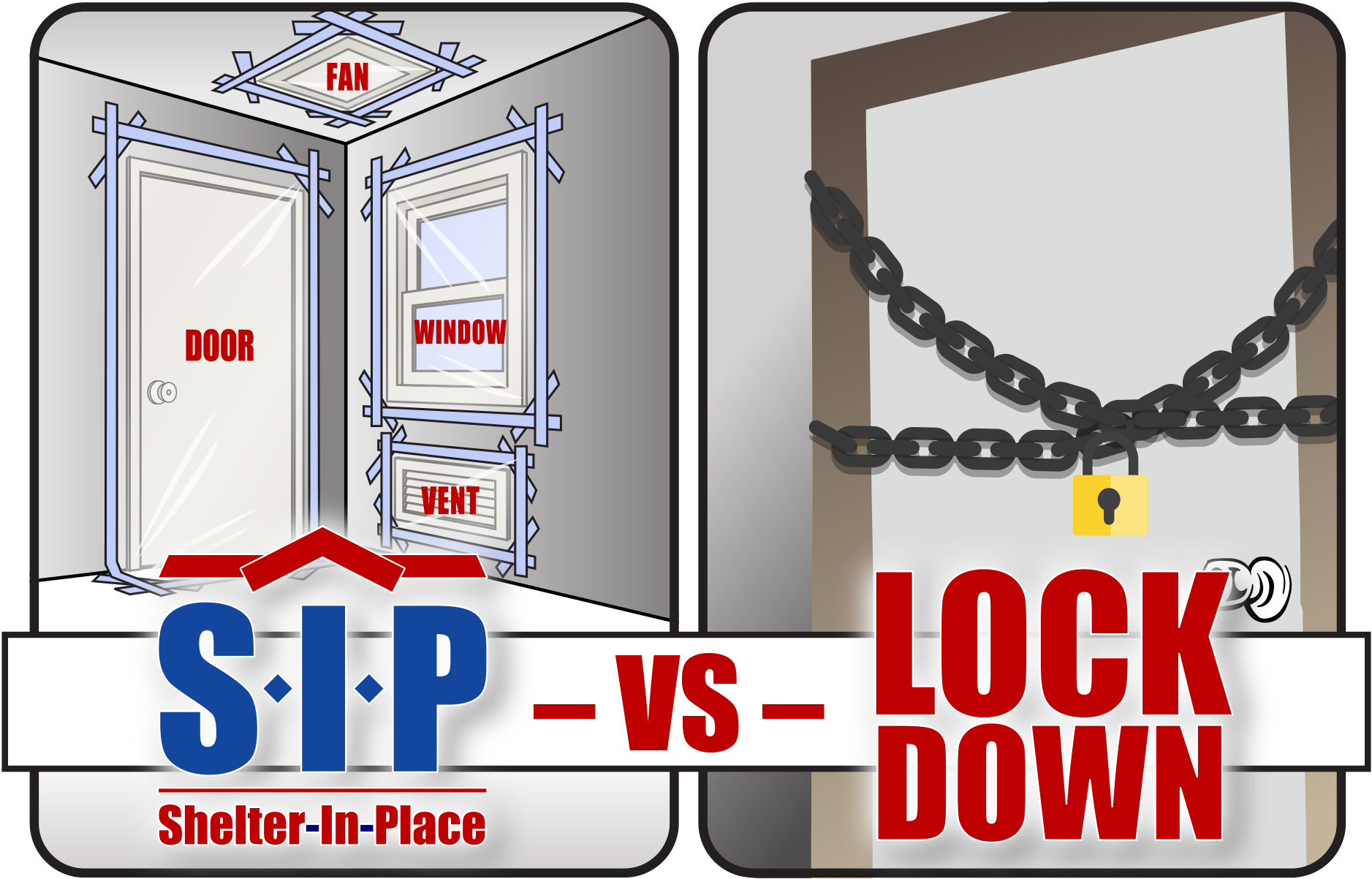
shelter in place

REFERENCES

1 Kannan, Saikiran. “Pornography Gets a Pandemic Boost, India Reports 95 per Cent Rise in Viewing.” India Today, Living Media India Limited, 11 Apr. 2020, www.indiatoday.in/news-analysis/story/pornography-gets-a-pandemic-boost-india-reports-95-per-cent-rise-in-viewing-1665940-2020-04-11.


2 Ibid.


3 Dorn, Sara. “Business Booming for Cam Girls amid Coronavirus Outbreak.” New York Post, NYP Holdings Inc., 16 Mar. 2020, nypost.com/2020/03/14/business-booming-for-cam-girls-amid-coronavirus-outbreak/.


4 Del Giudice, Vincent. “Denver Exempts Pot Shops, Liquor Stores from Stay-at-Home Order.” Bloomberg.com, Bloomberg L.P., 24 Mar. 2020, www.bloomberg.com/news/articles/2020-03-24/denver-exempts-pot-shops-liquor-stores-from-stay-at-home-order.


5 Lord, Shaquille. “District Judge Says City Can’t Stop Louisville Church from Holding Drive-in Easter Service.” WLKY, Hearst Television Inc., 12 Apr. 2020, www.wlky.com/article/district-judge-says-city-cant-stop-louisville-church-from-holding-drive-in-easter-service/32115835.


6 Tamburin, Adam. “Federal Court Tweaks Abortion Order, Still Allows Procedures during COVID-19 Pandemic.” The Tennessean, Tennessean.com, 27 Apr. 2020, www.tennessean.com/story/news/2020/04/27/court-tweaks-tennessee-abortion-order-procedures-still-allowed/3033007001/.

Sin Illustrated

Tuesday’s Column: Dale Mail

DaleandJanelledirectorypic

Dale Pollard

Who doesn’t love a good illustration? Over the next few weeks this column will have three of them— all geared around a singular topic. 

In the early days of flying men would attempt to soar into the skies like the birds by building wings made out feathers and jumping of towers, hills, and even cliffs. In 1507 John Damian strapped wings covered in chicken feathers to his back and leapt from the walls of Sterling Castle in Scotland. He ended up breaking his thigh and quickly blamed his failure on the fact that he used chicken feathers instead of eagle feathers (undiscoveredscotland.com). 

Many early attempts of flying ended in more serious injuries and even death. If they had a better understanding of the principles of flight they could have avoided their tragic endings. 

Millions of people today are plummeting to their spiritual deaths, and we have the knowledge they need. Nobody will achieve spiritual flight through the:

1. lust of the flesh
2. lust of the eyes
3. pride of life

If an apple has a hole in it, some would assume that a worm has eaten its way inside. But in reality there was a worm in the seed of the apple the whole time. And as the worm grew it ate its way out of the core. 

At first sin is easily hidden, but as it grows it shows itself through our actions. 

Julie Andrews in the Sound of Music would claim that one of her favorite things are snowflakes that stay on her nose and eyelashes. A small beautiful snowflake. Thousands of years ago a single snowflake fell from the skies. Then another, then another. Soon the snow turned to ice and the ice became so heavy that it broke off the glacier and fell into the sea. It began to float and drift until one night it struck a ship called the Titanic, killing 1500 people. 

When a sin problem begins to take hold, it may seem as harmless as single flake of snow. Overtime the sin proves to be more than some can handle, and they’re heading for disaster. 

“Sin will take you farther than you wanted to go, keep you longer than you intended to stay, and charge you more than you wanted to pay.” 

How To Slay A Dragon

Thursday’s Column: Captain’s Blog

IMG_0806

Carl Pollard

There’s a part in Sleeping Beauty where the Prince slays a fire breathing dragon with his sword. This is at the climax of the movie, so this entire time the story has been building up to this one, final moment. It’s pretty epic. In our lives, we have many “Fire Breathing Dragons.” At this moment I would like to talk about three of them and how to “kill” them.

First, notice with me the “dragon” of lying. If you look at Colossians 3:9, it says, “Don’t lie to each other, for you have stripped off your old evil nature and all it’s wicked deeds.”
Lying in Colossians is labeled under “evil nature.” If we have stripped our old ways, why do we continue to lie? Because much of the lying that we do is for personal gain. For example, someone could come up to me and ask, “How much can you bench?” and I might say “850 pounds.” That’s a classic example of lying for personal gain. From now on that person will believe that lie I told them and possibly tell others. We can slay this dragon by telling the truth. Challenge yourself to tell full truths, and not half-truths.

Second, there is the “dragon” of Hate. Luke 6:27 says, “But I say to you who hear, Love your enemies, do good to those who hate you.” The hardest part of this verse is the second half. Trying to love those who hate us is extremely difficult because in our minds they started it so we have the right to hate them back. If you look at Jesus, our example, He says to love those who hate us. How do we do this? It requires a change of vision. We should try to look at those who hate us as a lost soul that needs saving. Looking at them this way might help us to love them more.

Third, and finally, is the “dragon” of Gossip. This one can be very dangerous because it might tear apart a friendship, a person, and the church. If you look at Ephesians 4:29, It reads, “Let no corrupt communication proceed from your mouth, but that which is good to the use of edifying, that it may minister grace unto the hearers.” Instead of tearing down someone or spreading rumors, let’s try to build up one another! To keep from letting something slip about someone, let’s try to practice what our parents told us from day one: “Think about what we say before we say it.”

Now there is one more thing we can use to slay “dragons.” The ultimate Two-Edged Sword is for slaying any kind of “dragon.” This Two-Edged Sword, the Bible, can slay any dragon that Satan sends our way. Today we only looked at three of the dragons that Satan uses against us. There are many more, and we must study Scripture to see what they are, and how we can slay them.

73667.jpg.cf

Socially Distant from God?

Friday’s Column: Supplemental Strength

brent 2020

Brent Pollard

Raymond Burke, an American Catholic Cardinal serving in the Vatican, voiced his opinion about the novel coronavirus. He stated that one “cannot consider the present calamity in which we find ourselves without considering how distant our popular culture is from God.” He continued, “It is not only indifferent to His presence in our midst but openly rebellious toward Him and the good order with which He has created us and sustains us in being.” 1

Burke’s comments follow his observation that in times past when plagued by disease, people normally turned to God. Under our current circumstances of trying to mitigate COVID-19, however, we are forbidden from meeting in assemblies of more than 10 persons. Burke went on to say that our homes are “a little Church into which we bring Christ from our encounter with Him in the bigger Church.” Hence, he encouraged Catholics to pray.

From a purely doctrinal standpoint, I am unable to agree with Raymond Burke. Even so, I was struck by the quotation by him which I shared. Right now, we are isolating ourselves from one another to prevent the spread of a virus. Yet, people have been keeping themselves distant from God for years. And not only do they seek to stay distant from God, but they also promote an environment that seeks to distance others from Him as well. Burke sighted those sins like abortion and the perversion of God’s design for sexuality as proof of this distancing from God. I’d be hard-pressed to disagree with that thought.

Yet, it is not just those sins that cause people to become distanced from God. For example, in Isaiah 59, Isaiah reminded those people in a covenant relationship with God under Moses’ Law that God was separated from them by their hands defiled with blood, fingers defiled by iniquity, lips speaking falsehoods, and tongues muttering wickedness (3). He further stated they conceived mischief and brought forth iniquity (4). He said their feet ran to evil (7). Consequently, they made crooked paths for themselves, which deprived others of peace when they traveled upon them (8). Frankly, modern America sounds no different.

And what was the consequence of being distant from God? Isaiah began by saying that God had become separated from them which prevented Him from hearing their prayers or helping them (1-2). Justice was far from them and despite their hope for light, they were ensconced in darkness (9). Indeed, the Israelites were blind men groping along the wall and stumbling during the day as though it were night (10). They were compared to dead men (10).  Truly, without God people are in a terrible position.

During this pandemic, I have noted more references to God on television. As I’ve heard the discussion of our mental health during this crisis, even news commentators have lauded the role of faith in preventing people from despairing. After all, hope is an anchor. Vice President Mike Pence, in commenting about the deaths from the coronavirus, quoted from 1 Thessalonians 4.13 that we do not grieve like those who have no hope. 2 As refreshing as all of this is, I am afraid that it smacks of waiting until the house has burned down to call the fire department.

If we truly want for God to bless us individually, as the church, or to bless our secular nation, we cannot afford to practice social distancing from God. We must allow for the only name given under heaven among men that saves (Acts 4.12) be always on our lips as we preach and teach to our neighbors (Matthew 28.19-20).


References

1 Chapman, Michael W. “Cardinal Burke: Consider Virus in Light of ‘Actual Sins,’ Abortion, Gender Theory.” CNSNews.com, Media Research Center, 27 Mar. 2020, 15:36, www.cnsnews.com/article/international/michael-w-chapman/cardinal-burke-consider-virus-light-actual-sins-abortion.

2 Foust, Michael. “’We Do Not Grieve Like Those Who Have No Hope,’ Pence Says of Pandemic during Easter.” ChristianHeadlines.com, Salem Web Network, 9 Apr. 2020, www.christianheadlines.com/contributors/michael-foust/we-do-not-grieve-like-those-who-have-no-hope-pence-says-of-pandemic-during-easter.html.

A Bat’s Worst Nightmare

Thursday’s Column: Captain’s Blog

IMG_0806

Carl Pollard

I’m gonna be honest. I am not a fan of winter. It’s cold, snow is terrible, It’s freezing, and I hate snow. The worst thing about winter is that It gets dark at like 3 pm. In the summer you have these nice long, warm days but In the winter you got about 6 hours of daylight before it gets dark again.
Darkness is referred to quite a bit in scripture and many times it is used to describe sin. For example, “Walking in darkness” = walking in sin. “Living in darkness” = living in sin.
As Christians we are described as being taken out of darkness (sin) to walk in light (righteousness) (Ephesians 5).
But how did we get to this point? We read in John 8:12, “Again Jesus spoke to them, saying, “I am the light of the world. Whoever follows me will not walk in darkness, but will have the light of life.”
Because of Christ and His sacrifice and love for us we can now have the light of life. Without Christ we are forever in darkness, but with Christ he is our light that leads to salvation.
The choice to follow Christ means that our standard is The Light. Notice, He says, “will not walk in darkness…” This word is skotia which is described as, “the state of being devoid of light, darkness, gloom.” When we choose to live like the world, there is no light in us. When we remove Christ as our guide and live in sin, we are plunged into darkness.
But if He is our standard of living, in hard times we will have light, when we lose a loved one we will have light, and when we face difficult decisions we will have light.
The question we need to ask ourselves is this, “Do we prefer darkness over light? Do we prefer sin over righteousness?” The choice is ours, and each one of us makes this decision every day.
You may be asking what all of this has to do with the pandemic going on right now…well a bat started this whole thing, and bats live in caves, caves are dark and living in darkness is living in sin. Don’t be a bat.
maca-solitary-roosting-bat

The Guest 

Tuesday’s Column: Dale Mail

DaleandJanelledirectorypic

Dale Pollard

A knock came on my door one day, I opened and it was Sin
Before that moment we hadn’t met, but still I let him in
He made me laugh, and seemed alright
so I let him stay a night

As host, I tended his every need
though he was quite a mouth to feed
He was entertaining
so he kept remaining—
With me, another day

One evening he sat at my table and dined

but late that night he robbed me blind

In an empty house I sat alone
The tears welled up, I should have known

Sin ate his fill against my will,

and now I’m skin and bone

Then again I heard a knock on my door

Reluctant was I to rise from the floor
If a guest, they can’t stay here anymore

the previous left me dejected and poor

But again and again
came the knock on my door
So timidly I answered,

but only opened it so wide

and there stood Jesus waiting,

on the other side

I had nothing left to give Him, nothing left to eat—
Yet He came inside,then got down, and began to wash my feet
He told me I could live with Him, for He had many rooms
No pain was there at His house, and the flowers always bloom
Could this be true what I was hearing—
I longed for nothing more
Then Jesus smiled and gently said—
this offer is for you and all
who open up the door
doorknob-686491_960_720

Korah’s Rebellion 

Tuesday’s Column: Dale Mail

IMG_1381

Dale Pollard

For the next few weeks we will look at some of the lesser known Biblical accounts, and the lessons we can learn from them. 

In Numbers sixteen there is a strange and terrifying event that unfolds. It has all the ingredients of a great movie. There’s rebellion, jealousy, vengeance, and drama but it’s so much more than a story. It’s history, and it’s been divinely recorded for our learning.

Korah seems to be the individual that starts a rebellion against God’s chosen leader, Moses. He hops up on his high horse and rallies together two hundred and fifty other leaders among the people. This group, no doubt, gave him the confidence to directly confront Moses face to face. He says, “You’ve overstepped yourself, Moses! Take a look around at the people you’re trying to lead. They are just as righteous as you, and God is in their midst!” Moses falls on his face, then says, “Tomorrow, God will make His stand with who He chooses.”

When morning comes, Korah and his fellow rebels bring incense to the Tent of Meeting to offer up to God. In the meantime, an intense conversation between God and Moses takes place. God, filled with righteous anger, is about to demolish every one of them in their tents, but Moses pleads with God to give them a chance. So, a warning is given to the people, “stay away from the tents of these evil men!” No sooner had the warning been given, the earth opens up and Korah and all those belonging to him are swallowed up by the earth. Fear spreads among the people as they were afraid for their lives, and who could blame them? God then strikes down the two hundred and fifty leaders with fire— the worship offerings still in their hands. What an account! Of course there are several applicable lessons for us, but here are just three.

Mind your Maker.

God chose for His people who He wanted to be in the leadership positions. When Korah felt that he knew better, the consequences were fatal. May we never fall victim to the mindset that tells us that we know better than God. Our Lord wants us to live a certain way, and worship a certain way. When we make changes to His divine commands, just like Korah, we have overstepped our bounds.

Mind your mingling.

How did so many band together with Korah? They were all mingling in the wrong crowd. Every one of those men made a choice. They chose to grumble and complain together, then they died together. It doesn’t matter how many people think the same way we do if that thinking isn’t Patterned after God’s thinking.

Mind your motives.

What drove these men to take such a stance? They were motivated by pride, discontentment, anger, greed, and self-righteousness. All of these attitudes are toxic for the church today, and all of them still lead to destruction.

While this account is a humbling reminder of God’s reaction to disobedience, there’s more to the story. Although Korah was out of line, his descendants would prove to be more upright (Numbers 26:11). They even go on to write some of the Psalms in the years to come, including Psalm 42. Your upbringing and roots do not have to dictate your eternity. Like Korah, we all have a choice. My prayer is that as these historical events are read we learn from them and press forward, more determined to be faithful children to a perfect Father.

“As the dear thirsts for water, so my soul longs for you, O God. My soul thirsts for God, for the living God.” 

Psalm 42:1-2

40455086_10155783567500922_7374175323555889152_n

A Swinging Beaver Church 

Tuesday’s Column: Dale Mail

83538761_557569434843824_1603081807199207424_n
Dale, with his wife Janelle

Dale Pollard

For a small child, having an open space park just outside your neighborhood was a dream come true. My younger brother and I would spend entire summers exploring, building forts, and fishing in that beautiful place. One day, as we were playing in the creek, we found a beaver laying in the middle of the water— it wasn’t moving. Without getting too graphic, we made several plans for this new prize find. We could make a hat out of the skin, or perhaps stuff it and put it in our room. The only problem was, mom would never allow us to drag this fifty pound beaver into the house. Besides this, the house was almost a mile away. In order to preserve our trophy we decided that the safest option would be to string the beaver up by the tail and hoist it up over the branch of a near by tree. That branch sagged under the weight of the beast while water dripped from it’s wet coat and onto the bike trail directly below. Without thinking about the terrible location we had chosen, Carl and I gave a high-five and began the long walk back to the house. We were beaming with pride and excitement because this was our little secret. A few weeks later, we returned to the spot and were outraged to find that someone had cut our swinging beaver down! Looking back, we still laugh as we think about the many bikers and joggers that ran down that path only to be surprised and confused by this animal carcass hanging over the path.

The church is a wonderful place to be, especially when you find yourself a member of a healthy congregation. When the church is functioning in accordance with scripture, the impact She can make is endless. One aspect of keeping God’s family healthy on the inside is keeping sin on the outside. Sadly, there are some congregations that have blatantly accepted the sinful lifestyles of individuals. It’s as if there were dead beavers hanging in their midst, but instead of cutting it down they choose to turn a blind eye. The longer it stays, the stinkier it becomes. This is a gruesome, but appropriate description of sin. Paul spends two letters rebuking the church at Corinth because they had allowed several horrific sins to divide and erode the Body there. They didn’t sever the hanging carcass, and as a result the stench of sin provoked Paul to write some of the harshest words to be penned in the New Testament.

Paul will give them five commands in chapter sixteen that we would do well to apply to our own lives as well. He says, “Be on the alert, stand firm in the faith, act like men, be strong. Let all you do be done in love” (I Corinthians 16:13-14). With these two short verses you can backpedal through the letter and see how these five imperatives would have saved them from not only a harsh rebuke, but many heartaches that were also consequences of their sins. They were stricken with disease and death in both the physical and spiritual sense. The apostle commands them, through inspiration, to be aware of their surroundings. Be alert. He reminds them to firmly stand on the truth of the gospel. He bluntly tells them to act like men, because they were acting like children. Then he tells them to be strong, but in a different sense. This strength is that inner strength that it takes to conquer temptation and carry on righteously in the midst of evil. These four commands are then to be carried out with love. A sacrificial love for one another means having the willingness to confront sin problems that are damaging the Bride of Christ. Not out of anger, but out love for His church and for the soul of the guilty member. This is the recipe for a healthy congregation through every age. It worked in Corinth, and it works today.

If there’s a beaver hanging in your congregation, the best thing to do is to cut it down! 

american_beaver

So You Have A Sinful Past? (POEM)


Neal Pollard

Moses was a murderer, Rahab was a liar,
David was an adulterer and to murder he did conspire,
Gideon and Timothy were timid, Peter a confirmed denier,
Paul wrecked havoc on the church, so full of hate and ire.

God, from time immemorial, has used the earthen vessel,
Sons of thunder or deceivers– like Jacob, who an angel did wrestle.
Just like Abraham and Isaac, very human if chosen and special
Barak, Samson, Jephthah, who with flaws their faith did nestle

From cover to cover, Scripture shows that God works through sinners
Preachers, prophets, kings and elders, saints and great soul-winners
It helps us who would serve today, to be better enders than beginners
To not let sin defeat us, to go from offenders to God defenders

Perhaps you have a sinful past or there’s guilt here in your today
A habit, sin, or weakness, crimes of deeds, thoughts, or what you say
Look back to men and women of old, they willed for they knew The Way
Conquer through Christ your old man, get busy, trust in God and obey!

Peter denying Jesus
Peter denying Christ

The Peril Of “Covering Up”

Neal Pollard

Misty Ann Weaver made a tragic decision.  The Houston-area licensed vocational nurse is charged in the burning death of three people after she started a fire in her six-story office building.  Why did she take such horrible measures that resulted in the unnecessary, tragic deaths of these victims?  She was  apparently behind on an audit for her plastic surgeon boss, and she feared being fired.  She just wanted to start a small fire, enough to cause a distraction and buy herself more time.  Obviously, she accomplished more than she intended.

Ms. Weaver is an extreme example of the tendency to try and avoid consequences by resorting to sin to “cover up” a shortcoming or failure.  While few of us will wind up facing three felony murder counts, we are all tempted to “cover up” in this way.  When we fail to study for a test, we may resort to cheating to “cover up” that fact.  When we have a low self-image, we may resort to gossip or backbiting to “cover up” perceived flaws about ourselves.  When we are afraid of negative consequences for not meeting some responsibility or expectation, we may turn to lying to “cover up” that inadequacy.   The irony is seen in that the “cover up” inevitably puts us in greater spiritual trouble than before we engaged in it.

We may “cover up” for fear of the disapproval of others, out of embarrassment or shame, or out of concern for certain repercussions.   Yet, to turn to sin to shield ourselves from the ramifications of our actions is to compound the problem.  Let us have the courage to face God and man, to provide things honest in the sight of all men (cf. Romans 12:17).  Israel was warned about the danger of adding sin to sin (Isaiah 30:1).  It is strength of character to do our best in our every endeavor, but it is also strength of character, when we have failed to so do, to courageously, honestly “face the music.”  However we rationalize, the fallout from this will be less severe than the “cover up” is!

1024x1024

Why Is The World Asking “Why?”

Neal Pollard

Today, everyone is hurting. Whether because of gun or knife violence or vehicular homicide, groups of people in our nation and other parts of the world are being torn from time and prematurely vaulted into eternity. We weep and mourn for the loss. We consider the enormous grief and heartache multiplied many families face from California to Florida, Connecticut to Texas, Colorado to Tennessee, Virginia to Nevada (and many other places).  Those whose voices we hear the most through all of this, like the national and local media, seem fixated on learning the perpetrator’s motive each time it occurs. Experts and analysts look at religious ideology or mental health issues. It seems as if they believe that if they can determine the motive, that will solve the violent epidemic that has disturbed the peace of so many people in our society. The danger of oversimplifying any specific tragedy notwithstanding, there are some right answers the world will have a difficult time embracing but that get us so much closer to resolving this plaguing problem. Why are these horrific crimes occurring?

  • The world has rejected God. Romans 1:28 says, “ And just as they did not see fit to acknowledge God any longer, God gave them over to a depraved mind, to do those things which are not proper….” “Not proper” seems benign to us in the way we use the phrase in English (bad table manners, having your shirt untucked, etc.). Kittel says, “Paul has in mind what is offensive even to natural human judgment. The decision against God leads to a complete loss of moral sensitivity, the unleashing of unnatural vices, and hence the type of conduct that even healthy pagans regard as improper” (386). Paul tells us this improper conduct includes “all unrighteousness, wickedness, greed, evil; full of envy, murder, strife” and other things we see in these current tragedies (29, cf. 30-31). Read the context to appreciate the rotten fruit of such thinking.
  • The world has redefined sin. A worldview or value system is built bit by bit, choice by choice. Paul writes, “Do not be deceived, God is not mocked; for whatever a man sows, this he will also reap. For the one who sows to his own flesh will from the flesh reap corruption, but the one who sows to the Spirit will from the Spirit reap eternal life” (Gal. 6:7-8). If we devalue human life through sinful practices like abortion or euthanasia, we plant destructive seed. If we glorify violence or imbibe in sins like pornography that objectify human beings, we plant desensitizing seed. Long ago, Isaiah warned, “Woe to those who call evil good, and good evil; Who substitute darkness for light and light for darkness; Who substitute bitter for sweet and sweet for bitter!” (5:20). Such leads to weeds which choke out spiritual fruit.
  • The world has rebelled against biblical counsel. The absolute truth of Scripture is lost in the shuffle of worldly values. Jesus says, “Treat others the same way you want them to treat you” (Luke 6:31). He says, “Love your enemies and pray for those who persecute you” (Mat. 5:44). Paul echoes, “Do not be overcome by evil, but overcome evil with good” (Rom. 12:21). He also writes, “Do nothing from selfishness or empty conceit, but with humility of mind regard one another as more important than yourselves; do not merely look out for your own personal interests, but also for the interests of others” (Phil. 2:3-4). The Bible urges us to be kind, unselfish, compassionate, and helpful through precepts and examples. The world has ignored the ethics of Scripture in preference of humanistic philosophy.
  • The world has replaced God with self as lord. What is the ultimate consequence of denying God the place that rightfully belongs only to Him? Isaiah referred to a worldly nation, saying, “I have spread out My hands all day long to a rebellious people, Who walk in the way which is not good, following their own thoughts” (65:2). Repeatedly, Scripture decries the folly of crowning ourselves king and dethroning God (Jer. 10:23; Prov. 14:12; 16:25).  When a society writes its own rules or tries to live life on its own terms, it charts a path for heartache and disaster. How concisely Solomon says this, that “Righteousness exalts a nation, but sin is a disgrace (shame, reproach) to any people” (Prov. 14:34). When whatever a person says, wants, or believes is what goes, ultimately nothing is out of bounds for him or her.

Brethren, in this frightening, dark, and uncertain atmosphere, a world which “lies in the power of the evil one” (1 John 5:19), we must share what we know! John says, “We know that we are of God…and we know that the Son of God has come, and has given us understanding so that we may know Him who is true; and we are in Him who is true, in His Son Jesus Christ. This is the true God and eternal life” (5:19a, 20). We have security, confidence, understanding, and hope, all because of God and His Son. Take courage and share that with everyone you can! It’s the only hope the world has!

kcmkjjb5i

Is There No Balm In Gilead?

Neal Pollard

Jeremiah asks that question rhetorically? It comes at the end of an oracle God gave this prophet to share with his people, Judah. He had asked if the people had turned to idolatry because God was not in Zion (Jer. 8:19). He then ends by saying, “Is there no balm in Gilead? Is there no physician there? Why then has not the health of the daughter of my people been restored?” (8:22). In context, the people were sin-sick, but the cure was available. It was not because God was unable to restore them that they were ailing, but because they refused to seek the cure.

Certainly, today’s society mirrors this attitude of Jeremiah’s contemporaries, but this, in context, was spoken to those who had been healed in the past. These were God’s people. Now, they were spiritually sick and not getting better. The logical question is the one Jeremiah asked—“Why not?” When we are sick with sinful habits, lifestyles, attitudes, and speech, why don’t we turn to God for the cure?

  • Sometimes, we are oblivious to our symptoms.  Paul speaks of some who are “past feeling” (Eph. 4:19). We can become callous to our condition and rationalize it. As long as we persist in that state, it is as if there is no balm.
  • Sometimes, we look elsewhere for the cure. Judah had her idols, and so can we. People struggling with life turn to so many poor substitutes to numb, deaden, and try to eliminate the pain. Nothing can substitute for the Balm of Gilead (cf. Jer. 3:23).
  • Sometimes, we feel ourselves to be a hopeless case. As we struggle with our temptations and sins, we can get to the point where we feel we’ve gone too far or been too often to reverse the problem. This is not God’s message. He provides hope to every one who will come to Him for help (Heb. 6:9-12).
  • Sometimes, we underestimate God’s power. Jeremiah’s predecessor, Isaiah, shares God’s message regarding this, saying, “The Lord’s hand is not so short that it cannot save” (59:1). Jeremiah would echo this idea, writing, “Ah Lord God! Behold, You have made the heavens and the earth by Your great power and by Your outstretched arm! Nothing is too difficult for You” (32:17; keep reading in context for more beautiful truth along this line). Though we should know better, sometimes we forget God’s power to save.
  • Sometimes, we neglect our support system. God gave the church as a hospital where all of us, sick with sin, can not only receive healing from Him but help each other. In a sense, we’re a leper colony that has found the One who will keep us from dying. But we need each other for help to survive this spiritual sickness (Gal. 6:1-2).
  • Sometimes, we don’t avail ourselves of God’s medicine. How tragic to die from spiritual disease when God has the means to heal us. We have His Word as a divine prescription. We have prayer. We have the confidence of faith. We have the trust in His providence. He has armed us sufficiently with the cure, if we accept it (cf. Luke 5:31).

While they await the cure for cancer, cystic fibrosis, ALS, multiple sclerosis, and the like, our greatest illness has already been remedied. This illness carries with it the greatest repercussions. We cannot neglect the cure. But if we spiritually die, it will not be because there is no balm and no Physician. It will be because we would not come to Him for healing. May we not let this be the reason.

hqdefault

The Lost Loved By The Lord

Neal Pollard

The prostitute on the street with a painful past who’s made dreadful decisions. The grownup who’s the product of unbelievable dysfunction and endured issues like abuse, abandonment, alcohol, and anxiety.  The teen who has never been shown true, Christlike love. The religious adherent whose idea of God and the Bible has been filtered through a trusted, but false, teacher. There are endless individuals who fall into the category of “lost” by Scripture (see the parables of Luke 15), even if they would not identify themselves with that word.

A particular challenge for those of us who “inherited” the knowledge of the truth from our homes is to recognize our dependency upon God for salvation. We look at our lives which, though littered with sin and shortcomings, do not have the disarrayed appearance of lives like the ones mentioned above. We’re basically “good.”  It is so easy for us to be like Simon in Luke 7:36ff. We know our Bibles. We invite Jesus along. We are aghast at how lost those lost people are. We cannot fathom that Jesus would want them. Then, we find ourselves as the one who loves little because we think we have little to be forgiven of. We do not serve Him like we should, but we feel pretty safe.

By contrast, the lost often do not become Christians because they feel so unworthy of forgiveness or see their past as insurmountable chains though they long for freedom. They don’t know, but they need to know, that God longs for them and wants them. They have immense value in His eyes, and, if they come to Him, He will say, “Your sins have been forgiven…Your faith has saved you. Go in peace” (Luke 7:48,50). Whereas pride might be our impediment, guilt is often theirs.

Each of us needs to find the balance between self-righteousness and self-loathing. If we are the Pharisee, we need humility. If we are the sinful woman, we need hope. But for that latter category, who we are in constant contact with, we must embrace and share the message that the Lord longs for them and sees their soul as precious enough to die for. They need to know He already did that as proof of His love (John 3:16; 15:13). Do you know somebody who is lost? Let them know the Lord loves them!

Businessman looking at a map spread out on the hood of a car

He Can Carry What’s Too Heavy For You

Jeff Wiant has been a Christian since early 2015. Since then, he has written 11 hymns. They are all beautiful, but this may be his best. It’s his first invitation song to write.

Poem inspired by this beautiful new song by Jeff Wiant, member at Bear Valley.  Click on the link below to hear it:

CLICK HERE: Jeff Wiant’s “Won’t You Come”

Neal Pollard

We struggle and strain to carry our load
We buckle as it gets heavier on our backs
We fall and hurt on this rough, rocky road
The weight makes us stop in our tracks

Looking around with a face full of pleading
We wonder who is observing our pain
We’re wounded, weary, broken and bleeding
Set to surrender from the stress and strain

Tears flow freely, we have been here before
We know how the journey seems endless
Certain we can’t make it alone to the door
We feel solitude, helpless and friendless

It’s bigger than us, crushing and enormous
And the contents shameful and unsightly
We’ve borne it so long it’s begun to conform us
To a stooped struggler holding on tightly

A voice calling gently, “Bring it over to Me,
I can help you and give you My best,
Your burden is heavy, I know you are weary,
Come to Me and I will give you rest.”

Could you double down, wincing and worn,
Grit your teeth and ignore His free aid?
Eventually, it will bury you after making you mourn
You know an exorbitant price must be paid.

He is able and willing, but waiting for you
To seek what He offers you without reservation
Let Him do for you what only He can do
Give your burdens to Christ with no hesitation.

Think of the journey, partnered with One
Without limits in power, purity and pity
Who’ll stay with you until your journey is done
As together you arrive at His heavenly city.

Dockers de Cap-Haïtien

Avoiding A Ride On An Ancient Cycle

Neal Pollard

It has been called “The Dark Ages Of The Old Testament.” During the period of the judges, there was moral, economic, social, political and religious decline. We often read that, during this time, the children of Israel did that which was evil in the sight of the Lord.

History keeps repeating itself in the book of Judges. The people do evil, God allows and oppressor to persecute them, the people turn back to God and plead for deliverance, and God raises up a deliverer to defeat the oppressor and deliver Israel. Here, we speak of the “cycle” of Judges: sin, servitude, sorrow, supplication, and salvation.

Their enemy invaders came from the East (Mesopotamia), the Southeast (Moab), the North (Canaan), the East (Midian and Ammon), and the Southwest (Philistia). It is interesting that Israel overcame Canaan in the militarily brilliant strategy orchestrated by God (Central Canaan—Josh. 7-8, Southern Canaan—Josh. 9-10, and then Northern Canaan—Josh. 11-12). As a result of Israel’s failure to utterly destroy the inhabitants of Canaan, the six oppressions came from the central, south, and north—each places where God had given them victory. What a reminder that when we don’t defeat the enemy, he will return! The enemy was sin!

Here is my summary of the book of Judges, as seen in Judges 2:16-19:

  • The rulers—“Judges”
  • The role—“Delivered”
  • The rescued—“Them” (Israel)
  • The rivals—“Those” (God’s enemies)
  • The ruination—“Plundered them” (oppression)
  • The refusal—“They did not listen to their judges”
  • The reveling—“Played the harlot after other gods”
  • The retreat—“Turned said quickly”
  • The right road—“In which their fathers had walked”
  • The role models—“Father, obeying the commands of the Lord”
  • The resolution—“They did not so”
  • The raising—“The Lord raised them up judges”
  • The relationship—“The Lord was with the judges”
  • The restoration—“Delivered them from the hand of their enemies”
  • The repentance—“The Lord was moved to pity” (KJV—“It repented the Lord because of their groanings…”)
  • The return—“When their judge died, they would turn back”
  • The retrogression—“Acted more corruptly than their fathers”
  • The resilience—“Didn’t abandon their practice or stubborn ways”

The judge was the savior of the people. Time and time again, the people put themselves in a position to need some serious rescue, and our long-suffering God was willing to soften His heart to their cries. Eventually, His patience ran out and even in this time period there were severe consequences. How often do we need the blood of Christ and the forgiveness of the Father? Often, we need forgiveness for the same sins repeatedly. We wonder how Israel could fall into the same traps, but we do well to identify and avoid them in our own times. We have the benefit of both Old and New Testament Scripture, and they would have only had the writings of Moses and Joshua when they lived. May we learn from these ancient lessons (cf. 1 Cor. 10:11) and stay off that ancient cycle.

bicycle_two_1886